9 Small Kitchen Corner Cabinet Ideas That Make Awkward Storage Useful
Corner cabinets waste more space than any other kitchen spot. These 9 ideas, from lazy Susans to pull-out drawers, put every inch to work.
In This Guide
Every small kitchen has one: the corner cabinet where pots go in and never come out. The space is deep, dark, and shaped like a triangle, so items slide to the back and disappear. Most people end up using only the front third and writing off the rest.
The fix is hardware that brings the back of the cabinet to you, or a layout change that reshapes the corner entirely. Some options cost under $20 and install in an afternoon. Others are worth planning into a renovation. All nine ideas below beat the default of a dark empty hole.
Before you buy anything, measure the cabinet opening, the interior depth, and the door swing. Corner hardware is size-sensitive, and a lazy Susan that is one inch too wide will not fit through the door.
1. Lazy Susan Turntable
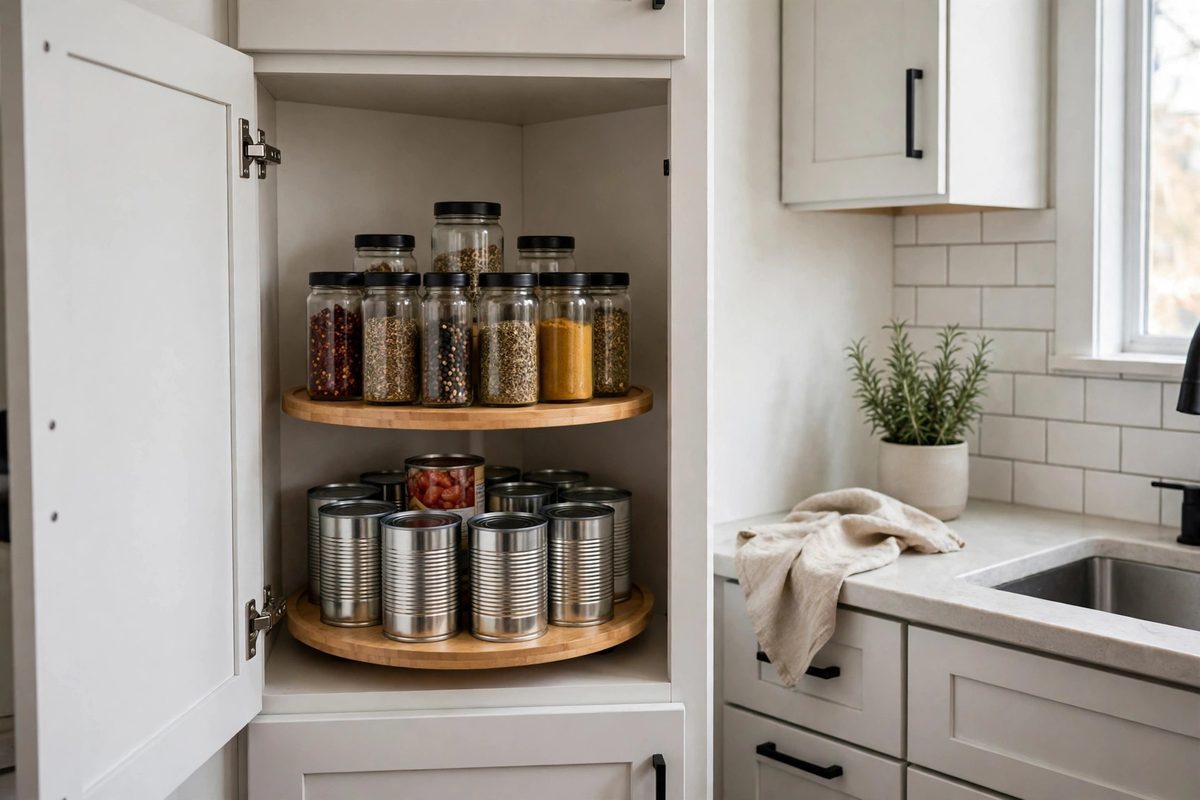
A lazy Susan is the classic corner cabinet fix for a reason: one spin brings the back of the cabinet to the front. Two-tier turntables use the full height of the cabinet, and kidney-shaped models are molded to fit corner cabinets specifically. A good two-tier unit costs $30 to $60 and installs with a center pole in under an hour.
Lazy Susans work best for round or small items: spice jars, cans, small bowls, and baking supplies. Tall bottles and large pots can tip or jam the spin, so keep those elsewhere.
How to make it work
Measure the cabinet interior and choose a turntable 2 inches smaller in diameter so it spins freely. Add a non-slip liner to stop jars from sliding. If the turntable wobbles, tighten the center pole and check that the shelves sit level.
2. Pull-Out Corner Drawers
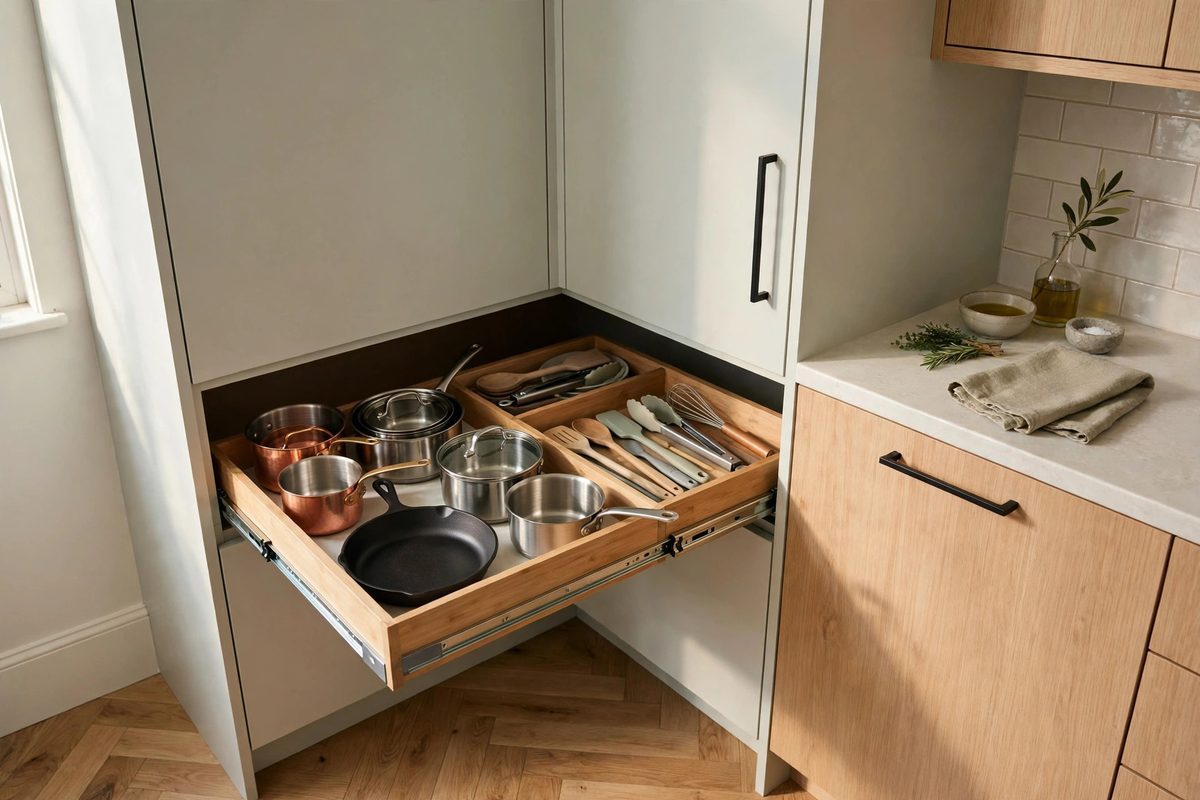
Pull-out corner drawers, sometimes called corner drawers, replace the cabinet door with a set of drawers shaped to fit the corner. When you open the top drawer, it slides out at an angle, and the drawers below follow the same path. Each drawer is fully visible and reachable, which eliminates the dark back corner entirely.
This is a renovation-level change, typically $400 to $900 installed, but it converts the worst cabinet in the kitchen into one of the best. It suits kitchens being remodeled, since the cabinet box itself changes shape.
How to make it work
Plan drawer contents by weight: heavy pots in the bottom drawer, lighter utensils up top. Choose full-extension slides rated for at least 75 pounds so drawers glide even when loaded. If you are remodeling, ask the cabinet maker about corner drawer options before finalizing the layout.
3. Blind Corner Pull-Out
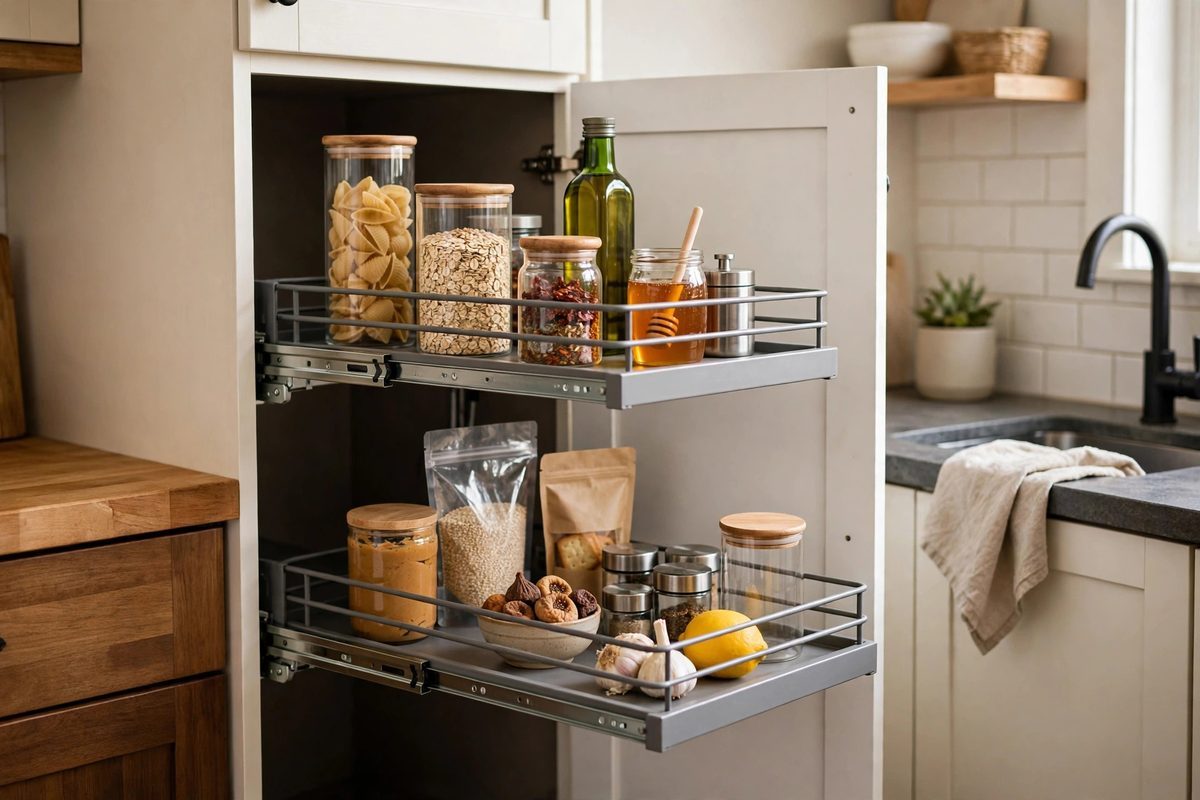
A blind corner pull-out is a two-stage shelf system for cabinets where the corner is only reachable through one door. Pull the front shelf out, then slide the back shelf into the opening it vacated. It uses nearly all the interior space and costs $150 to $300, with installation taking one to two hours.
Blind corner systems suit renters less well than a lazy Susan, since they mount to the cabinet frame with screws. But for homeowners, they recover space that otherwise sits empty for years.
How to make it work
Check the weight rating, usually 50 to 65 pounds per shelf, and distribute heavy items across both stages. Test the full pull-out path before loading, since a misaligned unit will jam. Keep a small step stool nearby if the lower shelf sits below knee height. For more renter-friendly storage, see small bedroom lighting ideas for how to improve a room without permanent changes.
4. Corner Sink Cabinet
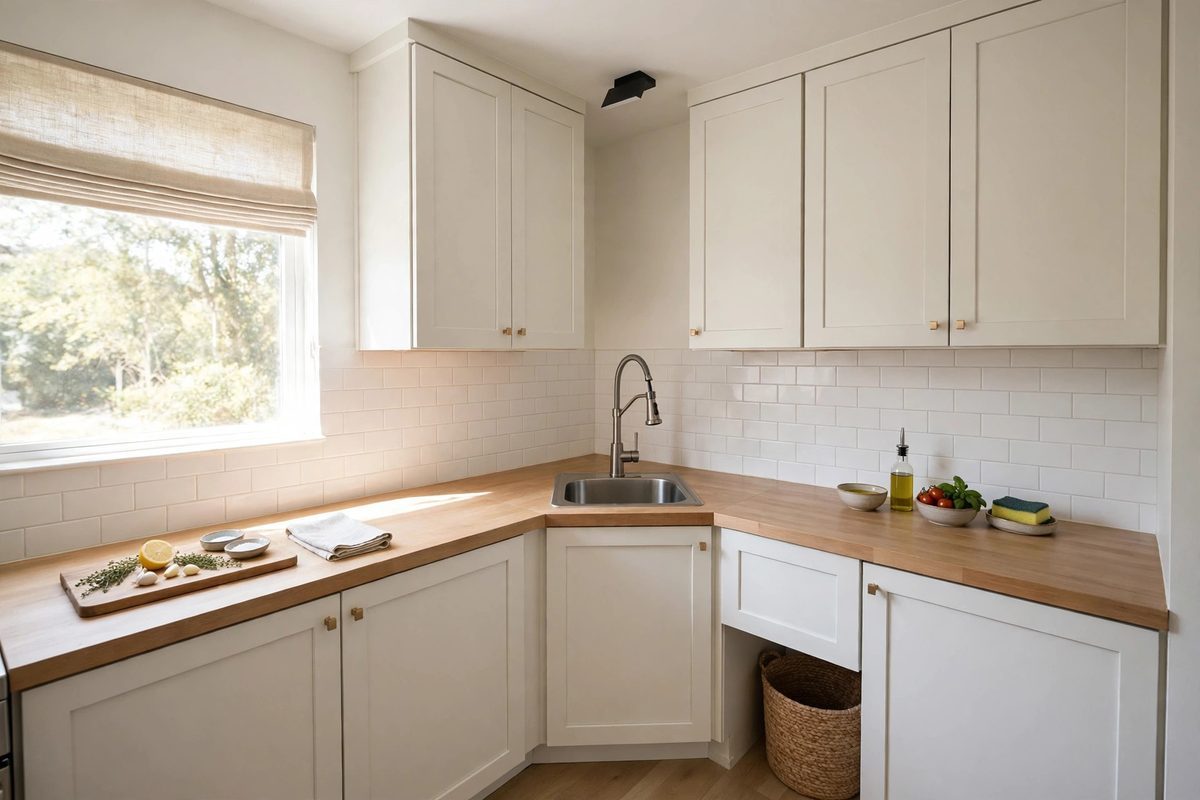
Moving the sink into the corner turns a dead cabinet into a functional workstation. The sink base uses the corner space for plumbing, and the countertop on either side becomes usable prep area. This is a full renovation move, but in kitchens under 100 square feet it can free an entire run of counter elsewhere.
The tradeoff is that corner sinks are less comfortable for two people working at once, and the faucet placement needs care so you are not reaching awkwardly. A single-bowl sink, 25 to 30 inches wide, fits most corner bases.
How to make it work
Choose a faucet with a high arc and a pull-down sprayer so you can reach all corners of the bowl. Add a small shelf or caddy inside the sink base for cleaning supplies. If you are planning a remodel, mock up the sink position with cardboard before committing to plumbing moves.
5. Open Corner Shelving
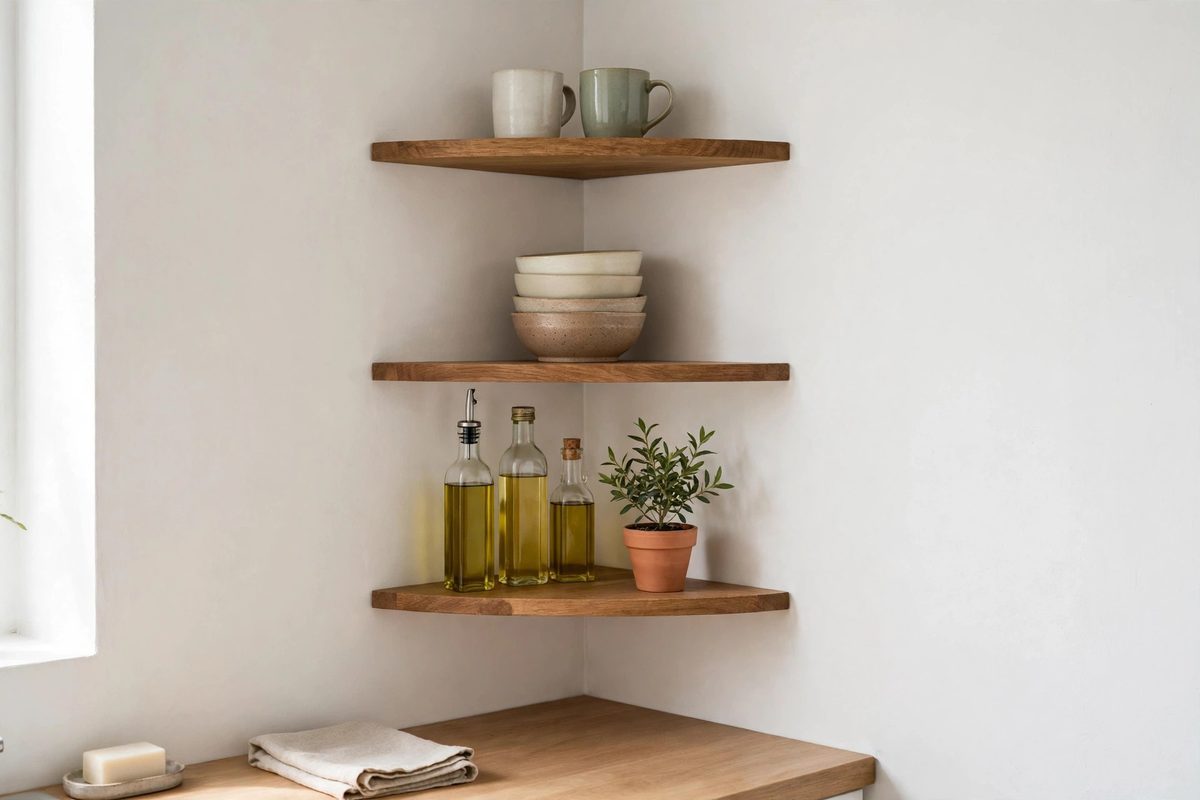
Removing the corner cabinet doors and replacing them with open shelving turns dead space into display and daily storage. Open shelves cost $30 to $80 for a set and suit items you use every day: mugs, bowls, cooking oils, and small plants. Because everything is visible, you will naturally keep it tidy.
Open shelving works best in kitchens where the corner is easy to reach and the items look good on display. It is less suited to cluttered collections or items that collect grease near the stove.
How to make it work
Mount shelves at 14 to 16 inch intervals so standard bowls and mugs fit. Keep the shelf depth to 10 to 12 inches so items do not disappear into the corner. Style each shelf with one category only, and wipe shelves weekly if they sit near the cooktop. For a seasonal take on open storage, see christmas decor storage ideas for small apartments.
6. Diagonal Corner Cabinet
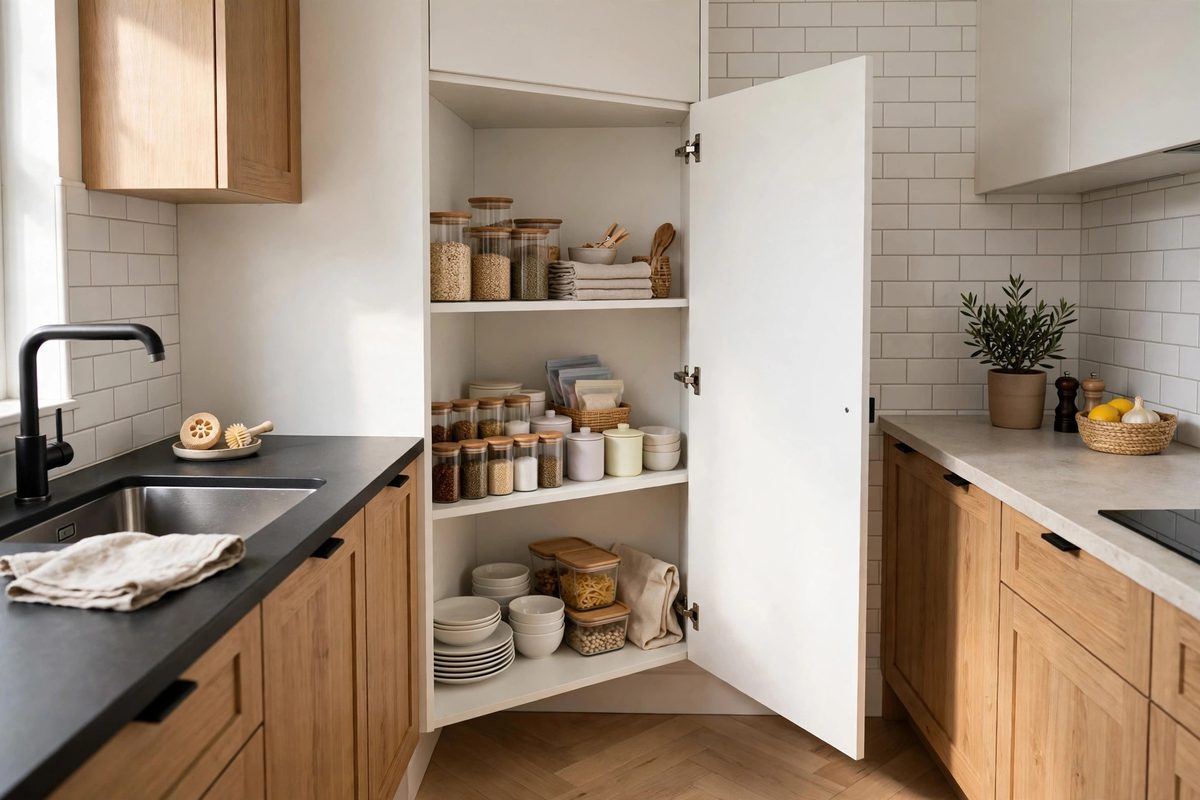
A diagonal corner cabinet cuts across the corner at 45 degrees, replacing the awkward L-shaped interior with a single wide door and a more usable box. The diagonal front gives you a straight, full-width opening, so you can actually see and reach what is inside. This is a standard option in new kitchen designs and adds $100 to $200 over a basic blind corner cabinet.
The diagonal door does eat a few inches of counter frontage, so it suits kitchens where the corner run is at least 36 inches on each side. In very tight kitchens, a lazy Susan may be the better call.
How to make it work
Fit a lazy Susan or a simple shelf inside the diagonal cabinet to organize the deep interior. Use the diagonal door front for a cookbook holder or a small towel bar to make the angled face useful. Measure door swing carefully so it does not hit the neighboring cabinet handles.
7. Corner Appliance Garage
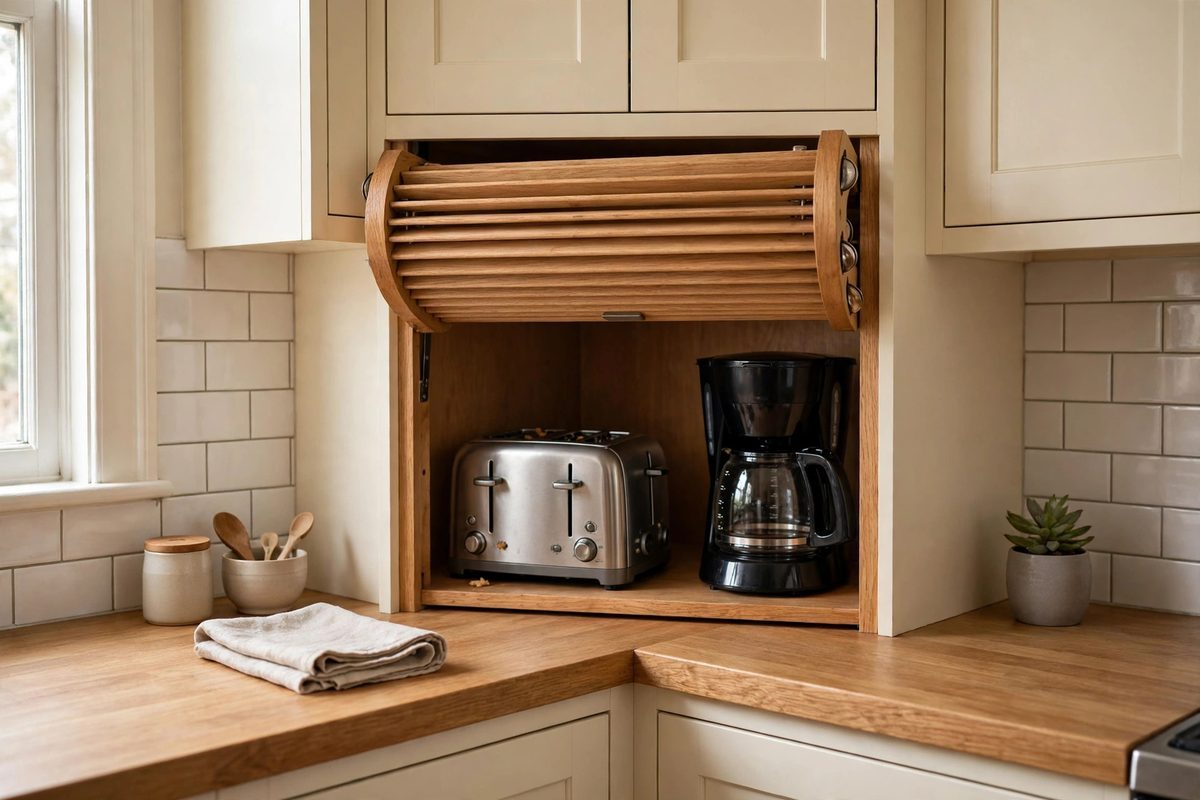
A corner appliance garage is a cabinet with a lift-up or tambour door that hides small appliances like the toaster, blender, and coffee maker. The garage sits at counter height in the corner, so appliances stay plugged in and ready but out of sight. A tambour-door garage costs $150 to $350.
This is the best use of a corner if your counters are crowded with appliances. It frees counter space without adding a trip to a distant cabinet every morning.
How to make it work
Add an outlet inside the garage so appliances stay plugged in, and check local electrical code for in-cabinet outlets. Choose a tambour door if swing space is tight, since it rolls up instead of swinging out. Keep only daily appliances here; seasonal ones belong in a higher cabinet.
8. Tiered Riser System
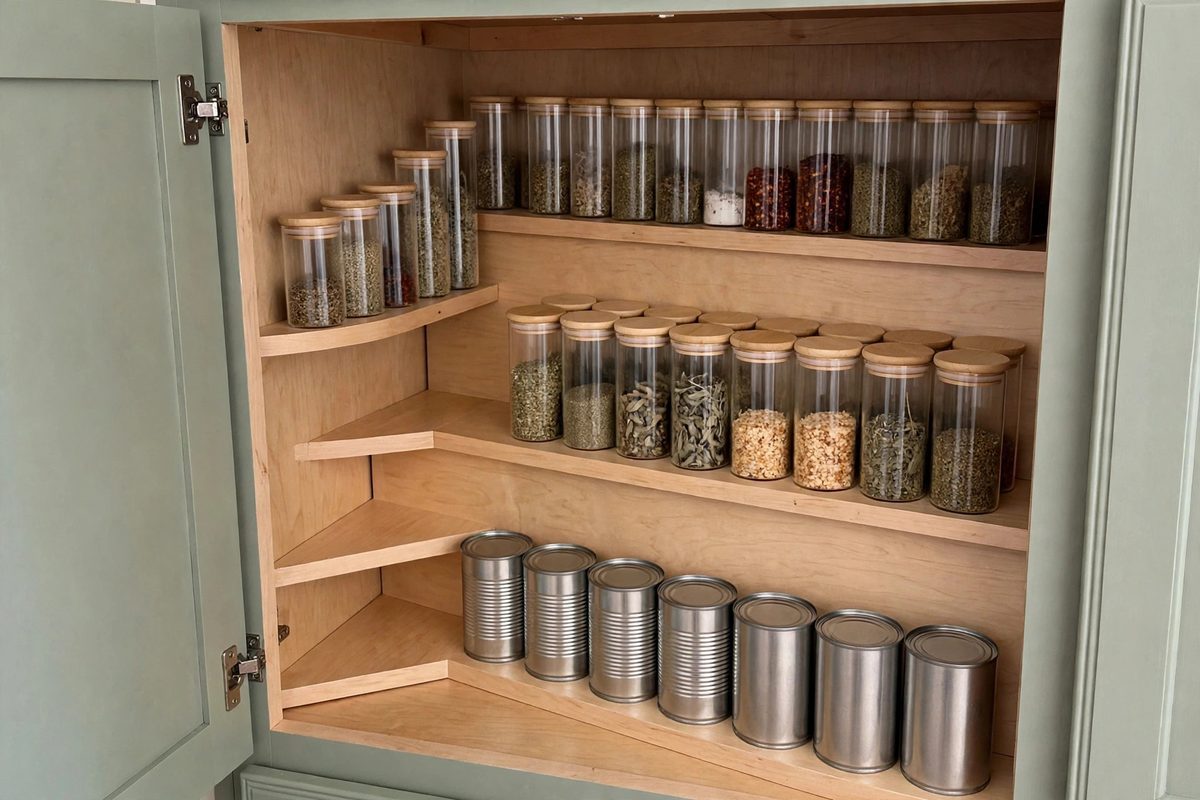
Tiered risers are stepped shelf inserts that raise items at the back of the cabinet so you can see them over the items in front. A set costs $15 to $30, needs no installation, and works inside any existing corner cabinet. Risers are ideal for cans, spice jars, and small containers that otherwise vanish into the dark.
Risers do not increase capacity, they increase visibility. Pair them with a small turntable on the bottom tier for the best combination of access and overview.
How to make it work
Measure the cabinet height and choose risers that leave at least 2 inches of clearance above the tallest item. Group like items together on each tier, and label the front edge of each tier if you store many similar cans. Replace wire risers with solid ones if small items slip through.
9. Corner Pantry Pull-Out
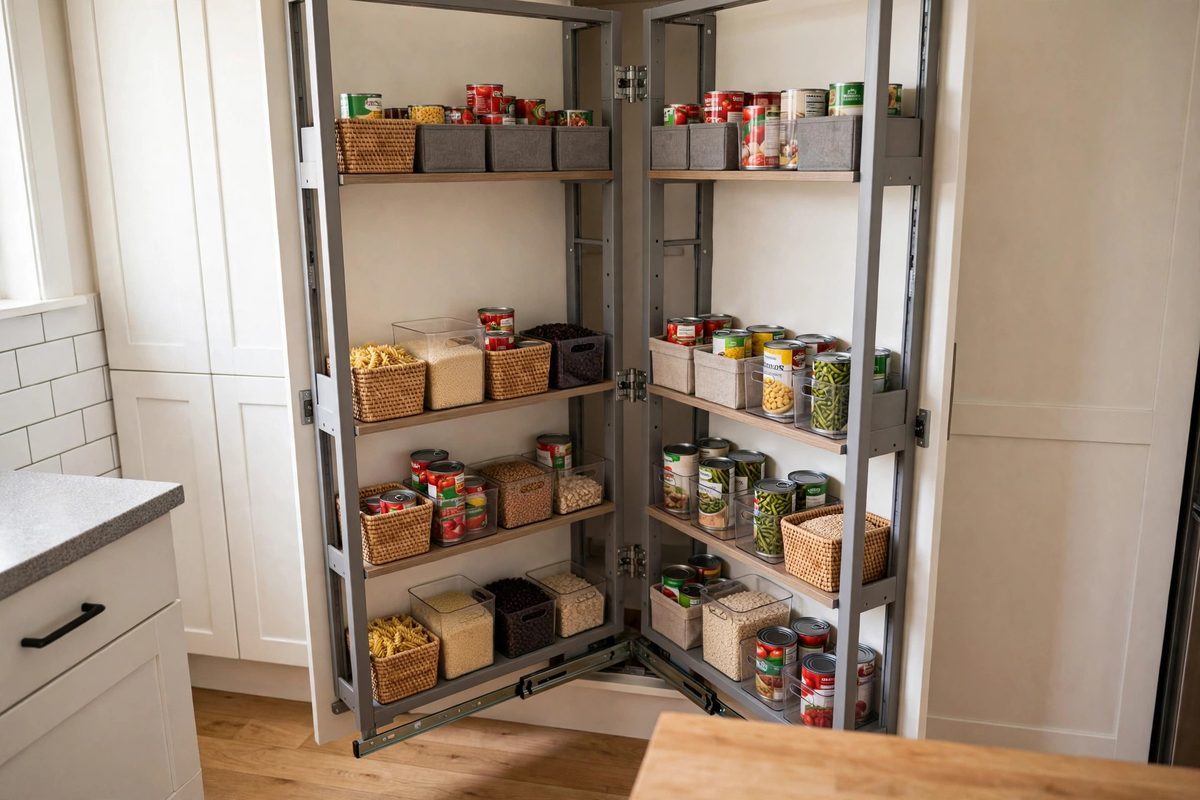
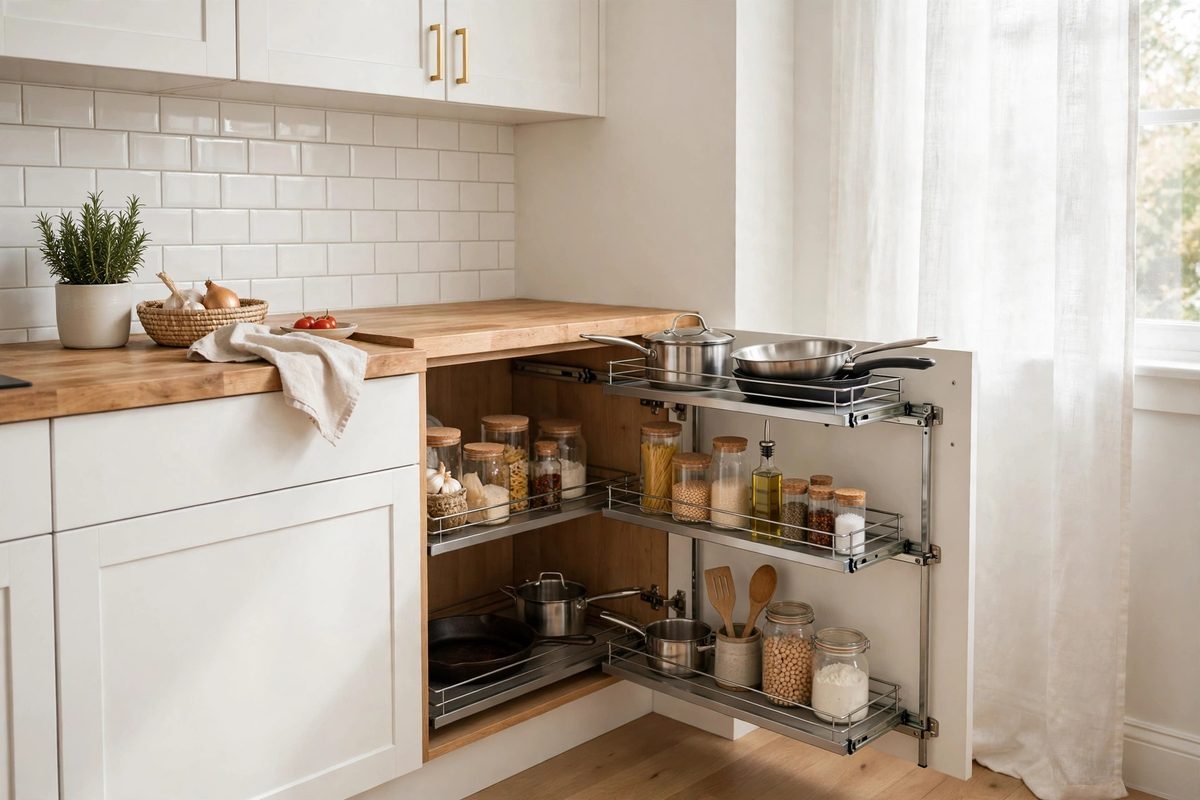
A tall corner pantry pull-out turns the full height of a corner into vertical storage. The unit slides out on full-extension rails, revealing shelves on both sides for dry goods, canned food, and baking supplies. Tall pull-outs cost $250 to $500 and need a cabinet at least 12 inches wide.
This is the highest-capacity corner solution, and it works especially well in kitchens without a separate pantry. The tradeoff is weight: a fully loaded tall pull-out can exceed 100 pounds, so the rails must be rated accordingly.
How to make it work
Store heavy items low and light items high, and never overload a single shelf past its rating. Add small bins on each shelf to stop items from toppling when the unit slides. If the pull-out is near the oven, keep heat-sensitive goods like chocolate and oils on the cooler side.
The corner cabinet stops being a problem once something brings its contents to you. Whether that is a $20 riser set, a $50 lazy Susan, or a full pull-out system, the right fix depends on your budget and whether you own or rent. Measure first, buy second, and the most awkward cabinet in your kitchen becomes one you actually use. For the rest of the kitchen, the same thinking applies in small kitchen storage ideas.