9 Small Bedroom Dresser Ideas for Tight Spaces That Add Storage Without Blocking the Room
Need clothes storage in a compact room? Discover 9 small bedroom dresser ideas using tall chests, closet hacks, and low profiles that protect walking space.
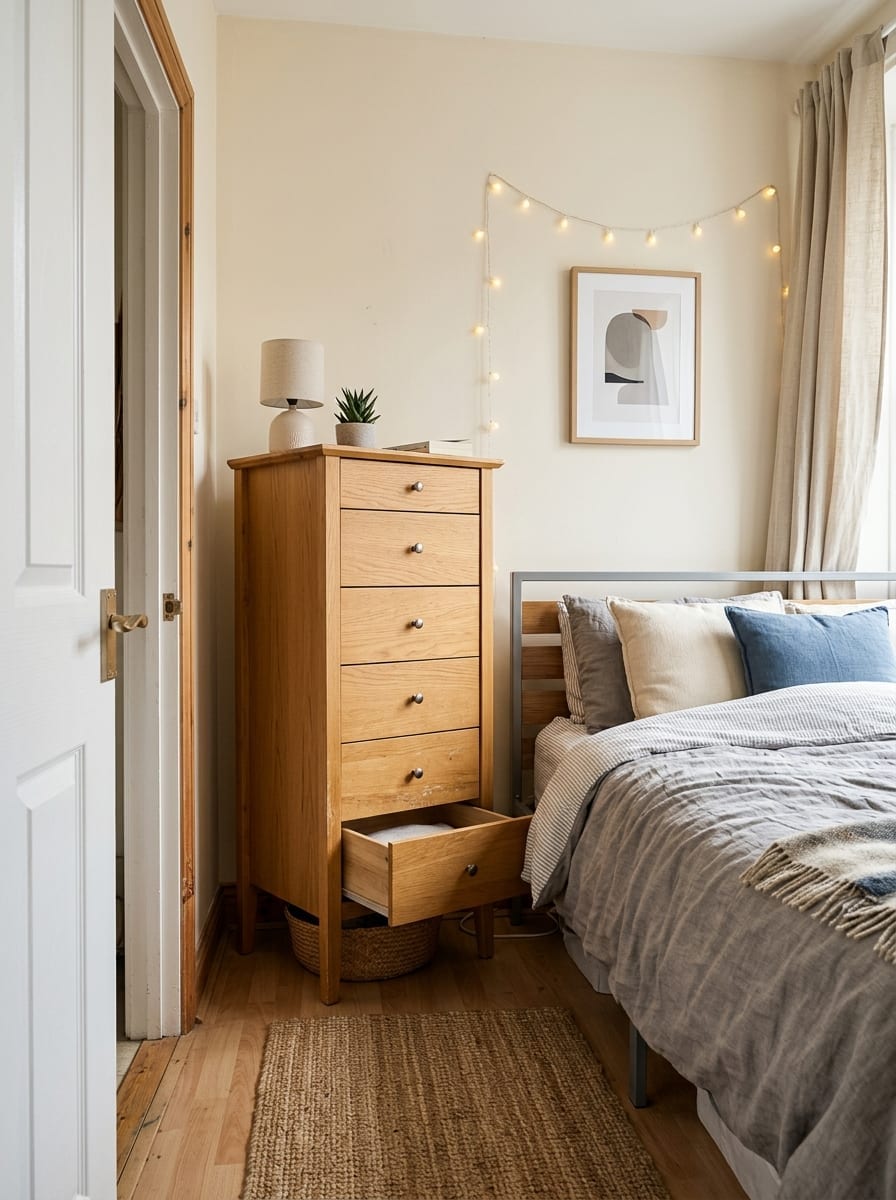
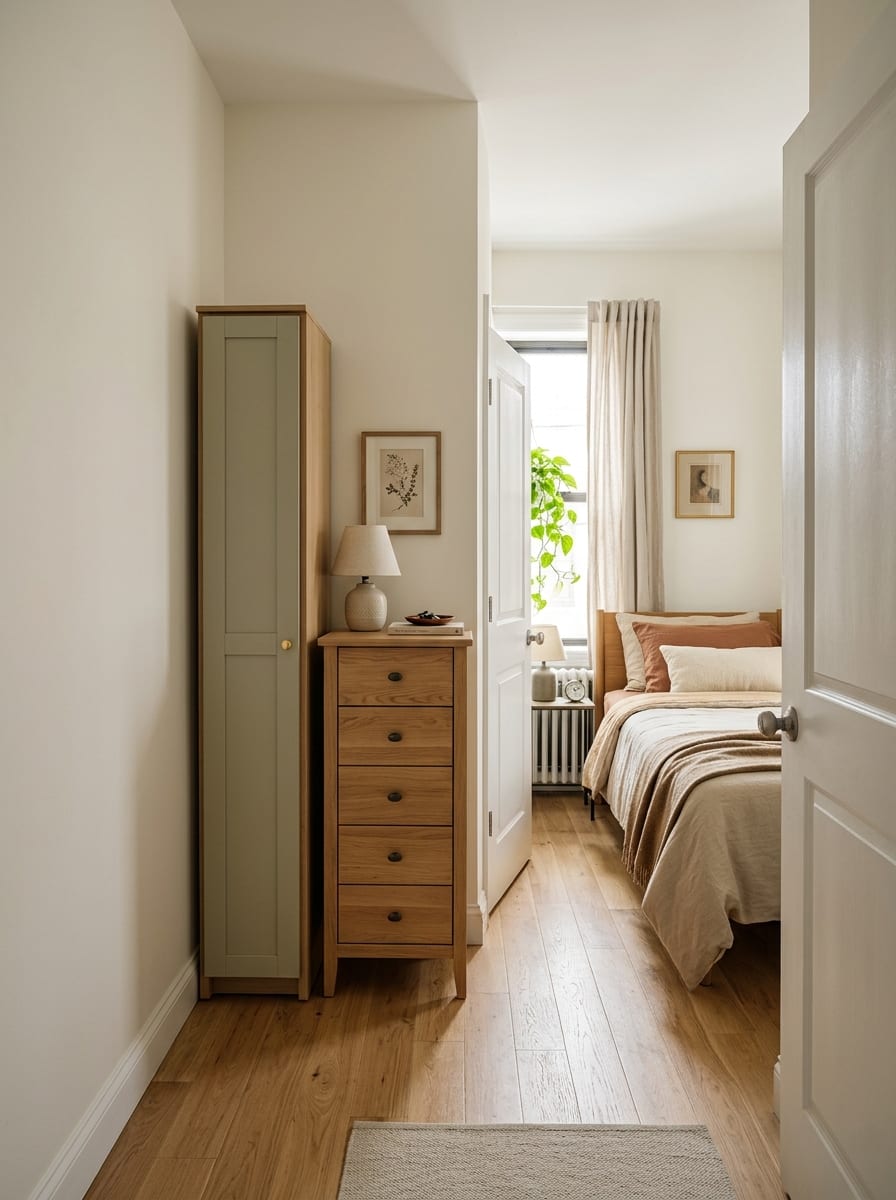
Small bedroom with a tall narrow light-oak dresser positioned between the bedroom door and the bed with clear walking space
In This Guide
A dresser sounds like basic bedroom furniture. In a small bedroom, it is actually a layout decision. A dresser can give you useful closed storage for:
- folded clothes
- underwear
- accessories
- linens
but it also needs:
- wall width
- floor depth
- drawer-opening clearance
- walking space
That means a dresser that technically fits against the wall can still make the room difficult to use. The better question is not:
“Where can I squeeze a dresser?”
It is: “What dresser shape gives me the storage I need with the least damage to the layout?”
Sometimes that means going taller. Sometimes lower. Sometimes using the dresser as a nightstand. And sometimes the right answer is not using a dresser at all. Here are nine practical options for small bedrooms.
1. The Tall Narrow Dresser
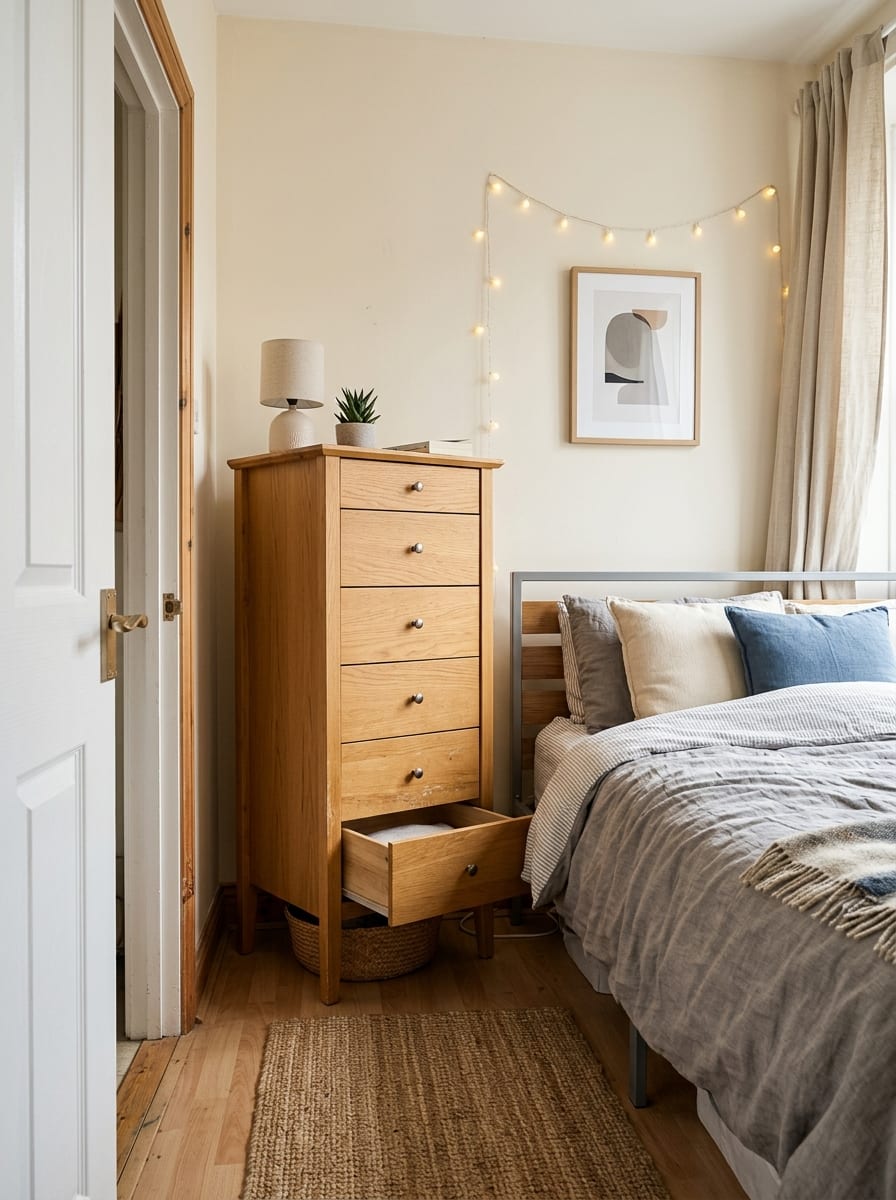
A tall narrow dresser is one of the most useful shapes when wall width is limited. Instead of using a long horizontal piece, you trade width for height.
Why it works
You gain multiple drawers while using a relatively small section of wall. That can be helpful between:
- door
- closet
- bed
- window
where there may only be a narrow vertical zone available.
Best for
A tall dresser works well for:
- underwear
- socks
- T-shirts
- sleepwear
- folded tops
rather than very bulky items.
Keep the depth controlled
Tall does not automatically mean space-saving. A dresser that projects too far into the room can still create a circulation problem. Measure:
- width
- depth
- drawer extension
before buying.
Watch visual weight
A very dark tall dresser can dominate a tiny bedroom. If the room already feels heavy, a lighter finish may help it blend more easily.
2. The Low Wide Dresser
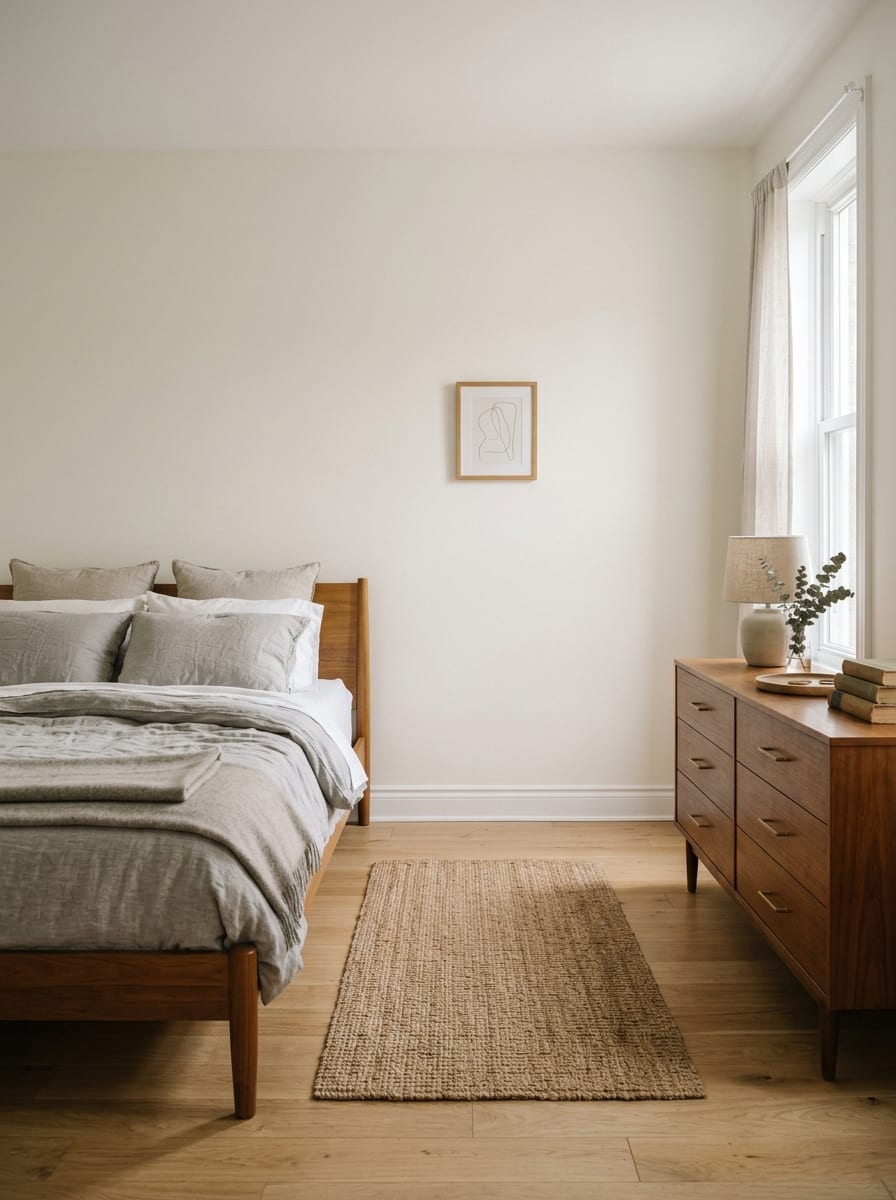
A low wide dresser can work when the room has one longer empty wall but limited visual height. It may also double as:
- display surface
- TV stand
- folded-clothing storage
Why it works
The lower profile can keep the room feeling visually open. That is useful when the bedroom already has:
- tall headboard
- wardrobe
- window treatments
and does not need another tall block.
Watch the width
A wide dresser can consume a lot of wall. Make sure it does not interfere with:
- door swing
- closet doors
- curtains
Best for
This works especially well when the wall itself is long but the central walkway remains generous enough.
Keep the top restrained
A low dresser invites styling. Do not fill it with:
- lamps
- frames
- trays
- plants
- baskets
until the top becomes another clutter zone.
3. The Bedside Dresser
If the room does not have enough space for both:
- dresser
- nightstand
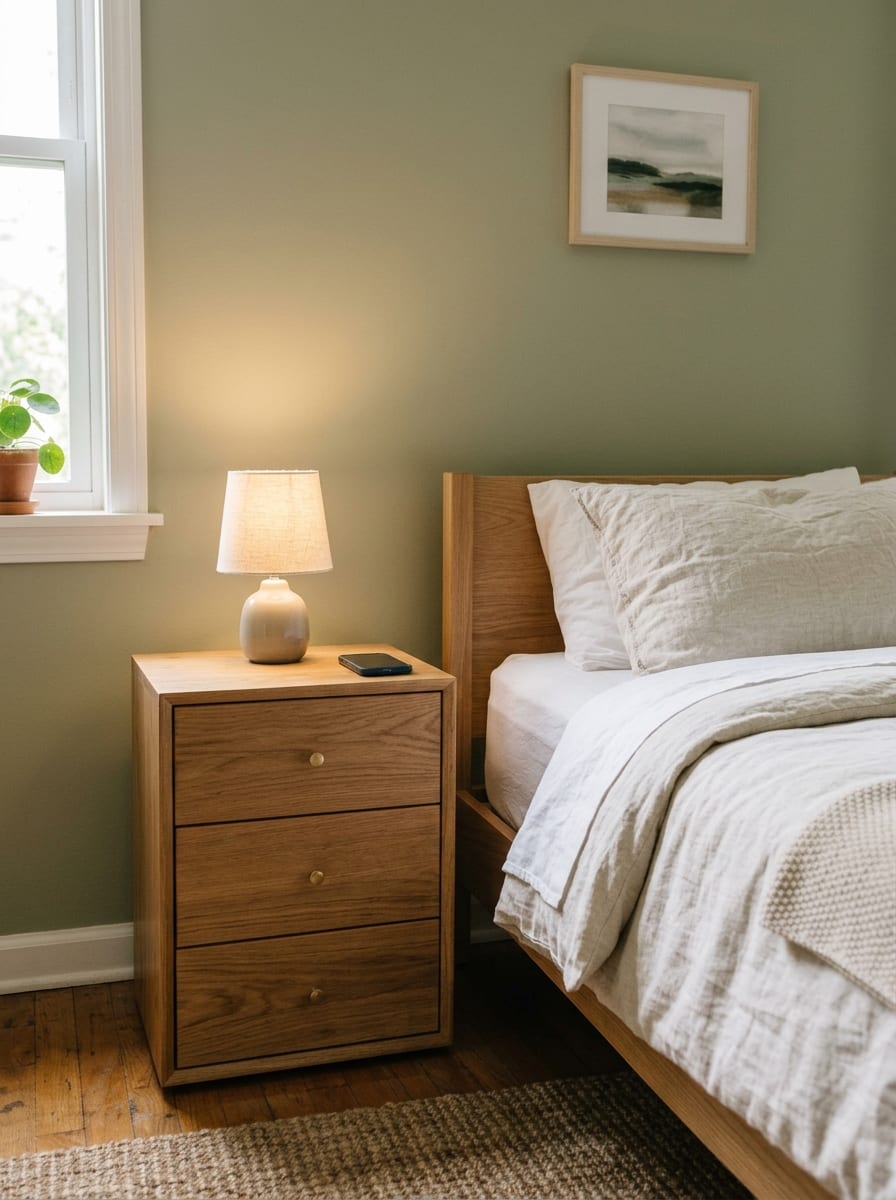
combine the two functions. A compact dresser can sit beside the bed and act as:
- clothing storage
- bedside surface
at the same time.
Why it works
You replace one furniture piece instead of adding another. That is exactly the kind of overlap a small bedroom needs.
Choose the height carefully
The dresser top should be reasonably accessible from bed. If it is far above the mattress, it may feel awkward as a nightstand.
Keep the top functional
Leave room for:
- lamp
- phone
- glass of water
Do not cover the entire top with decor.
Best for
This is especially useful in:
- studio apartments
- small guest rooms
- narrow bedrooms
where furniture count matters.
4. The Under-Window Dresser
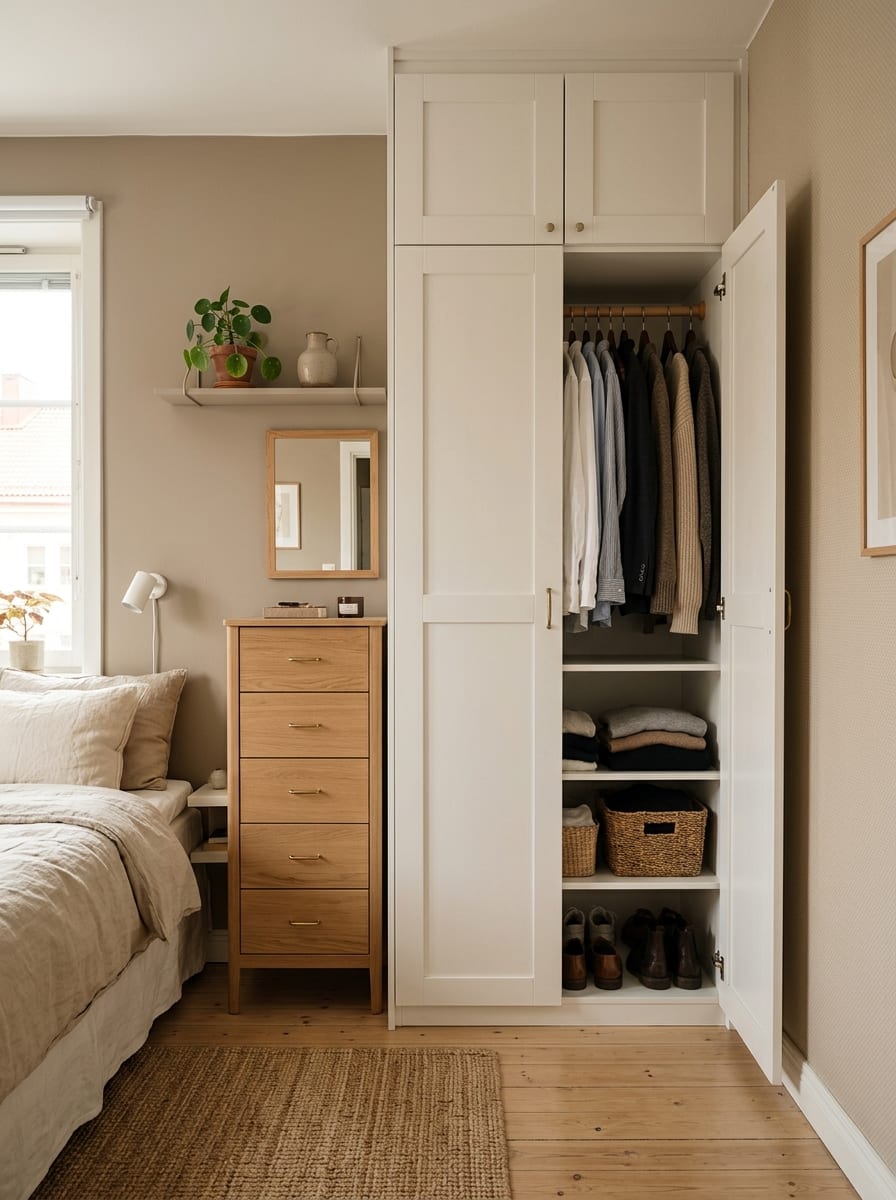
The wall beneath a window is often underused. A low dresser can sometimes fit there without blocking the room vertically.
Why it works
You use a zone that may not be suitable for:
- tall wardrobe
- tall shelving
- large artwork
Measure sill height
The dresser should not block:
- window opening
- handle
- airflow
depending on the window design.
Watch curtains
Make sure the dresser does not interfere with:
- full-length curtains
- blinds
- radiator
if present.
Avoid heat conflicts
Do not place a dresser directly in front of a radiator or heating unit if that blocks airflow or creates safety issues.
5. The Closet-Adjacent Dresser
A dresser near the closet can create one concentrated clothing zone. That can make the room easier to use.
Why it works
Instead of spreading clothing storage across multiple walls, you keep:
- hanging clothes
- folded clothes
close together.
Protect closet clearance
This only works if the dresser does not interfere with:
- sliding doors
- hinged doors
- closet drawers
Think about dressing flow
A useful setup might be: closet → dresser → mirror all in one part of the room.
Keep the dresser narrow enough
The whole point is to support the closet, not block it.
6. The Wall-Mounted Drawer Unit
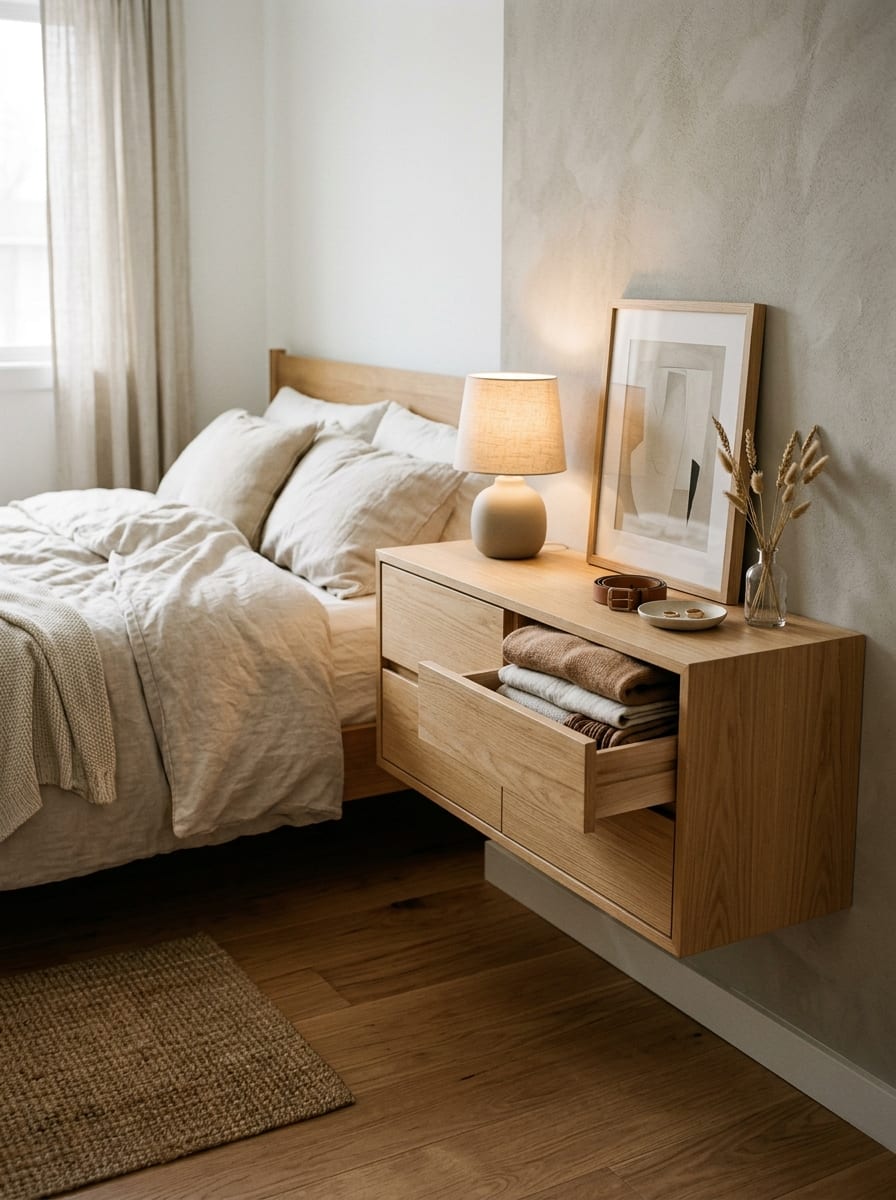
If visible floor space matters, a wall-mounted drawer unit can make the room feel lighter.
Why it works
The floor continues underneath. That can visually reduce the sense of furniture crowding the room.
Best for
This can work well as:
- compact dresser
- vanity
- nightstand-storage hybrid
depending on size.
Keep expectations realistic
A floating unit usually does not hold as much as a large floor dresser. It is better for:
- smaller clothing categories
- accessories
- personal items
Installation matters
The wall and hardware must be appropriate for:
- cabinet weight
- stored load
Follow manufacturer installation guidance.
Rental considerations
If wall mounting is not allowed, choose a freestanding option.
7. The Dresser + TV Combination
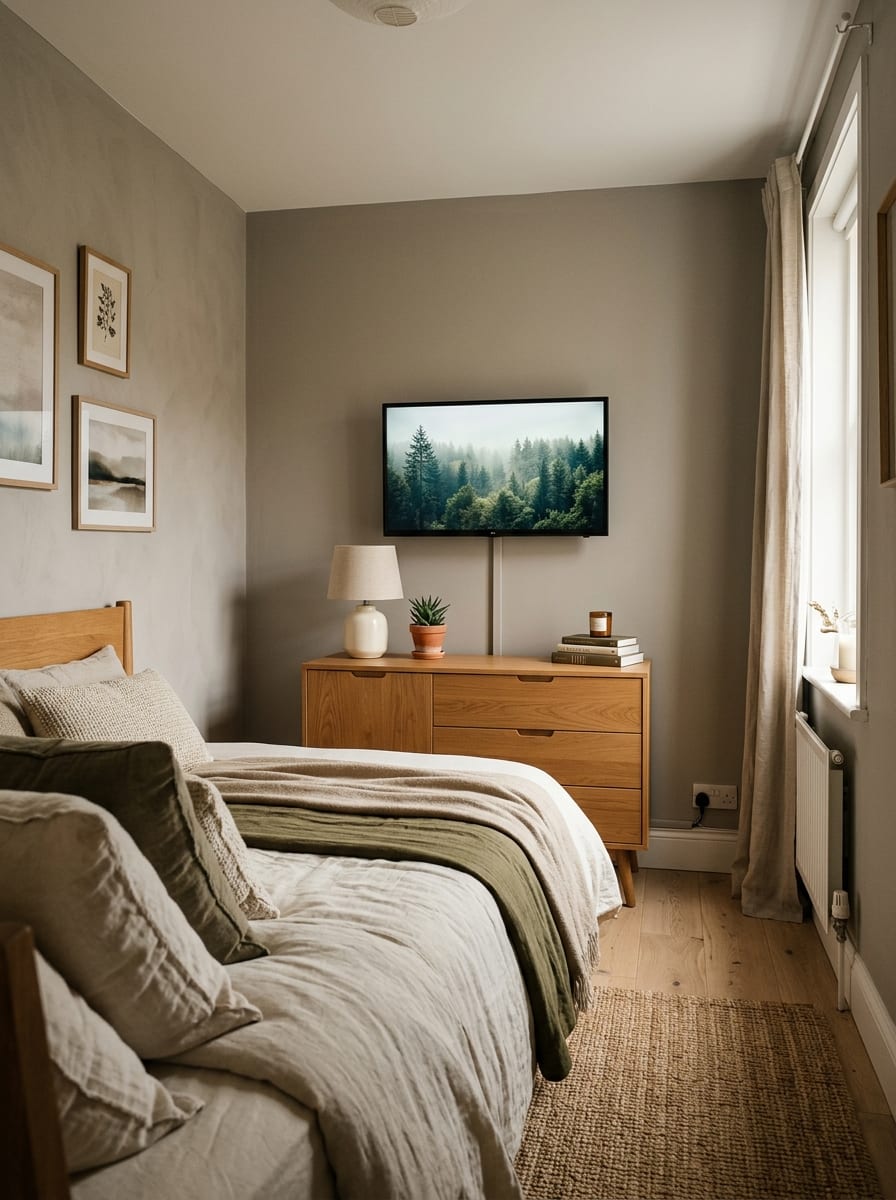
If you want a TV in the bedroom, let the dresser handle that function too. Do not add:
- dresser
- TV stand
as two separate pieces unless the room genuinely has space.
Why it works
One furniture footprint handles:
- clothing storage
- media support
Keep the dresser low enough
A very tall dresser can place the TV too high. Think about comfortable viewing from bed.
Manage cables
Keep:
- power cords
- media cables
controlled and away from drawer operation.
Avoid cluttering the top
The dresser does not also need:
- five decor pieces
- tray
- large lamp
once it is supporting a TV.
8. The Inside-the-Closet Dresser
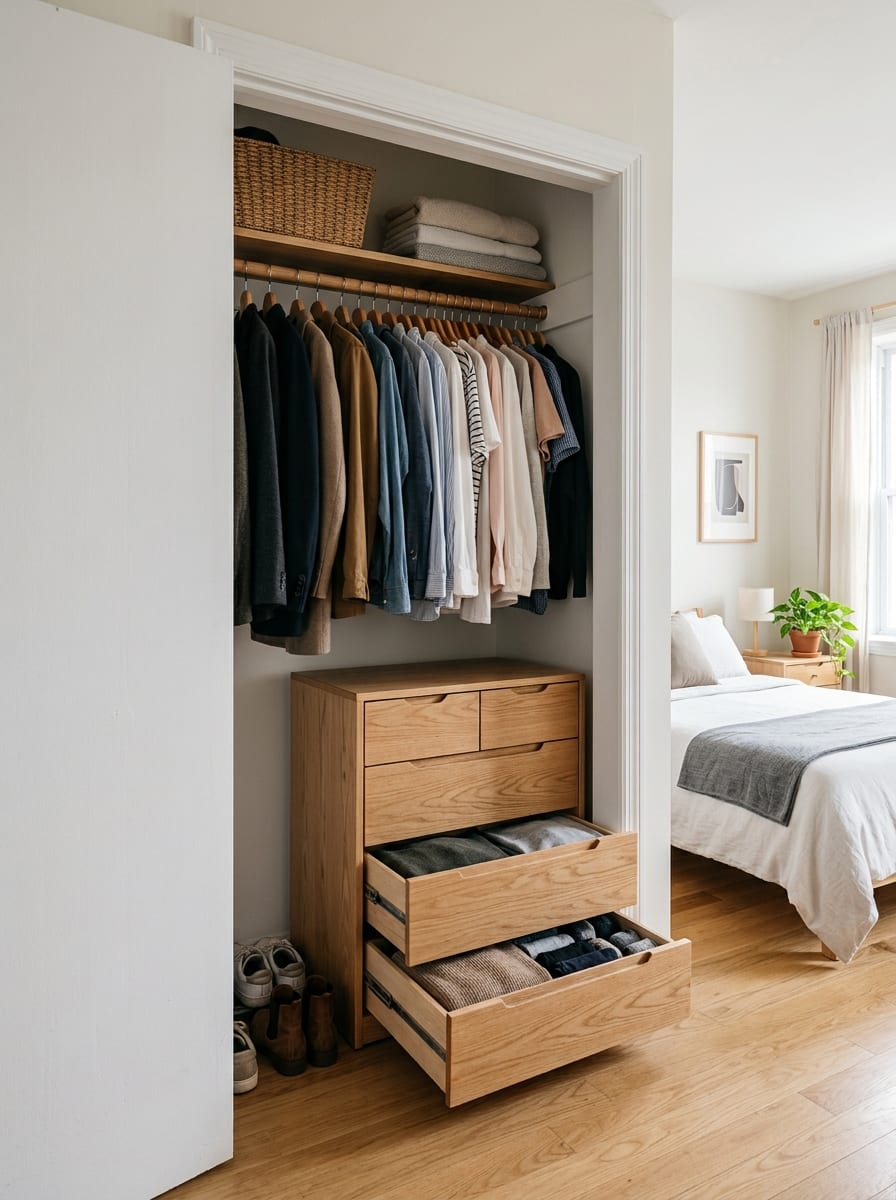
If the closet is deep enough, a dresser can sometimes live inside it. That removes an entire furniture piece from the main bedroom floor.
Why it works
The dresser footprint moves into storage space that already exists.
This only works if
The closet still has enough room for:
- hanging clothes
- drawer opening
- access
Use a lower dresser if needed
A low dresser can sit beneath:
- shorter hanging items
such as shirts or jackets.
Measure carefully
Check:
- closet depth
- drawer extension
- hanging clearance
- door opening
before moving furniture inside.
9. The No-Dresser Storage Formula
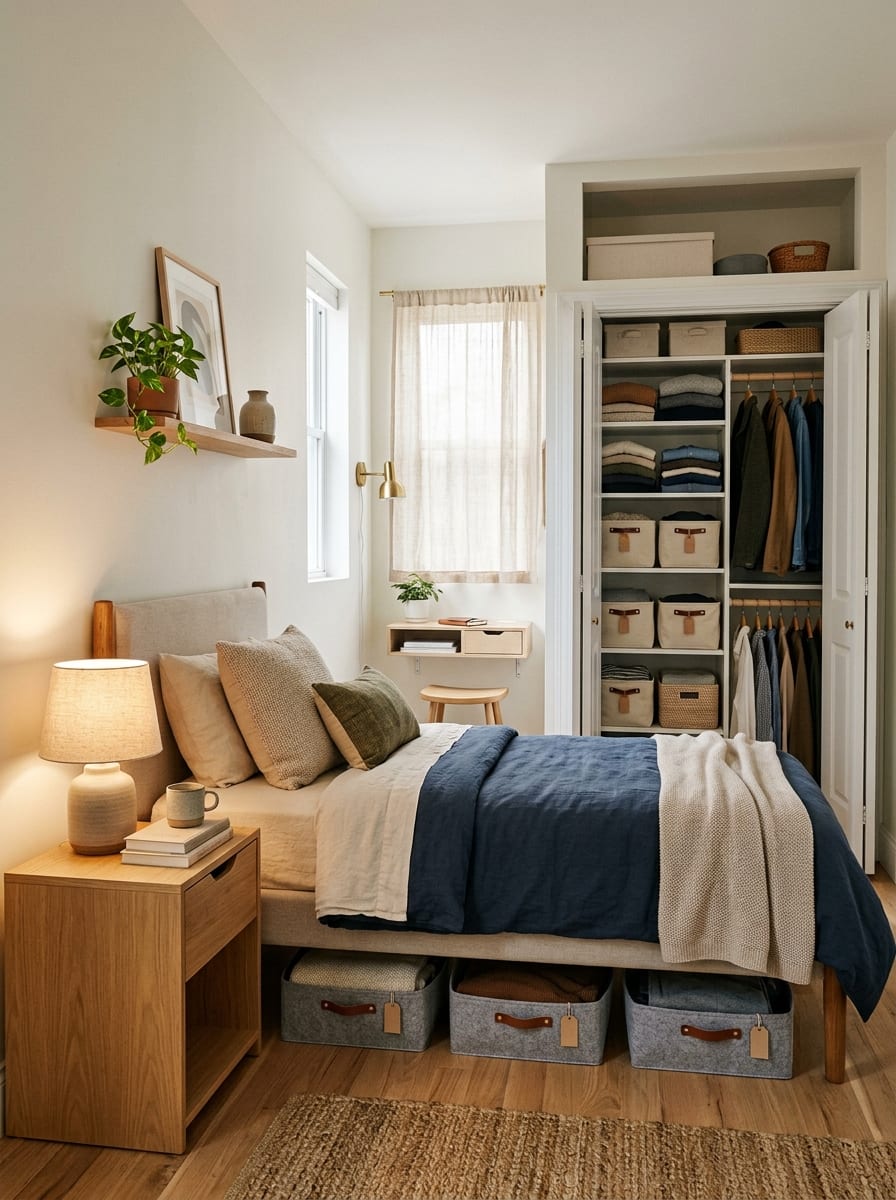
Sometimes the best small-bedroom dresser idea is not having one. If your closet already handles most clothing, another large furniture piece may not be necessary. Instead, combine:
- closet organizers
- shelf baskets
- under-bed storage
- one drawer nightstand
Why it works
You remove an entire bulky footprint from the room.
Best when
You mostly own:
- hanging clothes
- folded items that fit in closet bins
- limited clothing volume
Do not force it
If you constantly need folded-clothing storage, eliminating the dresser may make the room harder to maintain. The goal is not minimalism for its own sake. It is better function.
Start With Your Clothes, Not the Furniture
Before deciding on dresser size, ask: What actually needs to go inside it?
Separate your folded clothing into categories such as:
- underwear
- socks
- T-shirts
- jeans
- sleepwear
- workout clothes
Then estimate how much drawer volume you really need.
You May Need Less Dresser Than You Think
If some items already fit well in:
- closet shelf
- wardrobe
- under-bed storage
the dresser does not need to hold everything.
Measure the Room in Use, Not Empty
A bedroom may look large enough when the drawers are closed. The real test is when:
- dresser drawer opens
- closet opens
- bedroom door opens
- someone walks around the bed
all in normal use.
Drawer Clearance Is Critical
Measure from the dresser front to the nearest obstacle. You need enough room to:
- open drawer
- stand in front of it
- remove clothing
comfortably.
Do Not Put a Dresser Where It Blocks the Main Route
Most bedrooms have a primary walking path: door → bed → closet Keep that route as clear as possible.
Tall vs Wide Dresser
Tall dresser
Better when:
- wall width limited
- vertical space available
Wide dresser
Better when:
- long wall available
- lower visual profile desired
Neither is automatically better.
Deep vs Shallow Dresser
Depth is often the dimension that causes trouble in small bedrooms. A dresser can fit on the wall but still project too far into the walkway. Look carefully at depth.
How Shallow Can a Dresser Be?
It depends on the drawer design and what you plan to store. Use actual product dimensions rather than relying on terms such as:
- slim
- compact
- narrow
which are relative.
Measure the Baseboard
Some dressers cannot sit completely flush against the wall because of:
- baseboard
- wall outlet
- molding
Include this in your depth calculation.
Check Outlet Locations
Do not block the only useful outlet in the room with a dresser. Especially if the dresser also serves as:
- nightstand
- TV stand
- charging station.
Watch Bedroom Door Swing
A dresser near the entry can interfere with the door. Open the bedroom door fully before choosing the location.
Watch Closet Door Swing
Hinged closet doors need room. A dresser that sits just outside the swing may still make access awkward.
Sliding Closets Give More Flexibility
Sliding doors do not need a large opening arc. That can make dresser placement near the closet easier.
Check Drawer-to-Bed Clearance
This is one of the most common tight-space problems. A dresser may fit opposite the bed, but once the drawer opens there is nowhere to stand.
Use Painter’s Tape
Mark the full dresser footprint on the floor. Then also mark how far the drawers extend. Walk through the room. That gives you a much better sense of fit.
Try a Cardboard Mockup
If you are unsure about dresser height or depth, use:
- boxes
- stacked cardboard
to approximate the size. This is especially useful for tall dressers.
Keep the Dresser Top Mostly Clear
A cluttered dresser can make a small bedroom look busy even if the storage itself is good. Try to keep the top limited to:
- lamp
- tray
- one decorative piece
depending on function.
Use a Tray for Small Items
If the dresser becomes a landing zone for:
- jewelry
- keys
- perfume
- coins
one small tray can keep those items contained.
Do Not Turn the Dresser Into a Second Closet
Avoid stacking:
- clothing
- boxes
- bags
on top. If that happens regularly, the storage system needs adjusting.
Dresser as Nightstand
This is one of the highest-value combinations in a small bedroom. You gain:
- drawers
- bedside surface
without adding another furniture piece.
Dresser as Vanity
A low dresser can sometimes double as a vanity. Add:
- wall mirror
- small stool
if the room allows.
Keep the stool tuckable
The stool should slide underneath or nearby without blocking circulation.
Dresser as Desk?
Usually less ideal. The drawer structure often blocks legroom. If you need a work surface, a proper shallow desk may function better.
Dresser as TV Stand
This works well when the height is comfortable for viewing. Avoid placing the TV excessively high.
Put the Dresser on the Least Important Wall
Not every wall is equally valuable. Prioritize walls for:
- bed
- closet access
- windows
first. Then place the dresser in the remaining logical zone.
Do Not Block Natural Light
A tall dresser beside a small window can reduce:
- light
- visual openness
Avoid crowding the window unless necessary.
Under-Window Dressers Need Breathing Room
Make sure the dresser does not interfere with:
- sill
- handle
- curtains
- radiator
if present.
Dresser Beside a Window
A tall narrow dresser can sometimes fit beside a window. Keep enough clearance so it does not visually squeeze the opening.
Dresser Behind a Door
This can work only if:
- door still opens
- drawers remain accessible
Often it looks like unused space but is not actually functional.
Dresser Beside the Bed
This is usually one of the most efficient placements when the dresser is compact. Just make sure:
- drawer handles
- mattress
- bedding
do not interfere.
Dresser at the Foot of the Bed
Usually difficult in a genuinely small bedroom because it reduces the main circulation zone. A bench is often better there if you need something low-profile.
Dresser Opposite the Bed
This is common and can work well. Check:
- walkway width
- drawer clearance
- TV height
if relevant.
Dresser Next to the Closet
Good for creating one wardrobe zone. Keep the dresser shallow and protect closet access.
Dresser Inside the Closet
This can be one of the biggest space-saving moves if the closet is deep enough. But do not sacrifice usable hanging storage without reason.
Small Bedroom With No Closet
A dresser may be much more important here. You may need a combination of:
- dresser
- garment rack
- under-bed storage
rather than eliminating the dresser.
Small Bedroom With a Large Closet
This is where skipping the dresser becomes more realistic. Use the closet efficiently first.
Bedroom With a Queen Bed
The bed already occupies a large footprint. Favor:
- shallow dresser
- tall dresser
- bedside dresser
depending on room shape.
Bedroom With a Full Bed
You may have a little more flexibility. Still protect circulation rather than filling the extra space automatically.
Bedroom With a Twin Bed
A low wide dresser can sometimes fit comfortably because more floor area remains available.
Dresser for a Narrow Bedroom
A tall narrow dresser is usually easier than a deep wide one. Depth is especially important.
Dresser for a Square Bedroom
You may have more wall options. Choose placement based on:
- closet
- door
- window
- walking route.
Dresser for a Studio Sleeping Area
Use furniture that visually blends with the rest of the apartment. A huge traditional dresser may feel heavy in an open studio.
Light Dresser vs Dark Dresser
Light
Can visually blend with:
- pale walls
- neutral rooms
Dark
Can create contrast and grounding. In a tiny room, shape and size matter more than finish alone.
Leggy Dressers Can Feel Lighter
Visible floor beneath a dresser can reduce visual heaviness. This works well in modern spaces.
Solid-to-the-Floor Dressers
These can feel more substantial. They may work better if you want maximum drawer capacity and a more built-in look.
Handle-Free Dressers
Flat fronts reduce visual noise. This can be useful in a very small room.
Knobs vs Pulls
Choose hardware that does not project too far into:
- narrow walkway
- bed edge.
Avoid Oversized Hardware
Large handles can make a small dresser feel busier.
Dresser Color Can Match the Wall
A dresser close to the wall color can visually recede. For example: white dresser + warm white wall or: light greige dresser + greige wall
Wood Dressers Add Warmth
Natural wood can help a compact bedroom feel warmer. Keep the wood tone coordinated with:
- floor
- bed
- nightstand
without needing perfect matching.
Do Not Match the Entire Bedroom Set Automatically
A matching:
- bed
- dresser
- nightstands
can feel heavy in a small room if every piece is substantial. Mix lighter pieces when needed.
Use the Dresser for Closed Storage
The main advantage of a dresser is hiding visual clutter. Avoid replacing the drawer storage with open baskets on top.
Fold Clothes by Category
Assign drawers by category. For example: Top underwear and socks. Middle T-shirts and sleepwear. Bottom heavier clothing.
Keep Frequently Used Clothes Higher
Daily items should be easier to reach. Seasonal or low-use items can go lower.
Do Not Overfill Drawers
Overstuffed drawers:
- stick
- become messy
- damage organization
If every drawer is over capacity, you may need to edit the clothing rather than buy another dresser immediately.
Use Drawer Dividers Where Useful
Dividers can help with:
- socks
- underwear
- accessories
but not every drawer needs internal organizers.
Vertical Folding Can Improve Visibility
If the drawer depth allows, file-folding can make categories easier to see. Use whatever folding method works best for your clothing and drawer shape.
Do Not Store Heavy Items in Weak Drawers
Follow the furniture manufacturer’s load guidance.
Secure Tall Furniture Where Required
Tall dressers can pose tip-over risks. Follow manufacturer anchoring instructions and relevant safety guidance, especially in homes with children.
Do Not Leave Multiple Drawers Open
Opening several drawers at once can affect furniture stability. Follow product safety guidance.
Renter-Friendly Dresser Strategy
Freestanding dressers are naturally renter-friendly. If wall anchoring is required for safety, follow:
- lease
- manufacturer
- appropriate installation guidance.
How to Make a Dresser Look Less Bulky
Try:
- lighter finish
- shallow depth
- visible legs
- clean front
- minimal styling
- matching wall tone.
Mirror Above a Dresser
A mirror can help the area feel more functional and reflect light. Keep the mirror proportionate to the dresser.
Art Above a Dresser
One larger piece often looks calmer than:
- several tiny frames.
Dresser Lamp
A lamp can work if the dresser is also serving as:
- nightstand
- vanity
but it is not necessary on every dresser.
Keep a Charging Zone Small
If you charge devices on the dresser, contain:
- cable
- phone
- watch
in one small area.
Common Small Bedroom Dresser Mistakes
Choosing based only on width
Depth can be the real problem.
Ignoring drawer-opening clearance
The dresser fits but cannot function.
Adding a dresser and keeping unnecessary furniture
The room becomes overloaded.
Using a dresser that blocks the closet
Storage should not block storage.
Choosing a tall dresser beside a window
It can reduce light and openness.
Filling the dresser top with decor
The room still looks cluttered.
Buying too much drawer capacity
The dresser becomes bigger than necessary.
Ignoring outlet placement
The furniture blocks useful power access.
Using a wide dresser in a narrow room
The walkway disappears.
Assuming every bedroom needs a dresser
Some layouts work better without one.
Quick Small Bedroom Dresser Decision Guide
Choose a Tall Narrow Dresser if:
You have little wall width but good vertical space.
Choose a Low Wide Dresser if:
You have a long wall and want a lower visual profile.
Use the Bedside Dresser if:
You need both clothing storage and a nightstand.
Use the Under-Window Dresser if:
The window wall is otherwise wasted.
Use the Closet-Adjacent Dresser if:
You want one concentrated clothing zone.
Choose a Wall-Mounted Drawer Unit if:
Visible floor space matters most.
Use the Dresser + TV Setup if:
You want to avoid a separate TV stand.
Put the Dresser Inside the Closet if:
The closet is deep enough.
Skip the Dresser if:
Your closet and under-bed storage already handle folded clothing.
The Simplest Small-Bedroom Dresser Formula
Use: least wall width + enough drawer capacity + full opening clearance not: largest dresser that fits. That distinction matters.
Final Thoughts
A dresser can solve storage in a small bedroom. It can also become one of the biggest obstacles in the room. Start with your actual folded-clothing needs. Then measure:
- wall width
- furniture depth
- drawer extension
- walking path
- door and closet clearance.
Go tall when width is limited. Go low when the room needs visual openness. Use the dresser as a nightstand or TV stand when possible. And do not assume the room needs one at all. The best dresser is not the one with the most drawers. It is the one that gives you enough storage without making the bedroom harder to move through.