13 Bedroom Inspiration Ideas for Small Apartments That Add Personality Without Making the Room Feel Smaller
Find 13 bedroom inspiration ideas for small apartments, from one signature color and a statement bed to compact art, soft lighting and personal displays that add character without crowding.
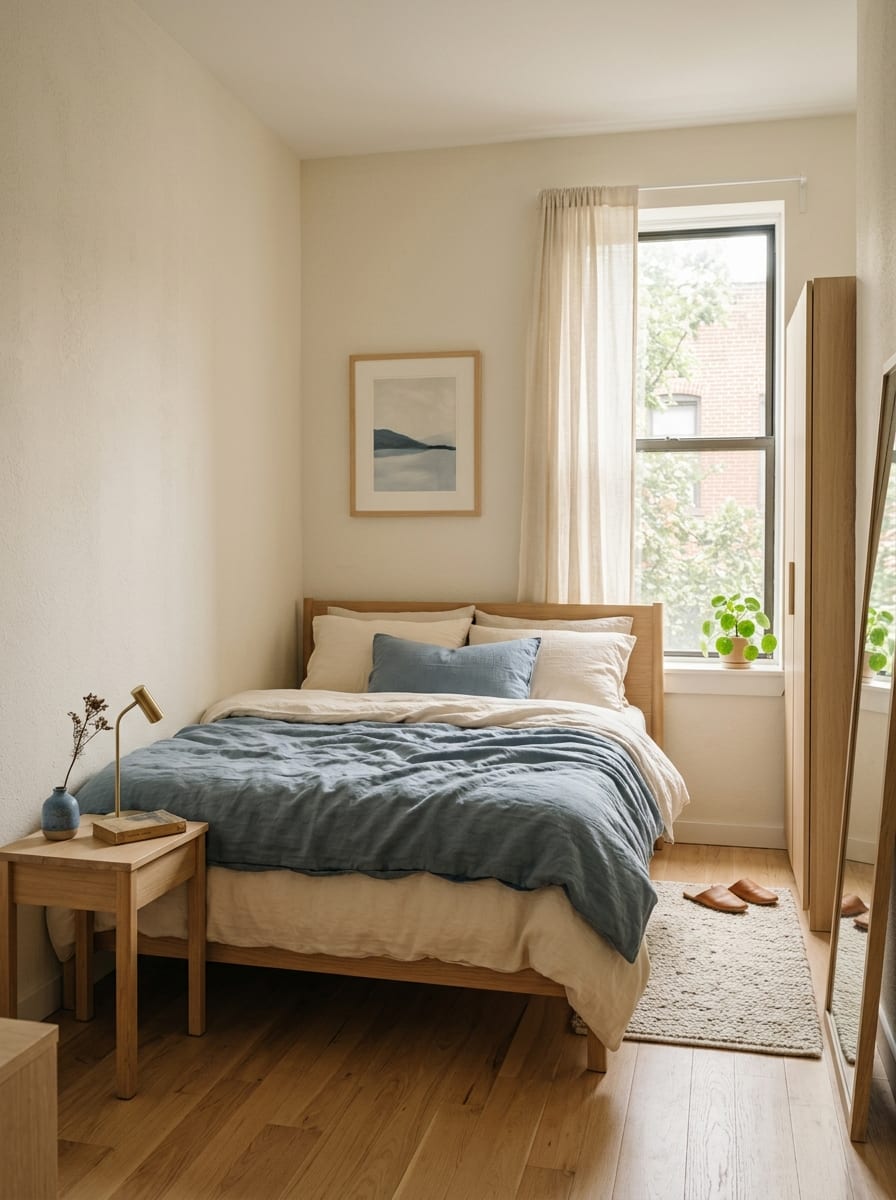
Small apartment bedroom with dusty blue linen bedding on a pale oak bed, cream walls, a framed blue landscape print and a tall window with linen curtains
In This Guide
A small bedroom can be functional without feeling like a storage room with a bed in it.
The challenge is finding ways to make the space feel personal without filling every available surface. In a compact apartment bedroom, every large piece of furniture already has a visual presence. Add too many patterns, colors, frames, lamps, and decorative objects, and the room can quickly feel smaller than it actually is.
The better approach is to give the bedroom a few strong personality cues and let the rest of the room stay relatively calm.
That might mean one beautiful color, a memorable bed, a compact art arrangement, a cozy reading corner, or a single shelf of things you genuinely love.
These 13 bedroom inspiration ideas are designed around that principle: more personality, not more stuff.
1. Build the Room Around One Color You Actually Love
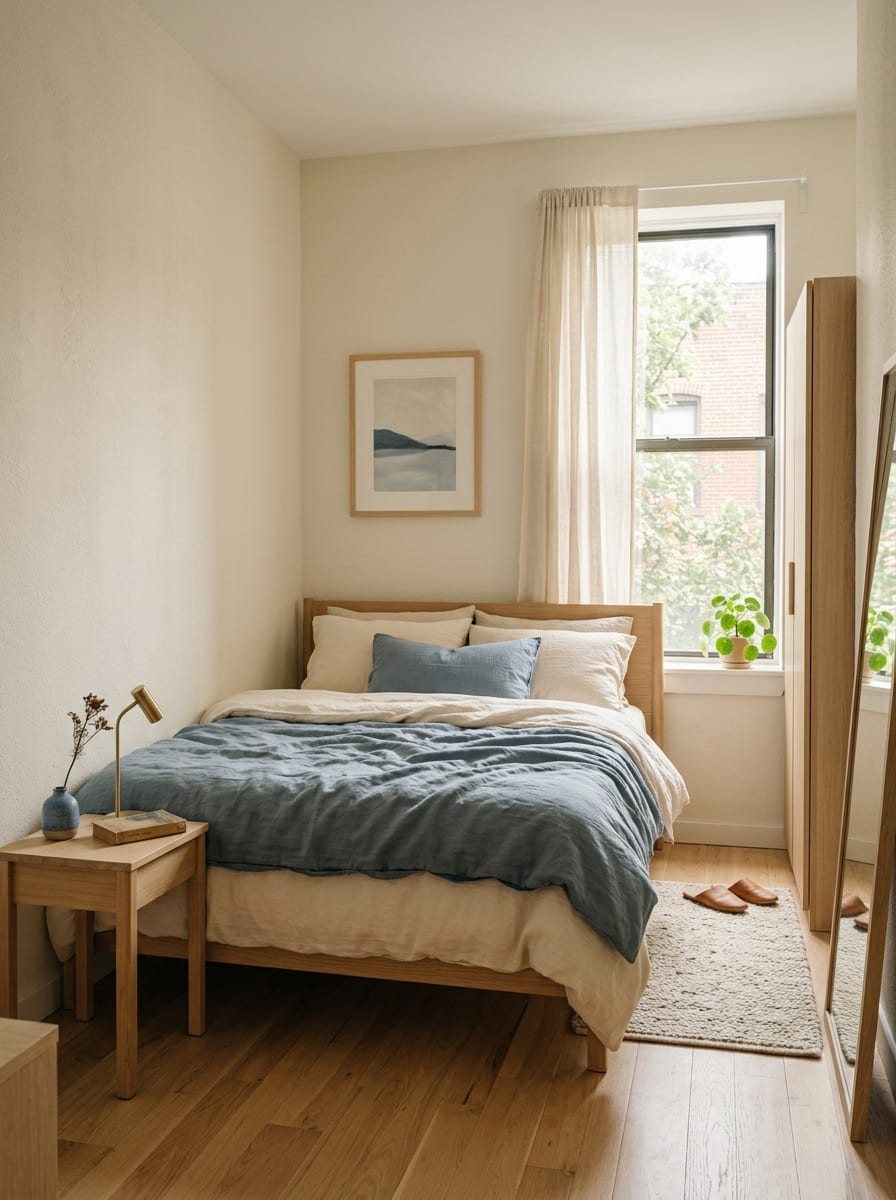
You don’t need a complicated color scheme to make a small bedroom feel designed.
Start with one color that gives the room its personality.
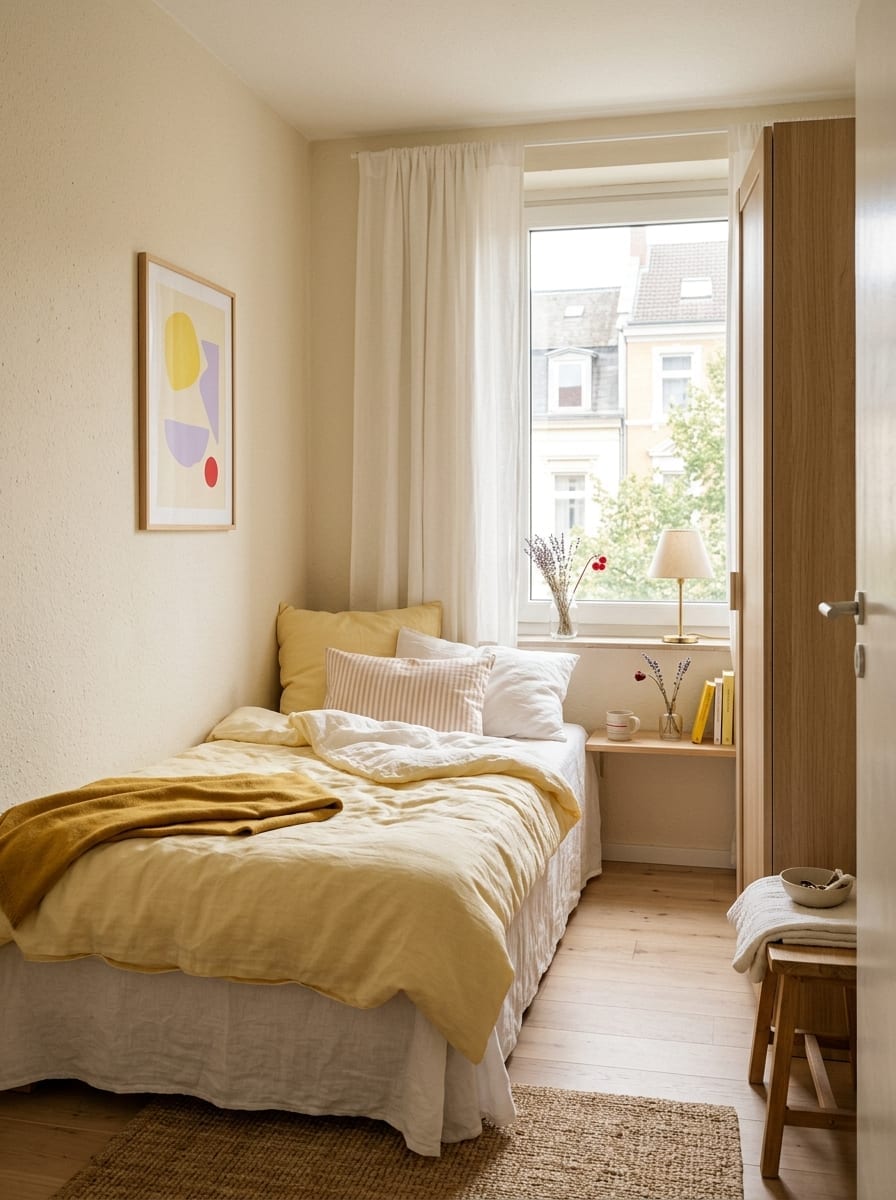
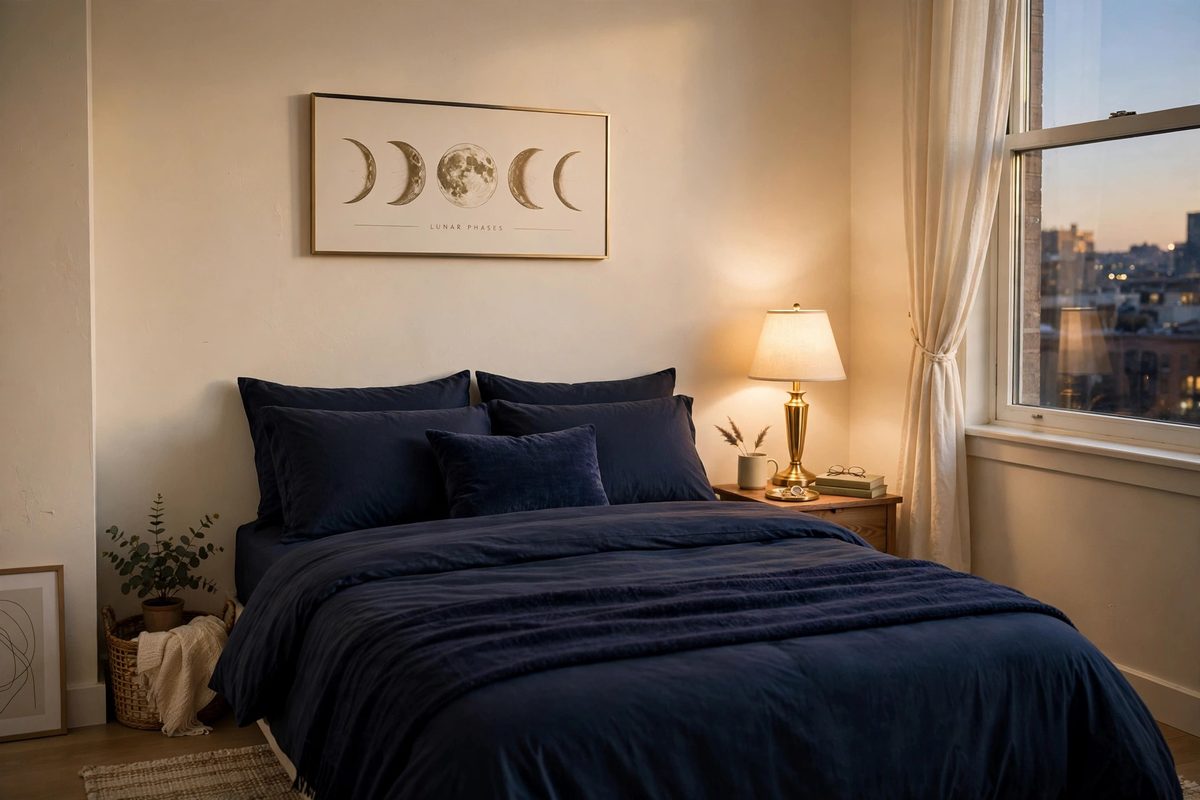
It could be dusty blue, warm terracotta, muted green, soft pink, butter yellow, deep navy, or even a warm brown.
Then repeat that color in a few different places rather than introducing a new accent everywhere.
For example, a muted green might appear in the bedding, a small framed print, and one ceramic object.
The repetition makes those details feel connected.
The rest of the room can stay quiet with cream, warm white, pale wood, or another neutral.
Why this works in a small room
A restrained color story reduces visual noise.
Instead of seeing ten unrelated decorative choices, the eye sees one intentional palette.
That can make a compact bedroom feel more finished without adding anything physically large.
Design name: The Color Anchor
2. Let the Bed Carry Most of the Personality
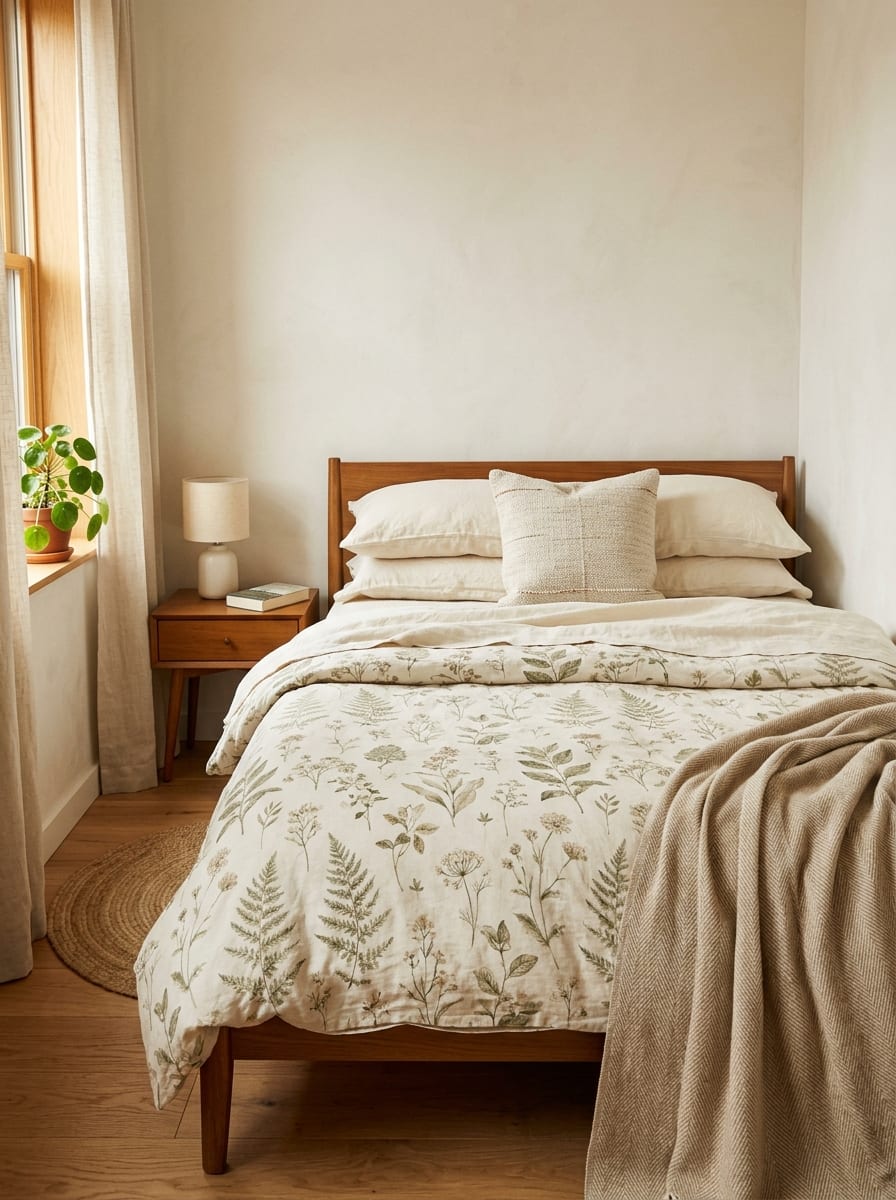
The bed is usually the largest object in a bedroom, so use it instead of trying to decorate around it.
A patterned duvet, textured quilt, unusual headboard, or layered bedding arrangement can become the room’s main visual feature.
That means you don’t need equally dramatic curtains, artwork, rugs, and accessories.
Try pairing one memorable bedding choice with simple sheets and a restrained number of pillows.
A small bedroom can look more sophisticated when one major element gets the attention and everything else supports it.
Try this combination
One expressive duvet + simple sheets + one textured throw + two or three intentional pillows.
You get a finished-looking bed without creating a mountain of bedding.
Design name: The Statement Bed
3. Replace a Bulky Nightstand With a Floating Ledge
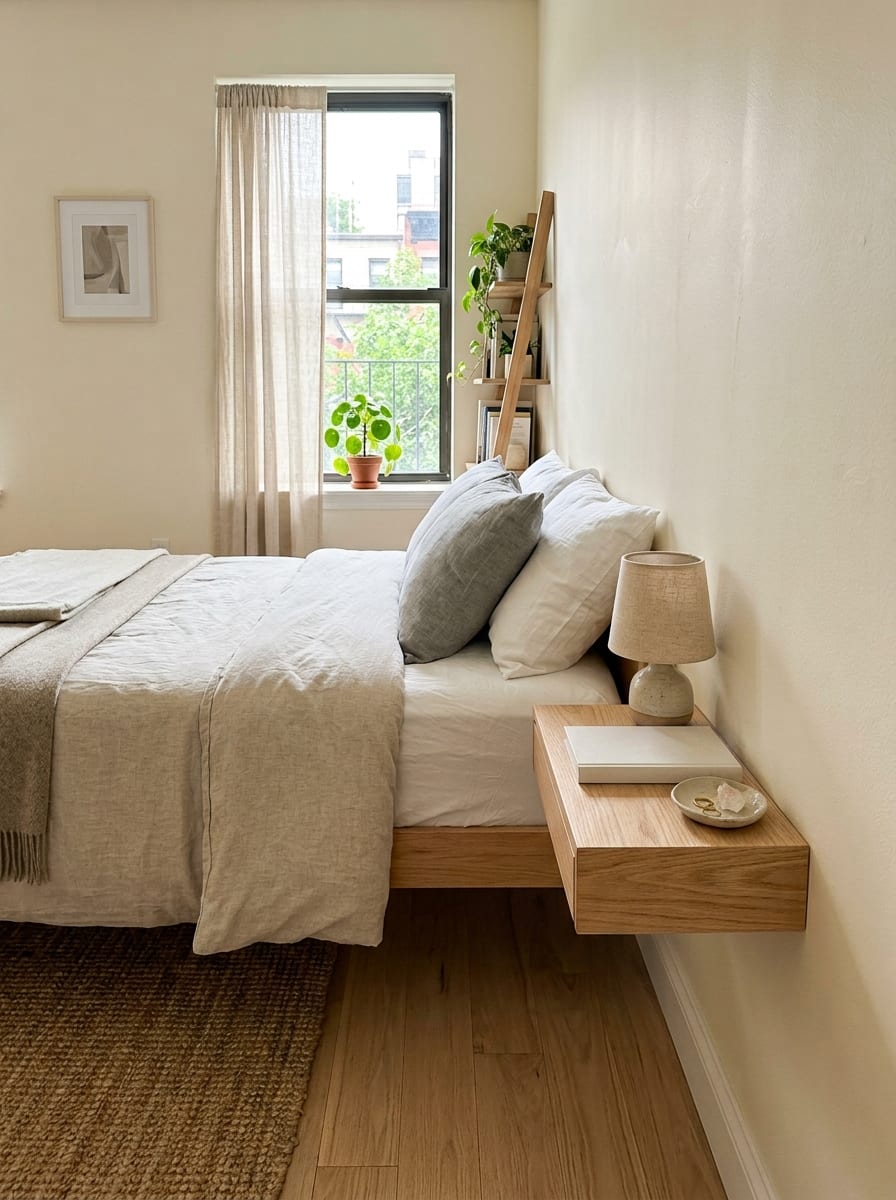
A conventional nightstand can take up more floor space than you realize.
If the bedroom is especially narrow, consider a slim floating shelf or wall-mounted ledge beside the bed.
It can hold the essentials:
- a small lamp
- phone
- book
- glasses
- a tiny decorative object
Because the floor remains visible underneath, the bedside area can feel lighter.
This also works when the bed is pushed close to a wall and there simply isn’t enough room for a conventional table.
The important part is keeping the shelf shallow enough that it doesn’t interfere with the bed or walking path.
Design name: The Floating Nightstand
4. Create One Compact Art Moment Instead of Decorating Every Wall
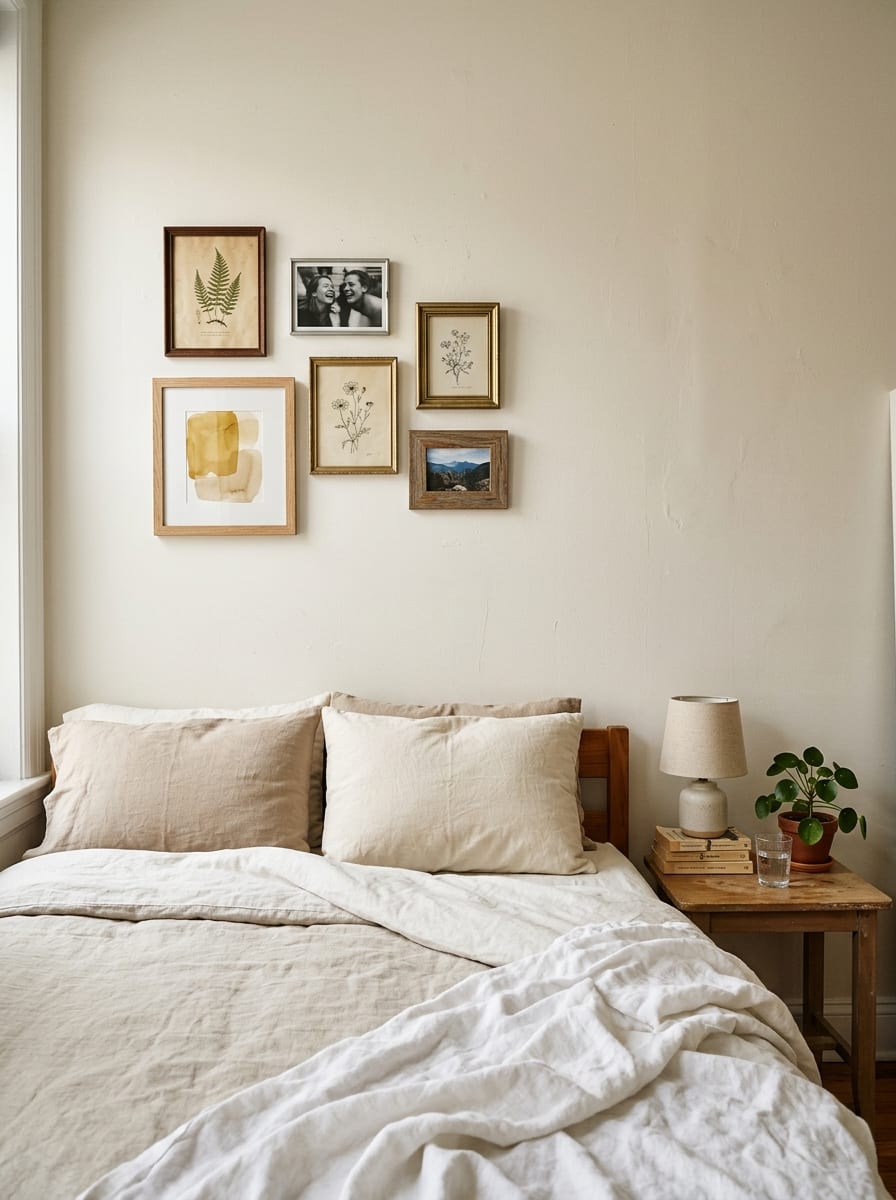
A small bedroom doesn’t need artwork everywhere.
In fact, one concentrated arrangement can have more impact than several isolated pieces.
Try a compact gallery above the bed, beside a dresser, or on the wall opposite the doorway.
Mix photographs, illustrations, small paintings, postcards, or simple line drawings.
They don’t have to match perfectly.
What should connect them is the overall feeling or color palette.
If the room already has patterned bedding, keep the artwork relatively simple.
If the bedding is plain, this is a good place to introduce more personality.
Keep the arrangement contained
A compact rectangle or vertically oriented cluster usually feels more intentional than spreading tiny frames randomly across the wall.
Design name: The Compact Art Wall
5. Use Lighting to Give the Bedroom Its Evening Personality
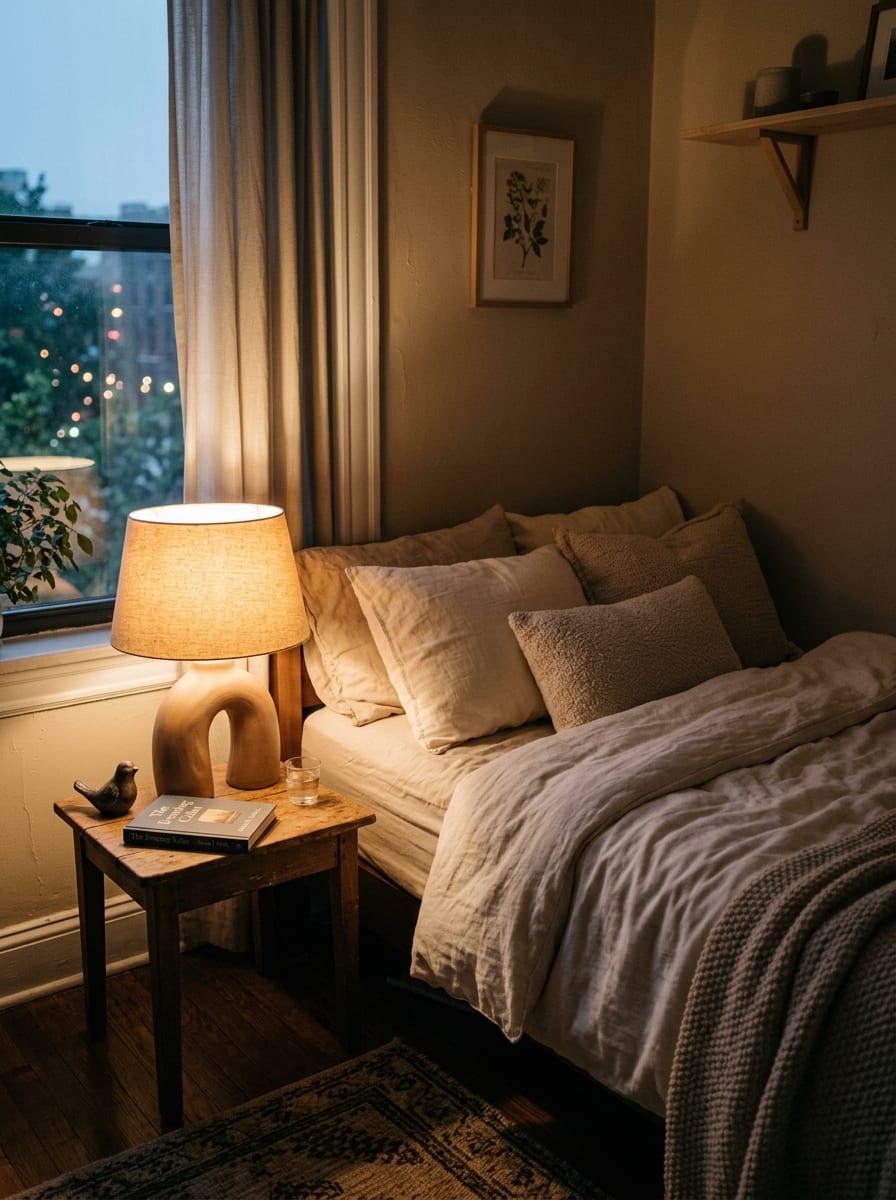
A bedroom can look completely different at night depending on the lighting.
Instead of relying entirely on one bright ceiling fixture, create a softer secondary light source.
A small table lamp, wall light, plug-in sconce, or sculptural floor lamp can create a warmer evening atmosphere.
The fixture itself can also become part of the decor.
A rounded ceramic lamp, pleated shade, vintage-inspired light, or simple globe fixture can add character without requiring another decorative object.
This is one of the easiest ways to make a bedroom feel more personal because the lighting changes how everything else in the room is perceived.
Design name: The Glow Corner
6. Hang Curtains Higher to Give the Room More Vertical Presence
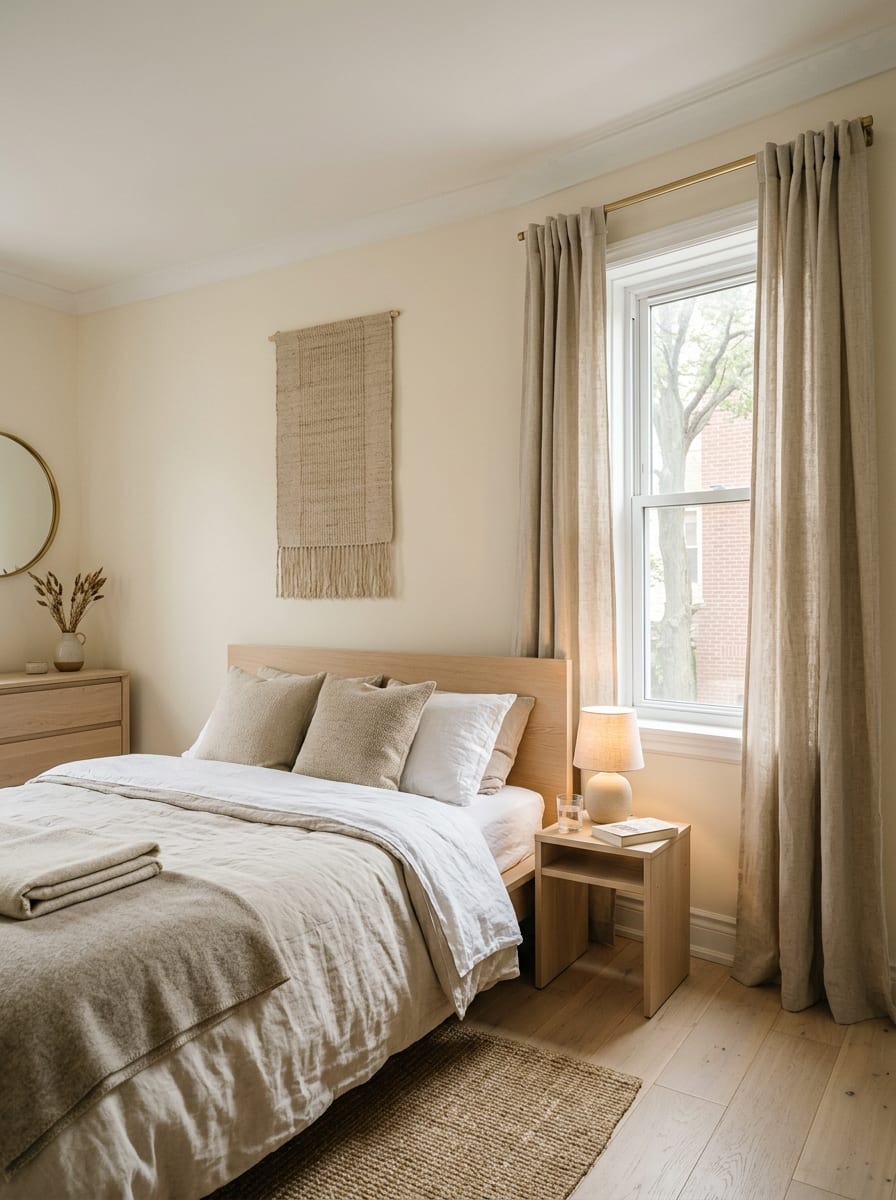
Curtains can do more than cover a window.
In a small bedroom, they can influence how tall the room feels.
If the layout allows, mount the curtain rod somewhat above the window frame and let the fabric fall close to the floor.
This draws the eye upward and creates a stronger vertical line.
Choose the fabric according to the rest of the room.
Soft linen-like curtains work well with natural materials. A subtle stripe can emphasize height. A small floral or gingham pattern can add personality when the bedding is relatively quiet.
Don’t make the curtains compete with everything else.
Their job is to frame the window and support the room’s overall character.
Design name: The Elevated Curtain
7. Turn One Small Corner Into a Reading Spot
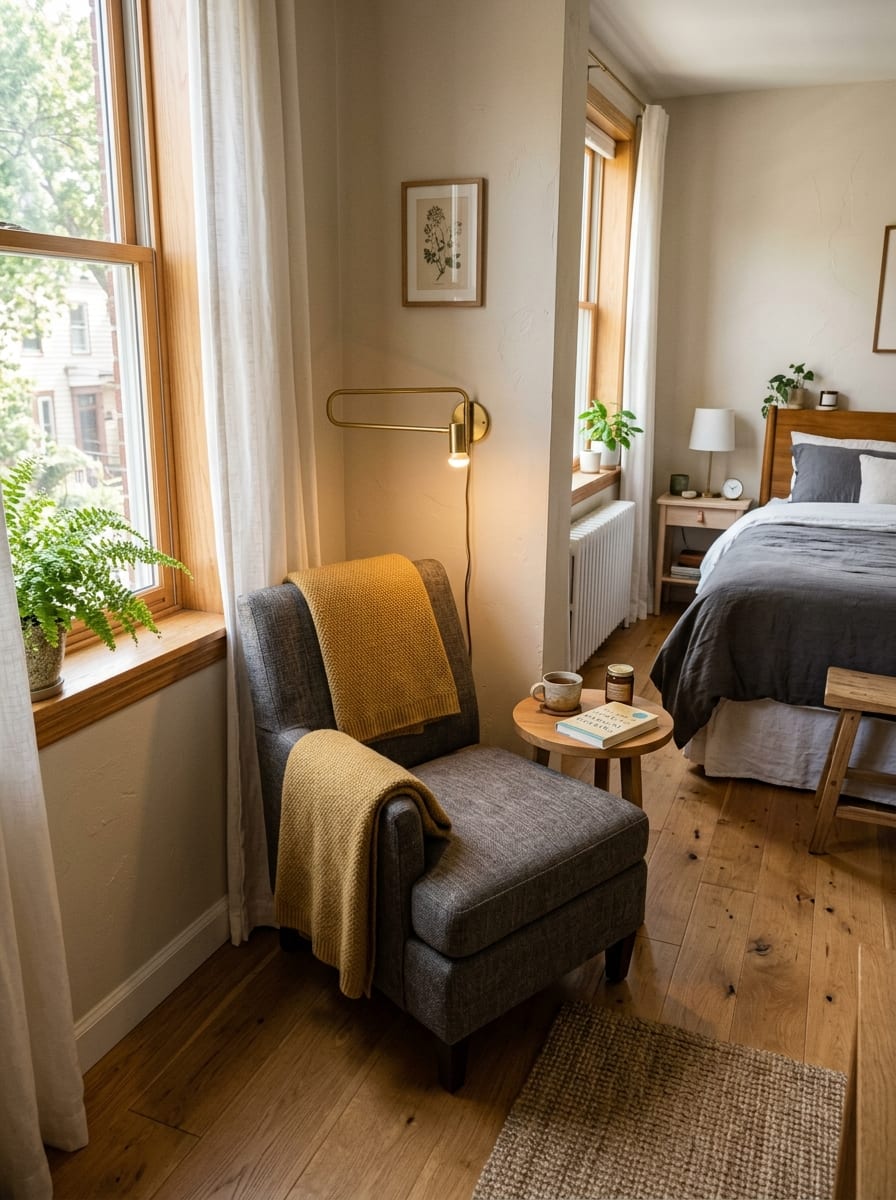
A small bedroom doesn’t need a full reading room.
Sometimes all you need is a compact chair, a small side table, and a light source.
Look for a chair with a relatively narrow footprint that can tuck into an unused corner.
A wall-mounted lamp can save even more floor space.
Then add one soft throw and perhaps a small cushion.
The important thing is to protect the walking path.
Don’t force a reading chair into a corner simply because the corner is empty. Make sure you can still move naturally between the bed, wardrobe, and door.
When the placement works, the chair becomes more than seating.
It gives the bedroom a secondary purpose.
Design name: The Reading Chair Nook
8. Keep One Clear Visual Path Through the Room
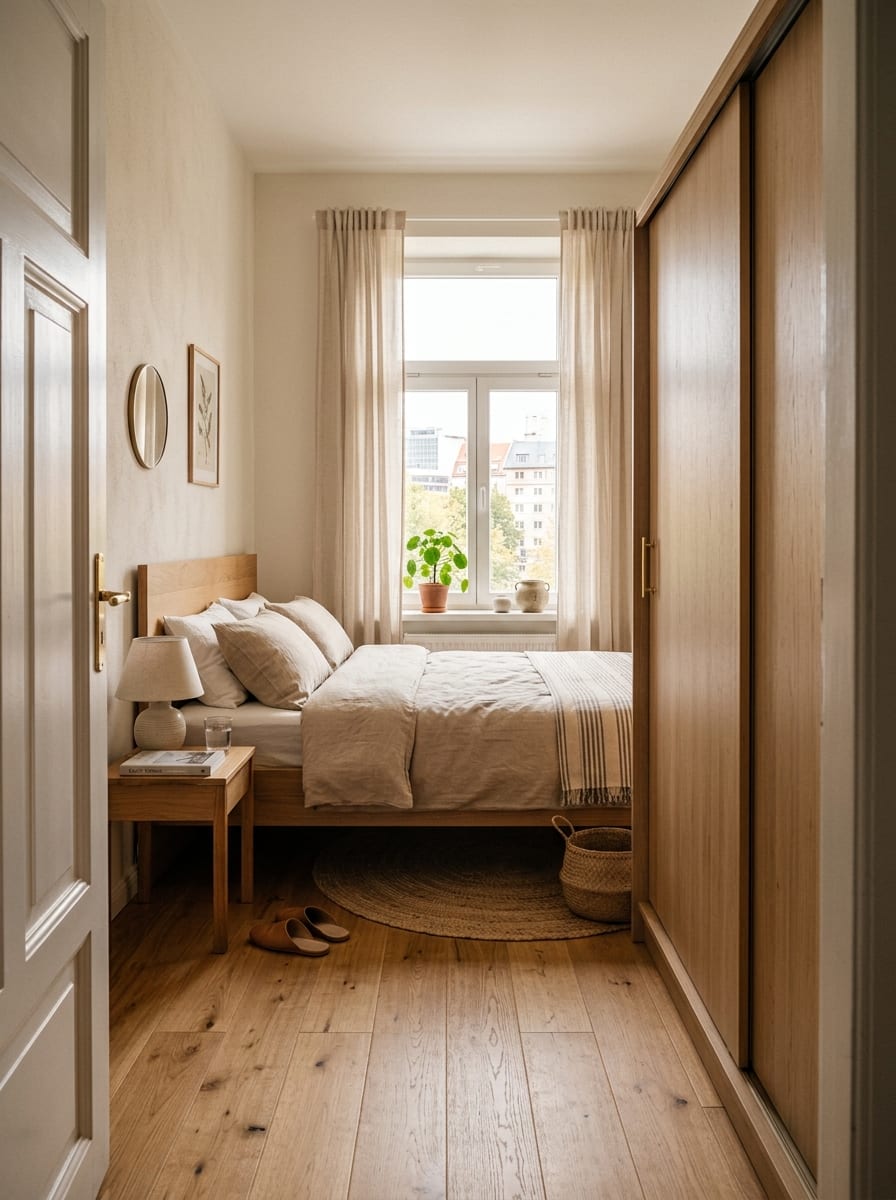
Sometimes the most effective decorating decision is leaving something alone.
Look at the route from the bedroom door to the bed, wardrobe, window, or bathroom.
- Is furniture narrowing it unnecessarily?
- Are baskets sitting in the walking path?
- Is a chair blocking a drawer?
- Does the rug make the floor feel visually chopped up?
A clear route can make a small bedroom feel noticeably calmer.
This doesn’t mean the room needs to be empty.
It means the larger pieces should cooperate with the way you actually move through the room.
Before adding another decorative item, look at the floor plan.
You may discover that removing one object does more for the room than buying three new ones.
Design name: The Calm Floor Plan
9. Use One Larger Mirror Instead of Several Tiny Ones
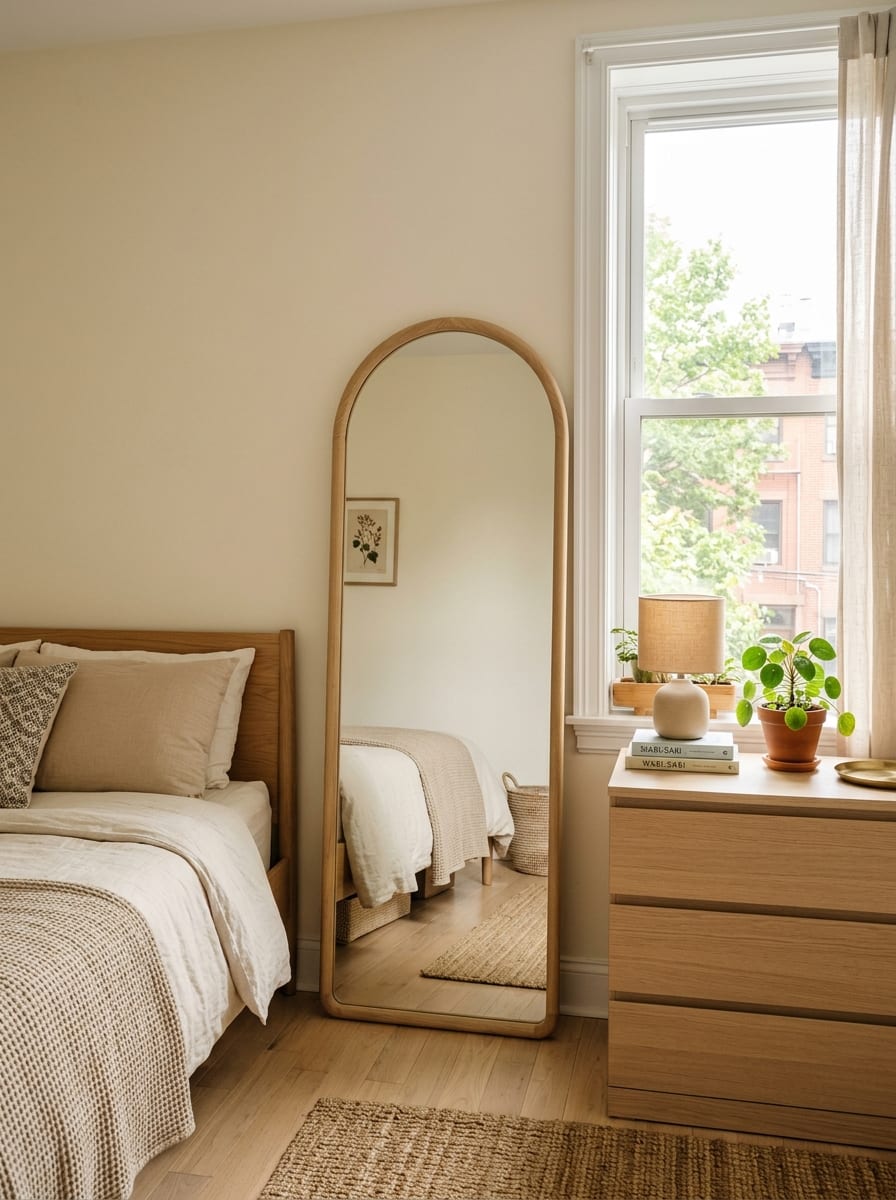
A mirror can add light and depth to a bedroom, but more isn’t necessarily better.
One well-positioned mirror often has a stronger effect than several small decorative mirrors scattered around the room.
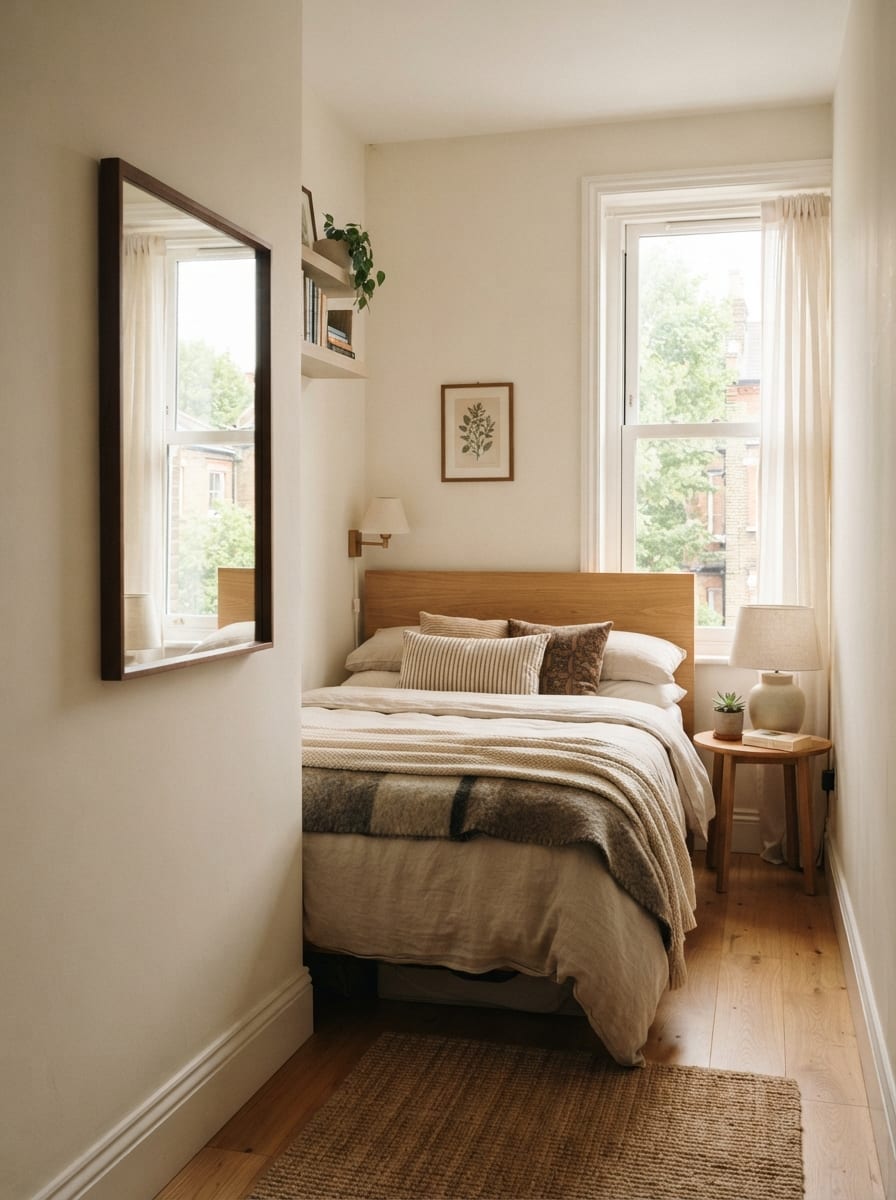
Try placing a tall mirror near a window where it can catch natural light.
Or lean a full-length mirror against an appropriate wall if that works safely with the room and your rental restrictions.
The frame can also contribute to the room’s style.
Pale wood creates a softer look. Black adds contrast. An unusual curved frame can become a decorative feature by itself.
The mirror should serve the room rather than simply filling an empty wall.
Design name: The Oversized Mirror
10. Give a Small Dresser a Deliberate Styling Moment
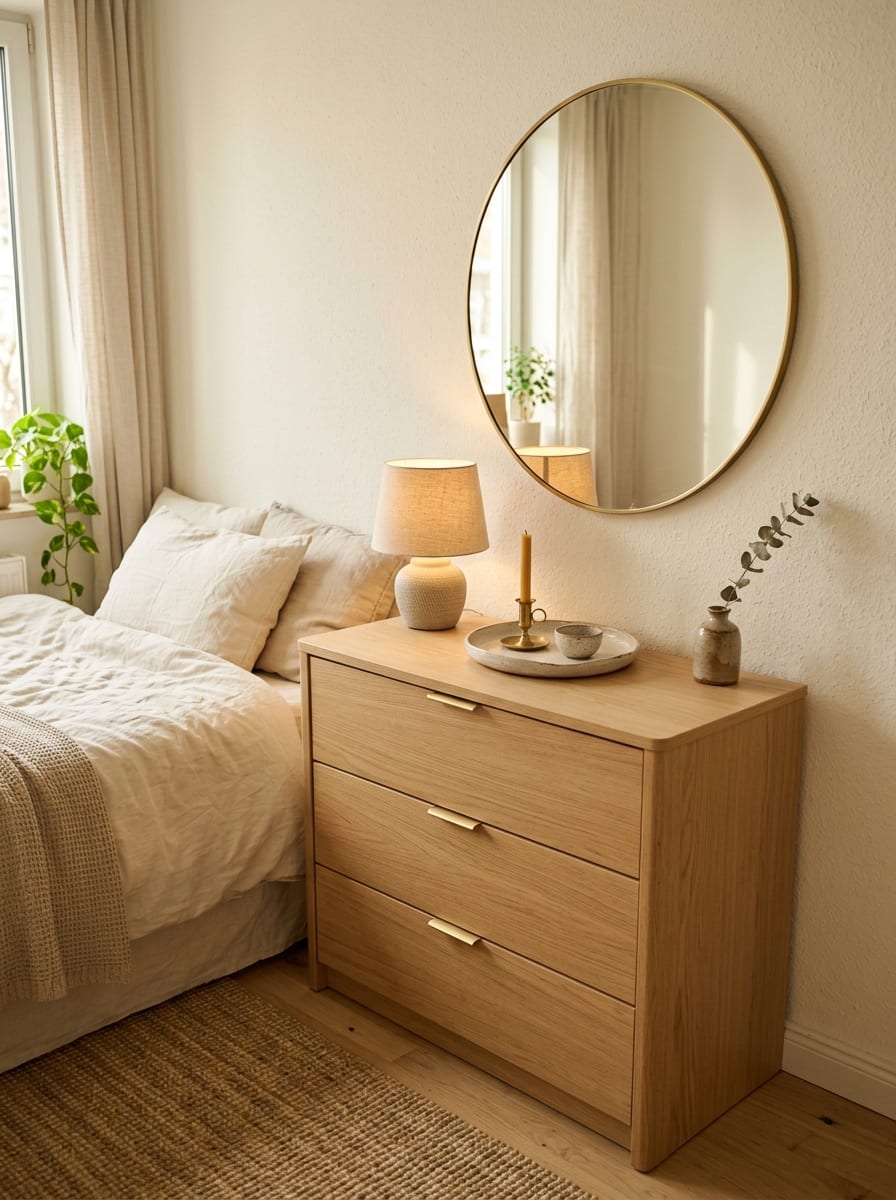
A dresser doesn’t have to become a dumping ground for everything you don’t know where to put.
Treat its top as one small composition.
Start with one larger object, such as a mirror, artwork, or lamp.
Then add two or three smaller elements around it.
A tray can contain everyday items. A small vase can add height. A framed photograph can introduce something personal.
Leave part of the surface empty.
That negative space is what keeps the arrangement from looking like a collection of unrelated objects.
If the dresser is already visually substantial, keep the styling quiet.
If it is a simple piece, you can let the objects on top provide more character.
Design name: The Petite Dresser Moment
11. Layer Textures Instead of Adding More Decoration
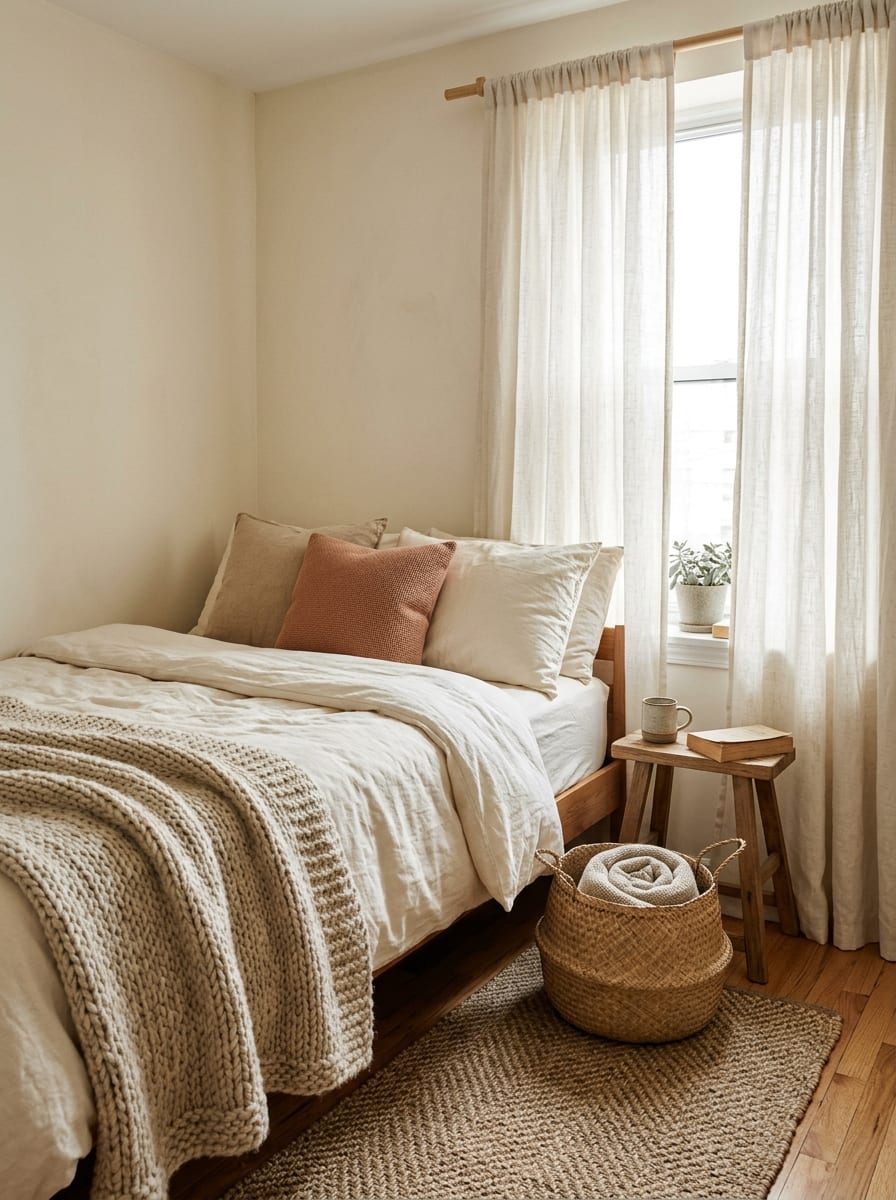
Personality doesn’t always have to come from objects.
Texture can make a small bedroom feel rich without making it visually busy.
Try combining:
- crisp cotton sheets
- a quilted coverlet
- a knitted throw
- a linen curtain
- a woven basket
- a textured rug
The colors can remain relatively restrained while the different surfaces create depth.
This works especially well for bedrooms where you want a cozy atmosphere without a heavily decorated look.
The key is variation in texture rather than endless pattern.
You want the room to feel interesting when you look closely, not noisy from across the room.
Design name: The Layered Textile Mix
12. Give One Small Shelf a Personal Story
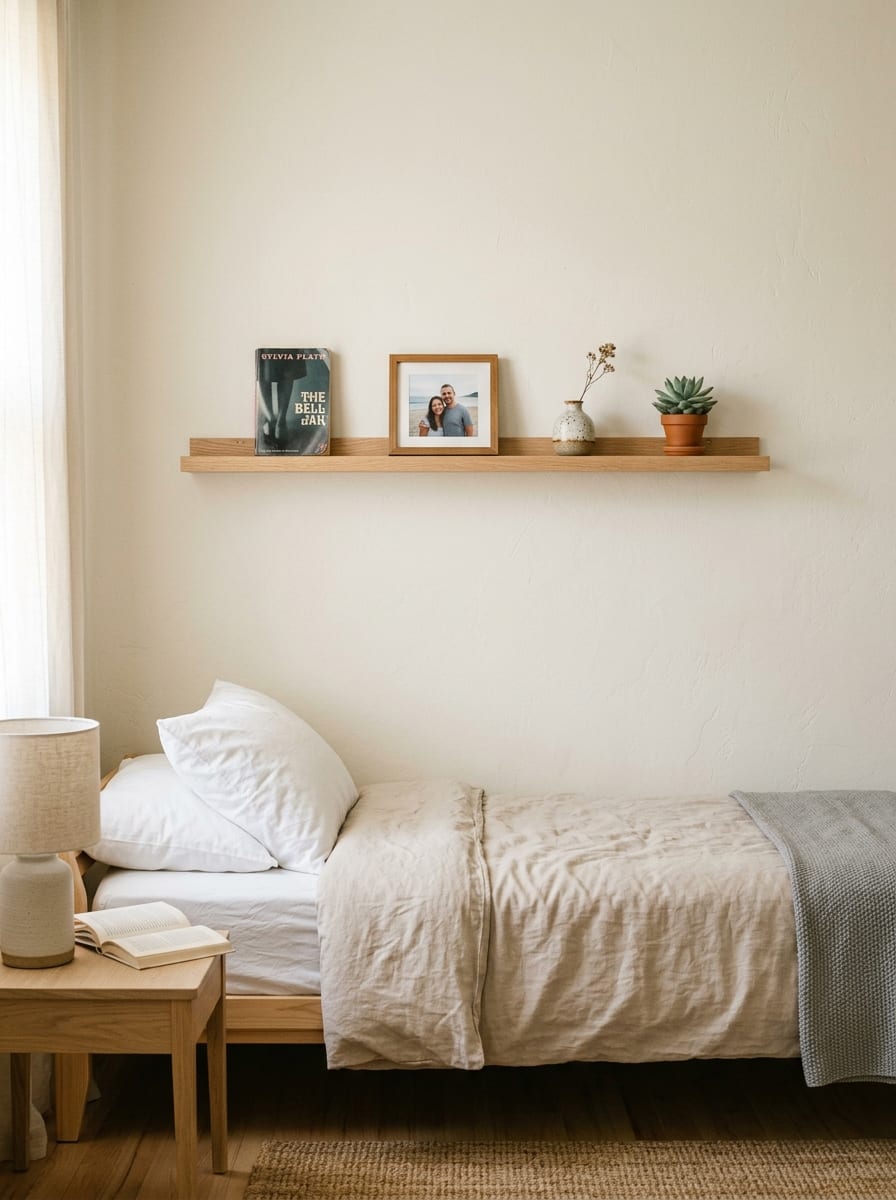
A narrow shelf can become one of the most personal areas in the room.
Instead of treating it as generic decor storage, use it for things that actually mean something to you.
- A few books.
- A travel photograph.
- A small ceramic piece.
- A plant clipping.
- A vintage object.
- A favorite illustration.
The collection doesn’t need to look perfectly coordinated.
It just needs enough breathing room that each piece can be seen.
This is also a good way to keep personal objects out of the bed area and off the floor.
One meaningful shelf can often make a bedroom feel more personal than a room filled with generic decorative accessories.
Design name: The One-Shelf Display
13. Repeat One Small Accent Until the Room Feels Connected
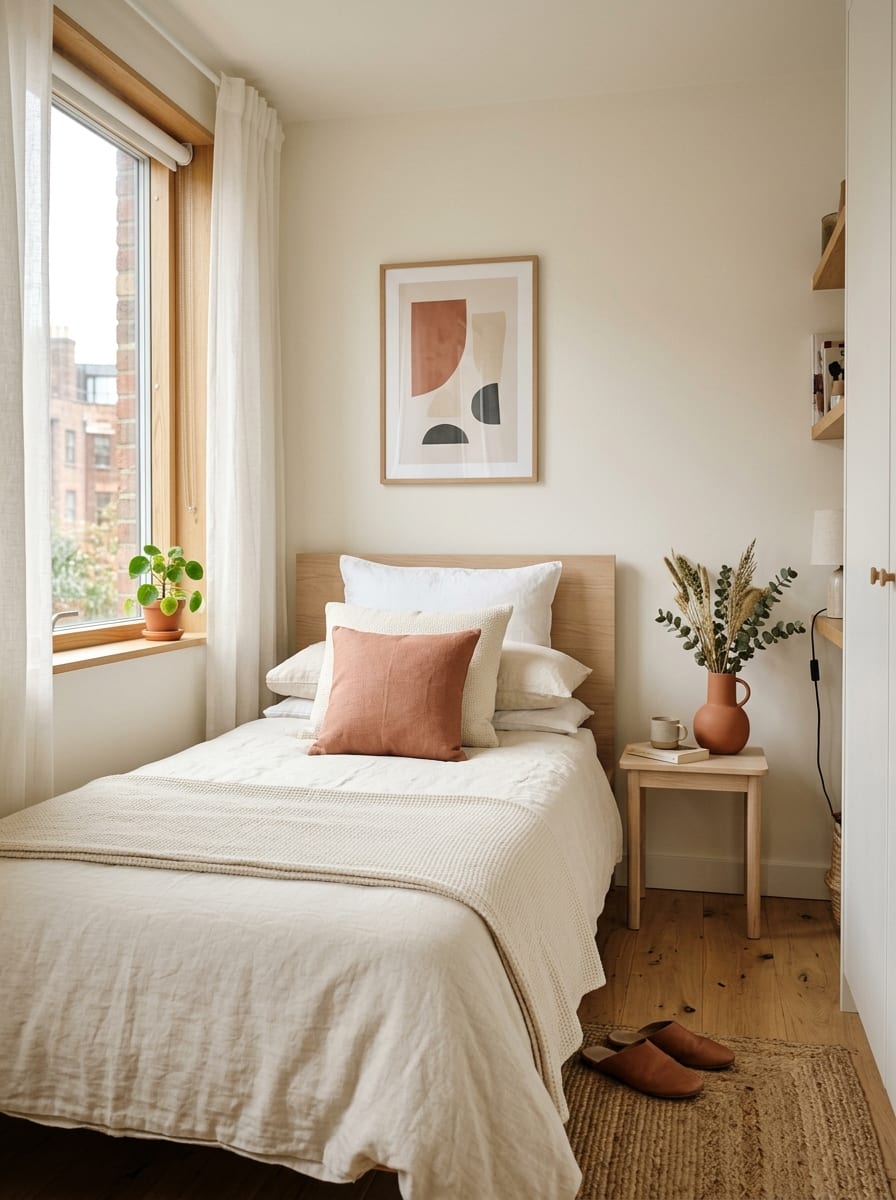
If your bedroom feels like a collection of unrelated things, don’t necessarily buy something new.
Look for one color, material, or shape that already appears somewhere in the room.
Then repeat it twice.
For example:
- A terracotta pillow can connect to a small vase and a framed artwork.
- Black hardware can connect to a lamp and mirror frame.
- Natural oak can appear in the nightstand, picture frames, and a small shelf.
This repetition creates a visual thread.
It is one of the simplest ways to make inexpensive or mismatched furniture feel more intentional.
And because you’re repeating something you already own, it doesn’t require adding more furniture.
Design name: The Repeated Accent
How to Personalize a Small Bedroom Without Making It Feel Smaller
The easiest mistake to make is assuming that personality requires more objects.
It doesn’t.
A bedroom can feel personal because of:
- Color: Choose one shade that feels like you.
- Texture: Use bedding, curtains, rugs, and throws to create depth.
- Lighting: Let one distinctive fixture establish the evening mood.
- Art: Create one meaningful focal point rather than decorating every wall.
- Objects: Display a small number of things that actually have a story.
- Furniture: Choose pieces with character instead of adding decorative clutter around ordinary ones.
The result is a room that feels collected rather than decorated all at once.
What to Keep Quiet in a Small Bedroom
Not every part of the room needs to make a statement.
In fact, a few quiet areas help the interesting parts stand out.
Consider keeping these elements relatively simple:
- the largest furniture pieces
- the area around the bedroom door
- the main walking path
- the top of the wardrobe
- the floor around the bed
- large uninterrupted wall areas
This creates contrast.
A small gallery wall feels more special against a quiet wall.
A patterned duvet feels more intentional against simple curtains.
A colorful lamp feels more noticeable on a restrained nightstand.
Personality needs negative space to be visible.
A Simple Formula for Bedroom Inspiration
If you’re starting with a fairly plain apartment bedroom, don’t try to change everything at once.
Start with:
one color + one focal point + one personal display + one distinctive light + one repeated accent.
For example:
A cream room could get a dusty-blue duvet, a curved lamp, three framed photographs, a small ceramic vase, and blue accents repeated in the artwork.
That’s enough to make the room feel different.
You don’t need five patterns, ten decorative objects, and an entirely new furniture set.
What to Remove Before You Add Anything
Before buying something for the bedroom, look at what is already there.
Ask:
- Does this object have a purpose?
- Does it make the room feel more like me?
- Does it interfere with movement?
- Is it competing with another focal point?
- Would the room actually look better without it?
Small bedrooms reward editing.
Sometimes the final step in creating a beautiful room is removing the thing that was making the rest of the room harder to see.
Final Thought
A memorable bedroom isn’t necessarily the one with the most decor.
It is the one where the choices feel connected.
One color appears again. A favorite photograph has a place on the wall. The lamp adds a little personality at night. The bedding becomes the focal point. A small shelf holds things that actually mean something.
Those details make a room feel personal without consuming the space you need to live in.
In a small apartment bedroom, personality works best when it has room to breathe.