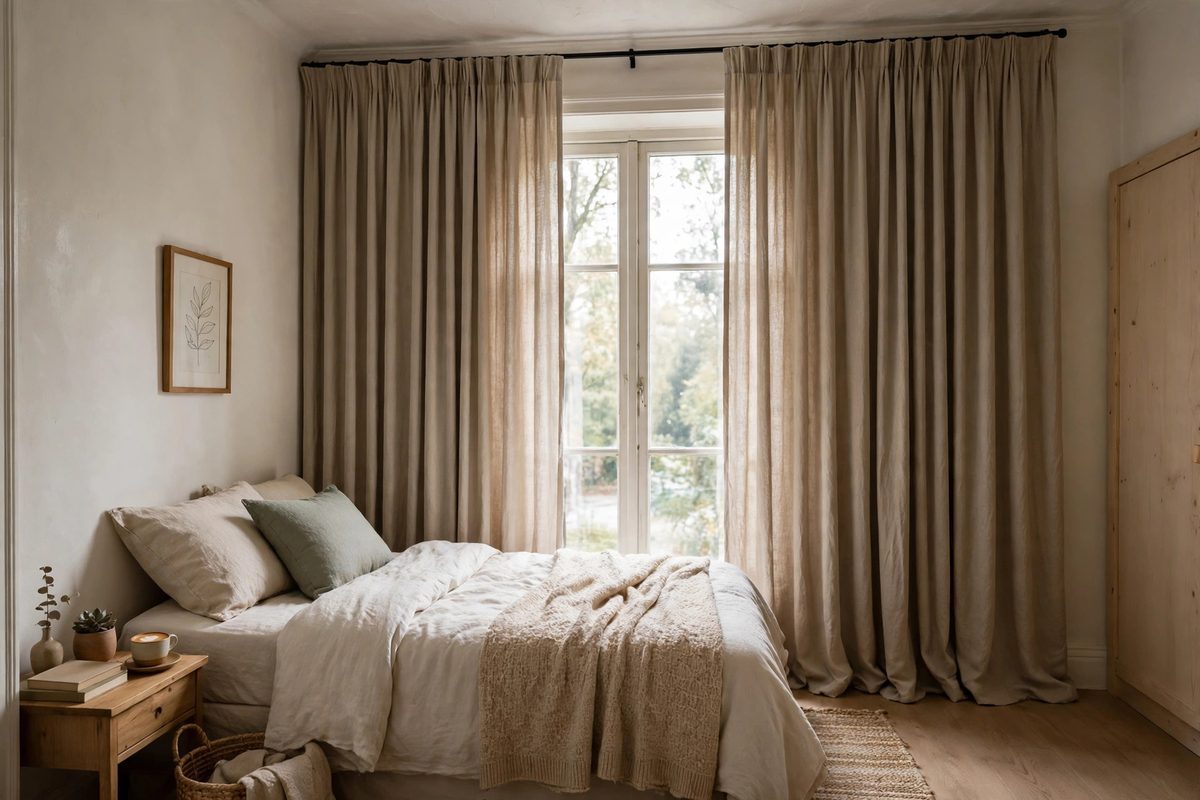
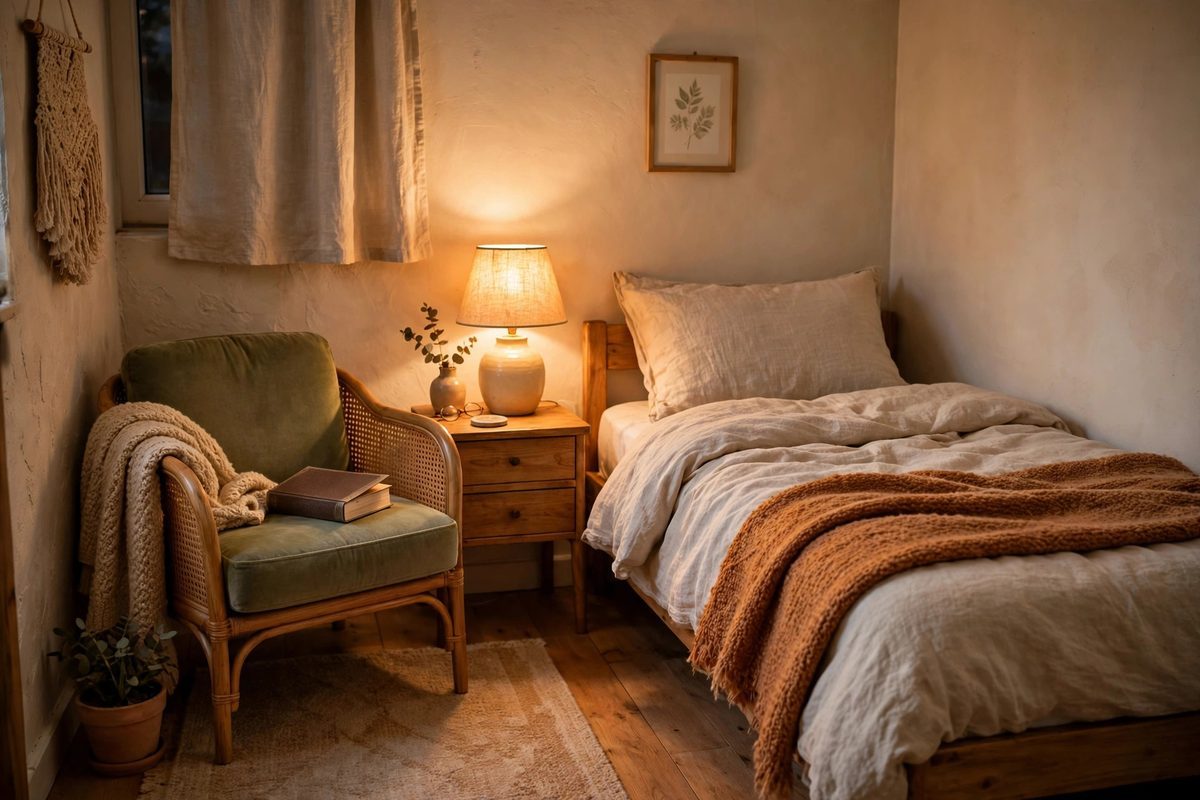
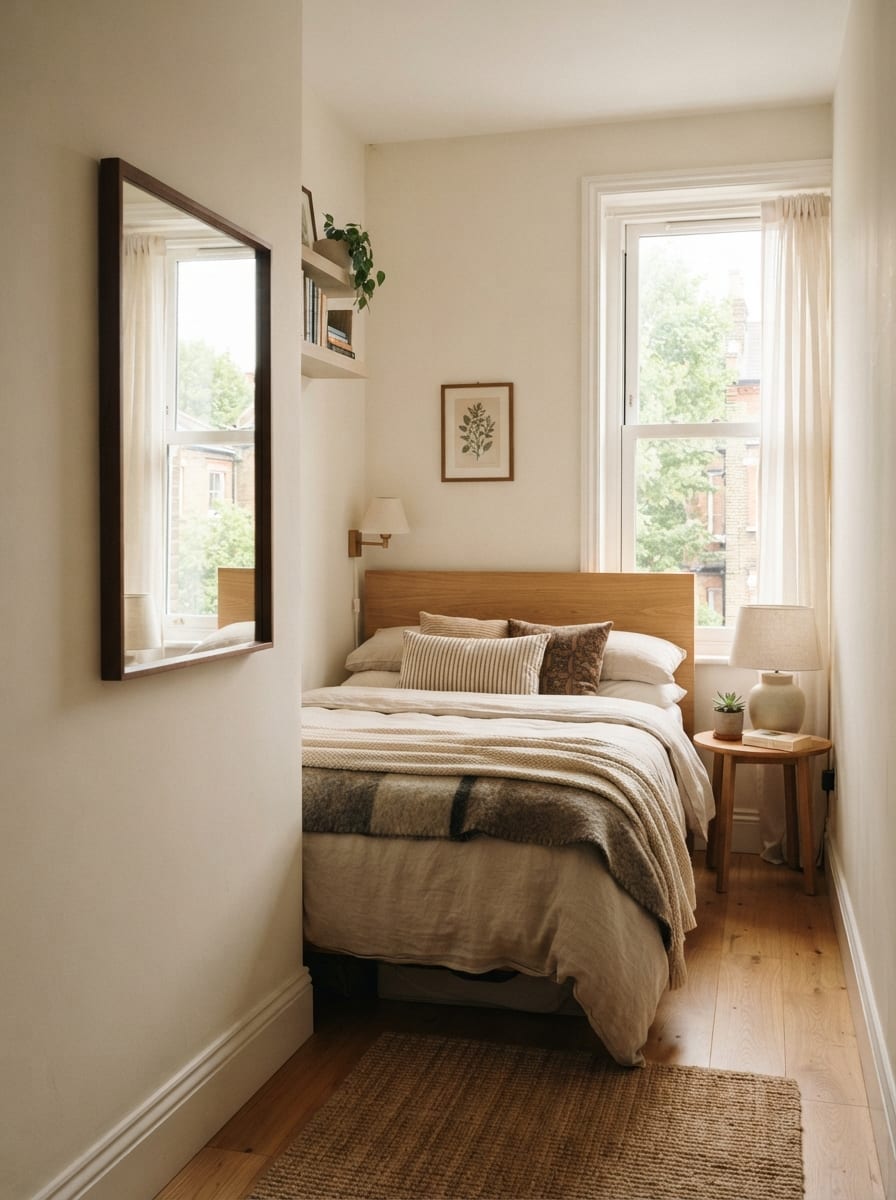
9 Small Bedroom Rug Ideas That Make the Room Feel More Balanced
Nine small bedroom rug ideas that make the room feel more balanced, with size rules, placement tricks, and low pile options for tight rooms.
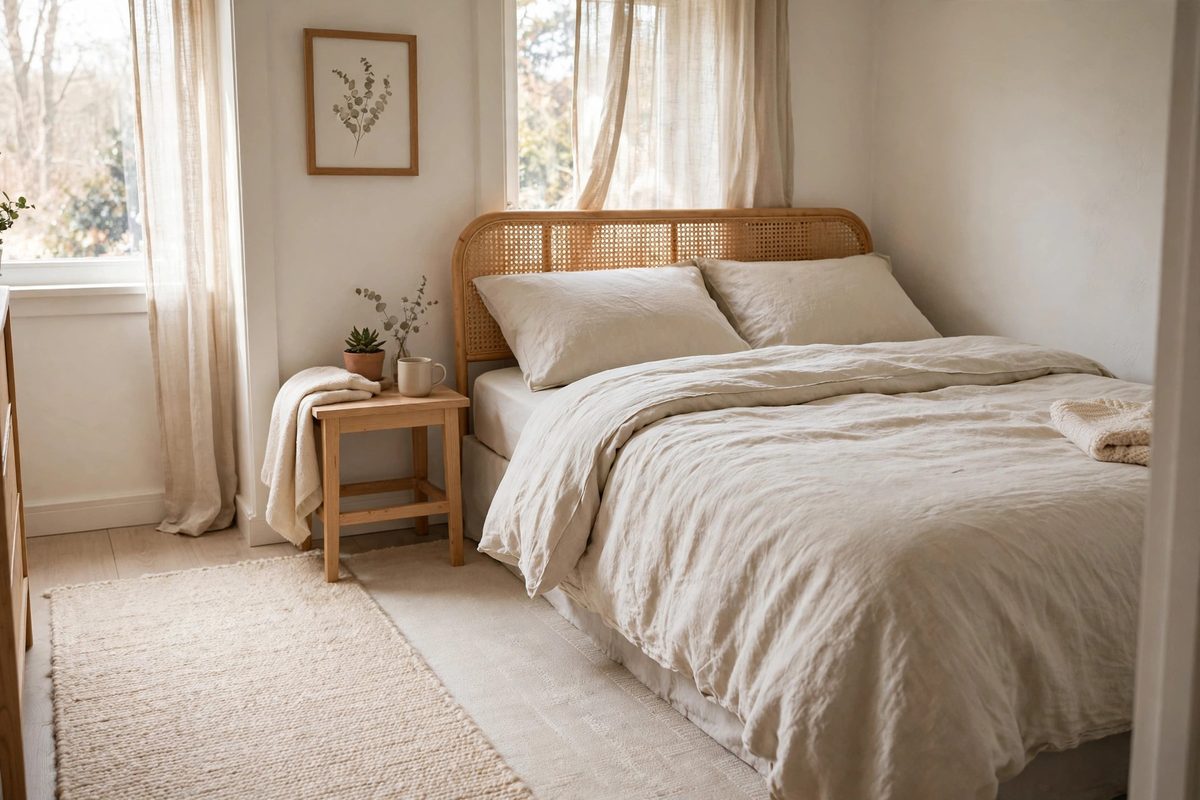
In This Guide
A rug is the fastest way to make a small bedroom feel finished. It softens hard floors, warms up cold mornings, and visually ties the bed to the rest of the furniture. It can also make a small room feel smaller, if it is the wrong size, the wrong pile, or placed so it floats awkwardly in the middle of the floor.
Balance is the goal, not coverage. In a small bedroom, a rug should anchor the bed and give your feet a soft landing, without covering every inch of floor or fighting the furniture layout. Size matters more than pattern here: a rug that is too small is the most common bedroom rug mistake, and it is easy to avoid once you know the measurements.
The basic rule is that a rug should extend 18 to 24 inches beyond the sides and foot of the bed, so you step onto rug, not bare floor, when you get up. For a queen bed, that usually means a 8 by 10 foot rug, or a 5 by 8 foot rug placed across the lower two thirds of the bed. Measure your room first, including door swings, since a rug that blocks a door will bunch and trip you. For matching small space ideas, see Christmas gift wrapping station ideas for small apartments and narrow hallway mirror ideas, plus small bedroom storage ideas to keep the floor around your rug clear.
These 9 ideas show how to place, size, and choose a rug so a small bedroom feels balanced.
1. The Under Bed Rug, Sized to the Bed
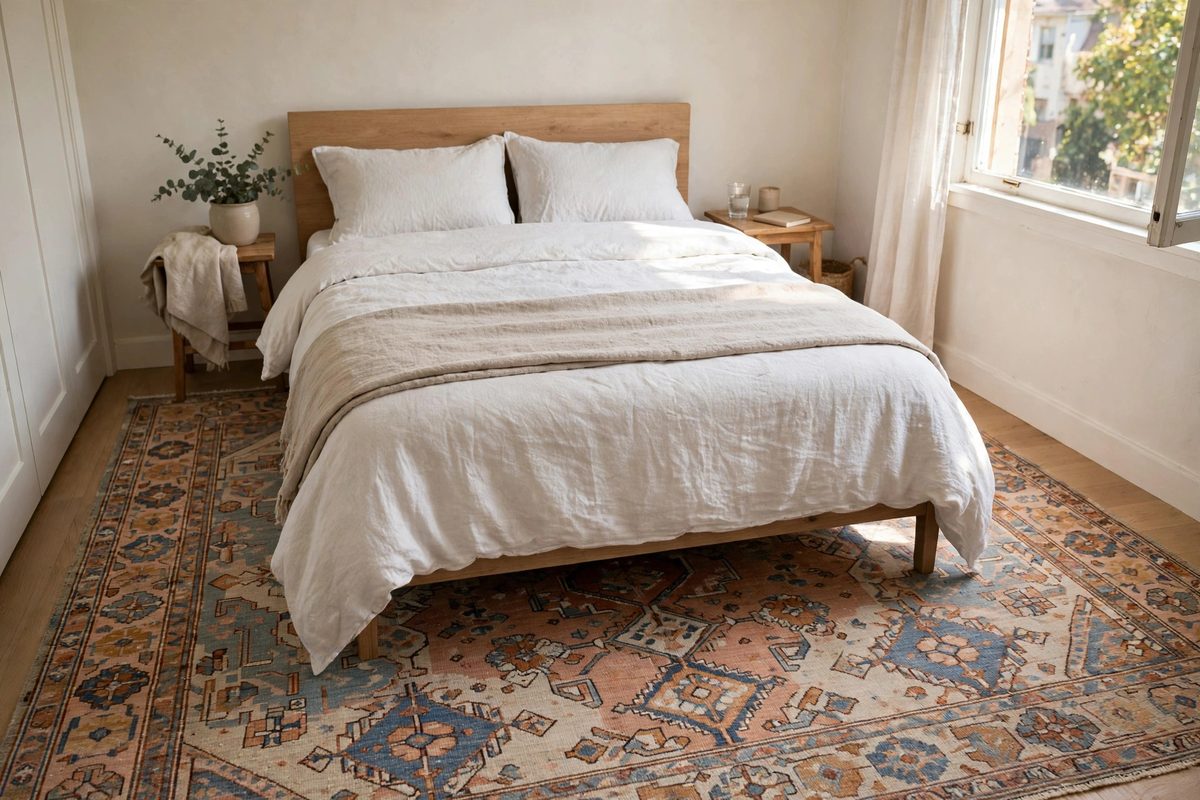
The classic placement is a rug under the bed, extending beyond the sides and foot. For a full or double bed, a 6 by 9 foot rug works well. For a queen, use 8 by 10 feet if the room allows, or 7 by 9 feet as a compromise. The rug should start about two thirds of the way down the bed, so the headboard side does not waste rug under the bed where nobody steps.
This placement anchors the whole sleeping zone and makes the bed look intentional rather than pushed into a corner. It also protects the floor where you walk most. Budget 100 to 300 dollars for a good quality rug in these sizes, with wool and cotton blends at the higher end and polyester at the lower end.
How to make it work
Place the rug so it extends 18 to 24 inches on each side of the bed, and at least 18 inches past the foot. Use a rug pad underneath, about 20 to 40 dollars, to stop slipping and to add cushioning on hard floors. If the room is too small for an 8 by 10 rug, go smaller in length, not in side extension, since stepping onto bare floor on one side defeats the purpose.
2. Runners on Each Side of the Bed
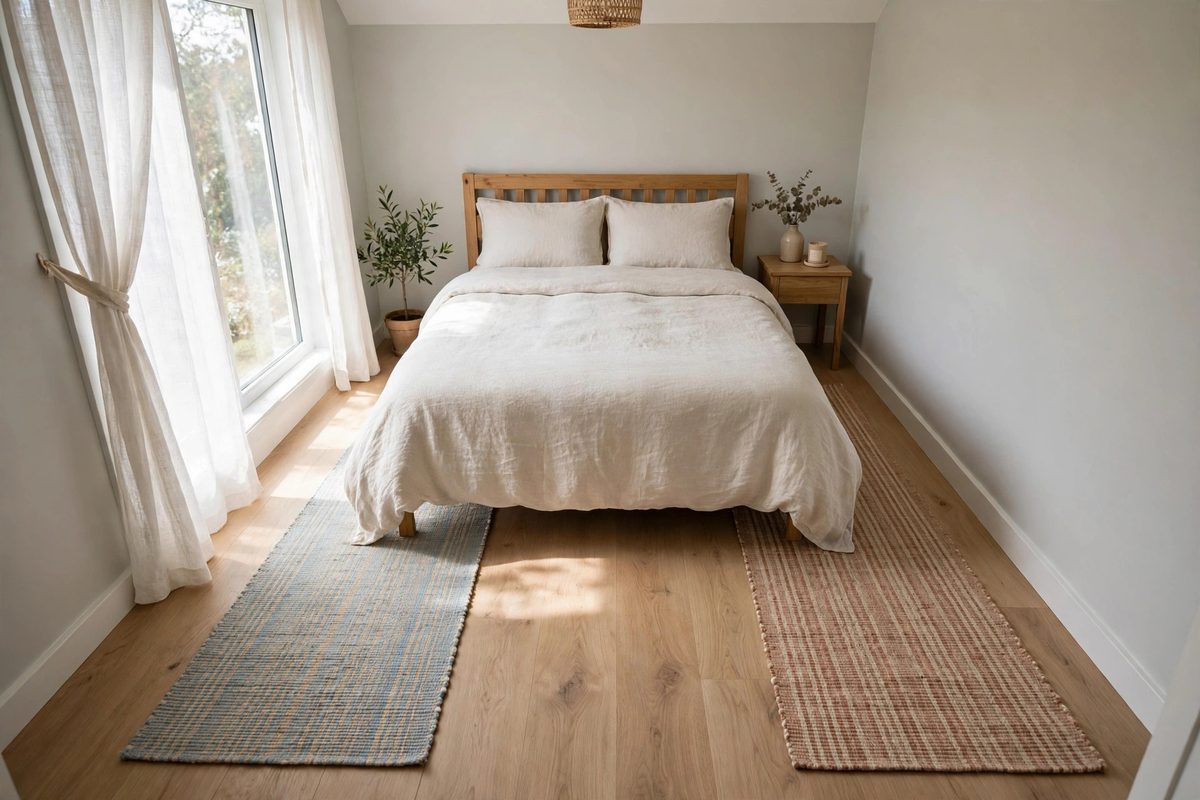
If a large rug does not fit, or your budget does not stretch to one, two runners, one on each side of the bed, give you the soft landing without the cost or the floor coverage. Each runner should be about 2.5 by 8 feet, or at least as long as the bed, so it runs from the nightstand to the foot of the bed.
Runners cost 30 to 80 dollars each, so a pair is often cheaper than one large rug. They also suit rooms where the bed is against a wall, since you only need a runner on the open side.
How to make it work
Align the runner with the bed, not with the wall, so it looks connected to the sleeping zone. Use a non slip pad under each runner, since narrow rugs slide more easily than large ones. If only one side of the bed is accessible, one runner is enough; a second runner against a wall will never be seen or stepped on.
3. A Round Rug to Soften a Boxy Room
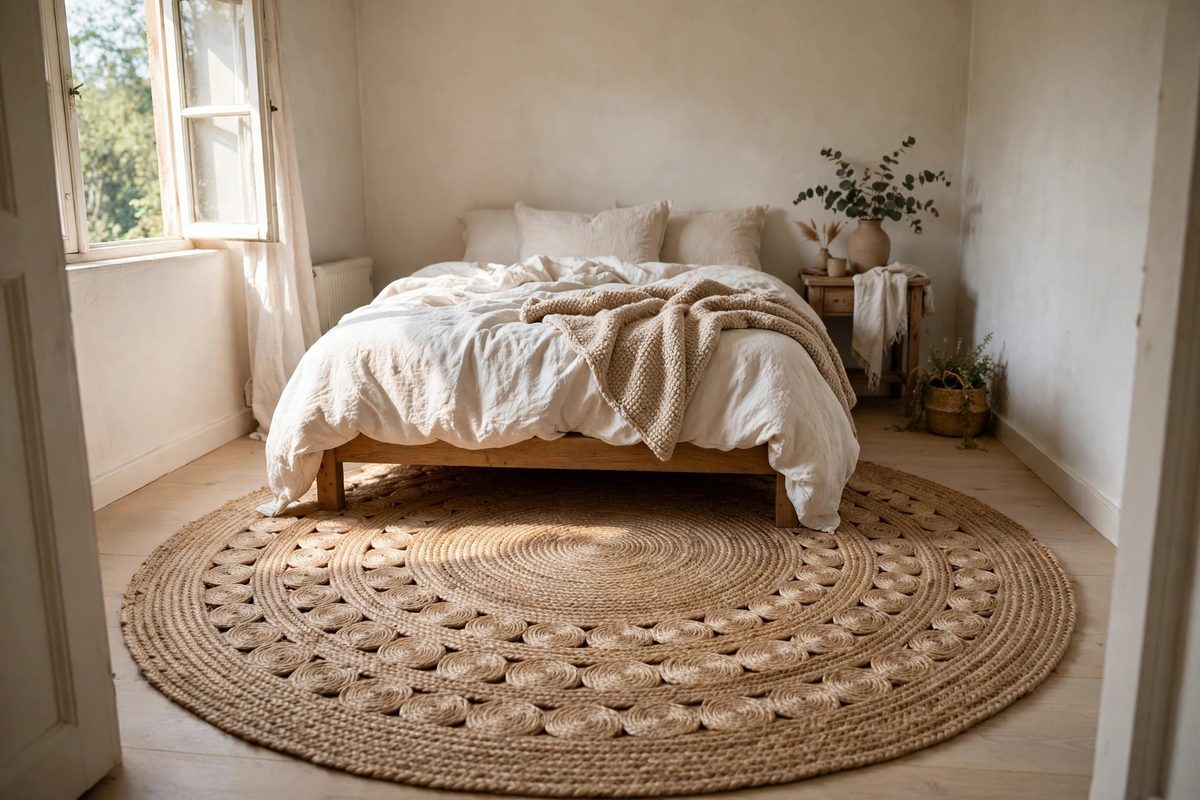
Small bedrooms are often boxy, with a rectangular bed, a rectangular dresser, and rectangular nightstands. A round rug breaks that geometry and makes the room feel softer and less rigid. A round rug, 6 to 8 feet in diameter, placed so it extends past the foot of the bed, works well in rooms where a rectangular rug would crowd the walls.
Round rugs cost 80 to 200 dollars in this size range. They suit reading corners and dressing areas too, where a rectangular rug would look forced into a corner.
How to make it work
Center the round rug on the bed’s foot or on the main furniture group, not on the room’s center, since the bed is the visual anchor. Leave at least 6 inches between the rug edge and the wall so the round shape reads clearly. Pair a round rug with a round mirror or a round side table to echo the shape without overdoing it.
4. Layered Rugs for Texture Without Bulk
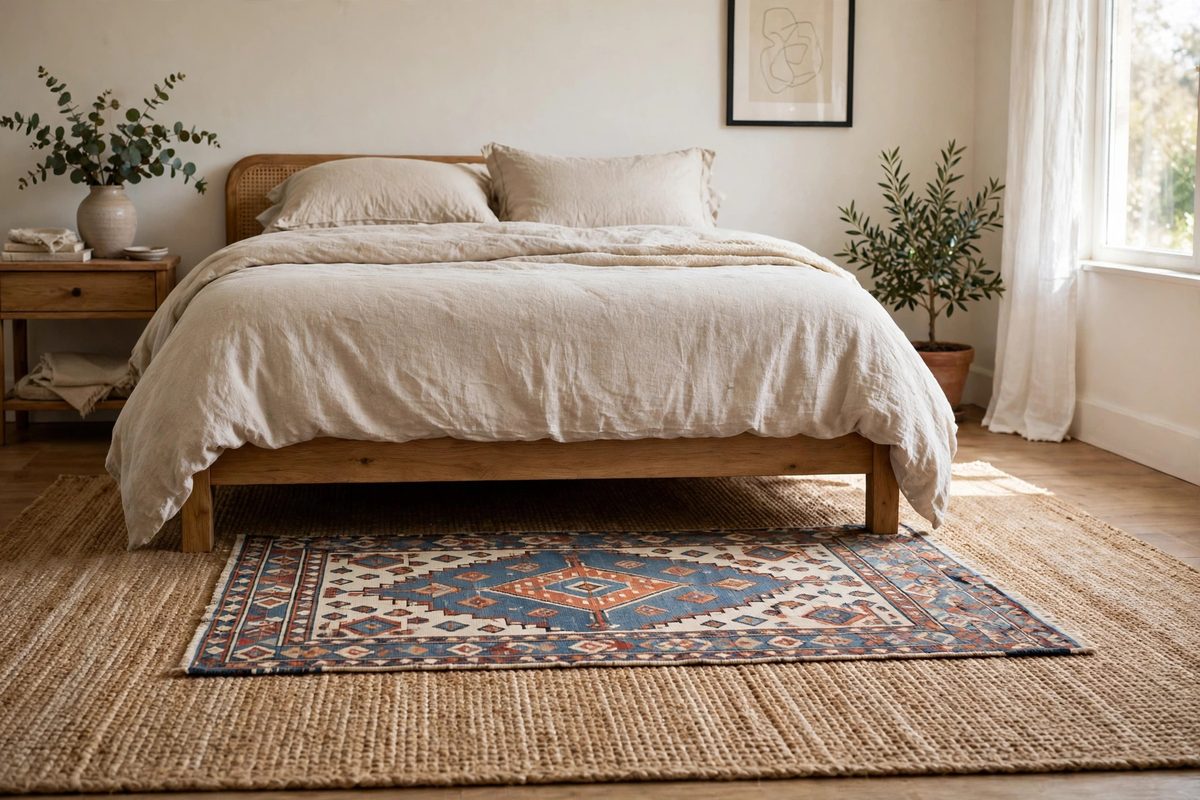
Layering, a larger flat rug underneath and a smaller patterned rug on top, adds texture and color without buying one expensive large rug. A natural jute or sisal base, 8 by 10 feet, plus a 5 by 7 foot patterned rug on top, costs less than a single high end rug and lets you change the look by swapping only the top layer.
Layering works best with a flat base rug, under 0.5 inches thick, so the top rug lies flat and does not create a tripping edge. Keep the top rug centered on the lower two thirds of the bed, where it will be seen and stepped on.
How to make it work
Use a rug pad under the base layer only, and a rug tape or gripper between the layers to stop the top rug sliding. Keep the color contrast clear: a natural base with a colored top rug reads as intentional, while two similar patterns compete. If the room is very small, layer only at the foot of the bed, not across the whole floor.
5. A Washable Low Pile Rug for Real Life
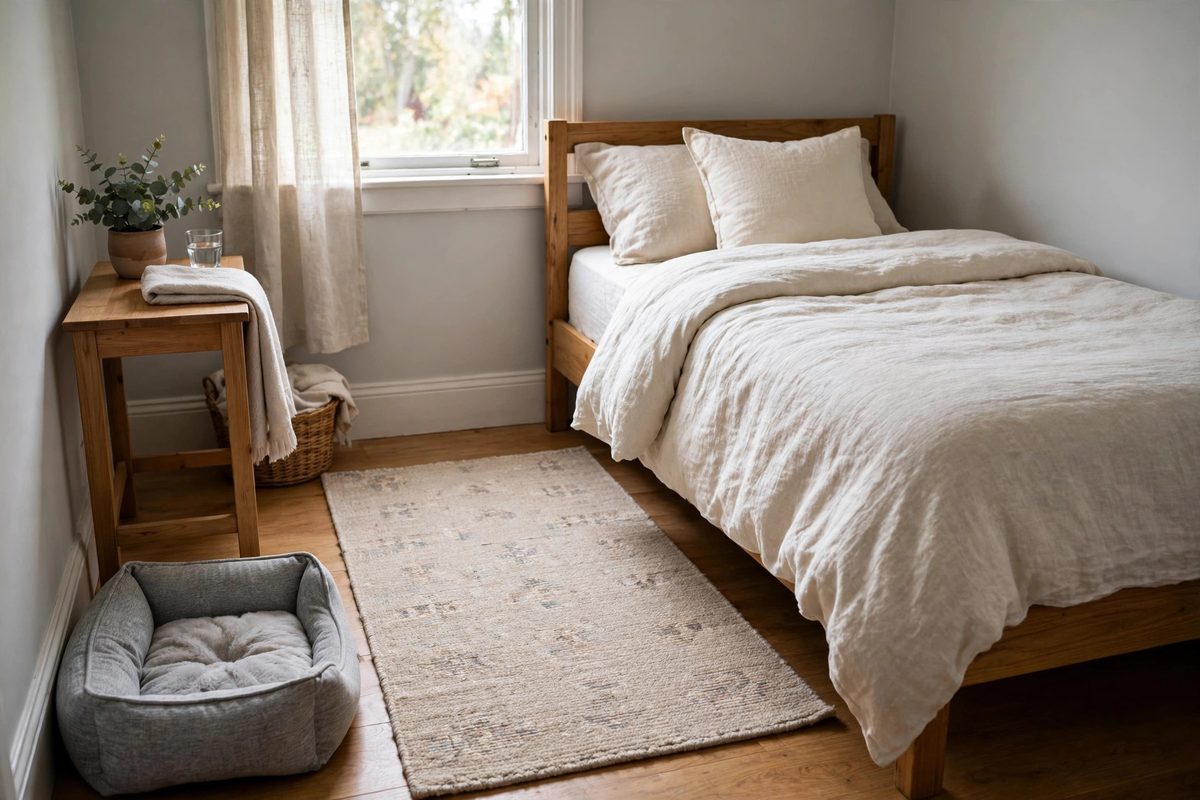
Bedrooms get real life: pets, coffee, muddy feet, and dust. A washable low pile rug, under 0.5 inches thick, can go in a home washing machine and comes out clean, which makes it far more practical than a thick wool rug that needs professional cleaning.
Washable rugs cost 80 to 200 dollars for bedroom sizes, and many come with a separate non slip backing. Low pile also suits rooms with a door that swings over the rug, since a thick rug will catch and bunch.
How to make it work
Check the washing instructions before buying: some washable rugs need a cold wash and air drying, which takes a day. Buy a rug with a removable cover if you can, since the cover washes more easily than a whole rug. Keep a second, cheaper rug to use while the main one is washing, so the room never looks bare for a day.
6. A Rug That Zones a Reading Corner
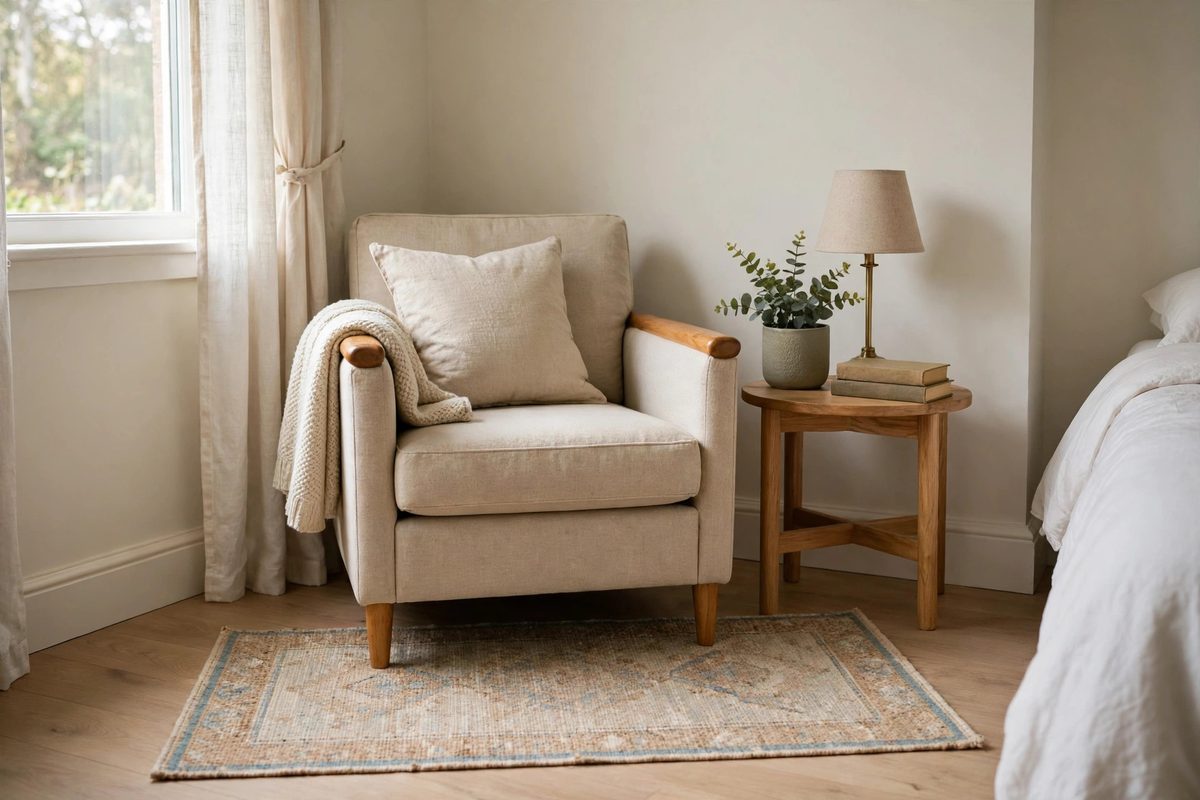
In a bedroom that also holds a reading chair, a desk, or a dressing area, a small rug can zone that corner separately from the bed. A 4 by 6 foot rug under a chair and a small side table creates a distinct spot within the room, without needing a divider or a screen.
This works best when the rug color or pattern differs from the main bedroom rug, or when the main bed area has no rug at all and the reading corner is the only rug zone. The contrast defines the corner clearly.
How to make it work
Place the chair so its front legs are on the rug and its back legs are off, or all four legs on the rug if the rug is large enough. Add a small side table on the rug too, so the zone reads as a complete arrangement, not just a chair on a rug. Keep the rug at least 12 inches from the bed rug, if there is one, so the two zones do not blur together.
7. Light Colors to Expand the Room
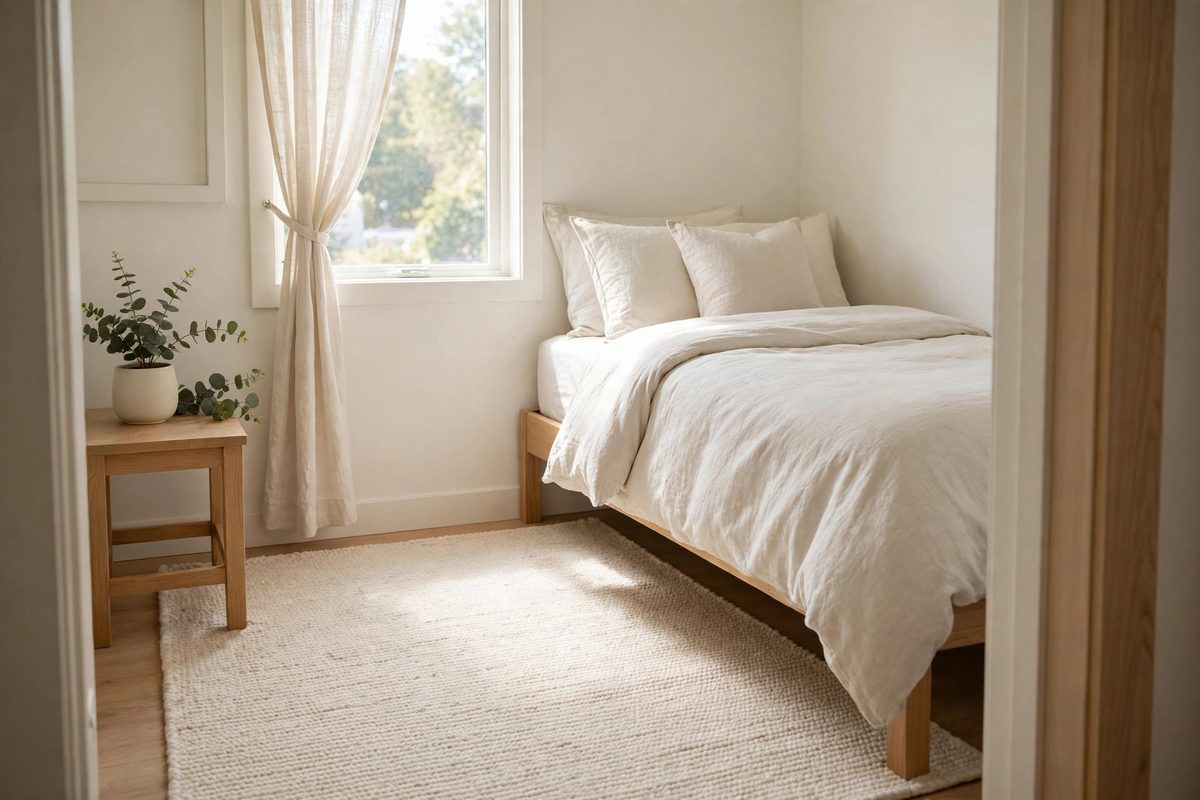
Color affects how large a room feels, and a rug is the largest color block in most bedrooms. A light rug, cream, pale gray, soft beige, or a light pattern on a light ground, reflects light and makes the floor feel more open, while a dark rug can make the floor feel smaller and heavier.
Light rugs cost the same as dark ones, so this is a free way to gain visual space. The tradeoff is that light rugs show dirt faster, so they suit bedrooms without pets or with a washable option.
How to make it work
Match the rug color to the lightest tone in your bedding or curtains, so the room feels connected. If you love dark furniture, a light rug balances it and stops the room feeling top heavy. Use a rug pad with a light rug, since dirt from below can show through a thin light rug over time.
8. A Patterned Rug as the Room Anchor
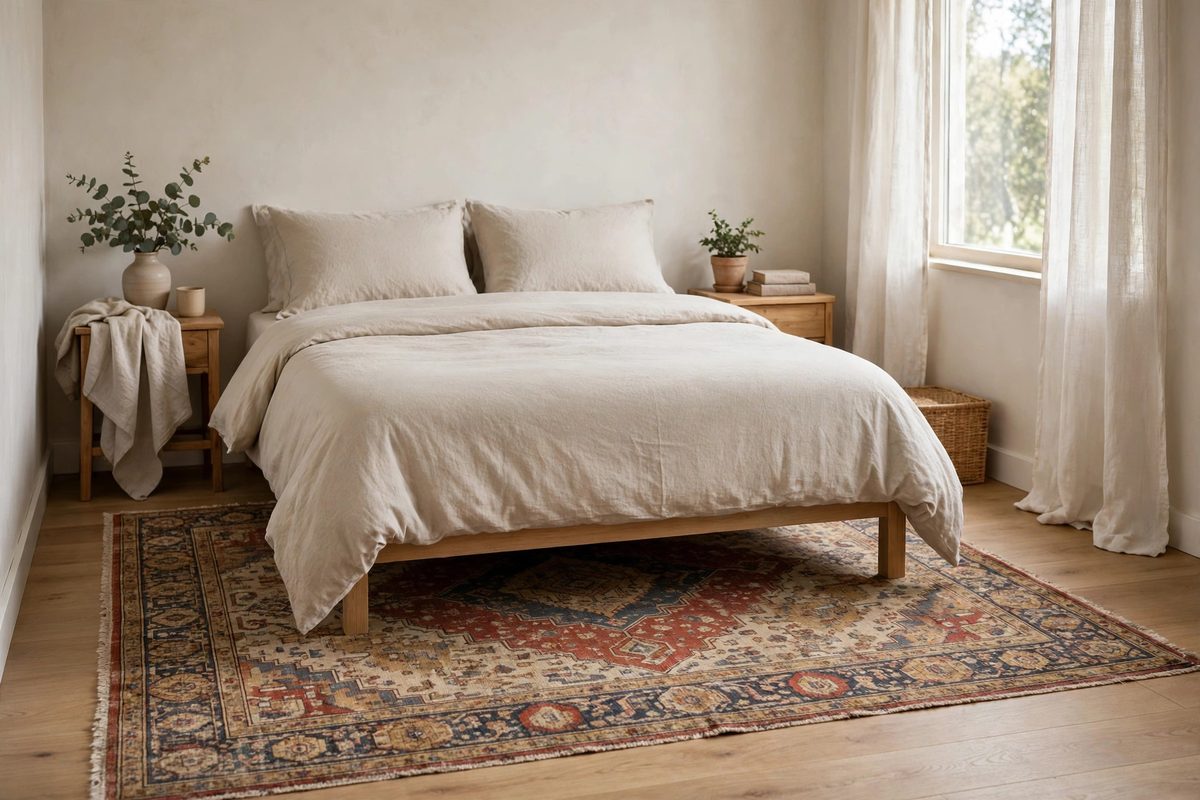
If your bedding and furniture are neutral, a patterned rug can be the room’s main visual interest. A geometric, vintage, or floral pattern in two or three colors gives the room personality without needing patterned bedding or wall art.
Patterned rugs cost 100 to 300 dollars for bedroom sizes. Choose a pattern scale that fits the room: small patterns suit small rooms better than oversized motifs, which can overwhelm a compact space.
How to make it work
Keep everything else in the room quiet when the rug is patterned: solid bedding, plain curtains, and minimal wall art. Pull one color from the rug for a throw pillow or a blanket, so the pattern feels connected to the room. If the pattern is busy, choose a low pile rug so the pattern stays crisp and does not look fuzzy.
9. Measuring First, Buying Once
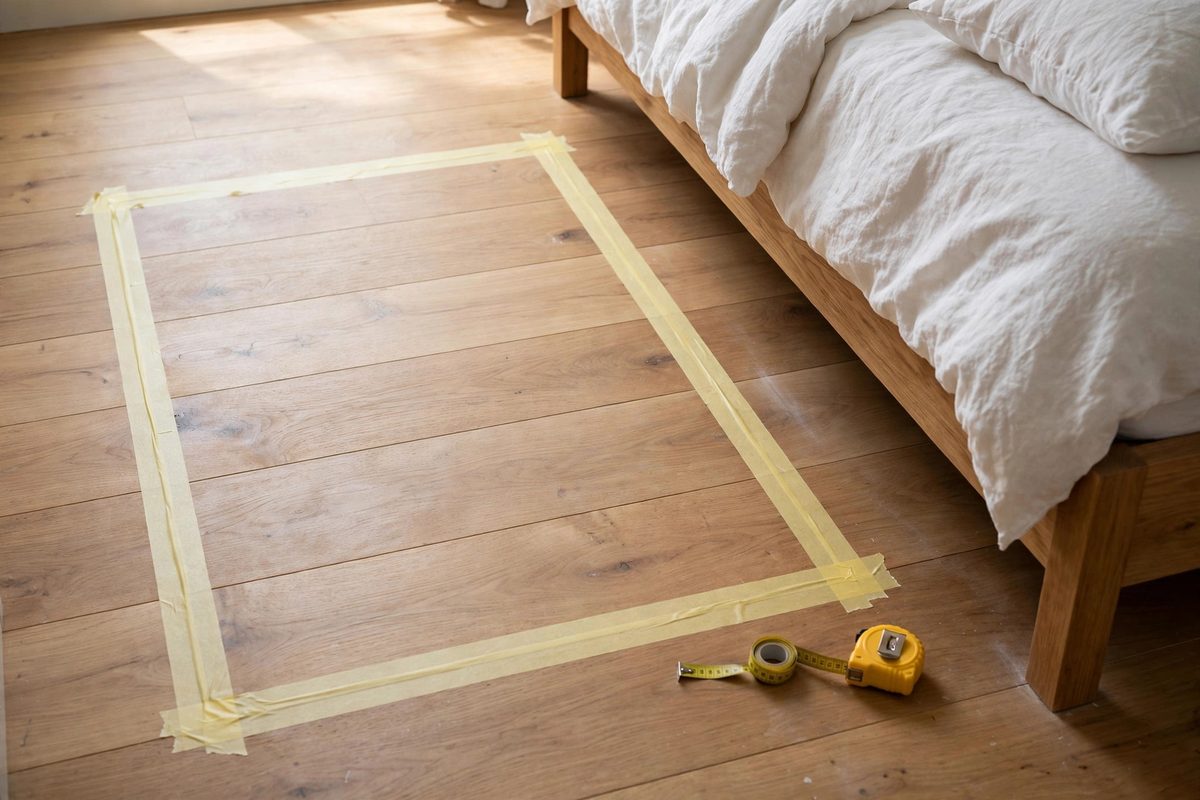
The most balanced rug is the one measured for the room, not guessed from a photo. Before buying, tape out the rug size on the floor with painter’s tape, live with the outline for a day, and check door swings, nightstand placement, and walking paths.
Painter’s tape costs a few dollars and saves a return, since large rugs are heavy and expensive to ship back. Measure the bed width, add 36 to 48 inches for side extensions, and measure the room length to make sure the rug leaves at least 12 inches of bare floor around the edges, so the room does not look carpeted wall to wall.
How to make it work
Photograph the taped outline from the doorway, since that is the view you will see most. Check that the rug does not block a closet door or a drawer: dresser drawers need about 24 inches of clearance to open fully. If two sizes could work, choose the larger one, since a rug that is slightly too big looks intentional, while one that is slightly too small looks like a mistake.
A balanced bedroom rug does not need to be expensive or dramatic. It needs to be the right size, placed where your feet actually land, and quiet enough to let the bed be the focus. Measure first, choose for real life, and let the rug ground the room.