10 Small Bedroom Curtain Ideas That Make the Window Look Taller
Ten curtain ideas for small bedrooms that make windows look taller and rooms feel larger, with hanging heights, fabric choices, and renter friendly tricks.
In This Guide
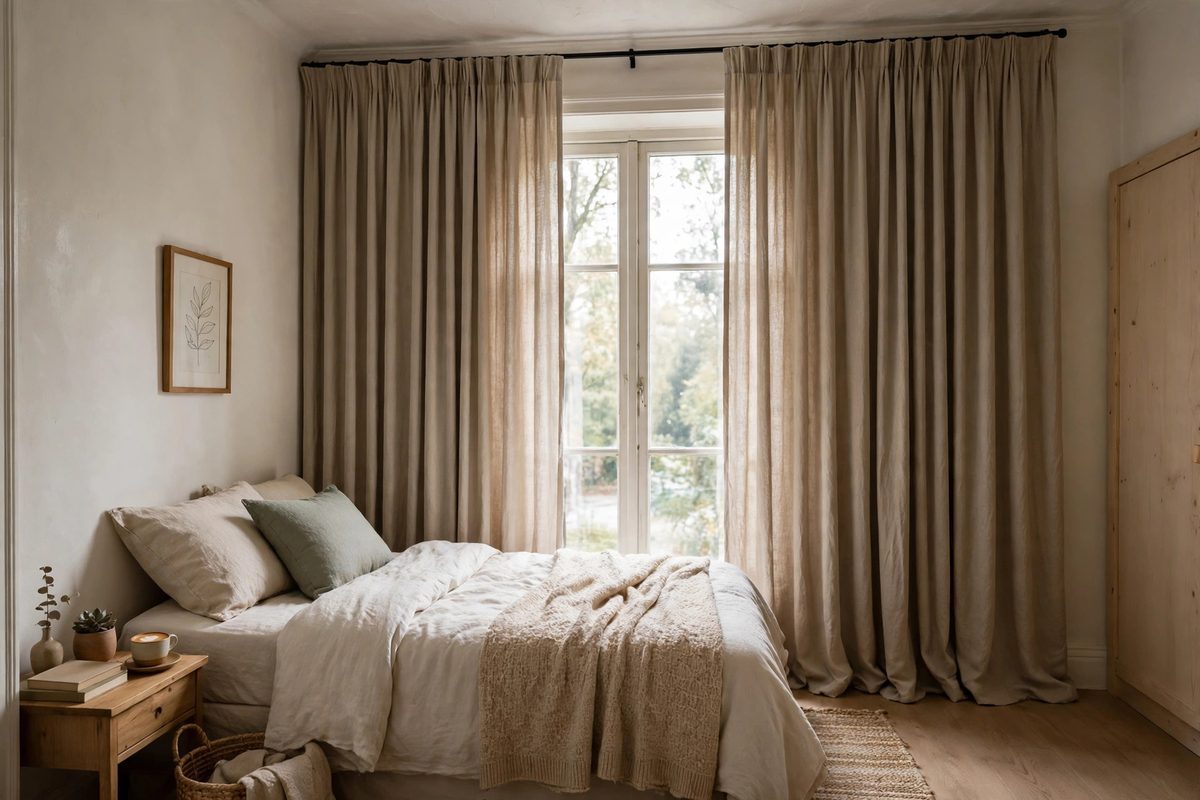
Curtains are the fastest way to make a small bedroom window look taller, because the eye follows the curtain rod, not the window frame. Hang the rod high and wide, let the fabric fall to the floor, and a standard 48 inch window suddenly reads as a full height feature. Hang the rod just above the frame, and the same window looks squat and small.
The rules are simple but specific: rod 4 to 6 inches below the ceiling, or at least 6 inches above the window frame, whichever is higher. Rod width 8 to 12 inches beyond the frame on each side, so curtains stack on the wall, not over the glass. Fabric that touches the floor, not puddling, not hovering at sill length.
These ten ideas apply those rules in different styles, from sheer linen to blackout velvet, with renter friendly options included. They pair with these Christmas tree skirt alternatives for seasonal bedroom updates, and these blue Christmas tree ideas if your bedroom gets a holiday tree. For a no drill alternative, see these no drill curtain ideas for rental apartments.
1. The High and Wide Rod Trick
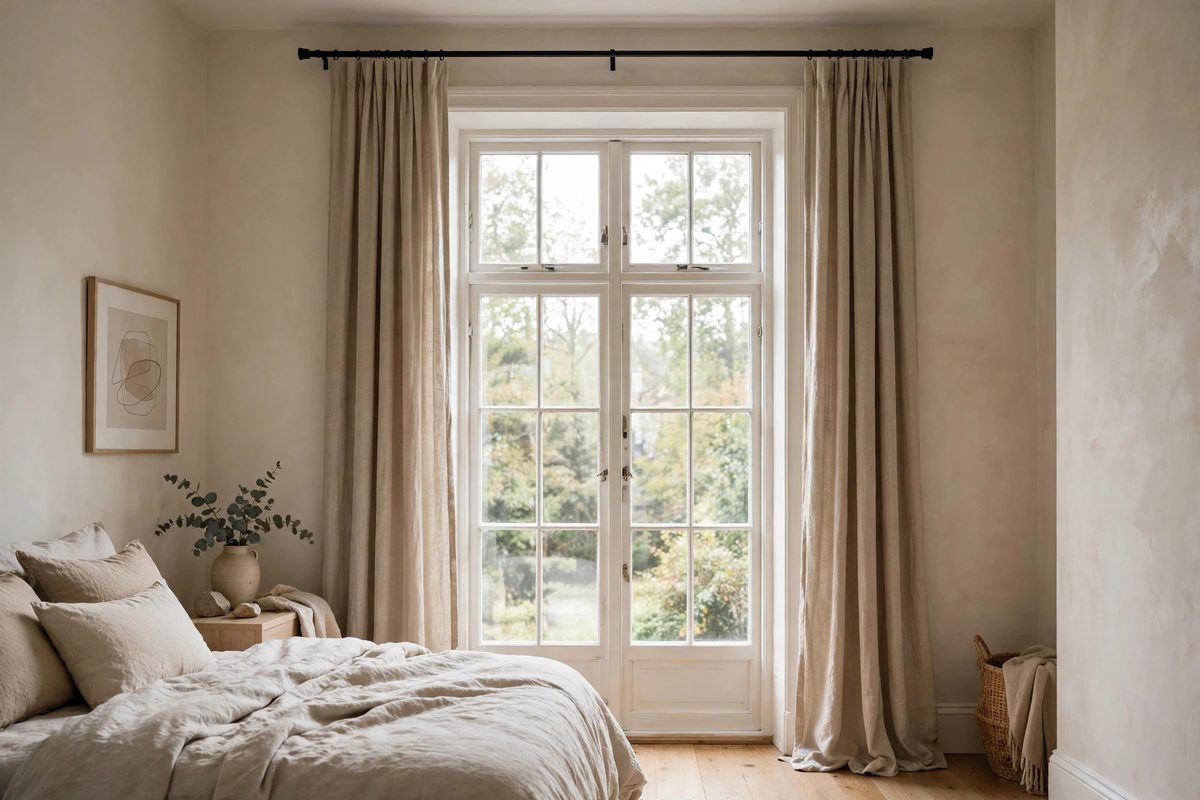
Hanging the rod high and wide is the single most effective taller window trick, and it costs nothing beyond a longer rod. A rod mounted 4 inches below the ceiling and extending 10 inches past the frame on each side makes the window appear up to 12 inches taller and wider than it actually is, because the curtain fabric covers wall, not just glass.
This trick works best with floor length curtains, 84 to 96 inches for standard 8 foot ceilings, so the fabric runs from near the ceiling to the floor in one unbroken line. Short curtains break the line and undo the effect, no matter how high the rod sits.
How to make it work
Measure from the rod position to the floor, not from the window frame, when buying curtain length. Choose a rod at least 12 inches longer than the window width, so curtains can stack fully on the wall when open and let in maximum light. Mount the rod into studs or use heavy duty anchors, since long rods with heavy curtains pull hard on the wall.
2. Sheer Linen for Light and Height
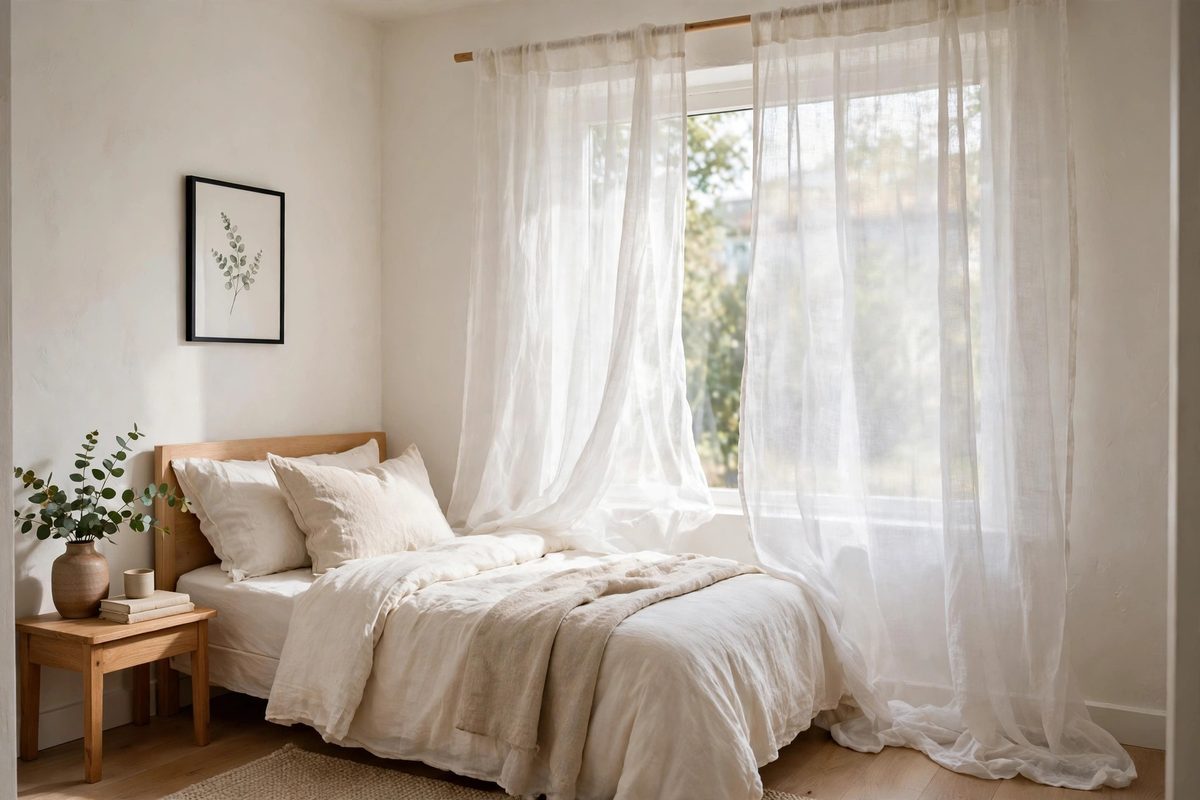
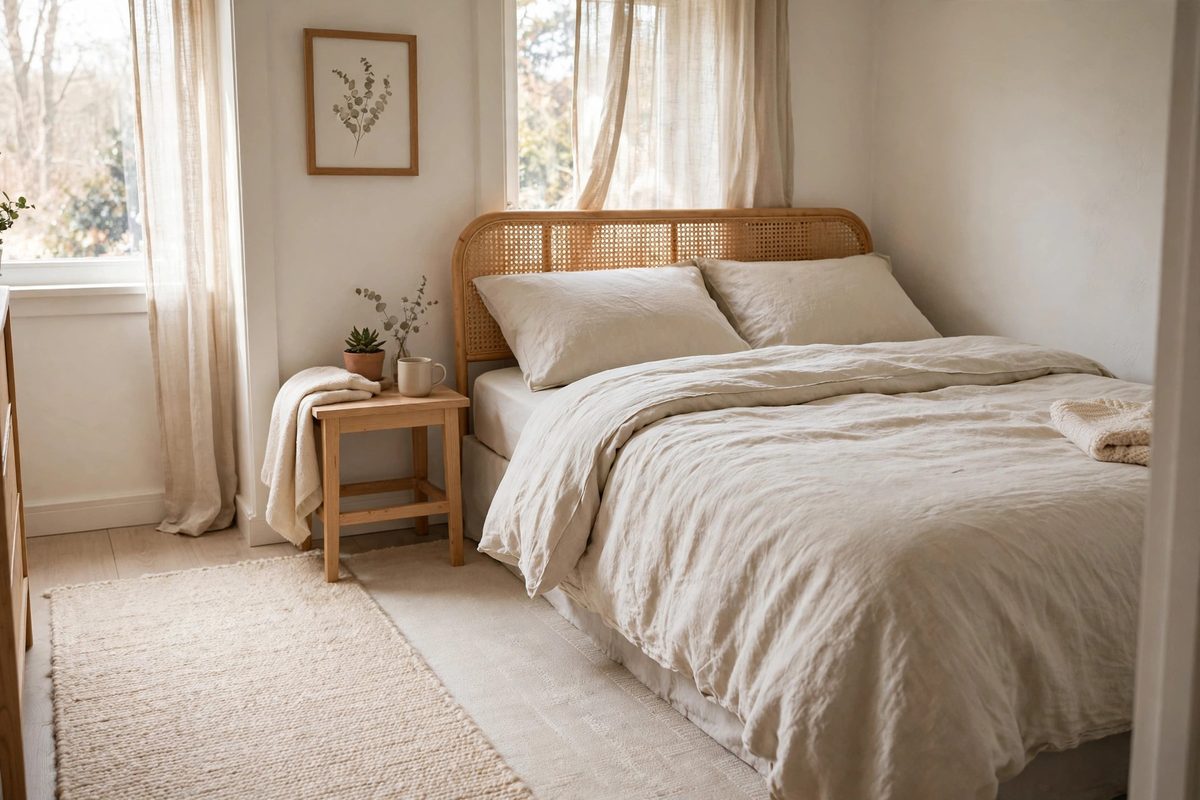
Sheer linen curtains add height without blocking light, which matters in a small bedroom with one window. The sheer fabric softens daylight, provides daytime privacy, and still lets the room feel bright, while the floor length drape draws the eye upward.
Sheer curtains alone do not block light at night or provide full privacy after dark, when interior lights make sheers see through. Pair sheers with a roller blind, a blackout lining, or a second heavier curtain on a double rod if you need darkness for sleep.
How to make it work
Choose a linen blend, not pure linen, since pure linen wrinkles heavily and shrinks in washing. Hang sheers on a double rod behind or in front of a blackout panel, so you can layer by time of day. Wash sheers on a gentle cycle and hang them damp to reduce wrinkles, since ironing long sheers is tedious.
3. Floor Length Blackout Velvet
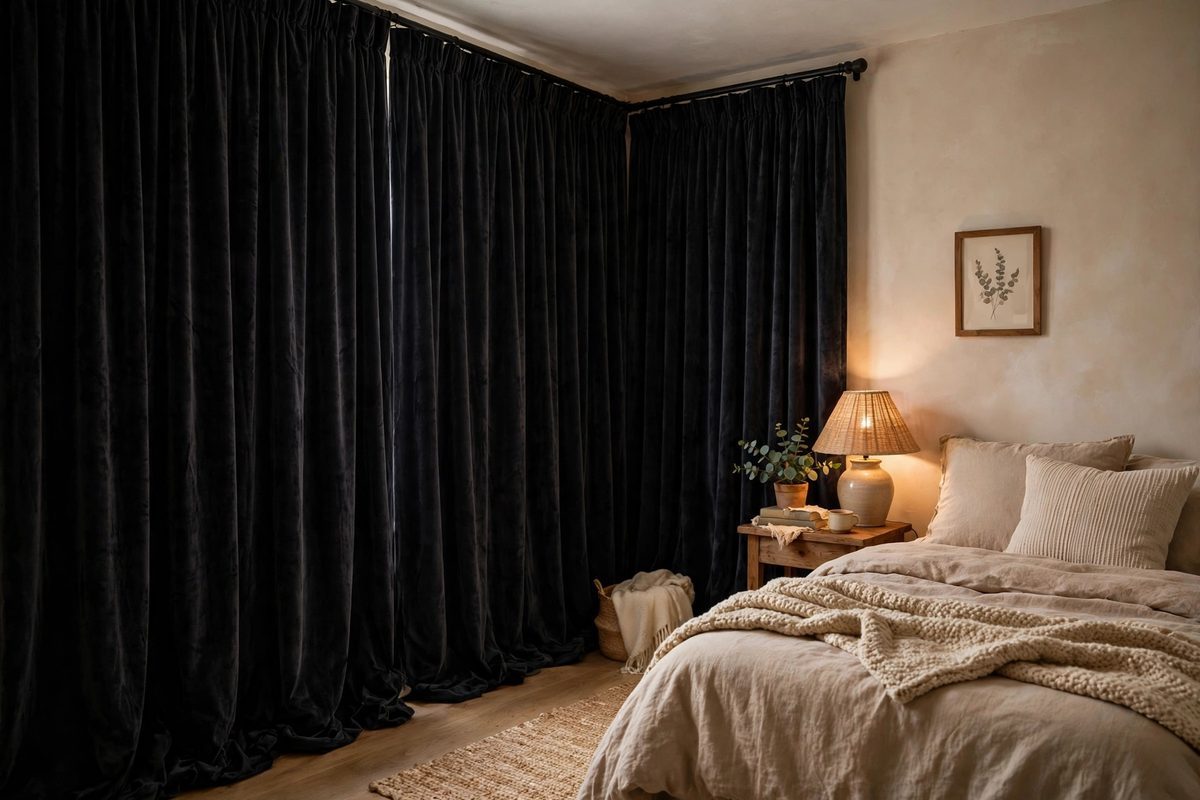
Blackout velvet curtains do two jobs in a small bedroom: they make the window look taller, and they block light and dampen sound for better sleep. Velvet’s weight also helps curtains hang straight and full, without the billowing that lightweight fabrics get in a drafty room.
Velvet is heavy, so it needs a sturdy rod, at least 1 inch in diameter, and brackets every 36 to 48 inches. A single long velvet panel on a weak rod will sag in the middle within weeks. Velvet also collects dust and pet hair, so it needs vacuuming with an upholstery attachment monthly.
How to make it work
Choose a velvet in a color close to your wall color, such as soft grey, dusty blue, or warm cream, so the curtains blend with the wall and the height effect is stronger. Avoid a high contrast color, which breaks the vertical line. Let velvet panels touch the floor lightly, not puddle, since puddling velvet collects dust and trips feet in a small room.
4. The Double Rod Layered Look
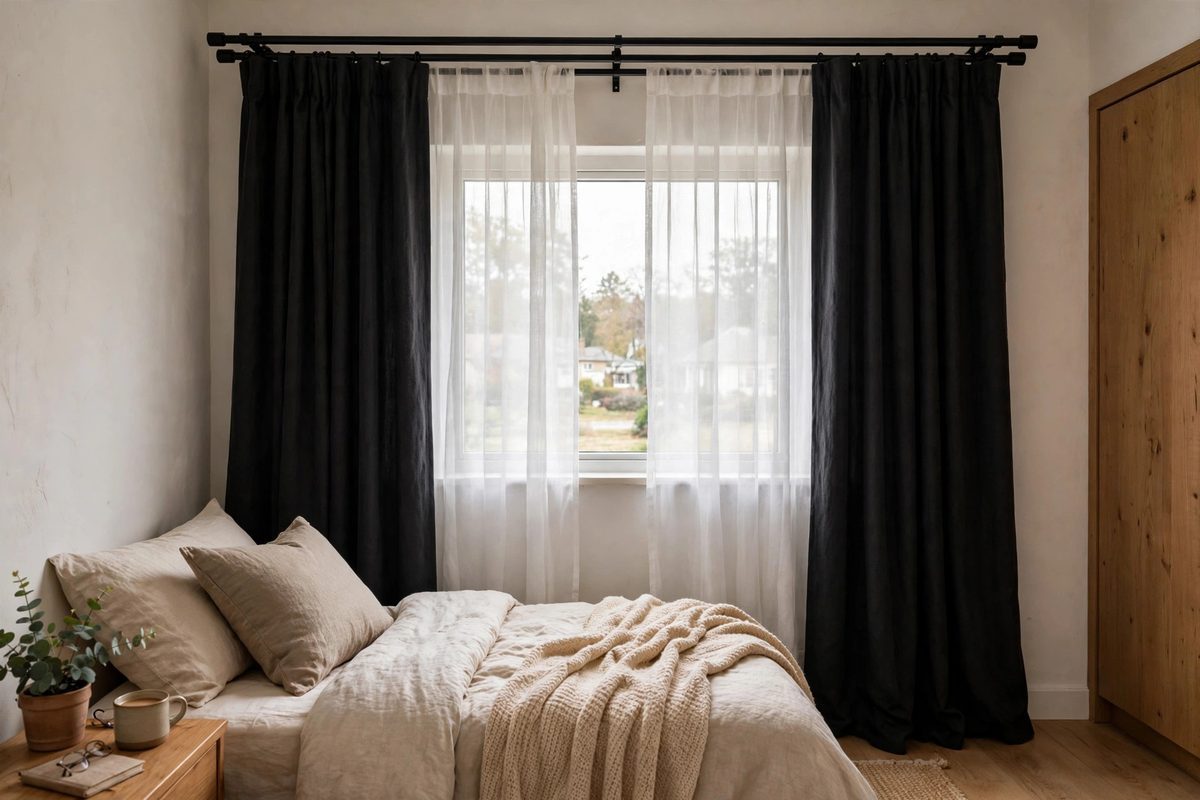
A double rod holds sheers on the inner rod and heavier curtains on the outer rod, giving you light filtering by day and blackout by night, plus a layered look that adds depth to a small room. The two layers also make the window look taller, since the eye reads the combined fabric as a larger frame.
Double rods cost 25 to 50 dollars and need brackets that extend 4 to 6 inches from the wall to fit both layers. In a very small bedroom, a double rod can feel bulky if the curtains are thick, so choose one light layer and one medium layer, not two heavy velvets.
How to make it work
Hang sheers on the rod closest to the window and blackout curtains on the outer rod, so you can close sheers for privacy while keeping blackout panels open for light. Keep both layers the same length, floor length, so the hem line is clean. Tie back the outer panels during the day to show the sheers and let light in.
5. Curtains in a Wall Matching Color
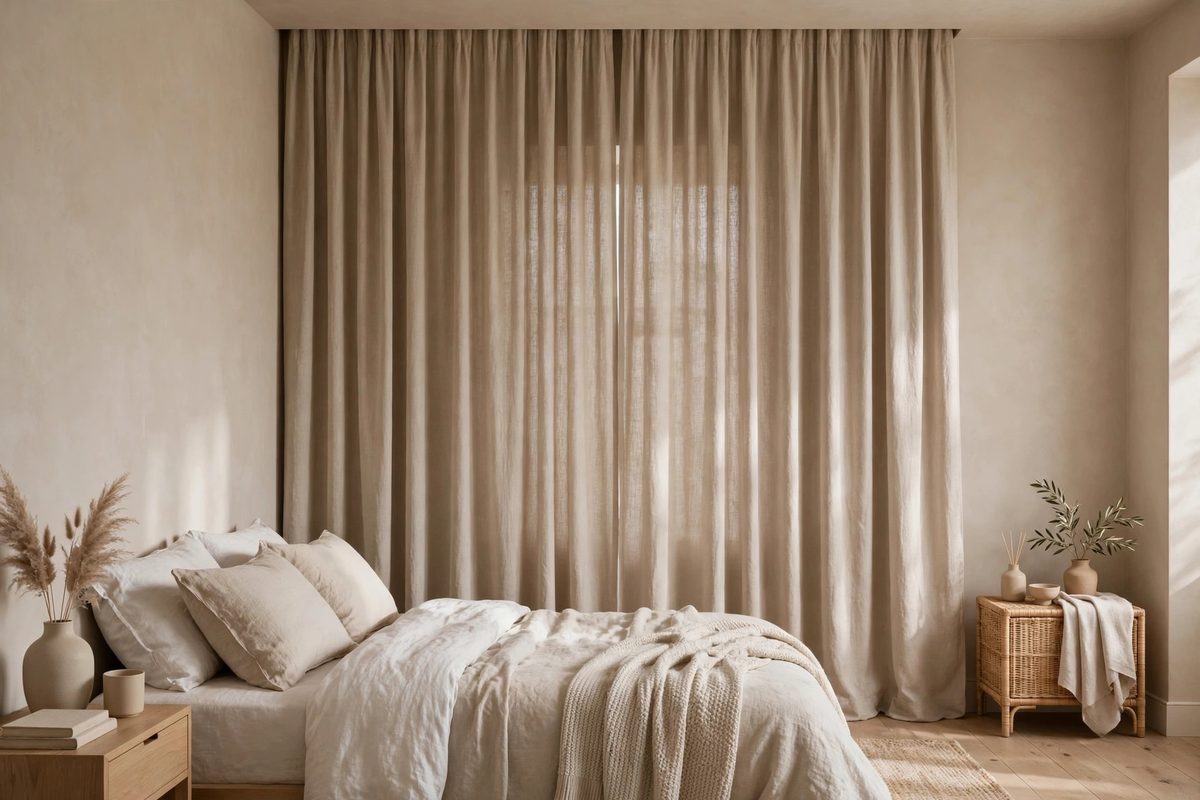
Curtains in the same color as the walls, or one shade lighter or darker, make the window blend into the wall and appear larger, because there is no hard color break at the window edge. This is the most subtle taller window trick, and it works especially well in small bedrooms where a bold curtain color would chop the room in half.
Wall matching curtains suit renters with white or beige walls perfectly: white, cream, or pale grey curtains on white walls extend the wall visually. The key is matching undertone, not just lightness: a cool white curtain on a warm cream wall will look mismatched and break the effect.
How to make it work
Take a paint chip or a photo of your wall in daylight when shopping, and compare curtain fabric in the same light, not just store lighting. Choose a fabric with a subtle texture, such as linen or a light weave, so the curtains do not look like flat wall panels. Add one contrasting element, such as a darker rod or a patterned cushion, so the room does not feel washed out.
6. The Ceiling Mounted Curtain Track
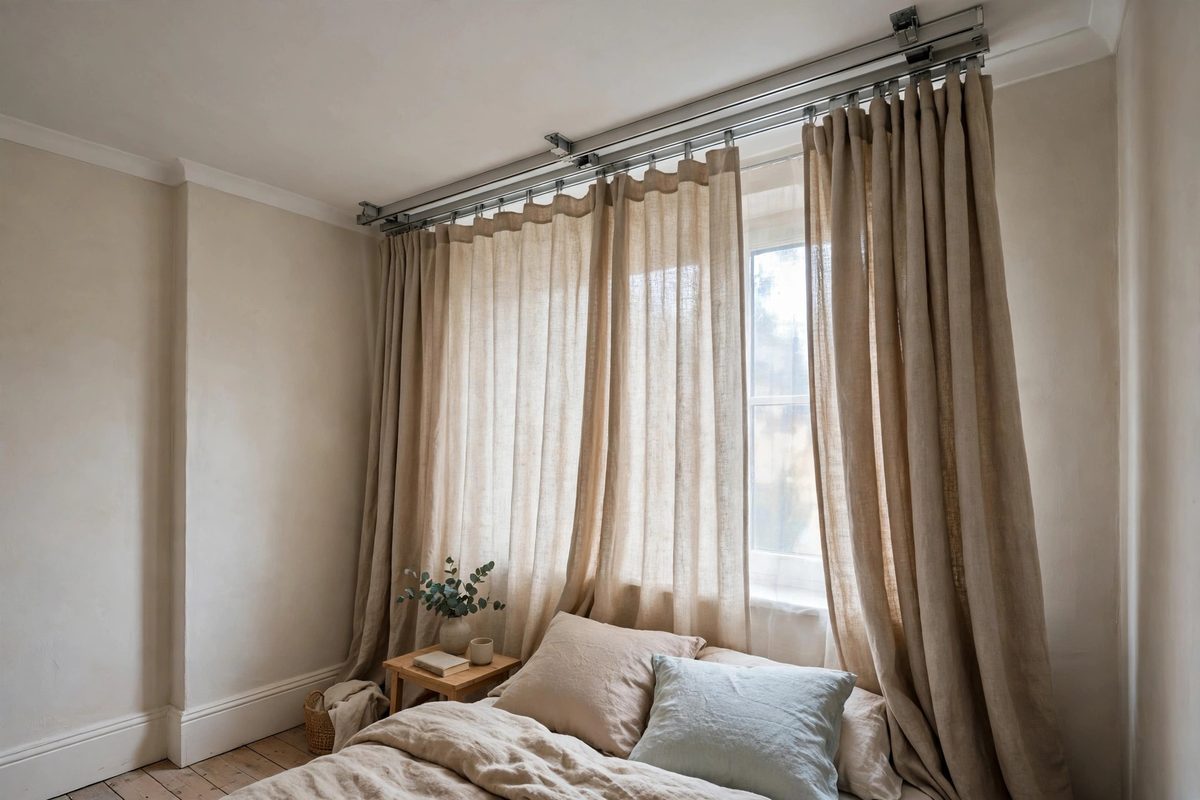
A ceiling mounted track takes the high rod trick to its limit: curtains hang from the ceiling itself, making the window look as tall as the room. Tracks also work for windows that are close to a corner or a sloped ceiling, where a standard rod cannot mount cleanly.
Ceiling tracks cost 20 to 40 dollars, install with screws into ceiling joists, and can curve around corners for bay windows or room dividers. They are less decorative than rods, which is a plus in a minimalist room and a minus if you like the look of finials and hardware.
How to make it work
Find ceiling joists with a stud finder before drilling, since a track full of curtains is heavy. Use a track that extends 8 to 12 inches beyond the window on each side, just like a rod, so curtains stack on the wall. Choose curtain hooks that glide smoothly, and test the full open and close motion before hanging the final panels.
7. Vertical Stripes for Extra Height
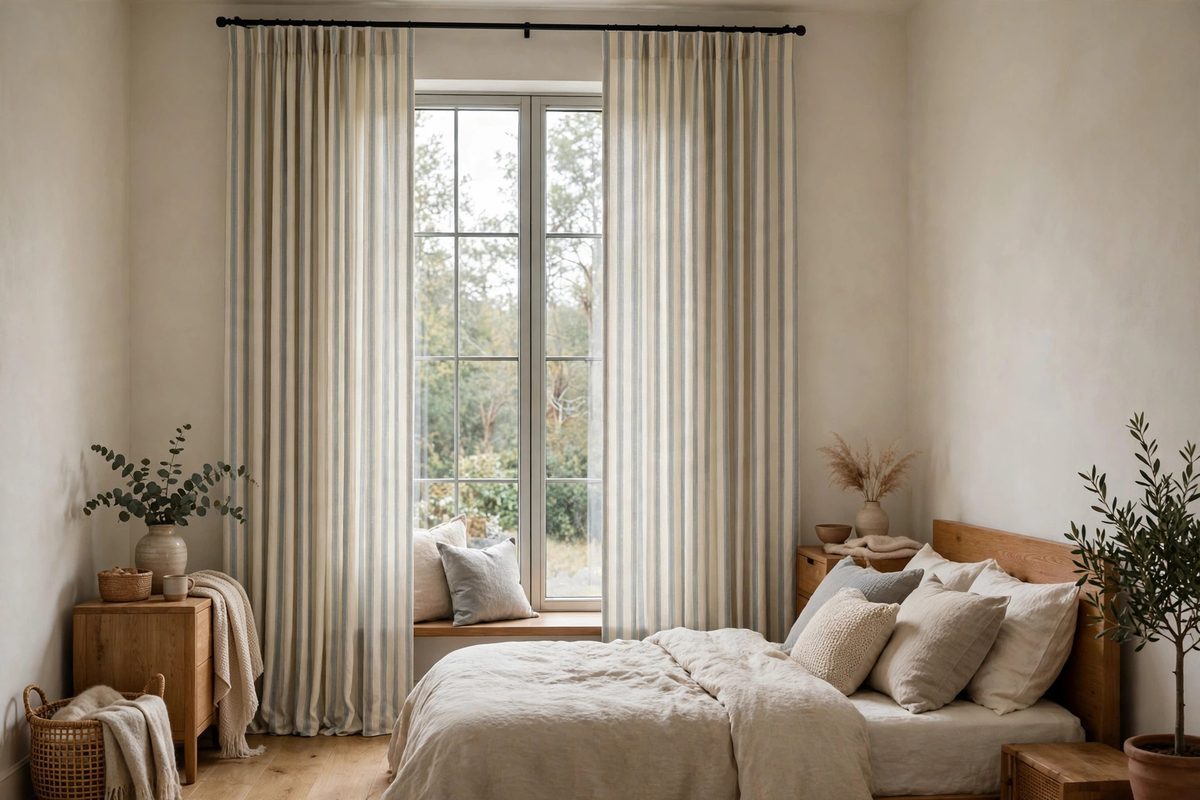
Vertical stripes, whether in the curtain fabric or created by pleats and folds, reinforce the upward line and make a window look taller. A subtle tone on tone stripe, such as cream on cream or grey on grey, adds height without a busy pattern that would overwhelm a small room.
Bold, high contrast stripes can work in a larger room, but in a small bedroom they often feel loud and chop the wall into sections. Keep stripe contrast low: two shades of the same color, or a stripe that is only visible up close, gives height without visual noise.
How to make it work
Choose pinch pleat or goblet pleat curtains, which create natural vertical folds even in solid fabric, if you do not want a striped pattern. Hang striped curtains with the stripes running vertically, not horizontally, and keep the rest of the room’s patterns minimal so the stripes stand out. Pair striped curtains with solid bedding to avoid pattern clash.
8. The Roman Shade Plus Side Panels Combo
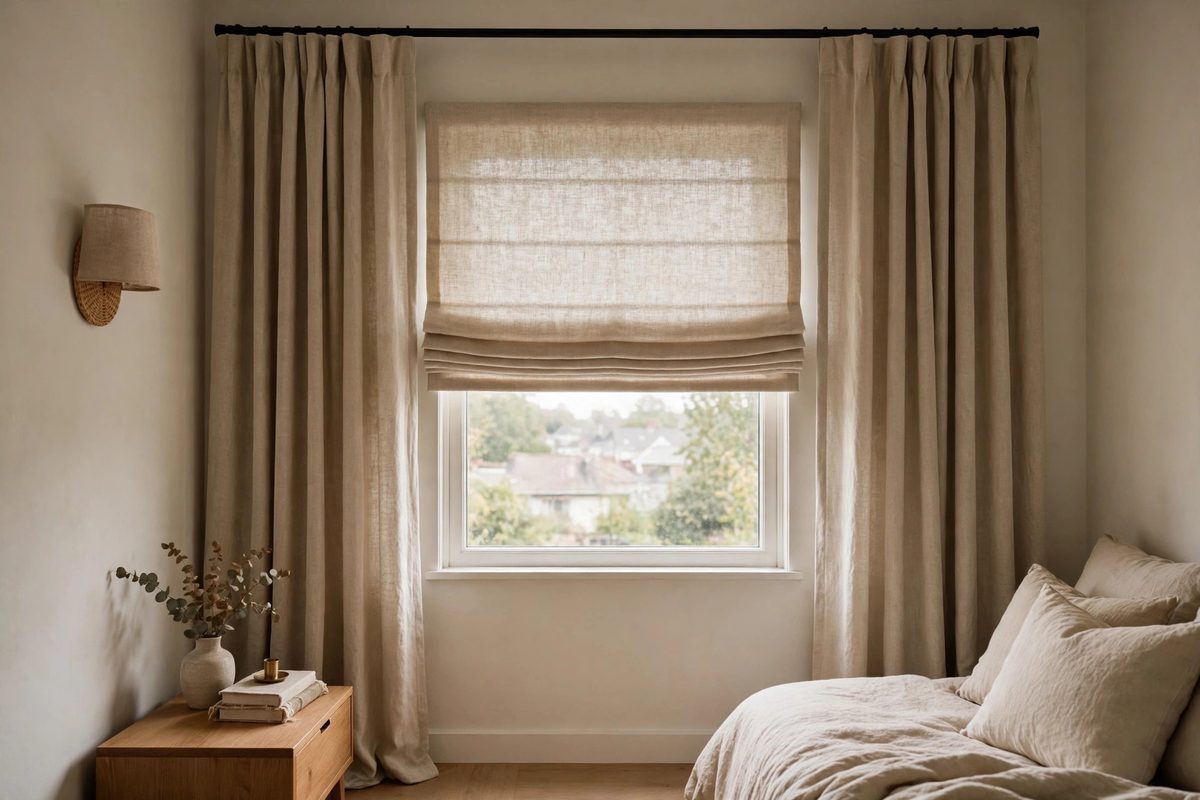
A Roman shade inside the window frame, plus long side panels hung high and wide outside the frame, combines the clean look of a shade with the height effect of floor length curtains. The shade handles light control and privacy, while the side panels supply the vertical line, even when they stay open all day.
This combo suits windows that are too narrow for full curtains, or bedrooms where full curtains would block a radiator, a desk, or a bedside table. The side panels can be narrow, 12 to 18 inches wide each, since they are decorative rather than functional, which saves fabric cost.
How to make it work
Mount the side panel rod high and wide, as with full curtains, and hang panels to the floor. Mount the Roman shade inside the frame at the top, so it does not interfere with the panels. Choose a shade fabric that coordinates with, but does not exactly match, the side panels, for a layered look.
9. Light Filtering Curtains for Dark Bedrooms
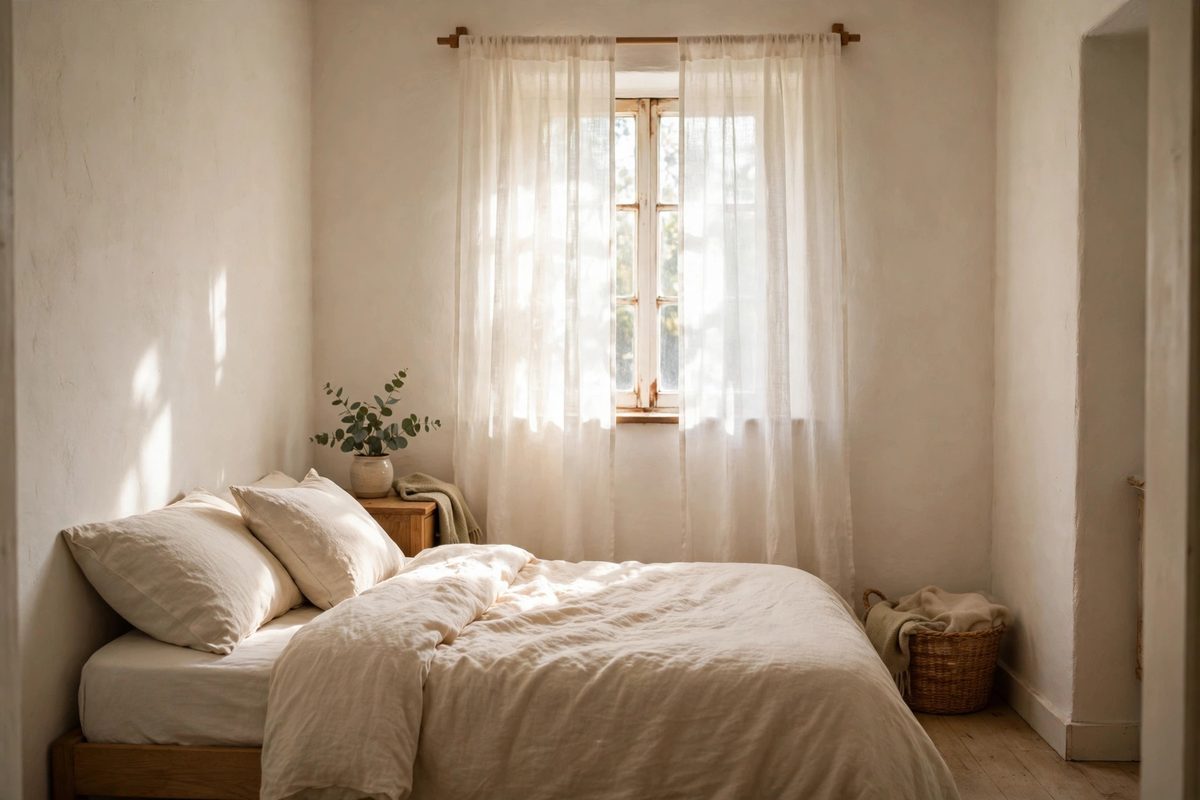
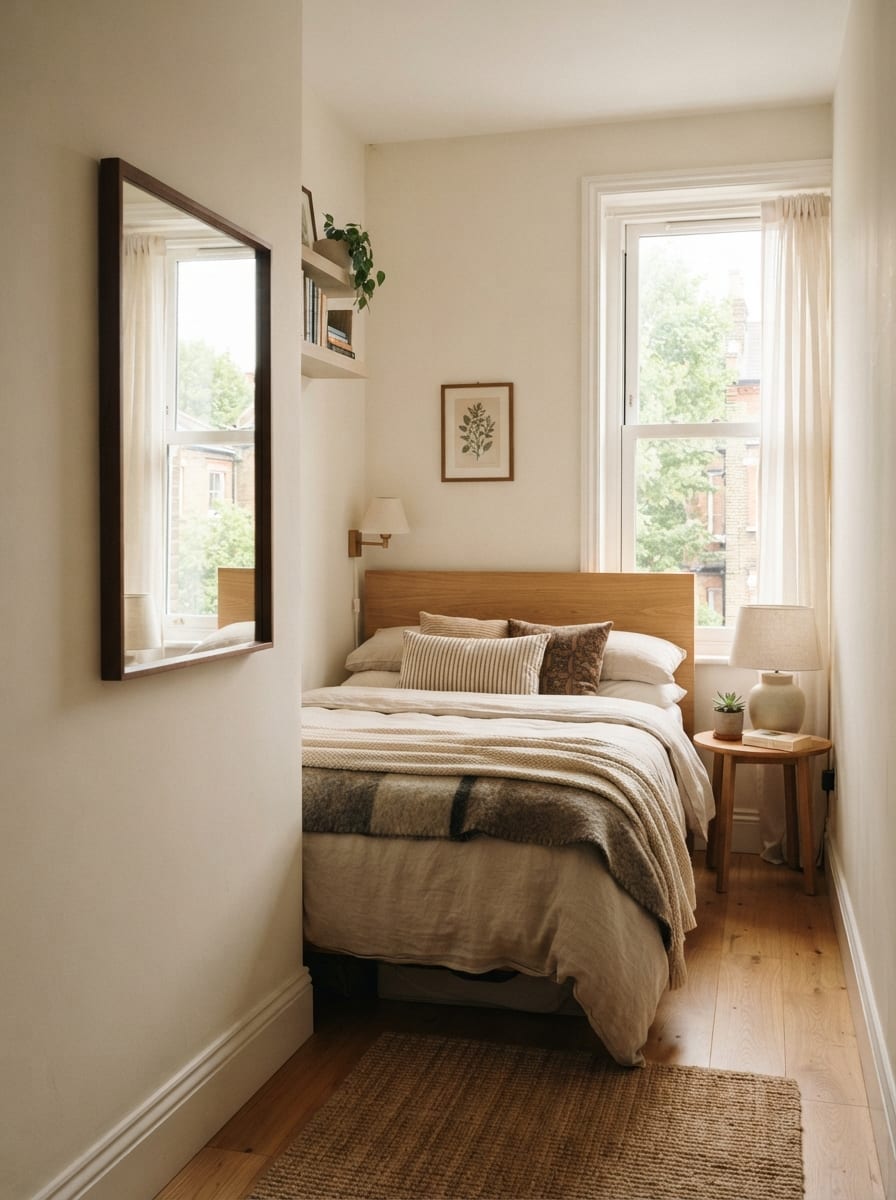
In a bedroom with a small or north facing window, light filtering curtains, which diffuse light without blocking it, make the room feel brighter and the window feel larger, because the fabric glows with daylight. Heavy blackout curtains in a dark room can make the window feel like a black hole, even if they are hung high.
Light filtering fabrics include voile, light linen, and cotton blends in white or pale colors. They provide daytime privacy but not nighttime blackout, so pair them with a blind or a sleep mask if you are light sensitive. They also dry faster and wrinkle less than heavy fabrics, which suits small bedrooms with limited laundry space.
How to make it work
Choose white or cream light filtering curtains for maximum brightness, and hang them high and wide to maximize the glow area. Keep the window glass clean, since dirty glass dims light filtering curtains noticeably. Add a mirror opposite the window to bounce the filtered light deeper into the room.
10. The No Drill Tension Rod Solution for Renters
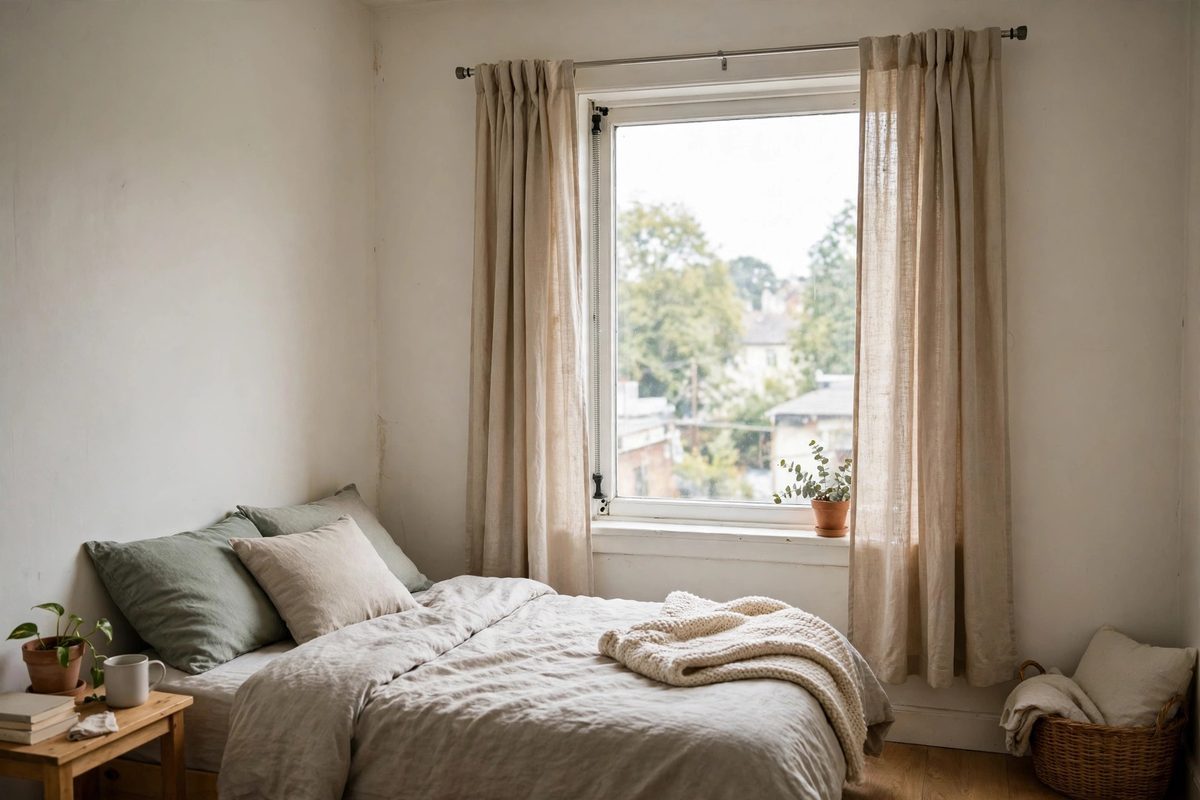
Tension rods, which press between two walls or inside a window frame, let renters hang curtains with no holes, no landlord approval, and no repair at move out. A tension rod inside the frame works for cafes or short curtains, while a tension rod between two close walls can hold floor length panels in a window nook.
Tension rods hold less weight than mounted rods, typically 5 to 10 pounds, so they suit lightweight sheers and cotton panels, not velvet blackout curtains. They also slip if the walls are smooth or the rod is overloaded, so check the fit monthly and avoid hanging heavy items from the rod.
How to make it work
Measure the exact span before buying, since tension rods work only within a narrow size range. Twist the rod to extend it until it feels snug, then test it with the curtain weight before leaving it up. For floor length panels in a nook, use two tension rods, one high and one at mid height, to distribute weight and prevent sagging.
Making a window look taller is mostly about where you hang the rod, not how much you spend on fabric. Mount it high, extend it wide, let the fabric reach the floor, and keep the color close to your walls. Do those four things, and even the smallest bedroom window will feel like a feature, not an afterthought.