10 Small Bathroom Floor Tile Ideas That Make the Room Feel Wider
10 small bathroom floor tile ideas that widen a cramped bathroom, with tile sizes, layouts, grout colors, and renter friendly options.
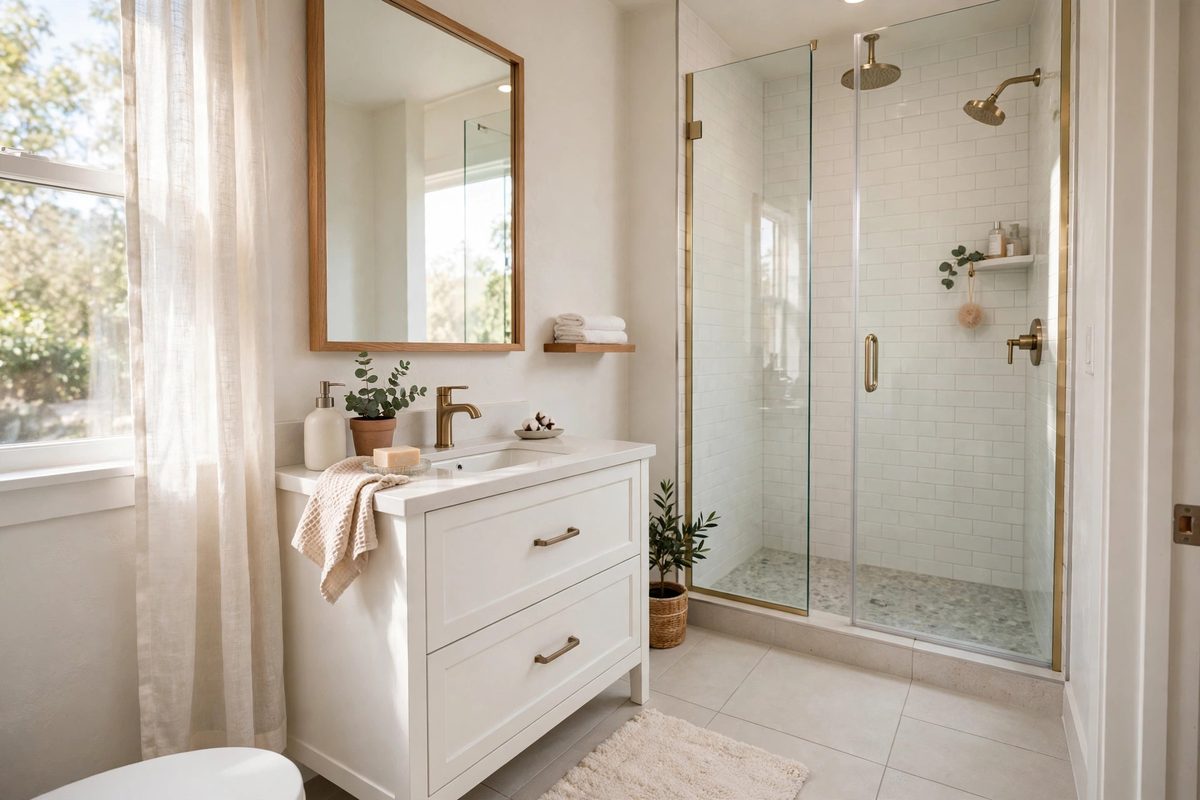
Bright small bathroom with large light porcelain floor tiles, a white vanity, and a glass shower
In This Guide
Floor tile does more than any other surface to set how big a small bathroom feels. The wrong choice, small dark tiles with thick contrasting grout, chops the floor into a grid and makes the room feel like a chessboard. The right choice stretches the floor visually, bounces light around, and lets your eye travel without stopping.
Three principles drive almost every idea below. First, fewer grout lines read as more space, so larger tiles and matching grout usually win. Second, light and reflective surfaces bounce the limited light in a small bathroom. Third, laying tiles to lead the eye toward the longest wall or the back of the room makes the space feel deeper. Keep those in mind and even a budget tile can look generous.
Costs vary widely, from 3 dollars per square foot for basic ceramic to 12 dollars or more for large format porcelain, and a typical small bathroom floor is only 30 to 50 square feet, so upgrading tile is one of the cheapest ways to transform the room. Pair these ideas with the appliance storage in small kitchen appliance storage ideas and the red tree styling in red Christmas tree ideas for small apartments for a whole home small space plan.
1. Large Format Light Porcelain
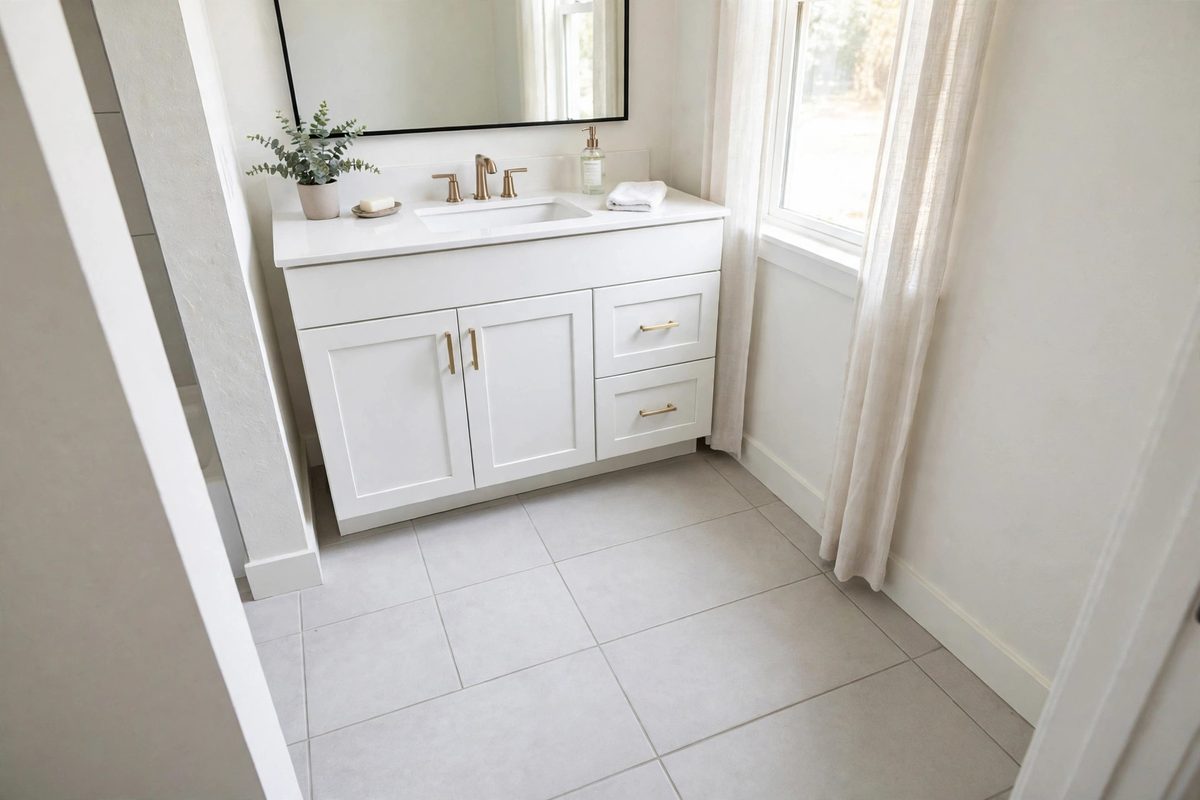
Large format tiles, 12 by 24 inches or 24 by 24 inches, are the single most effective widening trick for a small bathroom floor. A 40 square foot floor needs only about 20 large tiles instead of 80 small ones, which means far fewer grout lines breaking up the surface. Light colors like soft white, pale gray, or warm ivory reflect light and keep the floor from visually shrinking.
Porcelain is worth the small premium over ceramic here, since it is denser, less porous, and better for a wet room. Expect 5 to 10 dollars per square foot for good large format porcelain, plus installation if you are not tiling yourself.
How to make it work
Lay the tiles with a grout color that closely matches the tile, and keep grout joints to 1/16 or 1/8 inch if the tile edges allow it. Run the long side of rectangular tiles parallel to the longest wall to stretch the room in that direction. Check that your subfloor is level before starting, since large tiles show lippage, where one edge sits higher than its neighbor, more than small tiles do.
2. The Diagonal Layout
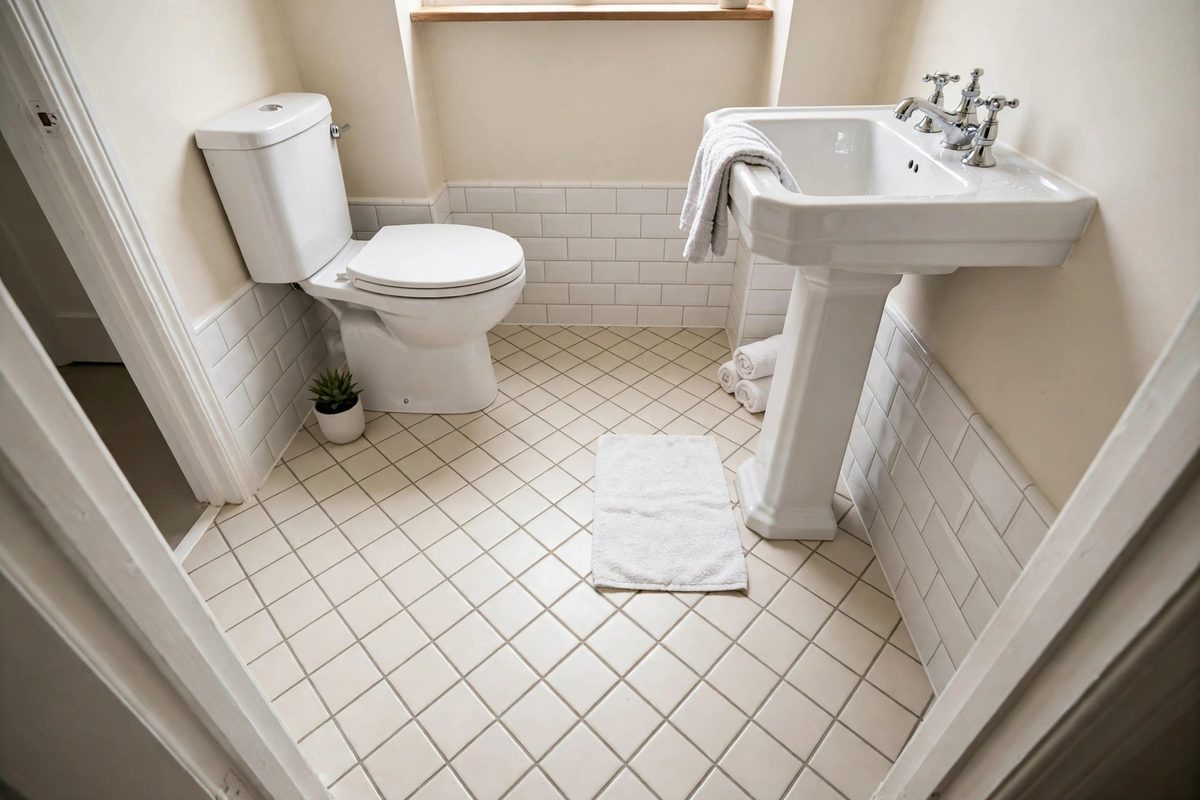
Laying square tiles on the diagonal, at 45 degrees to the walls, tricks the eye into seeing a wider floor because the lines run across the room instead of boxing it in. This works with almost any tile, from classic 12 by 12 inch ceramic to budget friendly porcelain, and it is especially effective in a square bathroom that feels boxy.
The tradeoff is waste: plan for 15 percent extra tile instead of the usual 10 percent, since diagonal cuts produce more offcuts. Labor also costs more if you hire out, since diagonal work is slower to set out.
How to make it work
Snap a chalk line down the center of the room and work outward, dry laying the first row before you mix any adhesive. Keep the grout color close to the tile color so the diagonal pattern reads as texture, not as a grid. In a very narrow bathroom, run the diagonal from the door toward the far wall to pull the eye inward.
3. Matching Floor and Wall Tile
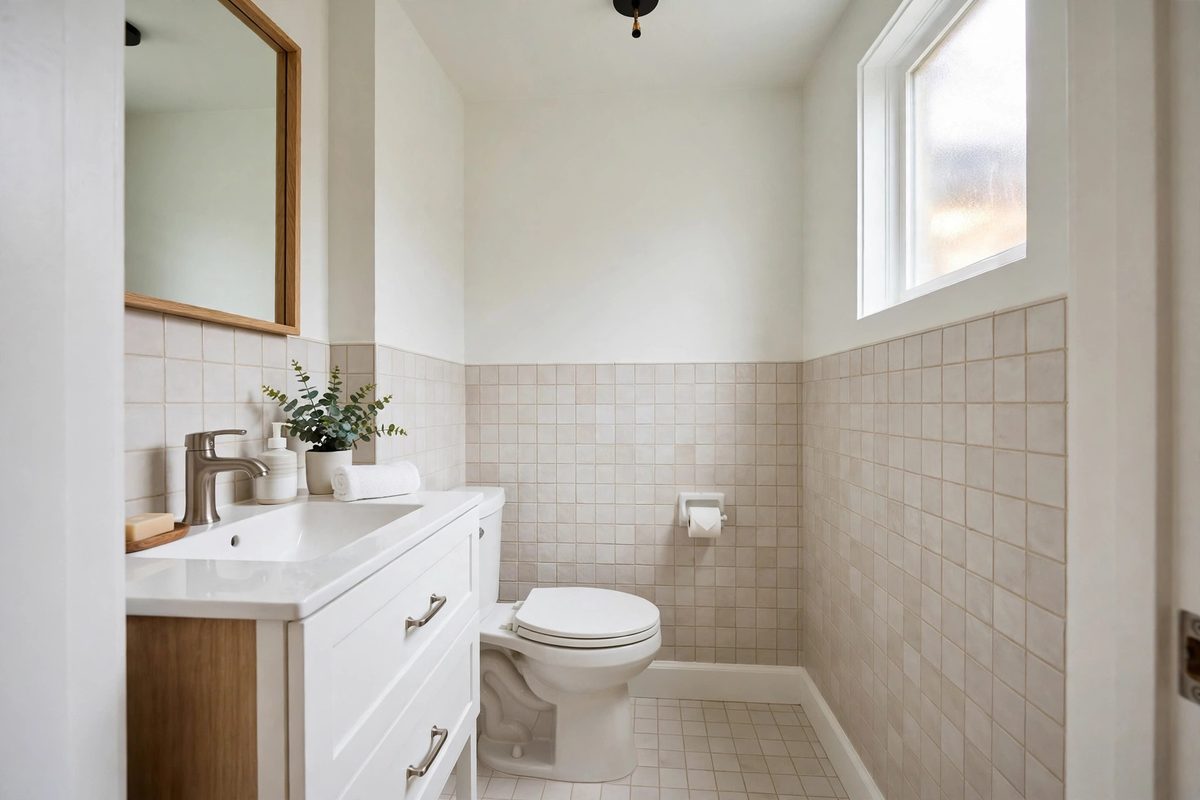
Running the same tile from the floor partway up the wall, or even full height in a shower, erases the visual break where floor meets wall. Without that hard line, the room reads as one continuous surface and feels larger. This works best with a calm, light tile and a matching grout.
This idea costs more in tile, since you are covering walls too, but in a small bathroom the wall area is modest. A half wall of tile behind the vanity and toilet, about 36 inches high, gives most of the effect for a fraction of full height tiling.
How to make it work
Use the same tile size on floor and wall, or a smaller version of the same tile on the wall, so the match reads as intentional. Seal the grout in the wet zones and use a waterproof membrane behind shower tile. If you are renting, this is a landlord conversation, not a weekend project, so get written approval first.
4. Light Wood Look Planks
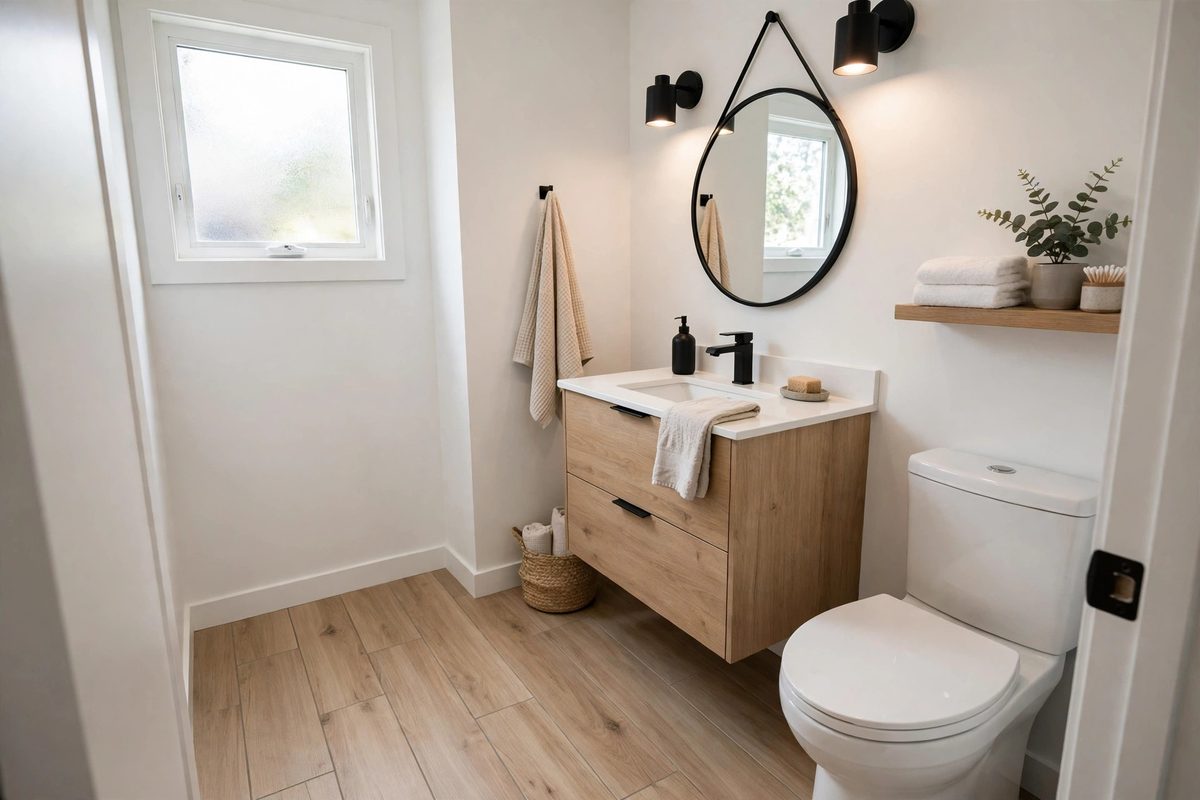
Wood look porcelain planks, 6 by 36 inches in a pale oak or ash tone, bring warmth to a bathroom without the water worries of real wood. Laid lengthwise toward the longest wall, the long planks stretch the room, and the warm tone stops a white bathroom from feeling clinical.
Wood look tile costs 4 to 9 dollars per square foot and is available in most big box stores. Choose a matte or lightly textured finish for grip, and avoid high gloss planks, which get slippery when wet and show every water spot.
How to make it work
Stagger the plank joints by at least 6 inches, like a wood floor, and use a grout color that blends with the plank tone rather than a dark contrasting grout. Run the planks from the door to the far wall in a narrow bathroom, or across the width if you want to emphasize width. Pair with white walls and a light vanity for the widest look.
5. Glossy White Subway Tile on the Floor
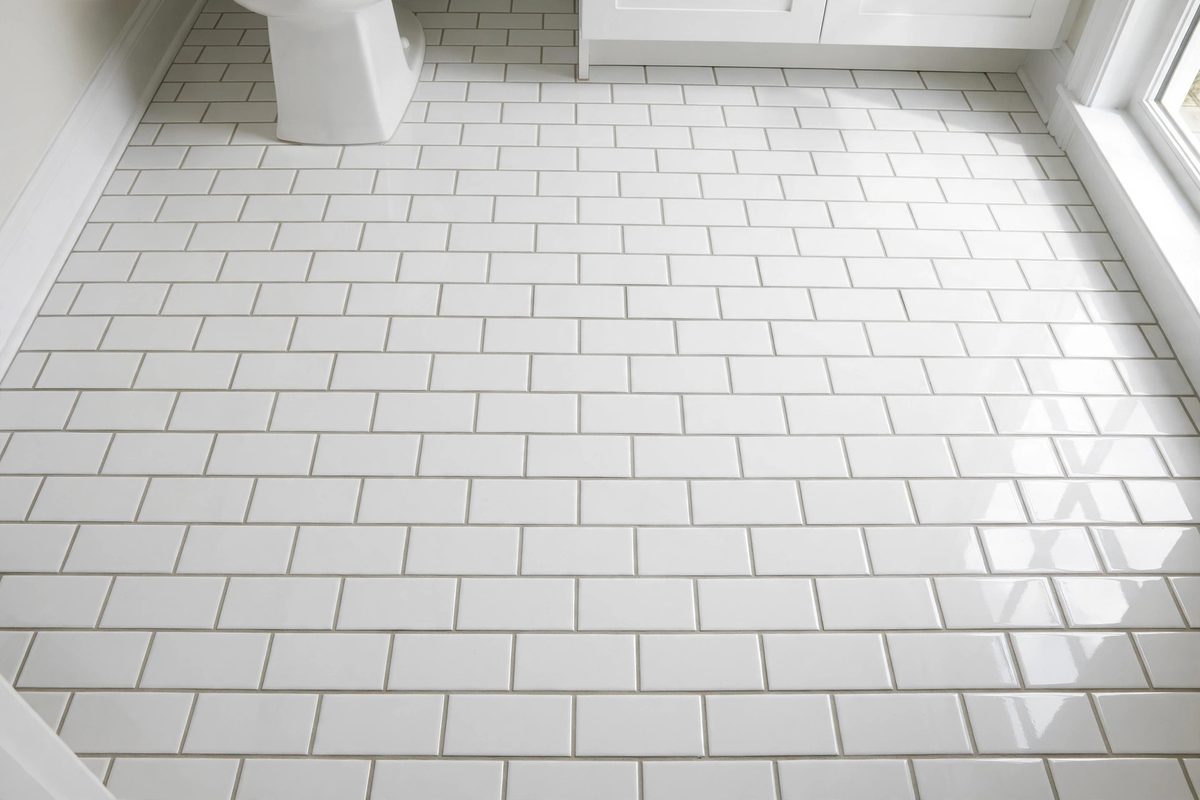
Glossy white subway tiles, laid in a running bond on the floor, reflect light from the ceiling and windows and make a small bathroom feel brighter and wider. This is a classic look that suits both vintage and modern bathrooms, and the tiles themselves are cheap, often 2 to 4 dollars per square foot.
The catch is grout: white grout on a floor shows dirt fast. Choose a light gray grout instead, which still reads as light but hides grime far better, and seal it well.
How to make it work
Use a 3 by 6 inch or 4 by 8 inch subway tile, not the tiny 2 by 4 inch mosaic version, to keep grout lines manageable. Lay the pattern so the long side runs across the narrow dimension of the room if width is your goal. Add a non slip sealant or choose a tile with a slightly textured glaze for the shower area.
6. Continuous Tile Into the Shower
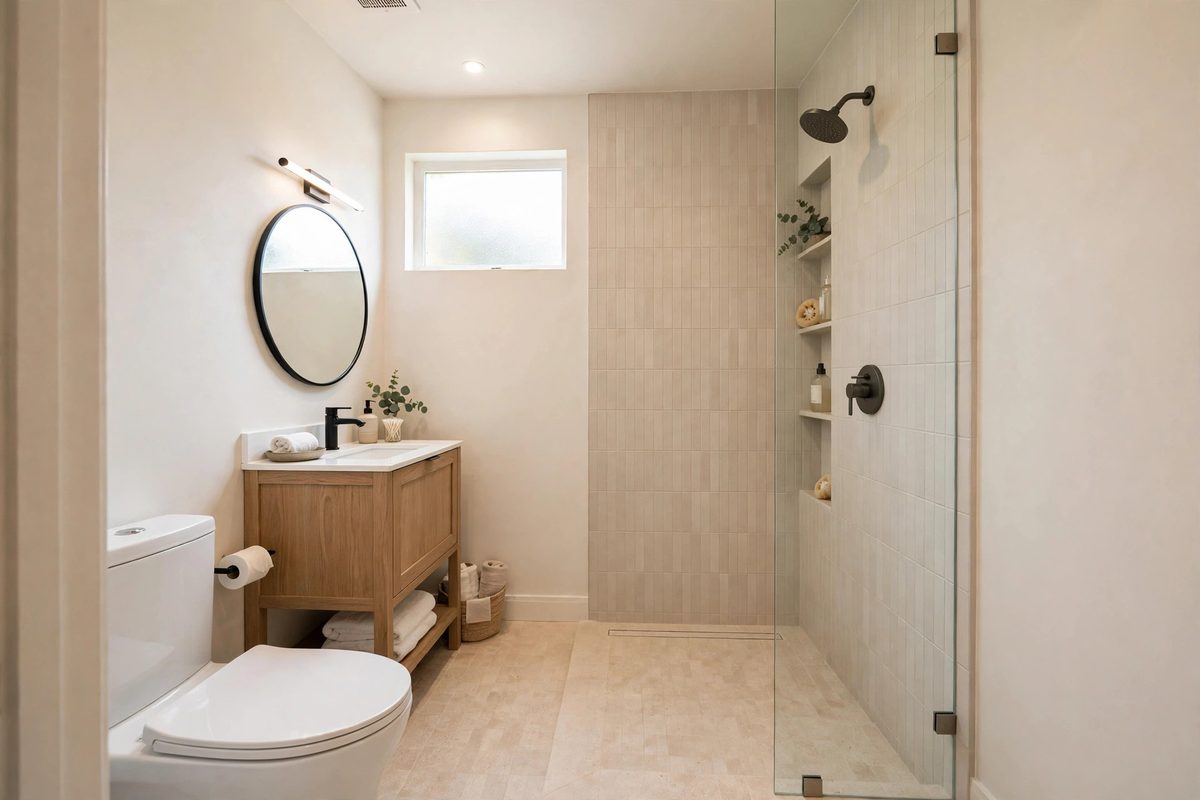
When the bathroom floor tile runs straight into a curbless or low curb shower without a threshold strip or a different tile, the room reads as one larger space instead of two small ones. This is the single best trick for a bathroom under 40 square feet, and it also makes the shower easier to clean.
This idea needs proper planning: the shower floor must slope to the drain, and a curbless design needs a linear drain or a carefully sloped pan. It is a renovation level change, not a cosmetic one, so budget for professional waterproofing.
How to make it work
Use a smaller version of the floor tile, such as a 2 by 2 inch mosaic in the same color, on the shower floor so it can follow the slope. Keep the grout color consistent between the main floor and the shower. Use a glass shower panel instead of a curtain or framed door to keep sightlines open, which doubles the widening effect.
7. Pale Terrazzo Look Tile
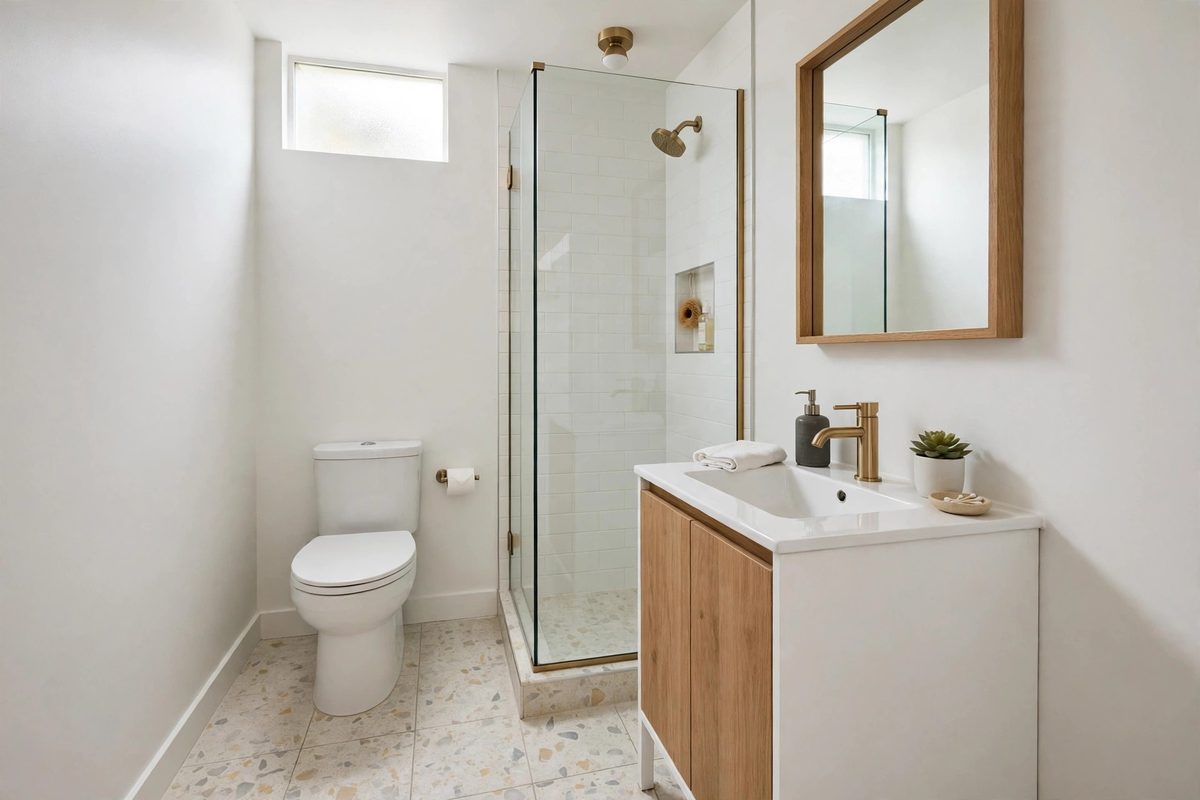
Pale terrazzo look porcelain, with small chips of gray, beige, and white on a light base, adds pattern and personality without darkening the room. Because the pattern is scattered rather than geometric, the eye does not lock onto a grid, which helps a small floor feel less busy.
Terrazzo look tile runs 6 to 12 dollars per square foot, and it hides dirt and water spots better than plain white tile, which is a practical bonus in a bathroom used daily. For a related small bathroom project, see small bathroom shower tile ideas.
How to make it work
Choose a tile with small chips, not large bold ones, which can look chaotic in a small room. Keep the walls plain and light so the floor is the only pattern in the room. Use a grout that matches the tile base color, not the darkest chip, to keep the surface calm.
8. Herringbone in a Light Tone
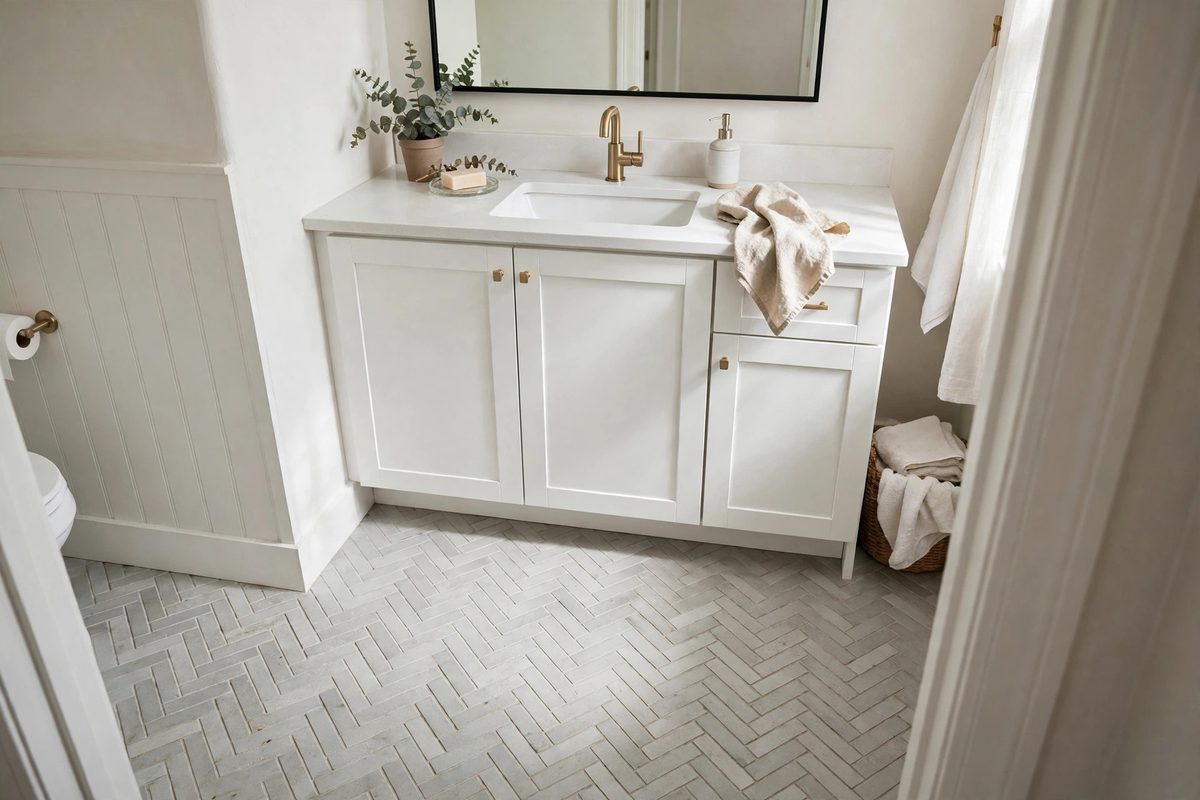
Herringbone is a classic pattern that adds movement and makes the eye travel across the floor, which widens a small room. In a light tone, like pale gray or warm white, herringbone gives you pattern without darkness, and it suits both traditional and contemporary bathrooms.
Herringbone uses more tile and labor than a straight lay, so plan for 15 percent waste and a higher installation quote. The pattern also demands a level floor and careful layout, so it is not the best first tiling project.
How to make it work
Use a rectangular tile around 3 by 12 inches or 4 by 12 inches for a refined herringbone, not a chunky plank. Dry lay the first few rows to check the pattern at the door threshold, since a badly cut edge at the entrance is the first thing you see. Keep grout light and joints tight.
9. Peel and Stick Tiles for Renters
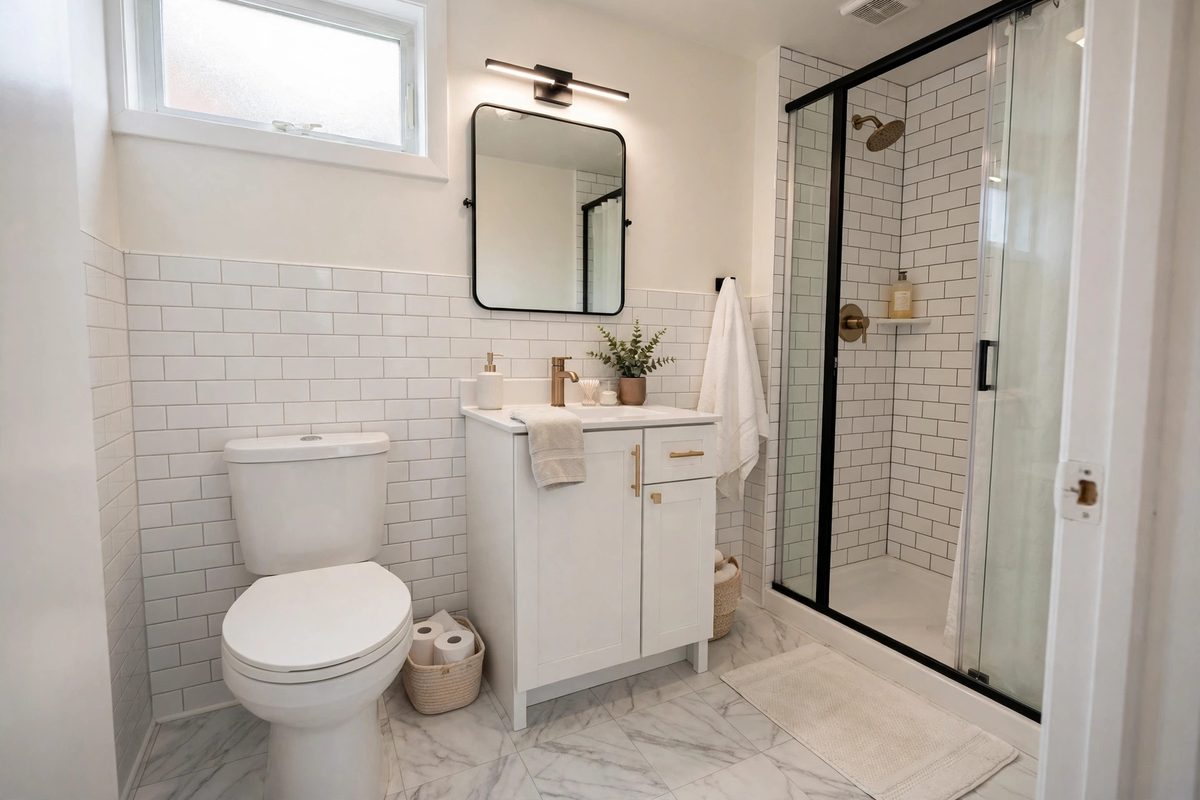
Peel and stick vinyl tiles are the renter friendly way to widen a bathroom without touching the real floor. Light marble look or pale concrete look tiles, in 12 by 12 inch or 12 by 24 inch sizes, can transform a dated dark floor in an afternoon for 1 to 3 dollars per square foot.
They will not last as long as porcelain, typically 2 to 4 years in a wet bathroom, and they need a clean, smooth existing floor to stick well. But for a rental, or for testing a look before a full renovation, they are hard to beat.
How to make it work
Clean the old floor thoroughly, let it dry completely, and lay the tiles from the center outward or from the most visible corner. Use a utility knife and a straightedge for cuts around the toilet and vanity. Seal the seams with a vinyl seam sealer in wet zones, and keep a few spare tiles for replacements.
10. Light Tile With a Dark Border, Done Sparingly
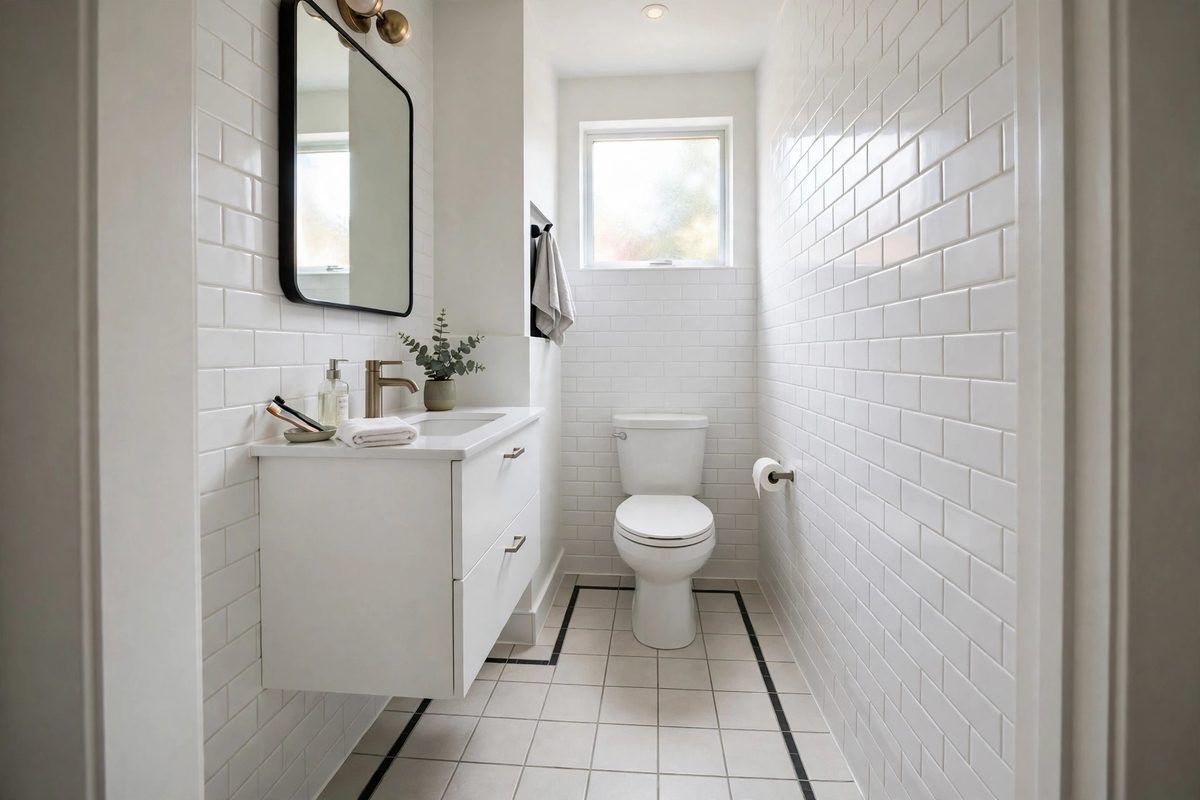
A thin dark border, one tile wide, around the edge of a light floor can actually make the room feel wider by defining the floor area clearly, like a frame around a picture. The key is restraint: the border should be a single row, no more than 2 to 3 inches wide, and the field inside should stay light.
A thick dark border, or a dark field with a light border, does the opposite and shrinks the room. Keep the border simple, in a charcoal, navy, or dark gray that echoes another element in the room, like the vanity hardware or a mirror frame.
How to make it work
Plan the border so it falls in full tiles where possible, and avoid cutting the border into slivers at the door. Use the same grout throughout so the border reads as a design line, not a patch. If your bathroom is under 30 square feet, skip the border entirely, since the frame can crowd a tiny floor.
A wider feeling bathroom usually comes down to fewer lines, lighter surfaces, and a layout that leads the eye forward. Pick the idea that fits your budget and your lease, match your grout to your tile, and let the floor do the widening work for you.