9 Narrow Hallway Wall Decor Ideas That Don't Make the Passage Feel Busier
9 narrow hallway wall decor ideas that add style without crowding the passage, with spacing rules, sizes, and renter friendly hanging tips.
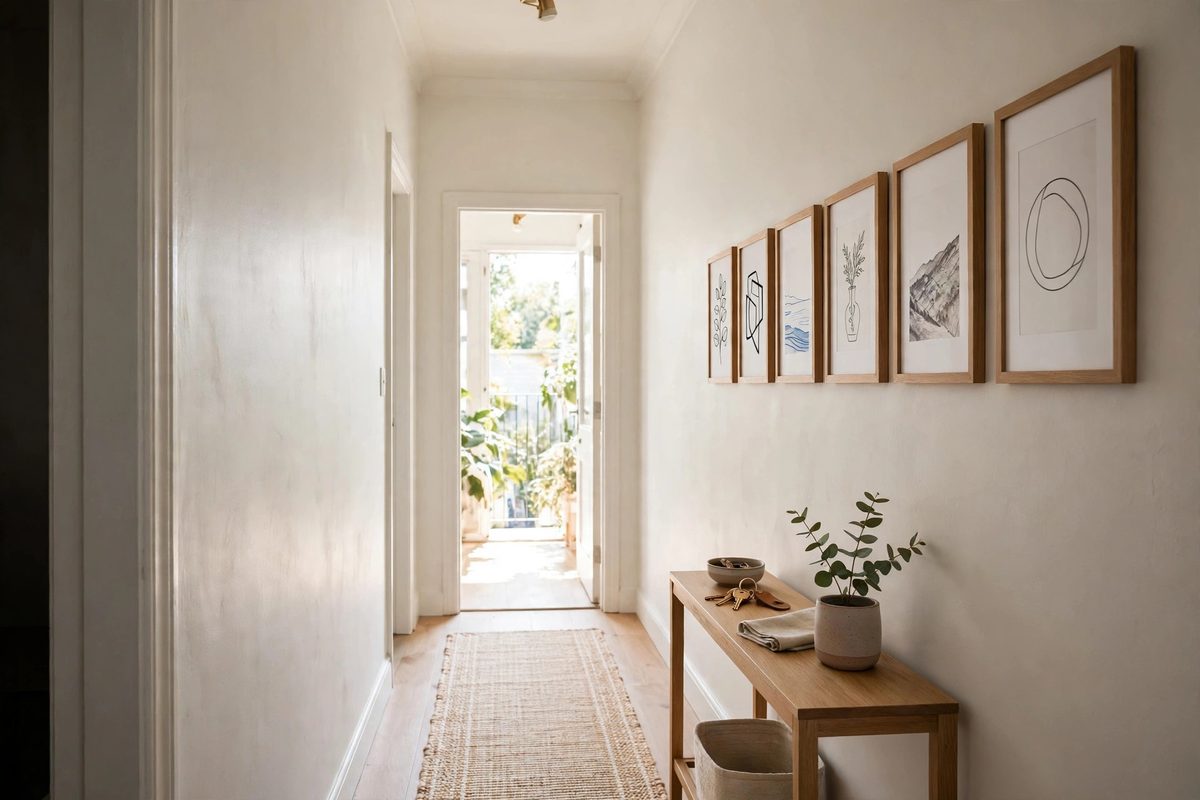
Bright narrow apartment hallway with a single row of framed prints, a slim console, and a light runner rug
In This Guide
A narrow hallway is a passage first and a gallery second. The moment wall decor sticks out too far, hangs too low, or crowds both walls at once, the hallway stops feeling like a connector and starts feeling like an obstacle course. The goal is decor that you notice while walking through, not decor you have to dodge.
Two rules keep a narrow hallway calm. First, decorate one wall only, and leave the other wall plain, so the passage has a visual resting side. Second, keep everything flat or nearly flat against the wall. Anything that projects more than 2 inches into the walkway, like a deep shelf or a bulky frame, narrows a hallway that is already tight. A standard hallway is 36 to 42 inches wide, and you need at least 32 inches clear for comfortable passage.
The ideas below follow those rules, and they connect with the living room planning in small living room sofa ideas and the card display ideas in Christmas card display ideas for small apartments.
1. The Single Row Gallery
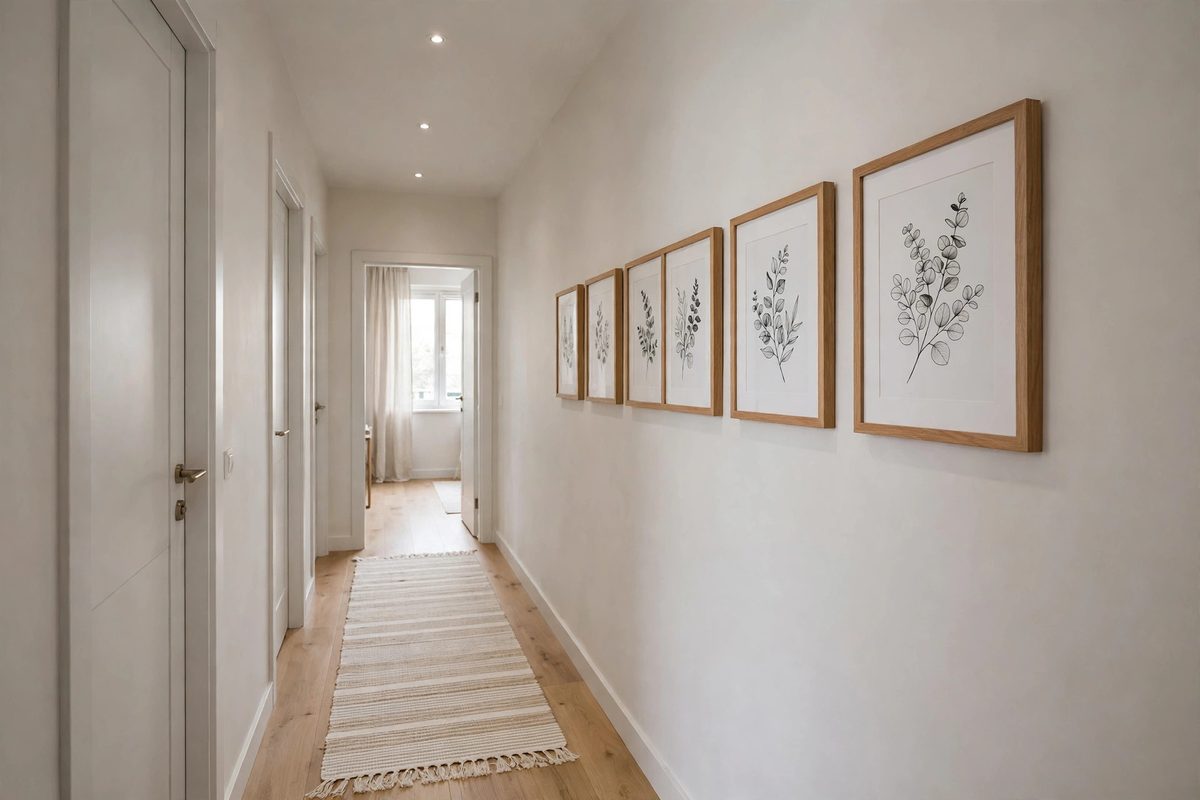
A single horizontal row of frames, hung at eye level with consistent spacing, adds art to a hallway without the busy grid effect of a full gallery wall. Choose frames of the same size, or the same frame color with two sizes at most, and hang them 3 to 4 inches apart.
Eye level in a hallway is 57 to 60 inches to the center of the frame, which is slightly higher than it feels when you are walking, since you view hallway art from close range. For a hallway 8 to 10 feet long, four to five frames in a row is plenty. More than that starts to feel like a tunnel of pictures.
How to make it work
Lay the frames on the floor first and measure the total width, including gaps, to center the row on the wall. Use a paper template for each frame and tape them up before hammering any nails, so you can step back and check the line from the hallway entrance. In a rental, use adhesive picture hanging strips rated for each frame weight.
2. One Oversized Piece
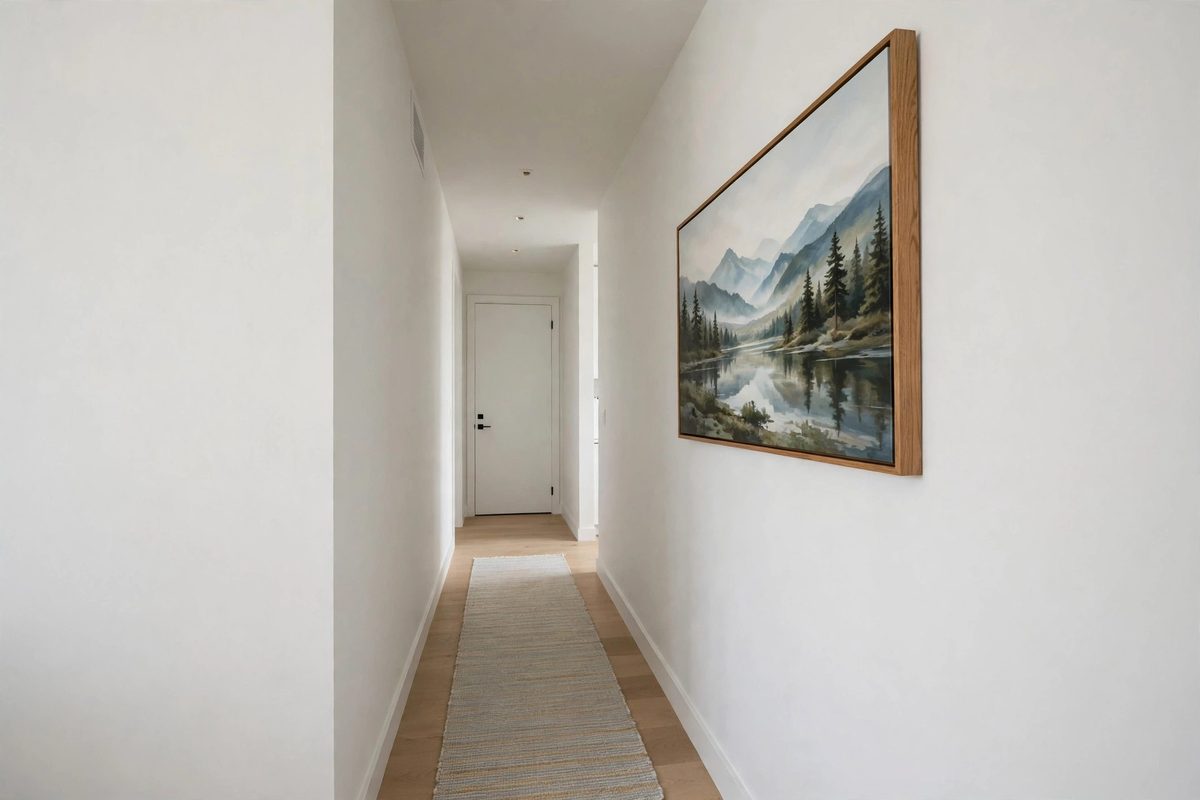
Counterintuitively, one large piece of art can make a narrow hallway feel calmer than many small pieces, because the eye has one place to land instead of a dozen. A single piece 24 by 36 inches, or 30 by 40 inches on a longer wall, anchors the hallway and reads as intentional.
Choose art with breathing room in it, like a landscape, an abstract with negative space, or a large photograph, rather than a dense, detailed print that demands close inspection. A narrow hallway is viewed in motion, so bold and simple beats intricate.
How to make it work
Center the piece on the longest uninterrupted wall section, and hang it so its center sits at 57 to 60 inches. Keep the wall opposite completely bare, and keep the floor below it clear except for a slim runner rug. If the piece is heavy, over 20 pounds, anchor it into a stud or use a French cleat, not a single nail.
3. A Slim Mirror Panel
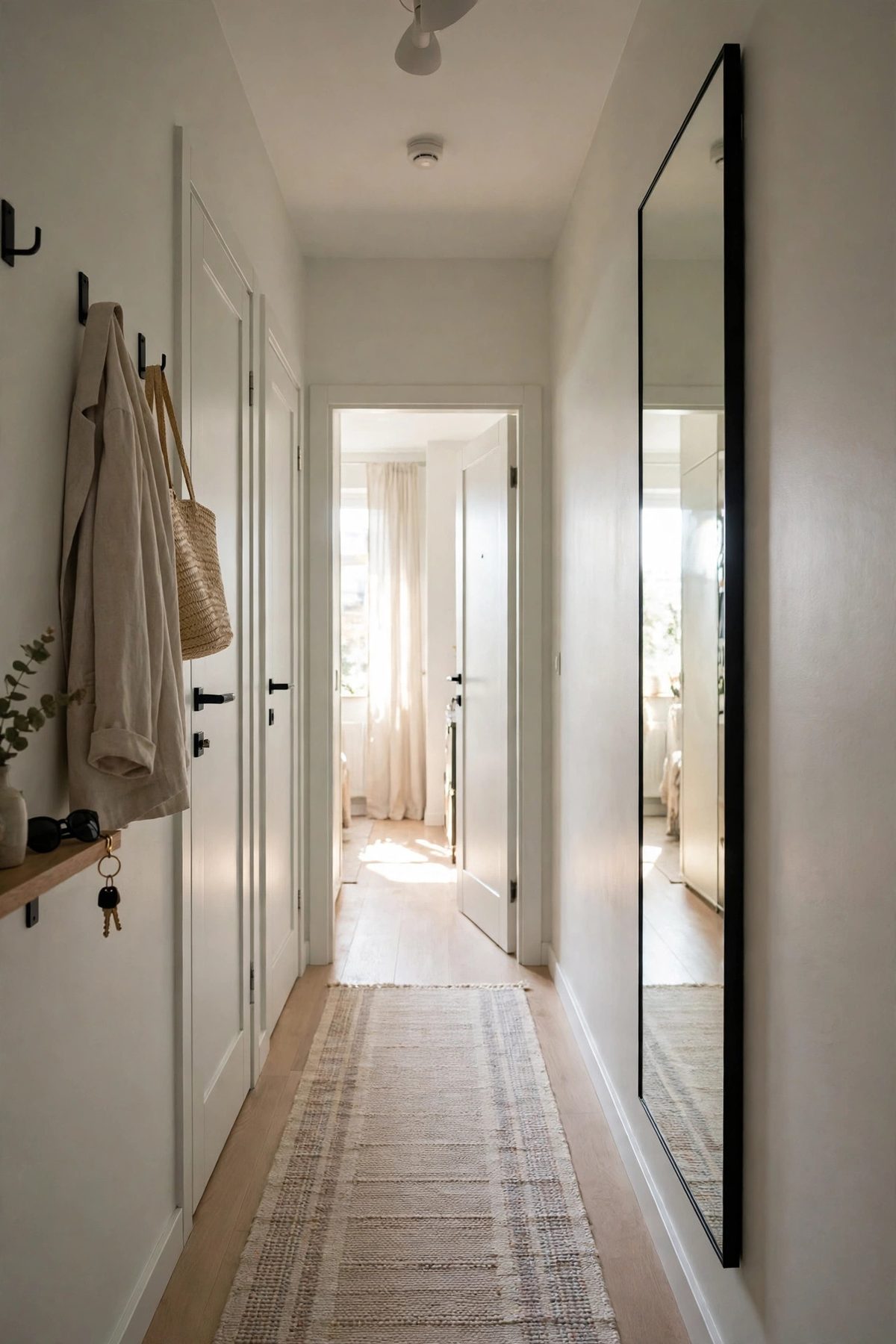
A tall, narrow mirror, 16 to 20 inches wide and 48 to 60 inches tall, reflects light and doubles the visual width of a hallway without adding color or pattern. It is the best decor choice for a hallway with no natural light, since it bounces whatever light exists from the rooms at either end.
Hang the mirror on the wall opposite a doorway or a light source if possible, so it reflects something pleasant, not a blank wall. A frameless or thin framed mirror keeps the look clean, and a mirror with a simple wood or black frame adds just enough definition. For more mirror ideas, see narrow hallway mirror ideas.
How to make it work
Hang the mirror so its center is at eye level, and secure it with proper mirror hardware, not adhesive strips alone, since mirrors are heavy and a falling mirror is dangerous. If you have children or pets, choose a mirror with safety backing. Keep the mirror clean, since smudges show immediately in a narrow, well lit passage.
4. A Horizontal Picture Ledge
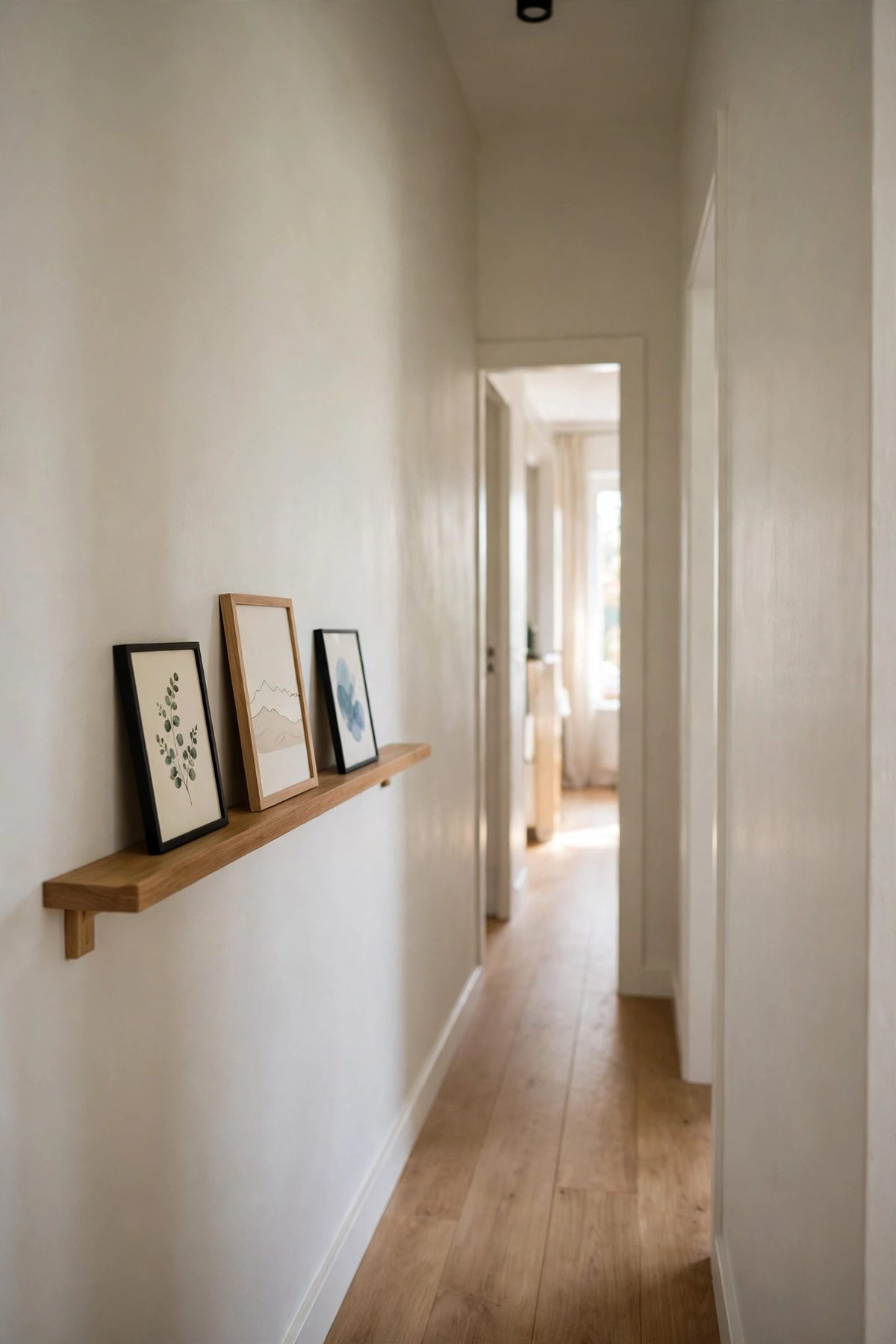
A picture ledge, a shelf only 2 to 3 inches deep, lets you lean art against the wall and swap it without new holes. It projects barely into the walkway, so it respects the clearance rule, and it lets you layer two or three pieces with overlap for a collected look.
A ledge 48 to 72 inches long, mounted at 60 inches high, holds three to four small frames. Keep the frames small, under 11 by 14 inches, so the ledge does not look top heavy, and lean them at a slight angle, not flat against the wall, so they catch light.
How to make it work
Anchor the ledge into studs, since leaned frames plus the ledge itself add weight. Put a small lip or a strip of museum putty behind each frame so it does not slide off when a door slams. Change the art seasonally if you like, since a ledge makes swaps a five minute job.
5. Vertical Panel Molding
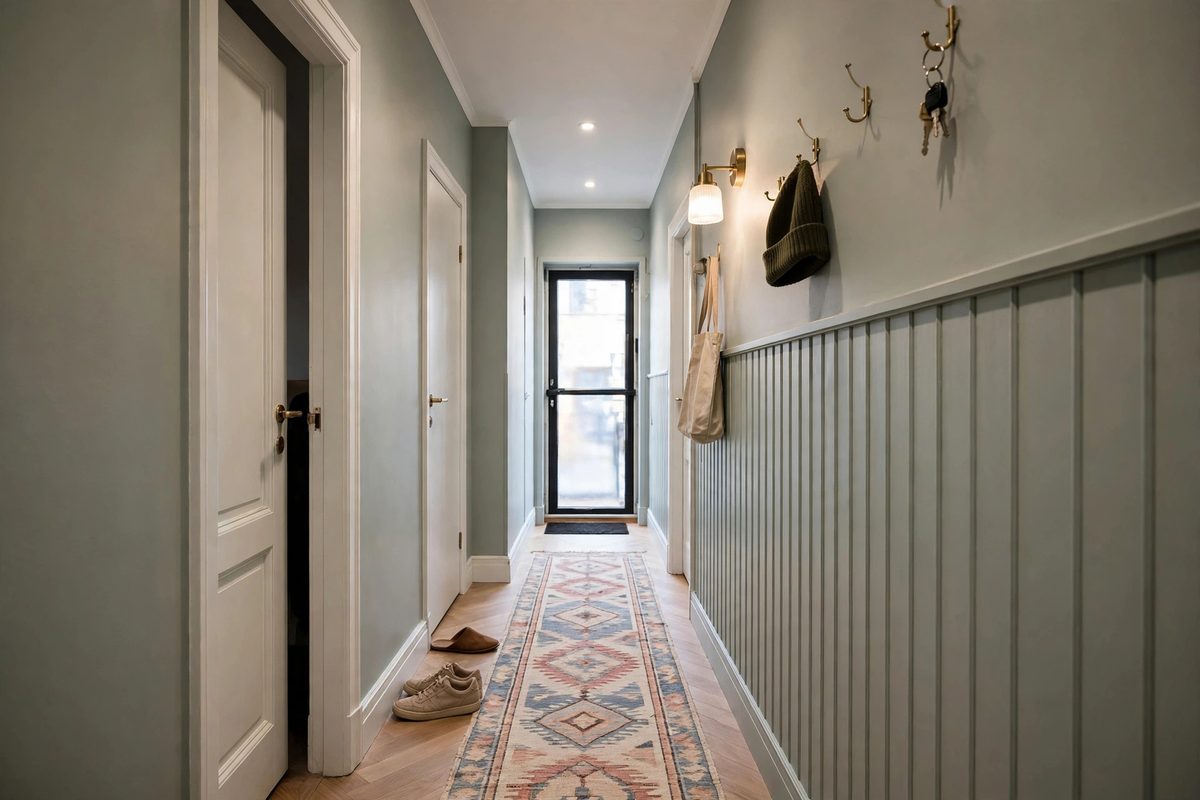
Applied panel molding, thin wood strips forming rectangles on the lower two thirds of the wall, adds architectural interest without any objects projecting into the hallway. Painted the same color as the wall, it adds subtle texture. Painted a shade darker, it adds definition.
This is a weekend project for a homeowner, using pre cut molding strips and paintable caulk, and it costs 50 to 100 dollars in materials for a standard hallway. Renters can approximate the look with removable wall molding strips, which use adhesive and peel off, though they are less crisp than real wood.
How to make it work
Keep the panels to the lower wall, from the baseboard to about 36 inches high, so the upper wall stays open and light. Space the panels evenly, with the same gap between each panel and at the ends. Paint the molding and the wall in the same finish, eggshell or satin, so the panels read as architecture, not as decoration stuck on.
6. A Single Color Block
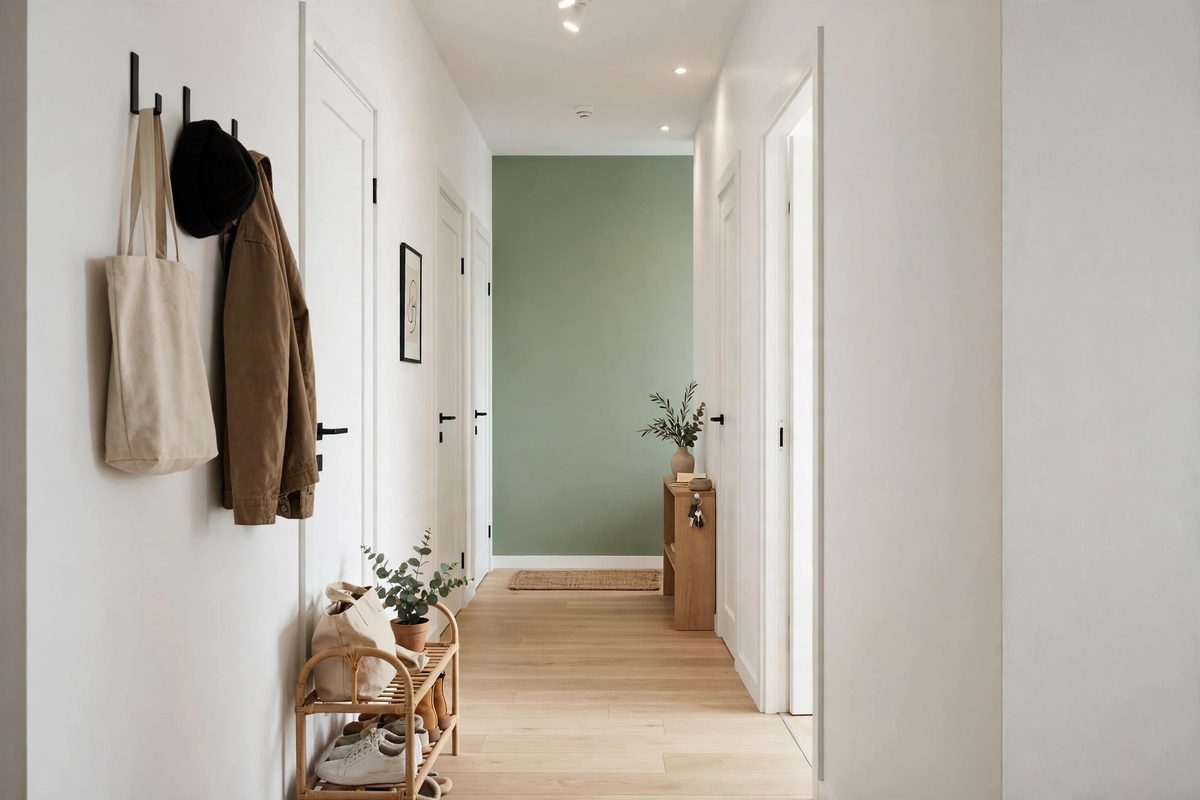
Painting one hallway wall, or one section of one wall, in a single color can transform a plain passage without adding a single object. A soft sage, warm terracotta, or deep navy on the end wall of a hallway draws the eye forward and makes the hallway feel like a designed space.
Paint only one wall, and keep the other wall white or light, so the hallway does not feel like a tunnel. The end wall is the best choice for a bold color, since it is the wall you see when you enter the hallway, and it acts as a focal point at the end of the passage.
How to make it work
Test the color in the hallway light, not just in the store, since hallway lighting is often dim and warm, which shifts colors. Use a matte or eggshell finish, which hides wall imperfections better than gloss. If you rent, check whether your lease allows painting, and keep the original paint color name for move out touch ups.
7. Slim Floating Shelf With One Object
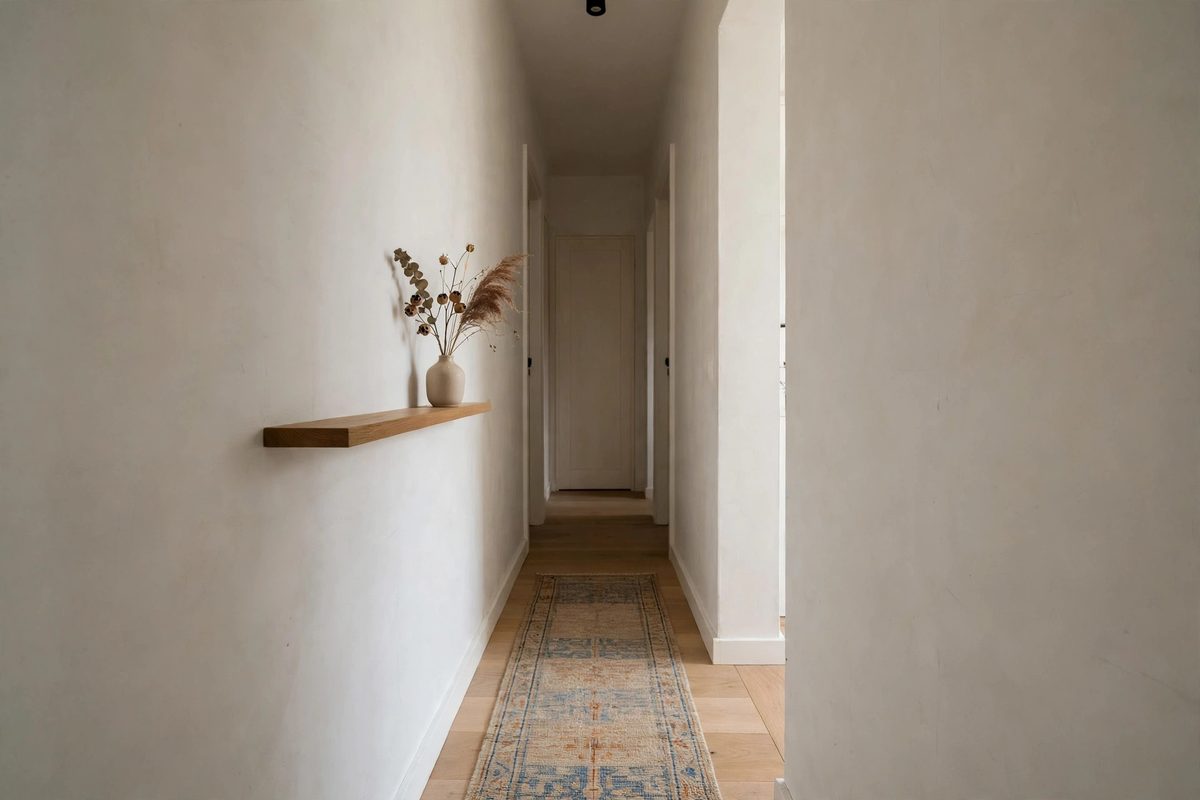
One slim floating shelf, 24 inches long and no more than 4 inches deep, holding a single small vase or a small stack of books, adds a styled moment to a hallway without crowding it. The key is one shelf and one or two objects, not a series of shelves filled with decor.
Mount the shelf at 60 inches high, above the reach of bags and coats brushing past, and keep the objects low and stable. A small vase with dried stems, or a single candle in a sturdy holder, is enough. Anything tall or top heavy will get knocked off in a narrow passage.
How to make it work
Anchor the shelf into a stud, and use museum putty under objects to keep them in place. Keep the shelf clear of door swings, since a door opening into a shelf is a common hallway collision. If your hallway is under 36 inches wide, skip the shelf entirely and use flat wall decor instead.
8. A Runner Rug as Wall Color
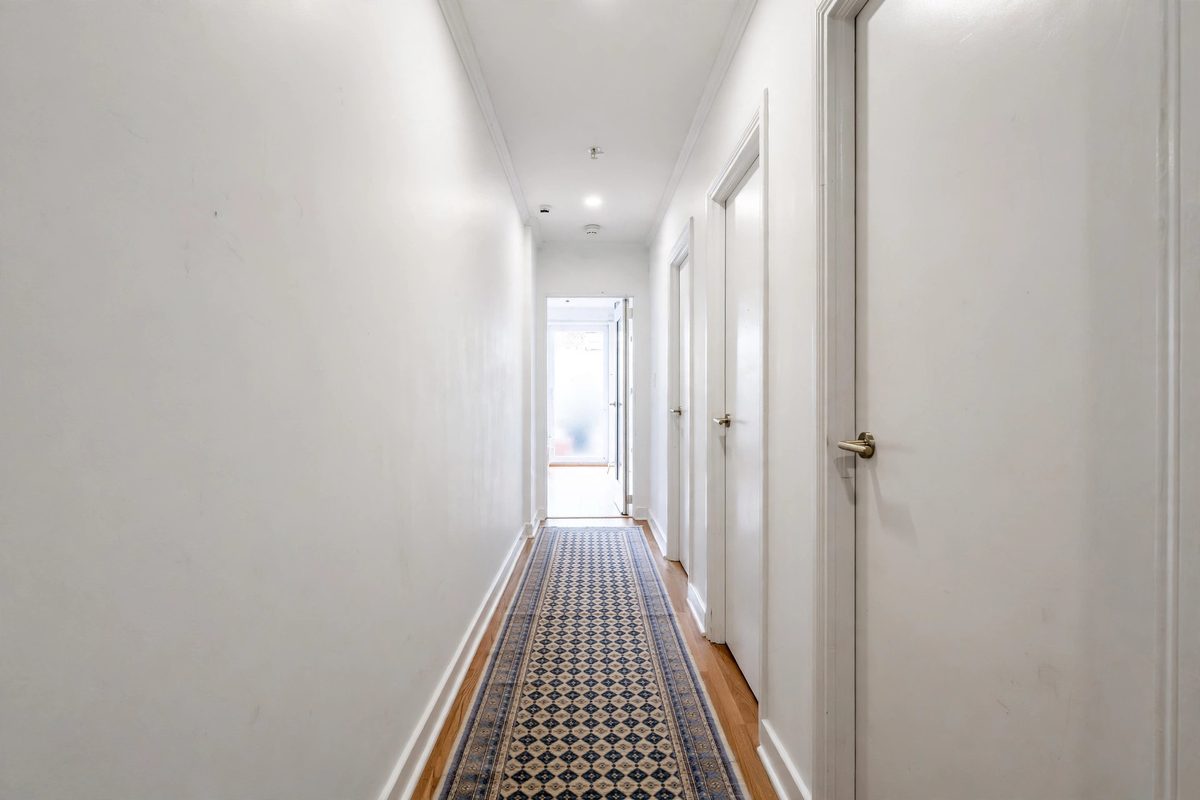
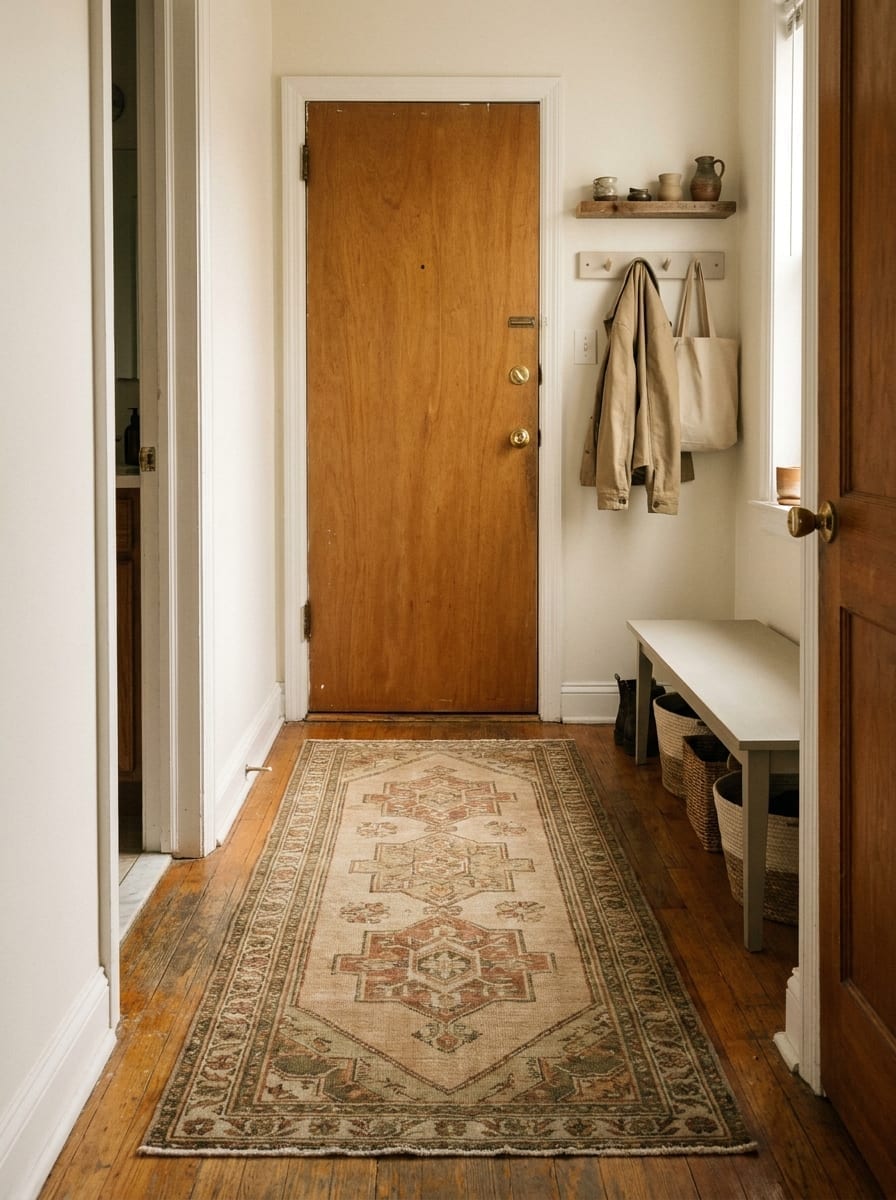
Sometimes the best hallway decor is not on the wall at all. A patterned runner rug, 2 feet 6 inches wide and long enough to cover most of the hallway, adds color, pattern, and warmth at floor level, letting the walls stay calm and plain.
This works especially well when the hallway walls are already busy with doors, trim, or built ins. The rug becomes the decor, and the walls become the background. Choose a low pile rug, under a quarter inch thick, so doors clear it and it does not become a trip hazard.
How to make it work
Leave 4 to 6 inches of floor visible on each side of the runner, so the rug looks placed, not wall to wall. Use a non slip rug pad cut to size, and choose a washable rug if the hallway sees shoes, pets, or kids. A runner with a border pattern reads as more intentional than a solid color in a long hallway.
9. Framed Textile or Woven Piece
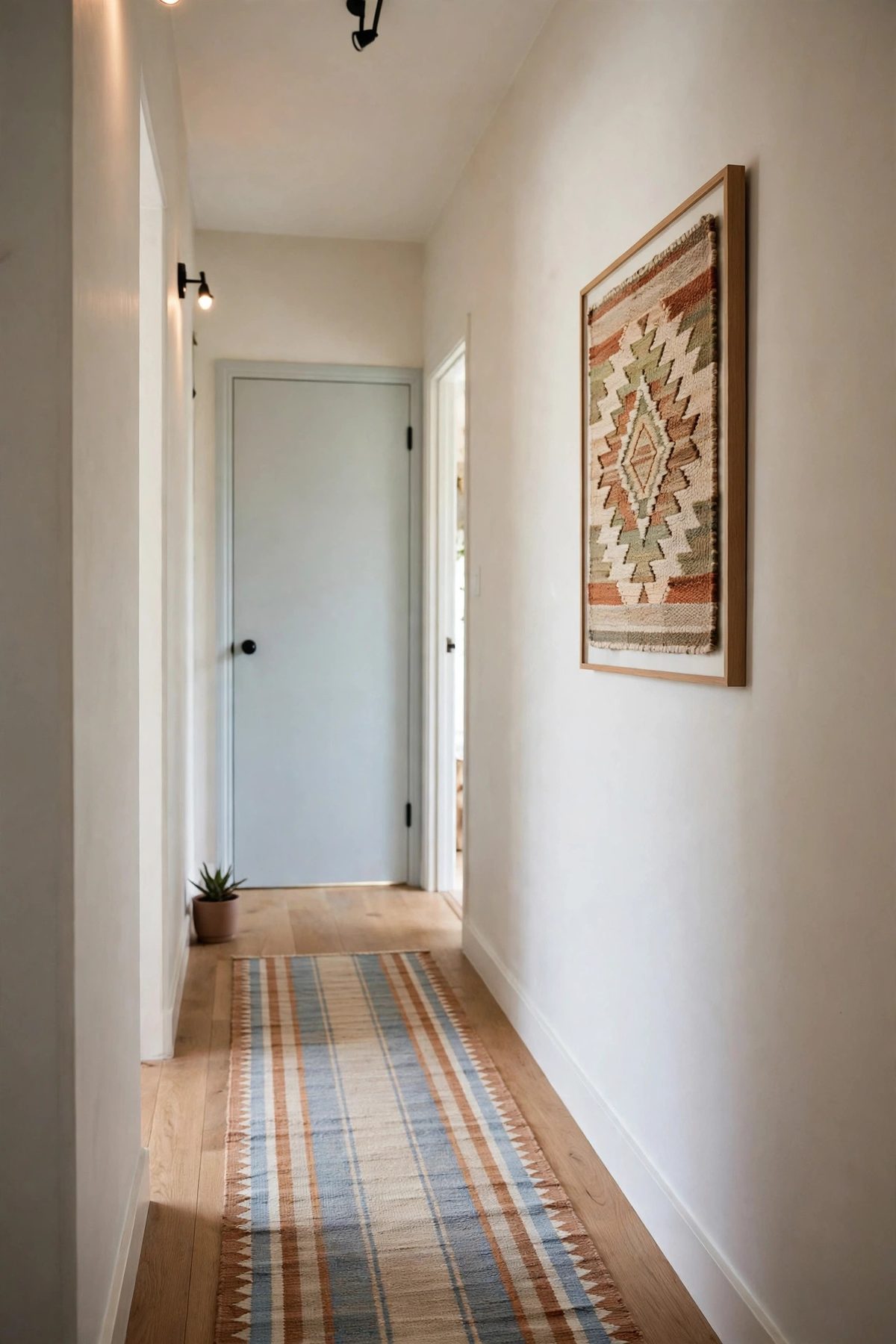
A single framed textile, a woven wall hanging in a slim frame, or a piece of fabric art adds softness and texture to a hallway without the hardness of a gallery wall. Textiles absorb sound slightly, which is a bonus in a hallway that echoes, and they add warmth that prints sometimes lack.
Choose a textile with a simple pattern and a calm palette, and frame it behind glass or acrylic to protect it from hallway dust and brushing coats. A piece 18 by 24 inches is a good size for a narrow hallway, large enough to notice, small enough not to dominate.
How to make it work
Hang the textile on the wall with the least traffic brushing, usually the wall without doors, and keep it above 48 inches so bags and coats do not snag it. Use a frame with a slim profile, under 1 inch deep, to keep the projection minimal. If the textile is unframed, use a wooden hanging rail at the top and bottom to keep it flat against the wall.
A calm hallway is a hallway you enjoy walking through, not one you rush through to escape the clutter. Decorate one wall, keep everything flat, and leave the other side alone. Your hallway will feel wider, calmer, and more intentional, even though you added almost nothing to it.