12 Small Kitchen Storage Ideas That Clear the Counters Without Remodeling
Discover 12 small kitchen storage ideas using cabinet doors, vertical dividers, pullouts, narrow carts and smarter storage zones to clear your counters without remodeling.
In This Guide
A small kitchen usually does not run out of storage all at once.
It happens gradually.
A toaster stays on the counter because there is nowhere obvious to put it.
Then oil bottles collect beside the stove.
Coffee supplies take over another corner.
A stack of pans becomes difficult to reach, so the easiest one stays out permanently.
Eventually the countertop becomes the storage system.
That is when a compact kitchen starts feeling much smaller than it really is.
The solution is not necessarily adding more shelves everywhere.
It is getting more useful capacity from storage you already have and deciding which things actually deserve the easiest locations.
A small kitchen works better when you can answer three questions:
What do I use every day? What can be stored vertically or behind a door? What should disappear completely between uses?
These 12 storage ideas focus on exactly that.
1. The Cabinet-Door Utility Zone
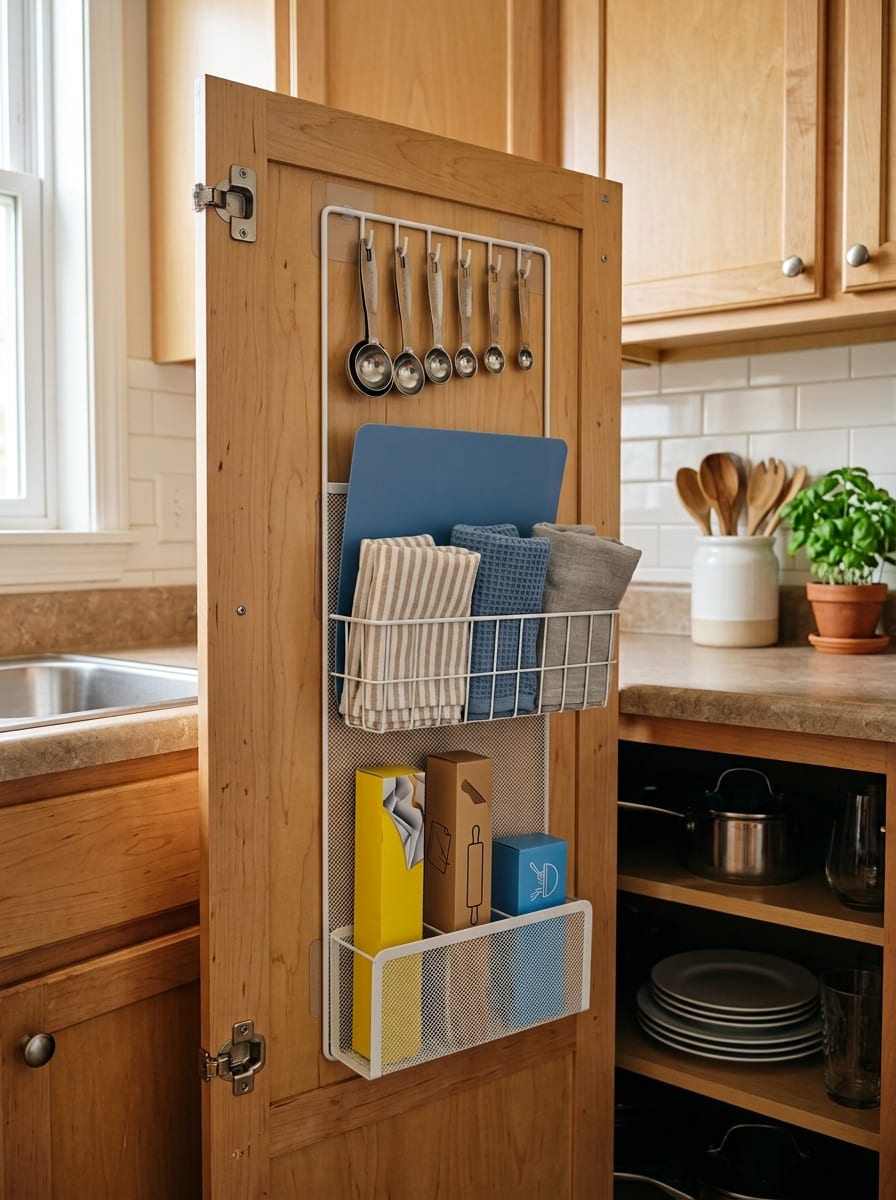
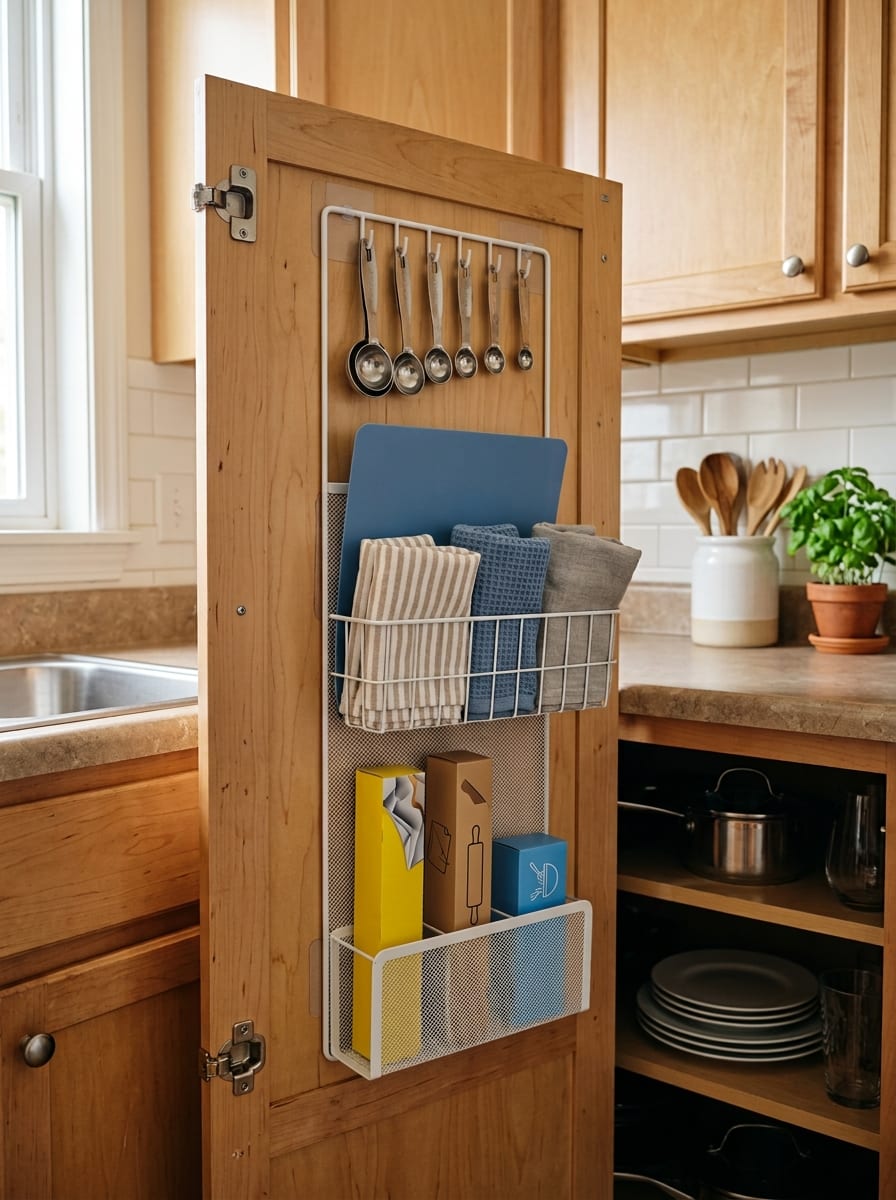
Cabinet doors are often one of the most underused surfaces in a small kitchen.
The inside of a lower cabinet door can hold lightweight items without using additional shelf or counter space.
Depending on the cabinet and hardware, that might include:
measuring spoons lightweight cutting mats cleaning cloths small pot lids foil or baking-paper boxes oven mitts lightweight cleaning tools
Why this works
You are using a surface that already exists rather than introducing another storage piece.
That is particularly useful in a rental or apartment kitchen where:
wall space is limited countertops are small permanent cabinetry changes are not realistic
Keep the weight low
Cabinet hinges are designed to support the door, not a miniature pantry.
Avoid loading the door with:
heavy glass bottles cast-iron lids several cleaning products bulky appliances
Use this zone for lightweight, frequently used items.
Check internal clearance
Close the cabinet slowly before committing to an organizer.
Make sure the stored objects do not collide with:
internal shelves pipes bins cabinet frame
A door organizer that prevents the cabinet from closing properly is not adding useful storage.
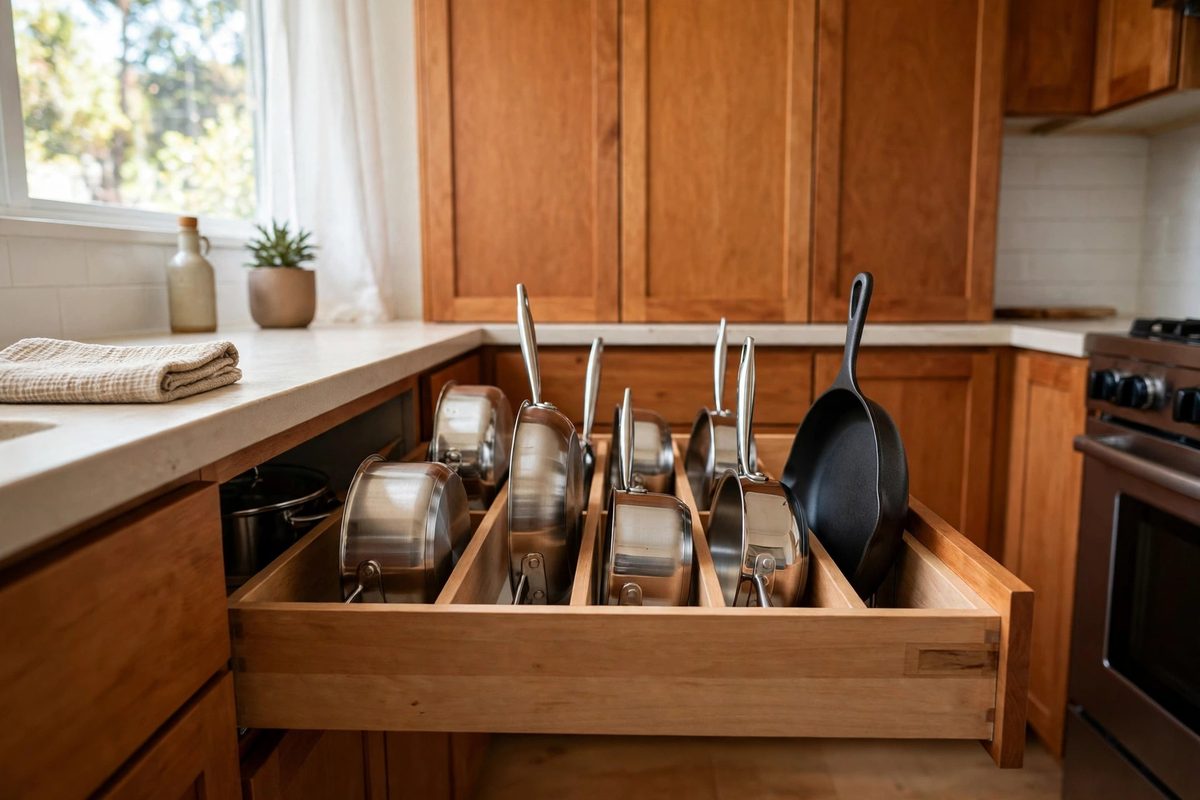
2. The Vertical Pan + Tray File
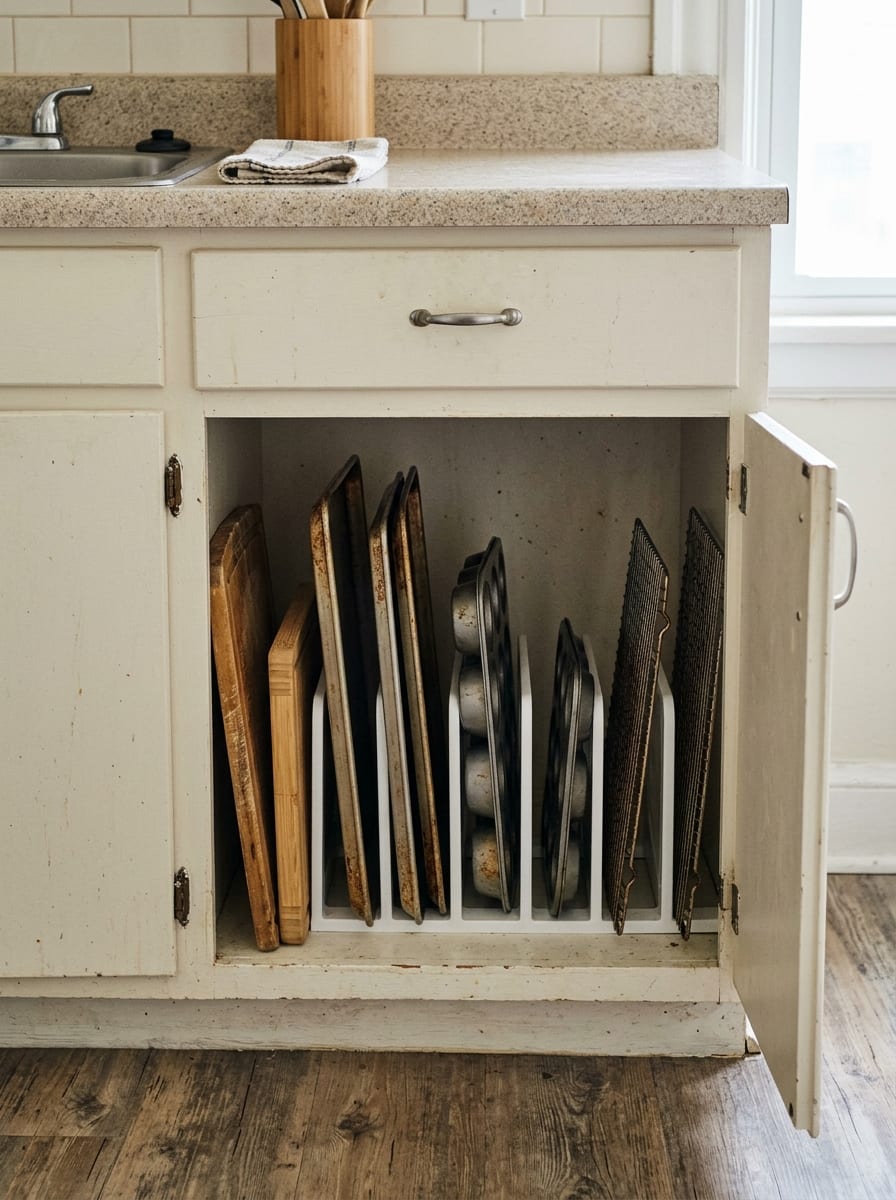
Baking sheets, chopping boards and muffin tins are awkward because they are large but relatively thin.
Stacking them horizontally usually creates one problem:
You always need the item at the bottom.
Instead, store flat kitchen pieces vertically.
Use dividers to separate:
baking trays cutting boards cooling racks muffin pans sheet pans serving boards
Why vertical storage is better
Each item becomes independently accessible.
You no longer have to lift four trays to reach one board.
It also turns narrow cabinet space into something much more functional.
Where it works
Good locations include:
narrow base cabinet cabinet above refrigerator deep lower shelf tall pantry section
Do not create tiny compartments
Leave enough width between dividers that items slide in and out easily.
If the sections are packed too tightly, the system becomes frustrating and everything eventually gets stacked again.
3. The Double-Level Cabinet Shelf
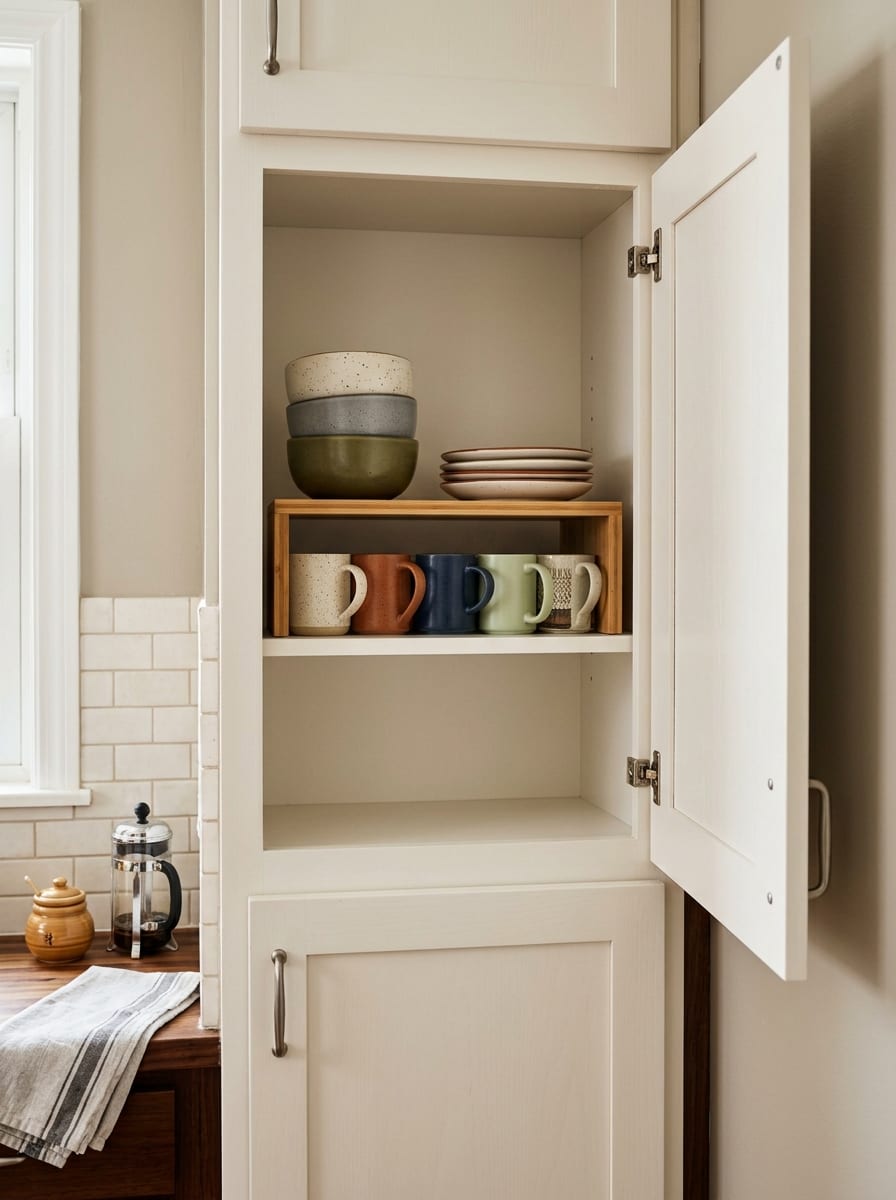
A lot of kitchen cabinets have tall vertical space between shelves but only short objects sitting at the bottom.
For example:
A row of mugs might use only half the available cabinet height.
The empty air above them is wasted.
A simple shelf riser can create a second level.
Use it for:
mugs bowls small plates pantry jars food containers spices
Why this helps
You increase usable storage without modifying the cabinet.
Instead of stacking bowls six-high, you can divide them into two smaller stacks.
That usually makes everything easier to access.
Best places to use risers
Look for shelves where objects are:
relatively short similar in size frequently used
Avoid filling every shelf
Not every cabinet needs another level.
Over-dividing cabinets can create narrow spaces that are difficult to use.
Add a riser only where there is obvious unused height.
4. The Under-Sink Pullout System
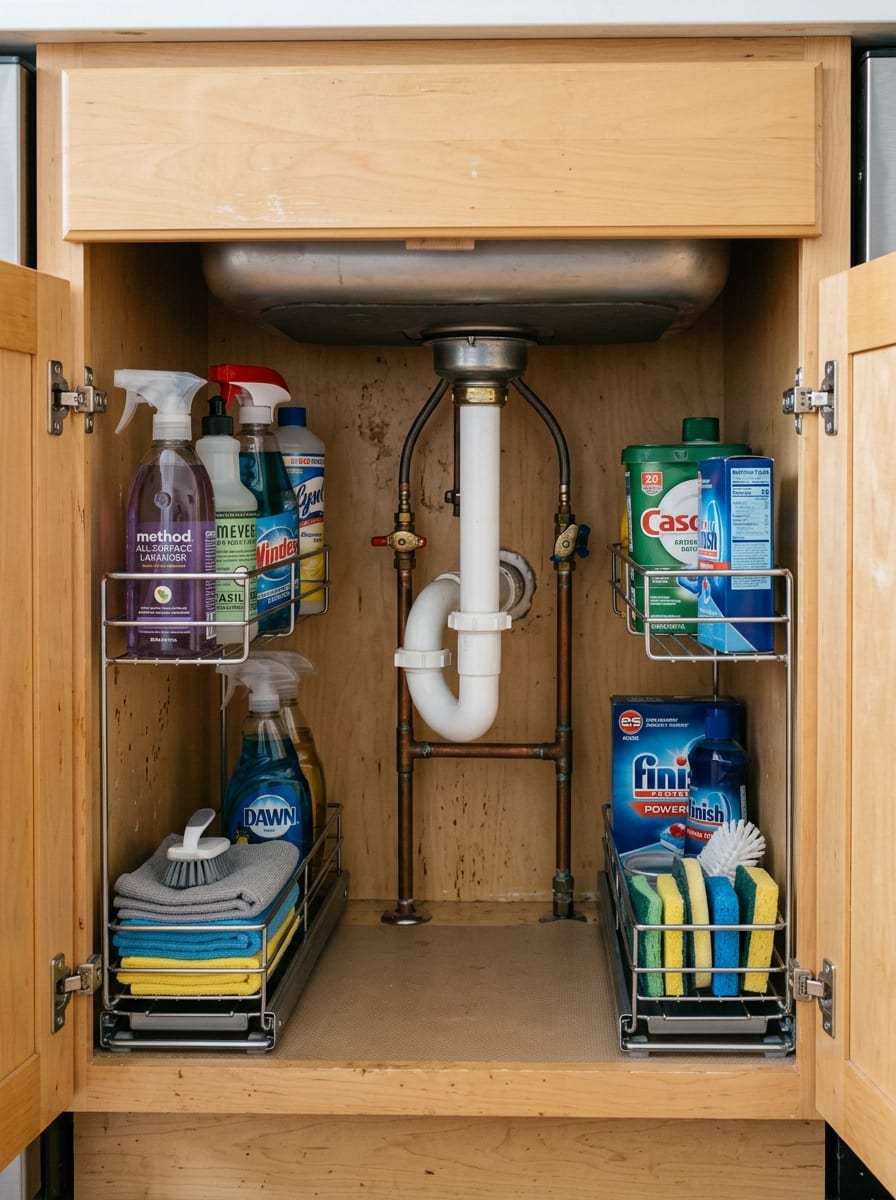
The cabinet beneath the sink often becomes a storage pile because plumbing makes normal shelves difficult.
Instead of trying to force one large organizer around pipes, divide the space into smaller movable zones.
Use:
narrow pullout bins handled caddies low drawers small baskets one vertical cleaning-product container
Organize around the plumbing
The pipes determine the layout.
Do not fight them.
For example:
left side: cleaning products right side: dishwasher supplies front: everyday cloths and sponges
This is usually more effective than trying to install one large organizer across the entire cabinet.
Why pullouts work
Deep cabinets hide items at the back.
A pullout brings the back of the cabinet toward you.
Keep leak-prone areas accessible
Do not pack so much underneath the sink that:
plumbing cannot be inspected shutoff valves become inaccessible a small leak could go unnoticed
Function comes before maximum capacity.
5. The Fridge-Side Slim Storage Gap
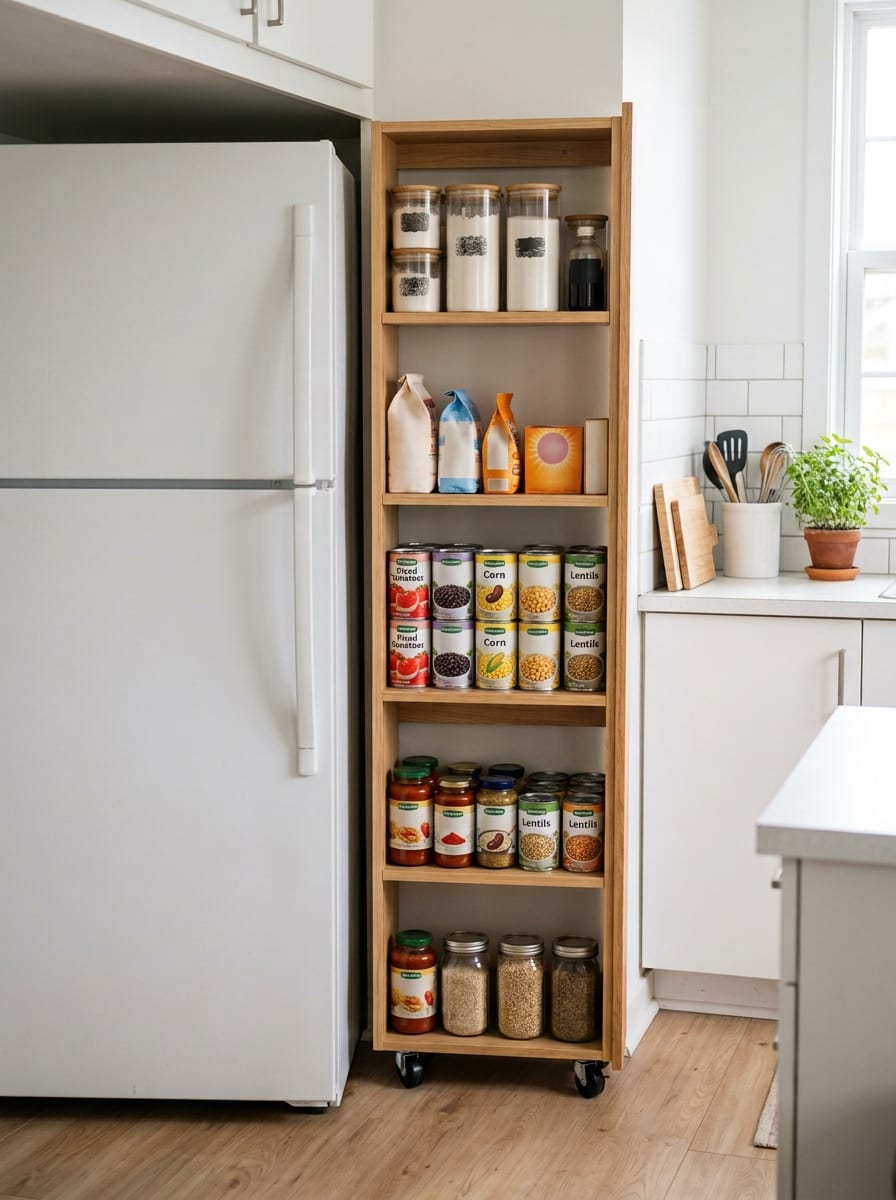
Some apartment kitchens have a narrow gap beside the refrigerator.
It may only be several inches wide, which makes it easy to assume the space is useless.
Depending on the actual clearance, that gap can sometimes hold a very slim rolling storage unit.
Useful items might include:
canned goods unopened sauces spices baking supplies extra kitchen towels
Measure carefully
Do not buy the cart first.
Measure:
gap width full refrigerator depth baseboard projection floor clearance nearby door swing
Also check your refrigerator manufacturer’s ventilation-clearance requirements.
Do not pack storage into space that the appliance needs for airflow.
Why it works
A narrow vertical unit can provide surprising capacity without occupying another open wall.
Keep frequently used items toward the front
A very deep slim cart can become inconvenient if every item has to be pulled out completely.
Use it mainly for categories that store well in narrow rows.
6. The Under-Cabinet Rail Zone
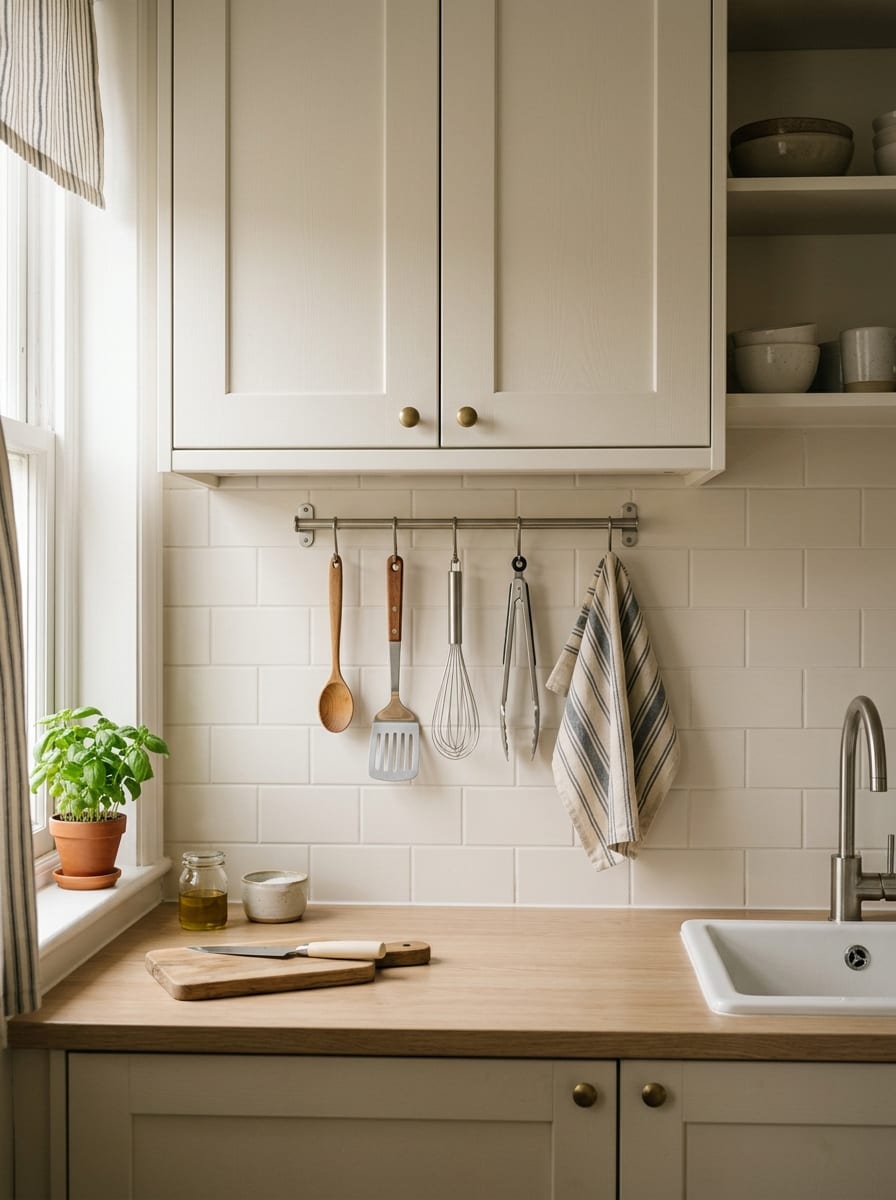
The small strip beneath upper cabinets can provide useful storage without adding another countertop container.
A slim rail or appropriate removable hanging system can hold lightweight everyday tools such as:
cooking utensils small towel lightweight measuring cups oven mitts Why this can help
Frequently used tools remain easy to reach, but they are no longer sitting inside a countertop crock.
That can free several inches of valuable work surface.
Keep the rail short
Do not turn the entire backsplash into hanging storage.
A row of fifteen utensils can make a tiny kitchen look busier than leaving them on the counter.
Choose only the tools you genuinely use often.
Keep it away from unsafe zones
Do not hang:
fabric near an open flame objects where they interfere with cooking heavy items on unsuitable adhesive hooks
Use properly rated mounting solutions and follow product instructions.
7. The Countertop Appliance Parking Plan
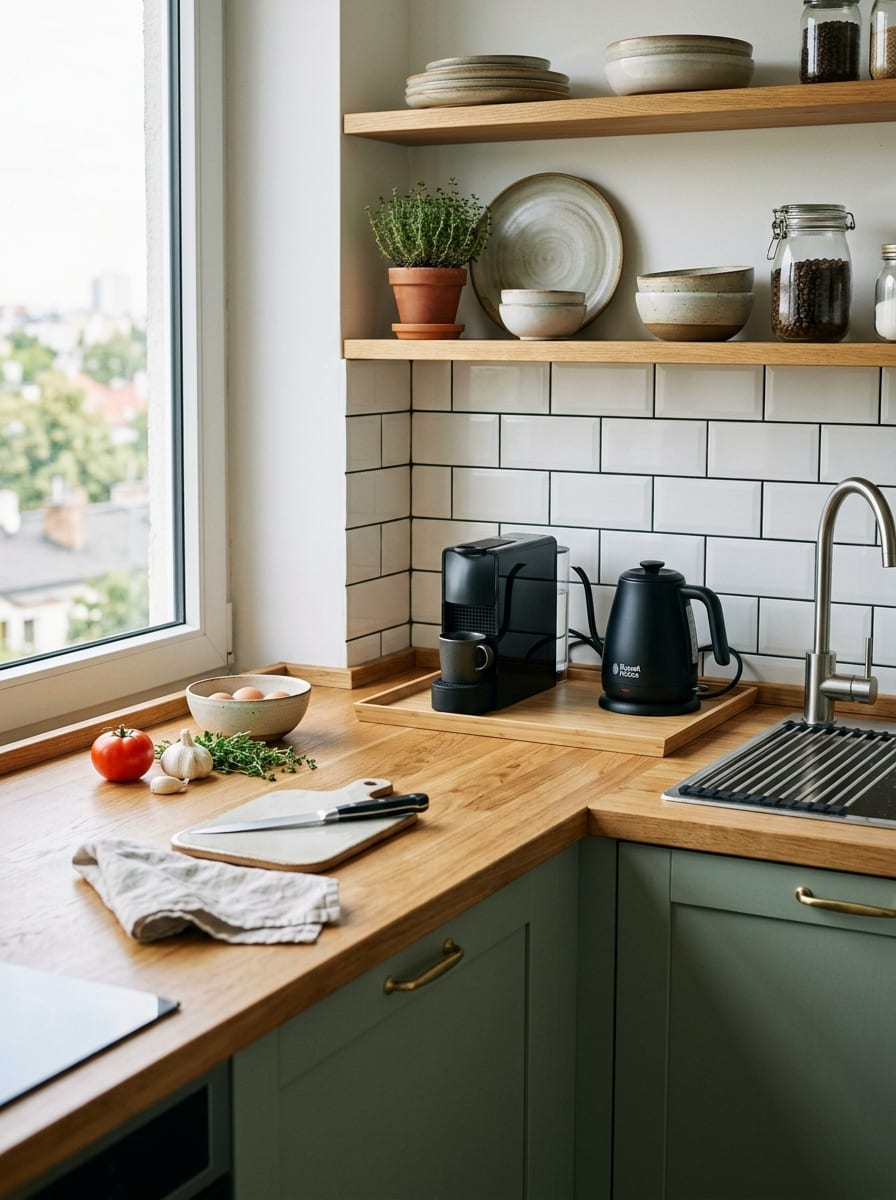
Small kitchens often lose counter space to appliances rather than food.
Look at what currently lives on your worktop:
toaster blender coffee machine kettle air fryer stand mixer
Now separate them into three categories.
Daily
These may deserve permanent countertop space.
Several times per week
These can stay accessible but perhaps inside a lower cabinet or appliance shelf.
Occasionally
These should probably not live on the countertop.
Give appliances a parking place
If an appliance leaves the counter, decide exactly where it goes.
Otherwise, “put the blender away” usually means shoving it into an inconvenient cabinet where it is never used.
Create one appliance zone
Instead of spreading machines across every countertop, group the ones that remain.
For example:
coffee machine + kettle
can become one beverage zone.
Then keep your main prep counter clear.
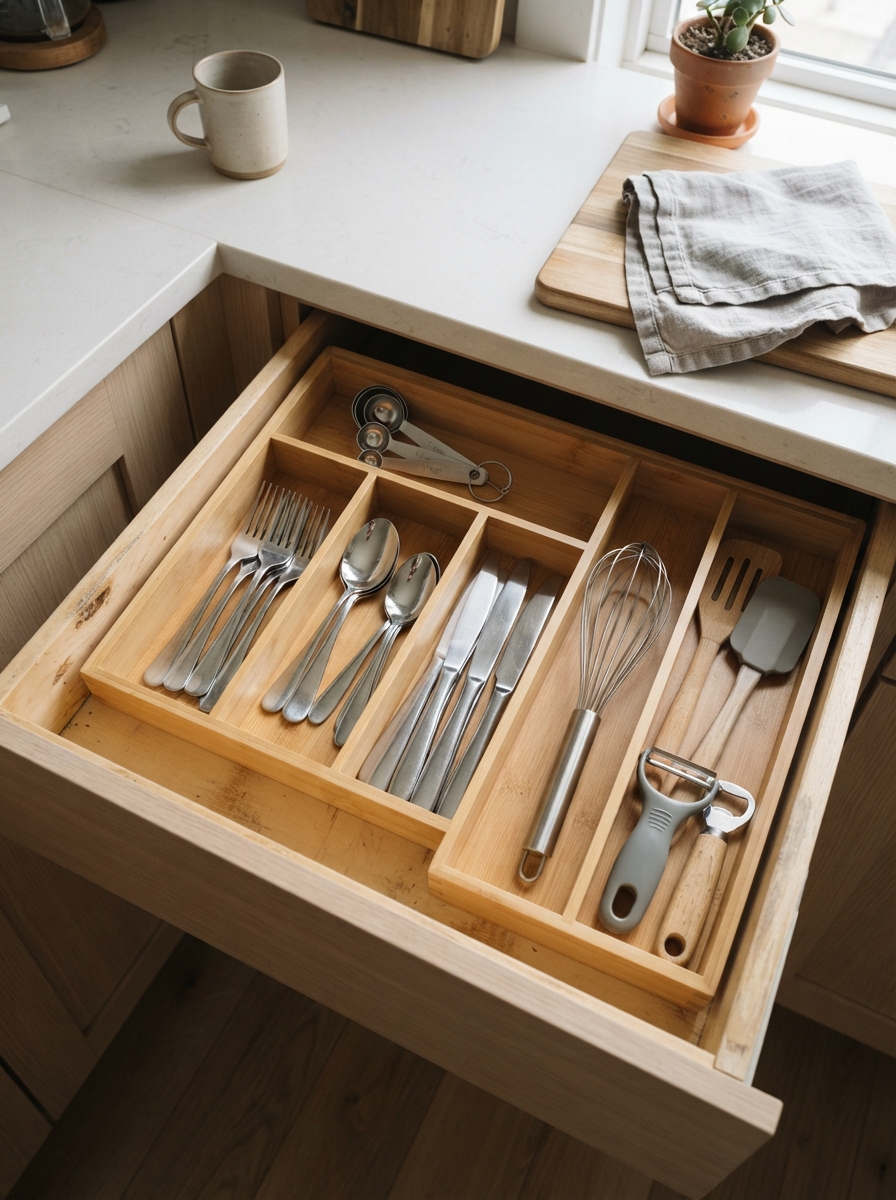
8. The Deep-Drawer Divider System
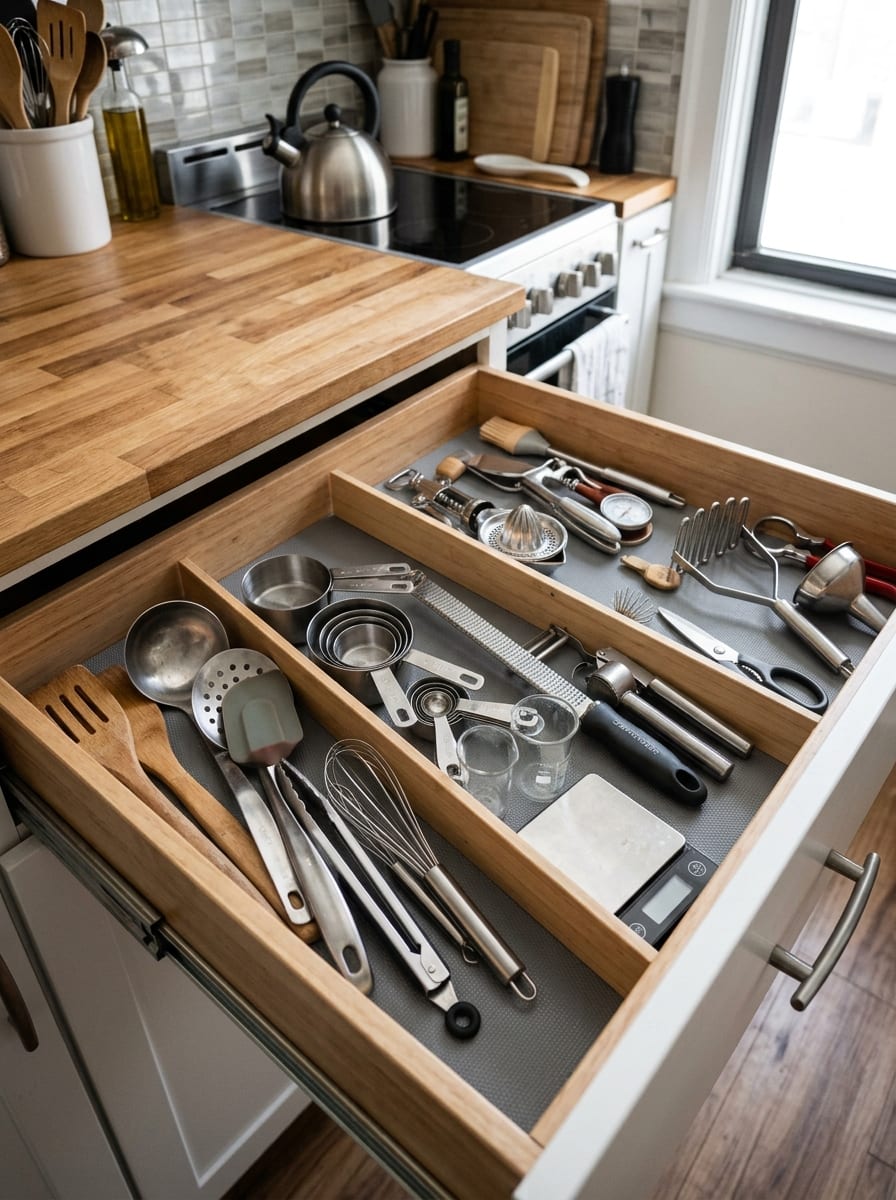
Deep drawers can hold a lot, but without structure they often become layers of objects piled on top of one another.
Use dividers to create categories.
For example:
Cooking tools
Spatulas, tongs, wooden spoons.
Prep tools
Peeler, grater, thermometer, scissors.
Small baking tools
Measuring cups, pastry brush, cookie tools.
Food-storage supplies
Clips, reusable covers, small wraps.
Why dividers help
The purpose is not to make a drawer look perfect.
It is to prevent one category from swallowing everything else.
Avoid overly specific organizers
An organizer with twenty tiny compartments may look impressive but be less flexible.
Choose adjustable or broad sections that can accommodate changing kitchen tools.
9. The Corner Cabinet Turntable
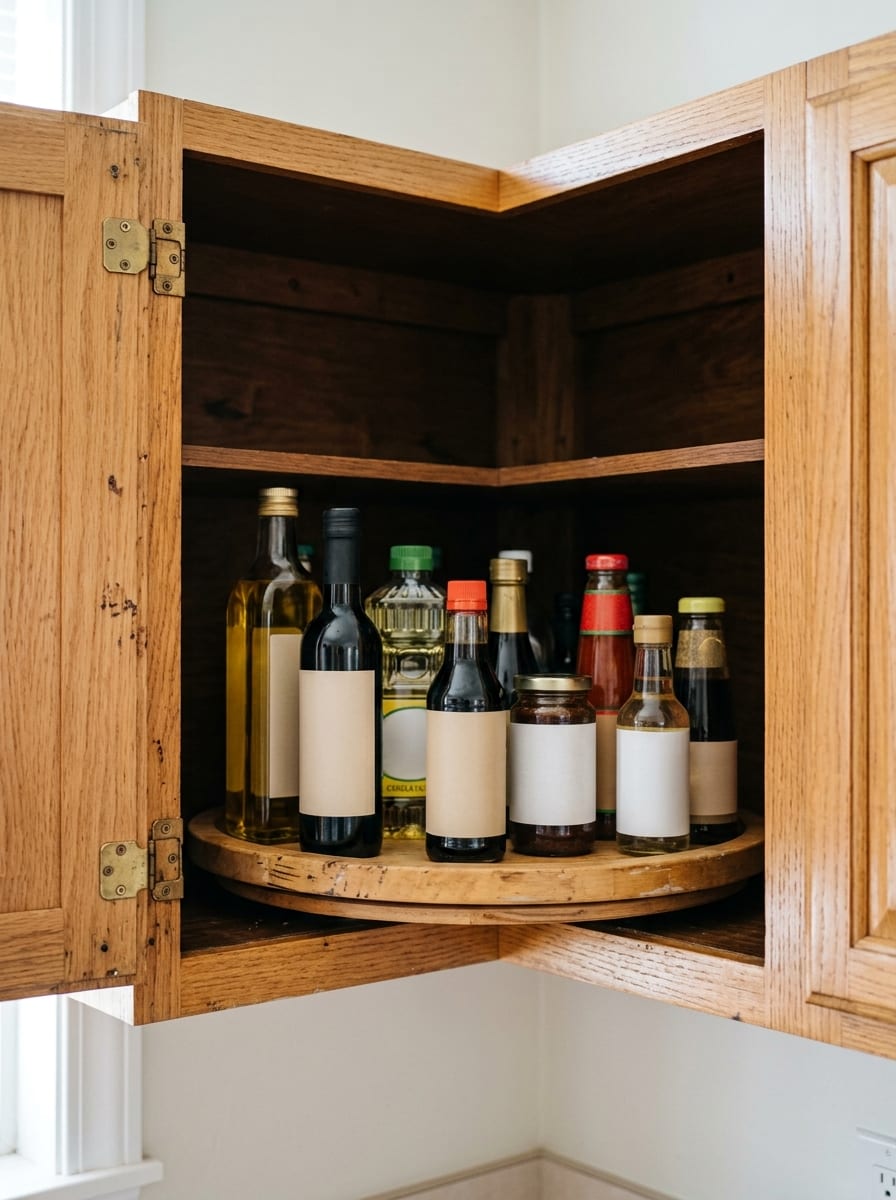
Deep corner cabinets are notorious for hiding food.
The jar at the back effectively disappears until it expires.
A turntable can make a difficult corner much more accessible.
Use it for categories such as:
oils vinegars sauces condiments spices baking extracts Why it works
Instead of reaching behind several objects, you rotate the storage.
The back becomes the front.
Keep categories together
A turntable works best when everything on it belongs to a similar category.
For example:
cooking oils + vinegars
rather than:
oil + vitamins + tea + cereal + cleaning spray.
Check shelf depth
A turntable should rotate freely without hitting:
cabinet hinges door frame neighboring items
Measure before buying.
10. The Above-Cabinet Backstock Zone
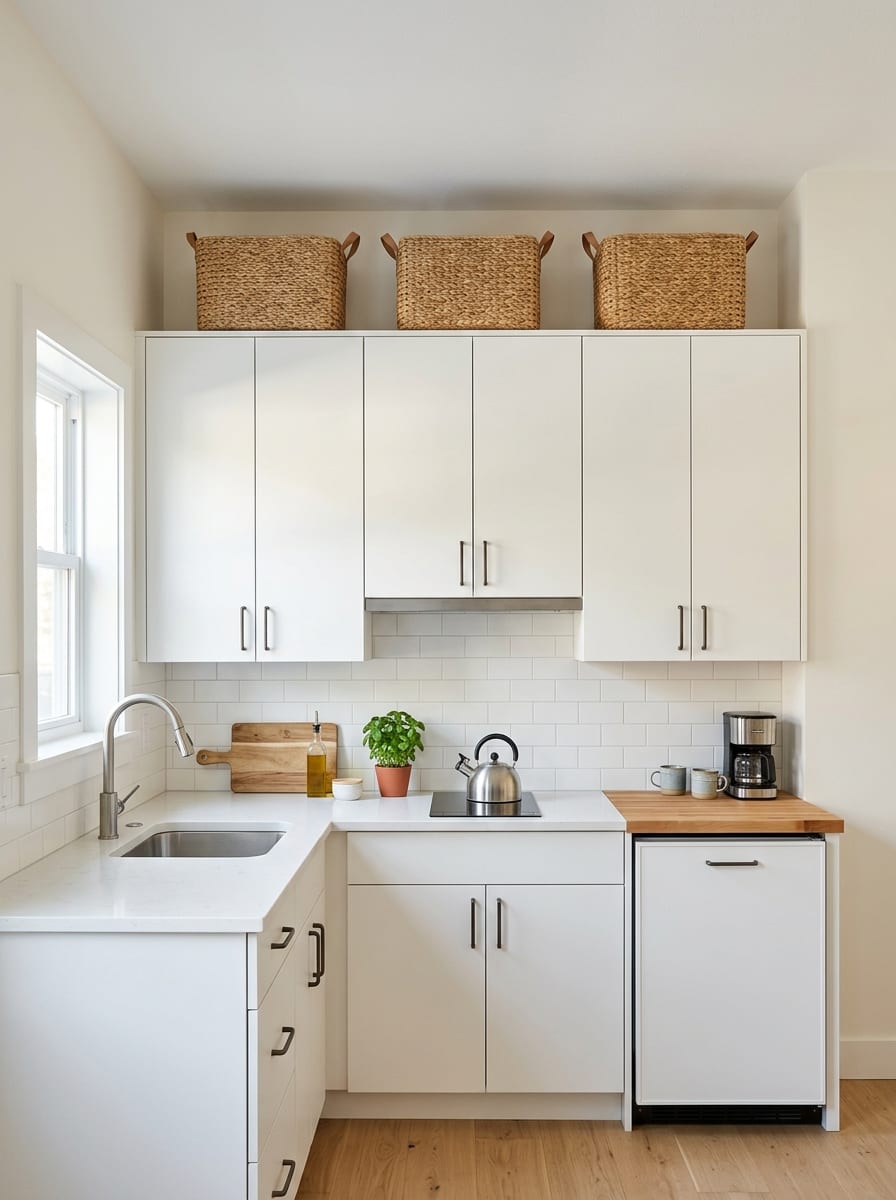
Some kitchens have open space between upper cabinets and the ceiling.
That area can provide storage, but it is easy to make it look cluttered.
Use it only for things you access infrequently.
Good candidates include:
rarely used serving pieces extra paper goods seasonal baking items backup pantry goods lightweight entertaining supplies
Use larger containers, not tiny objects
Two or three simple closed baskets look calmer than:
twelve jars decorative signs random bowls several baskets of different sizes
Keep grease in mind
Storage above kitchen cabinets can collect cooking residue and dust.
Closed containers are usually more practical than open objects.
Do not use inaccessible storage for everyday items
If you need a ladder every morning, the item does not belong there.
11. The Narrow Rolling Pantry
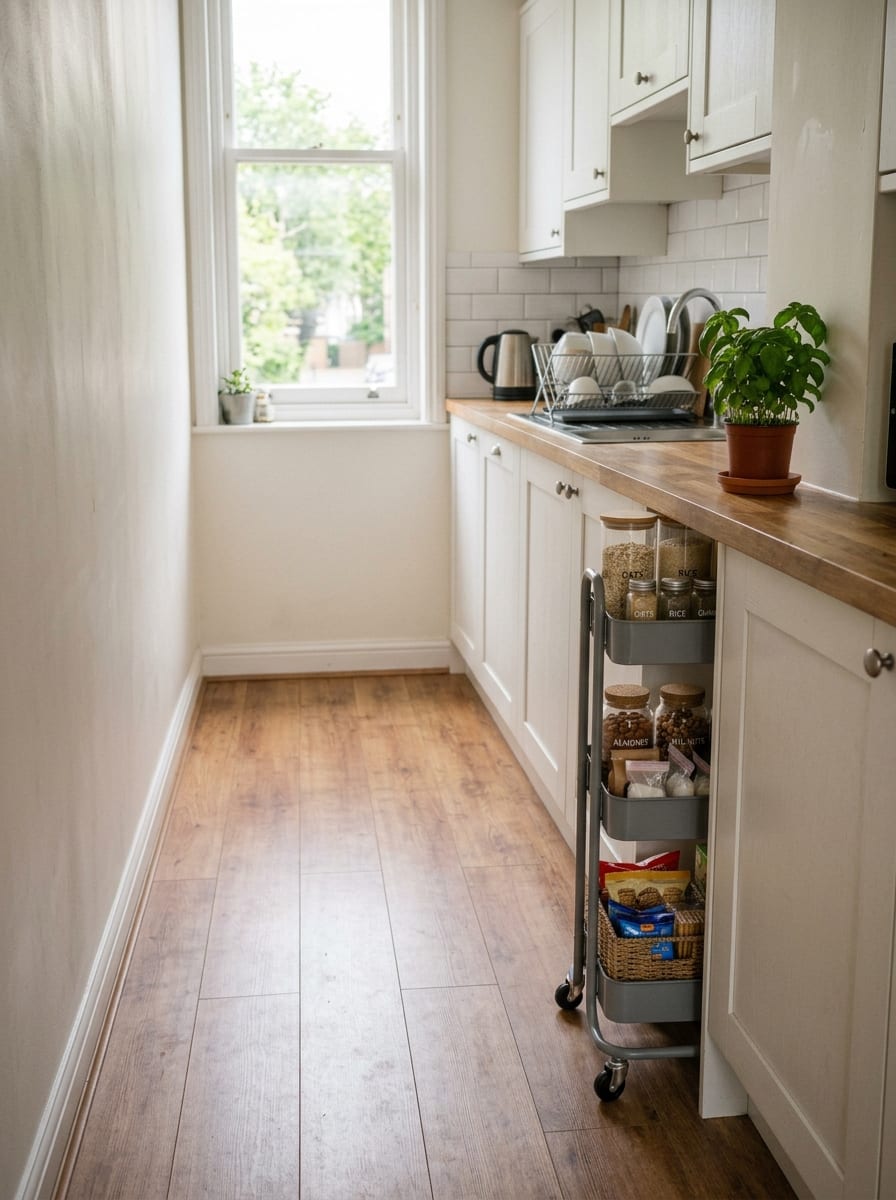
If the kitchen truly lacks cabinet storage, a slim freestanding cart can add capacity without requiring a remodel.
This works particularly well for:
snacks pantry staples baking supplies coffee supplies produce that can be stored at room temperature
Choose the location first
Possible spaces include:
end of cabinet run beside dining nook narrow wall unused corner
Do not buy a cart and then try to find somewhere to squeeze it.
Depth matters
In a small kitchen, a cart that sticks too far into the walkway can cause more problems than it solves.
A narrower unit is usually preferable even if it holds slightly less.
Wheels can be genuinely useful
If the cart moves easily, you can:
pull it out when cooking move it for cleaning reposition it when guests arrive
12. The One-Overflow-Zone Rule
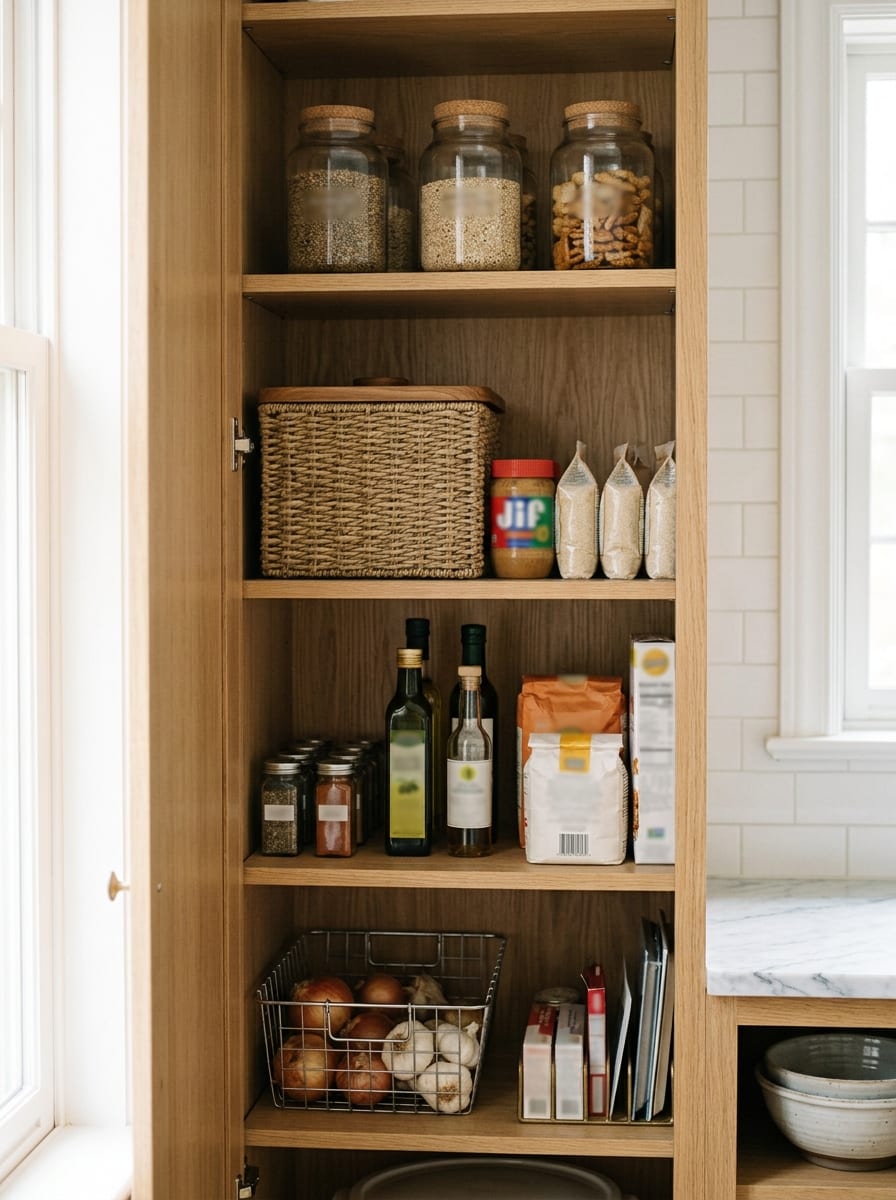
A small kitchen eventually needs somewhere for things that do not fit perfectly into the main system.
The problem begins when every area becomes overflow.
Instead, allow one defined overflow zone.
That might be:
one cabinet shelf one pantry basket one rolling-cart level one high shelf one closed box
Use it for:
extra snacks backup ingredients bulk purchases occasional baking supplies
Why one overflow zone works
It prevents excess stock from spreading across:
countertop dining table top of refrigerator windowsill floor
If the overflow zone becomes full, that is the signal to stop buying or reorganize.
Do not keep expanding storage automatically
When one category continually needs more space, ask whether you genuinely need that much of it.
Sometimes the most useful storage solution is simply reducing the amount being stored.
What Should Stay on a Small Kitchen Counter?
A good rule is:
Keep something out if you use it often enough that storing it away would genuinely make the kitchen less convenient.
That may include:
coffee machine kettle knife block frequently used cooking oil
depending on your habits.
But do not let “I use it sometimes” become the reason everything stays out.
If the toaster is used twice a week, it may not deserve permanent countertop real estate.
Divide Kitchen Storage by Frequency
One of the easiest ways to improve a small kitchen is to stop treating every storage location equally.
Prime-access storage
Keep daily-use items here.
Examples:
plates mugs everyday pans cooking utensils
Use:
easy drawers eye-level shelves front of cabinets
Secondary storage
For weekly-use items.
Examples:
blender baking dishes serving bowls
Use:
lower cabinets higher shelves deeper drawers
Infrequent storage
For occasional items.
Examples:
holiday serving pieces cake stand seasonal baking tools
Use:
top shelf above-cabinet storage less accessible pantry zones
This prevents rarely used objects from taking the best storage positions.
How to Clear a Cluttered Kitchen Counter
Do not start by buying organizers.
Remove everything first.
Then sort it into:
Must stay out
True daily-use items.
Needs a home
Frequently used items that could live inside a cabinet.
Belongs elsewhere
Paperwork, medication, mail, keys and unrelated household items.
Can leave the kitchen
Duplicate tools and rarely used objects.
Only after that should you decide whether additional storage is actually necessary.
Small Kitchen Storage Mistakes That Make the Room Feel Worse
Covering every wall with storage
Vertical storage is useful, but too much of it creates visual pressure.
Buying containers before measuring
Organizers can waste more cabinet space than they save.
Keeping duplicates
Three nearly identical frying pans still require room somewhere.
Storing daily items too high
Technically using every inch does not mean the kitchen functions well.
Open storage everywhere
Visible jars, utensils, pans and baskets can quickly make a tiny kitchen look crowded.
Ignoring appliance ventilation
Never block airflow requirements around refrigerators or other appliances simply to gain storage.
Putting heavy items on cabinet doors
Use doors for light storage only.
Should a Small Kitchen Use Open Shelving?
It can, but selectively.
Open shelves work best for a limited number of attractive and frequently used things such as:
everyday plates bowls mugs
They work less well when used as the main storage system for:
packaged food appliances random containers cleaning supplies
If your goal is to make the kitchen feel calmer, closed storage should do most of the work.
Where Should Spices Go in a Small Kitchen?
Put them somewhere you can actually read and access them.
Good options include:
shallow drawer small turntable tiered cabinet shelf narrow spice rack
Avoid deep rows where one jar hides another.
Also keep spices away from excessive heat or direct steam where practical.
The best spice system is one that lets you find a jar without moving five others.
What About the Top of the Refrigerator?
It is tempting because it feels like free storage.
But it can quickly become the kitchen’s dumping ground.
If the refrigerator manufacturer allows the required ventilation and the location is safe, use the area sparingly.
A single basket for lightweight backstock is much calmer than:
cereal boxes trays grocery bags appliances random pantry items
all stacked together.
Always follow the appliance’s clearance and ventilation guidance.
How to Decide Whether a New Storage Product Is Worth Buying
Before purchasing an organizer, answer:
What exact item will it hold?
Not “kitchen stuff.”
Be specific.
Where exactly will it go?
Measure.
Will it make something easier to reach?
If not, it may simply add another container.
Does it interfere with something else?
Check:
cabinet closure door swing walkway appliance airflow pipes Could reorganizing the existing cabinet solve the problem first?
Sometimes moving one shelf gives you the capacity you need.
A Simple Small-Kitchen Storage Reset
If the kitchen currently feels overwhelmed, do this in order.
Step 1: Clear one countertop
Do not reorganize the entire kitchen at once.
Start with your main prep surface.
Step 2: Remove anything unrelated to cooking
Mail and household clutter leave first.
Step 3: Find homes for appliances
Decide which truly deserve countertop space.
Step 4: Fix one difficult cabinet
Maybe:
pans under-sink pantry food containers
Step 5: Use one overlooked zone
Choose:
cabinet door vertical divider narrow gap high shelf
Step 6: Stop
Use the kitchen for several days.
Then see what still causes frustration.
A storage system should solve real problems, not simply make the kitchen contain more organizers.
Final Thoughts
A small kitchen does not necessarily need more storage furniture.
It needs the existing storage to work harder.
Start with the areas that waste the most usable space:
cabinet doors → vertical cabinet space → deep drawers → awkward gaps → under-sink area
Then protect the countertop.
If the counters remain mostly clear and everyday items are easy to reach, even a compact apartment kitchen can feel significantly larger and easier to use without changing a single cabinet.