17 Small Apartment Kitchen Ideas That Make Tiny Kitchens Far More Functional
Discover 17 small apartment kitchen ideas that create more counter space, smarter storage, better organization and an easier cooking setup without a major renovation.
In This Guide
A small kitchen does not necessarily need more storage.
Sometimes it needs better access to the storage it already has.
That distinction matters because it is easy to make a tiny kitchen even more cramped while trying to organize it. Another cart, another shelf, another basket, another appliance on the counter, and suddenly there is nowhere left to actually prepare food.
The most functional small apartment kitchens usually do four things well:
keep frequently used items easy to reach move occasional-use items out of prime space protect as much counter space as possible reduce visual clutter
You do not need a renovation to improve most of those things.
These 17 ideas focus on making an ordinary apartment kitchen easier to cook in, easier to maintain, and calmer to look at.
1. The Clear-Counter Kitchen Rule
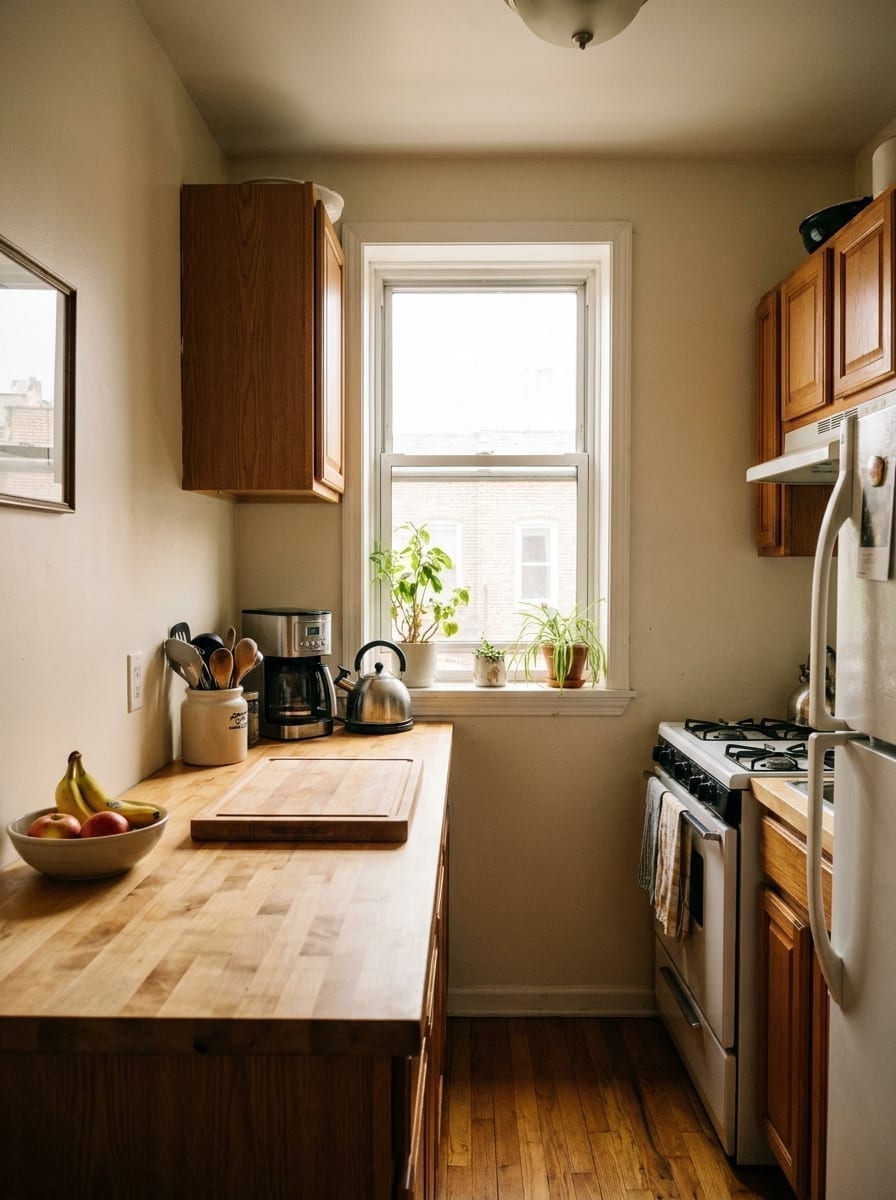
Counter space is one of the most valuable things in a small kitchen.
Treat it like working space rather than permanent storage.
Look at everything currently living there and ask whether you genuinely use it almost every day.
A realistic counter might keep:
kettle coffee maker utensil holder cutting board fruit bowl
But a blender used twice a month probably does not need prime real estate.
Neither does an extra appliance just because it looks good.
Clearing even one section of uninterrupted counter can make a tiny kitchen feel dramatically easier to use.
2. Vertical Storage Above the Counter
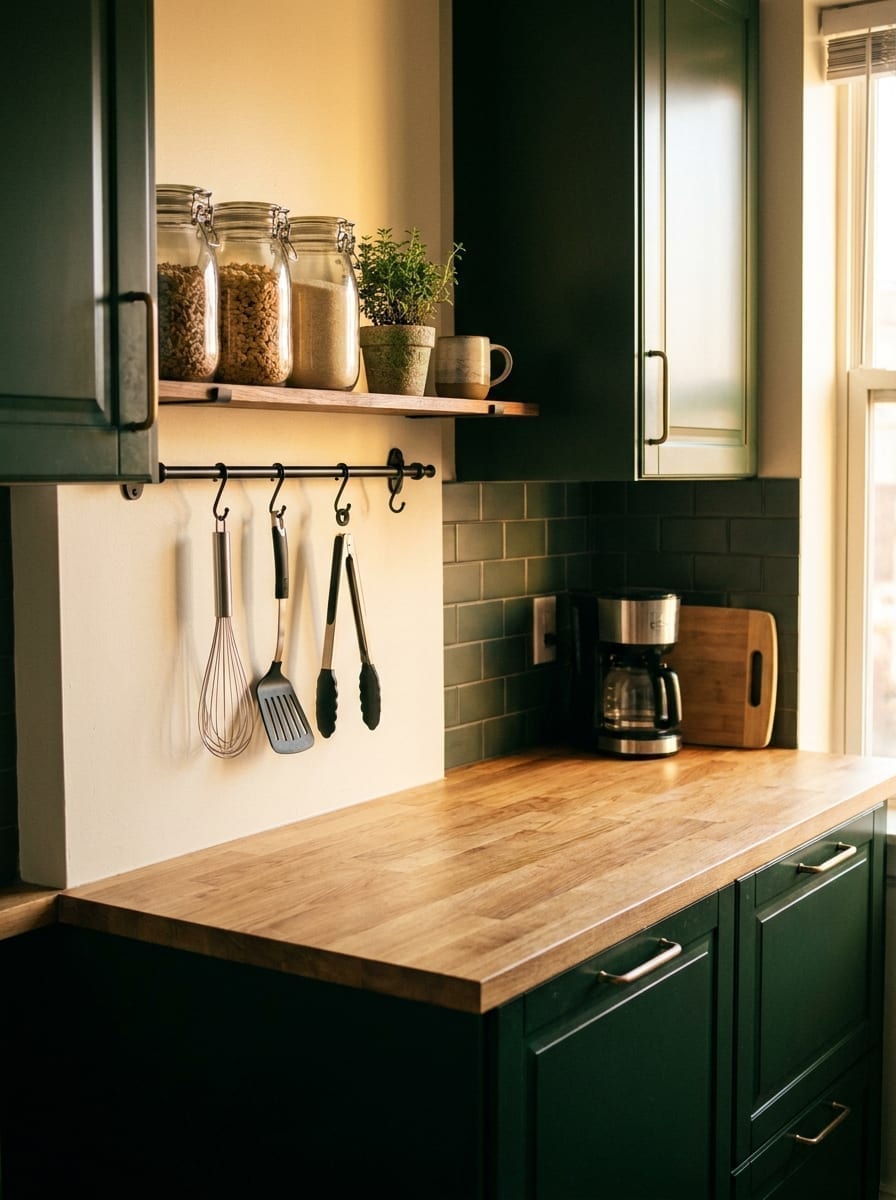
When floor and counter space are limited, look upward.
The wall between the counter and upper cabinets can sometimes hold things that would otherwise take up valuable work space.
Depending on your rental rules, consider:
narrow rails small shelves lightweight hooks magnetic strips wall-mounted spice storage
The key is restraint.
Do not cover every inch of wall with kitchen tools.
Use vertical storage for things you genuinely reach for regularly, then keep the rest hidden away.
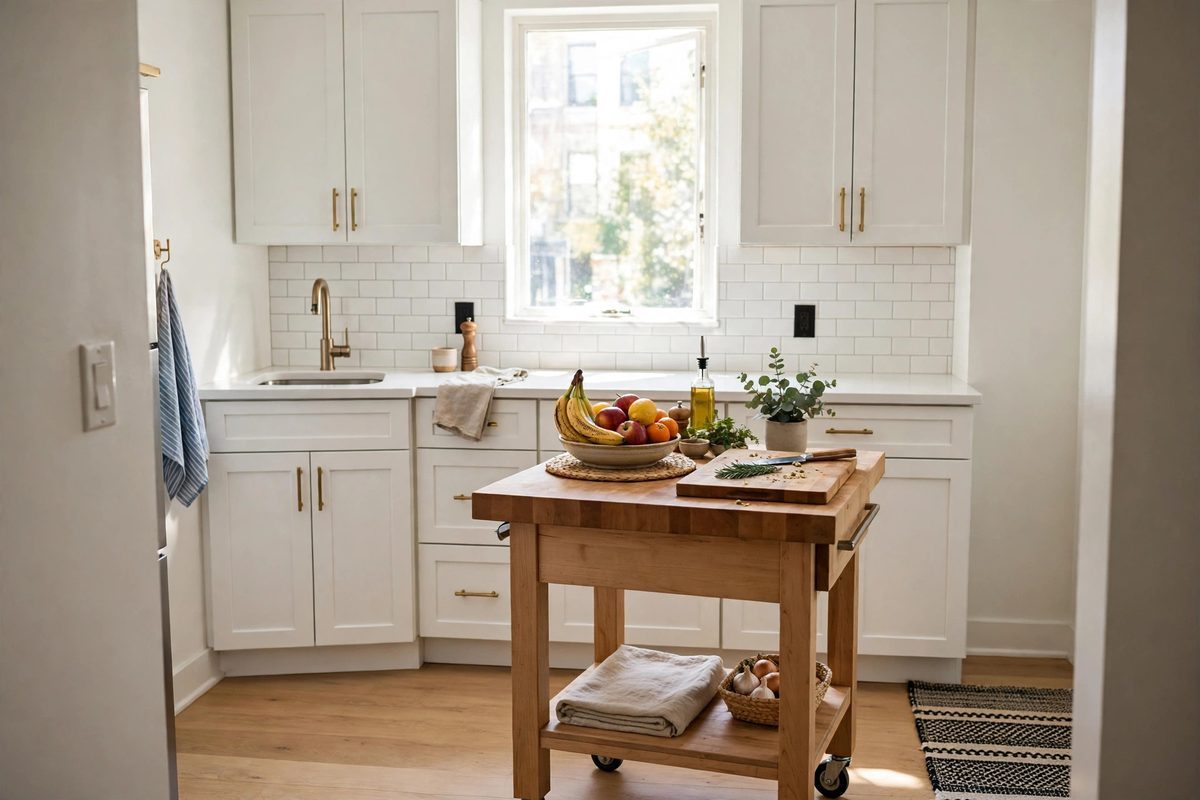
3. A Slim Rolling Kitchen Cart
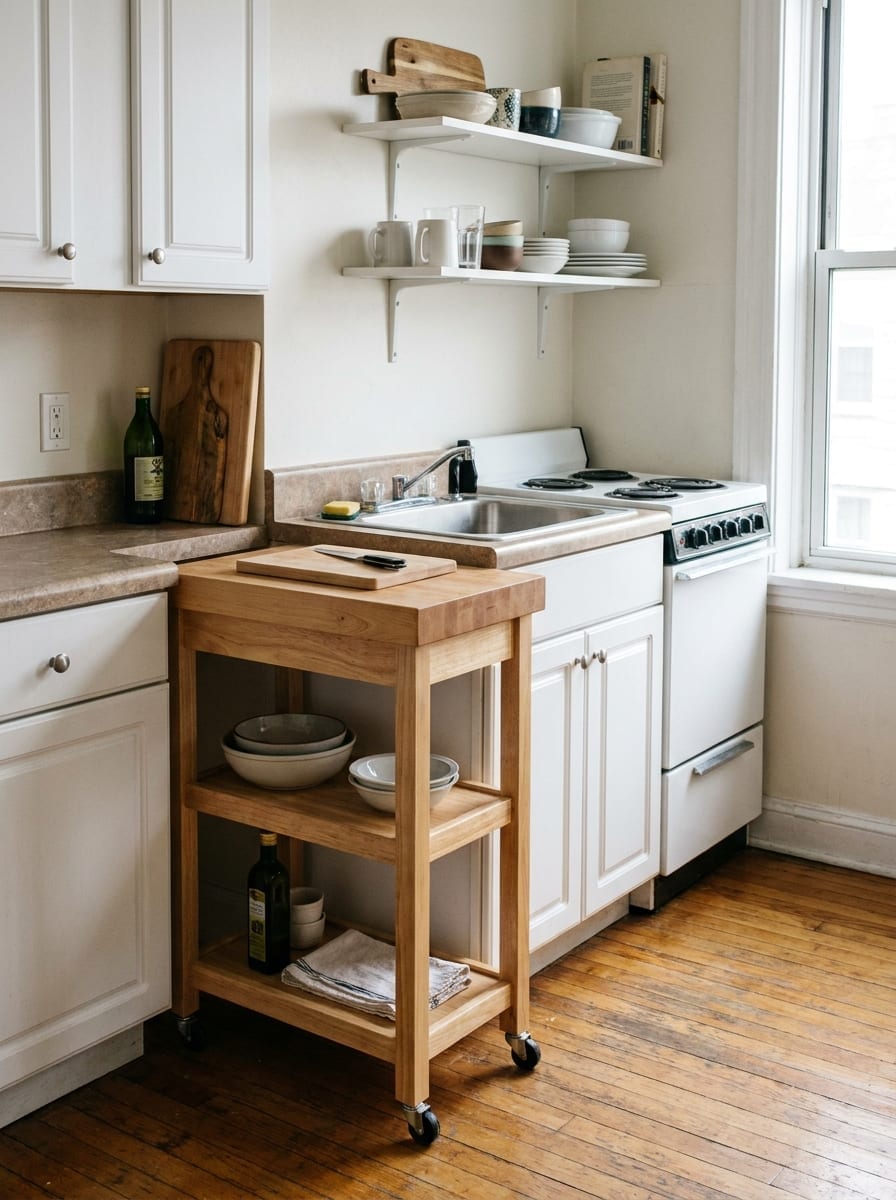
A rolling cart can add storage and prep space without committing permanently to another large piece of furniture.
The best version for a small apartment is narrow enough to tuck beside:
refrigerator cabinet wall end of the counter
Use it for one clear purpose.
For example:
Prep cart: cutting boards, bowls, oils Coffee cart: coffee maker, mugs, supplies Pantry cart: dry goods and snacks
Avoid using it as a place where miscellaneous items accumulate.
The wheels are useful because you can move it when you need more floor space.
4. Magnetic Side-of-Fridge Storage
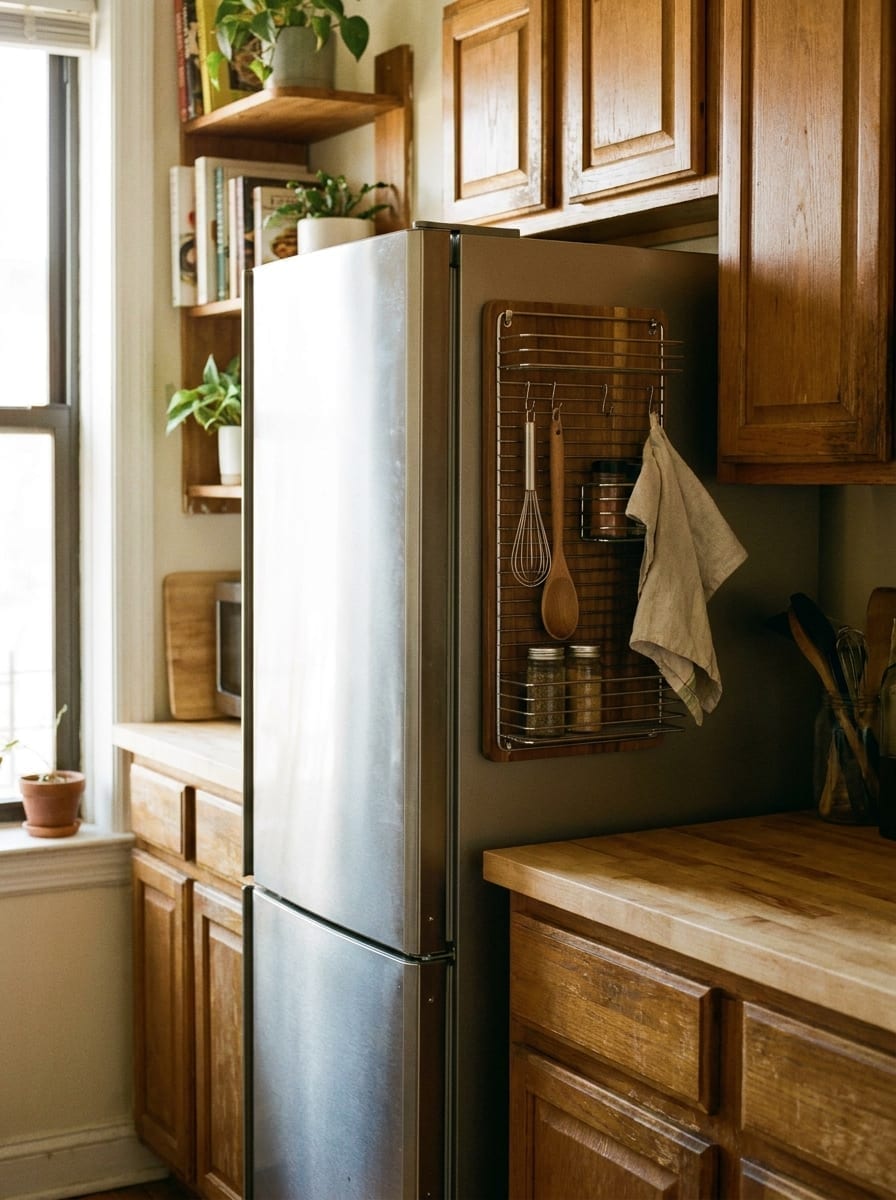
The side of the refrigerator is often unused storage space.
A magnetic organizer can hold lightweight items such as:
spices paper towels kitchen cloths foil food wrap small utensils
This works especially well when the fridge sits at the end of a cabinet run and one side is exposed.
Do not overload it.
The goal is to move a few useful objects off the counter, not create a wall of clutter.
5. The One-Shelf Coffee Station
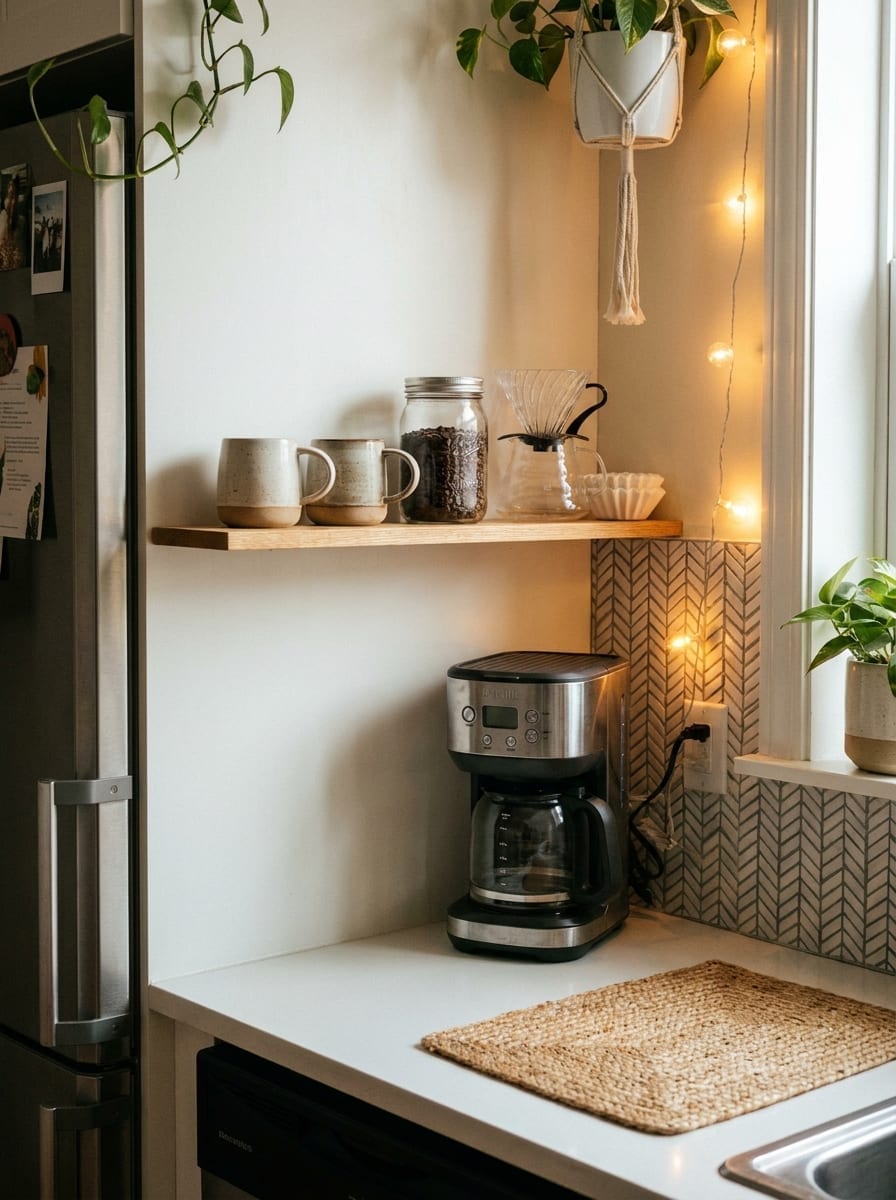
If coffee supplies constantly spread across the counter, contain them in one small zone.
Use one shelf or tray for:
coffee filters or pods mugs sugar tea
Keep the actual machine underneath or beside it.
The goal is not to build an elaborate coffee bar.
It is to prevent one daily routine from occupying half the kitchen.
One compact vertical setup usually works much better than several containers spread along the counter.
6. Cabinet Door Storage
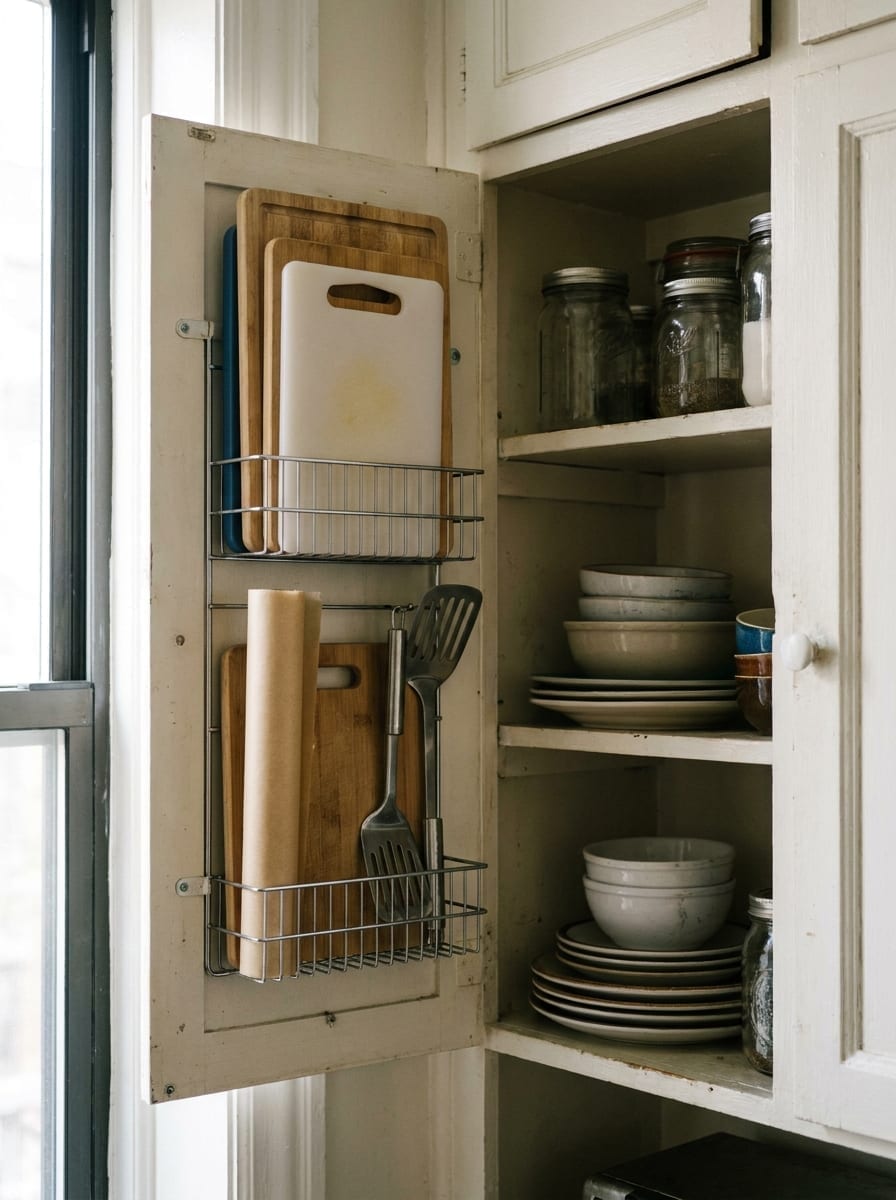
The inside of a cabinet door is useful because it adds storage without making the kitchen look busier.
Good candidates include:
measuring spoons cutting boards wraps and foil pot lids cleaning cloths small cooking tools
Before mounting anything, check that the organizer clears the shelves when the door closes.
For rentals, use removable solutions when possible and appropriate for the surface.
This is especially helpful for small awkward objects that otherwise end up scattered through drawers.
7. Drawer Dividers That Actually Save Space
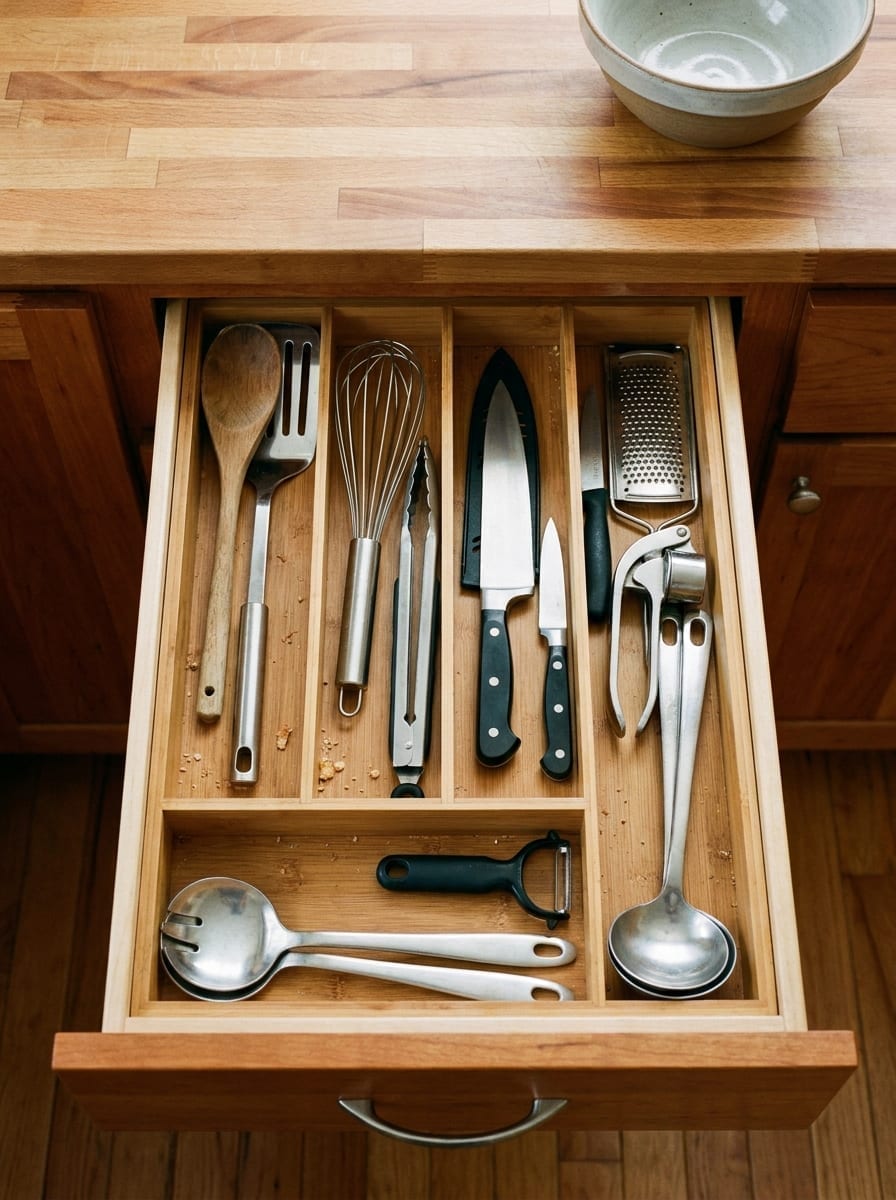
A drawer divider is only useful if it reduces the time and space needed to find things.
Instead of giving every single utensil its own compartment, group tools by use.
For example:
Cooking: spatulas, tongs, spoons Prep: peelers, measuring tools, scissors Serving: larger spoons and utensils
Remove duplicates before organizing.
If six spatulas are fighting for space, a better organizer will not solve the underlying problem.
The goal is fewer objects stored more clearly.
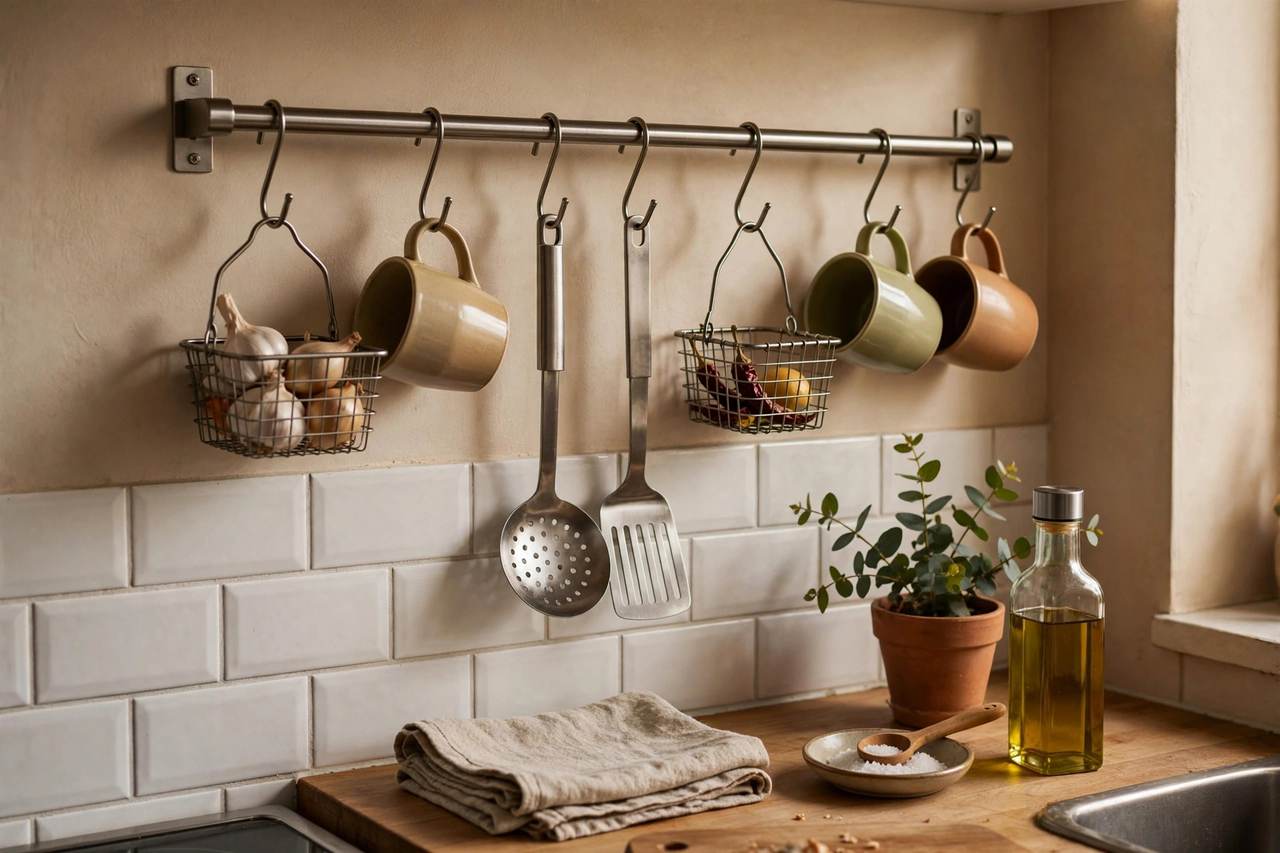
8. Wall-Mounted Utensil Zone
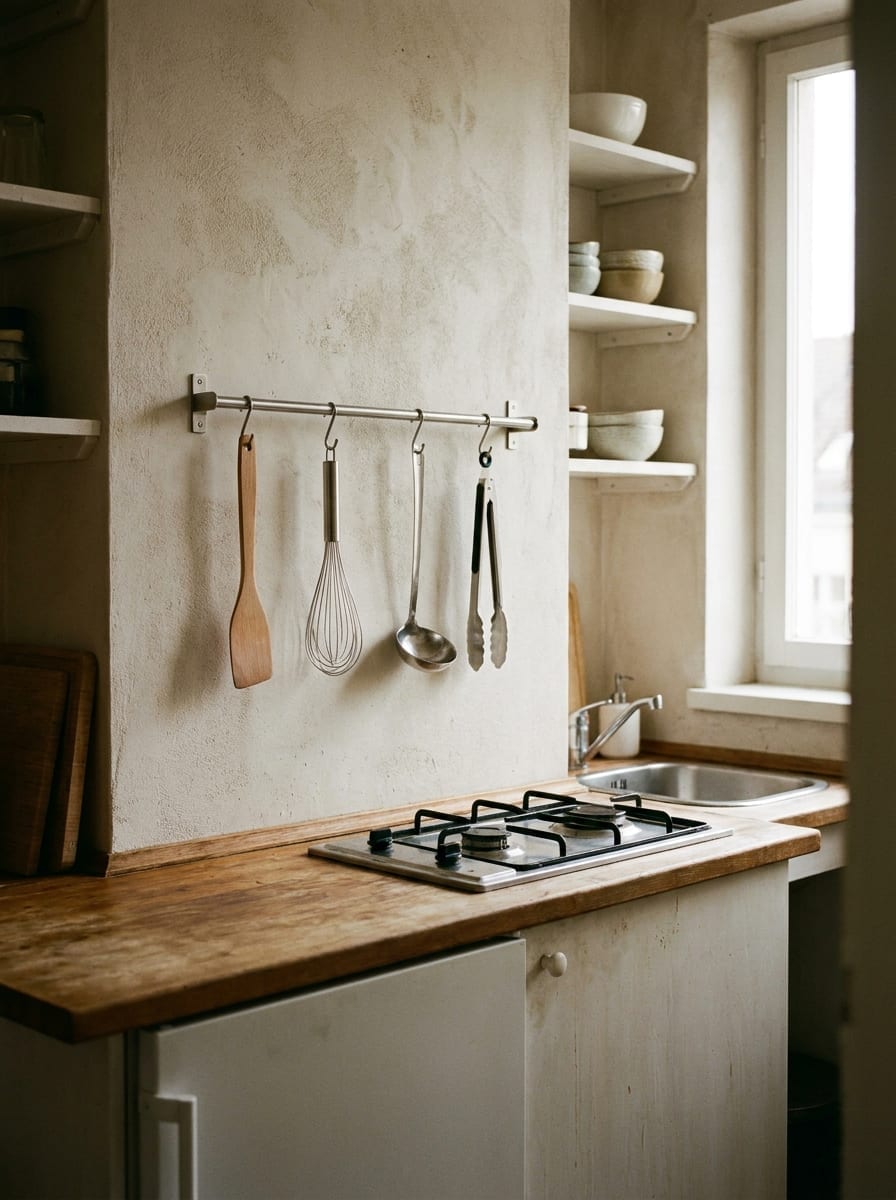
If your utensil jar takes up too much counter space, move a few frequently used tools to the wall.
A simple rail can hold:
spatula ladle kitchen scissors measuring cups tea towel
Keep the selection tight.
A wall covered in hanging tools will feel busier than the countertop ever did.
This works best when the rail sits close to the stove or main prep area so the placement actually improves how you cook.
9. A Compact Prep Board Over the Sink
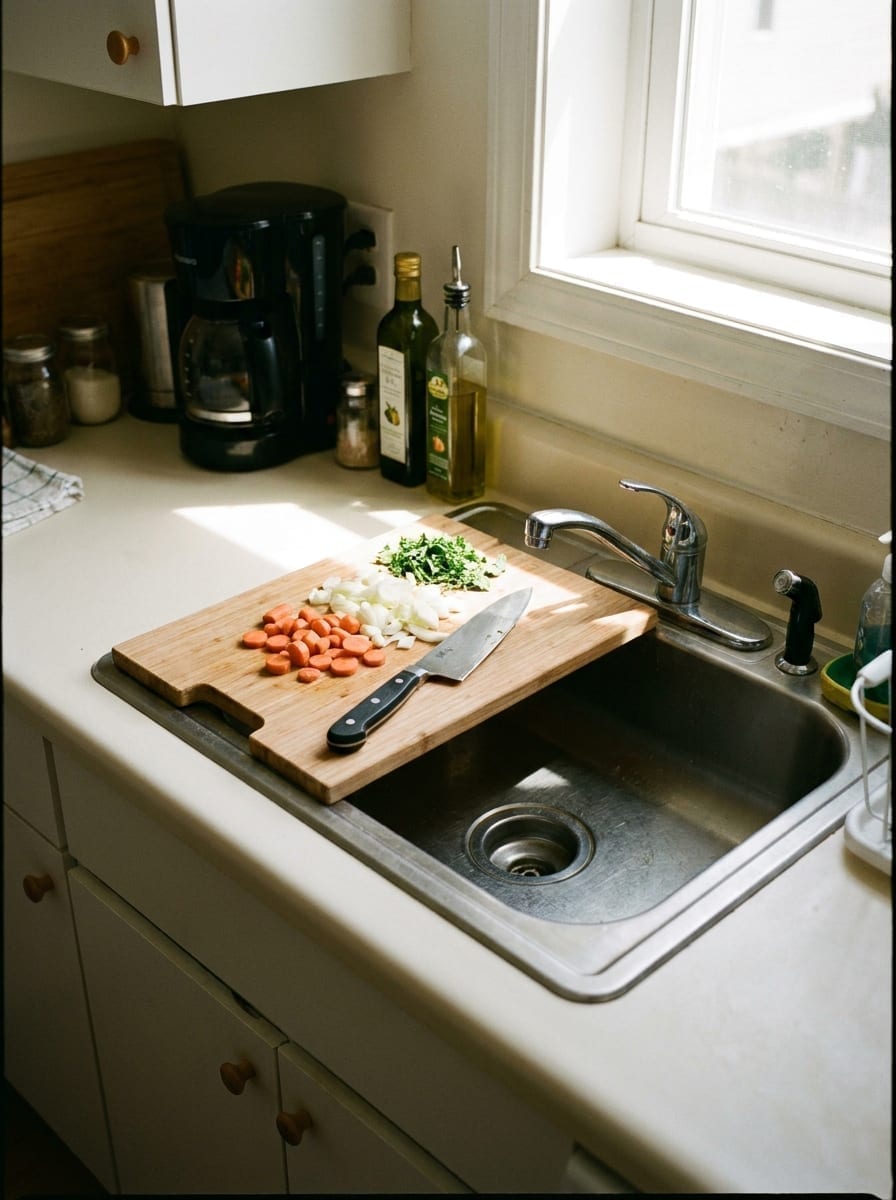
If counter space is extremely limited, a fitted sink-cover cutting board can create temporary prep space when you need it.
This is particularly useful in a very narrow galley or studio kitchen.
Use it for:
chopping vegetables placing bowls preparing sandwiches temporary serving space
Remove and store it when you need the sink.
Measure carefully so the board sits securely and is designed appropriately for the intended use.
This is not permanent extra counter space, but it can make food prep much less frustrating.
10. Matching Containers for Awkward Pantry Shelves
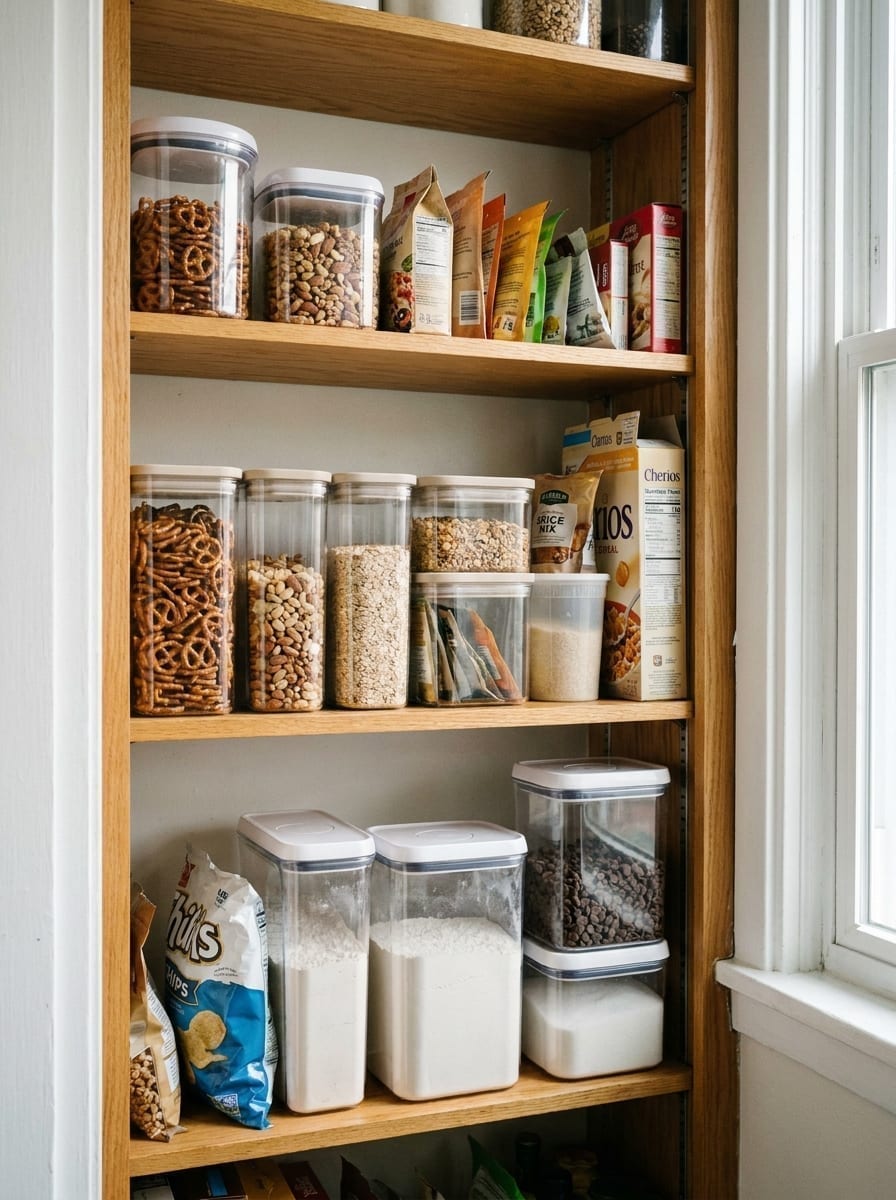
Containers are useful when they solve a specific problem.
They are less useful when you transfer every grocery item into another container just because it looks aesthetic.
Use bins or containers for difficult categories like:
loose packets snacks baking supplies small jars breakfast items
Matching containers can help visually, but function comes first.
Clear bins are particularly useful on higher shelves because you can see what is inside without pulling everything out.
11. A Narrow Breakfast Bar Instead of a Dining Table
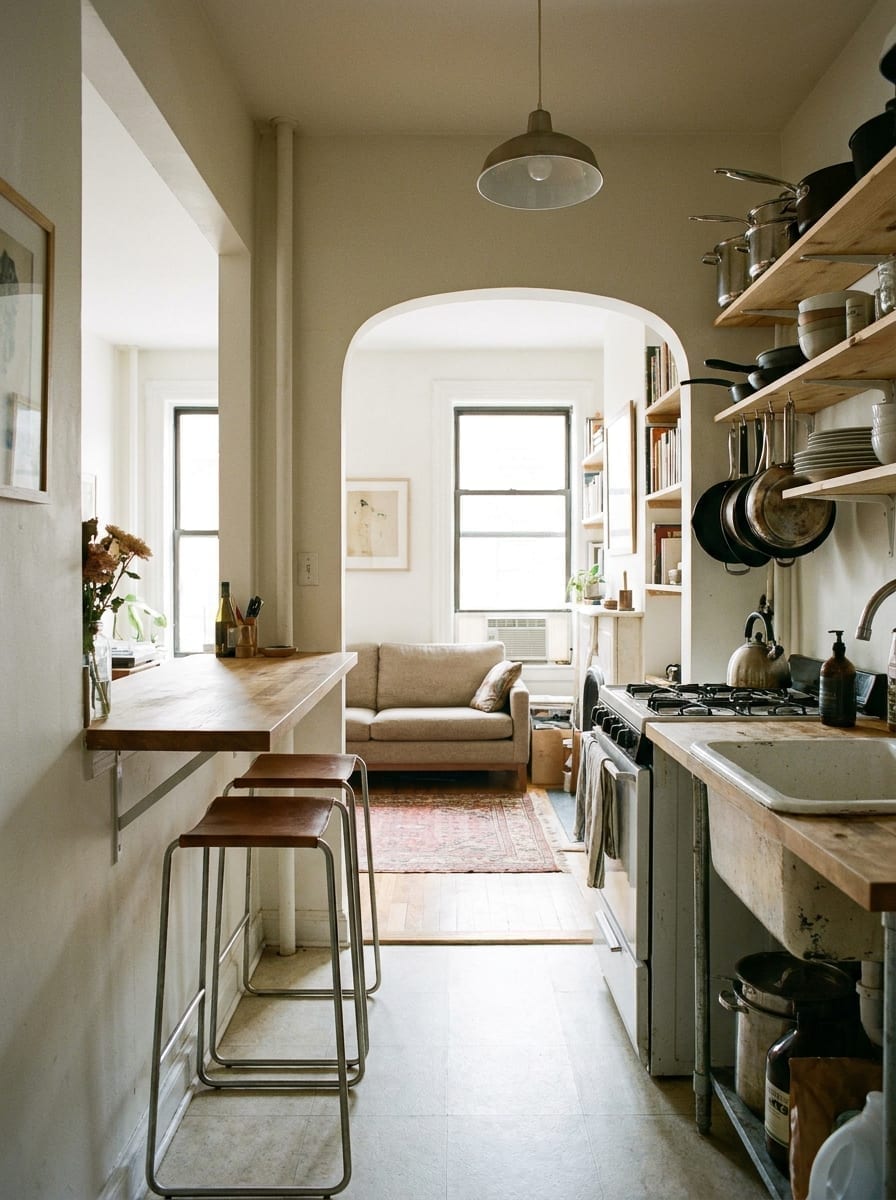
If your kitchen opens into a very small living area, a traditional dining table may take up more room than it earns.
A narrow counter-height ledge or compact breakfast bar can sometimes work better.
It can provide:
dining space extra prep surface laptop space separation between kitchen and living areas
Use backless or slim stools that can tuck completely underneath.
The goal is to create another useful surface without adding a bulky furniture footprint.
12. Under-Cabinet Lighting That Opens the Room
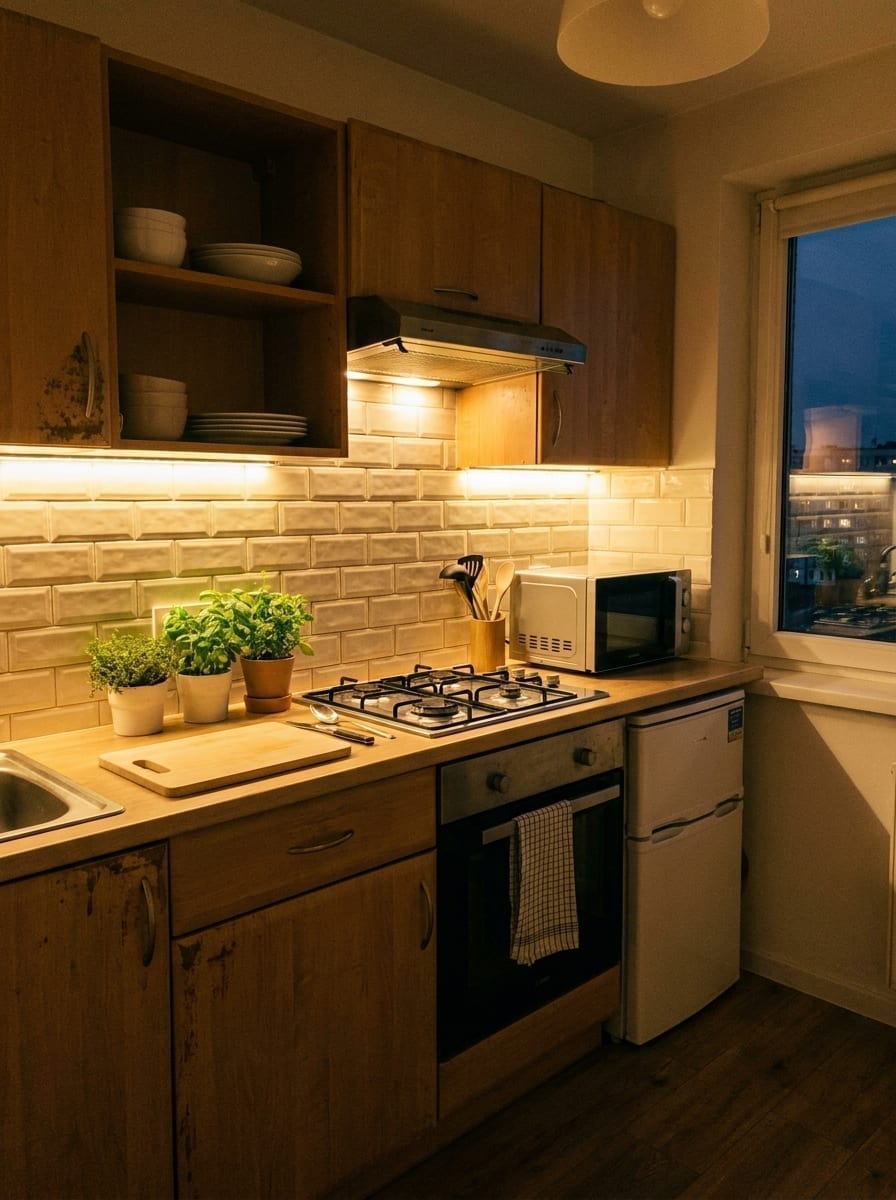
Small kitchens can feel particularly dark when upper cabinets block ceiling light from reaching the counters.
Under-cabinet lighting solves two problems at once.
It makes food preparation easier and visually brightens the backsplash and work surfaces.
For renters, removable plug-in or rechargeable lighting may be easier than hardwired fixtures.
Choose a warm or neutral light tone that works with the existing room.
Avoid cold blue-white lighting if you want the kitchen to feel inviting.
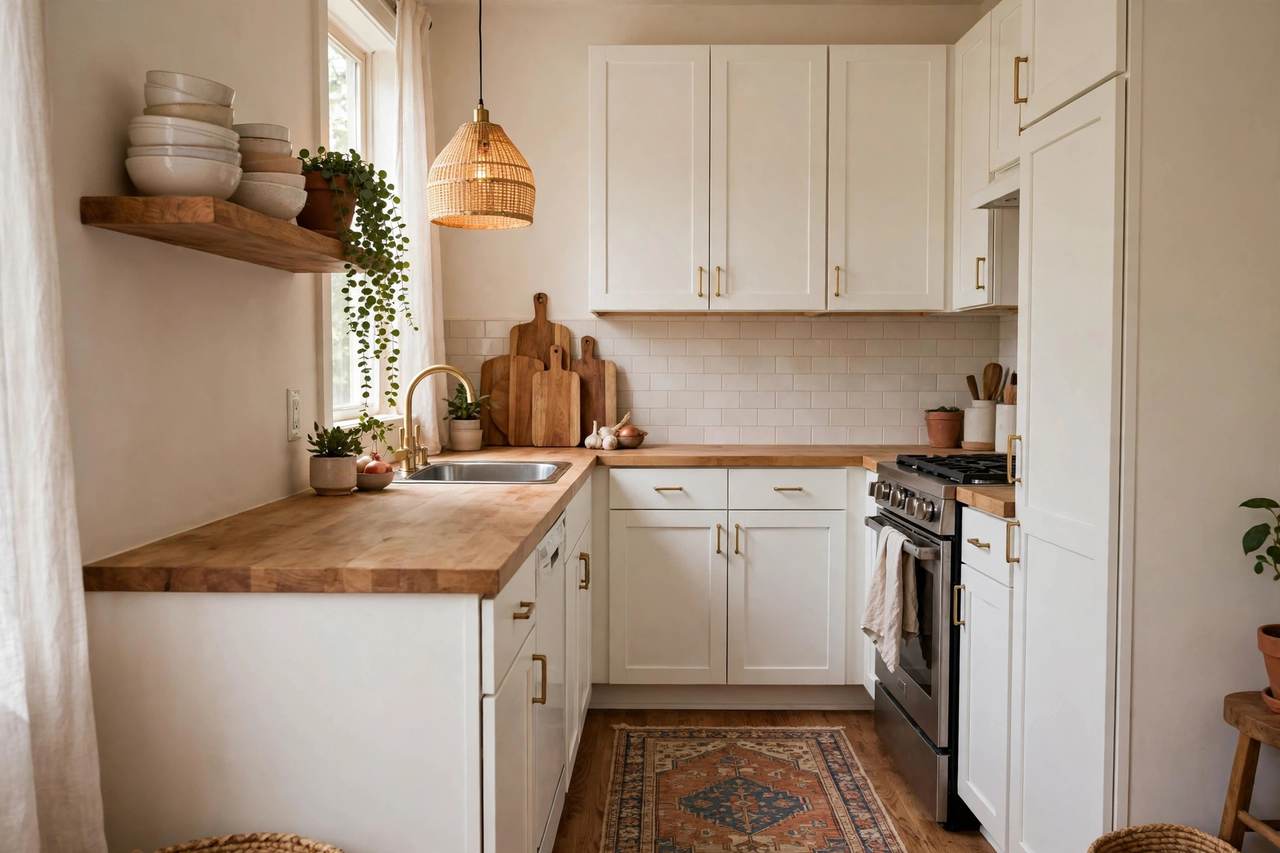
13. One Open Shelf Instead of More Cabinets
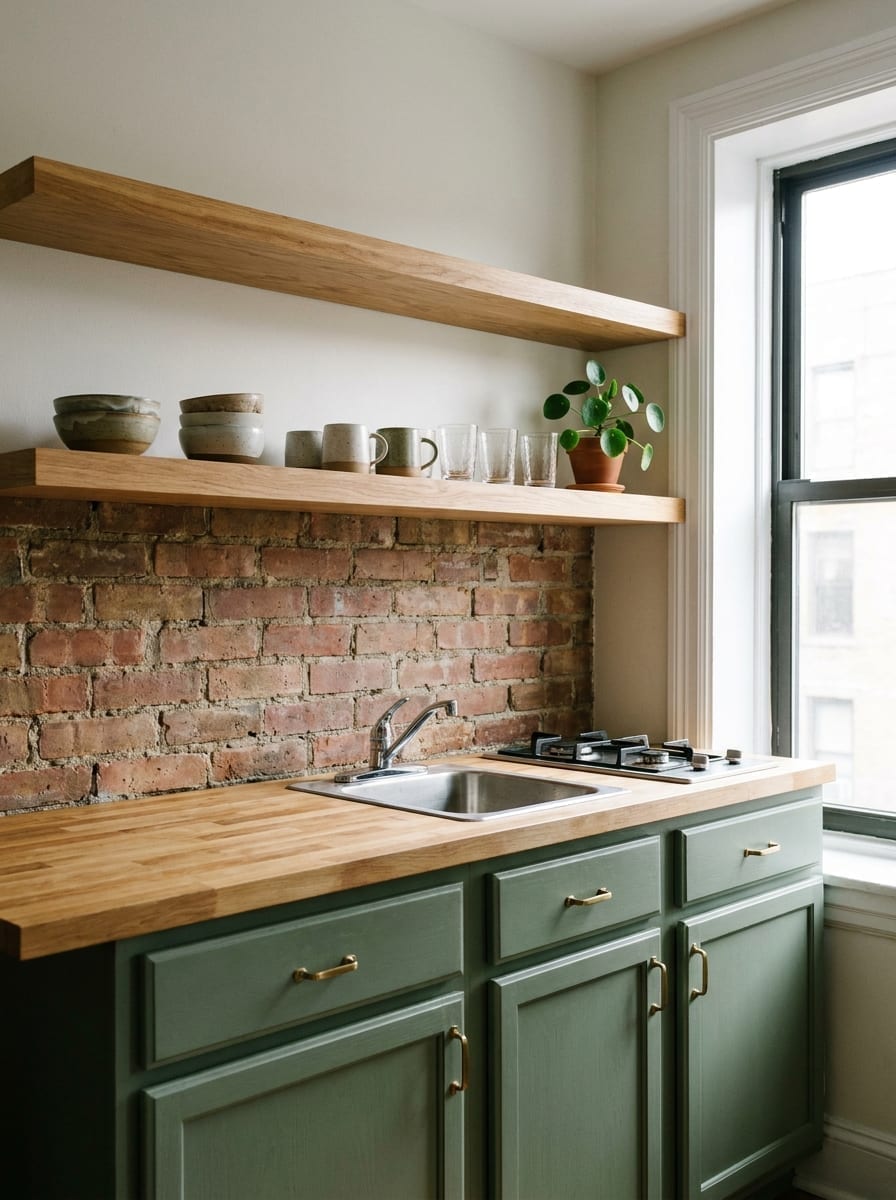
A small kitchen can feel visually heavy when cabinets cover every available wall.
One open shelf can provide useful storage while giving the room a little breathing space.
Use it for things you genuinely reach for often:
everyday bowls a few glasses mugs olive oil one small plant
Do not style it with fifteen decorative objects.
An open shelf works best when it replaces visual weight rather than adding more clutter.
14. Hidden Trash and Recycling Zone
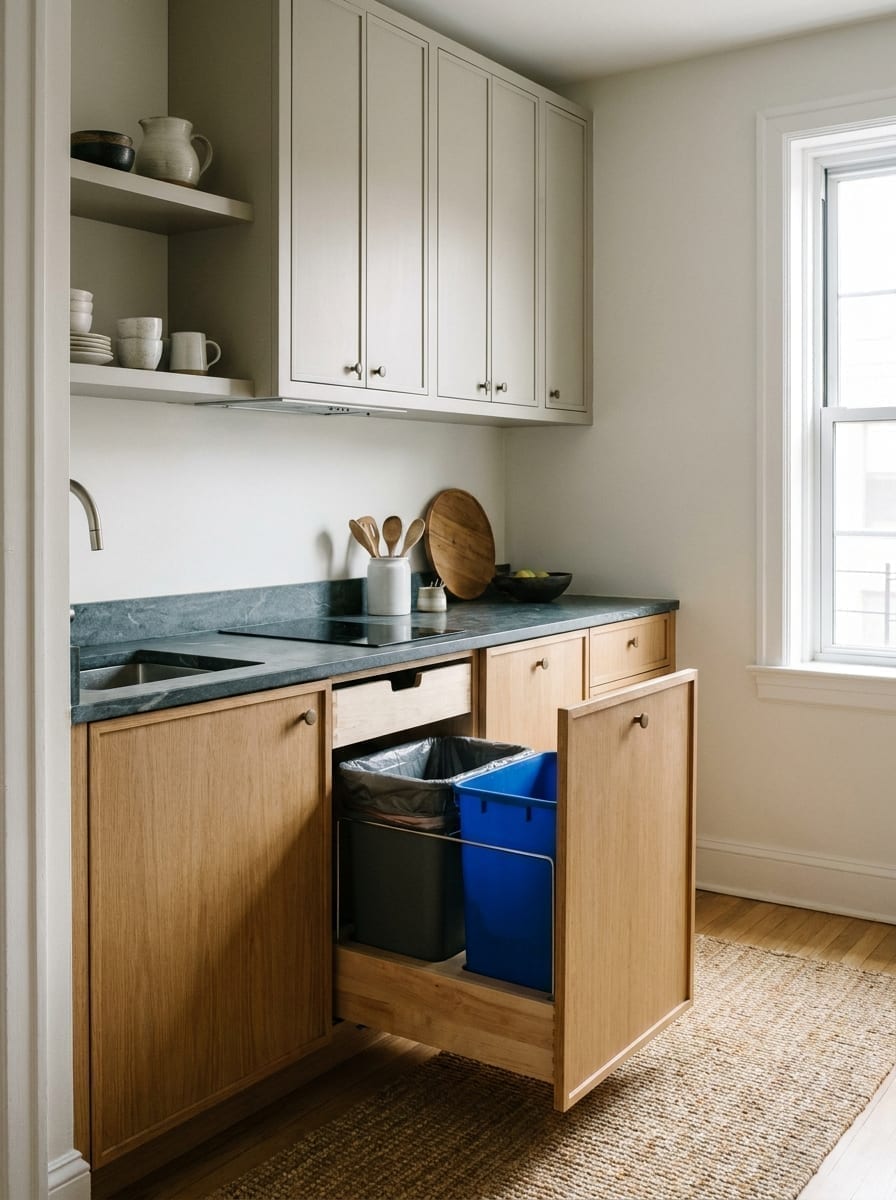
Visible trash bins can take up surprising amounts of floor space in a tiny kitchen.
If possible, use a compact bin:
inside a lower cabinet beneath the sink inside a pull-out system tucked neatly at the end of cabinetry
If recycling requires multiple categories where you live, use a divided system rather than several separate bins scattered around the kitchen.
Just make sure the setup is easy enough to access every day.
A hidden system that is frustrating to use will not stay hidden for long.
15. The Small-Kitchen Appliance Edit
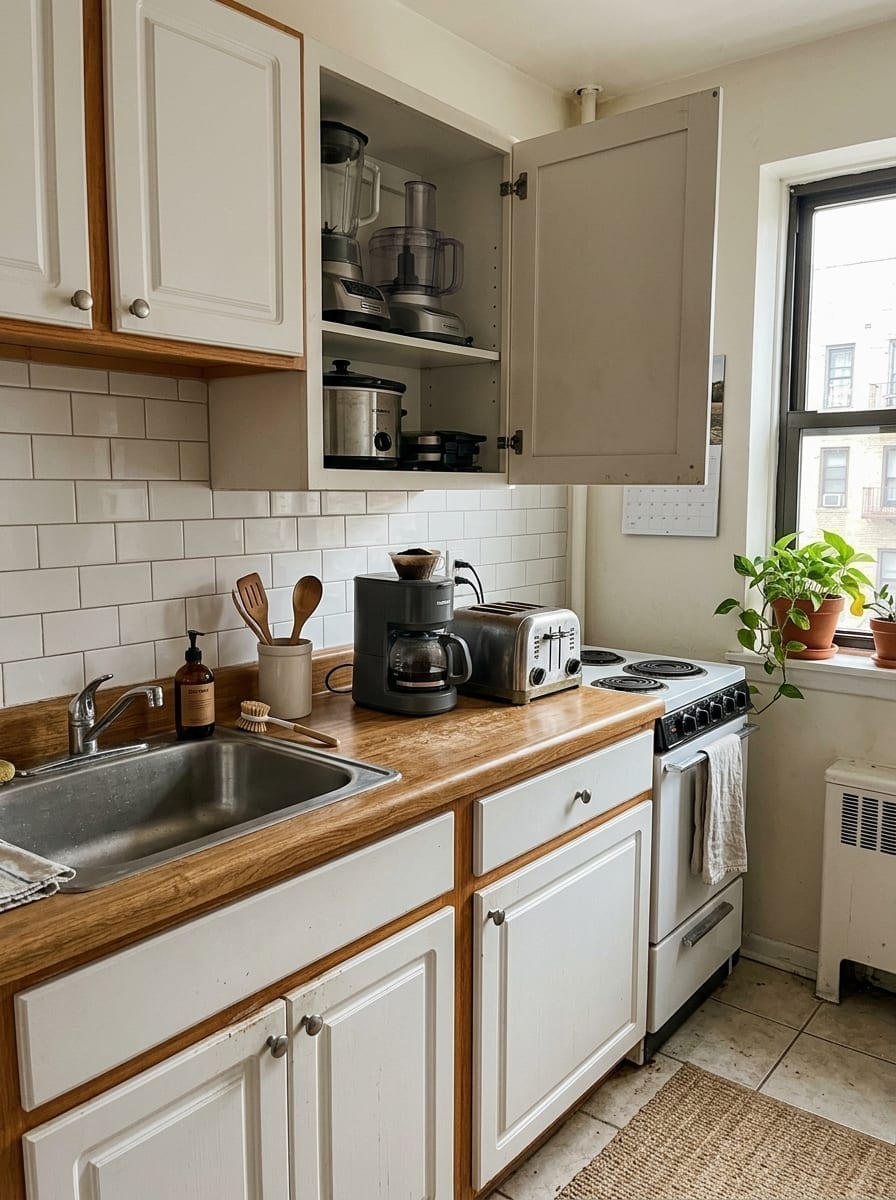
Appliances are one of the fastest ways to lose counter and cabinet space.
Look at each appliance and ask:
How often do I use it? Does another appliance already do the same thing? Does it deserve to stay on the counter? Is its size justified by how often I use it?
The answer will be different for everyone.
Someone who uses an air fryer daily should keep it accessible.
Someone who uses a stand mixer four times a year probably does not need it permanently on the counter.
Organize according to your actual cooking habits rather than an idealized kitchen setup.
16. A Light, Cohesive Color Palette
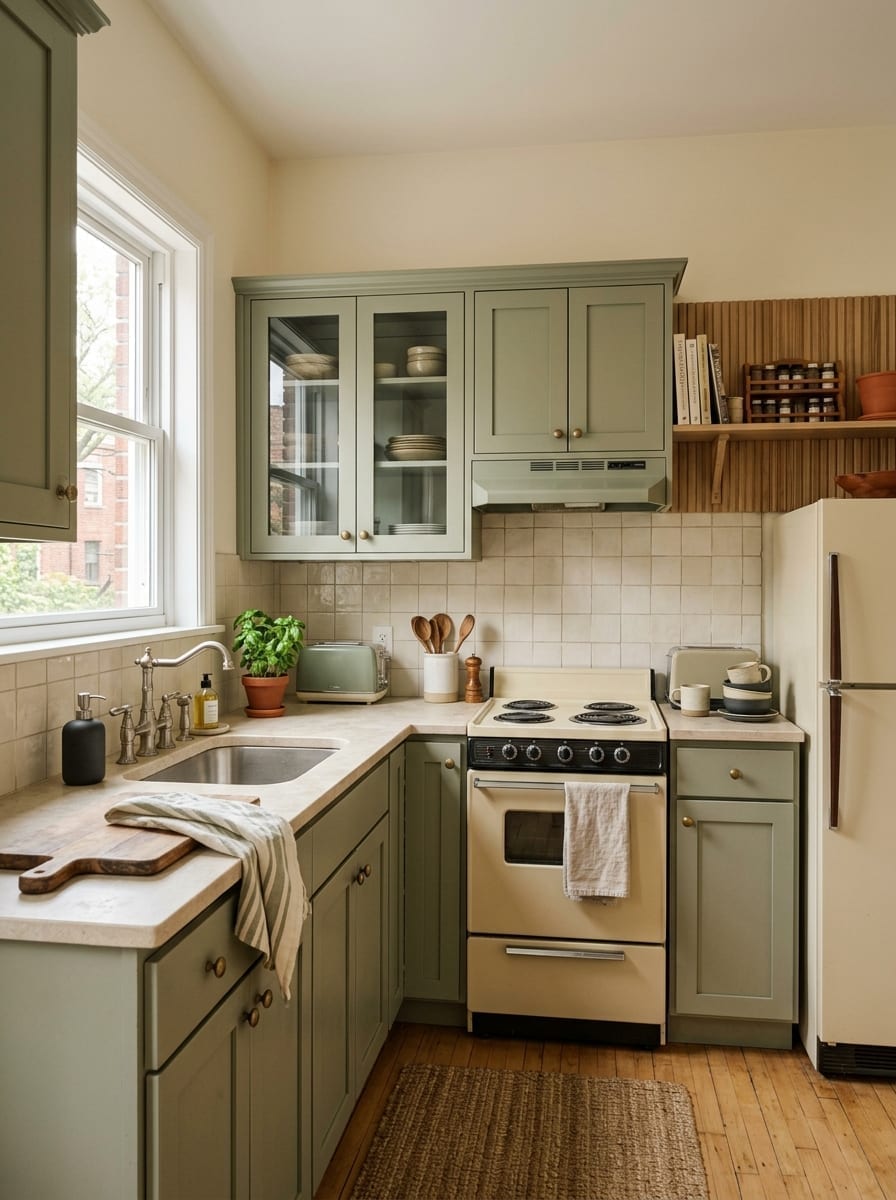
You do not have to make a small kitchen completely white.
But reducing strong visual breaks can help it feel calmer.
A cohesive palette might combine:
warm white cabinetry light wood soft stone muted sage warm gray small dark accents
If you cannot change cabinets or counters, create cohesion through things that are easier to adjust:
towels storage rugs small appliances wall color removable backsplash treatments where suitable
The goal is not to make the room bland.
It is to make the different surfaces feel like they belong together.
17. Create One Uninterrupted Work Zone
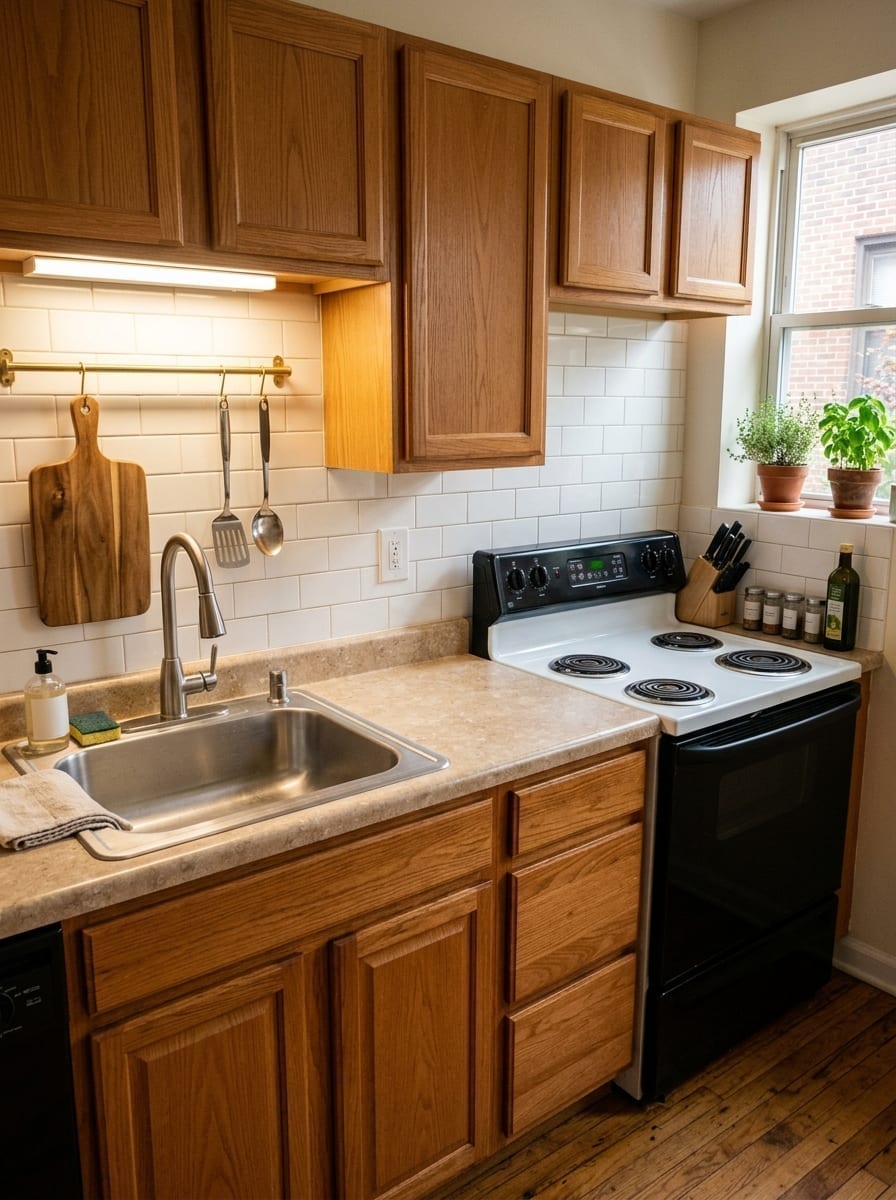
If you make only one change, make this one.
Find one stretch of countertop and protect it as a work zone.
It does not need to be huge.
Even a small clear section beside the stove or sink makes cooking easier when it is consistently available.
Move decorative objects away.
Relocate appliances that do not need to be there.
Give mail and keys somewhere else to land.
Keep that one surface ready for:
chopping mixing plating unpacking groceries making lunch
A tiny kitchen becomes much more frustrating when every activity begins with clearing a surface.
One reliable workspace changes that.
How to Make a Tiny Kitchen More Functional
Before adding storage, look at how the kitchen is actually used.
The most valuable areas are usually:
First: clear prep surface
Second: easy access to everyday cooking tools
Third: convenient food storage
Fourth: storage for occasional-use items
A kitchen can technically hold a lot and still be frustrating if everything you need daily is difficult to reach.
Prioritize access before maximum capacity.
How to Add Storage Without Making a Small Kitchen Feel Crowded
Use the least visually intrusive storage first.
Start with:
inside cabinets inside cabinet doors drawers above existing storage unused fridge sides under-sink space
Only then consider adding another cart or freestanding shelf.
This lets you gain storage without filling the remaining floor area.
What Should Stay on a Small Kitchen Counter?
There is no universal rule.
Keep the things you truly use every day.
For one person that may be:
coffee maker kettle toaster
For someone else:
rice cooker knife block blender
The important question is not whether an item is traditionally considered a “countertop appliance.”
It is whether keeping it there makes your own kitchen easier to use.
How to Make a Rental Kitchen Look Better Without Renovating
If you cannot replace cabinets, flooring, or countertops, focus on the visual elements that sit on top of them.
You can often improve:
lighting towels
storage containers
wall art hardware where permitted removable backsplash treatments rugs countertop clutter
A cleaner and more cohesive kitchen can feel surprisingly different even when the permanent finishes remain unchanged.
What to Avoid in a Tiny Kitchen
Too many countertop appliances
Even useful appliances become a problem when there is no room left to cook.
Storage added to every wall
Vertical storage helps, but covering every wall can make the kitchen feel busier.
Tiny organizers for everything
Too many individual containers can create more work than they solve.
Oversized rolling islands
Measure the walking space before adding anything freestanding.
Keeping duplicates
Three nearly identical kitchen tools still require storage, even if they are neatly organized.
Decorating before solving workflow
A beautiful kitchen that is frustrating to cook in is still frustrating.
Where to Start
Do not buy anything yet.
Clear one countertop completely.
Then put back only what you regularly use.
Open the cabinets and identify what is occupying valuable space without earning it.
Move occasional-use items higher or farther away.
Group loose categories.
Then look for one storage problem that still genuinely needs a product or organizer.
That sequence is much more useful than starting with a shopping cart full of bins.
A small kitchen does not need to hold everything.
It needs to make the things you actually use easy to reach, easy to put away, and easy to cook with.
That is what makes a tiny kitchen feel bigger in everyday life.