10 Small Kitchen Trash Can Ideas When You Have Nowhere to Hide the Bin
No cabinet space for a trash can? These 10 ideas hide, slim down, or disguise the bin so a small kitchen stays tidy and easy to use.
In This Guide
A trash can is the most-used, least-loved item in a small kitchen. It needs to be reachable while you cook, out of the walkway, and ideally out of sight, three requirements that conflict in a kitchen under 100 square feet. The result is usually a bin wedged beside the fridge, blocking a cabinet, or sitting in the middle of the floor.
The ideas below solve the problem three ways: hide the bin inside existing furniture, shrink it to fit a gap you already have, or disguise it so it looks intentional. Most cost under $80, and several need no installation at all. Measure your available gap before choosing, since trash hardware is size-sensitive.
1. Pull-Out Cabinet Bin
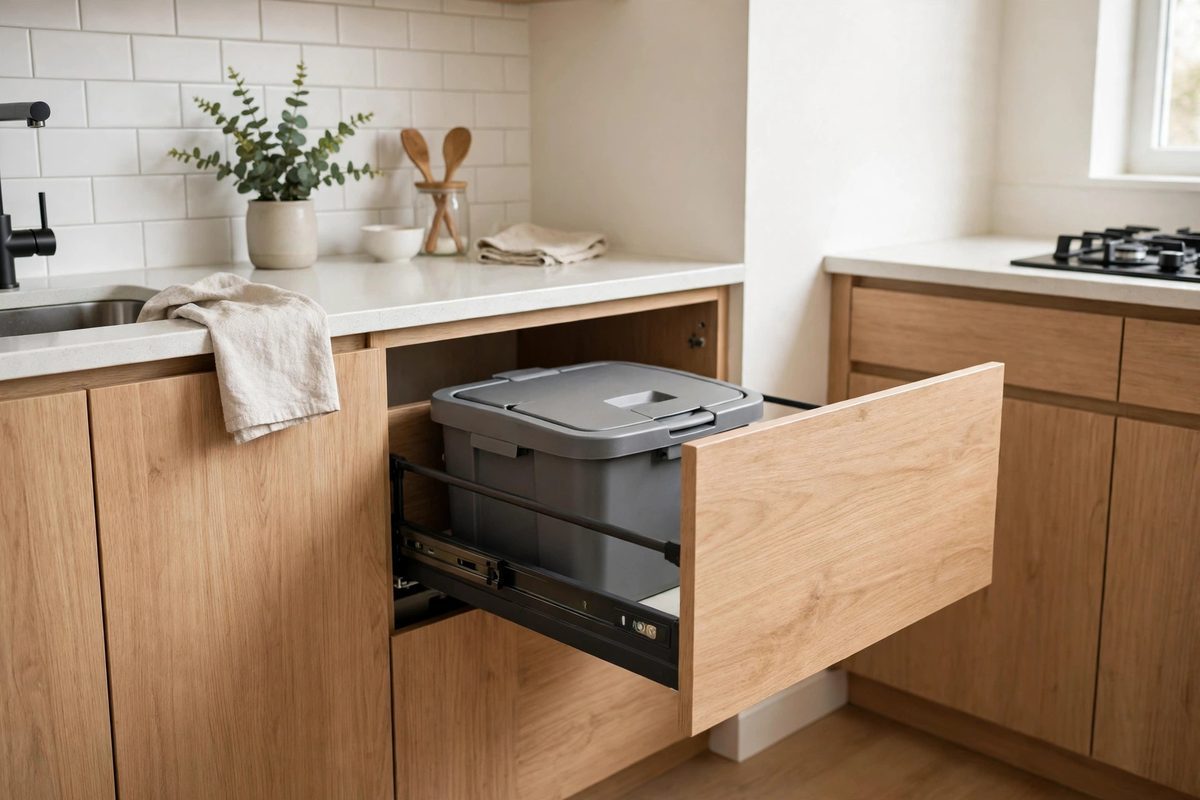
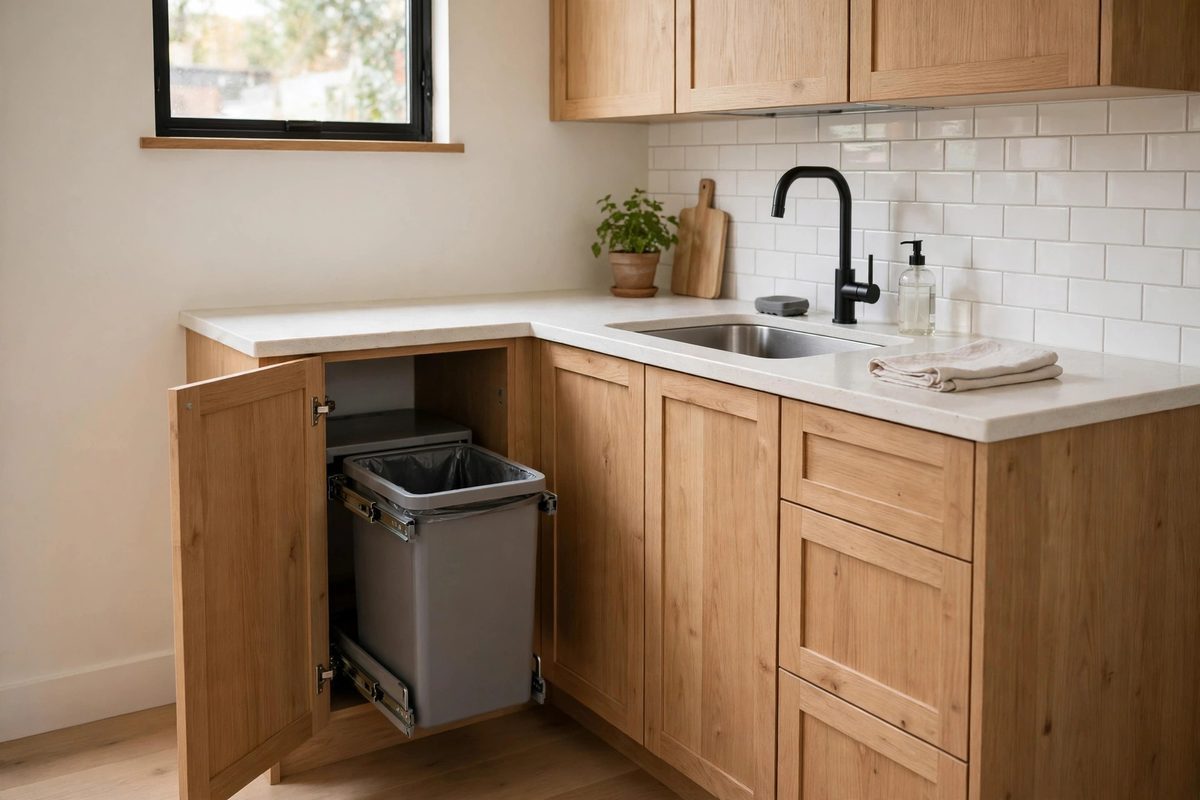
A pull-out cabinet bin mounts on rails inside a base cabinet and slides out when you open the door. It hides the trash completely, keeps smells contained, and frees floor space. A single-bin pull-out costs $40 to $80 and installs in about an hour with a drill.
Pull-out bins suit kitchens with at least one base cabinet that is not already full. The most common spot is the cabinet beside the sink, where you generate the most trash while prepping food.
How to make it work
Measure the cabinet interior width, depth, and height before buying, and choose a bin 1 inch smaller on each side so it slides freely. Use a bin with a lid to contain smells. If the cabinet has a shelf, remove it to make room for the full bin height.
2. Under-Sink Bin
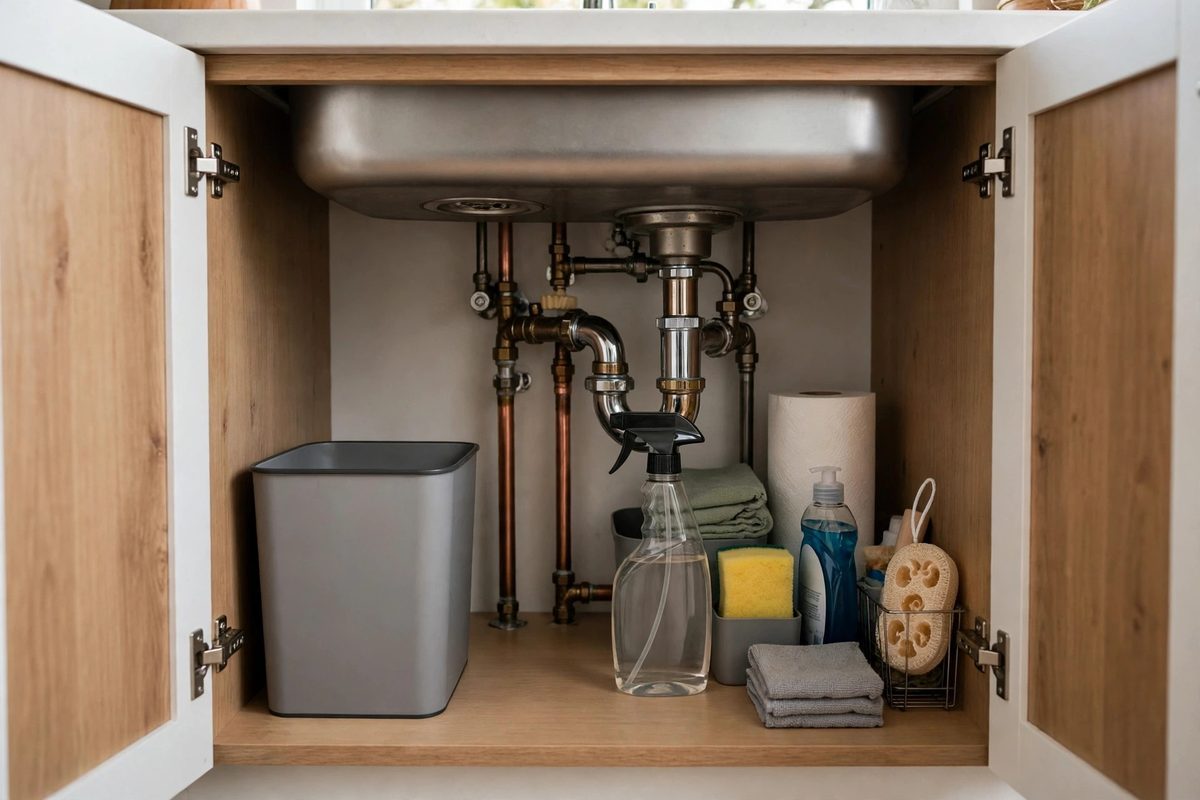
The cabinet under the sink is often half empty because of pipes, and a small bin fits neatly beside them. A compact 5 to 7 gallon bin costs $15 to $25 and tucks under the sink without blocking the plumbing. This spot is ideal for kitchens where every other cabinet is already claimed.
The tradeoff is capacity: an under-sink bin holds less than a freestanding 13-gallon can, so you will empty it more often. For a single person or a couple, that is rarely a problem.
How to make it work
Measure around the pipes and the garbage disposal, if you have one, before choosing a bin shape. A rectangular bin uses the space better than a round one. Add a small adhesive hook inside the cabinet door for a roll of trash bags.
3. Slim Gap Bin
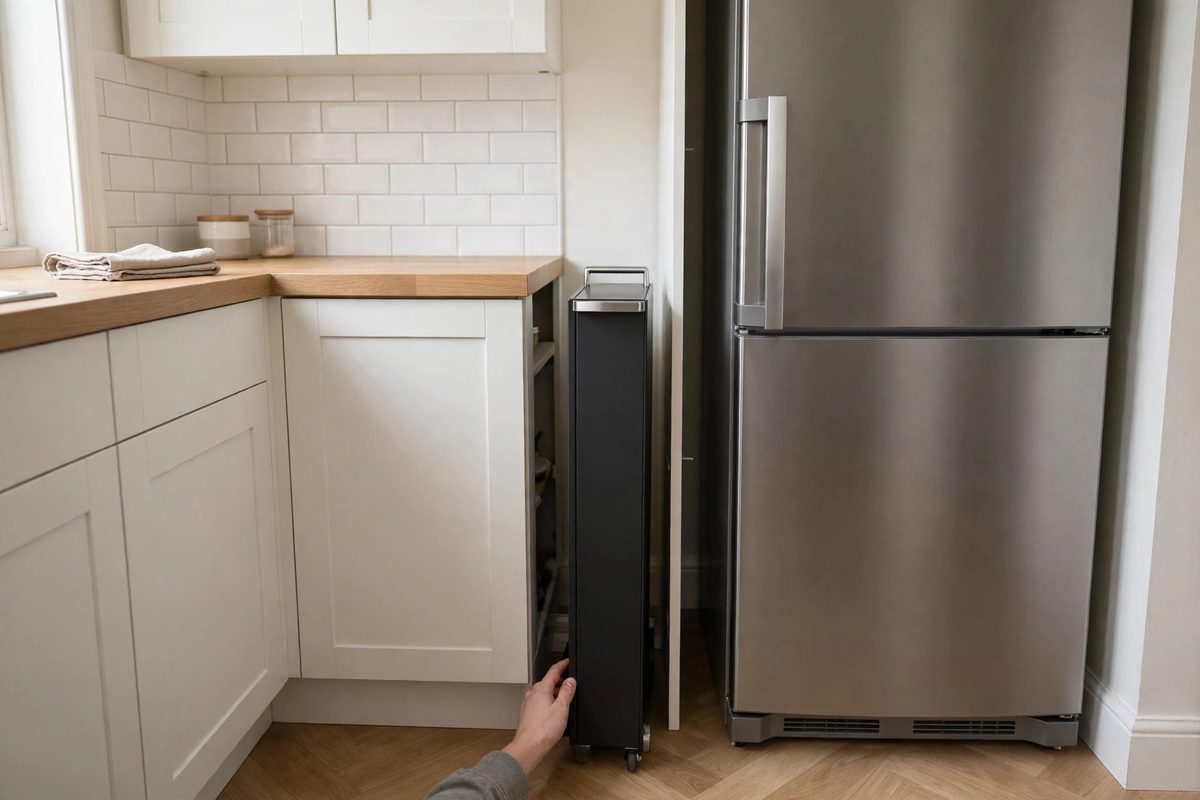
A slim bin, 8 to 10 inches wide and 13 to 16 inches deep, slides into the gap between the fridge and the counter, or between the stove and the wall. Slim bins hold 8 to 10 gallons, cost $25 to $40, and turn a dead gap into useful trash space. They are the best option when no cabinet can be spared.
Measure the gap carefully, including baseboard thickness, and choose a bin at least half an inch narrower than the gap so it slides in and out without scraping.
How to make it work
Choose a bin with a handle on top for easy pulling. If the gap is beside the stove, pick a heat-resistant bin and keep it at least 2 inches from the oven side. Empty the bin before it overflows, since a slim bin tips more easily when top-heavy.
4. Door-Mounted Bin
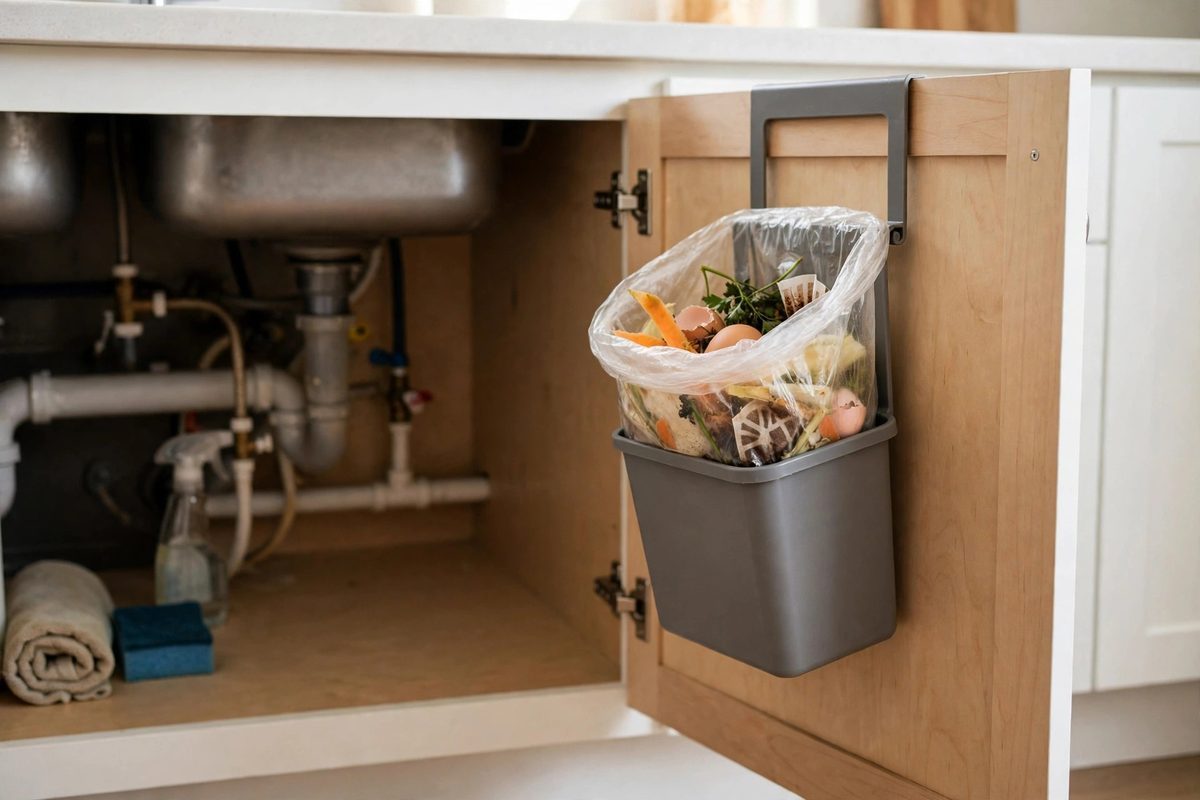
A door-mounted bin hangs on the inside of a cabinet door, usually under the sink, and holds a small bag for food scraps or daily trash. It costs $10 to $20, installs with two hooks or screws, and is invisible when the door is closed. Door-mounted bins are the best solution for food scraps while cooking, since they sit right where you prep.
The capacity is small, 2 to 3 gallons, so a door-mounted bin works as a supplement to a main bin, not a replacement. Pair it with a larger bin elsewhere for general trash.
How to make it work
Mount the bin on a door that opens fully without hitting the bin on the cabinet frame. Use a bag with handles that loop over the bin rim for easy removal. Empty it daily to prevent smells, since food scraps break down fast in a warm kitchen.
5. Countertop Compost Caddy
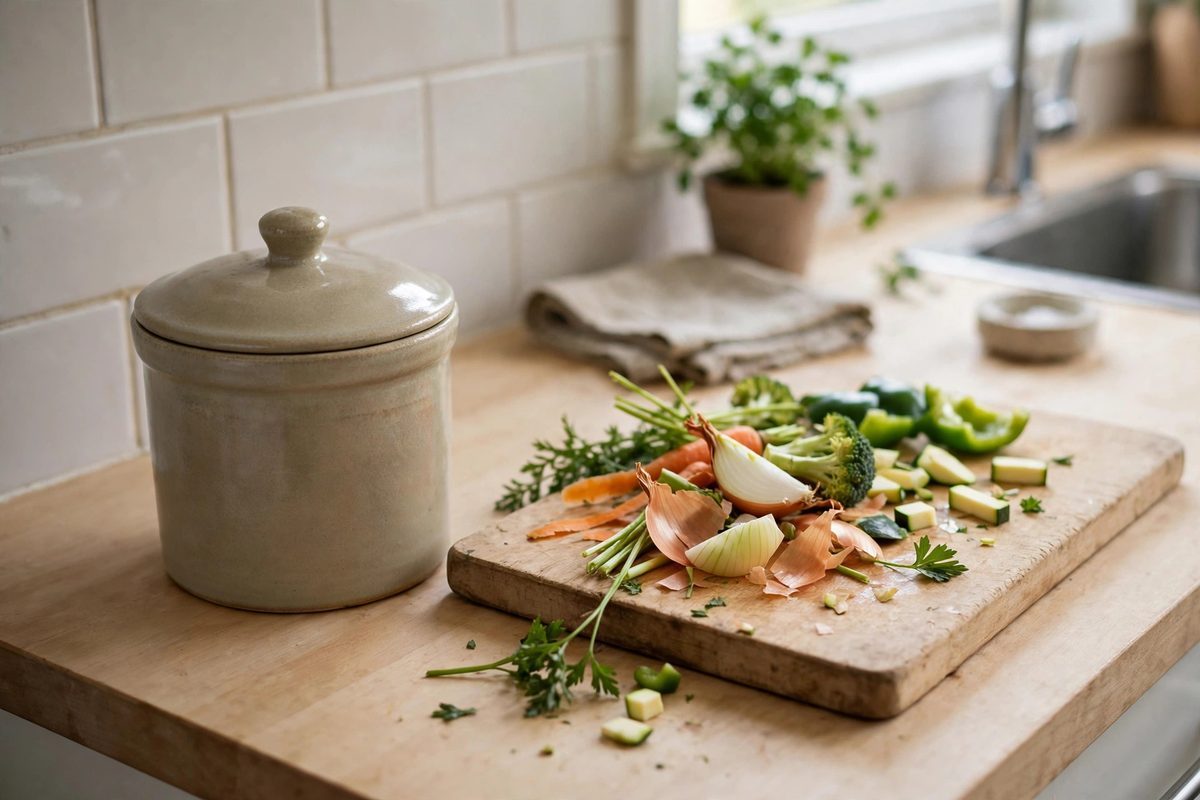
A countertop compost caddy, a small lidded container of 1 to 2 gallons, collects food scraps during cooking so they never reach the main bin. Caddies cost $15 to $30, come in ceramic, stainless steel, or bamboo, and sit beside the cutting board where scraps are generated. Emptying the caddy into a larger compost bin or trash bag takes seconds.
A caddy reduces trips to the main bin and keeps wet scraps out of the dry trash, which cuts smells noticeably. It also looks intentional on the counter, unlike a plastic bag of scraps.
How to make it work
Line the caddy with a compostable bag for easy emptying. Choose a caddy with a charcoal filter in the lid if smells are a concern. For a matching hidden-storage idea, see small bedroom reading chair ideas for furniture that earns its footprint.
6. Rolling Bin in Pantry
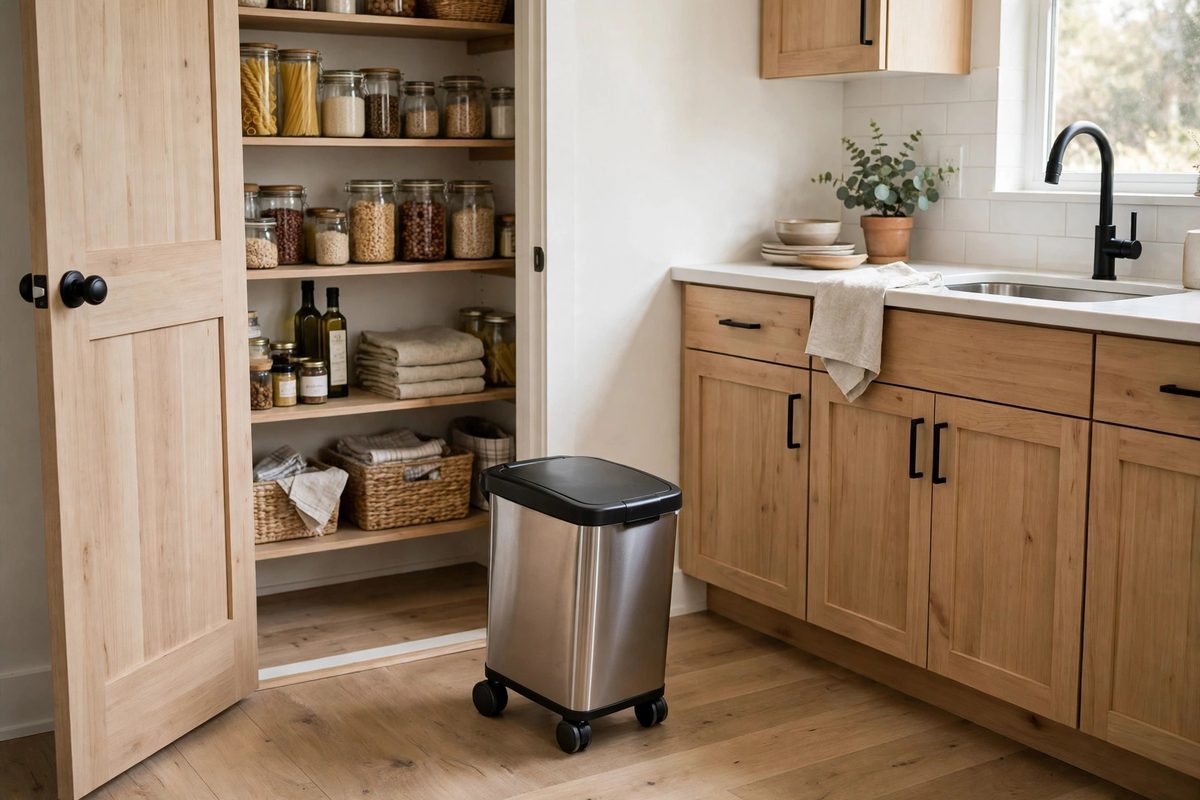
A small rolling bin stored in a pantry or broom closet rolls out when you need it and disappears when you do not. A rolling bin costs $20 to $35 and holds 10 to 13 gallons, the same as a freestanding can, but it lives behind a door instead of in the walkway.
This works best when the pantry sits close to the kitchen, ideally within a few steps of the prep area. If the pantry is down a hall, the bin will stay there and trash will pile on the counter instead.
How to make it work
Choose a bin with smooth-rolling casters that lock, so it stays put while you use it. Keep a roll of bags in the pantry beside the bin. If the pantry door is narrow, measure the bin width against the door opening before buying.
7. Hidden Drawer Bin
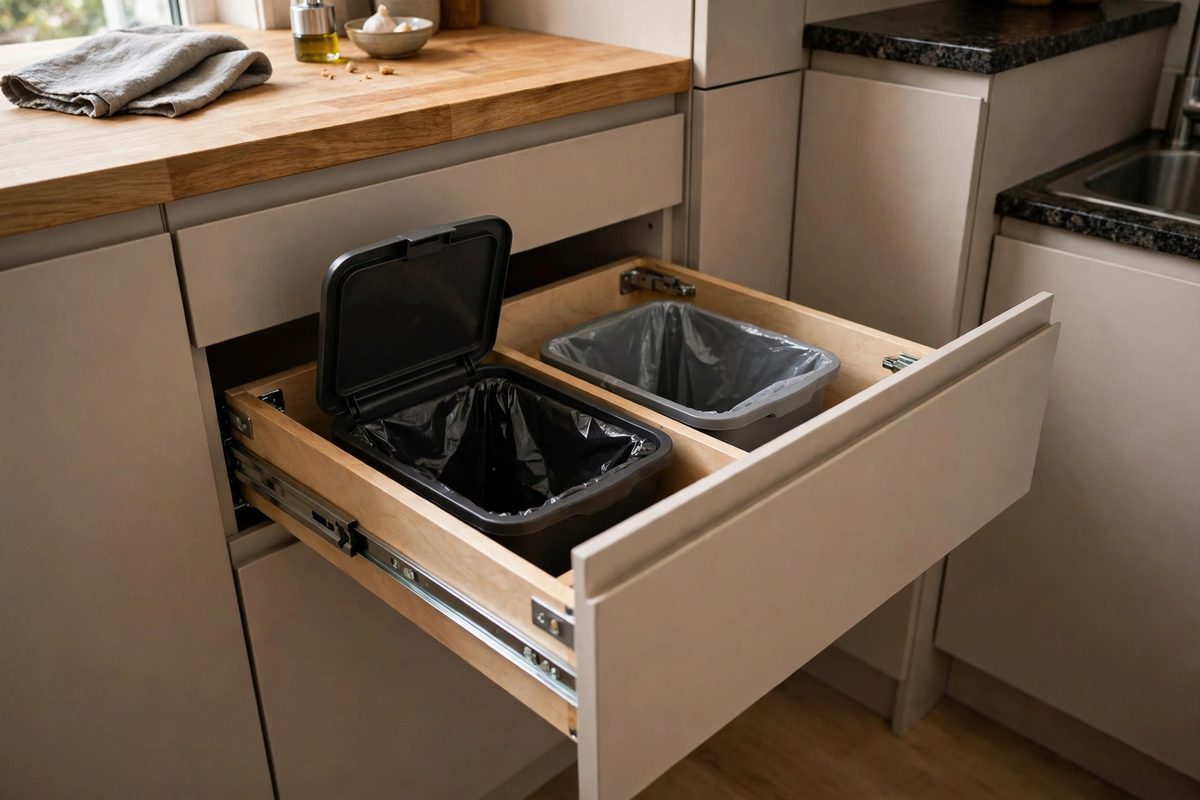
A deep drawer fitted with a bin insert turns a drawer into a hidden trash station. The drawer pulls out, you drop trash in, and it closes flush with the cabinetry. Drawer bin kits cost $50 to $90 and fit standard 15 or 18 inch drawer bases.
Hidden drawer bins are the most discreet option, since no one can tell the drawer holds trash. They suit kitchens where the bin must be completely invisible, like open-plan apartments where the kitchen faces the living room.
How to make it work
Choose a drawer near the prep area, not the far end of the kitchen, so it is convenient while cooking. Use a bin with a lid if the drawer sits near food prep. If your drawers are shallow, a door-mounted bin may fit better than a drawer kit.
8. Wall-Mounted Folding Bin
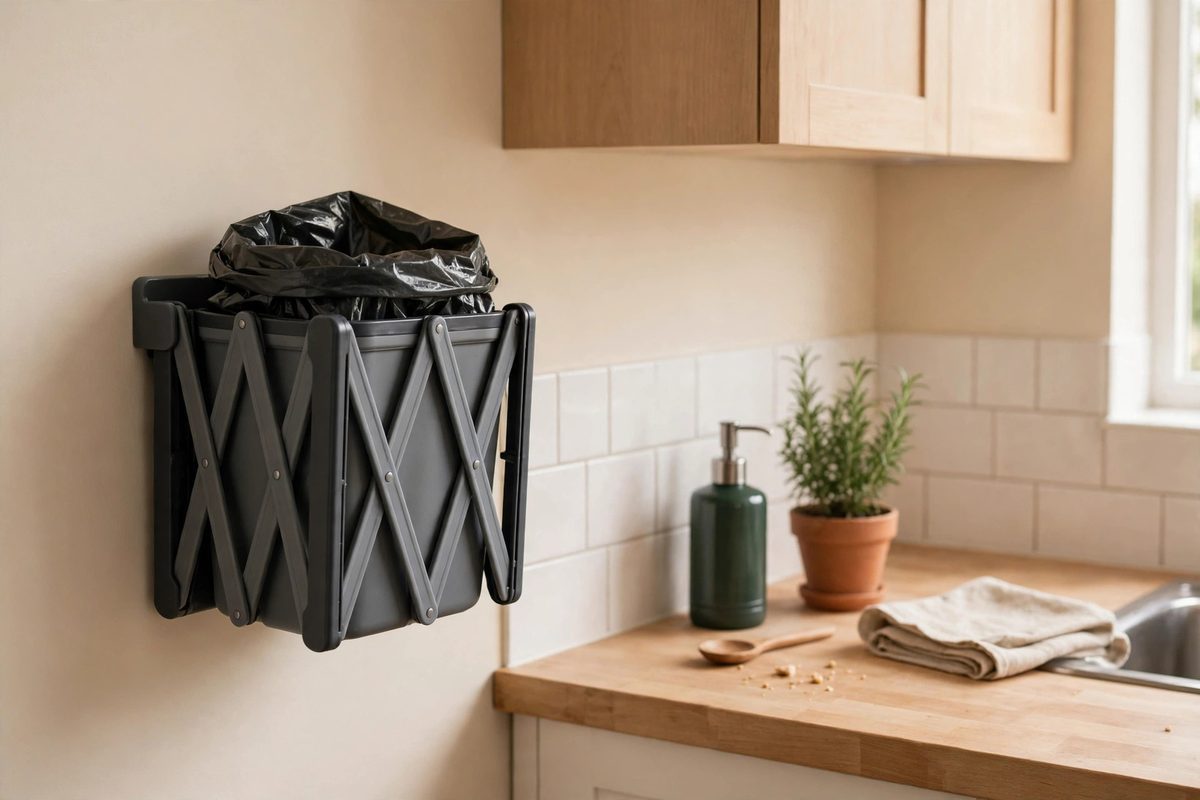
A wall-mounted folding bin hangs on the wall or the side of a cabinet and folds flat when empty. It holds a standard grocery bag, costs $15 to $25, and is ideal for tiny kitchens with literally no floor or cabinet space to spare. When not in use, it collapses to under 2 inches deep.
Folding bins hold less than a full-size can, about 2 to 3 gallons, so they work best as a cooking-scrap bin or a secondary bin for a small household.
How to make it work
Mount the bin at hip height near the prep area, on a wall stud or with heavy-duty anchors. Use sturdy bags that will not tear when the bin is full. Fold the bin flat between uses if counter space is tight. For a corner-storage companion idea, see small kitchen corner cabinet ideas.
9. Dual Recycling Station
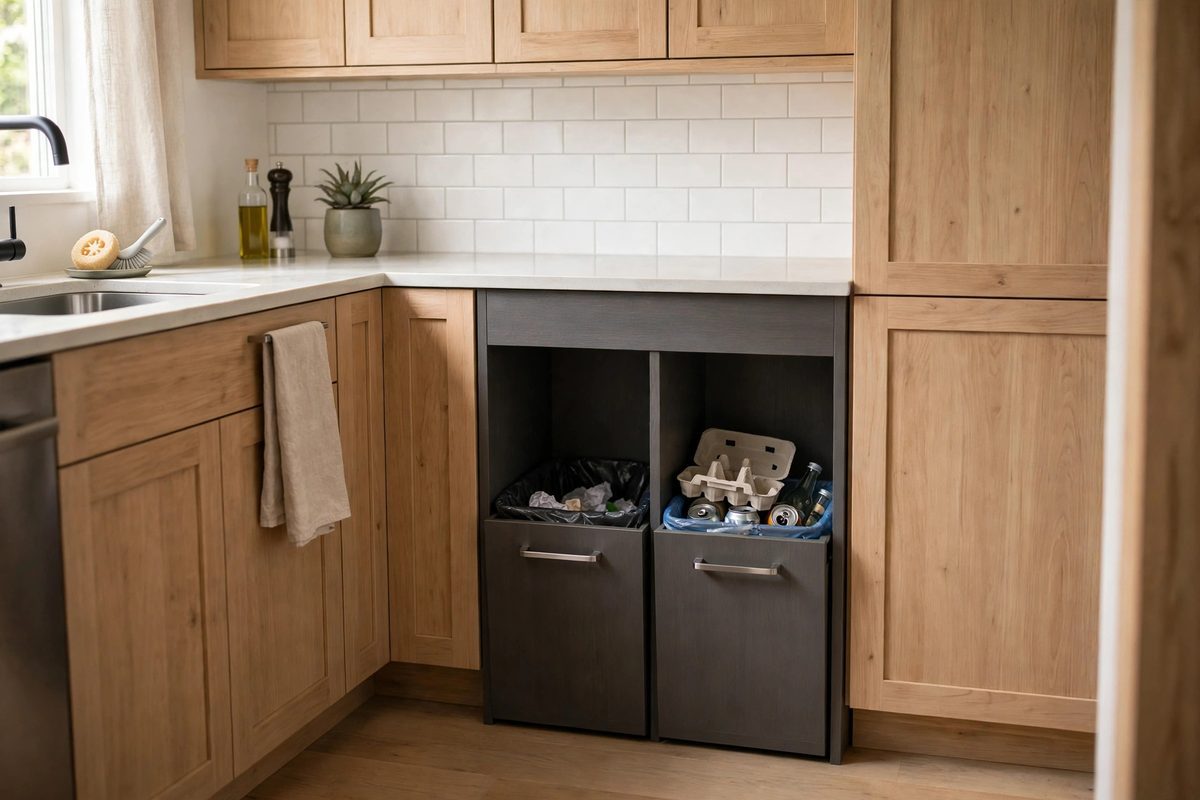
A dual bin station combines trash and recycling in one unit, usually two side-by-side compartments of 7 to 10 gallons each. Dual stations cost $40 to $90 and come as pull-out cabinet inserts or slim freestanding units. Combining both streams in one spot saves the space a second bin would take and makes sorting automatic.
Dual stations suit households that recycle regularly and want sorting to happen at the point of disposal, not later at a distant bin.
How to make it work
Label each compartment clearly, since guests and family members will otherwise mix streams. Choose a unit where each compartment lifts out separately for emptying. If space is very tight, a stacked dual bin, one compartment above the other, uses less floor width.
10. Decorative Bin Cover
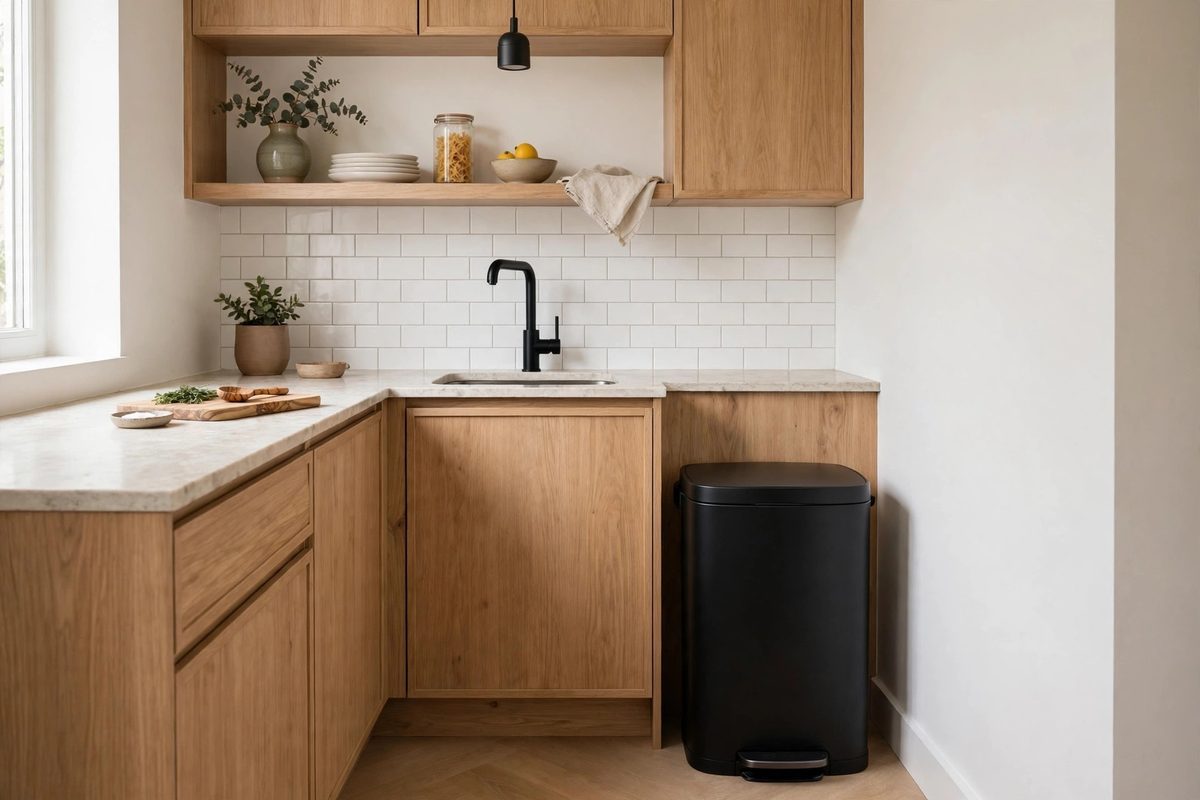
If the bin must stay visible, a decorative cover makes it look intentional. Options include a wooden cabinet-style cover, a woven basket that fits over the bin, or a bin in a finish that matches the kitchen, like matte black or brushed steel. Covers cost $30 to $60, and a well-chosen bin in a matching finish can look like part of the design.
This is the fallback option when no hiding spot exists, but it works surprisingly well: a bin that matches the kitchen reads as a deliberate choice, not a compromise.
How to make it work
Choose a cover with a foot pedal or a lid that opens easily while your hands are full. Match the cover material to something already in the kitchen, like the cabinet wood or the faucet finish. Keep the area around the bin clear so it does not collect clutter.
A small kitchen does not have to show its trash can to the world. Whether you hide it in a cabinet, slim it into a gap, or dress it to match the room, the right bin setup keeps the kitchen tidy and the walkway clear. Measure your gaps, pick the option that fits your layout, and the bin stops being the thing you notice every time you walk in. The cabinet under the sink deserves the same treatment in under-kitchen-sink organization ideas, and the holiday wrap station pairs with christmas wrapping paper storage ideas for small apartments.