10 Small Kitchen Spice Storage Ideas for Cabinets, Drawers and Walls
Ten spice storage ideas for small kitchens, covering cabinet racks, drawer inserts, wall rails, and labeling systems that keep every jar visible and reachable.
In This Guide
Spices are small, but a disorganized spice collection can wreck a small kitchen. Jars pile up in a cabinet, fall over in a drawer, or crowd the counter until cooking feels like a treasure hunt. Worse, you buy duplicates because you cannot see what you already own, and old spices lose flavor sitting in heat and light.
The fix is not buying more jars. It is choosing one system that matches the space you actually have: a cabinet door, a shallow drawer, a strip of wall, or a single shelf. Once every spice has a visible home, cooking gets faster and grocery lists get shorter.
These ten ideas cover cabinets, drawers, and walls, with costs and tradeoffs for each. They use the same grouping logic as these narrow hallway storage ideas for tight spaces, and these pink Christmas tree ideas are a reminder that even seasonal storage benefits from a clear system. For drawer organization beyond spices, see these small kitchen drawer organization ideas.
1. The Cabinet Door Rack
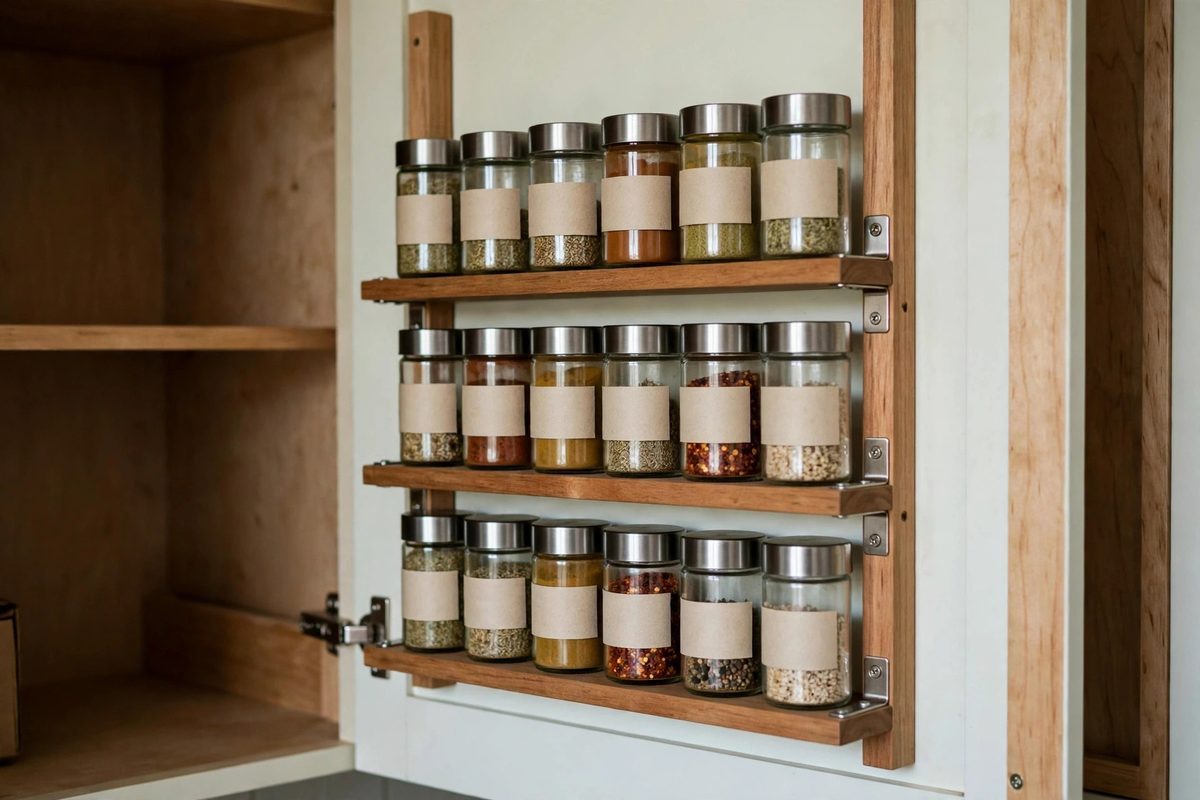
A rack on the inside of a cabinet door turns wasted door space into storage for 12 to 20 spice jars, without using a single inch of shelf space. Wire racks cost 15 to 30 dollars, install with two screws, and work in rentals if you use the existing hinge screws or removable mounts.
Measure first: the rack plus jars must clear the cabinet shelf when the door closes. Standard spice jars are about 4 inches tall, so a door rack needs at least 4.5 inches of clearance from the door to the nearest shelf edge. If your cabinet has a center stile or a pull out shelf, the door rack may not fit.
How to make it work
Mount the rack at eye level on the door, not at the bottom where jars are hard to reach. Use matching jars so they sit evenly in the rack and labels face outward. Keep the heaviest jars, such as large salt and pepper grinders, on a shelf instead, since door racks are not built for heavy loads.
2. The Tiered Cabinet Shelf Insert
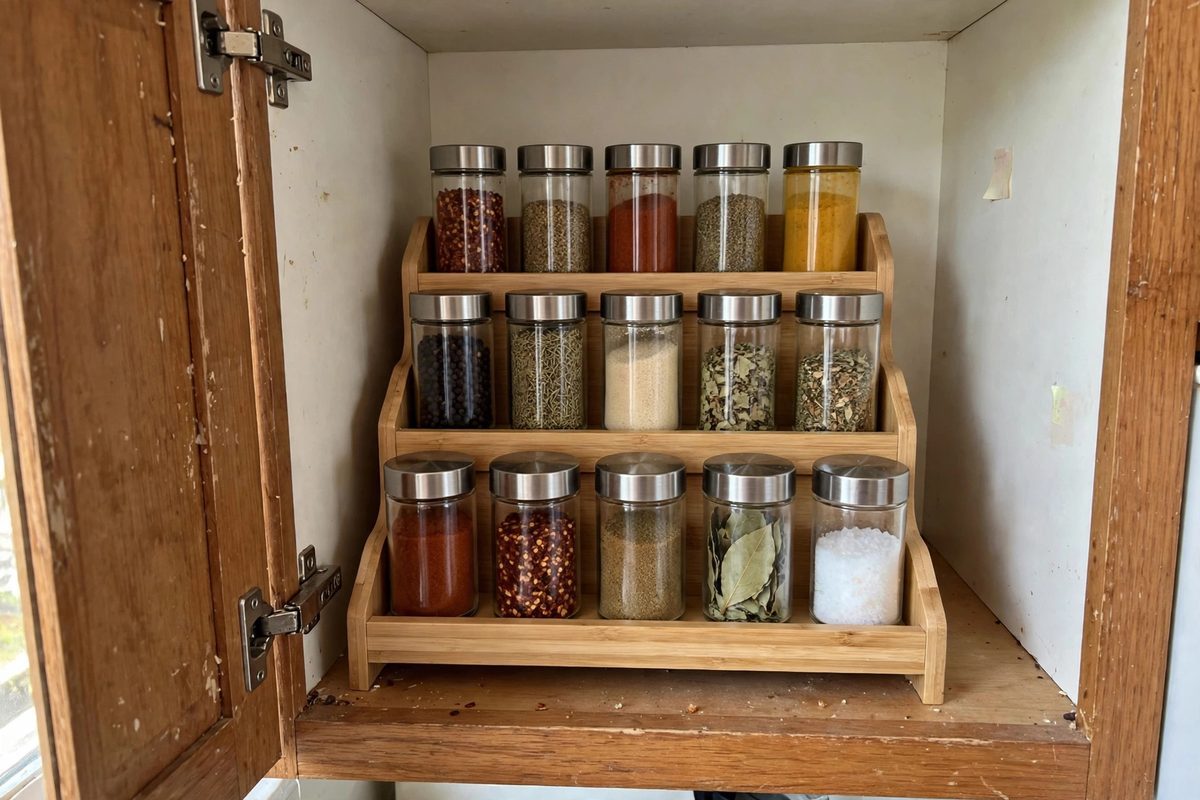
A tiered insert, like stadium seating for spices, raises the back rows so every label is visible from the front of the cabinet. A 10 inch wide insert holds 12 to 18 jars in three rows, costs 12 to 25 dollars, and needs no installation at all.
Tiered inserts work best in a cabinet that is at least 10 inches deep and 12 inches wide. In a shallower cabinet, the back row will be hard to reach and the insert may slide when you pull a jar. Look for a non slip base or add a small strip of shelf liner underneath.
How to make it work
Sort spices by use, not alphabetically, if you cook by cuisine: everyday spices in front, baking spices in the middle, rarely used spices at the back. Keep the insert in one dedicated cabinet, not spread across two, so you always know where to look. Label jar lids as well as fronts, since you often see lids first from above.
3. The Shallow Drawer Insert
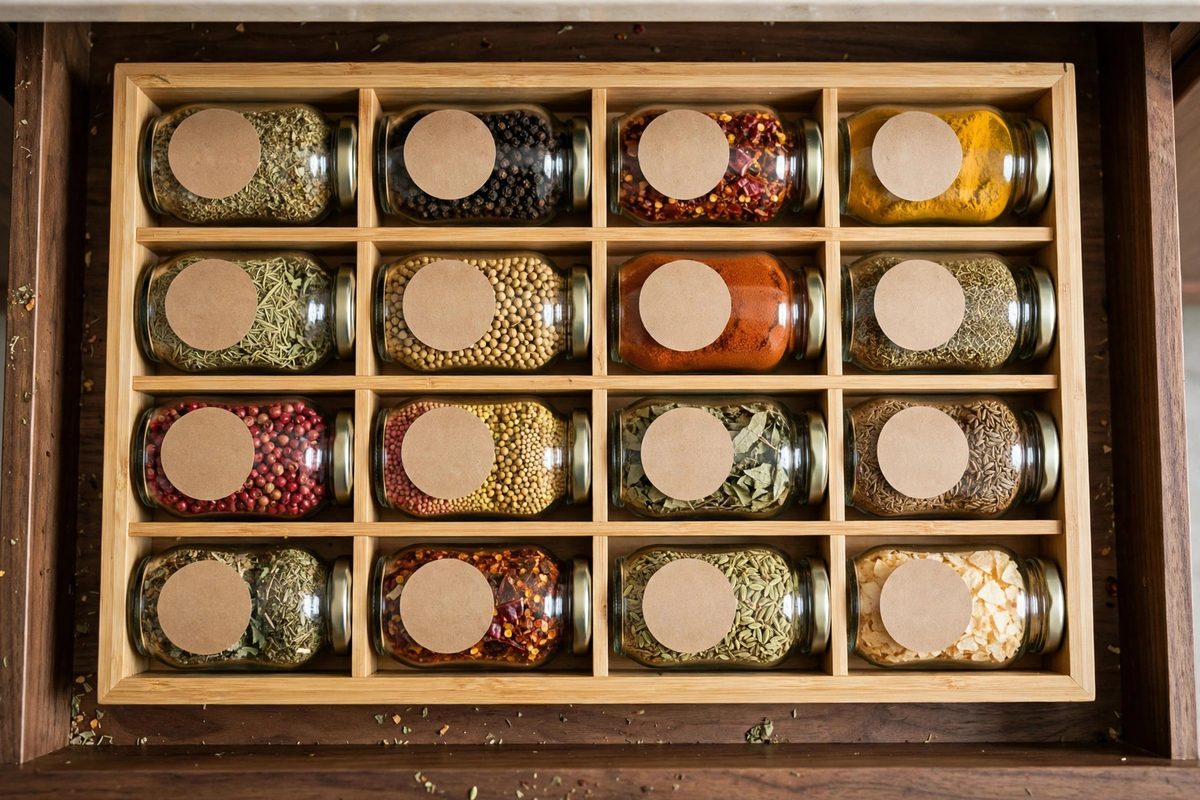
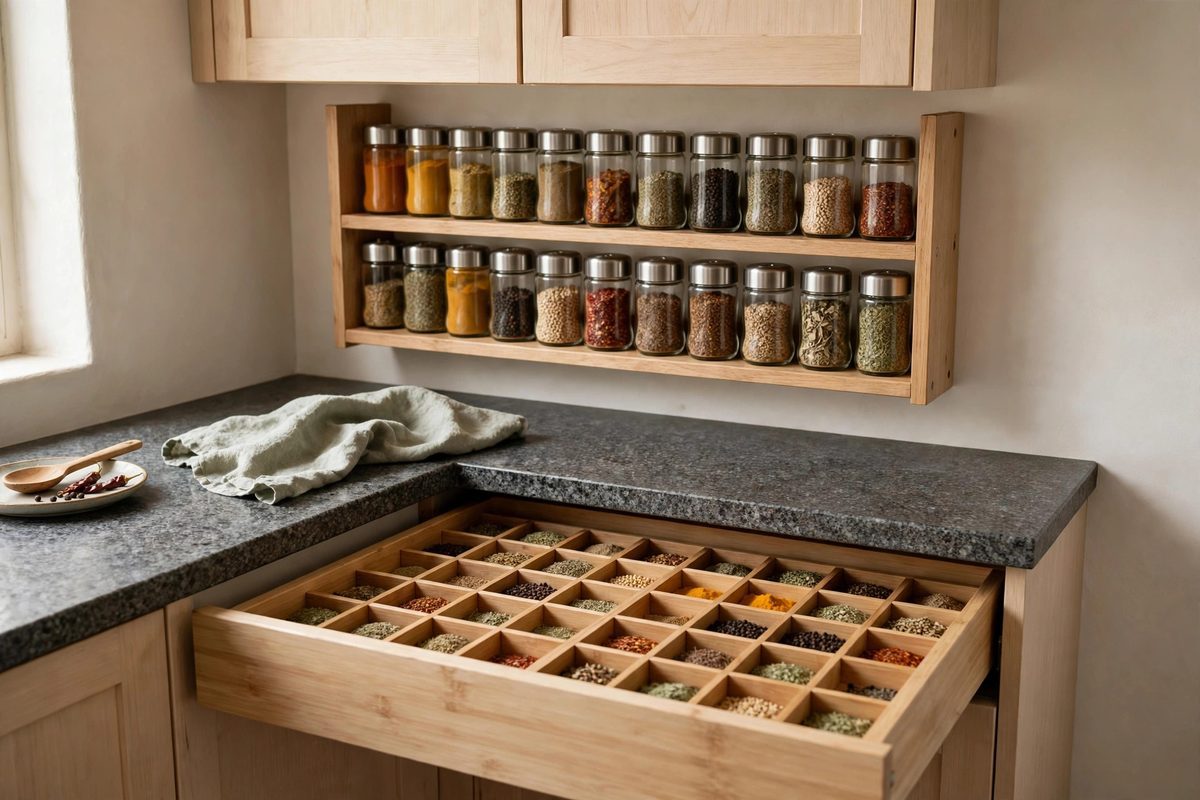
A shallow drawer near the stove is ideal spice storage, because jars lie flat with labels facing up and you can see the whole collection at a glance. Drawer inserts cost 15 to 35 dollars and fit drawers 4 inches deep or more, which covers most standard kitchen drawers.
The tradeoff is drawer real estate: a spice drawer cannot also hold utensils or towels. If you have only two or three drawers total, a drawer system may cost more space than it saves. In that case, a door rack or wall rail is a better choice.
How to make it work
Use jars of the same size and shape so they lie evenly and do not roll. Label lids clearly, since lids are what you see. Keep the drawer within two steps of the stove, not across the kitchen, or you will stop using it. Wipe the insert monthly, since spice dust and oil settle in drawers near the stove.
4. The Wall Rail With Magnetic Jars
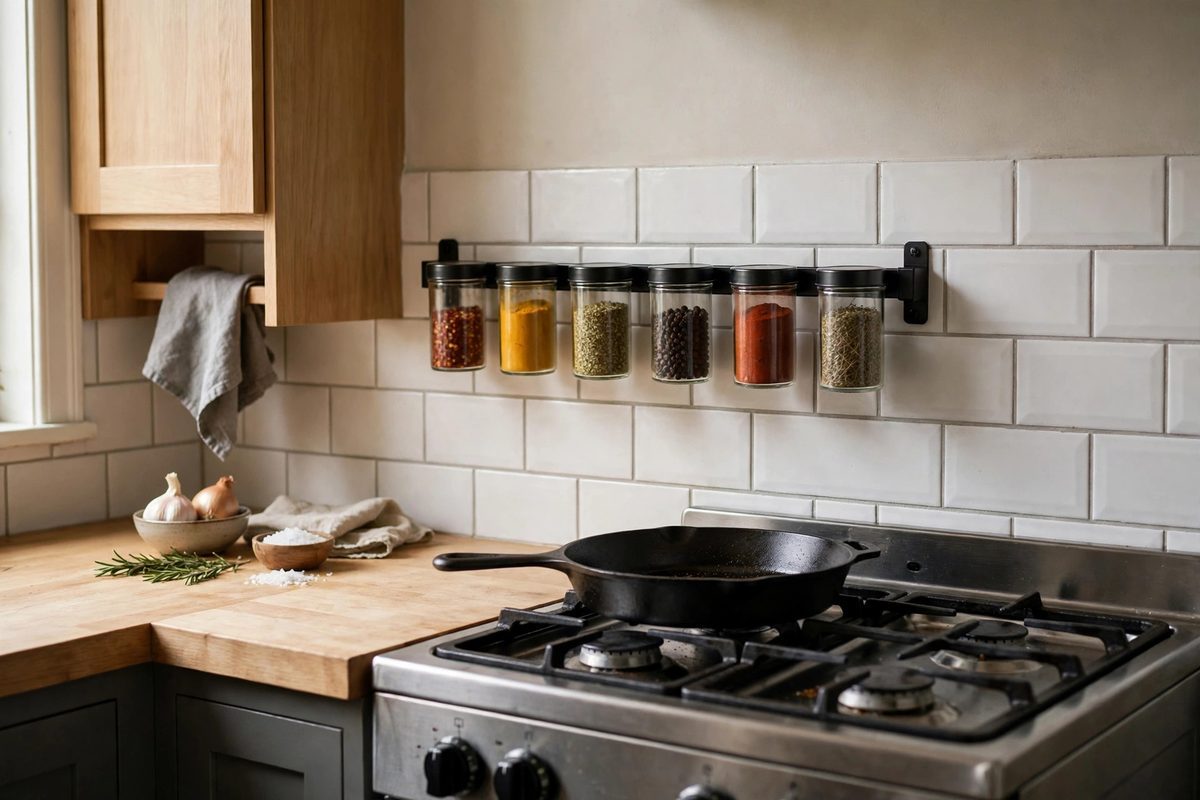
A magnetic rail on the wall, with small metal jars that stick to it, turns spices into wall decor and frees an entire cabinet or drawer. A 16 inch rail holds 8 to 12 jars, costs 20 to 40 dollars with jars included, and installs with two screws into a stud or wall anchors.
Magnetic jars are small, usually 2 to 3 ounces, so they suit households that cook with spices regularly and refill often, not bulk buyers. The jars must be truly airtight, or spices will go stale faster on a wall than in a dark cabinet, especially near a stove or a sunny window.
How to make it work
Mount the rail away from direct heat and sunlight, ideally on a side wall rather than directly above the stove. Label jar bottoms or sides, whichever faces you when cooking. Buy one extra set of jars so you can refill and swap without washing and drying a jar mid recipe.
5. The Pull Out Cabinet Organizer
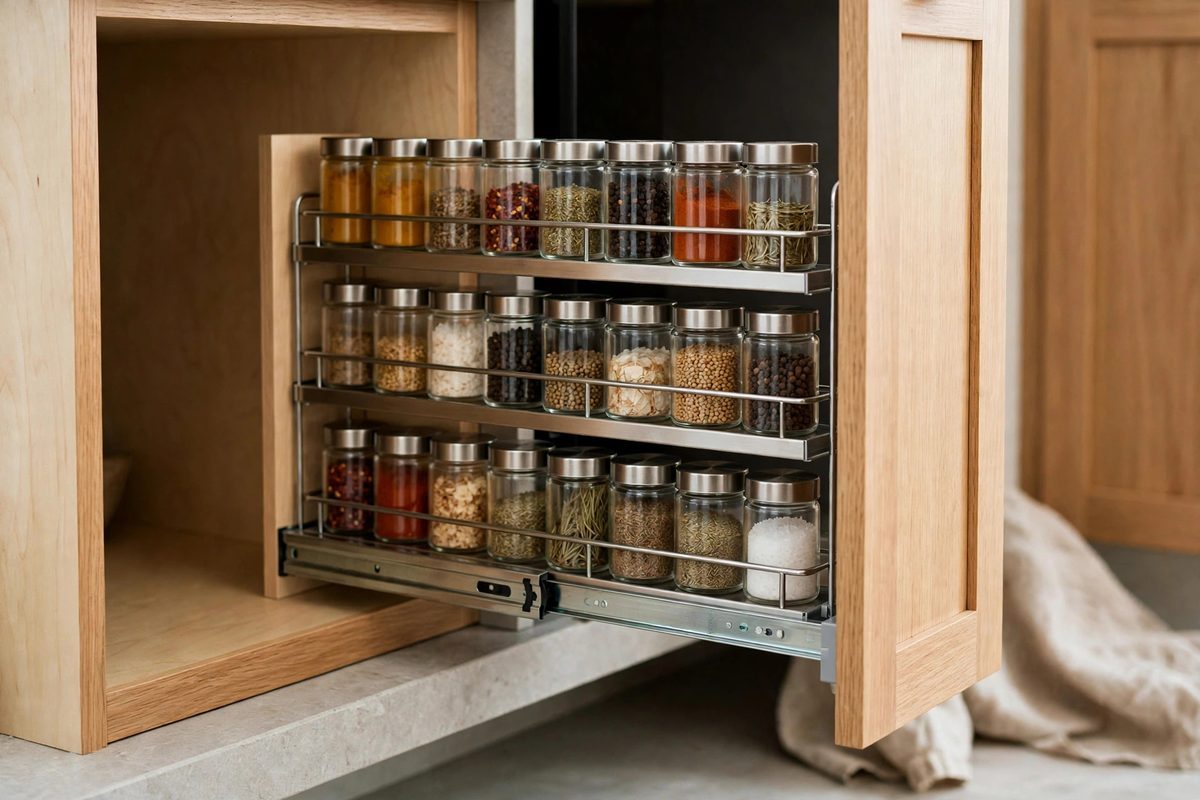
A pull out organizer on rails brings the back of a deep cabinet to you, so no jar gets lost behind another. Narrow pull outs, 6 to 9 inches wide, fit beside the stove or the fridge, and wider versions, 12 inches, work in a base cabinet.
Pull outs cost more than inserts, 40 to 90 dollars, and they need a cabinet at least 20 inches deep to be worth it. In a shallow cabinet, a tiered insert does the same job for less money. Check the weight rating: a full pull out of glass jars can weigh 15 to 20 pounds.
How to make it work
Install the pull out at counter height or just below, so you are not bending to the floor for daily spices. Group jars by frequency, not size, and leave one slot empty so you can pull a jar out without knocking its neighbors. Clean the rails twice a year, since cooking grease builds up on sliding hardware near the stove.
6. The Lazy Susan Turntable
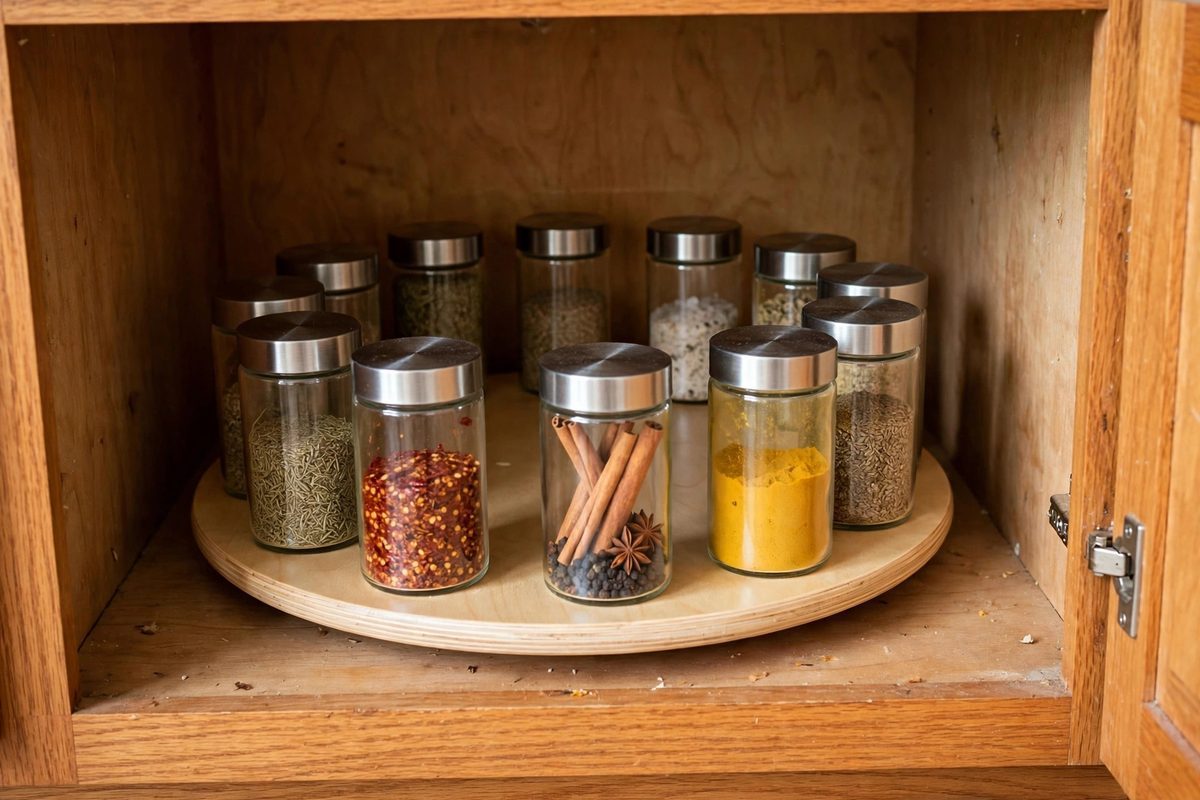
A turntable, or lazy Susan, inside a cabinet or on a counter lets you spin to the spice you need instead of reaching past five jars. A 10 inch turntable holds 10 to 14 jars, costs 10 to 20 dollars, and works in corner cabinets where reach is otherwise impossible.
Turntables have one weakness: tall jars on a spinning base can tip if you spin too fast, and small jars slide to the center where they are hard to grab. Choose a turntable with a raised edge or small bins to keep jars in place. Two tier turntables double capacity but make the top tier hard to reach in a low cabinet.
How to make it work
Place the turntable in a cabinet you can open fully, not one blocked by a door swing or a trash bin. Put everyday spices on the outer edge and backups in the center. Spin slowly and stop with the label facing you; a turntable only saves time if you can read labels without picking jars up.
7. The Fridge Side Magnetic Rack
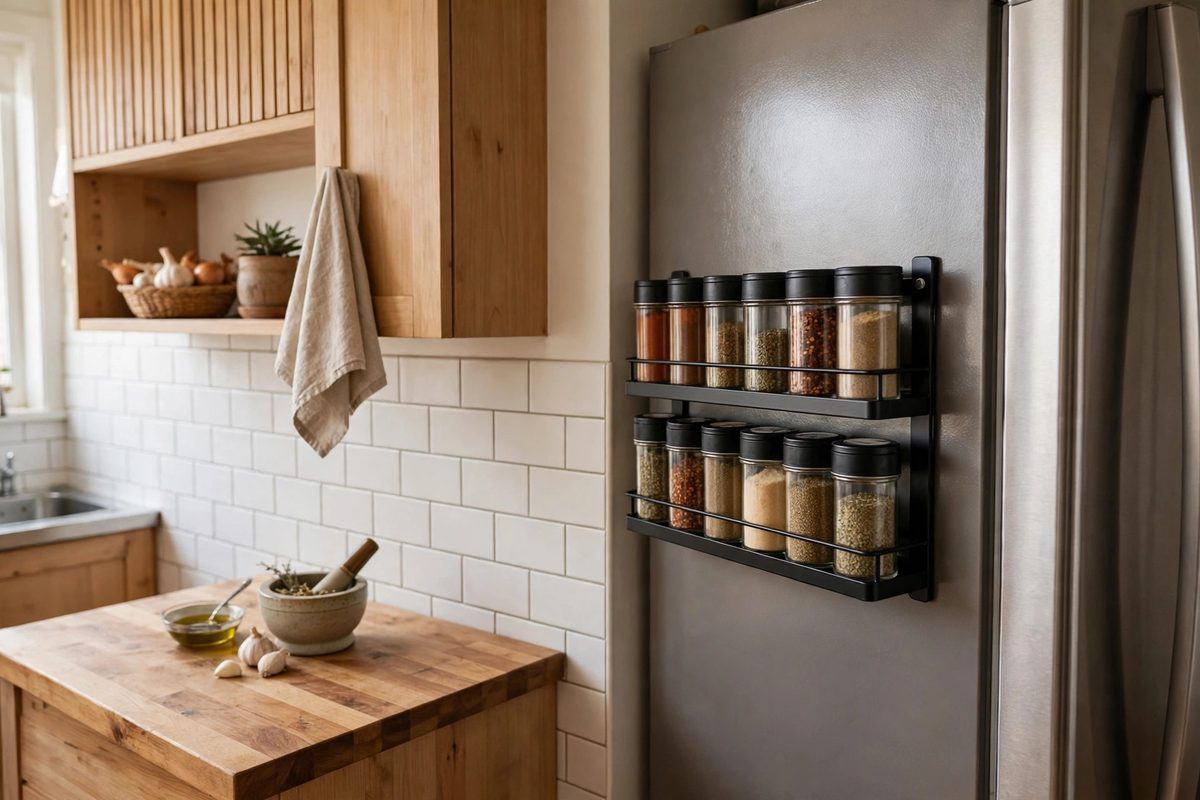
The side of the fridge is free wall space in most small kitchens, and a magnetic rack that sticks to it needs no screws, no drilling, and no landlord approval. A two shelf magnetic rack holds 12 to 18 jars, costs 15 to 30 dollars, and moves with you when you move out.
Check your fridge first: stainless steel that is not magnetic will not hold a magnetic rack, and a fridge side that faces a walkway will get bumped constantly. The rack also needs clearance: jars plus rack stick out about 4 inches, so a fridge side in a narrow passage may block traffic.
How to make it work
Test a fridge magnet on the side panel before ordering. Place the rack on the side away from the main walkway, and keep the most used spices at eye level. Use lightweight plastic or small glass jars, not heavy ceramic, so the magnets hold firmly. Wipe the fridge side monthly, since kitchen grease reduces magnetic grip over time.
8. The Uniform Jar and Label System
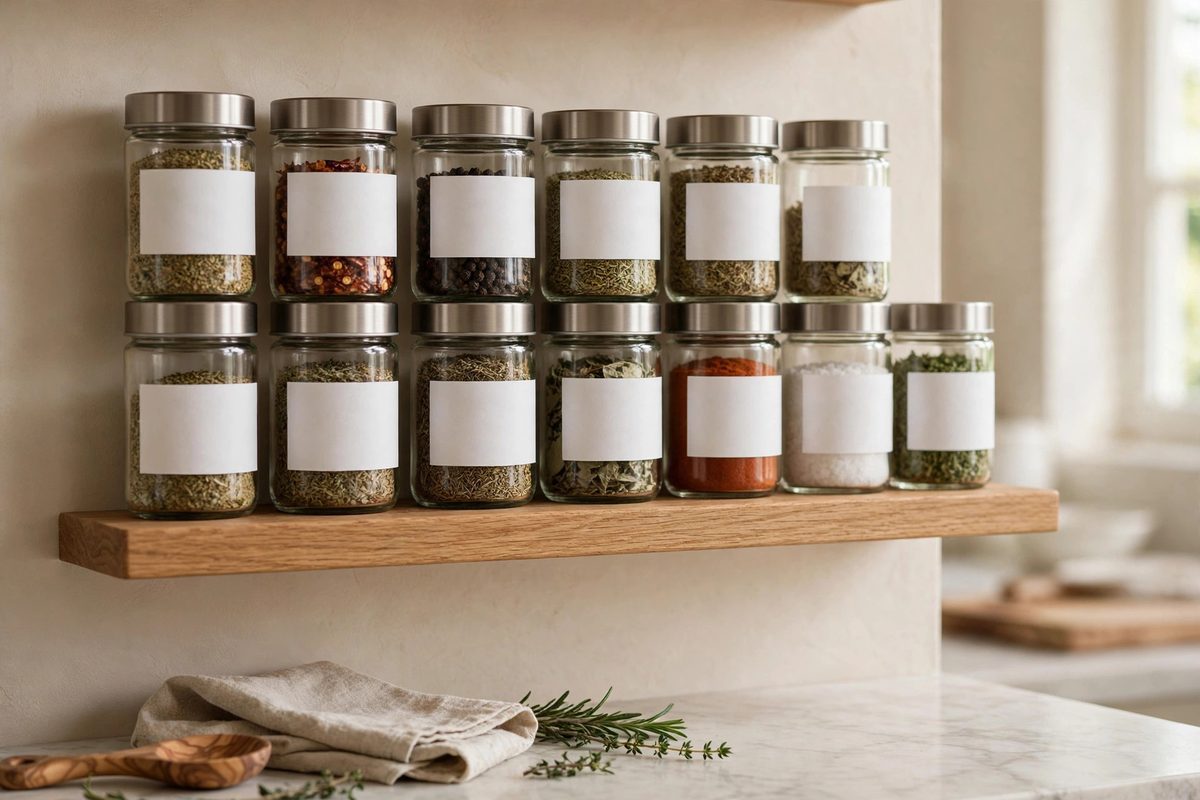
Sometimes the system is not the rack, it is the jars. Uniform jars, same size, same lid, same label style, make any storage method work better, because jars stack evenly, labels are easy to read, and you can tell at a glance when a spice is running low.
A set of 24 uniform glass jars with labels costs 25 to 45 dollars. Transfer spices gradually, not all at once, starting with the spices you use weekly. Keep original packaging for spices you rarely use, since transferring a spice you use twice a year wastes jars and time.
How to make it work
Choose jar size by use: 2 ounce jars for rarely used spices, 4 ounce for everyday spices like cumin and paprika. Label with the spice name and the purchase date, since ground spices lose flavor after 6 to 12 months. Store jars away from heat and light regardless of the rack you choose, since light degrades spices even in glass.
9. The Over Door Pantry Rack
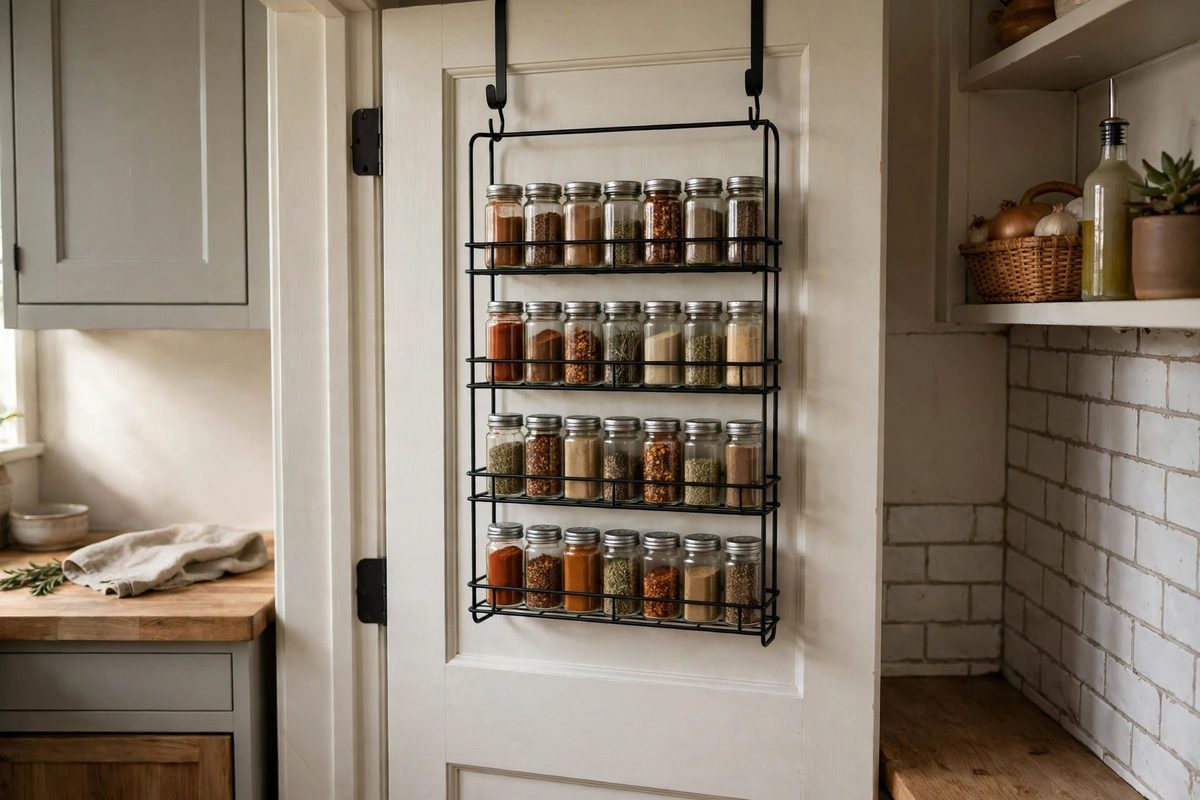
An over door rack hangs over a pantry or kitchen door and holds 30 to 50 jars across multiple tiers, which is the highest capacity option here. It costs 20 to 35 dollars, needs no tools, and suits households with a large spice collection or a shared kitchen where one cabinet is not enough.
The downside is door swing: a loaded over door rack adds 10 to 15 pounds to a door, which can strain hinges over time, and it blocks the door from opening fully against a wall. It also looks busy, since 40 jars on a door are always visible. If your kitchen door is hollow core, check the weight rating before loading it fully.
How to make it work
Hang the rack on a solid door or a pantry door with sturdy hinges, not a hollow bathroom door. Distribute weight evenly across tiers, heaviest at the bottom. Keep the door’s swing path clear of furniture so the rack does not hit a wall or an appliance. If the rack rattles when the door closes, add small felt pads behind each tier.
10. The Single Shelf Spice Station
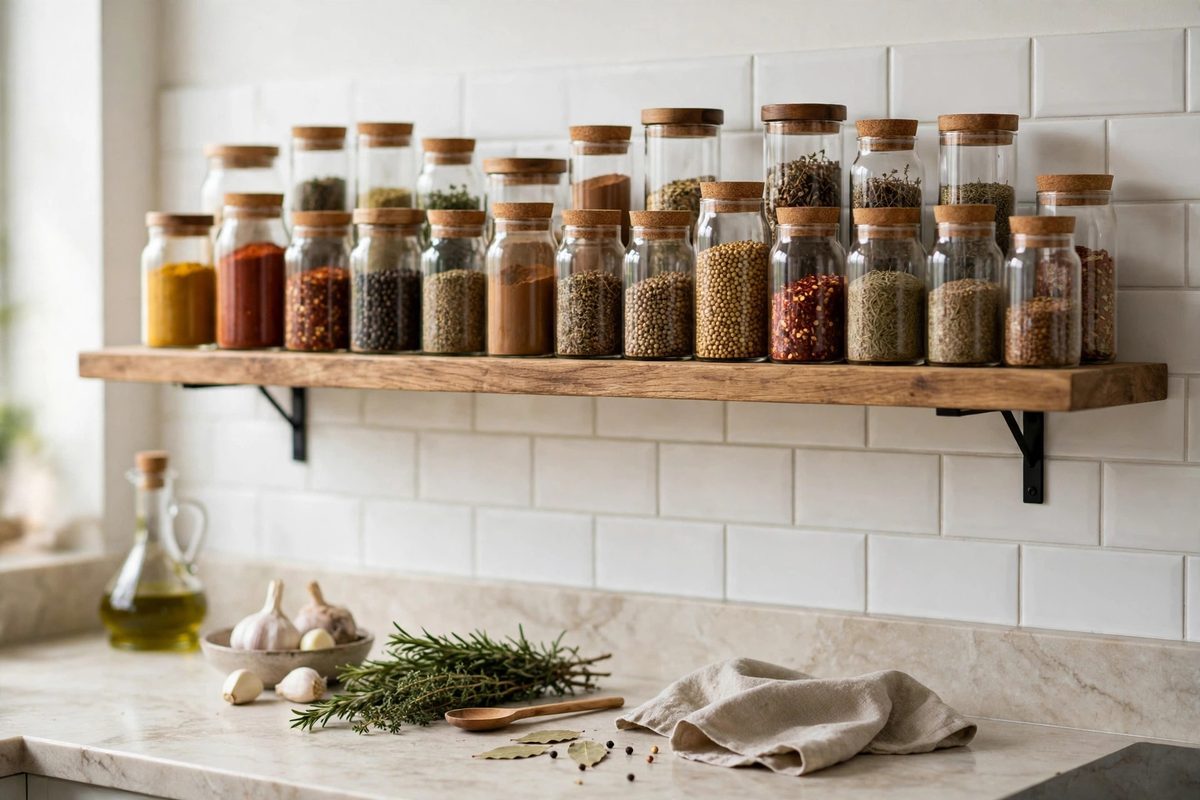
A single open shelf above the counter, dedicated only to spices, is the simplest system of all: one shelf, 24 to 36 inches long, holding 15 to 25 jars in a single row. It costs 20 to 40 dollars for the shelf and brackets, and it keeps spices visible and within arm’s reach while cooking.
Open shelves expose spices to light, heat, and kitchen grease, so this system only works if the shelf is away from the stove and out of direct sunlight. Use amber or opaque jars if light is an issue, or accept that you will replace spices slightly more often, every 6 months for ground spices instead of 12.
How to make it work
Mount the shelf at eye level, about 18 inches above the counter, so labels are easy to read without a step stool. Keep jars in a single row, never two deep, or the back row becomes invisible. Reserve the shelf for spices only: once cutting boards or mugs creep in, the system breaks down.
Pick one system, not three. A cabinet door rack plus a drawer insert plus a wall rail sounds thorough, but it spreads spices across the kitchen and you will forget where things live. Choose the spot closest to your stove, move every spice there, label the lids, and toss anything older than a year. Cooking gets faster the week you do it.