9 Narrow Hallway Storage Ideas That Barely Use Any Floor Space
Nine narrow hallway storage ideas that use walls, doors, and vertical space, from slim consoles to over door racks that keep halls clear and walkable.
In This Guide
A narrow hallway is the most underused storage space in a small apartment, because every inch of floor feels needed for walking. The result is usually a dumping ground: shoes by the door, bags on a chair, mail on a console that is too deep, and a hallway that feels tighter every month.
The rule for narrow halls is simple: if it uses floor space, it must earn it twice over. Wall storage, door storage, and vertical storage beat floor furniture almost every time. A hallway that is 36 to 42 inches wide needs at least 30 inches of clear walkway, which leaves only 6 to 12 inches for storage depth.
These nine ideas keep that walkway clear while adding real storage for shoes, coats, keys, and everyday gear. They build on the same logic as these pink Christmas tree ideas for seasonal overflow, and these small bathroom shower door ideas for tight spaces that still need to function daily. For mirrors that widen a hall visually, see these narrow hallway mirror ideas.
1. The Slim Wall Shelf Run
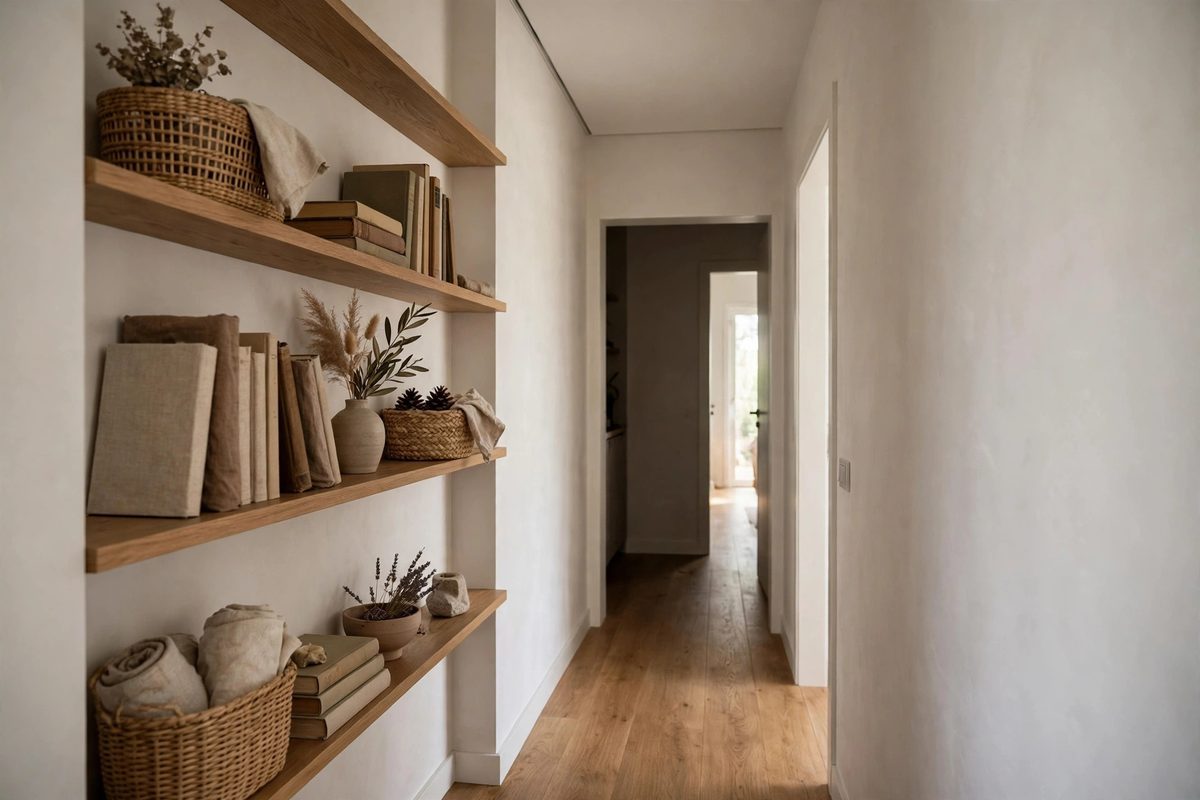
A run of slim shelves, 6 to 8 inches deep, mounted at 60 to 72 inches high, adds storage above head height where it never interferes with walking. Two or three shelves along a 6 foot hall hold books, baskets, and decor boxes, roughly the volume of a small bookcase, with zero floor footprint.
Mount shelves into studs, since a loaded shelf run can weigh 40 pounds or more. If studs do not line up with your shelf length, use heavy duty wall anchors rated for 50 pounds per bracket. Keep shelf items light and stable: books and baskets, not heavy ceramic vases that could fall into the walkway.
How to make it work
Space shelves 12 to 14 inches apart vertically so baskets fit comfortably. Use matching baskets or boxes so the run looks intentional rather than cluttered. Keep the bottom shelf at least 66 inches high if the hall is under 40 inches wide, so tall people do not duck or bump items.
2. The Peg Rail for Coats and Bags
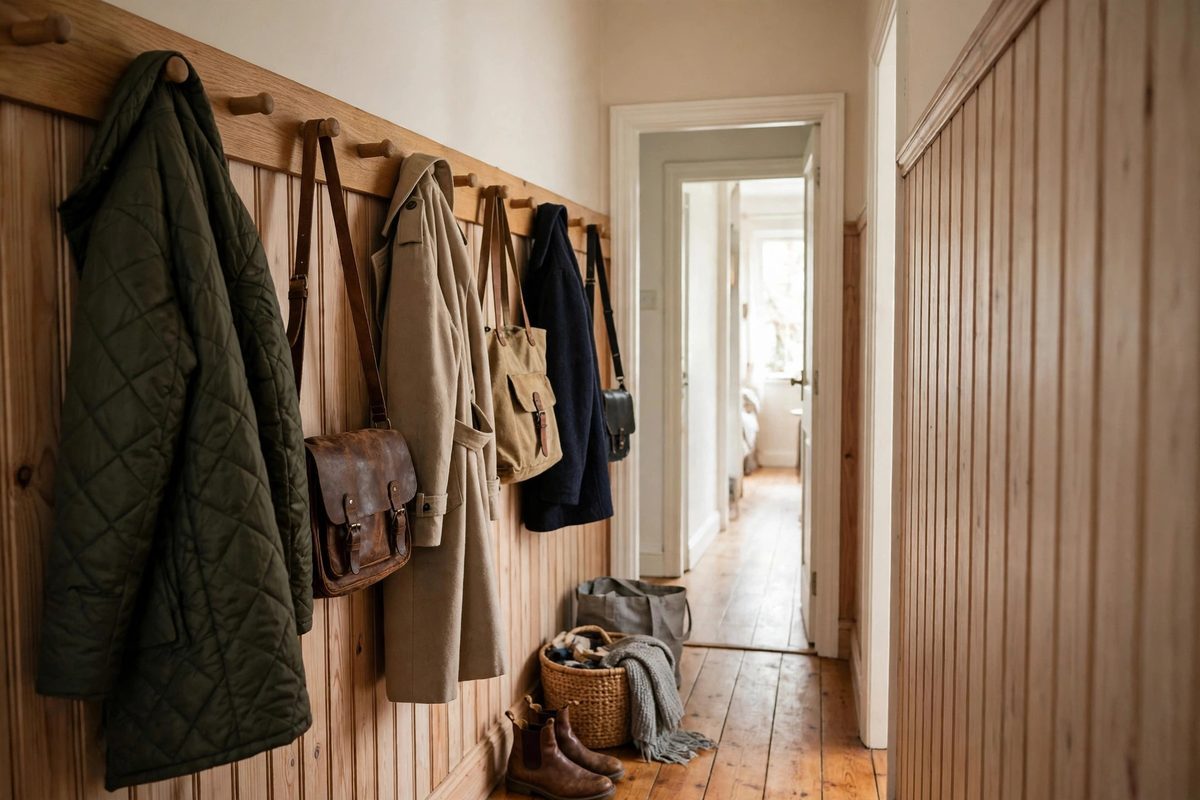
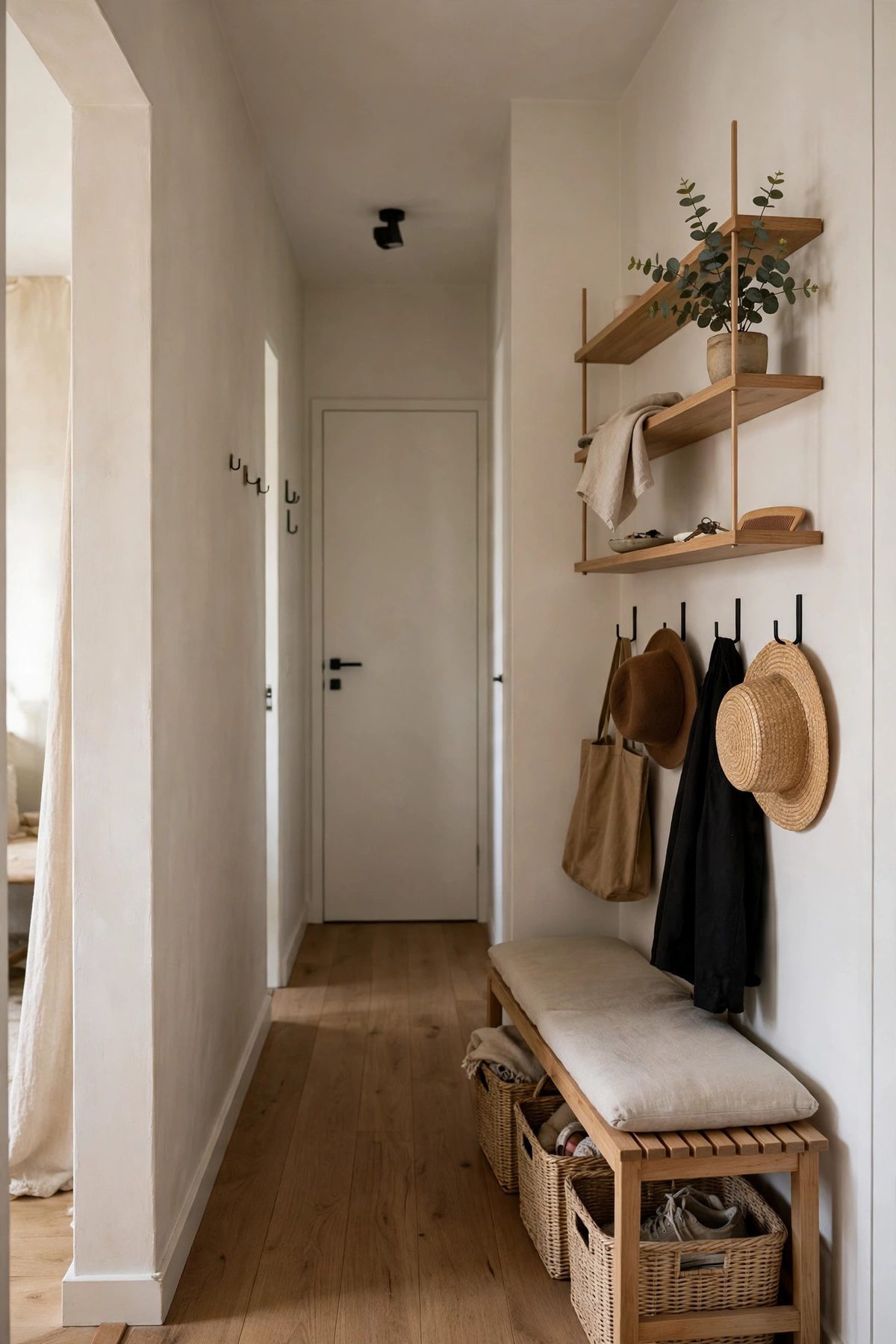
A peg rail, a board with 4 to 6 sturdy pegs, holds coats, bags, hats, and dog leashes on the wall at about 66 inches high, using only 3 inches of depth. It costs 20 to 40 dollars, installs with two screws, and replaces a coat stand that would eat 2 square feet of floor.
Peg rails work best when each person gets one peg, not when six coats share three pegs and slide off. If you have more than four regular coat wearers, install two rails at different heights: adults at 66 inches, children at 48 inches.
How to make it work
Mount the rail into studs, since a rail full of winter coats can weigh 30 pounds. Space pegs 6 to 8 inches apart so coats do not bunch. Assign one peg per person and one peg for guests, and rotate seasonal coats to a closet in spring so the rail does not stay overloaded year round.
3. The Over Door Shoe Organizer
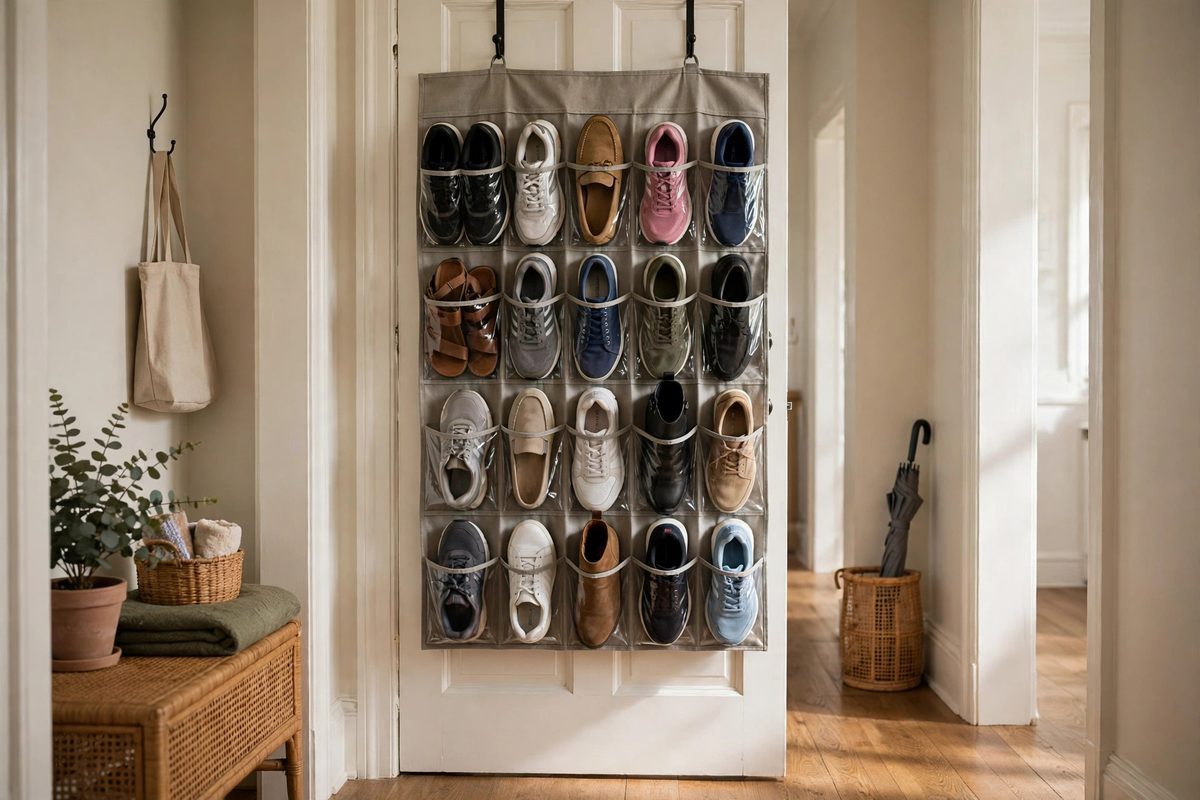
An over door pocket organizer on a hallway closet or bedroom door holds 12 to 24 pairs of shoes, plus small items like gloves, scarves, and dog supplies, in pockets that are only 4 inches deep. It costs 12 to 25 dollars and needs no tools.
The catch is door weight and swing: a full organizer adds 15 to 20 pounds to a door, and it prevents the door from opening flat against a wall. Use it on a door that opens into a room, not a door that must open fully into the hall, and check that pockets do not catch on the door frame.
How to make it work
Hang the organizer on the inside of a closet door if possible, so shoes are hidden when the door is closed. Sort shoes by person, one row per person, so everyone knows where their shoes live. Keep muddy or wet shoes on a tray by the door instead, since pocket organizers are hard to clean.
4. The Slim Bench With Hidden Storage
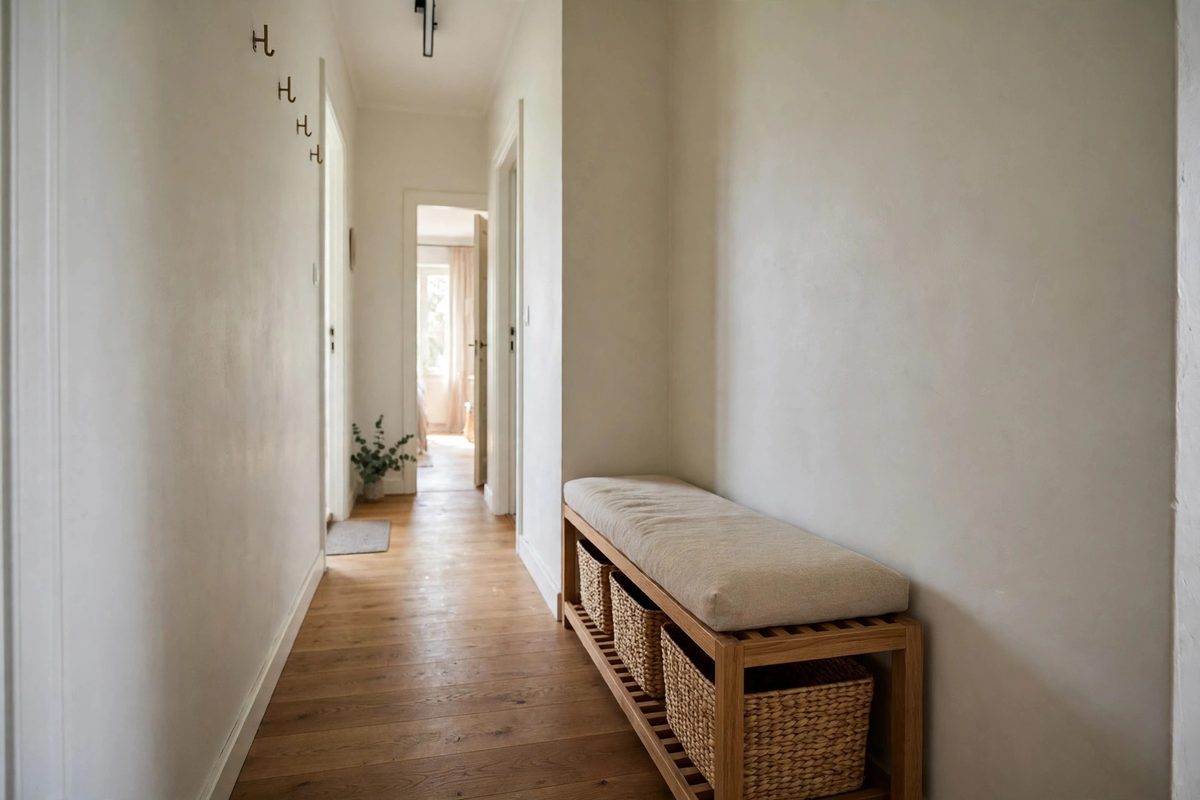
A bench that is 12 inches deep and 36 to 48 inches long gives you a seat for putting on shoes and hidden storage underneath, in a footprint that still leaves a 30 inch walkway in a 42 inch hall. Baskets underneath hold shoes, bags, and sports gear, while the top holds a cushion and a small tray.
This is one of the few floor pieces worth the space in a narrow hall, because it serves two functions and its depth is minimal. Avoid benches deeper than 14 inches: they look generous in a store and eat a walkway at home. A bench with legs, rather than a solid base, also lets light and air pass underneath, which keeps the hall feeling open.
How to make it work
Place the bench against the wall opposite the door swing, so it never blocks a door. Use two baskets that fit exactly, with no gaps, for a tidy look. Keep the bench top mostly clear: a cushion plus one small tray for keys is enough. Anything more becomes a dumping ground.
5. The Picture Ledge as a Display Shelf
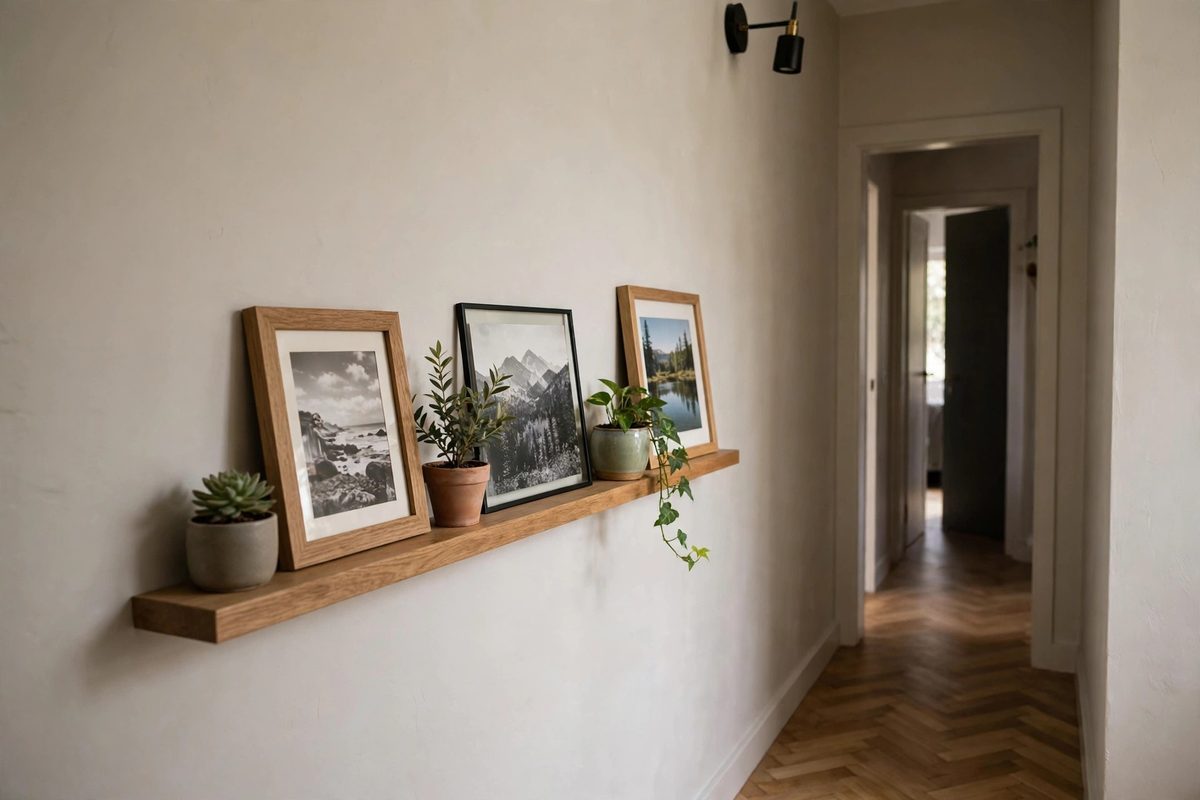
A picture ledge, 3 to 4 inches deep, holds framed photos, small plants, and art leaning against the wall, using almost no depth at all. It is ideal for halls too narrow for any other shelf, since 4 inches of depth leaves a full walkway even in a 36 inch hall.
Picture ledges hold less than shelves, but they solve a different problem: bare hallway walls that feel like a tunnel. A ledge with 5 to 7 frames along a 6 foot hall turns a passage into a gallery, and you can swap photos seasonally without new holes.
How to make it work
Mount the ledge at eye level, 57 to 60 inches from the floor to the center of the display. Lean frames against the wall, overlapping slightly, rather than hanging each one, so you can rearrange without tools. Keep items on the ledge light and stable, and avoid tall vases that could tip into the walkway.
6. The Door Mounted Key and Mail Station
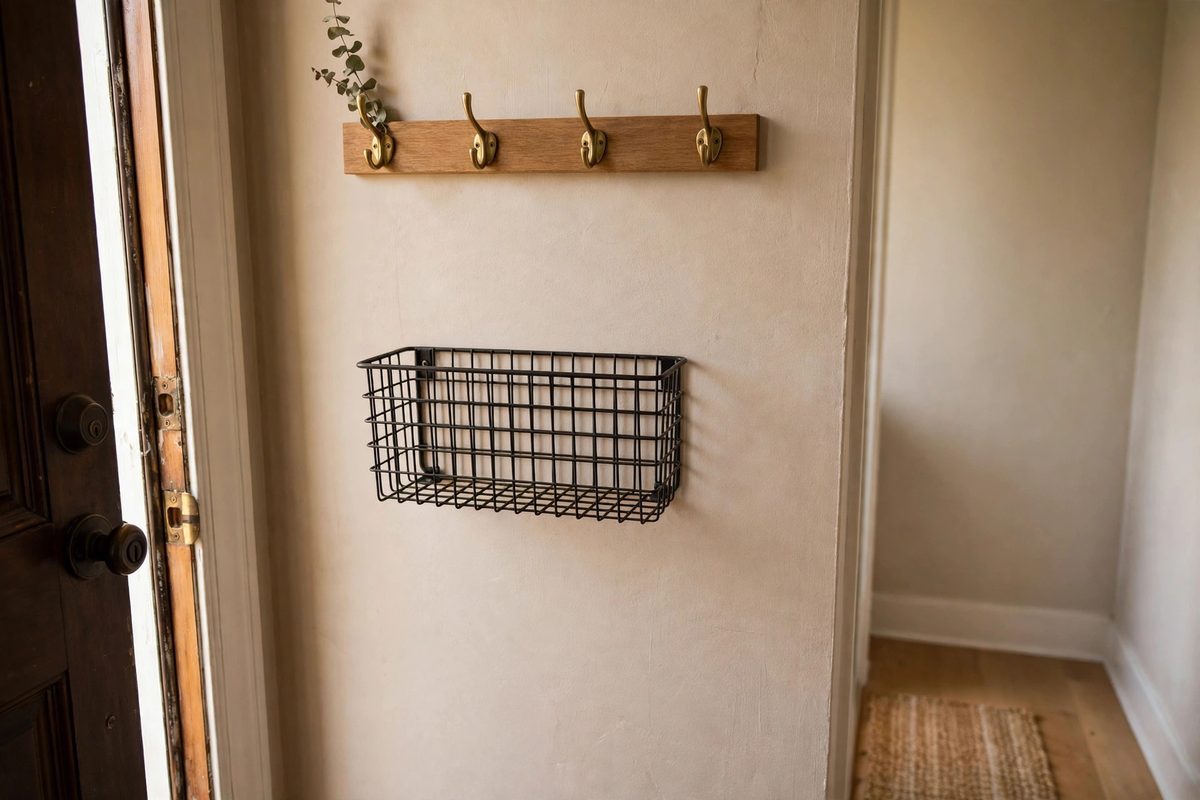
A small key hook rail plus a mail sorter, mounted on the wall or the back of the front door, stops keys and mail from migrating to every surface in the apartment. The whole station is about 12 inches wide and 2 inches deep, and it costs under 20 dollars.
The station only works if it is the single drop zone. If keys also live in a bowl, on a console, and in a jacket pocket, the station becomes decoration. Pick one spot, mount it at hand height near the door, and commit to using it for two weeks until it becomes habit.
How to make it work
Mount hooks at 60 inches high, within arm’s reach of the door handle, so you can hang keys without thinking. Add a small shelf or pocket below for mail, and sort mail weekly: keep, file, or recycle, never pile. Label one hook per person if you share the apartment, so keys do not get mixed up.
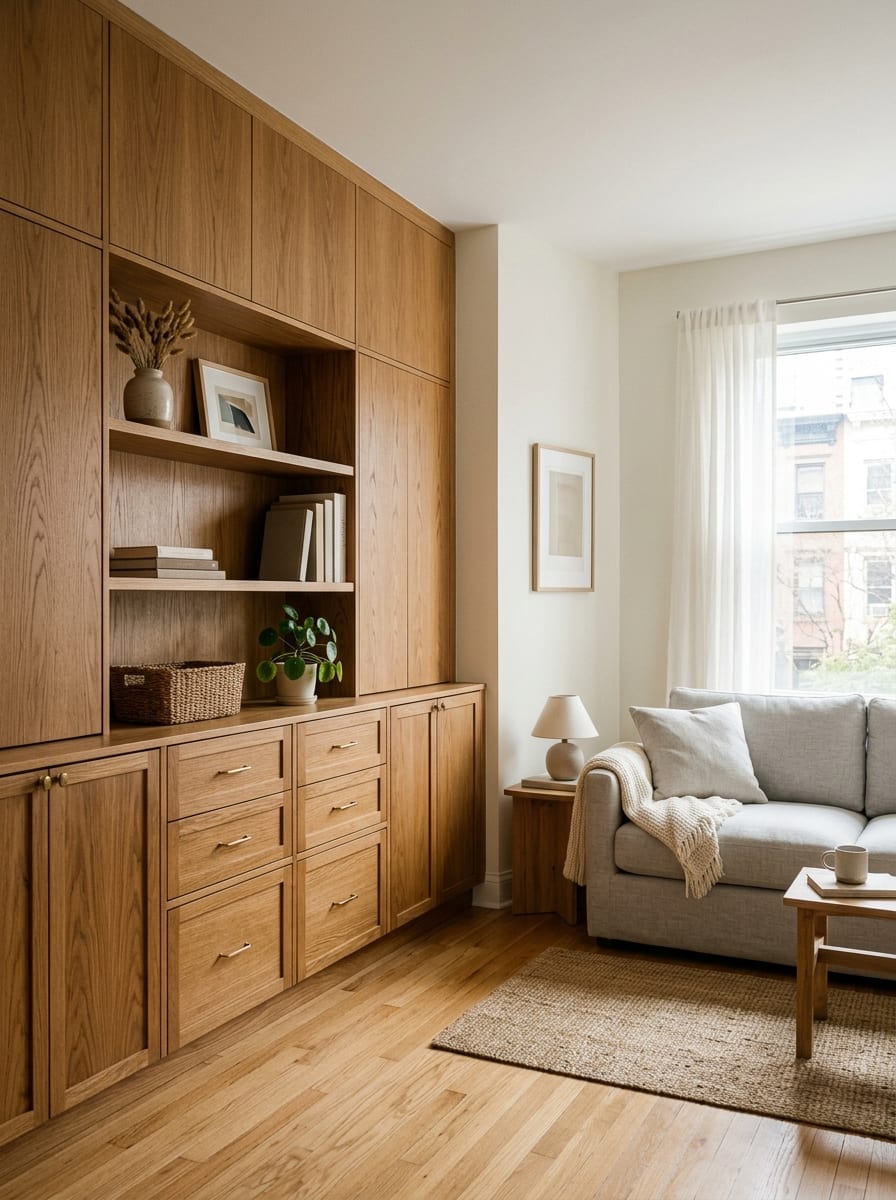
7. The Tall Narrow Cabinet
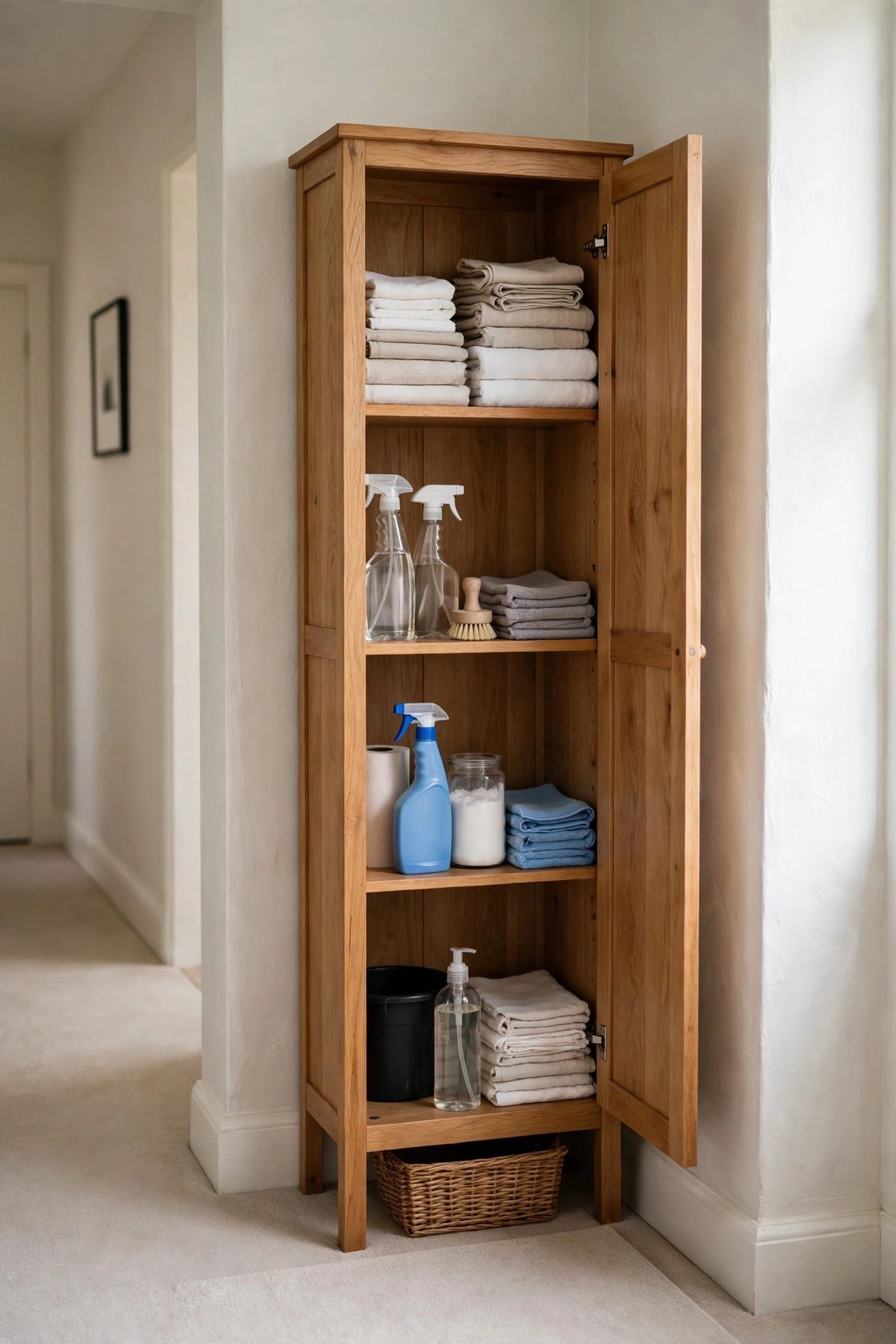
A tall cabinet that is 12 to 14 inches deep and 16 to 20 inches wide fits into a hallway corner or an alcove and holds cleaning supplies, linens, or shoes in vertical space that would otherwise be empty. At 60 to 72 inches tall, it holds roughly the volume of a small closet.
Tall narrow cabinets must be anchored to the wall, since they are top heavy and can tip if a child climbs or someone bumps them in a narrow hall. Anchor into a stud with a furniture strap, not just a wall anchor. Keep heavy items at the bottom and light items at the top for stability.
How to make it work
Place the cabinet in a corner or at the end of the hall, not mid hall where it narrows the walkway. Use the top shelf for items you need monthly, not daily, since reaching high in a narrow hall is awkward. Keep the cabinet door closed to maintain a clean line; an open tall cabinet makes a hall feel like a storage room.
8. The Under Stair or Alcove Nook
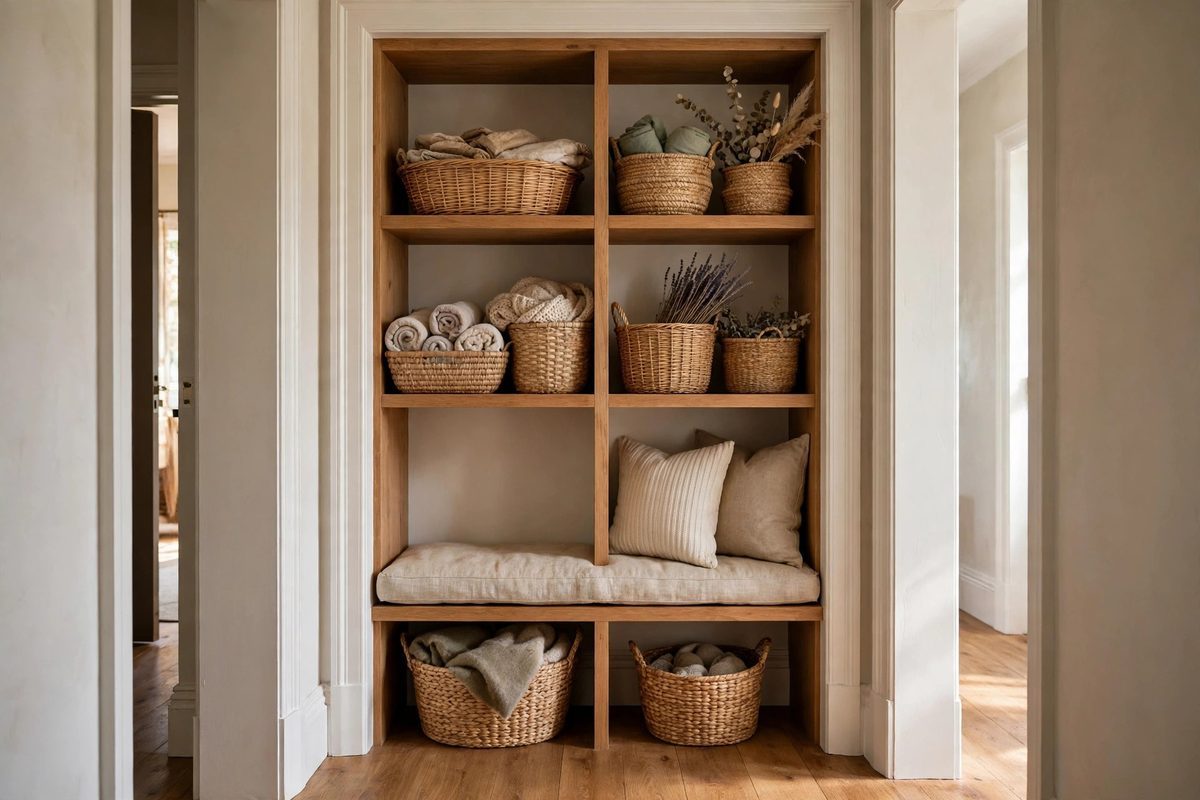
If your hall has an alcove, a recessed niche, or space under a stair, that dead space can become built in storage with two shelves and a basket or two. Alcoves are often 12 to 18 inches deep, which is perfect for books, shoes, or cleaning supplies, and they do not narrow the walkway at all.
Measure the alcove before buying anything: many alcoves are not standard widths, and a shelf that is 1 inch too wide will not fit. Custom cut shelves from a hardware store cost 20 to 40 dollars and fit exactly, which beats forcing a prefab unit into an odd space.
How to make it work
Add a shelf at counter height for daily items and a shelf near the top for backups. Use baskets that fit the alcove width exactly, so there are no gaps for clutter to collect. If the alcove is deep, add a pull out basket so items at the back stay reachable.
9. The Vertical Shoe Tower by the Door
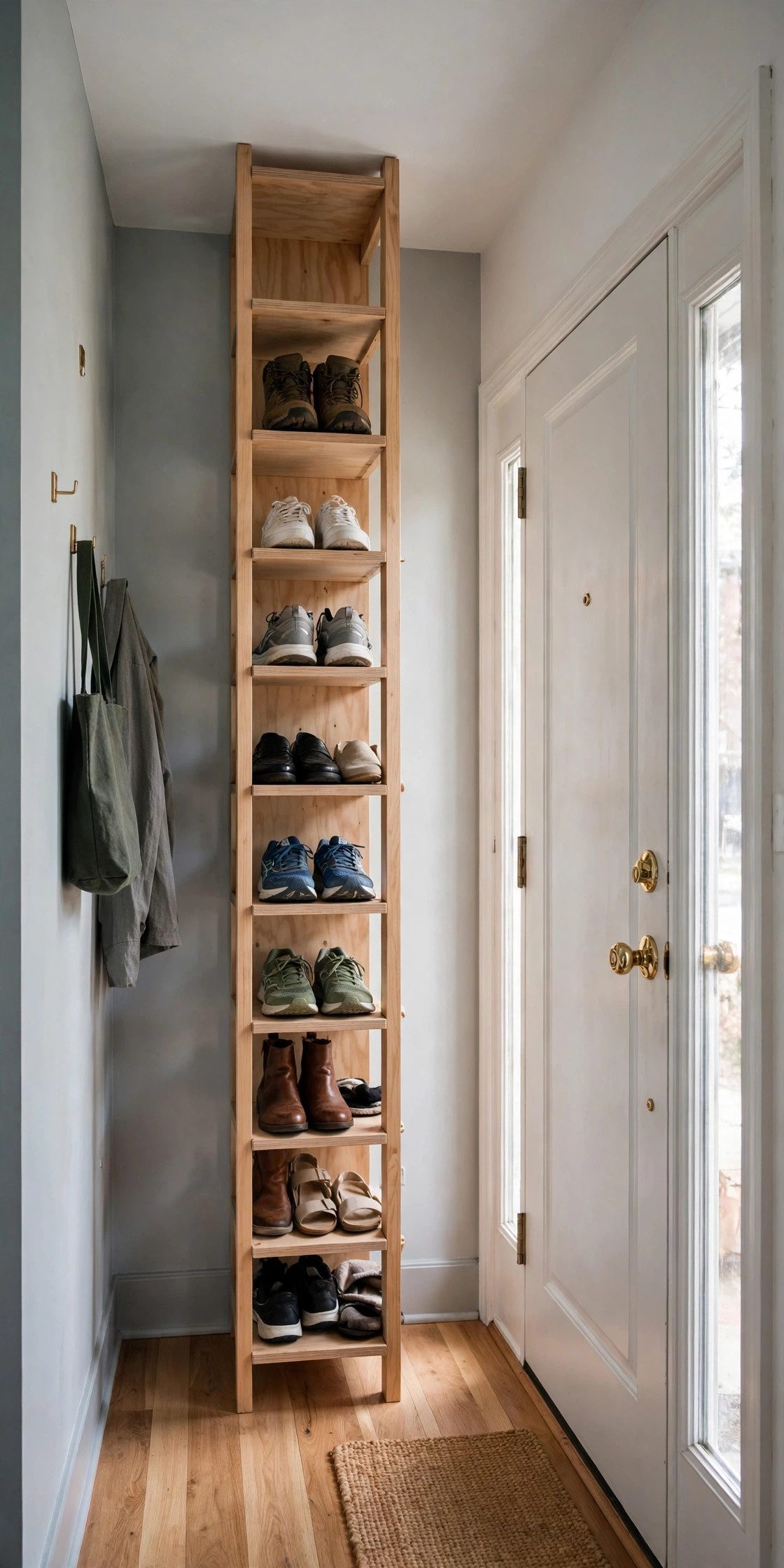
A vertical shoe tower, 12 inches wide and 36 to 48 inches tall with 6 to 8 tiers, holds 12 to 16 pairs of shoes in a footprint smaller than a doormat. It fits beside the front door, in a hall corner, or inside a closet, and it keeps shoes off the floor where they trip people in a narrow hall.
Shoe towers work best for flat shoes, sneakers, and sandals. Tall boots do not fit standard tiers, so keep boots in a separate bin or on a boot tray. Choose a tower with an open back so air circulates and shoes dry, especially in wet climates.
How to make it work
Place the tower within two steps of the door, so shoes come off and go straight onto the tower. Assign one tier per person, or one tier per shoe type, and keep the bottom tier for the shoes you wear daily. Wipe tiers monthly, since hallway shoe storage collects dirt fast.
A narrow hallway does not need more floor furniture, it needs smarter walls. Start with a peg rail and a key station by the door, add one slim shelf run above head height, and only then consider a bench or a tall cabinet. Keep 30 inches of walkway clear, and the hall will feel wider the moment the floor is free.