11 Small Apartment Dining Table Ideas That Save Space Without Feeling Temporary
Discover 11 small apartment dining table ideas, including round pedestal, drop-leaf, narrow and extendable tables that create a practical dining area without crowding your floor plan.
In This Guide
A small apartment does not necessarily need a tiny dining table. It needs the right table shape for the space around it. That distinction matters. A table can look compact in a product photo and still be frustrating once you add:
- chairs
- walking space
- nearby cabinets
- sofa
- kitchen traffic The real footprint of a dining table is not just the tabletop. It is: table + chairs + chair movement + circulation That is why choosing a small-apartment dining table should start with the room, not the furniture catalog. A round table may work beautifully in one apartment. A narrow rectangle may be much better in another. And sometimes a table that expands only when needed is more useful than permanently sacrificing floor space for four or six seats. Here are eleven dining-table ideas that can make a small apartment feel practical without making the dining area look temporary or improvised.
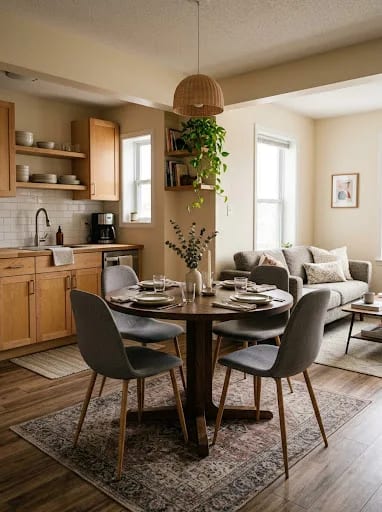
1. The Round Pedestal Table
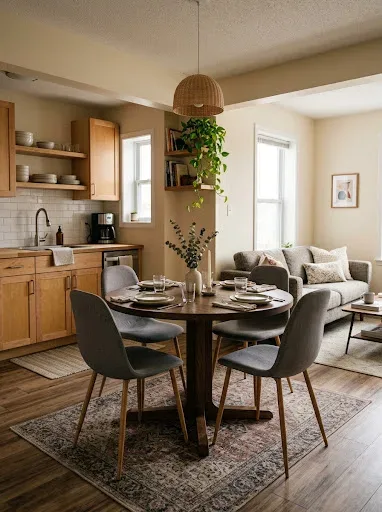
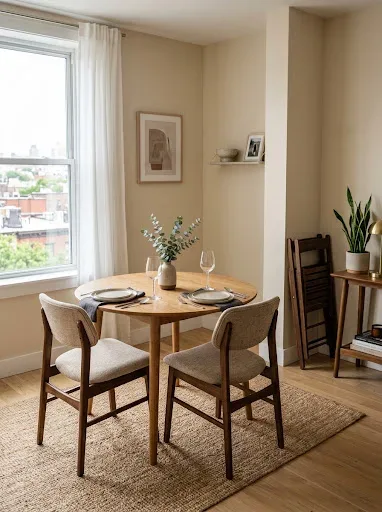
A round pedestal table is one of the most flexible choices for a small apartment. The important part is not only the round top. It is the single central base.
Why the pedestal helps
Traditional tables have legs near each corner. Those legs compete with:
- chair legs
- knees
- seating positions A pedestal clears much of that space. That makes it easier to shift chairs around the table.
Why the round shape works
Round tables have no sharp corners projecting into circulation. That can be especially useful in:
- open-plan living rooms
- small kitchens
- dining corners near a walkway
Best for
A compact round table works particularly well for:
- two people daily
- occasional seating for three or four
- apartments where people walk around several sides of the table
Do not oversize it
A round table still consumes meaningful floor area. As the diameter grows, the footprint grows quickly. Measure the table with chairs pulled out rather than assuming round automatically means space-saving.
Keep chairs visually light
Pair it with:
- armless chairs
- slim backs
- simple frames rather than bulky upholstered dining chairs.
2. The Compact Drop-Leaf Table
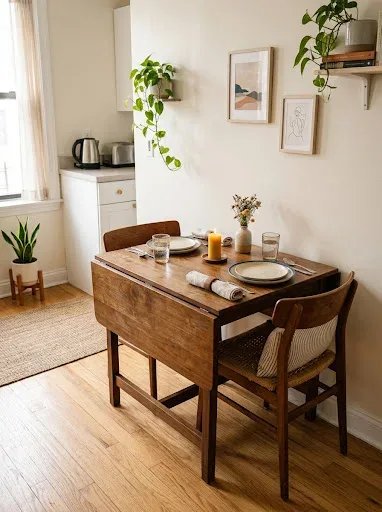
A drop-leaf table changes size depending on how many people are using it. That makes it particularly useful when your everyday dining needs are different from your occasional needs.
Everyday mode
Keep one or both leaves down. The table can function as:
- two-person dining spot
- breakfast table
- small work surface
Expanded mode
Raise the leaf when you need:
- extra dining surface
- guests
- projects
Why this is better than a permanently large table
You do not have to devote floor space to your maximum seating requirement every day. Most of the time, the table stays compact.
Where to place it
A drop-leaf table can work:
- against a wall
- beside a window
- at the edge of the kitchen
- behind a sofa depending on the layout.
Check the support mechanism
Different tables use:
- folding legs
- brackets
- gate legs Make sure the mechanism does not interfere with chair placement.
Do not treat folded mode as storage
If the reduced table becomes covered with:
- bags
- appliances you may stop expanding it because clearing the surface becomes inconvenient.
3. The Narrow Rectangle Table
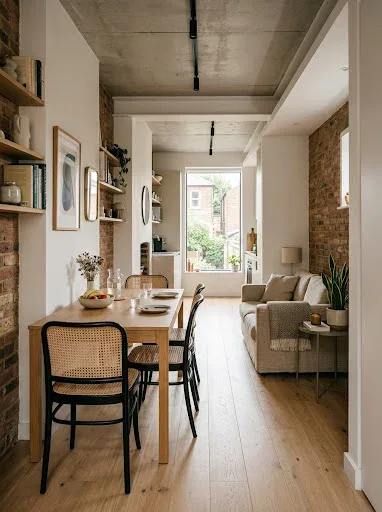
A rectangular table does not have to be large. In some apartments, a narrow rectangle fits much better than a round table.
Why it works
The long shape can follow:
- wall
- kitchen run
- back of sofa
- narrow dining zone without projecting too far into the room.
Width matters
A very deep dining table can consume the walkway. A narrower tabletop may still provide enough room for:
- plates
- glasses
- simple centerpiece while saving several useful inches.
Best for
This works well in:
- narrow open-plan rooms
- galley-like dining areas
- apartments with long unused wall sections
Place chairs strategically
You may use:
- two chairs on long sides
- one chair at each end or fewer chairs depending on space. Do not automatically surround the table with six chairs just because six technically fit.
Keep the ends clear if they are part of circulation
If people regularly walk past one end of the table, leaving that end chair-free may make the entire room work better.
4. The Wall-Side Dining Table
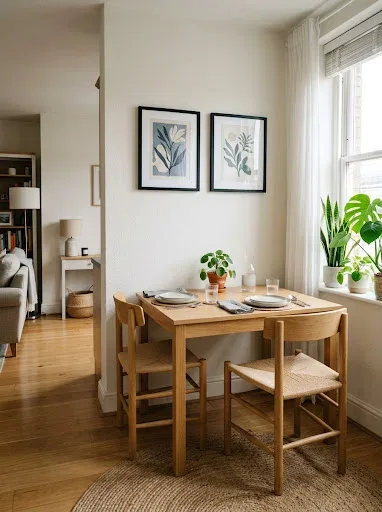
A table does not always need to sit in the center of the room. Pushing one side against a wall can reduce the active footprint dramatically.
Why it works
You remove the need for:
- chairs on one side
- circulation on one side The table effectively becomes part of the wall zone.
Best for
This arrangement is useful for:
- one or two people
- small households
- narrow apartments
Pull it out when needed
If the table is light enough and the layout allows, you can move it away from the wall temporarily for guests.
Make the wall intentional
Instead of making the table look accidentally pushed aside, anchor the dining area with:
- artwork
- mirror
- plug-in wall light where appropriate The space can still feel like a proper dining area.
Watch wall damage
Chairs and table edges can rub against the wall. Leave enough room or use appropriate protective solutions.
5. The Extendable Everyday Table
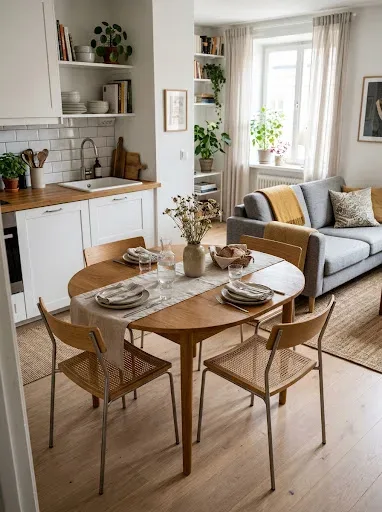
An extendable table works well when you want a normal-looking dining table rather than something that feels specifically designed for tiny spaces.
Keep it compact most of the time
Choose a closed size that comfortably fits your normal household. For example:
- two people
- four people depending on your needs.
Expand only when necessary
Use the extension for:
- guests
- holidays
- larger meals
Why this can be better than a large fixed table
You get occasional capacity without permanently designing the apartment around special events.
Check where the table expands
Some models grow:
- from the center
- from one end
- from both ends Make sure the expanded direction does not hit:
- wall
- sofa
- kitchen island
Where will extra chairs live?
This is often overlooked. An expandable table is only useful if the extra chairs also have somewhere to go when not in use. Options might include:
- folding chairs
- stackable chairs
- chairs used elsewhere in the apartment
6. The Counter-Height Two-Seater
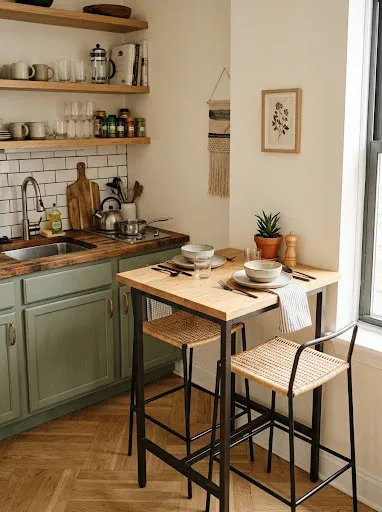
In a very small apartment, a compact counter-height table can create a dining zone with a small footprint.
Why height can help
A taller table creates a different visual level from:
- sofa
- coffee table
- low storage which can help define the dining area.
Good locations
Try it:
- beside kitchen
- against wall
- near window
- at the edge of an open kitchen
Keep it small
This works best as a genuine: one- or two-person dining solution not a full six-seat dining table raised higher.
Choose stools carefully
Backless stools can tuck completely underneath. However, they may be less comfortable for long meals. Low-back stools offer more support but take more visual and physical space.
Consider accessibility and comfort
Counter-height seating is not comfortable or practical for everyone. Choose based on how you actually dine, not just the smaller visual footprint.
7. The Built-In-Look Dining Bench
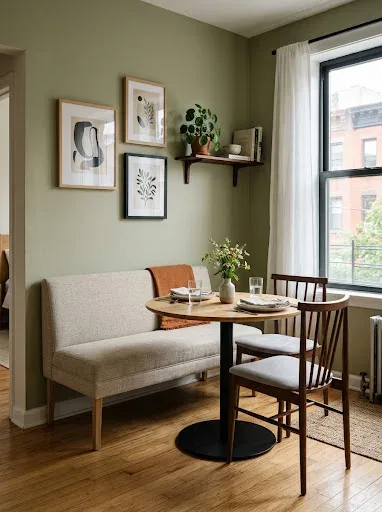
You do not need actual built-in seating to get the space-saving benefits of a banquette. A freestanding bench along the wall can create a similar effect.
Why benches work
A bench can sit closer to a wall than a row of chairs because you do not need to pull it backward every time someone sits down.
Best arrangement
Try: wall → bench → table → chairs This reduces movement requirements on one side.
Add storage carefully
A storage bench can also hold:
- table linens
- games
- seasonal dining items But only if the storage remains easy to access.
Avoid oversized cushions
Thick back cushions can push diners farther from the table. Keep upholstery relatively compact.
Table base matters
A pedestal table can pair particularly well with bench seating because there are fewer table legs to navigate.
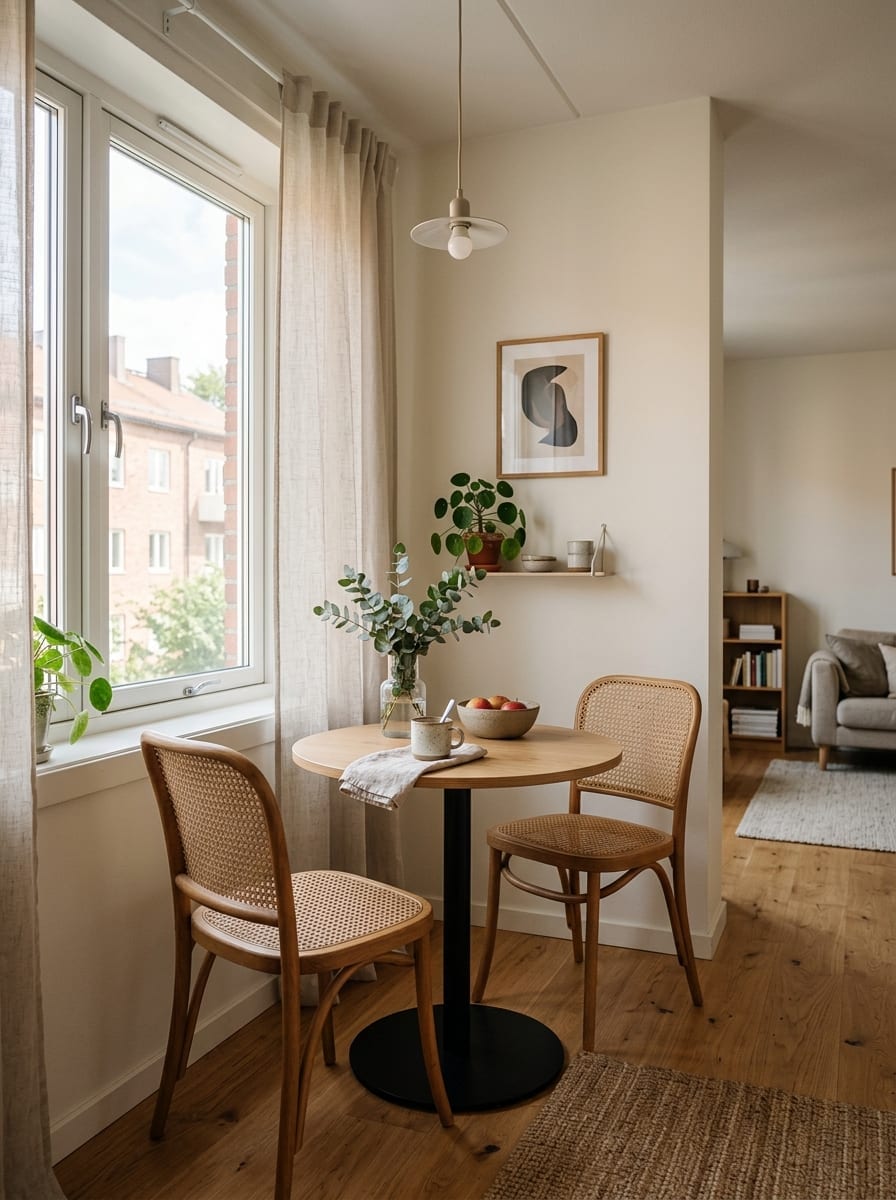
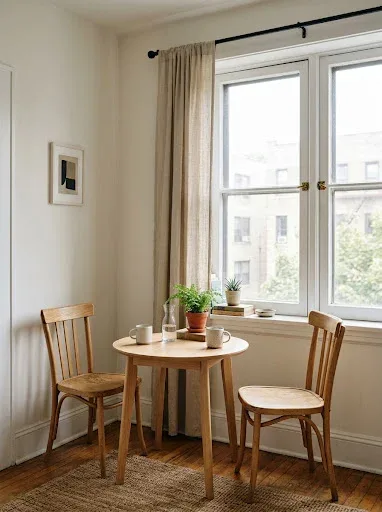
8. The Window-Side Café Table
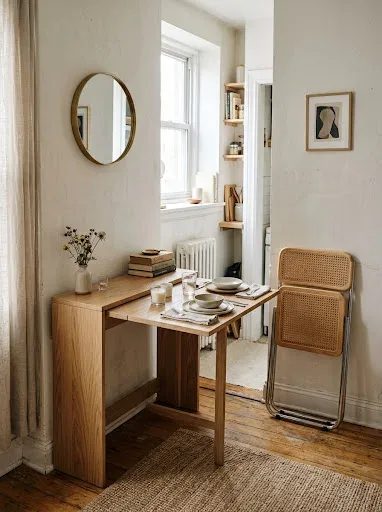
If you have an unused window corner, a tiny café-style table can turn it into a proper dining spot.
Why it works
Window areas are often difficult to use for:
- cabinets
- tall storage but they may be perfect for a small table.
Use a simple two-seat setup
Try:
- compact round table
- two chairs That is enough for:
- breakfast
- coffee
- everyday meals
Preserve the window
The table should not prevent you from:
- opening curtains
- accessing blinds
- opening the window where applicable
Let natural light do some of the decorating
You may not need:
- large centerpiece
- wall art
- extra floor lamp The window already gives the zone a focal point.
Do not oversize the chairs
The table may be tiny, but two bulky armchairs can still overwhelm the space.
9. The Console-to-Dining Table
In an extremely small apartment, one piece of furniture may need to perform different jobs at different times. A convertible console can stay narrow most of the day and expand into a dining table when needed.
Everyday function
It might serve as:
- entry console
- wall table
- decorative surface
- compact desk
Dining function
Pull out or unfold the mechanism to create a larger tabletop.
Why this works
You do not dedicate permanent floor space to a dining function used only a few times per day.
The tradeoff
Convertible furniture requires effort. If using the table involves:
- moving many objects
- retrieving pieces from another room
- complicated setup you may stop using it.
Keep the everyday surface nearly empty
The easier the transformation, the more useful the table becomes.
Storage for chairs matters
Pair it with:
- folding chairs
- stackable chairs
- existing multifunctional seating
10. The Corner Banquette Table
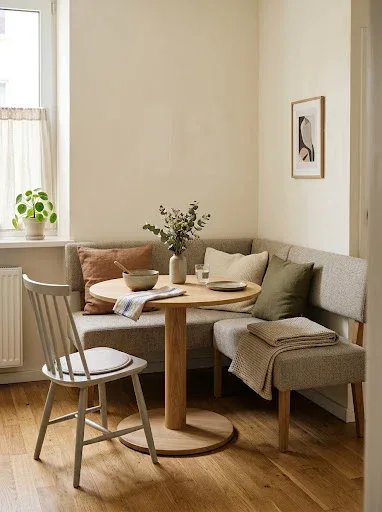
A corner dining arrangement can use an area that might otherwise remain awkward.
Use two walls
Place seating along an L-shaped corner. Then position a table in front.
Why this can save space
The seating stays fixed close to the walls. You reduce the number of chairs that need pull-out clearance.
Keep the table base simple
A pedestal or central base can make it easier to enter the seating area. Four table legs may make sliding in and out more awkward.
Do not make the bench too deep
An oversized bench can consume as much space as traditional chairs. Keep the depth appropriate for dining.
Watch access
Someone sitting in the corner may need another person to move before getting out. That may be fine for occasional dining but annoying for some households.
11. The Right-Size Table Rule
The final idea is not a table style. It is choosing capacity based on normal life rather than maximum possibility. This can save more space than any furniture trick.
Ask how many people eat there most days
If the answer is: one or two you probably do not need a six-seat table permanently occupying the apartment.
Plan occasional guests separately
You could use:
- extendable table
- folding chairs
- temporary extra seating instead of keeping a large setup every day.
Why this matters
People often shop based on: What if six people come over?
But the apartment has to function the other 350 days of the year too.
Choose your everyday size first
Then decide how to handle occasional capacity. This usually creates a better small-space result.
Measure the Active Footprint, Not Just the Table
This is the biggest dining-table mistake in small apartments. A listing may say: 36-inch table and that sounds compact. But the real space also includes:
- chair depth
- room to pull chairs back
- room to walk behind seated people The active footprint can be dramatically larger than the tabletop.
Test the Dining Area With Chairs Pulled Out
Use painter’s tape to mark the proposed table. Then place existing chairs or approximate their footprint. Test:
- sitting down
- getting up
- walking behind the chair
- moving toward kitchen
- moving toward living room If the table only works when every chair is perfectly tucked in, the setup may be too large.
Round vs Rectangular Dining Table for a Small Apartment
Neither shape always wins. Round is useful when:
- circulation happens around multiple sides
- corners would interrupt a walkway
- you want flexible seating positions Rectangle is useful when:
- the dining zone is narrow
- table needs to follow a wall
- room itself is long and rectangular Choose the table based on the floor plan.
Square Tables Can Work Too
A square table can make sense for:
- two people
- four people
- square dining corners But the corners may make circulation slightly less flexible than a round table. It is often strongest when the table sits in a clearly defined dining zone rather than a main passage.
Pedestal vs Four-Leg Table
Pedestal Offers more flexibility for:
- chair positions
- benches
- squeezing in an occasional extra seat Four legs Can provide:
- straightforward construction
- familiar stability
- more style options But chair placement must work around the legs. For especially compact dining zones, the pedestal is worth considering.
How Much Space Should Be Around the Table?
There is no single measurement that fits every apartment. As a planning target, around 30 to 36 inches behind frequently used dining chairs can feel much easier when the room allows it. More may be useful in a major walkway. Very small apartments sometimes have less. The important point is to measure the table while people are using it, not just when everything is pushed in.
Do You Need Four Dining Chairs?
Not necessarily. If two people live in the apartment, try:
- two everyday chairs and keep additional seating elsewhere. You can use:
- folding chairs
- stools
- desk chair for occasional guests where appropriate. Four permanent chairs around a small table may create visual and physical clutter you rarely need.
Chairs Matter Almost as Much as the Table
Look for chairs with:
- no arms
- slim frames
- modest seat depth
- relatively narrow backs Avoid assuming every dining chair needs heavy upholstery. A visually lighter chair can make the whole dining zone feel less crowded.
Use a Bench Only Where It Solves Something
Benches are popular in small-space content, but they are not automatically more efficient. A bench works best when it can stay close to a wall. A freestanding bench that needs circulation on both sides may not save much space.
What About Folding Tables?
A wall-mounted or freestanding folding table can work in an extremely small home. But ask whether you will realistically:
- open it
- clear it
- close it every day. If you prefer leaving the dining setup ready, a compact permanent table may suit you better.
What About Wall-Mounted Tables?
These can be useful in:
- studios
- tiny kitchens
- narrow apartments particularly for one or two people. But wall installation needs to be structurally appropriate and suitable for the rental situation. Follow installation requirements rather than relying on an inappropriate temporary attachment.
Dining Table Beside the Sofa
This arrangement can work beautifully in an open-plan apartment. Try: sofa → small gap → dining table rather than inserting another cabinet between them. The two zones can still feel separate through:
- lighting
- rug
- table shape without needing a divider.
Dining Table Behind the Sofa
If the sofa floats in the room, a narrow dining table behind it may use the same central zone efficiently. Just make sure:
- dining chairs can move
- sofa does not block seating
- the path through the room stays obvious This is especially useful in long open-plan apartments.
Dining Table Near the Kitchen
The closest placement is not always the best placement. A table too close to the kitchen may interfere with:
- cabinet doors
- refrigerator
- dishwasher
- cooking movement Open all nearby kitchen doors before finalizing the dining position.
Dining Table Near a Window
A window-side dining area can feel larger because of the:
- light
- outward view
- vertical openness But keep enough room for:
- curtains
- blinds
- window access Do not wedge furniture against the glass simply to save a few inches.
How to Make a Small Dining Area Feel Intentional
You do not need much decor. Try:
- pendant if existing or appropriate
- wall art
- small centerpiece
- rug where practical The table itself should remain usable. A dining table covered in decorative objects is harder to live with in a small apartment.
Keep the Centerpiece Low and Simple
Try:
- small bowl
- low vase
- single plant Avoid something so large that you need to move it for every meal. Furniture that requires constant resetting tends to become frustrating.
Should You Use a Dining Rug?
A rug can visually define the dining area. But the rug should be large enough that chairs do not constantly catch on the edge. In a very small apartment, skipping the rug may be better than using one that is too small.
Dining Tables for Studio Apartments
In a studio, prioritize versatility. Strong options include:
- small round pedestal
- wall-side table
- drop-leaf table
- convertible console
- compact two-seat café table The dining furniture should not visually dominate the entire room.
Dining Tables for Narrow Apartments
Look first at:
- narrow rectangular tables
- wall-side placement
- benches against walls
- drop-leaf options Avoid creating a wide circular footprint if the room’s natural circulation runs lengthwise.
Dining Tables for Two People
You have the most flexibility. Consider:
- 30 to 36-inch round table
- compact square table
- small drop-leaf
- wall-side rectangle Exact dimensions depend on furniture design and your available space, so measure rather than relying solely on a standard size.
Dining Tables for Four People
Look for a table that comfortably handles four without being permanently oversized. Possible options:
- round pedestal
- compact rectangle
- small extendable table
- bench + two-chair configuration Focus on chair movement as much as table dimensions.
What if You Occasionally Host Six?
You do not necessarily need a six-seat everyday table. Consider:
- extendable table
- folding extra chairs
- temporary rearrangement Optimize the apartment for normal use first.
Common Small Apartment Dining Table Mistakes
Measuring only the tabletop Chair clearance changes everything. Buying for maximum guest capacity You sacrifice floor space every day. Choosing bulky chairs The table looks small but the seating overwhelms it. Putting chairs on every side Some sides may work better left open. Blocking kitchen cabinets Test all nearby doors. Choosing a deep table for a narrow room Shape matters. Buying transformable furniture that is annoying to transform Convenience determines whether it actually gets used. Filling the tabletop with decor Keep the eating surface functional. Assuming smaller is always better A slightly larger table with a better base or shape may work better than a tiny awkward one.
A Simple Two-Person Apartment Dining Setup
Try: Table Compact round pedestal. Seating Two normal dining chairs. Guest seating Two folding chairs stored elsewhere. Decor One small centerpiece. This keeps daily life comfortable without building the room around occasional guests.
A Four-Person Small Apartment Setup
Try: Table Compact extendable rectangle or round pedestal. Seating Four lightweight chairs. Placement Against or near one wall where circulation allows. Avoid adding a separate large dining cabinet unless you actually need it.
An Extremely Small Apartment Setup
Try: Table Drop-leaf or wall-side table. Seating Two chairs. Guest capacity Folding seating. This keeps the dining function without permanently consuming the center of the room.
Which Dining Table Idea Fits Your Apartment?
Choose a Round Pedestal Table if:
People need to walk around several sides.
Choose a Drop-Leaf Table if:
Your everyday and guest needs are very different.
Choose a Narrow Rectangle if:
The room is long and tight.
Choose a Wall-Side Table if:
You mostly dine alone or as a pair.
Choose an Extendable Table if:
You host occasionally but want a normal everyday table.
Choose Counter Height if:
You have a tiny two-person dining zone and the height is comfortable for you.
Choose a Dining Bench if:
One side of the table can sit permanently near a wall.
Choose a Café Table if:
You have a small unused window corner.
Choose a Convertible Console if:
The dining function cannot occupy permanent floor space.
Choose a Corner Banquette if:
Two walls form a useful dining corner.
Follow the Right-Size Rule if:
Your current dining setup is designed for guests who are rarely there.
Final Thoughts
A dining table can fit inside a small apartment without taking over the apartment. But you need to measure more than the table itself. Start with: walkway → chair movement → everyday seating → tabletop Then think about guests. Choose the size you need most days. Use:
- extensions
- folding chairs
- movable seating for occasional capacity. And pay close attention to shape. A round pedestal table, narrow rectangle and drop-leaf table can occupy similar square footage on paper but behave completely differently once people start moving around them. The best dining table is not simply the smallest one you can find. It is the one that lets you eat comfortably and still walk through your apartment afterward.