9 Small Bathroom Window Privacy Ideas That Still Let In Light
9 small bathroom window privacy ideas that block views but keep daylight, from frosted film to top down shades, with costs and renter options.
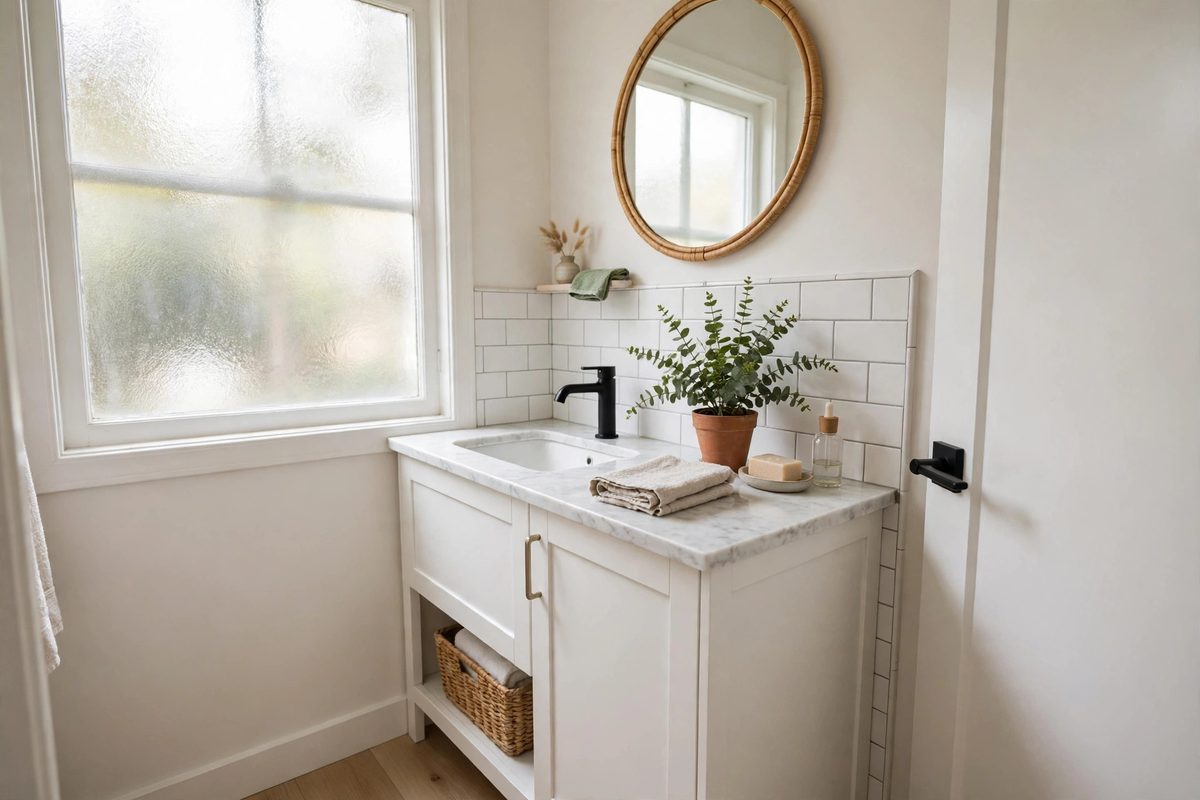
Bright small bathroom with a frosted window letting in soft daylight beside a white vanity and plants
In This Guide
A bathroom window should do two things that seem to conflict: let in daylight, so the room does not feel like a closet, and block views, so you can use the room comfortably. In a small bathroom, getting this wrong matters more, since the window is often the only natural light source and the room has no space for a heavy curtain that blocks it entirely.
The best solutions filter light rather than blocking it. Frosted glass, sheer fabrics, and top down shades all obscure the view while letting daylight through, and most cost under 50 dollars and install without tools. The right choice depends on your window type, your lease, and how close neighbors or a street are to the window.
These ideas pair with the garland styling in Christmas garland ideas for small apartments and the tree topper sizing in Christmas tree topper ideas for small trees.
1. Frosted Window Film
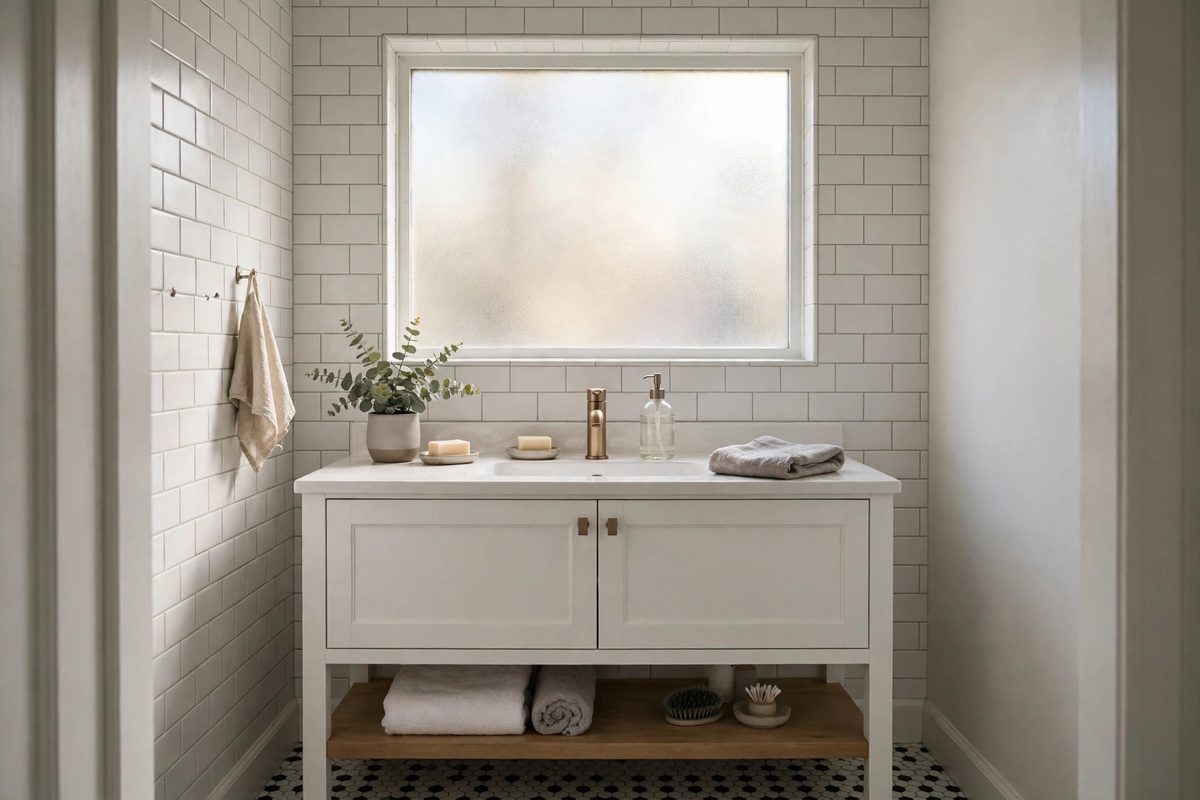
Frosted window film is the most popular bathroom privacy solution for good reason: it blocks views completely, lets through about 80 percent of daylight, costs 10 to 25 dollars per window, and peels off cleanly when you move. It is also the most renter friendly option, since it uses water and a squeegee, not adhesive that damages glass.
Static cling film is better than adhesive film for rentals, since it removes without residue and can be reused. Measure your window glass, not the frame, and cut the film a quarter inch smaller on each side so it does not peel at the edges.
How to make it work
Clean the glass thoroughly, spray it with soapy water, apply the film, and squeegee out bubbles from the center outward. Trim any excess with a sharp utility knife and a straightedge. If bubbles persist, lift a corner, respray, and squeegee again. Replace the film every 2 to 3 years, or sooner if edges start to lift in a steamy bathroom.
2. Top Down Bottom Up Shades
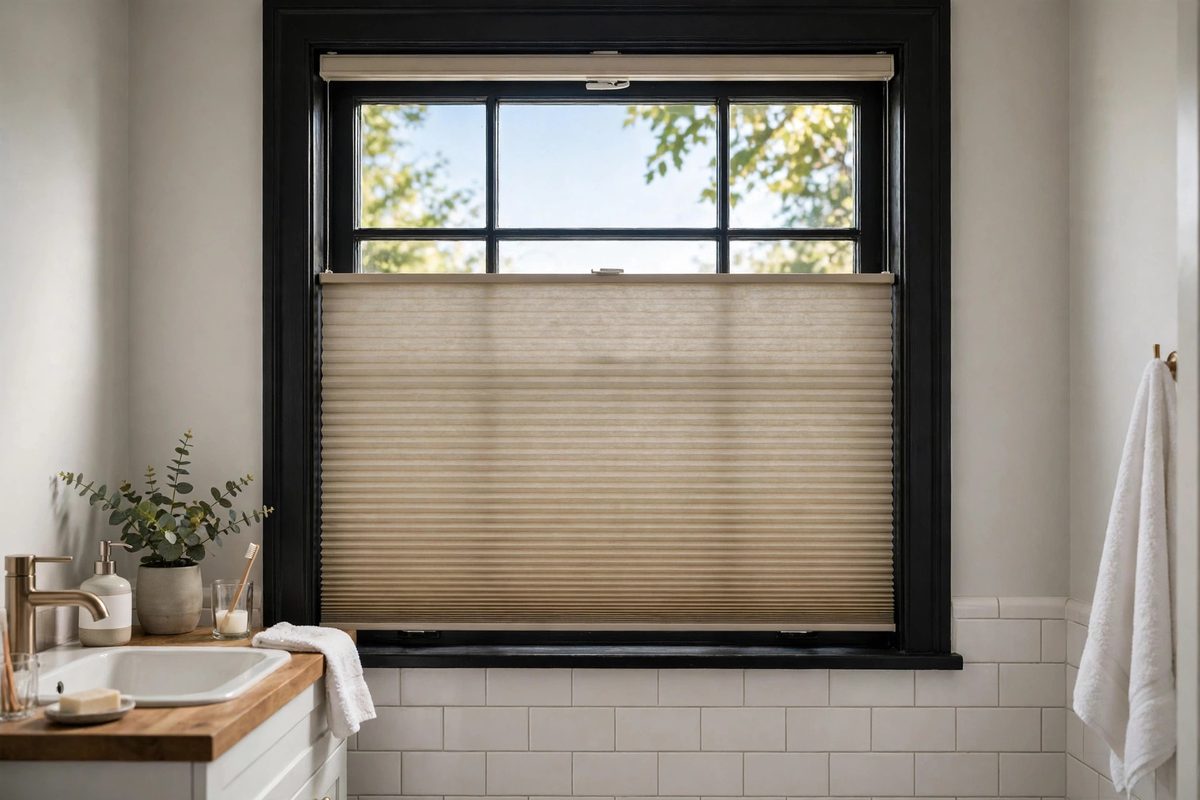
Top down bottom up shades, which can lower from the top or raise from the bottom, give you privacy exactly where you need it and light exactly where you want it. Lower the top 12 inches for light from above while keeping the lower window covered, or raise the bottom for a view while keeping the top covered.
Cellular top down shades cost 40 to 90 dollars per window and insulate as well as provide privacy, since the honeycomb cells trap air. They mount inside the window frame with two brackets and a few screws, so they are a homeowner project, though some renters install them with landlord permission.
How to make it work
Measure the inside frame width and height carefully, since cellular shades are made to fit and a shade that is a half inch too wide will not operate smoothly. Choose a light filtering fabric, not blackout, so daylight still enters when the shade is partially open. Cordless versions are safer for homes with kids or pets and look cleaner.
3. Cafe Curtains on the Lower Half
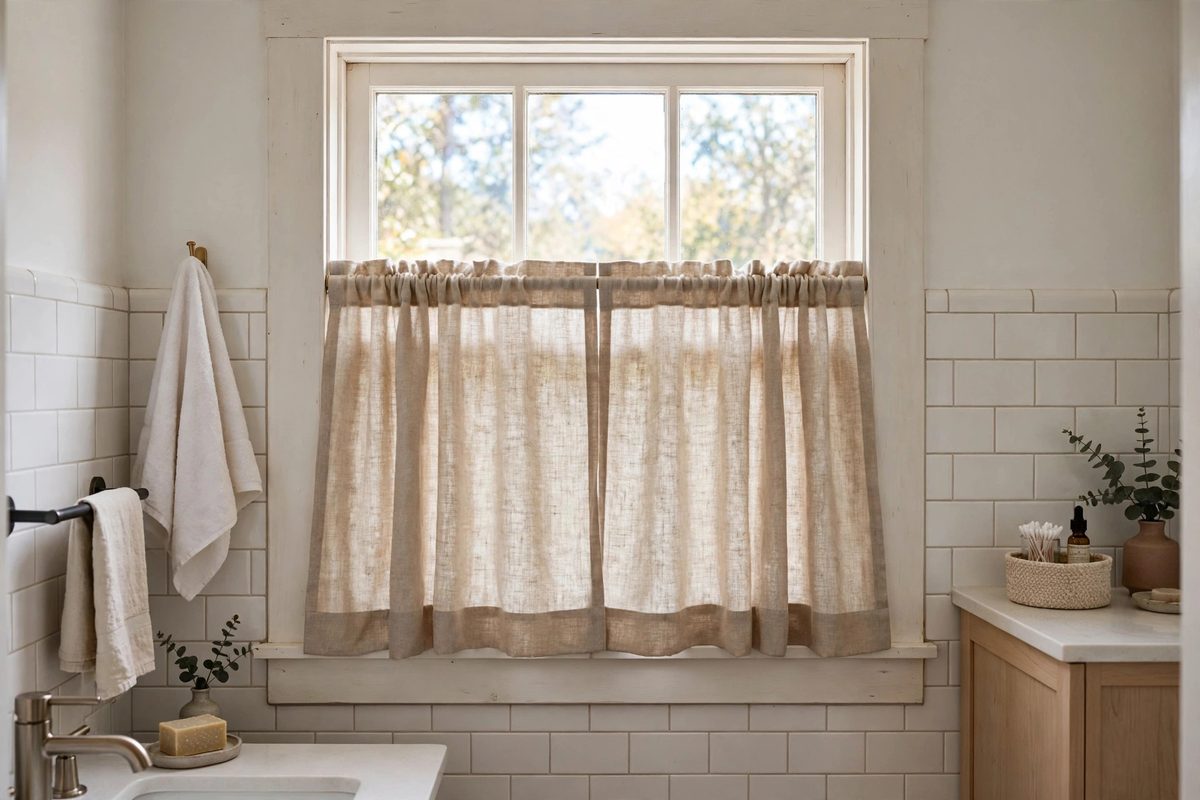
Cafe curtains cover only the lower half or lower two thirds of a window, blocking views from the street or neighbors at eye level while leaving the top open for daylight. They are charming, inexpensive, and easy to change seasonally, and they suit traditional, farmhouse, and cottage bathrooms.
Use a tension rod inside the frame, so no drilling is needed, and choose a light fabric, like linen, cotton voile, or a sheer linen blend, so light still filters through the curtain itself. A cafe curtain costs 15 to 30 dollars including the rod.
How to make it work
Hang the rod at the midpoint of the window, or slightly above the midpoint if the window is tall and neighbors are close. Choose a curtain length that ends just below the rod line, not puddling on the sill, which collects moisture in a bathroom. Wash the curtain every few months, since bathroom humidity and steam make fabric curtains musty faster than in other rooms.
4. Sheer Roller Shade
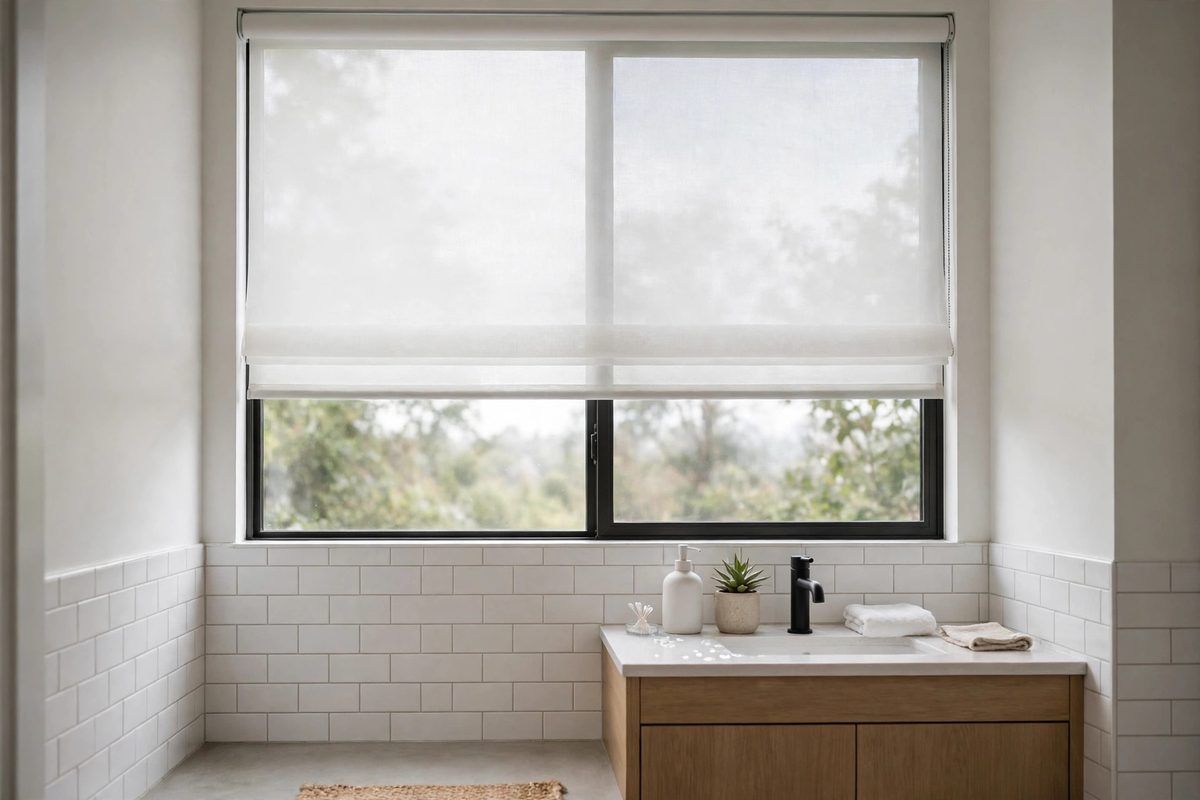
A sheer roller shade, in a white or light gray fabric, diffuses daylight and obscures views during the day while rolling up completely when you want a clear window. It is a clean, modern option that suits contemporary bathrooms and windows with limited frame depth.
Sheer roller shades cost 25 to 60 dollars per window and mount with two brackets, either inside or outside the frame. They are not fully private at night when interior lights are on, since sheer fabric becomes translucent from outside in the dark, so pair them with a second layer if nighttime privacy matters.
How to make it work
Mount the shade inside the frame for a clean look, if your frame depth is at least 2 inches, or outside the frame if it is shallower. Choose a fabric with a privacy rating for daytime use, and add a frosted film or a second shade for nighttime if the bathroom faces a street. Clean the shade with a damp cloth monthly, since bathroom steam leaves a film on roller fabrics.
5. Decorative Privacy Film Patterns
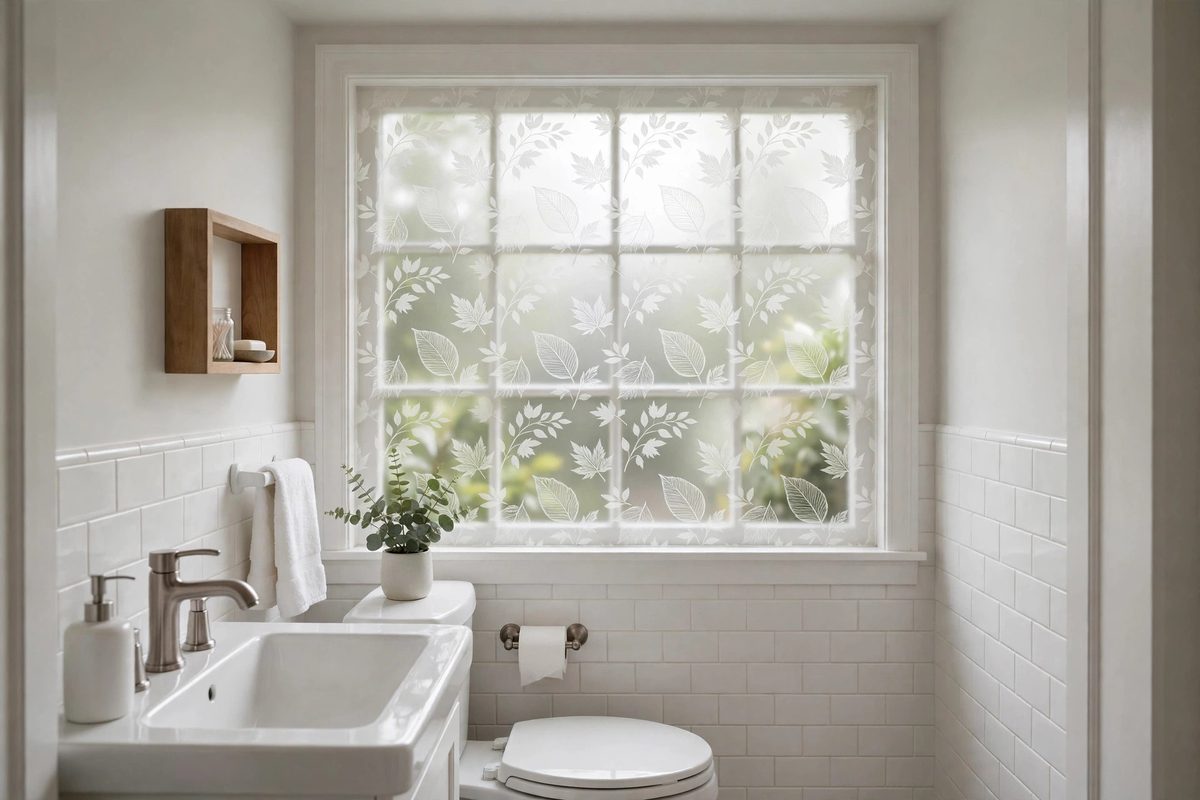
Decorative privacy film, with patterns like frosted leaves, geometric shapes, or stained glass colors, gives you the privacy of frosted film plus a design element. It costs slightly more than plain frosted film, 15 to 35 dollars per window, but it can turn a plain bathroom window into a feature.
Patterned film still lets through most daylight, though dense patterns block slightly more light than plain frost. Choose a pattern with plenty of light areas, not a dense dark pattern, if your bathroom has only one small window. For more bathroom window ideas, see small bathroom mirror ideas.
How to make it work
Apply patterned film the same way as plain film, with soapy water and a squeegee, and align the pattern carefully before squeegeeing, since a crooked pattern is very noticeable. If the pattern has a direction, like leaves growing upward, orient it correctly before cutting. Keep a spare piece of film for repairs, since patterned film is harder to match later than plain film.
6. Plant Screen on the Sill
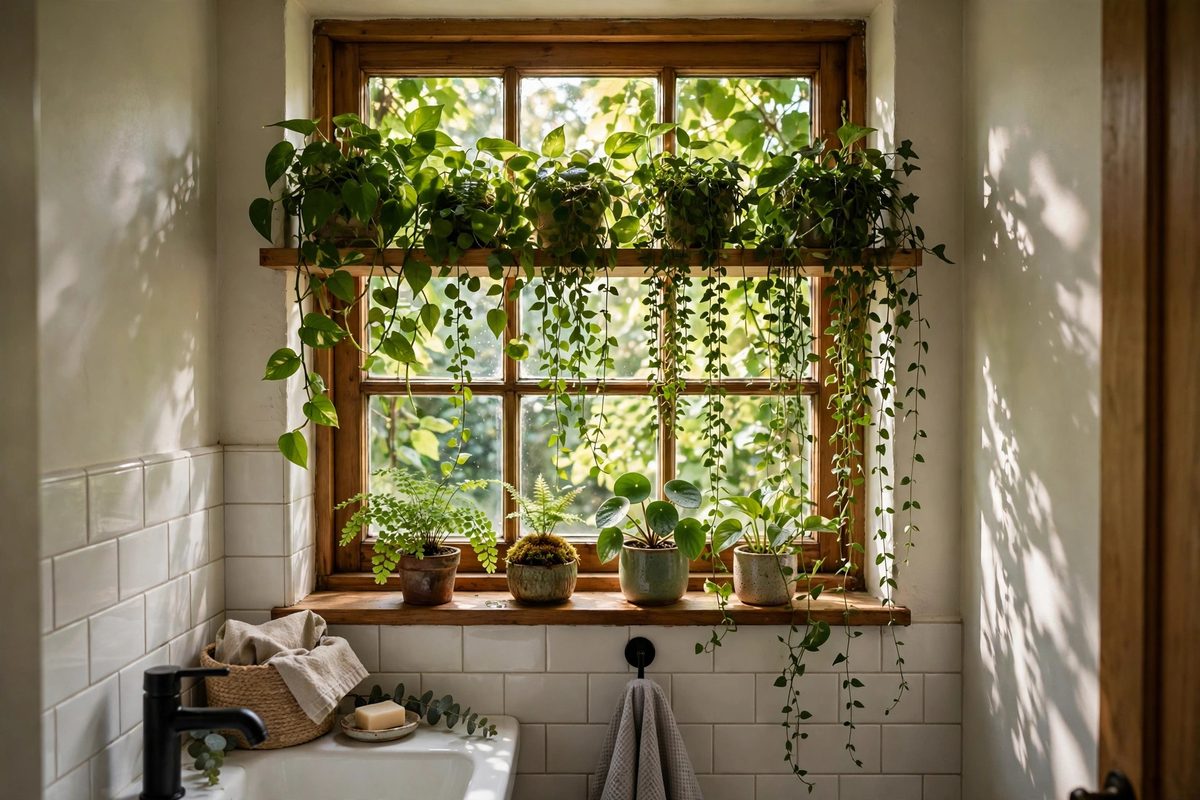
A row of plants on the windowsill, or on a small shelf across the window, creates a living privacy screen that filters views while letting light through leaves. This works best for windows that are not directly overlooked, since plants obscure but do not fully block views, and it adds greenery to a room that often lacks it.
Choose humidity loving plants that tolerate bathroom conditions, like pothos, ferns, orchids, or spider plants, and use pots with drainage trays to protect the sill. A small shelf mounted across the window at sill height, or a tension rod shelf, gives you more plant space without blocking the whole window.
How to make it work
Keep plants trimmed so they do not block the entire window, which defeats the light goal. Rotate plants weekly so they grow evenly toward the light. Wipe leaves monthly, since bathroom steam and soap residue dull foliage. If the window gets direct sun, choose sun tolerant plants, since many bathroom plants prefer indirect light.
7. Frosted Glass Spray
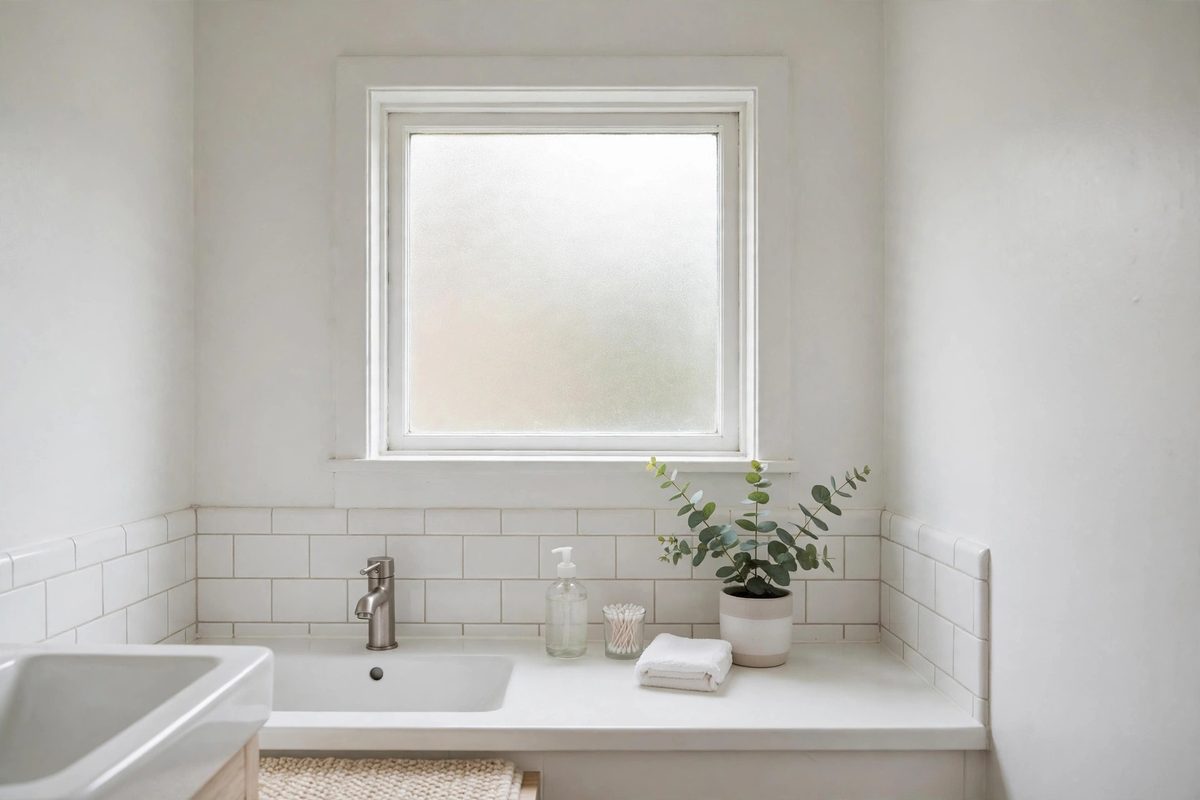
Frosted glass spray, a paint like coating that dries to a frosted finish, is a cheap, fast privacy solution for a window you own and do not need to restore. A can costs 8 to 12 dollars and covers a standard bathroom window with two light coats.
Spray is less renter friendly than film, since it is harder to remove, though it can be scraped off glass with a razor blade and soapy water with effort. It also gives a less even finish than film if applied in a hurry, so take time with light, even coats.
How to make it work
Mask the frame and surrounding wall thoroughly with painter tape and paper, and spray in a well ventilated room with the bathroom fan on. Apply two thin coats, letting the first dry for 10 minutes before the second, rather than one thick coat, which drips. Test the privacy from outside at night with interior lights on, since spray can look more transparent than expected under bright interior light.
8. Shutters or Louvered Panels
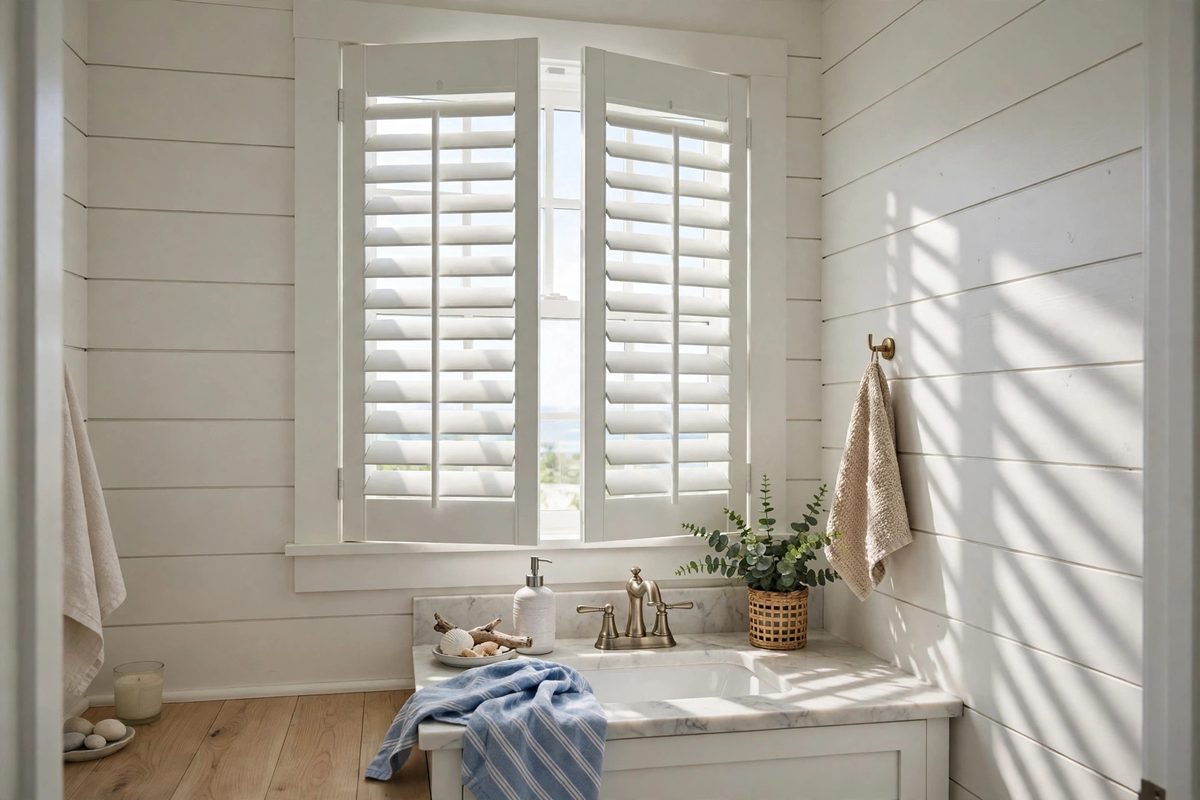
Interior shutters or louvered panels, in white vinyl or wood, give you adjustable privacy: tilt the louvers open for light and a view, close them for full privacy, and adjust the angle for partial privacy with light. They also suit traditional and coastal bathrooms and add architectural detail to a plain window.
Shutters cost 60 to 150 dollars per window and mount inside the frame with screws, so they are a homeowner project. Vinyl shutters handle bathroom humidity better than wood, which can warp in a steamy room without proper sealing.
How to make it work
Measure the frame carefully and order shutters made to fit, since a shutter that is too large will not close properly. Choose a louver size of 2.5 to 3.5 inches for a bathroom, since larger louvers let in more light when open and are easier to clean. Wipe louvers monthly with a damp cloth, since dust and steam build up in the slats.
9. Stained Glass or Acrylic Panel
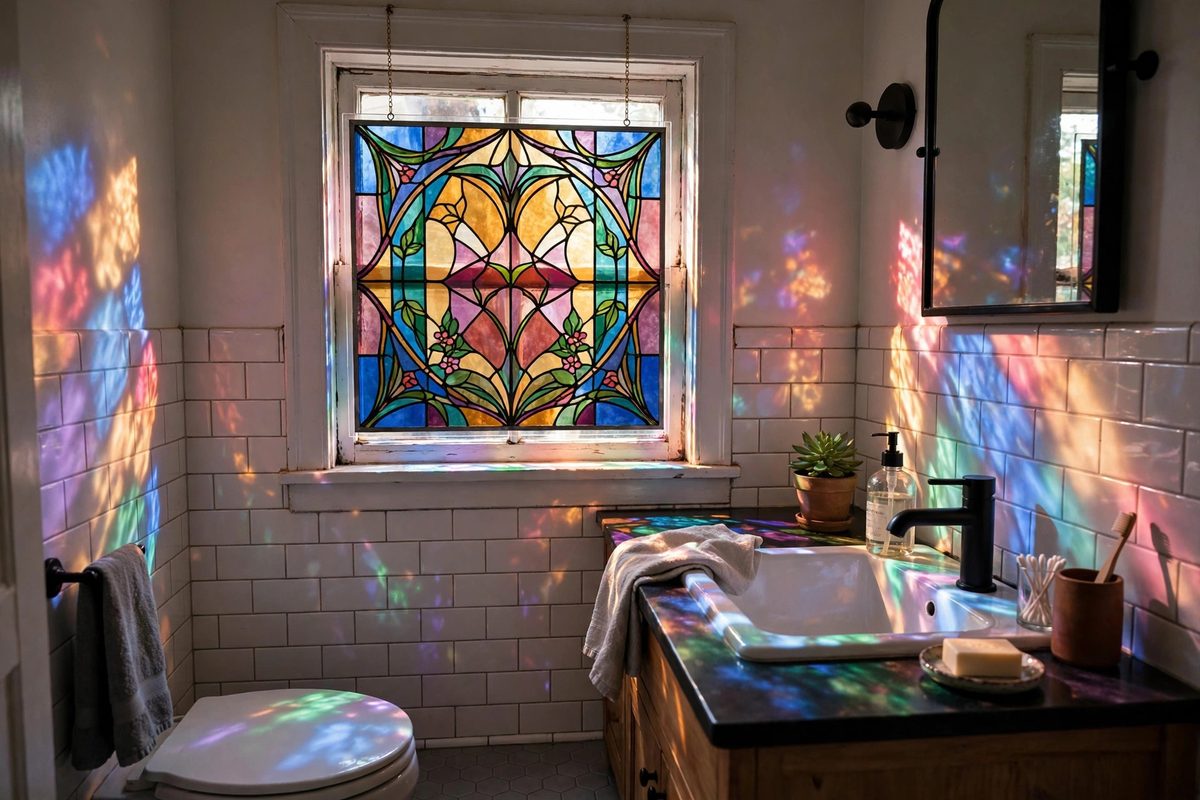
A stained glass style acrylic panel, hung in front of the window with hooks or a tension rod, blocks views with color and pattern while letting colored light into the room. Real stained glass is expensive and heavy, but acrylic panels that mimic stained glass cost 30 to 80 dollars and are light enough to hang without structural work.
This option suits bathrooms with a vintage, eclectic, or artistic style, and it turns the window into a focal point rather than a problem to solve. It blocks more light than frosted film, so it works best in a bathroom with another light source, like a skylight or a second window.
How to make it work
Hang the panel inside the frame with small hooks or a tension rod, leaving a gap for air circulation so moisture does not build up between the panel and the glass. Choose a panel size that covers the lower two thirds of the window if you want to preserve some clear light at the top. Clean the panel with a soft cloth and mild soap, not abrasive cleaners, which scratch acrylic.
Privacy and light do not have to compete in a small bathroom. Filter the view with film, a shade, or a curtain that lets daylight through, choose a renter friendly option if you need one, and test the result from outside at night, when interior lights change everything. Your bathroom will feel brighter, more private, and more comfortable to use every day.