10 Sage Green and Cream Kitchen Ideas for Small Apartments
10 sage green and cream kitchen ideas for small apartments: cabinet pairings, tile, brass hardware, butcher block, and a three-color palette rule.
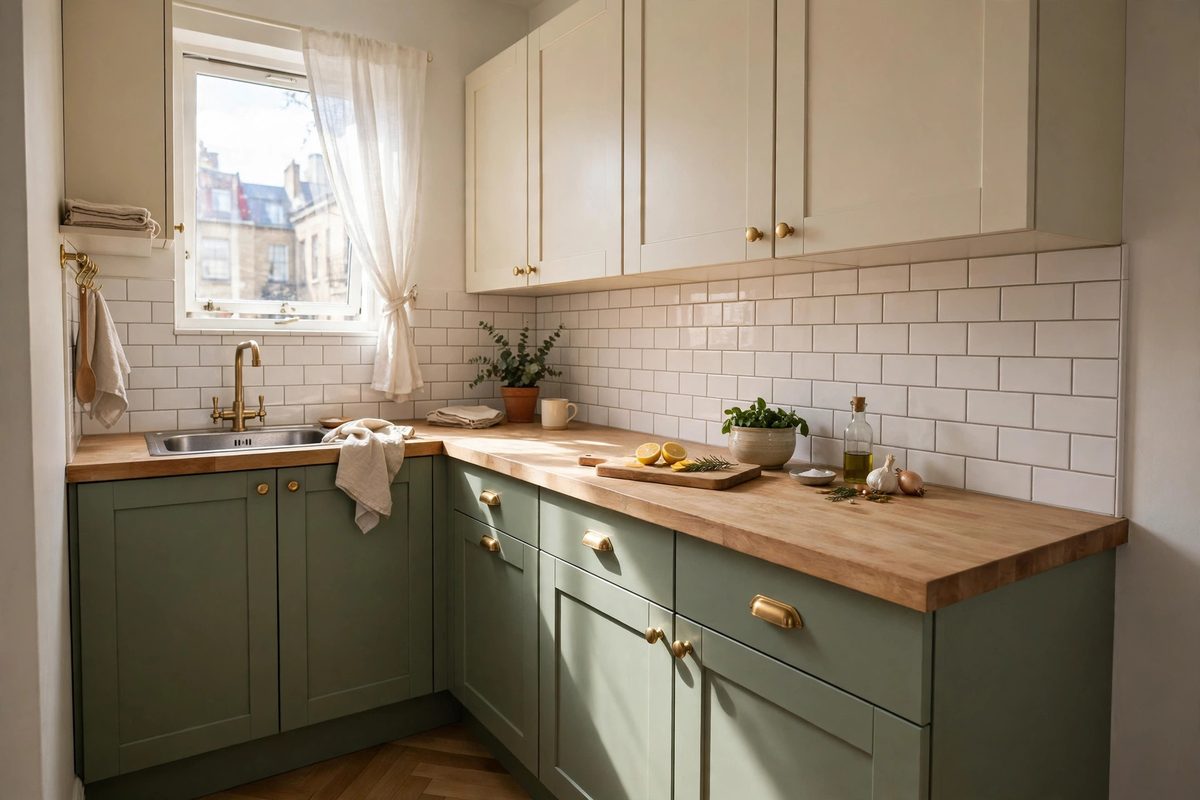
Small apartment kitchen with sage green lower cabinets, cream upper cabinets, butcher block counters, and brass hardware
In This Guide
Sage green and cream is one of the kindest color pairings for a small kitchen. Sage is soft enough not to darken the room, cream is warm enough not to feel clinical, and together they make a kitchen feel calm, fresh, and a little bit like a garden. It is also forgiving: sage hides everyday wear better than white, and cream hides dust better than pure white.
The risk is going too pale all over, which can make a small kitchen feel washed out, or adding too many accent colors until sage and cream disappear. The pairing works best when it stays the star, with wood and brass as supporting players.
These ideas suit renters and owners alike, with removable options noted where paint is not possible. They sit well beside the natural warmth of warm wood kitchen ideas and the removable upgrades in renter-friendly peel-and-stick backsplash ideas. For countertop clarity, see small kitchen decor ideas.
1. Sage Lower Cabinets, Cream Uppers
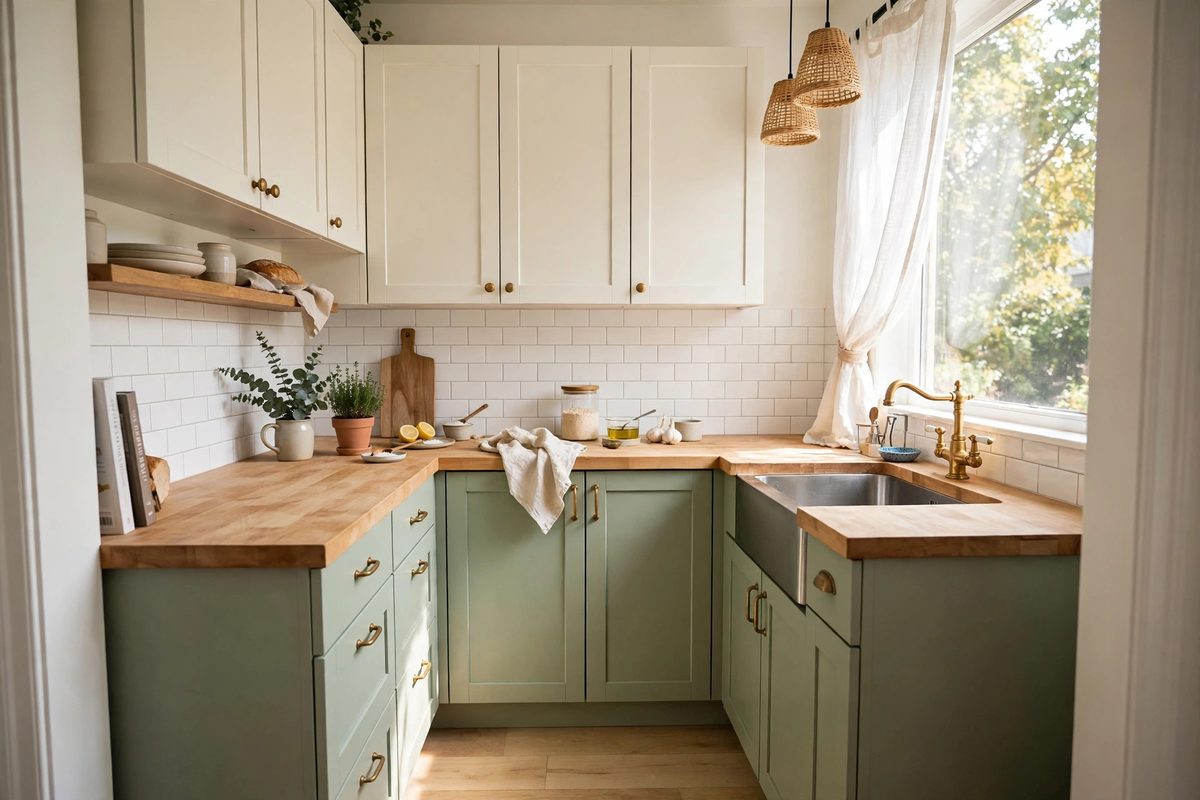
The classic sage and cream layout puts sage on the lower cabinets, where it grounds the room, and cream on the uppers, where it keeps eye level bright. In a small kitchen, this split also makes the room feel taller, since the lighter color sits higher.
For renters, peel-and-stick cabinet wraps in sage for lower doors only give the same split for 40 to 80 dollars in materials. Remove them slowly with a hair dryer at move-out to protect the original finish.
How to make it work
Sample the sage in your kitchen’s actual light before committing; sage shifts green or gray depending on bulbs and window direction. Paint or wrap two lower doors first and live with them for a week. If the color still feels calm at night under warm bulbs, finish the rest.
2. Cream Walls to Keep Sage Soft
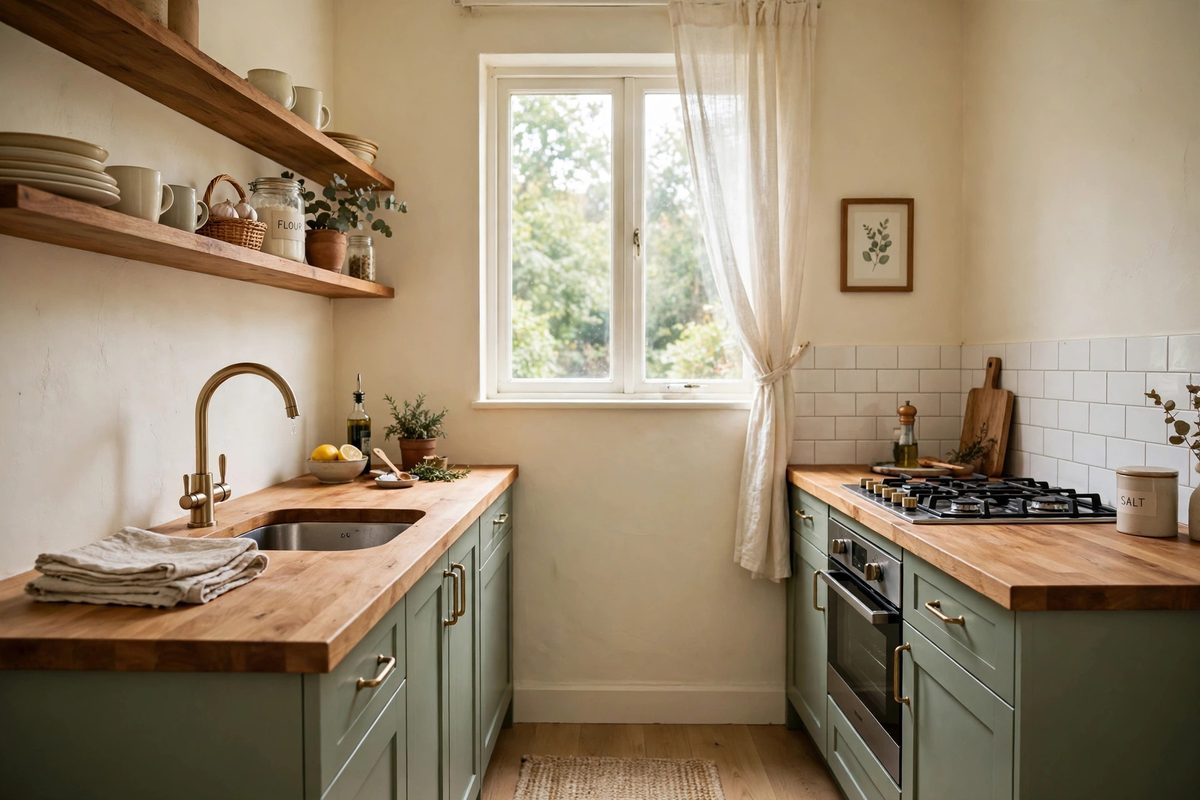
Cream walls, rather than stark white, keep sage from looking cold or clinical. Cream has a warm undertone that flatters both sage cabinets and wood counters, and it reflects light almost as well as white in a small kitchen.
If you cannot paint, cream shows up through textiles and accessories: a cream kettle, cream tea towels, a cream roman shade, or cream dishware on open shelves. The wall color matters less when the room’s objects carry the cream.
How to make it work
Choose a cream with a yellow, not pink, undertone to pair with sage. Test a swatch next to your sage sample in daylight and under evening bulbs. Keep the ceiling bright white for height, and let cream live on walls and larger textiles.
3. Butcher Block Warmth
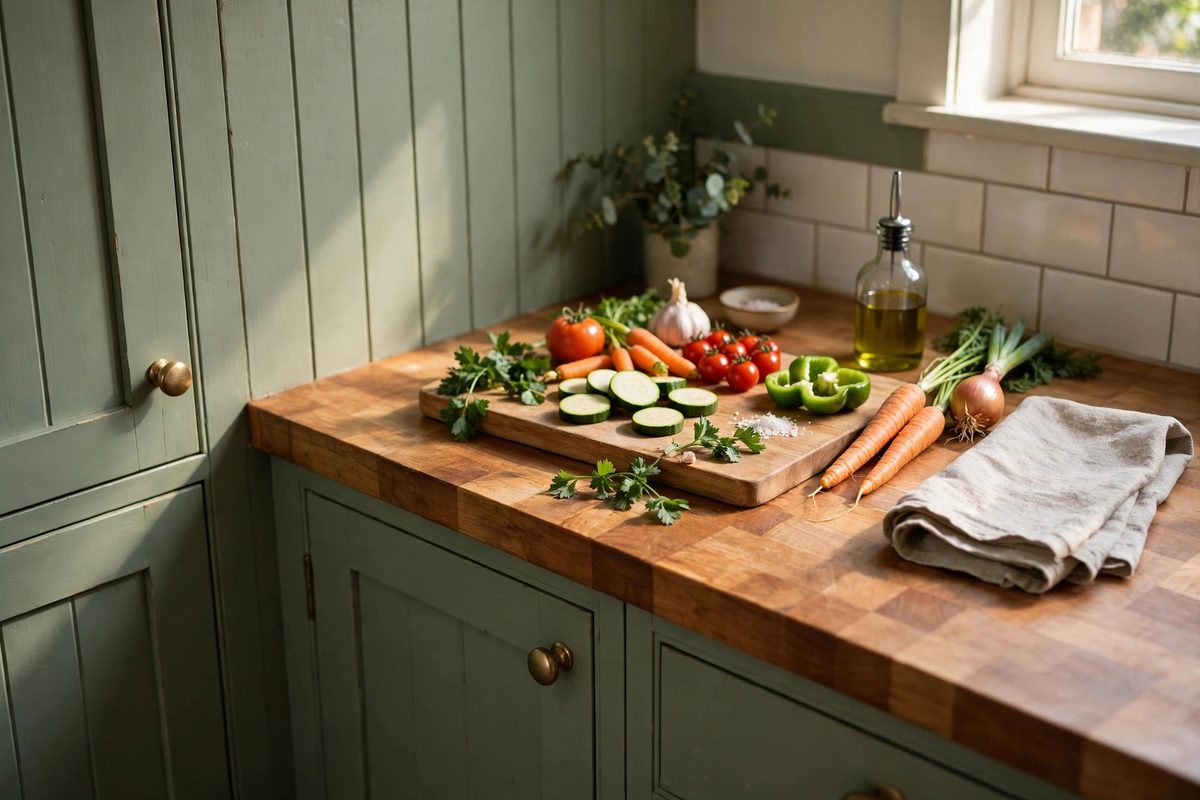
Butcher block counters are the natural partner for sage and cream. Warm wood breaks up two pale colors, adds a work-friendly surface, and costs far less than stone, typically 30 to 60 dollars per square foot installed versus 75 dollars or more for quartz.
Butcher block needs sealing, especially near the sink. Food-safe mineral oil or a hardwax oil finish, reapplied every few months, keeps the surface water-resistant and looking warm rather than dry.
How to make it work
Seal new butcher block before first use, with two to three coats, letting each dry fully. Wipe spills promptly and use a cutting board for raw meat, even on a sealed surface. Sand out small knife marks with 220-grit sandpaper and re-oil the spot; that repairability is one of butcher block’s best traits.
4. Brass Hardware Against Sage
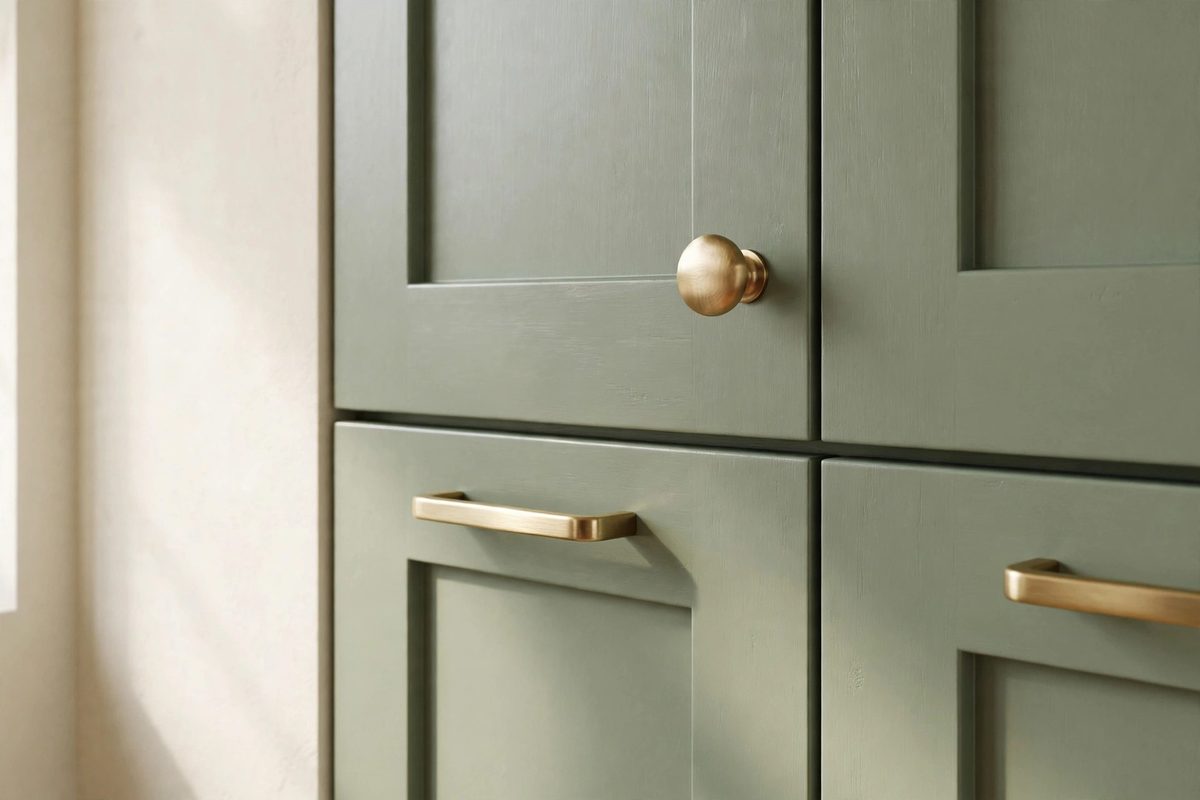
Brass hardware is the jewelry of a sage kitchen. Knobs and pulls in brushed brass warm up the green, echo the butcher block tones, and give plain cabinet doors a finished look. Swapping hardware is also one of the easiest renter-approved upgrades, since you can store the originals and reinstall them later.
Measure the existing hole spacing before buying pulls, usually 3.75 inches or 5 inches center to center. Knobs need only one hole and suit smaller doors and drawers.
How to make it work
Replace hardware one cabinet at a time, keeping screws and originals in a labeled bag. Choose one brass finish for the whole kitchen; mixing polished and brushed brass in a small room looks accidental. Clean brass with a soft cloth and mild soap, and skip abrasive pads.
5. Open Shelving in Cream and Wood
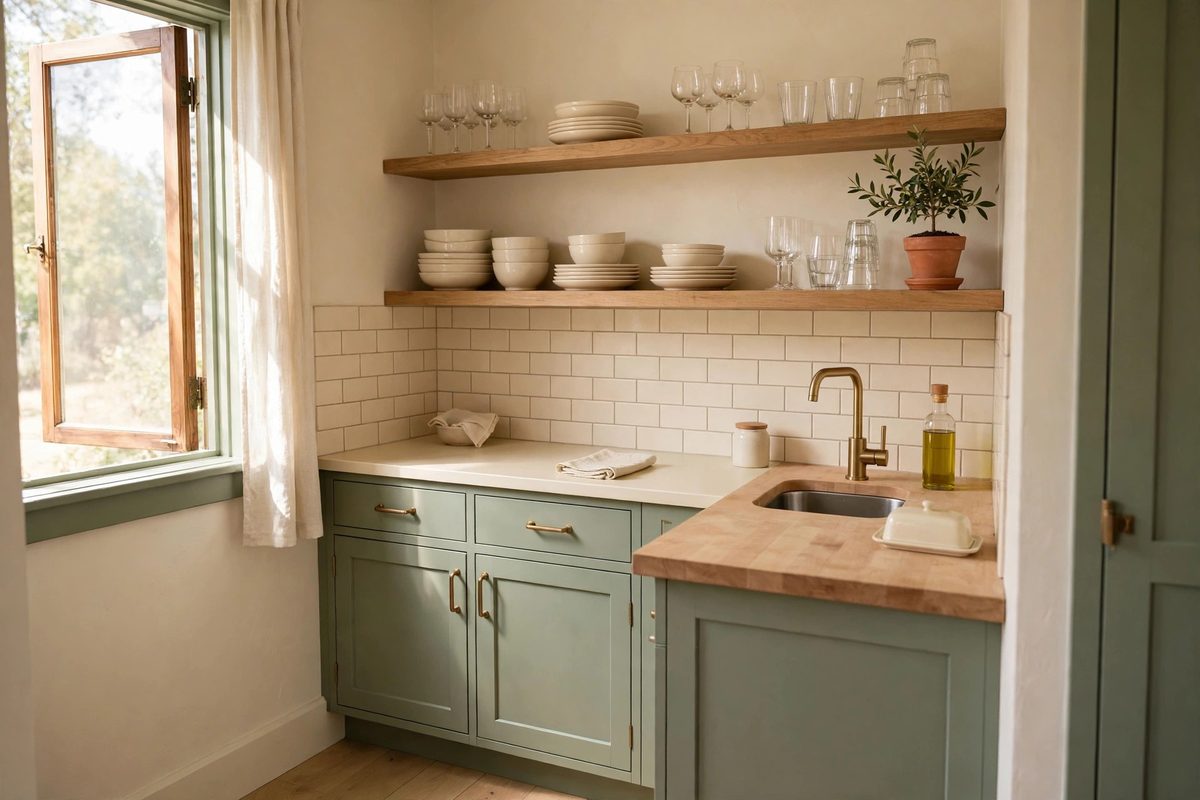
One or two open shelves in cream-painted wood or natural wood give a sage kitchen breathing room and a place to show cream dishware, glassware, and plants. They break up a run of upper cabinets without removing storage entirely.
Open shelves suit items you use daily. In a small kitchen, that usually means bowls, plates, and mugs, not the rarely used serving platter that will collect grease.
How to make it work
Mount shelves 18 to 20 inches above the counter with brackets rated for dish weight. Style them with cream and white dishes, one wood element, and one plant, leaving about a third of each shelf empty. Rotate items seasonally so the shelves do not become a static display.
6. Sage Tile Backsplash Choices
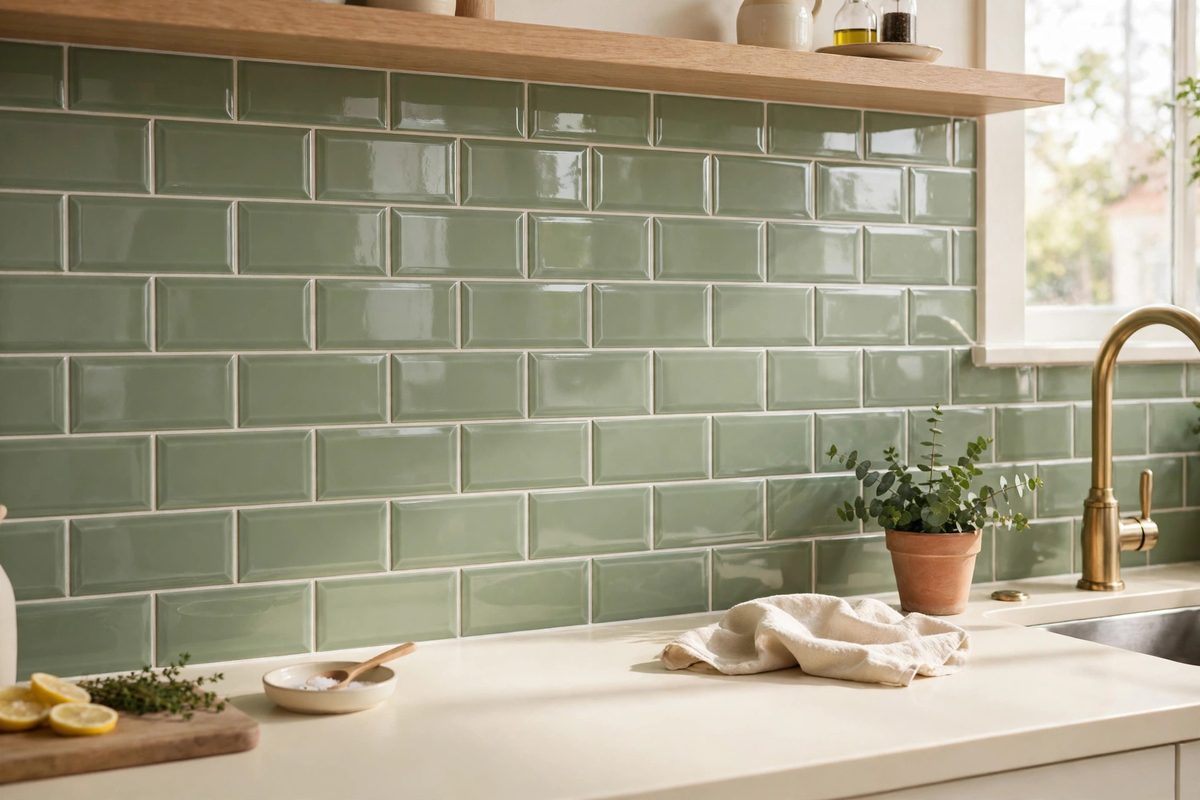
A sage tile backsplash ties cabinets and walls together, but the tile choice matters in a small kitchen. Glossy subway tile in a soft sage reflects light and is easy to wipe. Matte zellige-style tile adds handmade texture but shows splashes more.
Renters can use peel-and-stick sage tiles, 1 to 3 dollars per square foot, which give the same color story and remove without damaging most smooth backsplash surfaces.
How to make it work
If cabinets are already sage, choose a cream or white backsplash instead, so the wall does not blend into one green block. If cabinets are cream, sage tile becomes the accent. Keep grout lines thin and sealed, and wipe the stove area weekly to prevent grease buildup in textured tile.
7. Cream Curtains and Soft Textiles
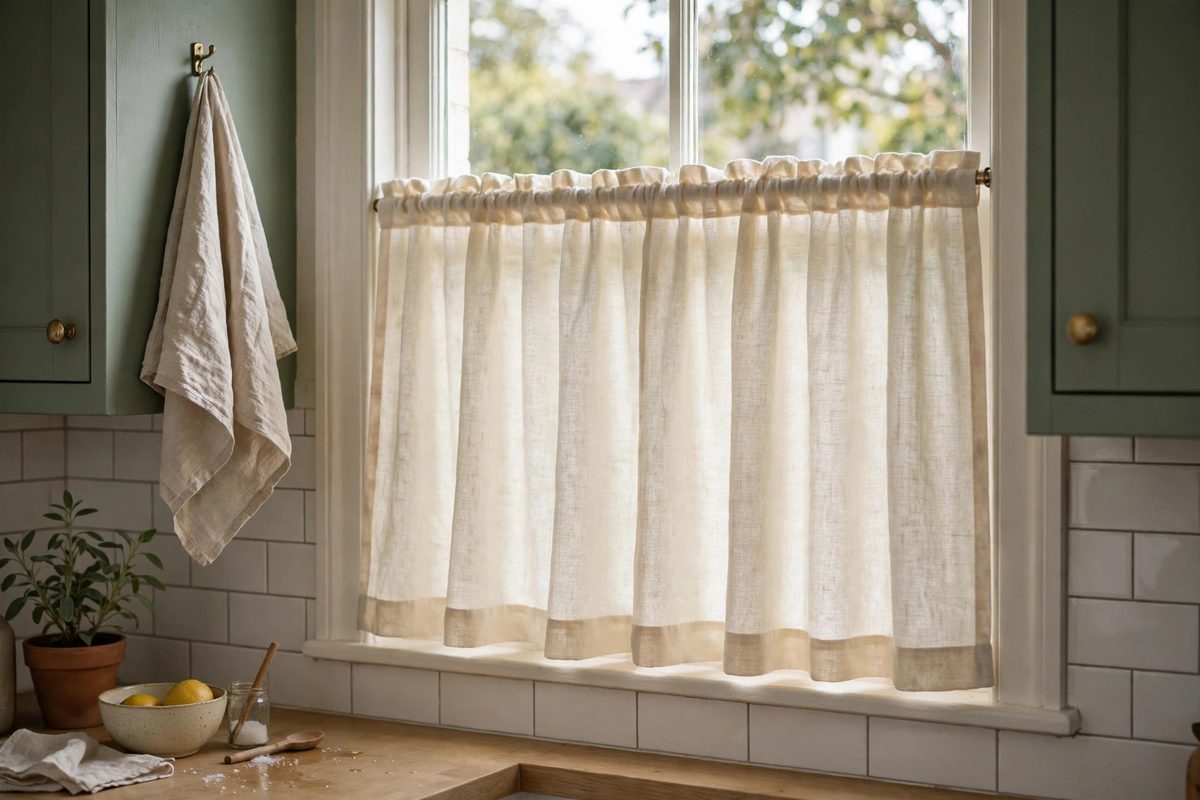
Kitchens need softness, and cream textiles provide it without adding a new color. A cream cafe curtain, a linen tea towel, or a washable runner softens hard cabinet fronts and tile, and makes a small kitchen feel like a room, not a workspace.
Choose washable fabrics. Kitchen textiles get splashed, so machine-washable linen or cotton beats dry-clean-only fabrics every time.
How to make it work
Hang a cafe curtain on a tension rod inside the window frame for a renter-friendly option that still lets in light. Keep textiles away from the stove, and swap tea towels every few days in a busy kitchen. A cream runner should be washable and non-slip, or it becomes a tripping hazard.
8. Plants That Thrive in Kitchen Light
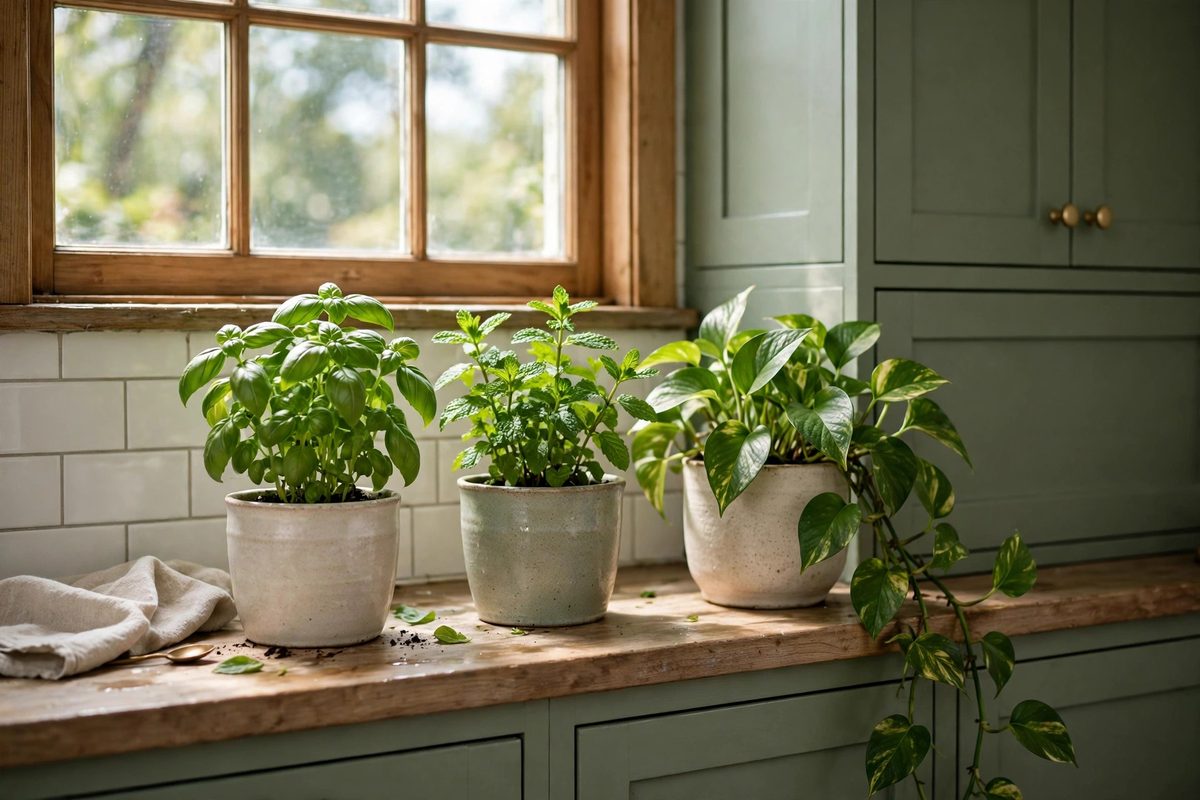
Sage green practically asks for plants, and a kitchen window is a good home for herbs and trailing greens. Basil, mint, and pothos all thrive in bright kitchen light, and herbs earn their space by flavoring dinner.
Keep plants off the main prep counter. A windowsill, the top of upper cabinets, or a hanging planter near the window gives plants light without losing work space.
How to make it work
Pot herbs in containers with drainage, and water over the sink. Harvest herbs regularly; leggy, unharvested basil looks sad fast. If your kitchen window faces north, choose pothos or snake plants over sun-hungry herbs, and move herbs to the brightest sill you have.
9. Small Appliances in Cream, Not Stainless Overload
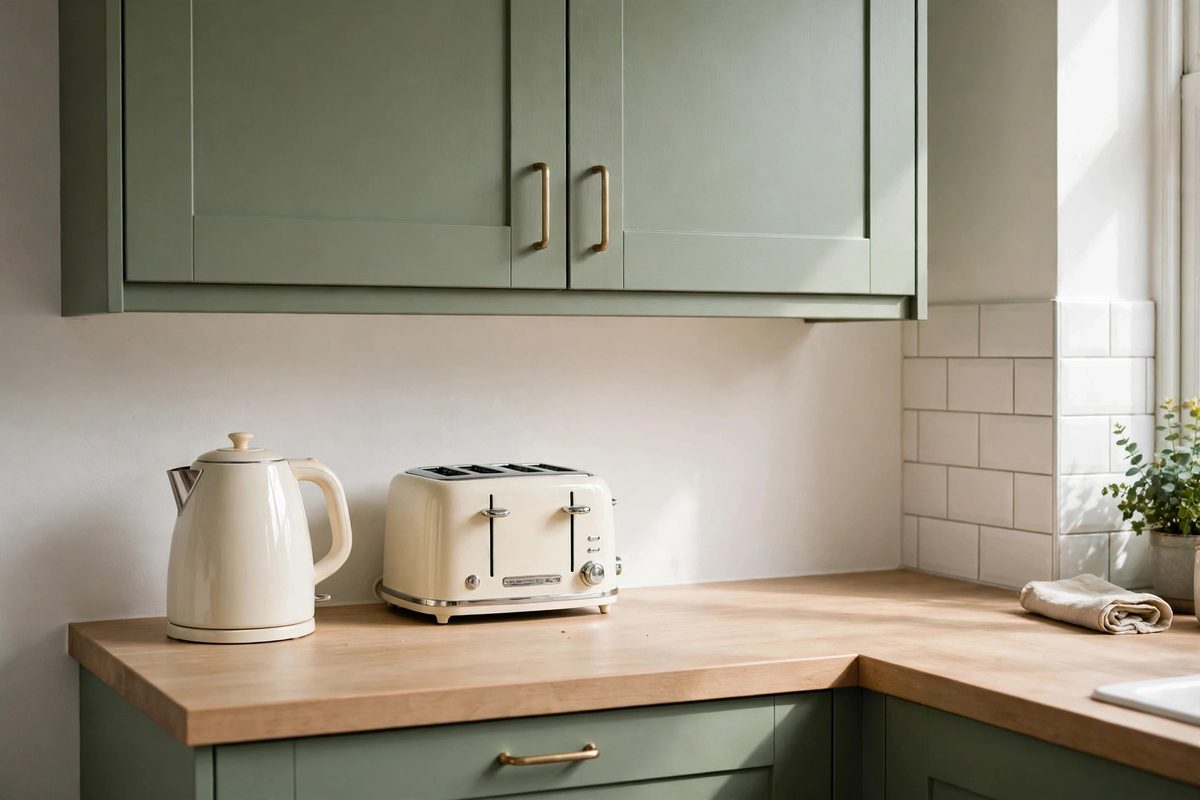
A small kitchen can only handle so much stainless steel before it looks like a commercial kitchen. Cream small appliances, a kettle, a toaster, a stand mixer, soften the room and repeat the cream from walls and uppers.
Limit cream appliances to the two you use most, and store the rest. A cream kettle and toaster on the counter, with other appliances in a cabinet, keeps the palette intentional rather than appliance-store busy.
How to make it work
Choose one cream shade across appliances if possible; bright white appliances next to warm cream cabinets can clash. Wipe cream appliances weekly, since they show coffee and cooking splashes. Keep at least 24 inches of clear counter beside the stove for prep, even if it means storing the toaster.
10. Keeping the Palette to Three Colors
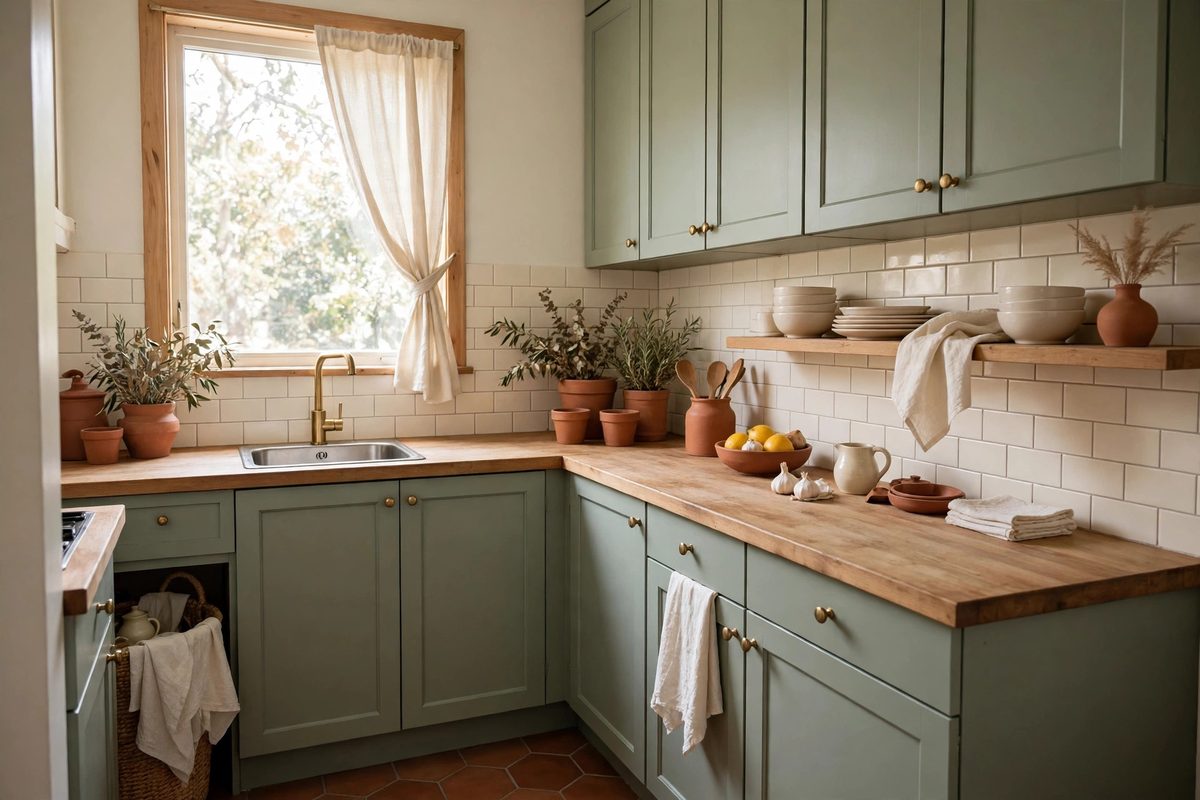
The rule that holds a sage and cream kitchen together is simple: three colors total, plus wood and metal neutrals. Sage, cream, and one accent, like terracotta, dusty blue, or soft black, is plenty. A fourth loud color, even in a single tea towel, can tip the room from calm to busy.
This rule also makes shopping easier. When you know your three colors, you can pass on the pretty but off-palette dish or curtain without a second thought.
How to make it work
Write your three colors on a phone note and check it before buying kitchen items. Repeat the accent color in three places: a dish, a towel, and a small piece of art, for example. If an accent starts appearing in more than five places, it is becoming a fourth main color, so pull it back.
Sage and cream work because they are gentle together and let wood and brass do the warming. Keep the palette to three colors, the counters mostly clear, and the kitchen will feel calm, fresh, and easy to cook in.