11 Small Space Storage Ideas That Use Forgotten Areas Without Making Rooms Feel Crowded
Discover 11 small space storage ideas using above-door shelves, under-bed drawers, cabinet gaps, and multi-duty furniture to maximize storage without visual clutter.
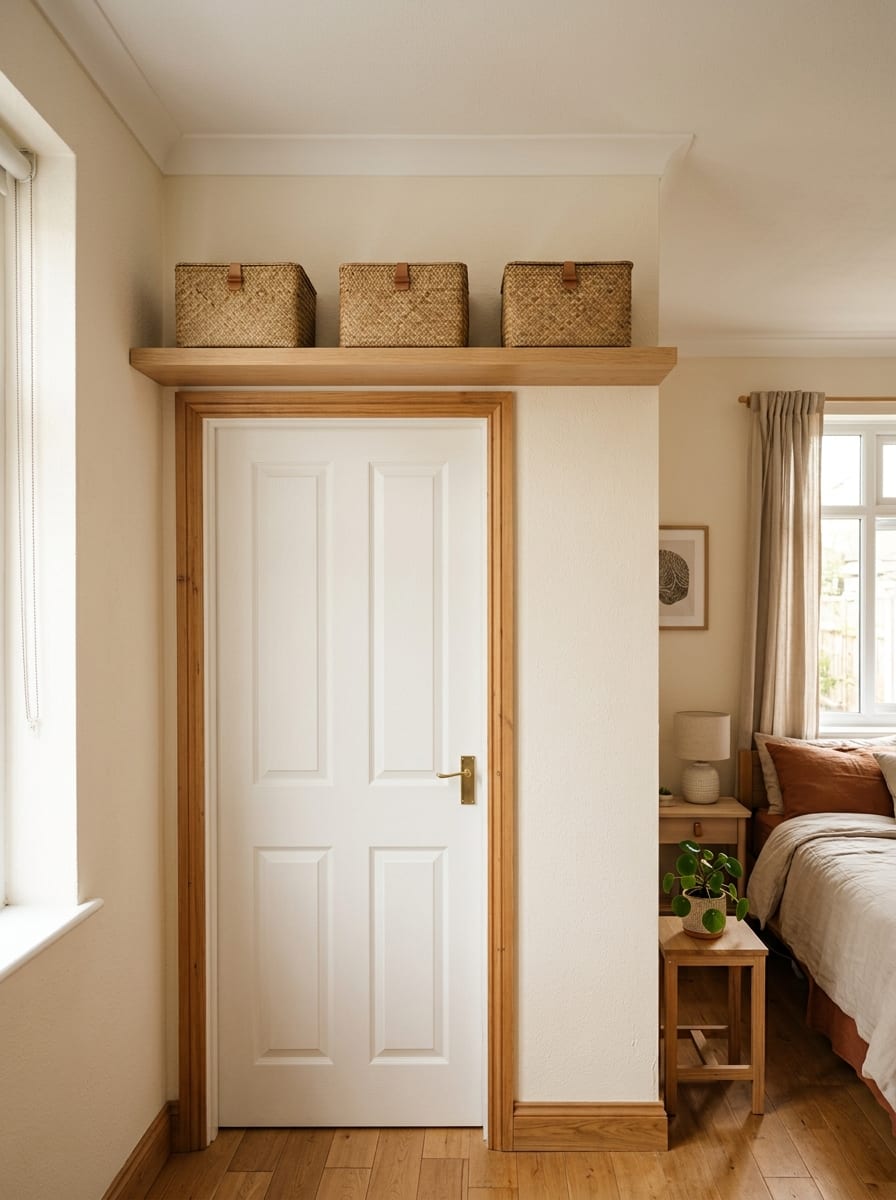
Small apartment doorway with a shallow above-door shelf holding neat storage baskets and essentials
In This Guide
Small spaces rarely run out of storage because there is literally nowhere left to put anything.
More often, the problem is that the available storage is concentrated in the obvious places.
Cabinets, closets, drawers, and shelves fill up first. Then everything else starts migrating onto counters, floors, chairs, and whatever other surface happens to be available.
Before adding another bulky storage unit, look at the spaces you are currently ignoring.
The area above a doorway. The back of a door. The gap beside a cabinet. The space underneath the bed. An empty section of wall that is too narrow for normal furniture. A high corner that is difficult to reach but useful for things you rarely need.
These spaces can provide meaningful storage without taking over the room.
The key is not to turn every empty inch into storage. It is to match each overlooked space with the right type of item and the right frequency of access.
Here are 11 ways to do it.
1. The Above-Door Shelf
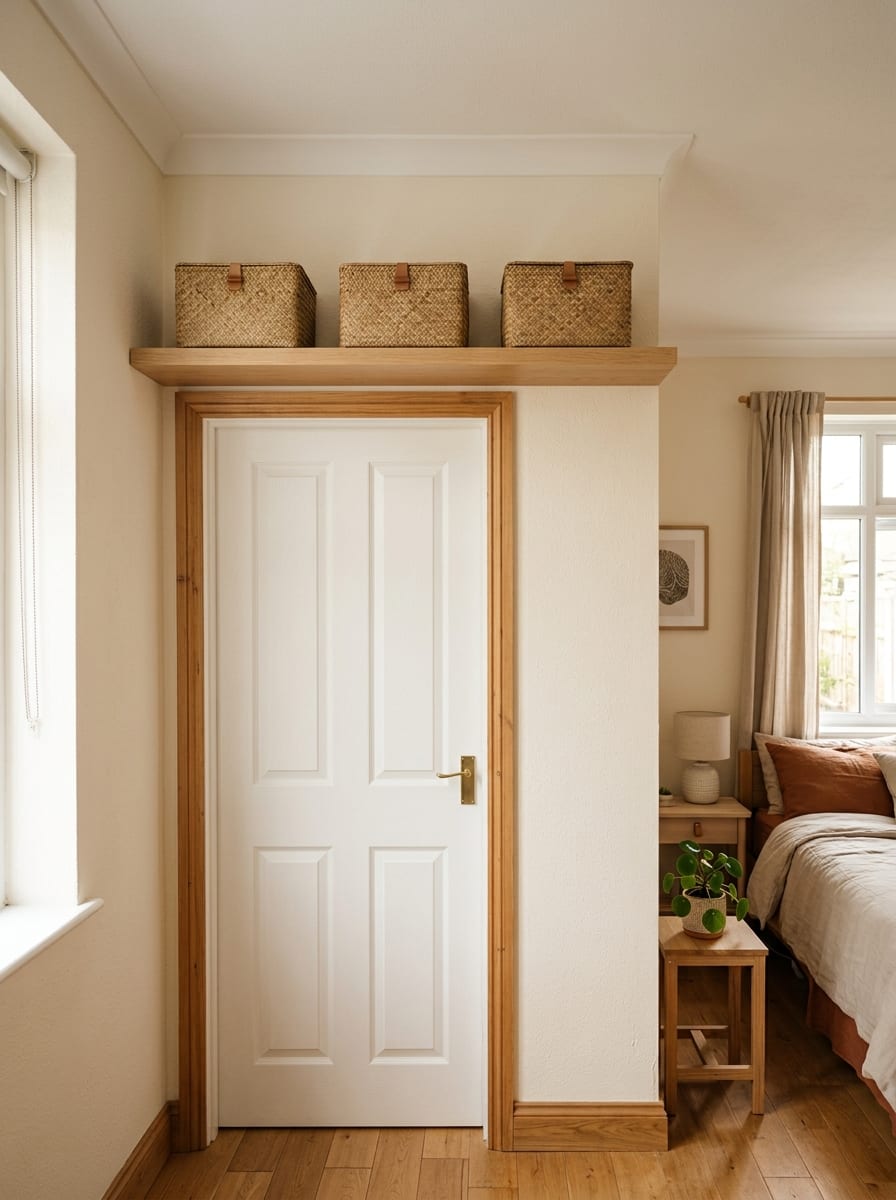
The wall above an interior door is often completely unused.
A shallow shelf can turn that dead zone into storage for lightweight items you do not need every day, such as extra linens, seasonal accessories, small luggage, decorative objects, or backup household supplies.
Because the shelf is above eye level, it works best for things that do not need constant access.
Keep the storage visually simple. A few matching baskets or closed boxes can make the area feel intentional instead of turning it into a pile of miscellaneous belongings.
Before installing anything, check the wall construction and mounting requirements, especially if you plan to store heavier objects.
Best for: seasonal items, backup supplies, lightweight linens, rarely used accessories.
Avoid: heavy objects that are difficult to safely support or items you need several times a day.
Design name: The Above-Door Shelf
2. The Behind-Door Storage Panel
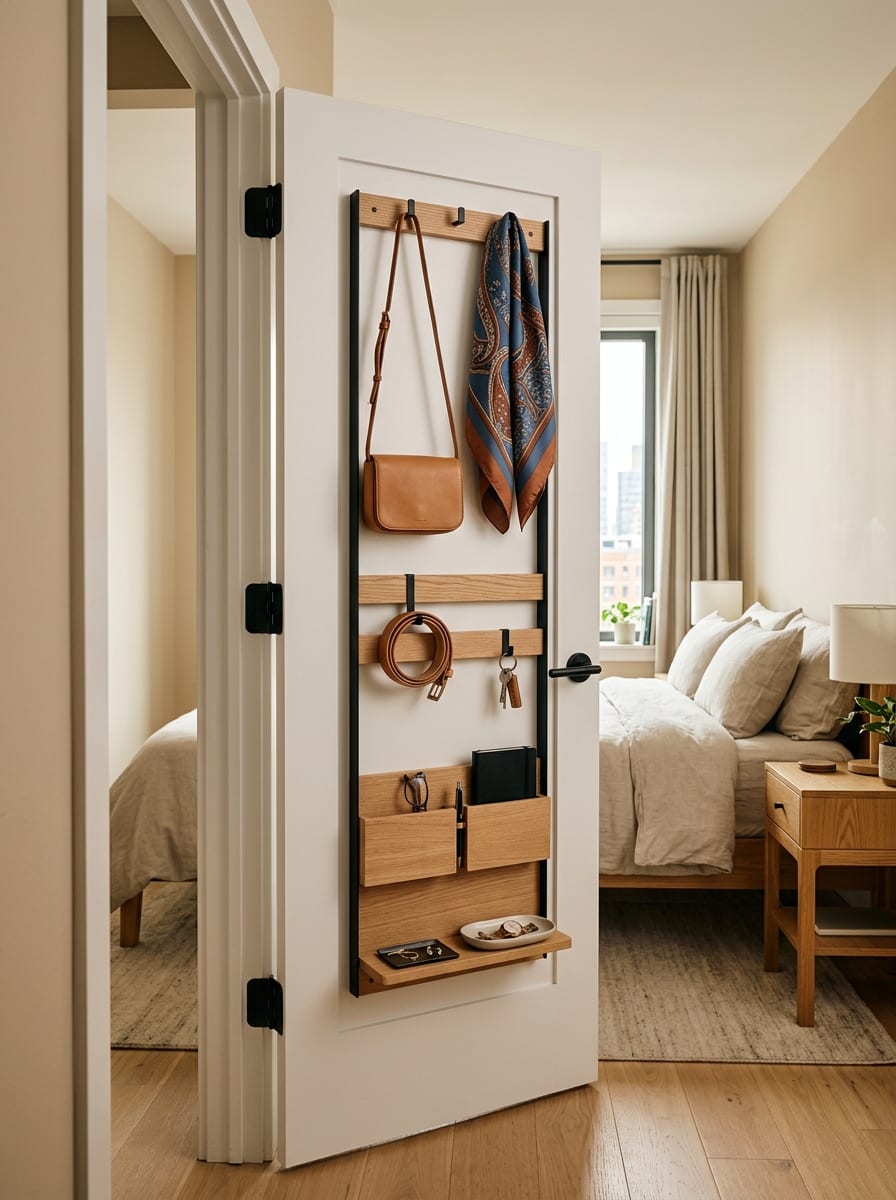
The back of a door can provide useful storage without consuming additional floor space.
A slim hanging organizer, rail system, or purpose-built panel can hold small items that are otherwise difficult to store.
This works particularly well for accessories, cleaning tools, toiletries, craft supplies, or other lightweight objects that benefit from being visible and easy to reach.
The important limitation is the door itself.
Make sure the storage does not interfere with the door frame, handle, hinges, nearby furniture, or the ability to close the door completely.
A behind-door system should make the room easier to use, not turn the door into a difficult piece of furniture.
Best for: small accessories, lightweight supplies, cleaning tools, toiletries.
Avoid: bulky objects that prevent the door from opening or closing normally.
Design name: The Behind-Door Storage Panel
3. The Under-Bed Drawer Zone
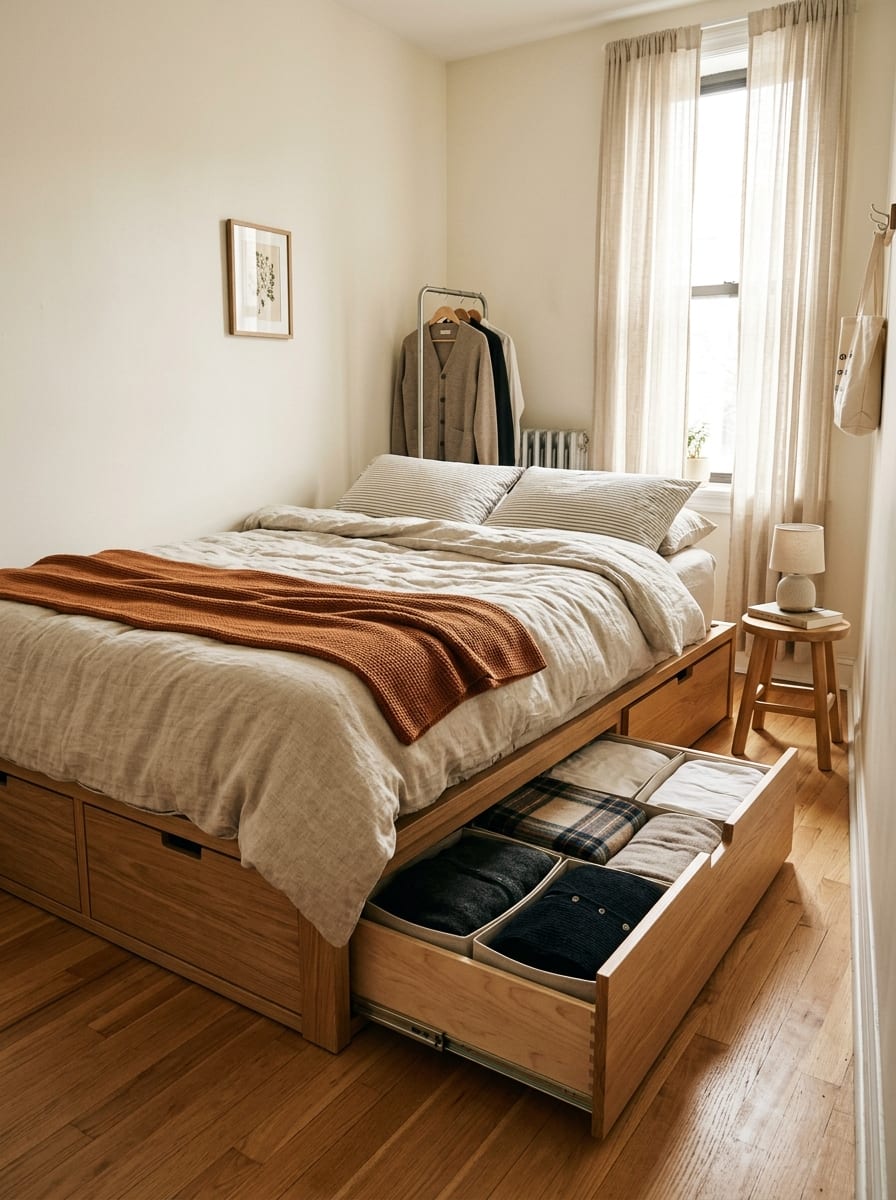
The space underneath a bed is one of the largest overlooked storage areas in many small bedrooms.
Instead of pushing random boxes underneath, use containers or drawers that are designed around the actual clearance beneath the bed.
This makes the storage easier to access and prevents the space from becoming a graveyard of forgotten belongings.
Use it for things that do not need daily access, such as off-season clothing, spare bedding, luggage accessories, or sentimental items.
Keep frequently used items elsewhere. Crawling under the bed every morning to find something you use daily quickly becomes frustrating.
Also consider airflow and cleaning access when deciding what to store underneath.
Best for: seasonal clothing, spare bedding, rarely used accessories.
Avoid: damp-sensitive items in poorly ventilated areas or objects that make it impossible to clean underneath the bed.
Design name: The Under-Bed Drawer Zone
4. The Furniture-to-Wall Gap
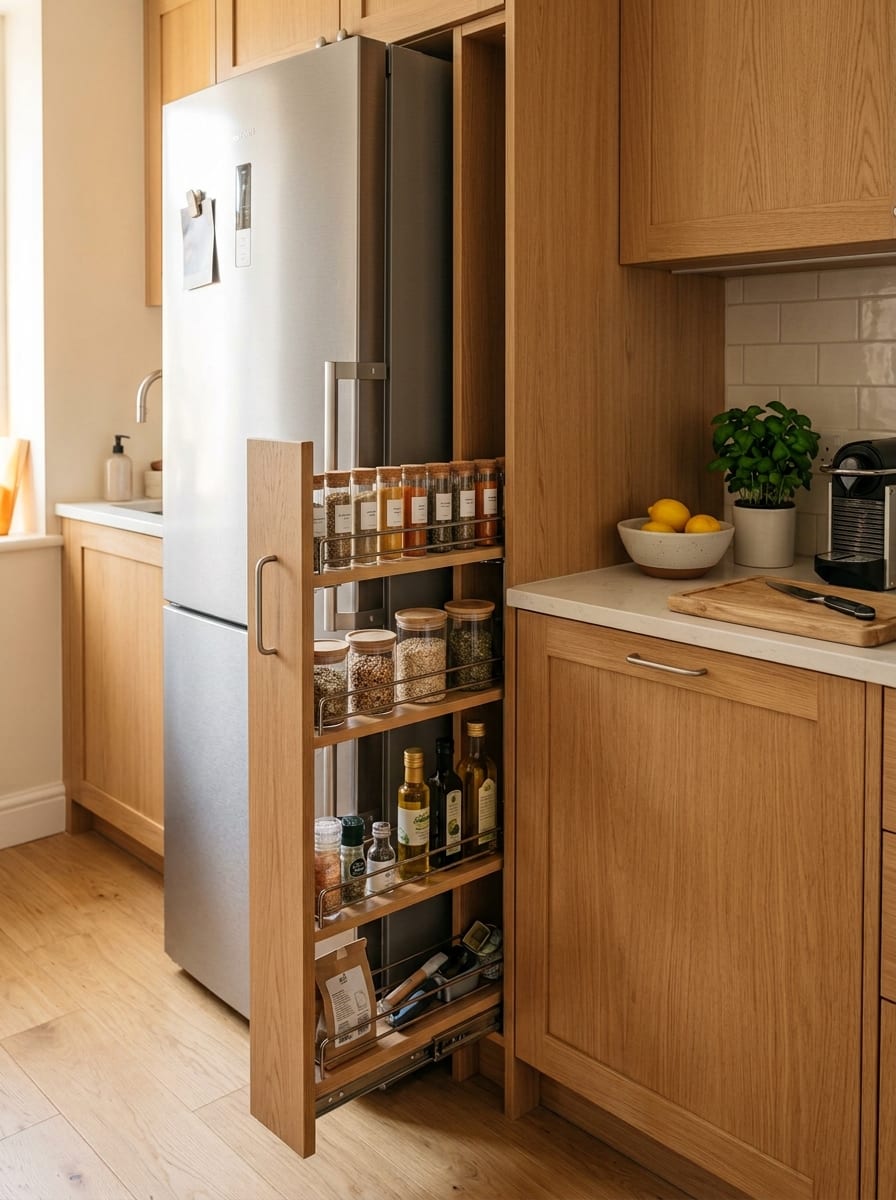
A narrow gap between furniture and a wall can look too small for conventional storage but still be useful.
A slim rolling cart, narrow vertical shelf, or purpose-built pull-out unit can turn the gap into storage for books, cleaning supplies, pantry items, or small household equipment.
Measure the entire opening first.
The important measurement is not just the width. You also need to consider whether the storage can be pulled out without hitting another piece of furniture.
A narrow storage unit is only helpful if you can actually reach everything inside it.
Best for: narrow household supplies, books, pantry items, small appliances.
Avoid: filling a gap that is needed for ventilation, appliance access, or furniture movement.
Design name: The Furniture-to-Wall Gap
5. The Above-Cabinet Storage Line
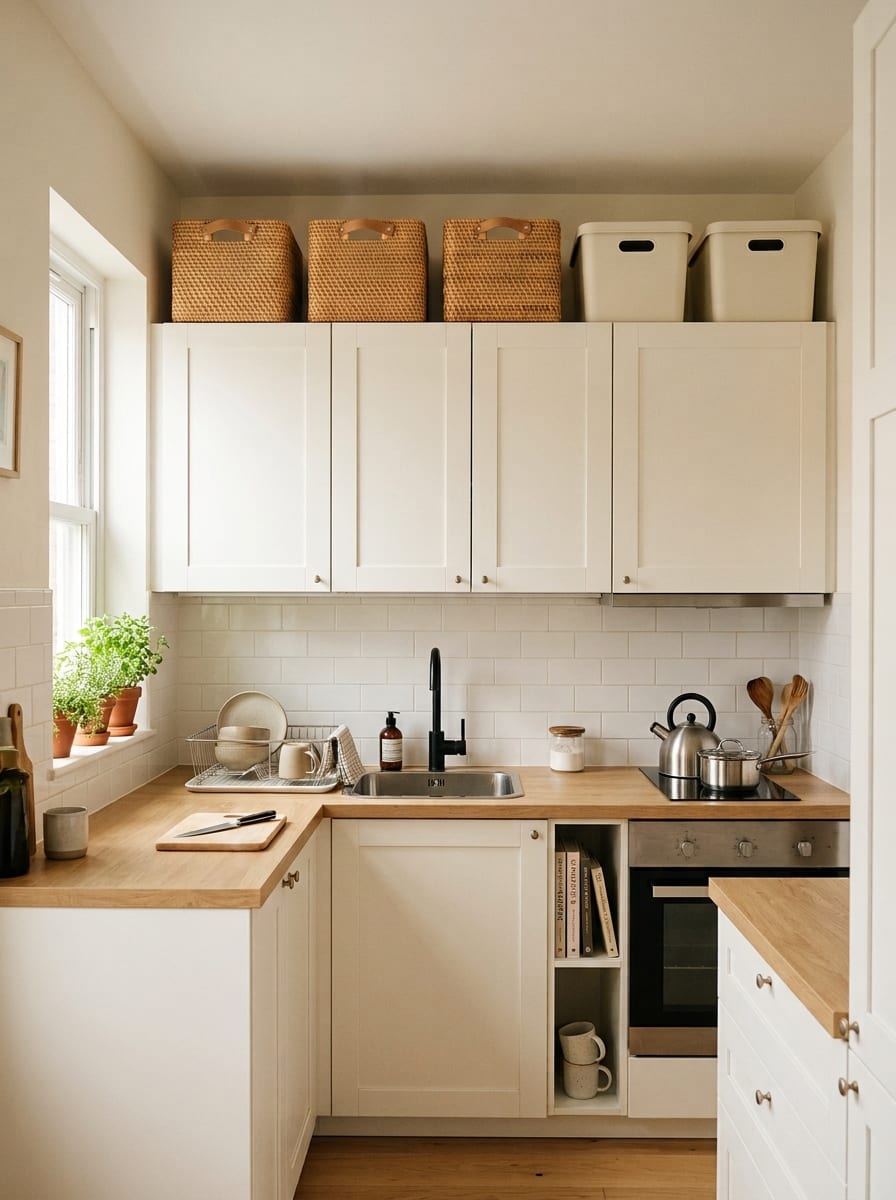
The space above kitchen cabinets can become useful storage when it is treated as a controlled zone rather than an open dumping ground.
Use matching containers or attractive closed boxes for items that are needed occasionally.
This can be especially useful for seasonal kitchenware, entertaining pieces, backup supplies, or objects that are too large for everyday cabinets.
Because kitchen air can contain grease and moisture, choose storage that can be cleaned easily and avoid placing unsuitable items directly in an exposed area.
If the gap is difficult to reach, reserve it for low-frequency storage.
The point is to reclaim the space without making the kitchen look visually heavier.
Best for: seasonal kitchenware, serving pieces, backup supplies.
Avoid: everyday essentials or anything that would be difficult to clean in an exposed position.
Design name: The Above-Cabinet Storage Line
6. The Window-Edge Ledge
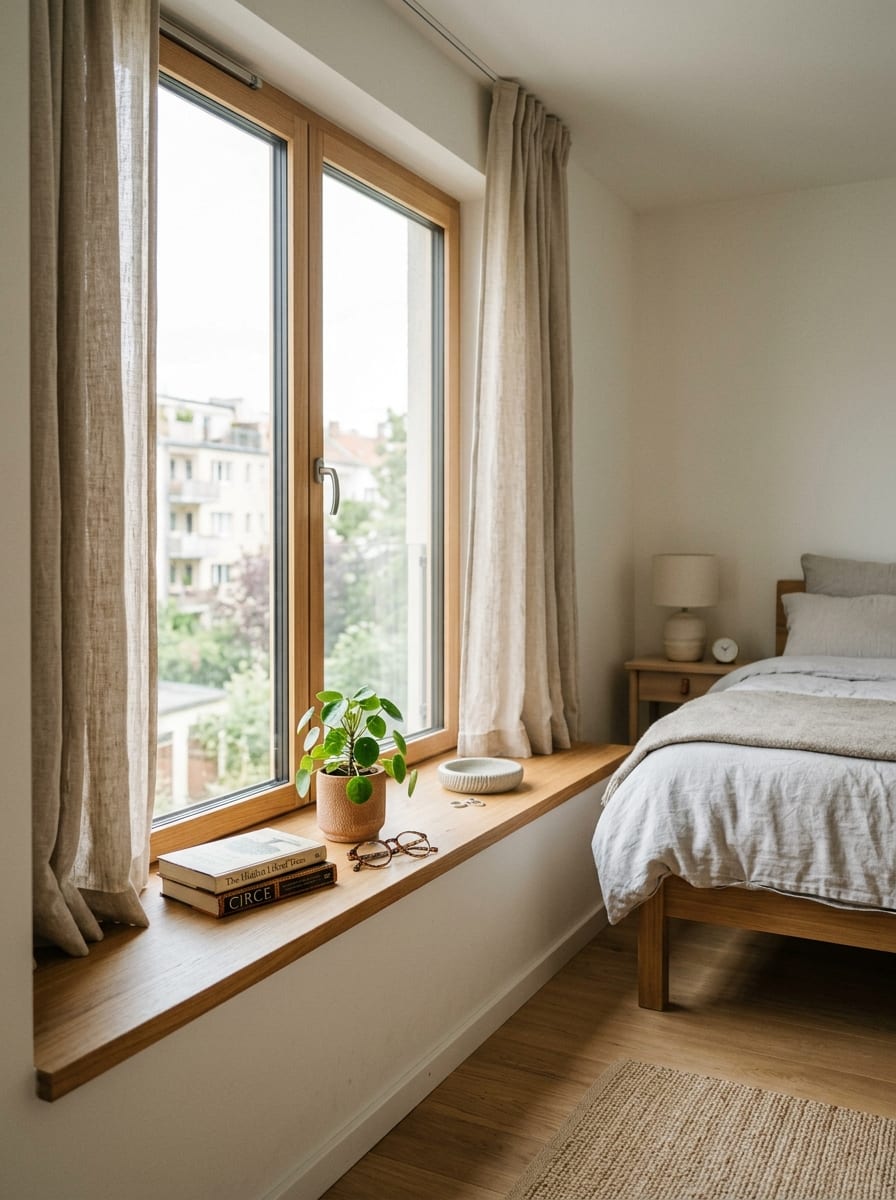
A window area can sometimes provide a small horizontal surface for carefully selected storage.
A shallow ledge, existing sill, or narrow shelf can hold a few books, small plants, or decorative objects without consuming floor space.
This is particularly useful when the window area is otherwise empty.
But not every window sill should become storage.
Avoid blocking window operation, covering vents, interfering with curtains, or placing items where moisture or condensation could damage them.
Use this idea when the architecture already provides a suitable surface or when a properly installed shallow shelf makes sense.
Best for: books, small objects, lightweight decor.
Avoid: blocking windows, vents, curtains, or emergency access.
Design name: The Window-Edge Ledge
7. The Side-of-Cabinet Storage Strip
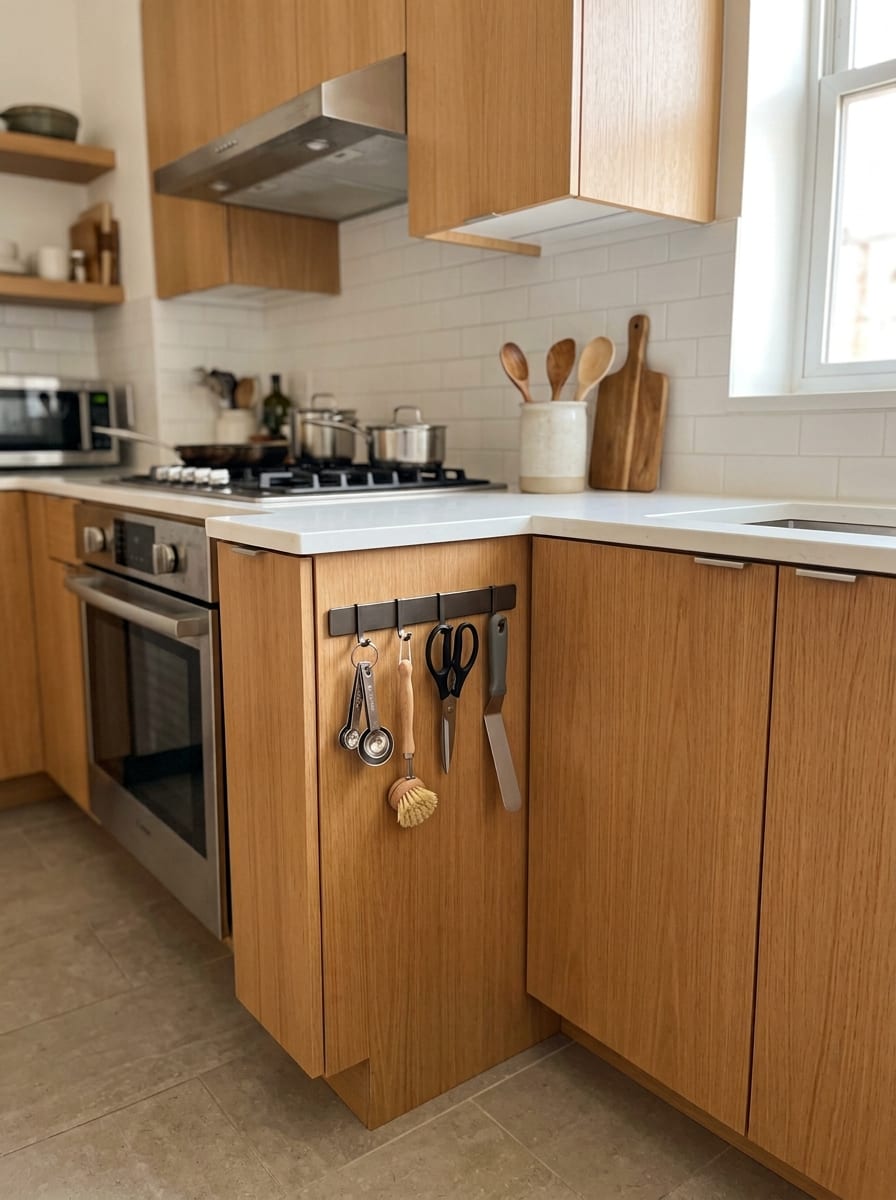
The side of a cabinet can become useful storage when it is visible but otherwise unused.
A narrow rail, magnetic system where appropriate, or shallow mounted organizer can hold small items without requiring another cabinet or drawer.
This is especially useful in kitchens, bathrooms, laundry areas, and home offices where small frequently used objects tend to accumulate.
Keep the system shallow enough that it does not interfere with adjacent walking space or cabinet doors.
This is a good example of making a small vertical surface work harder without turning it into a major storage wall.
Best for: measuring tools, small kitchen accessories, brushes, office supplies, lightweight frequently used items.
Avoid: heavy objects or storage that interferes with cabinet operation.
Design name: The Side-of-Cabinet Storage Strip
8. The High-Corner Shelf
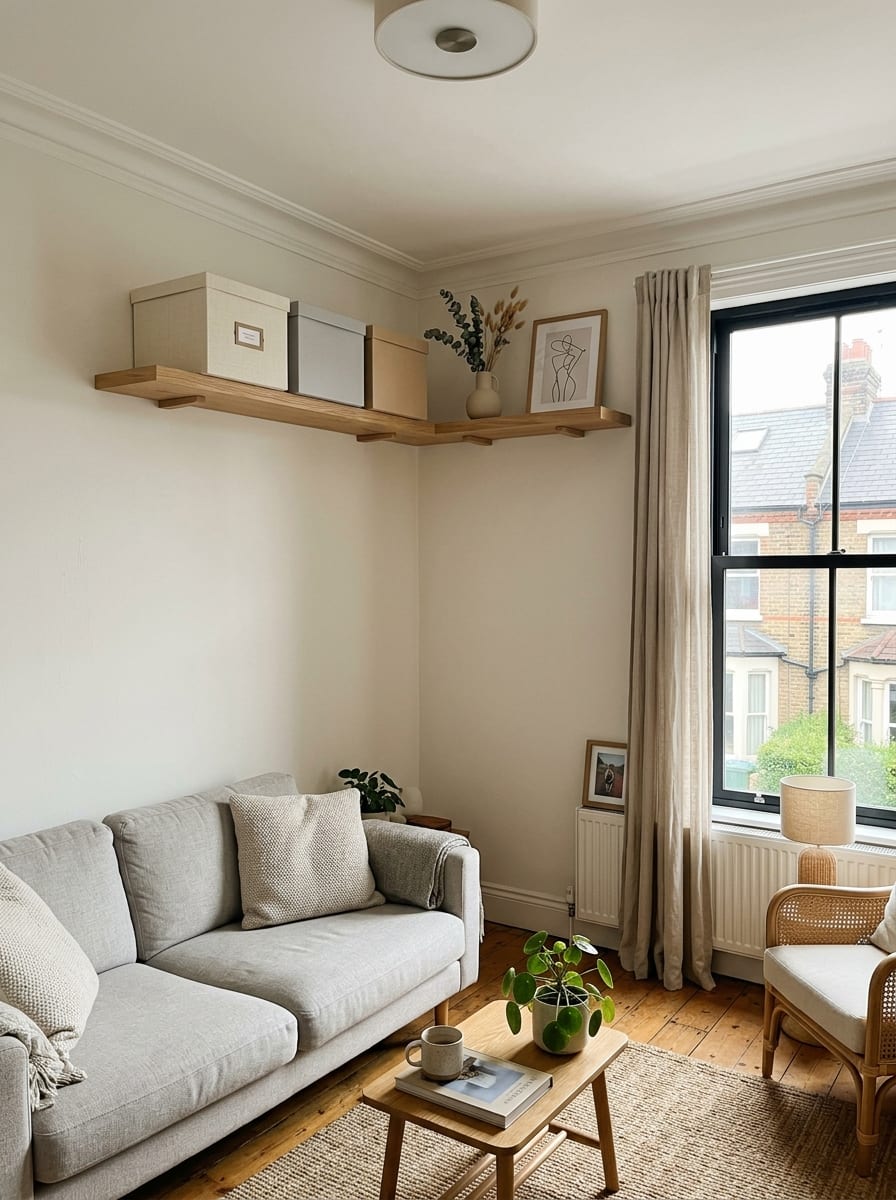
The upper corner of a room is often difficult to use because standard furniture cannot reach it efficiently.
A small high shelf can make that space useful for things you access occasionally.
This works well for decorative storage, spare linens, seasonal objects, or lightweight boxes.
The higher the shelf, the less frequently you should need to access it.
Keep a stable step stool available if necessary, and do not store heavy objects where removing them would be awkward or unsafe.
The goal is to use otherwise dead vertical space without creating a difficult maintenance problem.
Best for: seasonal items, lightweight boxes, decorative storage.
Avoid: heavy objects or anything you need every day.
Design name: The High-Corner Shelf
9. The Narrow Wall Slice
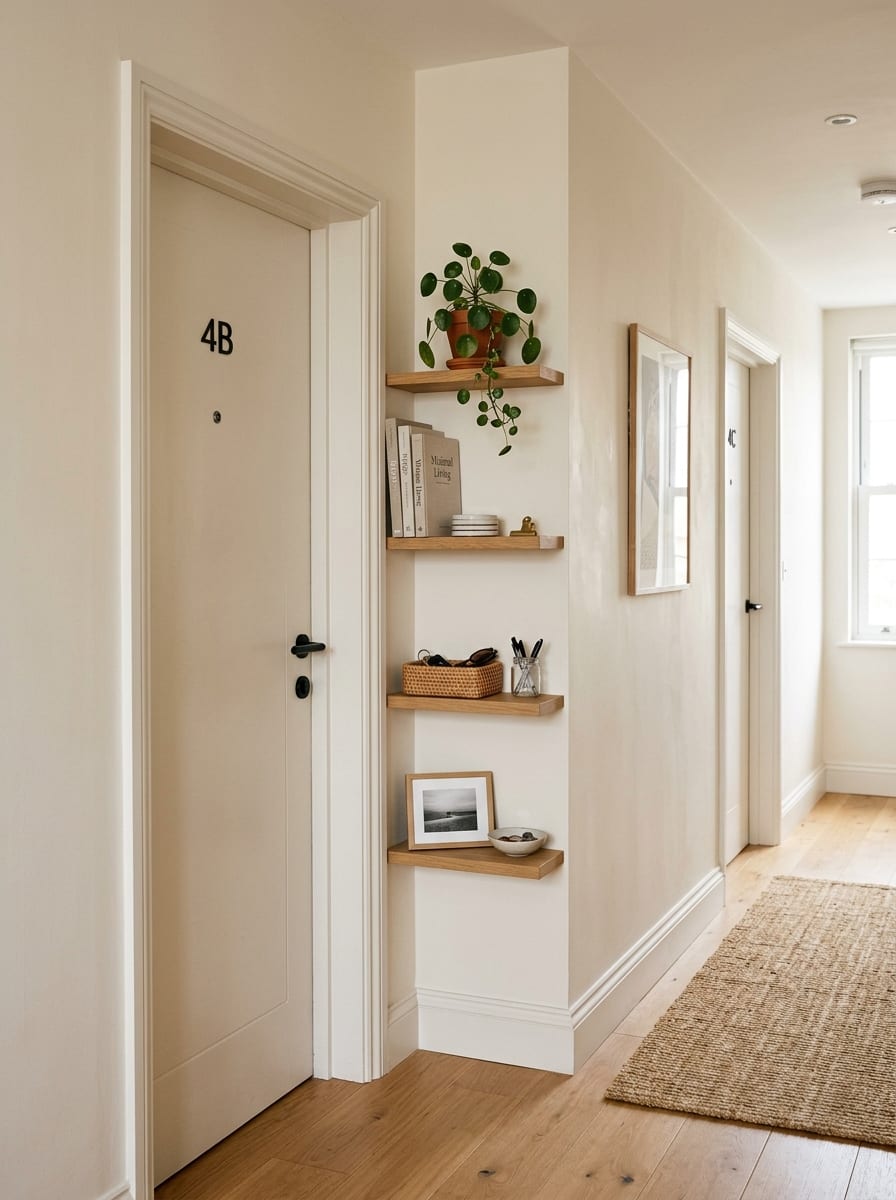
A wall does not have to be wide enough for a standard bookcase to become useful.
A very narrow vertical section can support a slim shelving system, shallow ledges, or a compact wall-mounted organizer.
This works particularly well beside a doorway, next to a desk, between furniture pieces, or in an awkward section of hallway.
The important thing is to respect the wall’s actual width rather than trying to force a large storage unit into it.
Use shallow storage for small items and keep the visual composition simple.
A narrow wall can become useful without becoming a storage feature that dominates the entire room.
Best for: books, small accessories, office supplies, toiletries, lightweight household items.
Avoid: deep shelving that projects into the walkway.
Design name: The Narrow Wall Slice
10. The Headboard Storage Zone
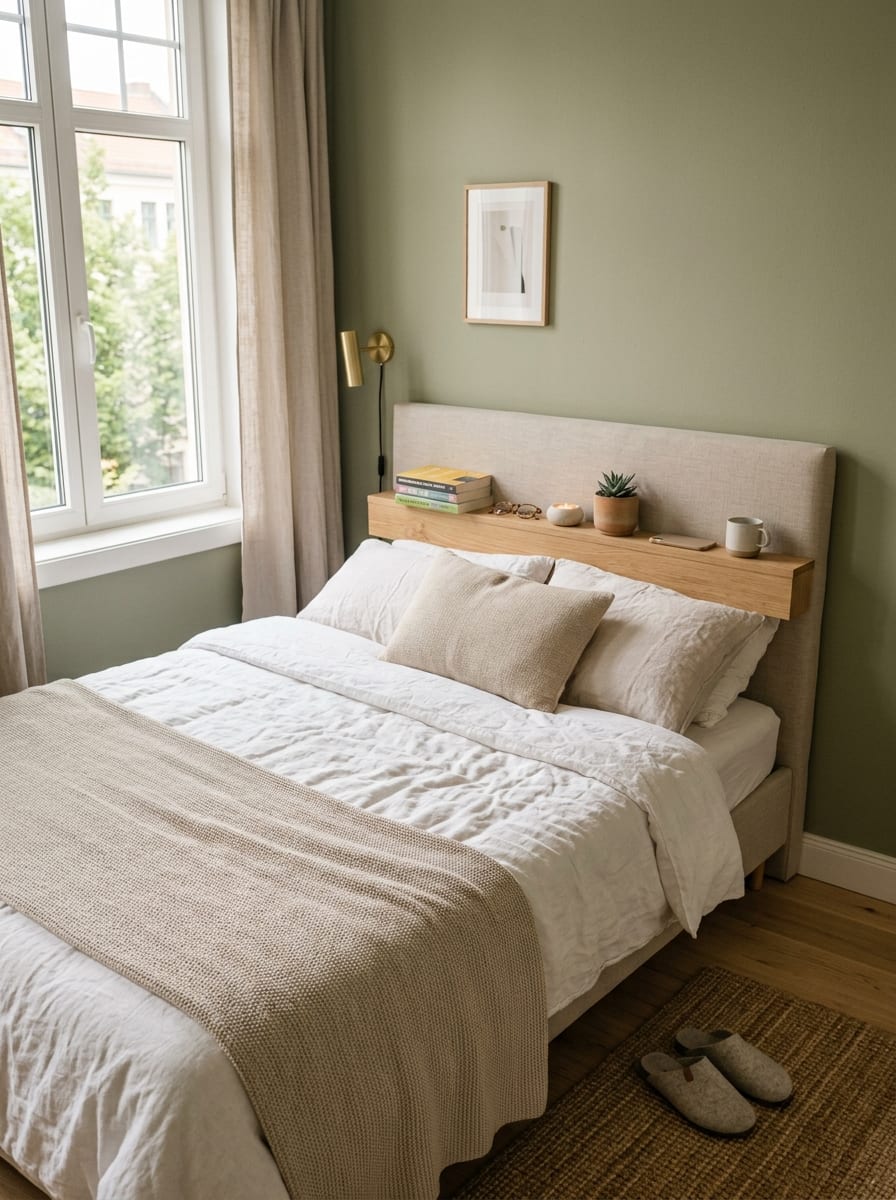
The wall behind a bed can sometimes provide storage without adding another freestanding piece of furniture.
A shallow headboard with integrated shelves, a wall-mounted ledge, or a carefully designed storage panel can give small bedrooms a place for books and personal items.
The important thing is keeping the storage shallow and visually controlled.
A large shelving unit directly behind a bed can make the room feel heavier, especially when the bedroom is already small.
Use the zone for a limited number of useful objects rather than treating it as another full bookcase.
Also consider how the storage interacts with pillows, bedding, lighting, and any ventilation or electrical requirements.
Best for: books, glasses, small personal items, bedtime essentials.
Avoid: deep shelves directly above where someone sleeps or heavy objects that could become a safety concern.
Design name: The Headboard Storage Zone
11. The Double-Duty Furniture Swap
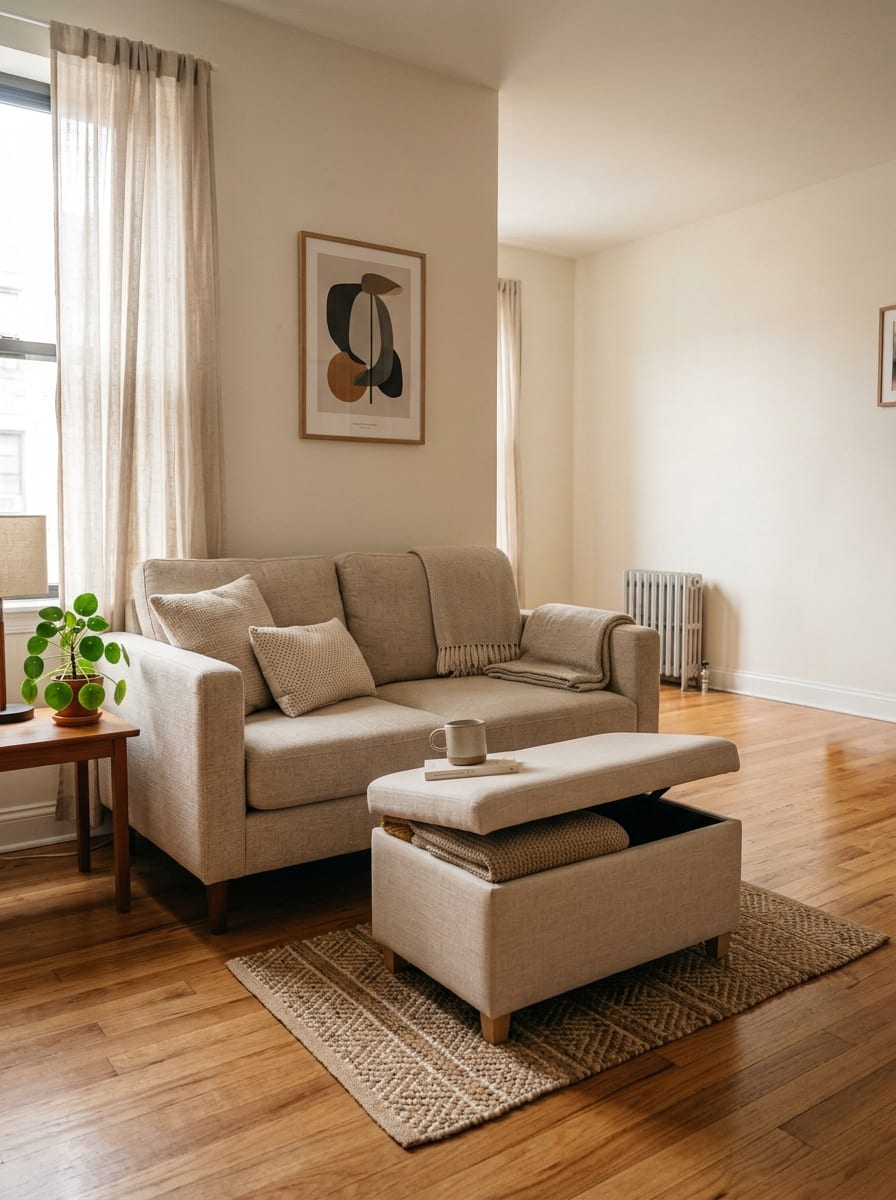
Sometimes the best storage idea is not adding storage at all.
Instead, replace one piece of furniture with another that performs two jobs.
A storage ottoman can provide seating and hidden storage. A bed with drawers can replace a basic bed plus separate storage bins. A console with drawers can provide both a landing surface and household storage.
This works because you are increasing storage without increasing the number of major objects in the room.
The important rule is to replace rather than accumulate.
If you add a storage bench while keeping the existing bench, you have not solved the space problem. You have created another object.
Look for the furniture that already occupies valuable floor space and ask whether it could perform an additional function.
Best for: bedding, blankets, accessories, games, small household supplies.
Avoid: furniture that becomes difficult to use because its storage function takes priority over comfort.
Design name: The Double-Duty Furniture Swap
How to Find Forgotten Storage Space in a Small Home
Walk through the room without looking for furniture.
Instead, look for unused surfaces and gaps:
- Above doors
- Behind doors
- Under beds
- Beside furniture
- Above cabinets
- Along narrow wall sections
- Around window areas
- High corners
- Furniture sides
- Existing furniture that could perform two jobs
Then ask one more question: How often do I need to access what I want to store?
This determines where it should go:
- Daily items belong in easy-to-reach storage.
- Weekly items can live slightly farther away.
- Seasonal and backup items can occupy high shelves, under-bed storage, or other less convenient zones.
This simple distinction prevents the common mistake of putting frequently used belongings in the hardest-to-reach spaces just because those spaces are available.
Match Storage to the Item
Not every storage space should hold the same type of thing:
High storage
Best for lightweight, infrequently used items.
Under-bed storage
Best for seasonal or low-frequency belongings.
Behind-door storage
Best for lightweight objects that benefit from quick access.
Narrow gaps
Best for tall, slim items or small collections that would otherwise have no home.
Furniture storage
Best for items you want close to where they are used.
Visible shelves
Best for attractive objects and things you reach for regularly.
Thinking about the relationship between the item and the storage location makes small-space organization much easier.
The Access-Frequency Test
Before putting something into an overlooked storage area, classify it:
- Every day: Keep it within easy reach.
- Several times a week: Nearby storage is appropriate.
- Occasionally: Higher or less convenient storage can work.
- Seasonally: High shelves, under-bed storage, and other low-access areas become more useful.
- Rarely or never: Question whether you need to store it at all.
A storage solution is not successful simply because it creates space. It is successful when you can find and retrieve what you need without creating another problem.
How to Use Forgotten Space Without Making a Room Feel Crowded
The biggest mistake is treating every empty surface as an invitation to add storage.
That can make a small apartment feel visually compressed even when the floor remains clear.
Instead, choose storage that has one or more of these qualities:
- Shallow
- Closed
- Visually consistent
- Located above eye level
- Integrated into existing furniture
- Limited to a specific purpose
You should also leave some areas empty. Visual breathing room is part of good small-space organization.
The goal is not maximum storage density. It is enough storage in the right places.
Small-Space Storage Mistakes to Avoid
Filling every gap
An empty gap may be providing clearance, ventilation, or visual breathing room. Do not fill it automatically.
Storing everyday items in difficult places
If you need something every morning, putting it on a high shelf is going to make the room harder to use.
Buying storage before measuring
A few inches can determine whether a storage piece fits comfortably or becomes an obstacle. Measure the actual space and consider doors, drawers, handles, and nearby furniture.
Creating inaccessible storage
A shelf that requires moving three other objects to reach one item is not efficient storage.
Ignoring weight
Wall-mounted storage needs appropriate support for what you intend to store. Heavy items should not be placed in systems that are designed only for lightweight objects.
Turning vertical space into visual clutter
Vertical storage is useful, but more shelves do not automatically mean better organization. Keep categories controlled and avoid displaying every possession.
A Simple Forgotten-Space Storage Formula
Use this sequence whenever a room feels short on storage:
Find an overlooked space → measure it → identify the access frequency → choose the lightest storage solution that fits → assign one clear category → protect the walking path → leave some space visually empty.
This keeps the storage system intentional. You are not trying to turn the apartment into a warehouse. You are simply giving useful belongings a better place to live.
Conclusion
Small homes often have more storage potential than they appear to have.
The space above a door, behind a door, underneath a bed, beside a cabinet, or inside a narrow wall section may not look important on its own. But several small storage zones can make a meaningful difference when each one is matched to the right type of item.
The most effective solutions also tend to be the least dramatic: a shallow shelf, a slim organizer, a drawer under the bed, a narrow pull-out unit, or a piece of furniture that performs two jobs.
You do not need to fill every empty inch. The smarter approach is to find the forgotten spaces that can store something useful without making the room harder to live in.