19 Small Apartment Organization Ideas for People Who Are Tired of Constant Clutter
Tired of constant clutter? These 19 small apartment organization ideas use smarter storage, realistic routines, hidden storage and simple systems to make a small home easier to keep tidy.
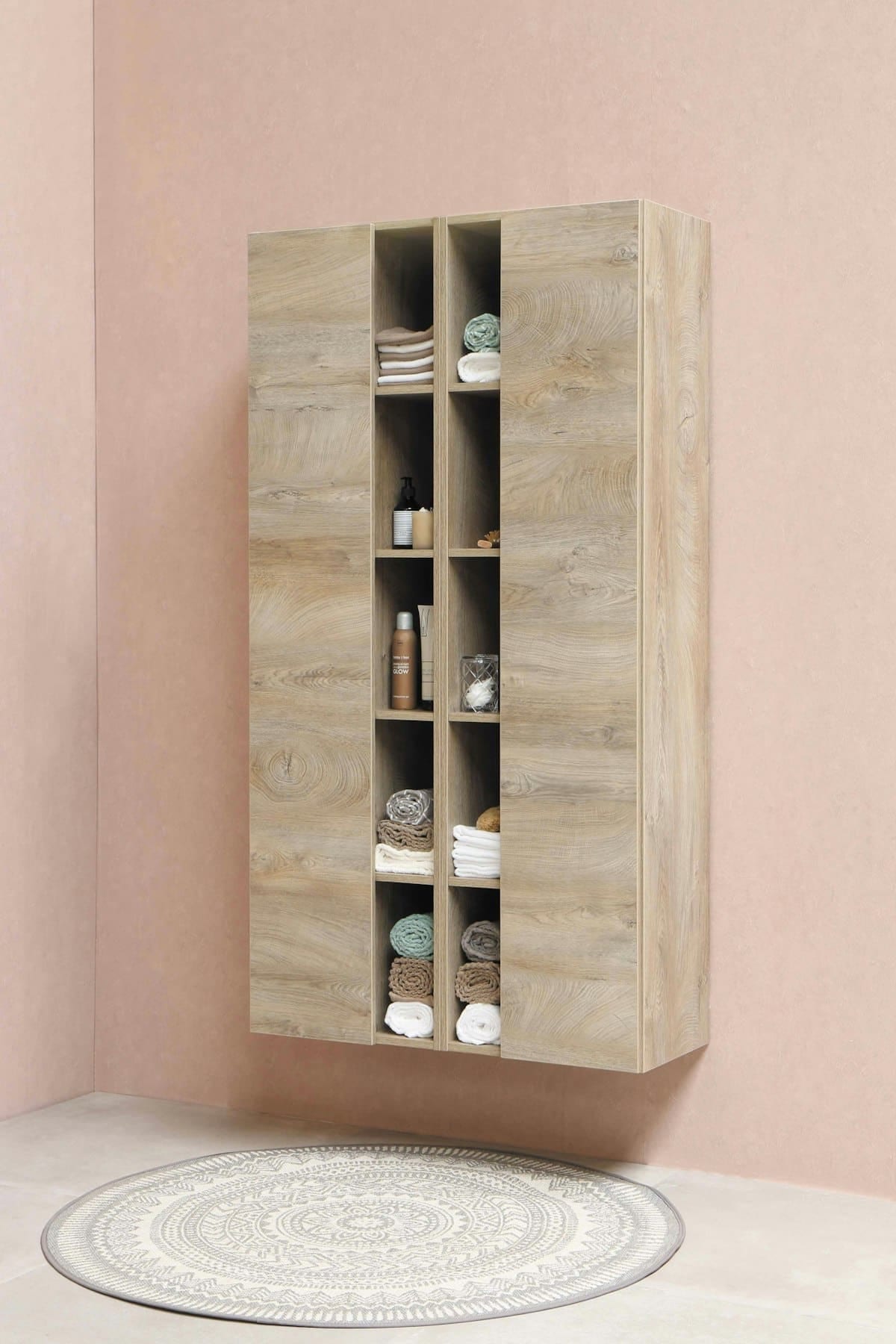
Organized small apartment storage system with uniform baskets, clutter-free surfaces, and clear zones
In This Guide
Small apartments do not necessarily get messier than larger homes.
They just show the mess faster.
A jacket left on a chair, two packages by the door, a charger on the coffee table, a few dishes on the counter, and suddenly the whole apartment can feel chaotic.
That is why good small apartment organization is not really about owning dozens of containers.
It is about making everyday things easy to put away.
The best systems reduce the number of decisions you have to make. Keys have one place. Laundry has one place. Packages have one place. Chargers have one place.
When everything has a realistic home, keeping a small apartment organized becomes much easier.
Here are 19 ideas designed for actual everyday living.
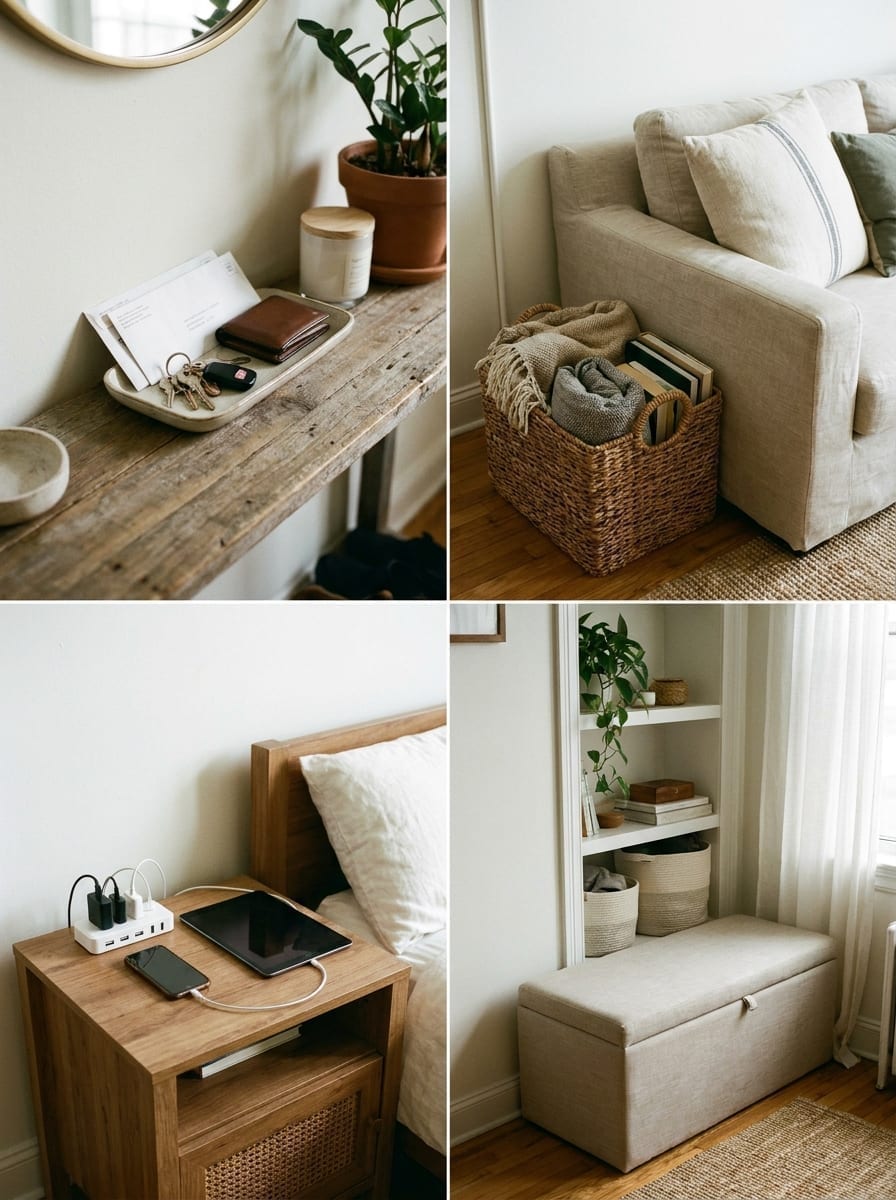
1. The One-Touch Entry Drop Zone
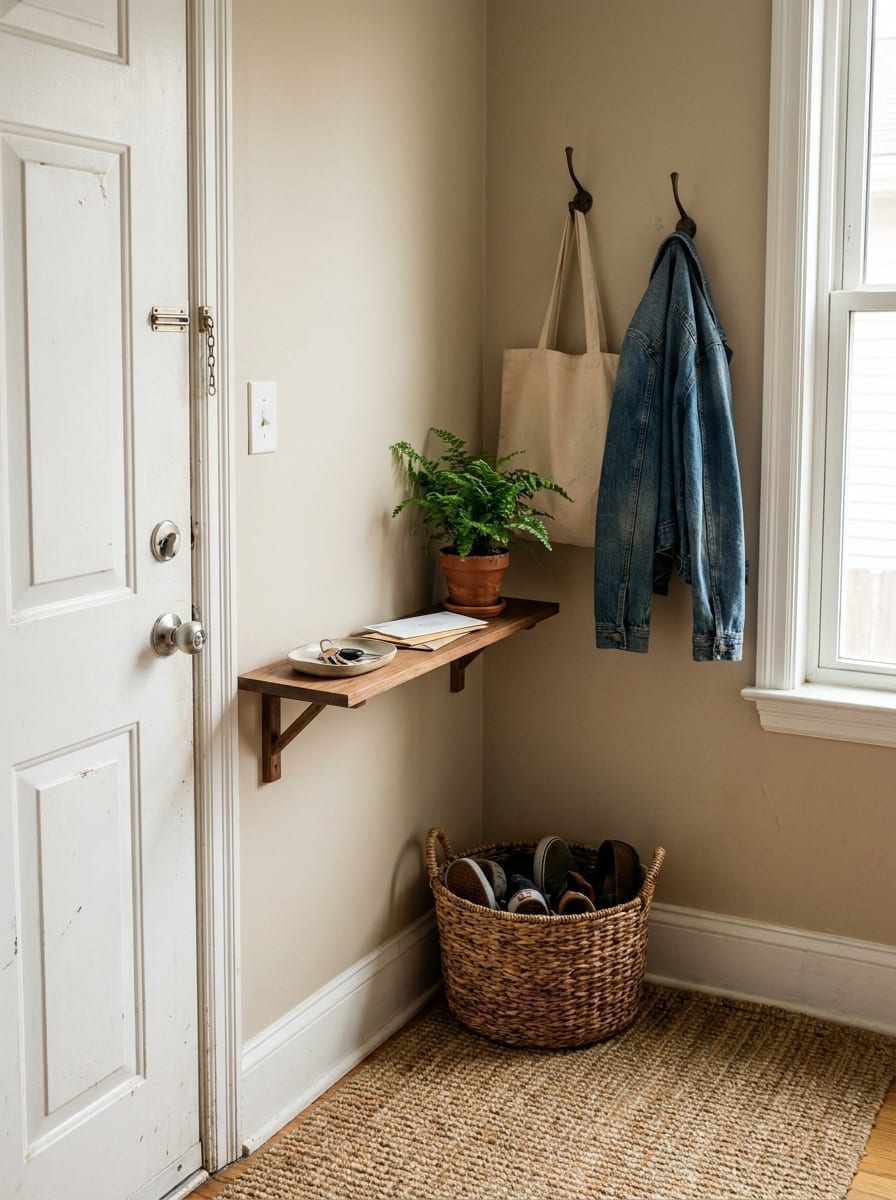
The entry is where clutter often begins.
Keys, bags, mail, shoes, sunglasses, and jackets all arrive at the same time. If they do not have a place to land, they usually end up spreading into the rest of the apartment.
Create one compact drop zone beside the door.
Depending on the space, that could include:
one shallow tray for keys two or three wall hooks a small shoe basket a narrow shelf one spot for incoming mail
The important part is keeping it close to where you naturally enter.
An organization system only works if using it is easier than ignoring it.
2. Closed Storage Before Decorative Storage
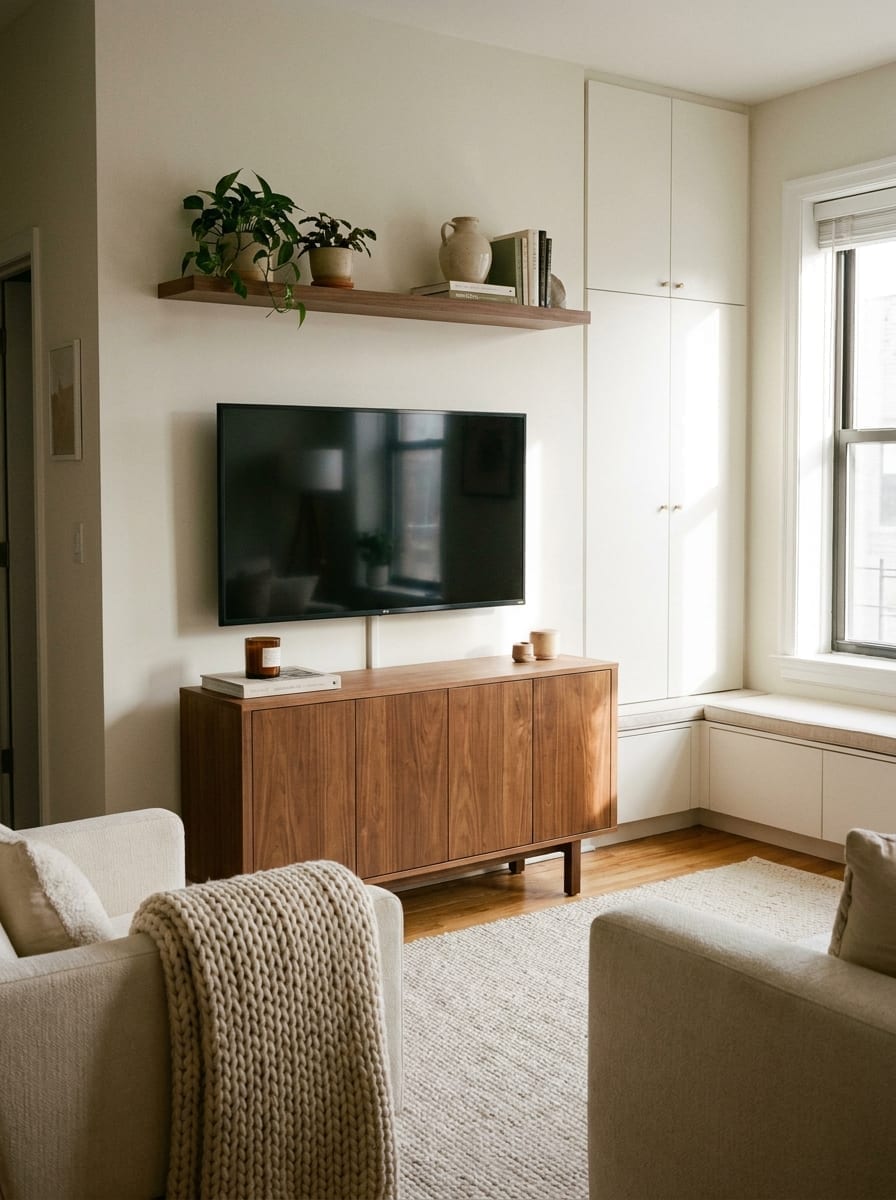
Open shelves look beautiful when they are styled carefully.
They are much less useful when you need somewhere to hide cables, paperwork, spare batteries, cleaning cloths, or random household items.
In a small apartment, prioritize closed storage for unattractive everyday things before adding more display space.
That might mean:
a media console with doors drawers beneath a desk a cabinet instead of another bookshelf lidded boxes inside open shelving
You can still display the things you actually want to see.
The difference is that everything else disappears.
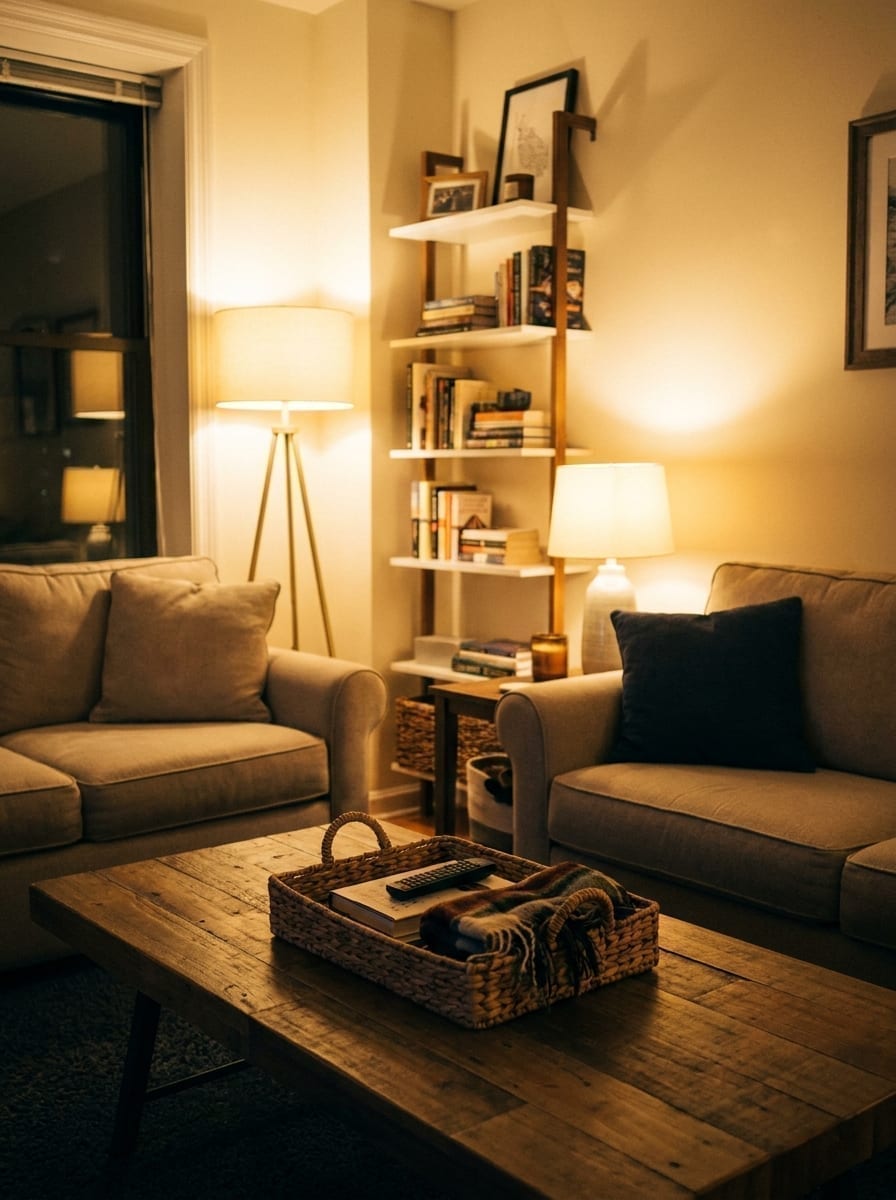
3. One Basket for Living Room Overflow
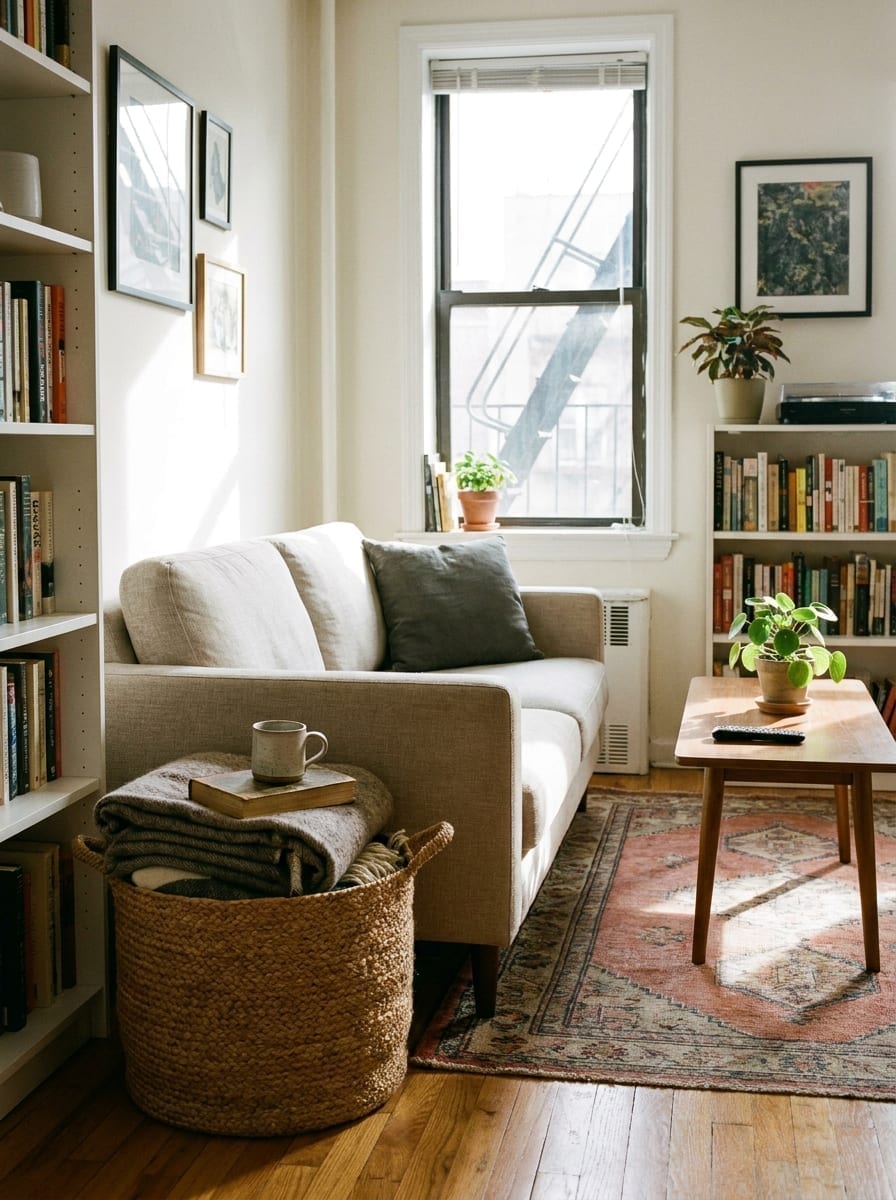
There will always be items that do not get put away immediately.
Instead of pretending otherwise, give them one temporary home.
Keep a medium basket near the sofa for things like:
extra throws magazines children’s items headphones small electronics items that need to be returned elsewhere
The key is having one basket, not several clutter baskets spread around the room.
Once it fills up, reset it.
This prevents random objects from taking over every visible surface.
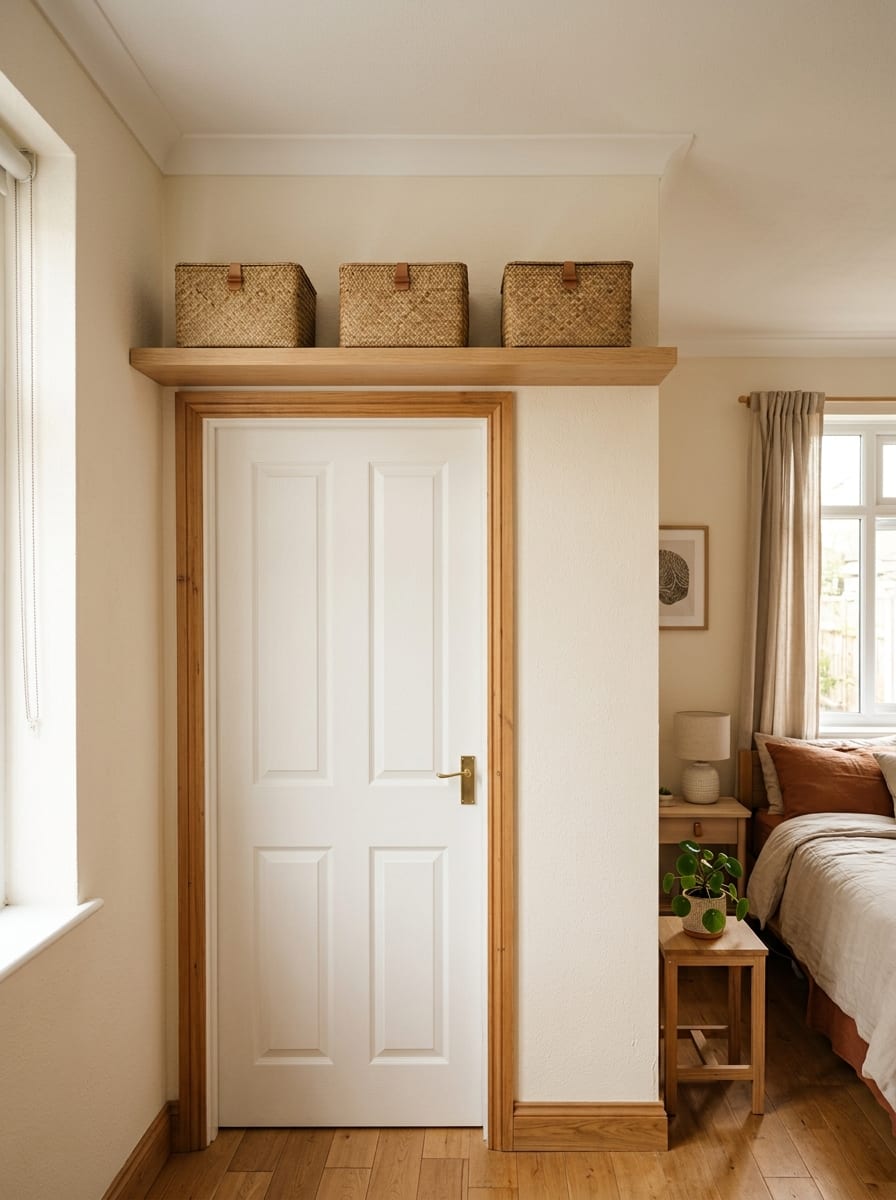
4. Vertical Storage Above Eye Level
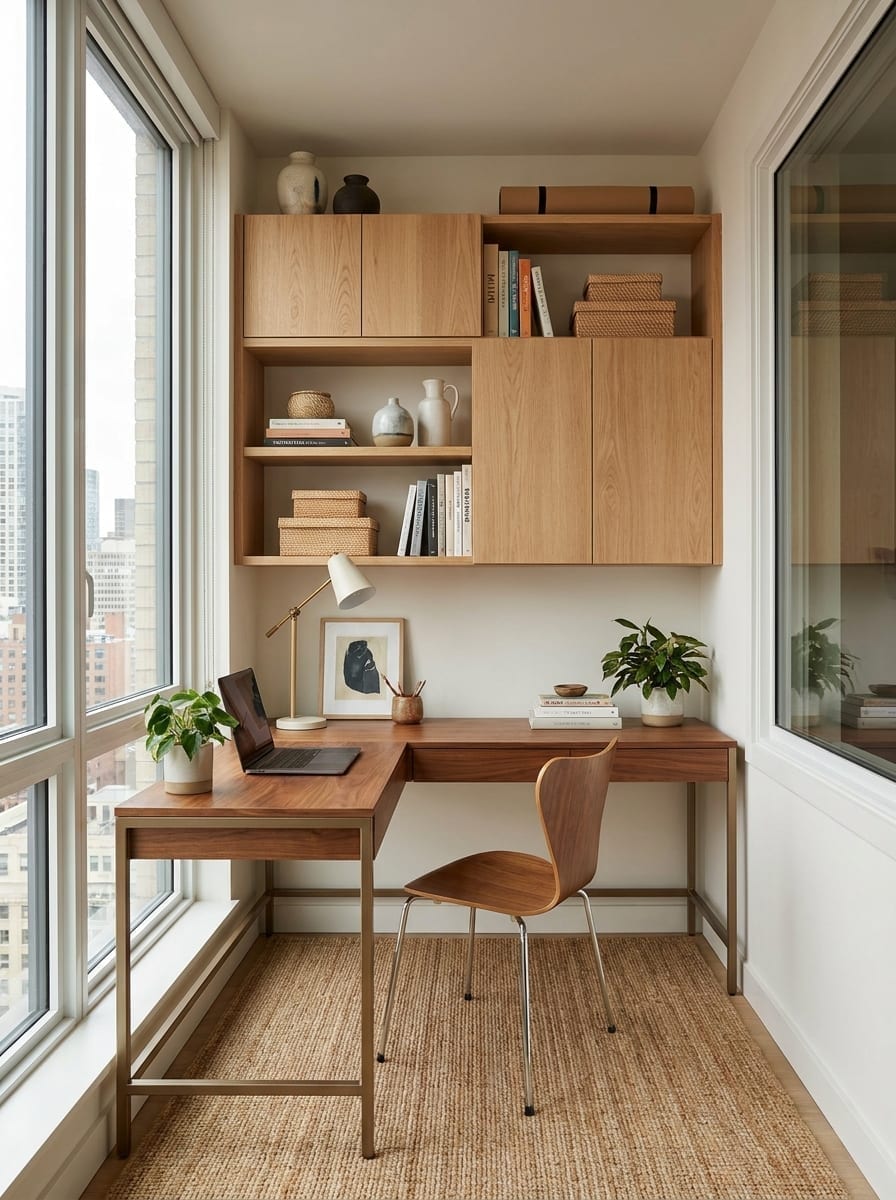
Small apartments often have more usable wall space than floor space.
Look above:
desks toilets doors dressers kitchen counters laundry areas
A simple upper shelf or wall cabinet can store things you do not need every day.
The trick is not to cover every wall with storage.
Use vertical space where it genuinely solves a problem, then leave the rest of the room visually quieter.
Put less frequently used items higher and everyday items within easy reach.
5. The Under-Bed Storage Zone
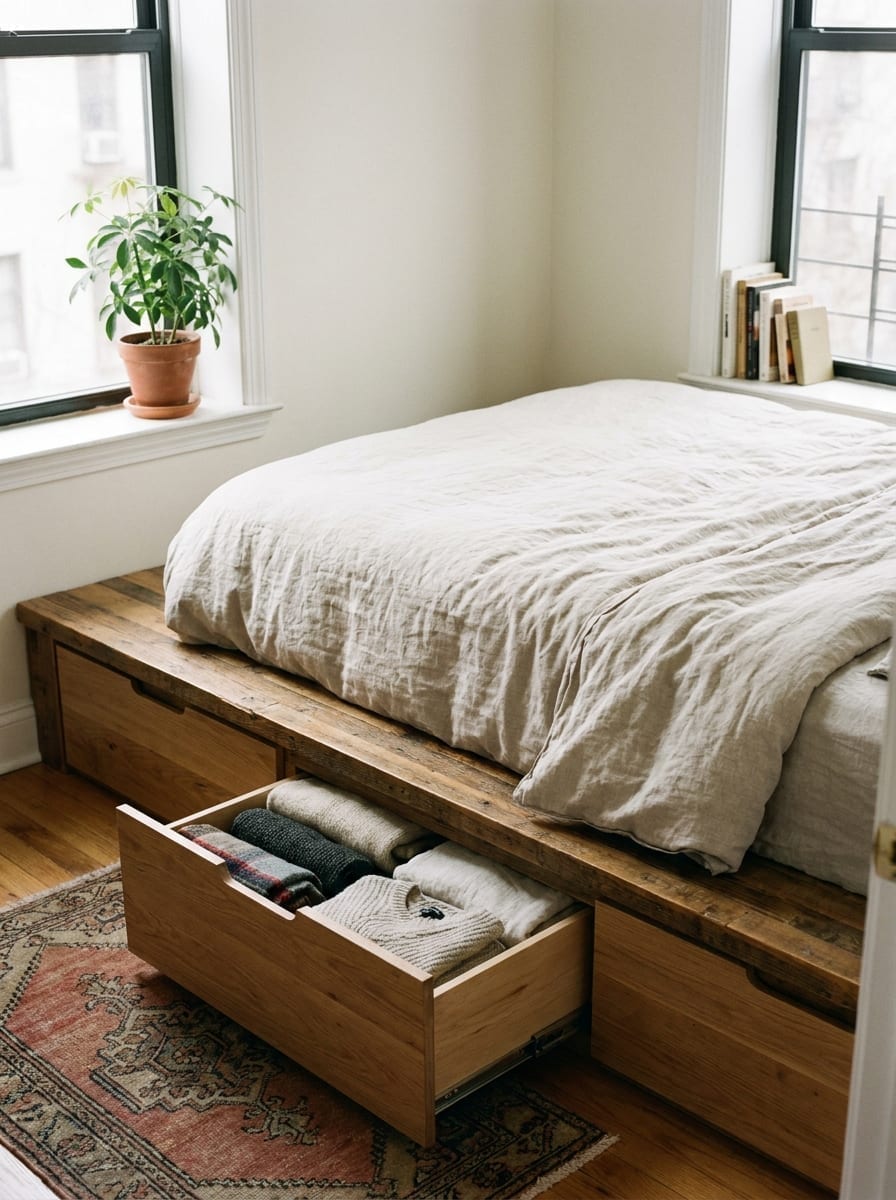
The space beneath the bed is too valuable to waste in a small apartment.
But stuffing random bags under there is not organization.
Decide exactly what the area is for.
Good candidates include:
seasonal clothing spare bedding luggage off-season shoes rarely used linens
Use matching low-profile bins or drawers and label them if necessary.
Avoid putting things you use every day underneath a heavy bed frame. If accessing the storage is annoying, you will stop using the system.
6. A Nightstand That Actually Stores Things
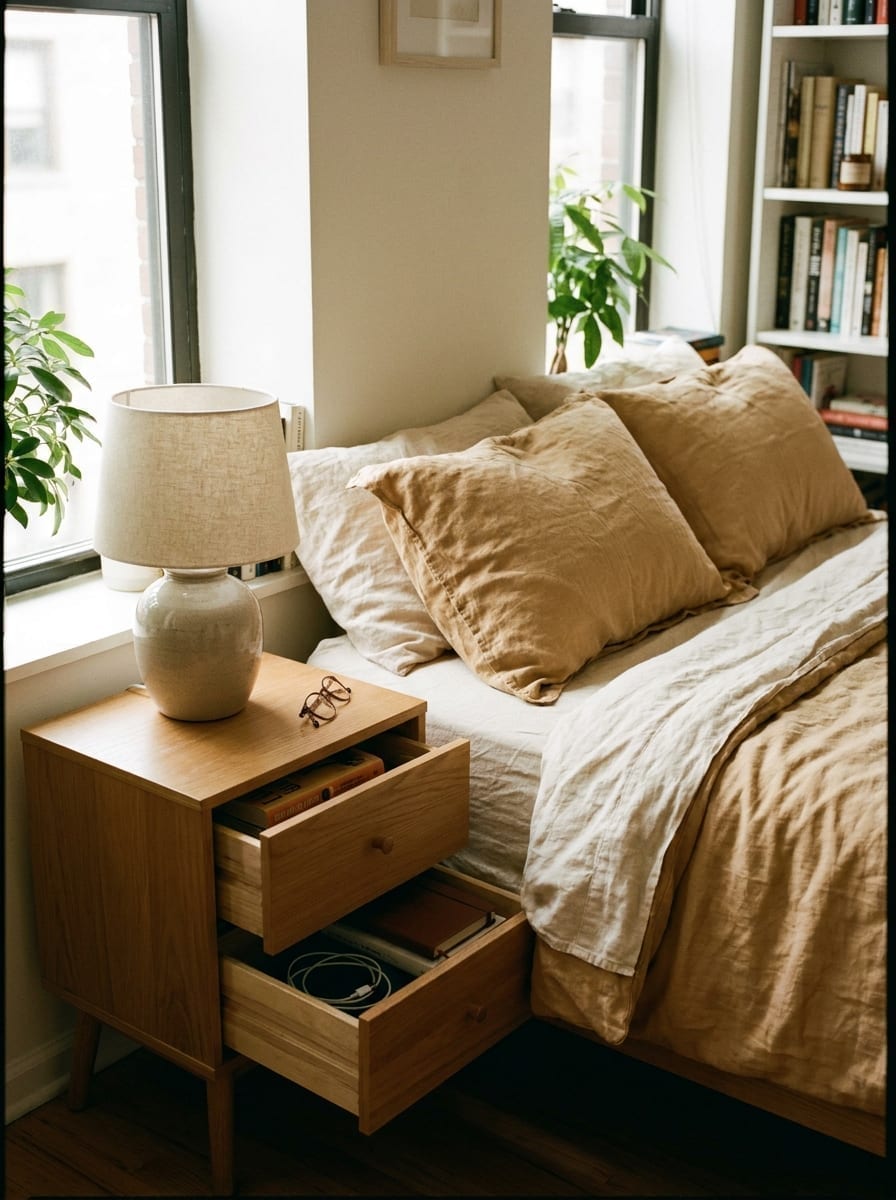
A tiny decorative side table may look nice, but if your bedroom constantly collects chargers, books, medication, skincare, and miscellaneous objects, you probably need storage more than empty legs.
Choose a compact nightstand with at least one drawer.
The top can stay simple while the everyday items disappear inside.
This is a good example of choosing furniture based on your habits rather than just appearance.
In small homes, furniture works best when it quietly solves a problem.
7. Hidden Charging Station
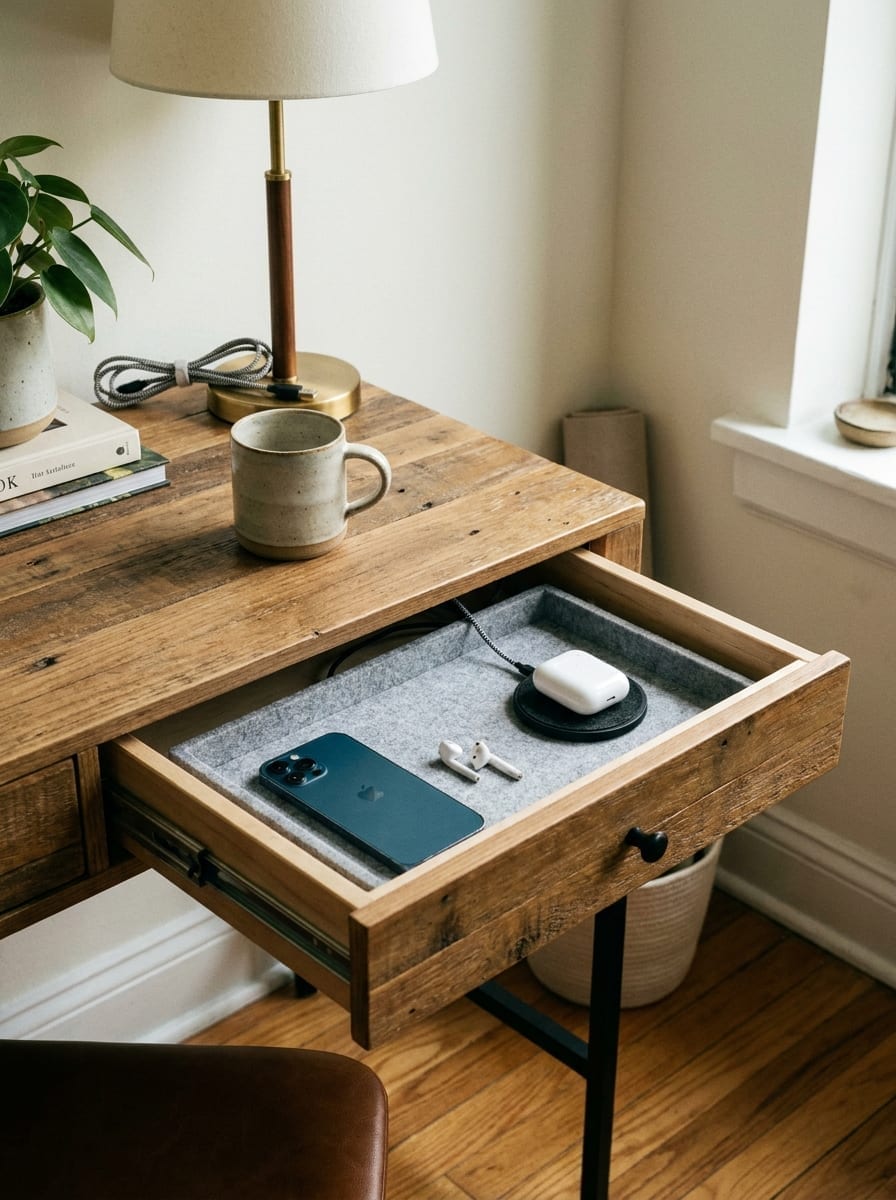
Cables have a way of making an otherwise tidy apartment look messy.
Choose one charging location rather than plugging devices into every available outlet.
That could be:
inside a desk drawer inside a nightstand in a cable-management box on a discreet tray near an outlet
Keep only the cables you actually use there.
A dedicated charging area also reduces the daily search for chargers and keeps electronics from spreading across different rooms.
8. The One-In-One-Out Closet Rule
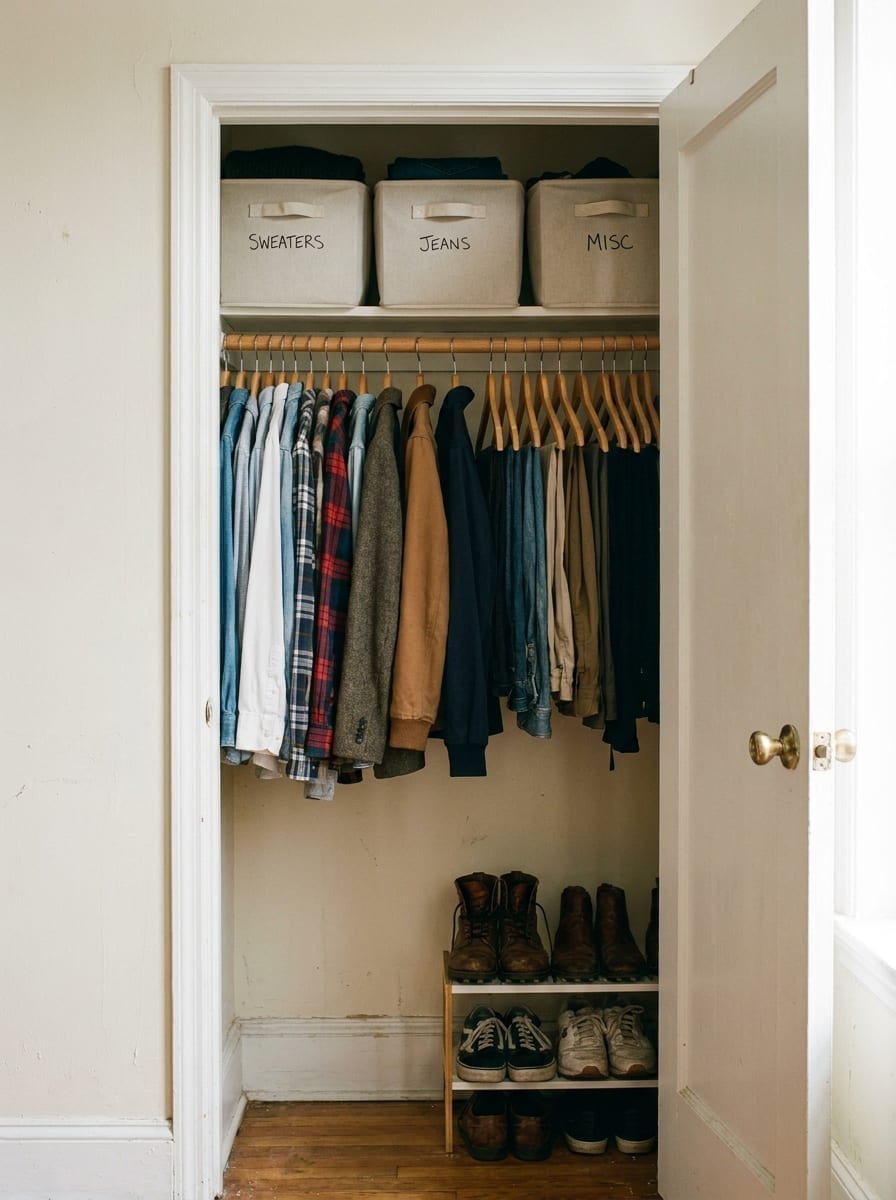
When closet space is limited, organization eventually stops working if new things constantly enter but nothing leaves.
A simple one-in-one-out rule can help.
When you buy a new coat, pair of shoes, or bulky sweater, look for something similar that you no longer use.
You do not have to apply this obsessively to every item you own.
Use it mainly for categories that tend to exceed the available storage.
The goal is to keep your closet at a level where you can actually see and reach what is inside.
9. Double-Duty Closet Doors
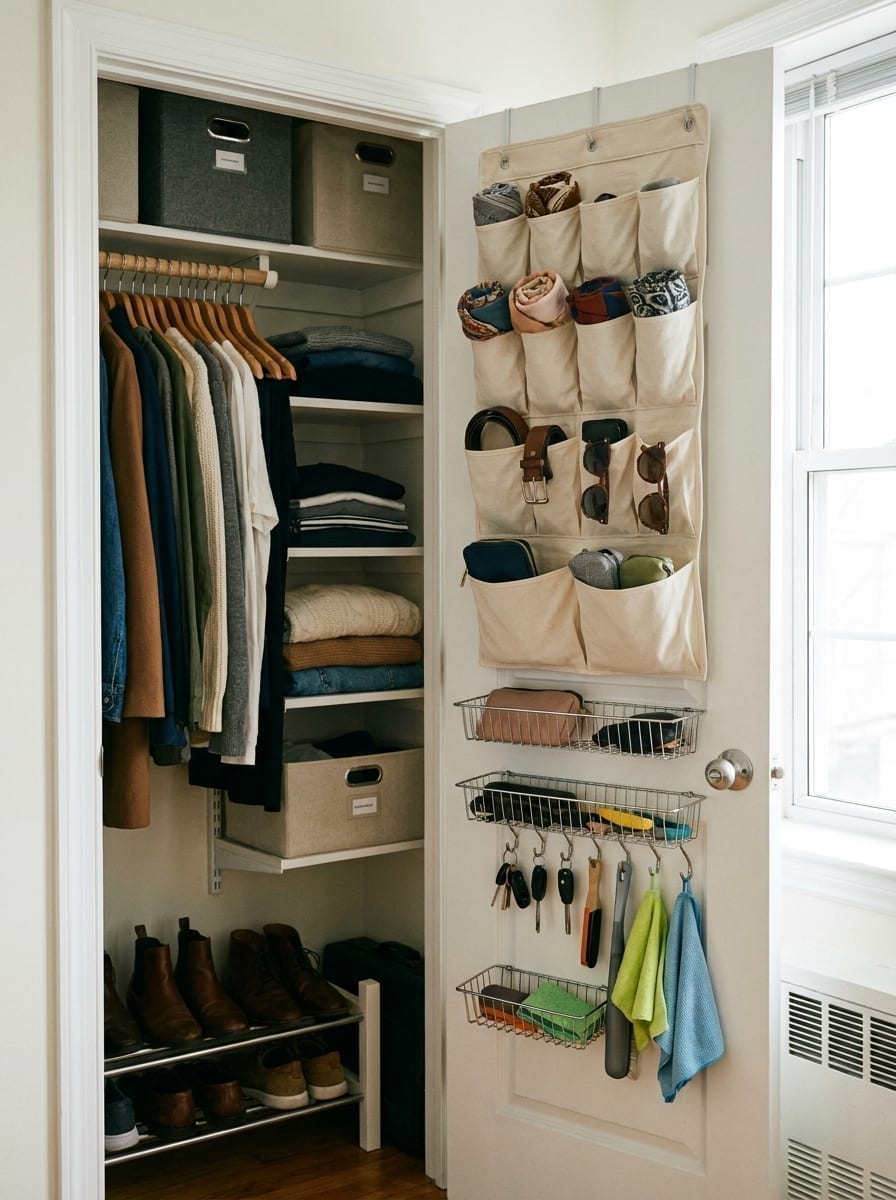
The inside of a closet door can hold useful things without adding another piece of furniture.
Depending on the door style, use:
slim hooks hanging organizers scarf storage accessory pockets a lightweight shoe organizer cleaning-tool holders
Use this for relatively flat items.
Avoid turning the door into an overloaded storage wall that becomes difficult to close.
It should solve clutter, not move clutter to another surface.
10. A Kitchen Counter Reset Zone
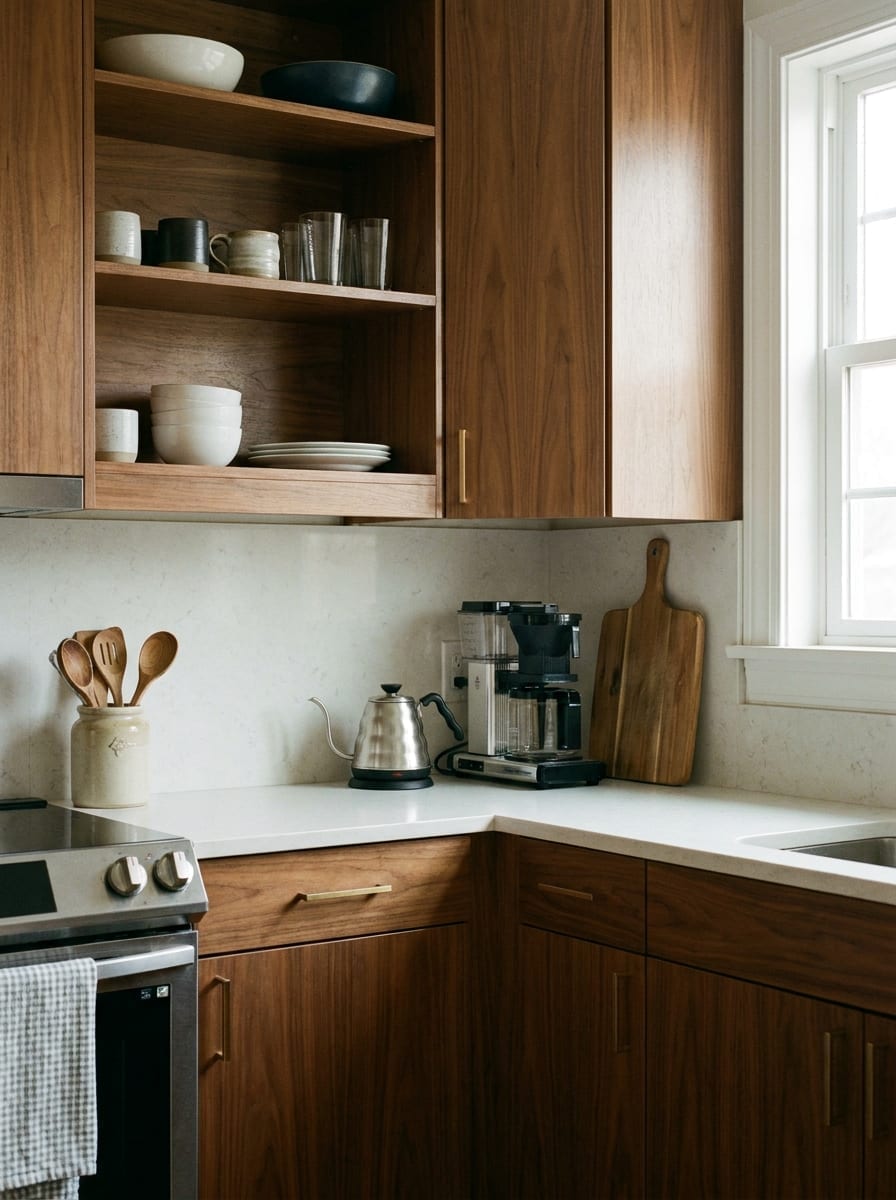
A small kitchen counter becomes cluttered very quickly because there is not much counter to begin with.
Choose what actually deserves to live there.
Usually that means only the items you use almost every day.
For example:
coffee maker kettle utensil jar one cutting board fruit bowl
Everything else should have a home inside a cabinet or drawer.
Then create a simple evening reset habit. Return stray items, wipe the counter, and leave the kitchen ready for the next morning.
A clear counter makes a small kitchen feel dramatically calmer.
11. Cabinet Door Storage
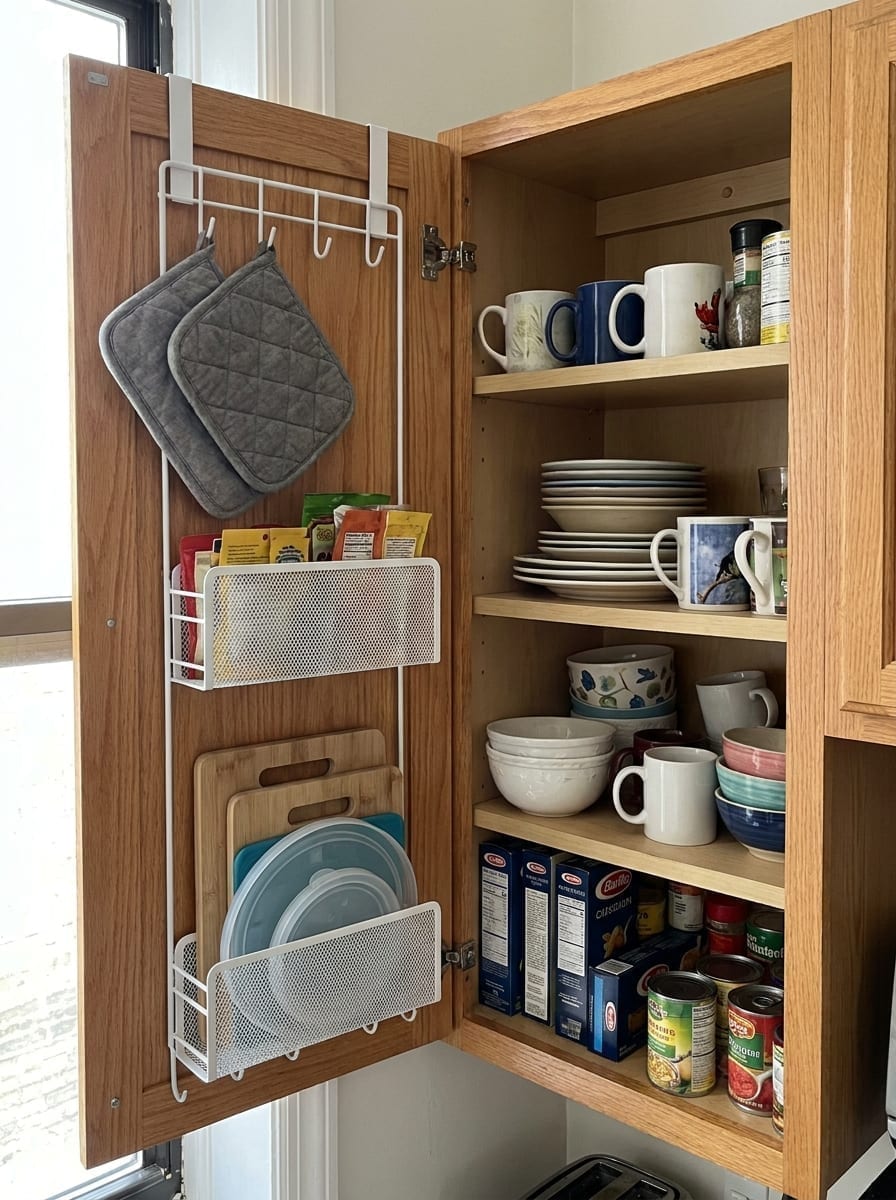
The inside of kitchen cabinet doors can solve small storage problems without affecting the visual calm of the room.
Use shallow organizers for things like:
measuring spoons food-wrap boxes cleaning cloths small lids cutting boards lightweight kitchen tools
Make sure anything mounted there clears the shelves when the door closes.
This is particularly useful in rental kitchens where adding permanent cabinetry is not an option.
12. A Real Home for Cleaning Supplies
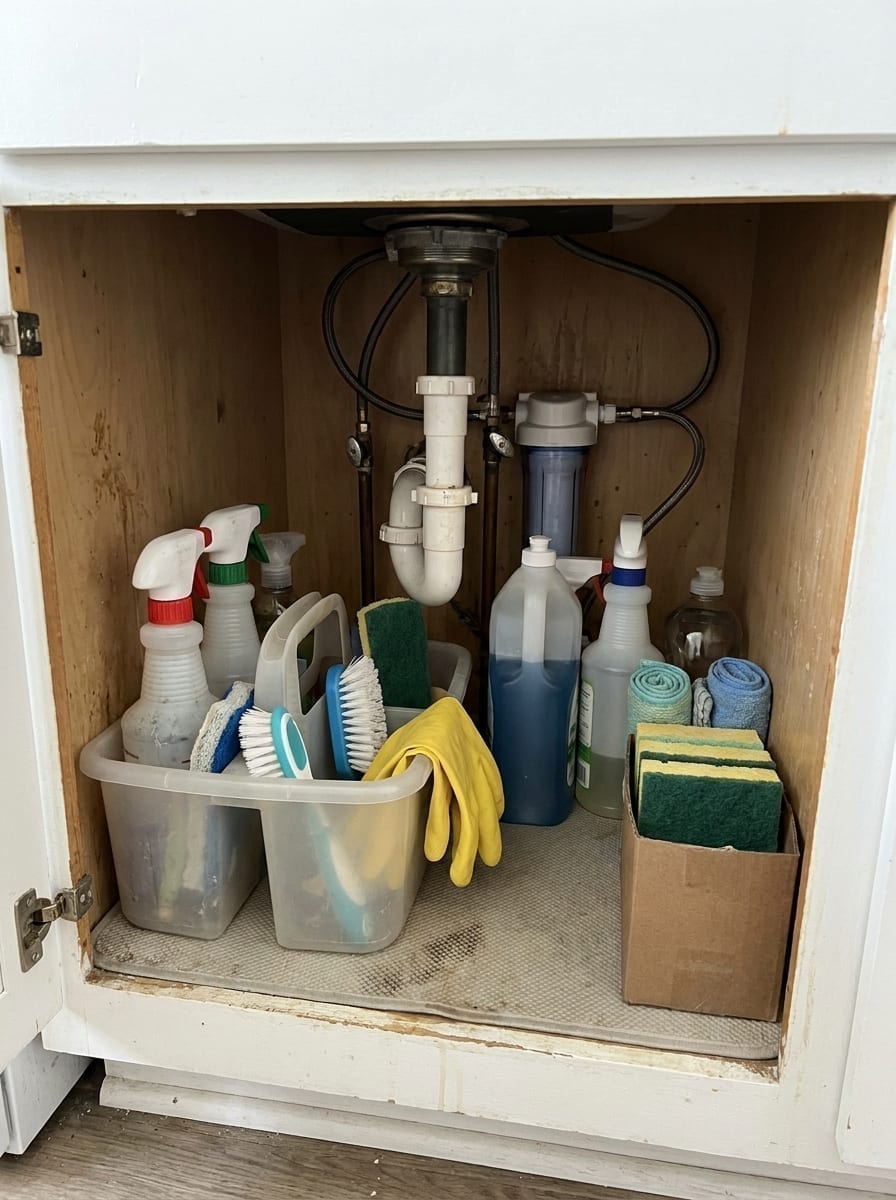
Cleaning supplies often end up scattered beneath the kitchen sink, bathroom vanity, laundry area, and random closets.
That makes it harder to know what you have and easier to buy duplicates.
Choose one primary cleaning-supply location.
Use a handled caddy for the products you regularly move between rooms and keep refills grouped together.
If you have children or pets, store products safely according to the manufacturer’s instructions and away from places they could access.
A simple system makes cleaning quicker because everything is already together.
13. Bathroom Backstock in One Place
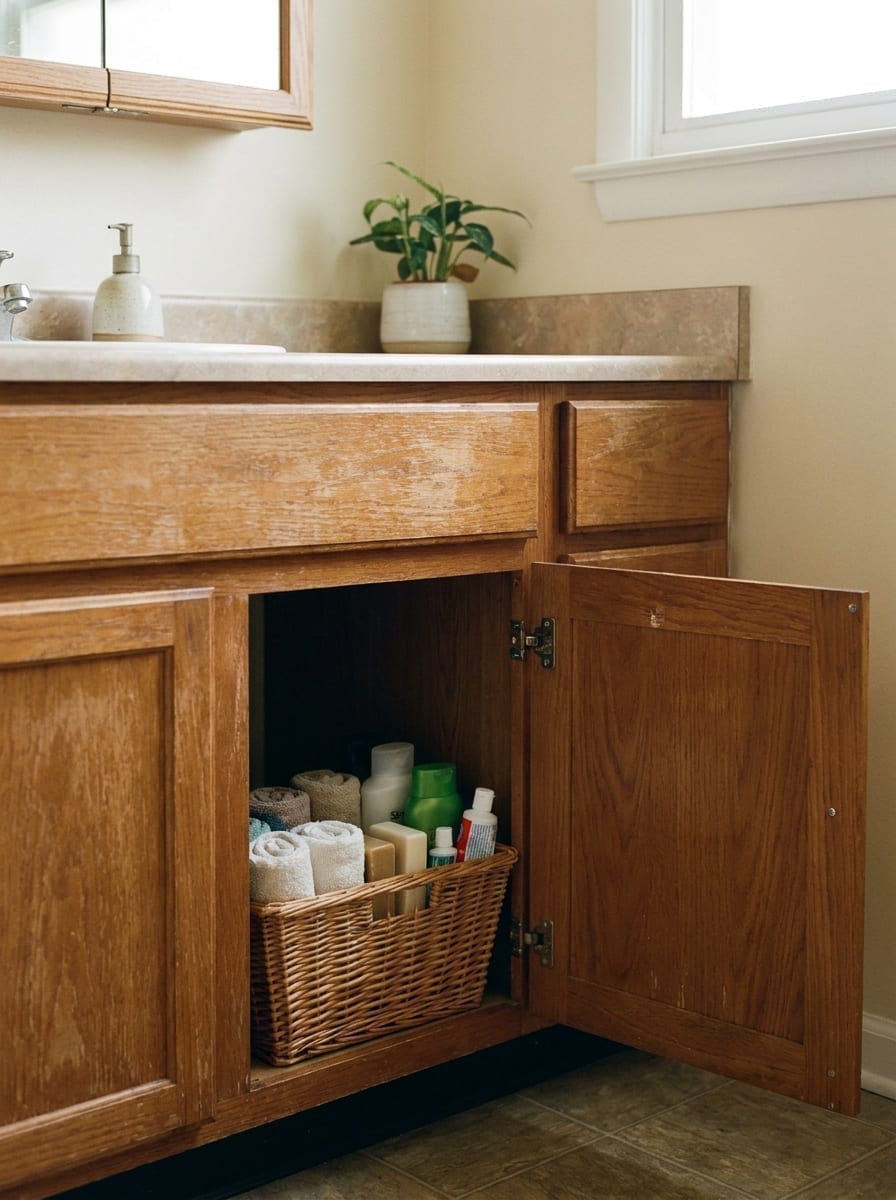
A small bathroom becomes cluttered when everyday products and backup products are stored together.
Keep the things you currently use within easy reach.
Put unopened replacements somewhere else, such as:
one labeled basket one drawer one cabinet shelf one linen-closet bin
When the current product runs out, replace it from the backstock.
This keeps counters and shower shelves from becoming miniature stores.
14. The Paper Clutter Station
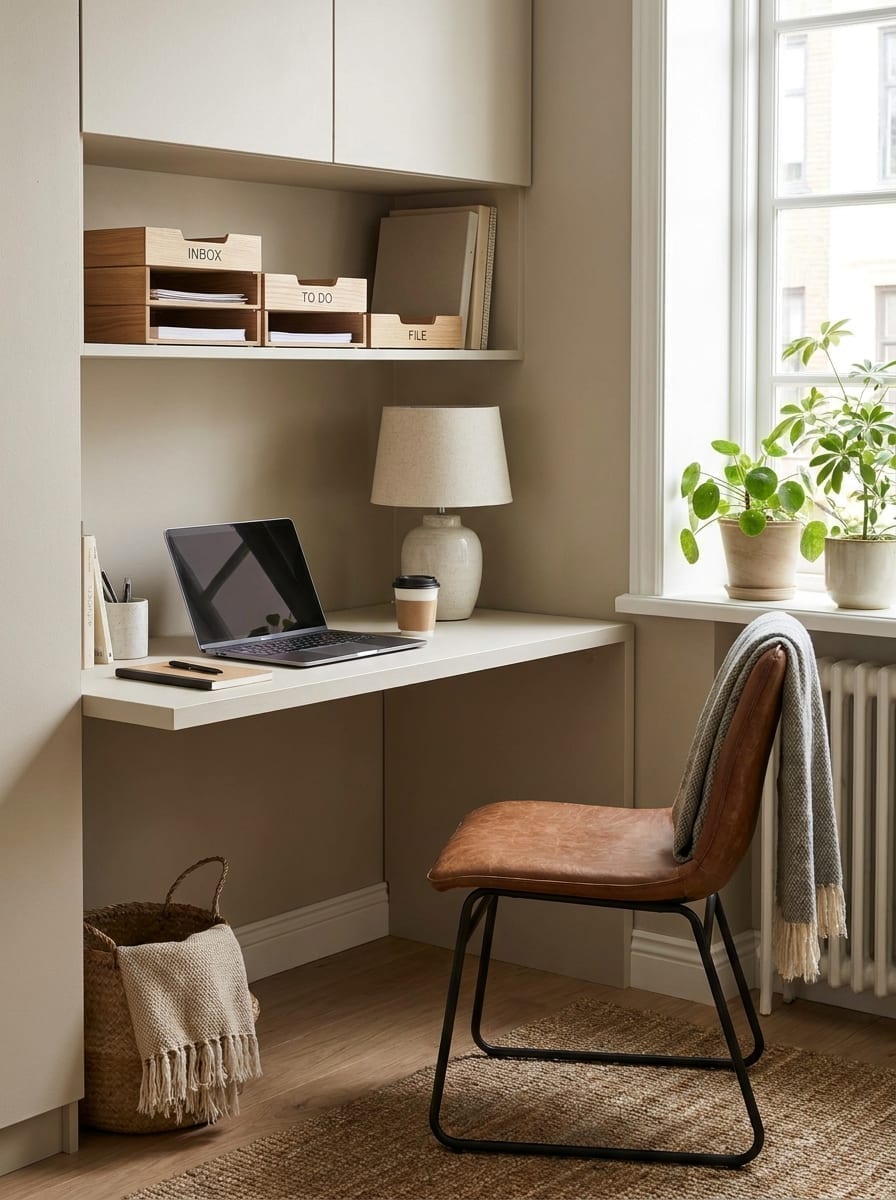
Even in a mostly digital life, paper still appears.
Mail, receipts, warranties, forms, delivery slips, appointment papers, and documents can quickly cover a small desk or dining table.
Create one paper station.
Use three simple categories:
action file recycle
Do not create twelve complicated folders for incoming paper.
You want something easy enough to use immediately.
Process the station once a week so it never becomes permanent storage.
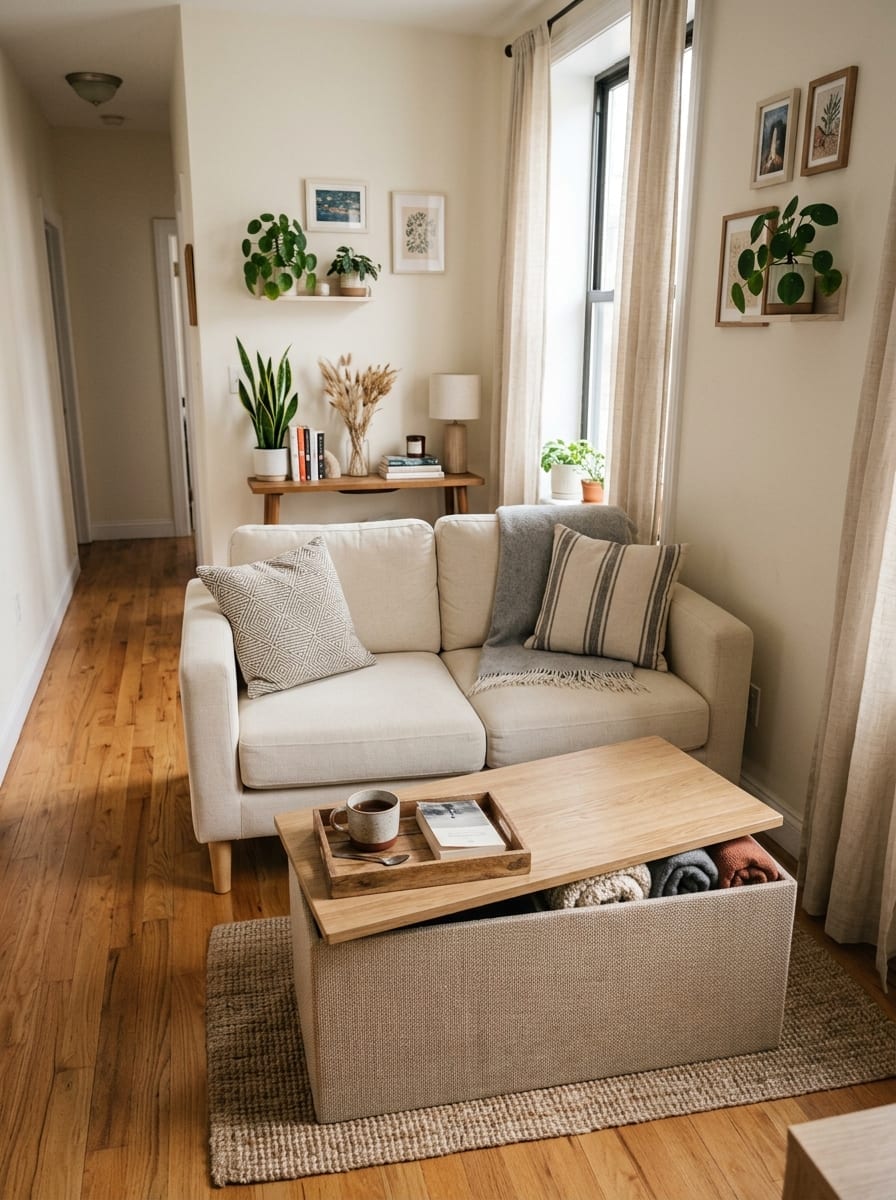
15. Furniture With Hidden Storage
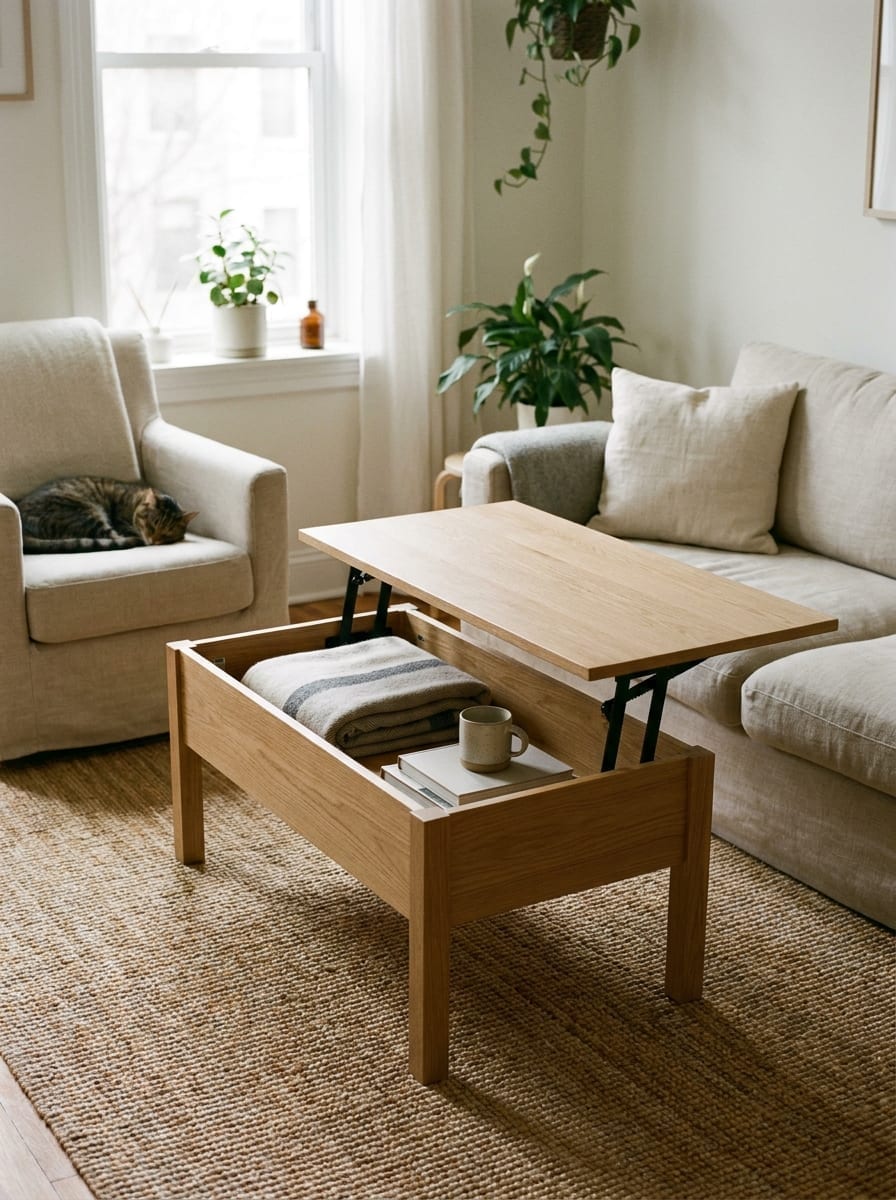
When replacing furniture in a small apartment, look for pieces that give you storage without requiring additional floor space.
Useful examples include:
storage ottoman lift-top coffee table bed with drawers bench with hidden compartment side table with cabinet sofa with built-in storage
You do not need every piece to have hidden storage.
Choose it where you already have an ongoing clutter problem.
Storage furniture is most effective when it replaces something you needed anyway.
16. A Dedicated Laundry Landing Zone
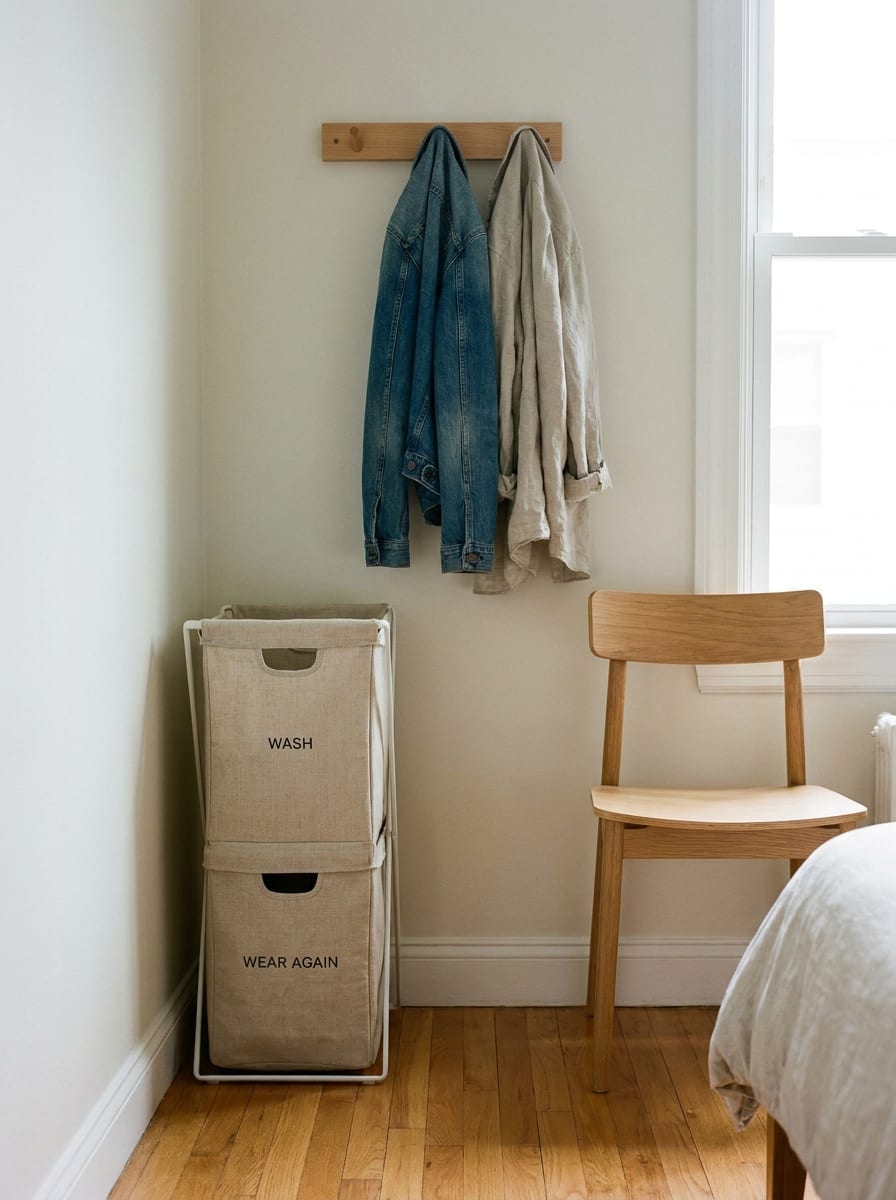
Laundry clutter often happens in the space between “worn” and “ready to wash.”
Instead of letting clothing collect on chairs, the bed, or the floor, create a specific landing place.
That might be:
divided hamper slim laundry basket hook for clothes worn once small valet rail basket inside a closet
If you regularly separate lights, darks, or towels, use a divided hamper from the start rather than sorting everything later.
The easier the process is, the more likely you are to use it.
17. The Ten-Minute Evening Reset Basket
There will still be nights when items end up in the wrong room.
Instead of walking back and forth constantly, use one small reset basket.
During a quick evening tidy, place misplaced objects into the basket.
Then make one trip through the apartment putting everything back where it belongs.
This works especially well if the apartment has multiple small zones.
It is not intended to become storage.
Empty it completely during each reset.
18. Empty Space as an Organization Tool
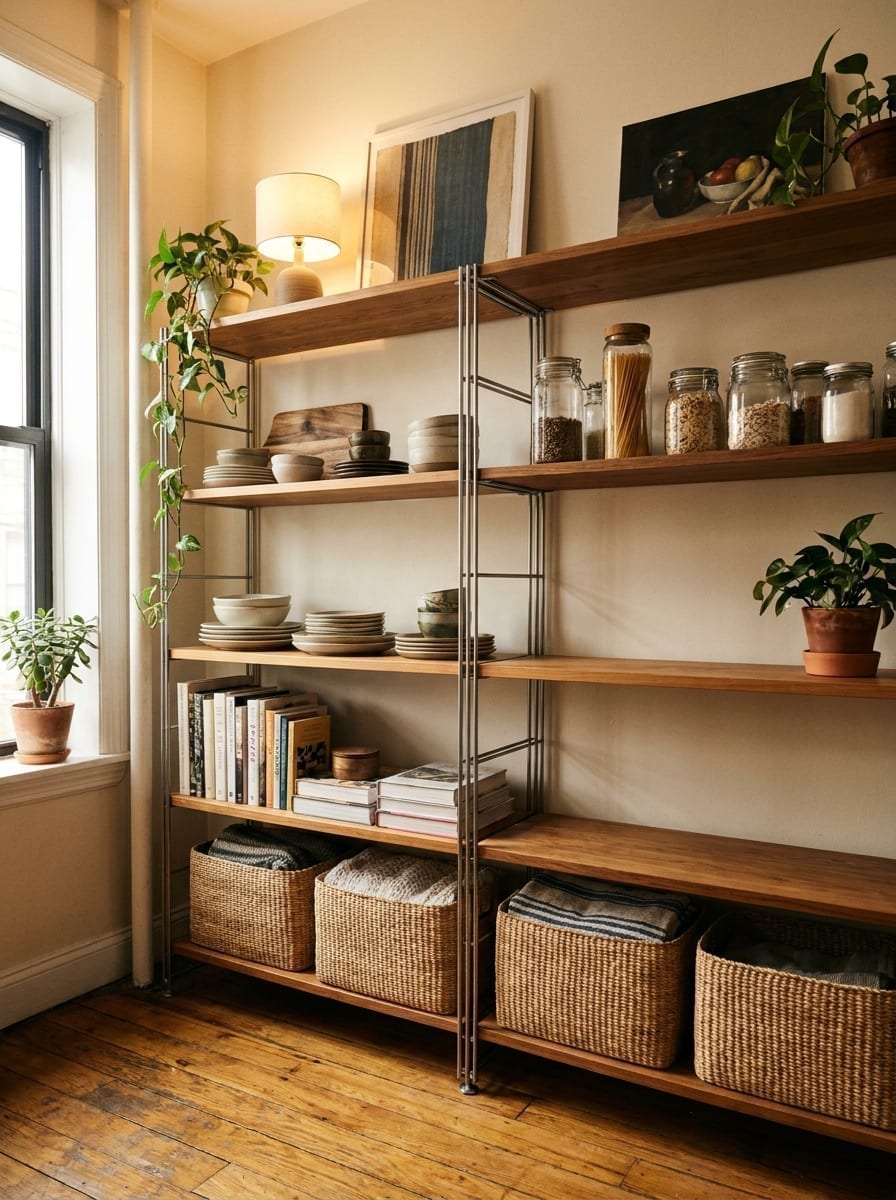
Not every drawer, shelf, and cabinet needs to be completely full.
A little unused capacity makes an organization system much easier to maintain.
If a drawer only closes when everything is arranged perfectly, it is too full.
If adding one grocery item requires reorganizing the entire pantry, there is no flexibility.
Aim for enough breathing room that everyday life can happen without the system immediately breaking.
This is one of the biggest differences between a space that merely looks organized and one that stays organized.
19. Organize Around Your Actual Habits
The best organization system is not necessarily the prettiest one.
It is the one you naturally use.
If you always take your shoes off beside the sofa, moving the shoe basket to the entry might not solve the problem.
If you charge your phone beside the bed every night, that is where the charger should live.
If mail always lands on the kitchen counter, create the paper station nearby.
Pay attention to where clutter repeatedly appears.
That clutter is often telling you exactly where the storage should be.
Instead of forcing yourself to follow a perfect-looking system, design the apartment around how you actually move through it.
How to Organize a Small Apartment Without Buying Lots of Storage
Before shopping for containers, do three things.
Remove duplicates
You may not need three versions of something you rarely use.
Decide where each category belongs
Do not buy a basket until you know exactly what it will hold.
Use the storage you already have better
Look inside cabinet doors, under the bed, above existing furniture, and inside pieces that can hide clutter.
Only then should you buy additional storage.
This prevents the common problem of owning both too much stuff and too many organizers.
What Should Stay Visible?
You do not need to hide every object.
Things that are beautiful, used frequently, or contribute to the room can stay visible.
That might include:
books a lamp one candle a favorite ceramic piece a few kitchen essentials artwork a plant
The goal is not to make the apartment look unoccupied.
It is to make the things that remain visible feel intentional.
What Should Usually Be Hidden?
Small visual clutter tends to have a bigger impact than larger intentional objects.
Good candidates for closed storage include:
cables paperwork backup toiletries cleaning products spare electronics tools random packaging extra linens miscellaneous household supplies
These are useful things.
They just do not need to become part of the decor.
The Best Organization System Is the One You Can Reset
An organized apartment will not stay perfectly tidy every hour of every day.
That is not a realistic goal.
A better goal is being able to reset it quickly.
If you can return the apartment to a calm state in ten or fifteen minutes, the system is probably working.
That usually means:
surfaces have somewhere to empty into laundry has a defined home papers have one station chargers stay together backstock is grouped frequently used items are easy to reach there is enough empty storage capacity for normal life
Good organization should reduce effort, not create another chore.
Where to Start
Do not reorganize your entire apartment in one weekend.
Start with the place that repeatedly frustrates you.
If the entry is always messy, fix the entry.
If the kitchen counter constantly fills up, fix the counter.
If clothing keeps landing on the bedroom chair, fix the laundry system.
Once one problem stays solved, move to the next one.
That approach may feel slower, but it creates systems that actually last.
And in a small apartment, a few good systems can make the entire home feel dramatically calmer.