How to Organize a Bathroom Cabinet (74,000 searches/month)
How to organize a bathroom cabinet step by step: zones, bins, labels and renter-friendly fixes that keep every product visible and easy to reach.
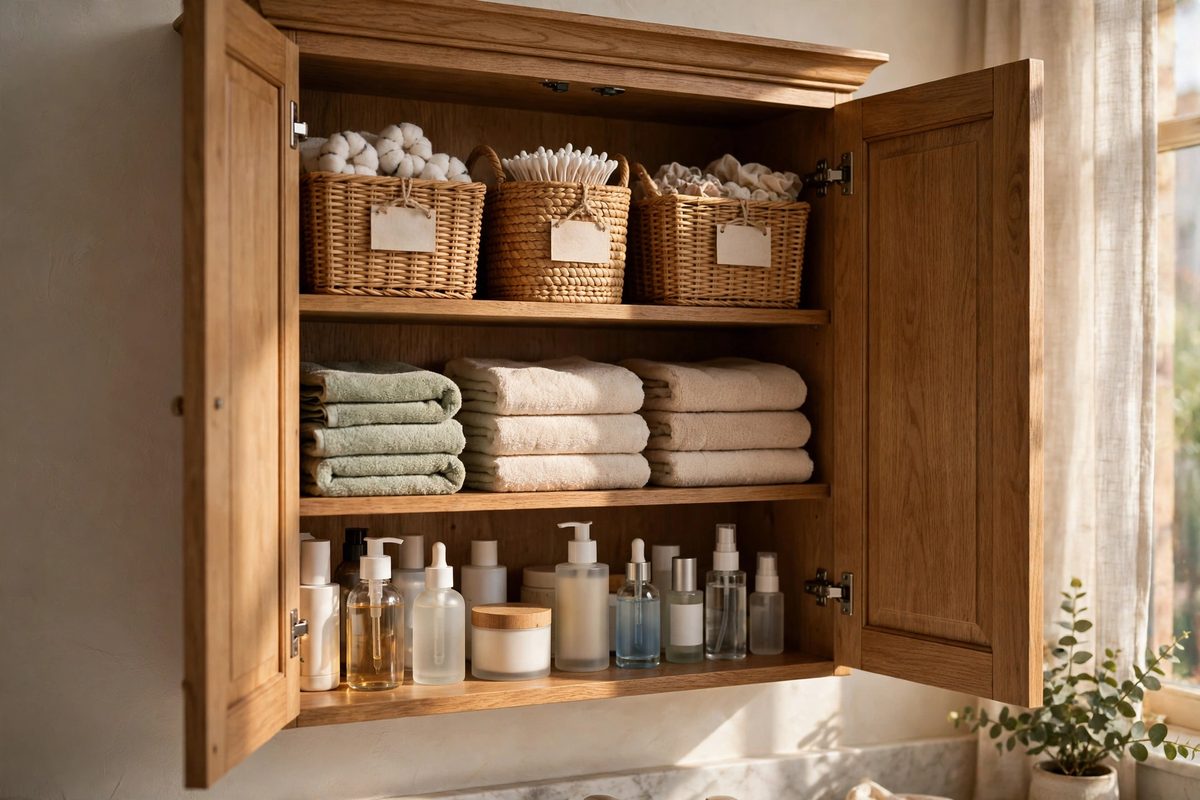
Open bathroom cabinet in a small apartment with labeled bins, folded towels and skincare bottles arranged in clear zones
In This Guide
How to organize a bathroom cabinet comes down to one idea: give every product a zone, and keep only what you use every day at eye level. A standard bathroom cabinet is only 14 to 24 inches wide, so the system has to work inside a small box, not fight it. The 12 ideas below work for a medicine cabinet, a vanity cabinet, or the cabinet under the sink, and almost all of them are renter-friendly, with no drilling and no permanent changes. If your drawers need help too, start with our small bathroom drawer organization ideas after you finish the cabinet.
12 Ideas to Organize a Bathroom Cabinet
1. Empty it completely and sort by category. Take everything out, wipe the shelves, and sort products into piles: skincare, hair, oral care, medicine, cleaning, and backups. Most people find 5 to 10 expired products and 3 to 5 duplicates they forgot they owned. Throw out anything expired or half-used for over a year, and keep only one backup of each daily product. This one step usually frees up a full shelf.
2. Zone by shelf: daily on top, weekly in the middle, backups at the bottom. Put the 5 to 8 products you use every morning on the most reachable shelf, usually the middle one at eye level. Weekly items like face masks and hair treatments go one shelf up or down, and backups and refills go on the lowest shelf or the very top. When every shelf has a job, you stop digging through the whole cabinet to find your toothpaste.
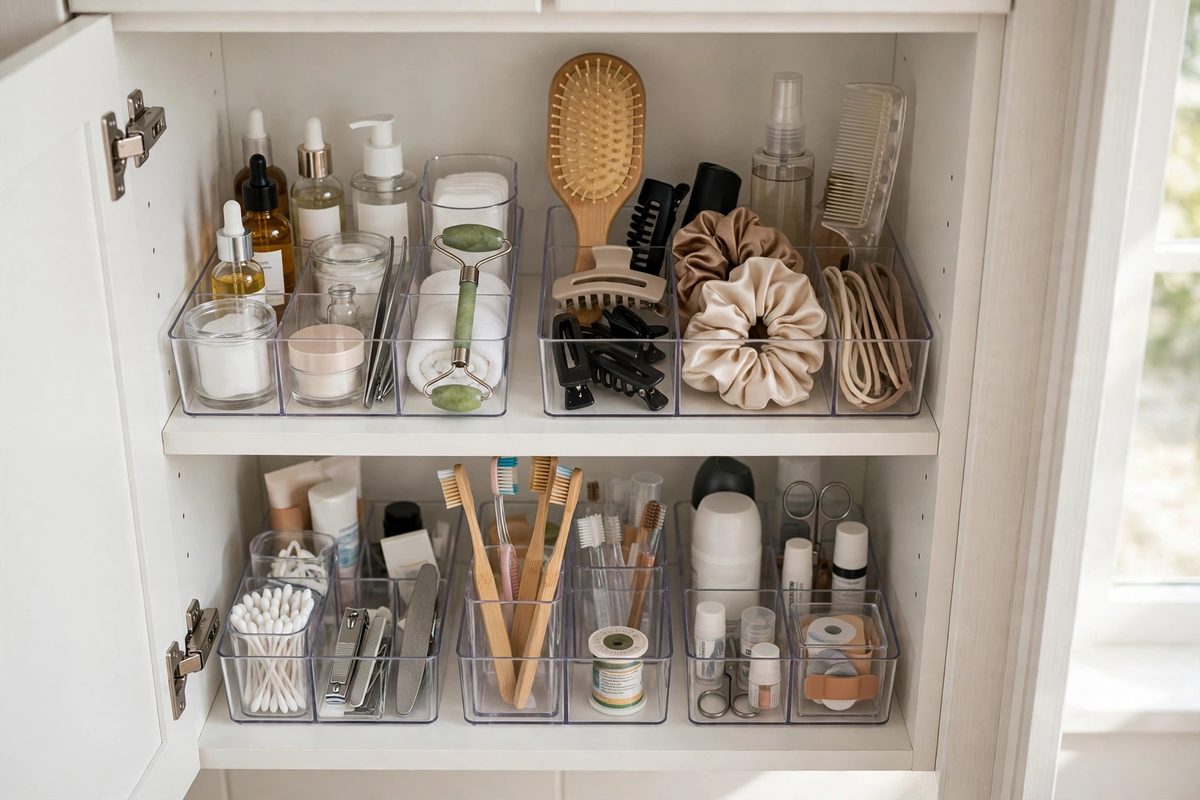
3. Use clear bins so you can see everything. Clear plastic bins cost about 3 to 8 dollars each at discount stores, and they are the single best upgrade for a bathroom cabinet. One bin per category keeps products from sliding around and lets you pull out a whole group at once. Measure the shelf depth before you buy: most cabinet shelves are 10 to 12 inches deep, so look for bins around 9 inches long. For more small-space storage that works the same way, see our small bathroom storage ideas.
4. Add shelf risers to double the usable height. A cabinet shelf is usually 10 to 12 inches tall, but most bottles are only 4 to 6 inches high, so half the space is wasted air. A small shelf riser or stackable mini shelf, about 8 to 12 dollars, creates a second level for short items like lip balm, cotton pads, and travel sizes. Put tall bottles on the lower level and short items on the riser, and you gain roughly 40 percent more usable space without changing anything permanent.
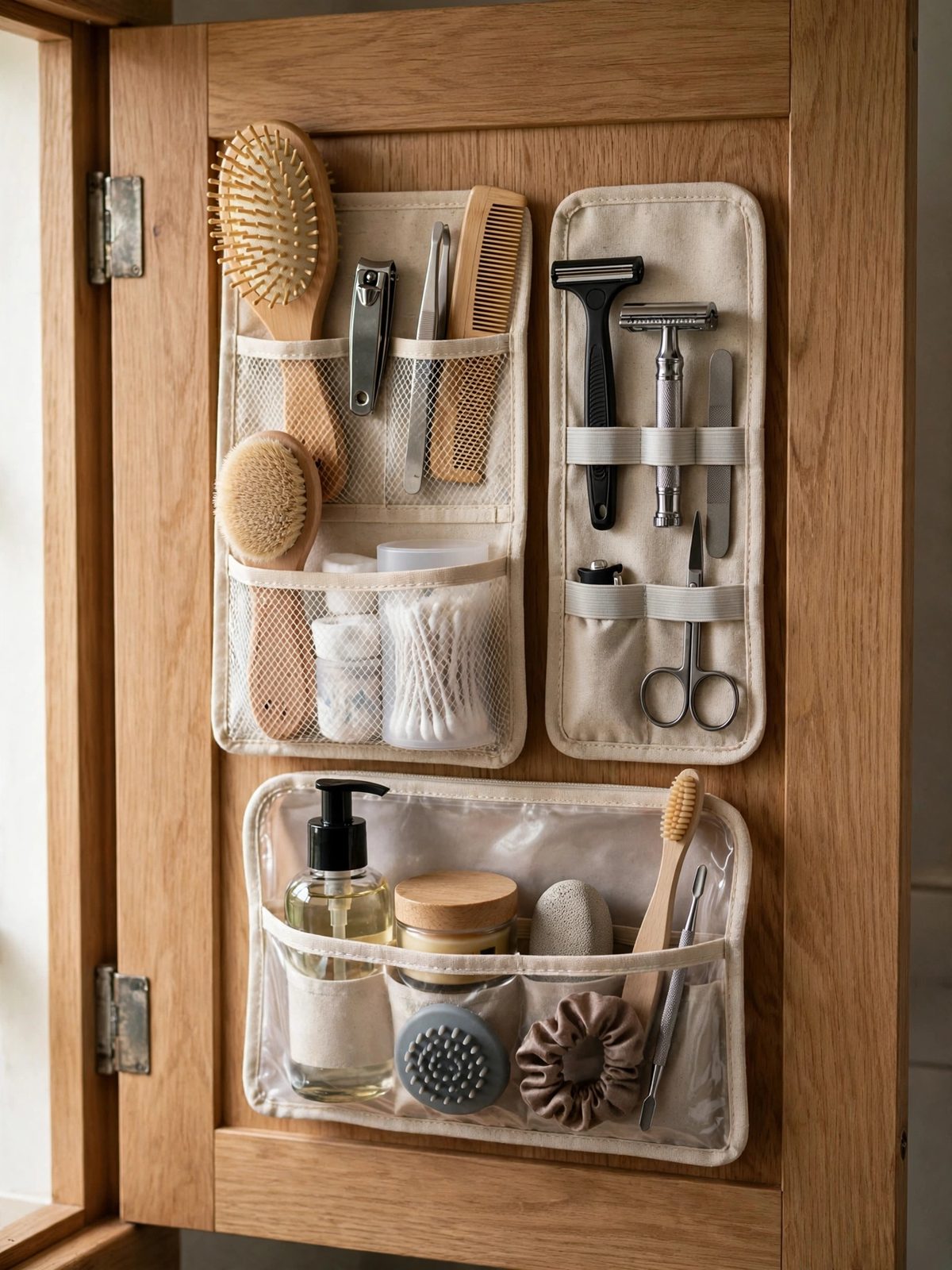
5. Mount organizers on the cabinet door. The inside of the cabinet door is free real estate. A stick-on wire rack or a row of adhesive hooks, 5 to 10 dollars, holds flat items like a hairbrush, tweezers, nail clippers, and a small mirror. Command strips hold up to 3 pounds each, which is plenty for toiletries, and they peel off cleanly when you move out. Keep the door rack light: if it holds more than 2 pounds, the door hinges start to sag over time.
6. Label every bin, even if it seems obvious. A label maker costs about 20 to 30 dollars, or you can use masking tape and a marker for free. Label the front of each bin with its category, and label the shelf edge with the zone name. Labels matter because the system only survives if everyone in the household puts things back in the right place. Without labels, bins drift back into junk drawers within a month.
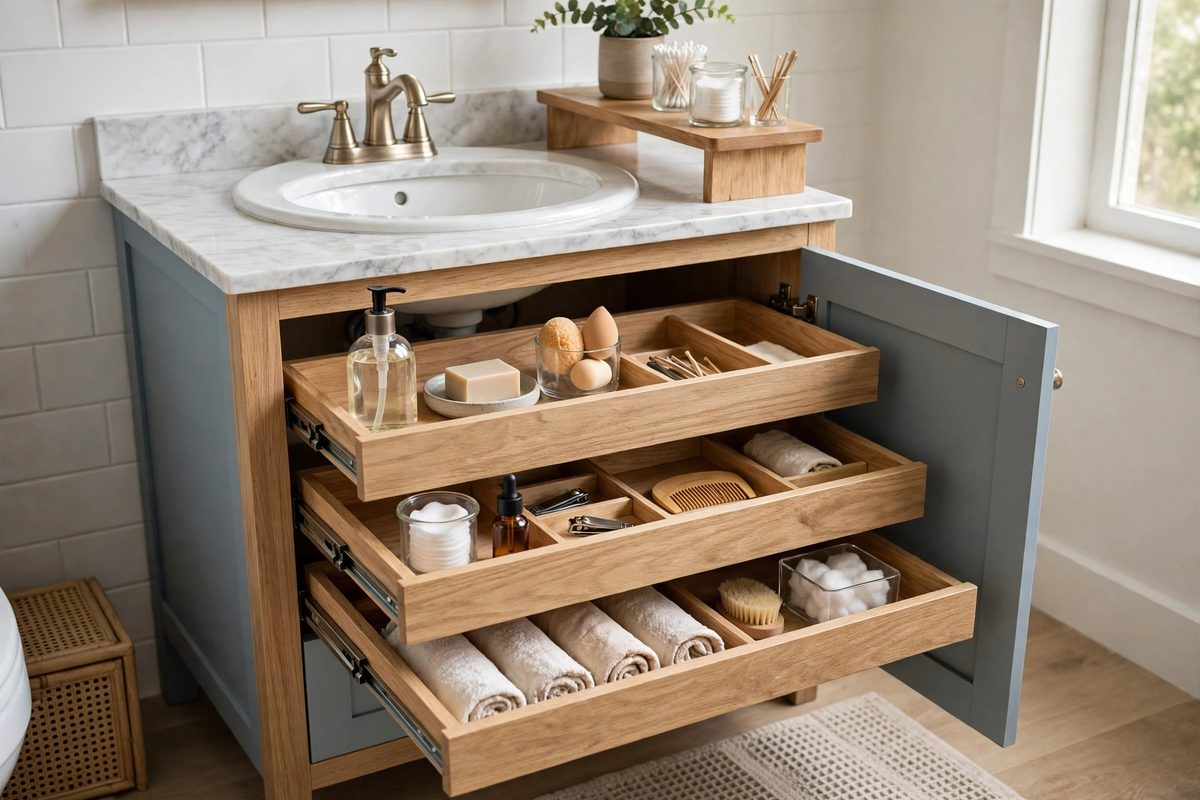
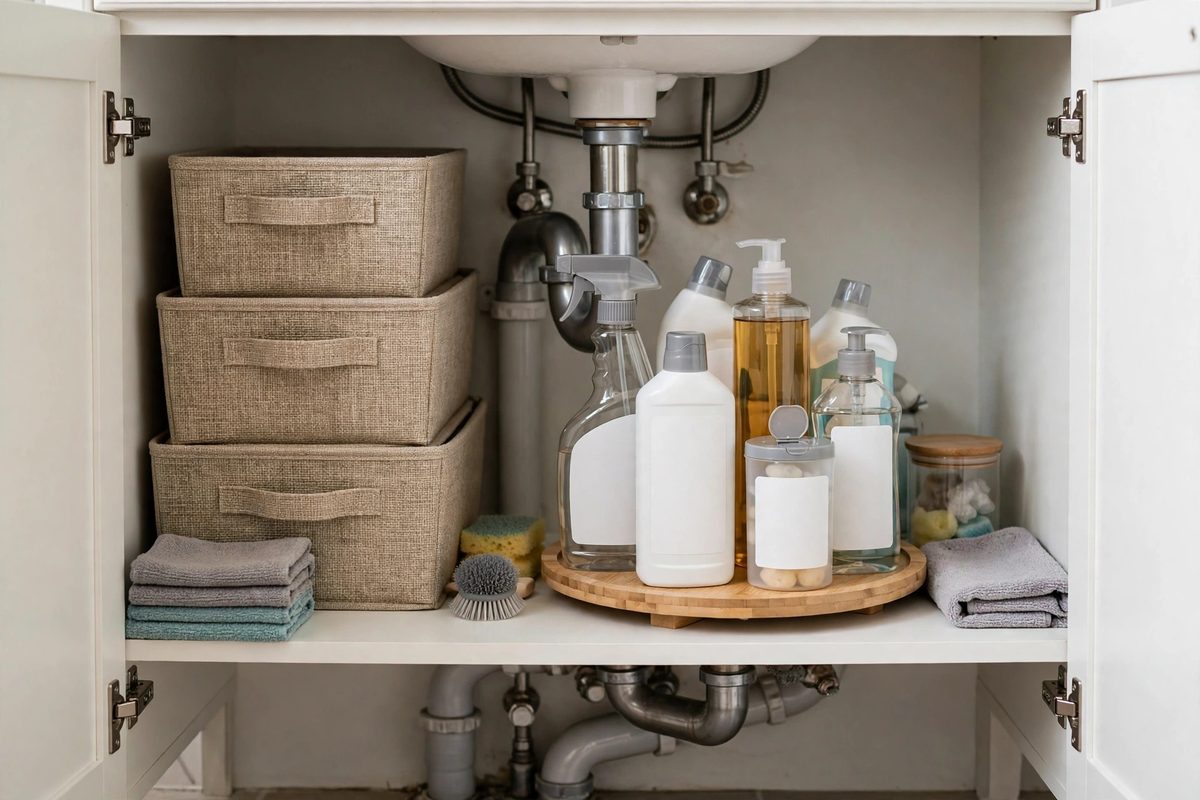
7. Use a lazy susan for deep cabinets. If your cabinet is deeper than 14 inches, the back half becomes a black hole where products go to expire. A 10-inch turntable, about 8 to 12 dollars, lets you spin the whole shelf and reach the back without moving the front. One turntable per shelf is enough, and it works best for round bottles like vitamins, serums, and nail polish. Rectangular bins do not spin well, so keep those on the front half of the shelf.
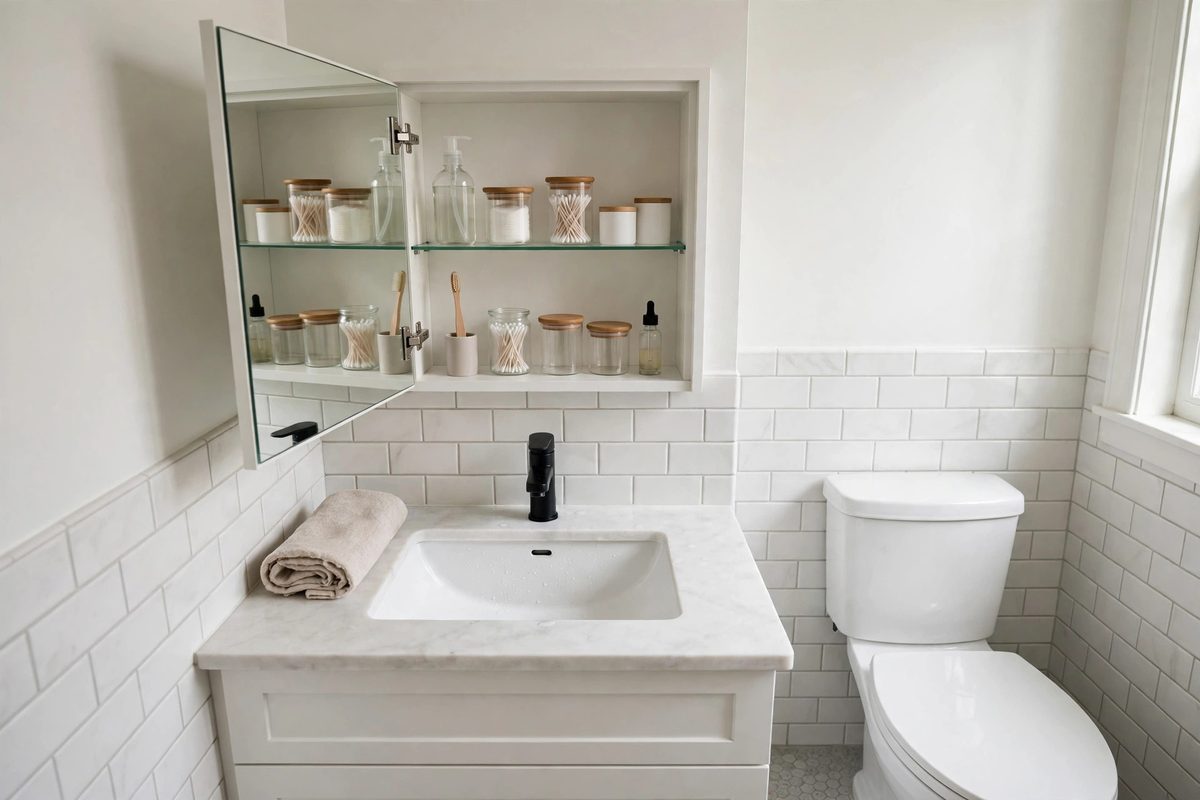
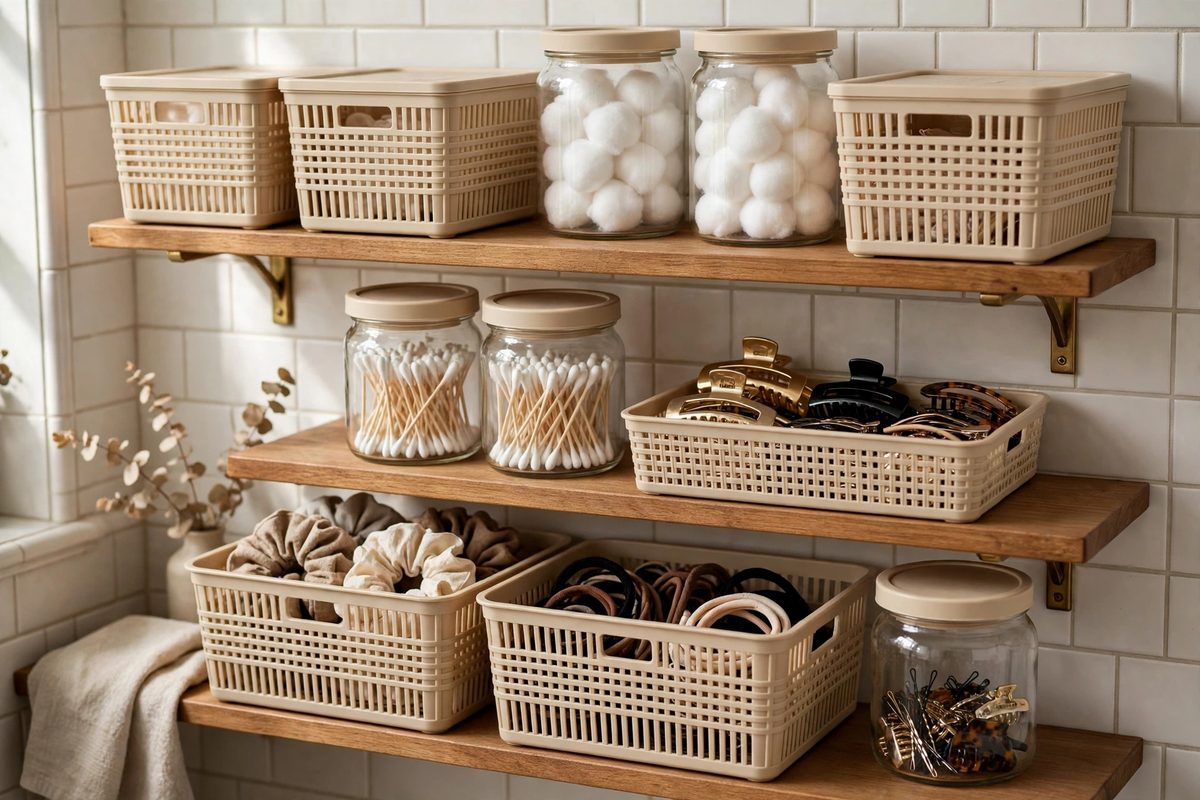
8. Decant daily products into matching jars for the top shelf. Cotton balls, cotton swabs, hair ties, and bobby pins look messy in their store packaging and take up odd amounts of space. Move them into small matching jars or containers, about 2 to 4 dollars each, and they stack neatly and look intentional. Only decant things you use daily: decanting everything turns into a second hobby. Keep the original packaging for anything with an expiry date you need to check.
9. Keep a small “use it up” box. Almost every bathroom has 3 to 5 half-used products that never get finished because a newer one took their place. Put them in one small box at the front of a shelf and use only those until they are gone. This stops you from buying a third moisturizer while two half-used ones sit in the back, and it clears a surprising amount of space within two weeks.
10. Store medicines separately and safely. Keep medicine in its own bin, away from daily skincare, and never store it above the sink where steam and humidity degrade it. A small latching box on a high shelf works well in homes with kids, and a simple list taped inside the door tracks expiry dates. Check the bin every 3 months and toss anything past its date: expired medicine is the most common thing people find when they finally clean a bathroom cabinet.
11. Use vertical dividers for flat items. Flat irons, curling wands, and hairbrushes fall over when stored flat, and they eat a whole shelf. A vertical file organizer or a tension rod mounted inside the cabinet, about 5 dollars, holds them upright like books on a shelf. This works best in the under-sink cabinet where there is more height, and it keeps hot tools away from bottles that could melt or leak.
12. Do a 5-minute reset every Sunday. Organization fails without maintenance, but maintenance does not need to be a project. Once a week, spend 5 minutes putting stray products back in their bins, tossing empties, and wiping the shelf fronts. Set a phone reminder for Sunday evening. A cabinet that gets a weekly reset stays organized for years, while one that never gets touched slides back to chaos in about 6 weeks.
Pro Tips for a Cabinet That Stays Organized
The biggest mistake is buying organizers before you know what you own. Sort and purge first, measure your shelves second, and only then buy bins that fit the actual products and the actual space. Start with 3 bins, not 10: one for skincare, one for hair, one for oral care. You can always add more once the system proves itself, but a cabinet stuffed with empty organizers is just a different kind of clutter. For the same zone-and-bin logic in the kitchen, our small kitchen cabinet organization ideas use the exact same method, and if you rent, our no-drill storage ideas show how to add storage without putting a single hole in the wall.
What to Avoid
- Buying bins before measuring: a bin that is half an inch too wide wastes the whole shelf.
- Keeping expired products “just in case”: expired skincare and medicine can irritate skin and lose potency, so toss them.
- Storing everything at eye level: only daily products belong there, and backups belong low or high.
- Mixing cleaning products with toiletries: keep them in separate bins, ideally in separate cabinets, so nothing leaks onto your face products.
Frequently Asked Questions
How do I organize a bathroom cabinet with no shelves? Add a stackable shelf riser or a small turntable to create levels inside the tall empty space. A 10-inch riser costs about 8 dollars and instantly doubles the usable surface. If the cabinet is very deep, a pull-out caddy on the bottom gives you access to the back without emptying the front.
What is the best way to organize a small bathroom cabinet? Zone it by frequency of use: daily products at eye level, weekly products one shelf away, backups on the lowest shelf. Use one clear bin per category and label each bin. Small cabinets benefit most from door-mounted racks and shelf risers, because those add storage without taking shelf space.
How do I keep a bathroom cabinet organized long term? Do a 5-minute reset once a week and a full purge every 3 months. The weekly reset catches strays and empties, and the quarterly purge catches expired products and duplicates. If a new product comes in, an old one goes out: one-in-one-out is the only rule that keeps a small cabinet from refilling.
Should medicine go in the bathroom cabinet? Only if the cabinet stays dry and cool. Steam from showers degrades medicine faster, so a bedroom drawer or a hallway cabinet is often better. If you do store medicine in the bathroom, keep it in a closed, labeled box on a high shelf away from the sink, and check expiry dates every 3 months.