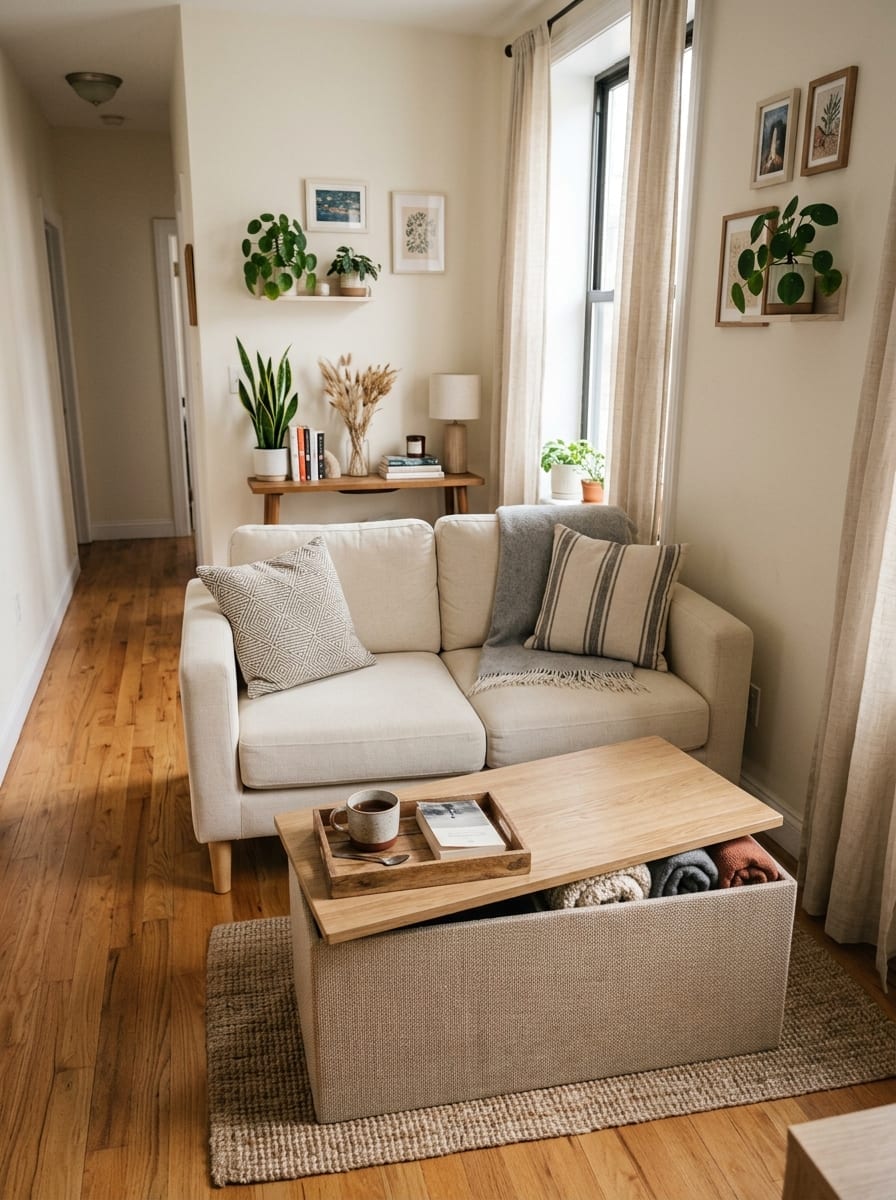
11 Vertical Storage Ideas for Small Apartments That Free Up Floor Space
Free up valuable floor area. Discover 11 vertical storage ideas for small apartments—using over-door racks, high perimeter shelves, tall bookcases, and wall hooks.
In This Guide
11 Vertical Storage Ideas for Small Apartments That Free Up Floor Space Small apartments usually do not run out of walls before they run out of floor. That is the opportunity. When storage is added the usual way, it often means bringing in another:
- cabinet
- basket
- console
- shelf unit
- storage bench Each piece may solve a problem, but it also occupies part of the floor. Eventually, the apartment has plenty of storage and almost nowhere to move. Vertical storage approaches the problem differently. Instead of asking: Where can I fit another piece of furniture?
ask: Which storage can move upward so the floor stays open?
That might mean:
- taller furniture instead of wider furniture
- storage above a desk
- shelves above eye level
- over-door space
- narrow wall zones
- corners used vertically But there is an important limit. Using vertical space does not mean covering every wall from floor to ceiling with storage. That can make a small apartment feel just as crowded as too much furniture. The goal is to concentrate storage vertically in a few useful places while leaving:
- some walls clear
- lower sightlines lighter
- main walkways open Here are eleven ways to do it.
1. The Floor-to-Ceiling Storage Wall
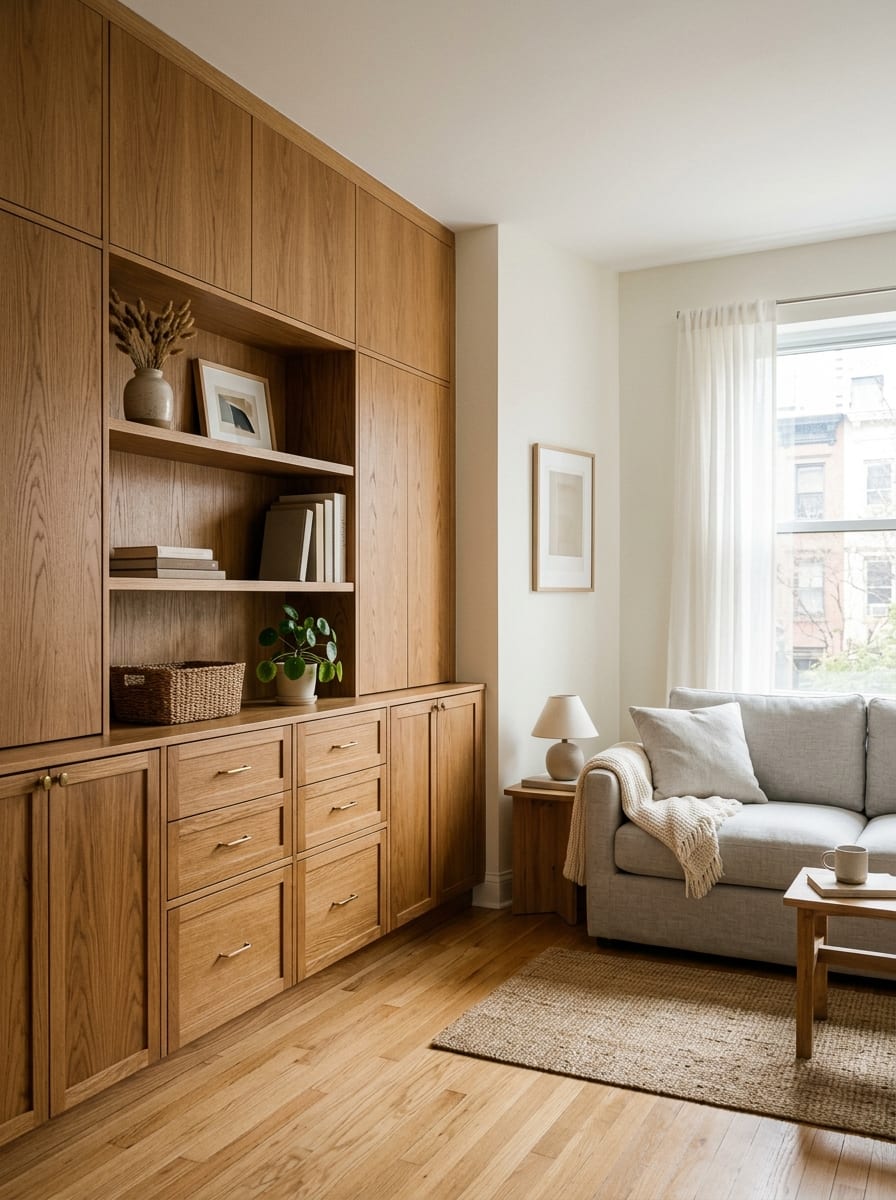
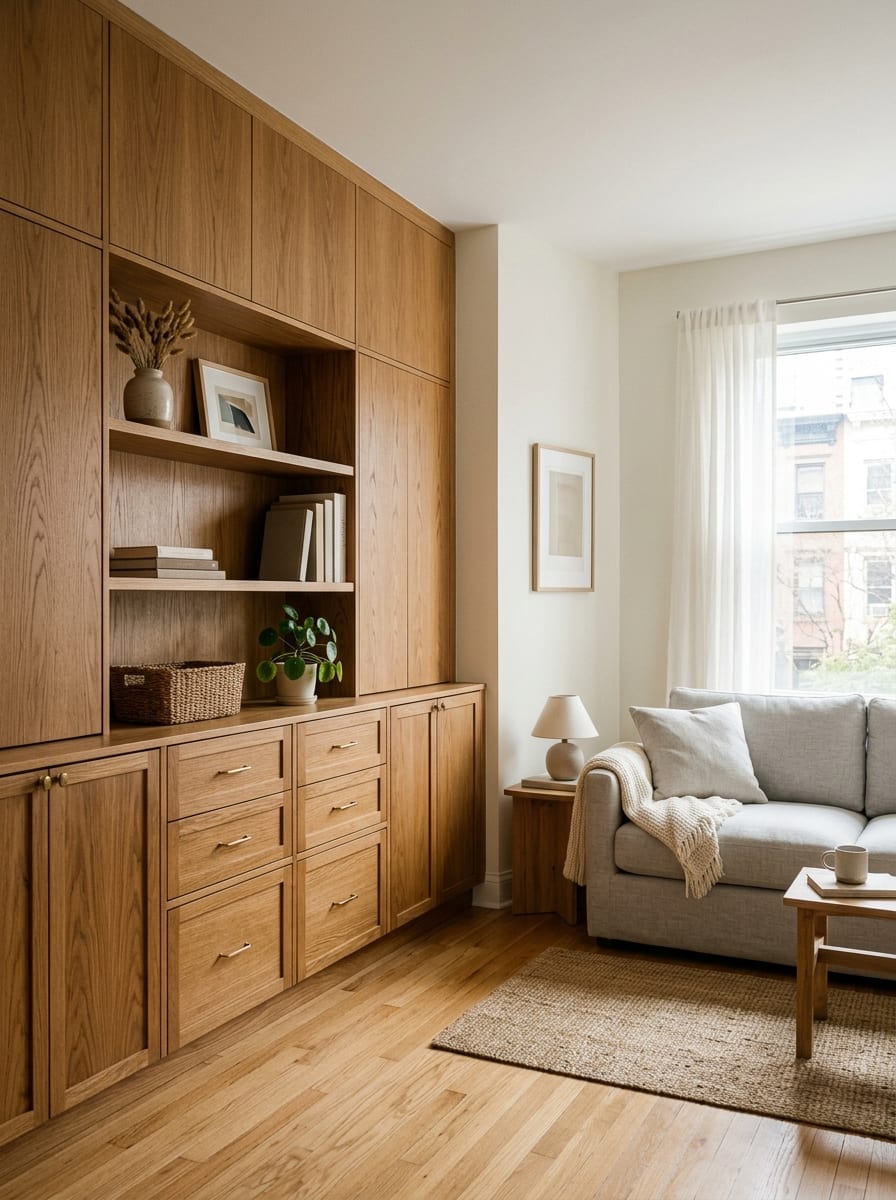
If one room needs substantial storage, concentrating it on a single wall can work better than placing several small cabinets around the room.
Why this works
Imagine a living room with:
- one low cabinet
- one bookshelf
- one basket
- one side storage tower on different walls. Each piece interrupts the room. A single taller storage wall can combine several functions while leaving other areas much calmer.
Use closed storage lower down
The lower sections are ideal for visually complicated items such as:
- cables
- paperwork
- games
- household supplies
Keep upper sections lighter
Higher shelves can hold:
- books
- baskets
- occasional decor but do not fill every shelf edge to edge.
Use the full wall carefully
Floor-to-ceiling does not have to mean a massive custom built-in. It could be:
- two tall matching cabinets
- one tall cabinet plus shelving
- modular storage
Keep the depth modest
A storage wall should increase capacity without projecting too far into the room. Depth still matters.
2. The Over-the-Door Storage Layer
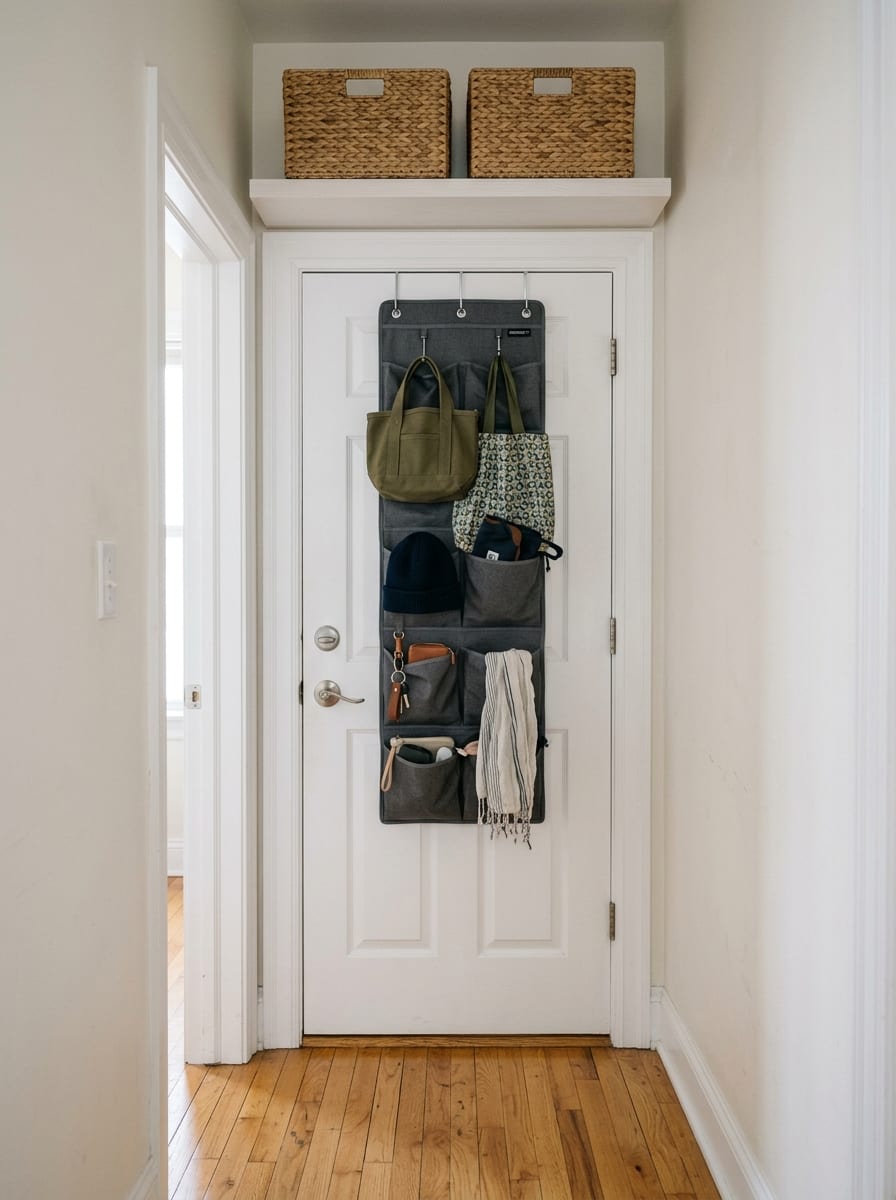
Doors already occupy wall space. The area above or behind them can sometimes provide useful storage without taking floor space.
Behind-the-door storage
Depending on the door and mounting system, this can hold:
- accessories
- cleaning tools
- small bags
- scarves
- lightweight pantry items
Above-the-door storage
A high shelf above the door can work for:
- seasonal items
- extra towels
- lightweight baskets
- infrequently used belongings
Why it works
The area is usually outside the room’s main visual focus. That makes it useful for low-frequency storage.
Keep it shallow
Anything behind a door must still allow the door to:
- open fully
- close normally
- avoid hitting walls or furniture
Do not overload it
A door covered with dozens of items can become awkward and visually busy. One defined category is better.
Installation matters
Follow appropriate weight limits and attachment methods for the actual door and wall.
3. The High-Shelf Storage Zone
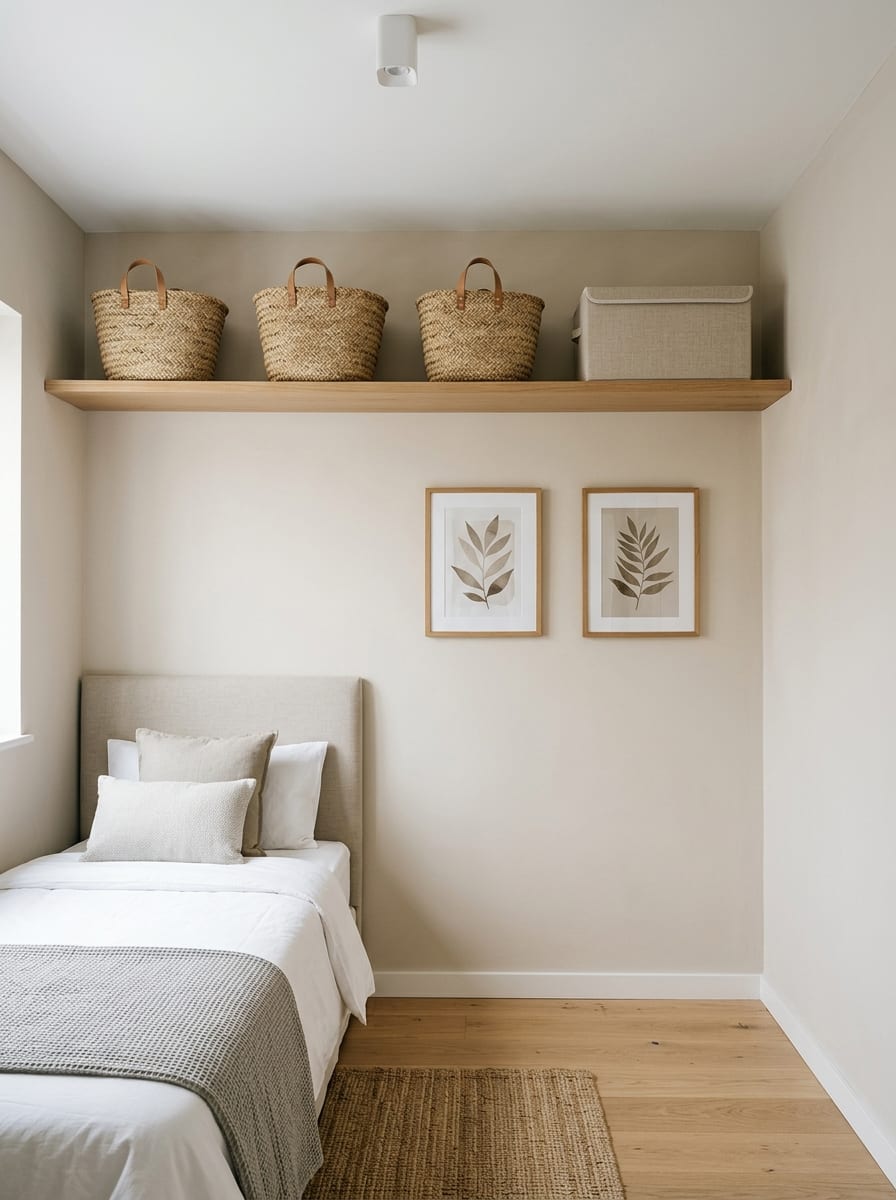
Storage does not always need to sit at eye level. A high shelf can use wall space that would otherwise remain empty.
Best items for high shelves
Store things you do not need every day, such as:
- seasonal decor
- spare bedding
- luggage accessories
- occasional serving pieces
- archived paperwork
Keep daily items lower
A high shelf is not a good home for something you use twice a day. You do not want to constantly reach for:
- toiletries
- cooking essentials
- current shoes from above your head.
Use matching containers where helpful
Two or three related boxes can look calmer than many unrelated items.
Leave space beneath
One of the advantages of a high shelf is that the wall below can remain:
- empty
- decorative
- functional for another purpose
Do not wrap the whole room
A continuous shelf around every wall can make the ceiling feel lower. Choose one strategic wall.
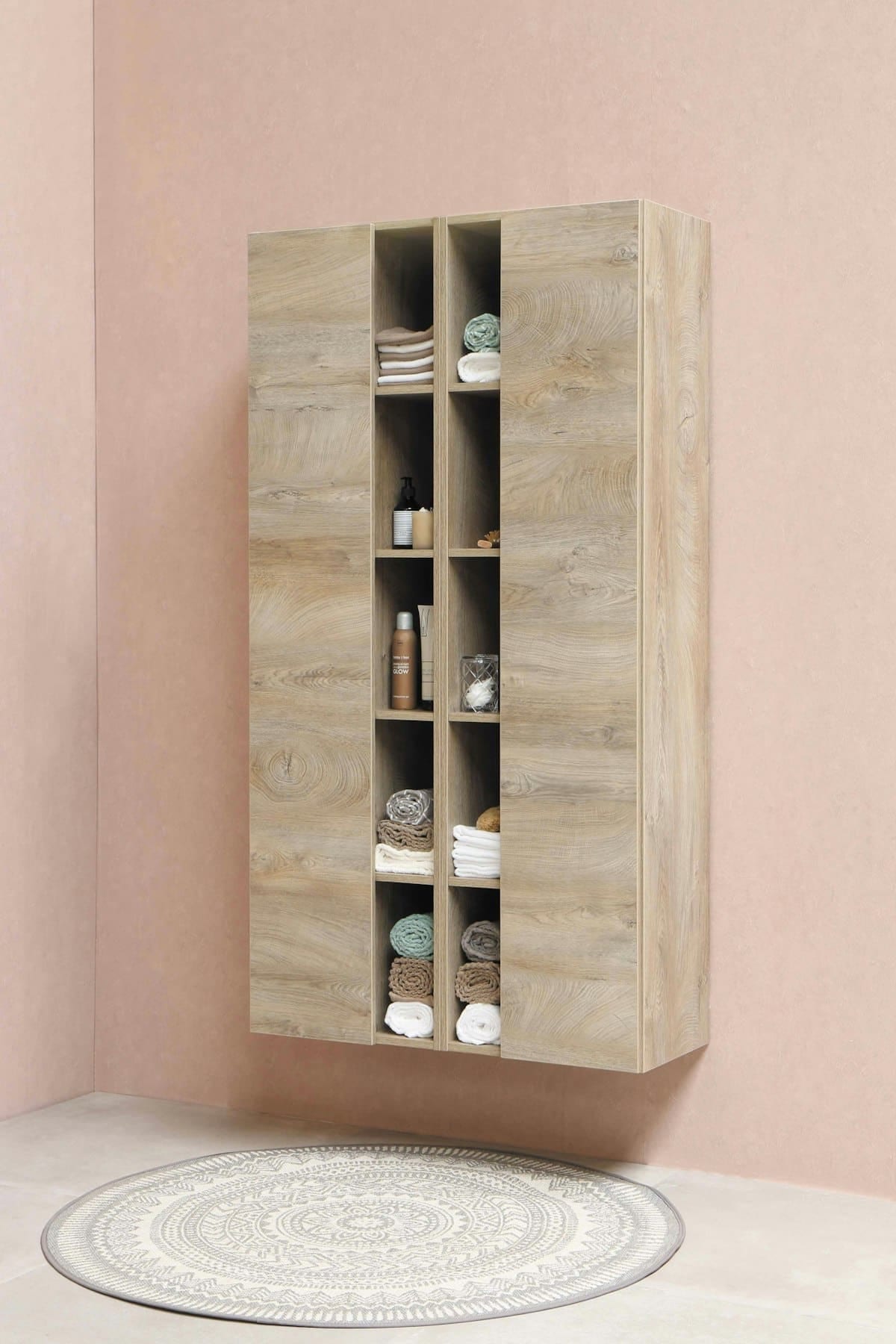
4. The Tall Narrow Cabinet
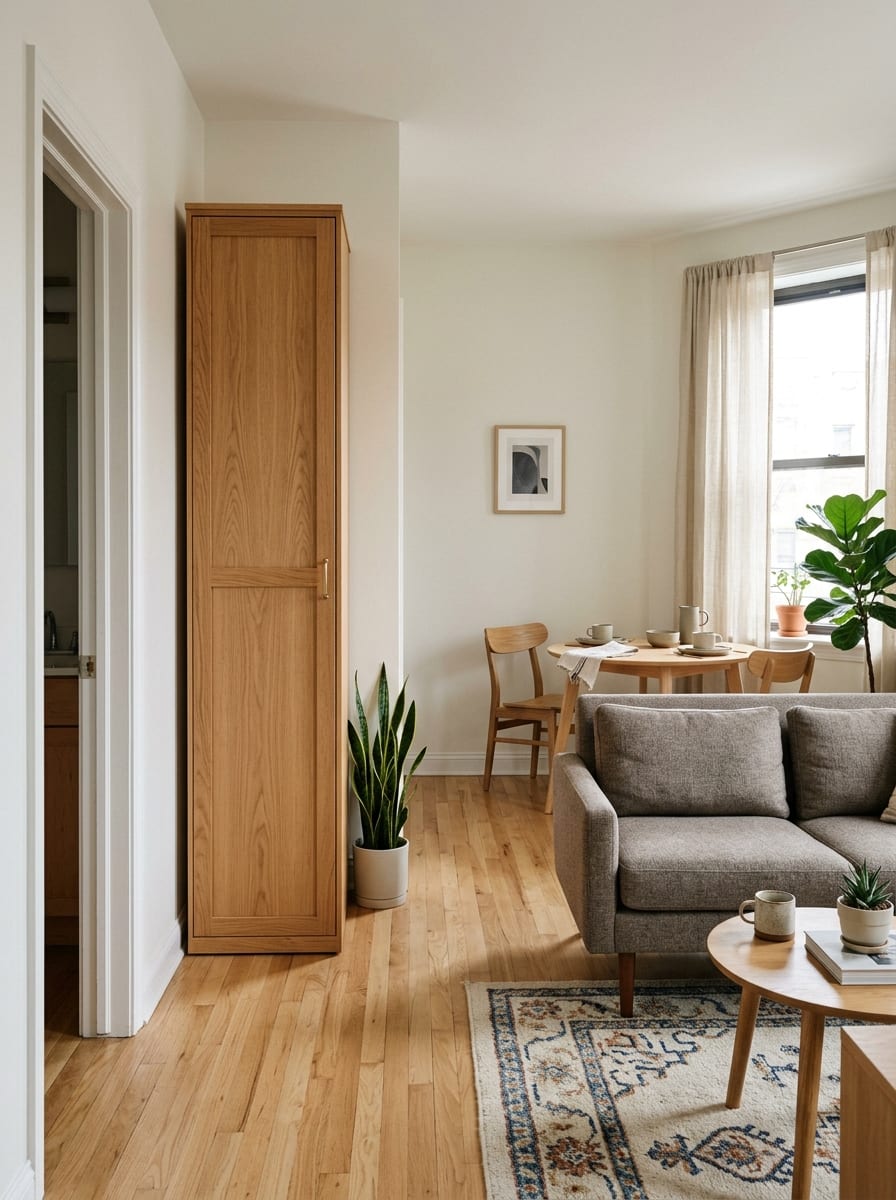
When the choice is between a wide cabinet and a tall narrow one, the vertical option can preserve more usable floor.
Why footprint matters
A wide dresser may offer good storage but occupy several feet of wall. A tall cabinet uses:
- less floor width
- more vertical volume
Good uses
A tall narrow cabinet can store:
- linens
- pantry goods
- cleaning supplies
- office supplies
- clothing depending on the room.
Keep it closed
Tall open shelving filled with objects can create a large wall of visual clutter. Doors make the cabinet feel calmer.
Watch depth
A tall cabinet can still be too bulky if it projects far into a narrow room. Measure: wall → cabinet front → walkway
Safety matters
Tall furniture may need to be secured according to manufacturer guidance.
5. The Vertical Entryway Strip
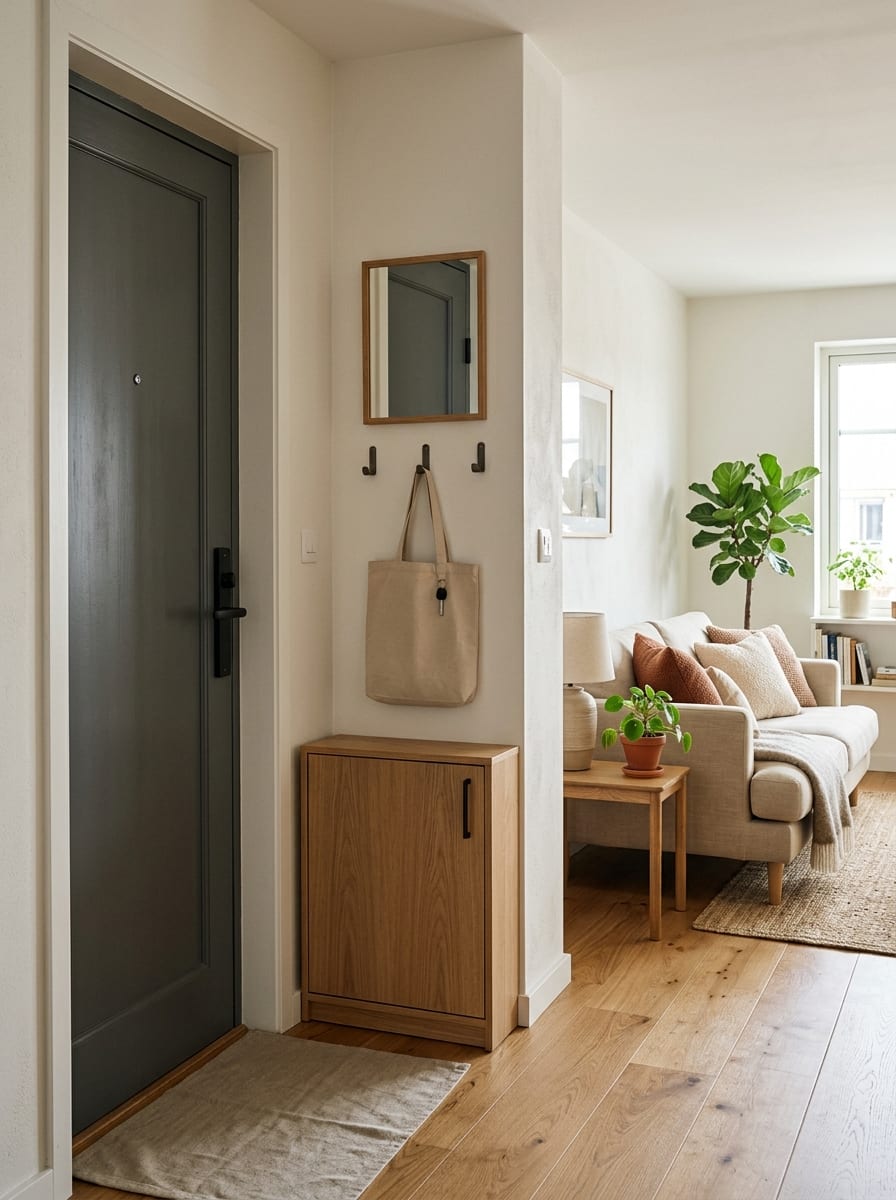
A small apartment entry does not need an entire wall of furniture. One narrow vertical strip can handle several daily functions.
Stack the functions
For example: Top Small mirror or shallow shelf. Middle Two or three hooks. Bottom Slim shoe cabinet. That creates a complete entry station within a narrow width.
Why it works
Instead of spreading:
- keys
- bags
- shoes across several pieces of furniture, you concentrate them.
Keep the lower area shallow
The entry needs easy circulation. A deep shoe unit can turn the solution into a new obstacle.
Limit hooks
If five hooks each hold three items, the wall quickly becomes visually heavy. Keep only:
- daily coat
- daily bag
- perhaps one extra item
Use the vertical line as a boundary
The storage strip can visually define the entrance even when the door opens straight into another room.
6. The Above-Desk Storage Wall
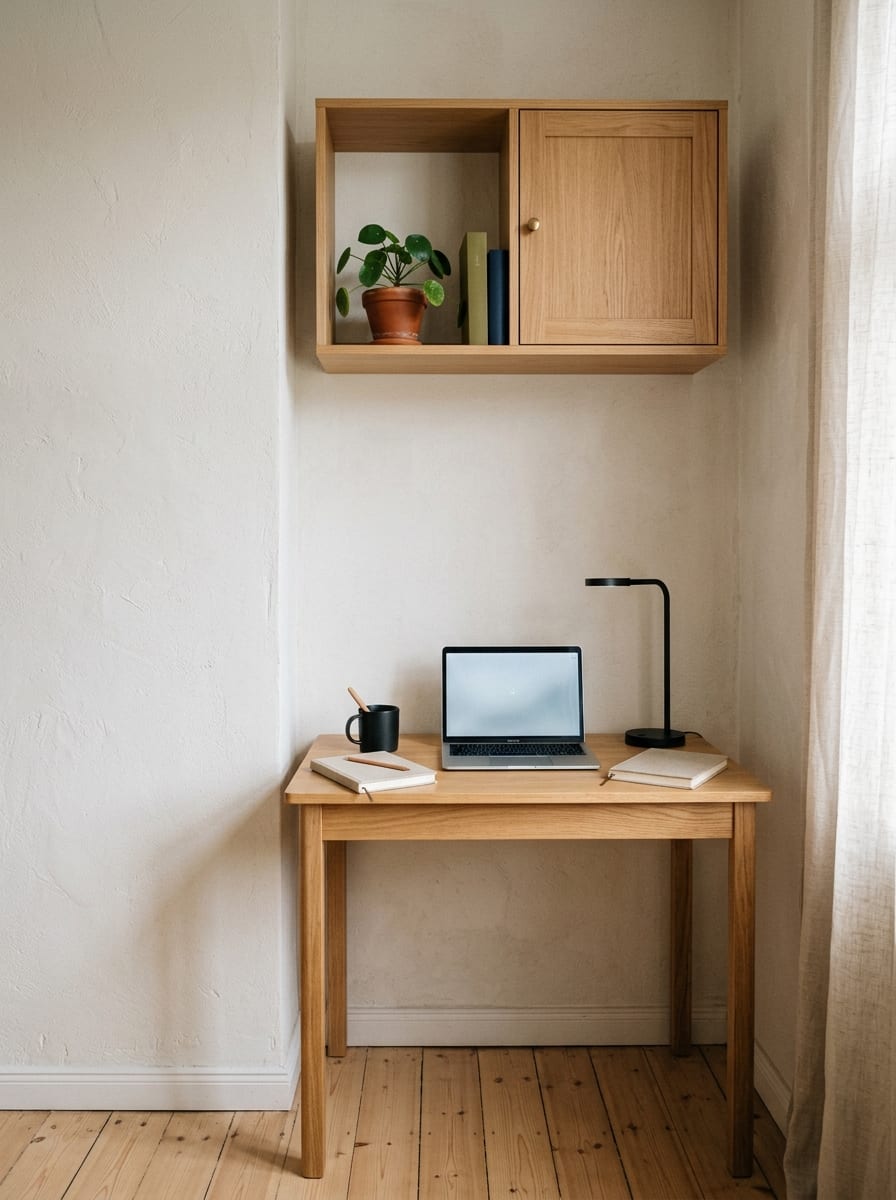
A small home office often adds:
- desk
- drawer unit
- cabinet
- bookshelf which can consume a lot of floor. Instead, use the wall directly above the desk.
Start with one shelf
A shallow shelf can hold:
- notebooks
- small supplies
- a few books
Add closed wall storage if necessary
A compact wall cabinet can hide:
- paperwork
- chargers
- office supplies
Keep work essentials within reach
Frequently used items should not be so high that getting them becomes inconvenient.
Leave some wall visible
A desk surrounded by storage on every side can feel enclosed. Use only what you need.
Why this is efficient
The desk footprint is already occupied. Storage above it adds capacity without expanding the working zone across the floor.
7. The Bathroom Wall Storage Stack
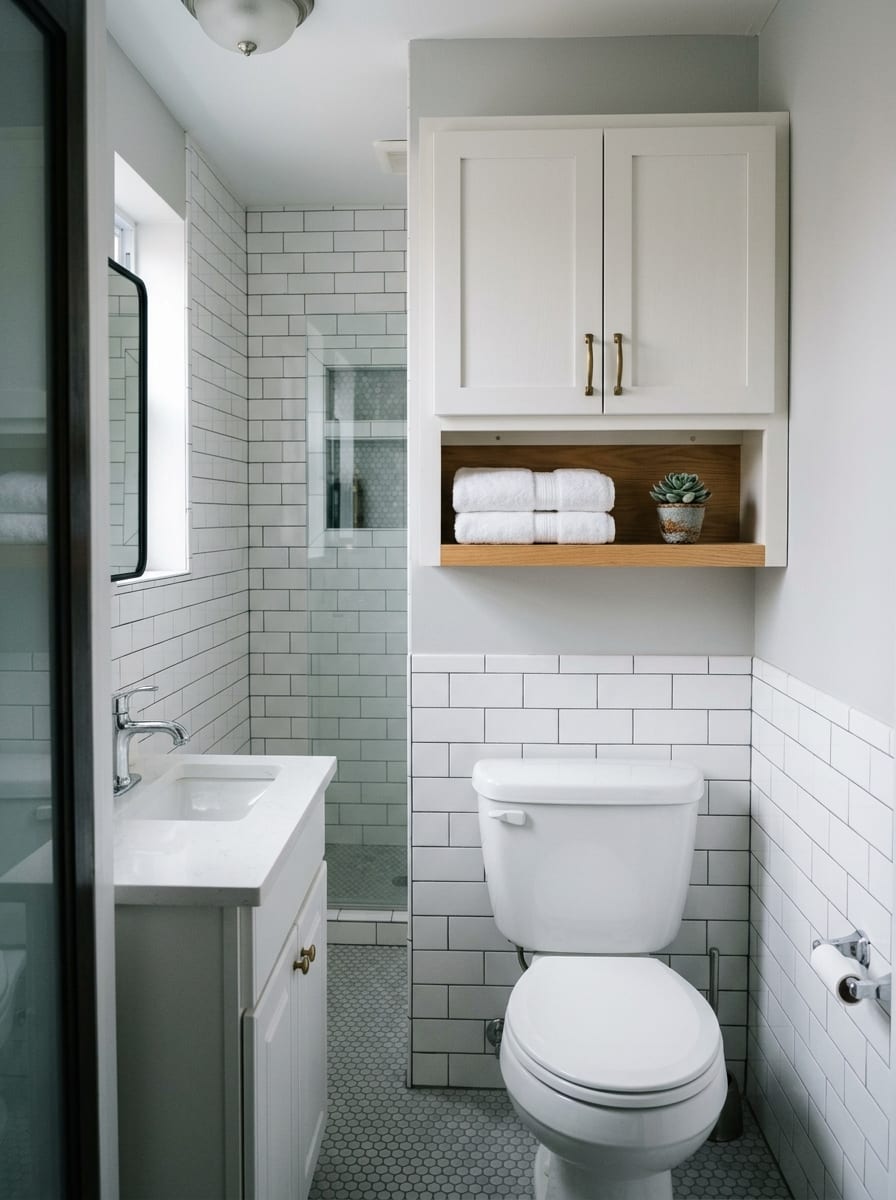
Small bathrooms often have very limited floor area. That makes wall storage particularly useful.
Look above existing fixtures
Potential zones include:
- above toilet
- above towel rail
- beside mirror Keep depth shallow Bathroom circulation is tight. A deep cabinet can make the room feel physically narrower.
Mix closed and open storage
For example: Closed cabinet
- backup toiletries
- cleaning products
- medicine where appropriate Small open shelf
- hand towels
- one decorative object
Do not expose every product
Dozens of bottles on open shelves create visual clutter. Closed storage is especially helpful in small bathrooms.
Consider moisture
Use storage materials suited to bathroom humidity.
8. The Kitchen Side-Wall Storage Zone
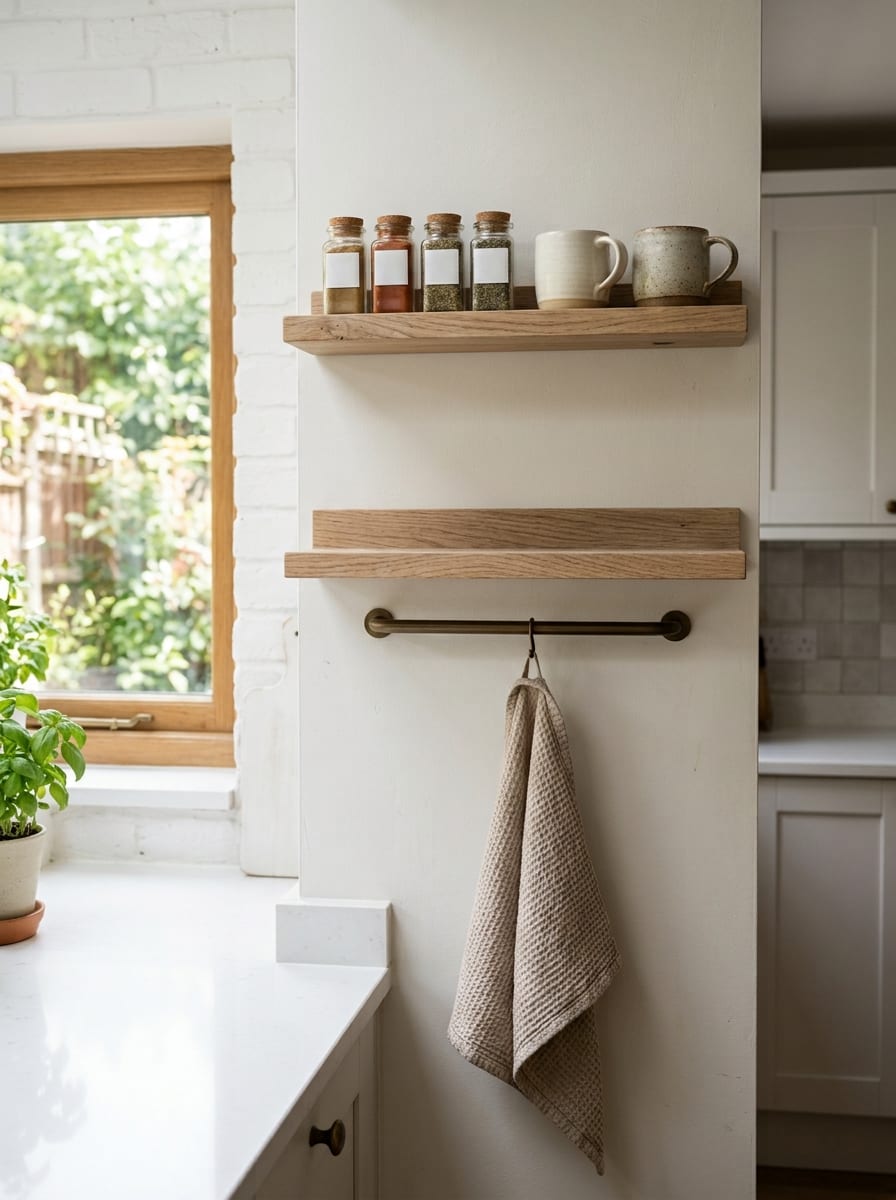
A kitchen wall does not need another floor cabinet to become useful. A narrow vertical side wall can hold a small amount of functional storage.
Good locations
Try:
- end of cabinet run
- narrow wall beside refrigerator
- short wall near pantry
Good uses
Use:
- one vertical rail
- shallow shelves
- spice ledge
- hanging towel depending on the location.
Keep it category-specific
A vertical kitchen wall becomes cluttered when it tries to hold:
- pans
- mugs
- knives
- utensils
- towels
- spices all at once. Choose one or two categories.
Keep the counter nearby clear
The wall storage should reduce countertop clutter, not supplement it.
9. The Bedside Vertical Tower
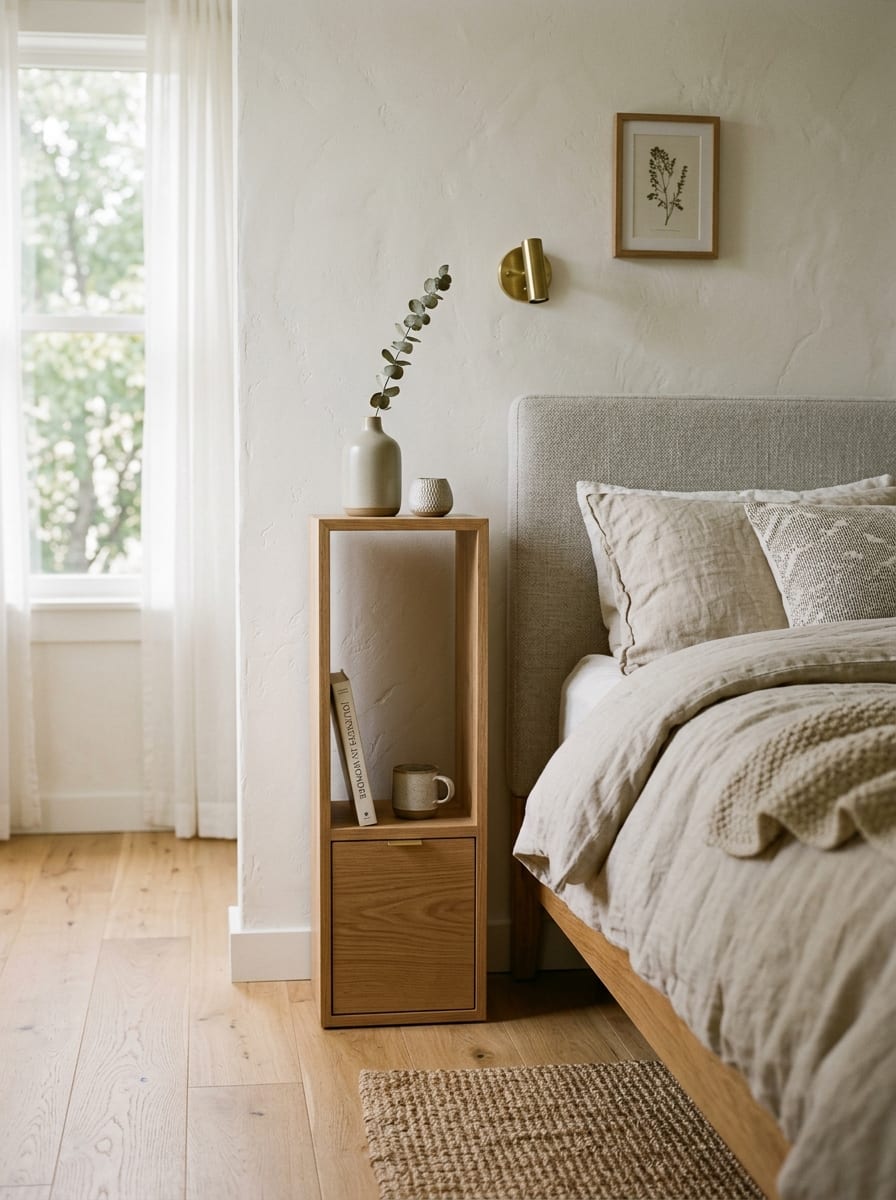
When bedroom width is limited, a traditional wide nightstand may not be the most efficient option. A slim vertical bedside unit can offer more capacity in less width.
Think narrow, not bulky
A tower might include:
- small drawer
- open shelf
- upper shelf within a compact footprint.
Keep daily items at hand level
Place:
- phone
- glasses
- book where they are easy to reach. Use upper sections for:
- occasional books
- small storage box
Keep the unit visually light
A huge tower beside the bed can make the sleeping area feel boxed in. Look for:
- modest width
- shallow depth
- simple shape
One tower may be enough
In an asymmetrical bedroom, one side can use the vertical tower while the other uses:
- floating shelf
- nothing at all
10. The Corner-to-Ceiling Storage Plan
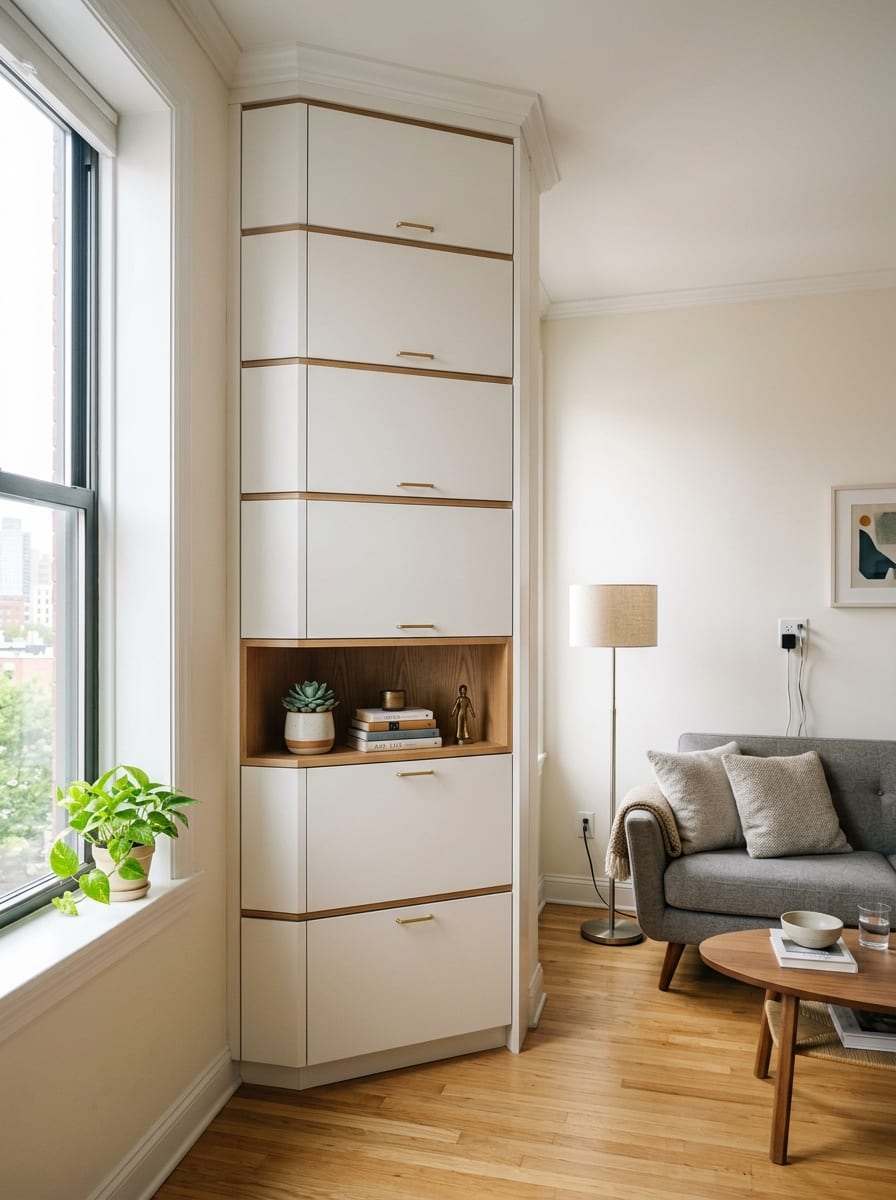
Corners are often awkward because most furniture leaves unusable gaps around them. A carefully selected vertical unit can turn one corner into useful storage.
Good options
Consider:
- tall corner cabinet
- narrow triangular shelving
- floor-to-ceiling corner bookcase
Keep most of it closed if the room is busy
Open corner shelving can quickly become a display of:
- books
- baskets
- decor from floor to ceiling. That can feel overwhelming.
Use upper levels for low-frequency items
Higher shelves can hold things you use less often.
Do not add a second corner unit
Using every corner for storage can make the room feel surrounded. Let other corners remain open.
Corners are especially useful in
- bedroom
- living room
- home office where an awkward sliver of floor might otherwise go unused.
11. The Keep-the-Bottom-Light Rule
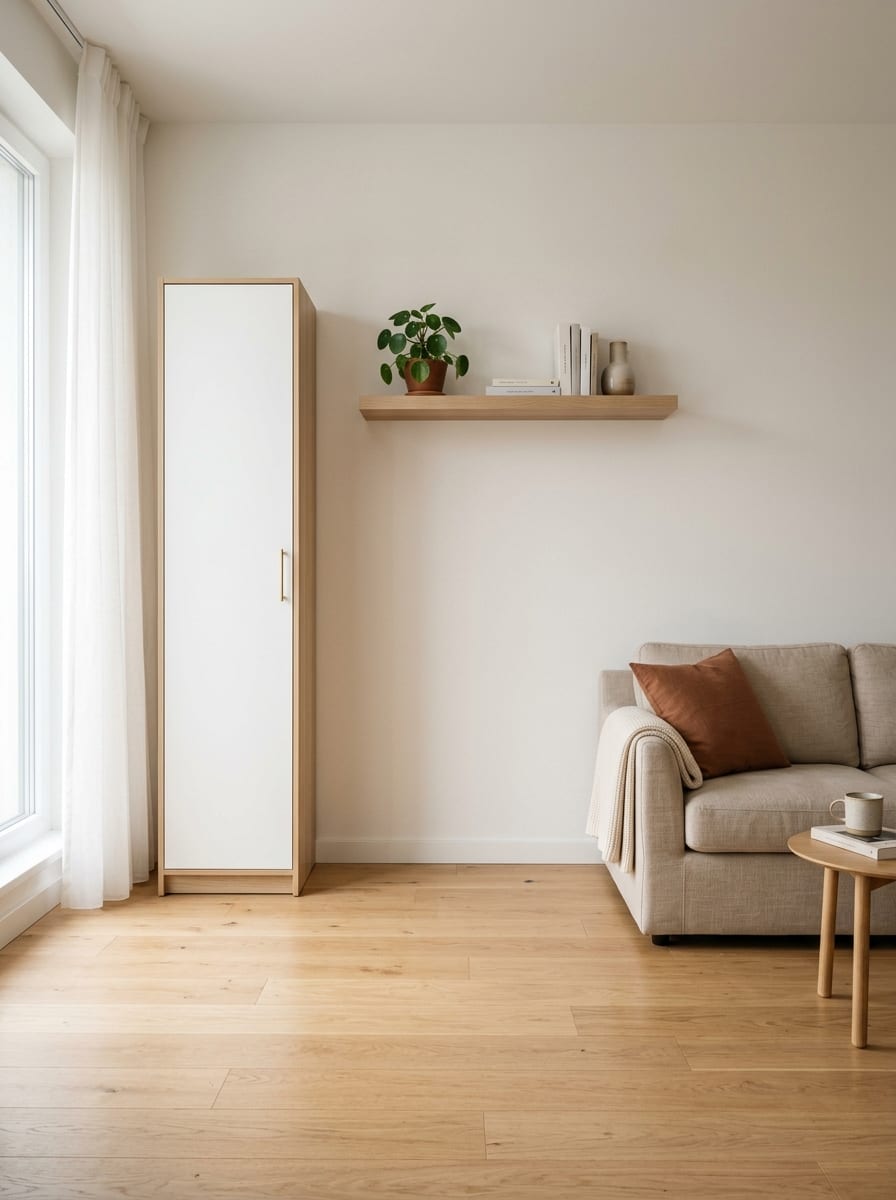
Vertical storage only works if the room still feels grounded and open. That is why the final rule matters: Do not fill both the walls and the floor.
If storage goes upward, simplify below
For example: Wall Tall cabinet. Floor beside it Nothing. Or: Above desk Shelves. Under desk Open leg space. Why this matters A wall full of storage plus:
- baskets
- stools
- bins
- side tables below it can make the room feel heavier than before.
Preserve visible flooring
Visible floor creates breathing room.
Avoid storage stacking for its own sake
Not every vertical zone needs:
- cabinet
- basket on top
- hooks beside it
- bin underneath Choose the minimum solution.
Use vertical storage to reduce furniture count
That is the real objective. If the new wall storage allows you to remove:
- floor shelf
- extra cabinet
- basket then it has actually freed space.
Start With the Floor, Not the Walls
Before installing anything, look at what currently occupies the floor. Common space-takers include:
- baskets
- short bookcases
- small cabinets
- storage carts
- boxes Ask whether any of those categories could move upward. The goal is not simply to add vertical storage. It is to replace horizontal storage with vertical storage.
Identify Your Highest-Value Floor Space
Not all floor space matters equally. The most valuable areas are usually:
- walkways
- beside the bed
- near doors
- around dining chairs
- in front of closets Do not place storage there simply because something technically fits.
Use Vertical Storage Where the Floor Is Already Occupied
This is especially efficient. For example: Desk Storage above. Toilet Storage above. Shoe cabinet Hooks above. Bed Headboard shelf. You increase capacity without claiming a new floor footprint.
Tall vs Wide Storage
When two pieces provide similar capacity, compare the footprint. Wide cabinet Uses more wall length. Tall cabinet Uses more height. In many small apartments, the taller piece leaves:
- more open floor edge
- more room for another function But do not choose something so tall or heavy that it overwhelms the room.
Use Vertical Space According to Frequency
A useful rule: Lower Daily use. Middle Weekly use. Higher Occasional or seasonal use. This prevents constantly reaching for high shelves.
What Belongs on the Highest Shelves?
Good candidates include:
- holiday decor
- extra blankets
- luggage accessories
- archive boxes
- occasional serving pieces Avoid storing:
- heavy daily cookware
- frequently used toiletries
- current shoes where access is awkward.
Do Not Store Heavy Items Too High
High storage needs to remain practical and safe. Keep heavier objects:
- lower
- stable
- easy to handle Do not create a situation where you regularly lift a heavy appliance over your head.
Leave Some Walls Empty
Vertical storage should be concentrated. If every wall contains:
- shelves
- hooks
- cabinets
- rails the room can feel smaller even though the floor is clear. One storage-heavy wall plus one calmer wall often works better.
Use Closed Storage to Reduce Visual Height
A tall open bookshelf exposes dozens of objects from floor to ceiling. A tall closed cabinet reads as one simple shape. That can be much calmer in a compact room.
When Open Shelves Make Sense
Use open storage for things you genuinely enjoy seeing. Good examples:
- books
- pottery
- a few plants Not:
- cleaning supplies
- electronics
- random household extras
Keep Wall Storage Shallow
One reason vertical storage works is that walls often have unused depth. Do not ruin that advantage with a very deep cabinet. Shallow storage can be enough for:
- books
- toiletries
- spices
- shoes
- office supplies depending on the location.
Watch Door Swing
Before adding wall storage near a door, open the door completely. Check:
- cabinet depth
- hooks
- hanging bags
- shelf projection The door should remain fully functional.
Watch Windows Too
Do not build so much storage around a window that you block:
- curtains
- blinds
- daylight Natural light often contributes more to spaciousness than another shelf does.
Do Not Block Light Switches or Outlets
Vertical storage layouts can accidentally cover:
- outlets
- switches
- vents
- thermostats Map the wall before installing anything.
Use Corners Selectively
A vertical corner cabinet can be useful. Four vertical corner cabinets will make a small room feel enclosed. Choose the corner that solves the most important storage problem.
Use the Space Above a Desk
This is one of the best vertical zones because the floor is already committed to furniture. You can often add storage with no additional floor loss. Just keep enough clearance so the workspace does not feel claustrophobic.
Use the Space Above a Toilet Carefully
This can provide excellent bathroom storage. Keep it:
- shallow
- securely installed
- proportionate to the room Avoid an oversized cabinet hanging far over the toilet.
Use Above-the-Door Space for Low-Frequency Storage
This area is easy to forget because it is outside normal eye level. That makes it ideal for occasional items. But avoid putting something there that you need every morning.
Use the Closet’s Full Height
Many closets have unused space above the hanging rail. Try:
- one top shelf
- stackable containers where appropriate for off-season belongings. Do not let the top become an unorganized pile.
Use the Refrigerator Side Carefully
A narrow wall or exposed refrigerator side may accept:
- magnetic organizer
- very shallow rack where suitable. But do not load it with enough objects to make the kitchen visually chaotic.
Do You Need Floor-to-Ceiling Shelves?
Not always. A shelf does not become more useful simply because it reaches the ceiling. Choose full-height storage when you genuinely need capacity. Otherwise, a single high shelf may solve the problem more cleanly.
Is Vertical Storage Good for Renters?
It can be, but installation matters. Options may include:
- freestanding tall cabinets
- over-door systems
- tension-based products designed for the purpose
- appropriate removable solutions Wall-mounted storage should follow:
- product instructions
- lease requirements
- appropriate anchoring Do not compromise safety purely to avoid holes.
Should Furniture Reach the Ceiling?
Usually it does not need to touch the ceiling. Leaving a little space can:
- simplify installation
- reduce visual heaviness What matters is using height more efficiently than several low pieces would.
Vertical Storage in a Studio Apartment
Studios particularly benefit from concentration. Try one vertical storage zone rather than placing storage throughout:
- sleeping area
- living area
- work area A single storage wall can keep the rest of the room visually calmer.
Vertical Storage in a Small Living Room
Strong options include:
- tall closed cabinet
- wall-mounted media storage
- shelves above desk
- high book shelf Avoid filling every wall around the sofa.
Vertical Storage in a Small Bedroom
Prioritize:
- tall dresser
- narrow bedside tower
- closet height
- headboard storage before adding another wide cabinet.
Vertical Storage in a Small Kitchen
Focus on:
- shallow shelves
- narrow wall rail
- upper-cabinet organization rather than covering the room with hanging cookware.
Vertical Storage in a Small Bathroom
Use:
- wall cabinet
- shallow shelf
- over-toilet space while keeping floor-standing storage minimal.
Vertical Storage in an Entryway
Think in one narrow stack: shoes → hooks → mirror/shelf rather than placing:
- bench
- coat rack
- basket
- console as separate pieces.
Common Vertical Storage Mistakes
Covering every wall Height becomes visual clutter. Keeping too much open Closed storage is often calmer. Putting daily items too high Access still matters. Choosing tall but very deep furniture You save width but lose walkway space. Filling the floor beneath wall storage The room gains no actual breathing room. Using every corner Some corners should stay open. Ignoring door swing Storage should not interfere with movement. Blocking natural light Another shelf is not worth a darker room. Storing heavy items overhead Safety comes first. Adding storage instead of replacing storage The goal is fewer floor pieces.
A Simple Vertical Storage Formula
For many small apartments: Floor One tall closed cabinet. Above desk One shallow shelf. Entry Hooks above shoe storage. Occasional items High shelf. Then stop. You do not need vertical storage on every available wall.
A Very Small Apartment Formula
Try: Living room One tall cabinet. Bedroom Under-bed storage + tall dresser. Kitchen One narrow wall storage zone. Bathroom One shallow wall cabinet. Prioritize concentration over quantity.
A Renter-Friendly Formula
Try: Freestanding Tall narrow cabinet. Door Appropriate over-door organizer. Closet High shelf organization. Wall Only mount storage where allowed and safe. This still gives you vertical capacity without turning the apartment into a permanent installation project.
Which Vertical Storage Idea Fits Your Apartment?
Choose a Floor-to-Ceiling Storage Wall if:
Several small storage pieces are scattered around one room.
Choose Over-the-Door Storage if:
You need a small amount of secondary storage without another furniture piece.
Choose a High Shelf if:
Occasional items occupy prime cabinets.
Choose a Tall Narrow Cabinet if:
Floor width is limited.
Use a Vertical Entryway Strip if:
Shoes, bags and keys spread into the living area.
Use Above-Desk Storage if:
Office supplies require a separate floor cabinet.
Use Bathroom Wall Storage if:
Toiletries are crowding the vanity or floor.
Use Kitchen Side-Wall Storage if:
The counter is full but one narrow wall is unused.
Choose a Bedside Tower if:
A wide nightstand will not fit.
Use a Corner-to-Ceiling Plan if:
One awkward corner is otherwise wasted.
Follow the Keep-the-Bottom-Light Rule if:
Your apartment has plenty of storage but still feels physically crowded.
Final Thoughts
Vertical storage is most useful when it gives the floor something back. The goal is not: more shelves everywhere. It is: fewer floor-standing storage pieces. Start by identifying what currently occupies valuable floor space. Then ask whether those categories can move: upward → behind doors → above furniture → into taller storage Concentrate storage rather than spreading it across every wall. Keep frequently used items reachable. Use closed storage for visually complicated categories. And leave some walls completely alone. A small apartment feels much more spacious when storage uses the height of the room without consuming every inch of the room itself.