10 Small Kitchen Cabinet Organization Ideas That Create More Usable Storage
Make small kitchen cabinets work harder with these 10 organization ideas using shelf risers, vertical dividers, pull-out bins, door storage, and smarter cabinet zones.
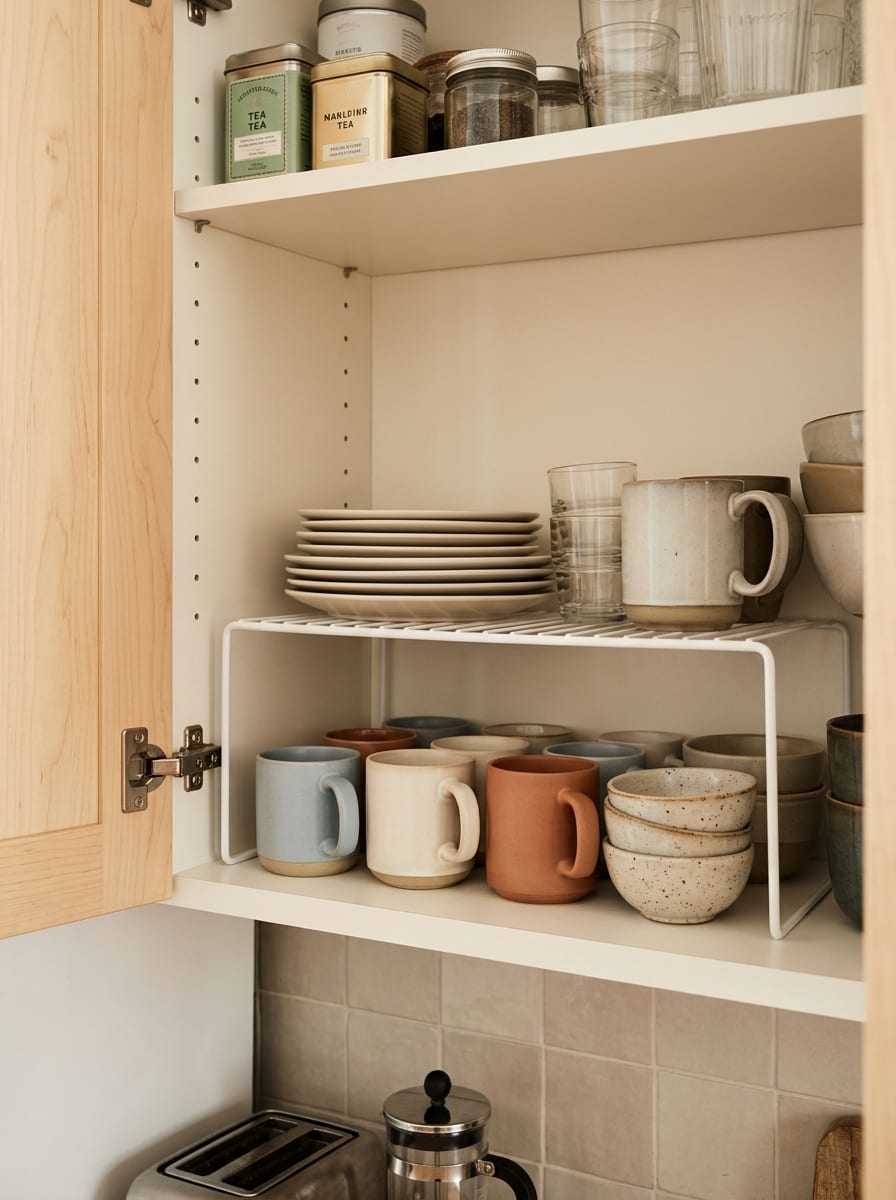
Interior of an organized small kitchen cabinet featuring a double-level shelf riser for mugs and bowls
In This Guide
Small kitchen cabinets often have more storage capacity than they seem to.
The problem is usually not just a lack of space. It is unused vertical space, deep shelves you cannot reach easily, awkward stacks, and cabinets organized around where things happen to fit instead of how often you use them.
That is especially noticeable in apartment kitchens, where every cabinet may need to hold several categories at once.
The goal is not to fill every inch with organizers. It is to make more of the cabinet’s existing volume reachable and useful.
Before buying bins or shelf inserts, empty one cabinet and measure:
- Interior width
- Interior depth
- Shelf height
- Door clearance
- Hinge position
Even an organizer that is only an inch too deep can prevent the cabinet door from closing properly.
Here are ten small kitchen cabinet organization ideas that can help you create more usable storage without turning every cupboard into a complicated system.
1. Add a Shelf Riser to Use the Empty Space Above Short Items
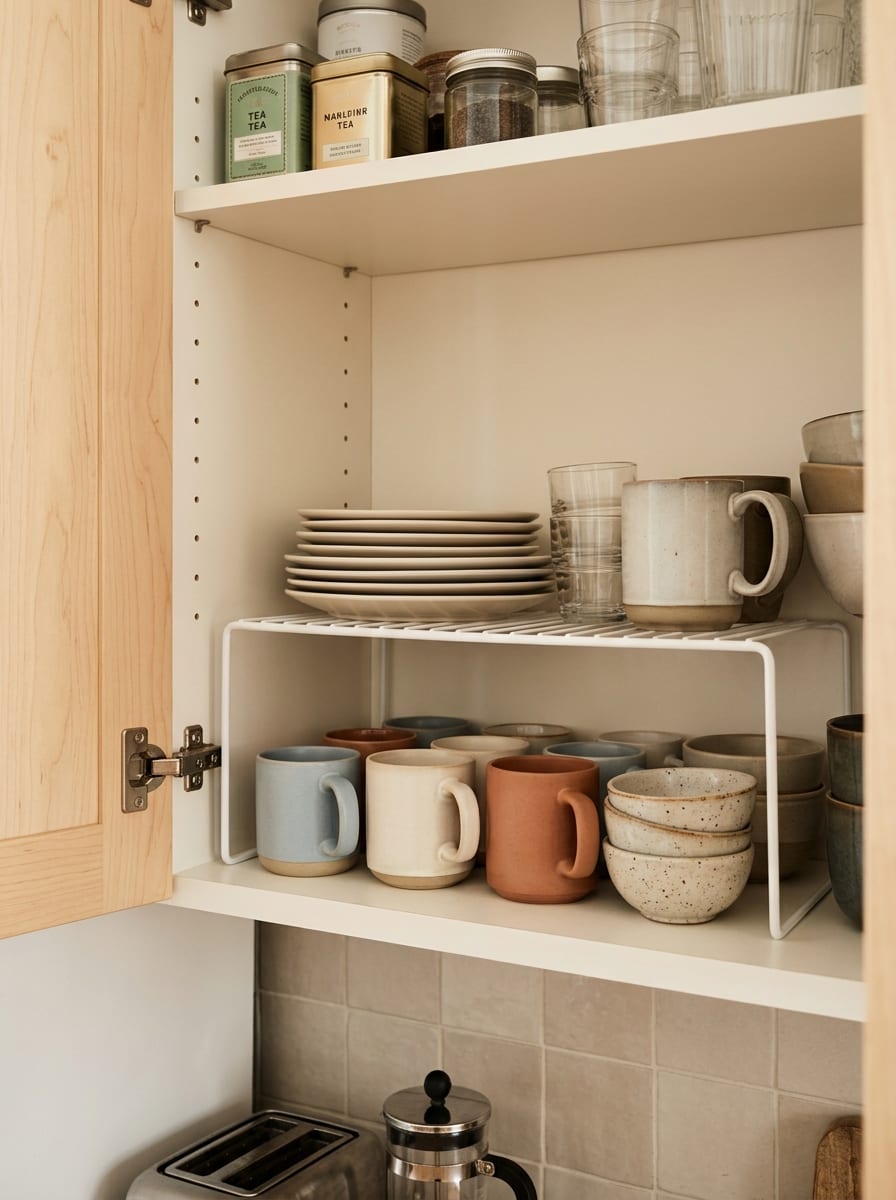
One of the most common cabinet problems is stacking short items on a tall shelf. Mugs may only occupy the lower half of a cabinet, while several inches of empty air sit above them.
A shelf riser turns that unused vertical space into a second level.
Use one for:
- Mugs
- Bowls
- Small plates
- Canned goods
- Food storage containers
For everyday dishes, a riser around 5 to 7 inches high often creates useful separation without making either level difficult to reach.
Before buying one, measure the distance between shelves. You still need enough clearance to remove items from both levels comfortably.
Best strategy
Put heavier or more frequently used pieces on the lower level and lighter items above. Avoid stacking so high that you need to remove three things just to reach one bowl.
2. Store Baking Sheets and Cutting Boards Vertically
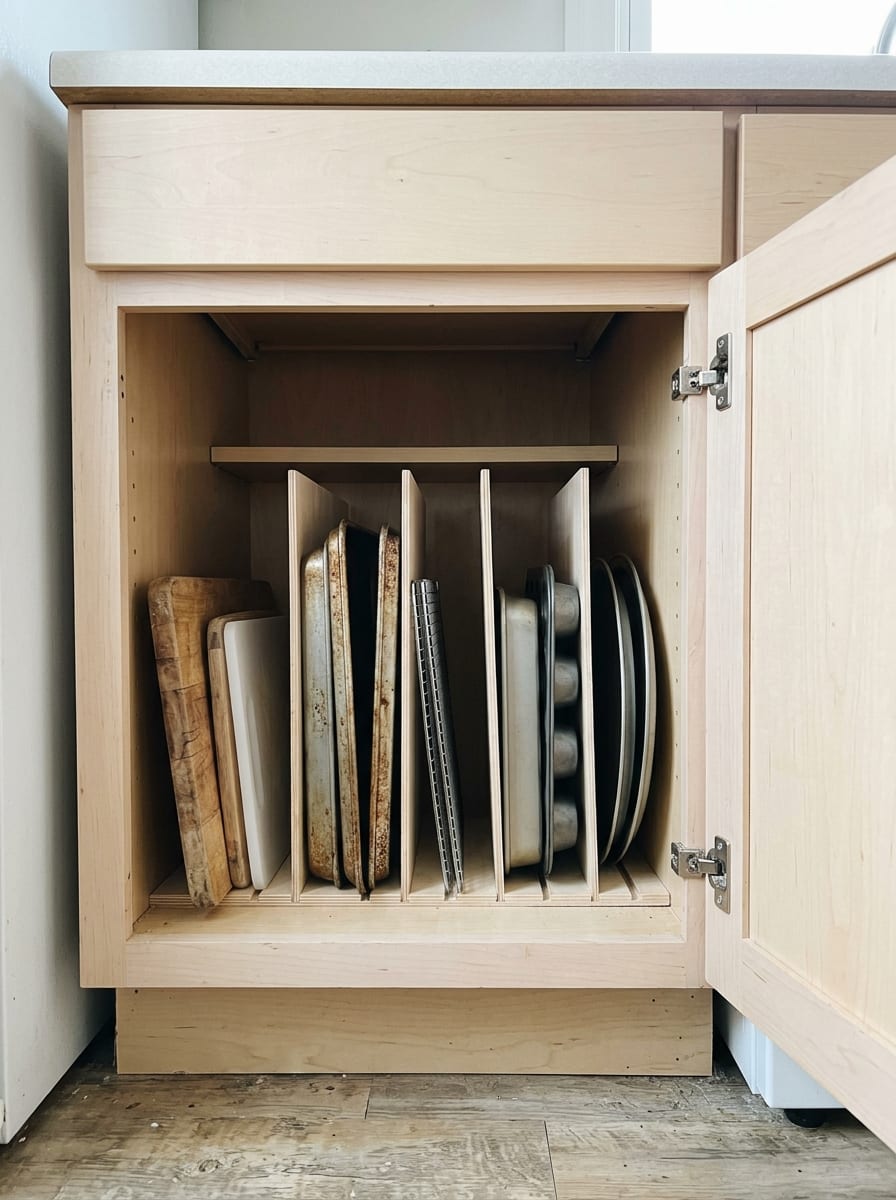
Flat items become difficult to manage when they are stacked. Baking sheets, muffin tins, cutting boards, and cooling racks often turn into one heavy pile where the item you want is always at the bottom.
A vertical divider changes the cabinet from a stack into individual slots. This works particularly well in a narrow lower cabinet.
Group similar items together:
- Cutting boards
- Sheet pans
- Baking trays
- Cooling racks
Keep the heaviest pieces near the cabinet side wall so the divider does not shift when you pull something out.
Space-saving advantage
Vertical storage makes use of cabinet height while keeping the entire footprint relatively narrow.
Check first
Measure the tallest board or tray before placing the divider beneath a shelf.
3. Use Pull-Out Bins in Deep Lower Cabinets
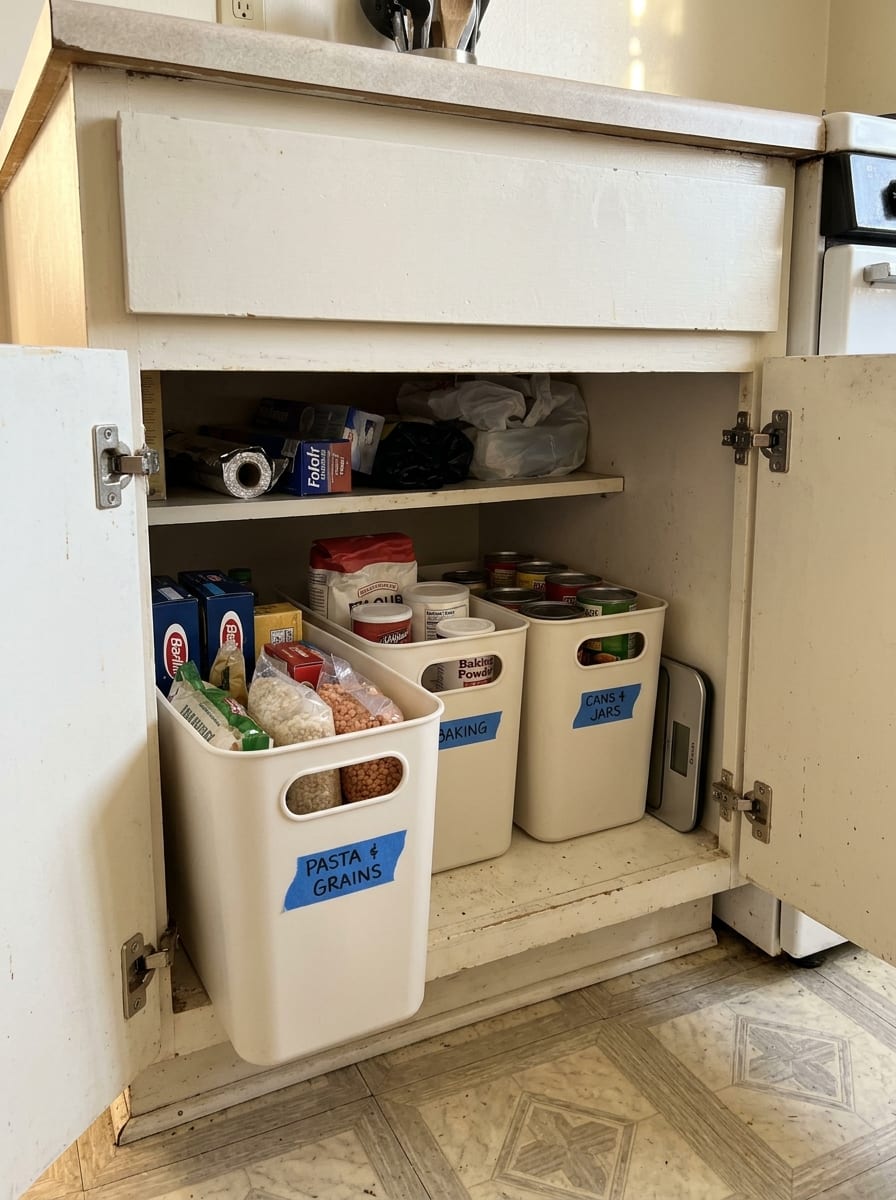
Deep cabinets can hold a surprising amount, but storage at the back often becomes forgotten. Instead of reaching through several rows of items, use shallow or medium-depth bins that act like simple drawers.
When you need something, pull the whole category forward.
Good categories include:
- Baking supplies
- Snack packets
- Coffee supplies
- Reusable food containers
- Small appliances and attachments
Choose bins with handles and straight sides so you do not waste too much width.
Important measurement
The bin should be slightly shallower than the cabinet’s usable interior depth, not the exterior cabinet depth.
Account for:
- Hinges
- Pipes
- Door hardware
- Cabinet frames
You should be able to pull the bin straight out without twisting it around the door.
4. Add an Under-Shelf Basket Where the Shelf Above Is Too High
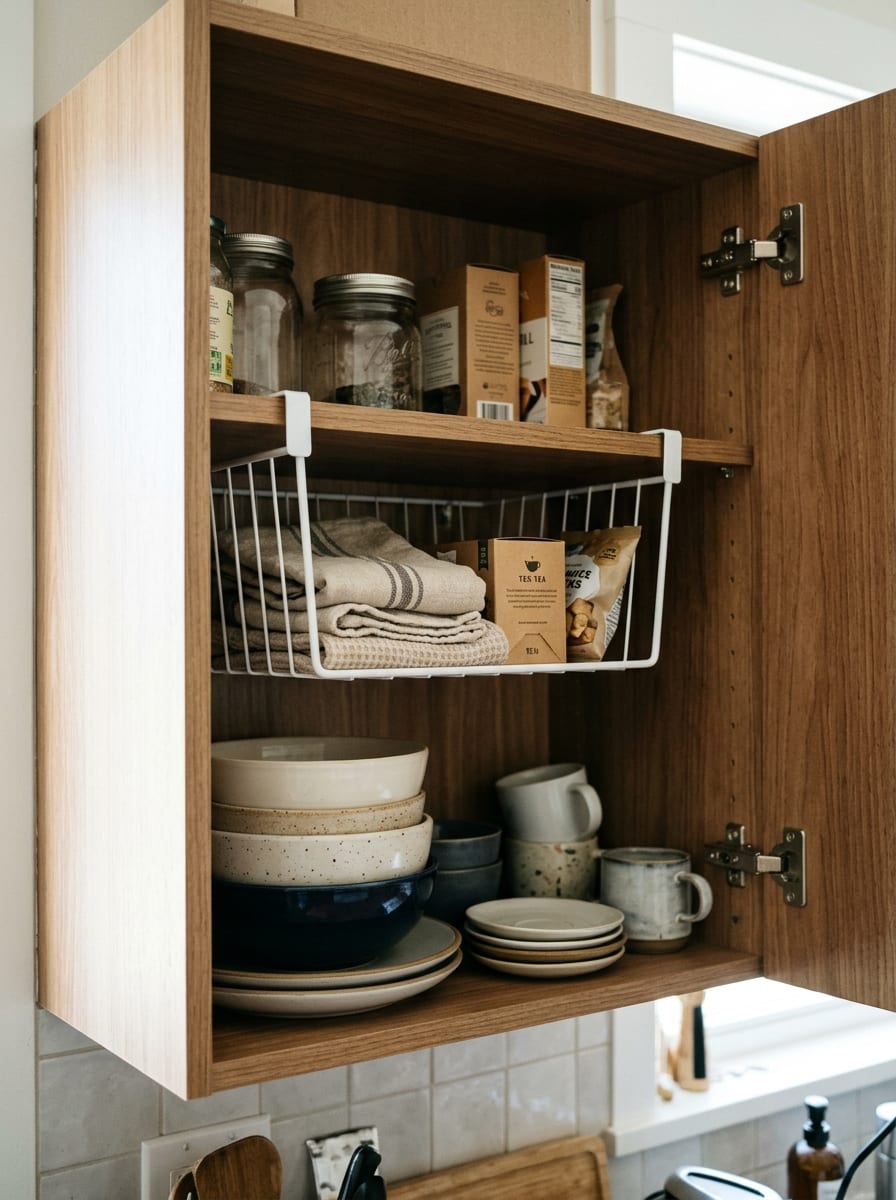
Sometimes a cabinet shelf is positioned too far above the items below it. An under-shelf basket can use that awkward gap without permanently changing the cabinet.
These baskets slide onto an existing shelf and create a shallow zone underneath.
They work well for lightweight items such as:
- Tea towels
- Wraps
- Small packets
- Coffee filters
- Reusable bags
Do not use them for heavy dishes unless the product is specifically rated for that load.
Best location
They are especially useful in renter kitchens where cabinet shelf positions cannot be changed.
Keep clearance in mind
The basket should not hang so low that the items underneath become difficult to remove.
5. Use the Inside of a Cabinet Door for Light, Flat Storage
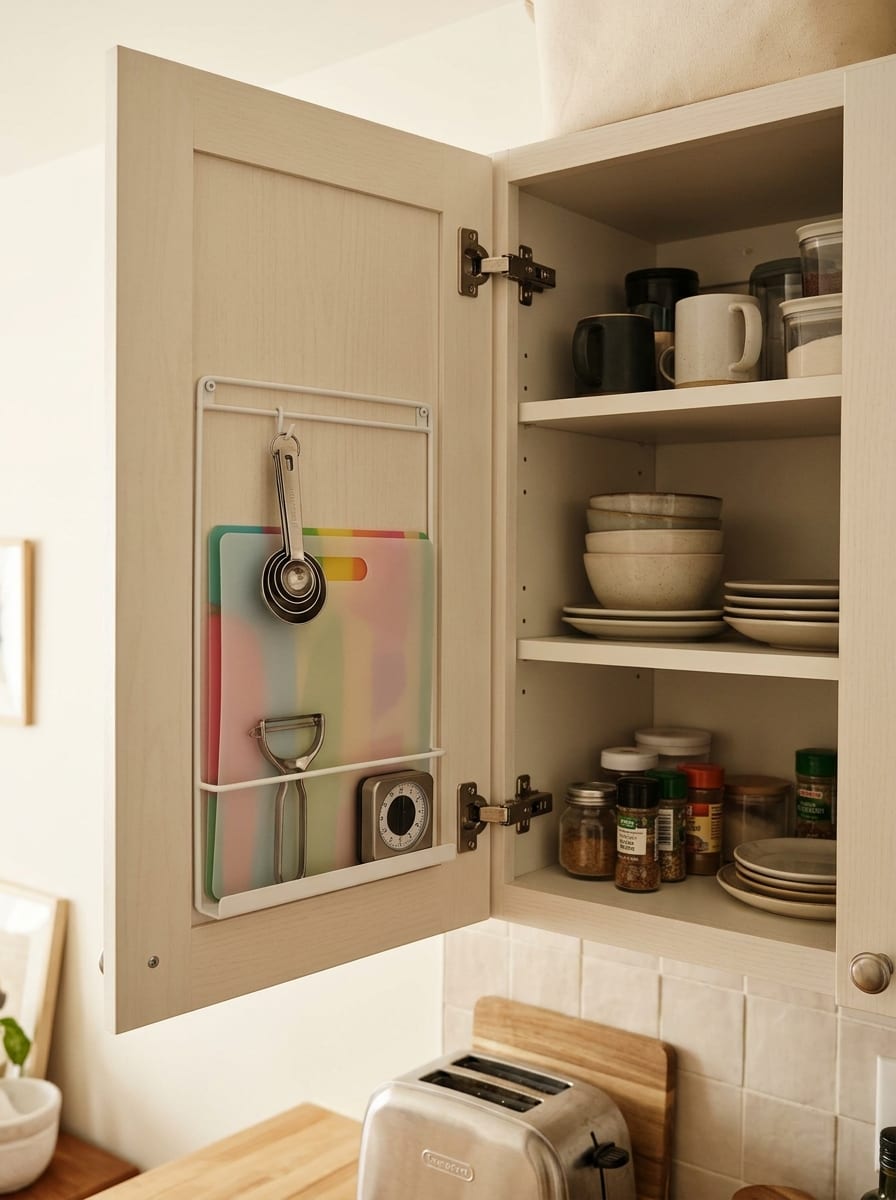
Cabinet doors can provide a useful storage surface—but only for the right items.
A slim rack or adhesive organizer can hold small, lightweight essentials such as:
- Measuring spoons
- Pot lids
- Cleaning gloves
- Foil packets
- Small cutting mats
This works best when the cabinet interior has enough clearance for the organizer to close without hitting shelves or stored items. Before installing anything, close the cabinet slowly while holding the organizer in its proposed position.
Watch the hinges
Do not mount storage where it interferes with the hinge movement. For renters, choose removable mounting products that are rated for the organizer’s actual loaded weight.
6. Create a Dedicated Dish Station Instead of Spreading Dishes Across Cabinets
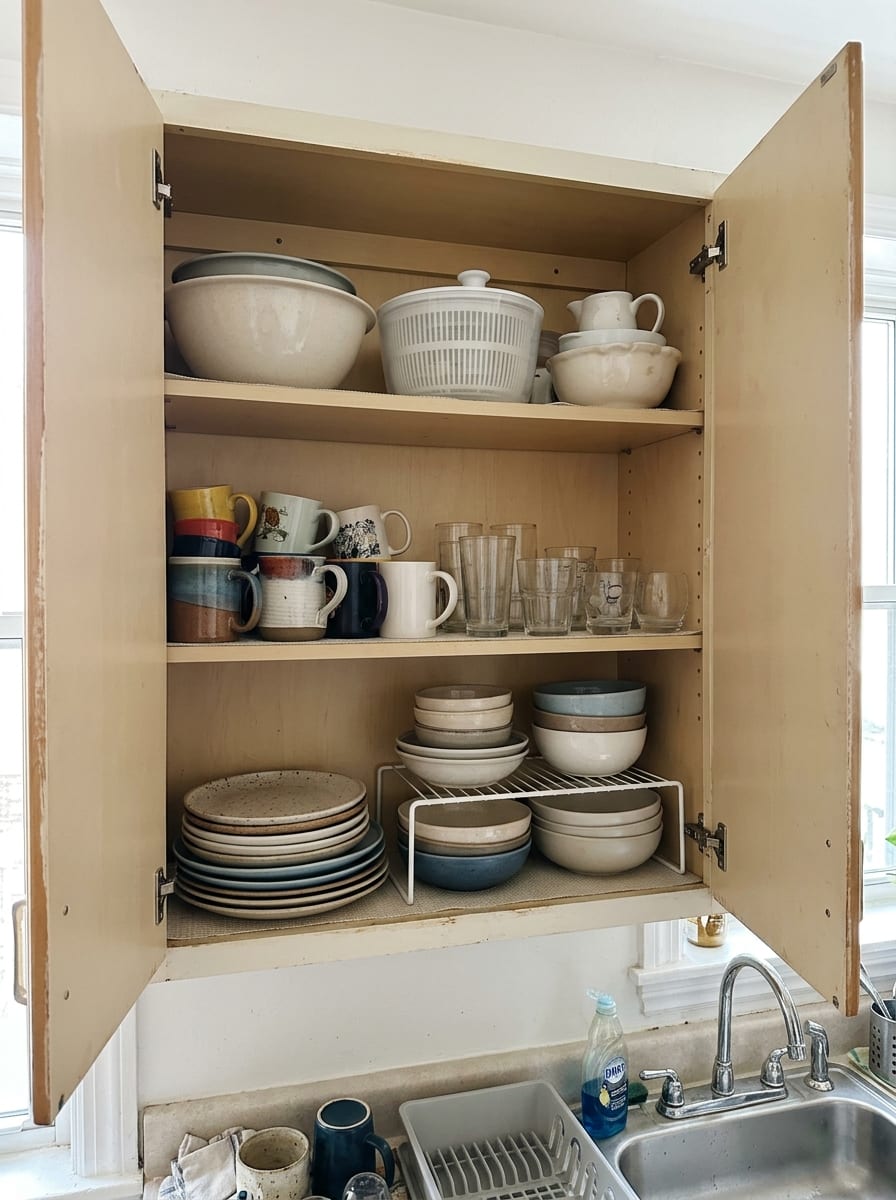
When dishes live in several different cabinets, everyday routines become less efficient. If possible, give plates, bowls, and mugs one dedicated cabinet near the dishwasher or sink.
Then organize by frequency:
- Lower shelf: Everyday plates and bowls
- Middle shelf: Mugs and glasses
- Upper shelf: Less-used serving pieces
This keeps frequently handled items within a comfortable reach zone. Shelf risers can help separate bowls from plates if one shelf has extra vertical clearance.
Why this matters in a small kitchen
Organization is not only about fitting more things. Reducing how far you move around the kitchen can make a compact space feel easier to use.
7. Use a Lazy Susan for an Awkward Corner or Deep Shelf
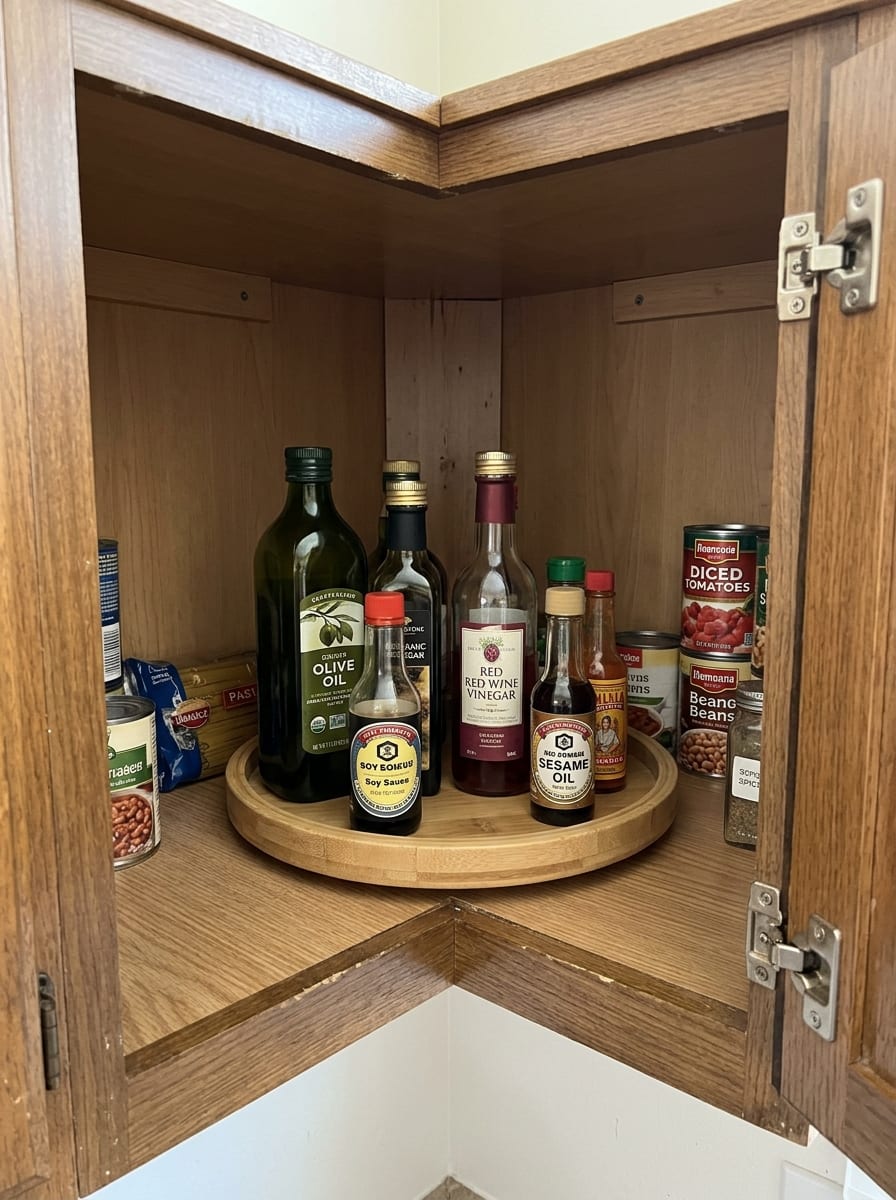
A rotating tray can make difficult cabinet corners much easier to use. Instead of reaching behind several bottles, rotate the tray until the item comes forward.
This works well for:
- Oils
- Sauces
- Condiments
- Spices
- Baking ingredients
Choose a turntable that leaves a little space around the cabinet walls so it can rotate freely. A high-sided model can help prevent bottles from falling, but excessively tall sides may hide smaller items.
Better than filling the whole shelf
You do not have to cover every inch with turntables. One correctly sized rotating tray can solve the hardest-to-reach area while leaving the rest of the shelf for ordinary storage.
8. Decant Only the Foods That Actually Benefit From Containers
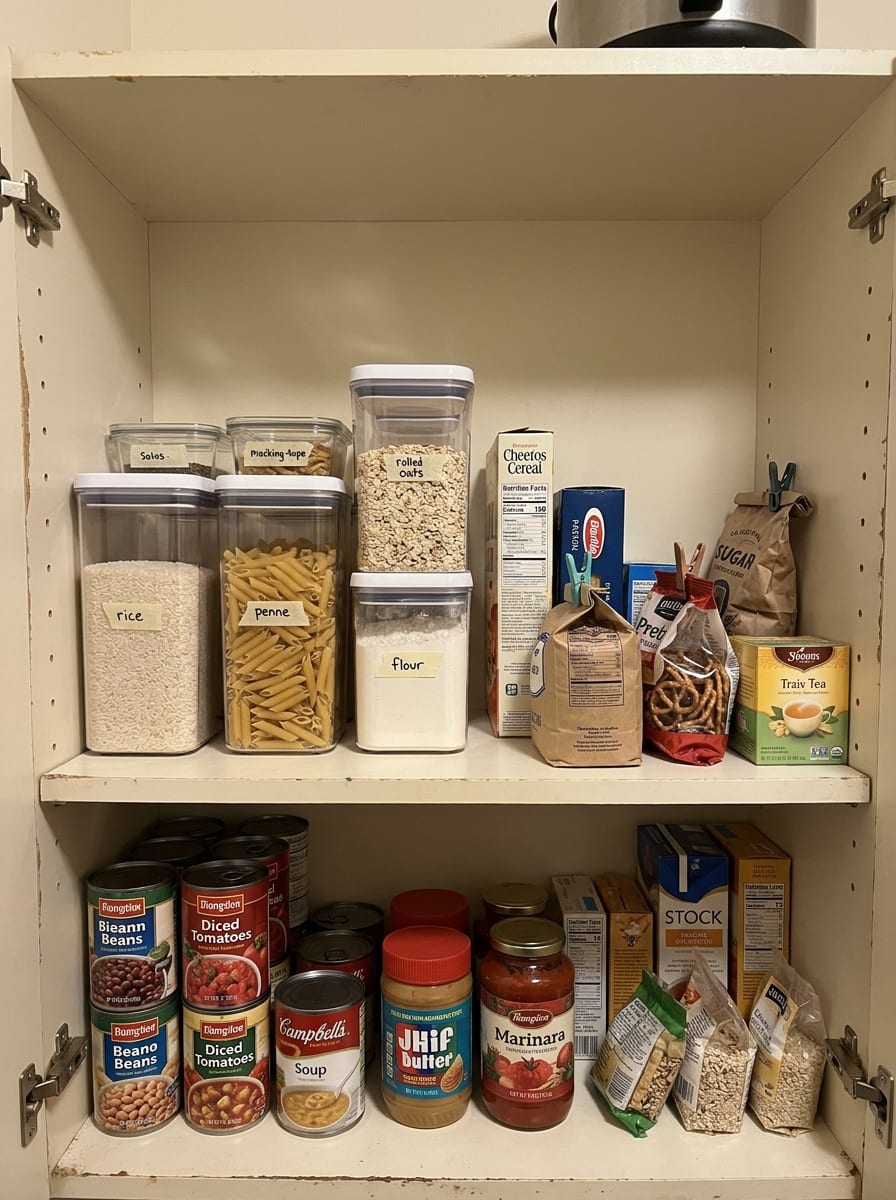
Matching food containers can look beautiful, but transferring everything into containers is not always the most efficient use of a small cabinet.
Use clear containers where they solve a real problem. They are particularly useful for foods that:
- Come in floppy bags
- Are difficult to stack
- Spill easily
- Are purchased repeatedly
- Need airtight storage
Examples might include rice, pasta, cereal, oats, or baking ingredients. Skip decanting foods that already come in compact, stackable packaging if the new container would consume more space.
Container rule
Buy containers after measuring the shelf, not before. Several square or rectangular containers generally use shelf width more efficiently than strongly tapered shapes. Leave enough room to remove each container without rearranging the entire row.
9. Give the Back Row of a Deep Cabinet a Different Job
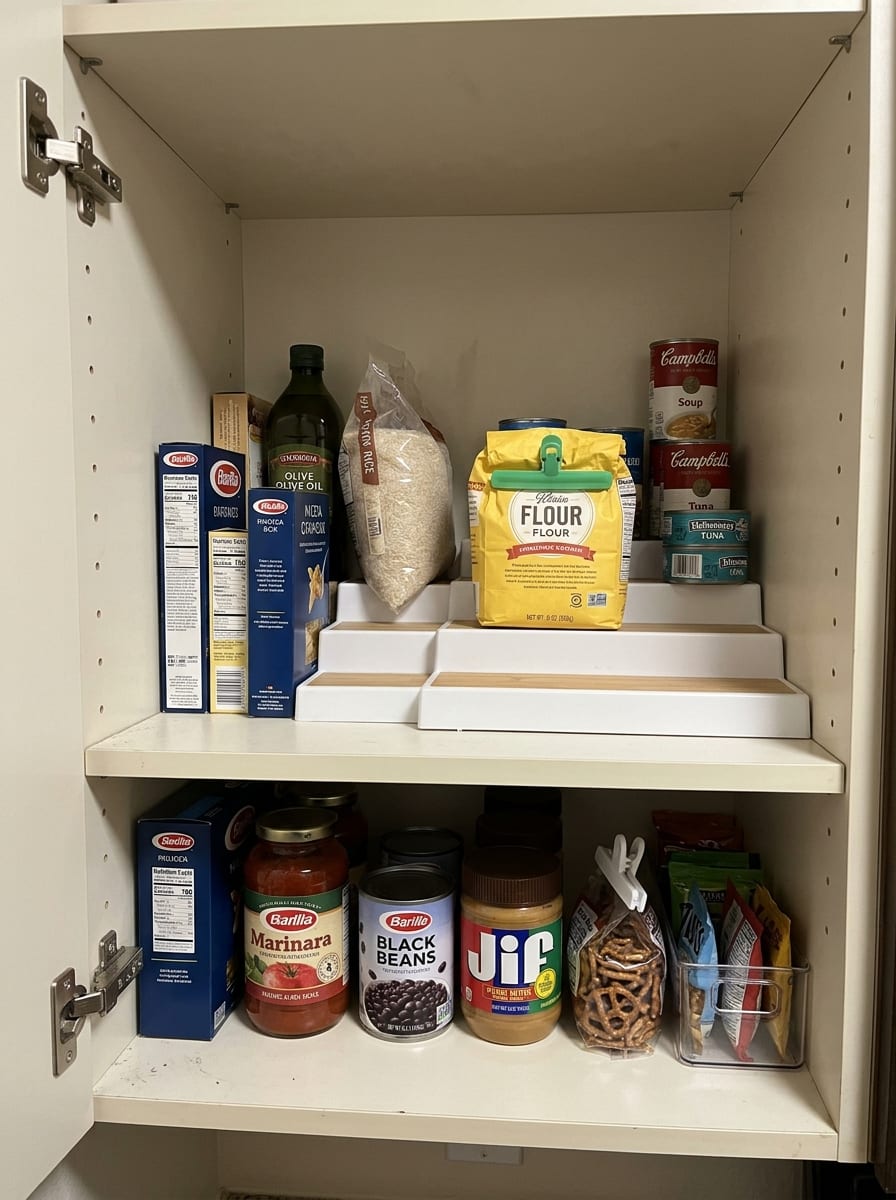
Deep shelves are not automatically bad. The mistake is storing the same type of item in two rows and expecting to remember what is hidden behind the front row.
Instead, organize the back intentionally:
- Front: Everyday ingredients | Back: Duplicates and refills
- Front: Daily mugs | Back: Occasional serving pieces
You can also raise the back row slightly with a tiered organizer so items remain visible. This works especially well when the cabinet is too deep for a single row but not deep enough for practical pull-out bins.
What not to do
Do not keep two completely unrelated categories front and back if you constantly need both. The rear zone should contain items you use less often.
10. Organize Cabinets Around Reach Zones
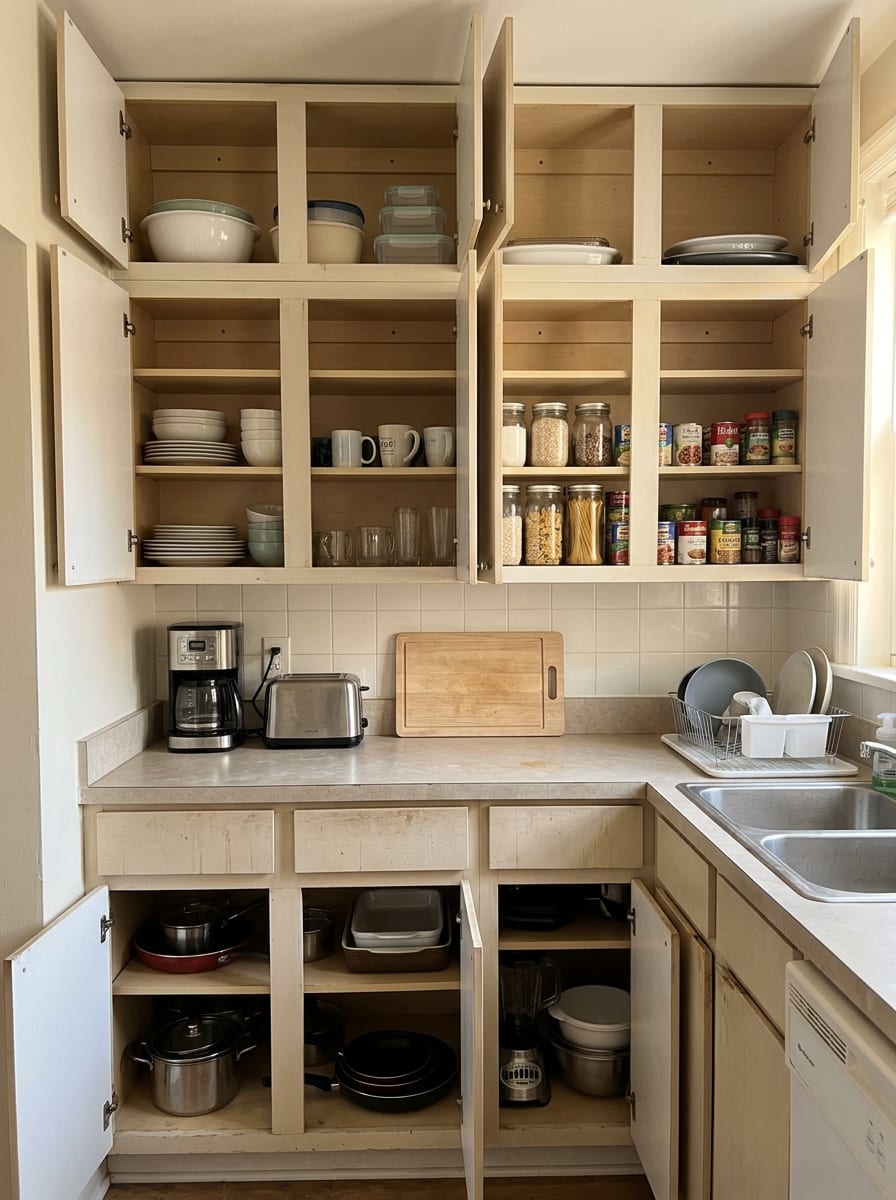
One of the best improvements costs nothing. Instead of asking, “Where can this fit?” ask: “How often do I use it?”
Divide cabinet storage into three reach zones:
Everyday zone
Keep frequently used items roughly between waist and eye level when possible:
- Everyday dishes
- Mugs
- Glasses
- Breakfast foods
- Frequently used spices
Secondary zone
Use slightly higher or lower shelves for things you need regularly but not constantly:
- Baking supplies
- Lunch containers
- Extra glasses
Occasional zone
Reserve the highest or least accessible areas for lightweight things used infrequently:
- Holiday serving pieces
- Specialty baking molds
- Extra pitchers
Avoid putting very heavy appliances on high shelves where they are awkward to lift safely.
Why this changes everything
A cabinet can be perfectly neat and still be badly organized if the items you use every day are difficult to reach.
How to Organize Small Kitchen Cabinets Before Buying Organizers
The best first step is not shopping. Empty one problem cabinet and sort everything into three groups:
- Use often
- Use sometimes
- Rarely use
Then remove anything that does not actually belong in that cabinet. Only after that should you measure the empty cabinet:
| Measurement | What to Check |
|---|---|
| Interior width | Between actual cabinet sides or frame |
| Interior depth | Back wall to usable front edge |
| Shelf clearance | Shelf to shelf |
| Door opening | Whether bins can pull out straight |
| Hinge intrusion | Space lost to hardware |
Once you know the dimensions and what needs to live there, you can tell whether you actually need a riser, basket, divider, bin, or nothing at all.
Which Cabinets Should Hold Everyday Items?
In a small kitchen, the most accessible cabinets should support your most common routines.
Near the dishwasher or sink
Store:
- Everyday plates
- Bowls
- Glasses
- Mugs
Near the stove
Store:
- Oils
- Seasonings
- Frequently used cooking tools
Keep items a safe distance from heat sources and follow appliance-clearance guidance.
Near the food-prep area
Store:
- Cutting boards
- Mixing bowls
- Food containers
- Commonly used dry ingredients
The shorter the distance between the task and the stored item, the easier the kitchen feels.
How to Organize Very Deep Kitchen Cabinets
Deep cabinets usually need one of three approaches:
- Pull-out bins: Best for grouped categories you need to access regularly.
- Front-and-back zones: Best when the back holds refills or occasional-use items.
- Tiered storage: Best for smaller containers that would otherwise disappear behind one another.
What usually does not work is simply lining everything up in two or three identical rows. Anything behind the first row becomes invisible.
Best Organizers for Small Cabinets
You do not need every organizer sold for kitchens. A useful starter group is:
- Shelf riser: For unused vertical space.
- Vertical divider: For trays, cutting boards, and pans.
- Pull-out bin: For deep shelves.
- Turntable: For bottles and awkward corners.
- Under-shelf basket: For lightweight items in tall shelf gaps.
- Door organizer: For thin lightweight supplies where clearance permits.
The organizer should solve a specific access problem. If it only makes the cabinet look prettier while reducing actual capacity, skip it.
Small Kitchen Cabinet Organization Mistakes to Avoid
Buying organizers before measuring
This is one of the quickest ways to waste cabinet space. Measure first.
Using a bin for everything
Bins are excellent when you need to pull a category forward. They are less useful when they add an extra step to items you reach for constantly.
Stacking too high
A tall stack may technically maximize space, but if you repeatedly remove five pieces to reach the bottom one, the storage is inefficient.
Putting heavy items too high
Heavy cookware and appliances should be stored where they can be lifted safely.
Ignoring cabinet doors
A shelf might appear to fit perfectly until a door-mounted item collides with it. Test the full closing motion.
Making the system too specific
An organizer that only works when every item is in one exact spot can become frustrating. Leave a little flexibility for changing groceries and household routines.
How to Make Cabinets Look Less Cluttered
You do not need matching containers everywhere. Visual calm often comes from simpler changes:
- Keep similar items together
- Reduce unnecessary packaging where practical
- Stack like items consistently
- Avoid several tiny categories on one shelf
- Leave enough room to remove things easily
- Repeat only a few container types
A cabinet should look organized because its structure makes sense, not because every object is identical.
Should You Use Shelf Liners?
Shelf liners can be useful when you want to protect cabinet surfaces, keep small items from slipping, or make cleanup easier.
Choose a liner that stays flat and does not significantly reduce stability. Avoid thick liners beneath organizers that already fit tightly, because even a small increase in height can affect clearance.
For rentals, removable liners are generally preferable to permanent adhesive products.
Renter-Friendly Cabinet Organization Ideas
If you rent, most of the ideas in this article require no structural changes:
- Freestanding shelf risers
- Removable vertical dividers
- Pull-out bins
- Turntables
- Under-shelf baskets
- Removable liners
- Tension-based organizers
For anything mounted to a cabinet door, verify the adhesive or attachment method is appropriate for the cabinet finish and loaded weight. Do not drill into cabinetry without permission.
Final Thoughts
Small kitchen cabinet organization is less about squeezing in the maximum possible number of objects and more about making the storage you already have easier to use.
Start with the biggest problems:
- If the cabinet is too tall, add a level.
- If it is too deep, pull the contents forward.
- If pans are stacked, turn them vertically.
- If everyday dishes are hard to reach, move them into the primary reach zone.
And if an organizer does not solve an actual access problem, you probably do not need it.
A well-organized small kitchen should not require you to unpack half a cabinet every time you want one plate, pan, or ingredient. The best system is the one that makes everyday routines simpler.
FAQ
How do I organize small kitchen cabinets with limited space?
Use vertical space with shelf risers, store flat items upright, group deep-cabinet items in pull-out bins, and keep frequently used items within the easiest reach zone.
How can I create more space in kitchen cabinets?
Look first for unused height, difficult deep storage, wide stacks, and empty door space. Shelf risers, vertical dividers, turntables, and shallow door organizers can make existing cabinet volume more usable.
What should go in upper kitchen cabinets?
Upper cabinets generally work well for dishes, glasses, mugs, pantry foods, and lighter serving pieces. Keep frequently used items on the easiest-to-reach shelves and avoid storing very heavy objects overhead.
How do you organize deep kitchen cabinets?
Use pull-out bins, assign the back row to refills or infrequently used items, or raise the rear row with a tiered organizer so nothing disappears from view.
Are clear containers worth using in small cabinets?
They can be, particularly for foods that come in floppy or bulky packaging. However, decanting everything is unnecessary and may actually take up more space.
Should I use cabinet-door organizers in a small kitchen?
Yes, if the cabinet has enough internal clearance and the organizer does not interfere with hinges or shelving. Keep door-mounted items relatively lightweight.
What should I store on the highest kitchen shelves?
Use high shelves for lightweight items you need infrequently, such as occasional serving pieces or specialty baking supplies. Avoid placing heavy appliances where they are difficult to lift safely.