10 No-Drill Storage Ideas for Renters That Add Space Without Putting Holes in the Walls
Discover 10 no-drill storage ideas for renters using doors, tension rods, rolling carts, under-bed space and freestanding storage to organize a small apartment without permanent shelving.
In This Guide
Renting creates a strange storage problem.
You may have plenty of empty vertical space, but very little freedom to use it.
Permanent shelving might require drilling.
Built-in cabinets are not an option.
Even something as simple as adding hooks can depend on:
the lease the wall finish the product the weight being stored
The answer is not to fill the apartment with bulky freestanding furniture.
It is to look for storage that uses existing doors, gaps, furniture, floor space and tension points more intelligently.
A useful no-drill storage solution should ideally do three things:
solve a specific clutter problem avoid interfering with normal circulation be easy to take with you when you move
Here are ten options that can add meaningful storage without turning a rental into a collection of temporary gadgets.
1. The Over-the-Door Storage Zone
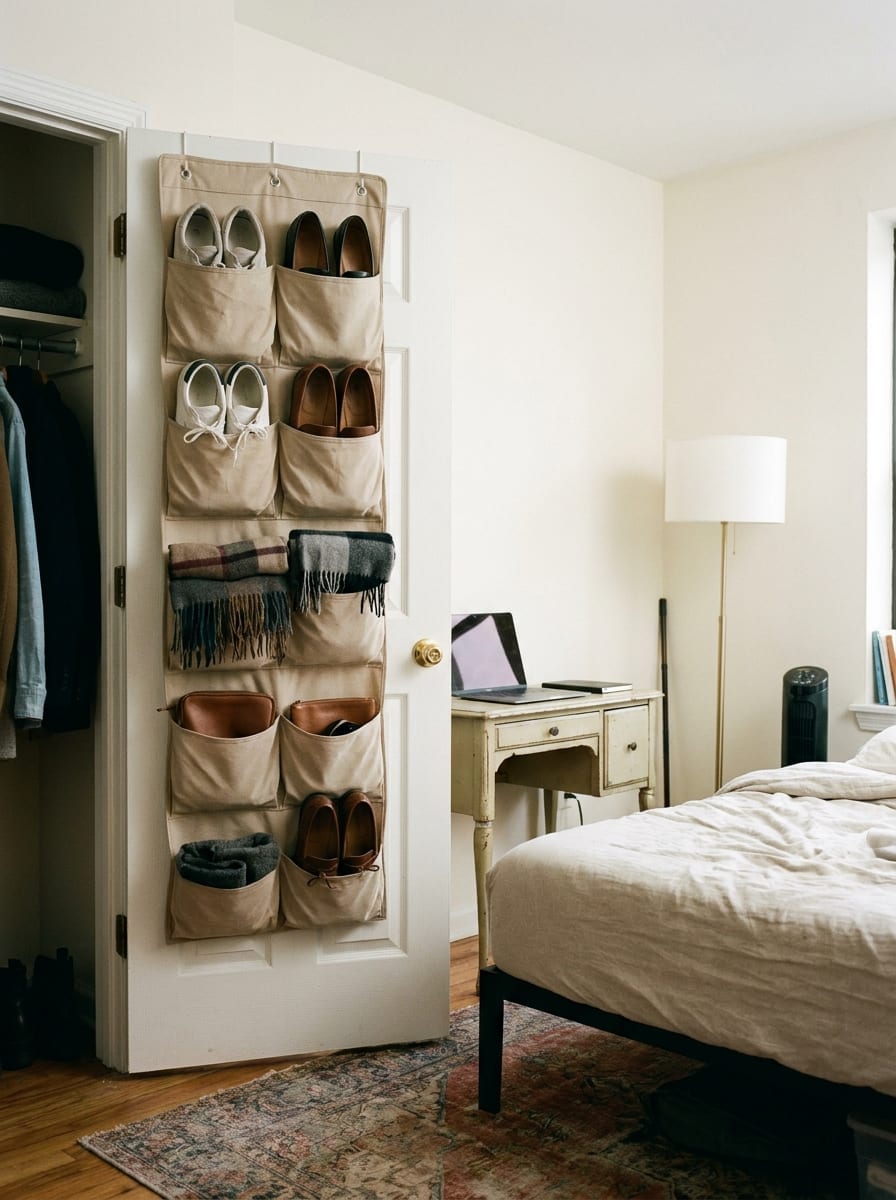
A door already occupies vertical space.
An over-the-door organizer lets that same surface handle storage without adding another furniture footprint.
It can work particularly well on:
bedroom doors bathroom doors pantry or closet doors utility closets
What to store
Depending on the room:
Bedroom shoes scarves accessories small bags Bathroom hair tools toiletries spare washcloths Kitchen lightweight pantry items reusable bags cleaning cloths Closet belts hats small accessories Why it works
The storage sits in a zone that usually contributes almost nothing to the room’s usable floor area.
That is especially valuable in apartments where every wall is already occupied.
Check the door clearance
Before buying one, measure:
top-of-door gap distance between door and frame handle position whether the door can still open fully
Some thick metal hooks prevent doors from closing properly.
Watch the weight
Do not treat the door like structural shelving.
Heavy bottles or overloaded shoe organizers can make the setup awkward and may stress hinges over time.
Use it for lighter everyday items.
Keep it quiet visually
A transparent organizer stuffed with twenty unrelated products can make a small room look more cluttered.
Closed pockets, baskets or a limited category usually look calmer.
2. The Tension-Rod Utility System
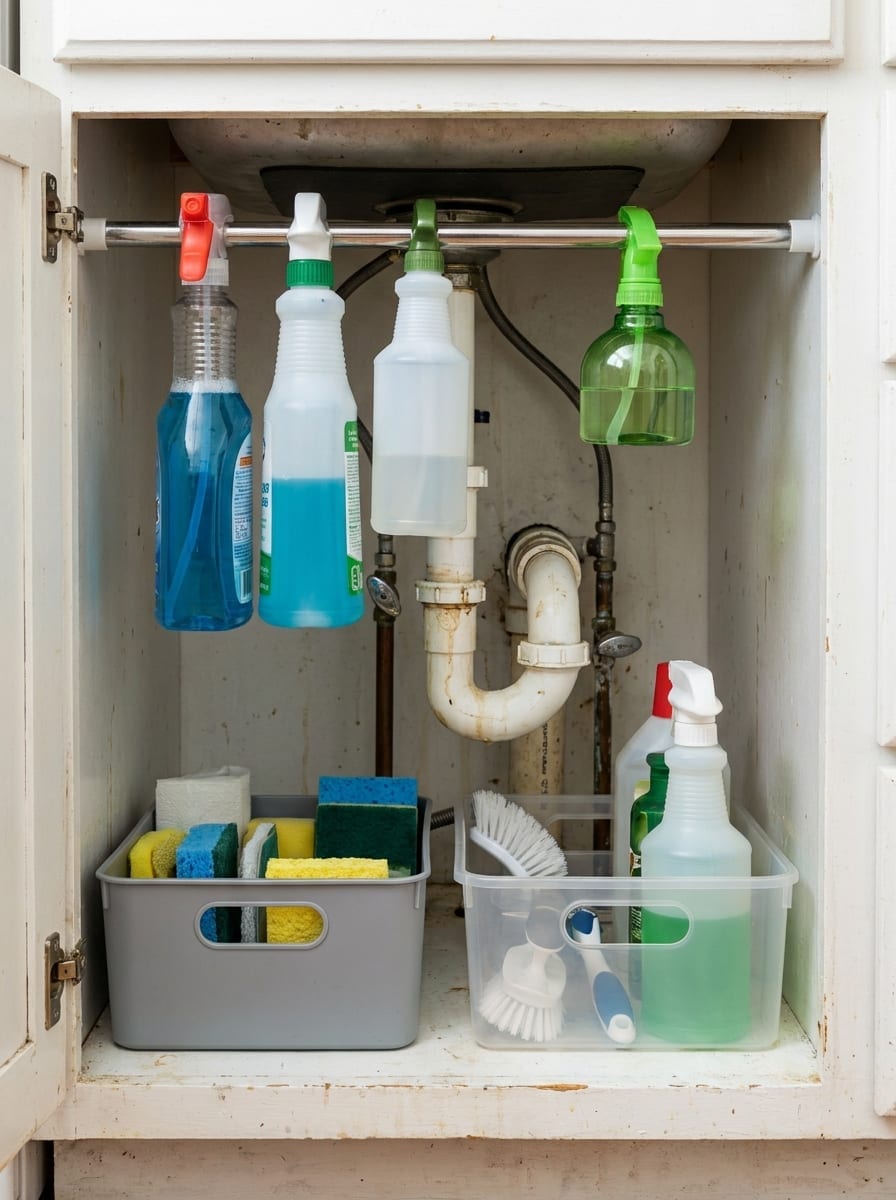
Tension rods are useful because they create a removable horizontal support between two existing surfaces.
They are particularly good in narrow enclosed spaces.
Best places to use them
under the kitchen sink inside a bathroom vanity between closet walls inside a laundry nook in suitable window or alcove situations Under the sink
A tension rod can hold lightweight spray bottles by their trigger handles.
That frees the cabinet floor for:
bins cleaning supplies dishwasher products spare sponges Closet use
A sturdy rod in an appropriate opening can sometimes create temporary hanging space for lightweight clothing or accessories.
Why it works
It uses width that already exists rather than adding a cabinet.
Do not overload it
A tension rod is not a structural closet rail.
The holding strength depends on:
surface rod size installation weight
Use it for appropriate lightweight storage only.
Measure the opening
Choose a rod designed for the actual span.
A rod stretched to its absolute maximum may be less stable than one working comfortably within its intended range.
3. The Slim Rolling Storage Cart
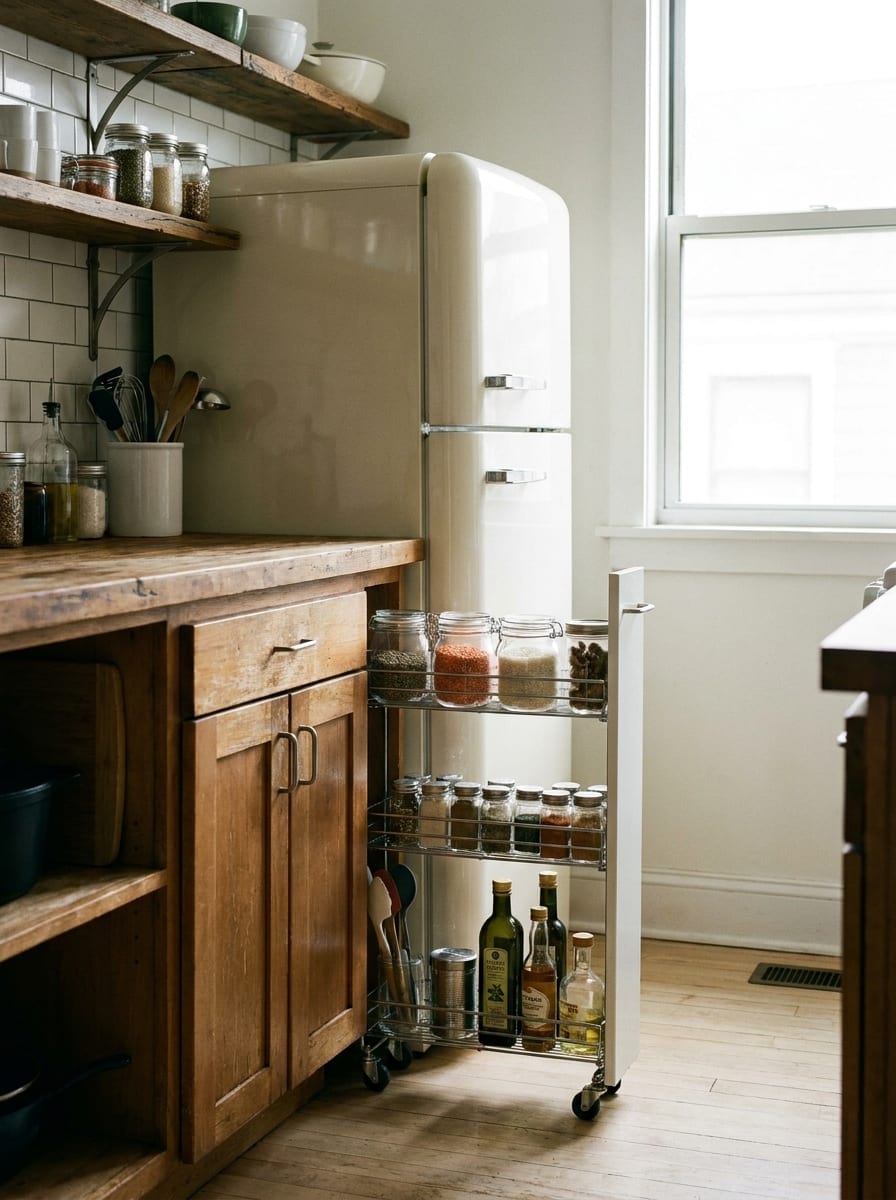
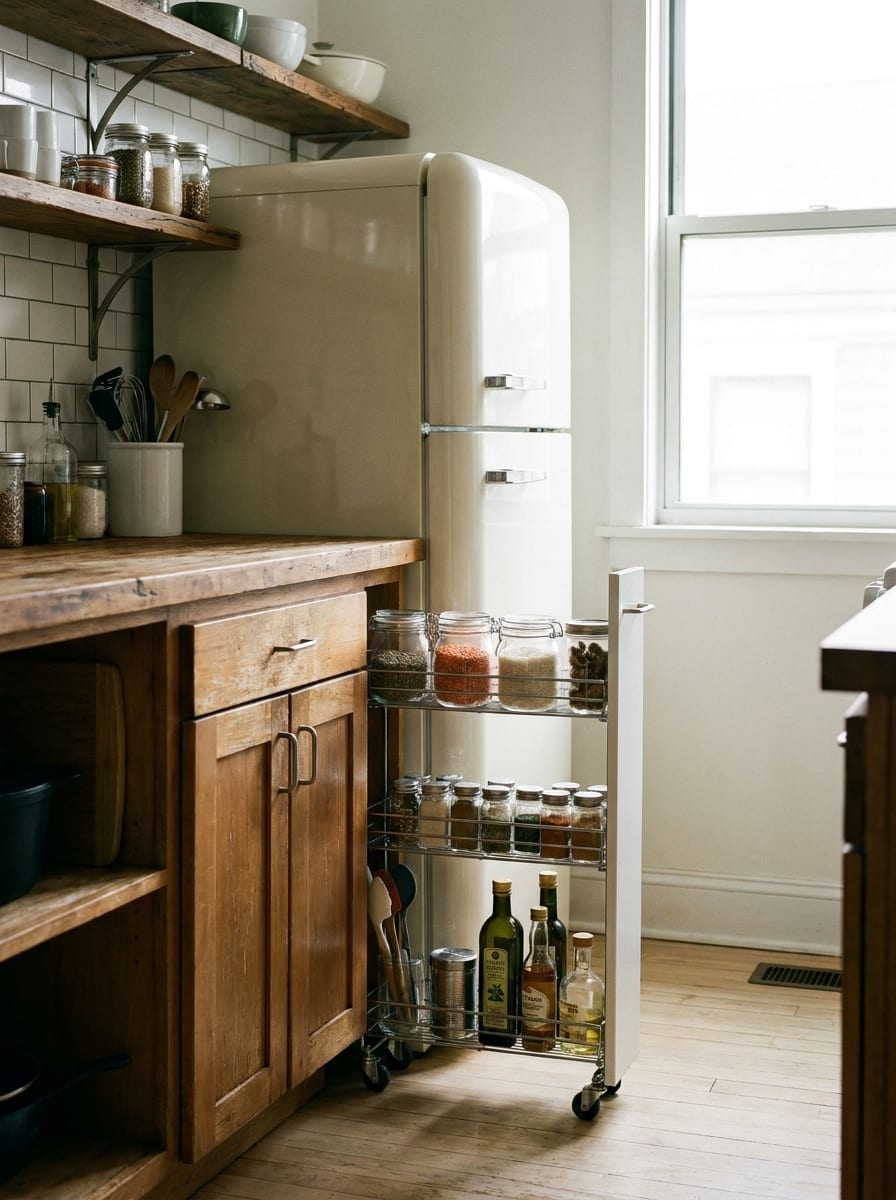
A narrow rolling cart can turn an awkward gap into useful storage.
This is one of the better renter solutions because it requires:
no wall attachment no drilling no permanent installation
and can move between rooms.
Good locations
Try one:
beside refrigerator beside washing machine between vanity and wall beside desk near sofa in a narrow pantry gap
The best cart is narrow enough to disappear
If it sticks far into the walkway, it is no longer solving a small-space problem.
Measure:
gap width cart width handle projection caster width
before buying.
Use it by category
Instead of random overflow storage, give it one job.
For example:
Kitchen cart
oils spices tea pantry jars
Bathroom cart
towels toiletries hair products
Office cart
paper stationery chargers
Wheels need to be useful
A cart that technically rolls but is wedged too tightly to pull out is just a narrow shelf.
Leave enough room to use the feature.
4. The Freestanding Over-Toilet Shelf
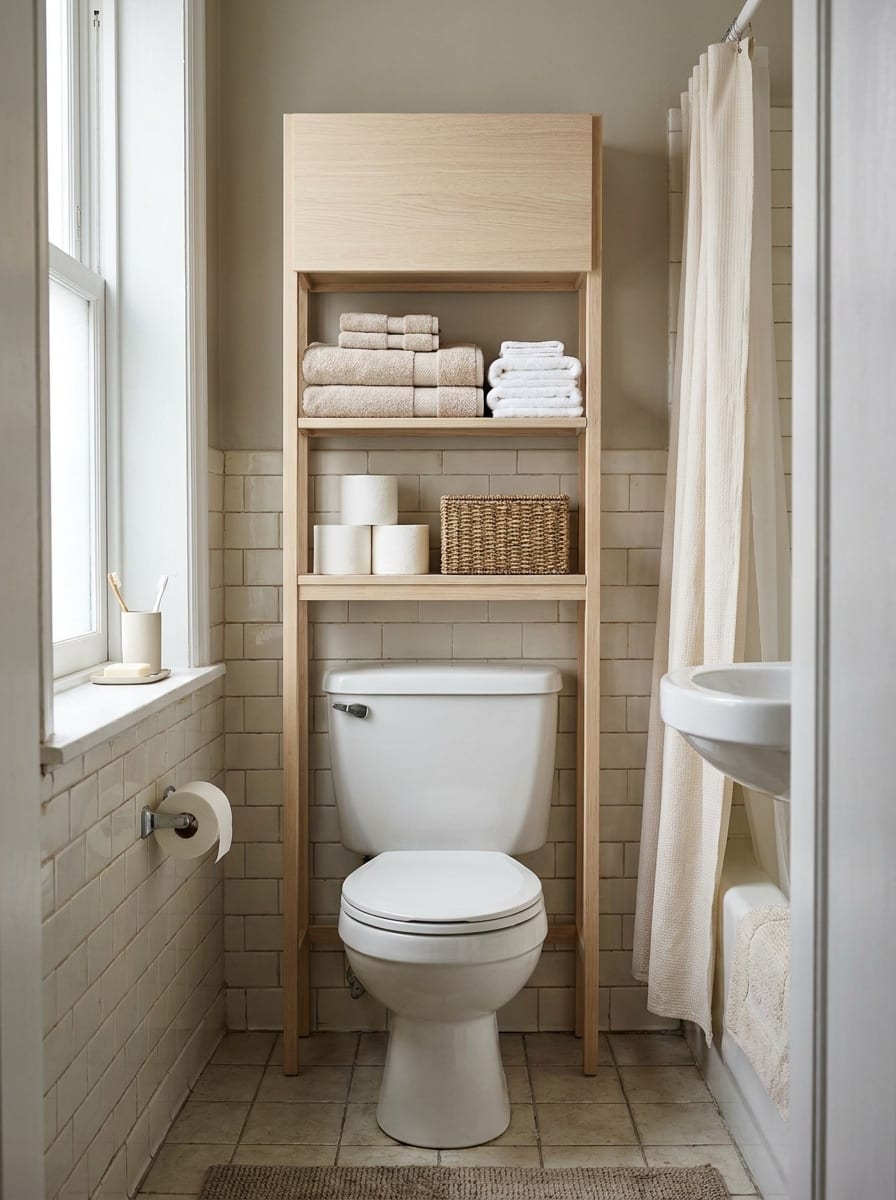
Bathrooms often have a large unused vertical zone above the toilet.
Renters may not want to drill shelving into that wall.
A freestanding over-toilet unit can use the same space while remaining removable.
What belongs there
Use it for:
spare toilet paper folded hand towels backup toiletries small baskets one or two decorative objects
Keep the depth modest
A deep unit can make a small bathroom feel boxed in.
Look for something that provides useful storage without projecting excessively over the toilet.
Closed and open storage each have advantages
Open shelving
Feels lighter but needs tidier styling.
Cabinet doors
Hide clutter but create more visual weight.
A combination can work well.
Check stability
Tall freestanding furniture should be appropriate for the space and installed according to the manufacturer’s safety guidance.
If a product requires anti-tip attachment, do not ignore that requirement simply because you rent.
Choose a different solution if you cannot install it safely.
Avoid the overloaded look
Just because there are three shelves does not mean every inch needs to be filled.
5. The Leaning Ladder Shelf
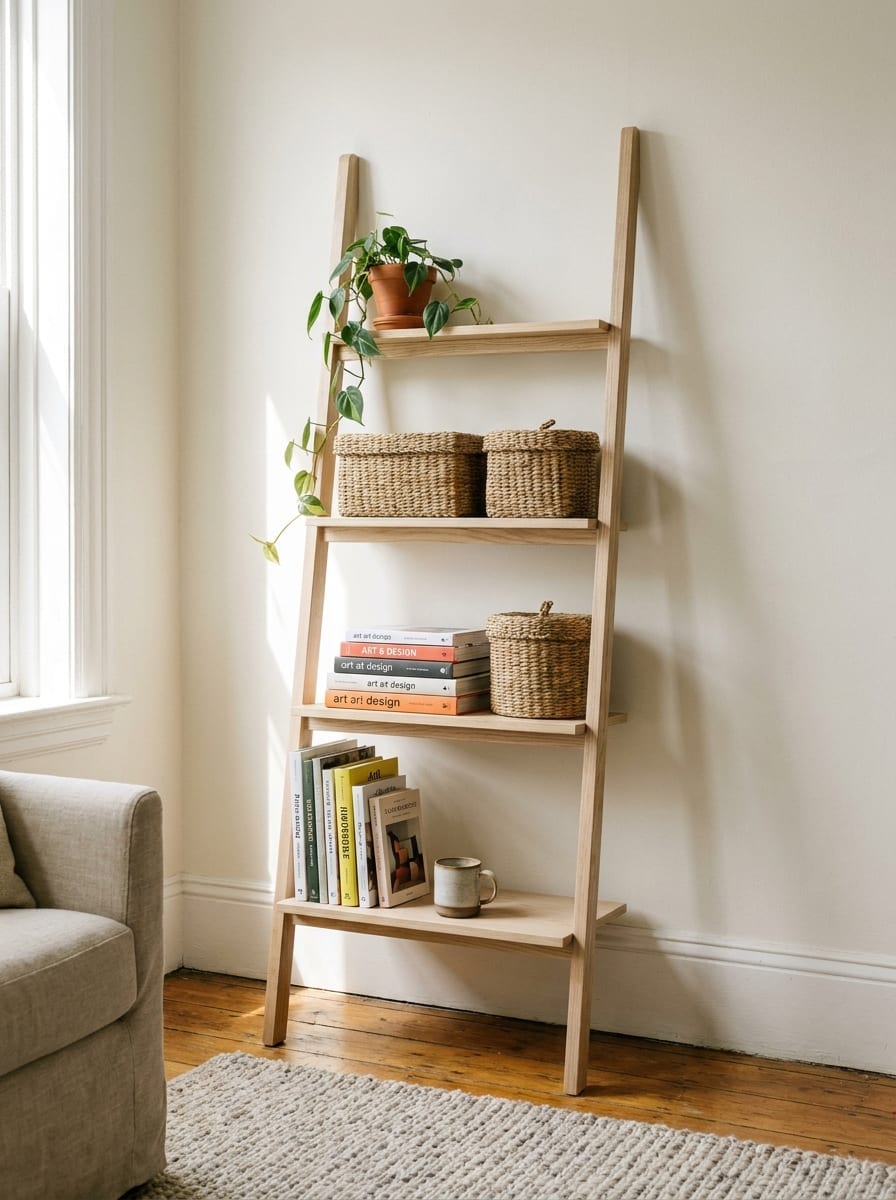
A leaning ladder shelf can add vertical storage without visually behaving like a heavy bookcase.
Its footprint is often relatively modest, and the shelves become shallower toward the top.
Where it works
Try it in:
living room bedroom bathroom home office entryway
Best items to store
Use lighter objects such as:
baskets books towels small plants decorative boxes
rather than treating it as heavy-duty pantry storage.
Why it can feel lighter
Because the frame is open, you can still see portions of the wall behind it.
That makes it useful when you need storage without introducing another solid cabinet.
Do not assume every ladder shelf is truly freestanding
Some designs require wall anchoring for safe use.
Check the actual product instructions.
If wall attachment is required, either follow those instructions with landlord approval or choose a genuinely freestanding alternative designed to be stable without it.
Keep the bottom shelf intentional
The lowest shelf often sits in the most visually prominent position.
Use one substantial basket rather than several small loose items.
6. The Cabinet-Door Storage Layer
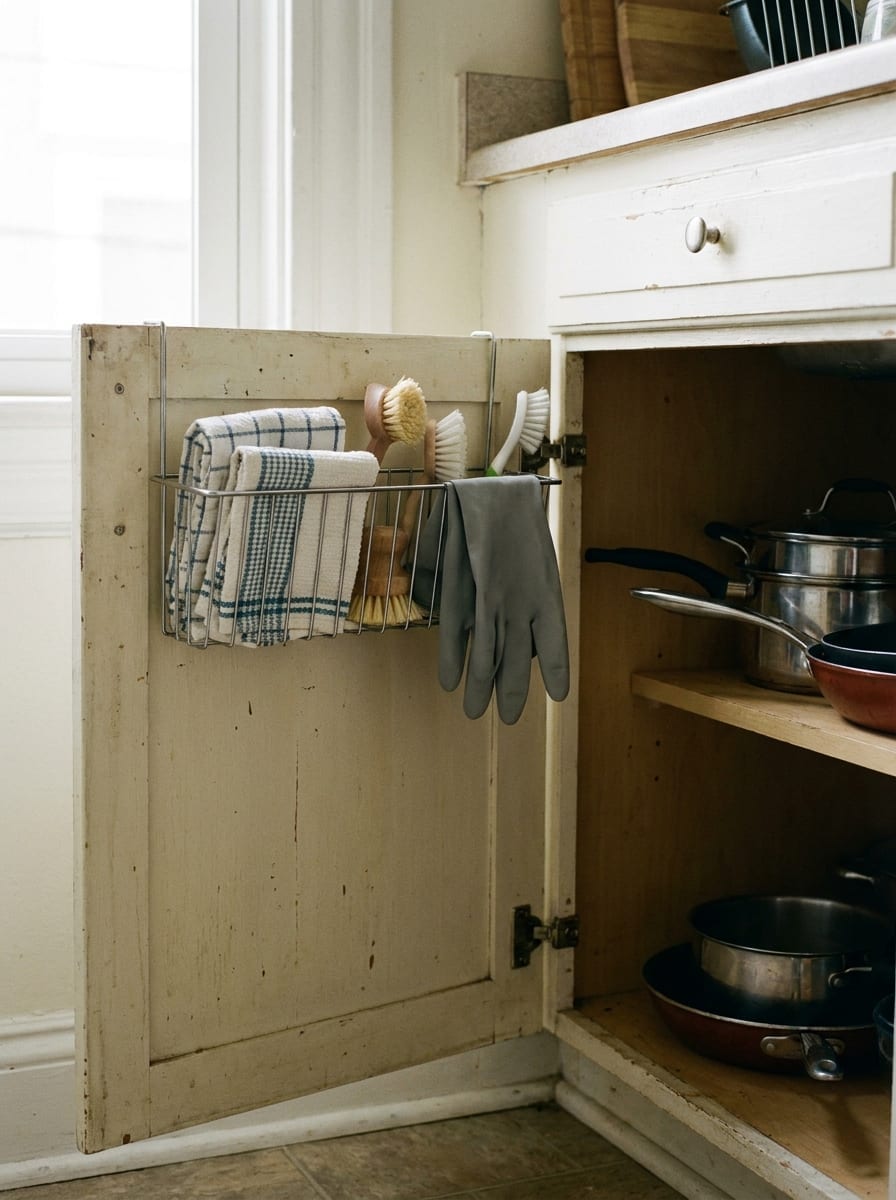
Kitchen and bathroom cabinets contain another frequently ignored surface:
the inside of the door.
This can be useful for lightweight, shallow storage.
Kitchen cabinet doors
Potential uses include:
measuring spoons cleaning gloves lightweight wraps small lids cloths
Bathroom vanity doors
Possible items:
hair accessories small grooming tools cleaning cloths
Why this works
It adds storage without:
consuming counter space narrowing the walkway adding furniture
Depth is critical
Anything attached to the inside of the door must still allow the cabinet to close.
Check whether the organizer collides with:
shelves plumbing stored products
Adhesive caution
If using removable adhesive products:
check manufacturer weight limits clean and prepare the surface as directed consider how the cabinet finish may react test carefully where appropriate
“Removable” does not guarantee that every painted or laminated surface will be unaffected.
Over-door cabinet hooks may be a better option where they fit properly.
7. The Removable Hook Drop Zone
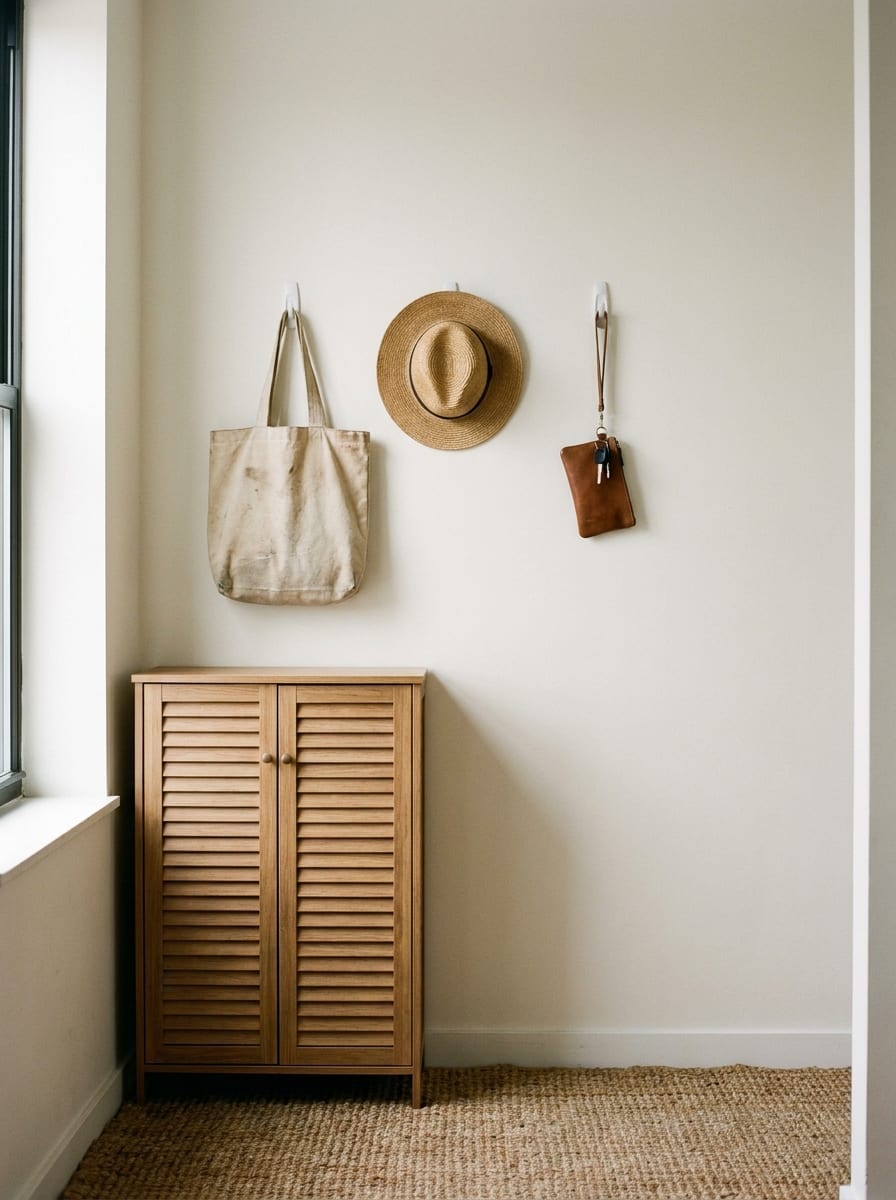
Hooks can solve some of the most annoying apartment clutter because many everyday items simply need a place to hang.
Think:
keys tote bags lightweight jackets hats dog leash kitchen towel
Create one drop zone
Instead of putting temporary hooks throughout the apartment, concentrate them in one useful location.
Good places include:
near entrance inside closet beside kitchen inside utility area
Why concentration matters
Five different temporary-hook areas can start making the apartment feel improvised.
One intentional zone feels more deliberate.
Adhesive products need caution
This is where renter-friendly marketing can become misleading.
A removable hook may work beautifully on one wall and lift paint on another.
Results can depend on:
paint age paint adhesion surface texture moisture installation removal technique
Always:
check your lease follow product instructions respect weight limits test cautiously where appropriate
Use hooks for lightweight storage
Do not hang:
heavy mirrors loaded shelves large electronics anything dangerous if it falls
unless the product is specifically rated and properly installed for that purpose.
8. The Freestanding Vertical Storage Tower
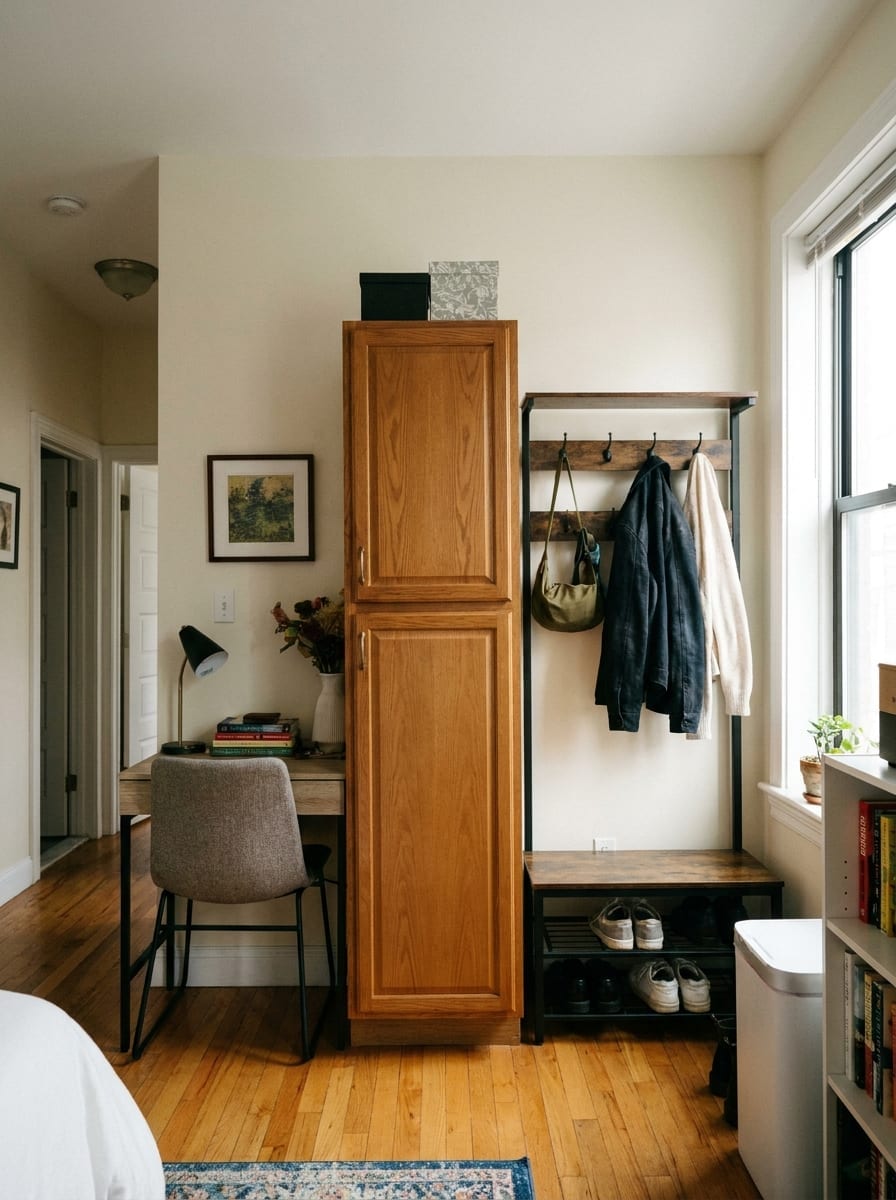
When a room truly needs substantial storage, a narrow freestanding cabinet may be more practical than dozens of small temporary organizers.
The key is to build up, not out.
Good locations
Use one:
beside a desk in a bathroom corner beside a wardrobe near kitchen in entryway
Choose closed storage when clutter is the problem
A slim cabinet with doors can hide:
cleaning products household supplies paperwork toiletries miscellaneous apartment items
This often makes a small room feel calmer than several open shelving units.
Measure depth carefully
A tower may be narrow in width but still surprisingly deep.
Protect:
walkways door swing drawer access
Use the vertical space intelligently
Put:
Frequently used items
between waist and shoulder height.
Less frequent items
higher up.
Heavy items
lower down.
Safety first
Tall freestanding furniture can pose a tip-over risk.
Follow the manufacturer’s safety requirements. If anchoring is mandatory and you cannot obtain permission to do it, select a safer furniture design rather than ignoring the instructions.
9. The Under-Bed Storage Zone
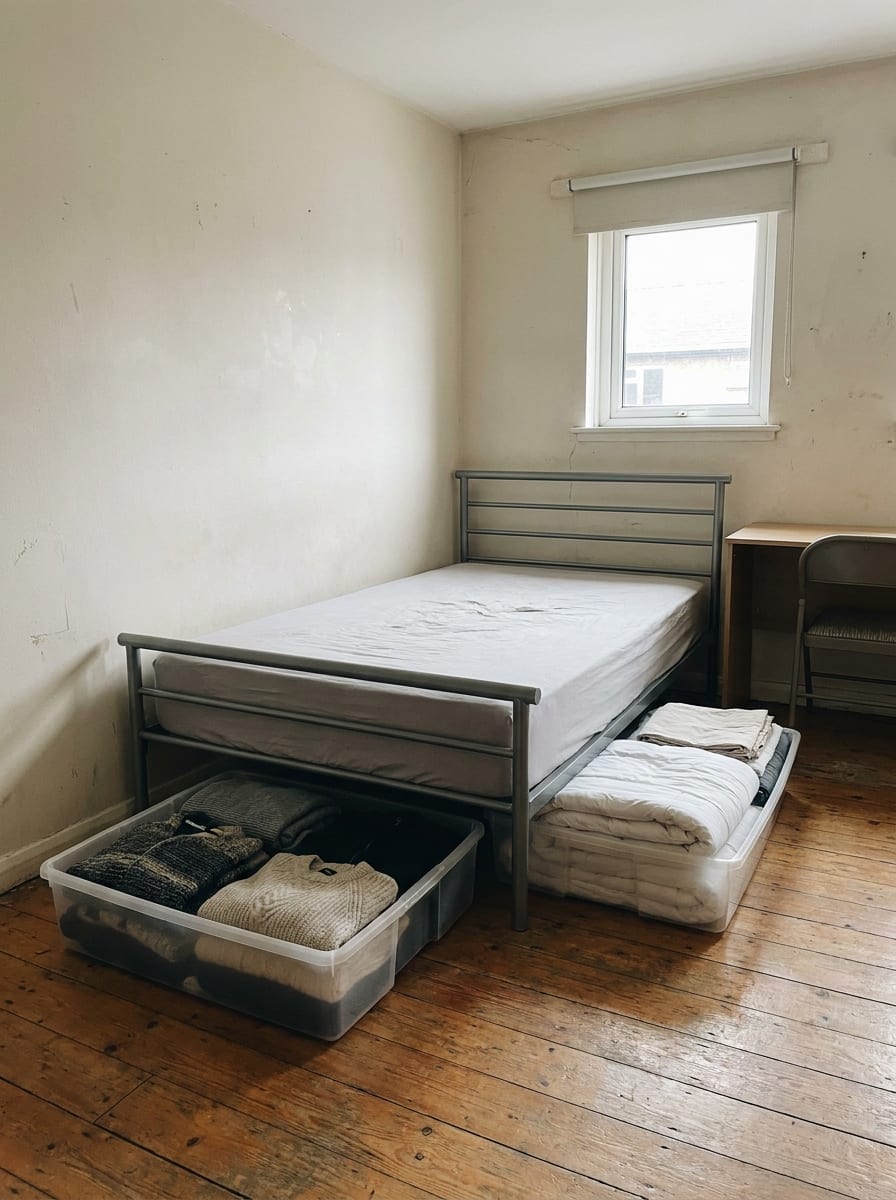
If your apartment lacks closets, the area beneath the bed can become some of the most valuable storage in the home.
And it requires no wall installation at all.
Best things to store underneath
Use it for less frequently needed items:
seasonal clothes spare bedding extra towels shoes luggage accessories
Choose containers based on the available clearance
Measure from:
floor → lowest point of the bed frame
before buying bins.
Do not assume standard storage boxes will fit.
Low-profile wheeled bins can help
Wheels make deeper under-bed storage easier to access.
If your floor is delicate, choose a design that will not scratch it.
Divide by category
Instead of one giant box containing everything, use clear categories.
For example:
winter clothes spare linens shoes
That reduces the need to unpack the entire storage zone.
Avoid stuffing it with daily-use items
If you need something every morning, crawling under the bed is not convenient storage.
Keep everyday clothing somewhere easier to reach.
10. The One Portable Storage Piece Rule
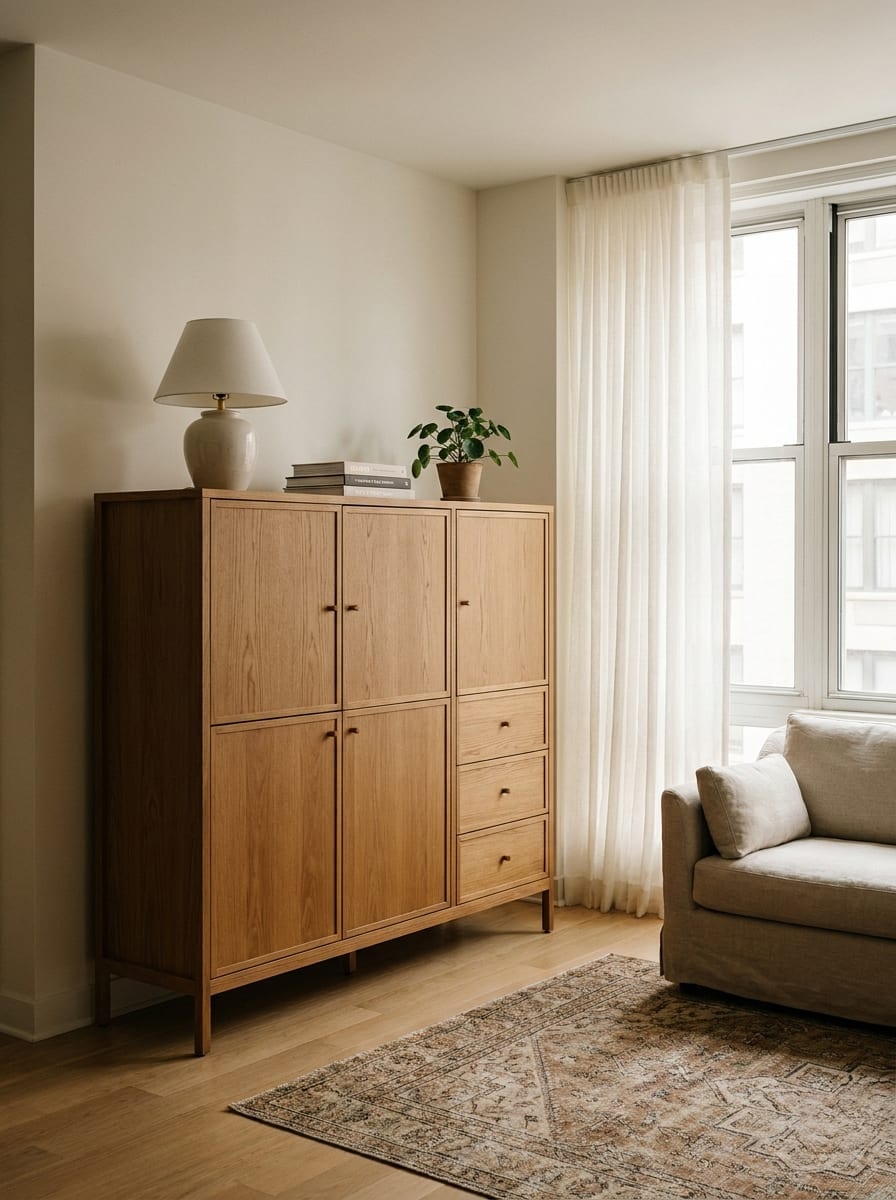
Sometimes the answer is not ten smaller organizers.
It is one good piece of portable furniture.
For a rental, that could be:
storage bench narrow cabinet storage ottoman rolling drawers compact sideboard
Why one piece can be better
Several small storage products can create:
visual clutter inconsistent materials more things to move duplicated storage
One intentional piece may solve the same problem more cleanly.
Example: small living room
Instead of:
blanket basket electronics basket miscellaneous box extra shelf
a compact closed cabinet might store everything.
Example: entryway
Instead of:
shoe rack basket key tray bag hook stand
a slim closed shoe cabinet with a small top surface can consolidate several functions.
Make it future-friendly
Ask:
Could I use this somewhere else in my next apartment?
A good renter storage piece might work later in:
bedroom dining room entryway office
That gives it more value than something designed for one exact gap.
Which No-Drill Storage Ideas Actually Save the Most Space?
Not every solution has the same impact.
For maximum storage without consuming new floor area, start with:
1. Existing doors
Over-the-door storage.
2. Existing cabinet doors
Shallow organizers.
3. Under-bed space
Large hidden volume.
4. Narrow gaps
Rolling carts.
5. Vertical floor space
Slim storage towers.
Only after those are exhausted should you start adding additional furniture.
Start With the Storage Problem, Not the Product
A common mistake is seeing an organizer online and then looking for somewhere to use it.
Reverse that.
Write down the actual problem first.
For example:
Shoes collect beside the entrance.
Then choose a solution.
Or:
Cleaning bottles waste the entire under-sink cabinet.
Then solve that problem.
Or:
There is nowhere for spare towels.
Then solve that problem.
This prevents your apartment from filling with “organizers” that create their own clutter.
No-Drill Does Not Always Mean No-Risk
This is particularly important for renters.
Storage products may be advertised as:
removable renter-friendly damage-free
but wall finishes vary.
A product can behave differently on:
matte paint gloss paint wallpaper textured plaster tile laminate unfinished wood
Always follow the manufacturer’s instructions and your lease requirements.
And when possible, prioritize solutions that do not rely on wall adhesion at all.
Those include:
over-door organizers carts tension systems freestanding cabinets under-bed storage
What Should You Never Hang With a Temporary Hook?
Unless a product is specifically rated and appropriate for the application, avoid using lightweight removable hooks for things where failure could cause significant damage or injury.
That can include:
heavy mirrors large framed glass loaded shelving televisions heavy plants substantial cabinets
No-drill convenience should not override safety.
How to Add Bathroom Storage Without Drilling
Start with:
vanity drawers or cabinet over-door storage freestanding over-toilet unit slim rolling cart if space permits tension-based organizers where appropriate
Avoid adding five different wall-mounted substitutes just because the room lacks built-ins.
The bathroom still needs open floor space.
How to Add Kitchen Storage Without Drilling
Use:
cabinet doors
drawer organizers shelf risers narrow carts freestanding pantry cabinet tension rod under sink top-of-cabinet storage for rarely used items
The goal is to make the existing cabinetry work harder before adding more furniture.
How to Add Entryway Storage Without Drilling
A compact rental entryway can work with:
over-door hooks removable lightweight hooks where appropriate freestanding shoe cabinet basket narrow bench with storage
But preserve the path through the door.
A storage solution that makes entering the apartment awkward is not actually solving the problem.
How to Add Bedroom Storage Without Drilling
Prioritize:
under-bed bins existing closet door freestanding narrow dresser clothing rack if genuinely needed storage bench if there is room
Bedroom floor space is especially valuable because circulation around the bed is already limited.
What About Tension Shelves?
Tension shelving systems can work well in certain spaces because they transfer pressure between surfaces rather than using conventional drilling.
However, suitability depends heavily on:
ceiling floor product design surface condition installation method
Follow the manufacturer’s requirements exactly.
Do not assume every ceiling or wall finish is appropriate.
What About Adhesive Shelves?
I would be more cautious with these than with lightweight hooks.
A shelf creates leverage away from the wall, and the load can increase significantly once objects are placed on it.
For renters, I would generally favor:
freestanding shelf over-door solution tension system cabinet-based organizer
before relying on adhesive shelving for anything substantial.
The Best No-Drill Storage Is Usually Portable
That is the major advantage renters have.
If you buy:
cart cabinet bins over-door organizer freestanding shelves
they can potentially move with you.
That is much better than spending heavily on a temporary solution designed around one apartment.
Common No-Drill Storage Mistakes
Buying an organizer before measuring
Always check the actual opening or gap.
Assuming every removable adhesive is safe for every wall
It is not guaranteed.
Adding too many small organizers
They can create more visual clutter than the original problem.
Blocking doors
Check full swing.
Narrowing walkways
Especially with carts and towers.
Ignoring furniture stability
No-drill does not mean safety instructions are optional.
Storing too much visibly
Closed storage can sometimes make a small apartment feel calmer.
Trying to use every empty inch
Some empty space is useful.
A Better Order for Adding Rental Storage
Before buying anything, go through the apartment in this order:
Step 1: Declutter
Remove things you no longer need.
Step 2: Improve existing storage
Cabinets, drawers and closets.
Step 3: Use hidden zones
Under bed and inside doors.
Step 4: Use awkward gaps
Rolling carts.
Step 5: Add vertical freestanding storage
Only where necessary.
Step 6: Use temporary wall products selectively
Not automatically.
This usually produces a much calmer result than starting by covering every wall.
The Three Questions to Ask Before Buying a No-Drill Organizer
1. What exact problem does it solve?
Not “I need more storage.”
Be specific.
2. Does it steal useful space somewhere else?
A cabinet may add storage but destroy the walkway.
3. Can I take it to my next home?
Portable storage is usually more valuable for renters.
If the answer to all three looks good, the piece probably deserves consideration.
Final Thoughts
Renter-friendly storage does not need to mean covering the apartment in temporary hooks and adhesive shelves.
The strongest no-drill solutions usually work with space you already have:
doors → cabinet interiors → gaps → under-bed space → vertical floor space
Start there.
Use wall adhesives selectively.
Keep circulation clear.
And favor storage you can take with you.
A rental feels much more organized when every solution has a specific job instead of simply adding another container to the room.