9 Small Bathroom Drawer Organization Ideas That Make Everyday Products Easier to Find
Discover 9 small bathroom drawer organization ideas for skincare, makeup, hair tools, daily essentials and backups so everything stays easier to find and put away.
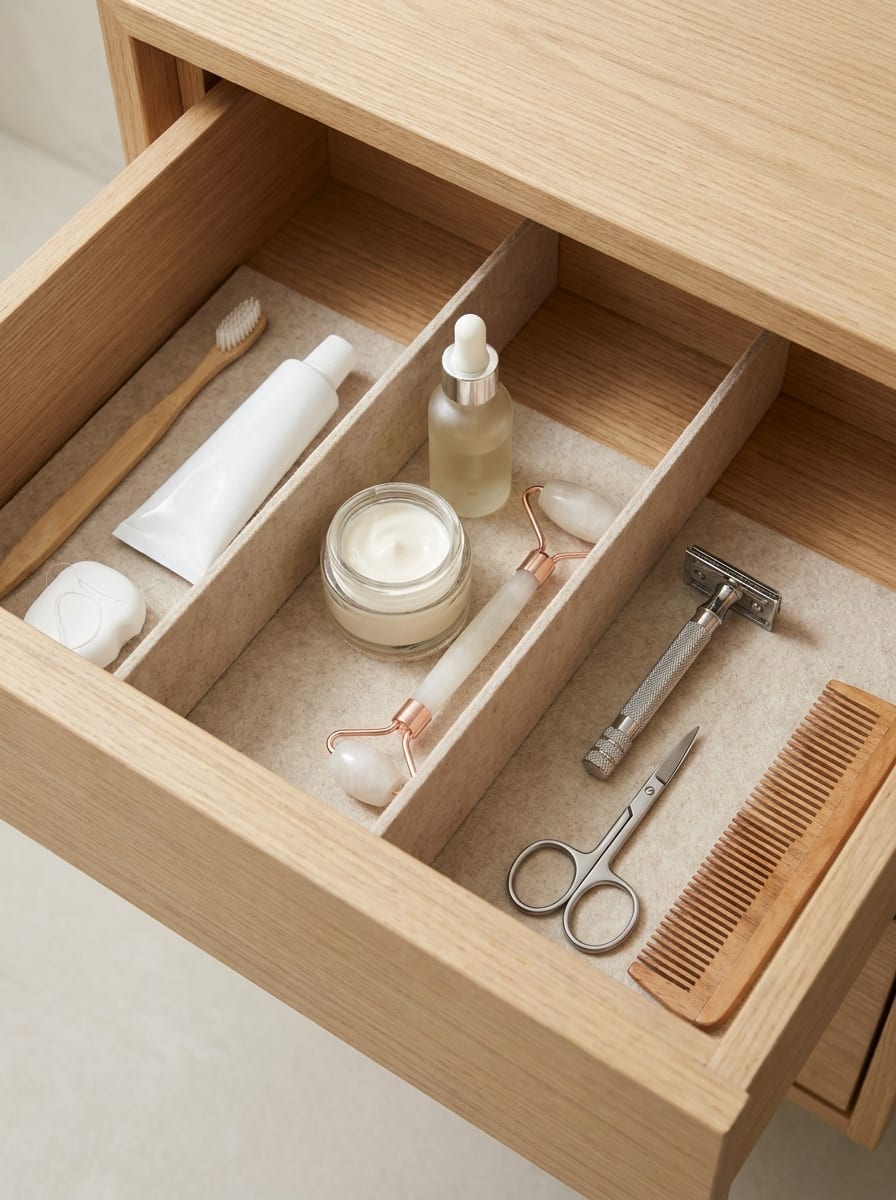
Organized bathroom vanity top drawer with three clean zones for oral care, skincare and grooming products separated by neutral dividers
In This Guide
A small bathroom drawer can hold a surprising amount. Unfortunately, that often means it eventually holds:
- skincare
- makeup
- toothpaste
- razors
- medicine
- hair ties
- charging cables
- samples
- half-used products
- backup toiletries all at the same time. Then the drawer technically contains everything you need, but you still cannot find anything. The problem is usually not a lack of organizers. It is a lack of zones. A useful drawer system should make everyday items easier to reach while pushing:
- backups
- rarely used tools
- duplicates out of the prime storage space. Before buying trays or bins, start by separating your bathroom items into three groups: daily -> occasional -> backup That one decision makes almost every drawer easier to organize. Here are nine practical systems for small bathrooms.
1. The Daily-Essentials Top Drawer
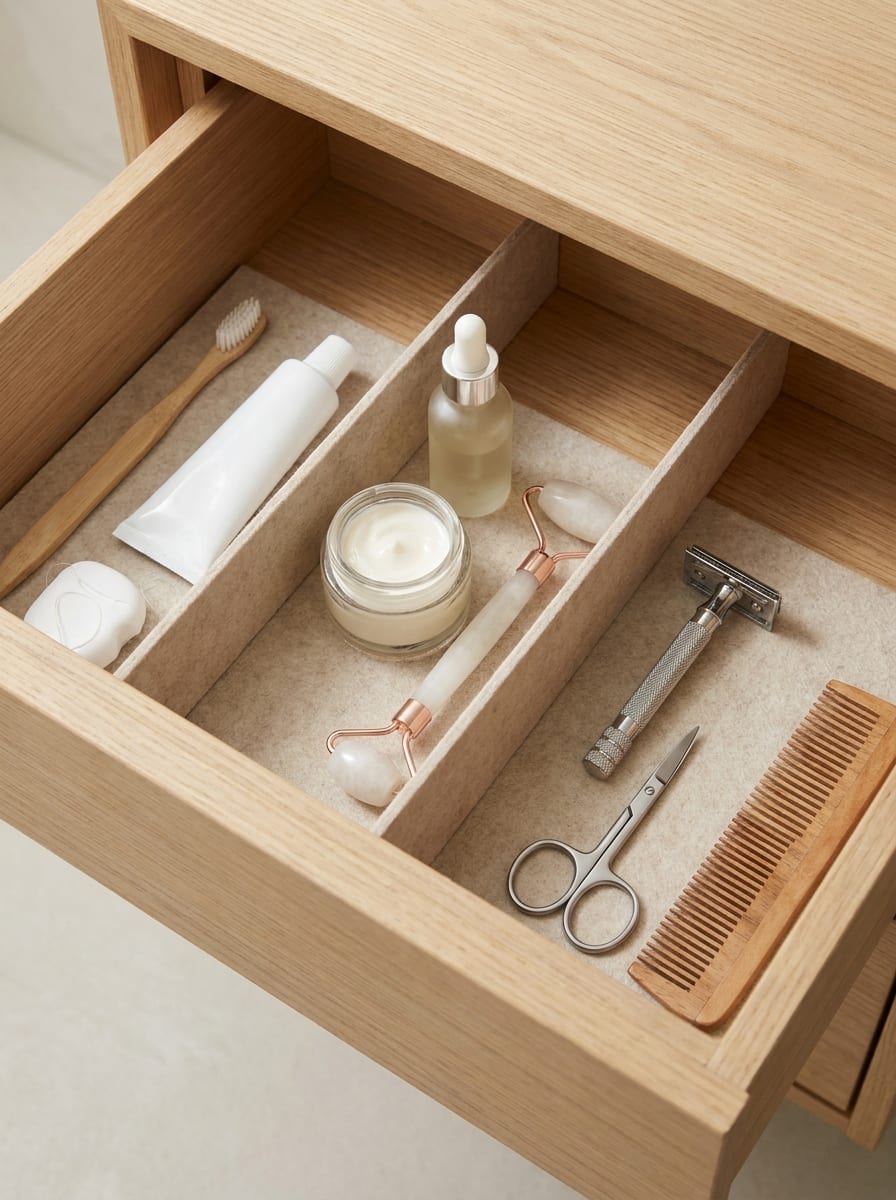
The easiest drawer to reach should contain the things you use most often. That sounds obvious, but many bathrooms use prime drawer space for:
- extra toothpaste
- unopened skincare
- random samples
- spare razors while daily essentials sit on the counter. Reverse that.
What belongs here
Depending on your routine:
- toothbrush supplies
- daily skincare
- deodorant
- contact-lens items
- razor
- everyday makeup
Keep categories small
Do not create ten micro-sections. A few simple zones work better. For example: oral care | skincare | grooming
Leave some empty space
A completely packed drawer becomes difficult to maintain. Leave enough room to:
- lift items
- return things easily
- see the drawer base
Why this works
You reduce countertop clutter while keeping everything needed for the morning routine one movement away.
2. The Shallow-Divider Skincare Drawer
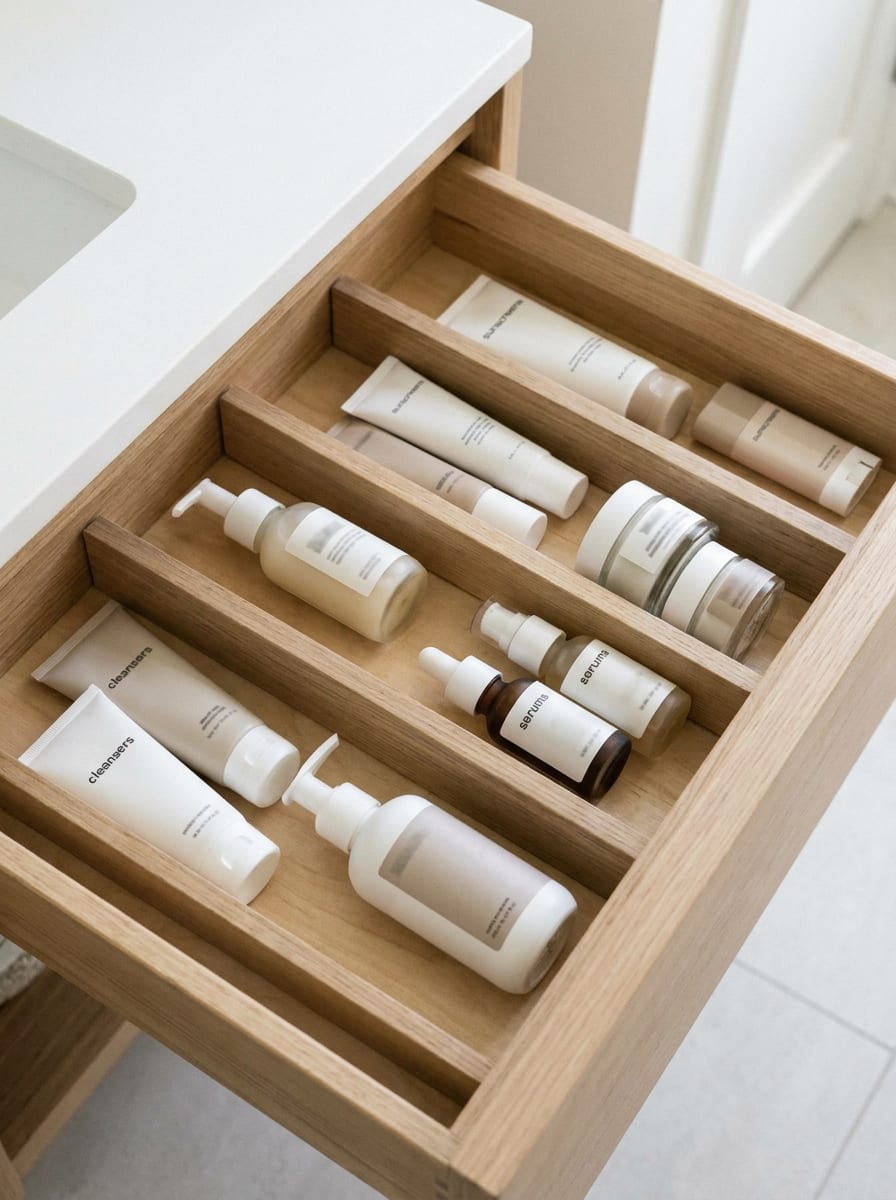
Shallow drawers are ideal for skincare because many products do not need to stand upright. The biggest mistake is letting tubes and bottles roll into one pile.
Use low dividers
Create categories such as:
- cleanser
- treatment
- moisturizer
- SPF
Store based on routine order
If you use products in the same sequence every morning, organize them in that sequence. For example: cleanse -> treat -> moisturize -> protect This makes the drawer intuitive.
Avoid storing every backup here
Only keep the products currently in rotation. Backups belong somewhere else.
Watch product instructions
Store skincare according to the manufacturer’s guidance. Some products may require:
- cooler conditions
- protection from light
- specific storage
3. The Makeup Category Drawer
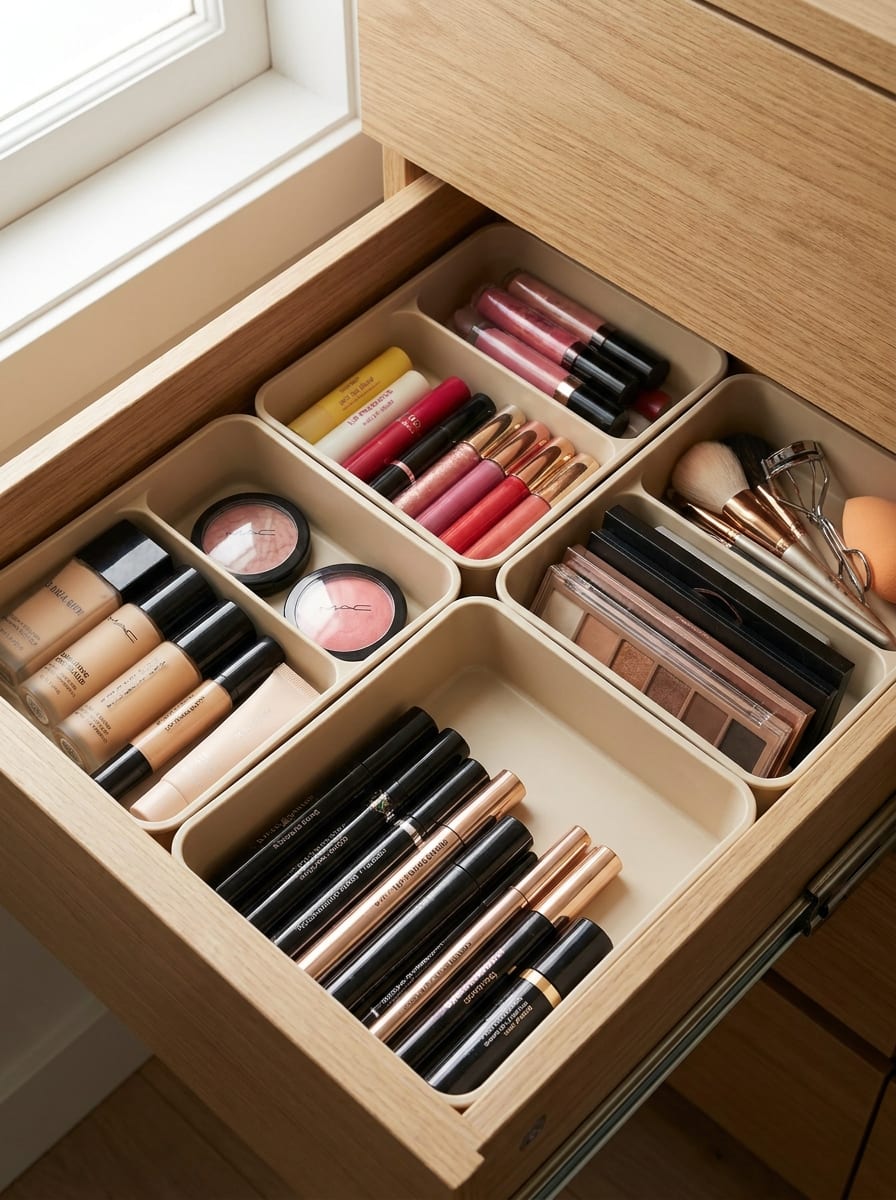
A makeup drawer works better when it is organized by product type, not by package shape. Otherwise everything eventually migrates into whichever tray happens to fit.
Useful categories
Try:
- face
- eyes
- lips
- tools
Keep daily makeup easiest to reach
If you own more products than you use regularly, create: Front section everyday items. Rear section less-used items.
Avoid oversized organizers
A large rigid organizer can waste valuable drawer width. Use smaller modules that fit the actual drawer.
Store brushes carefully
Brushes may work better:
- flat in a dedicated section
- or upright elsewhere depending on the drawer depth and your routine.
4. The Vertical Hair-Tool Drawer
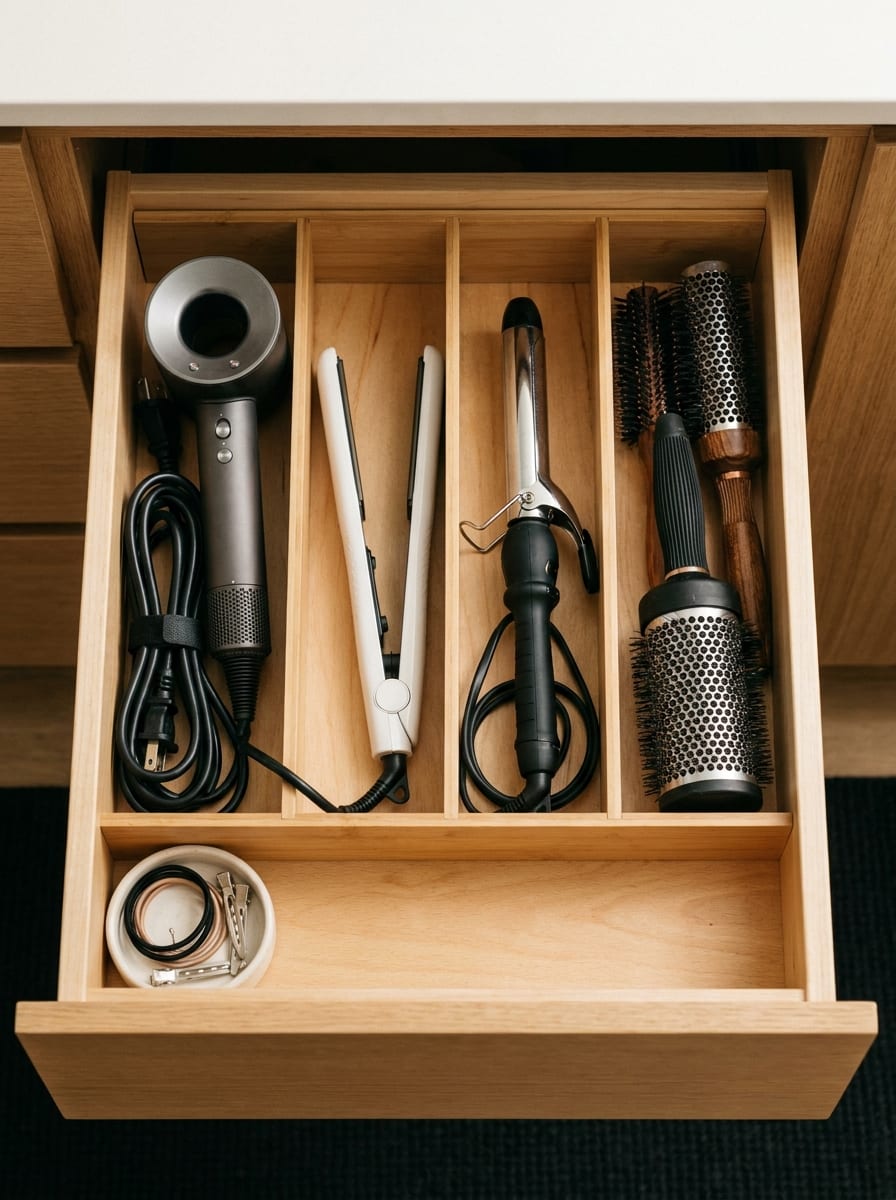
Hair tools create one of the messiest bathroom-storage problems because of:
- cords
- irregular shapes
- heat
- bulky handles If the drawer is deep enough, vertical separation can help.
Give each tool its own lane
For example:
- dryer
- straightener
- curling tool
- brushes
Control the cords
Use appropriate cord management so cables do not tangle around neighboring tools.
Let tools cool first
Do not place hot tools directly into storage unless the product and storage solution are specifically designed for that use. Allow them to cool according to their instructions.
Keep small accessories separate
Hair ties, clips and combs should not get buried beneath larger tools.
5. The Deep-Drawer Bin System
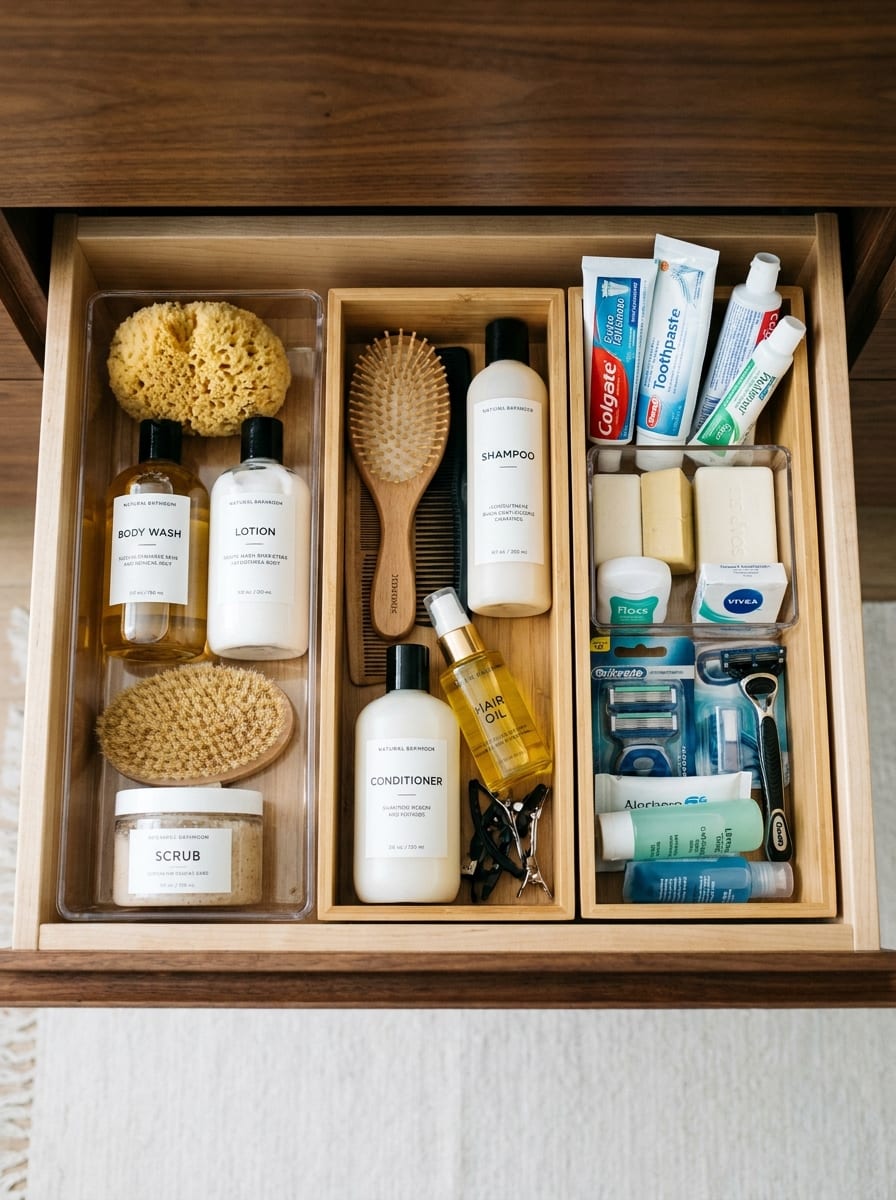
Deep drawers can look spacious but often become black holes. Small products disappear below:
- towels
- bottles
- tools The solution is to create removable zones.
Use bins instead of stacking loose items
Assign one bin to:
- body care
- hair care
- dental backups depending on what the drawer stores.
Keep categories broad
Too many tiny bins make a deep drawer harder to use.
Make bins removable
You should be able to lift out one category without emptying the entire drawer.
Avoid double-layer chaos
Stacking products directly on top of each other hides what is underneath. Use height deliberately instead.
6. The Medication Boundary Drawer
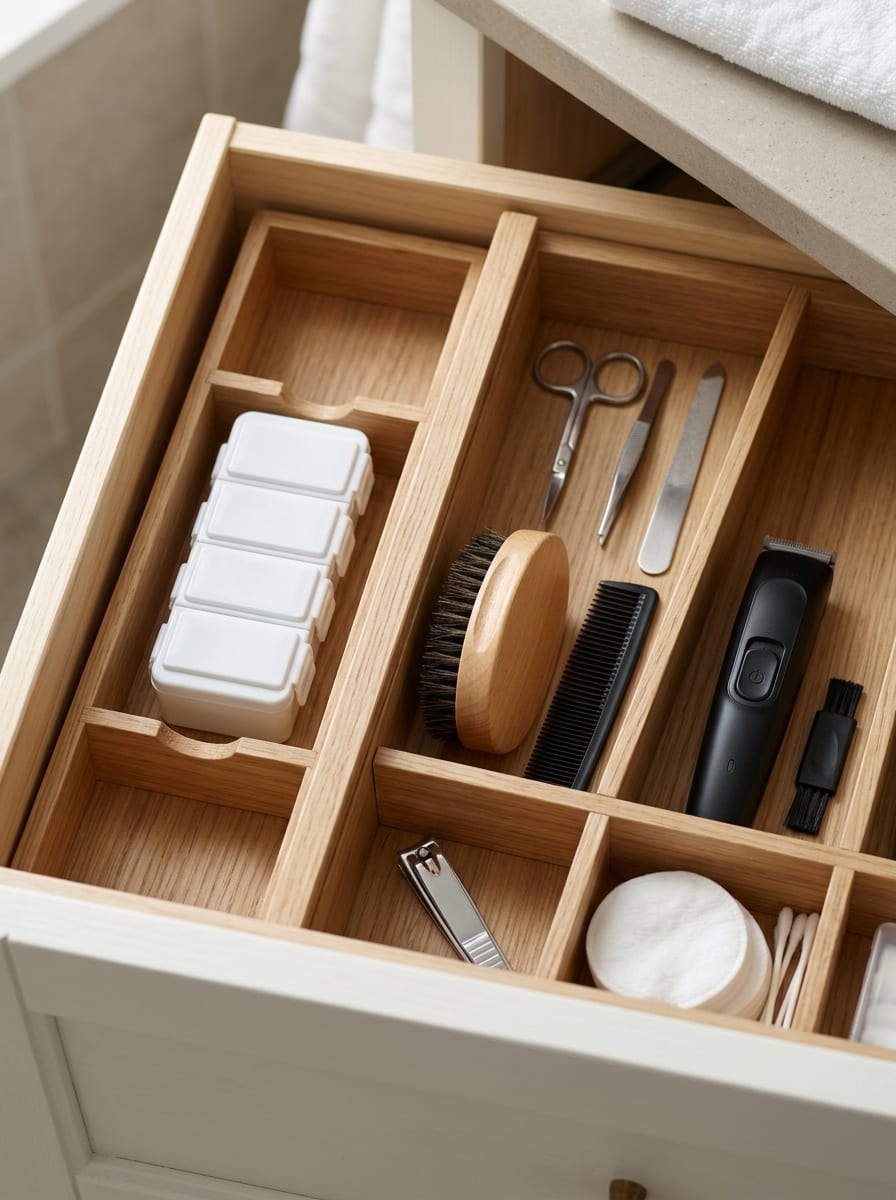
Bathroom drawers often become mixed storage for:
- skincare
- medicine
- supplements
- grooming items That is not always ideal. Medication should be stored according to its instructions, and bathrooms may not be appropriate for every product because of:
- heat
- humidity
- moisture
Check the label first
Use the manufacturer’s storage requirements. Do not assume the bathroom is suitable.
If bathroom storage is appropriate
Keep medicine physically separate from:
- cosmetics
- loose grooming items
Use one defined container
This reduces the chance of small packages getting scattered across several drawers.
Household safety matters
Store medication appropriately for:
- children
- pets
- other household members as required.
7. The Backup-Products Drawer
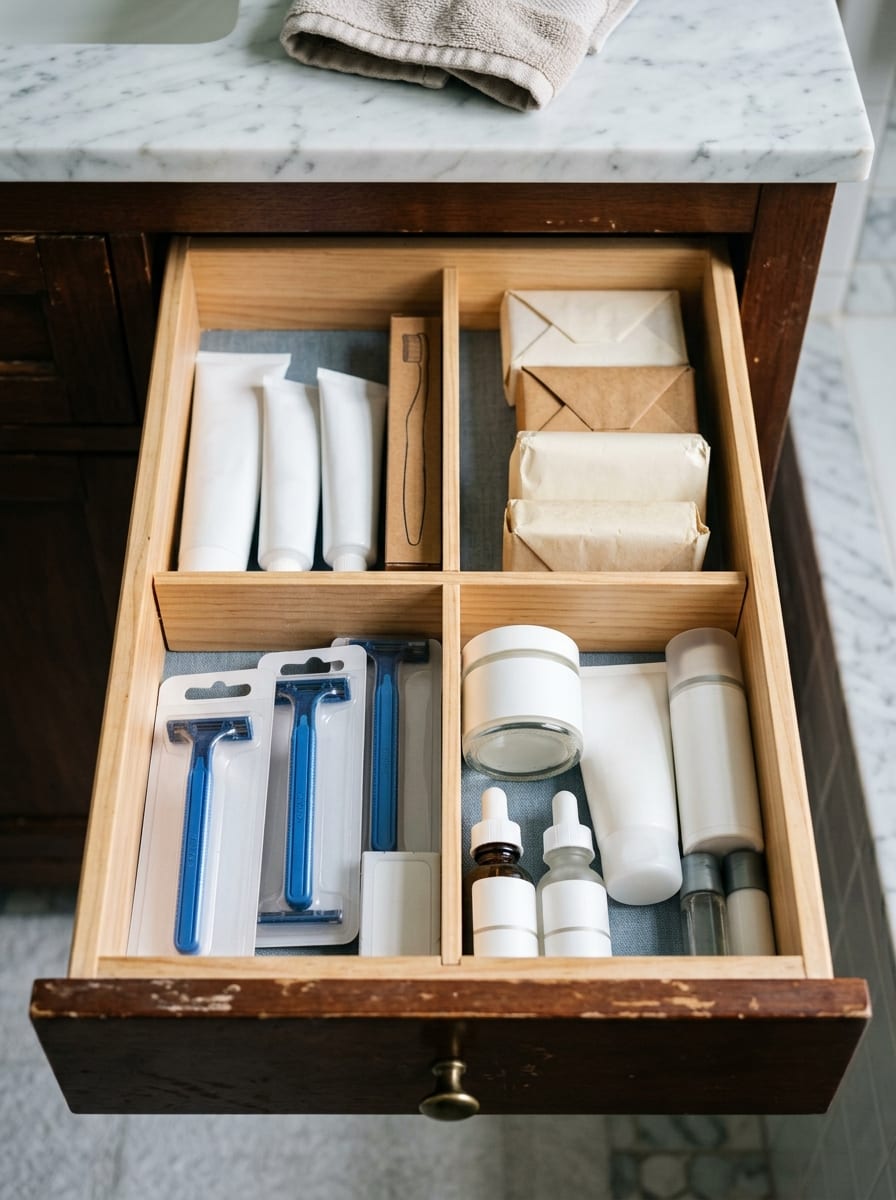
Backups are one of the biggest causes of drawer clutter. You may have:
- three toothpaste tubes
- extra shampoo
- unopened deodorant
- replacement razors
- extra soap mixed with daily items. Create one dedicated backup zone.
Why this works
You always know where replacements live. And daily drawers stay lighter.
Keep only reasonable quantities
A backup drawer should not become a miniature warehouse. If the drawer is full of six-month supplies, reconsider how much you actually need to keep in the bathroom.
Use first-in, first-out
Place newer purchases behind older ones where practical. This helps reduce forgotten products.
Check duplicates before shopping
Look in the backup drawer before buying more.
8. The Shared-Bathroom Split Drawer
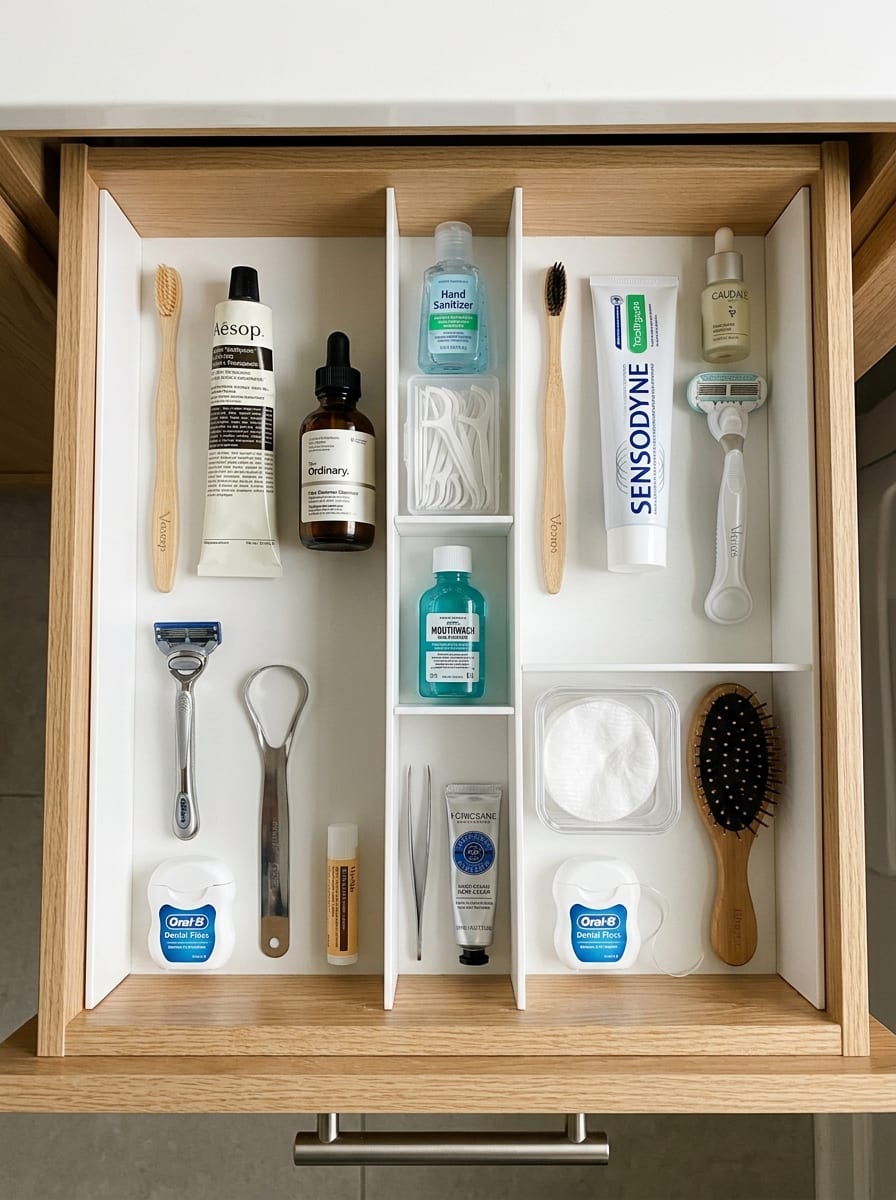
Shared bathrooms become messy quickly when everyone’s products mix together. Give each person a defined drawer section.
Divide by person first
For example: left side -> Person A right side -> Person B Then organize within each side if needed.
Why this is better than organizing only by product type
If both people use different:
- skincare
- razors
- grooming products sorting everything together creates confusion.
Shared items can have a middle zone
Items like:
- toothpaste
- floss
- cotton swabs can occupy one central shared section.
Keep boundaries obvious
Simple dividers are usually enough.
9. The Daily-Weekly-Backup Formula
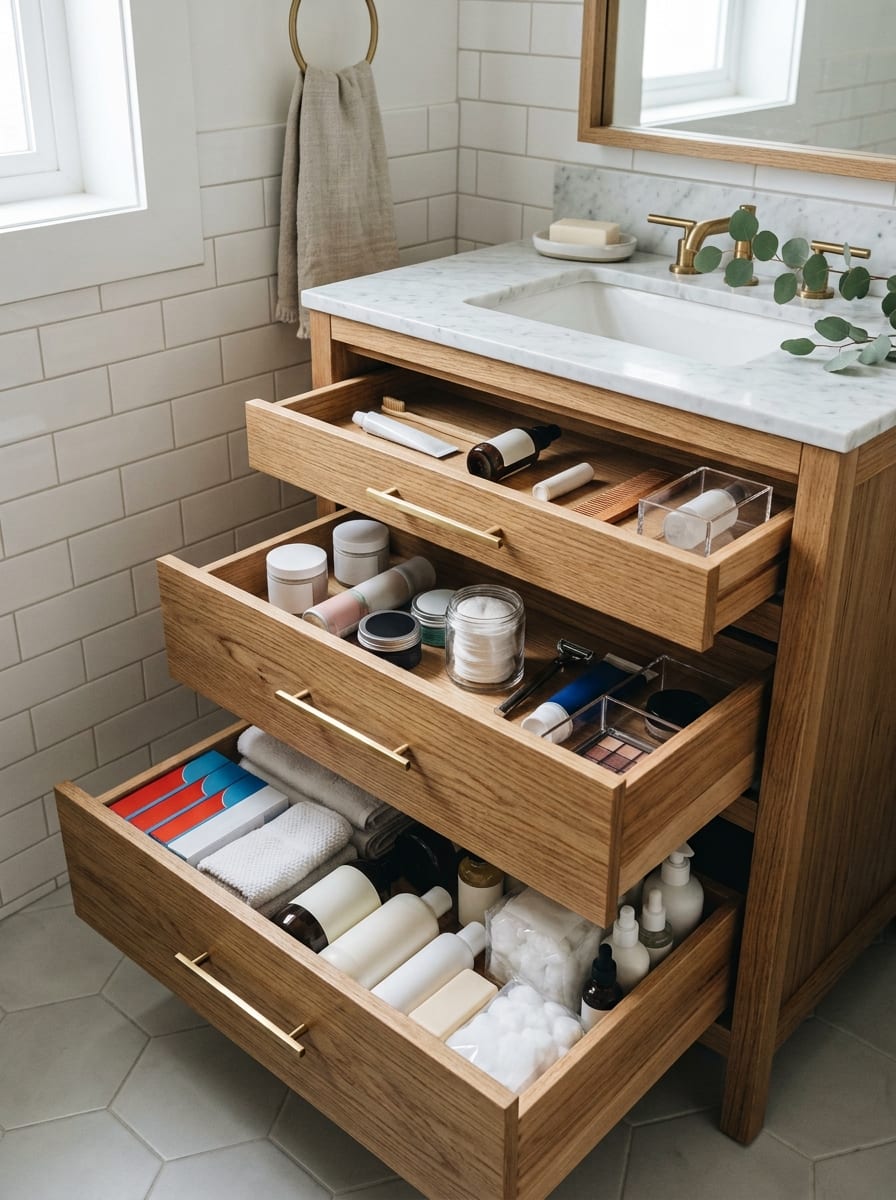
If your bathroom drawers never stay organized, stop organizing by object and start organizing by frequency of use. Use three levels.
Level 1: Daily
Keep in the easiest drawer. Examples:
- toothbrush supplies
- daily skincare
- deodorant
- everyday grooming
Level 2: Weekly or occasional
Keep in a secondary drawer. Examples:
- hair tools
- masks
- special treatments
- less-used makeup
Level 3: Backup
Keep in the deepest or least convenient drawer. Examples:
- unopened toothpaste
- replacement soap
- extra razors
Why this works
The items you use most stop competing with things you barely touch. That is usually more effective than trying to give every individual object its own perfect compartment.
Clean the Drawer Before Anything Goes Back
Once empty, wipe the interior appropriately for the drawer material. Then let it dry completely. Starting with a clean drawer makes the reset feel much easier to maintain.
Measure the Inside, Not the Outside
Organizer dimensions need to fit the usable internal drawer space. Measure:
- width
- depth
- height including anything that reduces space, such as:
- plumbing
- drawer hardware
- curved sides
Measure Drawer Height Carefully
This is especially important. A tray can fit perfectly in width and still prevent the drawer from closing because:
- bottles
- dividers
- handles sit too high.
Do Not Buy Organizers Before Decluttering
You may think you need six trays. After removing:
- duplicates
- empty containers
- expired items you may only need three. Organizers should support what remains.
Organize by Routine Before Category
Category organization is useful. Routine organization can be even better. For example, if every morning you use:
- face wash
- moisturizer
- SPF
- deodorant keeping those items together may be more useful than storing all skincare in one area and deodorant elsewhere.
Daily Use Gets Prime Real Estate
The best drawer position should go to the products used most often. Do not give the top drawer to:
- backups
- rarely used cosmetics
- guest toiletries unless that genuinely matches your routine.
Keep Backups Out of the Top Drawer
This single rule can dramatically reduce clutter. The daily drawer should not contain:
- unopened duplicates
- spare bottles
- refill packs unless there is no other storage at all.
Use Broad Categories
Useful bathroom categories include:
- oral care
- skincare
- makeup
- hair
- grooming
- backup Avoid creating categories so specific that each one contains only one item.
Too Many Dividers Can Waste Space
Every divider consumes drawer area. A drawer with twelve tiny compartments may actually hold less than one with four practical zones. Use the fewest divisions needed to stop categories from mixing.
Modular Organizers Are Easier to Adjust
Small separate trays can often adapt better than one large molded insert. If your routine changes, you can:
- move
- remove
- replace individual sections.
Clear Organizers Are Optional
Transparent trays can make items visible. But they are not automatically better. Opaque or neutral organizers may look calmer. Choose based on:
- visibility
- cleaning
- fit rather than aesthetics alone.
Avoid Tiny Containers for Tiny Objects Unless Needed
It is easy to create an organizer inside an organizer inside another organizer. For items like:
- hair ties
- clips one small compartment is enough. You do not need a separate box for every accessory.
Keep Frequently Used Products Facing Up
If labels or caps help you identify products, position them consistently. You should not need to lift five items to find the sixth.
Store Tubes Side by Side
Small tubes often work well arranged:
- horizontally
- next to each other instead of piled. This makes it easier to see:
- cleanser
- treatment
- cream at a glance.
Store Bottles Upright Only if Height Allows
Deep drawers may allow upright storage. Shallow drawers generally work better with products lying flat. Do not force one organization style into the wrong drawer.
Check Bottle Leaks
Liquids stored horizontally should be:
- properly closed
- suitable for that orientation according to their packaging. Use common sense with items prone to leaking.
Hair Ties Need One Small Home
Do not scatter them through:
- makeup drawer
- hair-tool drawer
- counter Give them one small compartment.
Bobby Pins and Clips
Keep them in a small contained section rather than loose. Loose small metal items easily disappear underneath larger products.
Razors Should Have a Defined Zone
Keep clean or replacement razors separate from:
- loose cosmetics
- medication
- random accessories according to product guidance and household safety needs.
Toothpaste Backups Do Not Need Prime Drawer Space
One current tube belongs with daily oral care. Extra tubes belong in:
- backup drawer
- cabinet
Travel Toiletries
If you collect travel-size products, keep them together. Do not let mini bottles slowly infiltrate every bathroom drawer. A single pouch or bin can work well.
Samples Need a Limit
Samples often become permanent clutter because they are too useful to throw away. Create one small sample zone. When it is full, use what you have before adding more.
Do Not Store Things Just Because They Fit
A bathroom drawer should not become the default home for unrelated household items. If something belongs somewhere else, move it.
Think About Moisture
Bathrooms experience varying levels of:
- humidity
- temperature
- moisture Not every item should be stored there. Follow storage instructions for anything sensitive.
Makeup Storage Considerations
Cosmetics should be stored according to their product guidance. If your bathroom becomes very hot or humid, another location may be more suitable for some products.
Perfume and Fragrance
Heat, light and humidity can affect some fragrance products. Follow manufacturer recommendations rather than assuming a bathroom drawer is ideal.
Electronics and Bathroom Drawers
If storing:
- electric toothbrush accessories
- trimmers
- hair tools keep them appropriately dry and follow product instructions. Avoid placing wet equipment directly into enclosed storage.
Hair Tools Should Be Cool Before Storage
This deserves repeating. Do not close hot:
- straighteners
- curling tools inside a normal drawer. Let them cool appropriately first unless using a specifically designed heat-safe system according to its instructions.
Use Deep Drawers for Bulkier Categories
Deep drawers are often best for:
- towels
- backup toiletries
- hair tools rather than dozens of tiny items.
Use Shallow Drawers for Small Daily Items
Shallow drawers make it easier to see:
- skincare
- makeup
- oral care without stacking.
What Should Go Under the Sink Instead?
Items that may fit better under the sink include:
- larger cleaning products
- toilet-paper backup
- bulky toiletries depending on the cabinet layout. Keep drawer space for things that benefit from easy visibility.
Avoid Duplicating Categories Across Multiple Drawers
If skincare appears in:
- top drawer
- second drawer
- cabinet
- under sink you will constantly forget what you own. Choose one main home per category.
Use the One-Home Rule
Every item should have one obvious place to return to. If you find yourself asking: Which drawer does this go in? the categories may be too complicated.
Labels Are Optional
If the system is obvious, you may not need labels. Use them when:
- multiple people share the bathroom
- several similar bins exist not simply because organization photos use them.
Keep the System Fast to Reset
A good drawer should take seconds to tidy. If returning one product requires:
- opening a box
- lifting another tray
- rearranging three items the system is too complicated.
The 30-Second Reset Test
At the end of the routine, try putting everything away. If the drawer can return to order in under about half a minute, the layout is probably practical. Leave 10-20% Breathing Room Where Possible You do not need to calculate this exactly. The principle is simply: do not fill the drawer to absolute capacity. A little free space makes categories easier to maintain.
Do Not Organize Around Rare Products
If something is used once every few months, it should not shape the whole drawer layout. Move it to lower-priority storage.
Expired Products Create False Storage Problems
If the bathroom feels impossible to organize, check:
- expiration dates
- old makeup
- unused skincare
- empty packaging first. You may have a product problem rather than a drawer problem.
Keep a Small Discard Routine
Every few months, review:
- empty items
- expired products
- products you no longer use according to appropriate disposal guidance.
Small Bathroom Drawer Organization for Couples
Try: Top drawer shared daily essentials. Second drawer personal zones. Deep drawer backup products. Or divide by person if routines are very different.
Small Bathroom Drawer Organization for One Person
You can organize more strongly by routine: Top daily. Middle occasional. Bottom backup. This is often the simplest system.
Small Vanity With Only One Drawer
Use broad zones. Try: daily skincare | oral care | grooming Then move:
- backups
- tools elsewhere. Do not expect one shallow drawer to hold the entire bathroom.
Vanity With Two Drawers
Try: Top daily products. Bottom occasional + backup.
Vanity With Three Drawers
Try: Top daily. Middle makeup / hair / grooming. Bottom backups. This naturally follows frequency of use.
Drawer Organization Without Buying Anything
You can often improve the drawer simply by:
- removing duplicates
- grouping categories
- relocating backups before purchasing containers. Temporary small boxes can help you test the layout before buying permanent organizers.
Test the Layout for One Week
Do not assume the first setup is perfect. Use the bathroom normally. Notice:
- which compartment becomes messy
- what you keep leaving on the counter
- which product is stored too far away Then adjust.
The Counter Is Feedback
If the same items keep ending up on the counter, that usually tells you something. Either:
- they need a more accessible drawer position
- or the drawer system is too difficult to use.
Do Not Force Every Item Into a Drawer
Some items may work better:
- inside cabinet
- on appropriate wall storage
- elsewhere in the home The goal is a functional bathroom, not completely empty surfaces at any cost. Common Small Bathroom Drawer Organization Mistakes Mixing daily items with backups The drawer fills too quickly. Buying organizers before measuring They waste usable space. Creating too many tiny categories The system becomes difficult to maintain. Filling every inch There is no room to move things. Storing products where conditions are unsuitable Follow storage guidance. Keeping expired items They consume valuable space. Letting hair tools tangle with small items Separate bulky tools. Using prime storage for rarely used products Frequency matters. Creating a complicated reset process Organization should save time. Ignoring what keeps returning to the counter Your habits reveal whether the system works. A Quick Drawer Decision Guide
Use the Daily-Essentials Drawer if:
Your countertop keeps collecting everyday products.
Use the Skincare Divider Drawer if:
Small bottles and tubes constantly roll together.
Use the Makeup Category Drawer if:
You cannot see what products you already own.
Use the Hair-Tool Drawer if:
Cords and bulky tools are taking over.
Use Deep-Drawer Bins if:
Products disappear underneath one another.
Create a Medication Boundary if:
Health-related items are mixed with everyday cosmetics.
Create a Backup Drawer if:
Duplicates keep crowding the daily area.
Use the Shared-Bathroom Split if:
Multiple people’s products keep getting mixed together.
Use the Daily-Weekly-Backup Formula if:
The entire vanity needs a reset. The Simplest Small Bathroom Drawer Formula If you want to start with one rule, use: top drawer = today middle drawer = sometimes bottom drawer = later That is simple enough to remember and flexible enough to work in many small bathrooms. Final Thoughts A well-organized bathroom drawer is not the one with the most:
- trays
- labels
- acrylic boxes It is the one where you can find what you need without digging. Start by separating: daily -> occasional -> backup. Give your most-used items the easiest drawer. Keep backups out of the way. Use dividers only where categories genuinely need separation. Measure before buying organizers. And leave enough empty space that the system can survive normal life. When every product has one logical home, even a small vanity can hold a lot without feeling chaotic.