11 Lantern Decor Ideas for Small Apartments That Add Warmth Without Cluttering Surfaces
Discover 11 lantern decor ideas for small apartments using narrow consoles, windowsills, open shelves, and unused corners to add warm ambient light without clutter.
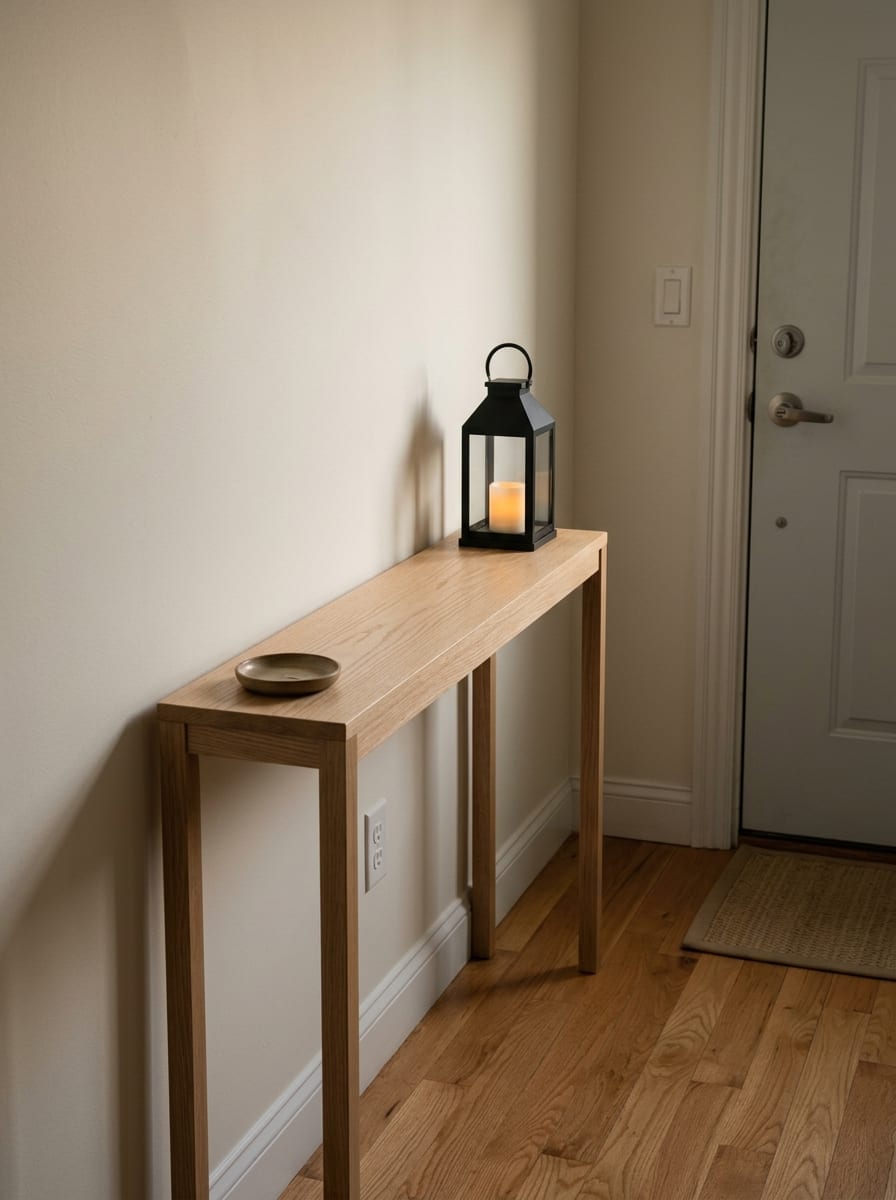
Narrow entryway console table in a small apartment styled with a compact black metal lantern and warm LED candle glow
In This Guide
Lanterns can make an apartment feel warmer without requiring new furniture, a major lighting upgrade, or a collection of decorative accessories. Their framed shape adds structure to a room, while a soft light inside creates a comfortable glow after dark.
But lanterns can also become one more thing competing for space. A large lantern can overwhelm a narrow console, a tall one can interrupt the view across a coffee table, and several small lanterns scattered around a room can make the decor feel busy rather than intentional.
The trick is to choose the right placement, scale, and light source before choosing the lantern itself.
In a small apartment, the best lantern is usually one that makes an existing corner or surface feel more finished without taking away the space you need to live comfortably. Here are 11 ways to make that happen.
1. The Narrow Console Lantern
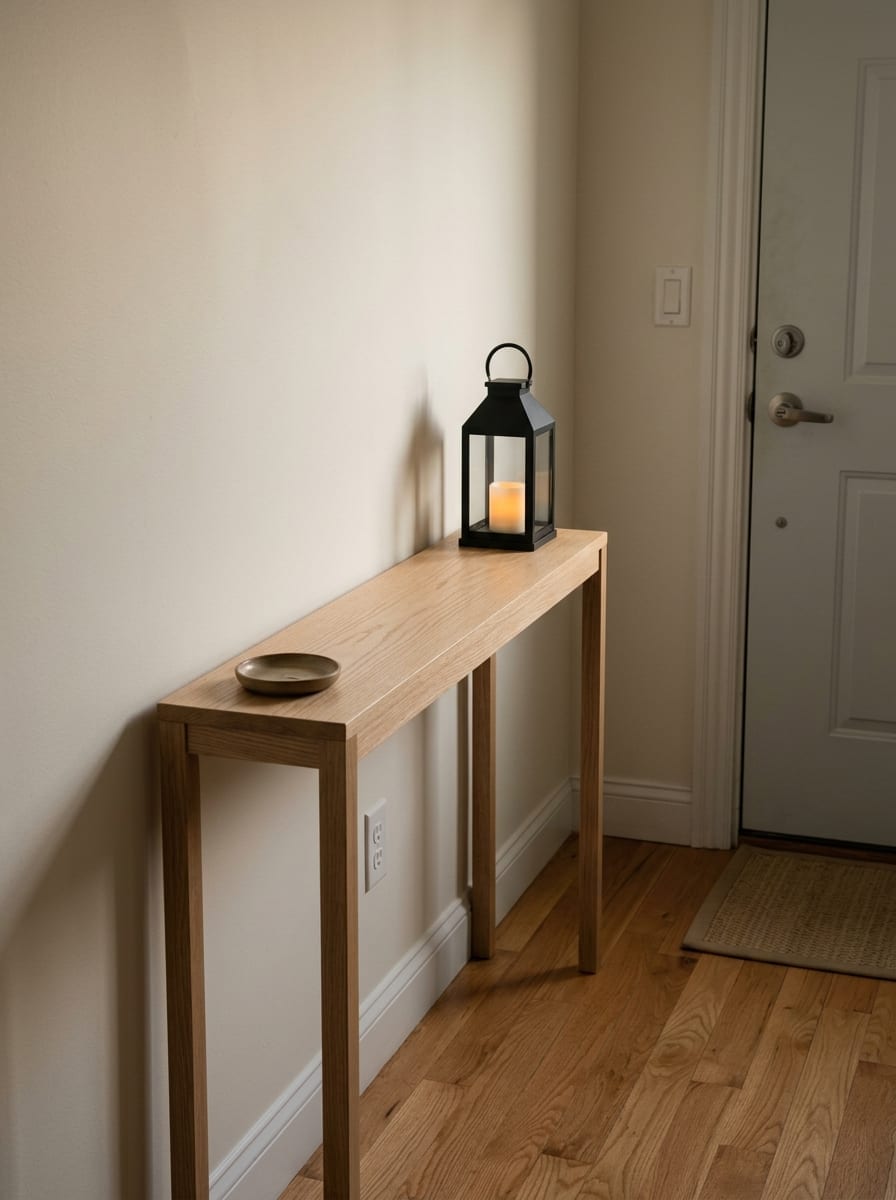
A narrow console near the entrance is a natural place for a decorative lantern. It creates a welcoming first impression and gives the entryway a soft focal point without requiring another piece of furniture.
How to make it work
Choose a lantern with a relatively small footprint and a shape that suits the console. A black metal frame can create contrast against a light wall, while a natural wood or woven finish can make the entrance feel softer.
Place the lantern toward one end of the console rather than directly in the middle. Keep enough clear space for the everyday items you actually use, such as keys, a small tray, or a bag.
If your entryway has no console, do not buy one just to display a lantern. A shelf or an existing sideboard can serve the same purpose.
What to avoid
Do not combine a large lantern, a tall vase, a stack of books, and several small accessories on a very narrow surface. The arrangement may look attractive in a photograph but become inconvenient as soon as you need somewhere to put your keys.
Best for: Apartments with a small entry table, slim console, or existing hallway shelf.
2. The Window-Edge Glow
A lantern placed near a window can make a small room feel inviting in the evening. During the day, its frame adds a little visual interest; after sunset, the light becomes a gentle focal point.
How to make it work
If the windowsill is deep, stable, and wide enough, place one compact lantern toward the side rather than directly in the center. This keeps the window looking open and avoids making the arrangement feel like a display blocking the view.
If the sill is too narrow, use an existing side table near the window instead. The lantern should not interfere with opening the window, operating blinds, or accessing the curtains.
A battery-powered LED candle is usually the more practical choice around window treatments. Keep the lantern away from fabric, and never assume a glass enclosure makes an open flame safe.
What to avoid
Do not place an oversized lantern in front of a small window simply because the window provides a convenient surface. The goal is to add a warm accent, not make the room feel more enclosed.
Best for: Living rooms and bedrooms that feel a little flat after dark.
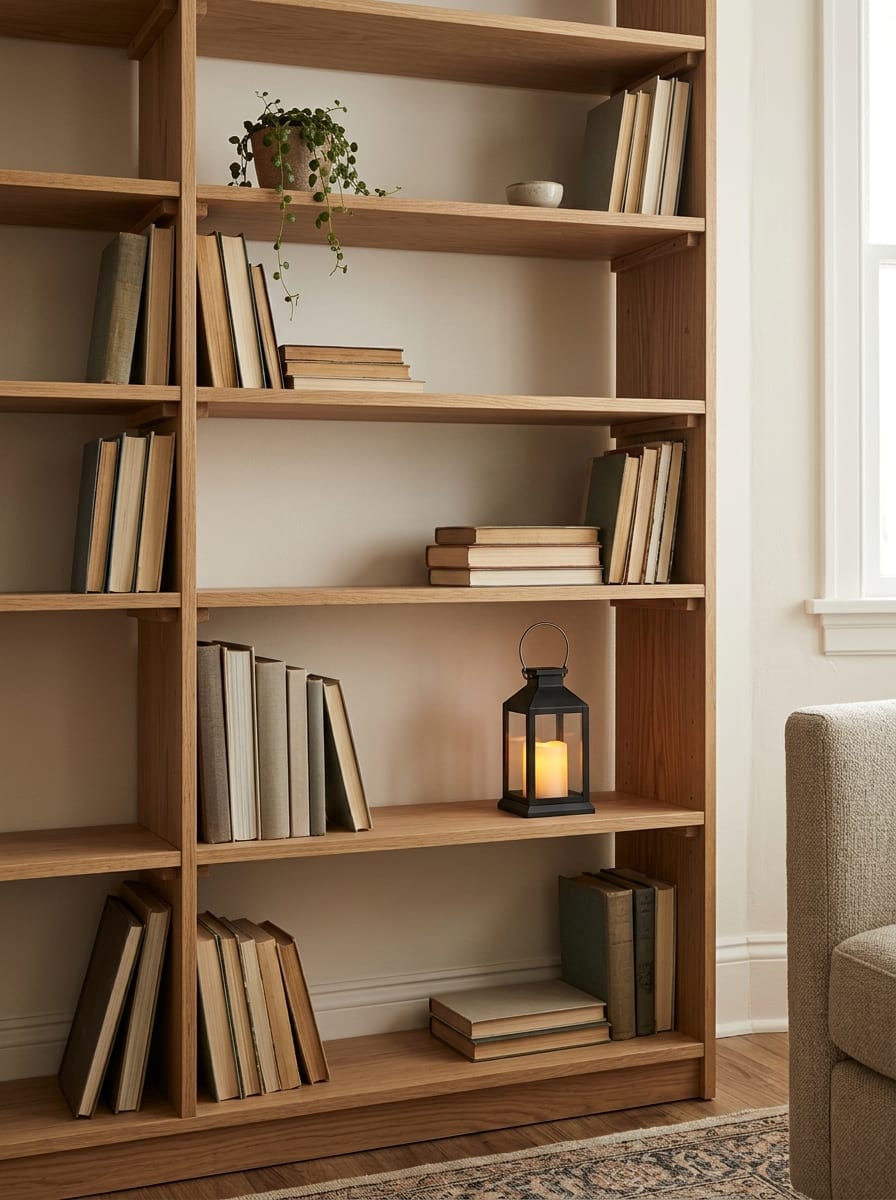
3. The Open-Shelf Lantern
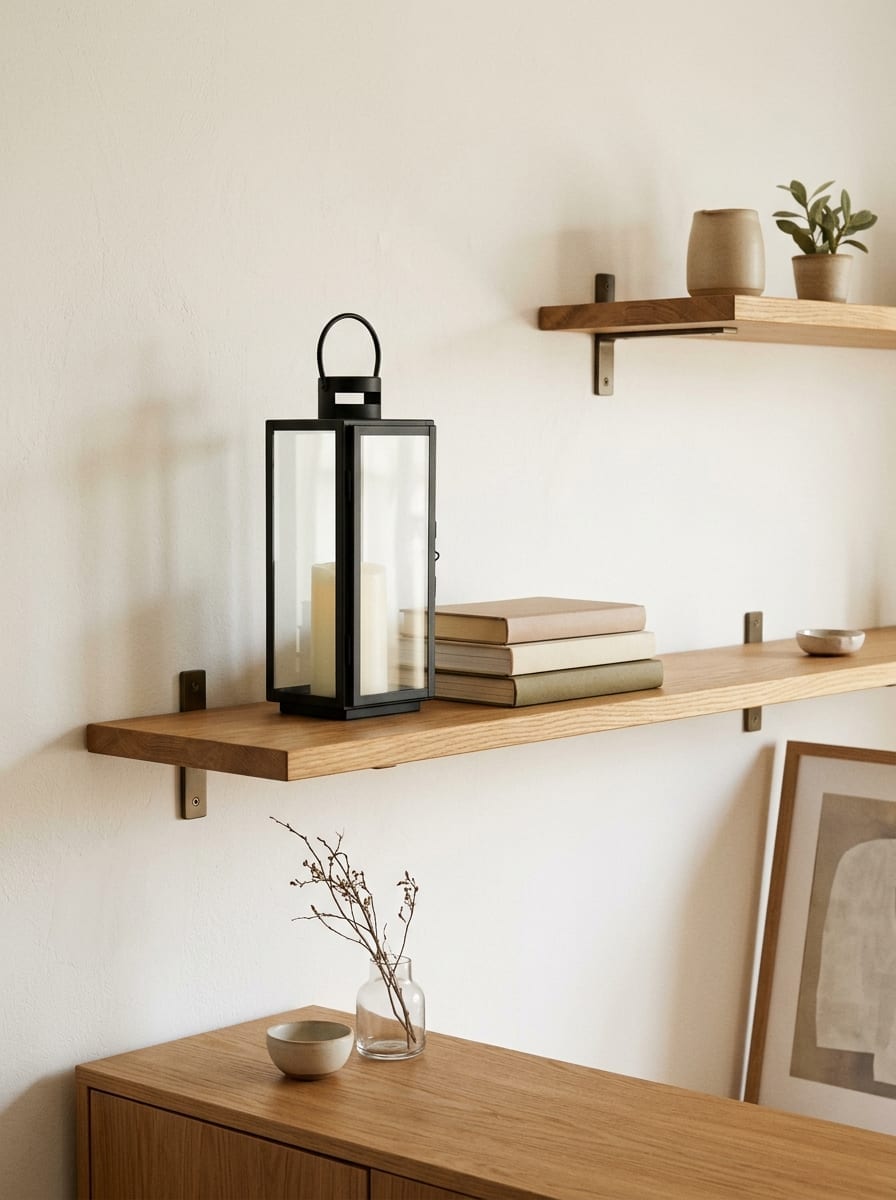
Open shelves often hold books, framed art, plants, and collected objects. A lantern can introduce a different shape and a small point of light, helping the arrangement feel more considered.
How to make it work
Choose a shelf with enough depth and a suitable load capacity for the lantern. Position it beside a small group of objects rather than squeezing it between several competing decorations.
For example, a simple lantern can sit beside a short horizontal stack of books, with the rest of the shelf left relatively open. The contrast between the lantern’s outline and the flatter shapes around it gives the arrangement variety.
Use an LED candle on shelves, especially near books, paper, plants, or other combustible materials. Check that the lantern is stable and that its doors or handles do not project into a walkway.
What to avoid
Avoid filling every shelf with a different lantern. Repetition can work in a large display, but in a compact apartment it may turn useful storage into visual clutter.
Best for: Small living rooms, studio apartments, and rooms with existing display shelves.
4. The Coffee-Table Corner Lantern
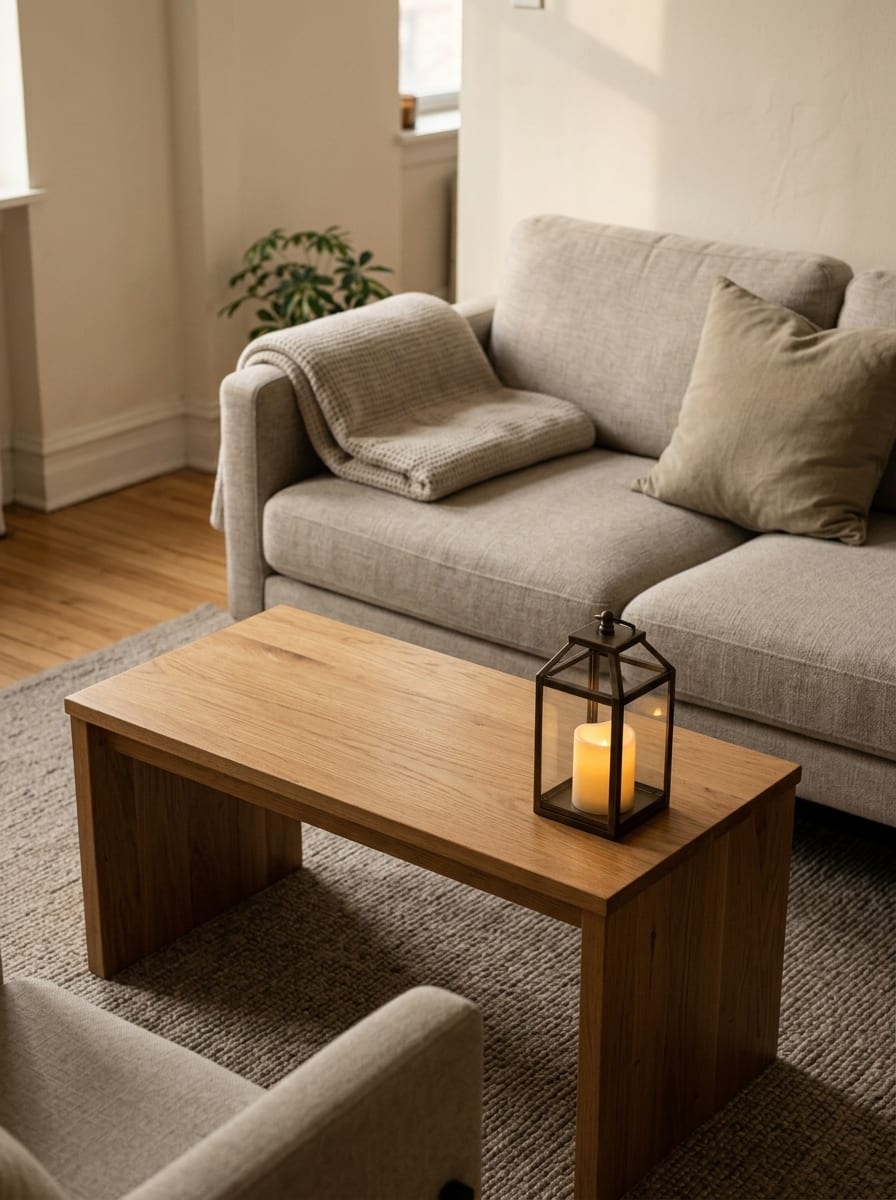
A coffee table can benefit from a little height and texture, but it also needs to remain usable. A lantern provides a defined decorative shape without requiring a large arrangement of accessories.
How to make it work
Choose a compact lantern and place it toward one corner of the table. Leave the main central area open for drinks, books, a remote, or whatever you regularly use there.
A low or medium-height design is usually easier to live with than an oversized lantern that blocks the view across the seating area. A simple metal frame or clear glass panels can also feel lighter than a bulky, opaque design.
If the table is very small, consider using a side table instead. You do not need to decorate every surface.
What to avoid
Do not create a tall stack of books underneath a large lantern simply to add height. The combined arrangement can become unstable and consume most of the table’s usable area.
Best for: Apartments with a compact coffee table and an otherwise uncluttered seating area.
5. The Bedside Lantern Alternative
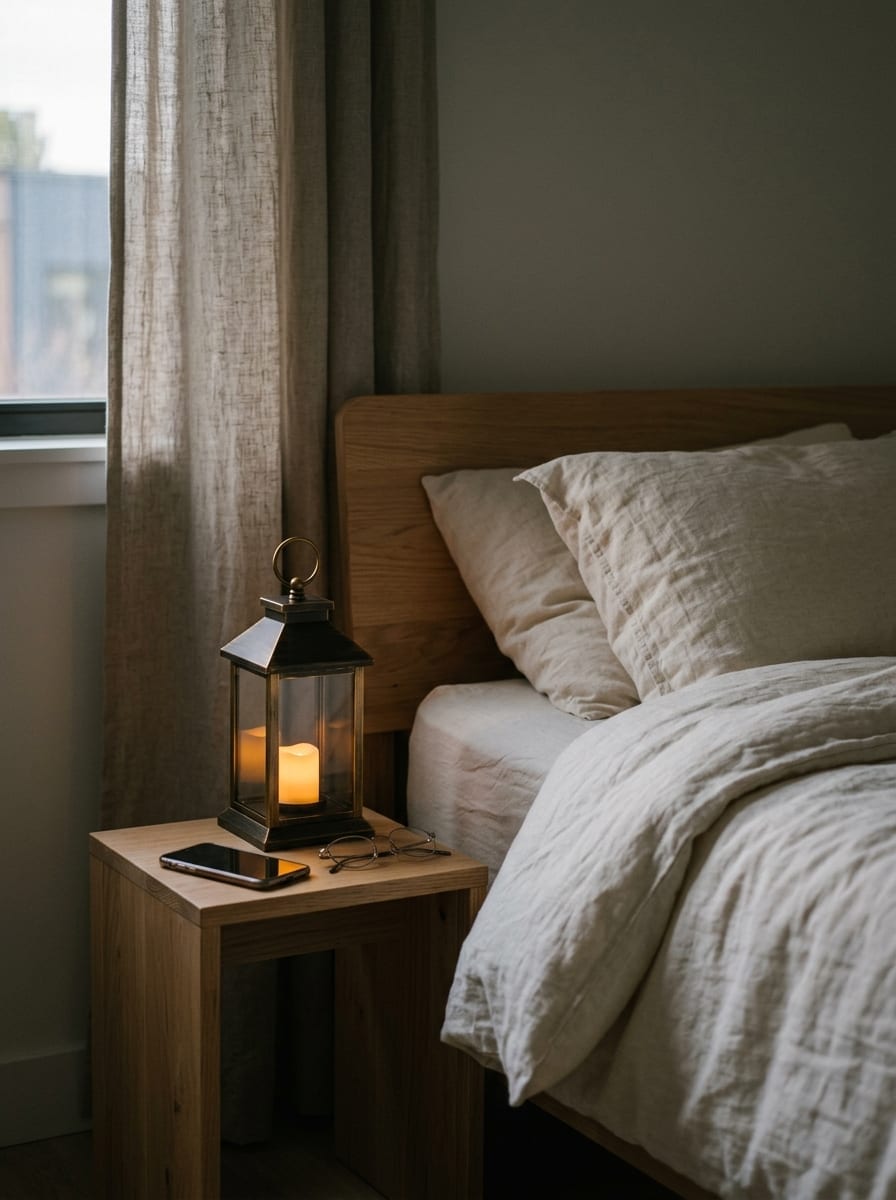
A lantern can soften the look of a bedroom and provide a gentle evening glow. It is particularly useful when you want a decorative accent but do not have room for a large bedside lamp.
How to make it work
Place a small lantern on an existing nightstand or dresser, keeping it to one side so you still have room for a phone, a glass of water, or a book.
A dark frame creates a stronger outline against pale bedding, while a warm metal or natural finish can blend more quietly into the room.
Use a battery-powered LED candle near bedding, curtains, and other fabrics. Choose a lantern with a stable base, and make sure its size does not interfere with drawers or anything you need to reach from bed.
Remember that a decorative lantern is not necessarily a substitute for a proper reading light. If you read in bed, keep a functional lamp or other suitable task light available.
What to avoid
Avoid placing a large lantern on a tiny nightstand and forcing everyday essentials onto the floor or bed. The decorative object should fit the furniture, not dictate how you use it.
Best for: Compact bedrooms with a small nightstand, dresser, or bedside ledge.
6. The Dining-Table Centerpiece
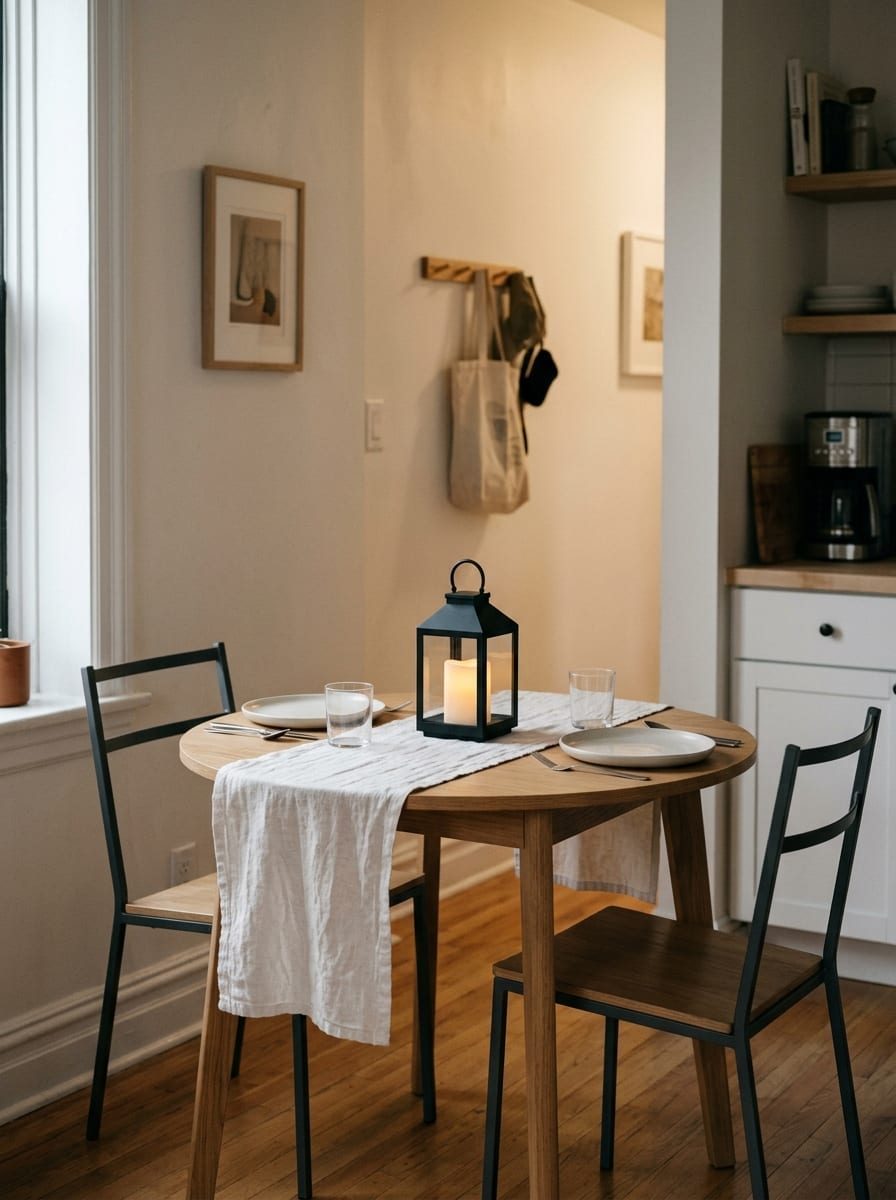
A lantern can make a small dining table feel finished even when you are not setting it for a special occasion. Its contained shape creates a focal point without needing a large floral arrangement.
How to make it work
Choose a lantern that leaves enough room for place settings, serving dishes, and comfortable use of the table. A low, compact design is usually more practical than a tall lantern that obstructs conversation.
For an everyday arrangement, pair the lantern with one understated element, such as a small washable runner or a simple bowl. Keep the surrounding surface clear rather than building a large centerpiece around it.
LED candles work particularly well here because they avoid an open flame near sleeves, napkins, and food. Make sure the lantern remains stable when the table is in use.
What to avoid
Do not choose a centerpiece based on how it looks on a large dining table. A lantern that occupies a small percentage of a large table may dominate a two-person apartment dining setup.
Best for: Small dining tables, breakfast nooks, and compact kitchen-dining areas.
7. The Bookcase Lantern
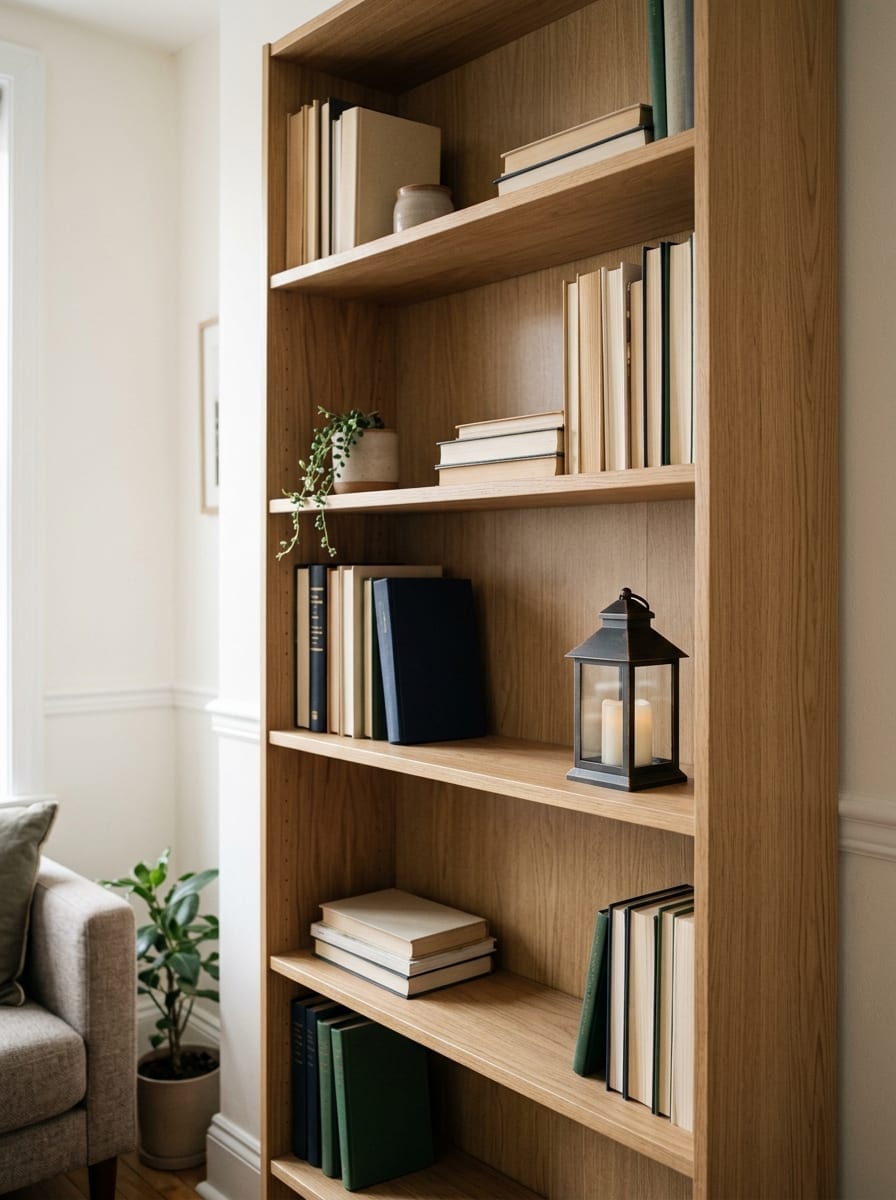
A lantern can break up the repeated horizontal lines of a bookcase. Its frame adds a little structure among books and smaller objects, making the shelves look less uniform without adding many more accessories.
How to make it work
Use an existing shelf that can safely support the lantern and has enough clearance around it. A lantern at the end of a shelf can work especially well because it gives the eye a clear stopping point.
Keep the surrounding books and objects relatively simple. You might group a few books on one side and leave a little empty space on the other, allowing the lantern to stand out.
Choose an LED light source for this placement. Do not burn a real candle among books, paper, or other combustible materials, even inside a decorative lantern.
What to avoid
Avoid squeezing a lantern into a shelf opening that is barely large enough for it. Handles, doors, and decorative tops need clearance, and the lantern should be easy to remove for cleaning.
Best for: Apartments with bookcases, wall shelving, or built-in storage that doubles as a display area.
8. The Balcony Lantern
A lantern can make a small apartment balcony feel more inviting in the evening. It adds a warm point of interest without needing a large outdoor seating set or elaborate decorations.
How to make it work
Start with the balcony’s existing layout. If there is a clear corner beside a chair or small outdoor table, a compact lantern may fit naturally there.
For outdoor use, choose a lantern and light source rated for the conditions they will experience. Secure the arrangement against wind, keep it away from combustible materials, and follow building rules about balcony decorations and open flames.
A battery-powered LED lantern is often the simplest option for a small balcony. It avoids an exposed flame and can be easier to move when the weather changes.
What to avoid
Do not place a lantern where it narrows the route to the balcony door, blocks access to railings, or could fall from the balcony. Avoid treating an indoor decorative lantern as weatherproof unless its manufacturer specifically says it is suitable for outdoor use.
Best for: Small balconies with one clear corner and enough room to move around comfortably.
9. The Mirror-Reflected Lantern Moment
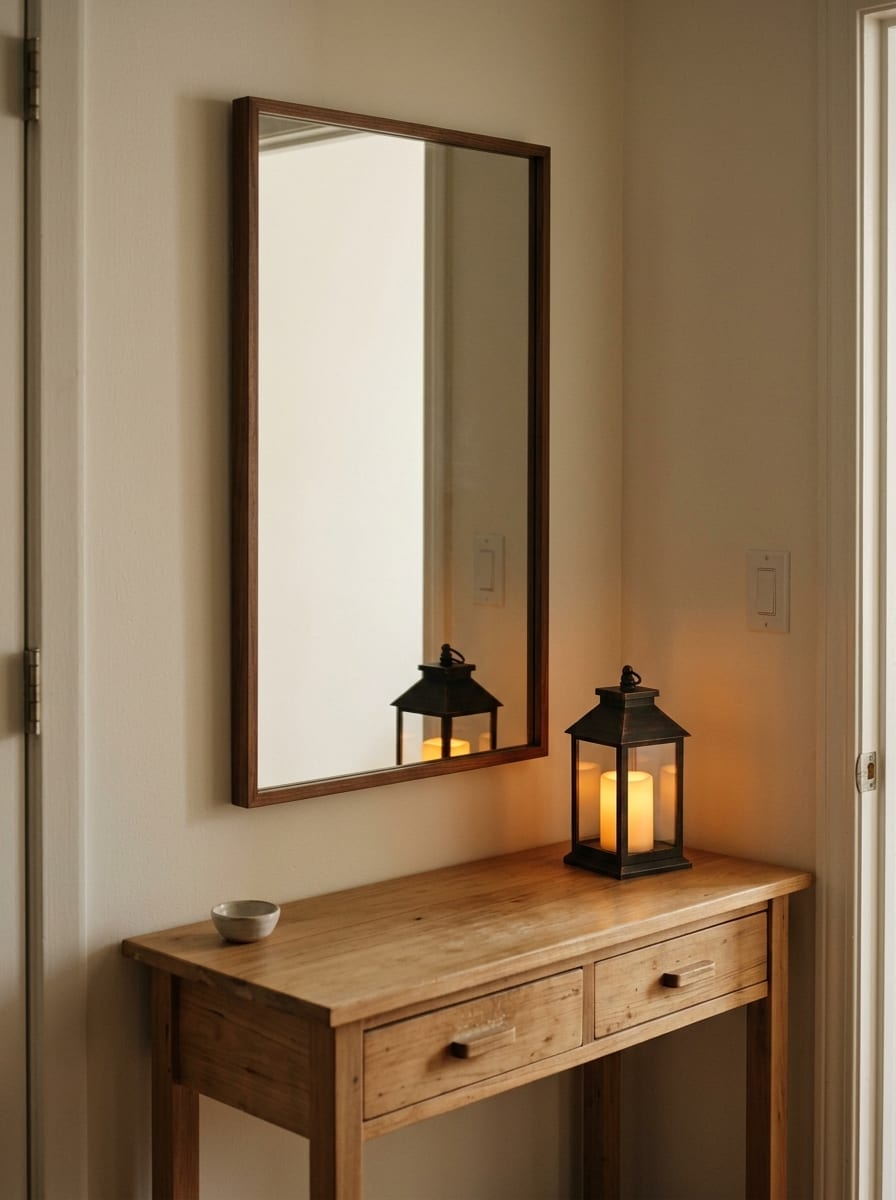
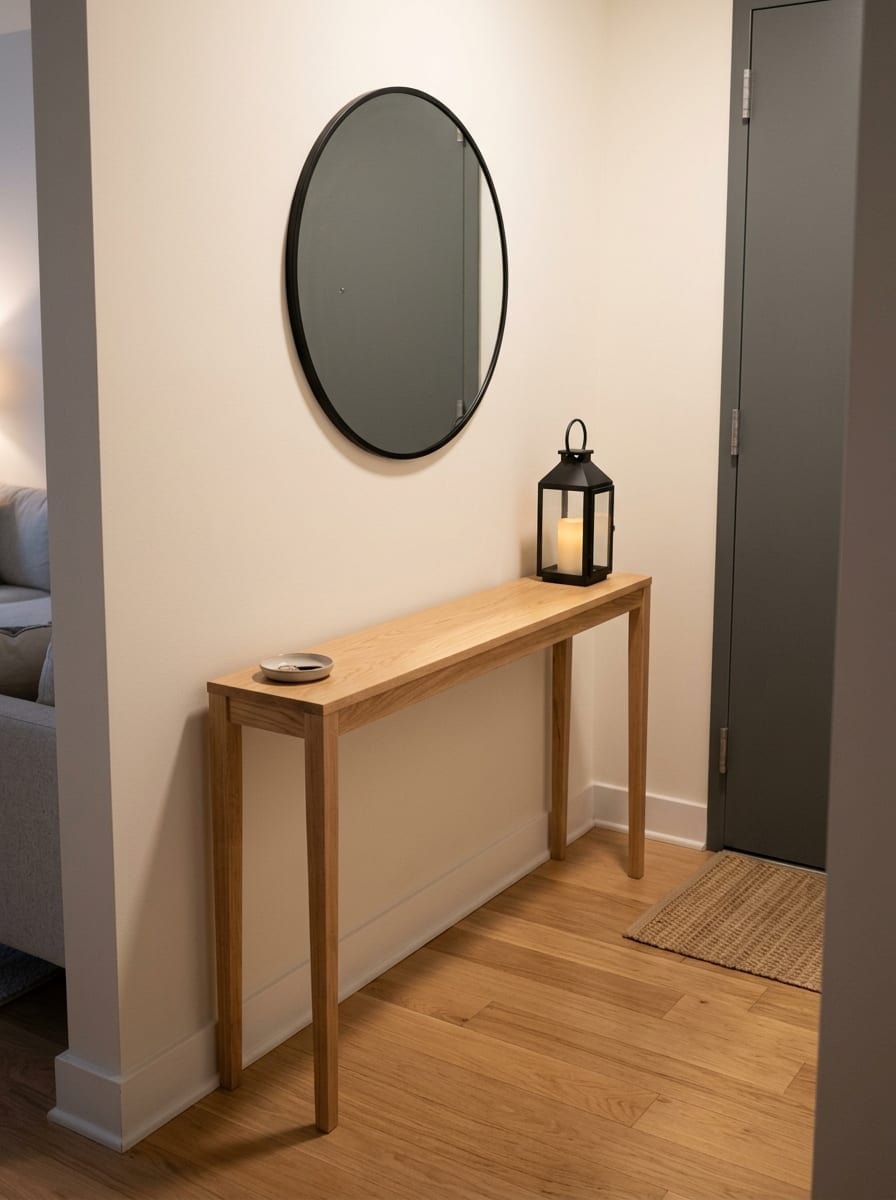
A lantern near a mirror can make a small room feel more layered. The reflection repeats the shape and glow, giving one decorative object a little more visual presence without requiring additional accessories.
How to make it work
Use an existing mirror above a dresser, console, or sideboard. Place a compact lantern slightly to one side so the reflection is visible without covering the mirror’s main viewing area.
This works particularly well with simple frames and a warm LED light. The reflected glow can add atmosphere after dark, while the lantern’s outline gives the surface more structure during the day.
Keep the arrangement restrained. One lantern and perhaps one smaller object are often enough when the mirror is already a strong visual feature.
What to avoid
Avoid crowding the mirror with lanterns, tall vases, and multiple decorative objects. The reflection can visually multiply everything on the surface, making a small room feel busier than it is.
Best for: Bedrooms, living rooms, and entryways with an existing mirror and a small surface below it.
10. The Kitchen’s Clear-Counter Lantern
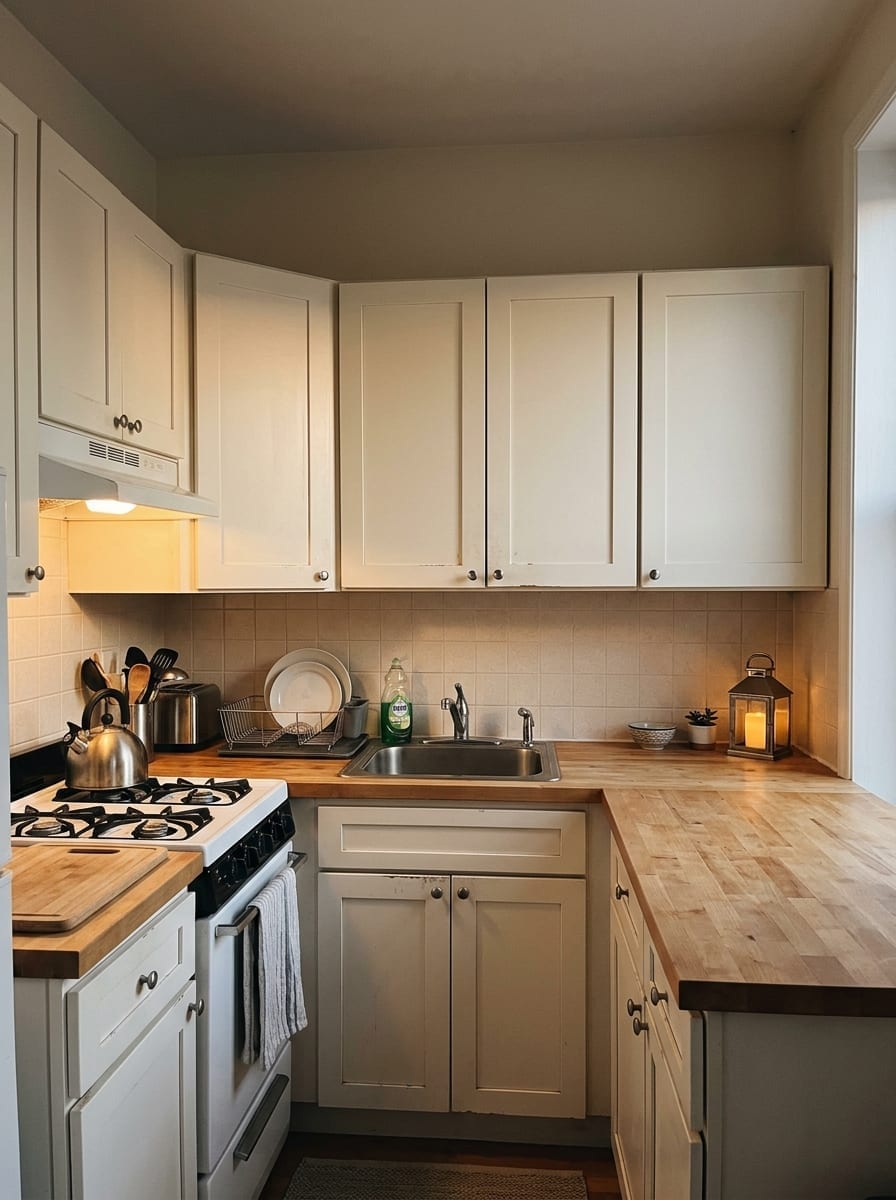
A kitchen may seem like an unusual place for a decorative lantern, especially when counter space is already limited. But a small accent can work if it occupies a genuinely unused area rather than the space needed for cooking.
How to make it work
If your kitchen has a clear end of the counter or a suitable open shelf well away from cooking equipment and water, a compact lantern can add a softer decorative note.
Choose a simple design that is easy to move and clean. A battery-powered LED candle is the sensible option in a kitchen, where heat, grease, splashes, and busy hands can make decorative objects harder to manage.
The lantern should never sit beside a burner, near an oven’s heat, or where it interferes with food preparation. If every part of the counter is already in use, skip this idea and choose another room.
What to avoid
Do not sacrifice your only useful preparation area for a decorative accessory. The kitchen should remain functional first, especially in a small apartment where there may be no alternative work surface.
Best for: Kitchens with one genuinely spare corner or a suitable display shelf away from heat and water.
11. The Unused-Corner Floor Lantern
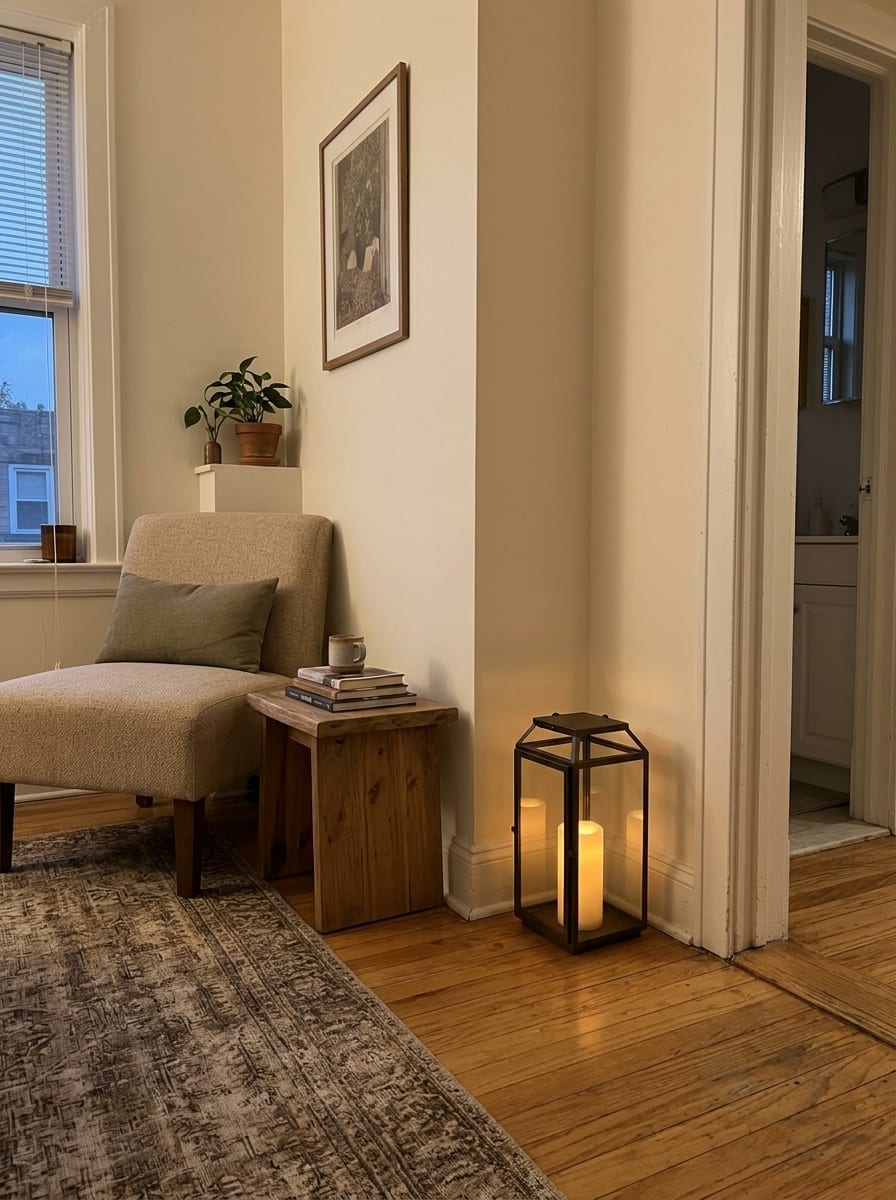
Sometimes the best place for a lantern is not on a table at all. An unused corner beside a reading chair or next to a low cabinet may provide a natural home for a larger floor lantern.
How to make it work
Look for a corner that already feels empty but does not serve as a walking route, door-swing area, or access point to a window.
Choose a floor lantern with enough visual weight to suit the surrounding furniture without overwhelming it. A taller, open frame can draw the eye upward, while a simpler shape can quietly finish the corner.
Use a stable design and an appropriate LED light source. Keep it away from curtains, upholstered furniture, blankets, and other combustible materials. Make sure it will not be kicked, tripped over, or knocked over during everyday movement.
What to avoid
Do not add a floor lantern just because a corner looks empty in a photograph. In a very tight room, that space may be more valuable left open.
Best for: Living rooms with a genuine unused corner beside existing furniture.
How to Choose the Right Lantern for a Small Apartment
Before buying a lantern, consider these four things.
1. Match the footprint to the surface
Measure the available area, including space needed for everyday objects and movement. A lantern should fit comfortably without sitting on an edge or forcing everything else off the surface.
2. Think about visual weight
A dark metal frame creates a stronger outline than a light, open frame. Neither is automatically better. Choose the finish based on the room and how much visual contrast it needs.
If the room already contains dark furniture and strong patterns, a simpler lantern may be enough. If the space feels flat, a contrasting frame can provide a clear focal point.
3. Choose the light source before the styling
Battery-powered LED candles are generally the most practical option for shelves, bedrooms, bookcases, balconies, and areas near fabric. They also make it easier to move a lantern between locations.
If you choose a real candle, use only a lantern specifically designed for that purpose, follow the manufacturer’s directions, place it on a stable surface, and never leave it burning unattended. Keep open flames away from curtains, books, bedding, plants, and other combustible materials.
4. Decide whether the lantern needs to be moved
A decorative lantern that sits on a dining table, kitchen counter, or balcony may need to move frequently. Choose a size and design that are easy to handle and clean.
For an outdoor location, check the product’s weather rating rather than assuming a lantern is suitable for rain or wind.
Lantern Decor Mistakes That Make Small Rooms Feel Cluttered
A few common mistakes can make lantern styling less effective.
- Using too many lanterns: Several competing focal points can make a small room feel busy. Start with one.
- Choosing a lantern that is too large: A statement piece should suit the surface and furniture around it.
- Decorating every empty corner: Negative space is useful. Not every open area needs an object.
- Blocking everyday functions: Keep doors, drawers, windows, walkways, and work surfaces usable.
- Ignoring the light source: Real candles need appropriate holders, stable surfaces, supervision, and clearance from combustible materials.
- Using indoor lanterns outdoors: Only use products intended for the relevant outdoor conditions.
- Buying before choosing a location: Identify the placement and measure the available space before shopping.
A Simple Formula for Lantern Styling
If you are unsure where to start, use this simple approach:
- Choose one location that would benefit from a warmer focal point.
- Select one lantern that fits the available surface or corner.
- Add no more than one complementary object if the arrangement needs it.
- Keep the surrounding area open and functional.
- Check the result in daylight and after dark.
The aim is not to fill the apartment with decorative lanterns. It is to give one part of the room a little more warmth and definition.
Final Thoughts
Lanterns work best in small apartments when they make an existing space feel more intentional without demanding more room. A narrow console, a shelf end, a compact dining table, or a genuinely unused corner can all be good placements, provided the lantern suits the scale and purpose of the area.
Start with the space you already have, choose a lantern that fits it, and keep the styling simple. One well-placed lantern can create a warmer atmosphere without turning another surface into clutter.