9 Brick Accent Ideas for Small Apartments That Add Texture Without Making Rooms Feel Dark
Discover 9 brick accent ideas for small apartments that add architectural texture and warmth using whitewashed finishes, painted features, and smart color pairings.
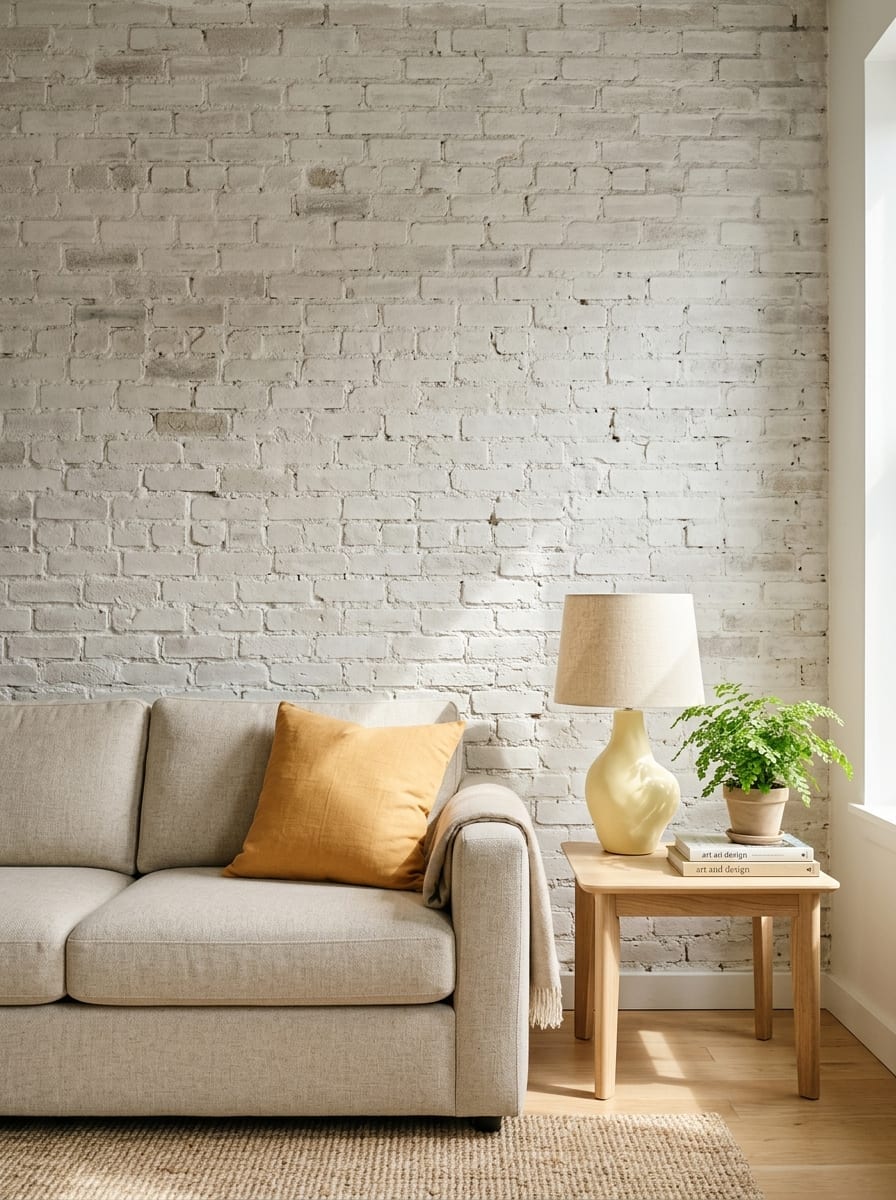
A bright small apartment living room featuring a whitewashed brick accent wall behind a sofa with a butter yellow cushion and lamp
In This Guide
Brick accents can make a small apartment feel more personal, layered, and architectural. Their natural variations add texture that plain painted walls sometimes lack, while warm brick tones can bring depth to a room filled with neutral furniture.
But brick can also feel visually heavy when it covers too much wall space, competes with busy decor, or sits in a room with limited natural light. The solution is not necessarily to avoid brick. It is to use it strategically.
Whether your apartment already has exposed brick or you want to create a similar look with a permitted finish or brick-effect wallpaper, these nine ideas explore different placements, unexpected color combinations, and practical ways to balance texture in a compact home.
1. The Whitewashed Brick and Butter Yellow Pairing
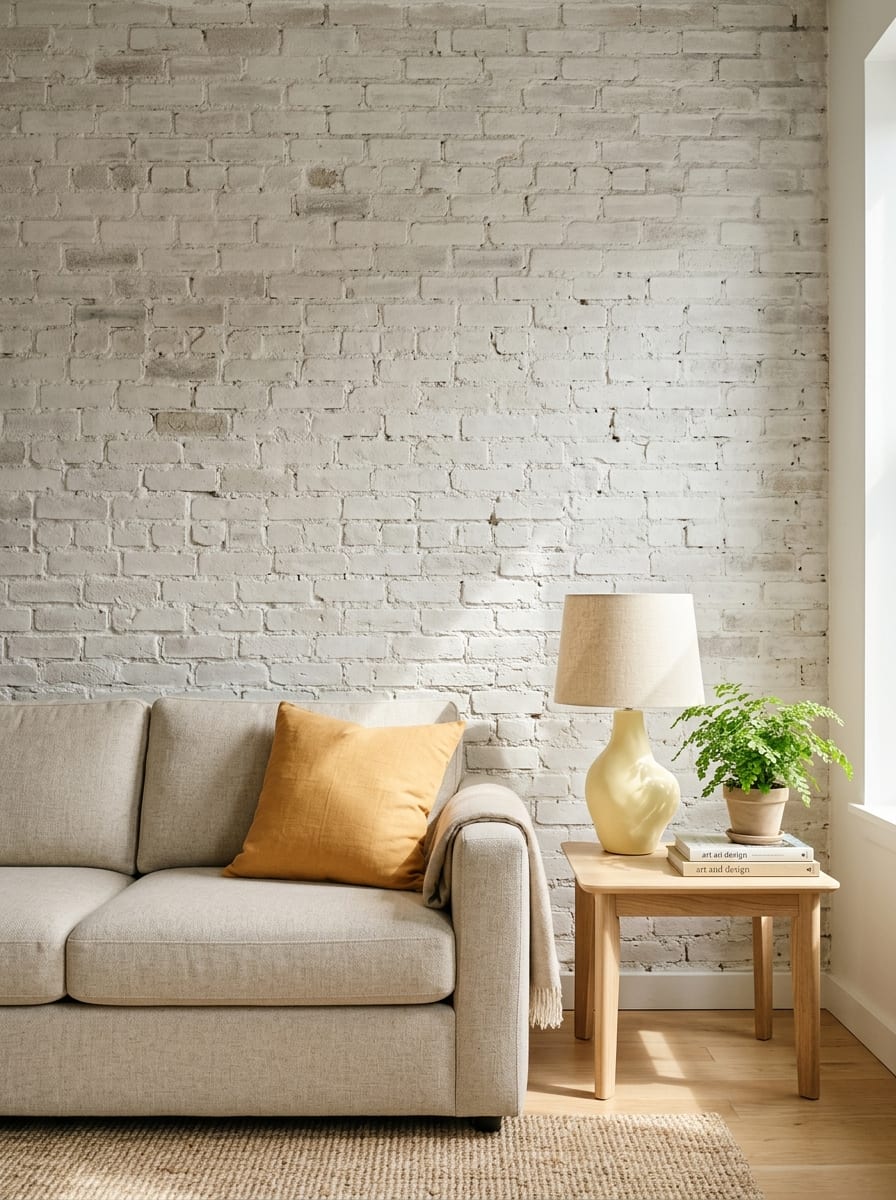
Whitewashed brick is a useful option when you want architectural texture without the visual weight of traditional dark red brick. Its uneven surface still creates shadows and depth, but the lighter finish works well with compact rooms that need a brighter atmosphere.
Pair the brick with warm-white upholstery, pale oak furniture, and a small butter-yellow accent. A yellow cushion, ceramic lamp, or compact side table introduces a cheerful note without making the room feel overly colorful.
This combination works particularly well behind a sofa or along one naturally defined wall. Let the brick remain the main texture, and keep nearby accessories relatively simple.
Small-space tip: Whitewashing or painting existing brick can be a permanent alteration. If you rent, confirm permission before changing the finish. If the brick is damp, crumbling, or showing signs of moisture, address the underlying issue rather than covering it.
2. The Red-Brick Sofa Strip
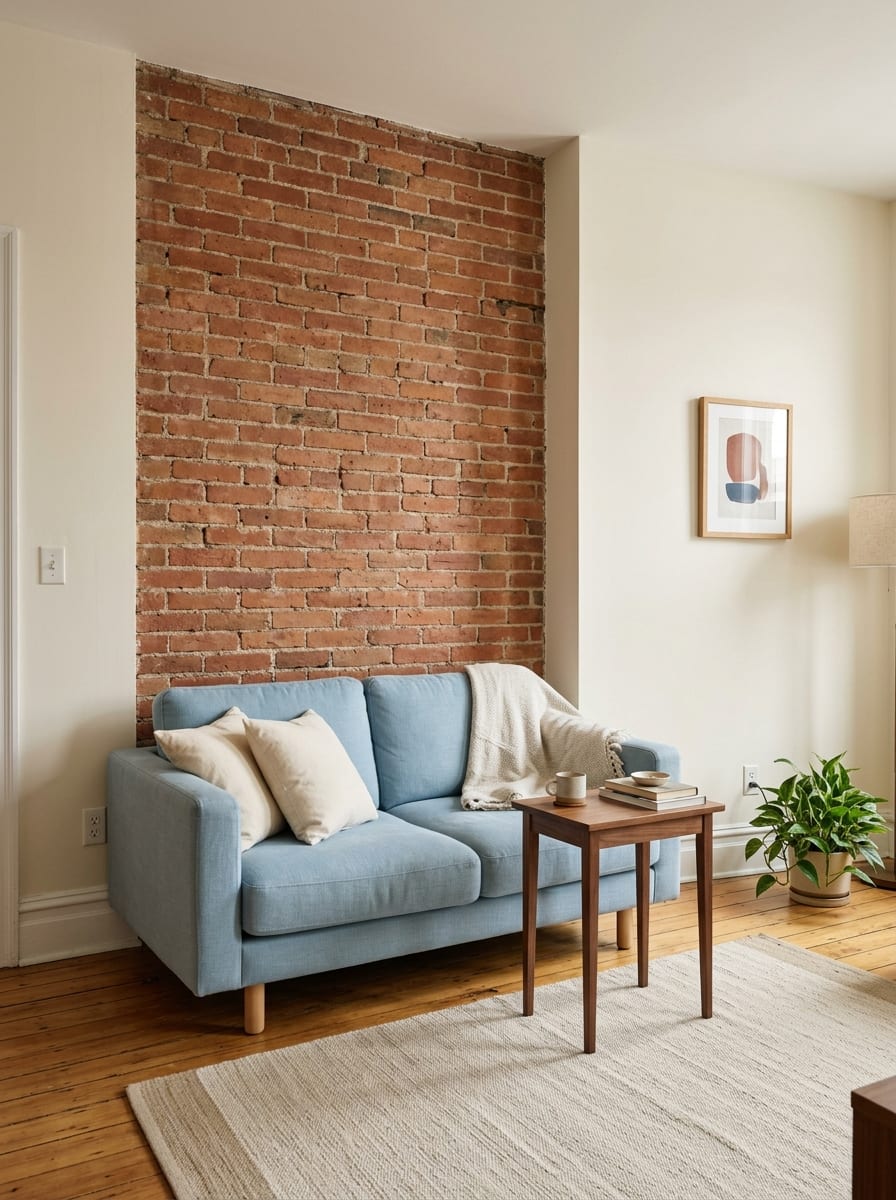
You do not always need a complete brick feature wall. A smaller exposed-brick section behind the sofa can create a focal point while leaving surrounding walls light and visually quiet.
Classic red brick looks especially interesting beside powder blue, pale denim, or muted blue-gray upholstery. The cool color balances the brick’s warm undertones, while cream cushions and natural wood help connect the two.
If your apartment already has a brick pier, chimney breast, or partial wall, use that existing architectural feature as the focal point. In a room without exposed brick, a carefully chosen brick-effect finish can suggest the same contrast without requiring a large renovation.
Keep the sofa and nearby furniture visually simple. A single sculptural floor lamp or a small framed artwork is often enough.
Small-space tip: Follow the room’s existing architectural boundaries rather than adding several disconnected brick patches. One convincing focal point usually feels more intentional than multiple competing sections.
3. The Sage-Painted Brick Feature
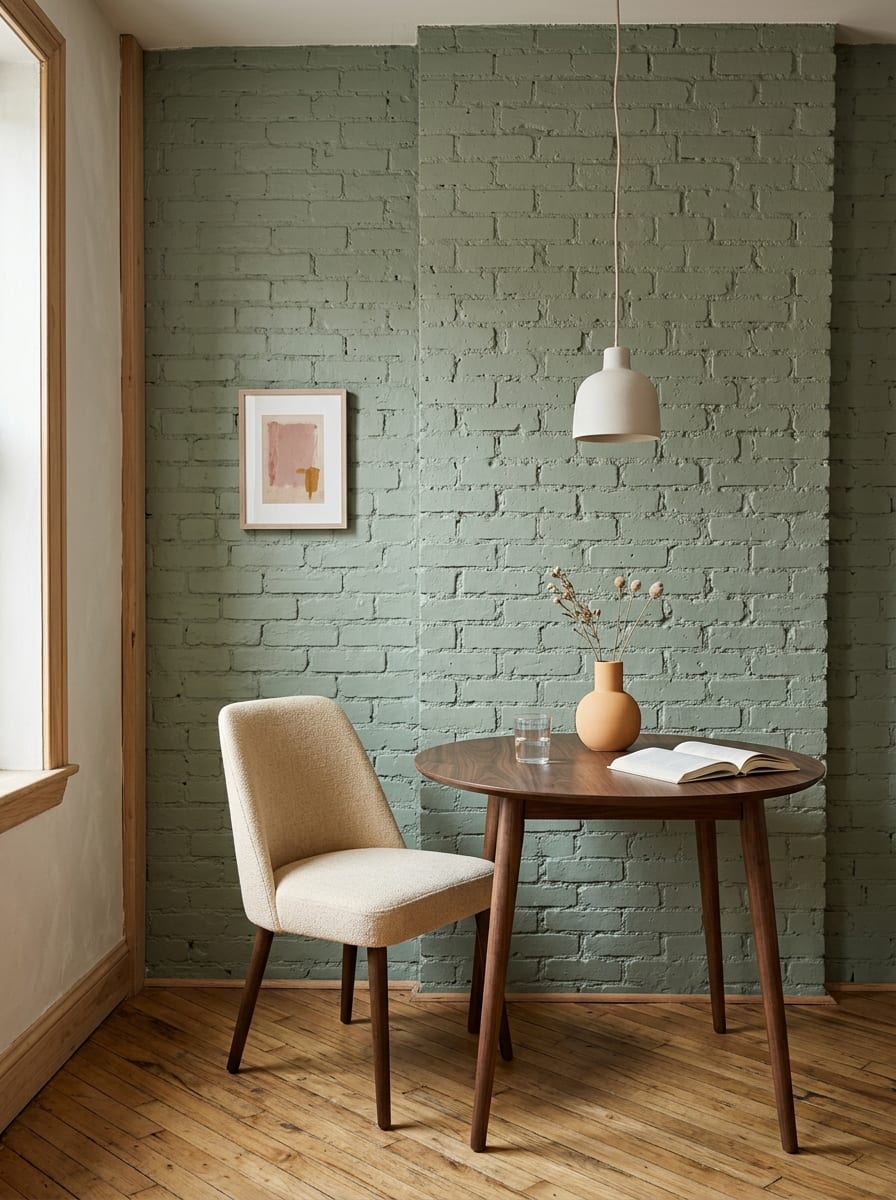
For a more unexpected look, consider muted sage green on an existing brick surface, provided you own the property or have permission to make a permanent change.
Sage softens the traditional industrial appearance of brick and creates a calmer backdrop for cream upholstery, walnut-toned furniture, and a few black accents. The texture remains visible through the changing light and shadows, while the color makes the wall feel more integrated with the rest of the room.
This treatment can work behind a dining bench, along a living-room wall, or in a compact entry area. Use a finish suitable for the brick’s condition and location, following the manufacturer’s preparation and application instructions.
To keep the palette interesting, introduce one contrasting detail such as a pale apricot cushion, a rust-colored vase, or a small artwork with dusty pink and ochre tones.
Small-space tip: Test paint samples on an inconspicuous area first. Brick is porous and textured, so its finished color and sheen can look different from those on a smooth sample card.
4. The Faux-Brick Reading Arch
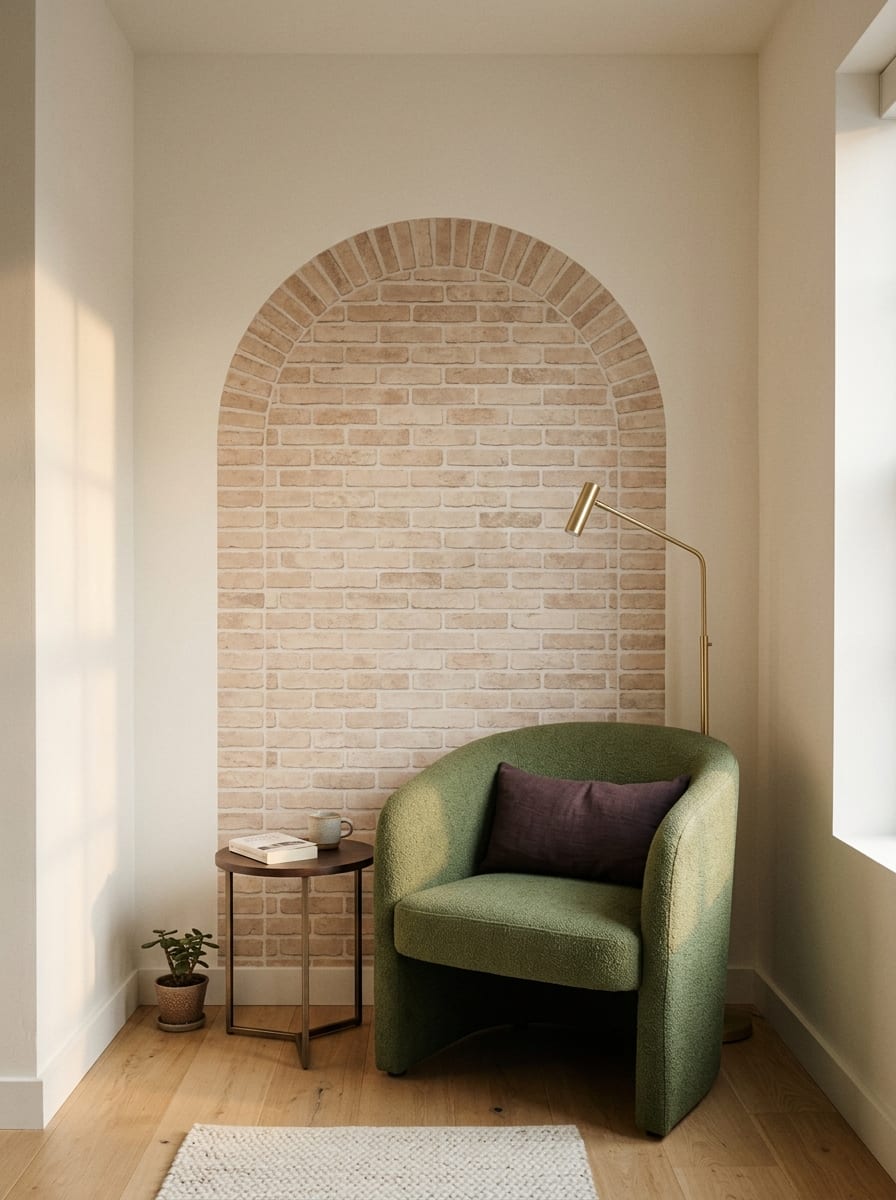
A reading corner can feel like its own little destination without taking up an entire room. A brick-effect arch creates a visual frame around a compact chair, wall light, and small book ledge.
For a softer interpretation, choose a pale clay or muted terracotta brick pattern against warm-white walls. Add a moss-green chair, a plum-colored cushion, and a small brass-toned reading light for a palette that feels richer than standard beige decor.
The arch can be suggested with removable wallpaper, paint, or another suitable surface treatment. It does not need to involve cutting into a wall or changing the apartment’s structure.
Keep the reading setup compact. A slim chair and a narrow side table are often easier to accommodate than a bulky armchair with a large ottoman.
Small-space tip: Check the wallpaper manufacturer’s surface requirements and test a discreet patch before committing. Removable products are not guaranteed to come away cleanly from every painted or textured surface.
5. The Narrow Brick Desk Backdrop
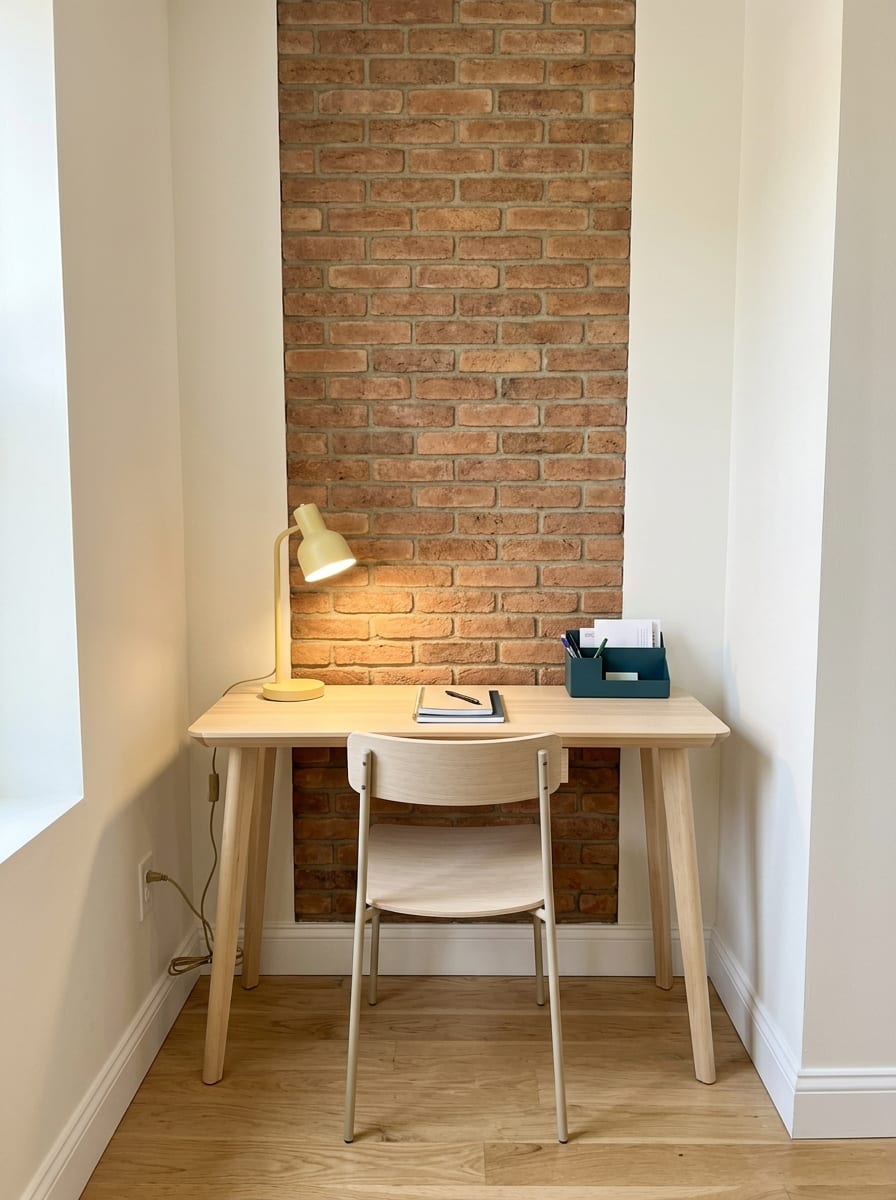
A home-office corner can look intentional when its backdrop differs slightly from the rest of the apartment. A narrow brick-effect section behind a desk creates a visual boundary without needing a full partition.
Try warm clay brick with a pale butter-yellow desk accessory, a deep teal notebook holder, and a light oak desktop. The combination feels energetic and creative while keeping the main furniture neutral.
A vertical composition works particularly well in a small work area because it draws the eye upward. A slim desk, an adjustable task lamp, and a chair that tucks fully underneath preserve valuable floor space.
If the apartment has a combined living and working area, repeat one color from the brick backdrop elsewhere in the room. A cushion or small ceramic object is enough to make the two zones feel connected.
Small-space tip: Avoid covering every wall around the desk with competing patterns. Let the brick treatment identify the work zone, then keep storage containers and desk accessories visually coordinated.
6. The Cobalt and Terracotta Dining Nook
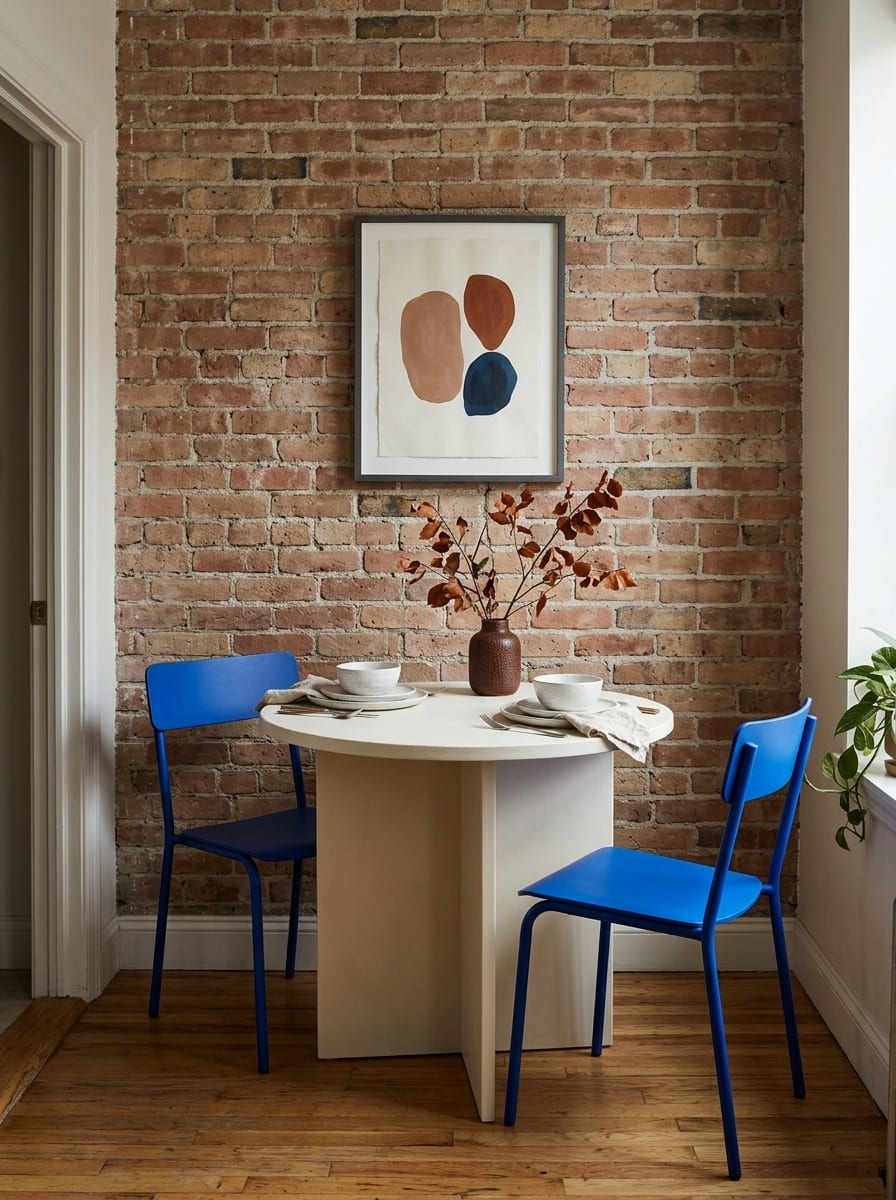
Brick and cobalt blue create a lively contrast that can make a small dining nook feel deliberately designed rather than squeezed into an unused corner.
Use an existing terracotta brick wall or a suitable brick-effect finish as the warm backdrop. Pair it with a compact round table, one or two cobalt-blue chairs, and simple off-white tableware. A small artwork with blue and rust tones can bring the palette together.
The contrast is particularly effective because the brick supplies texture while the blue supplies a clear block of color. Neither element needs to be repeated across every surface.
For a rented apartment, consider placing the color in movable furniture and accessories rather than altering the wall. A blue chair against an existing brick feature can deliver much of the same effect.
Small-space tip: Protect the walking route around the table. Choose a table and seating arrangement that fit the actual space instead of forcing extra chairs into the nook.
7. The Blush-Brick Bedroom Backdrop
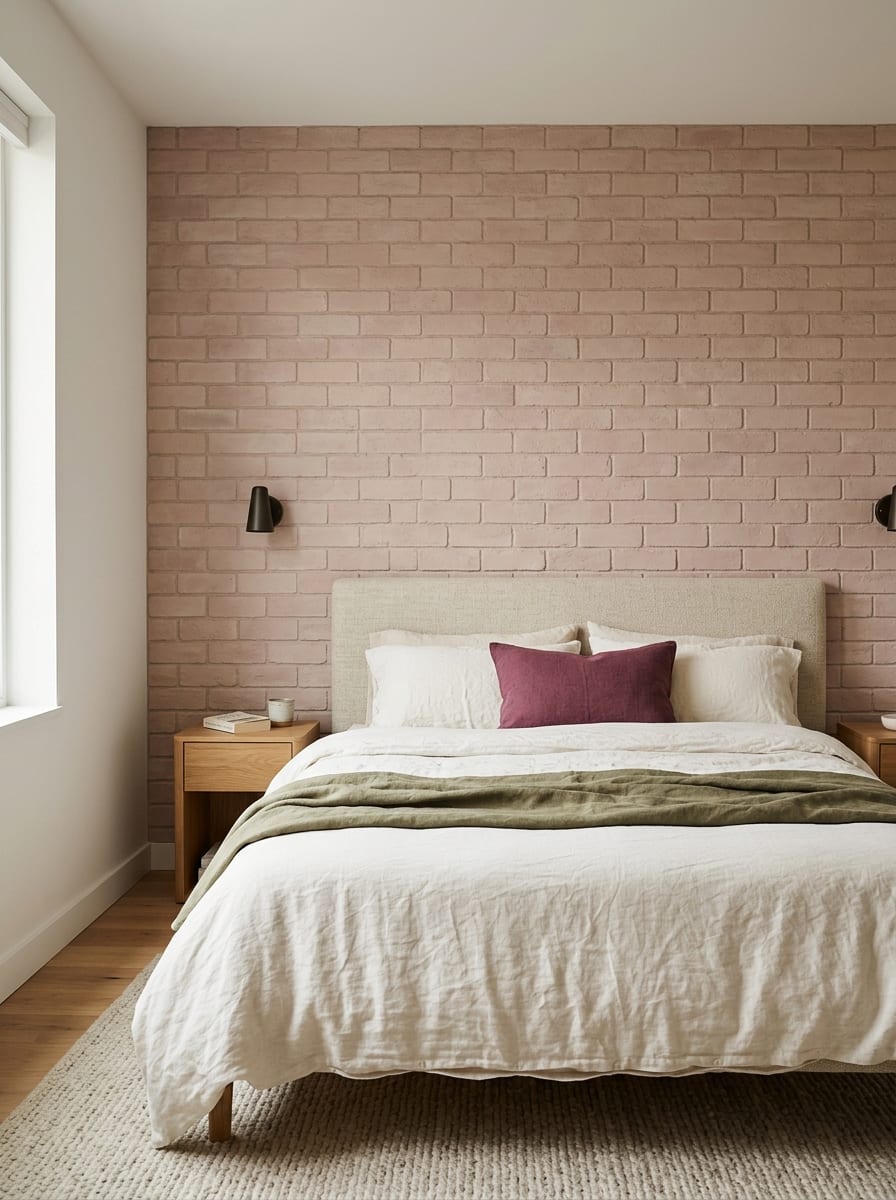
Brick does not have to make a bedroom look industrial. A pale blush or dusty rose brick-effect backdrop can introduce texture while keeping the room soft and restful.
Place the treatment behind the headboard, then layer in warm-white bedding, a muted olive throw, and one or two dark berry accents. Natural wood nightstands help ground the lighter colors, while simple bedside lighting keeps the overall composition calm.
If you prefer a more dramatic palette, use a deeper rose-clay tone and balance it with cream bedding rather than adding more saturated colors. The goal is to give the bed a defined backdrop without making the entire bedroom feel visually busy.
A brick-effect wallpaper or approved lightweight surface treatment can be an alternative when actual brick is unavailable. Select a realistic pattern with varied tones and restrained grout contrast.
Small-space tip: Keep the brick treatment concentrated behind the bed. Carrying a strong texture across every wall can make a compact bedroom feel more enclosed.
8. The Framed Brick Window Moment
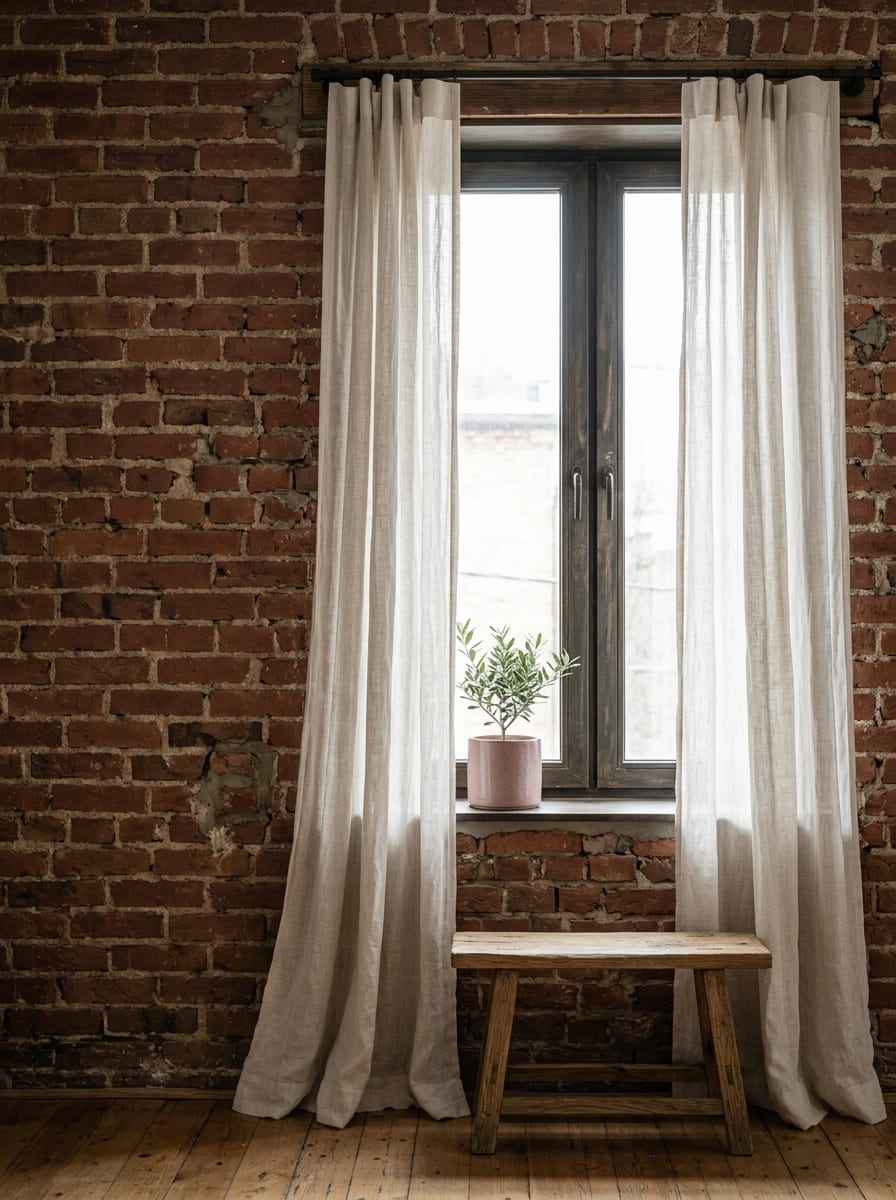
An existing brick wall around a window can become a natural design feature. Instead of hiding it behind heavy curtains, use the window as the center of a lighter, more layered composition.
Pair warm red or muted brown brick with olive-green textiles, a soft pink ceramic planter, and natural linen curtains. A small plant on the sill adds organic shape, while a simple wooden stool or narrow bench can provide a useful landing spot if the window area allows it.
This arrangement works because the brick’s rough surface contrasts with the softer materials around it. The window also breaks up the wall visually, so the brick does not read as one uninterrupted dark surface.
Avoid crowding the sill with multiple pots, candles, and ornaments. One or two well-chosen objects will make the architectural detail easier to appreciate.
Small-space tip: Keep window handles, ventilation, and emergency access unobstructed. Choose curtain hardware and fabric placement that work with the actual window rather than hiding its useful features.
9. The Brick and Charcoal Shelf Contrast
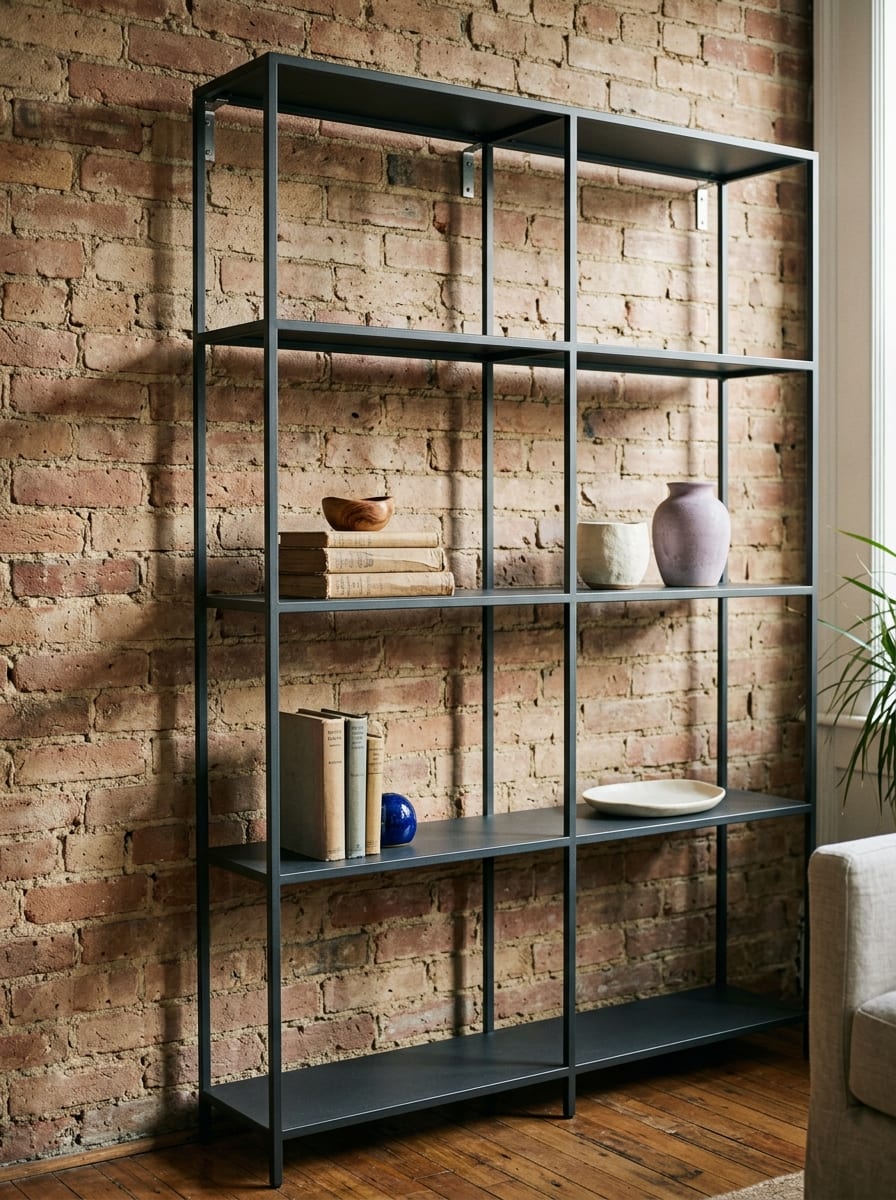
For a more graphic look, combine brick texture with charcoal-colored shelving and a restrained mix of colorful objects. The dark shelves create a clean outline against the irregular brick, giving books and accessories a more deliberate arrangement.
Balance the dark lines with a lighter palette: warm-white ceramics, a muted lilac vase, a small cobalt object, and one natural-wood detail. These accents keep the composition from becoming a solid block of red and black.
This approach works best on an existing suitable brick wall or a properly installed brick feature. If you are using shelves, confirm the wall construction and use appropriate fixings. Do not assume that every brick-effect panel, veneer, or decorative surface can safely support a loaded shelf.
If drilling is not permitted, use a freestanding shelving unit positioned in front of the feature instead.
Small-space tip: Leave some shelves partly empty. The negative space gives the brick, books, and objects room to stand out without creating a cluttered wall.
How to Choose the Right Brick Treatment for a Small Apartment
Before choosing a color or styling scheme, work out which type of brick treatment suits your apartment:
- Existing exposed brick: Inspect its condition and look for signs of damp, loose mortar, or crumbling material. Address problems before decorating.
- Painted or whitewashed brick: This can change the appearance dramatically, but it is usually a permanent alteration. Get the necessary permission and use a suitable system for the surface.
- Brick veneer or decorative panels: Check the product’s weight, thickness, installation requirements, and compatibility with the existing wall. Larger installations may need professional help.
- Brick-effect wallpaper: This can be a less invasive visual alternative, but suitability depends on the surface, humidity, product instructions, and how the finish will be removed.
- A small movable accent: When wall changes are not possible, use brick-inspired colors, artwork, textiles, or a freestanding feature instead of trying to recreate masonry.
The most convincing choice is the one that suits the apartment’s actual condition and your permission to make changes, not simply the one that looks best in a photograph.
Brick Accent Color Combinations Worth Trying
Brick’s natural warmth makes it surprisingly flexible. Consider these combinations as starting points rather than rigid rules:
- Airy and sunny: Whitewashed brick, butter yellow, warm white, and pale oak.
- Cool and collected: Red brick, powder blue, cream, and medium-toned wood.
- Soft and botanical: Sage-painted brick, ivory, walnut, and muted apricot.
- Playful and graphic: Terracotta, cobalt blue, warm white, and a little charcoal.
- Romantic but grounded: Blush brick-effect wallpaper, olive green, berry, and natural wood.
- Modern and layered: Red-brown brick, charcoal shelving, lilac ceramics, and warm-white accents.
If the room is already full of strong colors or patterns, choose a quieter brick treatment. If the furniture is neutral, a more expressive combination can bring the room to life.
Mistakes to Avoid With Brick Accents
- Covering too much wall: A large, dark brick surface can dominate a compact room. Start with one focal area and assess how it looks from the main entrance and seating position.
- Ignoring natural light: Brick color changes throughout the day. Look at samples in morning and evening light before choosing a finish.
- Choosing a repetitive faux-brick pattern: Very uniform shapes, identical color patches, and exaggerated grout lines can make a decorative finish look artificial. Look for realistic variation in tone and scale.
- Adding too many competing textures: Brick, heavy woven fabrics, busy wallpaper, patterned rugs, and crowded shelves can fight for attention. Let brick be the primary texture and simplify nearby elements.
- Decorating over moisture problems: Brick and brick-effect coverings are not solutions to dampness. Investigate moisture, ventilation, and surface condition before applying any finish.
- Forgetting practical clearances: Keep windows usable, doors and drawers opening freely, and circulation paths clear. The accent should improve the room without making it harder to live in.
FAQs
Can brick accents work in a very small apartment?
Yes. A brick accent can work in a studio or compact apartment when its placement is deliberate. A small existing brick pier, a short wall behind a sofa, or a restrained brick-effect panel can provide enough texture without covering the whole room. The best approach is to choose one main focal point, keep surrounding surfaces relatively calm, and use color to balance the brick’s warmth or darkness.
How can renters get the brick look without renovating?
Renters can explore brick-inspired artwork, textiles, movable furniture, or suitable brick-effect wallpaper where the landlord permits it. Always check the product’s surface requirements and test it discreetly before applying it across a wall. Even products marketed as removable can damage certain finishes.
Conclusion
Brick accents can add warmth, texture, and character to a small apartment without making it feel dark or crowded. The difference comes down to placement, finish, and balance.
Try whitewashed brick with butter yellow for a brighter look, red brick with powder blue for contrast, or sage and terracotta for a more expressive palette. Keep the treatment focused, respect the apartment’s existing architecture, and leave enough visual breathing room around the feature.
A successful brick accent should feel like a considered part of the room, not a wall that demands all the attention.