15 Studio Apartment Divider Ideas That Create Privacy Without Closing Off the Room
Discover 15 studio apartment divider ideas using curtains, shelves, screens, slats and glass to create more privacy while keeping a small studio bright, open and functional.
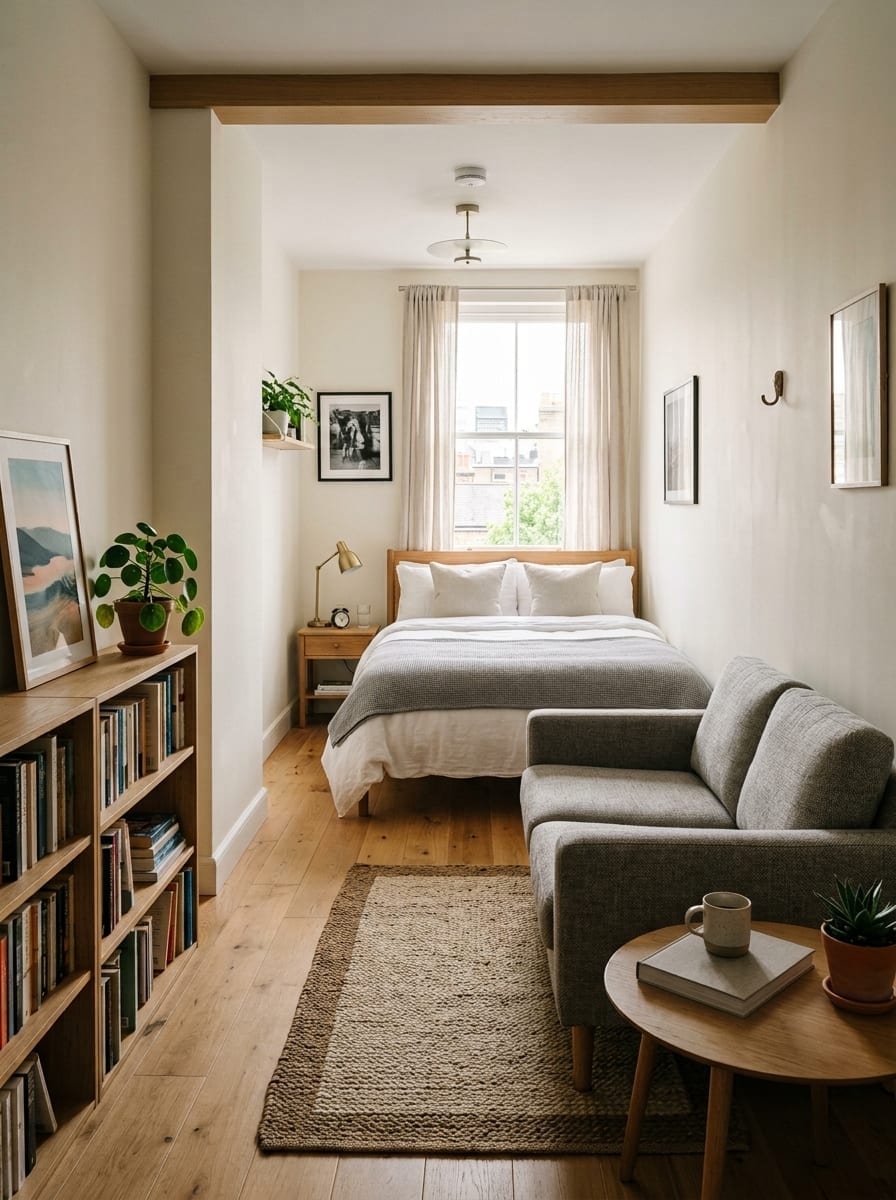
Light open shelf room divider in a small studio apartment separating sleeping zone from living area
In This Guide
A studio apartment often feels much better once the sleeping, living, and working areas stop blending into one another.
The problem is that a full wall is usually not the answer.
In a small studio, solid partitions can block daylight, interrupt airflow, shorten sightlines, and make one room feel like several tiny boxes.
A better divider creates just enough separation.
You may only need to hide the bed from the sofa.
Or create a stronger work zone.
Or stop the front door from opening directly onto the sleeping area.
The best studio apartment dividers solve that problem without sacrificing the openness that makes a small room feel comfortable.
These 15 ideas range from furniture-based dividers to curtains, screens, slats, plants, and semi-transparent panels.
If you rent, check your lease before mounting anything to ceilings, floors, or walls, and always secure tall furniture according to the manufacturer’s instructions.
1. Open Bookcase Bedroom Divider
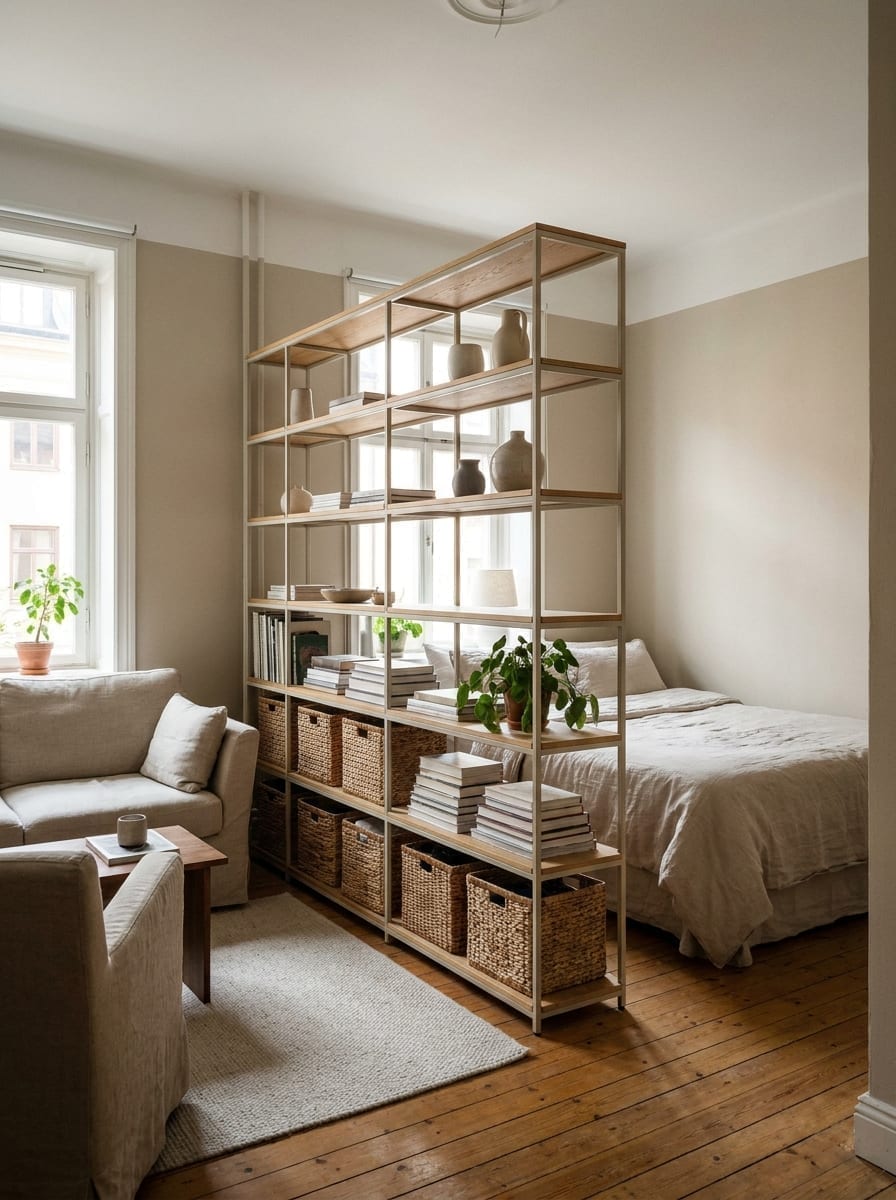
An open bookcase is one of the most practical ways to separate the sleeping area without building a wall.
Because you can still see through parts of it, daylight and sightlines continue through the room.
Use the lower shelves for things that benefit from being hidden:
baskets linens books electronics
Keep the upper shelves lighter with only a few objects.
If every opening is completely filled, the unit starts behaving visually like a solid wall.
The best placement is usually between the side or foot of the bed and the living area.
2. Ceiling-Mounted Curtain Wall
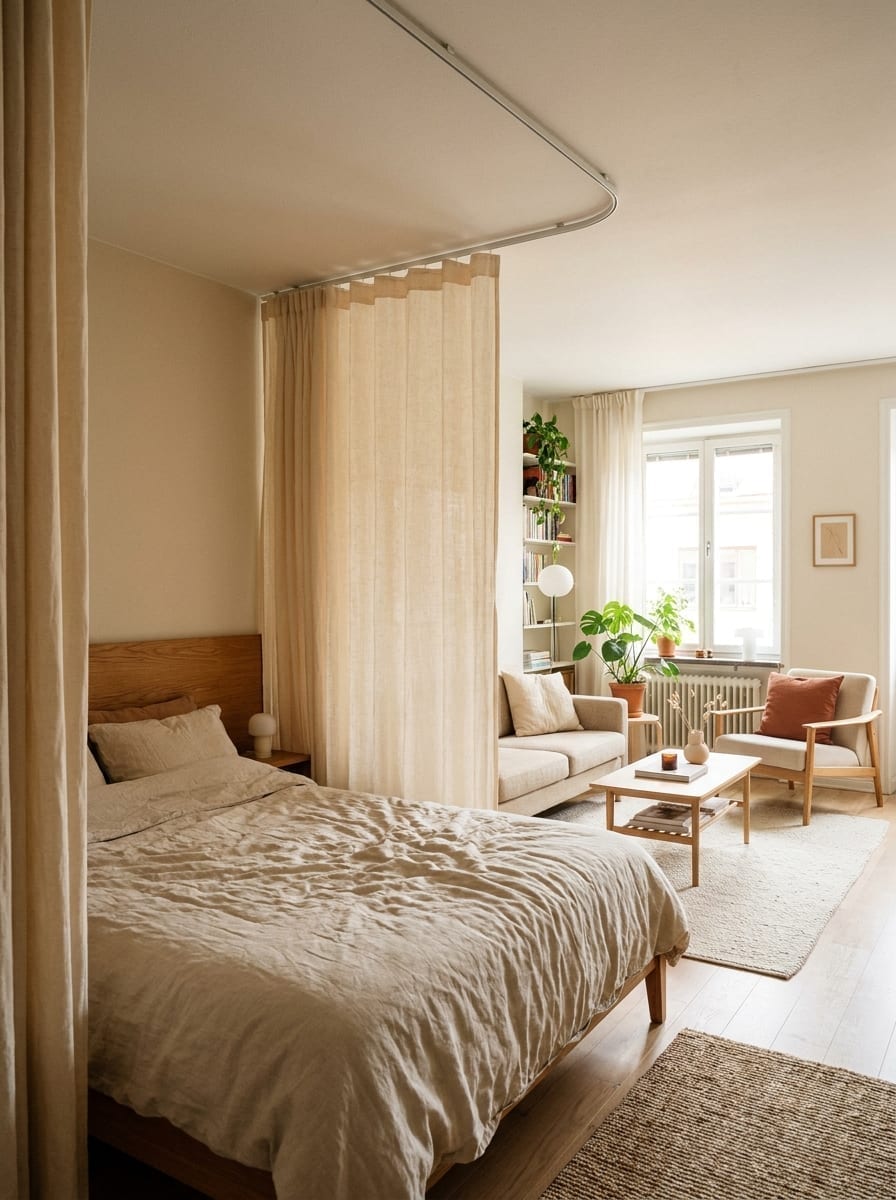
Curtains are one of the most flexible studio dividers because they can disappear when you want the room open.
Mount a track around the sleeping area, then leave the curtain open during the day and close it when you want privacy.
Lightweight fabric keeps the room softer.
Good options include:
linen-look panels cotton blends sheer layered with a more private panel warm ivory or oatmeal fabric
Avoid a very heavy dark curtain across the entire room unless blocking light is part of the goal.
The divider should give you control, not make the studio permanently feel smaller.
3. Vertical Wood Slat Divider
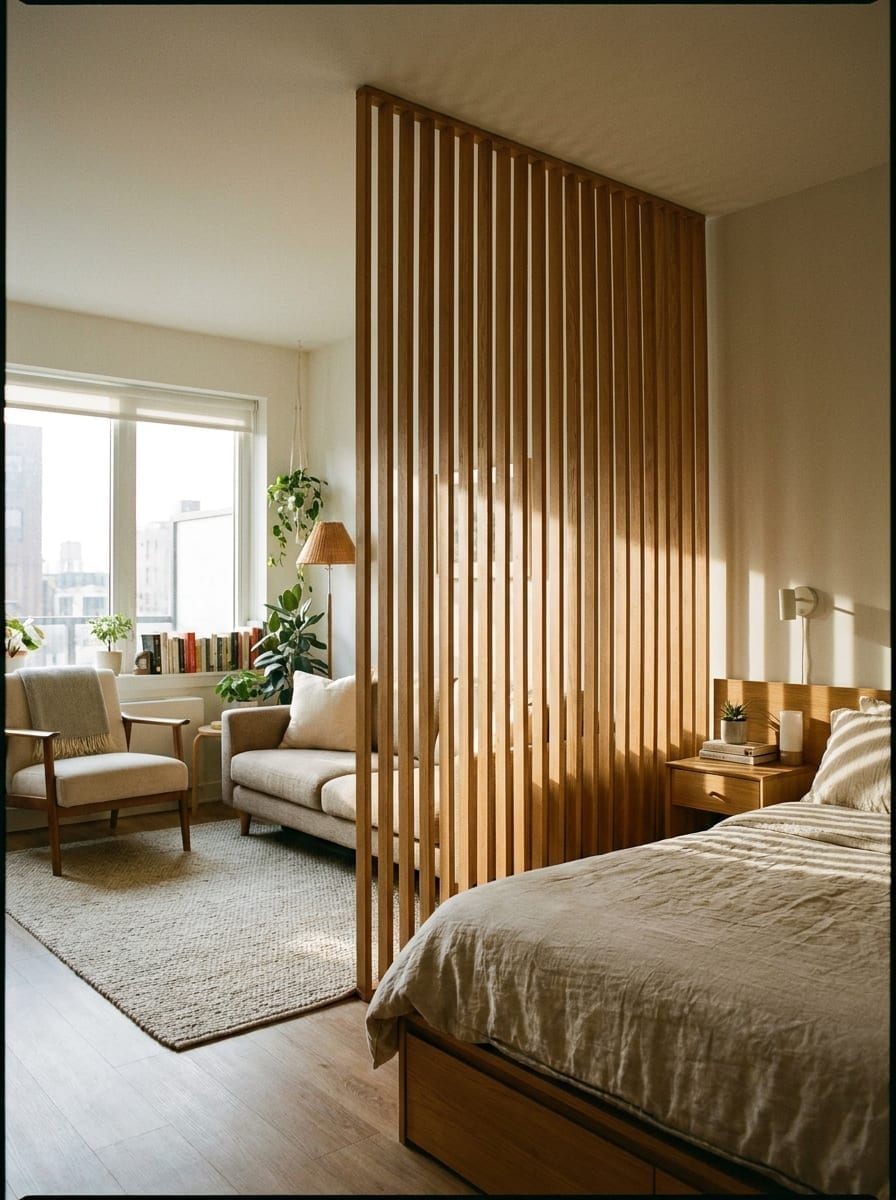
Vertical wood slats create a stronger sense of separation while keeping the space visually connected.
The gaps between the slats allow:
light through glimpses of the other zone airflow longer sightlines
This makes them useful between a bed and living area.
Keep the slats relatively slim and the spacing open enough that the divider does not become a solid wooden wall.
Warm oak or medium natural wood can also add texture to a studio that otherwise feels flat.
For renters, a freestanding or tension-based version may be more realistic than permanently installing one.
4. Low Storage Console Boundary
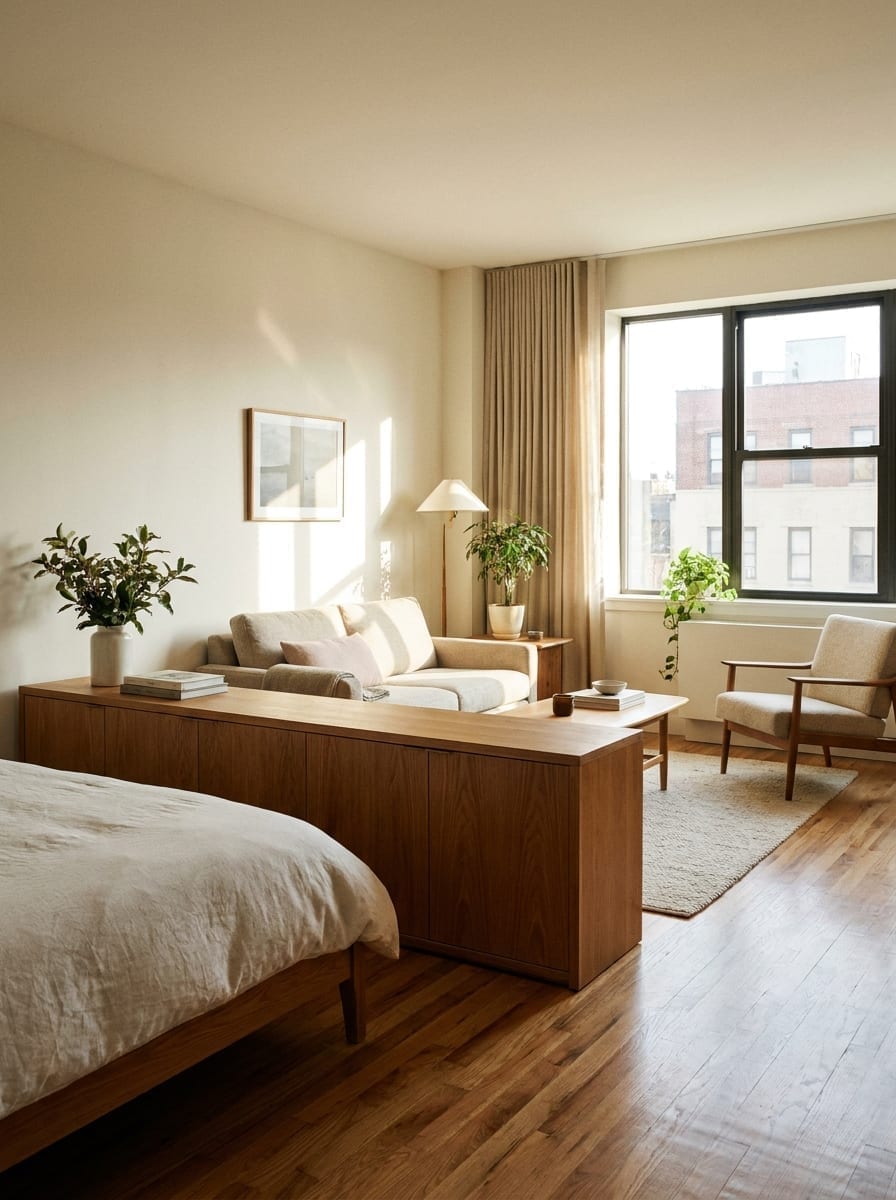
Not every divider needs to reach eye level.
A low cabinet or console can create enough of a boundary to make the bed feel separate without interrupting the room.
Place it:
at the foot of the bed behind the sofa between sleeping and dining zones
You also gain useful storage.
Keep the unit low enough that you can see across the apartment while standing or sitting.
This works especially well when you want zoning more than complete privacy.
5. Freestanding Folding Screen
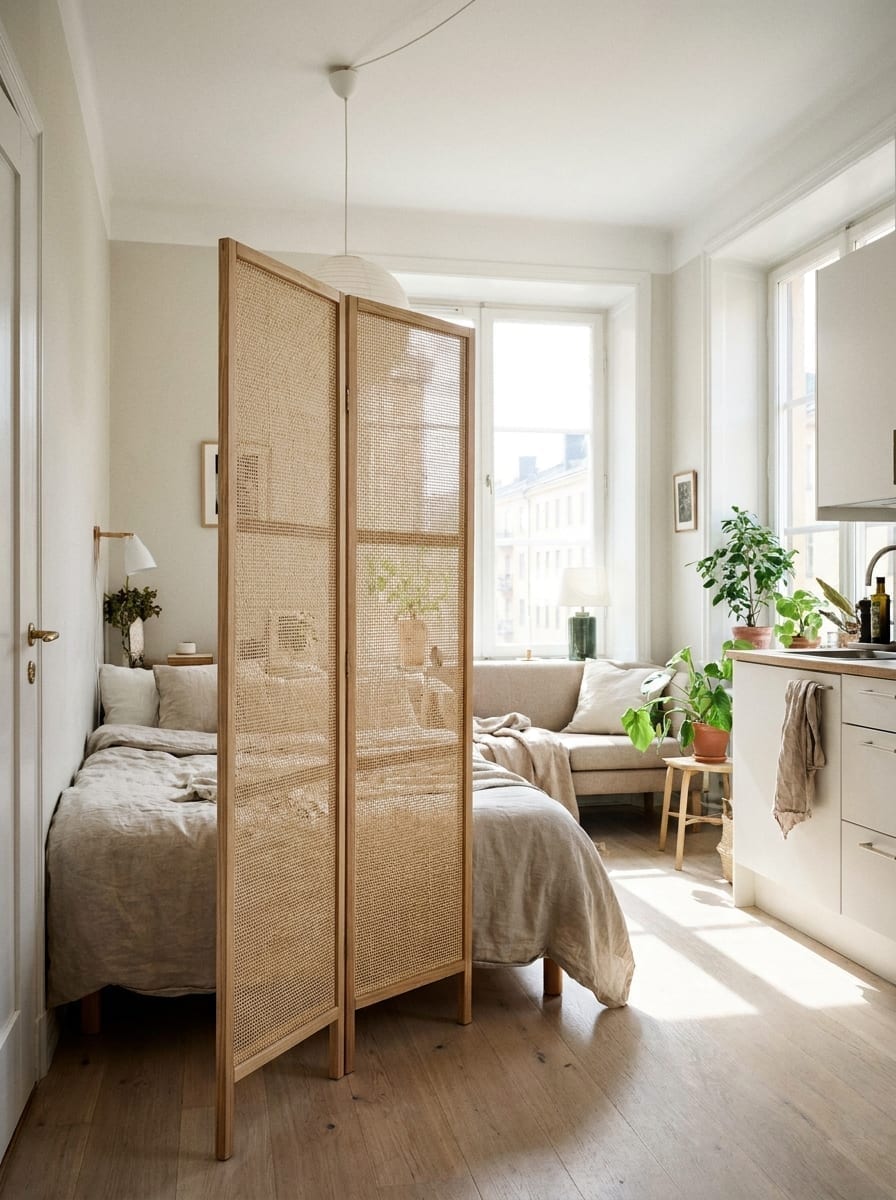
A folding screen gives you privacy exactly when you need it.
It can hide:
bed dressing area workspace cluttered storage corner
Then fold away when you want the room completely open.
Look for a design that feels light rather than heavy.
Slatted wood, woven cane, fabric panels, or translucent material work particularly well in small spaces.
The biggest advantage is that it usually requires no permanent installation.
Just make sure the screen is stable and positioned where it will not be knocked over easily.
6. Glass-Panel Bedroom Divider
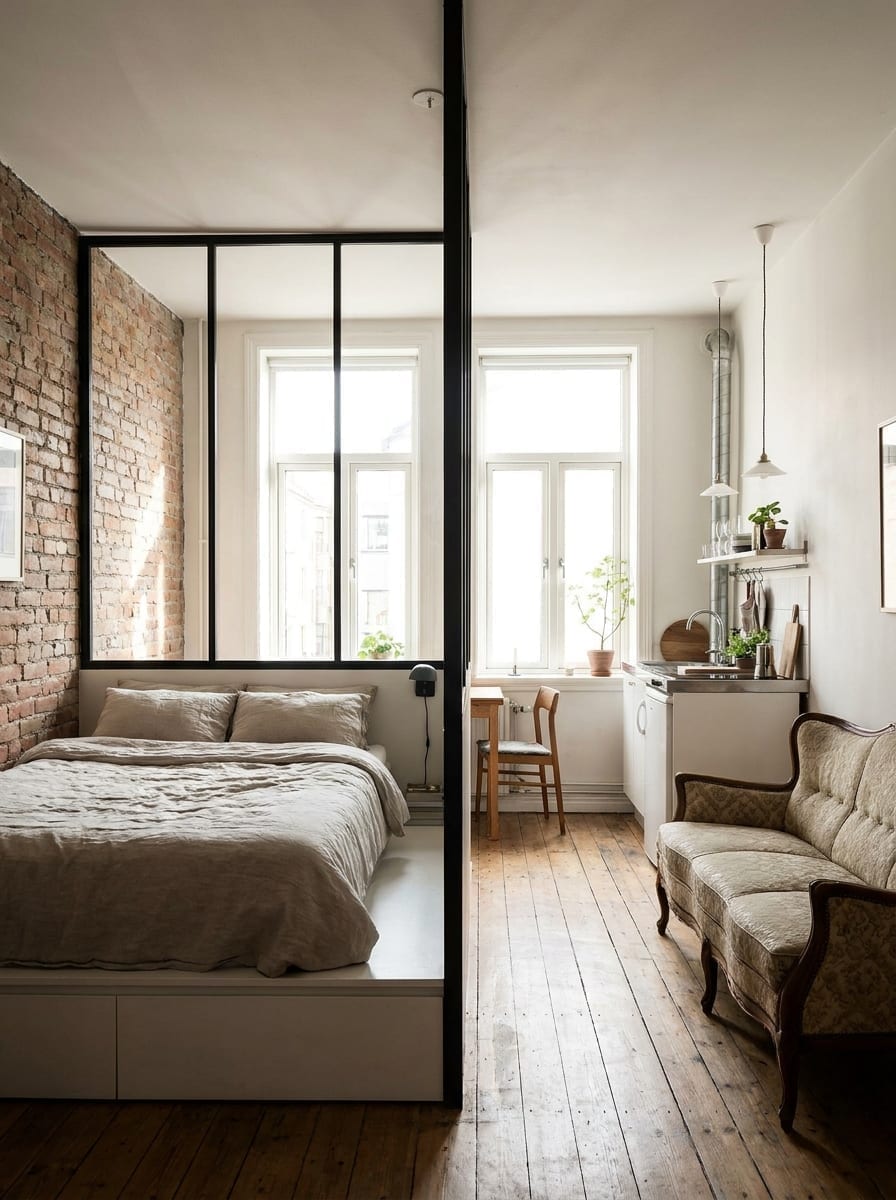
Glass can give the bed a stronger architectural boundary without sacrificing daylight.
A slim glass partition works particularly well when the sleeping zone sits beside the main window and you do not want to block light from reaching the living area.
Clear glass offers the most openness.
For more privacy, consider:
fluted glass frosted lower panels curtain layered behind the glass
Permanent glass installations are usually better suited to owned apartments or professionally approved changes.
For rentals, freestanding framed panels can create a similar visual effect.
7. Sofa-Back Living Room Divider
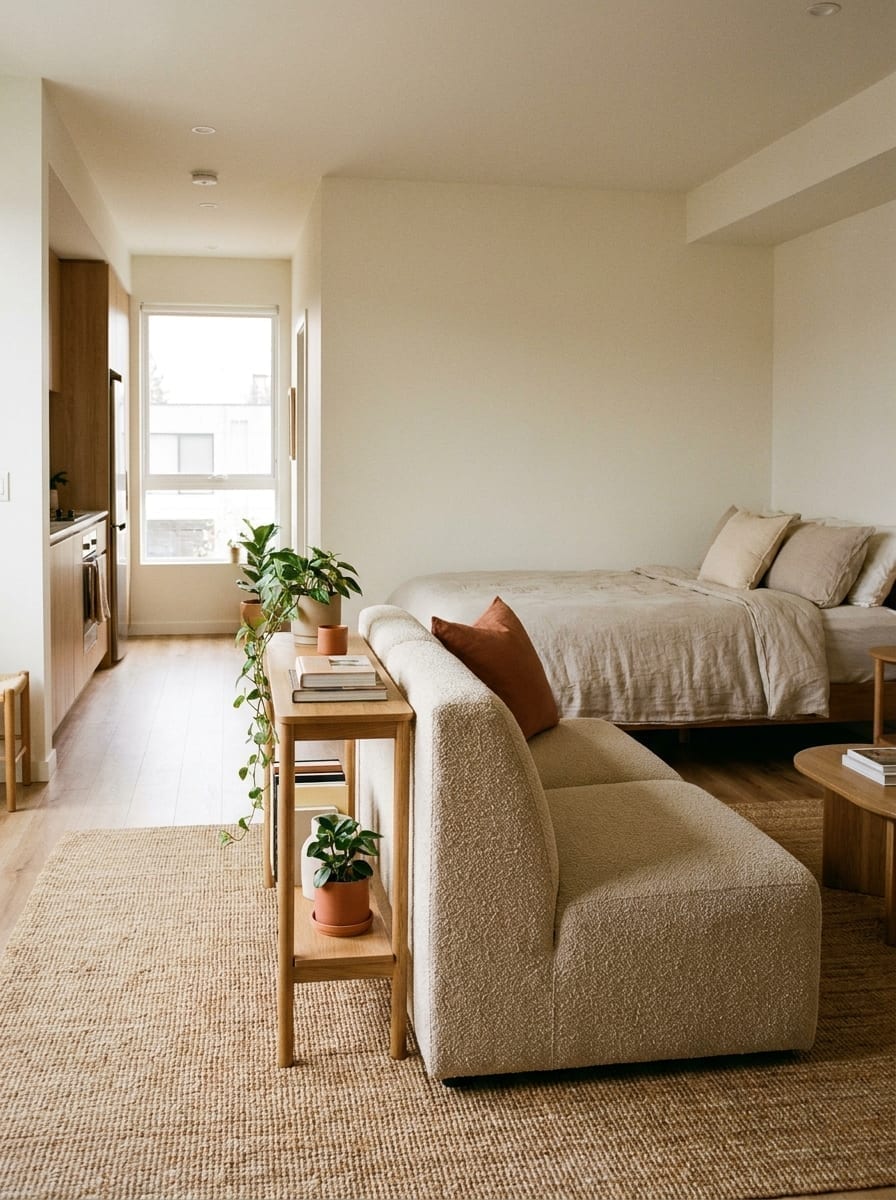
Sometimes the furniture you already own can become the divider.
Turn the sofa so its back faces the sleeping area instead of pushing it against the wall.
That instantly gives the living zone a clear edge.
You can strengthen the division with:
rug under the sofa slim console behind it lighting focused toward the living area
This approach takes up no extra divider footprint.
It works especially well in rectangular studios where the bed occupies one end and the living area occupies the other.
8. Tall Plant Screen
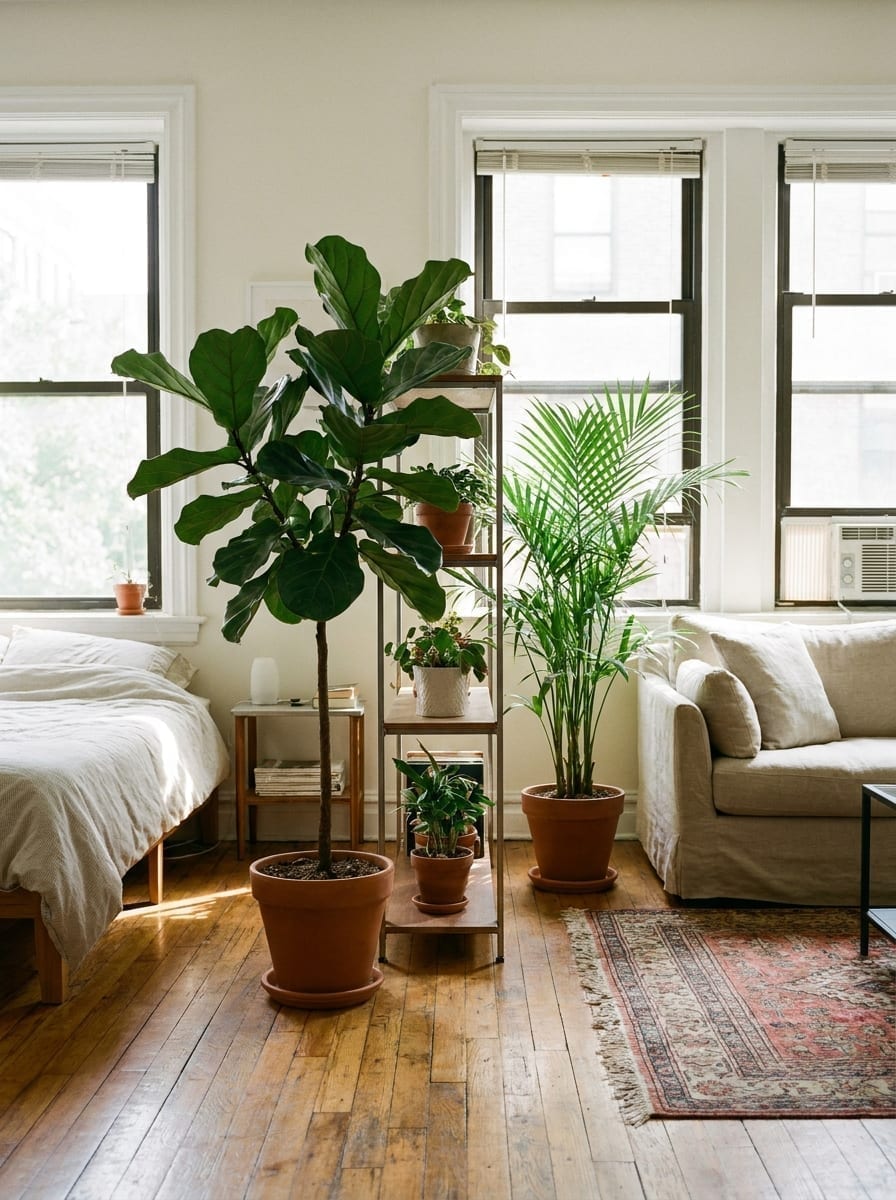
Plants can create a softer kind of privacy.
Use several medium-height plants in a line or combine one tall plant with a slim open plant stand.
This works best when you want:
visual softness partial screening greenery no permanent installation
Do not create a dense jungle between the zones.
The plants should interrupt the direct view of the bed without blocking all the light.
Choose species that genuinely suit the daylight available in the apartment.
9. Half-Height Open Shelf Divider
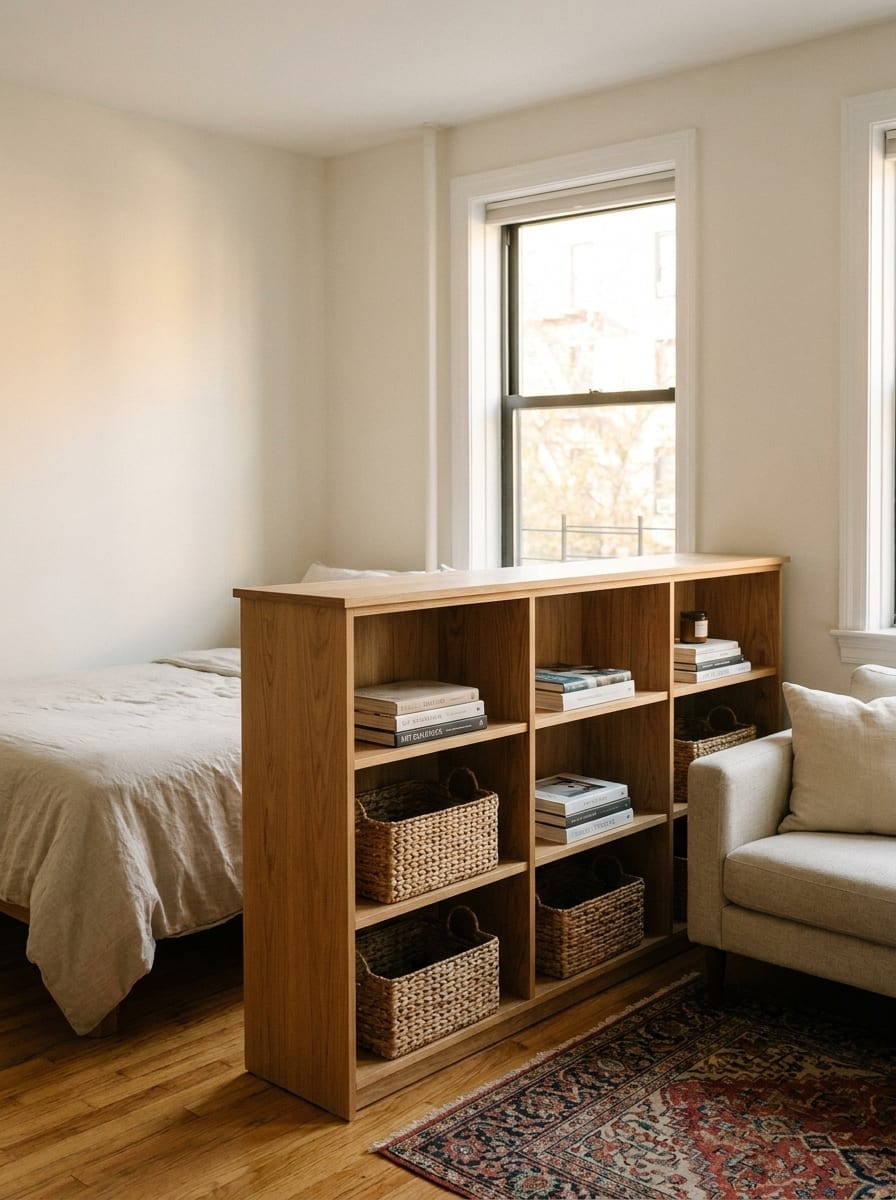
A half-height shelving unit gives more definition than a simple console but less visual weight than a full bookcase.
It can create a strong horizontal boundary around the sleeping area while keeping the upper half of the room completely open.
Use it for:
books baskets folded linens electronics decor
Keep the top uncluttered.
This is particularly useful if your studio gets light from only one main window because the divider does not block it.
10. Clothing Rail as a Soft Bedroom Boundary
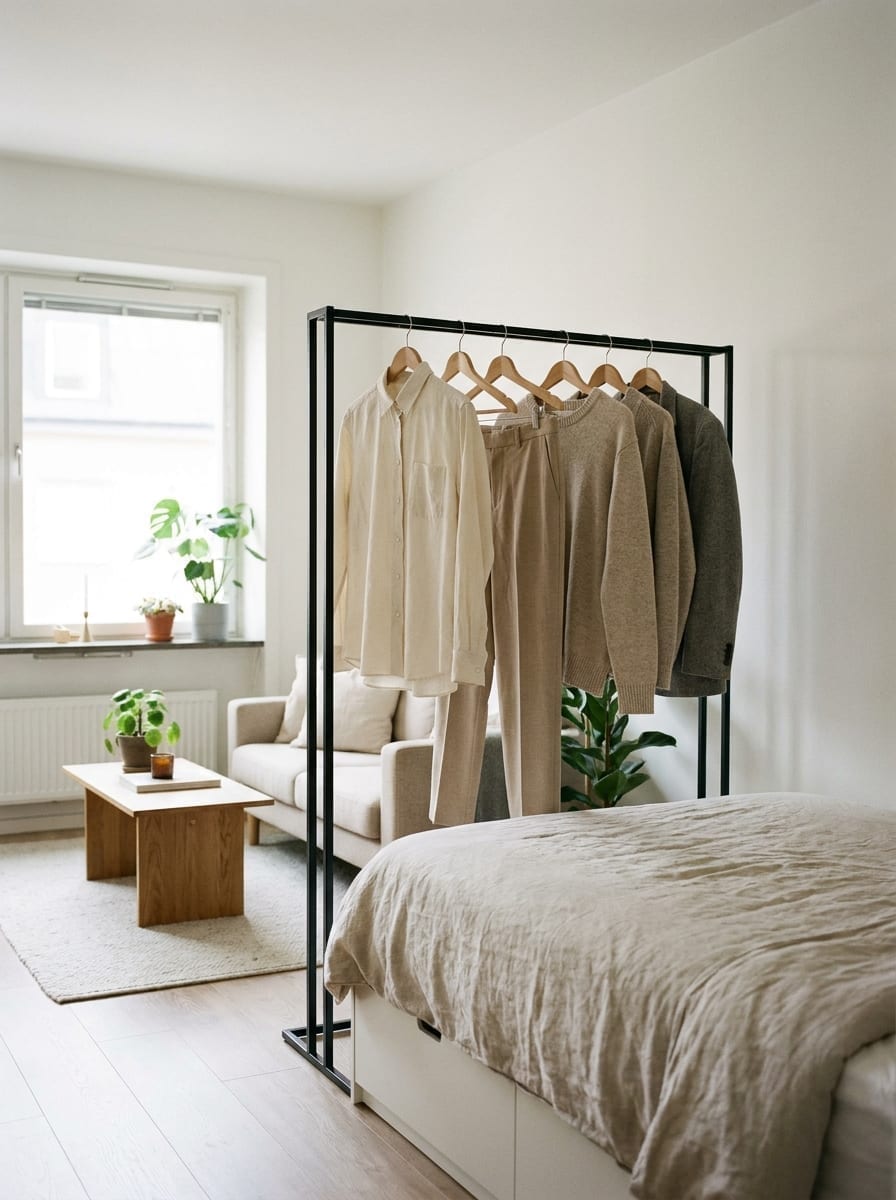
In a studio with limited closet space, a clothing rail can serve two jobs.
Place a slim freestanding garment rack near the sleeping zone to provide storage and a light visual boundary.
Keep it edited.
Use only a small collection of coordinated everyday clothing rather than packing the rail tightly.
A crowded clothing rack will make the room feel messier instead of more private.
You can also add a lightweight curtain behind the rail for more separation when needed.
11. Reeded Glass Privacy Panel
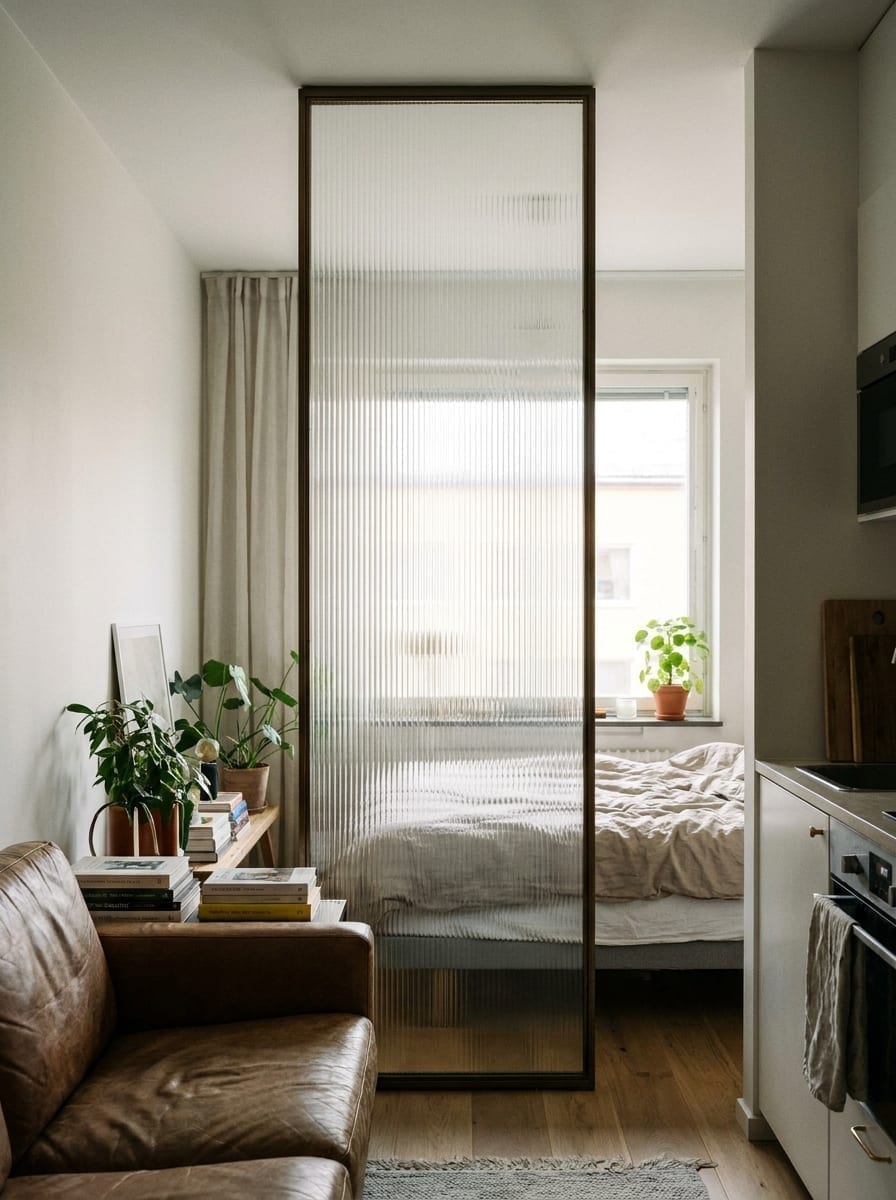
Reeded or fluted glass is useful when you want light without a completely clear view.
It blurs the sleeping area while still allowing brightness through.
That makes it particularly effective for:
bed nook dressing zone work area entry-facing sleeping space
A single narrow panel may be enough.
You do not necessarily need to build an entire glass wall.
Use the panel exactly where the direct sightline is a problem.
12. Curtain Around a Corner Bed
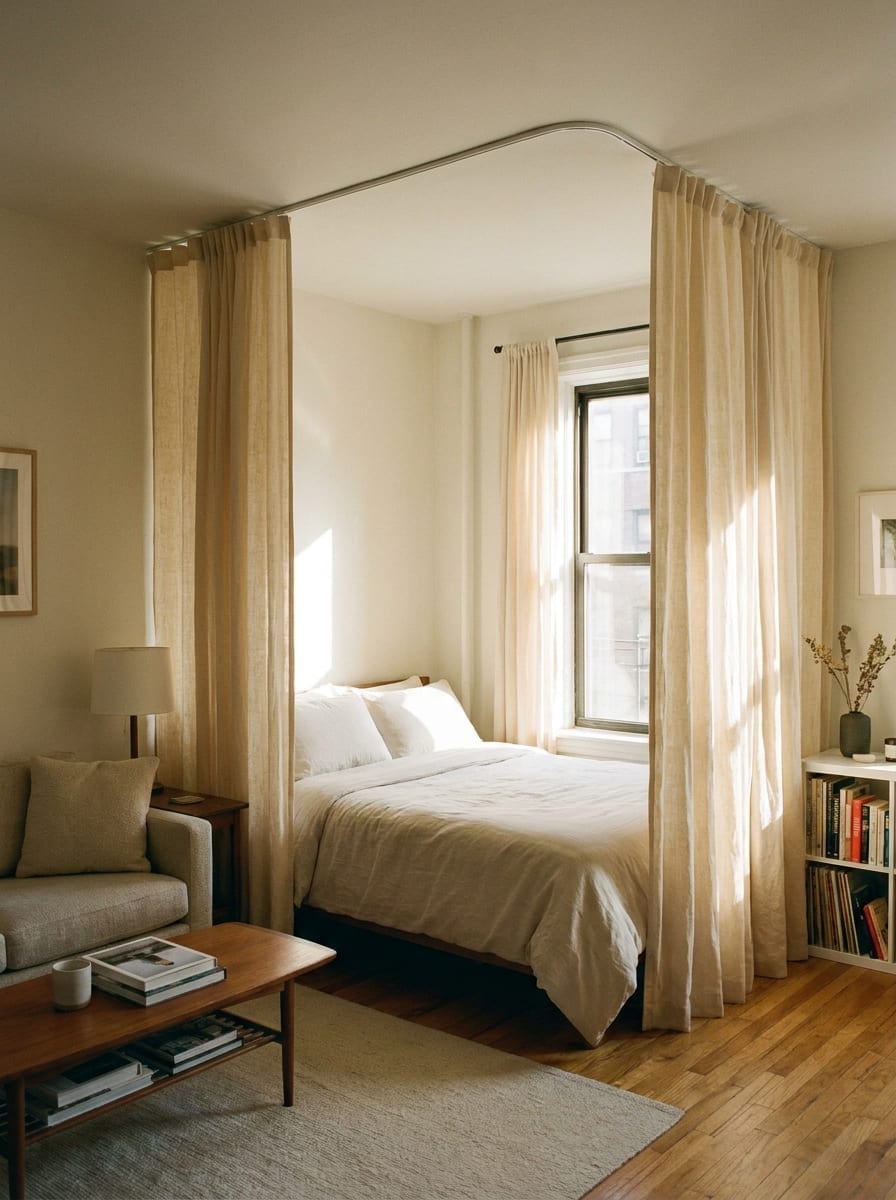
If the bed already sits in a corner, you do not need to divide the entire room.
Frame only the sleeping zone.
A ceiling track running along the exposed sides of the bed can create a cocoon-like bedroom at night.
During the day, pull the curtains fully aside.
This saves you from putting a divider across the entire width of the apartment.
It also works well when the bed is tucked near the back wall and the rest of the studio needs to remain open.
13. Desk-and-Shelf Work Zone Divider
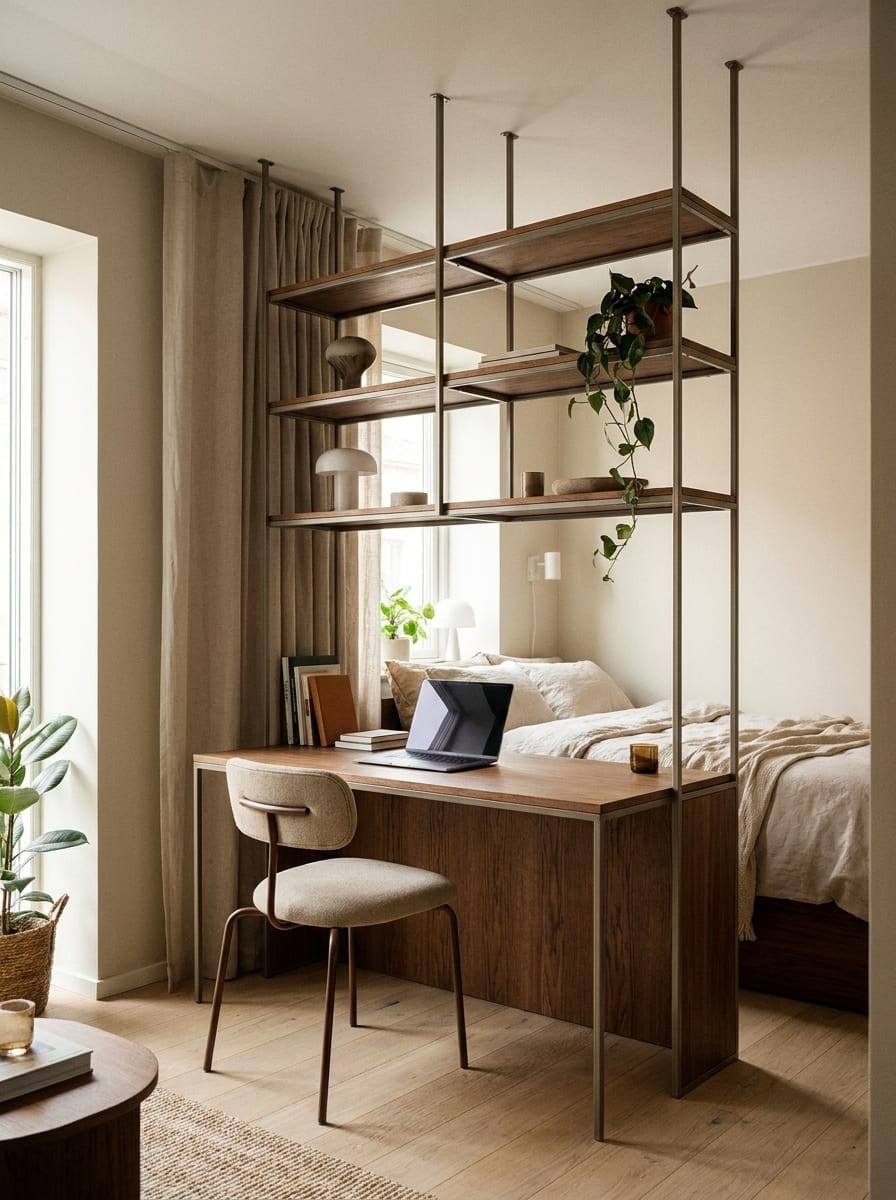
A work zone can become a divider when the desk and shelving are oriented correctly.
Place a desk perpendicular to the wall or use an open shelf beside it to separate the workspace from the bed or living room.
This can work particularly well in long studios where the office sits between two other zones.
Keep the desk relatively narrow.
The point is to create a clear functional boundary, not build an office cubicle in the middle of the apartment.
14. Headboard Wall Without a Full Wall
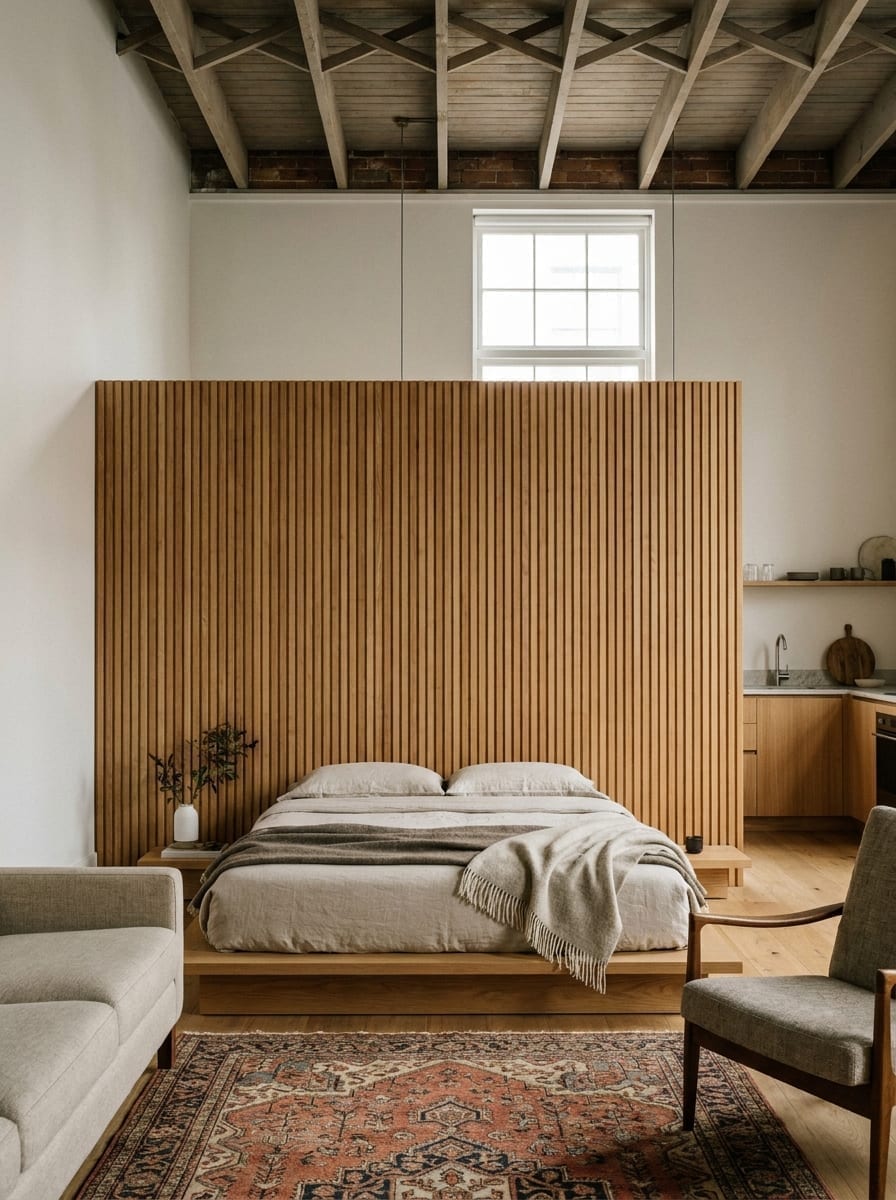
A partial headboard-style divider can make the bed feel more private without enclosing it.
Use a freestanding or professionally installed panel that extends slightly beyond the bed but stops well below the ceiling.
It may include:
wood slats upholstered panel shallow storage integrated shelf
The upper portion of the studio remains visually open.
This creates the psychological feeling of a bedroom wall without the drawbacks of building a full partition.
15. Layered Divider That Combines Privacy and Light
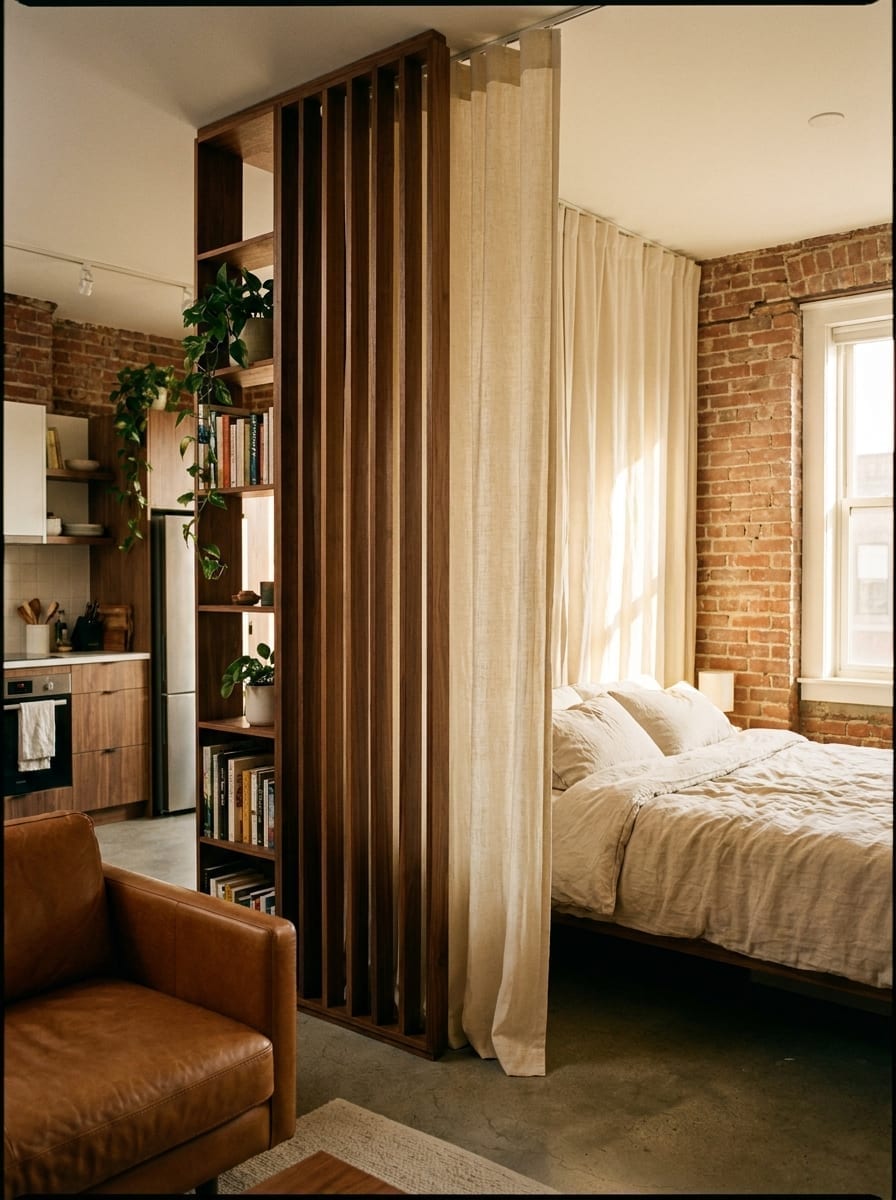
Sometimes one divider cannot solve everything.
You may want more privacy at night but openness during the day.
Combine two lighter elements instead.
For example:
open shelf + curtain
or:
wood slats + sheer curtain
or:
glass panel + privacy curtain
During the day, the solid-light divider remains and the curtain stays open.
At night, close the fabric layer for more privacy.
This gives you control without requiring a permanent solid wall.
It is particularly useful when two people share a studio or when the bed sits directly in the main line of sight.
What Is the Best Divider for a Studio Apartment?
The best divider depends on what you actually need.
If you want maximum flexibility, use curtains or a folding screen.
If you need storage too, use open shelving or a low cabinet.
If you want more architectural separation, consider wood slats or glass.
If you only need visual zoning, the sofa, rug, or low console may already be enough.
Do not automatically choose the divider that creates the most privacy.
In a very small studio, preserving light and movement may matter more.
How Much Privacy Do You Actually Need?
There are several levels of separation.
Visual boundary
The spaces simply feel different.
Use:
sofa rug low console
Partial privacy
The bed is less visible, but the room remains connected.
Use:
plants open shelf slats half-height divider
Strong privacy
The sleeping area can mostly disappear when needed.
Use:
curtain screen frosted or reeded panel
Knowing which level you need can stop you from overbuilding the space.
How to Divide a Studio Without Blocking Natural Light
Avoid placing an opaque floor-to-ceiling divider directly between the main window and the rest of the apartment.
Instead, use materials that allow light through:
open shelving wood slats sheer curtains clear glass reeded glass plant stands
If your studio only has one large window, this becomes especially important.
The bedroom may feel more private behind a solid divider, but the living room may become much darker.
Are Curtains Good Studio Apartment Dividers?
Yes, particularly when flexibility matters.
They can be:
fully open during the day partly closed when needed completely closed at night
They also take up very little floor space.
The main considerations are mounting, fabric weight, ceiling type, airflow, and rental restrictions.
What Divider Works Best for a Bed?
For most small studios, the strongest options are:
Open shelf: privacy plus storage Curtain: maximum flexibility Slats: architectural look without blocking light Reeded glass: privacy with brightness Low cabinet: zoning without enclosure
The exact choice depends on whether you want the bed hidden or simply visually separated.
What to Avoid
Solid walls across the whole room
They can make a small studio feel dramatically tighter.
Overfilled open shelving
A see-through divider stops feeling open when every square inch is packed.
Heavy dark curtains in a low-light apartment
Privacy is useful, but losing most of the daylight may not be worth it.
Unsecured tall dividers
Bookcases, screens, and freestanding panels need to be stable and used according to safety guidance.
Blocking the main walkway
The divider should organize the room, not create an obstacle.
Dividing every zone
A small studio does not need a separate physical barrier around the bed, desk, dining area, and sofa.
Usually one meaningful divider is enough.
Where to Start
Stand at the main entrance to the studio.
Look directly into the apartment and ask:
What do I wish I could see less of?
If the answer is the bed, divide the sleeping zone.
If the problem is work spilling into relaxation, separate the desk.
If everything simply feels undefined, a sofa, rug, or low storage unit may be enough.
Then look at where the natural light comes from.
Your divider should solve the privacy problem without fighting the light source.
That balance is what makes a studio feel like several useful spaces while still keeping the openness that makes a small apartment comfortable.