11 Small Living Room With TV Ideas That Keep the Screen From Taking Over
Stop the TV from taking over a compact room. Discover 11 small living room TV ideas—from floating consoles and dark gallery walls to off-center corner layouts.
In This Guide
A TV is one of the hardest things to work around in a small living room.
It is large, usually dark, needs to be visible from the sofa, and often ends up becoming the strongest visual feature in the room whether you want it to or not.
Then there is the furniture around it.
A bulky entertainment center can consume an entire wall. A deep media cabinet cuts into the walkway. Too much shelving makes the room feel crowded.
The goal is not to hide the TV completely.
It is to make it feel like one part of the living room instead of the entire reason the room exists.
These 11 small living room with TV ideas are designed for real apartments where the sofa, screen, storage and walking space all have to share a limited footprint.
1. The Slim Floating TV Wall
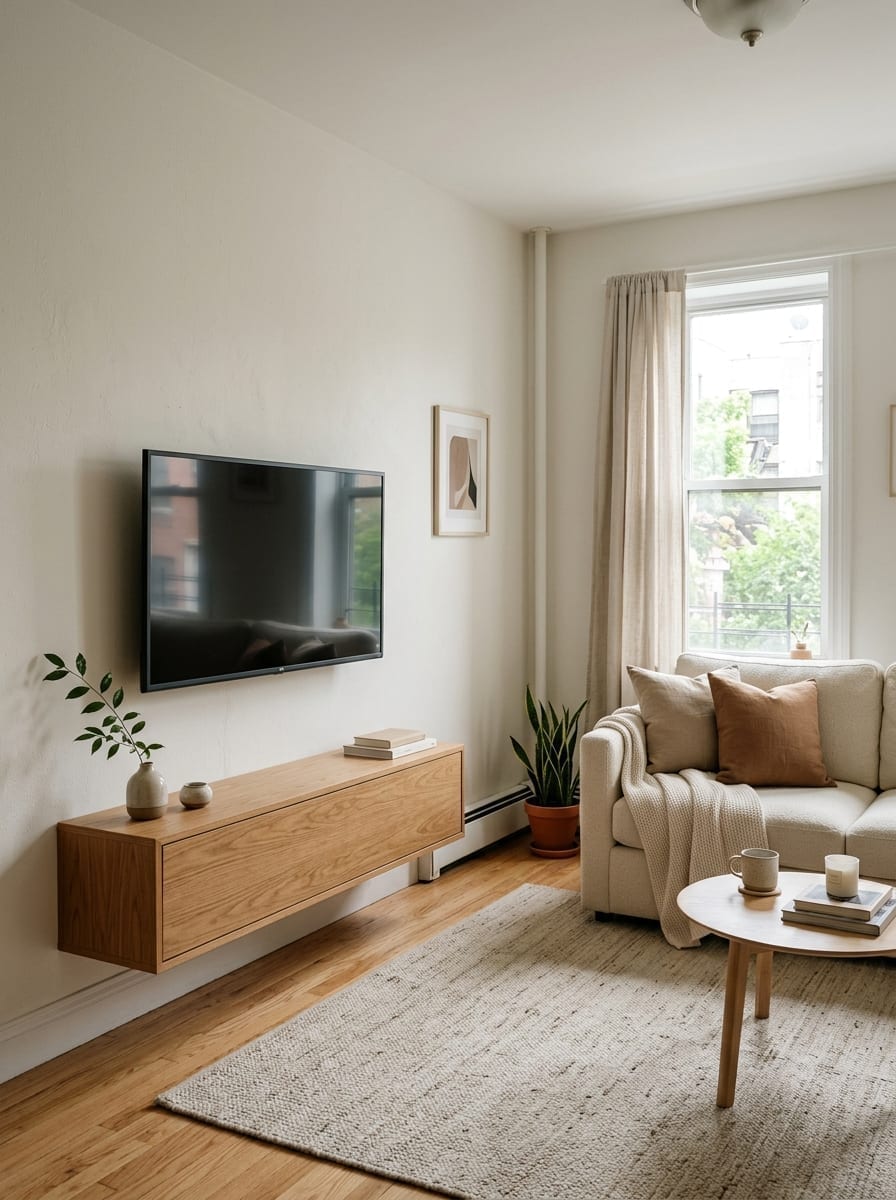
A floating media console is one of the easiest ways to make a TV setup feel lighter.
Because the cabinet does not sit directly on the floor, you can see more flooring underneath it.
That extra visible floor makes a surprisingly big difference in a small room.
Keep the console shallow and relatively close to the width of the television.
You do not need a huge cabinet stretching across the entire wall.
Use it for the things that genuinely need to live near the TV:
streaming devices game console remote controls a small amount of closed storage
Then stop.
The fewer objects around the television, the less dominant the whole wall feels.
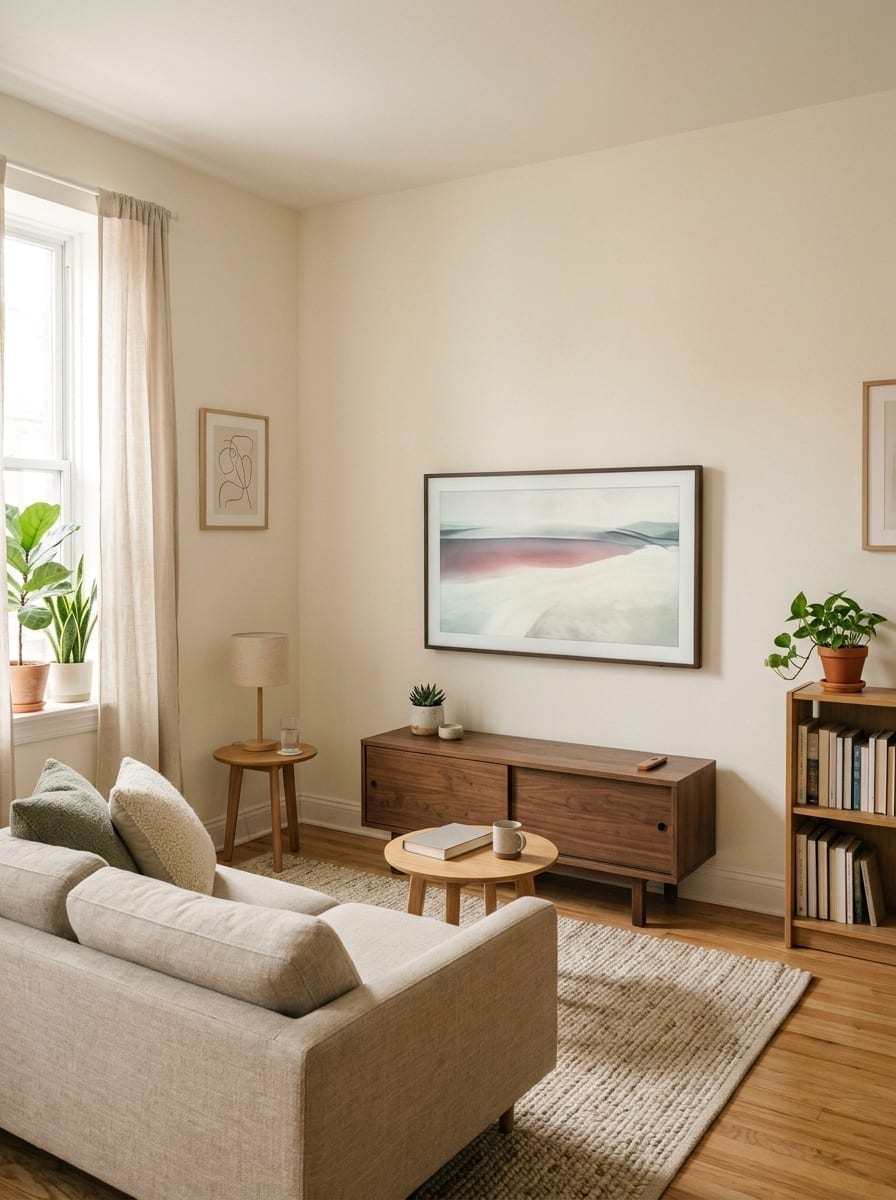
2. The Warm Wood Media Console
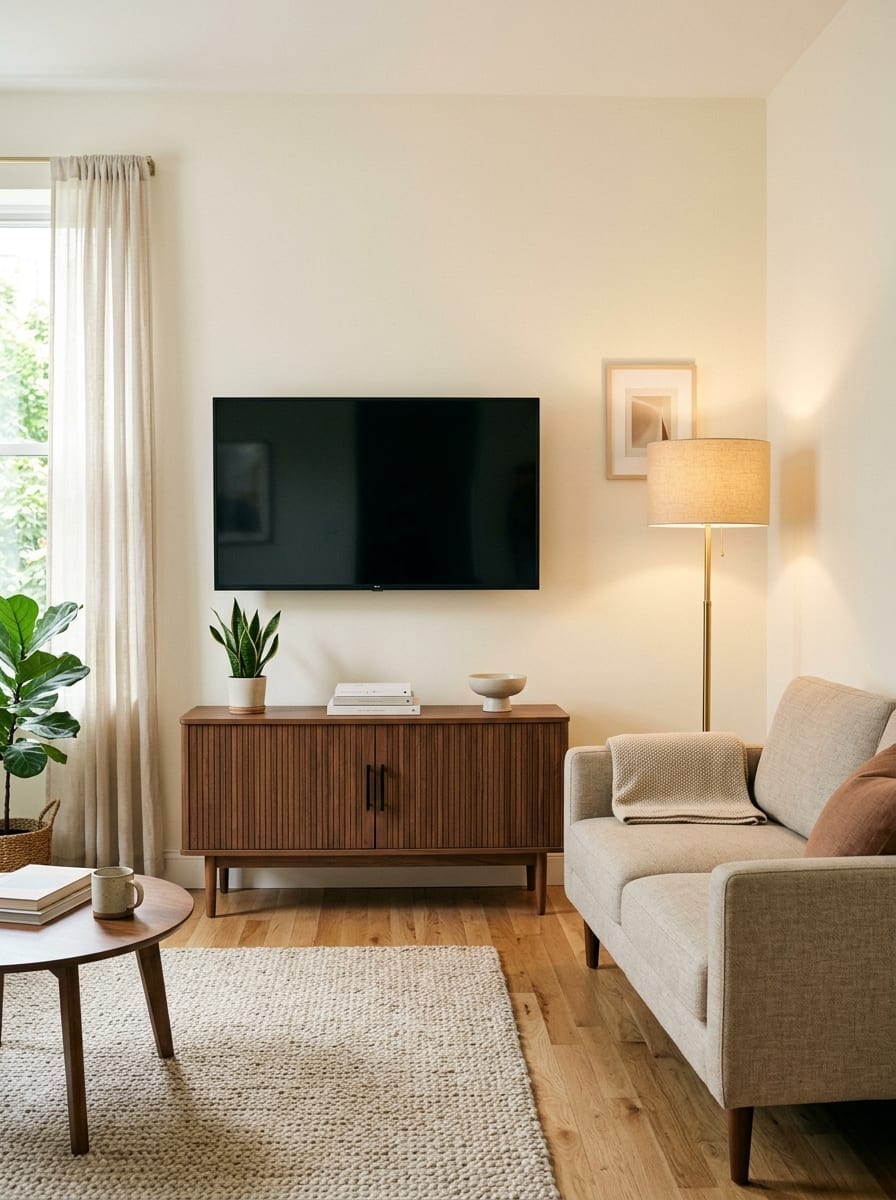
A black TV sitting above another large black cabinet can create one heavy visual block.
Warm wood breaks that up.
Try a media console in:
natural oak medium walnut warm ash light wood veneer
The contrast makes the furniture feel more like part of the room rather than an extension of the screen.
Look for a console with:
slim legs simple doors minimal hardware modest depth
Closed doors are particularly useful because cables and electronics disappear instead of becoming part of the decor.
3. The Off-Center TV Layout
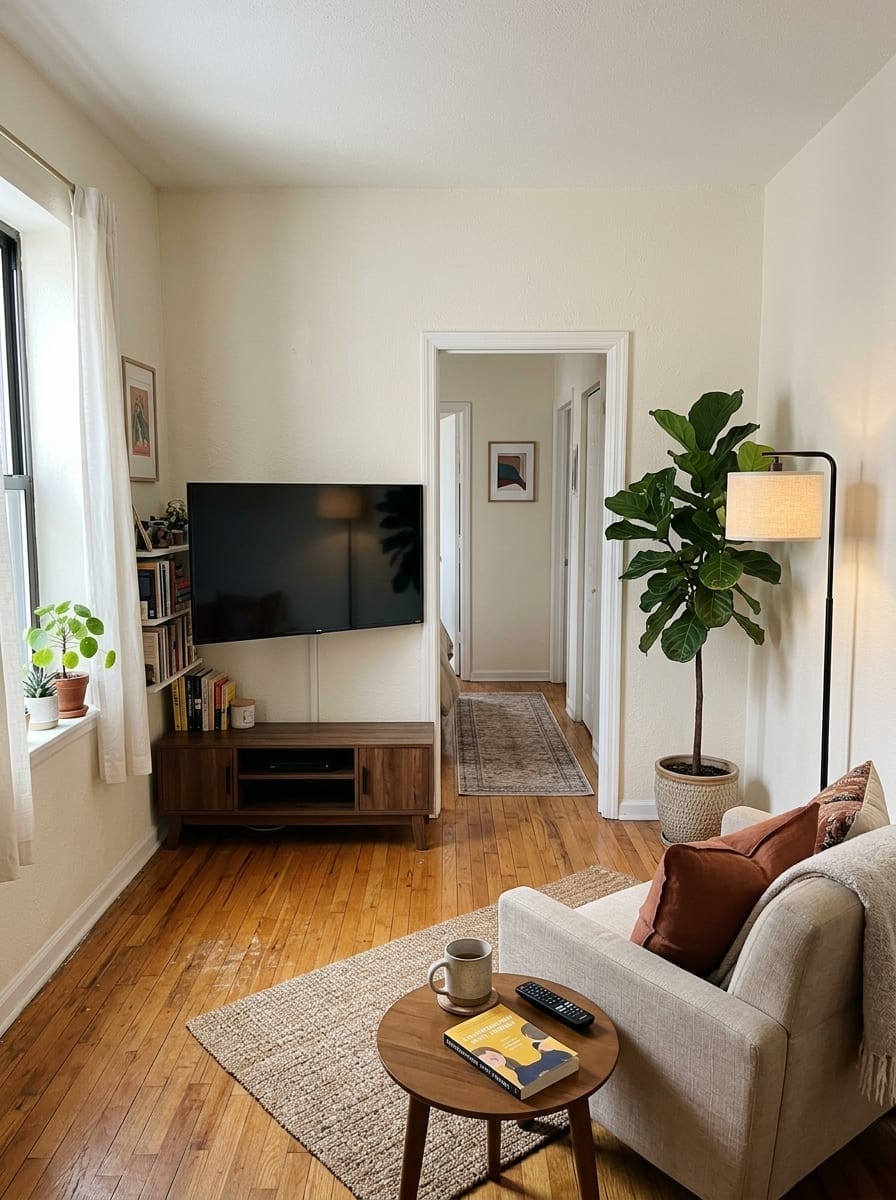
The TV does not always need to sit perfectly centered on the largest wall.
In some small apartments, forcing symmetry creates a worse furniture layout.
If the room has:
doorway radiator awkward corner window open kitchen
an off-center television can actually make more sense.
Place the TV where viewing is comfortable, then balance the remaining wall with something quieter such as:
tall plant floor lamp narrow artwork small shelving unit
The room can still feel balanced without being symmetrical.
4. The TV Between Two Windows
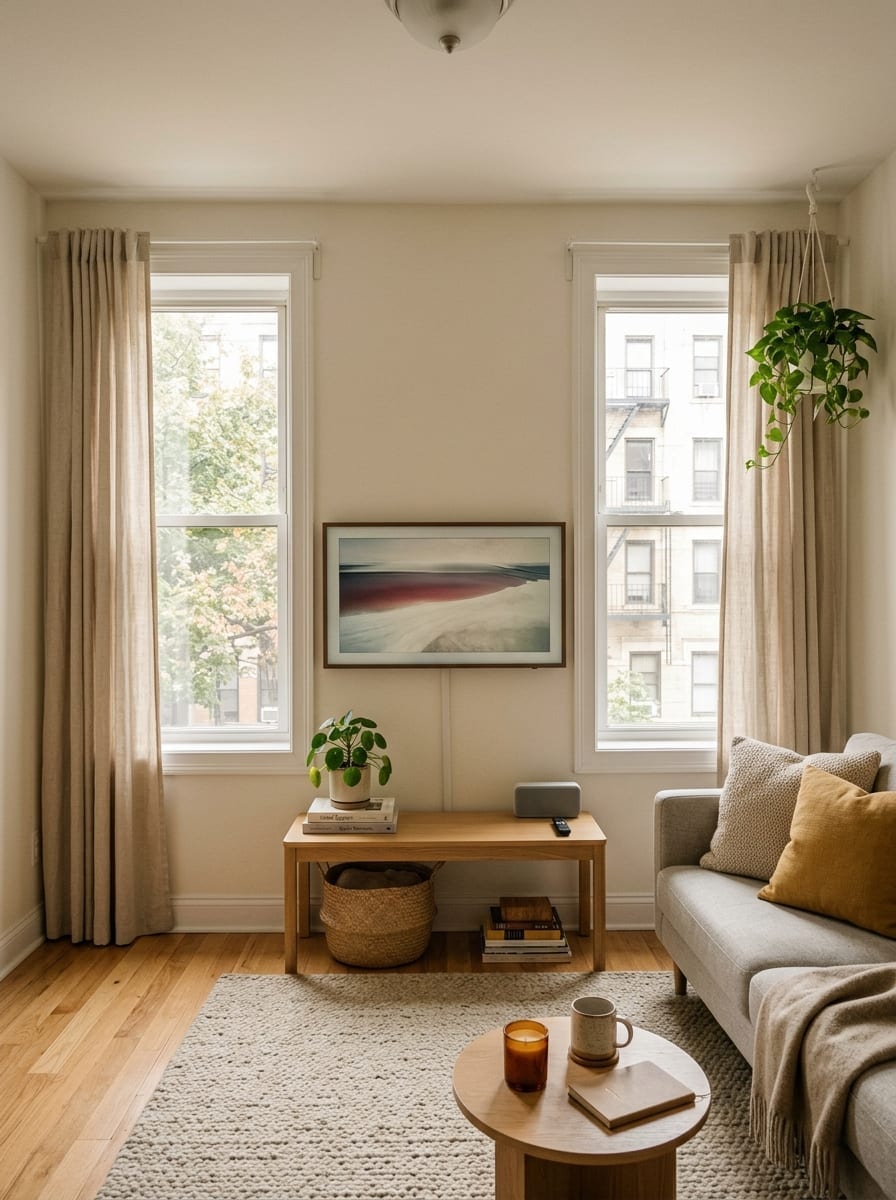
If the only practical television wall sits between two windows, use that architecture instead of fighting it.
A narrow TV can fit neatly between the windows while the curtains soften the whole arrangement.
Keep the media console low.
Avoid filling the remaining space with additional shelves.
The windows already create enough visual structure.
Use light or warm-neutral curtains so the screen remains framed by softer materials.
This can make the TV feel much less severe.
5. The Low-Profile Media Setup
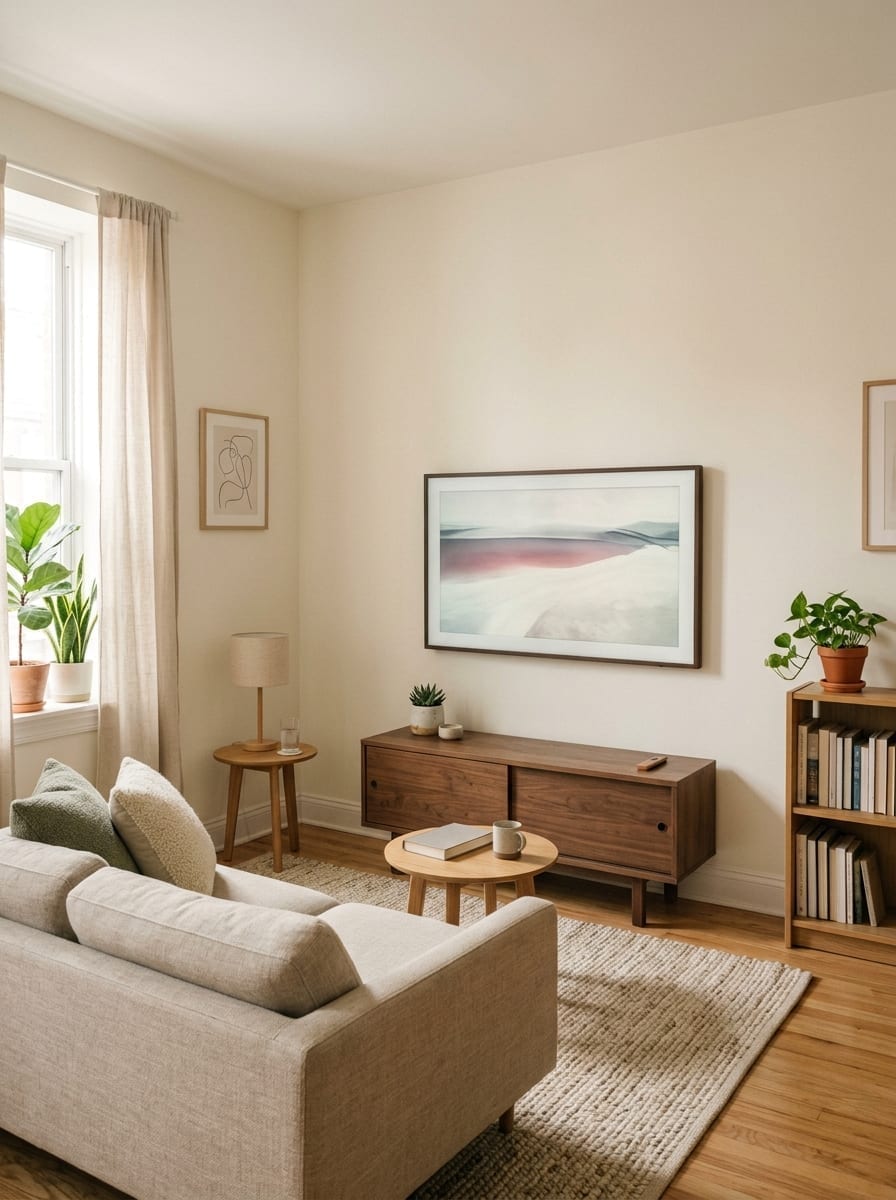
The taller the furniture beneath the television, the more dominant the TV wall tends to become.
A low console keeps more visible wall above and around the screen.
That gives the whole setup breathing room.
Look for furniture that sits lower than a traditional sideboard.
This works especially well when the sofa is also fairly low.
The horizontal lines make the room feel calmer and less crowded.
Keep decorative objects low too.
One vase, small stack of books or simple lamp is enough.
6. The Gallery Wall TV Blend
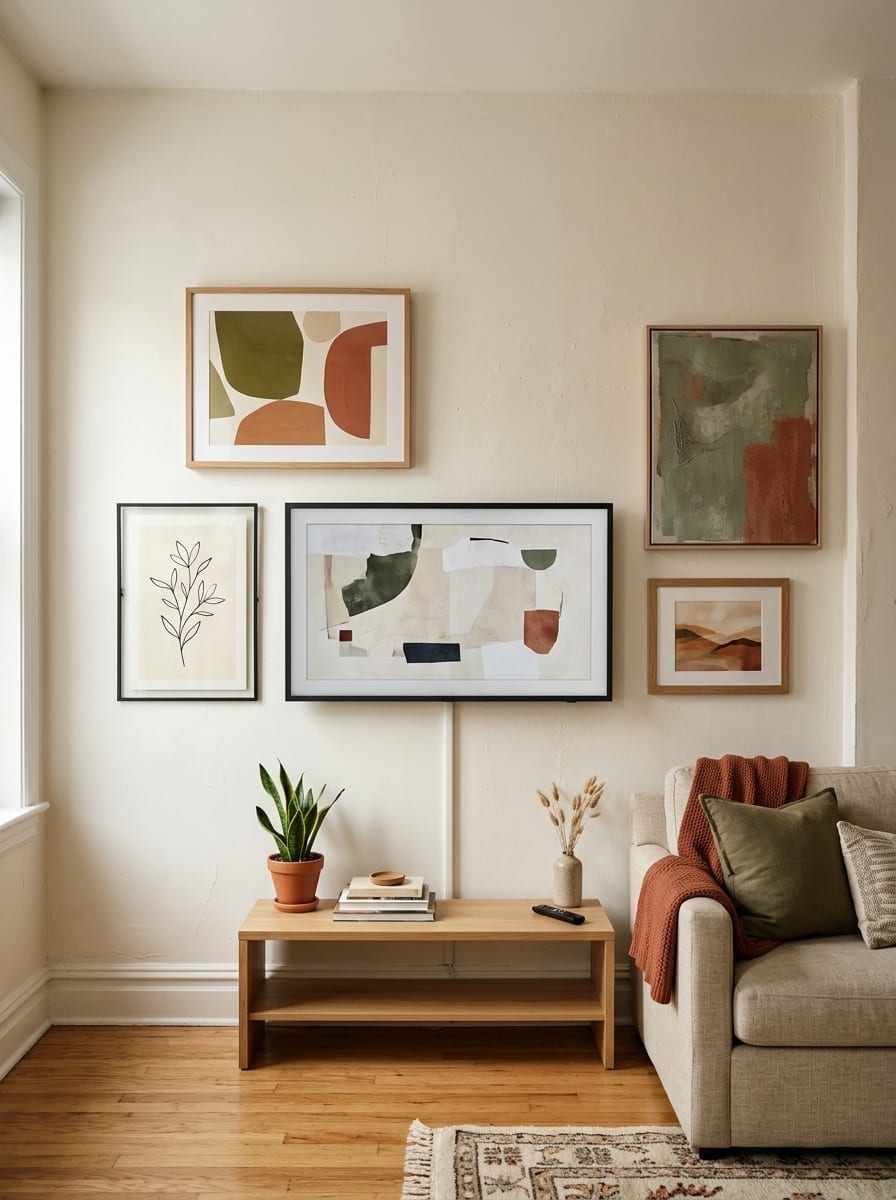
If you dislike seeing a large black rectangle on an otherwise blank wall, surround it with a restrained art arrangement.
The key word is restrained.
Do not cover every inch.
Use several pieces with related:
frame colors artwork tones spacing
The TV becomes one rectangle among several instead of the only shape on the wall.
A good gallery wall around a television might include four to six pieces rather than fifteen.
Leave enough empty wall that everything can breathe.
7. The Corner TV Solution
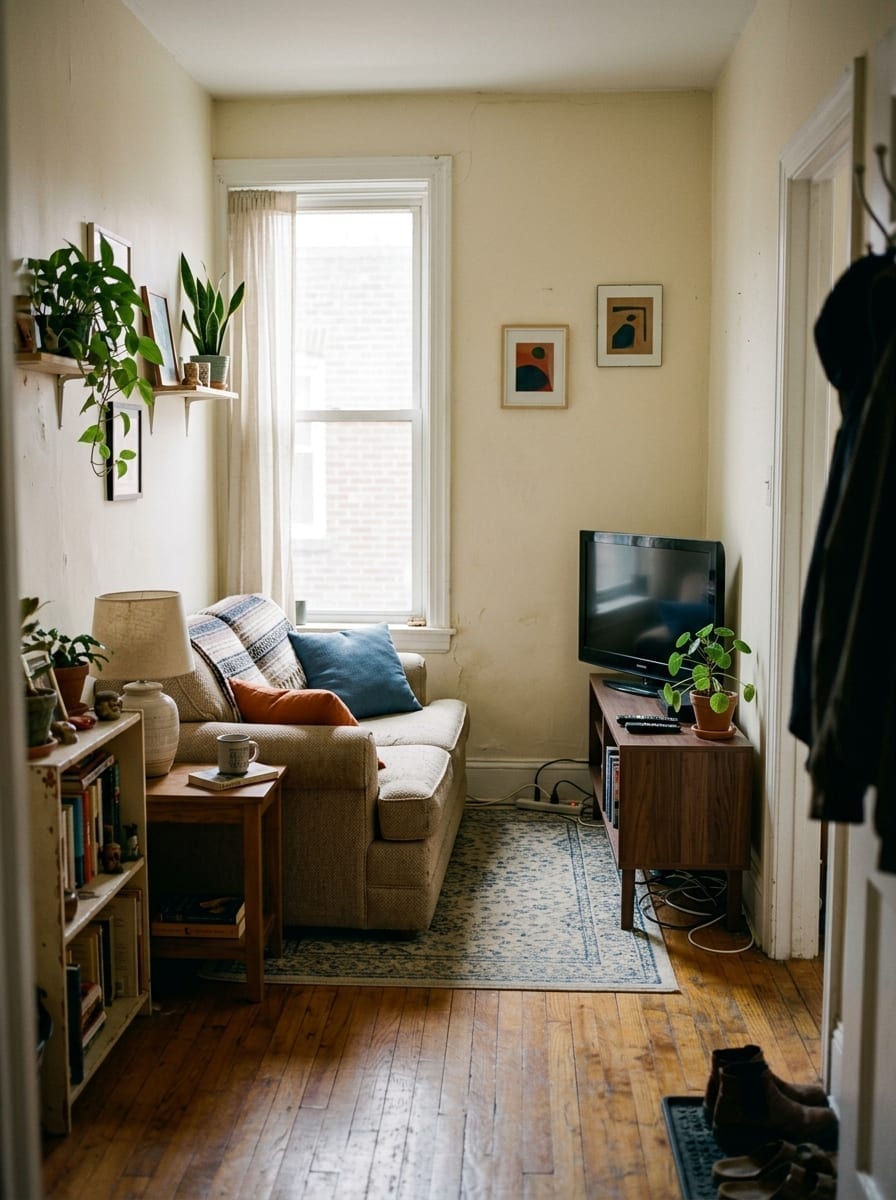
Sometimes the obvious TV wall is not actually the best one.
In a very small or awkward room, placing the television closer to a corner can free up an entire wall for:
sofa storage dining furniture walking space
This works particularly well when the room has several doors or windows.
Angle the seating slightly toward the television rather than forcing the sofa to sit directly opposite it.
Keep the corner setup simple so it does not become visually crowded.
8. The Sofa-First TV Layout
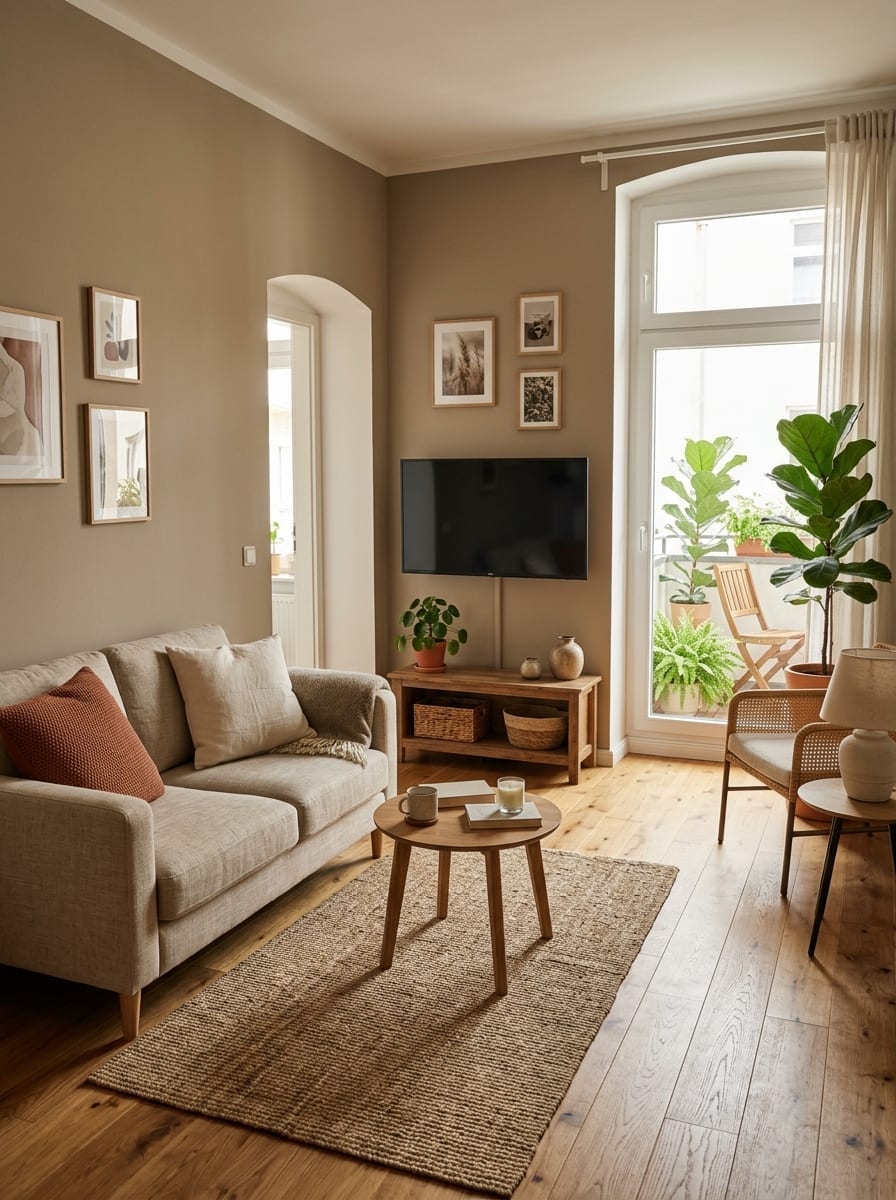
A common mistake is designing the whole room around the television first.
Try the opposite.
Start with the best location for the sofa.
Ask:
Where does it leave the clearest walkway? Where does it avoid blocking the window? Where does it make conversation easier? Where does the room feel most comfortable?
Then determine the best TV position from there.
This often produces a much better room.
The television still needs a comfortable viewing angle, but it does not have to dictate every furniture decision.
9. The Dark TV Backdrop
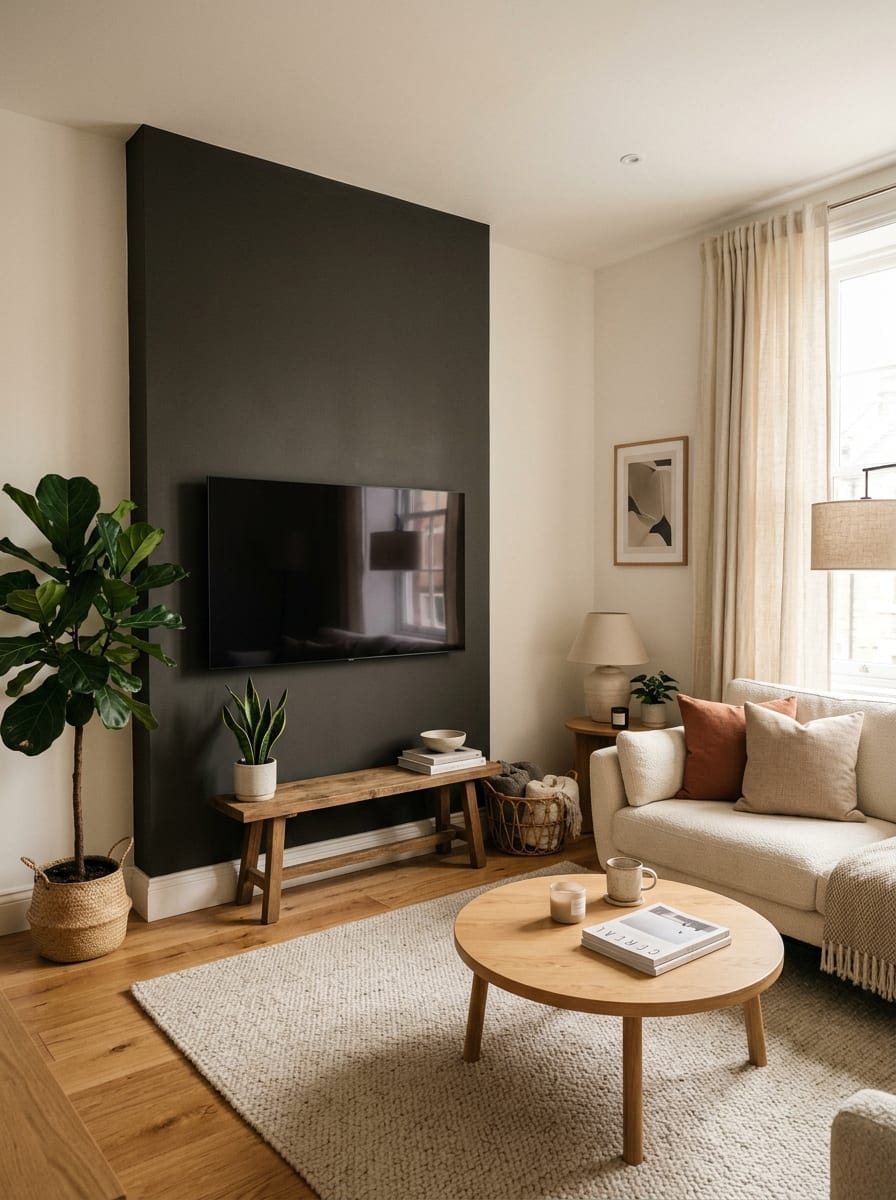
A dark wall behind the television can reduce the contrast between the black screen and its surroundings.
That can make the TV feel less visually obvious when it is turned off.
You do not need pure black.
Try:
deep charcoal warm black dark olive deep brown-gray
Keep surrounding walls lighter so the room does not become too dark.
Pair the wall with:
warm wood cream upholstery light curtains soft rug
The TV blends into the backdrop while the rest of the room stays warm.
10. The Small Living Room TV + Storage Wall
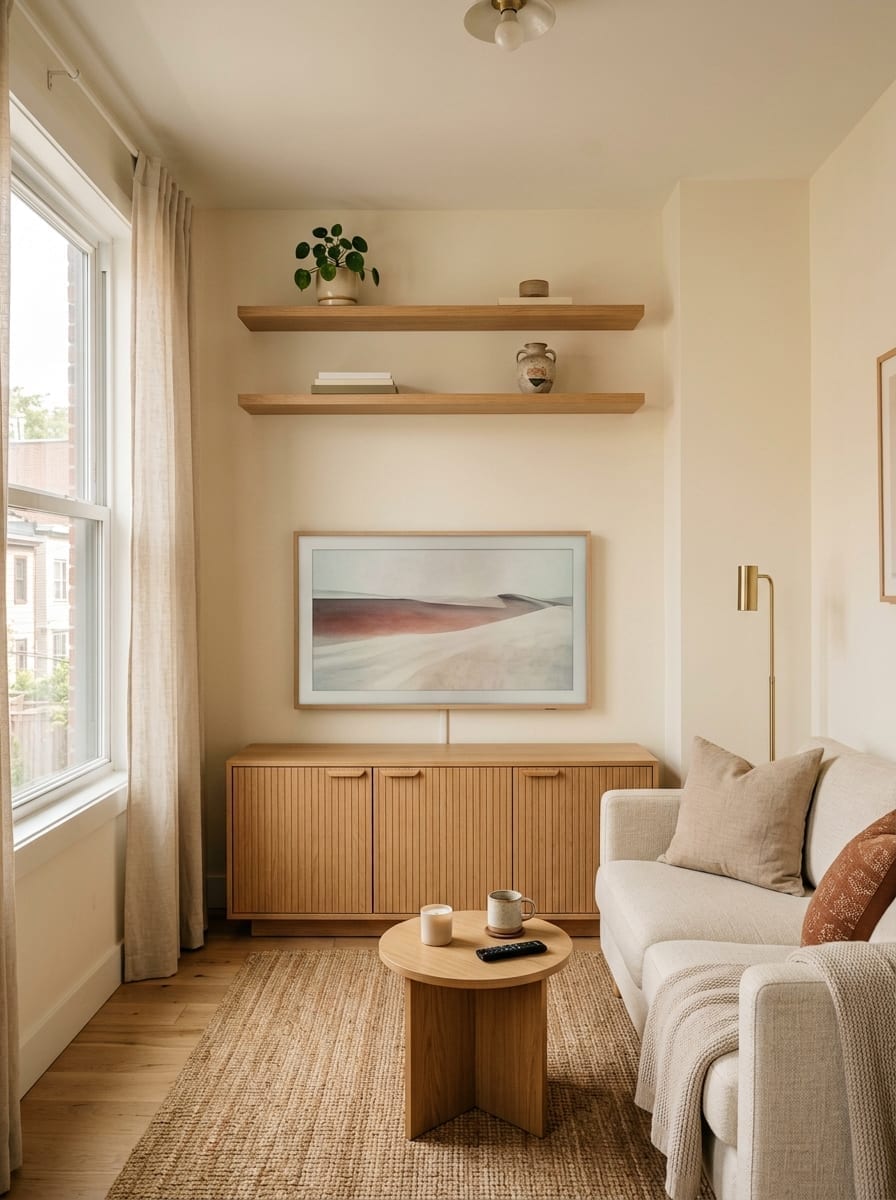
If the TV wall also needs to provide storage, concentrate it there instead of adding cabinets around the room.
Use one intentional wall containing:
television low closed cabinets a few shelves perhaps one tall narrow cabinet
The important part is keeping most of the storage closed.
Too many open shelves can make the TV wall look extremely busy.
A concentrated storage wall can actually make the rest of the room feel calmer because fewer furniture pieces are needed elsewhere.
11. The Minimal TV Wall
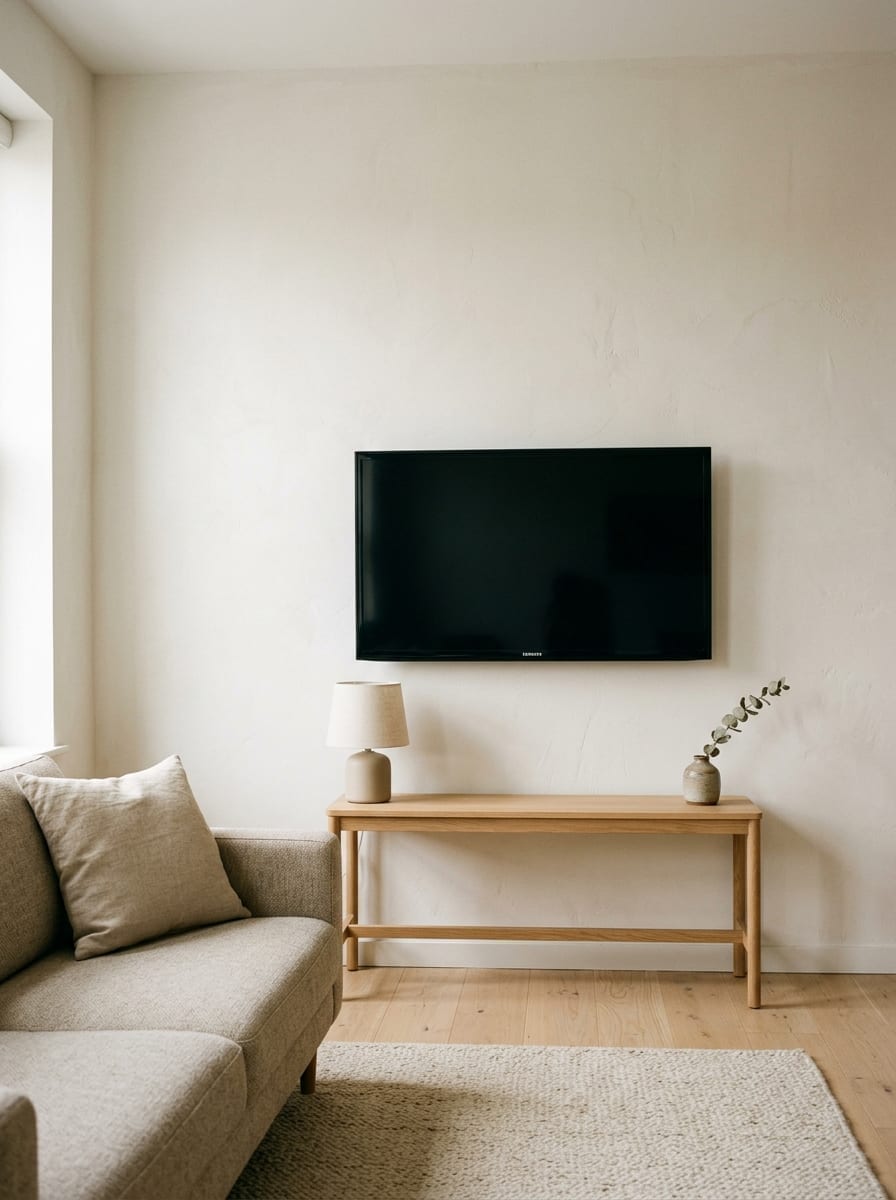
Sometimes the best solution is simply doing less.
You may only need:
wall-mounted TV slim console one lamp one small decorative object
That is it.
The blank wall around the setup can make the whole living room feel calmer.
This is especially effective when another part of the room already has visual interest, such as:
patterned rug large artwork beautiful curtains interesting sofa window view
Not every wall needs to be decorated.
A small room often looks more intentional when at least one surface stays relatively quiet.
How Big Should a TV Be in a Small Living Room?
Bigger is not automatically better.
The right television size depends heavily on:
viewing distance room width sofa position wall dimensions personal preference
Before buying, mark the screen dimensions on the wall with painter’s tape.
Then sit in your normal viewing position.
This gives you a much better idea of how dominant the screen will feel than looking at televisions inside a large electronics store.
Should You Wall-Mount the TV?
Wall mounting can work extremely well in small apartments because it:
frees console surface space reduces visual bulk lets you use shallower furniture can improve viewing height
But renters should check their lease before drilling into walls.
You also need to make sure the wall, mounting hardware and installation method are appropriate for the television.
A slim TV stand can still work beautifully if mounting is not possible.
How High Should a TV Be?
Avoid placing it high simply because you have wall space available.
For most living rooms, the screen should feel comfortable when viewed from your normal seated position.
If you constantly need to tilt your head upward, it is probably too high.
Fireplaces often encourage televisions to be mounted much higher than ideal, which is one reason they can be difficult to work with in compact rooms.
How to Hide TV Cables in a Small Living Room
Cable clutter becomes especially noticeable when the setup is minimal.
Depending on your rental situation and wall type, options include:
paintable cable channels console cable-management openings cable sleeves adhesive cable clips concealed power strips
Keep power equipment ventilated and use products according to manufacturer instructions.
Do not hide electrical connections in unsafe enclosed spaces.
Should the TV Be the Living Room Focal Point?
It can be, but it does not have to be.
You can balance it with:
large rug sofa window artwork
lighting
architectural detail
Think of the television as one functional component.
If the room looks attractive only when the television is displaying an image, the setup probably needs more balance.
What to Avoid Around a TV in a Small Room
Oversized entertainment centers
They can consume the entire wall visually and physically.
Too many floating shelves
The screen already provides a strong rectangular form.
Tiny decor all around the television
Small objects create visual clutter without balancing the large screen.
Very deep media cabinets
They take floor area away from circulation.
Mounting the screen too high
It can be uncomfortable and visually disconnected from the furniture.
Designing every seat around the television
The living room should still work for conversation and everyday use.
Small Living Room TV Layout: A Simple Starting Formula
If you are unsure where to start, try:
One compact sofa
facing
One simple TV wall
with
One shallow media console
Then add:
one rug one side table one lamp one optional chair if space allows
Do not add additional furniture until those essentials work comfortably.
The easiest way to make a small TV room feel larger is often not a clever storage trick.
It is simply owning fewer oversized pieces.
Final Thought
A television does not have to disappear.
It just needs to stop overpowering everything around it.
The best small living rooms usually achieve that by simplifying the TV wall, choosing furniture with a lighter footprint and protecting the room’s walking space.
Once the screen feels integrated instead of dominant, the whole room starts feeling more like a living room again.