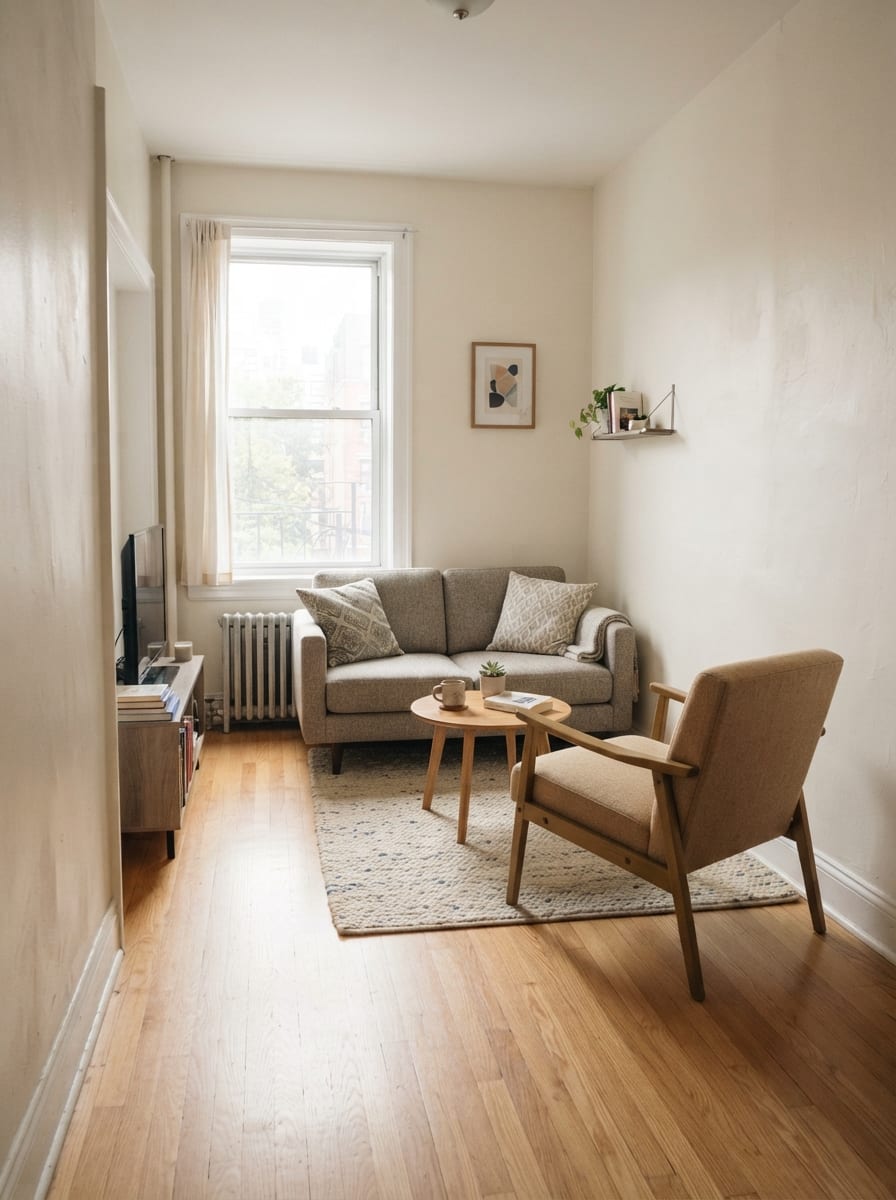
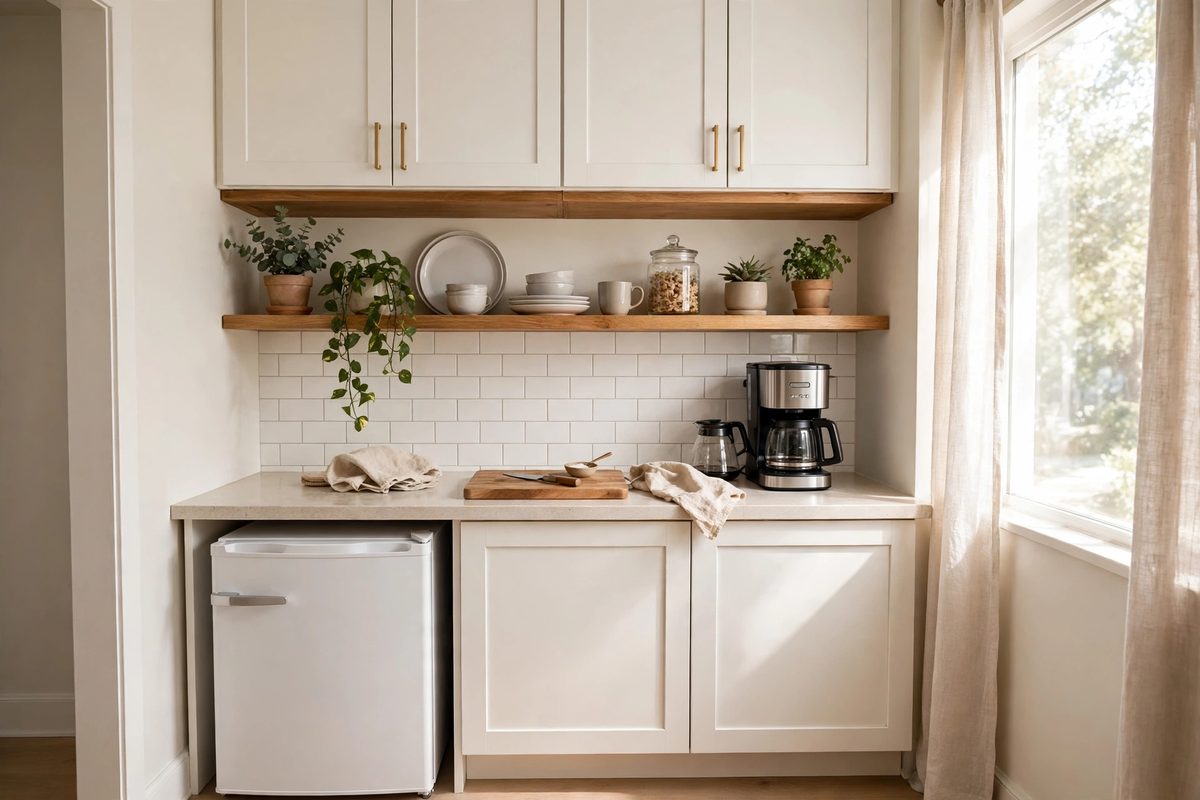
10 Small Living Room Corner Ideas That Turn Awkward Space Into Something Useful
Turn an awkward small living room corner into something useful with 10 space-smart ideas for seating, lighting, storage, plants, work zones, and vertical decor.
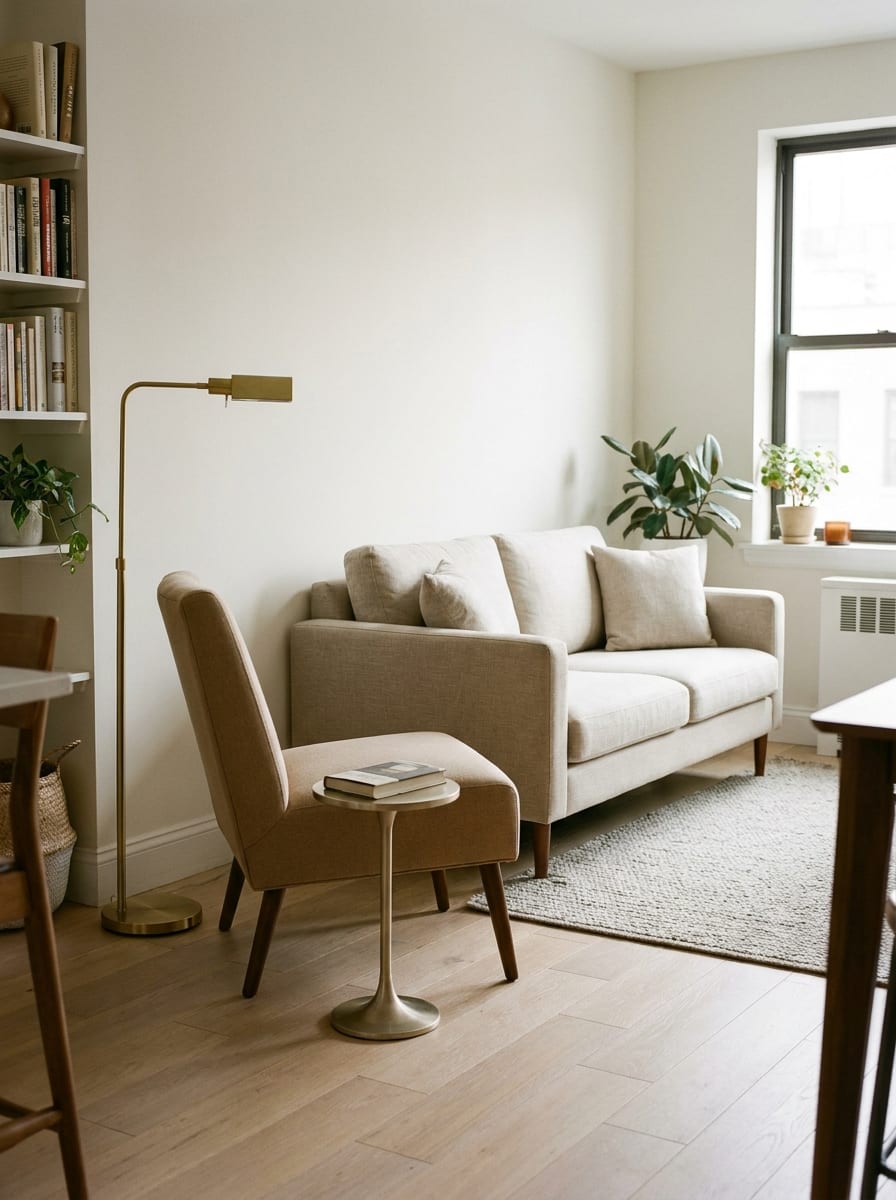
A compact apartment living room with an awkward corner styled with a slim reading chair and narrow floor lamp
In This Guide
Empty corners in small living rooms are deceptive.
They often look like wasted space, so the instinct is to fill them. That is usually where the trouble starts.
A bulky chair gets pushed into a corner even though no one can comfortably sit there. A tall shelf blocks a curtain. A plant crowds the doorway. A little table becomes a pile of miscellaneous objects. Or the corner ends up holding three unrelated pieces simply because each one was “small enough to fit.”
A successful corner should do one of two things: perform a clear function or make the room feel visually balanced. It does not need to do both.
The first question should therefore be: What problem is this corner solving?
Maybe you need another seat. Maybe you need light. Maybe the room lacks storage. Maybe you need a compact place to work. Or maybe the corner looks awkward only because the furniture around it is badly balanced—and the correct solution is to leave it mostly empty.
The best small living room corner ideas are less about decorating an empty triangle of floor and more about understanding footprint, access, height, and circulation.
Here are ten ways to make an awkward corner useful without turning it into another obstacle.
1. Build a Reading Corner With One Properly Scaled Chair
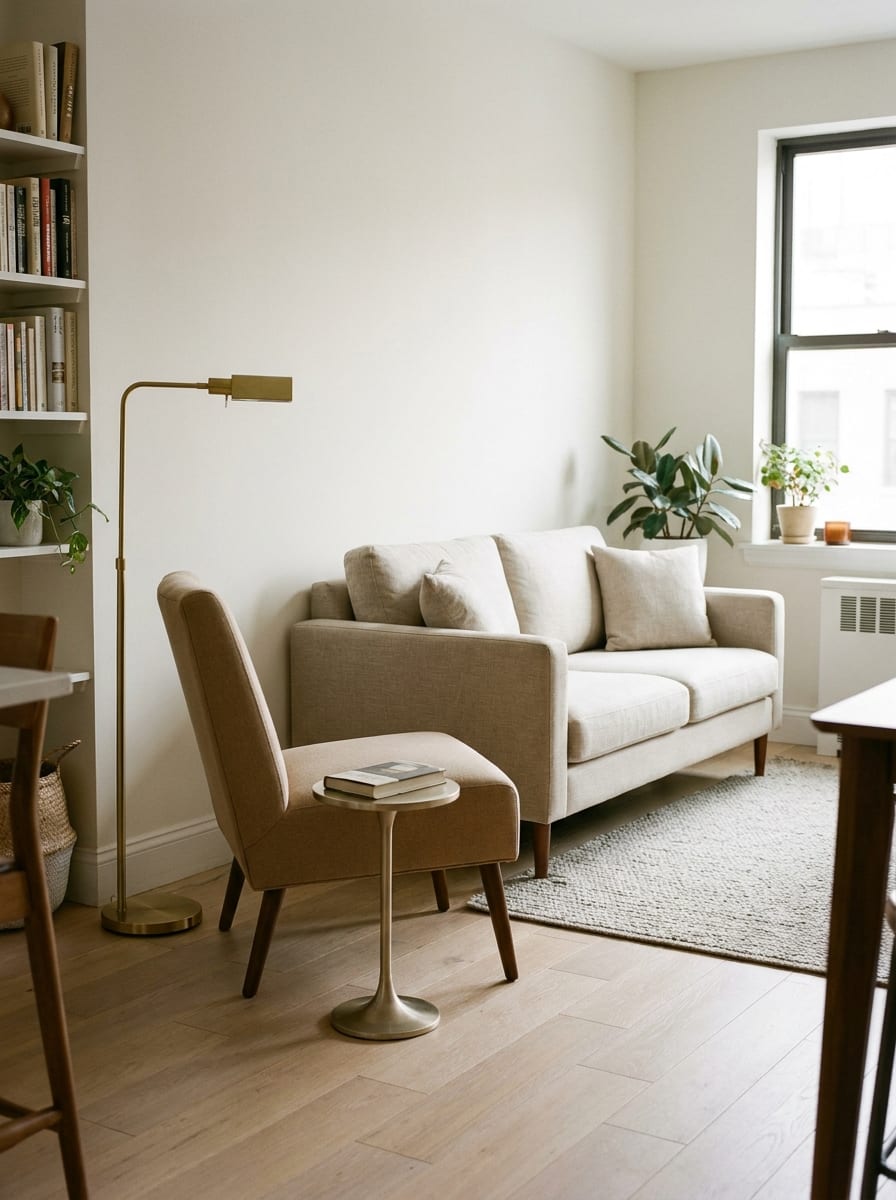
A reading chair is one of the most obvious ways to use a living-room corner, but it only works if the corner is large enough for the chair and the space required to use it. That second part is often forgotten.
A lounge chair may physically fit between two walls, but if it has to be pressed tightly into the corner, the seat can feel isolated and difficult to enter.
For a small room, look for a chair with:
- Moderate seat depth
- Open or narrow arms
- Exposed legs
- A relatively compact back
- No oversized swivel base unless clearance allows it
A chair around 26 to 30 inches wide is often easier to place than a large club chair, though your actual room measurements matter more than the label.
Angle the chair slightly
Instead of forcing the chair square into the corner, rotate it gently toward the sofa or center of the room. Even a small angle can turn it from “furniture stored in a corner” into part of the conversation area.
Add light without adding another bulky surface
A slim floor lamp or wall-mounted reading light often works better than trying to squeeze in both a chair and a conventional side table. If you need a place for a drink, use a small pedestal table that fits beside the chair without widening the entire arrangement.
Check the path first
The chair should not force people to walk around its front legs to enter the room. Walk through the space before committing.
2. Use Floating Corner Shelves When Floor Space Is More Valuable Than Display Space
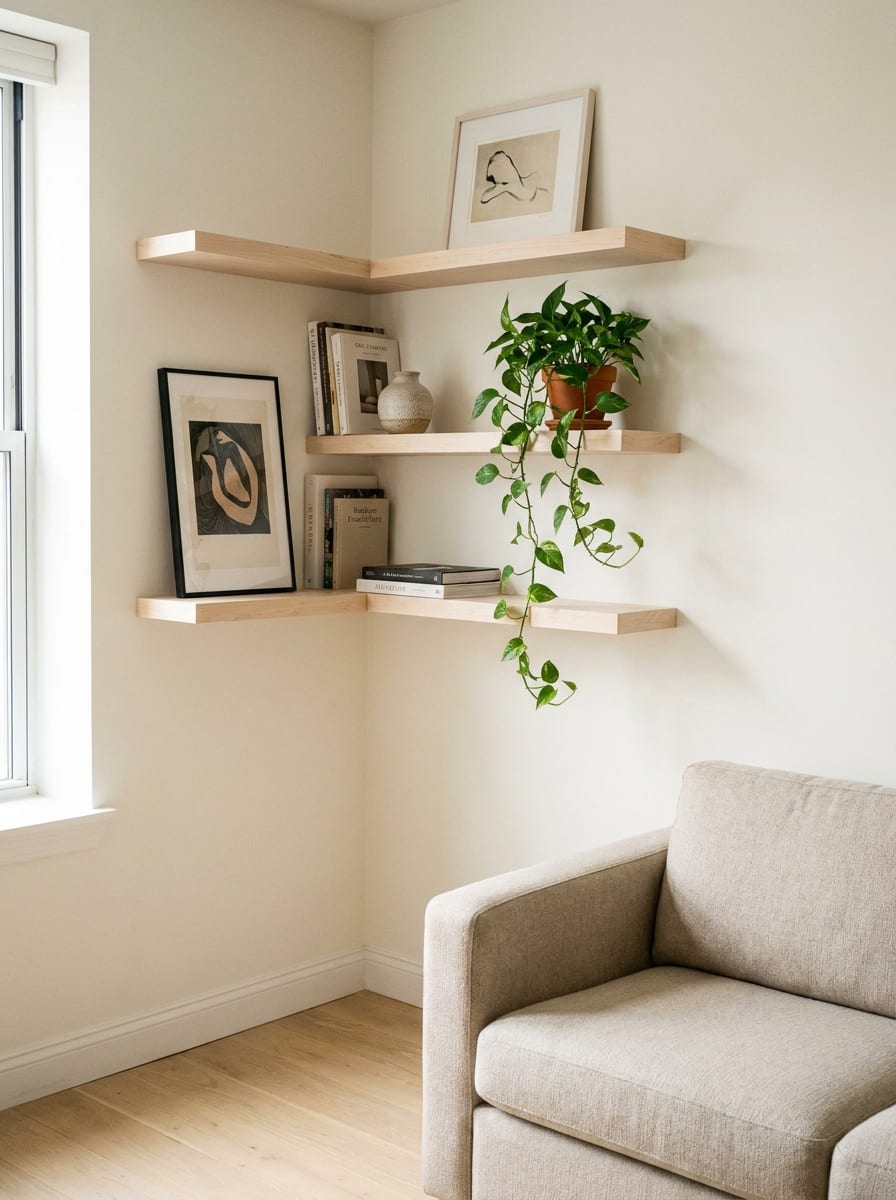
Some corners are too small for furniture but still visually empty. Floating shelves can use the vertical area without sacrificing floor space.
The trick is not to build an entire tower of tiny decorative shelves. Two or three well-spaced shelves usually look more intentional than six closely stacked ones.
Use them for:
- A few books
- One ceramic piece
- A small trailing plant
- Framed art
- A candle
- A useful basket
Keep shelf depth modest
In a tight corner, a deep shelf can project into shoulder space. Something around 6 to 8 inches deep may be enough for decorative use. For books or heavier objects, use shelves designed and mounted for the appropriate load.
Respect the corner geometry
Floating shelves can meet in an L-shape, or one wall can carry slightly longer shelves while the adjacent wall stays mostly open. You do not have to perfectly mirror both sides; asymmetry often feels lighter.
Best for
- Corners beside sofas
- Areas near windows
- Rooms without space for a bookcase
- Renters who can install approved wall storage
3. Pair One Tall Plant With a Slim Floor Lamp
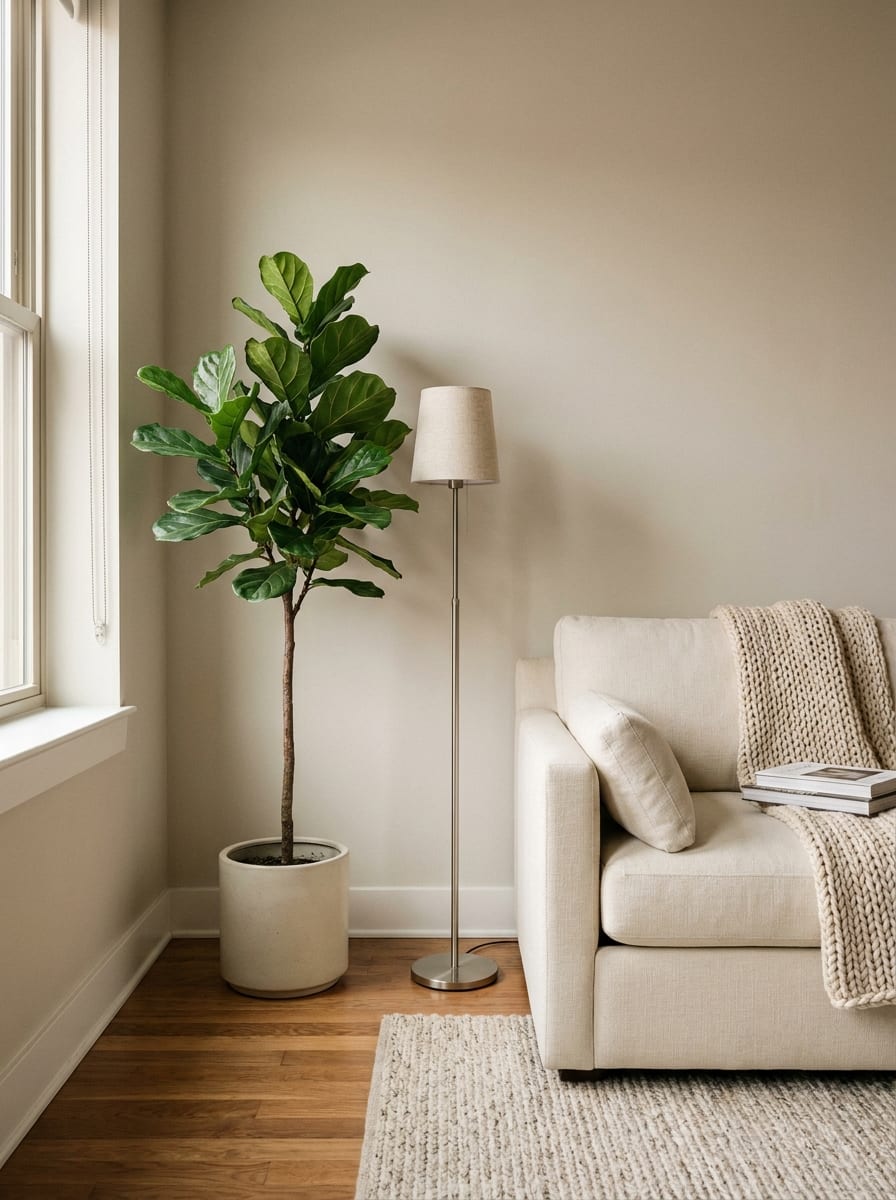
A corner does not always need storage or seating. Sometimes the room simply needs height and softness.
A tall plant paired with a slender floor lamp can fill vertical space while using relatively little floor area.
This works especially well when the corner sits beside a sofa, near a window, between two blank walls, or opposite heavier furniture. The plant brings organic shape while the lamp provides function. Together, they can visually balance a sofa, media console, or bookcase without adding another cabinet.
Do not use two bulky bases
The floor lamp should have a narrow base if the plant pot already occupies most of the corner. A tripod lamp plus a large planter often takes up more floor space than expected.
Watch the plant spread
Large leaves can extend well beyond the pot footprint. Measure the plant at its widest point, not only the planter diameter.
Consider actual light
If the corner is dark, choose a plant that tolerates lower light—or use a quality faux plant rather than constantly replacing a struggling real one.
4. Turn the Corner Into a Compact Workstation
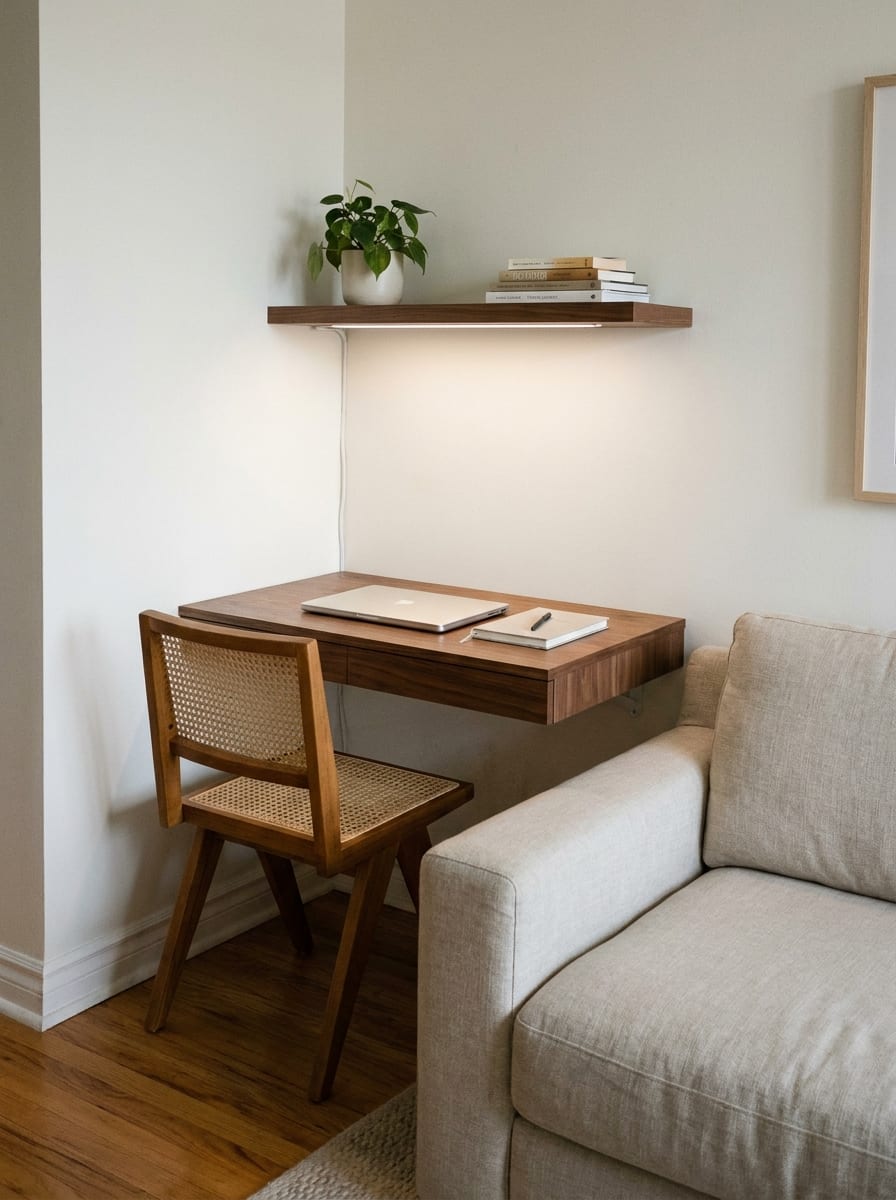
In a small apartment, the living room may need to function as an office too. An awkward corner can sometimes hold a compact desk more successfully than another decorative object.
The best setup is usually shallow. Look for:
- Wall-mounted desk
- Narrow writing desk
- Triangular corner desk
- Slim secretary-style desk
A work surface around 16 to 20 inches deep may be enough for a laptop and notebook without projecting as far as a conventional office desk.
Chair storage matters
The chair should tuck mostly under the desk when not in use. Otherwise, the workstation footprint is much larger than the desk dimensions suggest.
Use the wall vertically
Add one small shelf or task light above the desk instead of filling the work surface.
Keep the office visually connected
Choose a desk finish that relates to the living room furniture. A work zone feels less intrusive when it looks like part of the room rather than a separate office dropped into the corner.
5. Use a Slim Vertical Bookcase Instead of a Wide Storage Unit
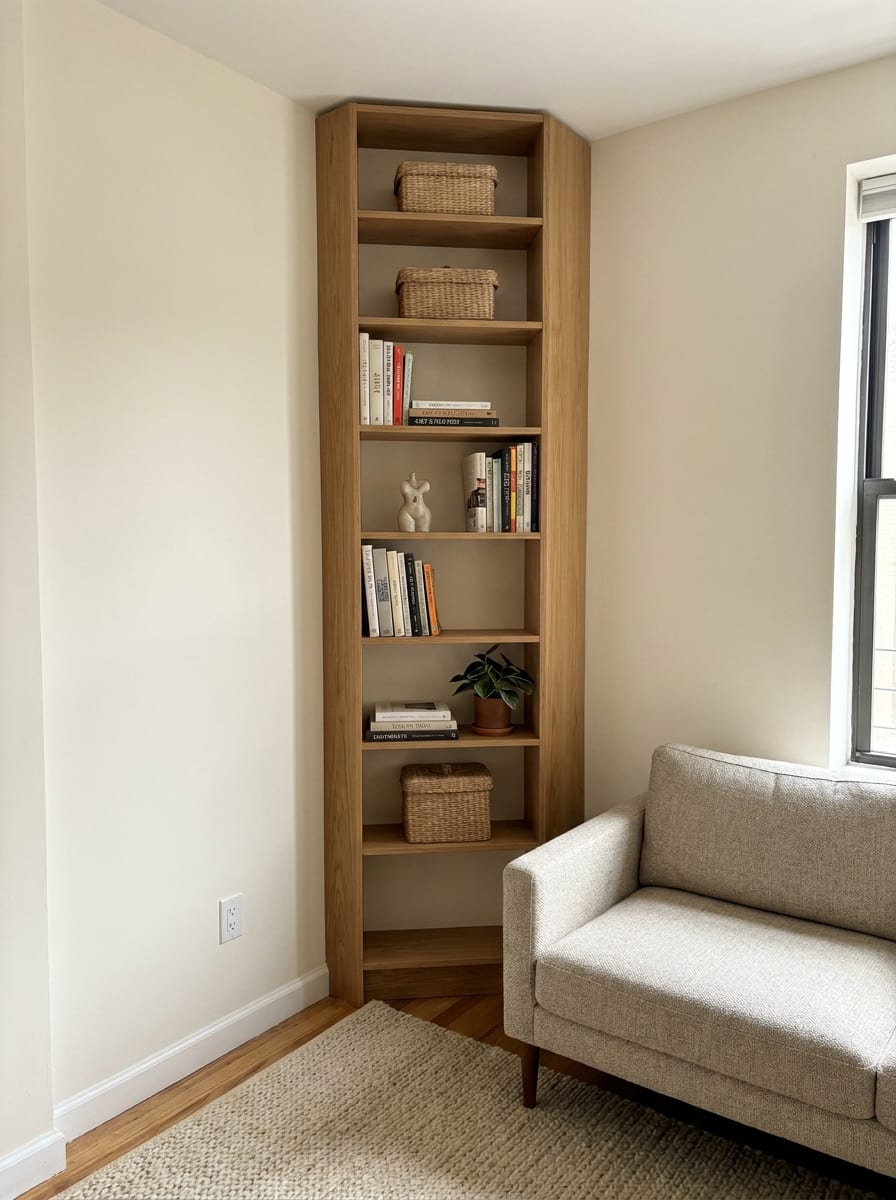
When storage is the real problem, use the corner’s height instead of its width. A narrow bookcase can hold useful items while keeping the footprint relatively small.
Look for a piece with:
- Shallow depth
- Narrow width
- Open or visually light sides
- Enough height to use vertical space
A bookcase around 10 to 12 inches deep is often less intrusive than a full cabinet, depending on what you need to store.
Avoid overfilling it
A tall shelf packed edge to edge can make the corner feel heavier than a wider low piece. Mix closed and open storage: books on one shelf, a small basket on another, one decorative object, and a little negative space.
Anchor tall furniture properly
Any tall freestanding shelf should be secured according to the manufacturer’s anti-tip instructions. This matters even more in small rooms where furniture gets bumped frequently.
6. Add a Corner Bench When You Need Both Seating and Hidden Storage
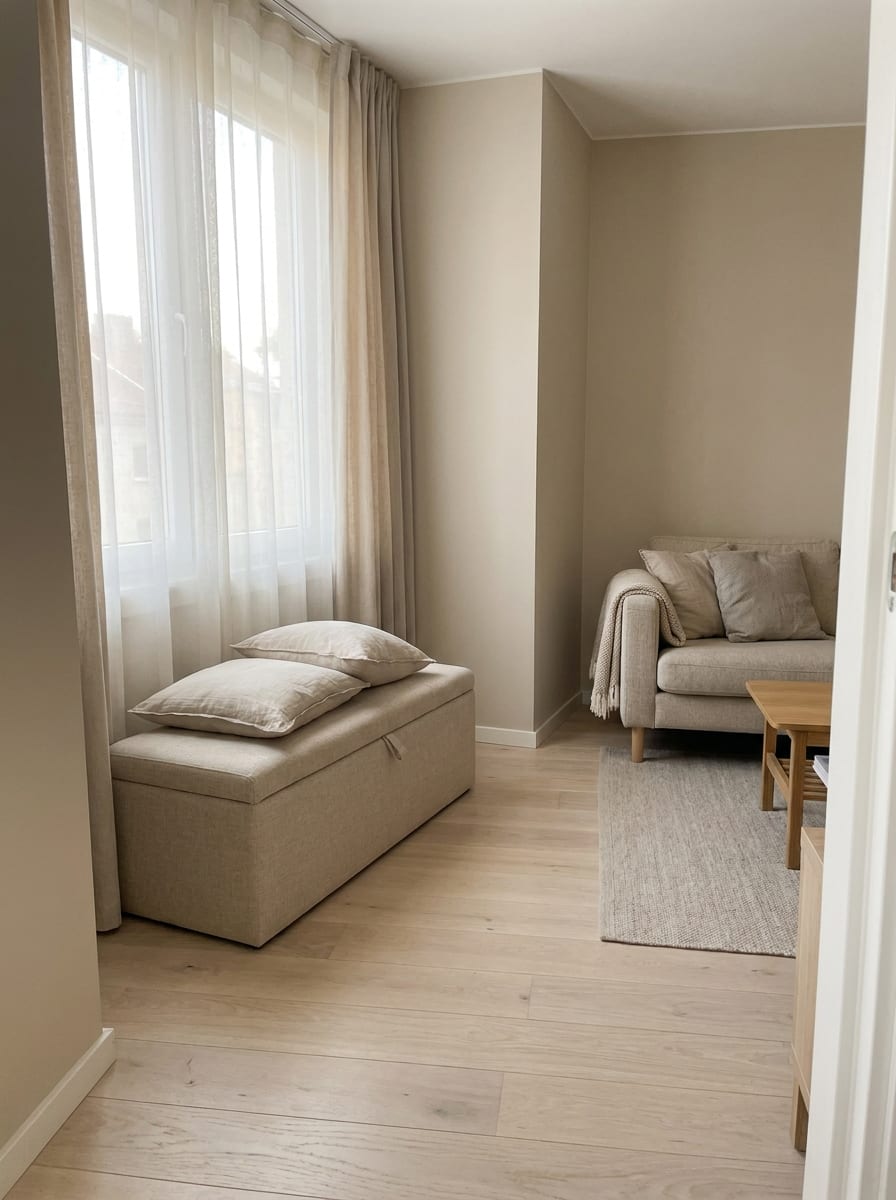
A bench can solve two problems at once: extra seating and storage. But in a small living room, it works best when the bench is clearly tied to the room layout.
A random upholstered bench pushed into a corner can look like leftover furniture. Instead, treat it as a small destination:
- Window-side seating
- Toy storage
- Blanket storage
- Occasional guest seating
- A perch near the entry side of the room
Keep the seat depth reasonable
A bench does not need to be as deep as a lounge chair. Something around 16 to 20 inches deep can provide occasional seating while preserving more floor area.
Choose lift-up or drawer storage carefully
A lift-up lid needs vertical clearance, while drawers need floor clearance in front. Think about how the storage actually opens before placing the bench.
Add one or two cushions only
Too many pillows make a narrow bench visually larger and reduce usable seating.
7. Put the Lighting on the Wall When the Corner Cannot Handle More Furniture
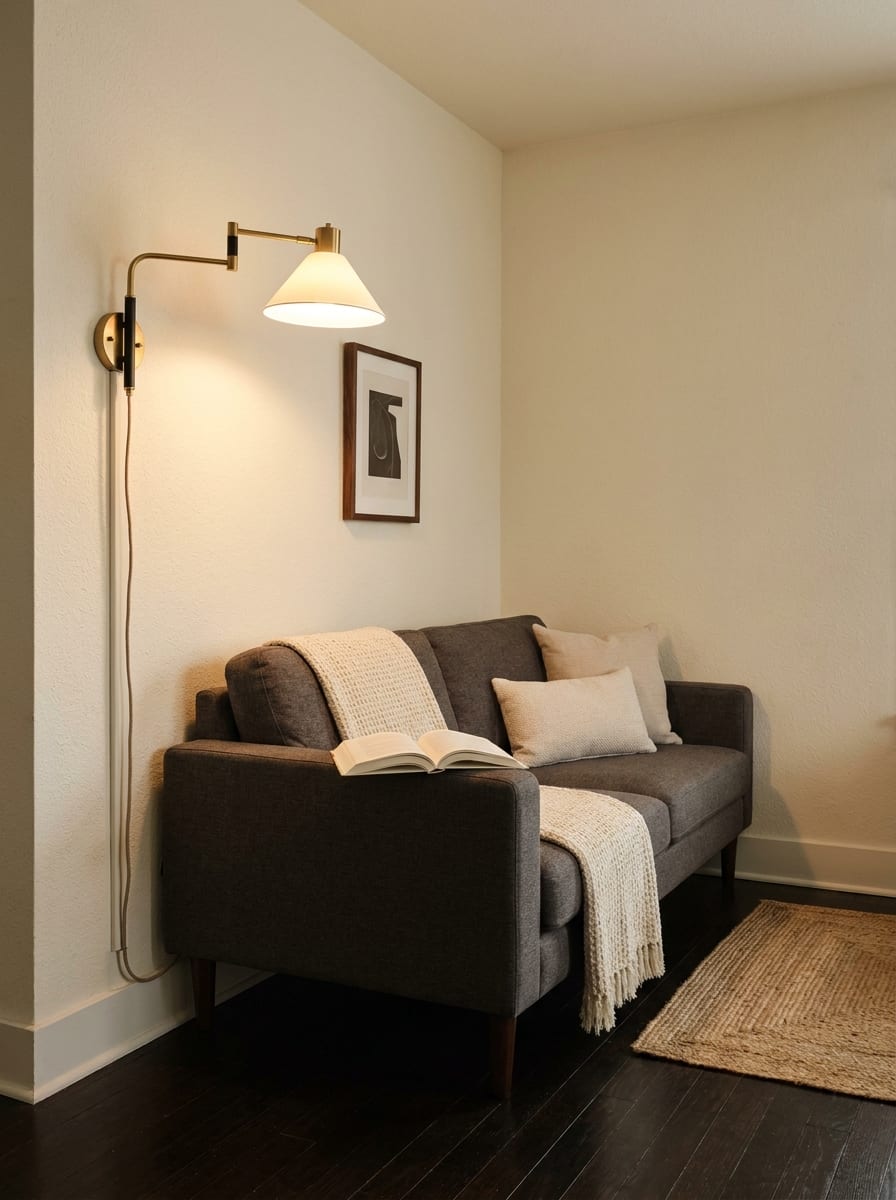
Some corners do not need another object on the floor. They simply need light.
A wall-mounted swing-arm lamp or compact sconce can make an unused corner feel intentional while keeping the floor completely clear. This works well beside a sofa, accent chair, bookshelf, or small art arrangement.
Why it helps small spaces
Floor lamps have bases, and table lamps require tables. Wall lights give you illumination without creating another furniture footprint.
For renters
Plug-in wall sconces can work where hardwiring is not practical. Keep the cord neatly routed. Do not rely on adhesive mounting unless the product and mounting system are rated appropriately for the fixture weight.
Best visual effect
Aim the light toward the seating area, the wall, artwork, or a reading chair rather than directly into the room.
8. Make a Small Coffee or Bar Corner Instead of Adding More Living-Room Furniture
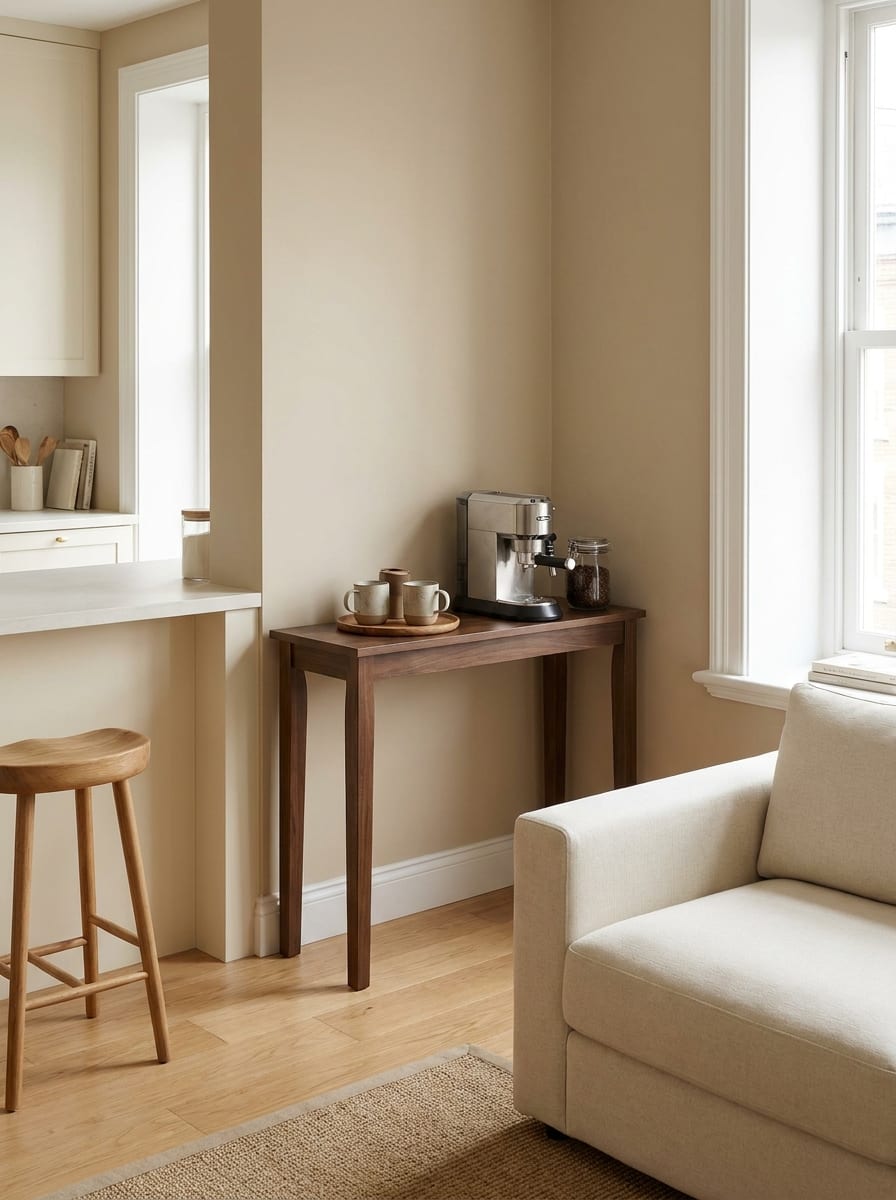
If the corner sits near the kitchen or dining side of the living room, a compact beverage station can be more useful than another chair or shelf.
The key is to keep it shallow:
- Narrow console
- Small cabinet
- Bar cart parked neatly against the wall
Then limit the setup to one function:
- For a coffee corner: Coffee machine, mugs, small jar, and a tray
- For a bar corner: A few bottles, glasses, one tray, and a small ice bucket
Do not turn it into open storage for everything
The corner works when it has a clear identity. A bar cart carrying mail, plants, books, candles, kitchen appliances, and cleaning supplies will quickly feel chaotic.
Consider traffic
Avoid placing this in a corner that sits directly in the main route between living room and kitchen. The person using the station should be able to stand there without blocking the room.
9. Create One Sculptural Moment Instead of Filling the Corner With Furniture
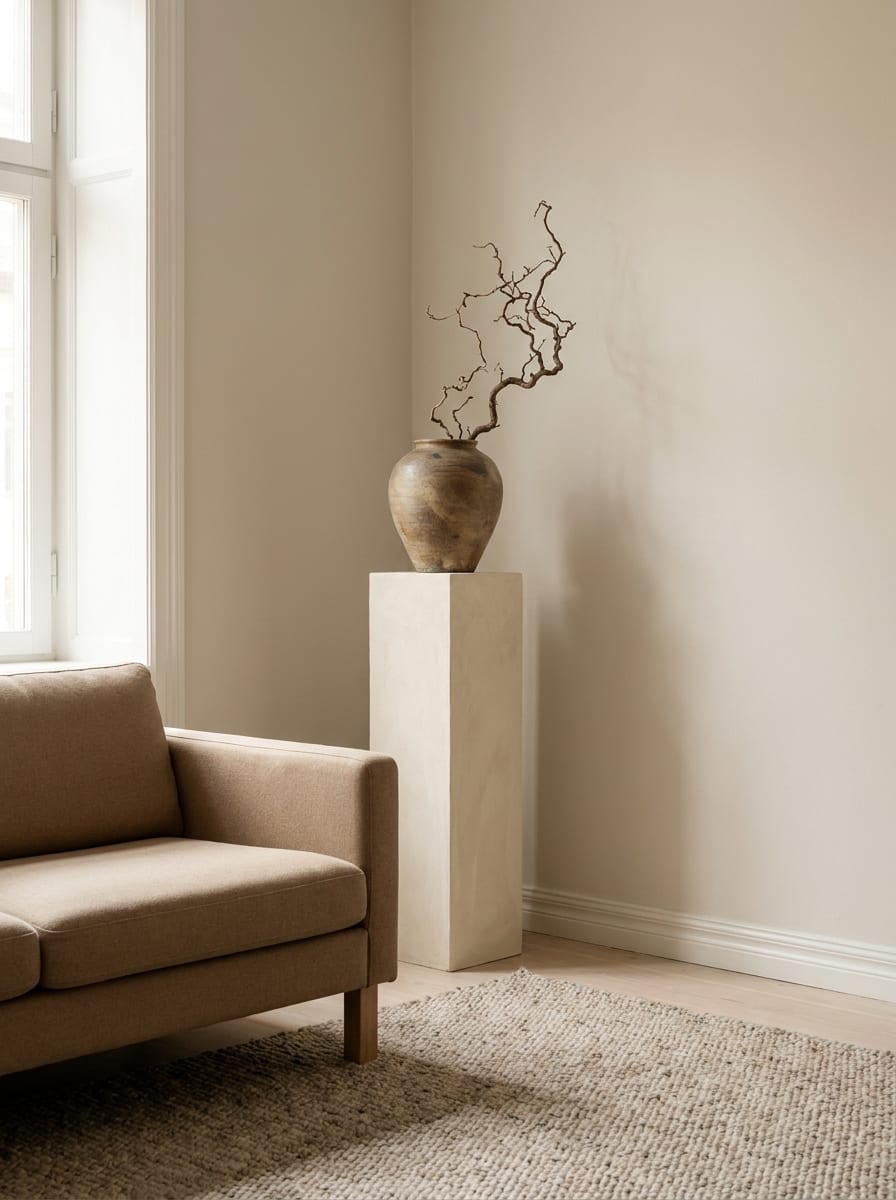
Not every corner needs to become storage. If the room already functions well, the corner may simply need a visual anchor.
One pedestal or narrow stand with one sculptural object can give the area purpose without increasing clutter:
- Ceramic vessel
- Sculptural lamp
- Large branch arrangement
- Small art object
- Stone bowl
Keep the composition singular
The strength of this approach is restraint. Do not add: pedestal + plant + basket + floor lamp + wall art + books. Choose one focal object and let the negative space around it become part of the design.
Best for
- Visually calm living rooms
- Corners opposite a sofa
- Rooms with enough storage elsewhere
- Areas too tight for functional furniture
Scale carefully
The object should have enough height to register from across the room but not be so wide that it intrudes into circulation.
10. Leave the Corner Mostly Empty When the Room Needs Breathing Space
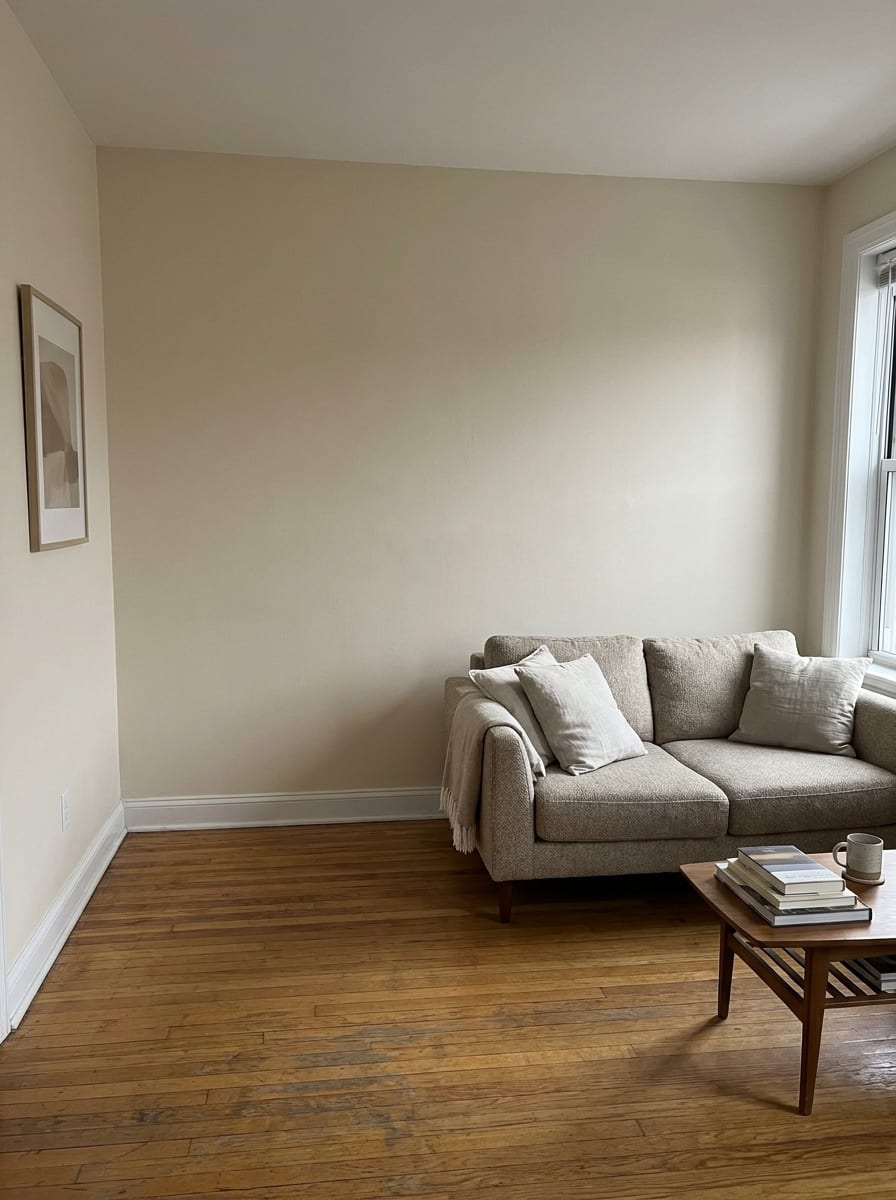
This is the solution people resist most: sometimes the corner should stay empty.
A small room does not become more functional simply because every wall and corner contains something.
An empty corner can:
- Preserve a walkway
- Make nearby furniture feel less crowded
- Expose more flooring
- Allow curtains to move
- Make a sofa look intentionally placed
- Create visual rest
How to make an empty corner look intentional
You do not necessarily need to add floor furniture. Instead, use one subtle element nearby: a small artwork, light from an adjacent lamp, a curtain panel, architectural molding, or paint color. Then stop.
A useful test
Remove everything from the corner for a few days. If the room suddenly feels easier to walk through, brighter, or calmer, you may have found the best solution. Not every empty area is wasted. In small-space design, negative space is functional too.
How to Decide What an Empty Corner Actually Needs
Do not begin with decor. Begin with the room’s missing function. Ask these questions in order:
- Do you need another seat? If yes, test whether a chair can fit without entering the walkway. If no, do not add one simply because corners “should” have chairs.
- Do you need storage? If yes, use the vertical wall before adding a wide cabinet.
- Do you need more light? A lamp or wall sconce may solve the entire problem.
- Do you need a work surface? A shallow desk can turn an underused corner into a practical workstation.
- Is the room already functioning well? Then you may only need visual balance—or nothing at all.
This sequence prevents random furniture from accumulating in small rooms.
Measure the Furniture Footprint, Not Just the Corner
A corner may measure 30 inches across, but that does not automatically mean a 29-inch chair fits. Furniture requires usable space around it: arm width, seat depth, door swings, curtain clearance, drawer opening, lamp base, and the space needed to sit down or stand up.
Use painter’s tape to mark the proposed footprint on the floor. Then live with that outline for a day: walk past it, open nearby doors, sit on the sofa, and carry laundry through the room. A taped rectangle often reveals problems that dimensions on a website do not.
How Much Walking Space Should You Keep Around a Corner?
For a primary path through a living room, around 30 to 36 inches is a useful comfort target where the layout allows it.
Very small apartments may have tighter existing conditions, so this is not a rigid rule. What matters is whether the new corner setup makes the route worse.
Always separate circulation space from furniture spacing: they are not the same thing.
What Works Beside a Sofa?
The corner beside a sofa is one of the easiest places to overcrowd. Instead of automatically adding a side table, consider what the sofa actually needs:
- If you need light: Use a floor lamp or wall light.
- If you need a drink surface: Use a narrow pedestal table.
- If you need storage: Use a slim shelf or closed cabinet only if walkway width allows.
- If you need softness: Use a tall plant.
- If you need nothing: Leave it open. Not every sofa arm needs a table next to it.
What Works in a Corner Beside a Window?
Window corners have extra constraints: curtain movement, radiator clearance, HVAC vents, window access, and natural light.
Good options include:
- Reading chair
- Small bench
- Plant
- Narrow desk
Avoid tall bookcases that block daylight unless that tradeoff is intentional. A beautiful corner should not make the entire room darker.
How to Style a Corner Without Making It Look Cluttered
Use a simple hierarchy:
- One main piece: Chair, shelf, desk, plant, bench, or pedestal.
- One supporting piece: Lamp, table, artwork, or small object.
- One optional soft detail: Cushion, throw, plant, or basket.
Then stop. If the corner has five equally noticeable objects, there is no focal point.
Tall vs. Low Corner Furniture
Height changes how much visual weight the corner carries:
- Tall pieces (bookcase, plant, floor lamp): Use when you need vertical storage, visual balance, or height beside low furniture.
- Low pieces (bench, compact cabinet, low pedestal): Use when you want open sightlines, easier circulation, and less visual mass.
Small Living Room Corner Mistakes to Avoid
Filling the corner just because it is empty
An empty corner is not automatically a design problem.
Pushing furniture hard against both walls
A chair or table can look trapped instead of intentionally placed.
Ignoring the walkway
A beautiful corner is not worth creating if you have to walk around it constantly.
Using a chair that nobody can actually sit in
Decorative seating still needs to be usable.
Choosing storage that is too deep
Shallow vertical storage often works better than deep cabinetry.
Blocking curtains or windows
A corner solution should not interfere with light or ventilation.
Combining too many small objects
Several tiny pieces often create more clutter than one stronger element.
Forgetting opening clearance
Cabinet doors, drawers, and storage benches need room to operate.
Should You Put a Plant in an Empty Living Room Corner?
Plants work well because they add height without necessarily adding much visual heaviness. But the plant needs to suit the conditions: check natural light, temperature, air vents, and maximum plant width.
A plant with large spreading leaves can require much more room than its pot suggests. If the corner receives very little light, choose a suitable low-light species or use a convincing faux plant.
Should You Put a Chair in Every Empty Corner?
No. A chair makes sense when you need another seat, it relates to the sofa, and there is enough room to enter and exit comfortably. If nobody would naturally sit there, choose another function or keep the space open.
A Simple Corner Decision Guide
- Need seating? Choose a compact chair or bench.
- Need storage? Choose shallow vertical shelving.
- Need a workspace? Choose a slim desk.
- Need light? Use a floor lamp or wall sconce.
- Need visual softness? Use one tall plant.
- Need a decorative focal point? Use one sculptural object.
- Room already feels full? Leave the corner open.
Final Thoughts
The best small living room corner ideas do not begin with the question: “What can I put here?” They begin with: “What does this room still need?”
A reading chair works when you genuinely need another seat. A tall shelf works when storage is missing. A shallow desk works when the living room also needs to function as an office. A plant or lamp can balance the room without adding much furniture. And sometimes the most useful corner is the one you deliberately leave alone.
In a small living room, every piece affects how easily the room moves. So before filling the corner, protect the path first. Then choose one clear function.
FAQ
What should I put in an empty corner of a small living room?
Choose based on the room’s needs. Good options include a compact reading chair, tall plant, floor lamp, shallow desk, slim bookcase, floating shelves, storage bench, or one sculptural decorative piece.
How do you decorate a corner without making a small living room look crowded?
Use one main piece and keep the surrounding area simple. Avoid stacking several small furniture and decor items into the same corner.
Can you put a chair in a small living room corner?
Yes, if there is enough space for the chair and for people to move around it. Compact open-arm or narrow chairs usually work better than deep oversized lounge chairs.
What can I put in a corner instead of a chair?
Try a tall plant, slim bookcase, wall shelves, floor lamp, compact desk, storage bench, small coffee station, or a decorative pedestal.
How do I use a very small corner?
Use the wall rather than the floor. Floating shelves, a wall sconce, one artwork, or a narrow vertical plant can add function or balance without occupying much floor space.
Should every empty corner be decorated?
No. Leaving a corner empty can improve circulation, expose more floor, and make nearby furniture feel less crowded.
How do you turn a living room corner into a home office?
Use a shallow desk or wall-mounted work surface, tuck the chair underneath when not in use, and move storage and lighting onto the wall to keep the footprint compact.
What furniture is best for awkward corners?
Furniture with a narrow footprint and clear purpose works best. Look for slim bookcases, small benches, compact chairs, wall-mounted desks, pedestal tables, and shallow consoles.
How much clearance should I leave around corner furniture?
For a main walking route, around 30 to 36 inches is a useful comfort target where the room allows it. In non-walkway areas, furniture can sit closer together as long as it remains easy to use.