21 Small Bedroom Ideas for Couples That Keep Both People Happy
Discover 21 small bedroom ideas for couples sharing one small room, from split closets and sleep-friendly bedding to storage both partners will love.
In This Guide
Sharing a small bedroom with another person is the ultimate design stress test. One closet, one dresser, two sets of stuff — plus two bodies with different temperatures, schedules, and opinions about throw pillows. Most couples’ bedroom advice assumes a master suite. This is for the rest of us: one small room, two people, zero square feet to waste.
The ideas below solve the three real problems of a shared small bedroom: split the storage fairly, protect both people’s sleep, and decorate by agreement instead of by whoever cares more. Every one is renter-friendly.
Here are 21 small bedroom ideas for couples that keep both people happy.
1. Split the Closet Down the Middle
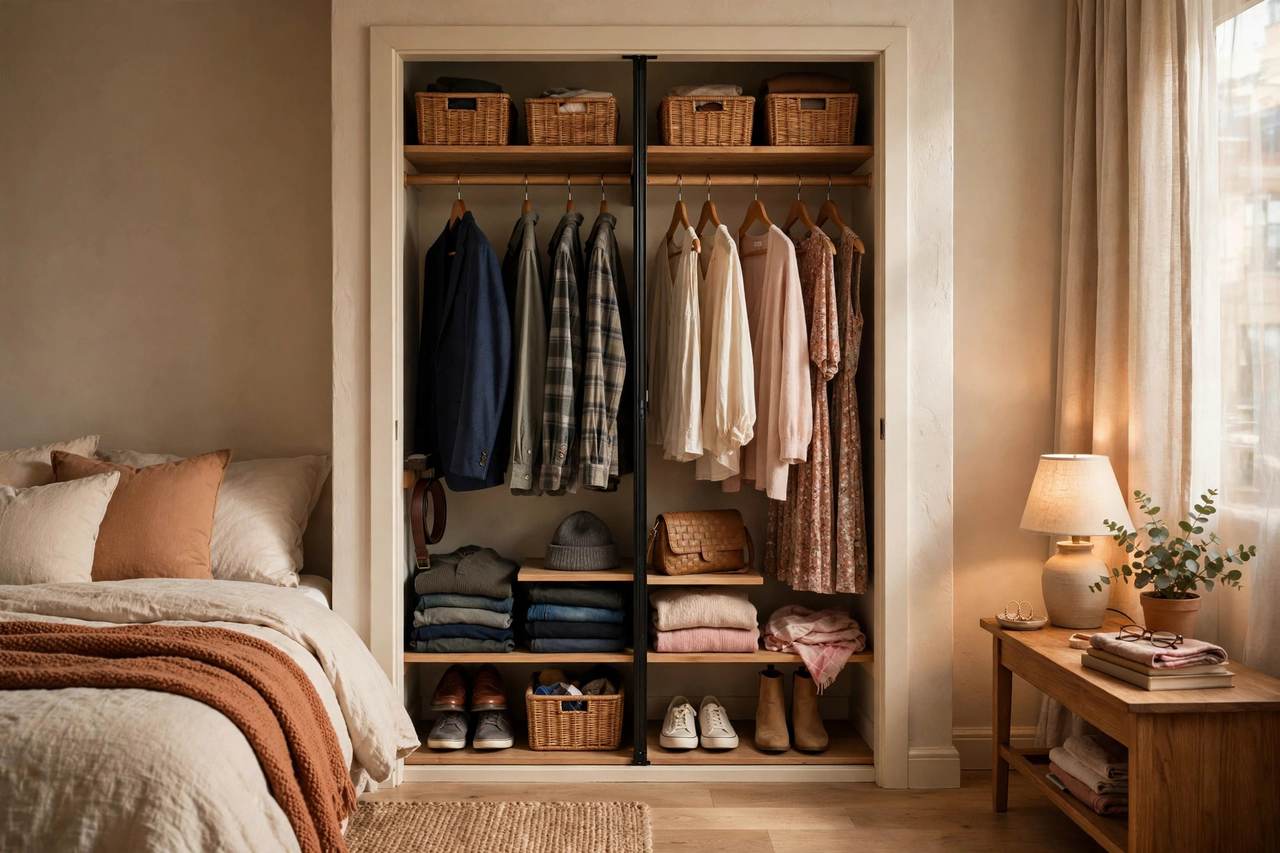
Nothing breeds resentment faster than one person colonizing 80 percent of a shared closet. Divide it visibly: his side, her side, equal hanging space, equal shelf space. A tension rod down the middle of a wide closet creates the boundary without a single screw.
Measure and mark the split together — literally. The person with more clothes does not automatically get more space; the split is equal, and overflow goes to under-bed bins (idea 7). Equality you can see prevents the slow creep that starts most closet wars.
Why it works
Closet conflict is never really about the closet. It is about fairness. A visible, agreed split removes the daily negotiation and the silent scorekeeping.
Best for
Couples with one closet, unequal wardrobes, and anyone who has ever said “whose shoes are THESE.”
2. Two Nightstands, Even Tiny Ones
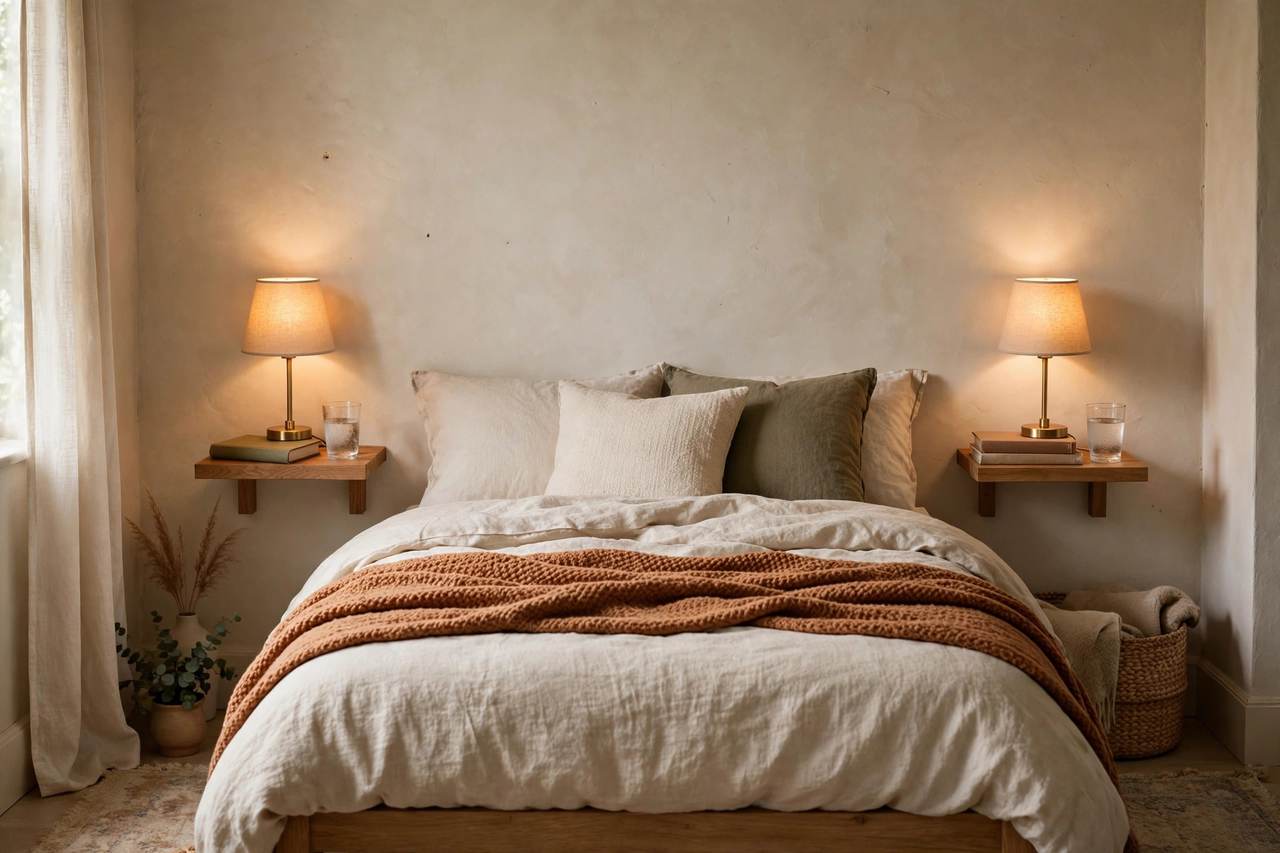
Every person needs a landing spot for their phone, water, glasses, and book. When the bed is wedged in a corner and only one side has a nightstand, the other person lives out of a pile on the floor. A 10-inch floating shelf on the wall side solves it for under $15.
Mount the shelf at mattress height plus 2 inches so it works like a real nightstand. If even a shelf will not fit, a bedside caddy that slides between mattress and frame holds the essentials. The rule is simple: both people get a spot, no exceptions.
Why it works
It is a small thing that signals a big thing: this room belongs to both of us equally. The floor pile is not just messy — it is a daily reminder that one person’s needs did not fit.
Best for
Beds pushed against walls, corner bedrooms, and couples where one person currently keeps everything on the floor.
3. The Scandinavian Sleep Method
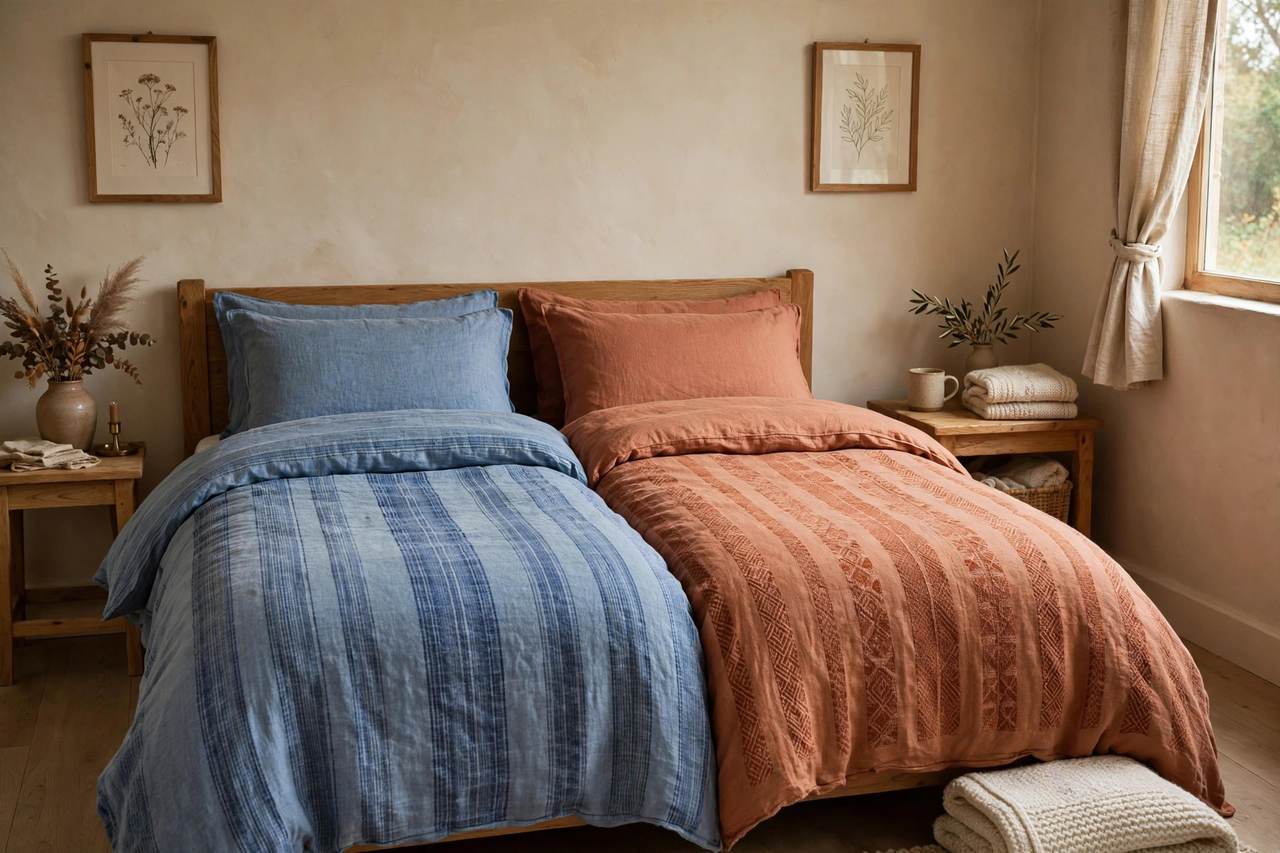
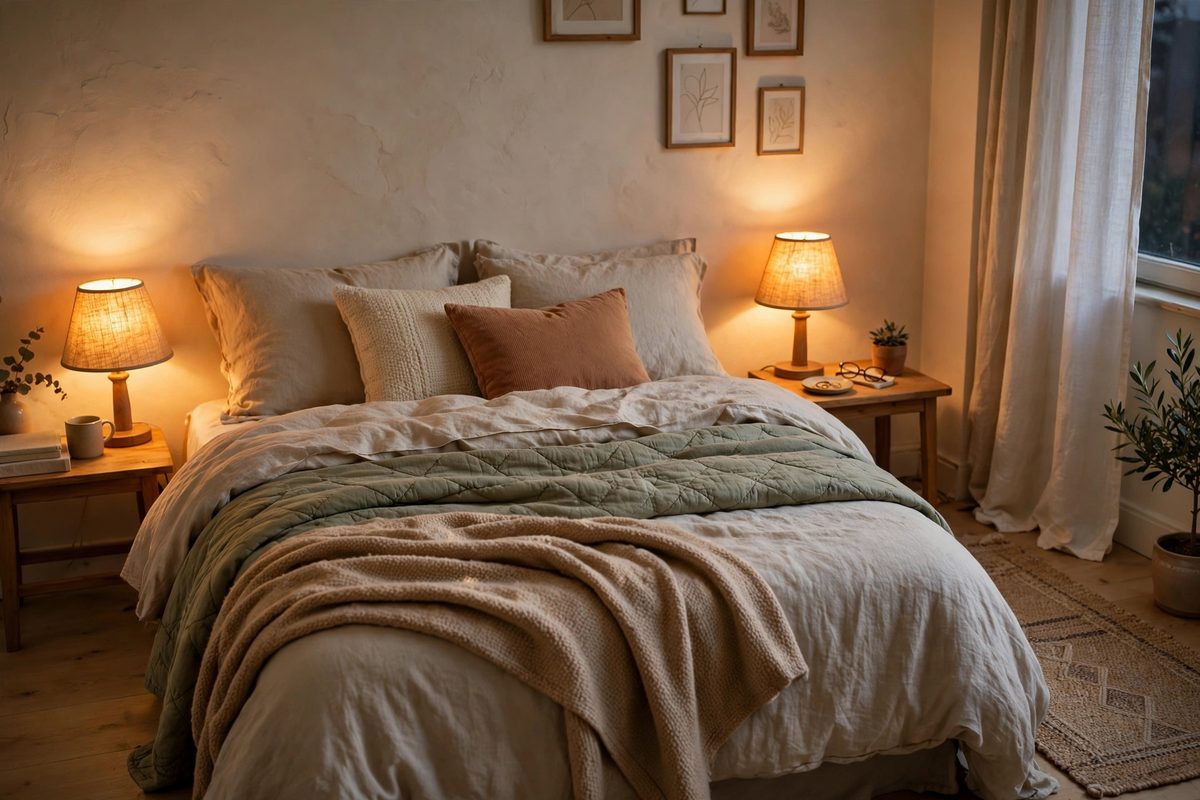
Two duvets on one bed. Each person gets their own — different weights if you run hot and cold. No more blanket tug-of-war, no more one person cocooned while the other freezes. Scandinavians have done this forever, and couples who try it rarely go back.
Use two twin duvets on a queen or king bed, each in a matching or complementary cover so the bed still looks like one bed. The partner who sleeps hot takes a lighter fill; the cold sleeper takes winter weight. Sheet stays shared — only the top layer splits.
Why it works
Most sleep conflict is temperature conflict wearing a blanket disguise. Separate duvets end the negotiation permanently, and both people actually sleep through the night.
Best for
Couples with a 10-degree temperature gap, blanket thieves, and light sleepers woken by covers being yanked.
4. His-and-Hers Reading Lights
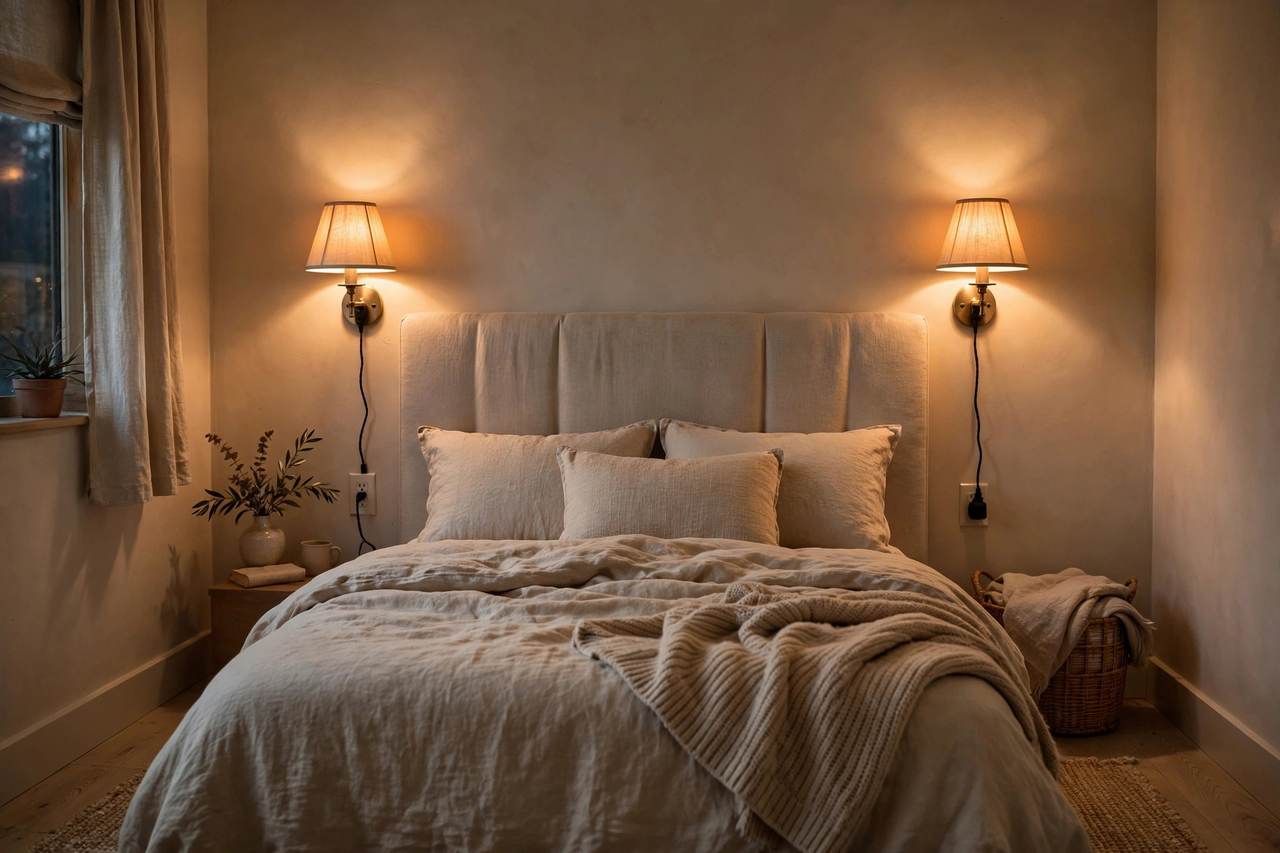
One overhead light means one person’s bedtime ends the other person’s reading. Give each side its own focused light — plug-in sconces, clip-on headboard lamps, or wall-mounted spots with individual switches. Each person controls their own pool of light and their own bedtime.
Warm 2700K bulbs keep the light sleep-friendly, and a focused beam (not a wide shade) keeps it off your partner’s pillow. Battery-operated options exist if outlets are scarce, though plug-in is more reliable for nightly use.
Why it works
Different bedtimes are the norm, not the exception. Individual lights turn “lights out” from a nightly negotiation into a non-issue.
Best for
Couples with different sleep schedules, readers married to non-readers, and shift workers.
5. White Noise for the Light Sleeper
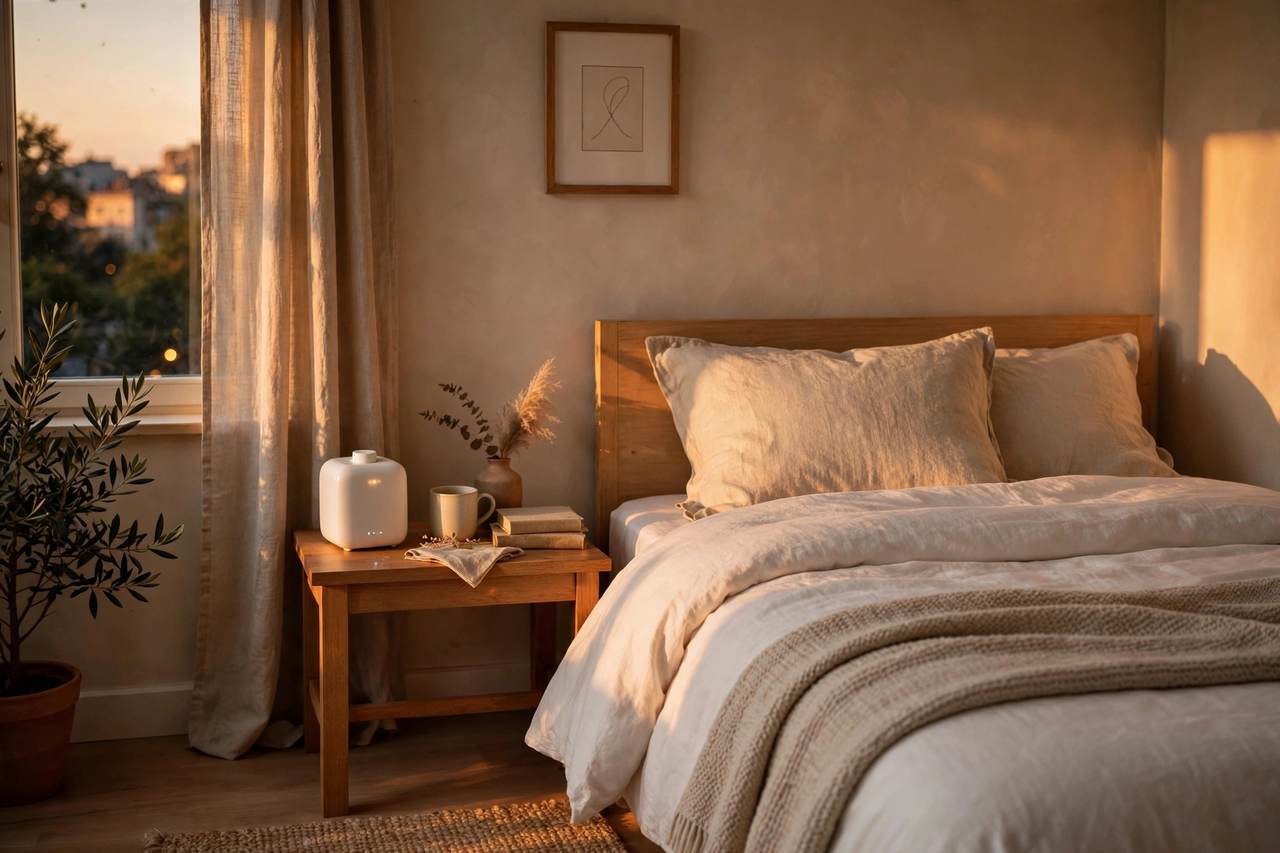
Snoring, teeth grinding, 5 a.m. alarms, restless turning — in a small bedroom there is nowhere to escape a partner’s sounds. A white noise machine on the light sleeper’s nightstand masks the intermittent noises that wake people, while letting steady sounds fade into the background.
Place it between the two sleepers, closer to the light sleeper, at about the volume of a quiet conversation. Machines beat phone apps: no notifications, no dying battery, no blue screen glowing at 2 a.m.
Why it works
It is cheaper than a sleep divorce and kinder than earplugs every night for a decade. Most couples report the snoring “disappears” within a week.
Best for
Snorers and the people who love them, different alarm times, and thin apartment walls generally.
6. The Charging Station Treaty
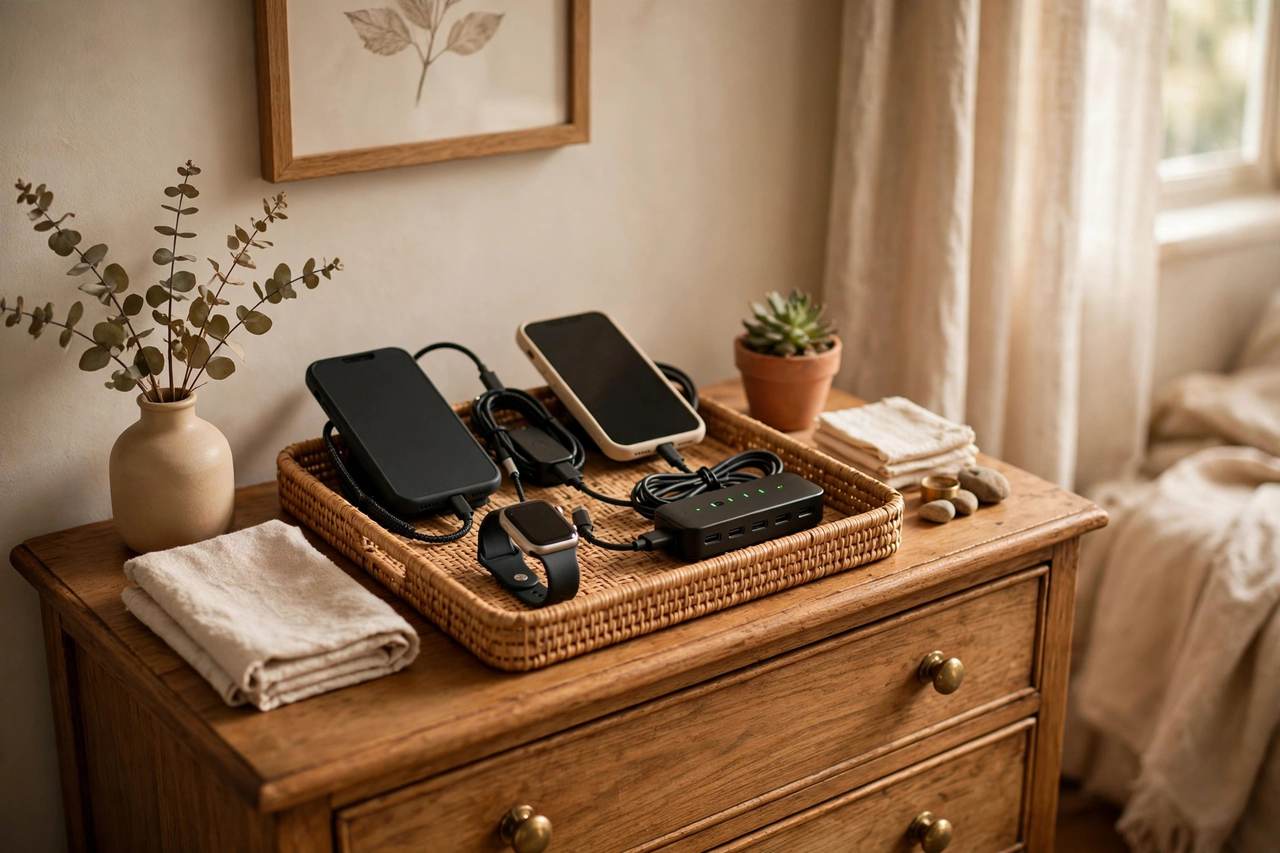
Two phones, two watches, earbuds, a tablet — times two people, that is a cable nest that eats a whole nightstand. Consolidate everything into one charging station on the dresser: a small tray or box with a multi-port charger and short cables, one labeled spot per device.
The treaty part: devices live here overnight, not in bed. Both people agree, both people benefit — fewer 1 a.m. screen glows, fewer cables strangling the lamp. If one outlet serves the whole station, a single power strip inside a cable box keeps it tidy and safe.
Why it works
It solves two problems at once: the cable mess and the phones-in-bed habit. One organized station replaces six chargers sprawled across two nightstands.
Best for
Gadget-heavy couples, tiny nightstands, and anyone whose bed currently has more cables than sheets.
7. Under-Bed Bins, Labeled Per Person
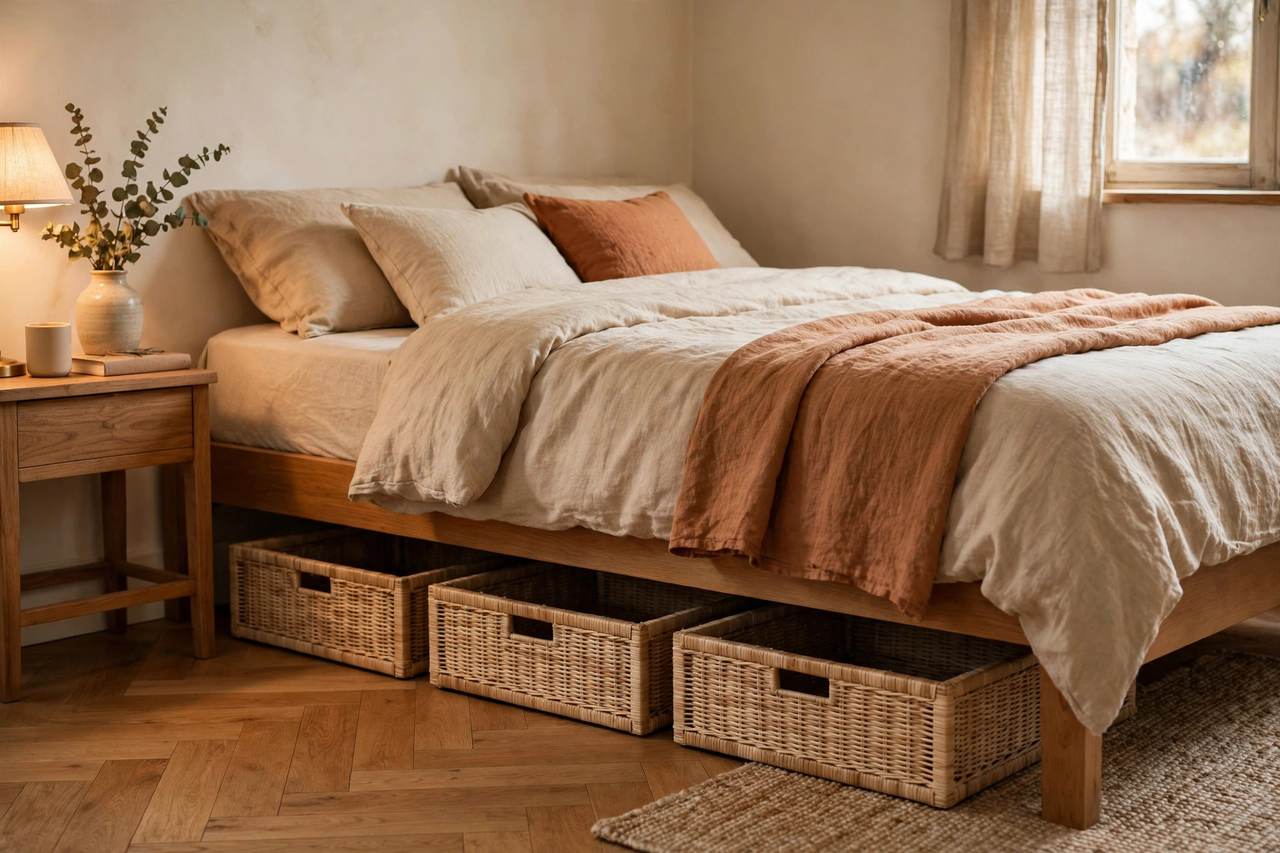
When the closet and dresser are full, the space under the bed is the couple’s second closet — but only if it is divided. Two labeled bins per person (off-season clothes, shoes, keepsakes) keeps one partner’s overflow from swallowing the other’s.
Use matching bins so it looks intentional, not like storage-unit overflow. Flat bins under 7 inches high fit under most bed frames; if your bed sits low, risers add 3 to 5 inches of clearance for about $15. Label the ends facing out so nobody has to drag out all four bins to find the winter boots.
Why it works
It extends the fairness principle of idea 1 into the room’s biggest hidden volume. Labeled, divided bins mean nobody’s stuff migrates into nobody’s space.
Best for
One-closet couples, seasonal wardrobes, and small bedrooms with no linen closet.
8. The Compromise Palette
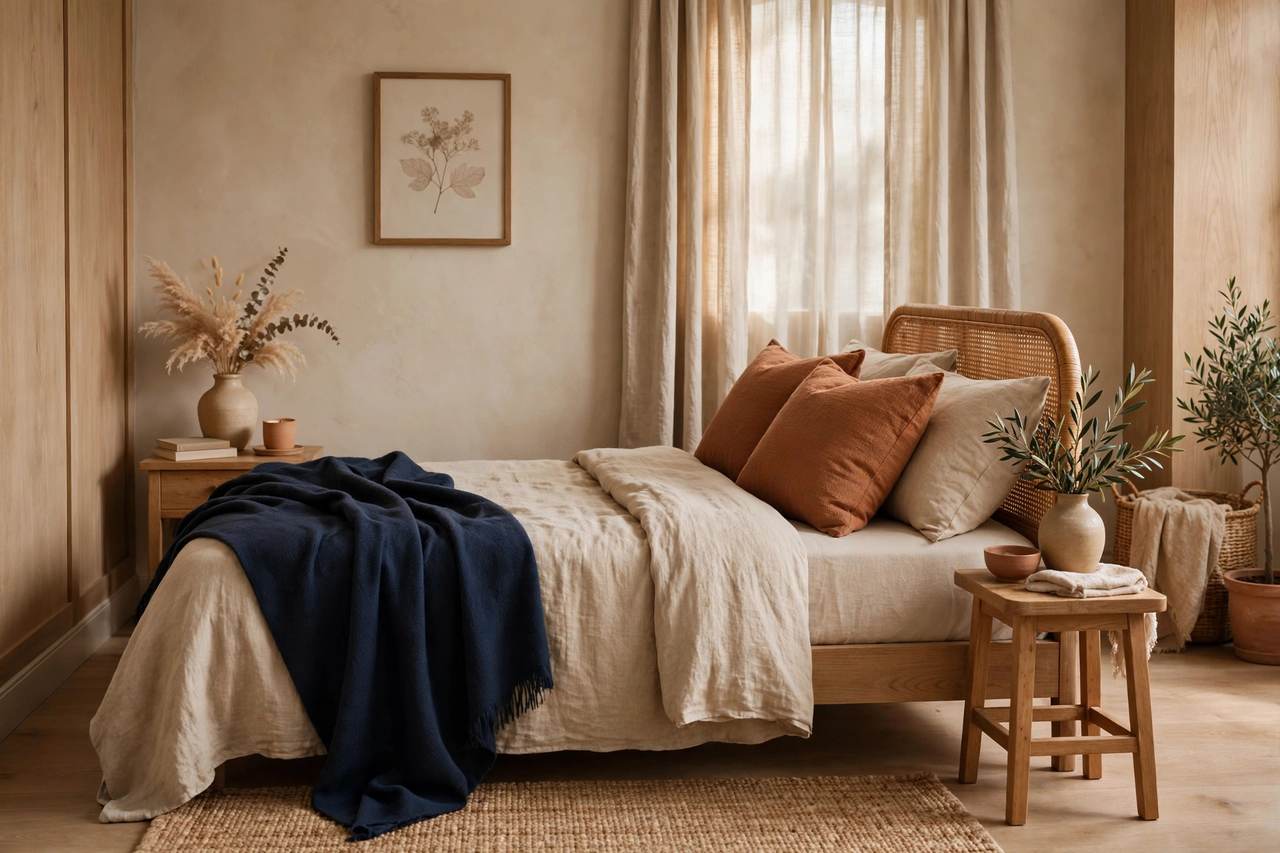
He wants charcoal and leather; she wants blush and rattan. The answer is a neutral base you both tolerate — warm white, greige, soft gray — plus one accent color each, used in small doses. His navy throw, her terracotta pillows, one calm room.
Keep the big surfaces neutral (bedding, curtains, rug) and let accents live in things that are cheap to swap: pillow covers, a throw, art prints. If tastes truly collide, the 60-30-10 rule keeps it civil: 60 percent shared neutral, 30 percent one partner’s lean, 10 percent the other’s.
Why it works
Nobody fully wins, which means nobody fully loses. Small doses of personal taste read as personality; whole-room takeovers read as territory marking.
Best for
Couples with opposite aesthetics, newly moved-in partners, and anyone currently losing the throw-pillow war.
9. Blackout for the Day Sleeper
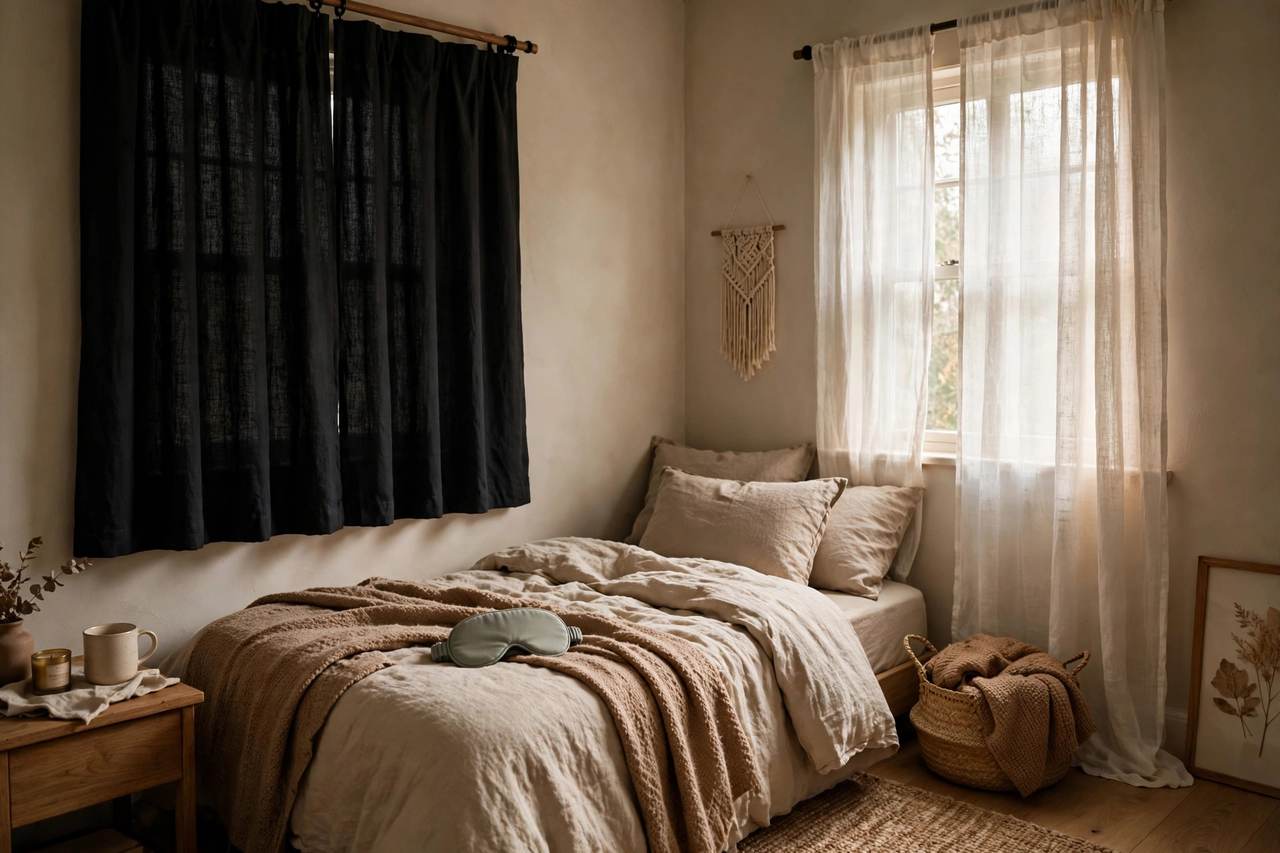
Shift workers and late sleepers need darkness; early risers want morning light. Full blackout curtains punish the early bird. The compromise: blackout on the window nearest the day sleeper’s side, light-filtering on the other — or simply a quality contoured sleep mask, which costs $15 and requires zero installation.
If you go the curtain route, tension rods inside the window frame avoid drilling, and portable blackout shades with suction cups work for renters. The mask is the path of least resistance and, honestly, the one most couples end up with.
Why it works
It decouples one person’s darkness from the other person’s morning. Both people get their preferred wake-up without a 6 a.m. argument about curtains.
Best for
Shift workers, weekend sleepers-in, and east-facing bedrooms.
10. The Morning Relay
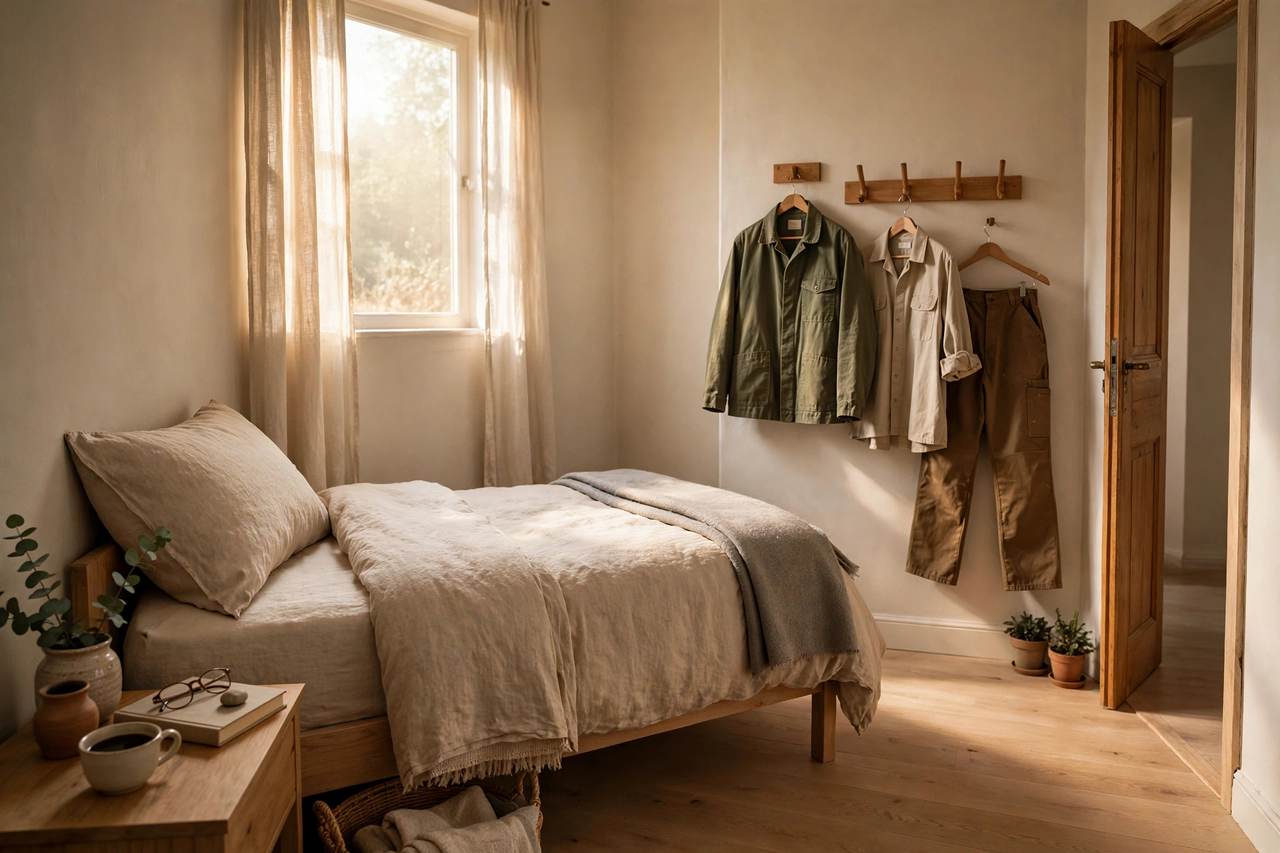
Two people getting ready in one small bedroom at the same time is a collision sport. Stagger the routine instead: Person A showers while Person B dresses in the bedroom, then swap. The bedroom never holds two full morning routines at once.
Support the relay with staging: work clothes laid out the night before (on a hook, not the floor), and the bathroom caddy ready to grab. The whole system collapses if one person’s “quick shower” is 25 minutes — agree on the timing honestly.
Why it works
It is a scheduling fix, not a space fix, which is good because you cannot buy more space. Fifteen staggered minutes eliminate the 7:30 a.m. bottleneck entirely.
Best for
Couples with overlapping work schedules, one-bathroom apartments, and slow dressers married to fast ones.
11. Two Hampers, Zero Blame
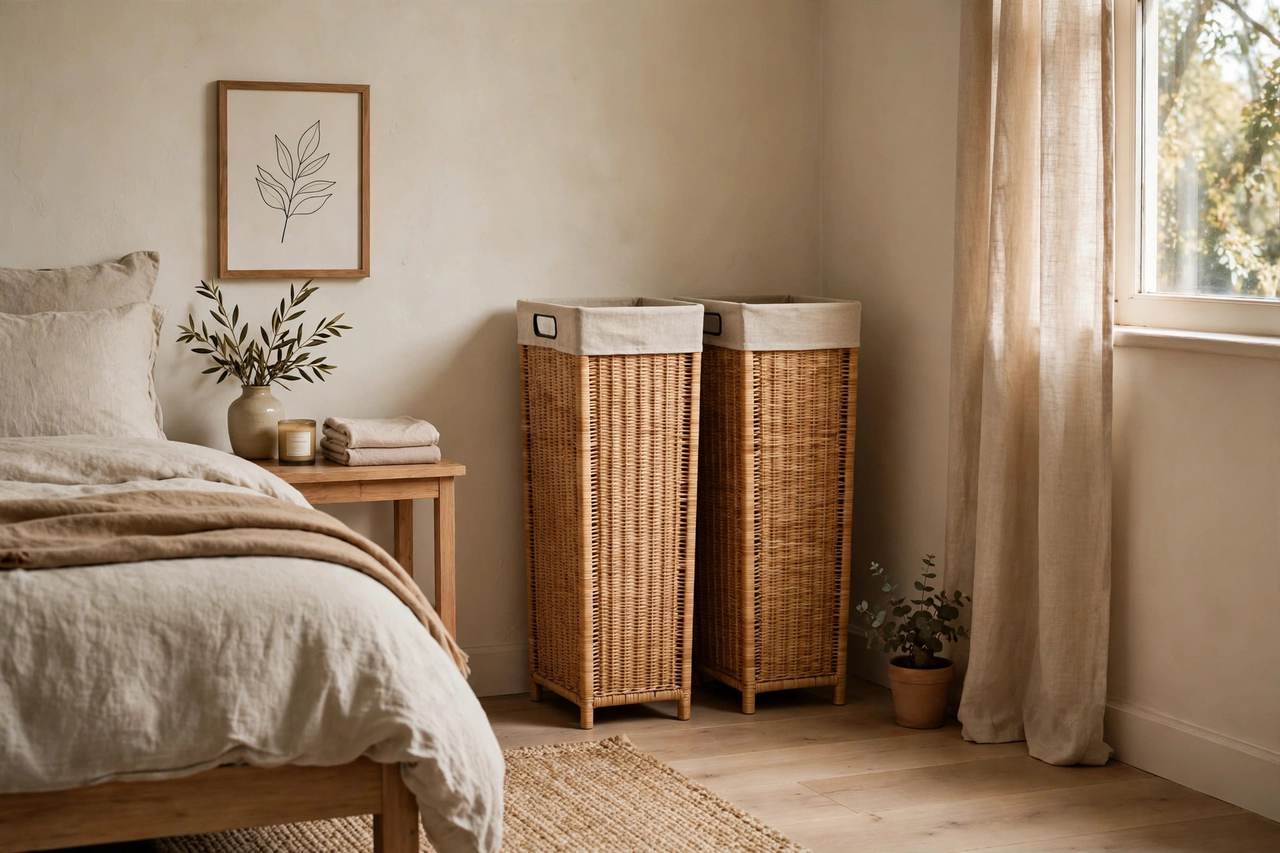
One shared hamper means one person’s delicates get washed with the other’s gym socks, and nobody knows whose turn it is. Two slim hampers — 10 inches wide each fits almost anywhere — end the laundry blame game permanently.
Sort by person, not by color, and wash each hamper when full. Bonus: the person who generates the laundry owns the laundry, which is the fairest system ever devised. Slim rolling hampers tuck between the dresser and wall when not in use.
Why it works
Laundry is a top-three couple argument and it is almost always about unclear ownership. Two hampers make ownership visible and automatic.
Best for
Couples with different laundry habits, delicates-vs-everything conflicts, and floors currently serving as hampers.
12. Soften the Sound
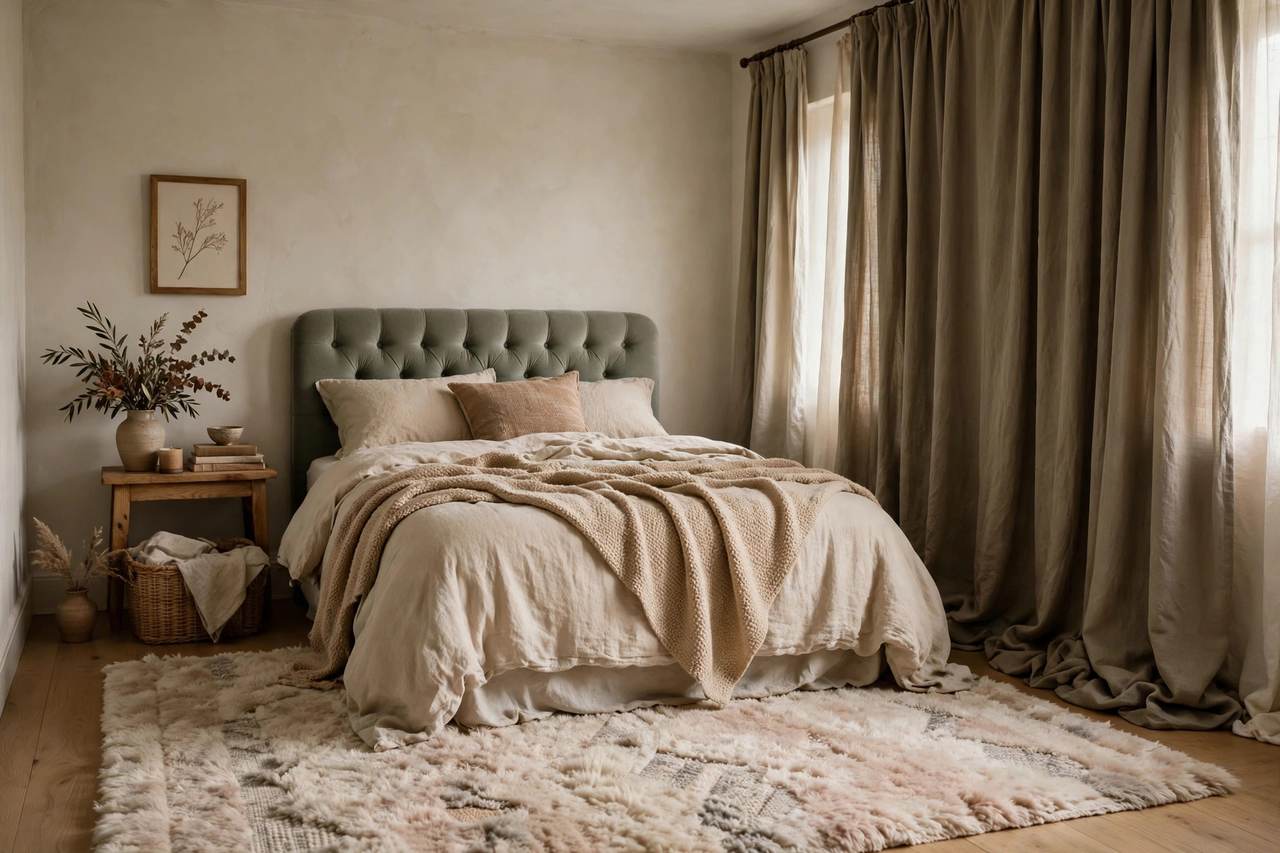
Hard floors and bare walls turn every footstep, drawer slam, and 6 a.m. alarm into a broadcast. A rug (even a 5x7 in a small room), heavy curtains, and an upholstered headboard absorb an astonishing amount of noise — the room feels calmer and both sleepers sleep deeper.
You do not need acoustic panels. Soft textiles do the job: a thick rug pad under the rug doubles the effect, and floor-length curtains soften the window wall. If one partner is a restless sleeper, the rug also muffles the midnight bathroom trips.
Why it works
Small bedrooms are echo chambers. Softening the surfaces lowers the volume of everything by a few decibels — often the difference between sleeping through and waking up.
Best for
Hardwood floors, restless sleepers, different bedtimes, and apartments with thin walls.
13. The Temperature Truce
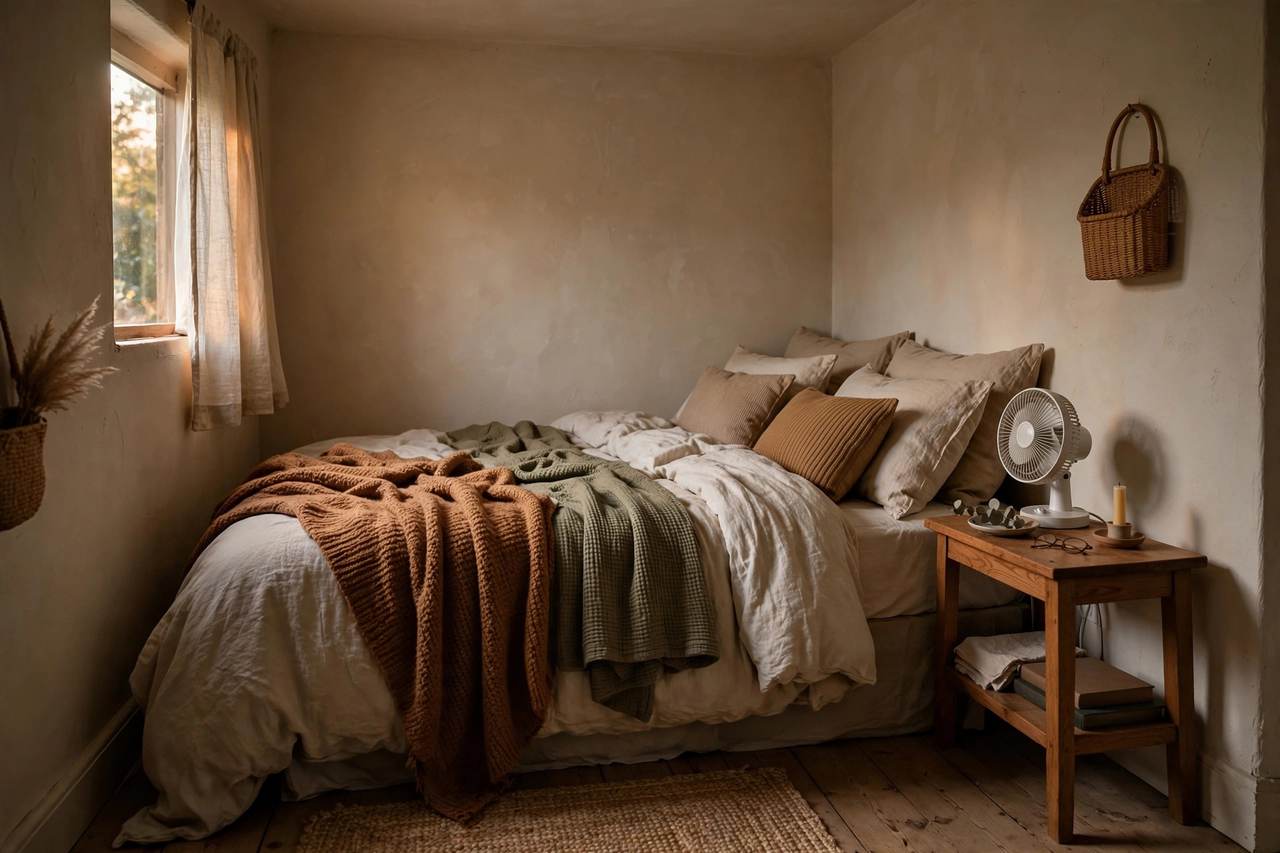
Beyond separate duvets (idea 3), the full truce covers the whole night: a small quiet fan on the hot sleeper’s nightstand, breathable cotton sheets instead of heat-trapping synthetics, and layered bedding so each person adjusts their own side without a summit meeting.
Keep the room itself at 65 to 68°F — the sleep-science sweet spot — and let personal layers do the rest. A fan pointed at one side of the bed cools one person without freezing the other, and doubles as white noise (see idea 5).
Why it works
Temperature is the most common sleep complaint couples report, and it is fully solvable without compromise once you stop sharing one blanket weight. Both people get their climate; nobody negotiates at midnight.
Best for
Hot sleepers, cold sleepers, summer nights, and overheated radiators in winter rentals.
14. A Dresser as a Gentle Divider
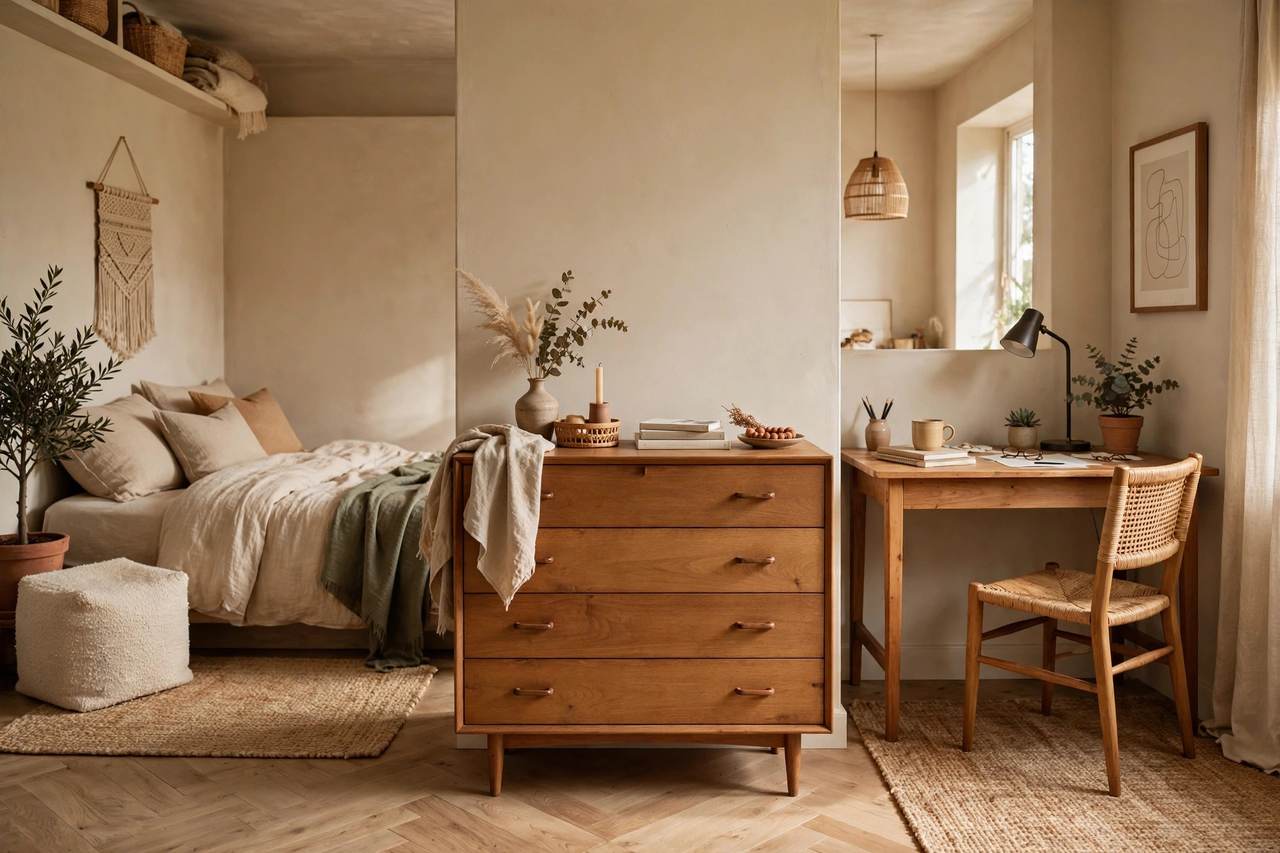
In a studio or a bedroom that doubles as an office, one person’s desk light becomes the other person’s problem. A low dresser placed perpendicular to the wall creates a soft visual boundary — not a wall, just a suggestion — that gives each zone its own identity.
Keep the dresser under 36 inches high so light and air still flow over it. The top becomes shared display space (the compromise art from idea 19 lives here), and each side of the room gets a little psychological privacy.
Why it works
It is zoning without construction. The visual cue tells both brains “this side is for sleep, that side is for work,” which helps the worker feel less guilty and the sleeper feel less invaded.
Best for
Studios, work-from-home couples, and bedrooms that also host a desk.
15. A Landing Tray Each
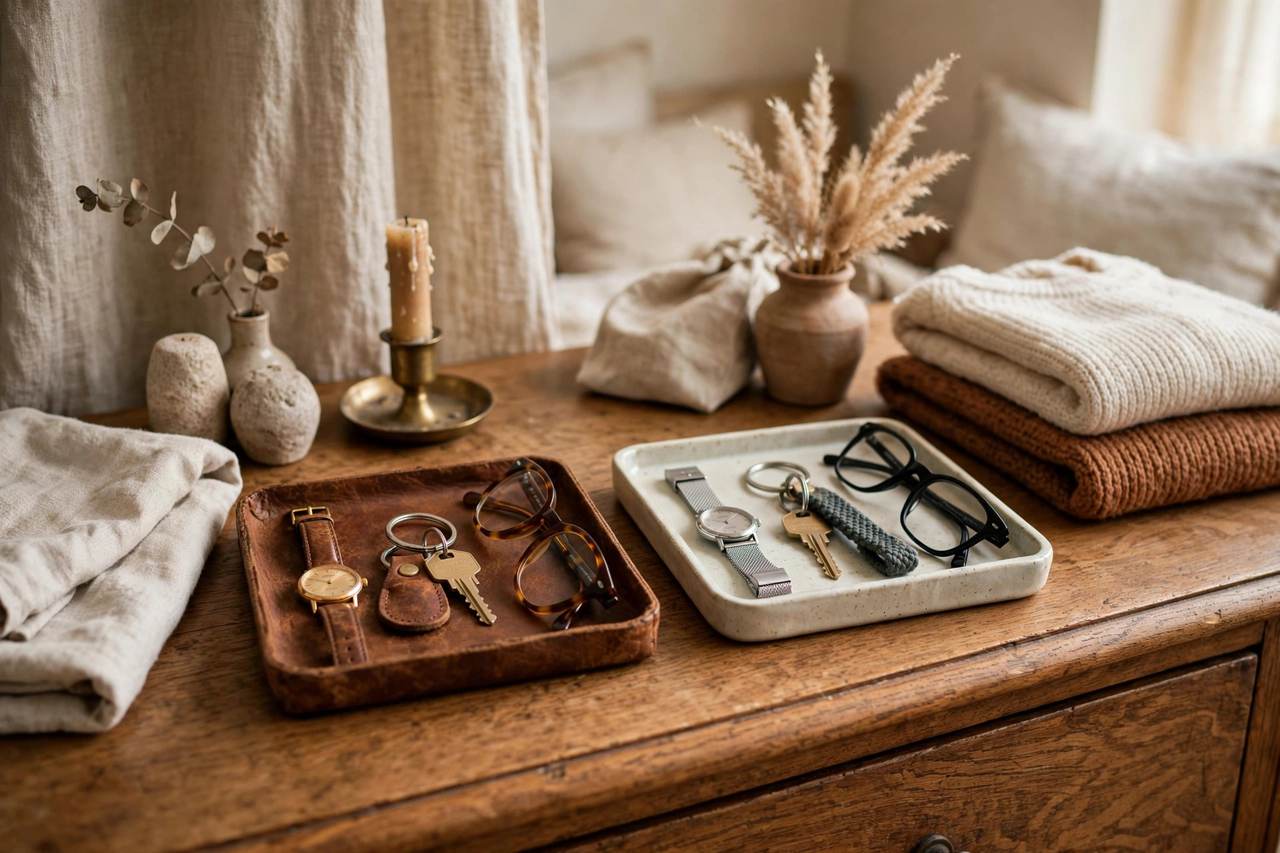
Watches, rings, glasses, keys, the mystery screws from something — every person has pocket contents that migrate across every surface. Two small trays on the dresser, one per person, corral it all. A 6-inch tray is plenty; this is about containment, not display.
Different materials or colors keep them straight without labels: leather for one, ceramic for the other. The rule is gentle but firm — tray contents stay in the tray, and the dresser top stays clear for both of you.
Why it works
It is the nightstand principle (idea 2) applied to the dresser: equal, visible, personal territory. Small daily frictions — “have you seen my…” — mostly vanish.
Best for
Dresser tops currently buried under two people’s everything, glasses-wearers, and watch collectors.
16. Vertical His-and-Hers Shelves
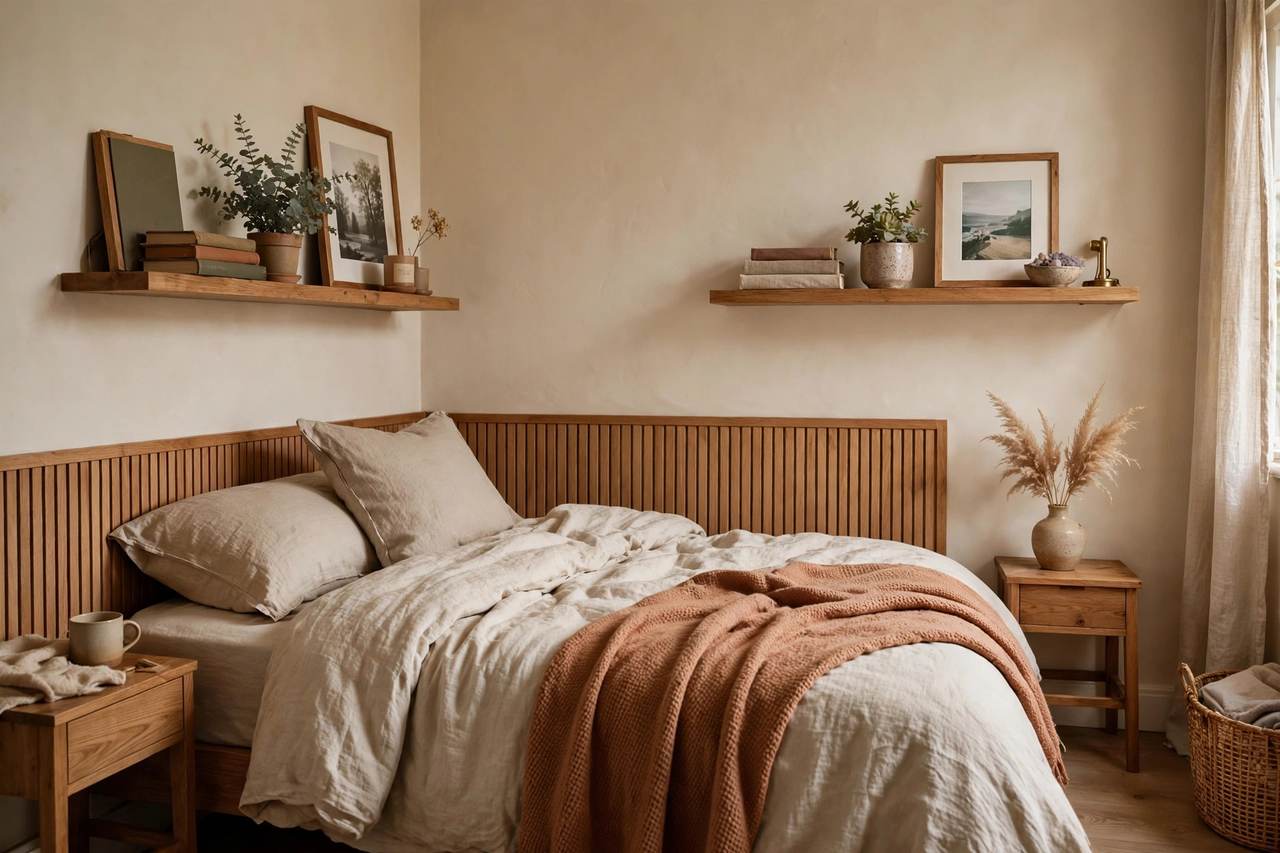
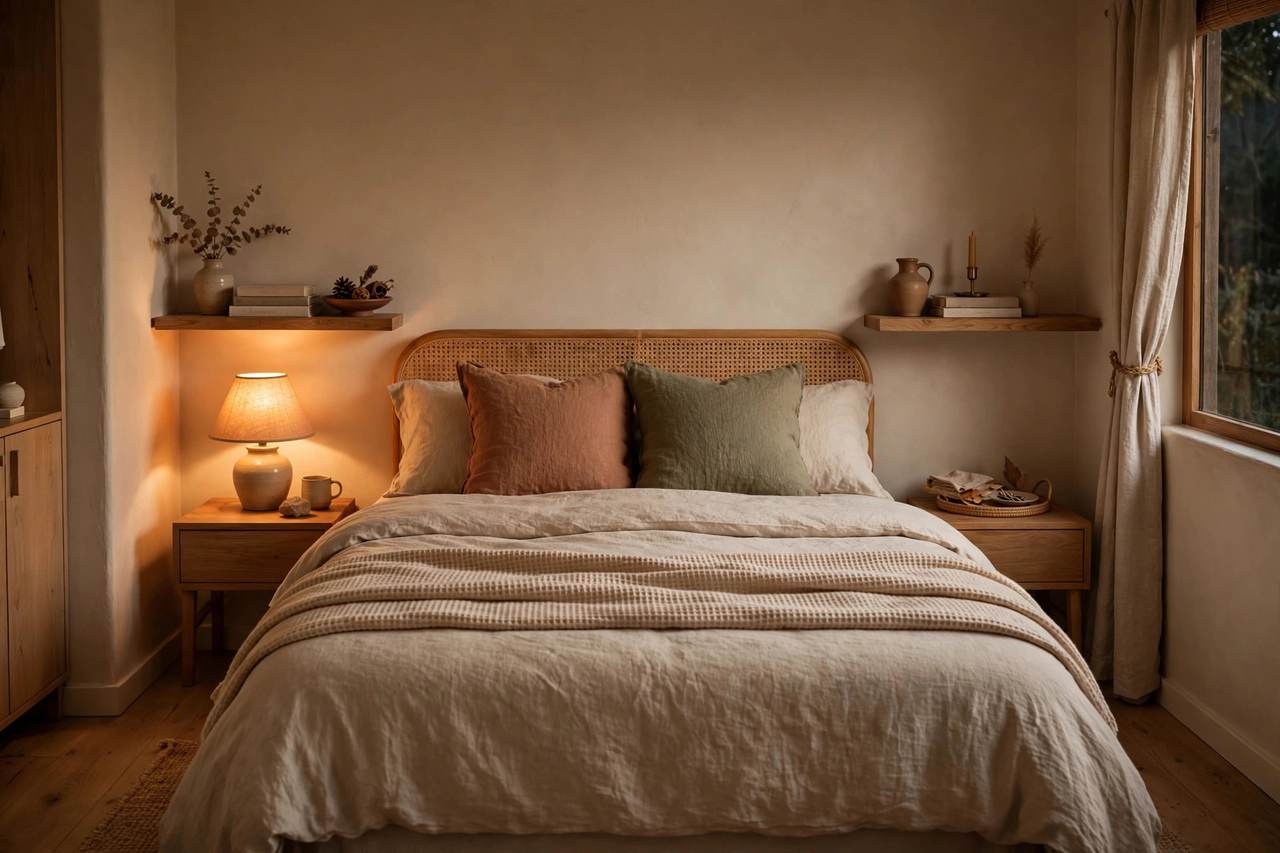
When floor and closet space are gone, the wall above each side of the bed is still yours. A floating shelf per person — books, a plant, the framed photo, the alarm clock — gives both partners display space that is unmistakably theirs.
Mount at 18 to 24 inches above the mattress so nothing looms over a sleeping head. Keep the shelves symmetric in size even if the contents differ wildly; visual symmetry keeps the room calm while the contents stay personal.
Why it works
Couples need “mine” space inside “ours” space. Two shelves deliver it in 2 square feet of wall, and the symmetry prevents the room from looking lopsided toward whoever has more stuff.
Best for
Book lovers, plant people, and bedrooms where the dresser top is already a demilitarized zone.
17. The 10-Minute Nightly Reset
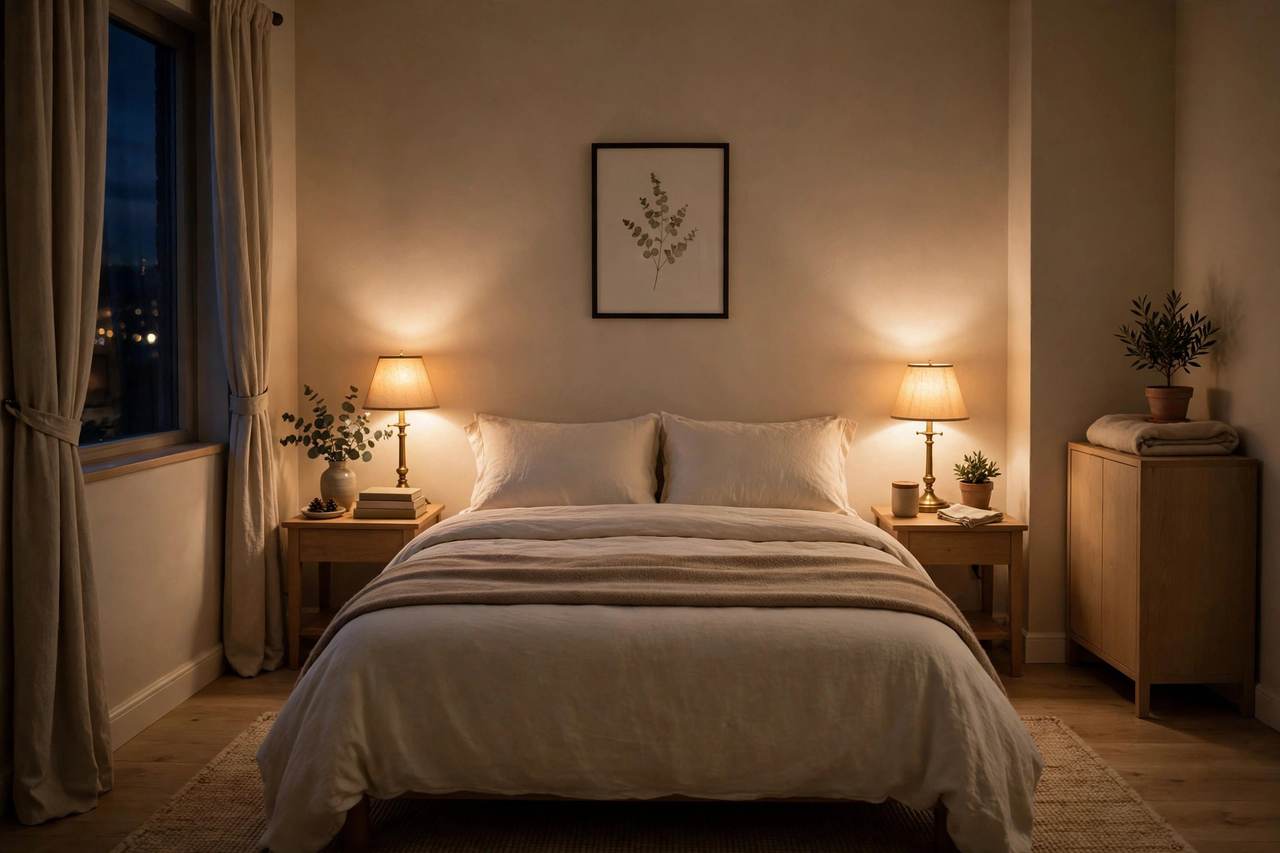
No storage system survives two people’s daily entropy. The fix is a habit, not a product: ten minutes before bed, both people reset the room together. Clothes to hampers or hooks, trays cleared, chargers docked, bed pulled straight. Set a phone timer the first week until it is automatic.
Doing it together matters — it is not one person tidying while the other watches, which breeds its own resentment. Ten minutes, both people, every night. The room starts every morning calm instead of chaotic.
Why it works
Small rooms show mess instantly, and mess raises stress for both people. A shared nightly reset is the cheapest square footage you will ever gain: a tidy 120-square-foot room feels bigger than a messy 200-square-foot one.
Best for
Every couple in a small bedroom, honestly. Especially the “one tidy, one messy” pairs.
18. Upgrade the Pillows, Not the Bed
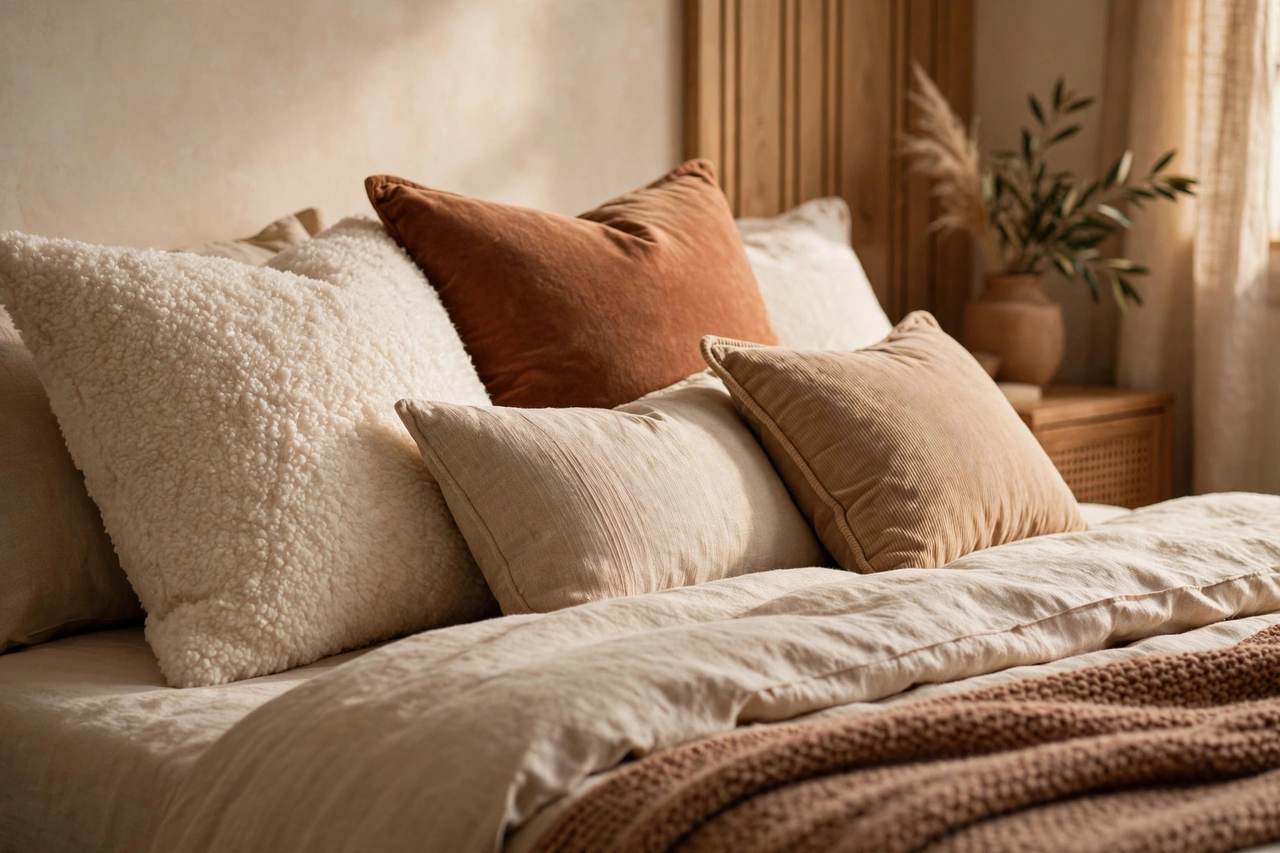
You cannot fit a bigger bed, but you can sleep better on the one you have. Two quality pillows per person — one for sleeping, one for reading — chosen for each person’s sleep position, transform a cramped queen more than any other single purchase.
Side sleepers need loftier, firmer pillows; back sleepers need thinner ones. Buying per-person instead of a matching set is the whole point: his pillow and her pillow do not need to match, they need to work. Replace every 18 to 24 months; dead pillows cause the neck pain blamed on the mattress.
Why it works
In a bed you cannot enlarge, sleep quality has to come from what is on it. Personalized pillows are a $100 upgrade that both people feel every single night.
Best for
Old flat pillows, mismatched sleep positions, and couples blaming the mattress for what the pillows did.
19. One Statement Piece You Both Pick

Let each person own the small stuff (shelves, trays, pillows), but choose one big thing together: the art above the bed, the rug, the headboard. Shop for it as a pair, veto honestly, and do not buy until both people genuinely like it. One shared decision anchors the whole room.
This works because it is bounded — you are not agreeing on everything, just one thing. And a piece you chose together becomes the room’s story instead of its battleground. Hang it centered, at eye level from the foot of the bed.
Why it works
Shared ownership of the room’s focal point makes the compromises everywhere else feel fair. It is the decor equivalent of a wedding: one joint decision that represents both people.
Best for
Newly cohabiting couples, opposite tastes (see idea 8), and blank walls above the bed.
20. Keep Work Out of the Bed
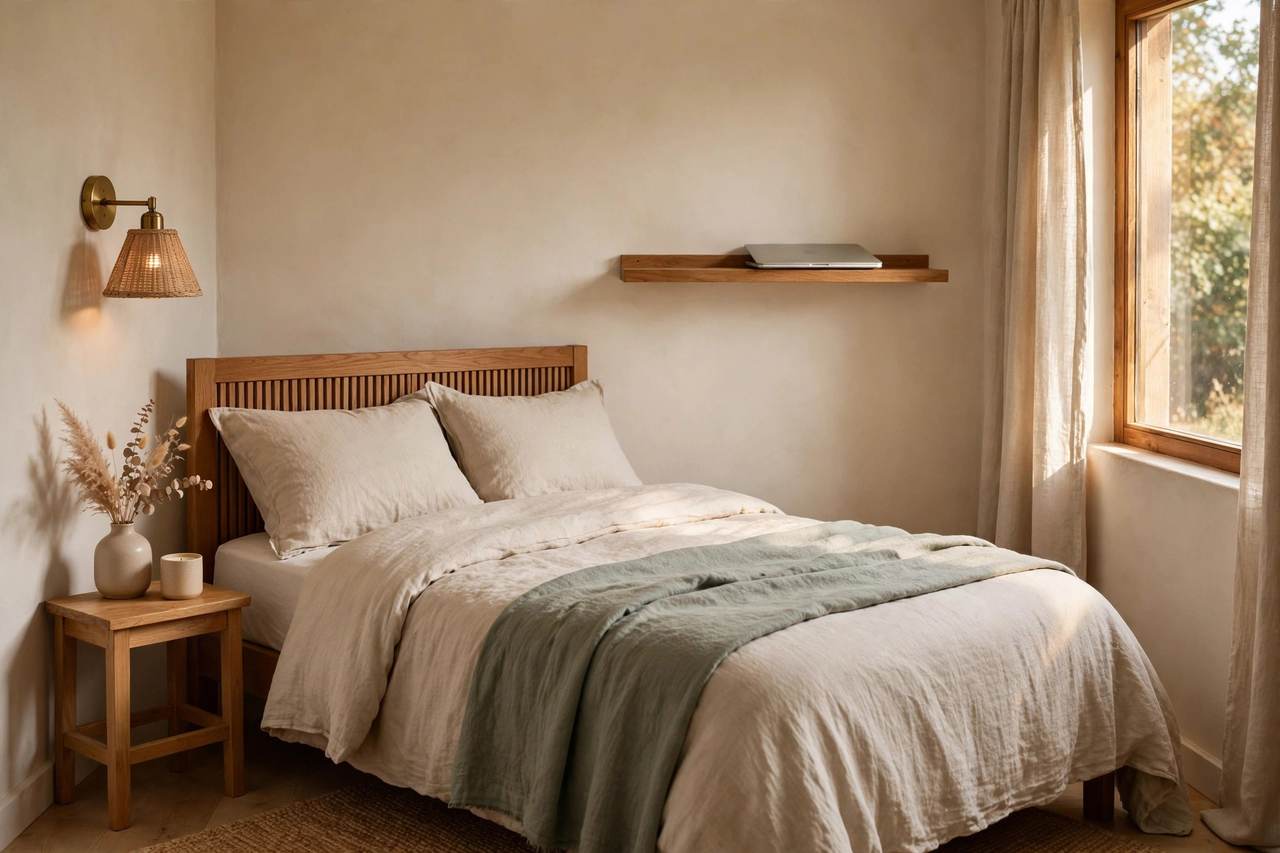
In a small apartment the bedroom often absorbs the home office — and then one person’s midnight email glow becomes both people’s problem. Draw the line at the bed itself: no laptops in bed, ever. Work lives at the desk or the kitchen table; the bed is for sleep.
If space truly forces a desk into the bedroom, give it a shutdown ritual: laptop closed and in a drawer by 10 p.m., desk lamp off. The physical act of putting work away tells both brains the day is over.
Why it works
It protects the one thing the bedroom must do well: sleep. Screens in bed wreck sleep quality for both people, and work stress has no business within 3 feet of a pillow.
Best for
Work-from-home couples, students, and anyone who has answered email from under the covers.
21. The Guest-Ready Bed
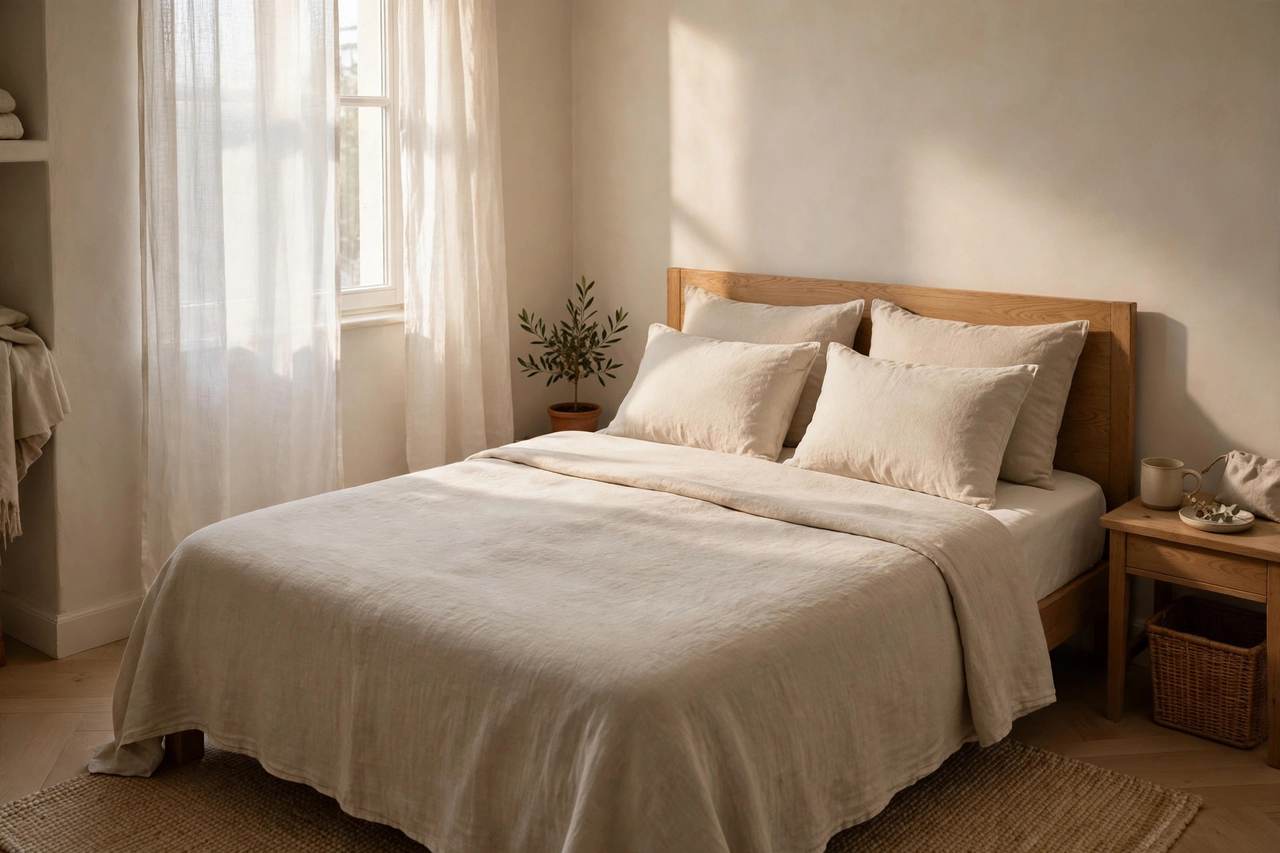
Choose bedding that looks made with sixty seconds of effort: a coverlet instead of a fussy duvet-plus-throw situation, two sleeping pillows plus two shams, nothing that needs arranging. Pull it up, smooth it once, done — the room looks intentional even on chaotic mornings.
This matters more for couples because bedroom mess doubles. Simple bedding both people can (and will) make beats beautiful bedding only one person maintains. Washable, wrinkle-forgiving fabrics mean it looks good without ironing, which nobody is doing anyway.
Why it works
The bed is 40 percent of a small bedroom’s visual field. A bed that looks made in a minute makes the whole room — and both people’s mornings — feel under control.
Best for
Unmade-bed couples, busy mornings, and small rooms where the bed dominates the view.
The Couples’ Bedroom Formula
Twenty-one ideas, three principles:
- Split everything visibly — closet, bins, trays, shelves, hampers (ideas 1, 7, 11, 15, 16). Fairness you can see ends 90 percent of bedroom friction.
- Protect both people’s sleep — separate duvets, individual lights, white noise, temperature control (ideas 3, 4, 5, 9, 13). Sleep is non-negotiable; everything else is decor.
- Decide the big things together — palette, statement piece, the nightly reset (ideas 8, 17, 19). Shared decisions make shared space feel shared.
Get those three right and the square footage stops mattering nearly as much.
Where to Start
Start with the friction that causes actual arguments, and start cheap:
- Under $30: ideas 3 and 9 — a second duvet from the discount bin and two contoured sleep masks. Better sleep by this weekend.
- Under $100: add ideas 2 and 7 — floating nightstand shelves and labeled under-bed bins. Both people’s stuff finally has a home.
- The big move: ideas 8 and 19 — agree on the palette and choose one statement piece together. The room starts feeling like yours, plural.
A small bedroom shared well beats a big bedroom shared badly. Yours just needs the right twenty-one moves.
Frequently Asked Questions
How do couples share one small closet fairly?
Split it visibly and equally — a tension rod down the middle works without drilling (idea 1). Equal space regardless of wardrobe size; overflow goes to labeled under-bed bins per person (idea 7).
What if we have completely different sleep schedules?
Give each person their own reading light with an individual switch (idea 4), add white noise for the light sleeper (idea 5), and use a sleep mask instead of blackout curtains so the early riser still gets morning light (idea 9).
How do we decorate when our tastes are totally different?
Neutral base plus one accent color each (idea 8), personal items on his-and-hers shelves (idea 16), and one statement piece chosen together (idea 19). Nobody wins everything; nobody loses everything.
How do you fit two nightstands in a tiny bedroom?
You do not need two full nightstands — two floating shelves at mattress height (idea 2) or bedside caddies give each person a landing spot in almost zero floor space.