10 Small Bathroom Lighting Ideas That Make a Tiny Bathroom Feel Brighter Without Adding Clutter
Discover 10 small bathroom lighting ideas using vanity lights, mirrors, ceiling fixtures and layered lighting to make a tiny bathroom feel brighter without adding visual clutter.
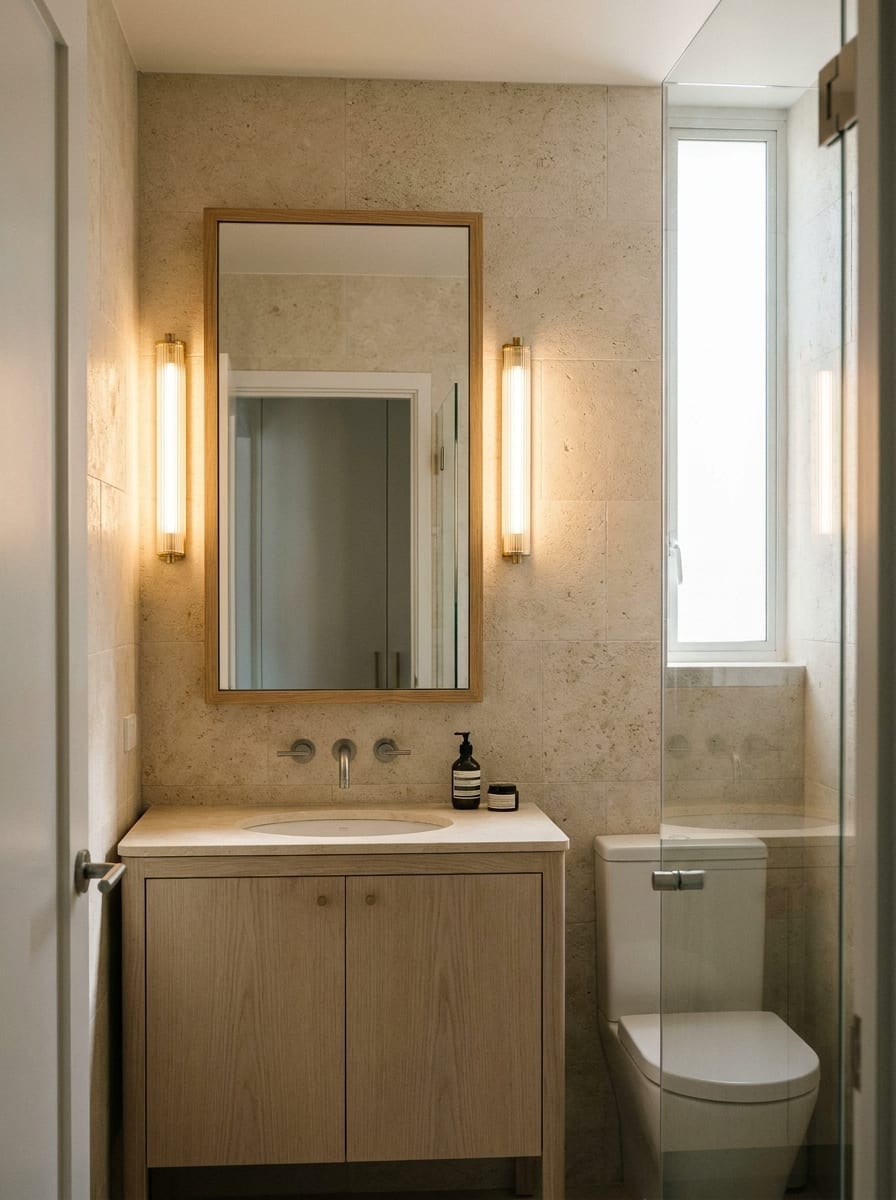
Compact bathroom vanity with slim vertical sconces on both sides of the mirror providing even face-level light
In This Guide
A small bathroom does not always need more light. It usually needs better-placed light. That is an important difference. A single bright ceiling fixture can make the room technically illuminated while still leaving:
- shadows around the mirror
- dark shower corners
- poor grooming light
- harsh contrast
- a flat, unfinished feeling And in a compact bathroom, bulky lighting can become another visual object competing with:
- mirror
- vanity
- tile
- storage
- plumbing fixtures So the goal is not to fill the room with fixtures. It is to create enough light in the right places while keeping the room visually simple. The best small-bathroom lighting usually comes from a few coordinated layers: general light -> face-level light -> targeted light not from one extremely bright fixture trying to do everything. Here are ten ways to make a small bathroom feel brighter and more finished without making it look busier.
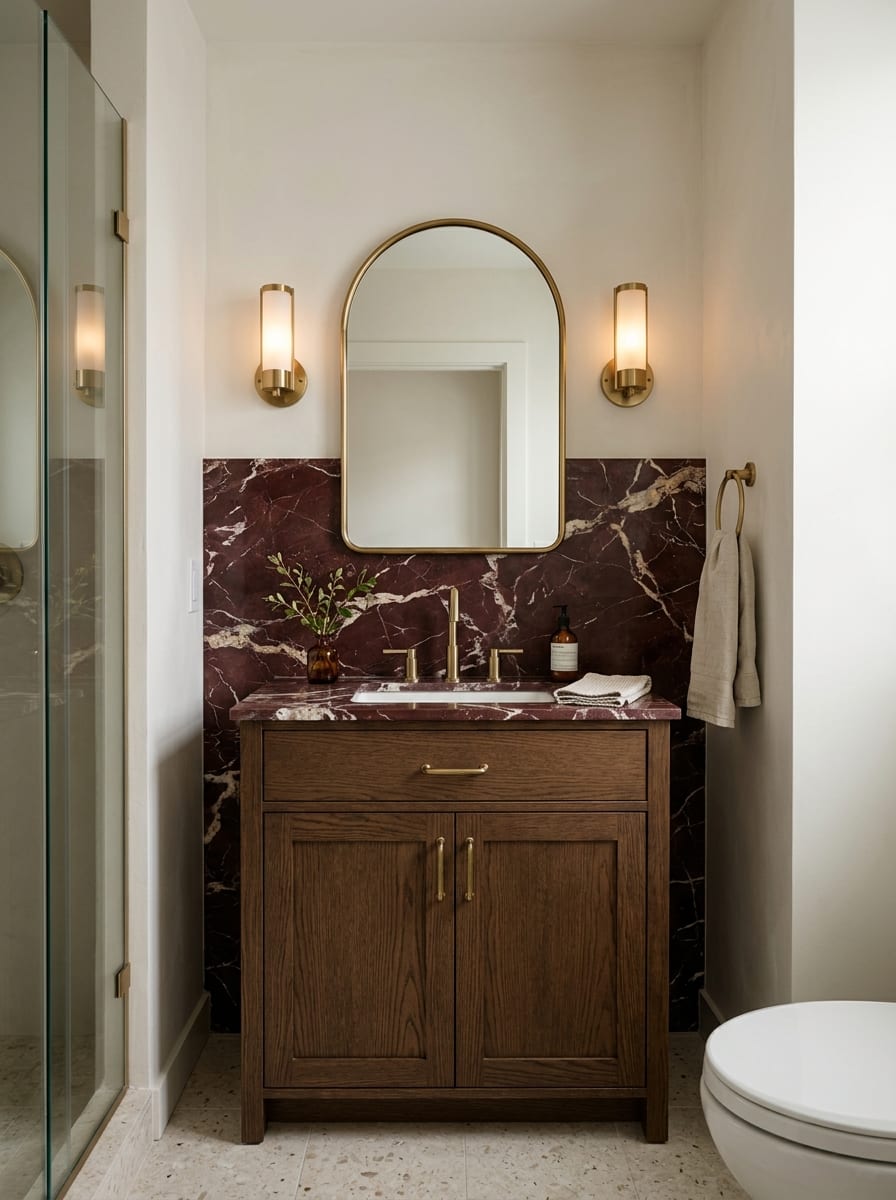
1. The Mirror-Side Sconce Setup
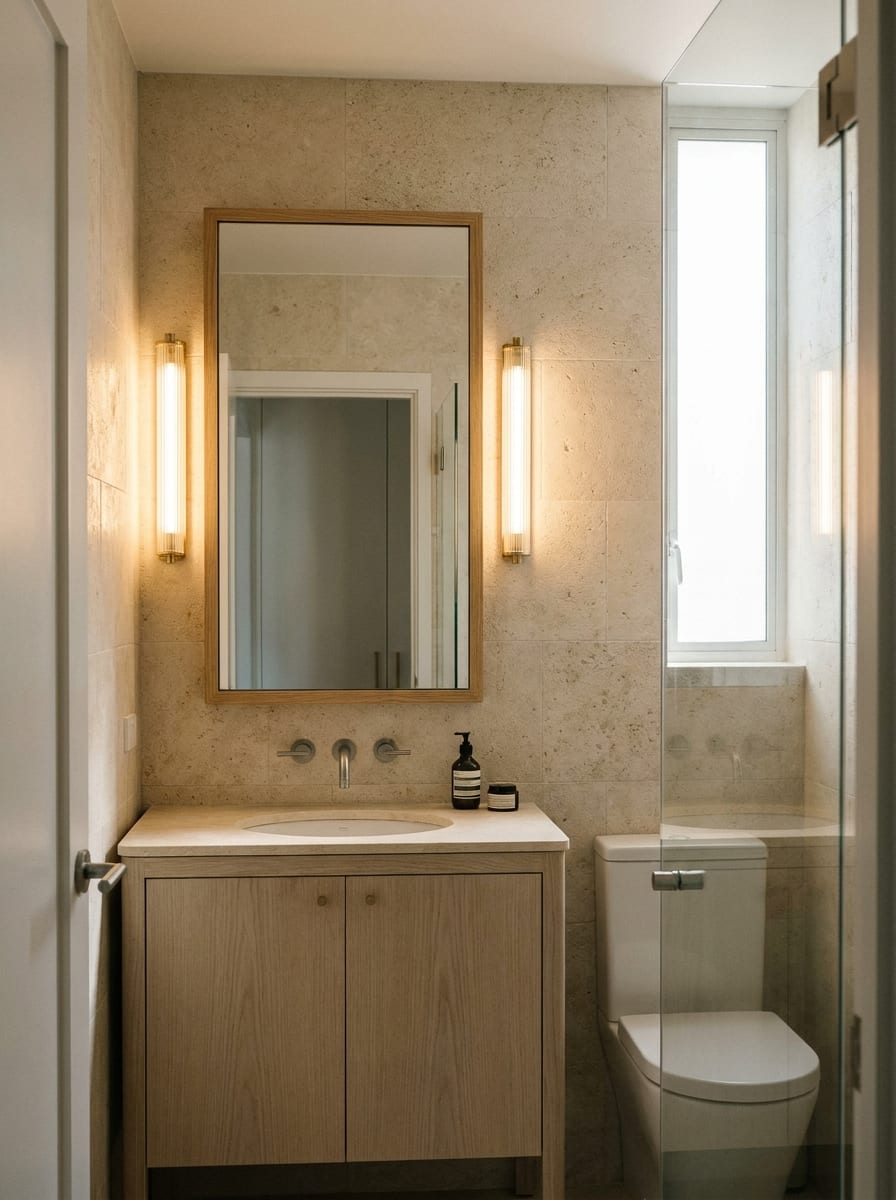
Side lighting is one of the most useful upgrades for a vanity because it places light closer to face level. Instead of relying entirely on light from above, use slim fixtures on both sides of the mirror where the wall allows it.
Why it works
Overhead-only light can create stronger shadows under:
- eyes
- nose
- chin Side lighting can distribute light more evenly across the face. That matters for:
- skincare
- shaving
- makeup
- general grooming
Keep the sconces narrow
In a small bathroom, wall width is limited. Choose fixtures that do not visually overpower:
- mirror
- vanity Slim vertical sconces often work better than wide decorative fixtures.
Plan the mirror and sconces together
Do not choose the mirror first and then try to squeeze lighting beside it. Measure:
- full vanity width
- mirror width
- available side margins before purchasing either.
Keep symmetry practical
Perfect symmetry is nice, but function comes first. If one side has:
- wall
- cabinet
- switch a different lighting solution may be better.
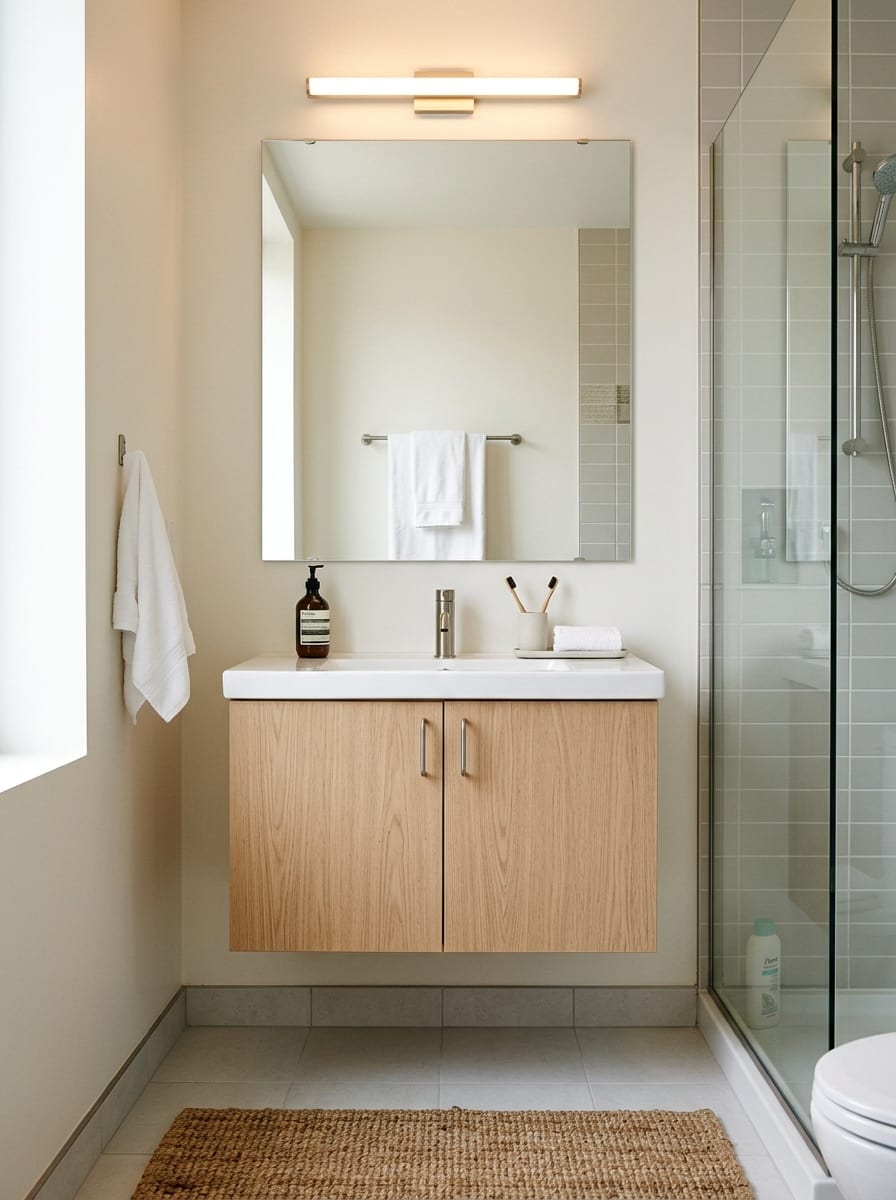
2. The Above-Mirror Light Bar
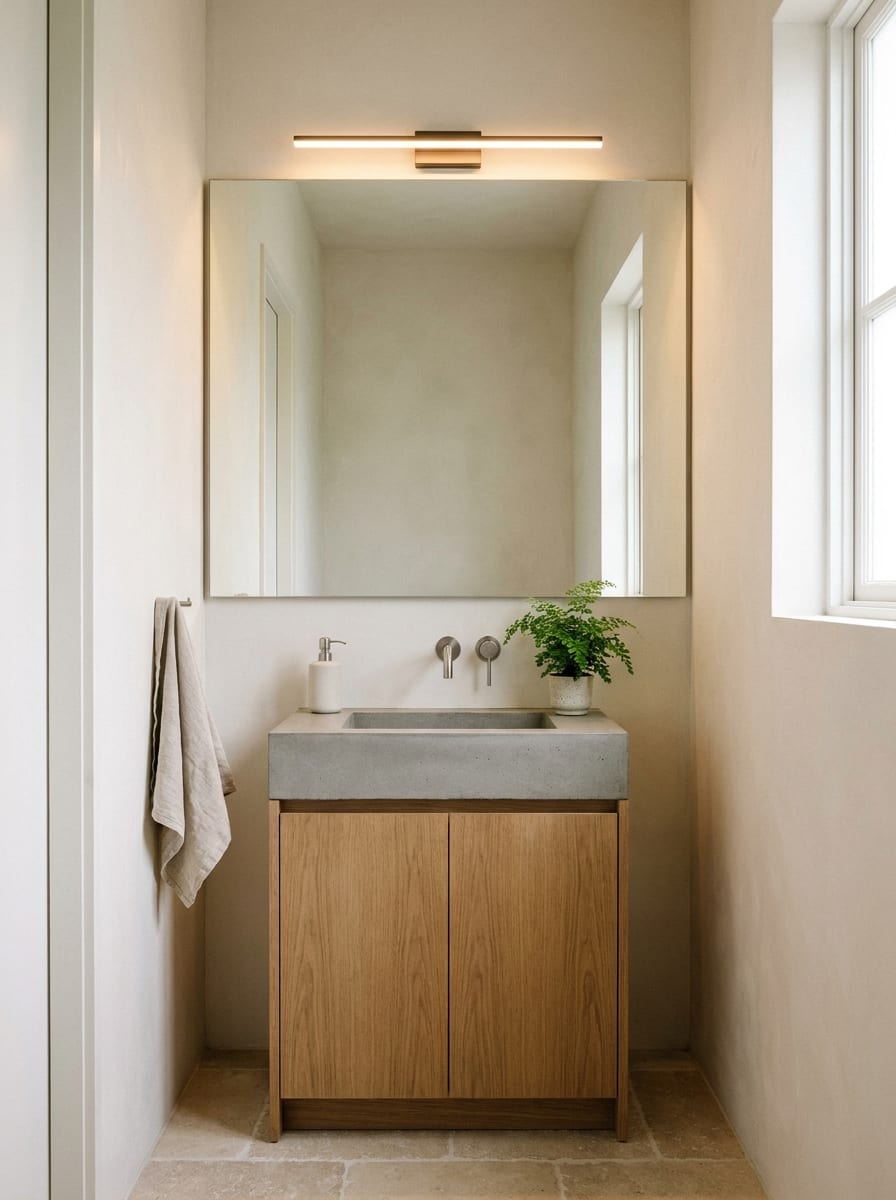
If there is not enough room for side sconces, an above-mirror fixture can still work well. The key is choosing one that matches the scale of the mirror.
Why it works
This keeps the side walls clear and concentrates the vanity lighting in one compact zone.
Match fixture width to mirror scale
A tiny light centered above a wide mirror can look disconnected. A fixture that visually relates to the mirror often feels more intentional.
Keep projection shallow
A bulky fixture extending far from the wall can feel heavy in a narrow bathroom. Look for:
- slim
- low-profile
- clean-lined options.
Watch glare
The fixture should illuminate the face without creating uncomfortable glare in the mirror.
Best for
This setup is practical where:
- mirror nearly fills the wall
- side sconces do not fit
- vanity is narrow
3. The Backlit Mirror Glow
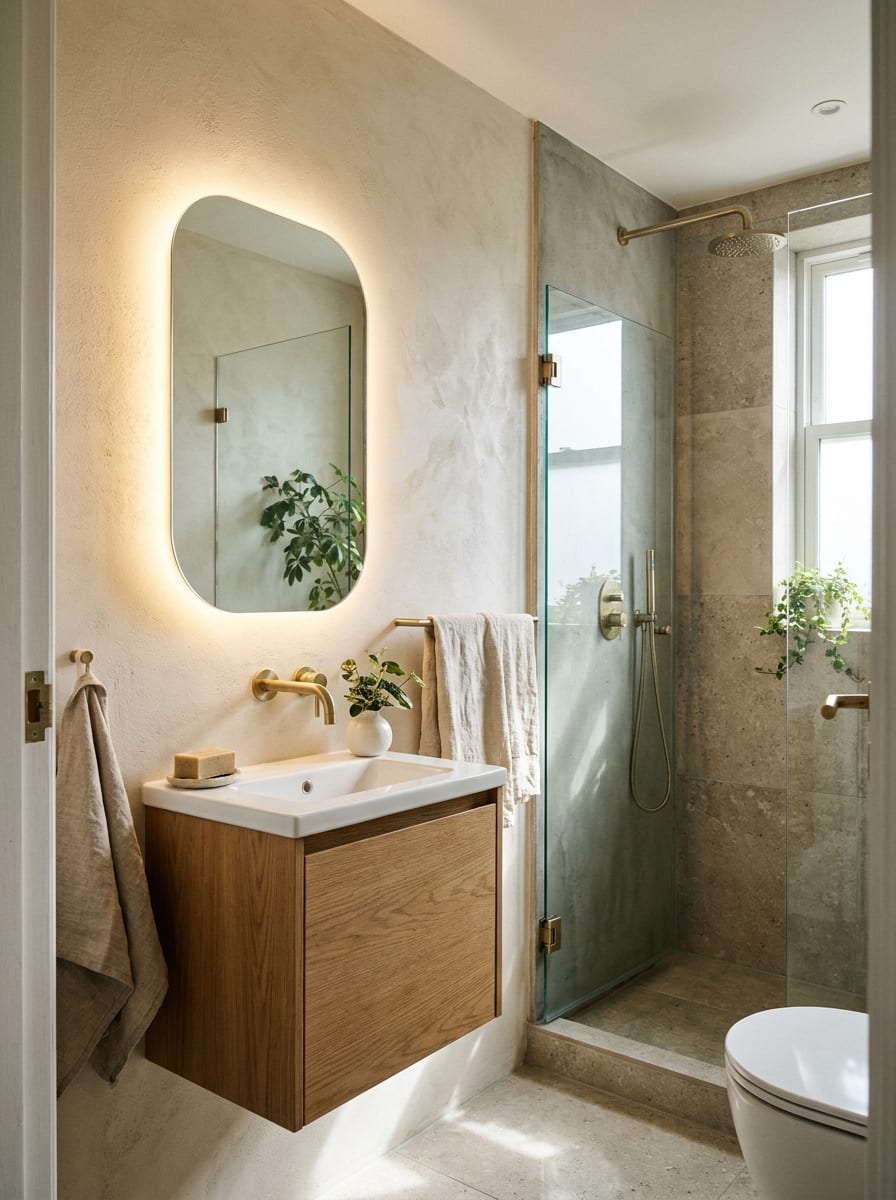
An integrated or backlit mirror can make a small bathroom feel visually lighter because the illumination seems to come from the wall itself.
Why it works
The glow creates a soft halo around the mirror. That can reduce the harsh contrast between:
- bright fixture
- dark wall and make the vanity zone feel more expansive.
It also reduces visual clutter
Instead of:
- mirror
- light fixture you may have one integrated element.
Check actual brightness
Some backlit mirrors create beautiful ambient light but may not provide enough task lighting on their own. Evaluate:
- lumen output
- direction of light
- face illumination rather than assuming integrated lighting solves everything.
Pair when needed
You may still need:
- ceiling light
- secondary vanity lighting depending on the room.
4. The Ceiling + Vanity Layer
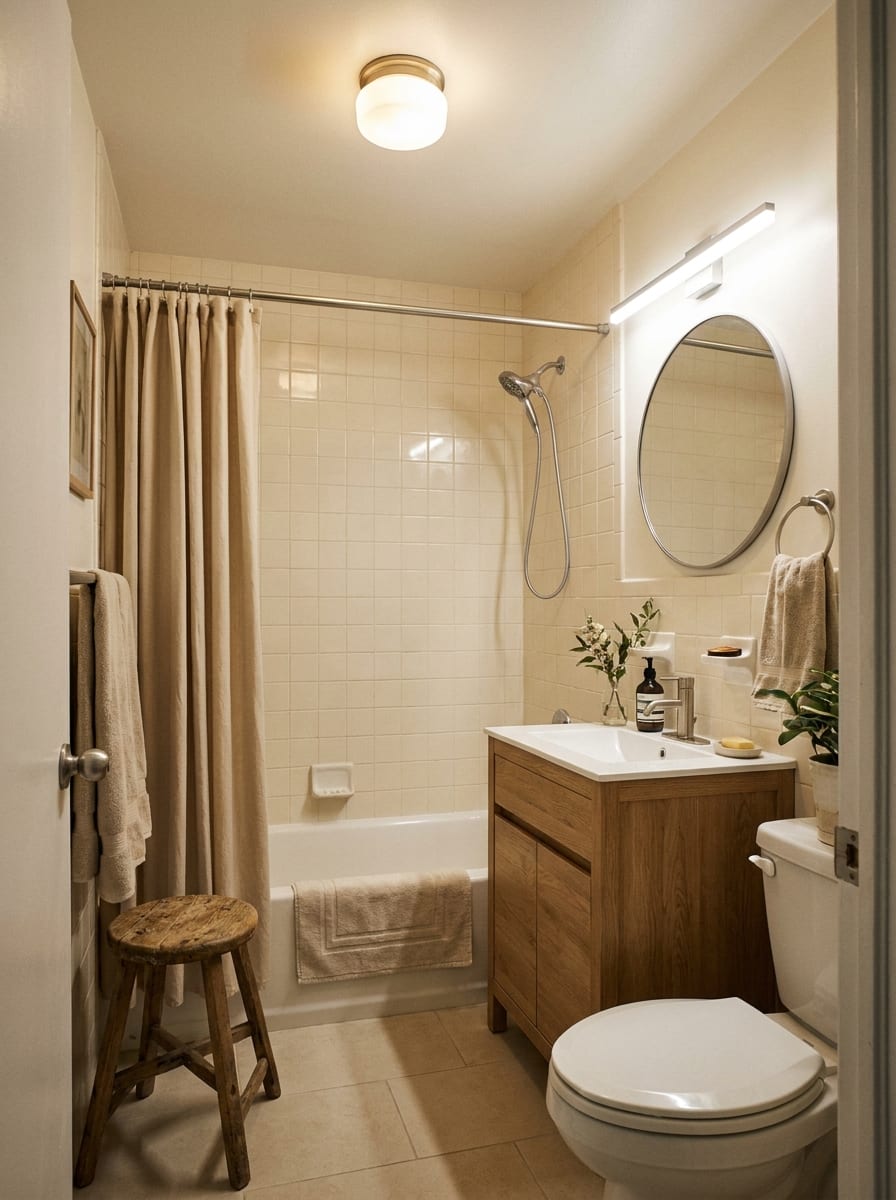
One of the most reliable strategies is to split the lighting job between two sources. Use:
- one general ceiling light
- one vanity-focused light
Why this works
The ceiling light handles overall room visibility. The vanity light handles:
- face
- sink
- mirror area Each fixture has a clear purpose.
Avoid making both extremely bright
When every fixture is equally intense, the room can feel harsh. Balance matters.
Use similar color temperature
If the ceiling light looks icy and the vanity light looks yellow, the bathroom can feel visually inconsistent. Choose lighting that works together.
Best for small bathrooms
This is one of the simplest complete solutions because it gives enough coverage without requiring many fixtures.
5. The Shower-Light Balance
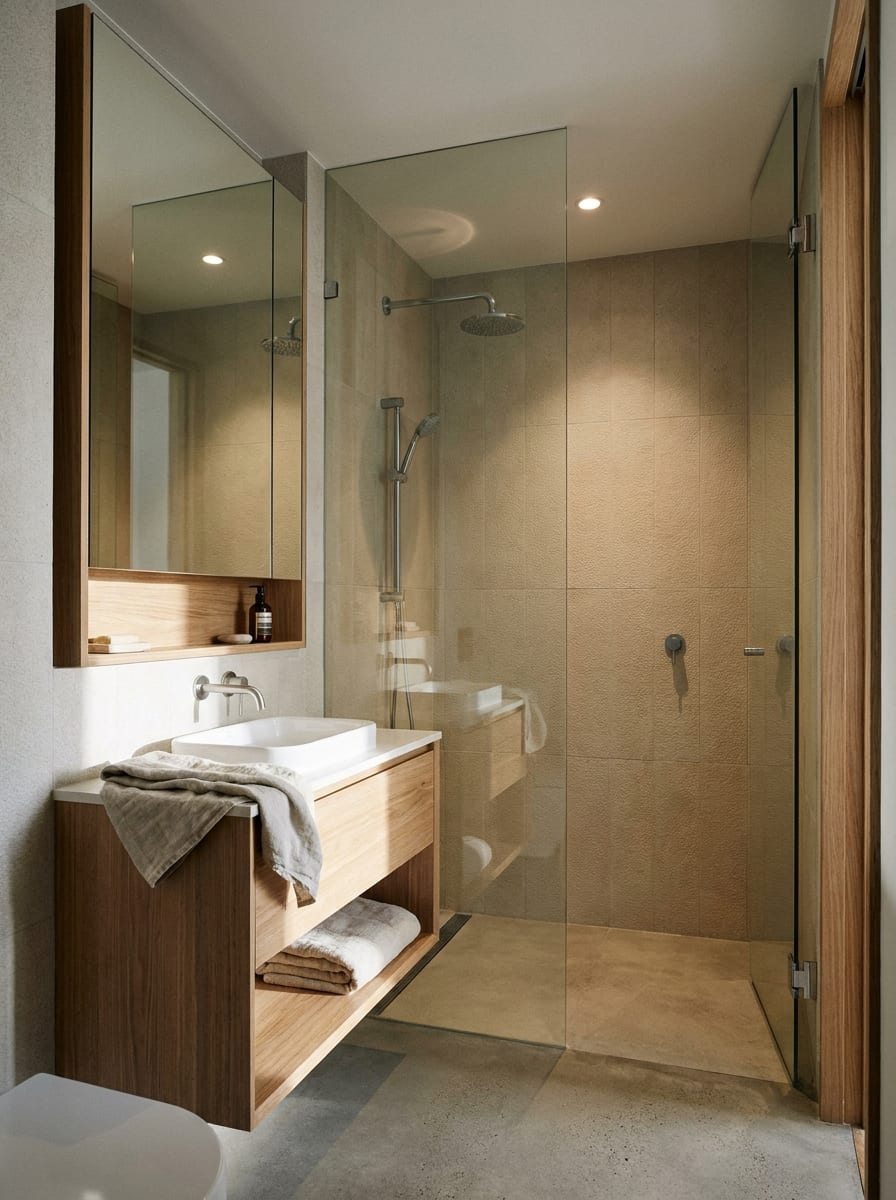
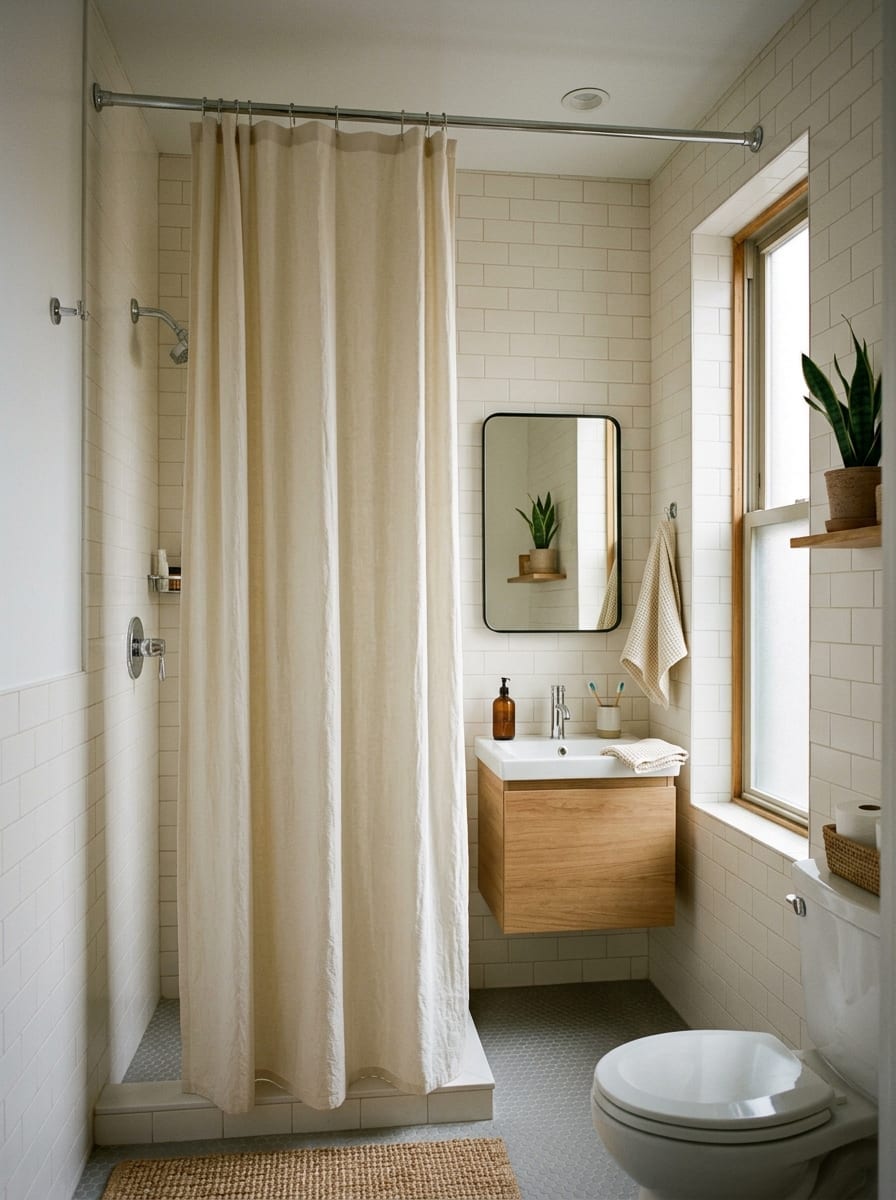
Many small bathrooms are bright near the vanity but noticeably darker inside the shower. That contrast can make the room feel more enclosed.
Why it happens
The shower may be separated by:
- curtain
- wall
- frosted glass which reduces the light reaching it.
Add targeted lighting only where appropriate
A properly rated shower-area light can improve:
- visibility
- perceived openness without adding decorative clutter.
Keep it subtle
You do not need a dramatic fixture. A small recessed or low-profile light can be enough where suitable.
Safety matters
Fixtures near water must be appropriate for the location and installed according to applicable electrical and safety requirements. Do not improvise with standard decorative lights in wet zones.
6. The Dark-Corner Accent Fix
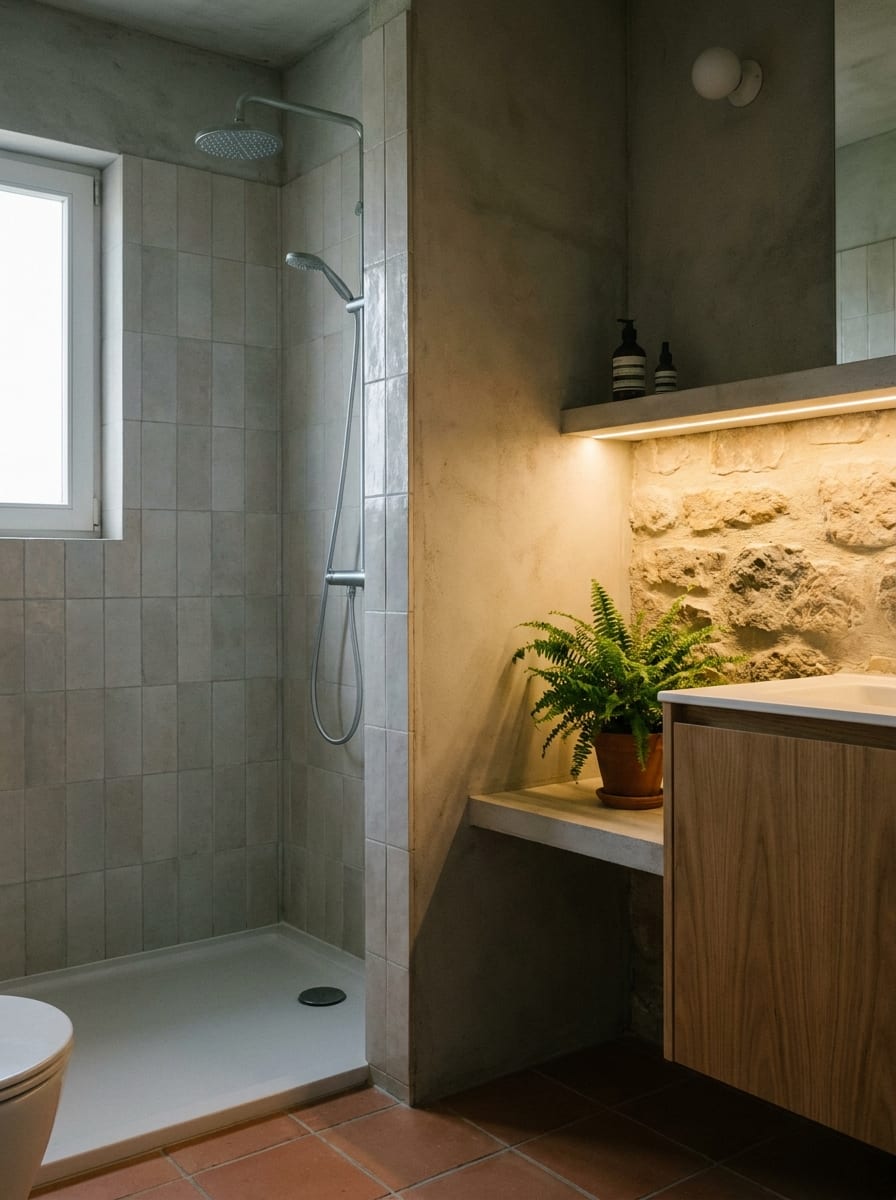
Sometimes one corner is making the whole bathroom feel darker. This can happen near:
- storage niche
- toilet
- shower edge
- narrow alcove
Identify the actual problem area
Do not add another fixture automatically. Stand in the room and look for the area where shadows collect.
Use the smallest effective solution
Depending on the bathroom, this might be:
- better ceiling placement
- mirror lighting
- under-cabinet glow
- niche lighting
Avoid decorative over-lighting
The goal is not to make every corner glow. It is to reduce one strong dark patch that makes the room feel visually uneven.
Think in contrast
A small bathroom can feel larger when brightness is more evenly distributed.
7. The Warm-Neutral Light Formula
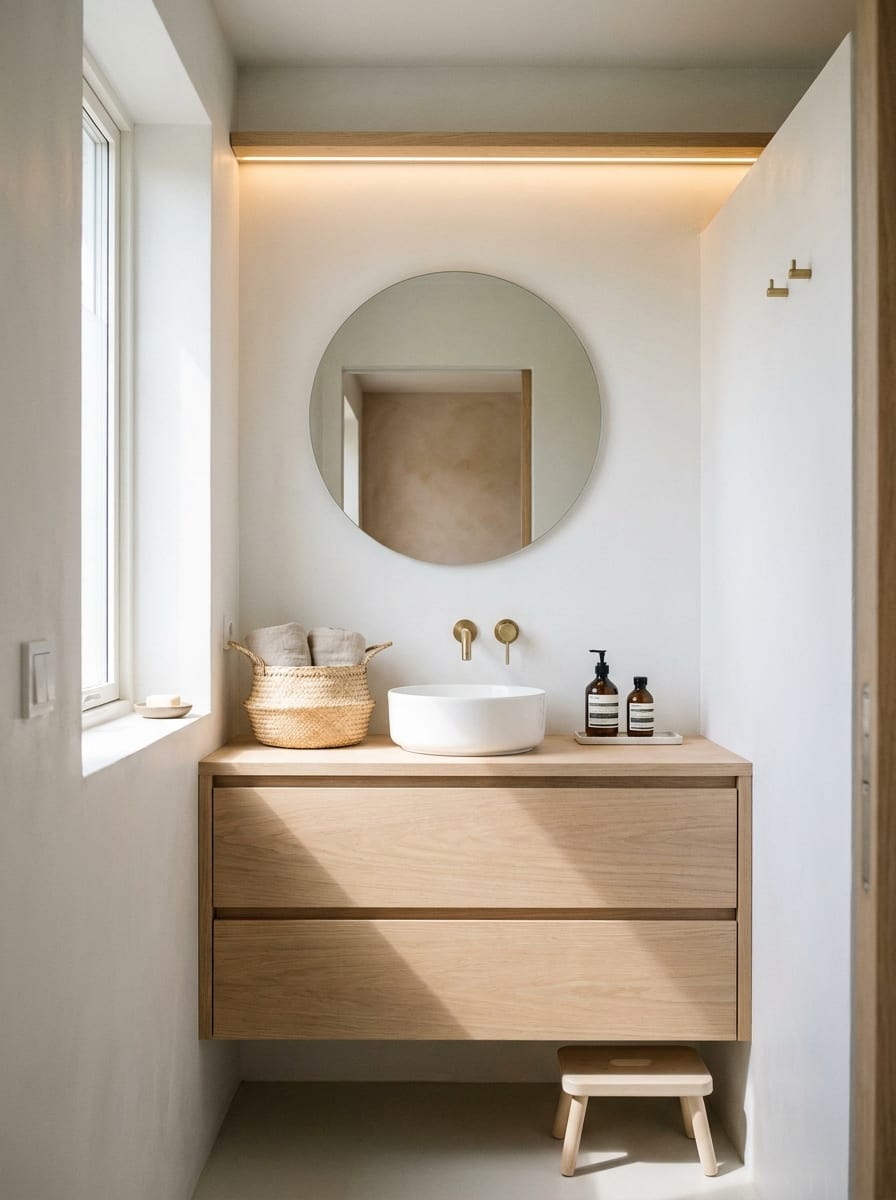
Color temperature changes the way a bathroom feels almost as much as fixture placement. Too cool can feel:
- clinical
- harsh Too warm can distort:
- skin tone
- whites
- tile colors
Aim for balanced warmth
A warm-neutral tone often suits compact bathrooms because it keeps the room comfortable without making white surfaces look yellow.
Keep fixtures consistent
Do not mix:
- very warm vanity bulbs
- cold ceiling LEDs unless there is a deliberate reason.
Check the room materials
Lighting changes the appearance of:
- tile
- paint
- wood
- brass
- chrome Test the effect with the actual finishes.
Good lighting should still feel accurate
The room should be flattering without making colors look unnatural.
8. The Minimal Fixture Strategy
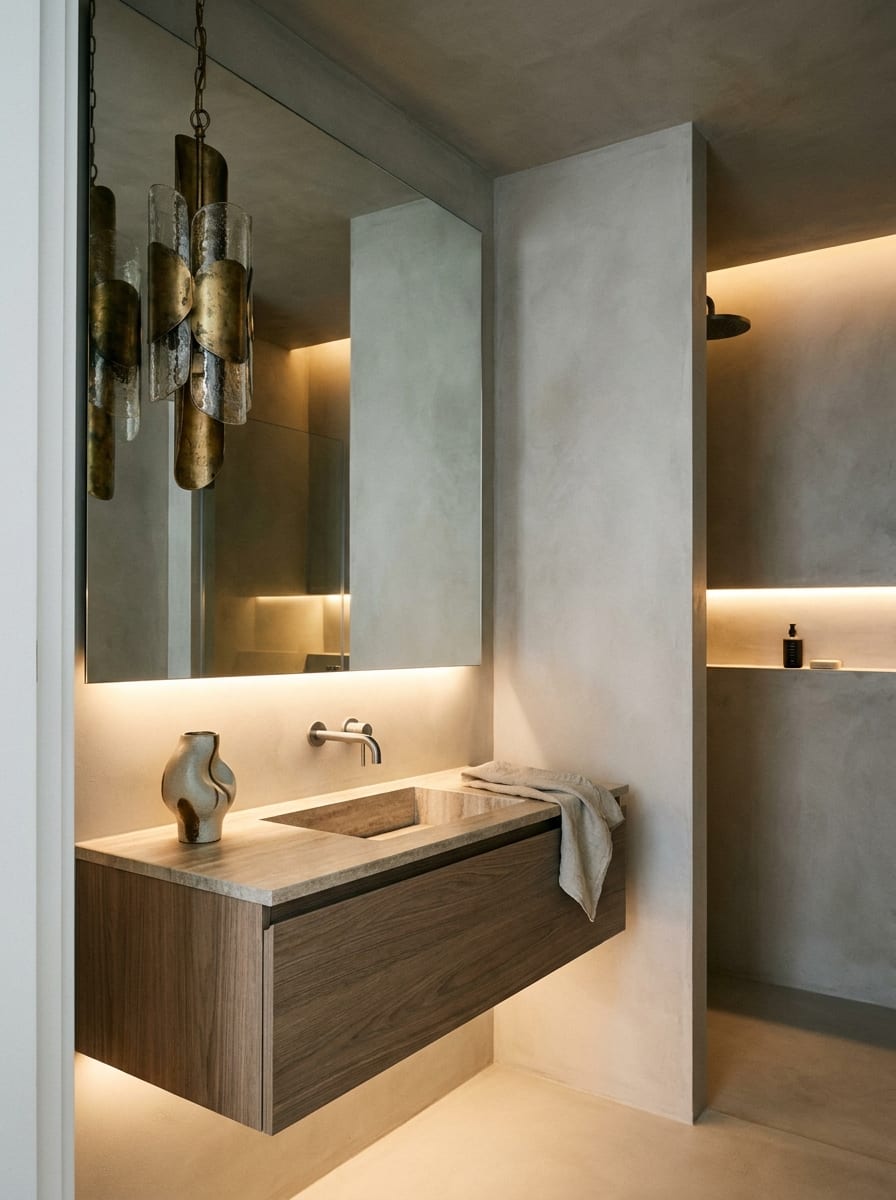
A small bathroom can become visually busy if every lighting layer uses a decorative fixture. Sometimes the best solution is to make most lighting almost disappear.
Choose one visible fixture
For example:
- attractive vanity sconce Then let the rest be:
- recessed
- integrated
- low-profile
Why this works
The eye sees fewer objects. The bathroom still feels layered, but not crowded.
Coordinate shapes
If the mirror is:
- round and the vanity is:
- rectangular you may not need another highly decorative shape overhead. Keep at least some elements quiet.
Good for modern small bathrooms
This strategy works especially well when the room already contains strong:
- tile
- mirror
- hardware
9. The Reflective-Surface Lighting Plan
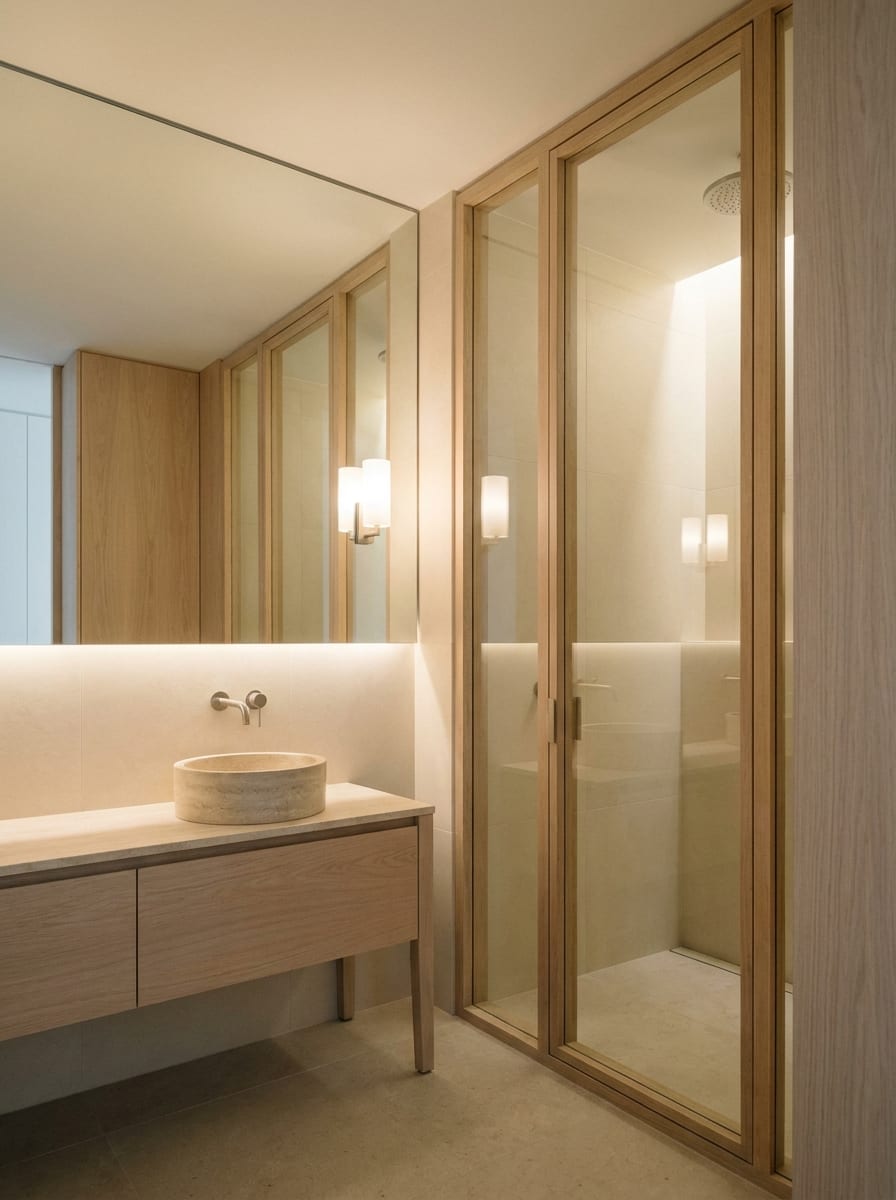
Mirrors and pale surfaces can help lighting travel farther through a small bathroom. This does not mean making everything glossy. It means using reflection strategically.
Start with the mirror
A larger mirror can distribute:
- natural light
- vanity light
- ceiling light across more of the room.
Use light wall colors where useful
Pale or medium-light finishes can help the room feel brighter without adding another fixture.
Keep gloss controlled
A highly reflective room can produce:
- glare
- visual noise Use a mix of:
- matte
- satin
- reflective surfaces.
Position light to work with reflection
A fixture that throws light toward a mirror can help the room feel more illuminated than one shining only downward.
10. The Three-Layer Bathroom Lighting Formula
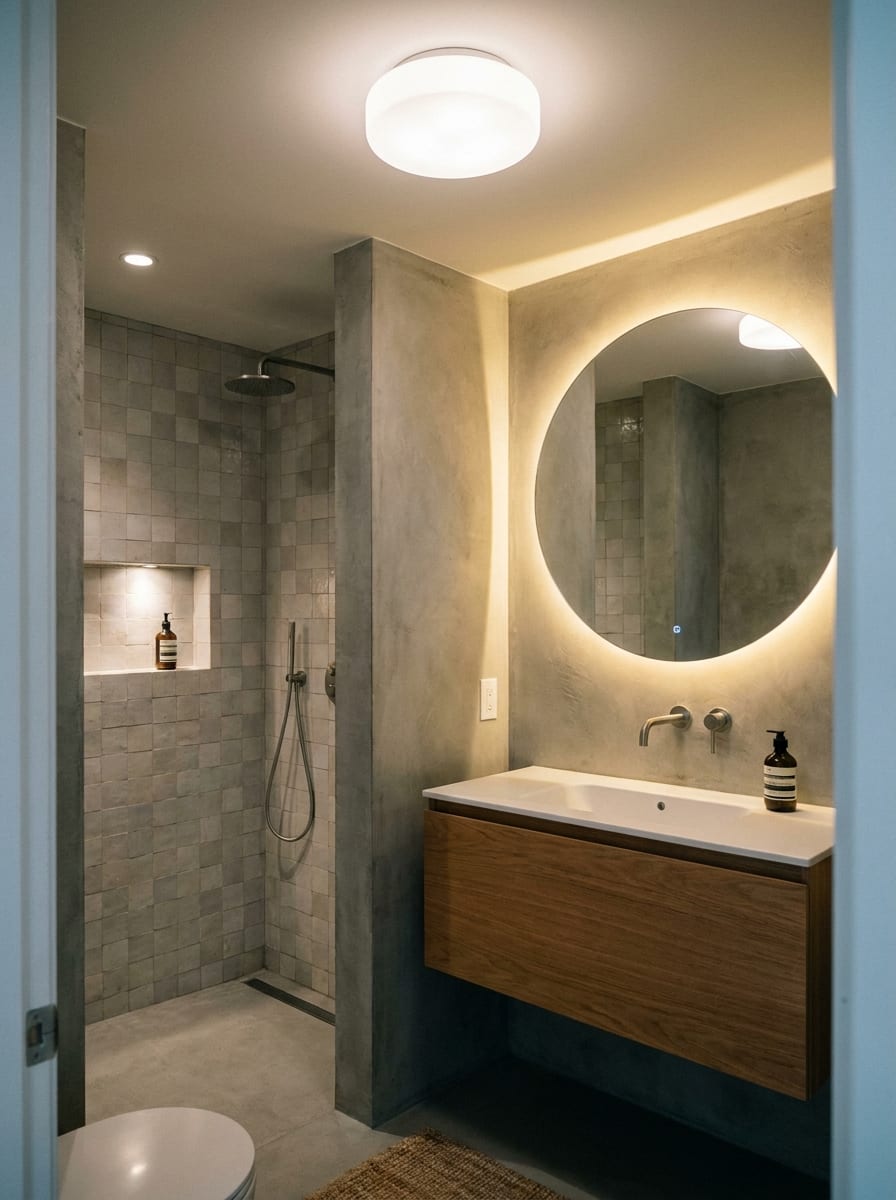
If you are unsure how many lights a small bathroom needs, think in three layers.
Layer 1: General light
This lets you safely and comfortably see the whole room. Usually from:
- ceiling fixture
- recessed light
Layer 2: Vanity light
This supports:
- face
- grooming
- sink tasks
Layer 3: Targeted light
This solves one specific problem, such as:
- dark shower
- niche
- shadowed corner You may not need a separate fixture for every layer. Some fixtures can perform more than one role.
Why this formula works
It prevents the common mistake of adding random lights without a clear job. Every light should answer: What area or task is this improving?
Side lighting
Useful for:
- more even face illumination
- reducing strong vertical shadows
Above-mirror lighting
Useful when:
- wall width is limited
- mirror is wide
- side placement is impossible Neither is automatically better for every bathroom. Should You Put a Light Over a Round Mirror? Yes, if the proportions work. But a large round mirror may also pair well with:
- side sconces
- integrated lighting depending on available wall space. Do You Need a Ceiling Light? Usually some form of general illumination is useful. But it does not need to be:
- large
- decorative A compact ceiling fixture can quietly handle the job.
Flush-mount
Usually more practical in:
- low ceiling
- very small bathroom
Pendant
Can work in specific layouts, but it takes more visual space and must be appropriately located. In a genuinely small bathroom, a low-profile ceiling fixture is often easier. Recessed Lighting in Small Bathrooms Recessed lights can reduce visual clutter. But more recessed fixtures are not always better. Too many can make the ceiling look busy and create uneven pools of light. Use only what the room actually needs. One Recessed Light May Not Be Enough A single central recessed light may leave the vanity or shower poorly lit. Think about the room in zones. Under-Vanity Lighting A floating vanity can sometimes support subtle under-vanity lighting. This can provide:
- soft night lighting
- visual lightness But it should not replace proper task lighting. Night Lighting A very bright bathroom can be uncomfortable at night. A secondary low-level light can be useful for nighttime use. This might come from:
- dimmable fixture
- low-level integrated lighting where appropriate. Dimmers Can Add Flexibility A dimmer can let one lighting setup serve different moments:
- bright morning grooming
- softer evening use Use compatible:
- bulbs
- fixtures
- controls and appropriate electrical installation. Color Temperature Consistency If the vanity is warm and the ceiling is cool, the bathroom can look divided. Try to keep the major light sources within a coherent range. Bright White Tile Changes Lighting Needs A bathroom with:
- white tile
- large mirror may need less total output than a bathroom with:
- dark tile
- small mirror because surfaces reflect light differently. Dark Bathrooms Need Better Distribution, Not Just More Power A dark vanity or wall can absorb more light. Rather than installing one extremely bright fixture, consider better placement across the room. Lighting and Mirror Size Work Together A larger mirror can help reflect more light. That means mirror choice and lighting choice should not be treated as unrelated decisions. Lighting Around a Medicine Cabinet A medicine cabinet can project farther from the wall than a flat mirror. Check that:
- sconces
- overhead fixture do not create awkward shadows or interfere with the cabinet doors. Lighting With a Tall Mirror A tall mirror may leave little room above it. In that case:
- side lighting
- integrated lighting may make more sense. Lighting With a Wall-to-Wall Mirror If the mirror occupies nearly the whole wall, you may need:
- ceiling-mounted
- mirror-integrated
- surface-mounted-on-mirror solutions depending on the setup. Do Not Crowd the Mirror With Fixtures A small vanity wall can feel cluttered when the mirror is surrounded by:
- two large sconces
- one top light
- shelf
- wall decor Choose what is necessary. Keep Decorative Lighting Secondary A beautiful fixture should still serve the room. Avoid adding lighting purely because there is an empty wall. Small Bathroom Lighting Without Natural Light If there is no window, layered artificial light becomes more important. Focus on:
- general coverage
- vanity illumination
- dark-zone correction rather than trying to simulate daylight with one extremely bright fixture. Small Bathroom Lighting With One Window Use the mirror to help reflect natural light. Then let artificial lighting fill in the times when daylight is weak. Small Bathroom Lighting With a Shower Curtain Curtains can reduce light entering the shower. If the shower area feels dark, consider whether it needs its own appropriate lighting source. Small Bathroom Lighting With Glass Shower Doors Glass helps light travel more freely. You may need less additional lighting than you would with an opaque enclosure. Lighting Above the Toilet You may not need a dedicated fixture above the toilet. If the general ceiling lighting covers the area comfortably, keep the setup simpler. Lighting Above Open Shelving Decorative shelf lighting is optional. In a very small bathroom, it can easily become unnecessary visual complexity. Keep Fixture Finishes Consistent Enough You do not need every metal finish to match perfectly. But too many different fixture finishes can make a tiny room feel visually fragmented. Try to coordinate the lighting with:
- faucet
- mirror frame
- hardware in a deliberate way. Black Fixtures in a Small Bathroom Black lighting fixtures can create strong contrast. Use them in slimmer profiles so they do not dominate the wall. Brass Fixtures in a Small Bathroom Warm brass can add softness and warmth. Keep it restrained if the bathroom already has:
- warm wood
- patterned tile White Fixtures Can Visually Disappear A white ceiling fixture against a white ceiling can reduce visual clutter. That is useful when the vanity already has enough design detail. Do You Need Decorative Bulbs? Not usually. Exposed decorative bulbs can create glare around the mirror. Prioritize useful light quality over the look of the bulb itself. Check the Fixture From the Side A light that looks slim from the front may project significantly from the wall. In a very narrow bathroom, check:
- depth
- head clearance
- cabinet interference
Watch Door Swing
A hanging or projecting fixture near:
- door
- tall cabinet can become awkward. Open everything fully before final placement. Watch Mirror Doors If using a mirrored cabinet, open both doors completely and make sure nearby lights do not interfere. Lighting and Ventilation Do not position fixtures in ways that interfere with:
- exhaust fan
- ventilation grille Good airflow remains essential in bathrooms. Wet-Zone Ratings Matter Lighting near:
- shower
- tub
- water needs to be suitable for that location. Use fixtures with the appropriate rating and follow local electrical requirements. Avoid DIY Electrical Guesswork Changing fixture type or location may involve:
- wiring
- junction boxes
- moisture-zone requirements Use qualified help where required. Renter-Friendly Bathroom Lighting Ideas If permanent electrical changes are not possible, focus on what you can change safely and appropriately. Potential options may include:
- approved bulb changes
- portable lighting outside wet areas where suitable
- improved mirror setup
- landlord-approved fixture swap Always follow lease rules and product guidance. A Better Bulb Can Still Help If the placement is good but the light quality is poor, changing the bulb may improve:
- brightness
- color temperature
- color rendering provided it is compatible with the fixture. Do Not Exceed Fixture Ratings More wattage is not automatically better. Follow the fixture manufacturer’s requirements. Test the Room Before Buying If possible, use temporary lighting to understand the problem. For example:
- move a lamp outside the bathroom doorway
- turn on different nearby lights and observe where shadows change. The goal is not to use that setup permanently. It is to learn where additional light actually helps. Stand at the Mirror at Night This is one of the best tests. Ask:
- Can I see my face evenly?
- Is the light glaring?
- Is one side much darker?
- Is the shower disappearing into shadow? View the Bathroom From the Doorway A bathroom can look bright at the sink but dark overall. Stand outside the room and evaluate the full space. Keep the Lighting Visually Quiet In a small bathroom, light should improve the room without becoming the whole room. That often means:
- fewer fixtures
- cleaner shapes
- better placement rather than more decoration. Common Small Bathroom Lighting Mistakes Using one ceiling light for everything It often creates poor task lighting. Buying brighter instead of placing better Direction matters. Making every fixture decorative The room becomes visually busy. Mixing very different color temperatures The room can look inconsistent. Ignoring the shower It may become the darkest part of the room. Placing sconces after choosing an oversized mirror Plan together. Using fixtures that project too far Check depth. Over-lighting the room More brightness is not always more comfortable. Ignoring wet-zone requirements Safety comes first. Forgetting nighttime use The room should work after dark too. A Quick Small-Bathroom Lighting Guide
Choose Side Sconces if:
You want better face-level illumination and have enough wall width.
Choose an Above-Mirror Bar if:
The vanity wall is narrow.
Choose a Backlit Mirror if:
You want a visually clean integrated look.
Use Ceiling + Vanity Layers if:
You want the simplest balanced setup.
Add Shower Lighting if:
The shower is noticeably darker than the rest of the room.
Fix One Dark Corner if:
The room feels uneven rather than generally dim.
Use Warm-Neutral Lighting if:
The current light feels too cold or too yellow.
Use Minimal Fixtures if:
The bathroom already has many visual elements.
Use Reflective Surfaces Strategically if:
You want existing light to travel farther.
Use the Three-Layer Formula if:
You are planning the whole bathroom from scratch. The Simplest Small Bathroom Lighting Formula For many compact bathrooms, a strong starting point is: one general ceiling light + one properly placed vanity light + enough reflection from the mirror Then only add a third lighting source if there is a real problem area. Final Thoughts A small bathroom does not need a ceiling full of lights. It needs lighting that understands the room. Start with the tasks. Make sure the mirror is useful. Reduce harsh shadows. Give the shower enough visibility. Keep color temperature consistent. Use reflective surfaces to help the light travel. And let some fixtures visually disappear. When the lighting is well distributed, the room can feel:
- brighter
- larger
- calmer
- more finished without adding clutter to the walls or ceiling.