10 Small Bathroom Shower Curtain Ideas That Make a Tiny Bathroom Feel Bigger and More Finished
Discover 10 small bathroom shower curtain ideas using height, length, color, pattern and smart proportions to make a tiny bathroom feel taller, brighter and more finished.
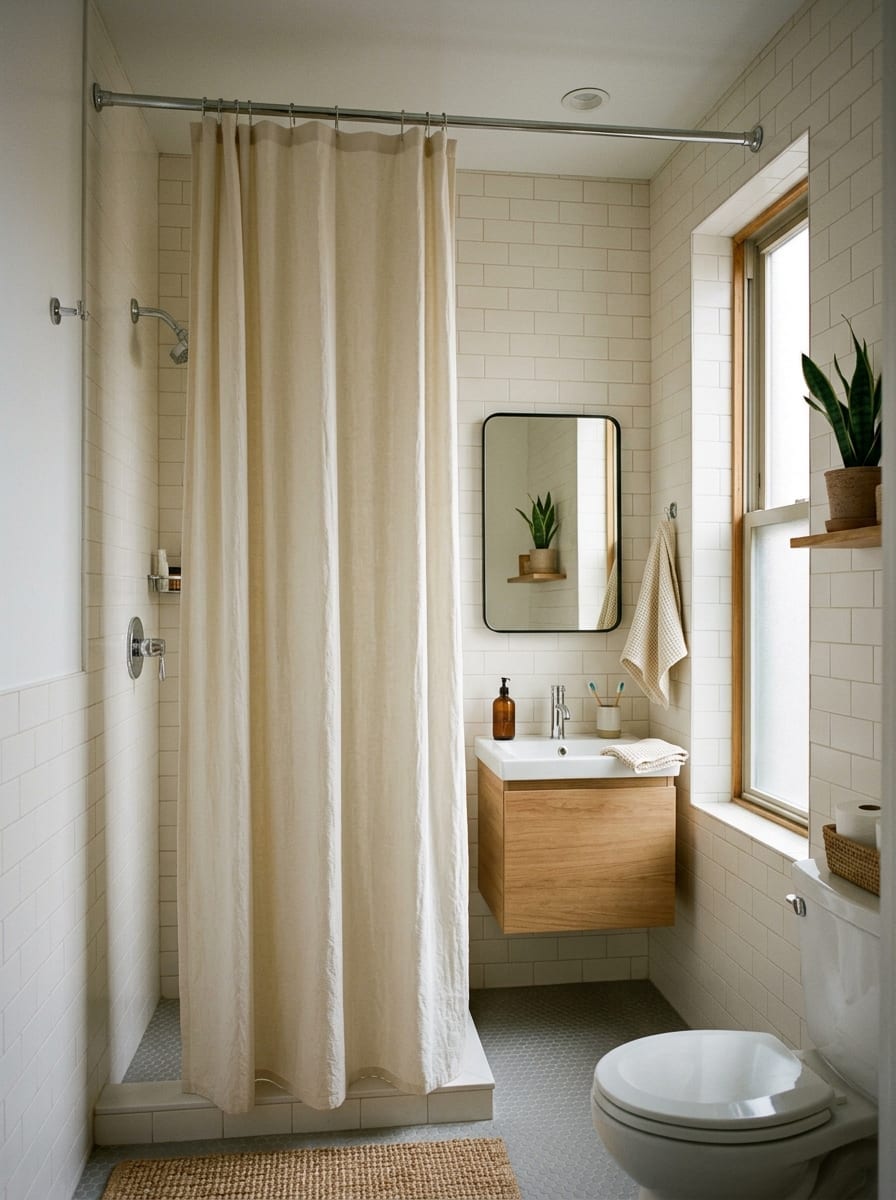
Small bathroom with a warm-white shower curtain hung from a rod mounted high on the wall, creating one tall vertical line from near the ceiling toward the floor
In This Guide
A shower curtain takes up a surprisingly large amount of visual space in a small bathroom. In a compact room, it may cover almost an entire wall. That means the curtain can either help the bathroom feel:
- taller
- brighter
- calmer
- more finished
or make it feel:
- shorter
- darker
- busier
- more divided
The biggest mistake is treating a shower curtain like a decorative accessory. In a small bathroom, it behaves more like a large vertical surface. Its:
- height
- length
- color
- pattern
- width
- fabric weight
can change how the whole room feels. The good news is that this makes the shower curtain one of the easiest things to improve without changing:
- tile
- vanity
- plumbing
- floor plan
Here are ten ways to choose and hang one more strategically.
1. The Ceiling-High Curtain
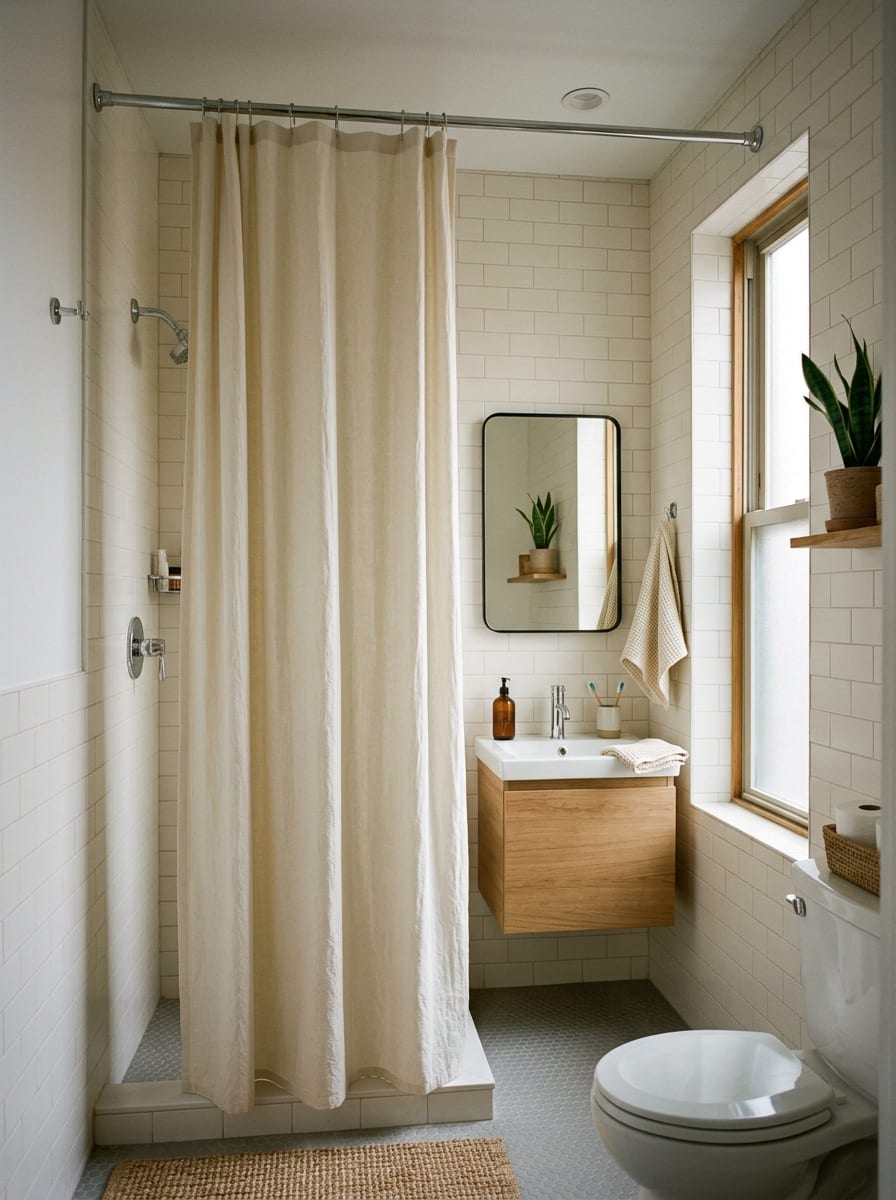
One of the simplest ways to make a small bathroom feel taller is to hang the curtain rod higher. Instead of placing it only a little above the shower opening, move the visual line upward where the room and hardware allow.
Why it works
The eye follows vertical lines. A higher curtain creates a taller uninterrupted shape from:
- rod
- to floor
which can visually stretch the room.
Do not automatically mount it at the ceiling
You still need to consider:
- rod type
- ceiling height
- curtain length
- ventilation
- shower enclosure
- hardware instructions
The goal is higher, not necessarily touching the ceiling.
Keep the curtain proportionate
If you raise the rod but keep a standard short curtain, you may create an awkward gap at the bottom. Height and curtain length need to be planned together.
Best for
This works particularly well in bathrooms with:
- standard 8-foot ceilings
- narrow tub/shower combinations
- short existing curtain placement
2. The Full-Length Curtain
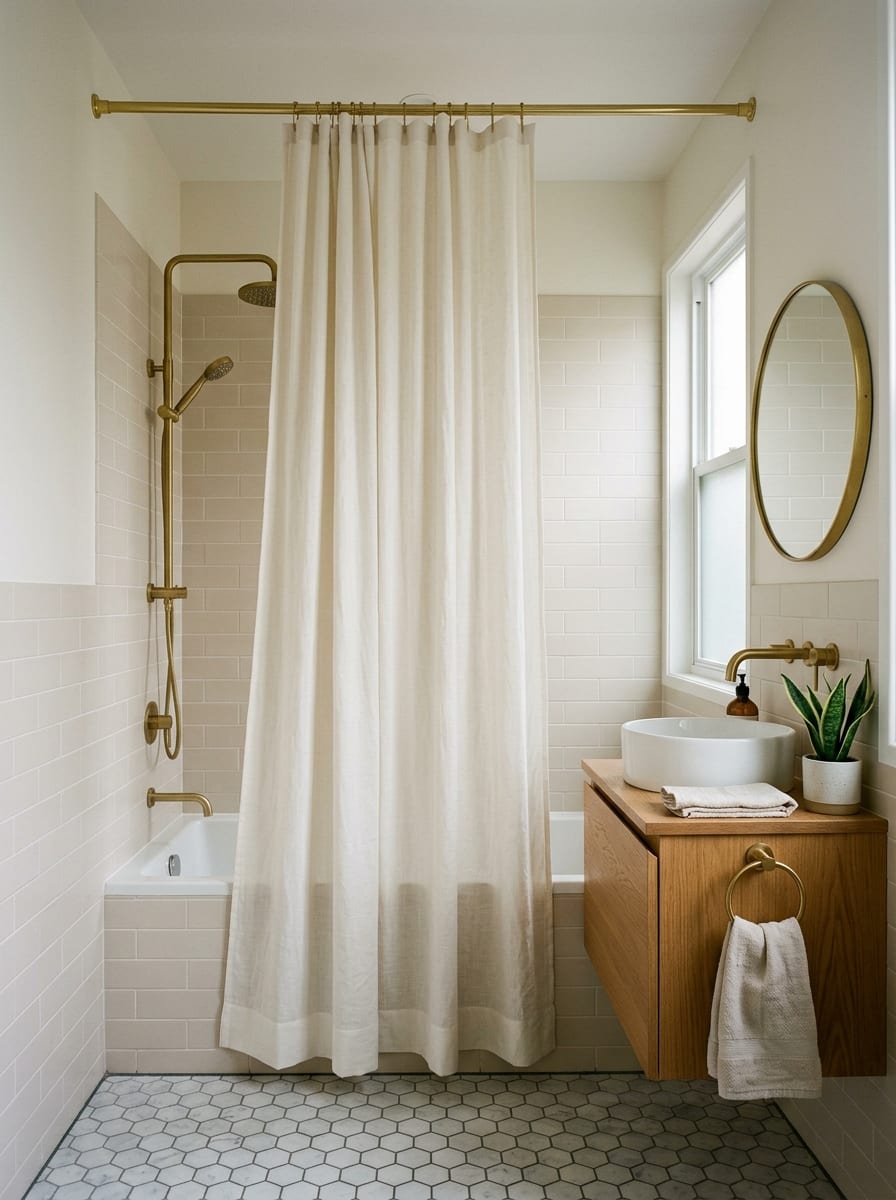
A curtain that stops too high above the floor can make the bathroom look visually chopped up. A longer curtain often looks more intentional.
Why it works
Longer fabric creates one continuous vertical surface. That reduces visual breaks.
Aim for a clean finish
The curtain should not:
- puddle excessively
- bunch on the floor
- drag into standing water
The bottom should sit at a practical height appropriate for the shower setup.
Measure after positioning the rod
Do not buy the curtain first if you plan to raise the rod. Measure:
- rod height
- desired bottom clearance
then choose the appropriate length.
Avoid the hotel-drape mistake
Long does not mean dramatically oversized. The curtain should look tailored, not pooled.
3. The Soft White Light-Reflecting Curtain
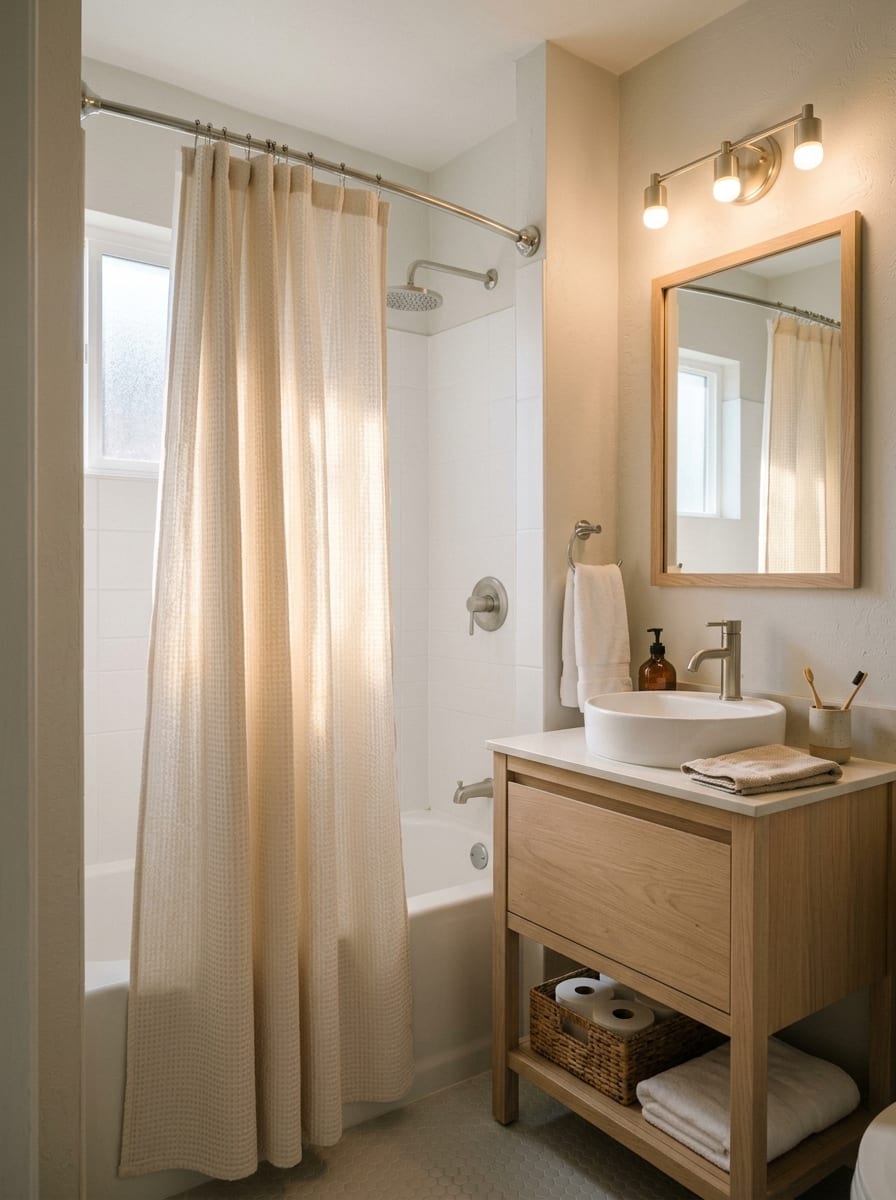
A light curtain can help a small bathroom feel brighter because it reflects more light than a very dark one. This does not mean every bathroom needs pure bright white. Try:
- warm white
- ivory
- soft cream
- light greige
depending on the room.
Why it works
A large curtain occupies a lot of visual area. When that large surface is lighter, the room often feels less enclosed.
Coordinate with the wall tone
If the walls are warm, an icy white curtain can look disconnected. Choose a white or neutral that works with:
- tile
- paint
- vanity
- flooring
Texture keeps it from feeling flat
A light curtain can still have interest through:
- waffle texture
- subtle weave
- fine stripe
- stitched detail
without relying on heavy pattern.
4. The Vertical-Stripe Curtain
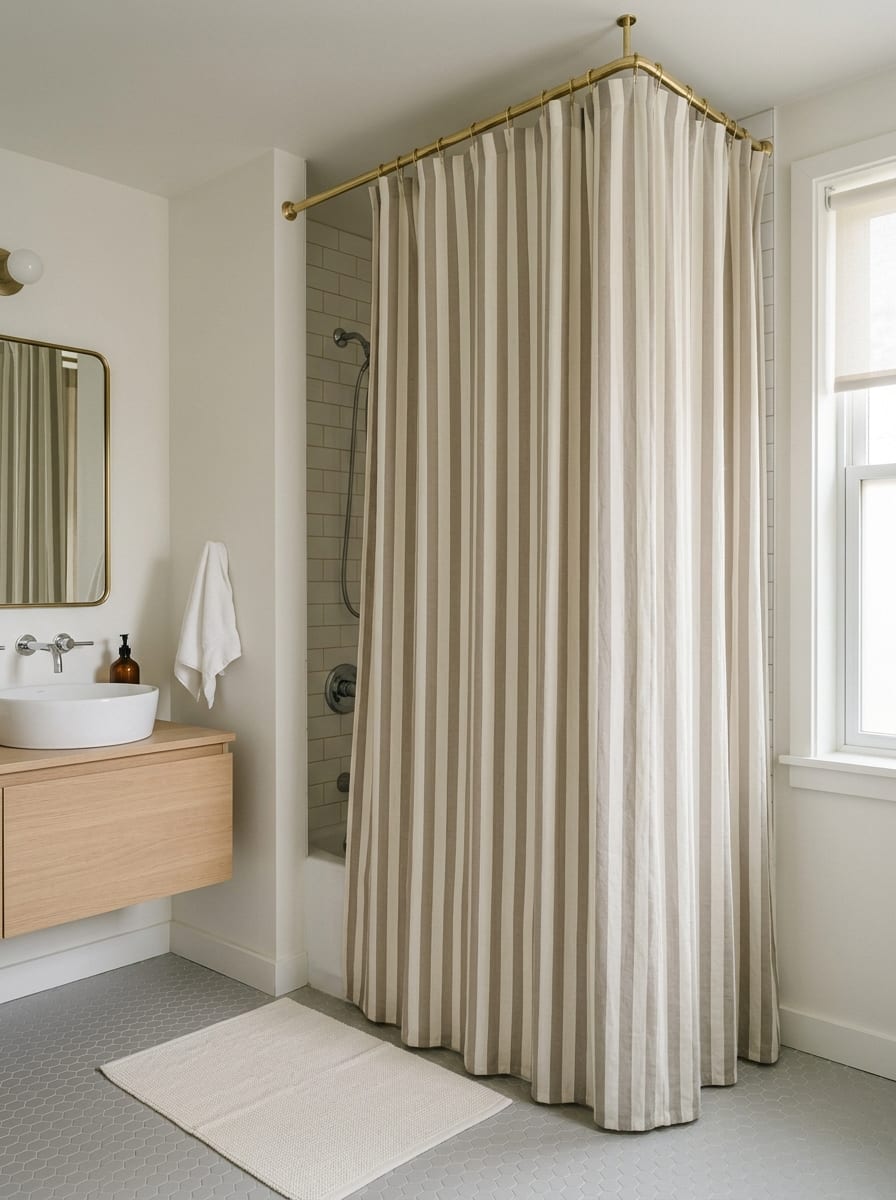
Vertical stripes can reinforce height. They are especially useful when the bathroom feels:
- low
- squat
- visually compressed
Keep the stripe controlled
Avoid extremely high-contrast striping in a very tiny bathroom. A softer version may work better. Try:
- cream + beige
- white + gray
- white + muted blue
Why it works
The line directs the eye upward. This pairs especially well with a higher-mounted rod.
Stripe width matters
Very wide bold stripes can become dominant. Very tiny stripes can create visual noise. Aim for a clear but restrained pattern.
Keep the rest simpler
If the shower curtain has a strong vertical pattern, the:
- bath mat
- towels
- wall decor
can stay quieter.
5. The Tonal Pattern Curtain
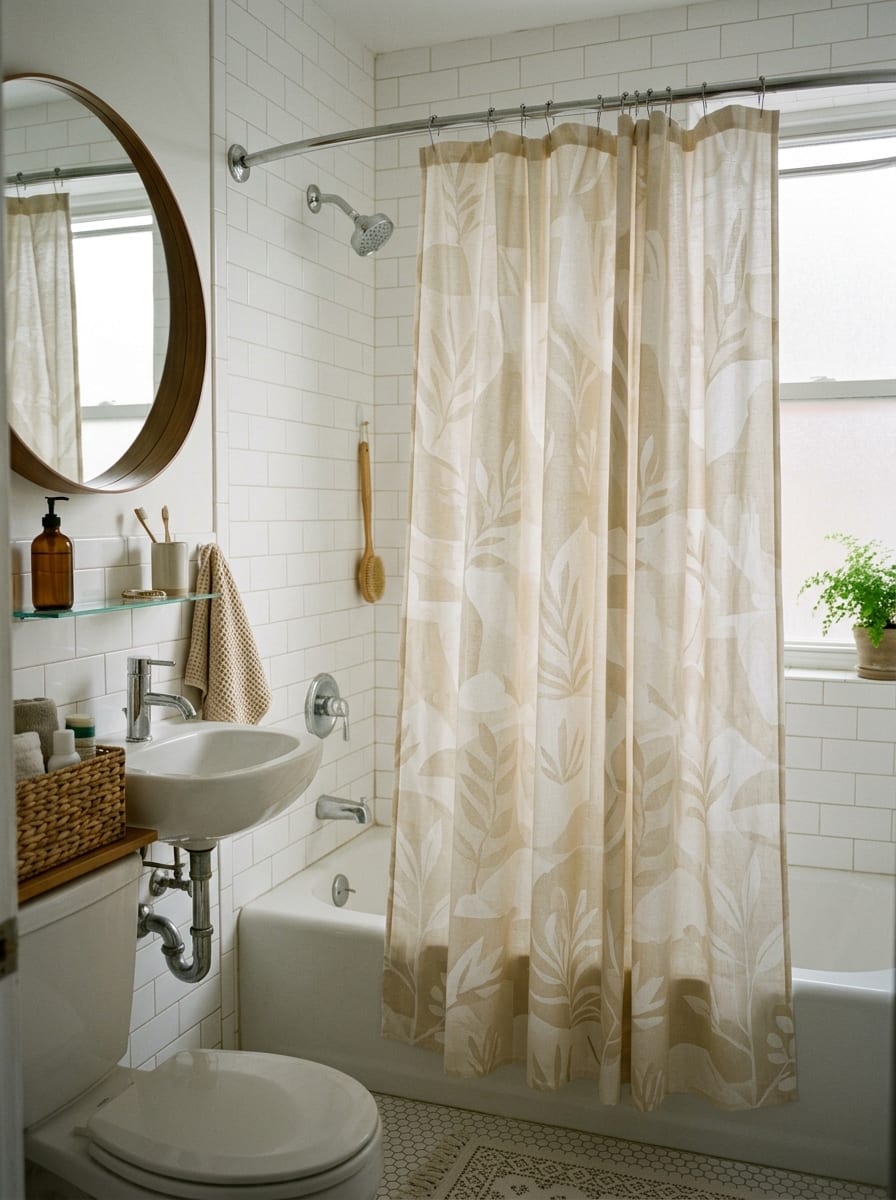
You can use pattern in a small bathroom without making it feel busy. The key is to keep the contrast low.
Try tonal combinations
For example:
- cream on beige
- sage on pale green
- gray on off-white
- tan on ivory
Why it works
The pattern remains visible up close but blends into one larger visual field from a distance. That keeps the room from feeling fragmented.
Avoid too many competing colors
If the curtain has:
- six colors
- large motif
- strong contrast
it can dominate the bathroom.
Tonal patterns are especially useful when
The rest of the bathroom is very plain and needs some personality without visual overload.
6. The Small-Scale Print Curtain
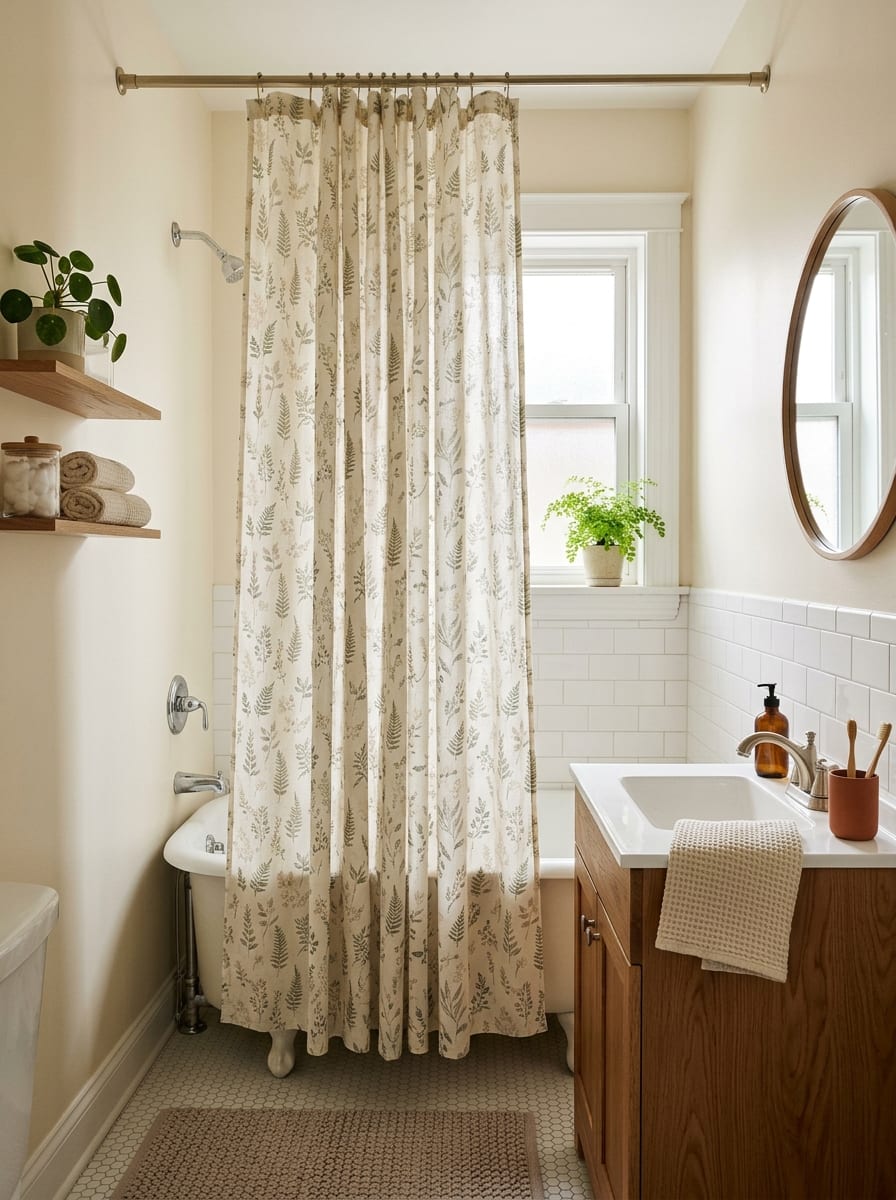
A small-scale print can add character without taking over the entire bathroom. The key is visual density.
Better options
Try:
- tiny botanical
- fine dot
- small geometric
- narrow line pattern
Avoid making the print too busy
A print with hundreds of competing high-contrast details can make the bathroom feel visually crowded.
Match the scale to the room
In a tiny bathroom, a giant oversized floral may dominate the only large vertical surface. A smaller repeat can feel more balanced.
Let the shower curtain be the main pattern
If the curtain has a visible print, keep other patterns limited.
7. The Shower-Curtain + Liner Pair
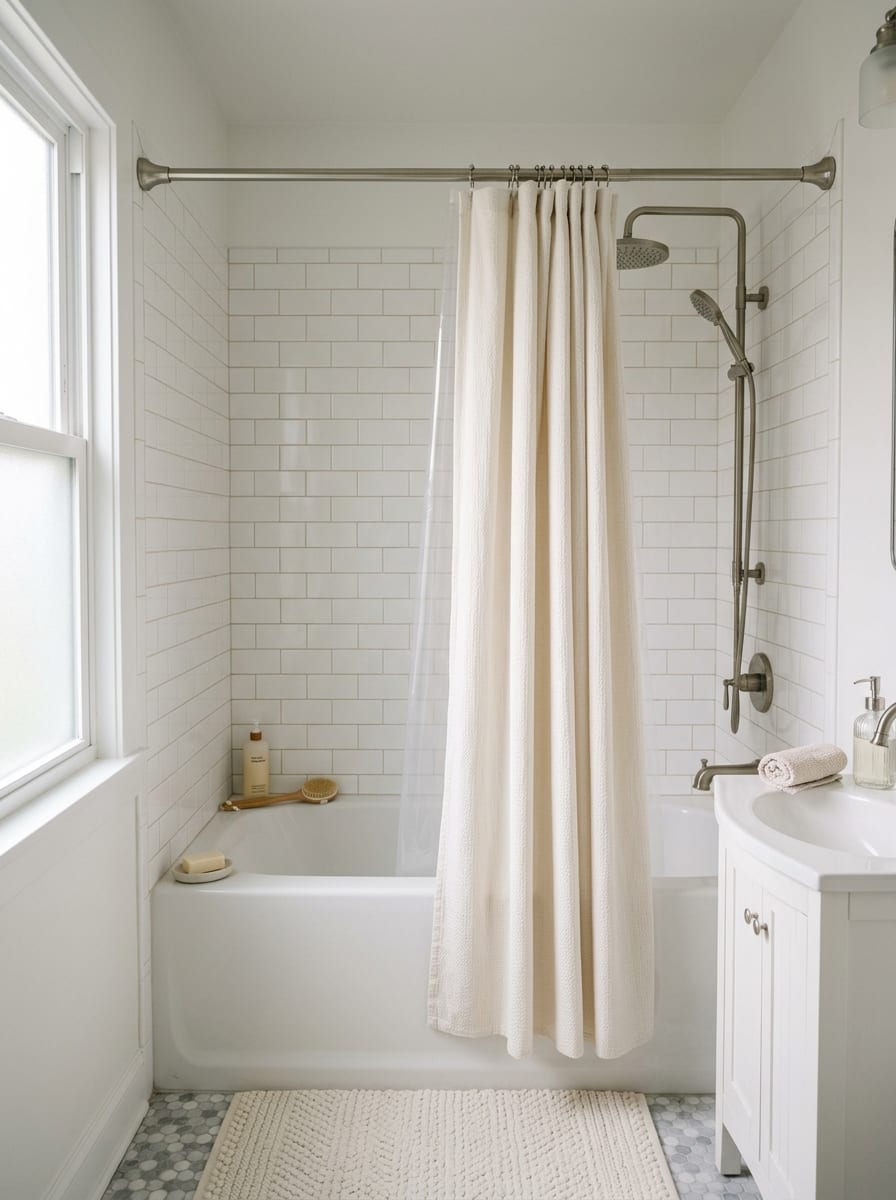
A practical shower curtain setup usually involves two separate jobs:
Decorative curtain
Handles the visual side.
Liner
Handles the wet side.
Why separating the jobs helps
You can choose a decorative curtain for:
- texture
- color
- scale
without expecting it to perform every water-management function by itself.
Keep the liner visually quiet
If possible, avoid a liner that adds another strong pattern behind the curtain. A simple appropriate liner helps the decorative layer stay visually clean.
Make maintenance easier
The setup should be easy to:
- open
- dry
- clean
- replace
according to the product instructions.
Do not let the liner bunch excessively
Too much material inside the tub can feel messy and make the shower harder to use.
8. The Extra-Wide Curtain Setup
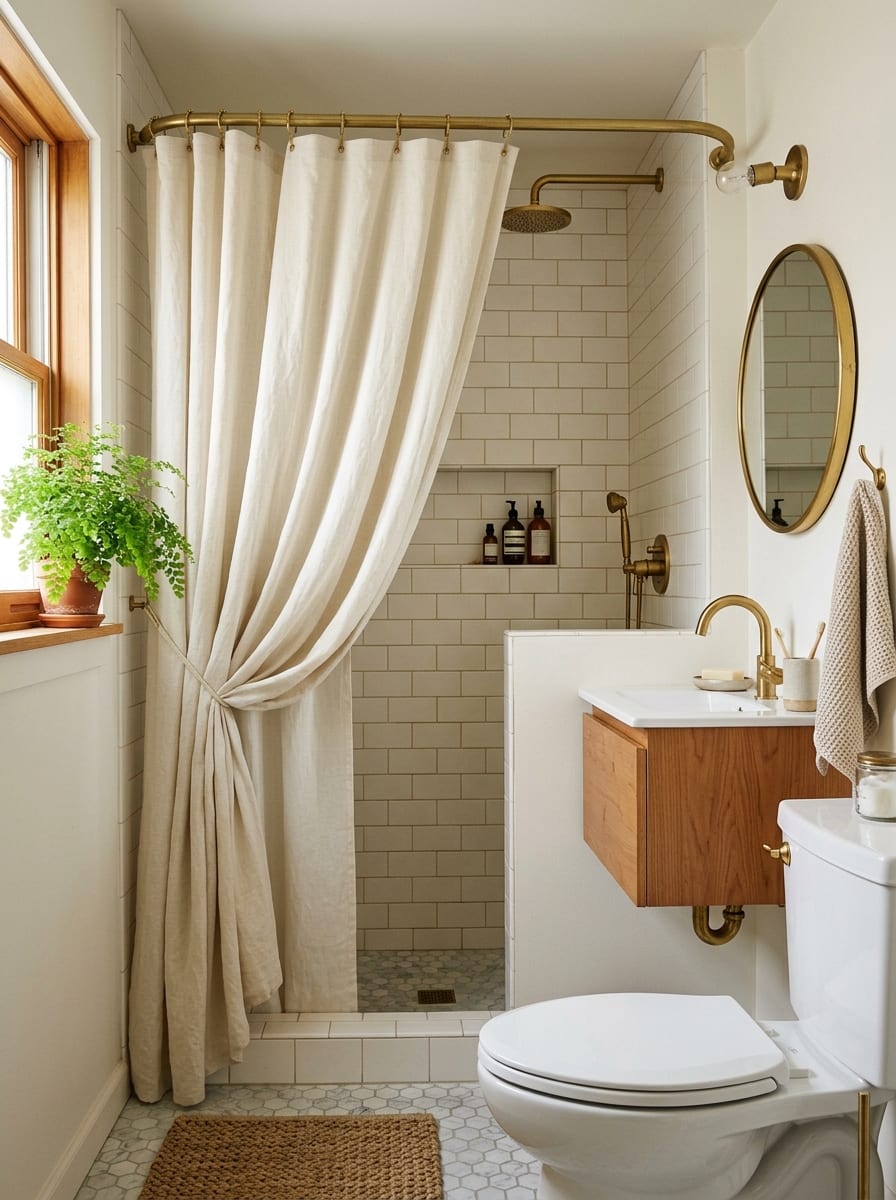
Sometimes the curtain looks cramped because it barely spans the shower opening. A wider curtain can create softer folds and better visual fullness.
Why it works
Too little width can make the curtain look:
- stretched flat
- cheap
- unfinished
A bit more fabric creates natural folds.
But do not overdo it
Excessive width can create too much bulk when pushed to one side. This matters in a tiny bathroom.
Think about where the curtain gathers
When open, the fabric stack should not interfere with:
- toilet
- vanity
- tub access
Measure the opening
Do not rely on assumptions. Measure:
- rod width
- shower opening
- desired fullness
before buying.
9. The One-Color Bathroom Curtain
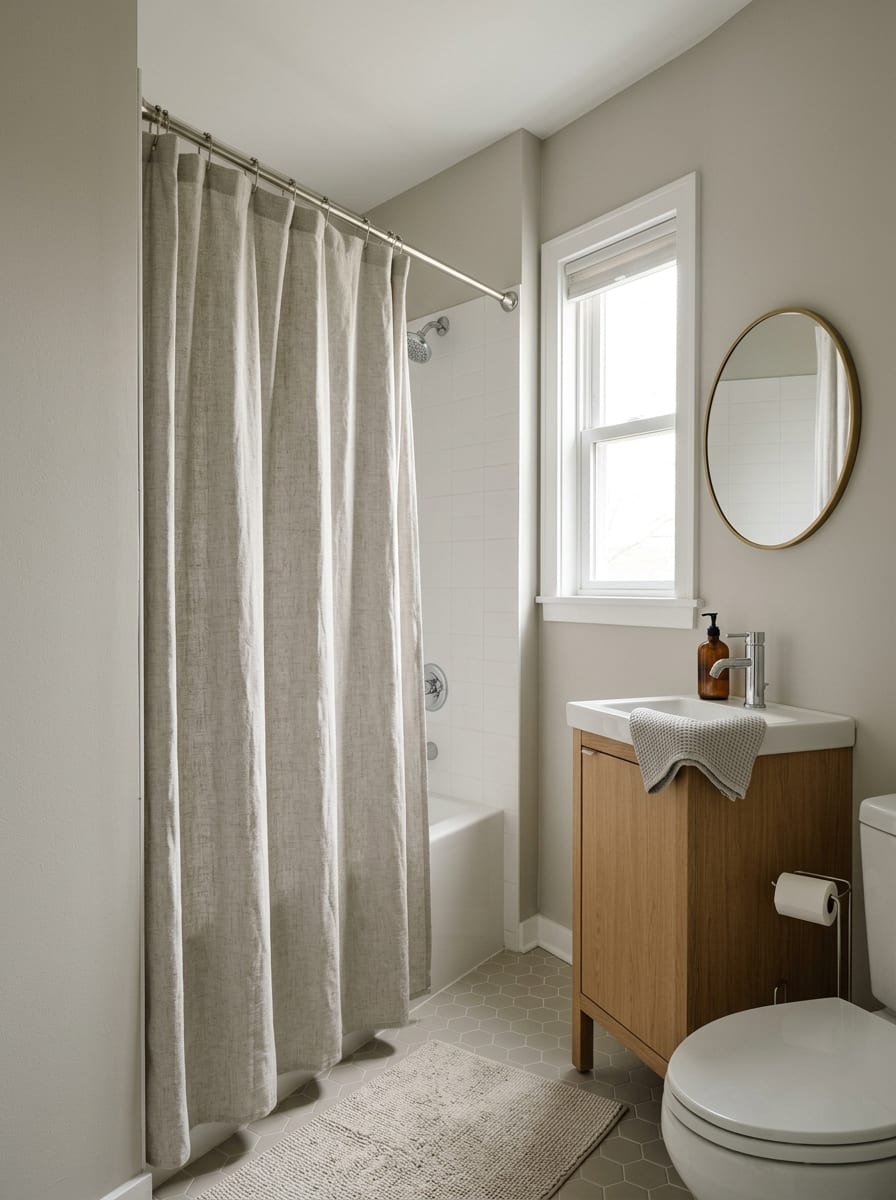
One of the easiest ways to make a small bathroom feel calmer is to keep the shower curtain close to the wall color. For example: warm white wall + warm white curtain or: light greige wall + pale greige curtain
Why it works
The curtain visually blends with the surrounding wall. That reduces the sense of the shower being a separate giant block.
Add texture instead of contrast
If the room needs interest, use:
- weave
- ribbing
- waffle texture
- subtle stitching
rather than a totally different color.
Best for busy bathrooms
This works especially well when the room already has:
- patterned tile
- dark vanity
- strong hardware
because it gives the eye a quieter surface.
10. The Height-First Shower Curtain Formula
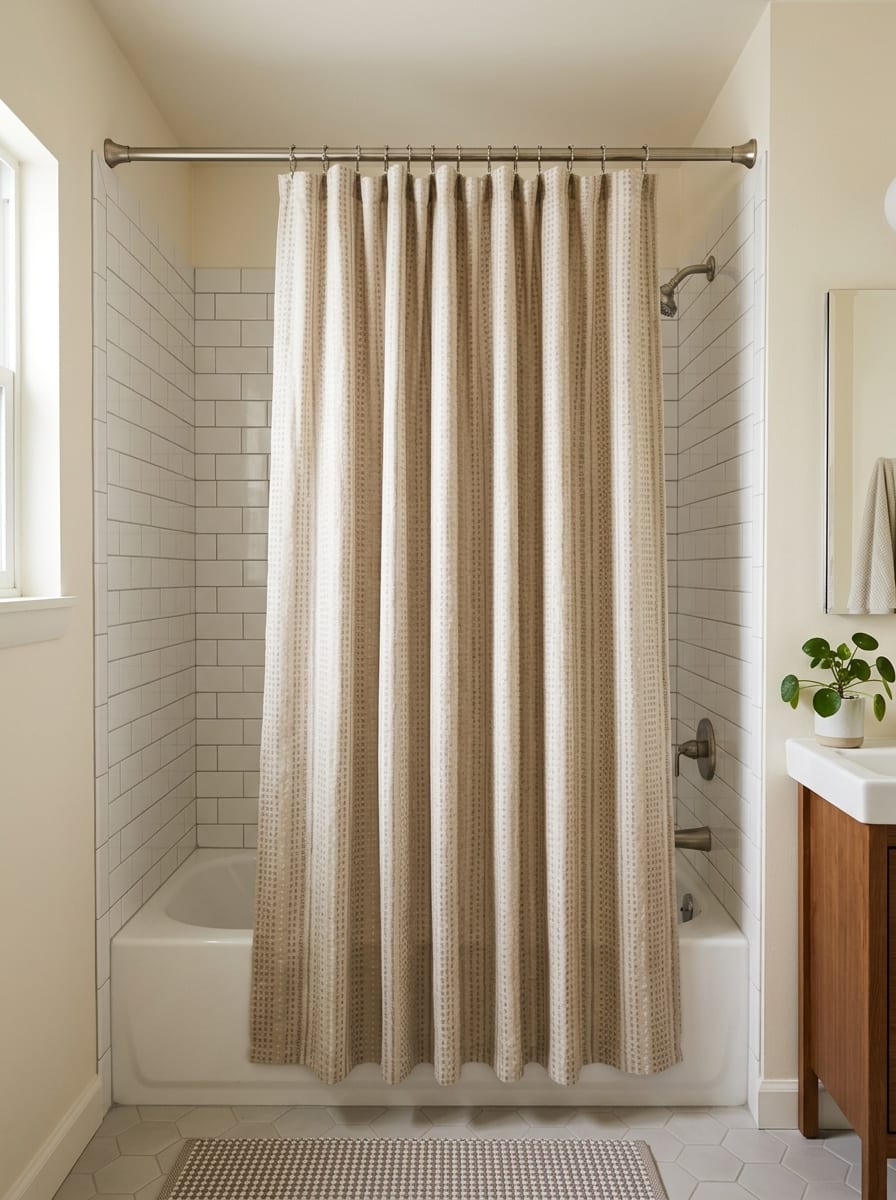
If you are choosing a shower curtain from scratch, use this order: rod height → curtain length → curtain width → visual weight → pattern Not the other way around.
Step 1: Set the rod height
Decide how high the curtain should begin.
Step 2: Choose the correct length
Make sure the bottom finishes cleanly and practically.
Step 3: Choose enough width
You want natural folds without excessive bulk.
Step 4: Choose the visual weight
Ask whether the room needs:
- light
- medium
- dark
visual mass.
Step 5: Add pattern only if needed
Pattern should be the final decision, not the first one.
Why this works
A beautiful curtain hung at the wrong:
- height
- length
- width
will still look wrong. Structure comes first.
Start With Height Before Color
Most people begin by asking: What shower curtain color should I buy?
In a small bathroom, a better first question is: Where should the top edge sit?
Height affects the room’s proportions more than a small color difference.
Measure the Bathroom Before Buying Anything
Measure:
- shower width
- rod height
- floor-to-rod distance
- tub edge
- clearance near toilet
- clearance near vanity
Small spaces punish guessing.
A Higher Curtain Can Make the Room Feel Taller
This is especially effective when the curtain visually continues close to the floor. The combination matters. A high rod with a short curtain can look unfinished.
Short Curtains Can Visually Cut the Wall
A curtain ending far above the floor creates a strong horizontal line. That can make a small room feel shorter.
Avoid Excess Fabric on the Floor
A little visual length is helpful. Fabric pooling on a bathroom floor usually is not. It can look:
- messy
- impractical
and may interact poorly with moisture.
Do Not Block Bathroom Ventilation
A very high curtain should not create unnecessary moisture problems. Keep ventilation in mind and follow the bathroom and product requirements.
Leave the Curtain Open After Showering Where Appropriate
Allowing the shower area and curtain to dry properly can help reduce trapped moisture. Follow the curtain and liner care instructions.
Light Curtains vs Dark Curtains
Light curtain
Can make the bathroom feel:
- brighter
- more open
- softer
Dark curtain
Can create:
- drama
- contrast
- stronger visual weight
Dark curtains can absolutely work in small bathrooms, but they become a dominant surface.
When a Dark Shower Curtain Works
A dark curtain can be effective if:
- bathroom has good lighting
- walls are relatively light
- the room needs contrast
- the rest of the decor stays simple
When a Light Shower Curtain Works Better
Choose light when the room already feels:
- narrow
- dim
- visually busy
White Shower Curtains Do Not Have to Feel Boring
Interest can come from:
- texture
- stitching
- fine stripe
- subtle border
rather than a large print.
Pattern Scale Matters
Large patterns feel bold. Small patterns feel busier. Medium restrained patterns often sit somewhere in between. There is no universal perfect pattern size. The question is: How much visual attention should the curtain demand?
High Contrast Makes the Curtain More Dominant
Black-and-white patterns are much stronger visually than:
- cream-and-beige
- pale-gray-on-white
even when the motif itself is the same size.
Use One Main Pattern in a Tiny Bathroom
If the shower curtain is patterned, consider keeping:
- bath mat
- towels
- wall art
mostly solid.
Avoid Matching Everything Exactly
The curtain does not have to perfectly match:
- towels
- rug
- soap dispenser
Coordinated is often better than identical.
Match Undertones Instead
A warm beige curtain works naturally with:
- warm wood
- cream tile
- brass
while a cool gray curtain may work better with:
- white
- chrome
- blue-gray tile
Shower Curtain With a Small Vanity
If the curtain is only a few inches away from the vanity, avoid overly bulky fabric. You still need comfortable:
- drawer opening
- cabinet access
Shower Curtain Near the Toilet
Check where the fabric gathers when open. A curtain stacked tightly beside the toilet can become inconvenient.
Shower Curtain Near the Door
Make sure the door can open fully without catching:
- curtain
- rod
- fabric
Shower Curtain in a Very Narrow Bathroom
Use:
- higher rod
- longer curtain
- visually light color
to reduce horizontal visual breaks.
Shower Curtain in a Windowless Bathroom
A lighter curtain often helps artificial light spread more evenly. But the lighting itself still matters.
Shower Curtain With Natural Light
A lighter curtain can help preserve brightness. If the shower has a window, make sure privacy and moisture suitability are considered separately.
Shower Curtain With Dark Tile
A lighter curtain can create contrast and keep the room from feeling too enclosed.
Shower Curtain With White Tile
You have more flexibility. You can use:
- warm white
- tonal print
- darker accent
depending on the rest of the room.
Shower Curtain With Patterned Floor Tile
Keep the curtain quieter. Let the floor be the major pattern.
Shower Curtain With Plain Floor Tile
The curtain can carry more personality if needed.
Linen-Look Curtains
A linen-look texture can soften a bathroom. But check the actual material and care instructions. Bathroom moisture makes practicality important.
Waffle-Weave Curtains
Waffle textures can add visual depth without strong pattern. This works well in neutral bathrooms.
Heavy Fabric Curtains
Heavy fabric can look luxurious but may feel visually bulky in a very small bathroom. It may also gather into a thicker stack when open.
Lightweight Curtains
Lighter fabric can feel airier. But it still needs enough structure to hang neatly.
Transparent Shower Curtains
Clear curtains can visually open the room because they do not create a solid wall. However, they also expose the entire shower area. This works best if:
- shower is visually tidy
- privacy is not an issue
- material is suitable
Frosted or Semi-Transparent Curtains
These can offer a middle ground:
- more light
- some visual openness
- less exposure
depending on the material.
Avoid Too Much Sheer Fabric Without a Proper Liner
A decorative sheer curtain may still require an appropriate liner for practical shower use.
Shower Curtain Rings Matter More Than You Think
Bulky rings can visually lower or complicate the top edge. Simple hardware often supports a cleaner look.
Match Hardware With the Bathroom
You do not need a perfect finish match. But too many competing metals can make a tiny room feel fragmented.
Curved Shower Rods
A curved rod can sometimes provide more shoulder room inside the shower. But it also projects farther into the bathroom. In a narrow room, check the exterior clearance carefully.
Straight Rods
Straight rods keep the shower line compact. They are often easier when every inch outside the tub matters.
Tension Rod vs Fixed Rod
A tension rod can be renter-friendly. A fixed rod may feel more permanent. Choose based on:
- lease
- wall type
- product instructions
- stability needs
Renter-Friendly Shower Curtain Improvements
Even if you cannot renovate, you may still be able to change:
- curtain
- rings
- liner
- tension rod placement
where allowed. That can make a noticeable visual difference.
Keep the Shower Curtain Mostly Closed for Styling
A closed curtain creates one clean surface. But for drying after use, follow practical moisture-management needs. Function comes before photography.
Keep the Shower Area Behind the Curtain Organized
If the curtain is often left open, visible clutter inside the shower matters too. Keep:
- bottles
- tools
- hanging organizers
under control.
Do Not Use the Curtain to Hide Unlimited Clutter
A curtain can conceal the shower zone. It should not become an excuse to overload it.
Bath Mat Placement Matters
A bath mat directly under a long curtain can visually merge into the curtain area. Choose proportions carefully so the floor does not feel crowded.
Keep the Curtain Off the Floor
This helps:
- cleaner appearance
- easier cleaning
- moisture control
Use the Curtain to Connect the Whole Bathroom
Repeat one subtle element from the room. For example:
- curtain stripe echoes vanity wood tone
- curtain pattern repeats wall color
- curtain border picks up dark hardware
Small connections make the room feel intentional.
Do Not Add a Decorative Valance
In a small bathroom, extra fabric near the ceiling usually adds unnecessary visual weight. The simplest top line is often the strongest.
Avoid Busy Tiebacks
A shower curtain generally does not need:
- tassels
- dramatic tiebacks
- decorative draping
Small bathrooms benefit from clean lines.
What About Two Curtain Panels?
Two panels can create a decorative look. But they also create:
- more fabric
- more seams
- more visual activity
One curtain is usually simpler for a very small bathroom.
Shower Curtain With a Bath
If you have a tub, make sure the liner remains appropriately inside during use. The decorative curtain can stay outside.
Shower Curtain With a Walk-In Shower
Some walk-in showers can still use curtains. Focus on:
- correct width
- splash control
- practical placement
rather than styling alone.
Shower Curtain for Low Ceilings
This is where the high-hung trick can help most. Use:
- vertical pattern
- longer curtain
- minimal visual breaks
to encourage the eye upward.
Shower Curtain for Tall Ceilings
Do not make the curtain look too short relative to the room. A longer custom or appropriately sized curtain may look more proportionate.
Common Small Bathroom Shower Curtain Mistakes
Hanging the rod too low
The room can feel shorter.
Using a curtain that stops too high
It creates a strong horizontal break.
Buying based on color before measuring
Fit matters first.
Using too much pattern
The curtain becomes the entire room.
Using a very dark curtain in an already dark bathroom
It can make the room feel more enclosed.
Letting the curtain pool on the floor
It looks messy and is impractical.
Ignoring curtain width
A stretched-flat curtain often looks unfinished.
Using too much width
It creates bulky folds.
Letting the open curtain block fixtures
Check where the fabric gathers.
Forgetting the liner
The decorative layer and water-management layer may have different jobs.
Quick Shower Curtain Decision Guide
Choose the Ceiling-High Curtain if:
The bathroom feels visually short.
Choose the Full-Length Curtain if:
The current curtain looks chopped off.
Choose Soft White if:
The room feels dark or enclosed.
Choose Vertical Stripes if:
You want to emphasize height.
Choose a Tonal Pattern if:
You want interest without visual noise.
Choose a Small-Scale Print if:
The bathroom is plain but compact.
Use a Curtain + Liner Pair if:
You want separate decorative and practical layers.
Choose Extra Width if:
The curtain currently looks stretched and flat.
Choose One-Color Styling if:
The room already has enough pattern.
Use the Height-First Formula if:
You are replacing everything from scratch.
The Simplest Small-Bathroom Shower Curtain Formula
For many tiny bathrooms, a strong starting point is: higher rod + longer curtain + light or tonal fabric + simple folds Then add pattern only if the room still needs more personality.
FAQs
Can a shower curtain make a small bathroom look bigger?
It can influence how large the room feels visually. A higher rod, longer curtain, lighter visual weight and fewer horizontal breaks can make the bathroom feel taller and less divided.
Should a small bathroom use a white shower curtain?
White is often useful because it reflects light and feels visually light, but it is not required. Soft neutrals and low-contrast patterns can work just as well.
Should I hang the shower curtain higher?
Often, yes, if the room and hardware allow it. A higher placement can emphasize ceiling height. Measure curtain length before moving the rod.
Should a shower curtain touch the floor?
Generally, avoid letting it drag or puddle on the floor. Leave a practical small clearance while still keeping the curtain visually long.
Are patterned shower curtains bad for small bathrooms?
No. The issue is usually:
- scale
- contrast
- color count
not pattern itself. A restrained pattern can work beautifully.
What curtain pattern makes a bathroom look taller?
Vertical stripes are one of the clearest options because they encourage the eye to move upward.
Should the shower curtain match the walls?
It does not need to match exactly. Using a similar tone can create a calmer, more continuous visual field.
Are dark shower curtains okay in small bathrooms?
Yes, especially with good lighting and lighter surrounding surfaces. Just remember that a dark curtain becomes a large visual block.
Final Thoughts
A shower curtain is not a small decorative detail in a tiny bathroom. It is one of the largest surfaces in the room. That makes proportion more important than trend. Start with:
- rod height
- curtain length
- width
- visual weight
before choosing a pattern. Hang the curtain high enough to emphasize height. Let it fall long enough to create one clean vertical line. Use enough width for natural folds. Keep the pattern proportionate to the room. And remember that a small bathroom usually benefits more from a calm, well-scaled curtain than from the most decorative one you can find. A better shower curtain will not change the square footage. But it can make the bathroom feel much more deliberate, taller, brighter and visually finished.