9 Greenery Bedroom Ideas for Small Apartments That Feel Lush Without Feeling Crowded
Explore 9 greenery bedroom ideas for small apartments, from statement plants and window-sill groupings to botanical bedding and space-conscious styling.
In This Guide
A bedroom can feel more inviting with greenery, but adding plants to a small room takes a little more thought than filling every empty corner. A crowded windowsill, an oversized floor planter, or a collection of pots on every surface can make an already compact bedroom feel busy rather than restful.
The better approach is to give each plant a clear role. One taller plant can soften an empty corner, a small group can bring life to a bright windowsill, and a trailing plant can introduce movement above a dresser or shelf. Green textiles and botanical artwork can also reinforce the look when the room does not receive enough natural light for many live plants.
The key is to work with the room’s actual conditions. Plant choices need to suit the available light, watering needs, temperature, and ventilation. Furniture still needs to be easy to use, and plant containers should not block drawers, windows, doors, or walking routes.
These nine greenery bedroom ideas show how to introduce a fresh, layered look while keeping the room functional. Whether you have space for one statement plant or a small collection, the goal is a bedroom that feels connected to nature without becoming a greenhouse.
1. The Single Statement Floor Plant
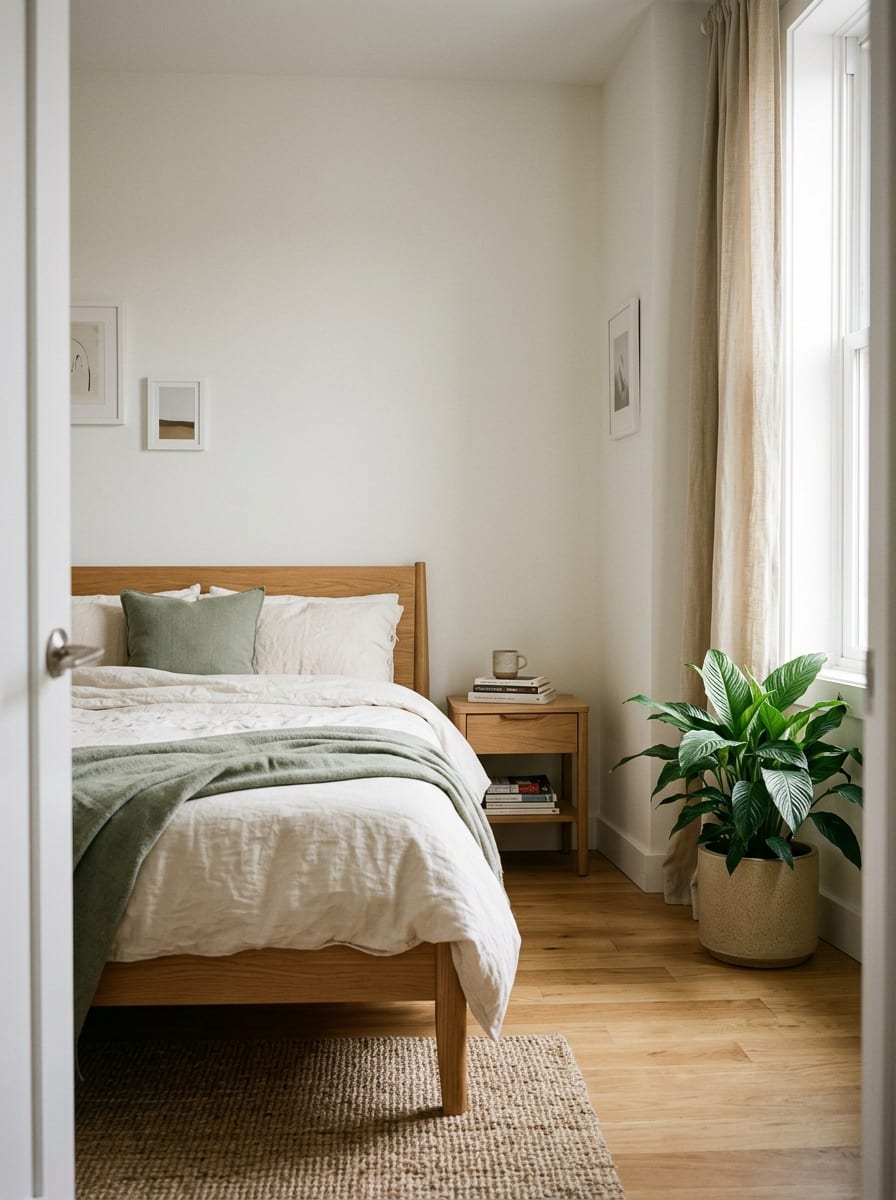
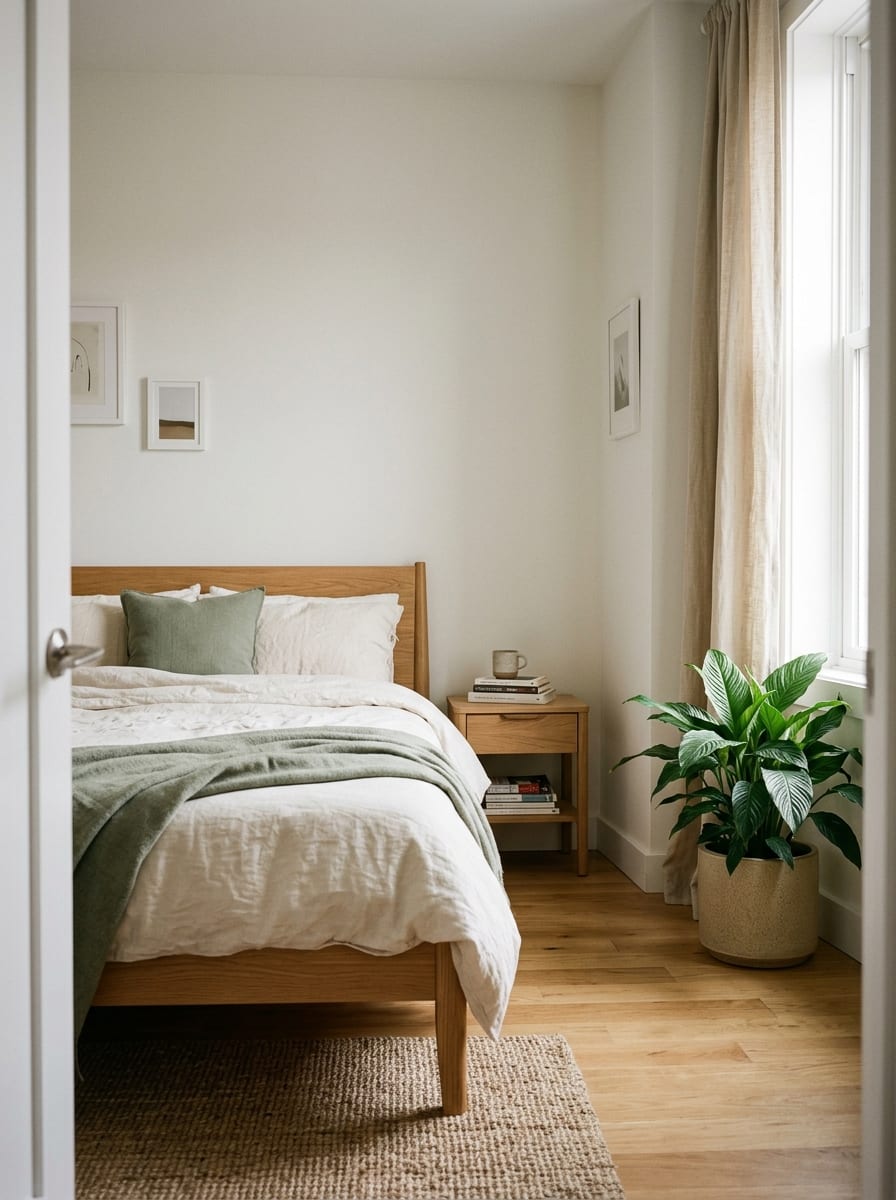
One well-placed floor plant can give a small bedroom a stronger focal point without requiring multiple pots or decorative accessories. The idea works best when the plant occupies a genuinely unused corner rather than taking over the space beside the bed.
Choose a plant whose mature size suits the room and whose light requirements match the location. A plant that grows wider than expected can eventually interfere with drawers, curtains, or the walking route around the bed.
How to make it work
- Look for a plant with an upright or naturally contained growth habit if floor space is limited.
- Match the species to the light available in the chosen corner.
- Choose a stable planter that will not tip easily.
- Use a saucer or suitable inner pot to protect the floor from water.
- Leave enough room to reach the plant for watering and maintenance.
A compact bedroom with warm-white walls, a natural-oak bed, and cream bedding could use one leafy plant in a textured neutral planter near a bright window. Keep the remaining decor simple so the greenery has room to stand out.
Do not choose a plant based on its height in the shop alone. Consider its mature width and whether it will need a larger container as it grows.
Small-space tip: If the only available corner is dark, choose a plant suited to that light level or use a realistic artificial plant. Moving a sun-loving plant into a dim corner simply for the photograph is unlikely to work well in the long term.
2. The Layered Window-Sill Group
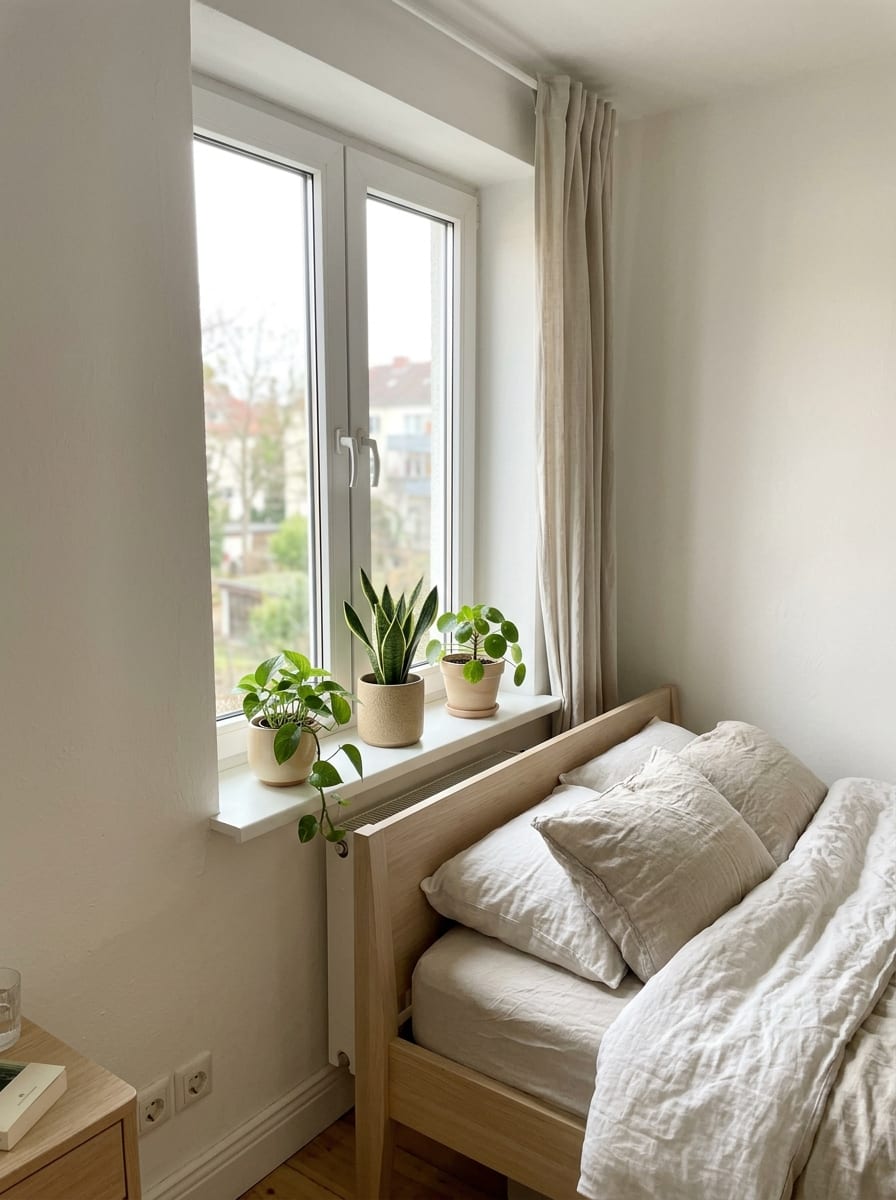
A windowsill can provide a natural home for a small collection of plants, especially when it receives suitable daylight. Grouping a few plants together creates a more deliberate composition than scattering individual pots around the bedroom.
The arrangement should be scaled to the sill. A narrow ledge cannot safely support a large collection of heavy planters, and plants should never interfere with window handles or the opening mechanism.
How to make it work
- Use a small number of plants with compatible light and watering requirements.
- Vary their heights and leaf shapes rather than using identical pots in a straight row.
- Keep containers stable and away from the sill’s edge.
- Protect the sill from water and soil with suitable trays.
- Leave the window functional and easy to clean.
For a calm, contemporary look, combine two or three small plants in warm-white, sand, or pale-terracotta pots. Keep the bedding and nearby surfaces relatively quiet so the arrangement reads as one feature.
If the window receives intense direct sun, choose plants that tolerate those conditions. A bright-looking windowsill is not automatically suitable for every indoor plant, and the glass can affect temperature and light exposure.
Small-space tip: A carefully edited group often looks more intentional than a long line of tiny pots. Keep the number of containers proportional to the sill and the room.
3. The Trailing Shelf Accent
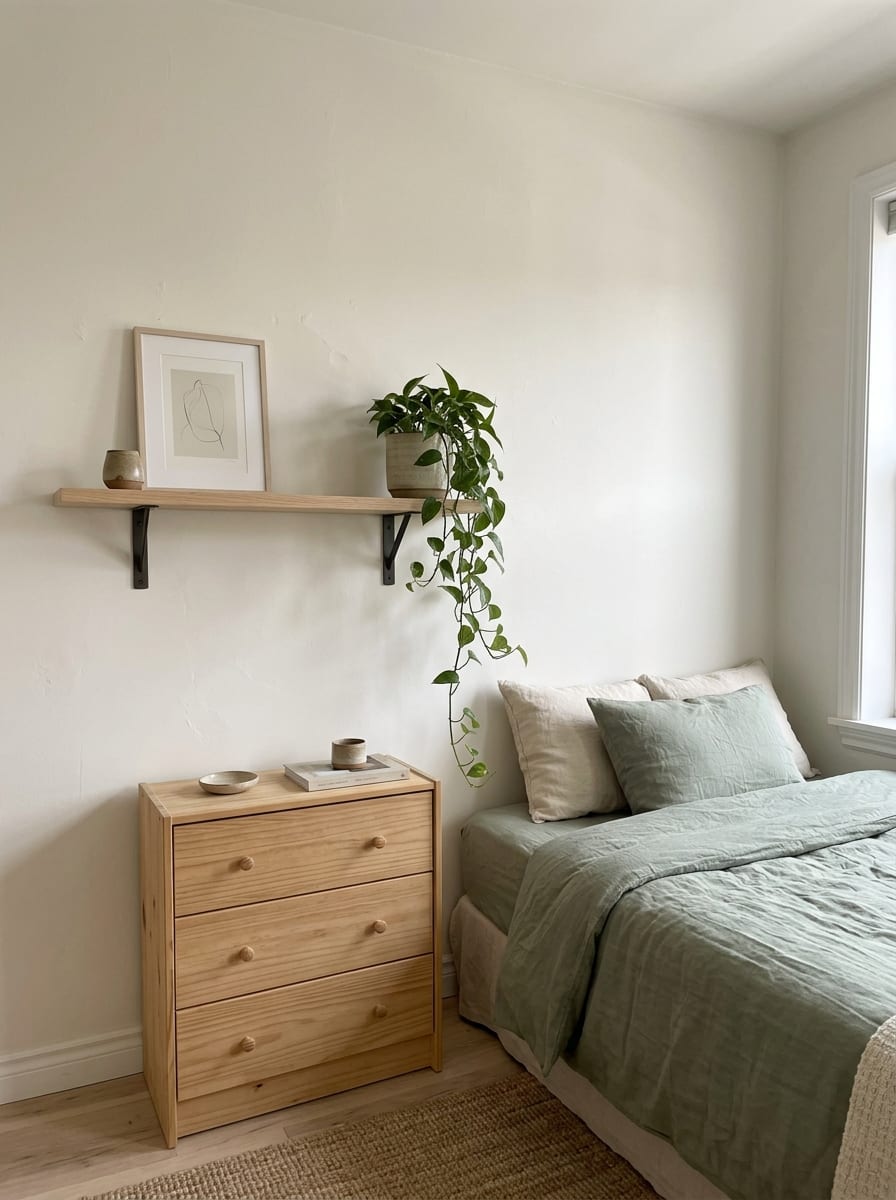
A trailing plant can introduce a softer outline to a bedroom with many straight edges. The leaves create movement against a wall, bookcase, or dresser, helping the room feel layered without adding another piece of furniture to the floor.
This idea works best when the shelf is already useful or when a suitable, securely mounted shelf can be installed. The plant should not hang over a bed, walkway, or place where leaves and pots could be knocked down.
How to make it work
- Choose a plant that suits the light conditions at shelf height.
- Keep the pot well back from the edge.
- Make sure the shelf and fixings are suitable for the combined weight of the container, soil, water, and plant.
- Leave space around the plant so its leaves remain visible.
- Check the mature trailing length before placing it near artwork, switches, or other objects.
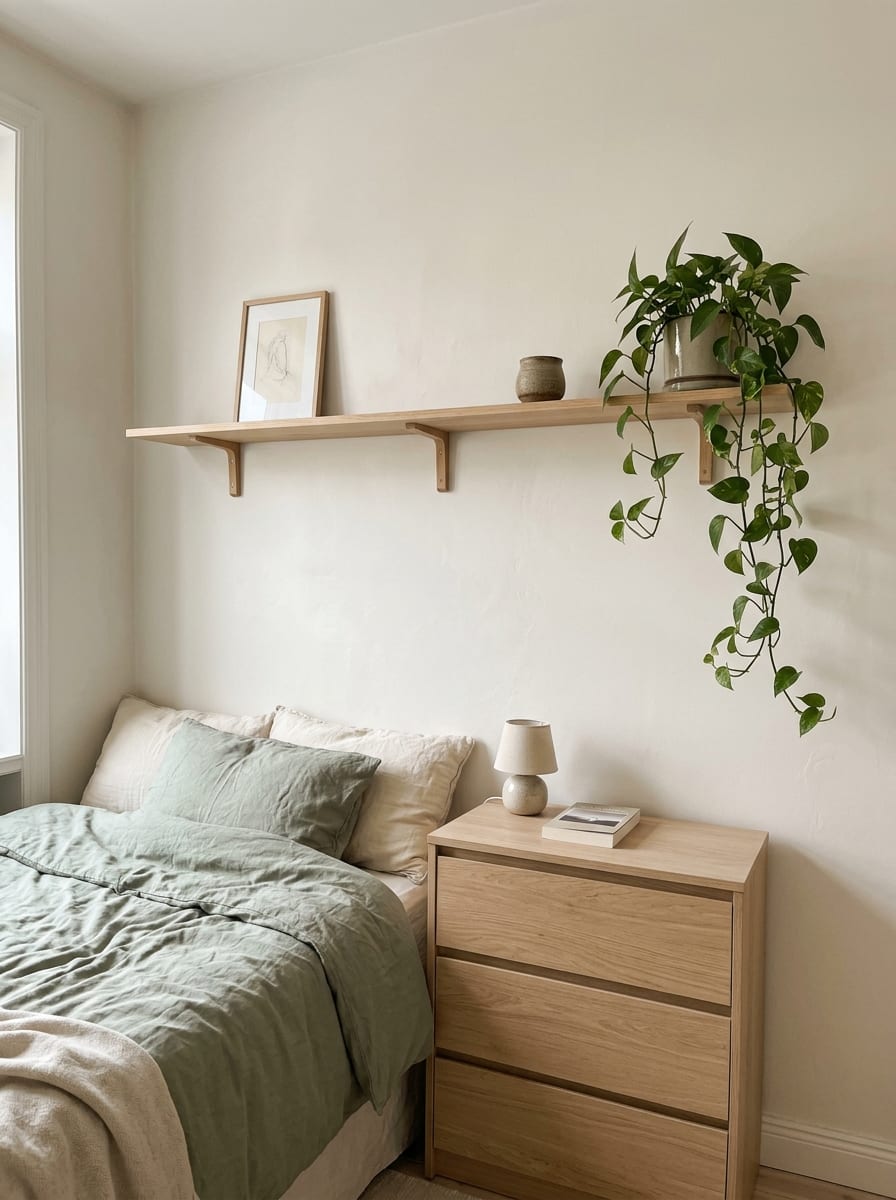
A pale-oak shelf above a compact dresser could hold one trailing plant, a small ceramic vessel, and a single framed print. Keep the rest of the shelf open rather than filling every inch.
If you rent, check permission before drilling. Do not assume adhesive strips or lightweight decorative shelves can safely carry a heavy, watered plant.
Small-space tip: Let one plant provide the trailing effect. Several overlapping vines can make a narrow bedroom wall feel cluttered.
4. The Plant-and-Mirror Pair
A mirror can help distribute light and visually open a bedroom, while a plant adds organic texture. Placing the two together creates a small styling moment that feels more considered than either item alone.
The mirror does not increase the room’s actual natural light, but its placement can reflect an existing window or a brighter part of the room. The plant should be positioned where it receives suitable light rather than where its reflection merely looks attractive.
How to make it work
- Position the mirror to reflect a useful view, such as a window or a bright wall.
- Place a small plant nearby without blocking the mirror’s main reflective area.
- Keep the arrangement clear of door swings and the route beside the bed.
- Use a stable floor mirror or appropriate wall fixings.
- Consider the plant’s light needs before settling on the final position.
A slim oak-framed mirror leaning securely against a wall can sit beside a small plant stand in a bedroom with soft-white bedding and muted-sage accents. The plant introduces texture while the mirror keeps the arrangement visually open.
If using a leaning mirror, make sure it is secured according to the manufacturer’s instructions, particularly in a narrow room where it could be bumped.
Small-space tip: Avoid placing a large plant directly in front of the mirror. A little overlap can look intentional, but too much can make both features difficult to appreciate.
5. The Green Nightstand Moment
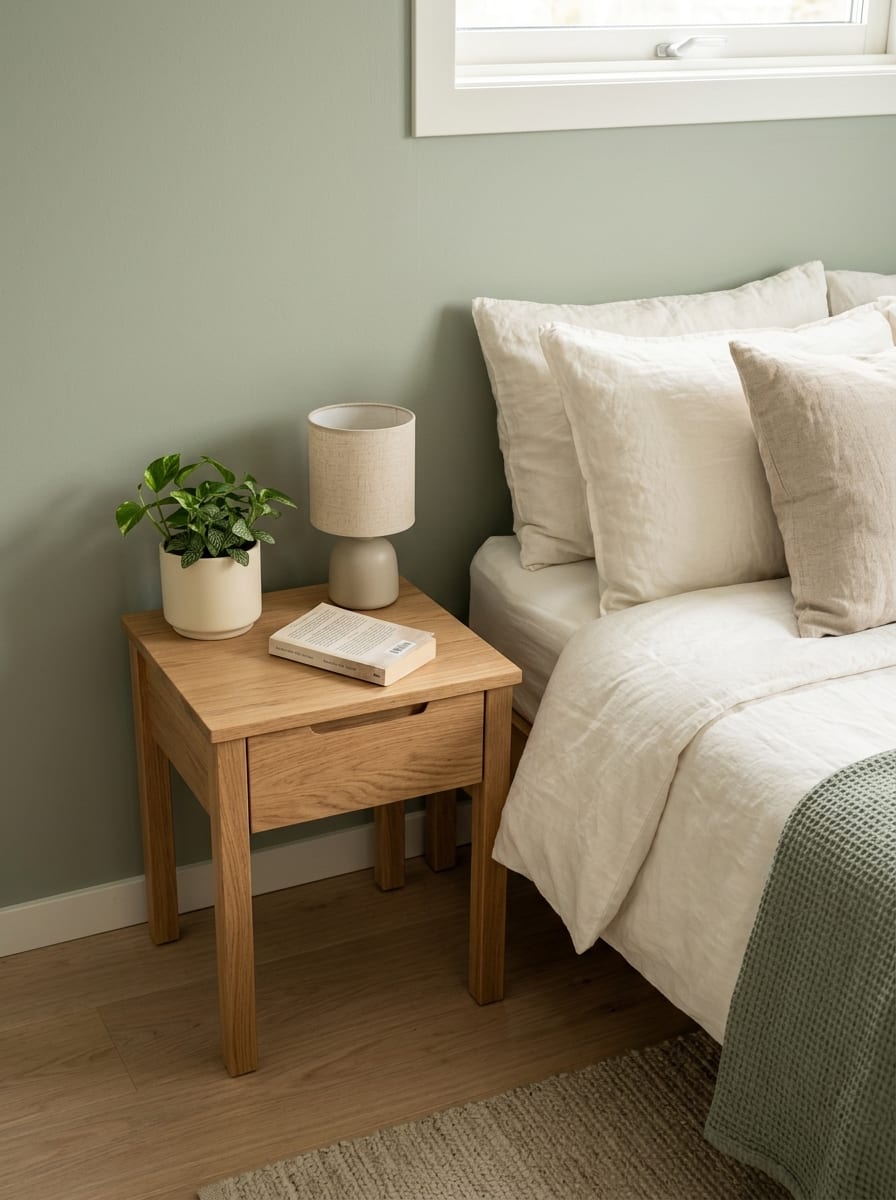
A nightstand is a useful place for a small plant when the surface has enough room for everyday essentials. A compact plant can soften the bedside area and connect the greenery to the rest of the room without adding another stand.
This idea is best for people who already have a suitable nightstand rather than those who would need to buy an additional piece of furniture just for a plant.
How to make it work
- Choose a small container that leaves space for a lamp, phone, book, or other nightly essentials.
- Use a stable pot and a water-protective tray.
- Avoid placing the plant where leaves will brush against pillows or bedding.
- Match the plant’s light requirements to the bedside location.
- Keep the tabletop easy to clean and use.
A natural-oak nightstand beside a simple upholstered bed could hold a small leafy plant in a matte cream pot. Repeat the green through a cushion or small artwork to create a connected palette.
Not every bedside position receives enough daylight for a live plant. If the room is dim, botanical artwork or green textiles may be a more practical choice than trying to keep a light-demanding plant beside the bed.
Small-space tip: The nightstand should remain a functional surface. If the plant leaves no room for daily essentials, move it to a better location.
6. The Narrow Plant Stand
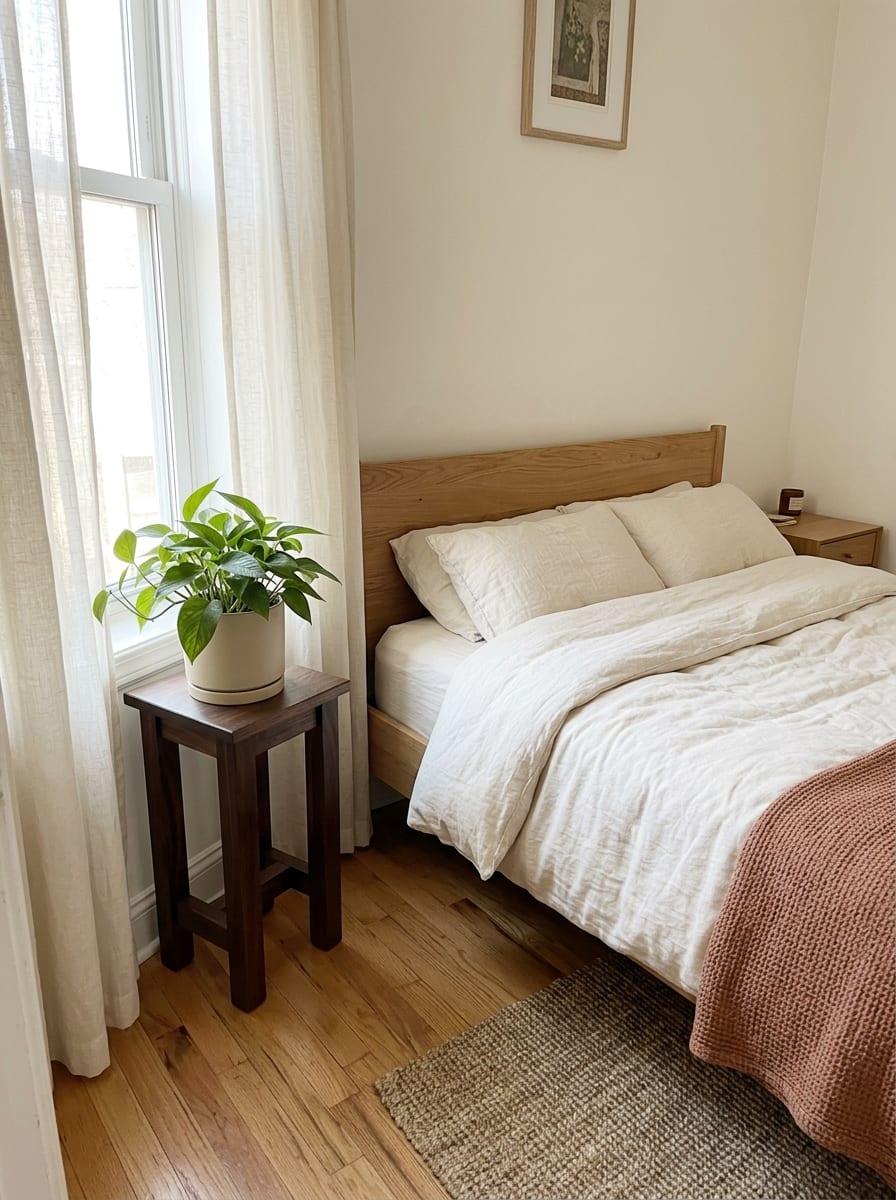
A narrow plant stand raises a plant above the floor and gives it a more deliberate position within the bedroom. It can be useful when a plant needs to sit near a window but the windowsill is too narrow or already in use.
The stand should fit the room’s circulation rather than creating a new obstacle. A tall, narrow base may be visually light, but it still needs to be stable and suitable for the weight of the plant.
How to make it work
- Choose a stand with a stable base and an appropriate load rating.
- Measure the footprint, including any leaves that extend beyond the pot.
- Keep it out of the main walking route and away from door swings.
- Use a water-resistant tray beneath the pot.
- Position it where you can reach the plant without moving heavy furniture.
A slim dark-wood plant stand beside a bright window can add vertical interest in a bedroom with pale bedding and warm-white walls. Keep the stand simple so the leaves remain the focal point.
Avoid using a tall stand to squeeze a large plant into an unsafe or awkward corner. If the plant is heavy or top-heavy, a lower and wider base may be more appropriate.
Small-space tip: One stand is often enough. Multiple stands of different heights can work in a larger room, but in a compact bedroom they may compete with the bed and storage.
7. The Botanical Bedding Link
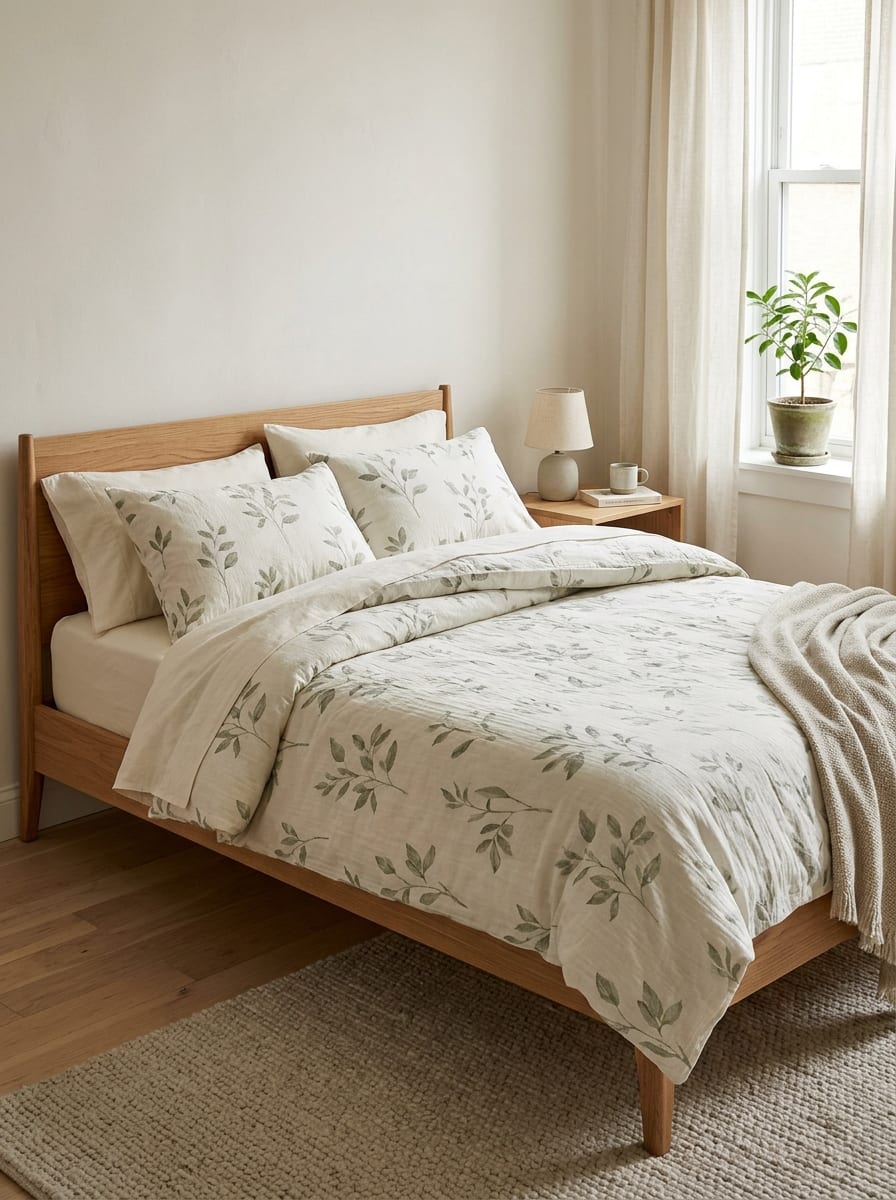
You do not need live plants on every surface to create a greenery-led bedroom. Botanical bedding, leafy cushions, or a small botanical print can carry the same visual theme while keeping the room easier to maintain.
This approach is particularly useful for bedrooms with limited daylight, narrow ledges, or little room for plant containers. It also gives you more control over color and pattern.
How to make it work
- Choose one botanical pattern as the main feature.
- Coordinate it with solid bedding in warm white, muted sage, oatmeal, or soft olive.
- Keep other patterns restrained so the room does not feel visually busy.
- Repeat one shade of green in a small accessory or artwork.
- Use live plants only where the conditions suit them.
For example, a duvet cover with a delicate green botanical motif can sit against a warm-white wall with a natural-oak bed frame. One small plant near the window may be enough to connect the pattern to the real room.
If the bedding has a large, high-contrast print, use simpler curtains and cushions. If the pattern is subtle, a little more texture can help the room feel layered.
Small-space tip: Treat botanical bedding as the main greenery statement rather than combining several competing leaf prints. The aim is a cohesive bedroom, not a themed display.
8. The Reading-Corner Greenery
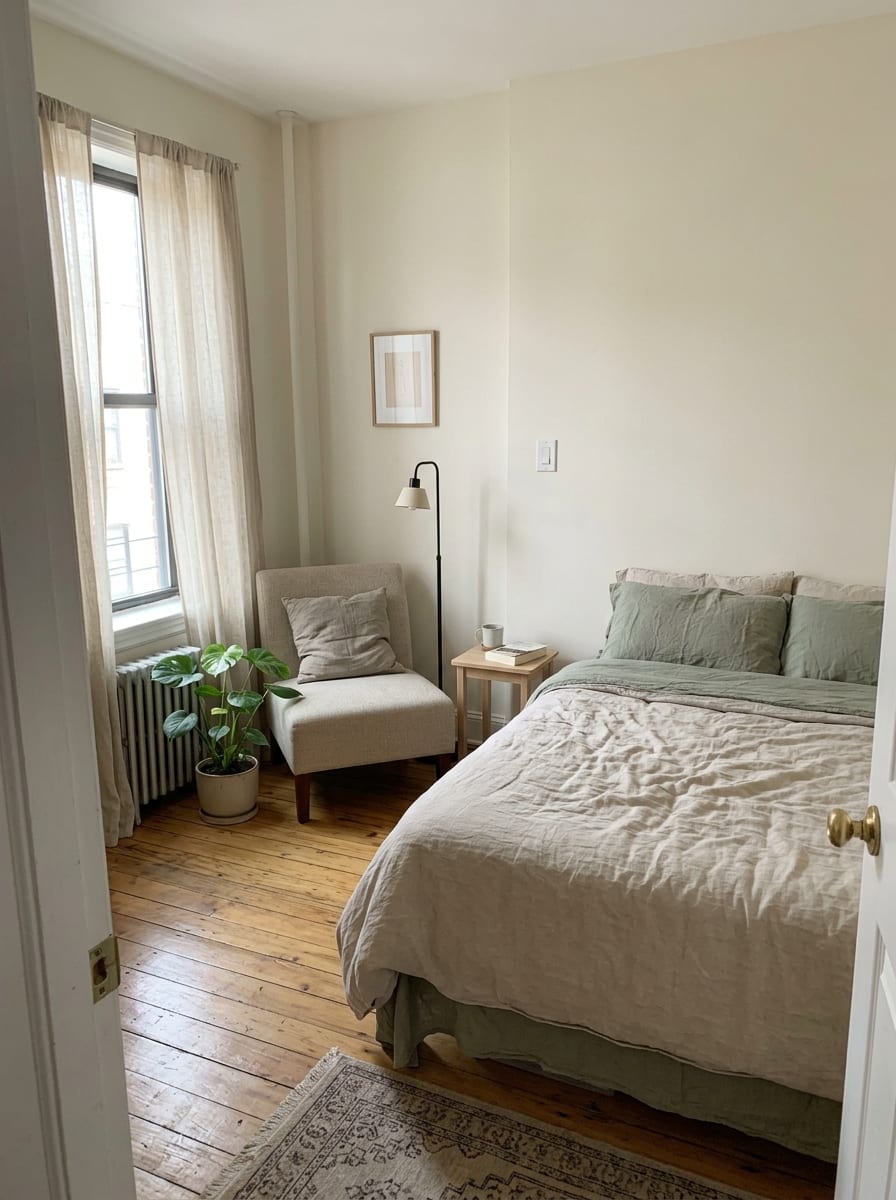
A compact reading corner can make a bedroom feel more personal without requiring a full additional seating area. A small plant near a chair or compact stool helps define the corner and connects it to the wider greenery theme.
This arrangement works best when the bedroom already has enough space for a chair without narrowing the route around the bed. If it does not, the same idea can be applied to a small reading ledge or a comfortable spot beside the window.
How to make it work
- Start with the seating footprint and the route needed to use it.
- Place the plant beside the seating rather than between the chair and the bed.
- Choose a plant that suits the available light.
- Use a compact side table only if there is enough room.
- Keep the corner easy to clean and access.
A small upholstered reading chair in oatmeal fabric, a slim oak side table, and one leafy plant can create a quiet corner. A warm-white floor lamp or a suitable existing light provides the functional element.
Do not squeeze a chair, table, lamp, and large plant into a corner that cannot comfortably support them. A single plant beside the bed or dresser may be a better choice if the room is very narrow.
Small-space tip: Define the reading area with one or two elements, not a full collection of furniture. Clear floor space is part of what makes the corner feel restful.
9. The Curated Dresser-Top Cluster
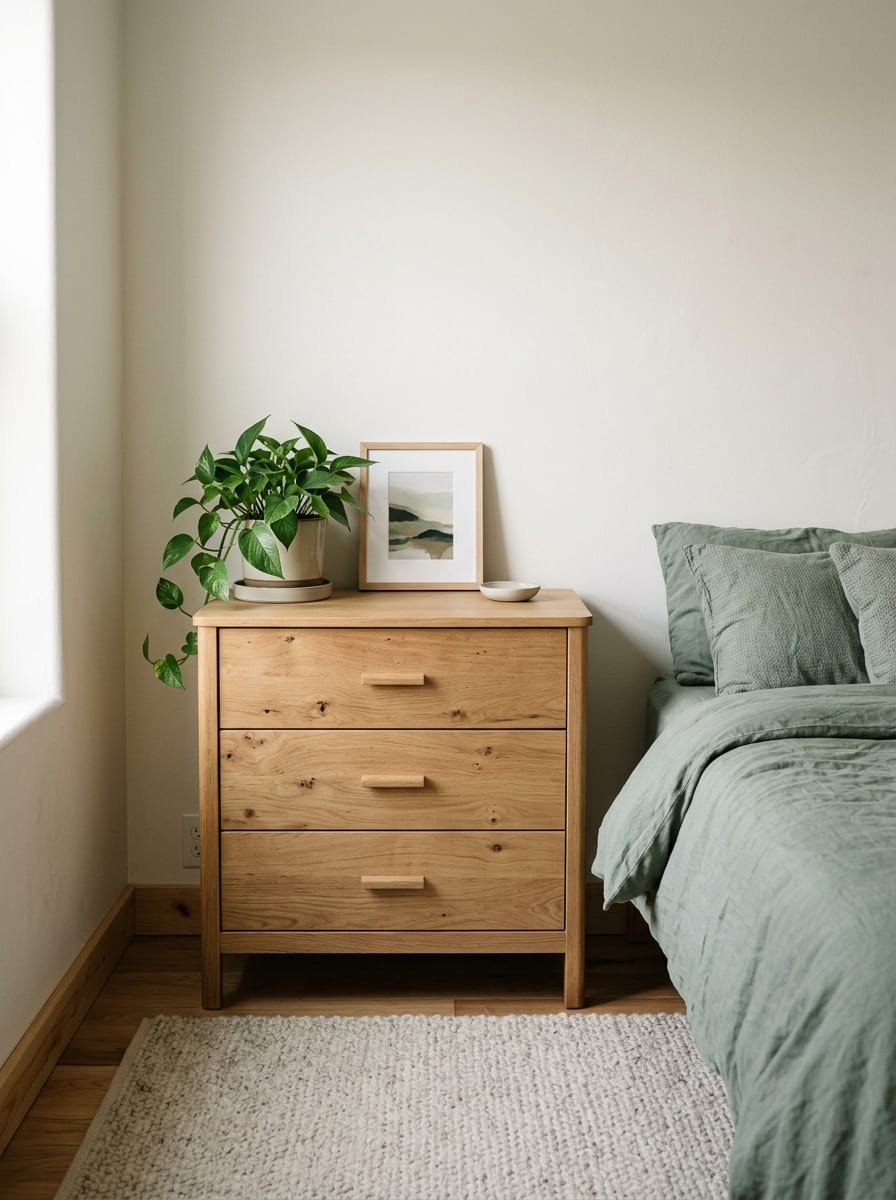
A dresser can provide a stable surface for a small group of plants and accessories, especially when its top is otherwise unused. The trick is to create one contained arrangement while leaving the drawers and the rest of the surface easy to access.
Unlike spreading greenery across the bedroom, a curated cluster gives the room a clear focal point. It also makes watering and cleaning easier because the plants are grouped in one place.
How to make it work
- Choose two or three objects at most for a small dresser top.
- Vary height and shape without making the arrangement top-heavy.
- Use trays or suitable saucers to protect the surface from water.
- Keep objects away from the edge and clear of any mirror or cabinet movement.
- Make sure the dresser remains stable and its drawers can open fully.
A compact oak dresser can hold a medium plant, a small framed print leaning securely against the wall, and one ceramic dish. Use warm-white, muted-sage, and natural-wood tones to keep the arrangement connected to the bedding.
If the dresser is tall or narrow, avoid placing heavy pots near its edge. Consider the furniture’s stability and the manufacturer’s guidance before adding weight.
Small-space tip: If the dresser is already crowded with everyday items, remove or relocate some objects before adding greenery. Styling works best when the surface remains useful.
How to Choose Bedroom Plants for Your Space
The right plant is one that suits the room’s actual conditions and your willingness to maintain it. A plant that looks beautiful in a photograph may struggle if its light or watering needs do not match your bedroom.
- For a bright window: Look for species suited to the amount and direction of light the window receives.
- For indirect light: Choose plants known to tolerate the room’s available light, and rotate or reposition them only when their care needs allow.
- For a dim bedroom: Consider botanical textiles, artwork, or a realistic artificial plant instead of forcing a live plant into unsuitable conditions.
- For narrow walkways: Prefer compact containers, small shelf plants, or a single contained focal point.
- For easy maintenance: Choose plants whose watering and care routines suit your schedule.
- For homes with pets: Check the safety of each plant species for the animals in your home before buying it.
Always check the care requirements for the exact species. Light tolerance, watering frequency, mature size, and temperature needs vary, even among plants that look similar.
Greenery Bedroom Mistakes to Avoid
- Adding plants before checking the light: A plant can look misplaced or struggle when its needs do not match the chosen corner.
- Blocking the walkway: Floor plants and stands should not interfere with access to the bed, wardrobe, window, or bedroom door.
- Crowding every surface: Too many pots can make a small bedroom feel busy and reduce useful space on nightstands and dressers.
- Ignoring water protection: Pots can leak or overflow. Use suitable trays and protect furniture and floors.
- Choosing plants that outgrow the room: Consider mature size, not just the plant’s current appearance.
- Putting heavy plants on unsuitable shelves: Confirm the shelf, wall, and mounting system are appropriate for the full load.
- Using greenery without a clear visual plan: Repeating one or two shades of green through plants, bedding, and accessories often looks more cohesive than mixing unrelated pots and patterns.
- Treating artificial greenery as a failure: If the bedroom does not have suitable light or you cannot maintain live plants, botanical textiles and realistic artificial plants can still create the intended look.
Conclusion
Greenery can make a bedroom feel softer, more layered, and more connected to the natural world, even when floor space is limited. You do not need a large collection to achieve the effect.
One statement plant can anchor an empty corner, a small windowsill group can bring life to a bright area, and botanical bedding can carry the look when live plants are not practical. A carefully styled nightstand or dresser can be enough to connect greenery to the rest of the room.
Start with light, available surfaces, and the way you move around the bed. Choose plants that suit the conditions, keep the arrangement contained, and leave the room easy to use.
The best greenery bedroom is not the one with the most plants. It is the one where each plant has a place.