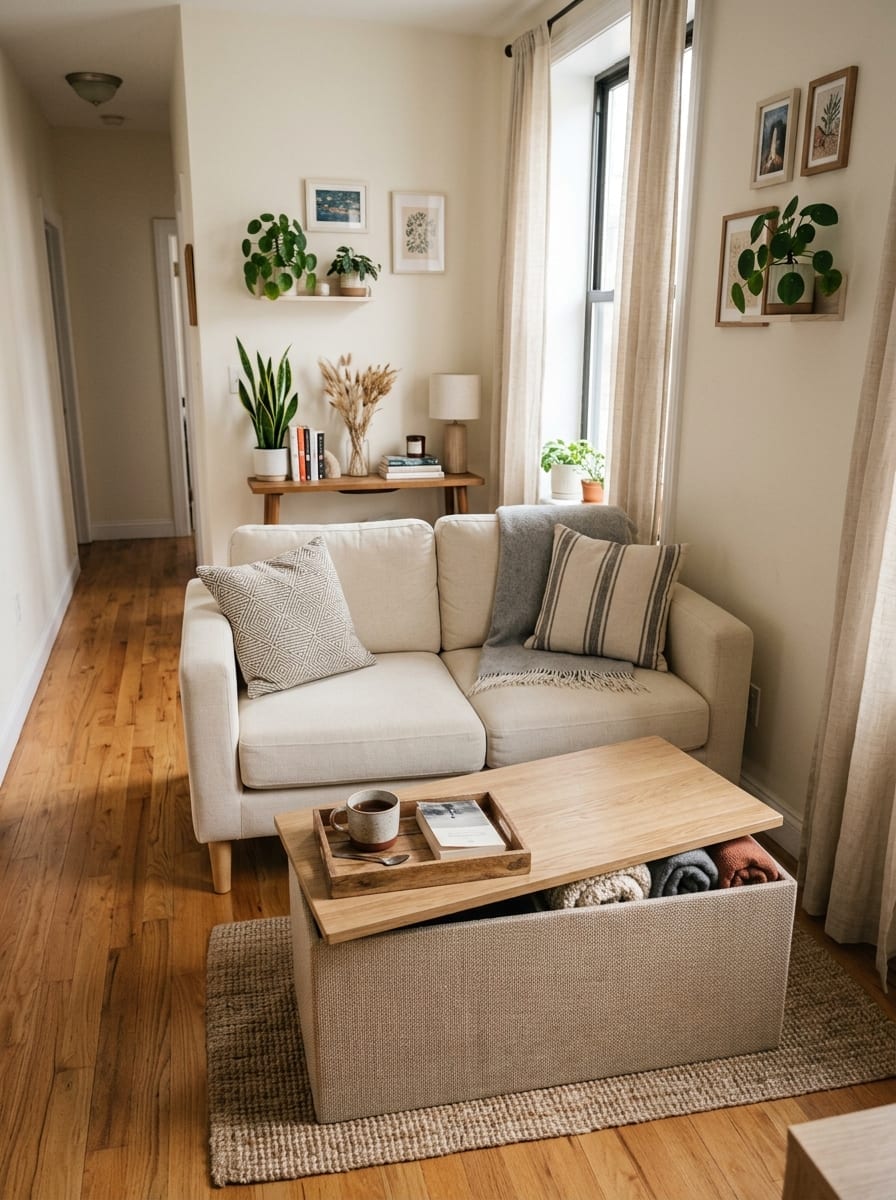
11 Studio Apartment Storage Ideas That Hide Clutter Without Making the Room Feel Smaller
Discover 11 studio apartment storage ideas using storage beds, closed cabinets, slim furniture and hidden zones to control clutter without making a one-room home feel smaller.
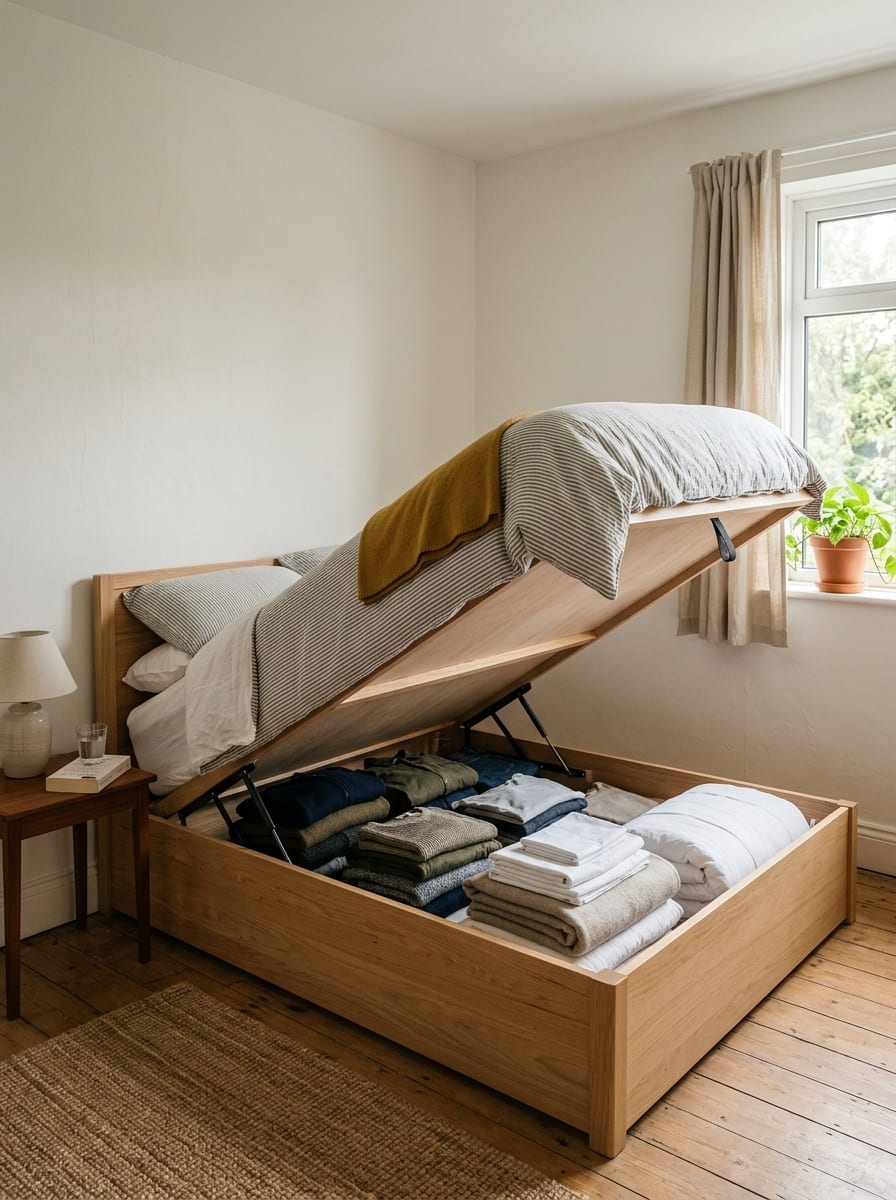
Compact studio apartment sleeping zone with storage bed drawers neatly organizing bedding and clothes
In This Guide
Studio apartments create a storage problem that larger homes do not.
In a separate bedroom, you can close the door on:
clothes laundry storage bins paperwork personal items
In a studio, almost everything is visible from almost everywhere.
That changes the way storage should work.
Adding more shelves is not always the answer.
In fact, too much visible storage can make a studio feel smaller because your eye has to process:
books baskets clothes kitchen items electronics decor boxes
all at once.
The better strategy is to use storage that either:
disappears into furniture concentrates clutter into one controlled zone uses vertical space without narrowing circulation hides visually busy items behind doors or fabric
The goal is not to store absolutely everything out of sight.
It is to decide what deserves to stay visible and what should disappear.
Here are eleven storage ideas that work especially well in studio apartments.
1. The Storage Bed Foundation
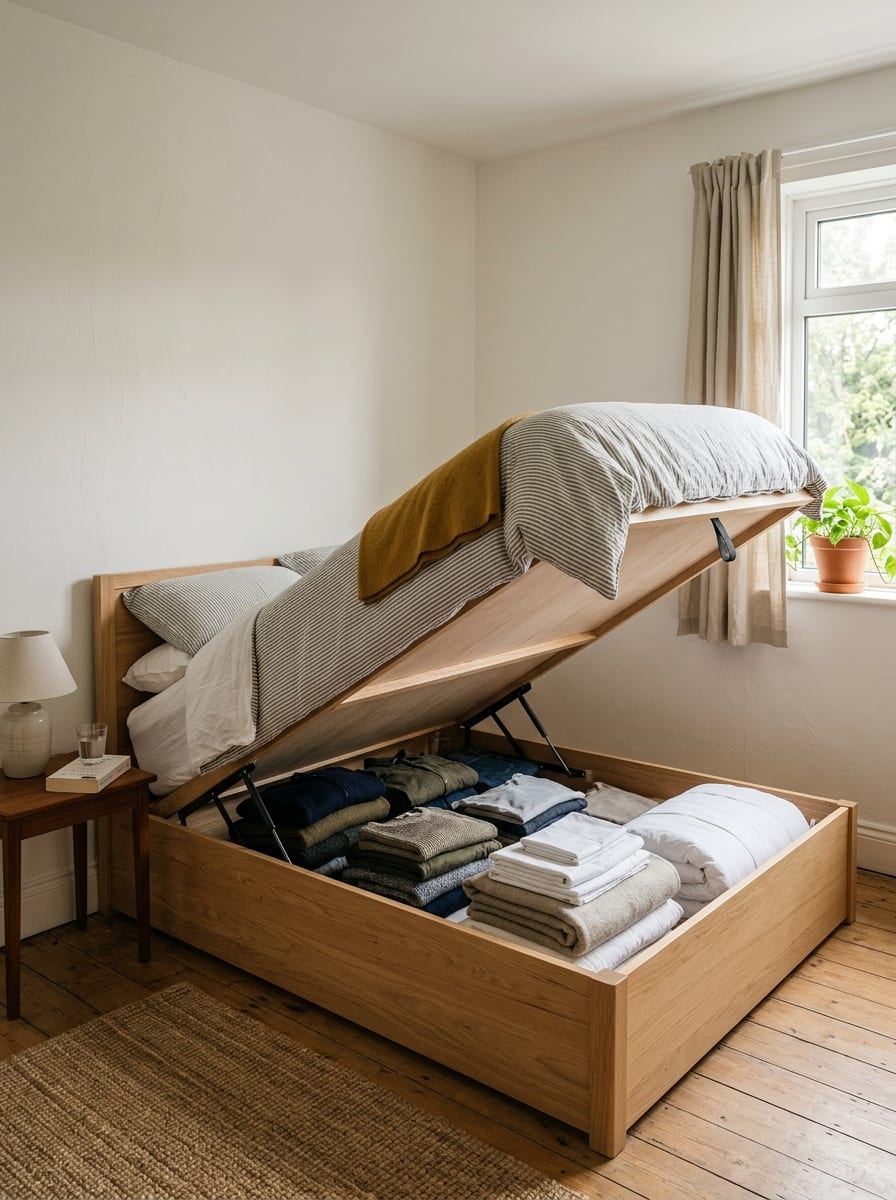
The bed is usually the largest single piece of furniture in a studio.
That makes the space underneath it extremely valuable.
A storage bed can replace several smaller storage pieces.
What to store
Use it for items that do not need daily access, such as:
seasonal clothes spare bedding towels shoes luggage extra pillows
Why this works especially well in a studio
If your bed can store what would otherwise require:
another dresser storage bench several bins extra shelving
you reduce the total number of furniture pieces in the room.
That matters because in a studio, every additional cabinet changes the whole visual field.
Drawer storage vs lift-up storage
Drawers
Best when you have enough clearance on at least one side of the bed.
Lift-up base
Can work better when one side of the bed sits close to a wall.
It is particularly useful for:
bulky bedding seasonal storage infrequently used items
Measure access, not just bed size
A drawer that technically fits beneath the bed is useless if it cannot open because:
sofa is too close nightstand blocks it wall clearance is too tight
Always measure the active footprint, not only the bed frame.
Visual benefit
A solid storage bed can look calmer than several mismatched bins underneath a basic frame.
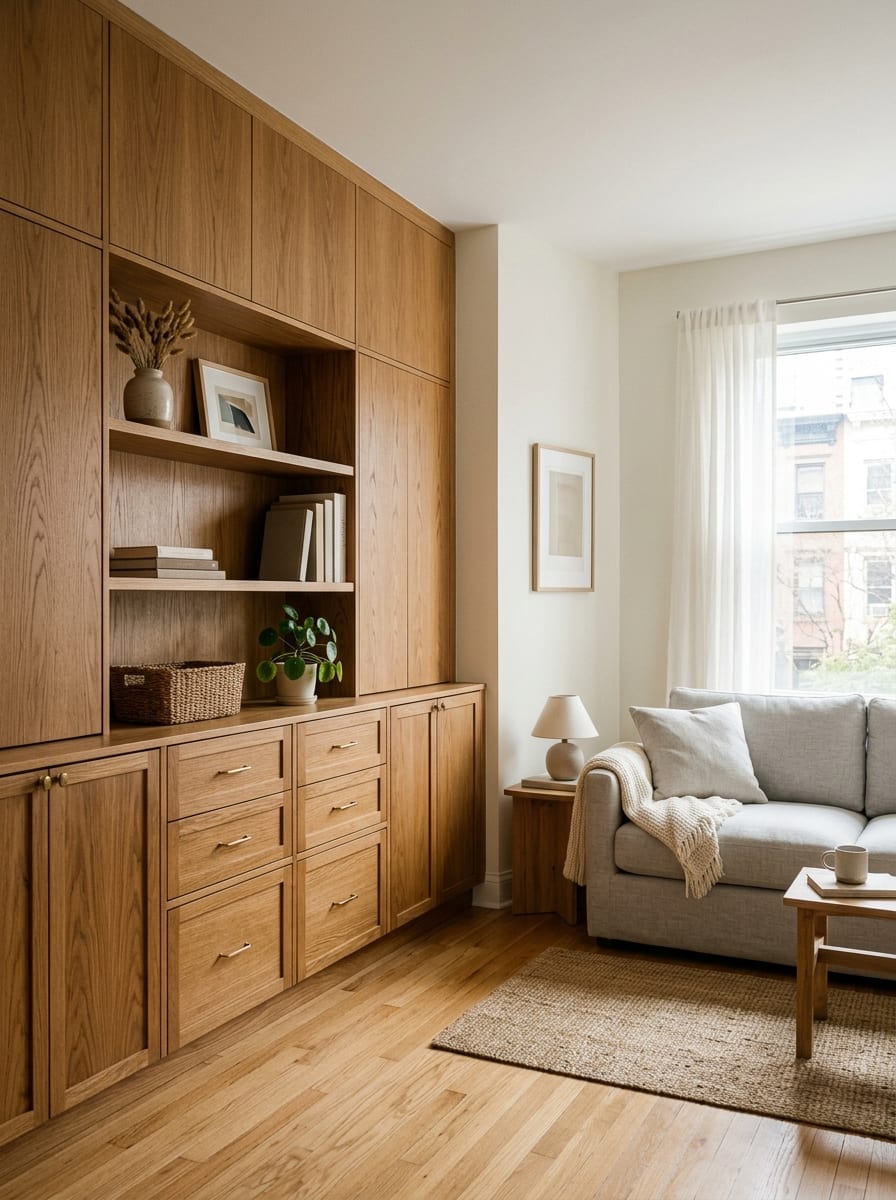
2. The One-Wall Closed Storage Zone
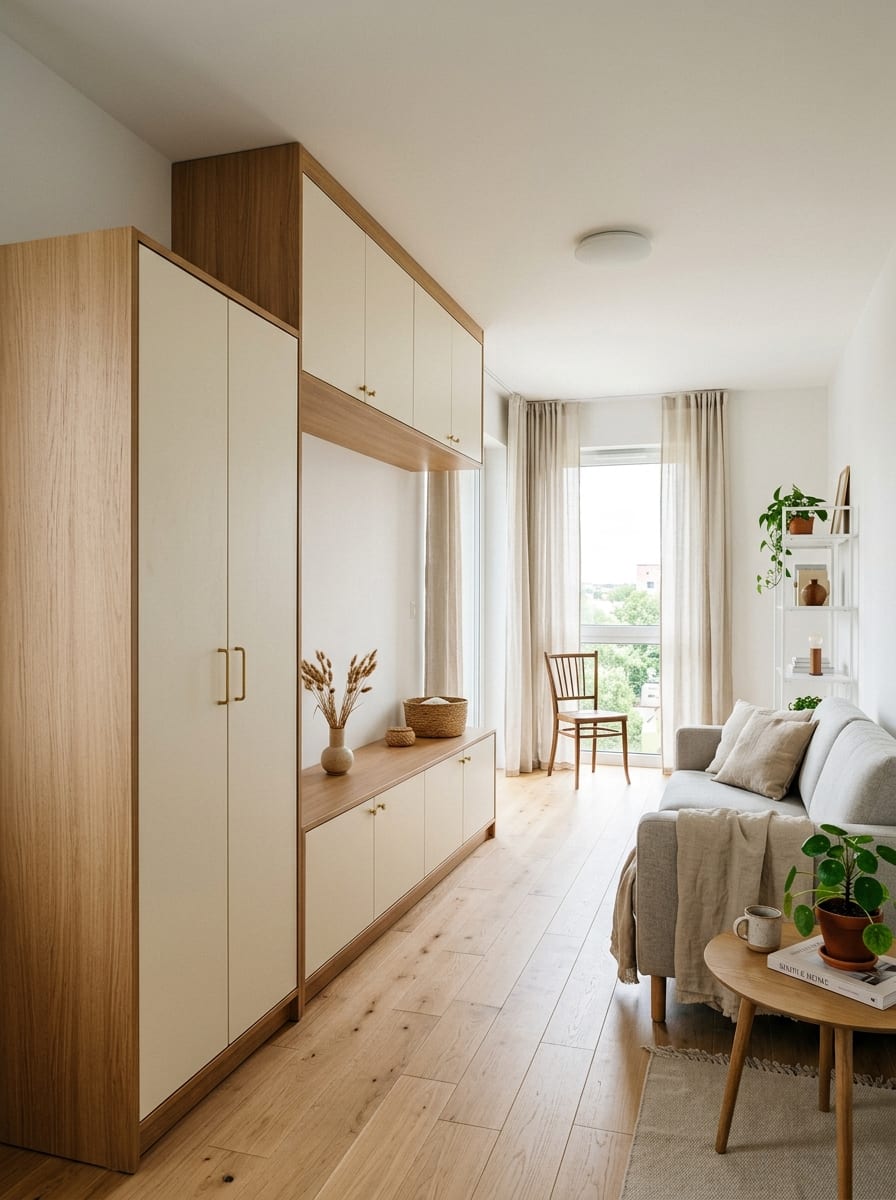
Trying to spread storage evenly around a studio often creates visual clutter.
A better option can be to concentrate most closed storage along one wall.
What this wall can contain
Depending on your needs:
wardrobe
drawers
media storage books household items office supplies
The idea is to create one visually organized storage zone rather than several scattered pieces.
Why concentration works
When storage is grouped together, the rest of the apartment can stay more open.
Instead of seeing:
one cabinet near the bed one shelf beside the sofa one drawer unit at the desk another cabinet by the TV
you see one deliberate storage wall.
Use doors where visual clutter is high
Closed fronts work especially well for:
clothing electronics paperwork miscellaneous household supplies
Open shelving is better reserved for a few items you actually want to see.
Keep the depth consistent
A line of cabinets with wildly different depths can make the wall feel messy.
Try to keep the main storage pieces visually aligned.
Do not fill the whole wall automatically
Leave some breathing room if the room is narrow.
One concentrated zone is useful.
A wall of giant cabinetry from floor to ceiling may not be.
3. The Sofa-Back Storage Console
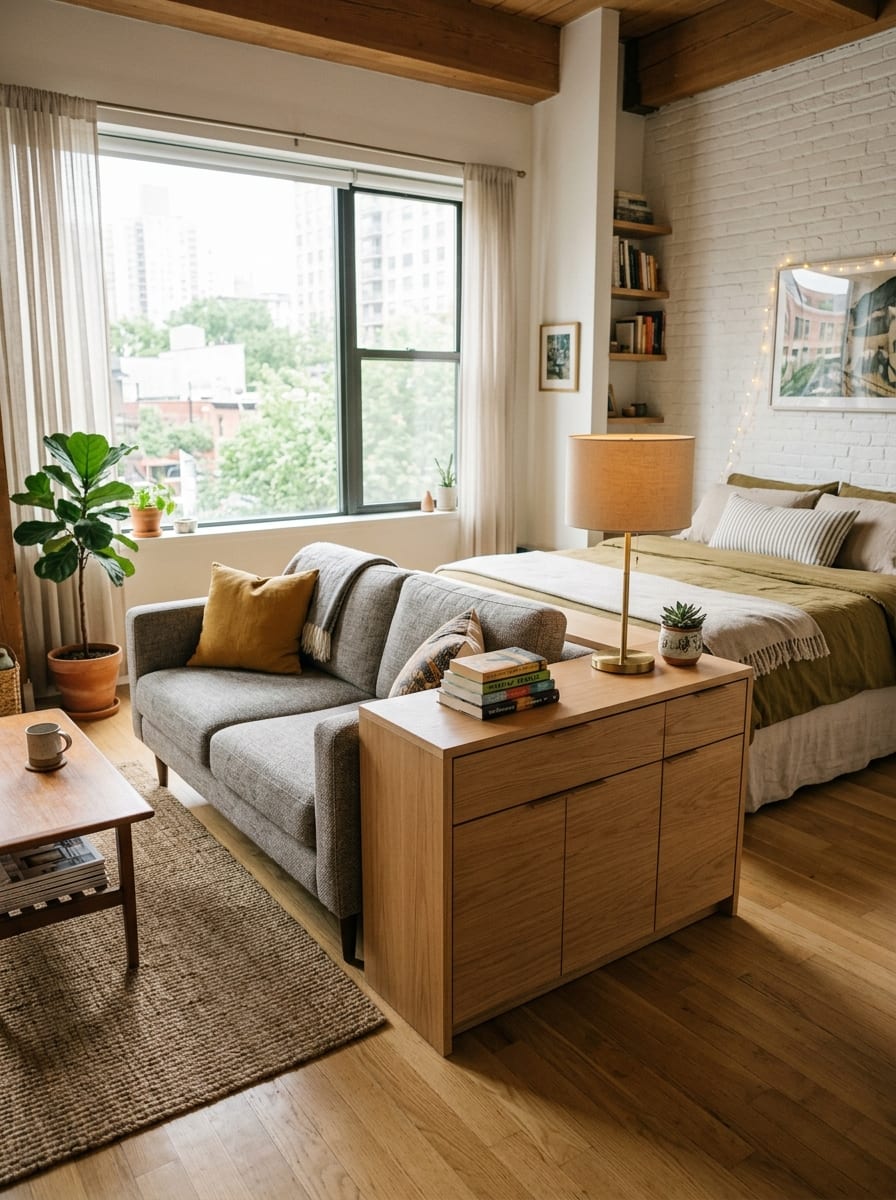
A sofa in a studio often acts as a divider between:
living area sleeping area dining or work area
The back of the sofa can become useful storage without adding another full wall of furniture.
Use a slim console
Place a narrow console or storage unit behind the sofa.
It can hold:
chargers books baskets office supplies small electronics
Why this works
The furniture already occupies that zone.
You are using the space immediately behind it rather than taking up another wall.
Depth matters
Keep the console narrow enough that it does not:
reduce the walkway push the sofa too far into the room make circulation awkward
Choose closed storage if possible
A console with:
drawers
doors baskets
can hide everyday clutter.
A completely open shelf behind the sofa may make the studio look busier.
Bonus function
The top can also work as:
lamp surface charging zone temporary laptop spot
But keep it lightly styled.
4. The Slim Entry Storage Wall
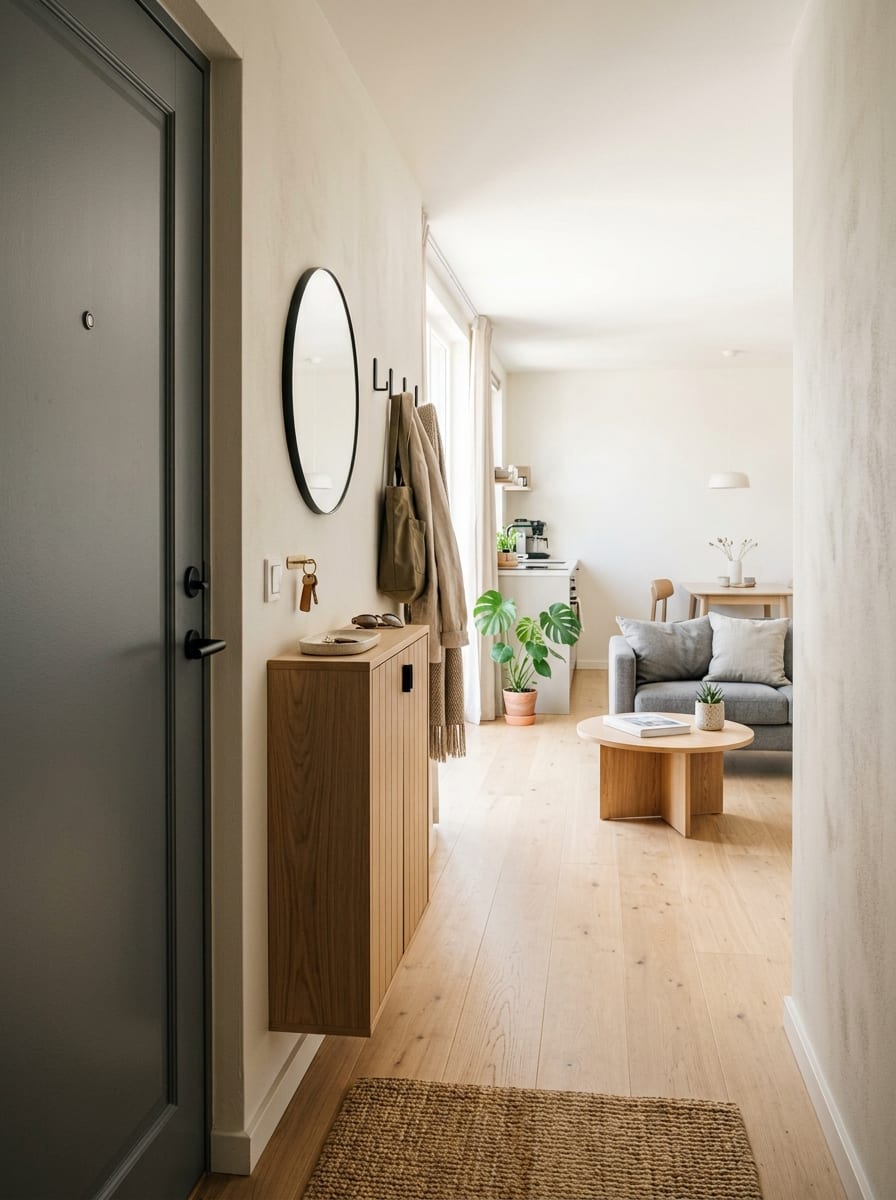
Studio apartments often lack a proper entryway.
That means shoes, bags and keys spill directly into the main room.
A slim entry storage setup can contain that clutter before it spreads.
Use shallow pieces
Good options include:
slim shoe cabinet narrow console wall-adjacent coat stand small closed bench
Keep depth minimal
Entry zones are usually part of the main circulation path.
A deep cabinet can make the entire apartment feel tighter.
Give everything one landing place
Create zones for:
shoes keys bag mail jacket
That prevents these items from migrating onto:
sofa dining table bed
Closed shoe storage helps visually
Shoes are especially visually noisy.
A slim cabinet can hide several pairs without taking up much depth.
Keep the top nearly empty
One tray for keys may be enough.
Do not turn the entry surface into another decor shelf.
5. The Under-Sofa Storage Zone
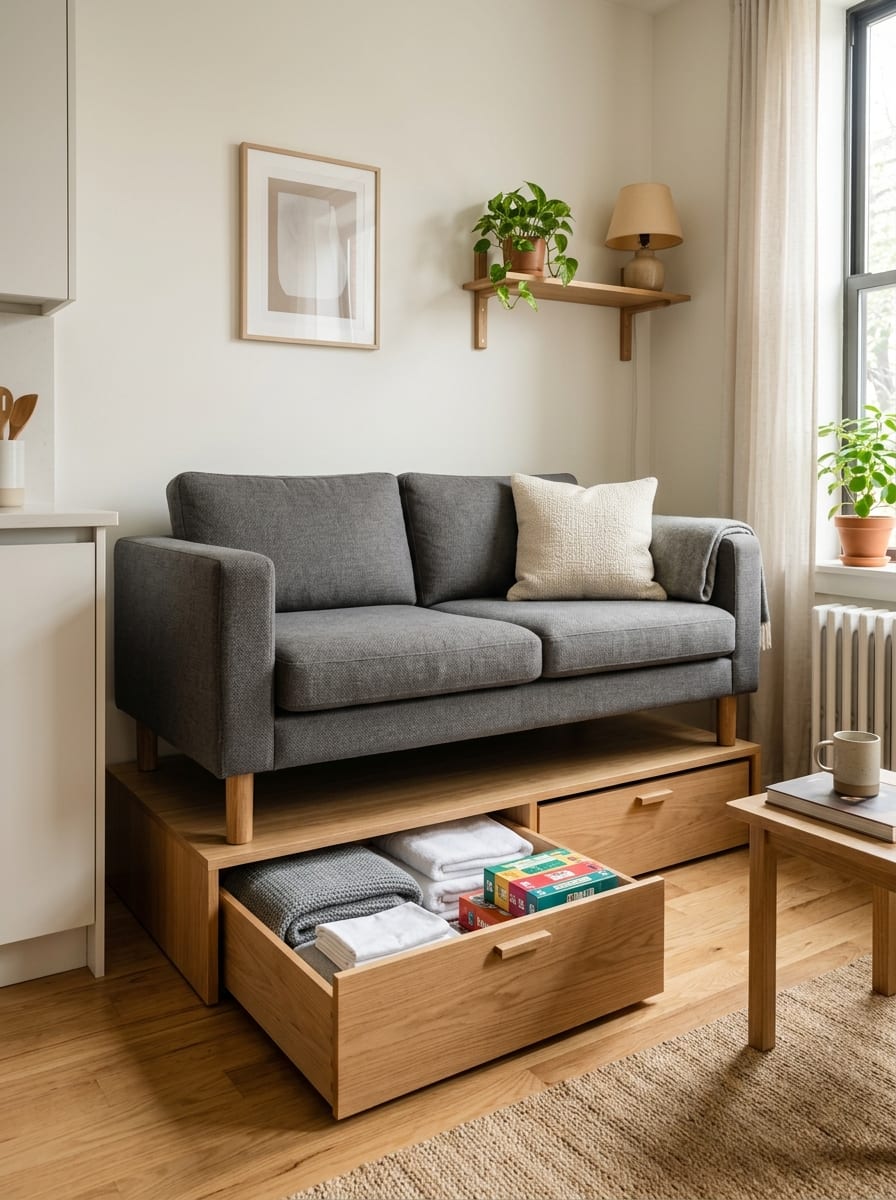
The area under the sofa is often ignored.
In a studio, that can be useful storage for flat, low-profile items.
Best things to store
Consider:
spare linens seasonal decor board games documents extra cables rarely used household items
Use low-profile containers
Choose containers that:
fit fully beneath the sofa slide easily do not protrude into the room
Why this is useful
You gain storage without adding another visible piece of furniture.
That is especially valuable in a studio.
Do not store daily-use items here
If you need something every day, pulling a bin from under the sofa becomes annoying.
Use this zone for occasional access.
Watch airflow and furniture design
Not every sofa has appropriate space underneath.
Do not force containers under:
recliner mechanisms low frames fragile support systems
6. The Vertical Corner Cabinet
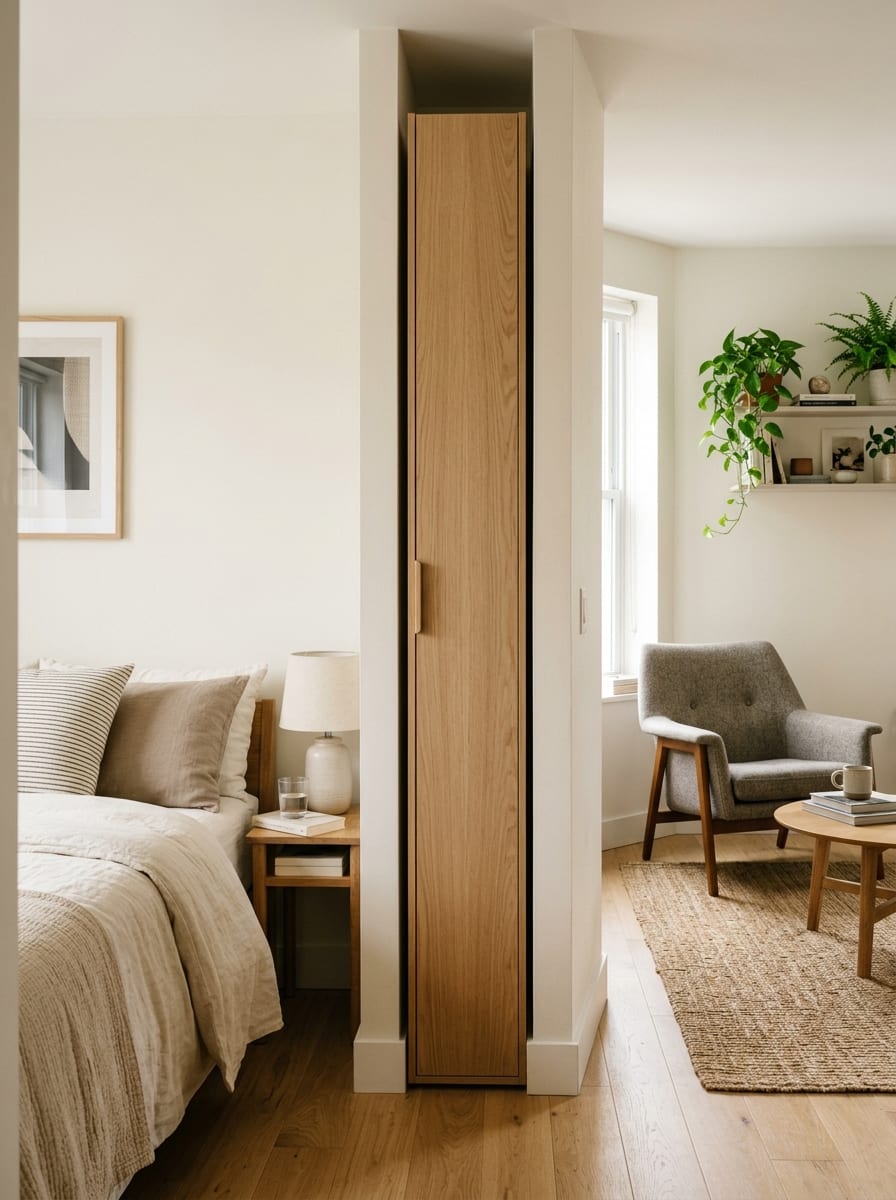
Corners often become wasted because standard furniture does not fit them well.
A tall narrow corner cabinet can use height without consuming much floor width.
Good uses
Store:
cleaning supplies linens small appliances office items toiletries miscellaneous household goods
Why vertical storage works
A tall cabinet uses the same small footprint from floor to ceiling.
That can be more efficient than three separate low pieces.
Closed fronts are best
In a studio, a tall open shelf full of unrelated items can dominate the room.
A closed cabinet lets the corner visually disappear.
Use the top for low-frequency items
High shelves are ideal for:
seasonal decor spare bedding travel items
Keep everyday items lower.
Avoid oversized towers
A cabinet that is too wide or deep can make the corner feel heavier than the storage is worth.
7. The Bedside Storage Tower
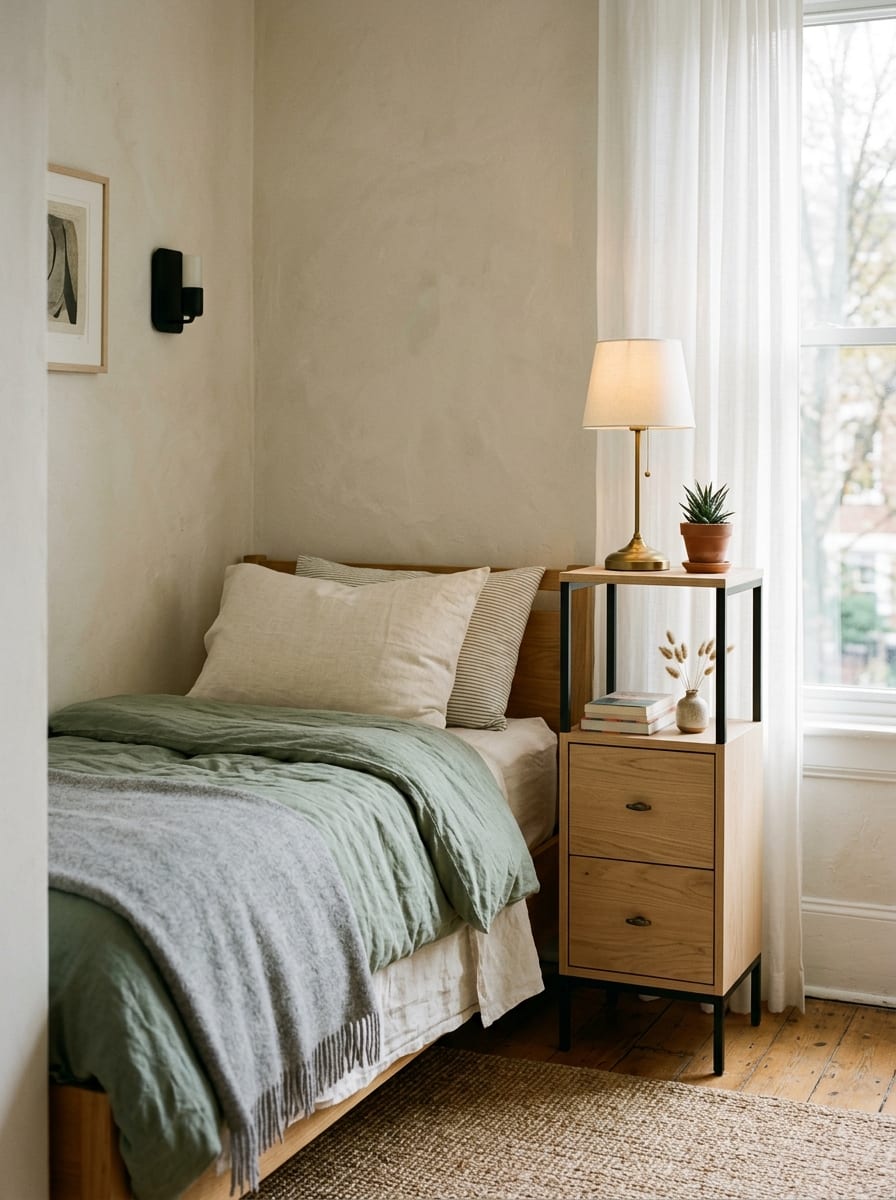
A standard nightstand gives you:
one drawer one surface
but often wastes the vertical space above it.
In a studio, a taller narrow bedside storage piece can do more.
Possible setup
Use:
narrow drawer tower compact vertical cabinet small bookcase with closed lower storage
What it can hold
sleep essentials books chargers folded clothes personal items small baskets
Why it works
You gain more storage without increasing the footprint much.
Keep the top accessible
You still need a convenient place for:
lamp phone water
Do not turn the whole piece into inaccessible shelving.
Watch visual height
Very tall furniture beside the bed can make the sleeping area feel boxed in.
Choose something proportionate to the room.
8. The Hidden Dining Storage Bench
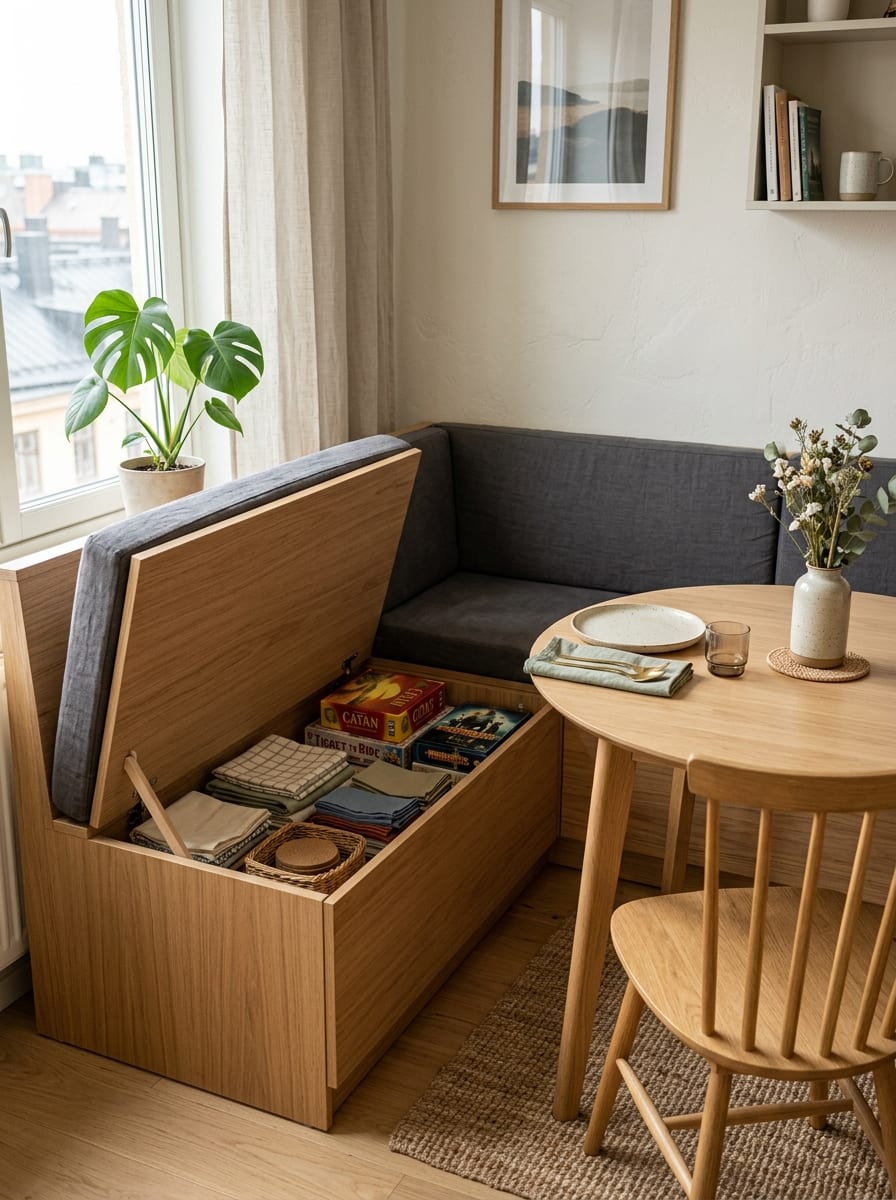
Dining furniture can work harder in a studio.
A storage bench can provide:
seating hidden storage
in one footprint.
What belongs inside
Good options include:
table linens board games extra kitchen items seasonal decor rarely used small appliances
Where it works best
Use it:
along a wall beside a small dining table near a window at the edge of the living area
Why it works
A bench replaces both:
dining chairs separate storage
which is exactly the kind of multifunctional furniture that makes sense in a studio.
Do not overload the bench
If it becomes difficult to lift or access because the dining table blocks it, the storage loses value.
Choose an opening system that works with the layout.
Keep the seating comfortable
A storage bench that is technically useful but unpleasant to sit on will not earn its place.
9. The Curtain-Concealed Storage Nook
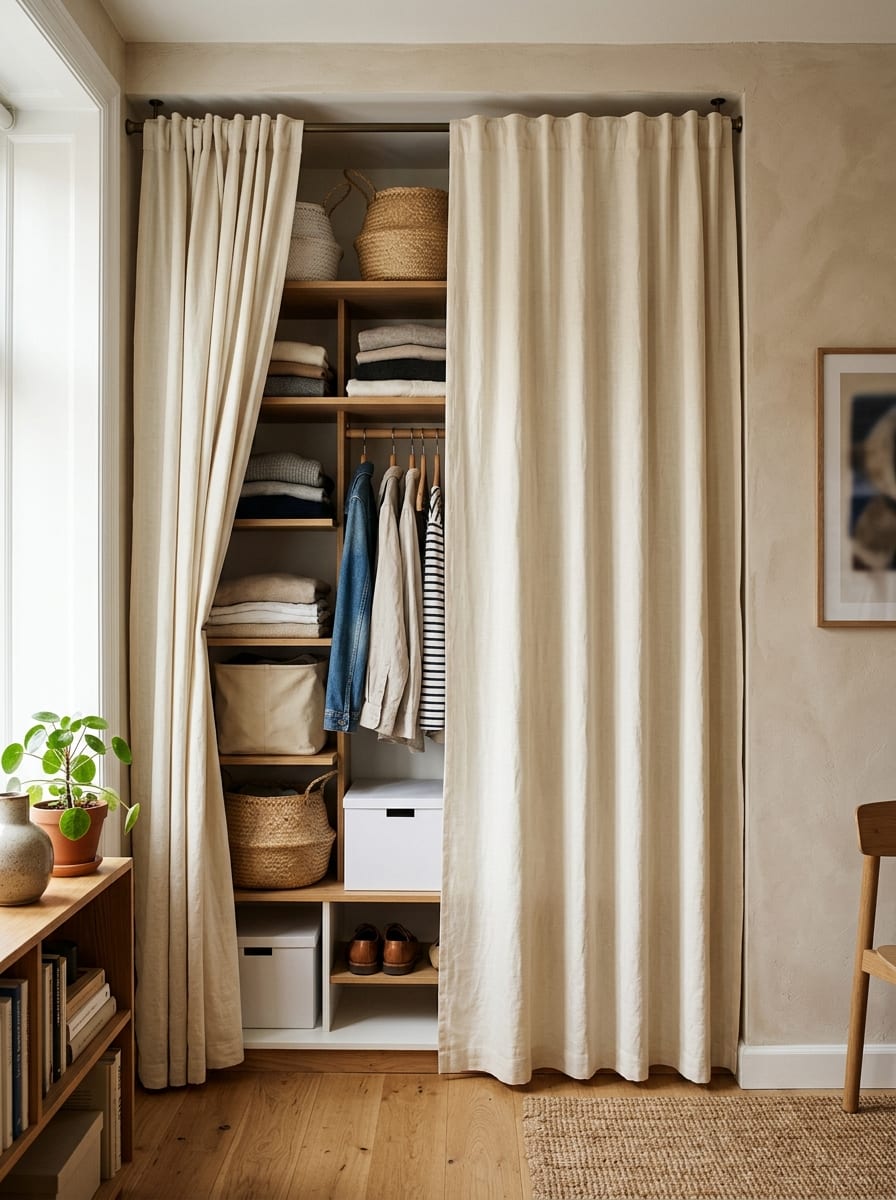
Sometimes the apartment has an awkward recess or open storage nook that cannot easily be fitted with doors.
A simple curtain can visually hide it.
Good locations
This can work for:
clothing rail shelving nook cleaning supplies pantry overflow utility storage
Why fabric works
A curtain creates one calm visual surface instead of showing:
boxes clothes bins supplies
all at once.
Choose a simple fabric
Use:
warm white oatmeal taupe soft gray
Avoid loud patterns unless the rest of the studio is very restrained.
Keep it easy to open
The curtain should not become something you avoid using because it is awkward.
Rental advantage
A tension rod may work in some suitable alcoves without drilling.
Always check:
rod fit surface weight lease requirements
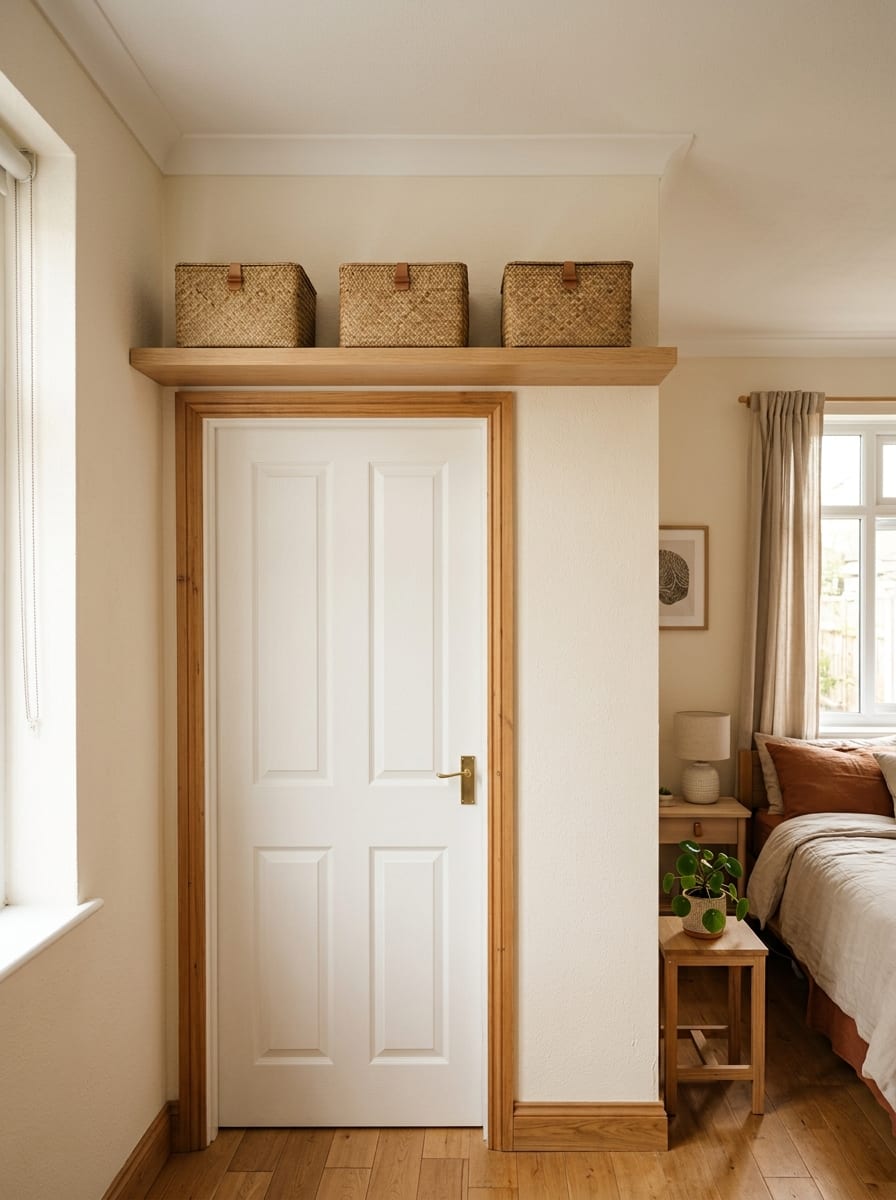
10. The High-Shelf Seasonal Zone
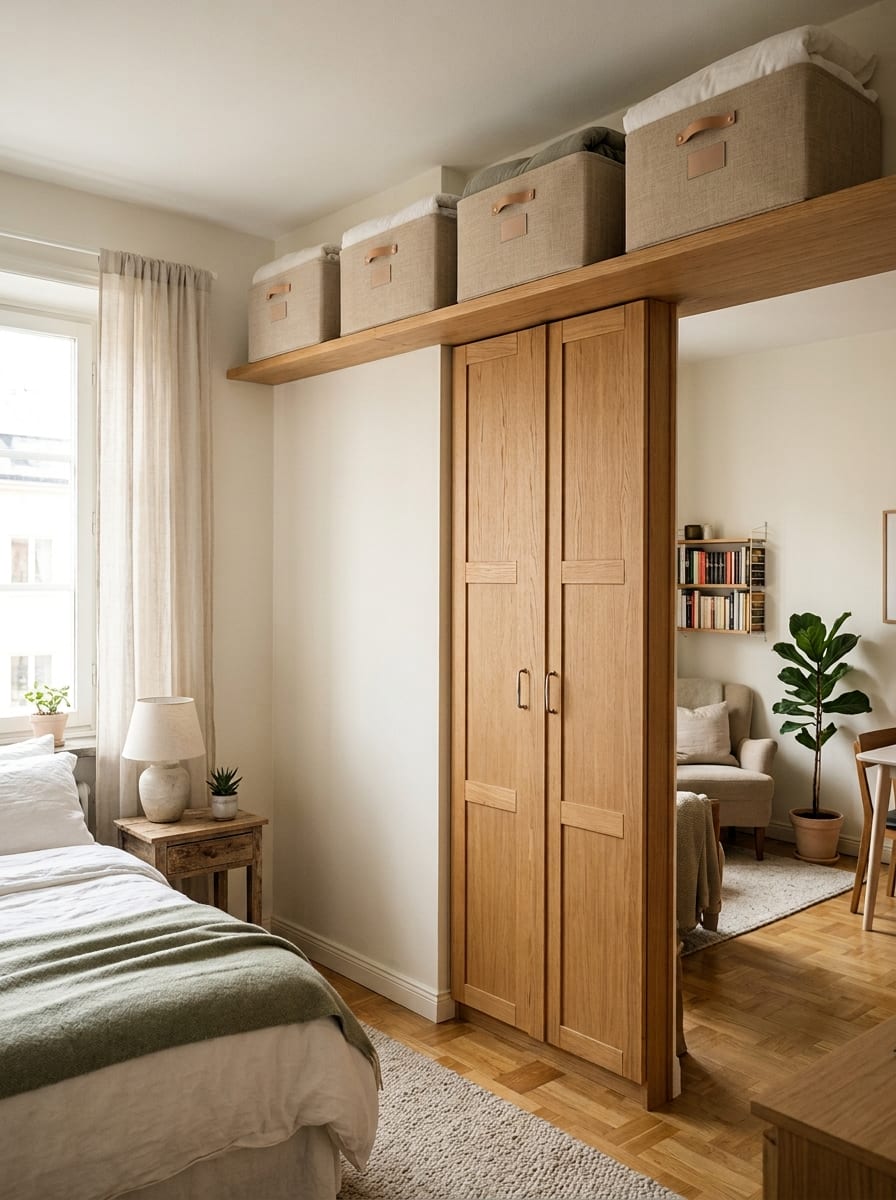
Studios often lack closets large enough for seasonal items.
A high shelf can keep low-frequency items out of the main storage zones.
Good items for high storage
Use it for:
holiday decor seasonal bedding travel bags extra blankets rarely used kitchen items
Keep it contained
Use matching or coordinated boxes so the shelf reads as one visual band rather than miscellaneous clutter.
Do not store heavy items overhead
Keep high storage:
lightweight safely accessible appropriately supported
Avoid spreading high shelves everywhere
One controlled high-storage zone is better than shelves running around the entire studio.
Best locations
Potential areas include:
above wardrobe above entry cabinet above existing storage wall
Keep the shelf integrated with another storage area.
11. The One-Open-One-Closed Storage Rule
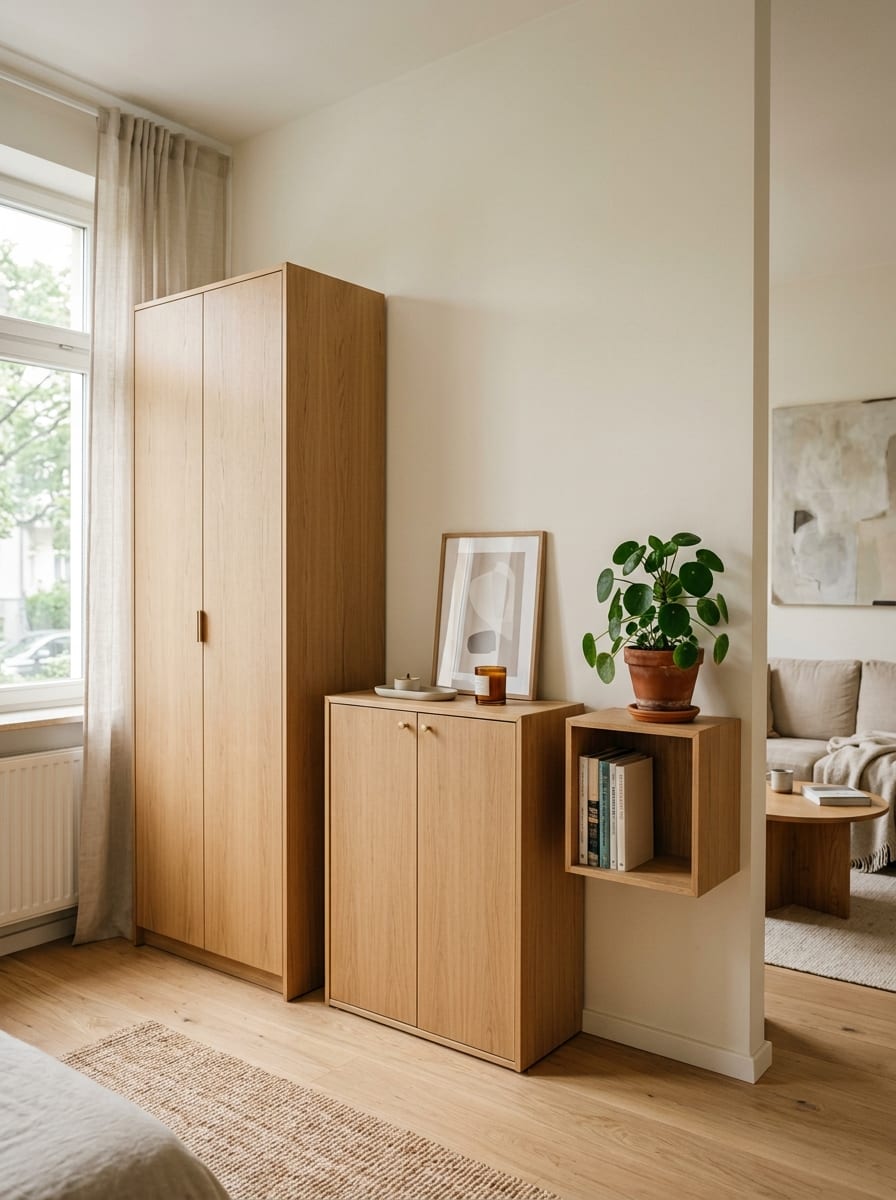
This is the most important studio-storage rule.
Not everything should be hidden.
But not everything should be visible either.
For every major storage zone, decide whether it should be:
Open
For things you actually want to see.
Examples:
books one plant attractive basket a few decorative objects
Closed
For visually messy categories.
Examples:
clothing paperwork electronics cleaning supplies pantry overflow miscellaneous household items
Why this matters
If every storage piece is open, the studio starts to look like a storage room.
If everything is closed, the space can feel heavy and flat.
The balance is what keeps the room functional but still visually calm.
A simple formula
For example:
closed wardrobe open book shelf closed media cabinet open bedside shelf closed shoe cabinet
That gives the eye a mix of:
calm surfaces + a few personal details
Why Studio Apartments Need More Closed Storage
Open shelving looks attractive in photographs.
But a studio apartment is different from a house where storage can be spread across multiple rooms.
Everything is competing in the same visual field.
If you keep:
dishes clothes books shoes office supplies toiletries
all exposed, the room can start to feel busy even when everything is technically organized.
Closed storage removes some of that visual information.
That can make the room feel calmer without changing the square footage.
Start by Separating Daily Storage From Occasional Storage
Not every item needs equally convenient access.
Daily-use storage
Keep easy to reach:
clothes shoes chargers toiletries kitchen basics
Occasional storage
Move higher or underneath furniture:
luggage holiday decor extra bedding seasonal clothes spare household items
This prevents valuable easy-access storage from being filled with things you barely use.
Do Not Put Storage on Every Wall
This is a common small-space mistake.
You find an empty wall and think:
I could add shelving there.
Then another.
Then another.
Eventually, the studio is surrounded by furniture.
Instead, try to leave at least one or two walls relatively quiet.
Empty wall space makes the apartment feel less boxed in.
How Deep Should Storage Furniture Be in a Studio?
Depth matters enormously.
A cabinet only a few inches deeper can noticeably reduce a walkway.
Before buying, measure:
wall-to-furniture depth remaining walkway nearby door swing drawer opening sofa clearance
A shallow cabinet that stores slightly less may be much better than a deeper one that makes the room annoying to move through.
Use the Tallest Practical Storage Before Adding Another Cabinet
If you already need a cabinet, using more height can make sense.
For example:
A tall narrow wardrobe may be more efficient than:
low dresser extra drawer unit separate storage shelf
But keep the proportions reasonable.
Do not create a giant visual wall if the studio is already narrow.
Storage Beds vs Raised Beds
Some studio apartments use lofted or raised beds to create storage underneath.
This can work well if the room has appropriate:
ceiling height structural support safe access
But it is not automatically better.
A very tall raised bed can:
visually dominate the room reduce headroom make everyday access less comfortable
For most studios, a conventional storage bed is simpler.
Should You Use Room Dividers With Storage?
Sometimes.
A bookshelf can separate:
bed living room
while also adding storage.
But use caution.
A tall solid bookshelf in the middle of a small studio can block:
light sightlines airflow
If you use storage as a divider, keep it:
relatively open appropriately scaled stable
A low or partially open unit often works better.
How to Store Clothes in a Studio Without a Closet
If the apartment has no proper wardrobe, prioritize one intentional clothing solution.
Possible options:
freestanding wardrobe covered clothing rack curtain-concealed clothing nook storage bed + compact clothing rail
Avoid spreading clothes across:
several open racks hooks chairs shelves
One concentrated clothing zone keeps the studio calmer.
How to Hide Office Clutter in a Studio
Workspaces can introduce a surprising amount of visual noise.
Hide:
cables chargers notebooks printer supplies paperwork
inside:
desk drawers nearby closed cabinet sofa-back console small drawer unit
At the end of the workday, the apartment should be able to stop looking like an office.
That matters especially in a studio where work and relaxation happen in the same room.
How to Store Cleaning Supplies
Try to keep them in one controlled location.
Good options include:
slim utility cabinet under-sink area entry cabinet vertical corner cabinet
Do not scatter cleaning products across several rooms or furniture pieces.
And always store them safely according to product instructions.
Use Baskets Inside Cabinets, Not Everywhere Outside
Baskets are useful.
But too many visible baskets can become their own kind of clutter.
A better approach is often:
cabinet outside baskets inside
Use baskets to organize categories behind closed doors rather than turning every wall shelf into a row of baskets.
What Should Stay Visible?
Choose things that add something to the room.
Examples:
favorite books plant ceramics framed photo one decorative box attractive lamp
Visible storage should feel intentional.
If something is only visible because you ran out of storage, it probably belongs in a closed zone.
How to Make Storage Furniture Feel Lighter
Look for pieces with:
simple fronts minimal handles visually consistent finishes some visible floor underneath moderate depth
But function comes first.
A cabinet that looks visually light but stores almost nothing may not be useful.
Match Storage Finishes Where Possible
A studio can look fragmented if every storage piece has a different finish.
For example:
black shelf white wardrobe gray dresser orange wood cabinet metal rack
does not automatically look bad, but it requires more visual coordination.
Using two main finishes can make the room feel calmer.
For example:
warm white + natural wood
or:
walnut + cream
Do Not Over-Organize
You do not need:
a container for every item labels on every drawer matching bins everywhere hidden compartments inside every piece
The strongest storage system is one you can maintain.
If putting an item away takes too many steps, it will eventually stay out.
The Studio Storage Priority Order
If you are organizing from scratch, I would prioritize storage in this order:
1. Clothing
Usually the largest category.
2. Bed-related storage
Bedding, seasonal clothing, luggage.
3. Entry storage
Shoes, bags, jackets.
4. Kitchen overflow
Food and household supplies.
5. Office clutter
If you work from home.
6. Seasonal items
Move these higher or underneath furniture.
Decorative storage comes last.
Common Studio Apartment Storage Mistakes
Too much open shelving
It increases visual noise.
Storage on every wall
The room starts to feel boxed in.
Buying deep cabinets
Circulation suffers.
Adding furniture without removing anything
Storage should often replace another piece.
Using every empty corner
Some corners should stay empty.
Leaving clothes exposed everywhere
Concentrate them into one zone.
Using several tiny storage pieces
One larger useful cabinet may be better.
Ignoring under-furniture space
Beds and sofas can hide a surprising amount.
Storing seasonal items in prime locations
Move low-frequency items out of easy-access zones.
A Simple Studio Storage Formula
For a very small studio, this can be enough:
Bed
Built-in storage underneath.
One wall
Closed wardrobe or cabinet.
Entry
Slim shoe storage.
Living area
One closed media or sofa-back cabinet.
High storage
One seasonal zone.
That gives you storage across the apartment without covering every wall.
A More Storage-Heavy Studio Formula
If you own more things:
Storage bed
Clothes and bedding.
Tall wardrobe
Daily clothing.
Sofa-back console
Work and electronics.
Dining bench
Household overflow.
Corner cabinet
Cleaning and miscellaneous supplies.
Still keep at least one wall relatively open.
Which Storage Idea Fits Your Studio?
Choose a Storage Bed if:
You need substantial hidden storage without adding furniture.
Choose One-Wall Storage if:
You want to concentrate clutter into one visual zone.
Choose a Sofa-Back Console if:
Your sofa already divides the room.
Choose Slim Entry Storage if:
Shoes and bags keep spilling into the living area.
Choose Under-Sofa Storage if:
You have occasional-use items and enough clearance.
Choose a Corner Cabinet if:
One corner is unused but floor width is limited.
Choose a Bedside Tower if:
You need more bedroom storage without a bigger footprint.
Choose a Storage Bench if:
Your dining area needs both seating and hidden storage.
Choose a Curtain-Concealed Nook if:
You have awkward open shelving or clothing storage.
Choose a High Shelf if:
Seasonal items occupy valuable everyday storage.
Follow the Open/Closed Rule if:
Your studio is organized but still looks visually busy.
Final Thoughts
A studio apartment does not need storage everywhere.
It needs storage in the right places.
Start with the largest furniture footprints:
bed → storage wall → sofa → entry
Then use:
vertical space → hidden zones → occasional storage
for the rest.
Keep visually messy categories behind doors.
Leave some walls and corners quiet.
And avoid adding storage furniture simply because another piece technically fits.
The best studio storage system makes the apartment feel like a home first and a storage solution second.