11 Small Living Room Storage Ideas That Hide Clutter Without Adding Bulky Furniture
Discover 11 small living room storage ideas using ottomans, closed cabinets, shallow furniture and hidden storage to control clutter without making the room feel crowded.
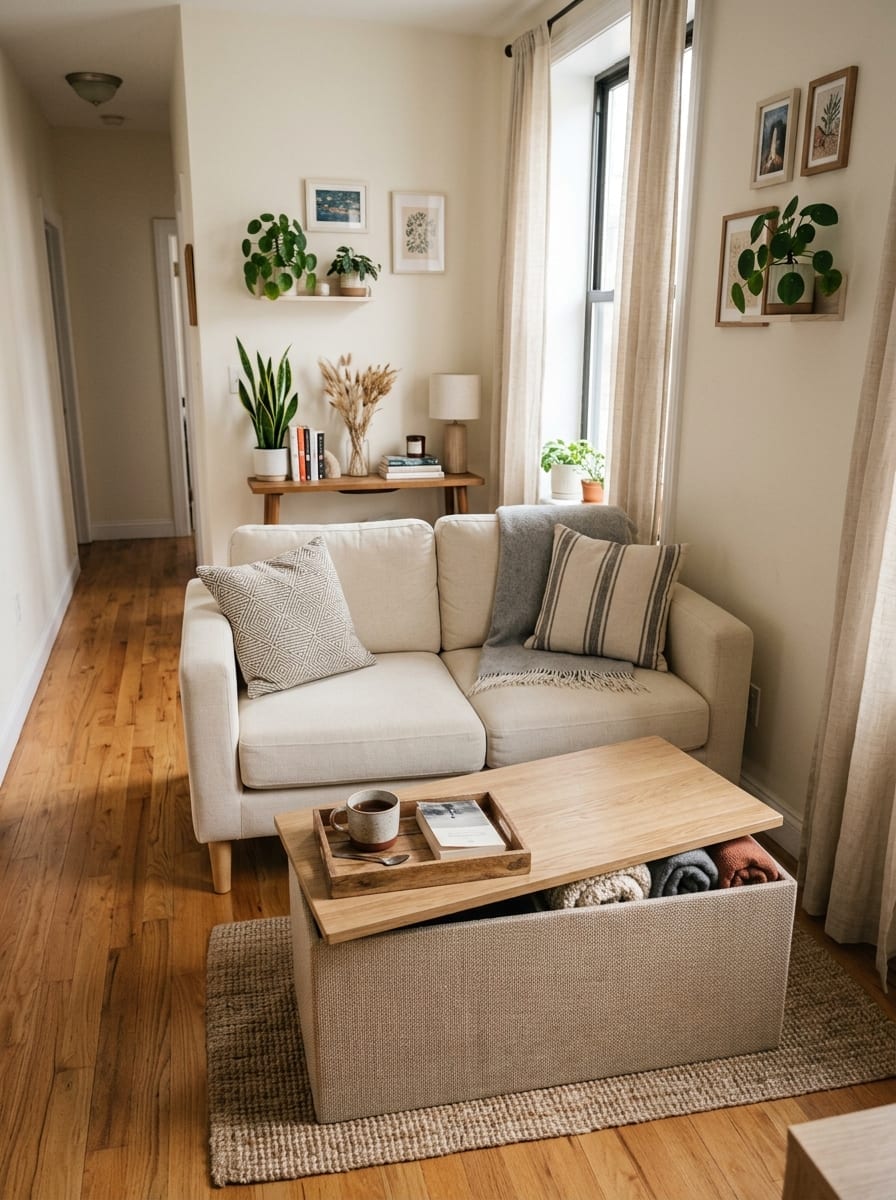
Small apartment living room with a rectangular storage ottoman used instead of a coffee table, lid open showing folded throws and a tray on top
In This Guide
A small living room can have enough storage and still feel crowded. That usually happens when the storage itself takes up too much room. You add:
- a cabinet
- another basket
- a bookcase
- a storage cart
- an extra console
and suddenly the clutter is technically organized, but the room has less space to:
- walk
- sit
- open doors
- move chairs
- breathe visually
In a compact living room, storage works best when it does one of three things: replaces furniture you already need uses vertical or shallow space hides the everyday clutter that actually makes the room feel messy The goal is not to create storage everywhere. The goal is to create the right storage in the least intrusive places. Here are eleven practical ways to do that.
1. The Storage Ottoman Coffee Table
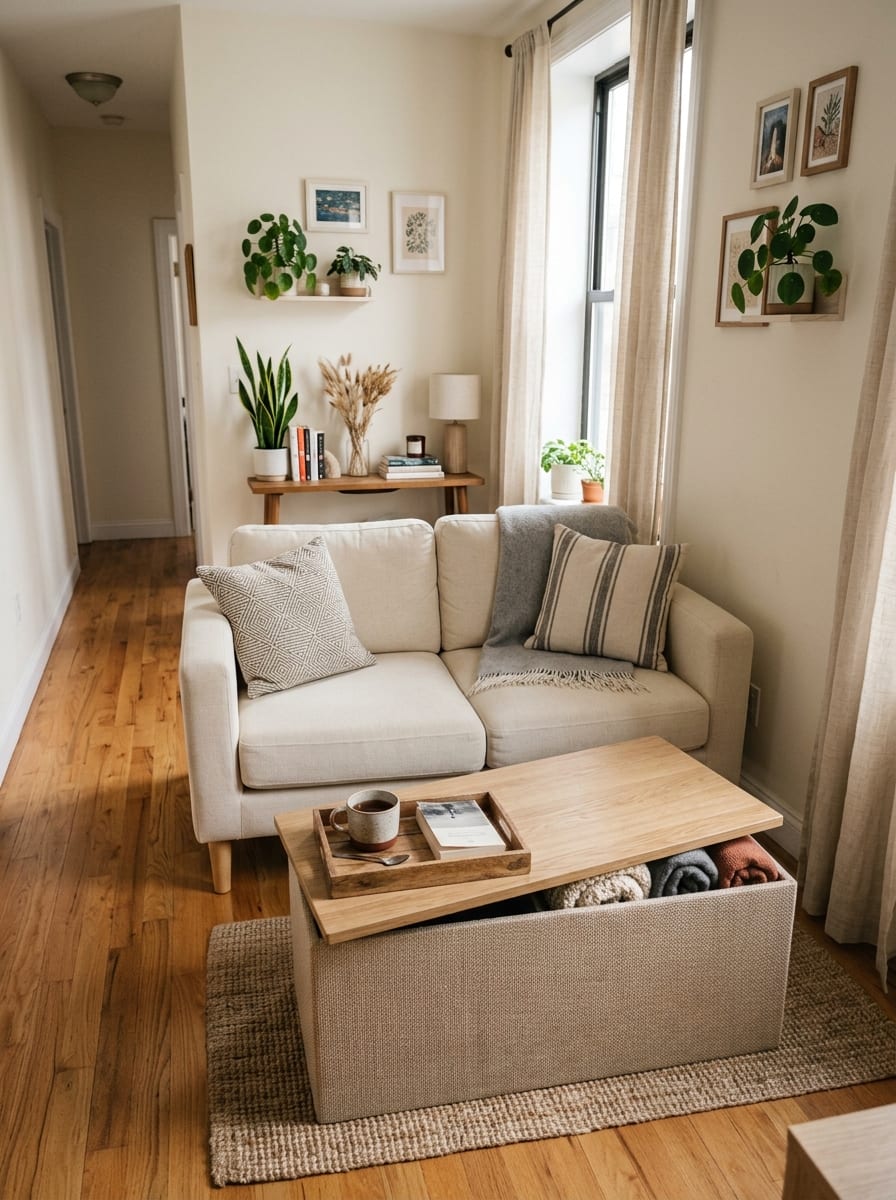
If your coffee table takes up a large amount of floor space, make that footprint work harder. A storage ottoman can function as:
- coffee-table alternative
- footrest
- occasional extra seat
- hidden storage
all in one piece.
Why it works
You are not adding another storage unit. You are replacing one existing furniture function with another version that stores things inside.
What to store
Good candidates include:
- throw blankets
- extra cushions
- board games
- occasional accessories
These are bulky enough to create clutter but do not need constant access every five minutes.
Keep the top practical
If the ottoman is soft, use a stable tray when you need a surface for:
- drinks
- remote
- book
Watch the footprint
A storage ottoman can still be too large. Measure the same way you would measure a coffee table. Protect the space between:
- sofa
- table
- TV unit
so the room remains comfortable to move through.
2. The Closed Media Console
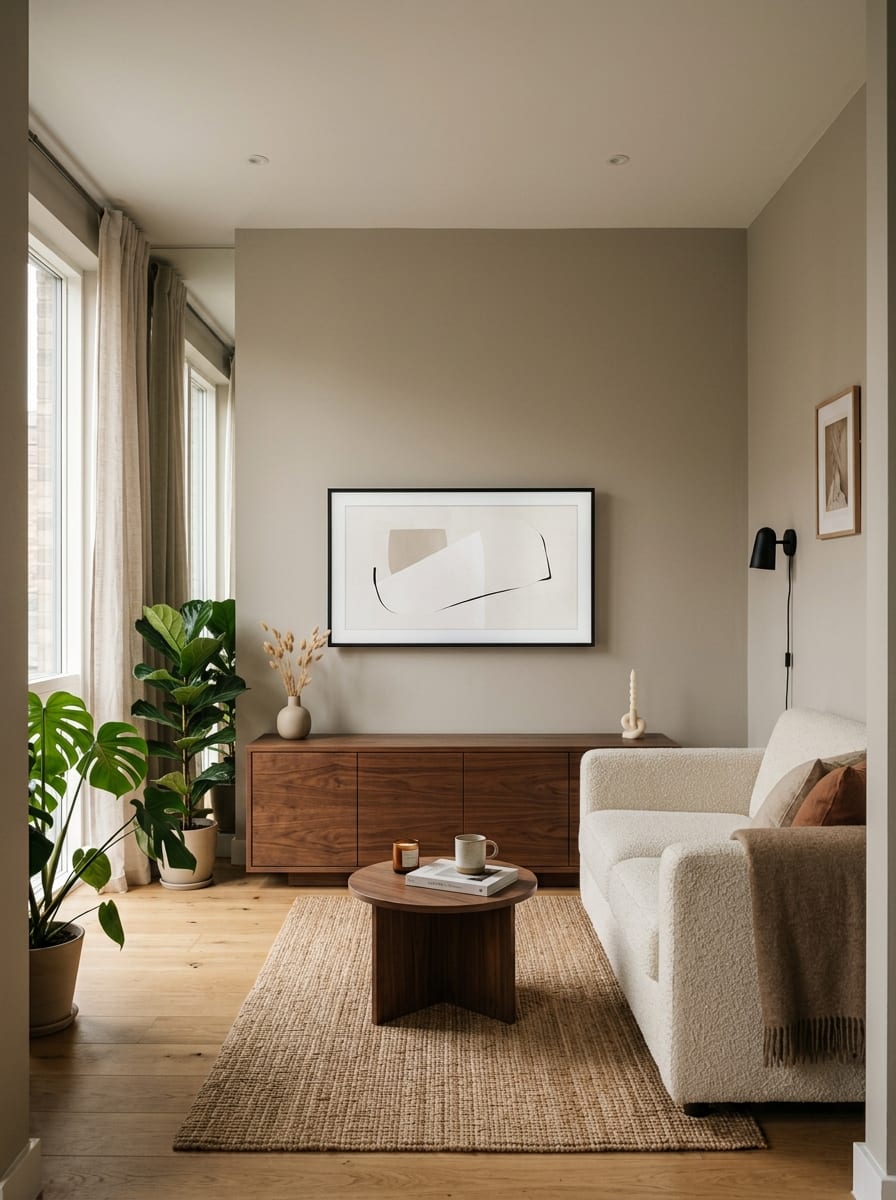
TV units often become visual-clutter magnets. They collect:
- remotes
- cables
- controllers
- chargers
- game accessories
- papers
- random small electronics
An open TV stand displays all of it. A closed console hides it.
Why it works
The TV area already needs some kind of functional support in many rooms. Closed storage lets the same footprint handle:
- media equipment
- cable management
- living-room clutter
Choose doors over open cubbies if clutter is the problem
Open shelving can look great when styled carefully. But if the goal is to hide everyday items, doors or drawers are usually easier.
Keep the depth controlled
A media console does not need to be extremely deep. Shallower furniture can preserve more floor space between:
- TV wall
- sofa
Plan ventilation
Electronics still need appropriate airflow. Do not completely seal devices inside unsuitable cabinetry. Follow the equipment manufacturer’s ventilation requirements.
3. The Slim Sofa-Back Console
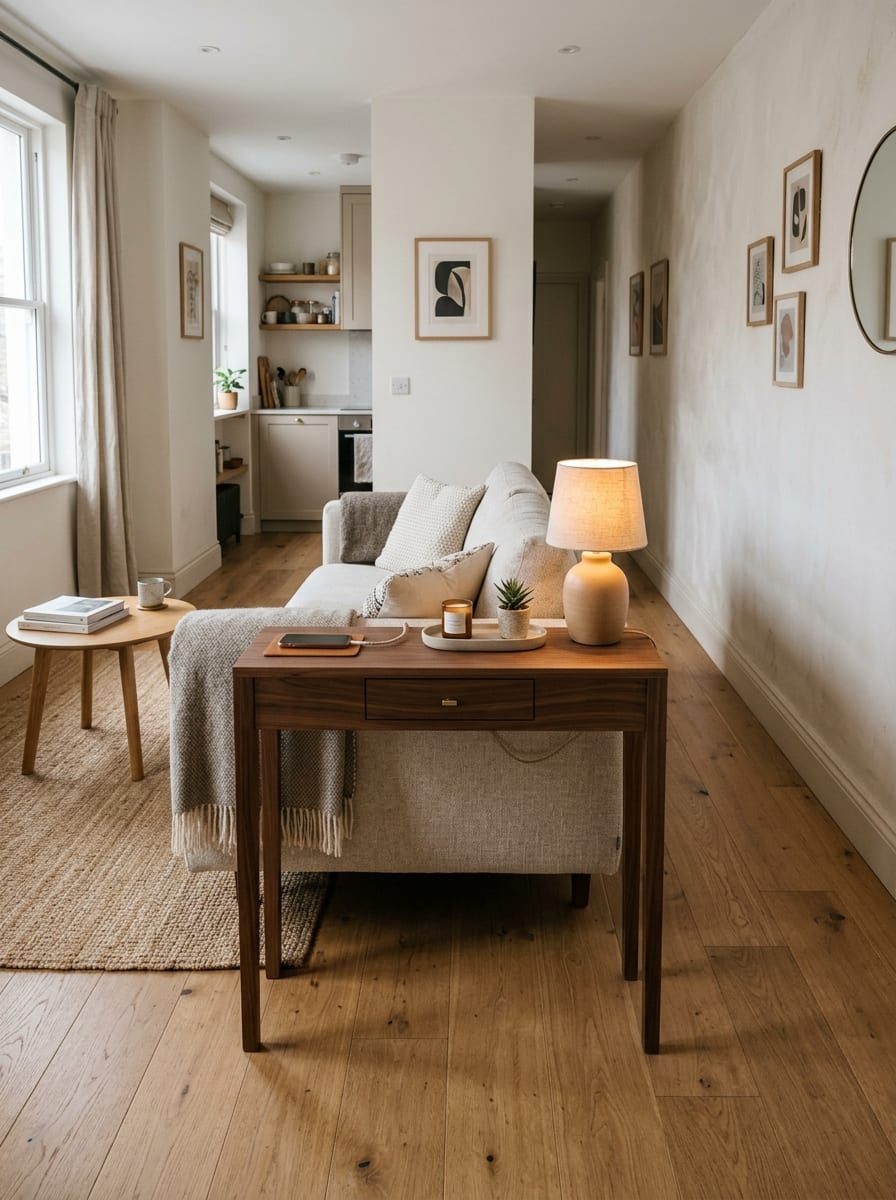
If your sofa floats away from the wall, the narrow space behind it can sometimes become useful storage. A slim console can provide:
- landing surface
- shallow drawer
- charging area
without requiring a full-size cabinet.
Why it works
The furniture follows an existing line in the room. Instead of placing a new cabinet against another wall, you use the footprint directly behind the sofa.
Keep it genuinely slim
This is not the place for a deep sideboard. The console should be narrow enough that it does not reduce:
- walkway
- dining clearance
- entry path
Use shallow storage only
A small drawer can hold:
- charger
- pen
- remote
- notepad
That may be enough.
Watch sofa height
A console that rises far above the sofa back can feel visually heavy. Keep the proportions intentional.
4. The Floating Storage Cabinet
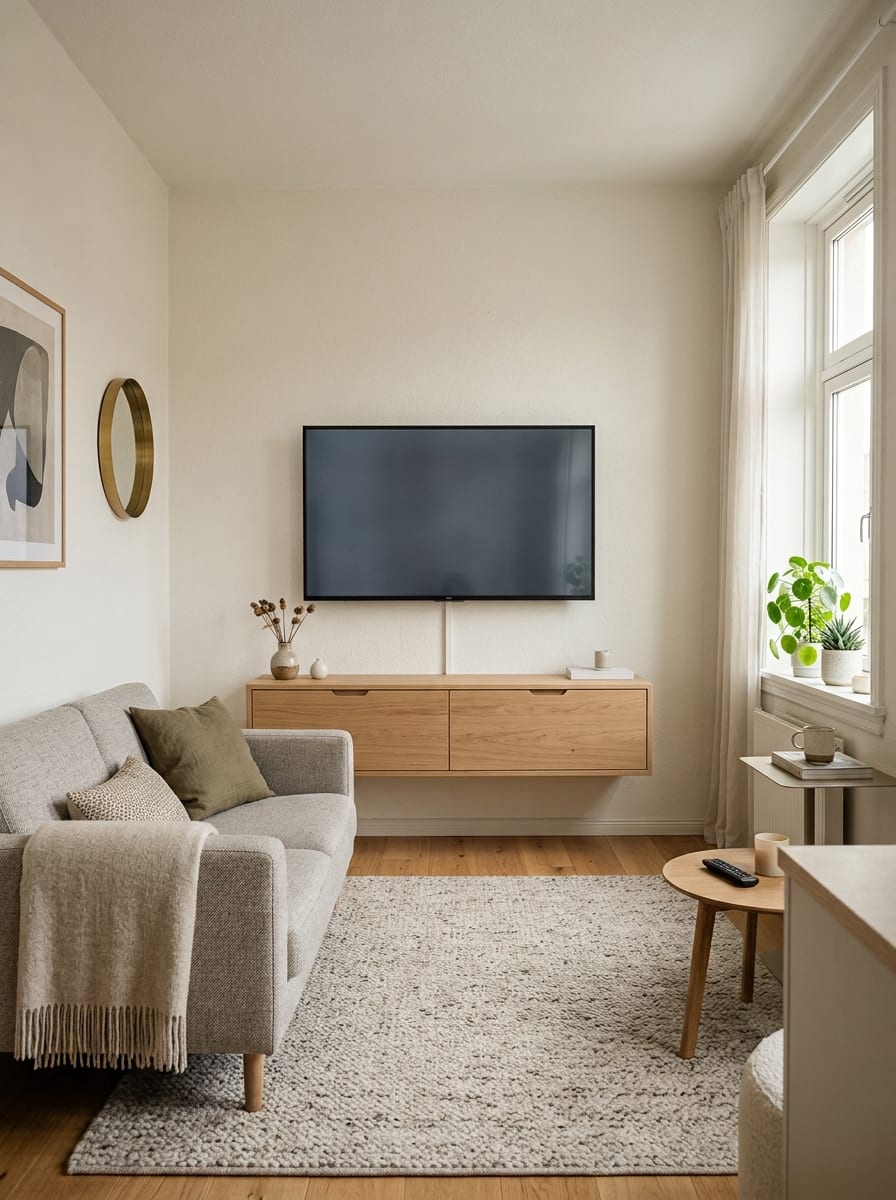
When floor area is limited, wall-mounted storage can free the floor below. A floating cabinet can work under:
- TV
- artwork
- empty wall
while keeping the visual footprint lighter than a full-height floor cabinet.
Why it works
You still get closed storage, but the visible floor continues underneath. That can make a small room feel less blocked.
Use it for light-to-moderate storage
Depending on the installation and product rating, it might hold:
- games
- small electronics
- magazines
- household accessories
Installation matters
A wall-mounted cabinet needs appropriate support for:
- wall type
- cabinet weight
- stored load
Follow installation requirements and use qualified help where appropriate.
Renter considerations
If wall mounting is not allowed, choose a freestanding shallow console instead.
5. The Tall Shallow Cabinet
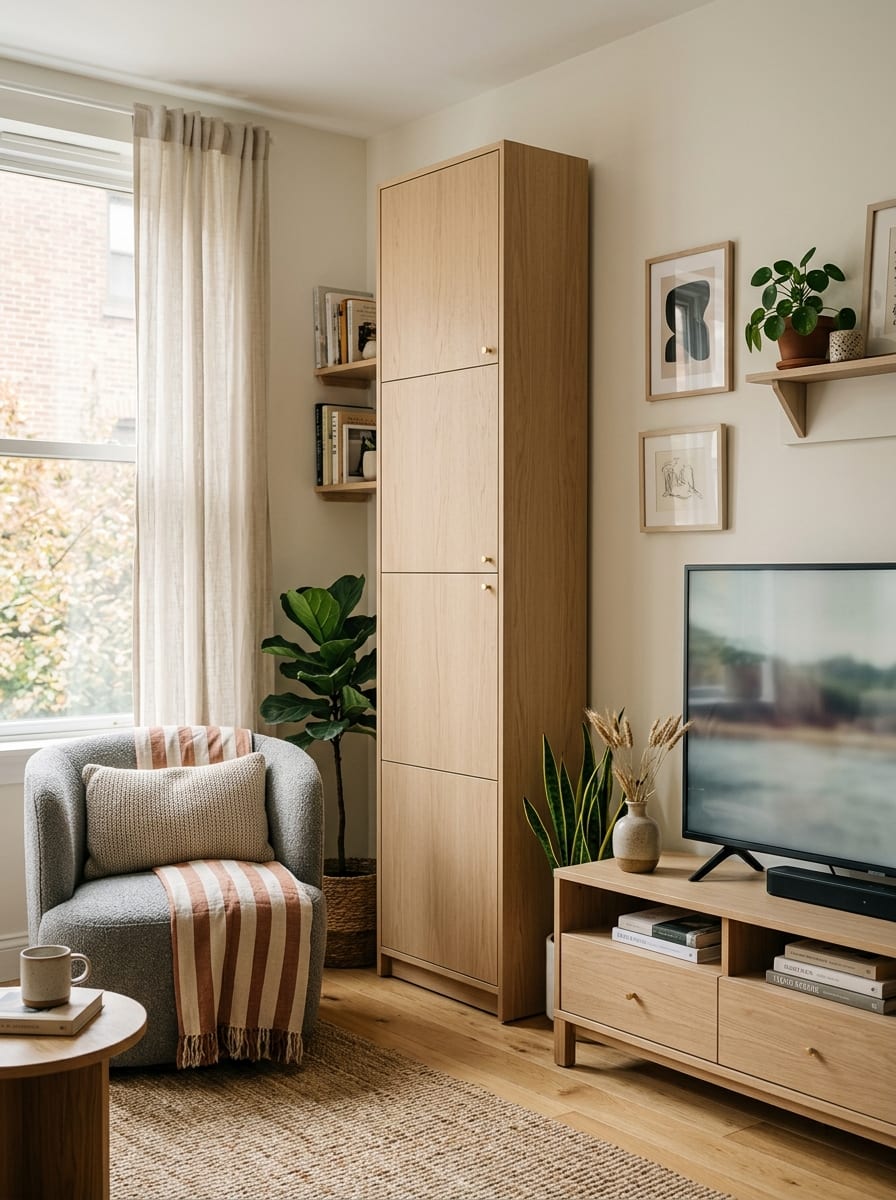
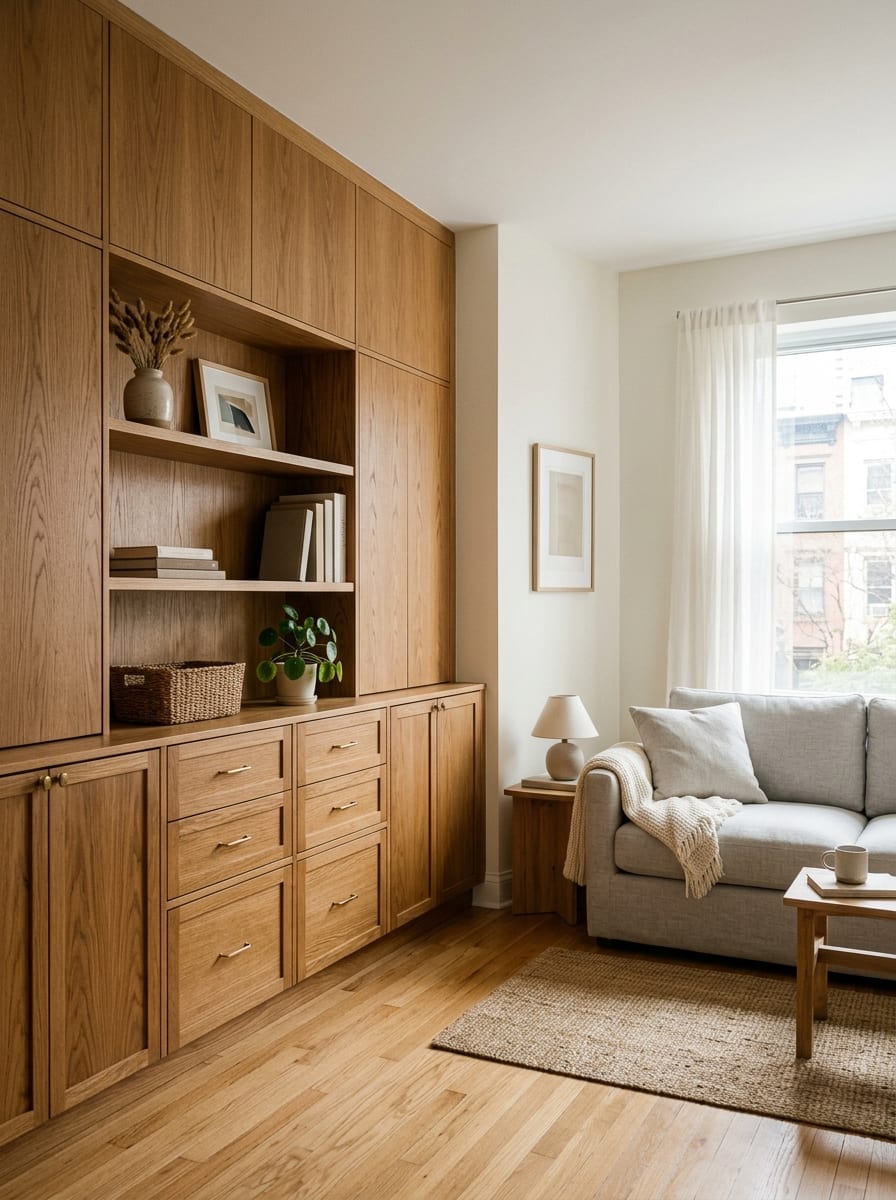
When you need more storage but have very little floor width, think upward. A tall shallow cabinet can provide more usable storage than a low wide piece while consuming less horizontal space.
Why it works
It uses wall height instead of floor width. That can be useful beside:
- TV unit
- sofa
- doorway
- reading corner
Keep the depth modest
A very deep tall cabinet can dominate a small living room. Shallow depth is often more important than height.
Use the upper shelves for low-frequency items
Store:
- seasonal decor
- extra linens
- rarely used games
higher up. Keep daily items lower.
Closed fronts reduce visual noise
A tall glass cabinet may still display clutter. If the goal is calmness, closed doors are usually easier.
6. The Drawer Side Table
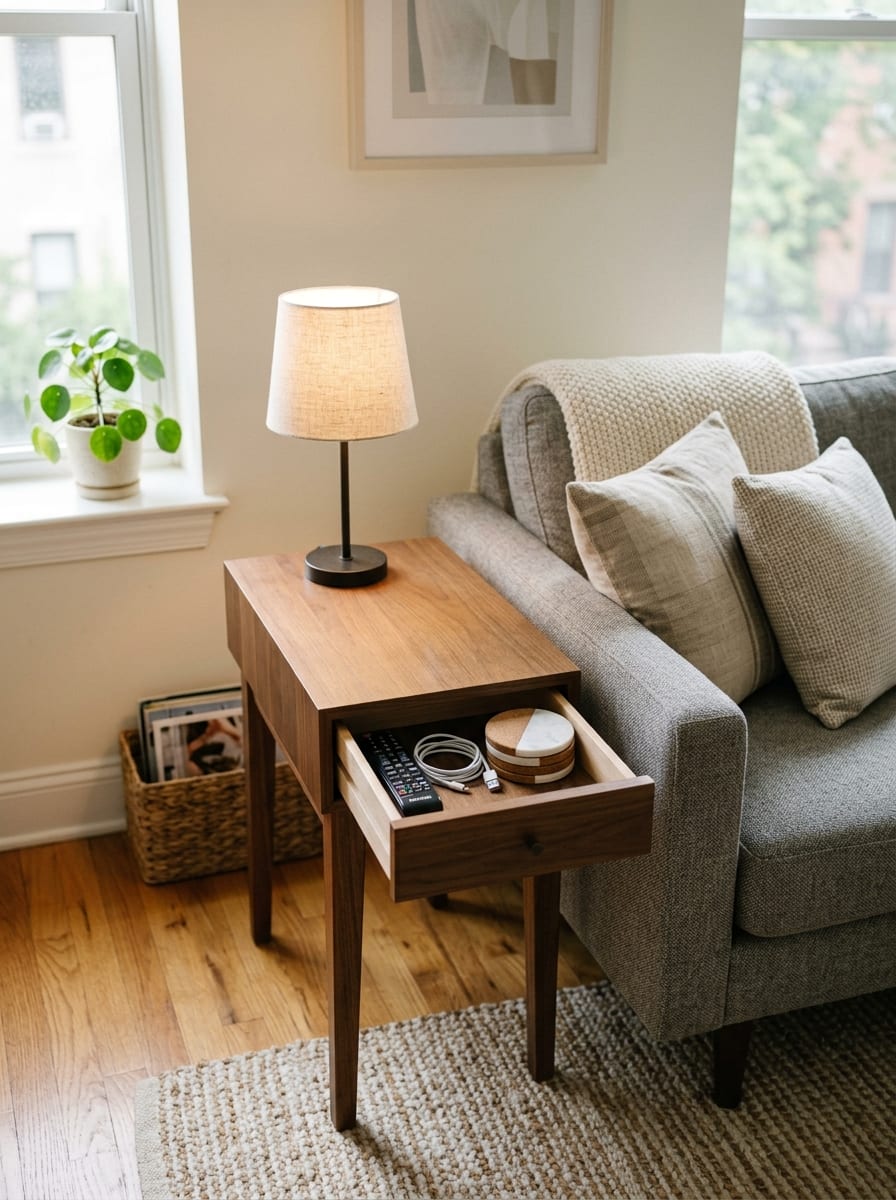
A side table can become hidden storage without becoming much larger. Instead of using an open pedestal table everywhere, choose one narrow table with a drawer where clutter tends to accumulate.
What the drawer can hold
Examples:
- remote
- charging cable
- reading glasses
- small notebook
- coasters
Why it works
These are exactly the tiny objects that make the room look messy when they have no home.
Do not overbuild the solution
You probably do not need a miniature three-drawer dresser next to the sofa. One small drawer may be enough.
Keep the table proportional
It should still work as a side table first. Storage is the bonus.
7. The Storage Bench
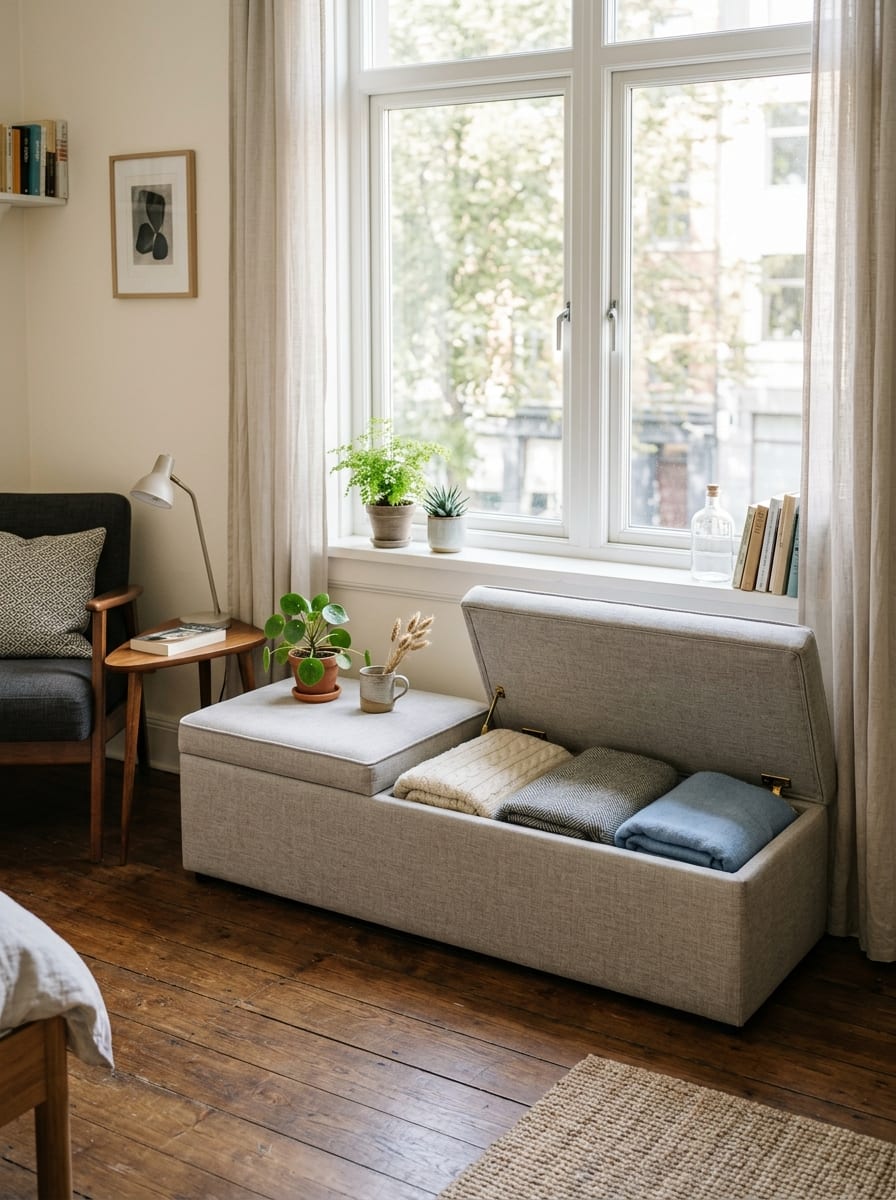
A storage bench can work particularly well along a wall where you also need occasional seating. It can function as:
- extra seat
- blanket storage
- game storage
- low console
depending on the room.
Best locations
Try:
- under a window
- against an empty wall
- behind a sofa
- near the living-room entry edge
Why it works
One long low piece replaces several smaller items.
Watch seat depth
A bench should not project so far that it narrows the main walkway.
Use the storage for bulky, low-frequency items
Good options include:
- throws
- extra cushion covers
- seasonal textiles
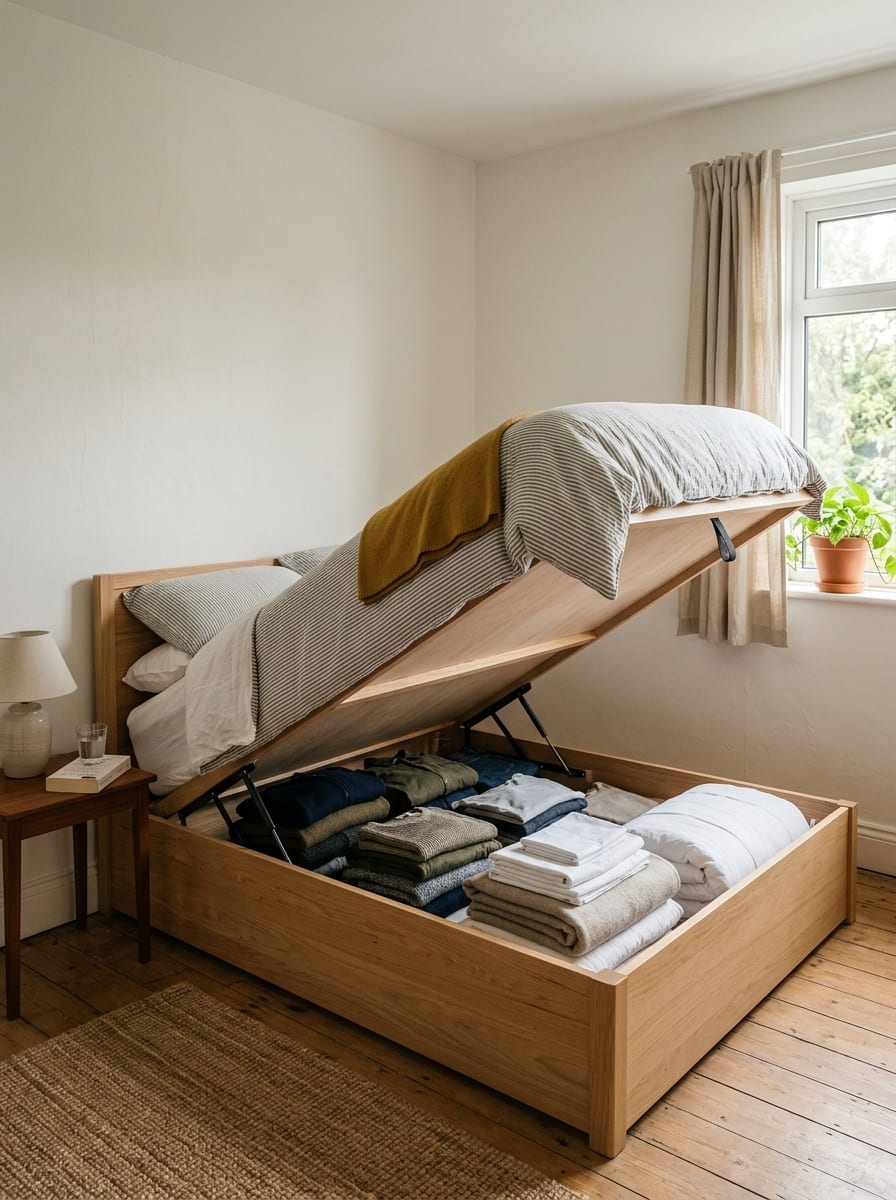
Avoid turning the bench into a drawer you open every ten minutes if furniture sits in front of it.
8. The Under-Sofa Storage Zone
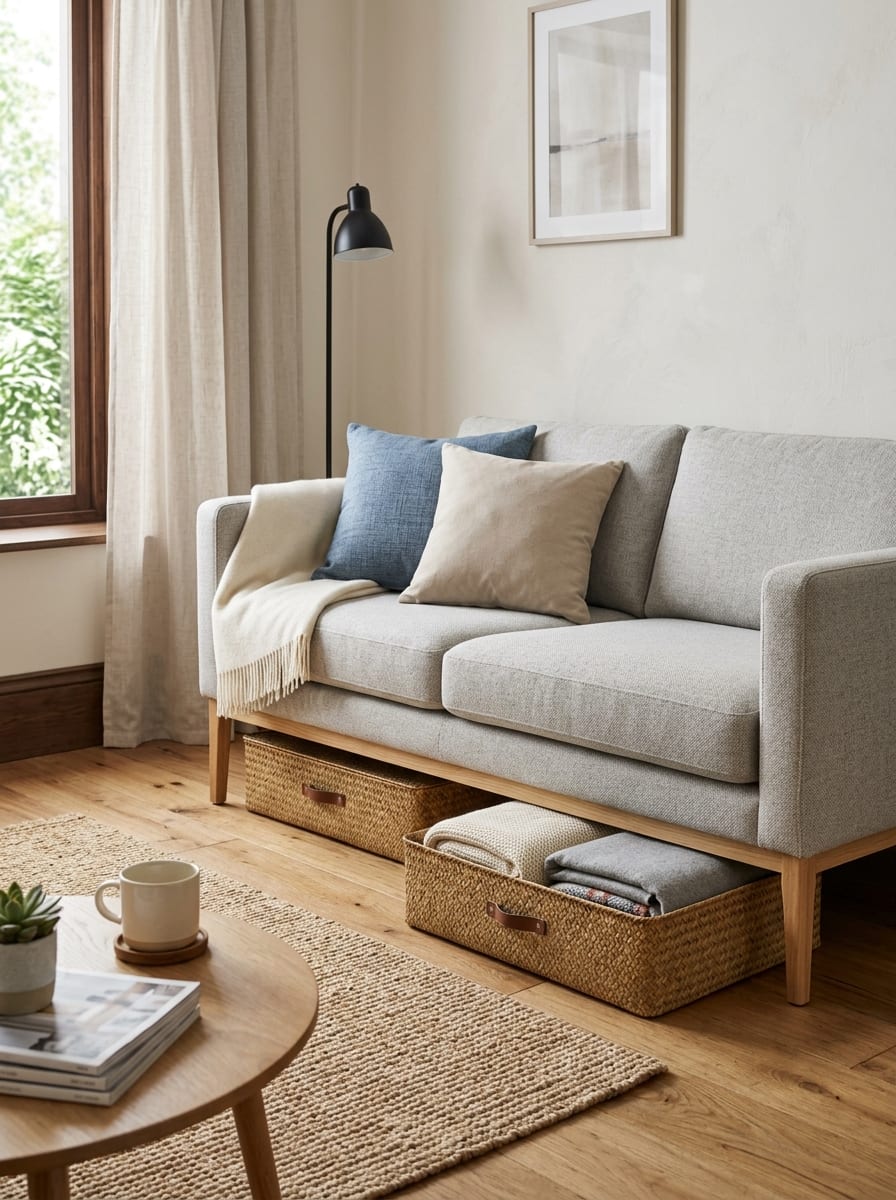
The space under a sofa may already exist but go completely unused. If the sofa has sufficient clearance, low-profile storage can sometimes fit underneath.
Good candidates
Store things you do not need constantly, such as:
- extra blankets
- board games
- seasonal pillow covers
- occasional cables
Use matching low containers
Random containers under the sofa can look messy when visible. Choose:
- low
- consistent
- easy-to-pull-out
storage where appropriate.
Measure height carefully
A container can be only slightly too tall and become useless. Measure the actual clearance.
Keep ventilation and mechanism clearance in mind
If the sofa has:
- recliner mechanism
- sleeper mechanism
- electrical parts
do not place storage where it interferes.
9. The One-Basket-per-Problem System
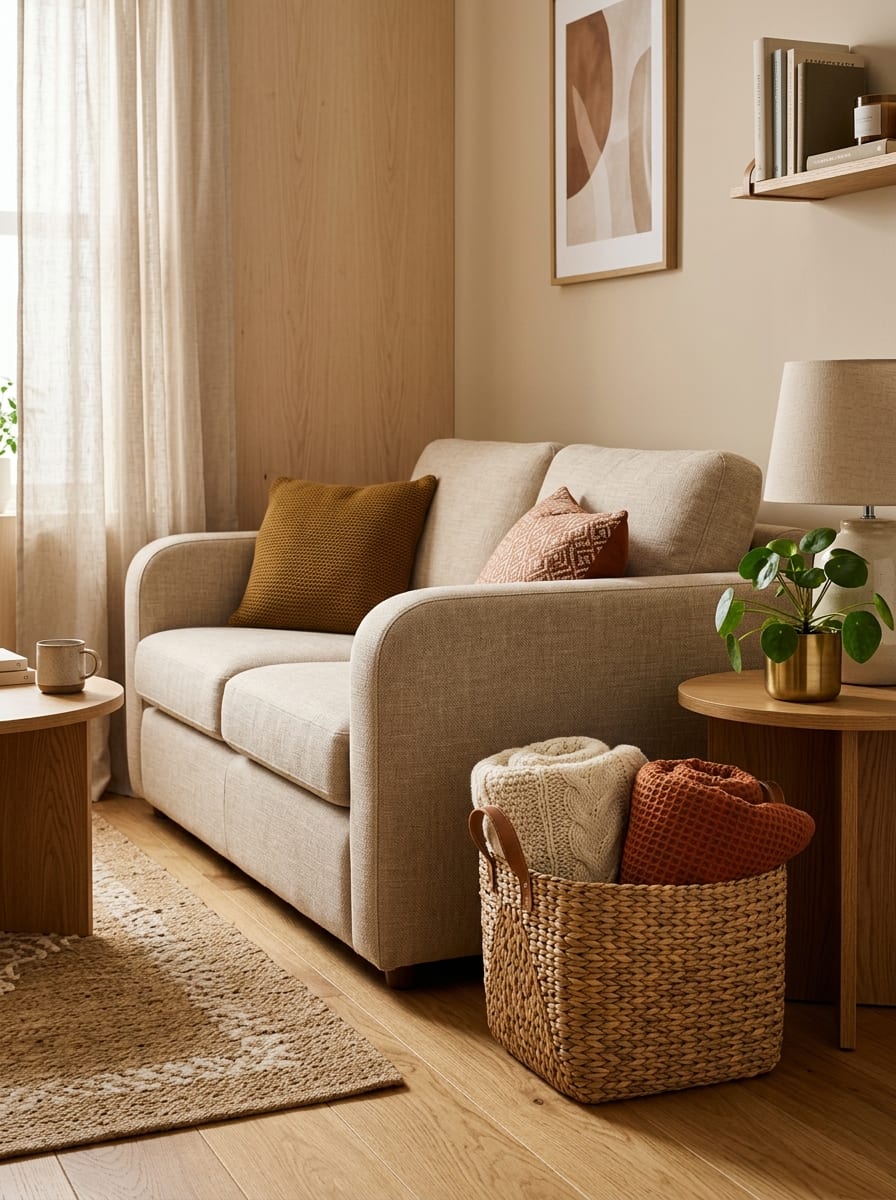
Baskets can help small rooms. Too many baskets can become the clutter. Instead of putting baskets everywhere, assign one basket to one repeating problem. For example:
Blanket problem
One larger basket beside sofa.
Toy problem
One closed or structured basket near the play area.
Magazine problem
One narrow basket or holder.
Why it works
The basket has a purpose. It is not just another container waiting to be filled.
Give each basket a limit
When the basket is full, that is your signal to:
- edit
- relocate
- remove
items. Do not add another basket automatically.
Choose structured shapes
Very soft baskets can collapse and look messy when partially filled. A more structured design often works better in a living room.
10. The Hidden Charging Station
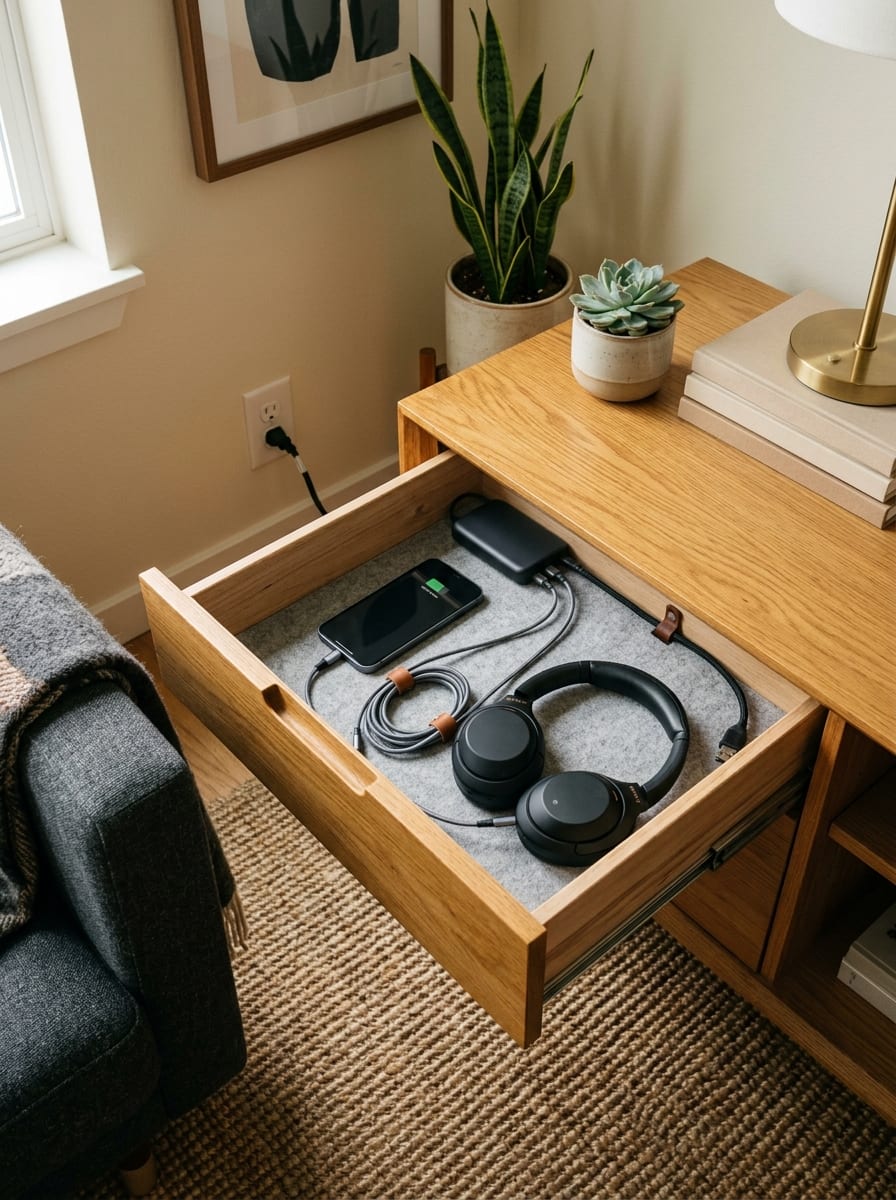
Phones, tablets, headphones and controllers create a specific kind of clutter: cables everywhere. Instead of storing each charger separately, create one concealed charging area.
Possible locations
Inside:
- media console
- side-table drawer
- shallow cabinet
where appropriate and safe.
Why it works
It removes the visual mess of:
- cables
- adapters
- devices
from multiple surfaces.
Keep electronics safe
Do not create a sealed hot compartment. Follow charger and device ventilation requirements. Avoid:
- overloaded outlets
- tightly coiled hot cables
- unsuitable enclosed charging spaces
One charging point can replace several clutter points
The coffee table no longer needs to be the default cable pile.
11. The Living-Room Storage Map Formula
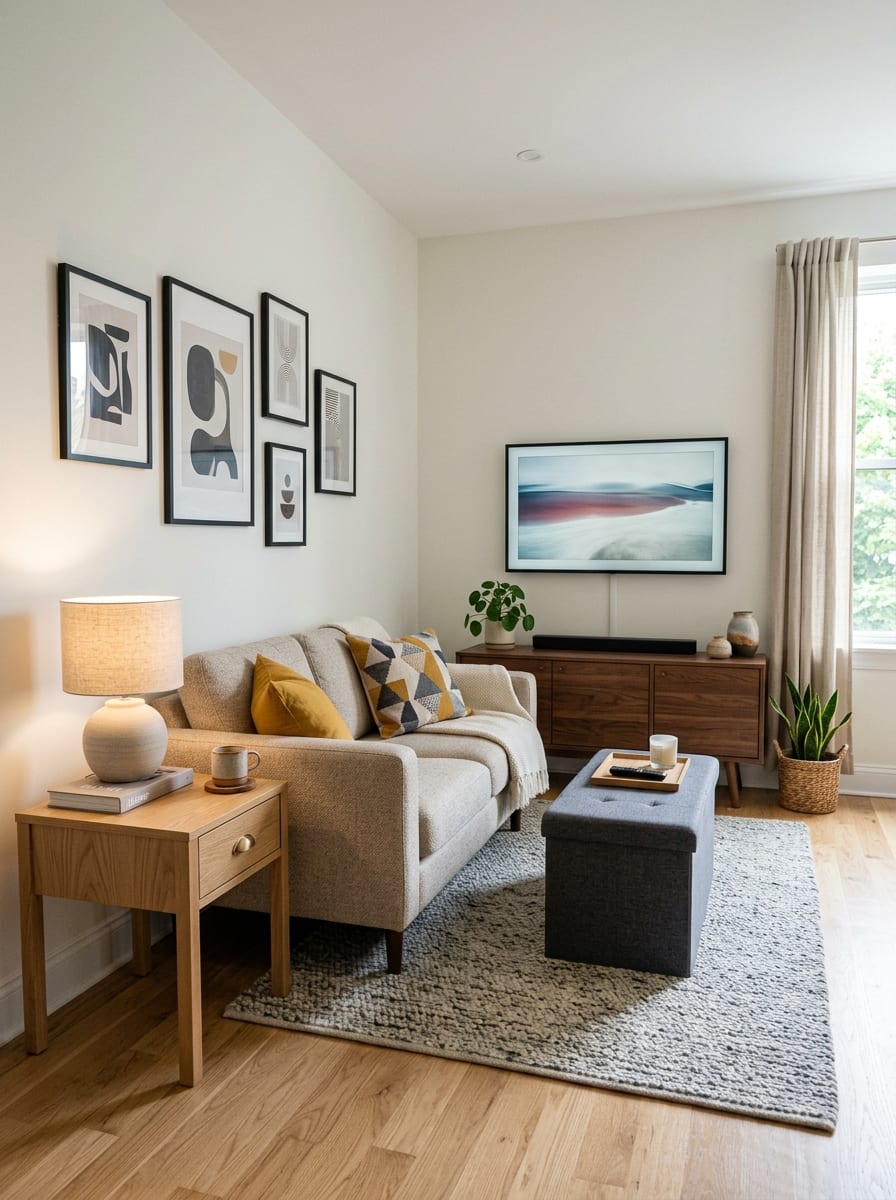
Before buying any new furniture, map the clutter first. Use this sequence: clutter → frequency → location → existing furniture → new storage only if needed
Step 1: Name the clutter
What is actually making the room messy? Examples:
- blankets
- cables
- toys
- books
- remotes
Step 2: Decide how often it is used
Daily
Needs easy access.
Weekly
Can live in a drawer or cabinet.
Rarely
Can go higher, lower or elsewhere.
Step 3: Store it near where it is used
A blanket stored three rooms away will probably end up on the sofa again.
Step 4: Check existing furniture
Can the problem be solved inside:
- ottoman
- TV unit
- side table
- sofa
before buying another cabinet?
Step 5: Add furniture only when the existing footprint cannot solve it
This is the part that keeps a small room from becoming a storage showroom.
Start With the Clutter, Not the Storage Furniture
This is the most important rule. Do not begin with: “I need another cabinet.”
Begin with: “What exactly needs a home?”
The correct storage for:
- two blankets
is very different from the correct storage for:
- twenty books
or:
- gaming accessories.
Identify the Three Main Clutter Types
Most living-room clutter falls into three groups.
Soft clutter
Examples:
- blankets
- cushions
Best stored in:
- ottoman
- bench
- basket
Small hard clutter
Examples:
- remotes
- chargers
- glasses
Best stored in:
- drawer
- closed compartment
Visual clutter
Examples:
- cables
- open shelving
- too many small decor items
Sometimes the solution is not more storage. It is:
- concealment
- reduction
- simpler display.
Daily Clutter Needs Easy Storage
If something is used every day, do not hide it somewhere inconvenient. Otherwise it will stay out. Good daily storage should be:
- within reach
- quick to open
- easy to reset.
Rarely Used Items Should Not Occupy Prime Space
A rarely used board game does not need the easiest drawer beside the sofa. Move lower-frequency items to:
- upper cabinet
- deep bench
- under-sofa storage.
Closed Storage vs Open Storage
Closed storage
Best when you need to hide:
- mismatched items
- electronics
- cables
- toys
- everyday clutter
Open storage
Best when the contents themselves look intentional:
- books
- a few decorative objects
- plants.
If your goal is a calmer room, closed storage usually does more work.
Open Shelving Can Create More Work
Open shelves require:
- styling
- editing
- regular reset
because everything remains visible. Do not add shelves simply because the wall is empty.
Use Furniture That Replaces Furniture
The strongest small-room storage usually comes from replacement. For example: coffee table → storage ottoman not: coffee table + storage cabinet That difference matters.
Avoid Storage Furniture With No Clear Job
Ask: What exactly is going inside this?
If the answer is: “Probably stuff,”
do not buy it yet.
Protect the Main Walkway
Storage should never solve clutter by creating a circulation problem. Identify the path between:
- entry
- sofa
- kitchen
- hallway
and keep it comfortably clear.
Depth Matters More Than Width in Some Rooms
A cabinet may fit along a wall but still project too far into the room. Always measure:
- width
- depth
- door swing
- drawer extension.
Measure Drawers Open
A cabinet that technically fits may become unusable once the drawers extend. Measure the furniture in its working position, not only closed.
Check Cabinet Door Swing
Make sure doors do not hit:
- coffee table
- chair
- sofa
- nearby wall.
Sliding Doors Can Help
In very tight areas, sliding-front storage may require less clearance than hinged doors. But check whether it still gives easy access to the contents.
Tall Storage vs Wide Storage
Tall
Useful when:
- wall height available
- floor width limited
Wide
Useful when:
- room needs low visual line
- wall is long
- height would feel overpowering.
Shallow Furniture Is Often Underrated
A shallow cabinet may hold plenty of:
- games
- books
- electronics
- linens
without projecting deeply into the room.
Use the Full Height Inside Cabinets
Internal shelves matter. A tall cabinet with only two shelves can waste vertical storage. Adjustable shelving can make different categories easier to fit.
Avoid Stacking Loose Items
If you have to move four objects to reach the fifth, the storage is too layered. Make categories visible and accessible.
One Category per Compartment
Try:
- one drawer for electronics
- one shelf for games
- one section for blankets.
This is easier to maintain than mixing everything.
Storage Ottomans Need Limits
A large empty cavity invites random dumping. Use the ottoman for one or two categories only. For example: blankets + seasonal cushion covers not the entire household.
TV Consoles Should Not Become Junk Drawers
Give each compartment a purpose. Examples:
- cables
- gaming
- documents
- media accessories.
Side-Table Drawers Should Stay Small-Item Only
A tiny drawer should not contain:
- manuals
- receipts
- batteries
- cables
- cosmetics
all at once. Keep it focused.
Baskets Should Solve Specific Problems
One basket: throws not: miscellaneous living-room stuff.
Baskets Can Become Visual Clutter
Five baskets in different:
- colors
- materials
- sizes
can make the room look busier. Use fewer.
Keep Storage Finishes Consistent Enough
You do not need perfect matching furniture. But too many:
- woods
- basket colors
- hardware finishes
can visually fragment a small room.
Light Furniture Can Feel Less Heavy
Pale wood and warm-white cabinetry can visually recede against lighter walls. That can be useful in rooms that already feel crowded.
Dark Furniture Can Still Work
Dark storage can create contrast and grounding. Keep:
- profile slim
- surrounding surfaces lighter
- object count lower.
Wall-Mounted Storage Makes Floor Cleaning Easier
Visible floor beneath floating storage can also make the room feel visually lighter. But installation needs to be appropriate.
Avoid Filling Every Wall
Storage should not surround the entire room. One strong storage wall can work better than:
- cabinet here
- shelves there
- baskets everywhere.
Choose One Main Storage Zone
In many living rooms, the TV wall is a natural storage zone. Concentrating storage there can keep other walls calmer.
Use the Sofa Zone Strategically
Good storage near the sofa includes:
- ottoman
- side-table drawer
- narrow console
- basket.
You rarely need all four.
Under-Window Storage
A shallow bench can work well under a window if it does not interfere with:
- curtains
- radiator
- ventilation
- window operation.
Behind-Sofa Storage
Works best when the sofa floats. Avoid forcing a console behind a sofa already pushed close to the wall.
Under-Sofa Storage
Only use this if the sofa naturally provides clearance. Do not raise furniture unsafely just to create storage.
Entry-Side Living-Room Storage
If the living room opens directly from the entrance, some clutter may actually be entry clutter. Provide a defined home for:
- keys
- bag
rather than letting those items spread into the living room.
Mail Should Not Live on the Coffee Table
Give it:
- one tray
- one drawer
- or preferably process it quickly.
Paper clutter expands fast.
Magazine Storage
Keep only current reading material in the living room. Archive or recycle older issues rather than adding another container.
Book Storage in a Small Living Room
If you own many books, one organized vertical bookcase may be better than books spread across:
- side tables
- console
- coffee table.
Toy Storage in a Shared Living Room
Use:
- one closed basket
- ottoman
- cabinet section
rather than making the entire room a toy-storage system.
Pet-Supply Storage
Give pet items one zone. Examples:
- leash
- toys
- grooming items.
Keep food storage appropriate to its requirements.
Blanket Storage
Blankets are bulky but compressible. Good solutions include:
- ottoman
- bench
- one basket.
Cushion Storage
Seasonal cushion covers require much less room than storing entire extra cushions. If possible, rotate covers rather than multiple full pillows.
Gaming Storage
Controllers and cables benefit from:
- closed drawer
- ventilated media compartment
- charging station.
Remote Storage
A remote needs a home within arm’s reach. Do not over-engineer it. One:
- drawer
- tray
- small compartment
is enough.
Cable Storage
Keep spare cables separate from active cables. Active cables should be routed. Spare cables should be stored.
Hidden Does Not Mean Forgotten
Do not fill closed cabinets so completely that you forget what is inside. Leave enough space to:
- see
- remove
- return
items easily.
Label Inside, Not Outside
If labels help, place them inside drawers or cabinets. That keeps the living-room exterior visually clean.
Use Vertical Dividers for Flat Items
Things such as:
- laptop
- tablet
- magazines
may store more efficiently upright than stacked.
Use Shelf Risers Carefully
A riser can create a second level inside a cabinet. But too many interior organizers can waste space.
Avoid Organizer-on-Organizer Systems
A small room does not need:
- cabinet
- containing basket
- containing box
- containing tray
for one remote. Keep systems simple.
Storage Should Be Easy to Reset
If putting something away takes more than a few seconds, it probably will not happen consistently.
The Five-Minute Living-Room Reset
A good storage system should let you quickly:
- fold blankets
- return remotes
- hide chargers
- put books away
- clear the coffee table.
The Coffee Table Is a Useful Test
If clutter keeps returning to the coffee table, ask where each item should actually go. The surface is telling you which storage problem remains unsolved.
Empty Surface Does Not Need Decoration
Once you clear clutter, do not automatically refill the surface with:
- candles
- books
- trays
- plants.
Leave some breathing room.
Keep Storage Away From Heating and Ventilation
Do not block:
- radiators
- HVAC vents
- heaters
with cabinets or benches.
Check Electrical Access
Do not place large storage furniture over outlets you need frequently.
Renter-Friendly Living Room Storage
Good renter-friendly options include:
- storage ottoman
- bench
- closed console
- drawer side table
- shallow freestanding cabinet
- baskets.
Wall-mounted options may require permission.
Storage for a Very Narrow Living Room
Prioritize:
- shallow media console
- under-sofa storage
- drawer side table
- tall narrow cabinet.
Avoid deep sideboards.
Storage for a Square Living Room
You may have more flexibility around the perimeter. Still choose one main storage zone instead of lining every wall.
Storage for an Open-Plan Living Room
Use storage to define zones without creating a barrier. A low console or bench can work better than a tall bulky unit in the middle of the room.
Storage for a Studio Apartment
Every storage item is visible from several zones. Favor:
- closed fronts
- dual-purpose furniture
- consistent finishes.
Storage for a Living-Dining Room
Protect the path between:
- sofa
- dining chair
- kitchen.
Do not solve living-room clutter by narrowing dining circulation.
Storage for a Rental With No Built-Ins
Focus on portable furniture that can move with you. Avoid creating a complicated permanent system unless needed.
What Should Not Live in the Living Room?
Not everything needs to be stored where it lands. Move items belonging to:
- bedroom
- bathroom
- kitchen
- office
back to those zones. Storage cannot compensate for category drift forever.
The Remove-Before-Add Rule
Before adding any new storage furniture: remove or relocate one category first. You may discover you need less storage than expected.
Try a One-Week Basket Test
Place the recurring clutter in one temporary basket for a week. At the end, inspect what actually accumulated. That tells you what the permanent storage needs to handle.
Use Painter’s Tape Before Buying Furniture
Mark the proposed cabinet footprint on the floor. Then:
- walk around it
- open doors
- pull out chairs
- use the sofa.
The storage may look much larger in real life than on a product page.
Check the Room From the Entry
Storage is often visually heaviest when viewed from the doorway. Ask:
- Does the room still feel open?
- Are there too many cabinets?
- Can I see some uninterrupted floor and wall?
Common Small Living Room Storage Mistakes
Buying storage before identifying the clutter
You may solve the wrong problem.
Adding furniture instead of replacing furniture
The room gets fuller.
Choosing deep cabinets
Walkways shrink.
Using only open shelving
Everything stays visible.
Adding too many baskets
Containers become clutter.
Storing daily items too far away
They stay on surfaces.
Letting one cabinet hold every category
It becomes impossible to maintain.
Ignoring drawer and door clearance
Furniture fits closed but not open.
Filling every wall with storage
The room starts to feel boxed in.
Treating empty space like wasted space
Open floor and wall areas help small rooms breathe.
Quick Living Room Storage Decision Guide
Choose the Storage Ottoman if:
The coffee-table footprint should work harder.
Choose the Closed Media Console if:
Electronics and cable clutter are the main issue.
Choose the Slim Sofa-Back Console if:
Your sofa floats and you need a shallow landing zone.
Choose the Floating Cabinet if:
You want closed storage while keeping the floor visible.
Choose the Tall Shallow Cabinet if:
You have vertical wall space but little floor width.
Choose the Drawer Side Table if:
Small daily items keep collecting beside the sofa.
Choose the Storage Bench if:
You also need occasional seating.
Choose Under-Sofa Storage if:
The furniture already has useful clearance.
Use One Basket per Problem if:
Soft everyday clutter is the issue.
Create a Charging Station if:
Cables are making the room look messy.
Use the Storage Map Formula if:
You are considering buying several new pieces.
FAQs
How do you add storage to a small living room without making it feel smaller?
Prioritize storage that replaces existing furniture or uses shallow and vertical space. Good examples include:
- storage ottomans
- closed media consoles
- drawer side tables
- tall shallow cabinets.
Is open or closed storage better for a small living room?
Closed storage is generally easier when the items themselves are visually messy. Open storage works better for curated items such as:
- books
- a few decor pieces.
What should I store in a living room?
Store items that are genuinely used there, such as:
- throws
- media accessories
- games
- remotes
- reading materials.
Avoid letting unrelated household categories migrate permanently into the living room.
Are baskets good for small living rooms?
Yes, when each basket has a specific purpose. Too many baskets can create another layer of visual clutter.
Should I use a tall cabinet in a small living room?
A tall shallow cabinet can be very useful because it uses height rather than floor width. Keep the depth controlled.
How can I hide cables in a small living room?
Use:
- appropriate cable routing
- media-console storage
- one charging station
while maintaining safe ventilation and electrical practices.
Is a storage ottoman better than a coffee table?
It can be when you need:
- hidden storage
- footrest
- occasional seating
in the same footprint. A traditional coffee table may still be better if you need a rigid surface constantly.
The Simplest Small-Living-Room Storage Formula
Start with: one hidden-storage furniture piece plus: one small-item drawer plus: one basket only if necessary Then stop. For example: closed media console + drawer side table + blanket basket may solve far more clutter than adding an entire wall of shelving.
Final Thoughts
A small living room does not need storage everywhere. It needs storage exactly where clutter is created. Start with what keeps landing on:
- coffee table
- sofa
- floor
- TV unit.
Then decide whether that problem can be solved inside furniture the room already needs. Replace rather than add when possible. Choose shallow before deep. Choose closed storage for visually messy items. Use vertical space without surrounding the room. And preserve open floor wherever you can. The best small-living-room storage does not make you notice the storage. It simply makes the room feel calmer because the everyday clutter finally has somewhere logical to go.