9 Small Pantry Alternatives for Apartments Without a Pantry
No pantry? Discover 9 small pantry alternatives for apartments, including narrow cabinets, rolling carts, drawer storage, dining-room cabinets and other practical ways to store food in a small kitchen.
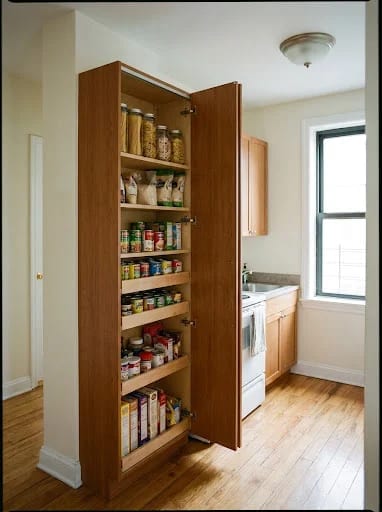
Tall narrow freestanding pantry cabinet providing organized food storage in an apartment kitchen
In This Guide
A kitchen without a pantry can feel manageable until groceries start arriving.
Then suddenly there are:
cereal boxes on top of the refrigerator cans pushed behind dishes snacks taking over the counter pasta scattered between several cabinets baking supplies wherever they happen to fit duplicate groceries you forgot you already owned
The problem is not necessarily that the kitchen is too small.
It is that there is no dedicated food-storage system.
That matters because pantry storage works differently from ordinary kitchen storage.
You need to be able to:
see what you have group similar foods together reach everyday items quickly keep backup groceries separate from current-use groceries avoid blocking cookware and dishes
If your apartment does not include a pantry, the goal is not to recreate a giant walk-in version.
It is to build a smaller pantry function using the space you actually have.
Here are nine ways to do it.
1. The Tall Narrow Pantry Cabinet
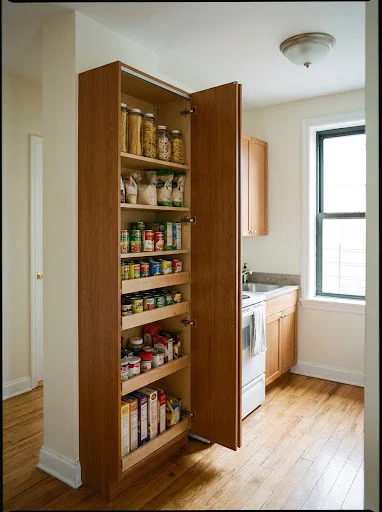
If you have one unused strip of wall, a tall narrow cabinet can be the closest substitute for a real pantry.
The key is choosing something with a relatively small footprint that uses height efficiently.
What it can hold
A dedicated pantry cabinet can store:
pasta rice canned foods cereal baking ingredients snacks oils unopened condiments extra paper goods Why it works
Instead of spreading food across five different cabinets, you create one central pantry zone.
That makes it easier to see:
what is running low what you already have what should be used first
Choose depth carefully
Deeper is not always better.
Very deep shelves can turn into dark storage caves where items disappear behind one another.
A moderately shallow cabinet often works better because most pantry goods do not need the same depth as large cookware.
Use shelf height intentionally
Do not space every shelf equally.
Create:
Short shelves
For:
cans jars spices
Medium shelves
For:
pasta rice baking supplies
Tall shelf
For:
cereal bottles tall containers
Keep everyday items at easy reach
Use the middle shelves for foods you access most often.
Reserve the highest shelves for:
backup goods rarely used baking supplies bulk extras What makes this fail
A cabinet that is technically narrow but extremely deep can still overwhelm a small kitchen.
And a tall cabinet placed in a walkway can make circulation worse.
Measure:
cabinet depth door swing walking clearance
before buying.
2. The Rolling Pantry Cart
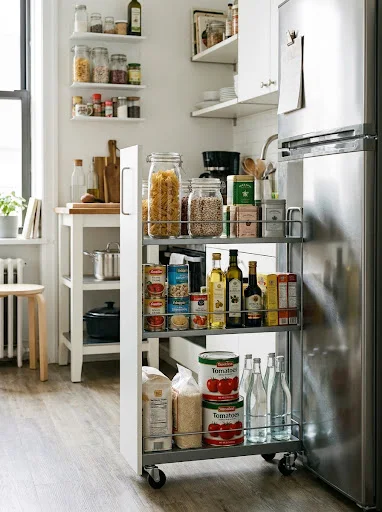
A rolling cart can work surprisingly well as a miniature pantry when floor space is limited but you have an awkward gap.
Good locations include:
beside refrigerator beside base cabinets near dining area between kitchen and wall beside a freestanding cabinet
Why wheels matter
The cart does not need to remain fully exposed.
It can sit in a narrow location and pull out when you need access.
That makes it useful for:
oils cans jars snacks tea coffee baking ingredients
Keep categories simple
A three-tier cart could be:
Top
Daily-use items.
Middle
Cooking ingredients.
Bottom
Backstock or heavier goods.
Avoid random overflow
The cart works best when it has one job:
pantry storage
If it also becomes:
cleaning cart paper-storage cart miscellaneous drawer substitute
it becomes difficult to maintain.
Check bottle height
Make sure the rails and shelf spacing accommodate the actual items you plan to store.
Do not overload the top
A rolling cart needs a reasonably balanced load.
Keep heavier items lower.
3. The One-Cabinet Pantry
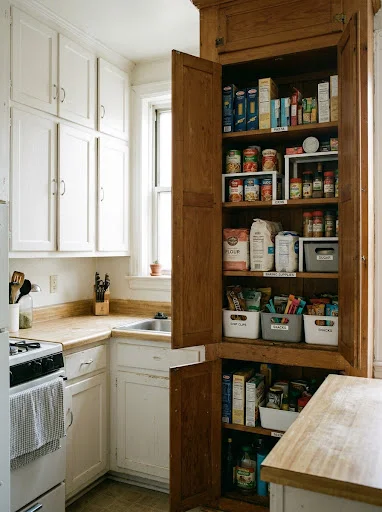
Sometimes the best pantry alternative is already in the kitchen.
Choose one existing cabinet and turn it entirely into food storage.
This is much more effective than scattering groceries wherever there is an empty shelf.
Pick the right cabinet
Ideally choose one that is:
easy to reach away from major heat sources large enough for several food categories not essential for cookware
Remove non-pantry items
If possible, move:
mixing bowls dishes appliances mugs
elsewhere.
The goal is to give the cabinet a clear function.
Use shelf risers
A tall shelf containing one layer of short cans wastes vertical space.
A shelf riser can create another usable level.
Use bins by category
You might have:
breakfast snacks baking pasta sauces
But avoid creating twenty tiny categories.
The system should make groceries easier to put away, not slower.
Deep cabinet?
If the cabinet is deep, use pull-forward bins or trays.
That allows you to access items from the back without unloading everything in front.
Why this option is excellent for renters
It requires no new furniture.
You simply reorganize what already exists.
4. The Freestanding Bookcase Pantry
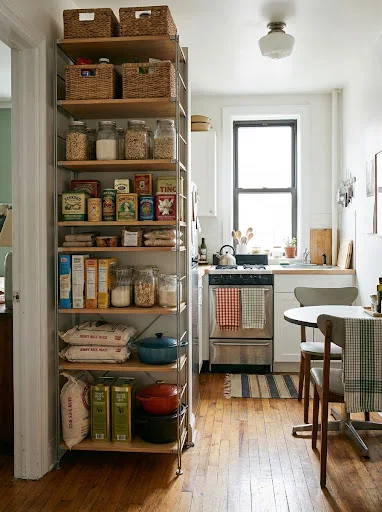
A simple freestanding shelf or bookcase can become pantry storage if the kitchen lacks cabinetry but has an available wall.
This works particularly well in:
studio apartments open-plan kitchens small dining areas kitchen-adjacent walls
The challenge is visual clutter
Food packaging introduces a lot of:
colors logos shapes sizes
An open pantry can become visually chaotic very quickly.
Use baskets strategically
You do not need to decant everything.
Instead, use a few baskets for visually messy categories such as:
snacks packets baking supplies backup goods
Then keep attractive or uniform items visible.
Put heavy items low
Lower shelves are better for:
cans bottles flour bulk goods
Upper shelves can hold:
cereal lightweight baskets paper products
Consider a curtain only if it makes sense
A lightweight curtain can visually hide open pantry storage, but do not add one automatically.
In some apartments, a tidy shelf looks cleaner than a makeshift curtain.
Keep the shelf shallow
A very deep bookcase will consume more floor space than necessary.
5. The Dining-Room Pantry Cabinet
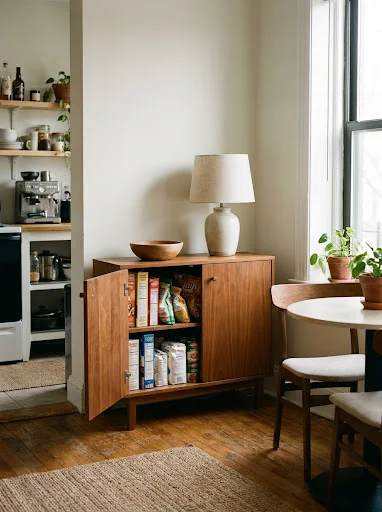
If the kitchen is completely out of storage space, stop insisting that every grocery item must stay inside it.
A nearby dining area can handle pantry storage extremely well.
Use a freestanding:
sideboard credenza cabinet hutch
as a secondary pantry.
What belongs here
This is ideal for:
backstock
snacks cereal baking goods unopened beverages table linens occasional serving items
Why this works
The kitchen keeps its most valuable cabinets available for:
cookware dishes daily ingredients
while less frequently used groceries move a few steps away.
Closed doors make a difference
A dining-room cabinet with solid doors can hide brightly colored food packaging.
That allows the dining area to still feel like a room rather than a supermarket aisle.
Use the top carefully
Do not turn the top into another food-storage surface.
Keep it mostly clear or use it for:
lamp bowl one decorative object
The actual pantry should remain inside.
Think about distance
This works best when the dining cabinet is close enough that retrieving ingredients does not become annoying.
A few steps away is fine.
Across the apartment is not.
6. The Fridge-Side Pantry Zone
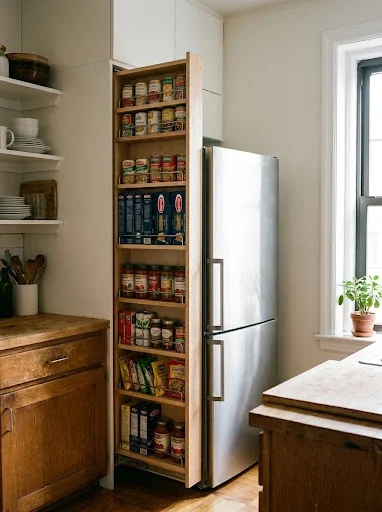
The side of a refrigerator can create an unexpectedly useful pantry zone.
There are two main approaches.
Option A: Narrow gap storage
If there is enough space between the refrigerator and wall or cabinet, use:
slim rolling cart narrow freestanding shelf
for pantry staples.
Option B: Refrigerator-side organizer
Depending on the appliance and product, lightweight magnetic storage may work for small items.
Examples:
spice tins tea lightweight packets
But keep ventilation requirements and manufacturer guidance in mind.
Do not block refrigerator airflow
This is important.
A pantry solution should never interfere with:
appliance ventilation required side clearance door movement access to controls
Check the refrigerator manufacturer’s spacing requirements before filling gaps around it.
Use this for narrow items
The fridge-side zone is particularly useful for:
canned foods pasta bottles packets
rather than bulky boxes.
Why it works
You are turning a narrow leftover strip into usable storage.
But only if the gap was genuinely unused.
7. The Deep-Drawer Pantry
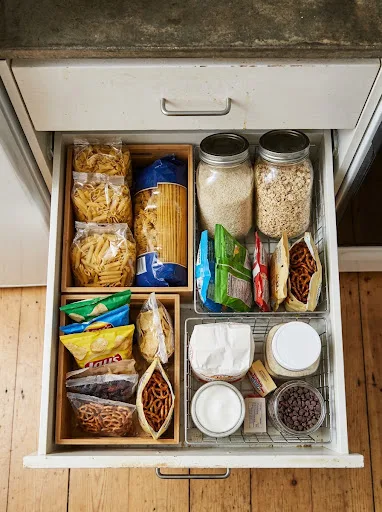
If you have large kitchen drawers but no pantry, one drawer can become incredibly useful for dry food.
This works especially well for:
pasta rice snacks tea packets baking ingredients
Why drawers can outperform shelves
With a shelf, items behind the front row can disappear.
With a drawer, the whole contents come toward you.
That gives you a top-down view.
Use upright containers where practical
For foods like:
pasta rice oats
upright containers can make the contents easier to identify.
But do not buy containers just for aesthetics.
Original packaging is perfectly fine if it fits and stays organized.
Divide the drawer
Use simple dividers or bins to prevent packets from collapsing into one another.
Potential zones:
breakfast baking grains snacks
Watch drawer weight
Cans, flour and jars become heavy quickly.
Use the drawer within its designed weight capacity.
Lighter dry goods are usually a better fit than loading it entirely with canned food.
8. The Door-Back Pantry System
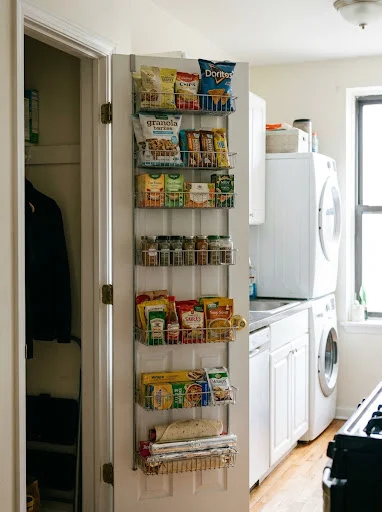
A door can provide shallow pantry storage without adding floor space.
Possible locations include:
kitchen door utility closet door suitable closet door near kitchen
Use an over-the-door rack or organizer designed for the door.
Best foods for shallow storage
Think:
seasoning packets snacks wraps small jars lightweight cans where appropriate tea reusable bags
Why shallow storage is useful
The items are only one layer deep.
You can see almost everything immediately.
That helps prevent forgotten groceries.
Check door operation
The organizer must not stop the door from:
closing latching opening fully
Measure the clearance before purchasing.
Avoid extreme weight
An apartment door is not a pantry wall.
Keep the load reasonable and follow the organizer manufacturer’s limits.
Visual tip
If the pantry faces the room when the door is open, use:
matching bins restrained categories
to reduce visual noise.
9. The One-Basket Backstock Rule
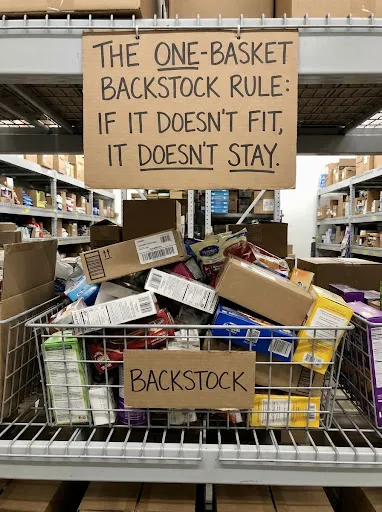
Sometimes the pantry problem is not where everyday food goes.
It is the backups.
You buy:
another bag of rice extra pasta spare cereal duplicate sauces
because they were on sale.
Soon the cabinets are overflowing.
The solution can be surprisingly simple:
Create one designated backstock basket or bin.
What goes inside
Only unopened extras.
For example:
second pasta box spare coffee extra snacks backup canned goods
Why one container matters
It creates a physical limit.
When the basket is full, stop buying backups until some are used.
Where to place it
Good locations include:
top cabinet shelf dining-room cabinet under a shelf pantry cabinet high closet shelf nearby
Check the basket before shopping
Make it part of your grocery routine.
That reduces duplicate purchases.
Do not use several backstock zones
If backup food lives in:
kitchen hall closet dining cabinet bedroom
you are likely to forget what you have.
One zone is easier.
Start by Deciding What Your Pantry Actually Needs to Hold
Before buying storage, take everything you consider “pantry food” and group it.
Typical categories might include:
breakfast pasta and grains canned foods snacks baking sauces and condiments tea and coffee backup groceries
Then look at the quantity.
You may discover that you do not need a giant pantry.
You simply need:
one cabinet one cart one backstock zone
Pantry Storage vs Kitchen Storage
They are not exactly the same.
Pantry storage
Usually holds:
shelf-stable foods backups ingredients snacks
Kitchen storage
Also has to accommodate:
pots pans dishes appliances utensils cleaning products
The mistake is forcing pantry food into every tiny empty spot between these categories.
Giving food one clear zone makes the entire kitchen easier to organize.
What Should Stay Closest to the Cooking Area?
Keep frequently used cooking staples within convenient reach.
Examples:
oils salt pepper everyday spices rice if used constantly pasta if cooked frequently
Less frequently used foods can live farther away.
For example:
backup cereal extra canned goods baking supplies bulk purchases
A pantry system should follow frequency of use, not just visual neatness.
How Deep Should Pantry Shelves Be?
More depth is not automatically more useful.
Very deep pantry shelves often create:
front row + forgotten back row.
If you already have deep shelves, use:
bins trays pull-forward baskets shelf risers
so the back remains accessible.
For a new freestanding pantry, modest shelf depth can actually be easier to maintain.
Open Pantry vs Closed Pantry
Open storage
Advantages:
easy access easier to see inventory visually lighter furniture
Disadvantages:
packaging creates clutter requires more maintenance
Closed storage
Advantages:
hides visual noise makes adjacent living areas calmer easier to mix pantry storage with dining furniture
Disadvantages:
easier to forget what’s inside
For open-plan apartments, I usually prefer more closed storage for pantry goods.
Do You Need Matching Pantry Containers?
No.
Matching containers can look beautiful, but they are not required for a functional pantry.
Containers are most useful when:
packaging is difficult to reseal the ingredient is purchased in bulk shape makes storage inefficient you need airtight protection
Do not decant every grocery item purely because Pinterest pantries do it.
That creates:
extra work extra products additional cleaning
Use containers selectively.
A Better Way to Organize Snacks
Snacks tend to create clutter because packaging varies so much.
Create one:
basket drawer shelf section
for snacks.
Do not distribute them across several locations.
If children use the kitchen, place appropriate snacks where they can be accessed safely and reasonably.
What About Canned Foods?
Cans are compact but heavy.
Keep them on:
sturdy shelves lower cabinet areas appropriately rated racks
Avoid stacking them dangerously high.
Shelf risers can help you see cans in the back without creating unstable towers.
Where Should Baking Supplies Go?
If you bake often, keep them together.
Possible baking zone:
flour sugar baking powder baking soda chocolate chips extracts decorating supplies
If you bake only occasionally, these items can live on a higher shelf instead of occupying prime pantry space.
Pantry Storage in a Studio Apartment
In a studio, pantry furniture is part of the living space visually.
That means the best solutions are usually:
closed cabinet compact sideboard restrained open shelf rolling cart tucked beside kitchen
Avoid creating a huge wall of exposed groceries beside the sofa if you can prevent it.
The room should still feel like a home.
Pantry Storage in a Rental
For renters, prioritize solutions that can leave with you.
Good choices include:
freestanding pantry cabinet cart sideboard over-door organizer drawer dividers baskets
These are generally more portable than custom shelving.
And always follow lease rules for any wall attachment.
The “Grocery Landing Zone” Helps Too
If groceries arrive and immediately cover the counter, create a temporary landing spot.
That could simply be one clear section of:
counter dining table cart
Then unpack food directly into its assigned zones.
Do not allow grocery bags to remain scattered around the kitchen for days.
A good pantry system should make unpacking easy.
Prevent the Pantry From Taking Over the Apartment
A pantry alternative solves a problem only if it does not create another one.
Watch for:
cabinets blocking walkways carts sticking out doors unable to open food stored in several rooms excessive shelving counters becoming permanent food storage
Storage needs boundaries.
Common No-Pantry Kitchen Mistakes
Putting food wherever it fits
You lose track of inventory.
Buying a giant pantry cabinet
The kitchen may gain storage but lose circulation.
Using too many clear containers
Organization becomes a maintenance project.
Filling the top of the refrigerator
It quickly becomes visual clutter and may conflict with appliance ventilation requirements depending on the refrigerator.
Buying bulk food without storage
A small apartment cannot always benefit from the largest package.
Creating multiple backup zones
You forget what you own.
Ignoring shelf depth
Deep storage hides food.
A Simple No-Pantry Setup for a Very Small Apartment
If you need the simplest possible system, try this:
Existing cabinet
Everyday dry food.
Slim cart
Frequently used cooking ingredients and snacks.
One basket
Backstock.
That’s it.
You do not necessarily need a dedicated piece of furniture at all.
A More Complete Setup
If you have a little more room:
Tall narrow cabinet
Main pantry.
One kitchen drawer
Frequently used foods.
One backstock basket
Duplicates.
Dining sideboard
Occasional baking or bulk items.
This distributes storage by frequency instead of randomly.
Which Pantry Alternative Is Best for You?
Choose the Tall Narrow Cabinet if:
You have one free wall and need substantial food storage.
Choose the Rolling Cart if:
You have a narrow gap and want portable storage.
Choose the One-Cabinet Pantry if:
You want to avoid buying more furniture.
Choose the Bookcase Pantry if:
You have wall space but limited cabinetry.
Choose the Dining Cabinet if:
Your kitchen is full but an adjacent room has available storage.
Choose the Fridge-Side Zone if:
You have a genuinely usable narrow gap.
Choose the Deep-Drawer Pantry if:
You have large drawers but limited upper cabinets.
Choose the Door-Back Pantry if:
Floor space is especially tight.
Choose the Backstock Basket if:
Your real problem is duplicate groceries rather than everyday food.
Final Thoughts
A pantry is not a room.
It is a system for keeping food visible, accessible and grouped together.
Once you think about it that way, a small apartment has far more options.
Start with:
existing cabinet → drawer → door → narrow gap → nearby furniture
before adding a large new storage piece.
Keep everyday food easy to reach.
Keep backups together.
Avoid creating several hidden food zones.
And choose the solution that improves the kitchen without making the apartment harder to move through.
A small pantry alternative works best when you barely notice it is an alternative at all.