10 Small Laundry Room Organization Ideas for Apartment Laundry Closets
Discover 10 small laundry room organization ideas for apartment laundry closets, including slim carts, shelf storage, drying solutions, hampers and smart setups for stacked or compact machines.
In This Guide
Compact Laundry Organization System Guide
The One-Shelf Laundry Command Zone The Washer-Side Slim Cart The Vertical Basket Stack The Door-Back Laundry Station The Fold-Down Drying Zone The Detergent Decanting Shelf The Wall-Free Cleaning Tool Station The Laundry Hamper Parking Spot The Stacked-Machine Storage Strategy The Keep-the-Floor-Clear Rule
10 Small Laundry Room Organization Ideas for Apartment Laundry Closets
Apartment laundry spaces are rarely designed like the laundry rooms you see in magazines.
There may be no:
long countertop wall of cabinetry utility sink folding island huge linen closet
Sometimes the entire laundry area is simply:
washer + dryer + one shelf + two folding doors.
That does not mean it cannot work well.
The goal in a tiny laundry space is not to create more storage everywhere.
It is to organize the room around the actual laundry sequence:
dirty clothes → washing → drying → folding → putting away
while keeping the machines accessible.
That matters because an over-organized laundry closet can become harder to use than an under-organized one.
You still need access to:
machine doors detergent drawer dryer lint filter shutoff valves electrical connections venting appliance controls
Here are ten organization ideas that make compact apartment laundry spaces easier to use without turning every inch into storage.
1. The One-Shelf Laundry Command Zone
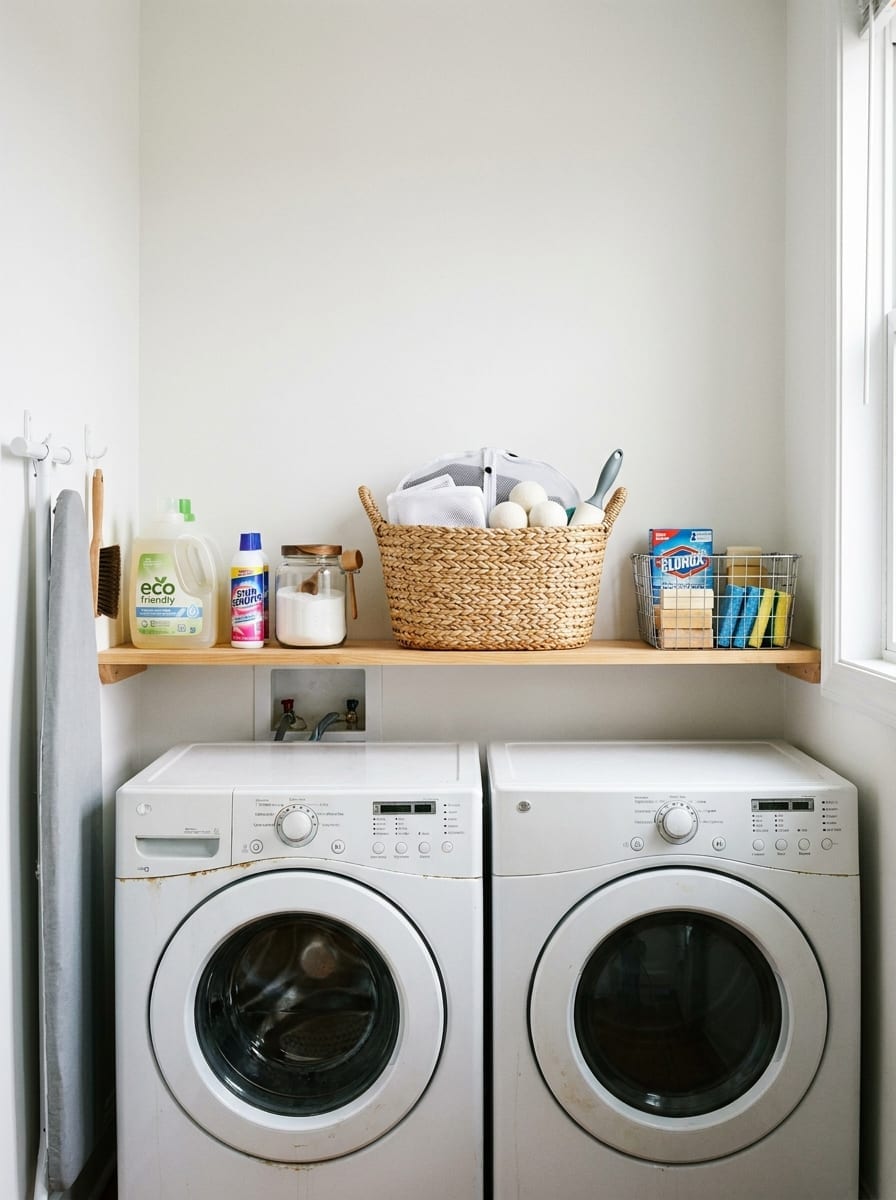
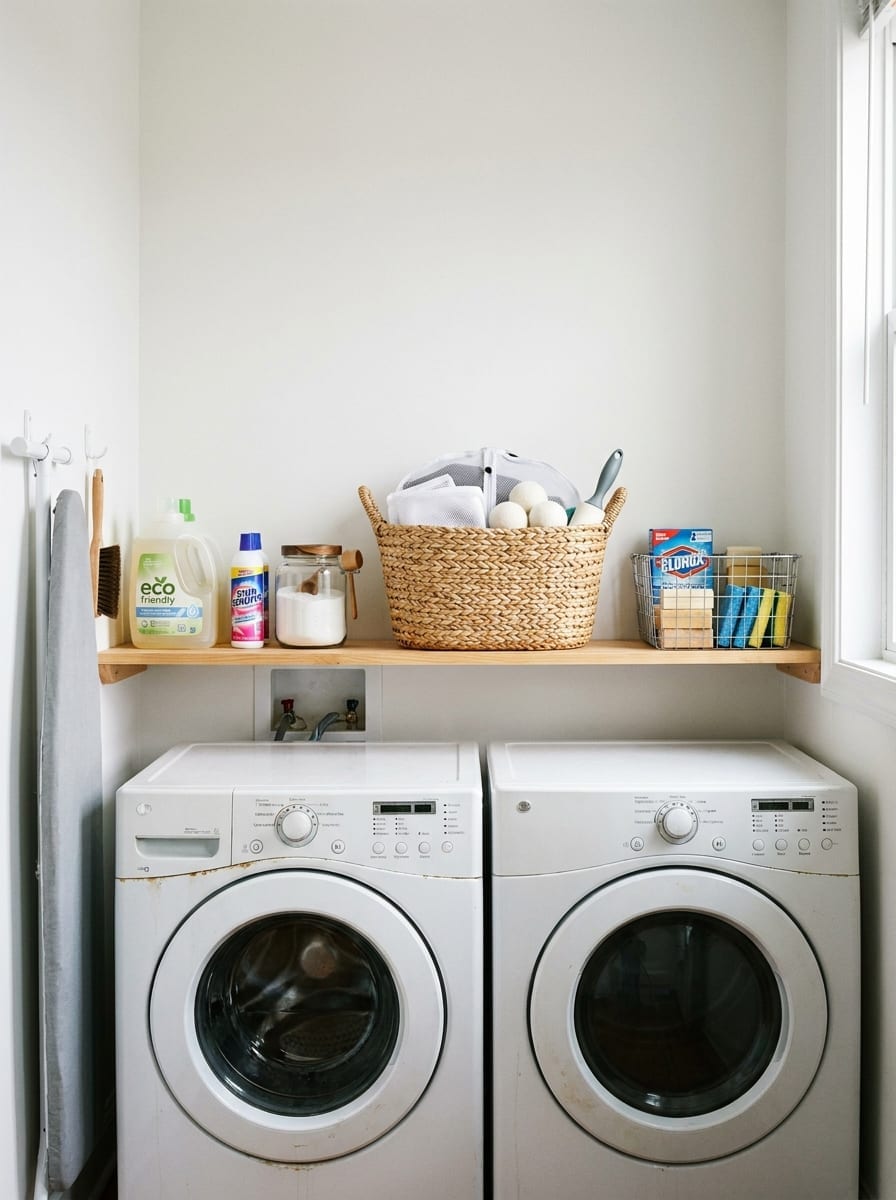
If your apartment laundry closet already has one shelf above the machines, start there.
You may not need another shelving system.
You may simply need the existing shelf to have a clearer job.
Divide it into three zones
Everyday laundry
Keep the products you use constantly here:
detergent stain remover dryer products if used laundry sanitizer if part of your routine
Occasional laundry
Use a basket for:
delicate-wash supplies mesh bags garment care specialty cleaners
Backstock
Keep only a limited amount of:
extra detergent replacement dryer products unopened supplies
Why this works
Everything needed to run a normal load stays within one arm’s reach.
You do not need to search through several cabinets every time you do laundry.
Avoid filling the entire shelf with tiny containers
You do not need separate jars for:
pods powder scent boosters clothespins dryer balls stain sticks random supplies
unless you actually use all of them.
Use fewer, larger functional zones.
Shelf depth matters
Deep shelves can hide products behind the front row.
If your shelf is deep, use:
shallow baskets handled bins trays
that pull forward.
2. The Washer-Side Slim Cart
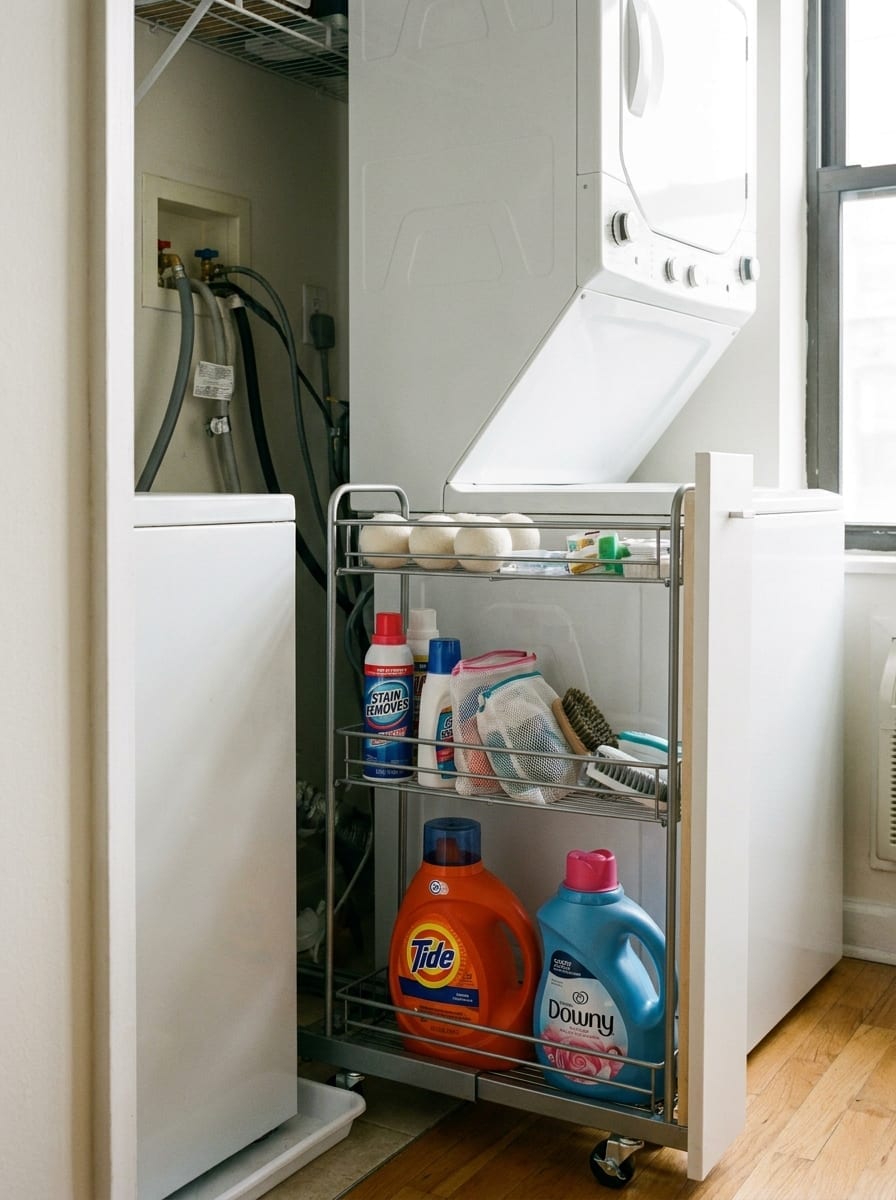
A small gap beside a washer or dryer can sometimes hold more than you expect.
A slim rolling cart can turn that narrow space into storage for frequently used supplies.
Best things to store
Use it for:
detergent stain remover dryer sheets mesh laundry bags clothespins cleaning cloths
Why a cart works well
Because it can pull out.
You do not need to reach blindly into a deep side gap.
That is particularly useful when the laundry machines sit inside a closet.
Measure everything
Check:
actual gap width appliance movement hose locations vent placement baseboard projection
Do not wedge storage tightly against equipment that needs clearance.
Keep heavy products low
Large detergent bottles belong near the bottom.
Lightweight supplies can sit higher.
This makes the cart more stable and easier to move.
Do not block service access
If a technician needs to reach:
water valves dryer vent electrical connection
the cart should be easy to remove completely.
3. The Vertical Basket Stack
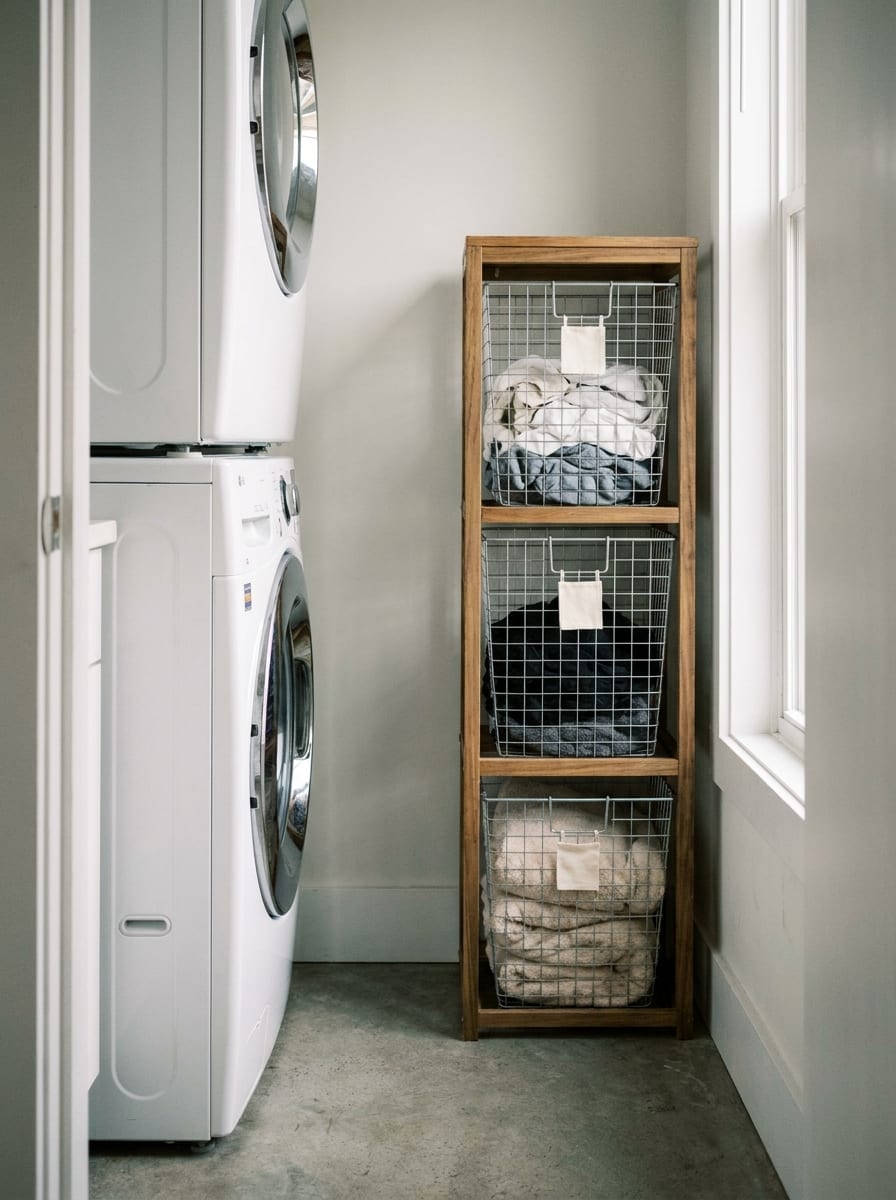
Some laundry closets have almost no horizontal storage but plenty of height.
A vertical basket system can work especially well when you need to separate laundry before washing.
Give each basket one purpose
For example:
lights darks towels
or:
wash now delicate linens
Use categories that actually match your routine.
Why vertical sorting helps
Three baskets placed side by side can consume an entire hallway or bedroom wall.
Stacking them vertically uses much less floor width.
Choose baskets that remain accessible
A beautiful stack is useless if you have to remove two baskets every time you need the bottom one.
Look for:
angled-front baskets pull-out bins independently removable baskets
Do not make the stack too tall
Laundry baskets become heavy.
You should not need to lift a loaded basket down from above your head.
Keep frequently used baskets at comfortable heights.
Keep airflow in mind
Do not store damp towels or wet clothing in airtight containers for long periods.
Laundry needs appropriate ventilation.
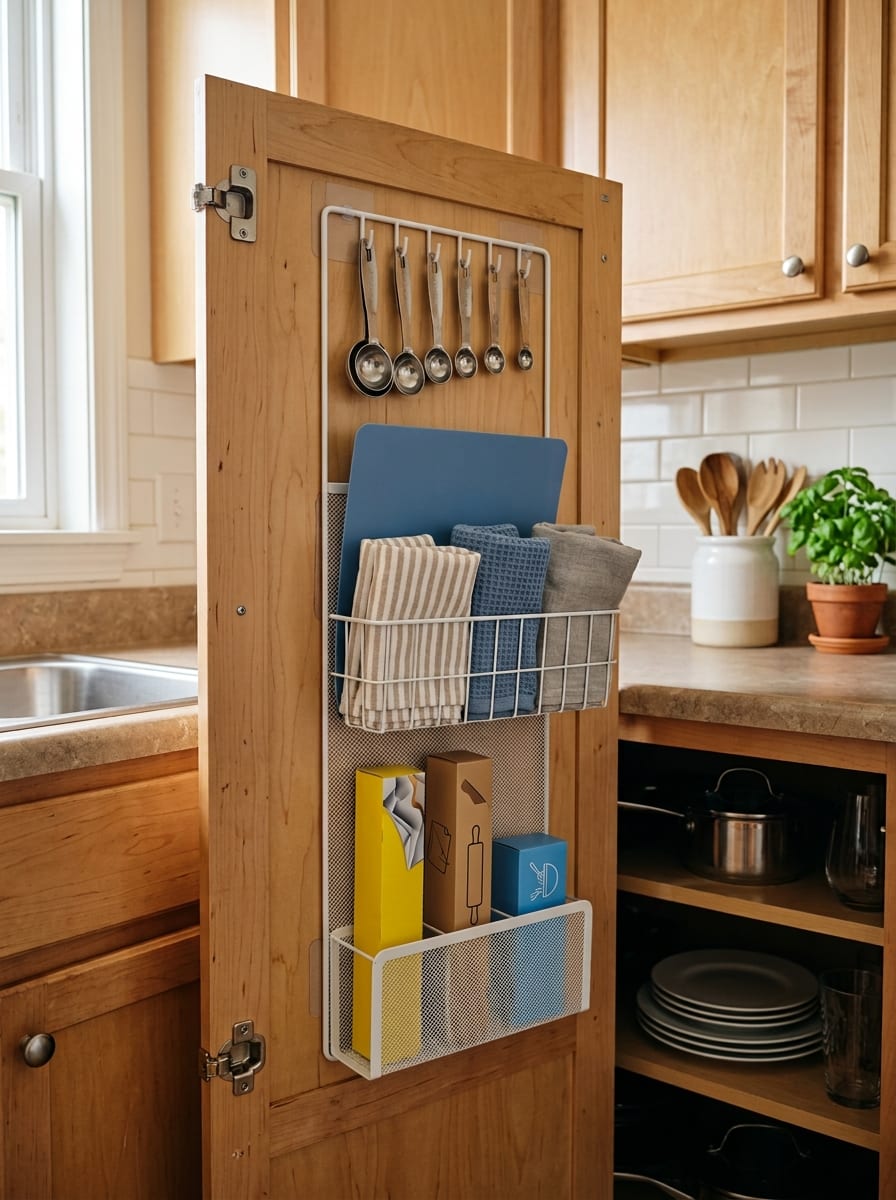
4. The Door-Back Laundry Station
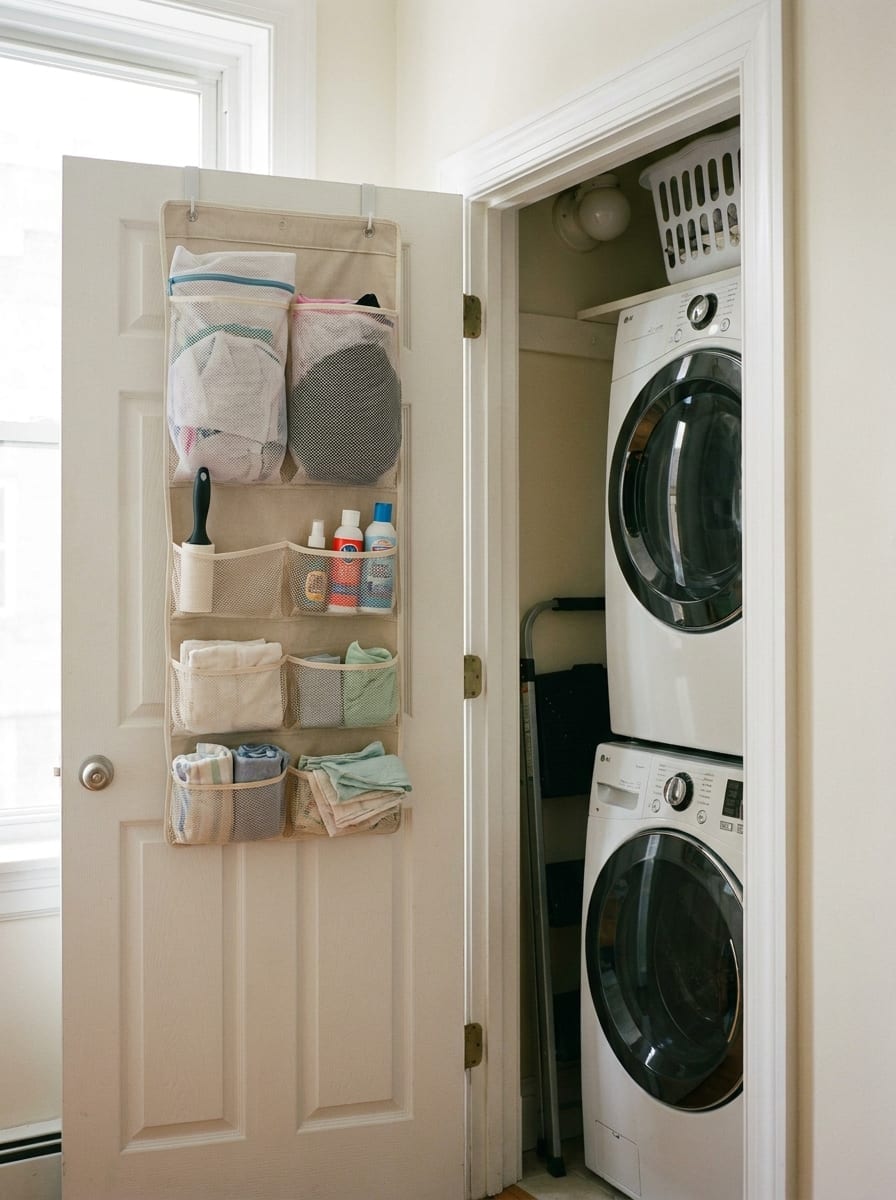
If the laundry area has a normal hinged door, the back can provide useful lightweight storage.
This can be particularly helpful when the closet itself is already full.
Possible uses
Store:
mesh laundry bags lint roller stain-removal tools ironing accessories lightweight cleaning cloths empty reusable laundry bags
Use shallow storage
The organizer must not collide with:
washer dryer shelf closet frame
when the door closes.
Over-door systems are often useful for renters
They avoid drilling into walls.
But check:
top-of-door clearance door thickness whether the door still closes properly
Keep heavy liquid detergent elsewhere
A door organizer is better for lightweight supplies.
Large detergent bottles make the door unnecessarily heavy and can swing awkwardly.
No suitable laundry door?
Do not force this idea.
Bi-fold or sliding closet doors may not accommodate over-door storage well.
Use another zone instead.
5. The Fold-Down Drying Zone
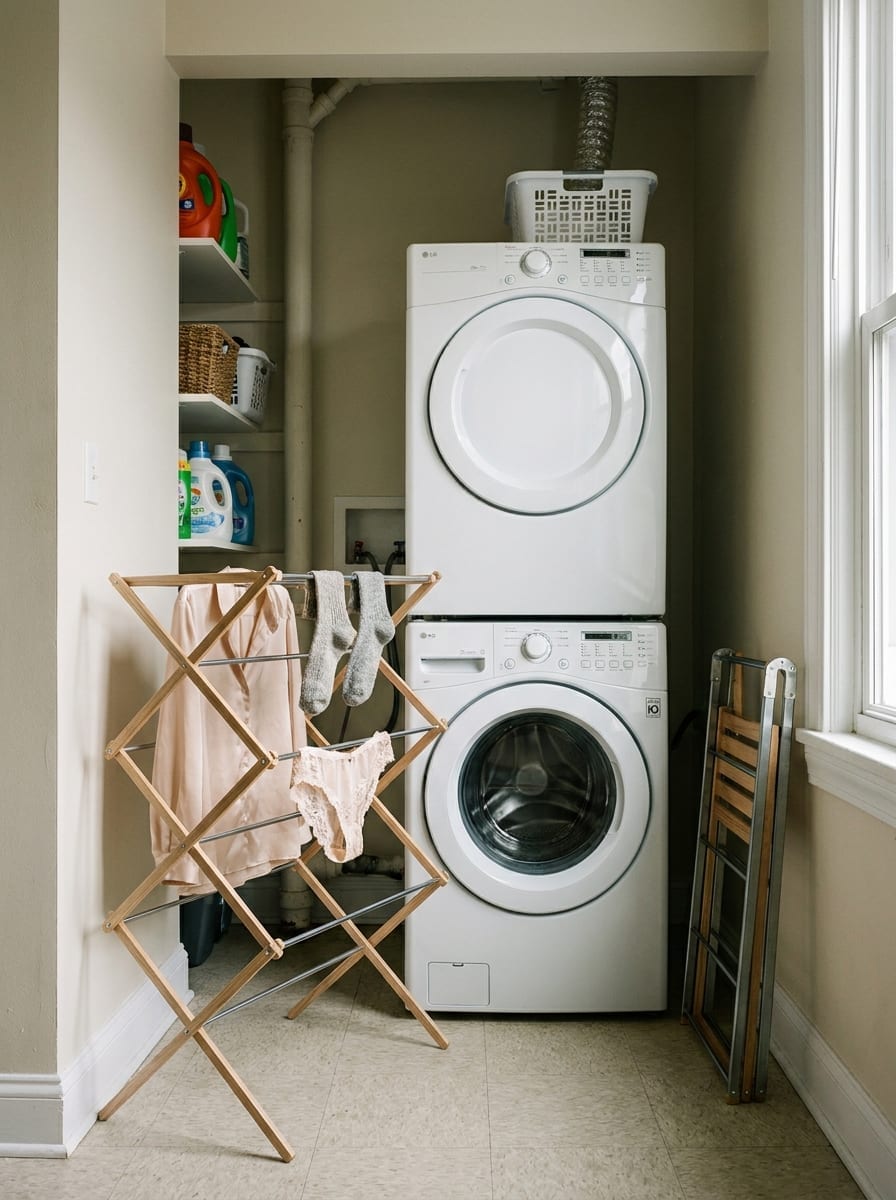
Air-drying clothes becomes awkward quickly in a small apartment.
A permanent floor drying rack may consume valuable living space.
The better solution is often a drying system that disappears when not needed.
Possible options
Depending on the property and lease:
fold-down drying rack retractable indoor clothesline compact freestanding folding rack stored beside machine tension-based drying bar where appropriate
Why this deserves planning
Wet clothes often end up:
over dining chairs on shower rods hanging from doors
because the laundry area has no dedicated drying plan.
Place it near the laundry process
The closer the drying zone is to the washer, the easier the workflow becomes.
You should ideally move wet clothes:
washer → drying zone
without carrying them around the entire apartment.
Watch ventilation
Drying laundry releases moisture.
Use adequate ventilation and do not crowd damp garments together.
Rental note
Permanent fold-down racks generally require secure mounting.
If drilling is not allowed, use:
freestanding folding rack appropriately rated tension solution
instead.
6. The Detergent Decanting Shelf
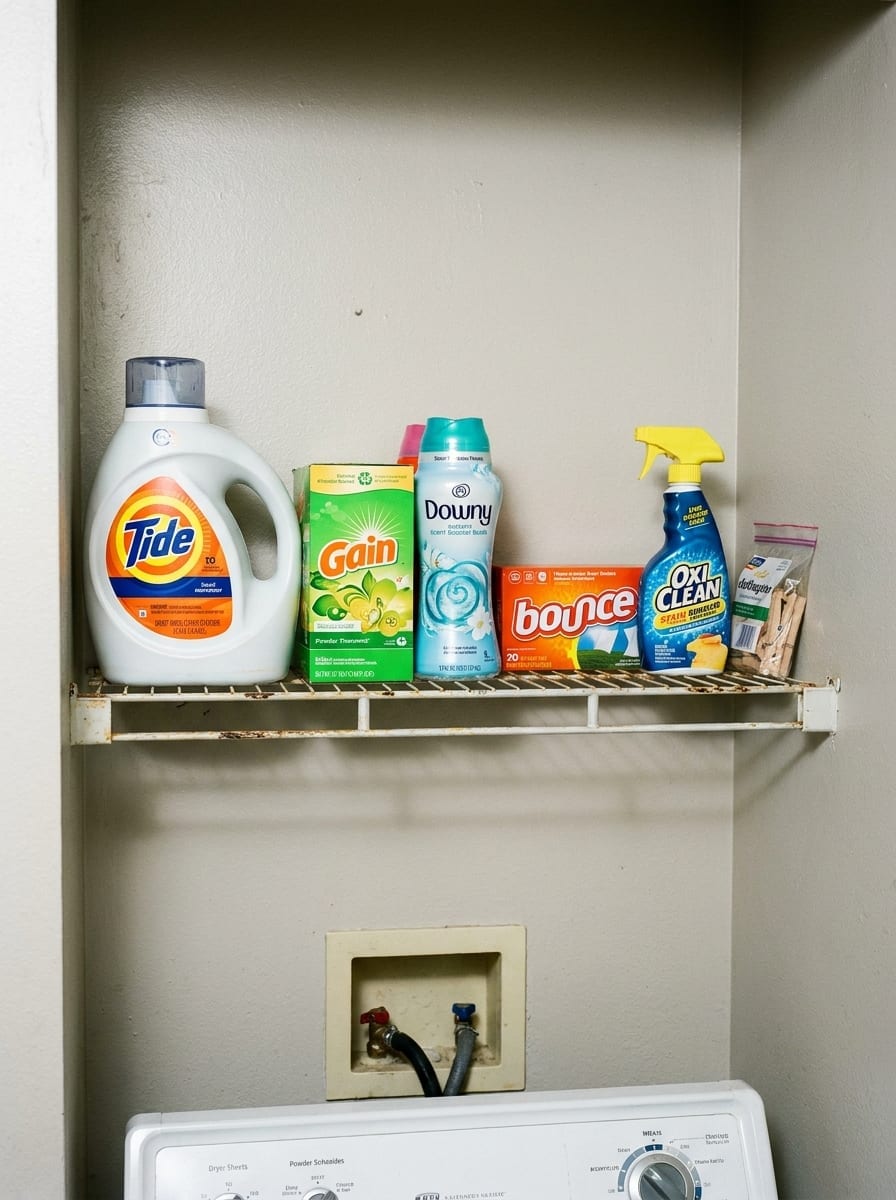
Decanting can save space when original packaging is genuinely bulky.
But this is one area where organization content can become unnecessarily decorative.
You do not need to transfer every laundry product into a matching jar.
When decanting makes sense
It may be useful when:
detergent packaging is oversized powder bags collapse on the shelf pods come in bulky containers you buy refill packs
When to keep original packaging
Keep it when the container already:
fits well pours easily includes important dosage information has safety instructions you need
Preserve product information
If you transfer a laundry product, retain important:
usage dosing safety
information.
This is especially important with concentrated products.
Use closed, appropriate containers
Products should remain safely contained and away from:
children pets food-storage containers
Never make laundry chemicals look like edible products.
The real purpose
Decanting should make storage more efficient, not merely more photogenic.
7. The Wall-Free Cleaning Tool Station
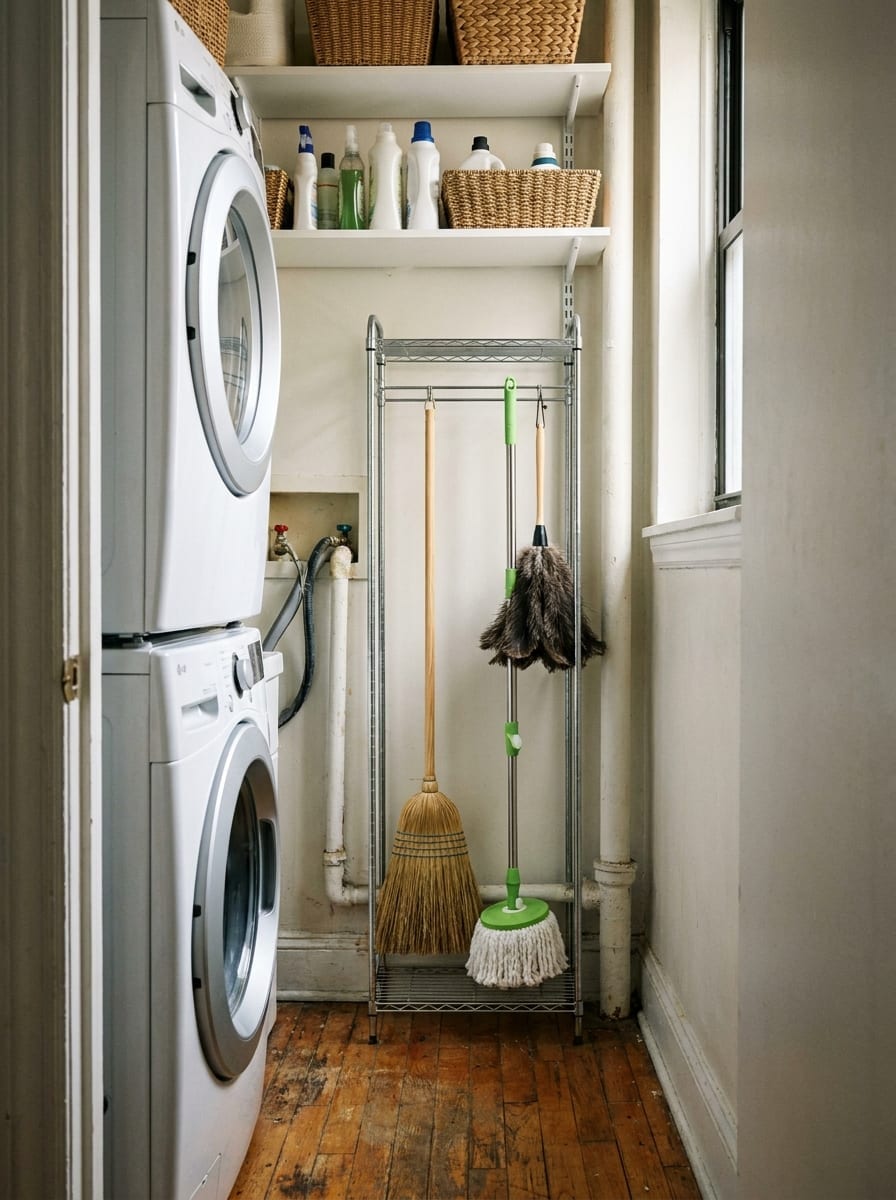
Laundry closets often become the default storage place for:
broom mop vacuum attachments
ironing board
The problem is that long tools fall sideways and block the machines.
If drilling is not an option
Consider a narrow freestanding tool organizer.
Look for one that can hold:
broom mop duster small vacuum tools
upright.
Why vertical tool storage matters
A broom leaning diagonally can take up far more useful width than its actual diameter.
Standing several tools upright in one controlled zone keeps them from spreading.
Do not store everything here
A laundry closet can easily become the apartment’s miscellaneous utility room.
Keep only tools that actually fit without interfering with laundry.
Vacuum storage
If a stick vacuum lives here, make sure:
charger use is safe airflow requirements are followed cords do not interfere with appliances
Ironing board
A compact folding board may be easier to store than a full-size one if ironing is infrequent.
8. The Laundry Hamper Parking Spot
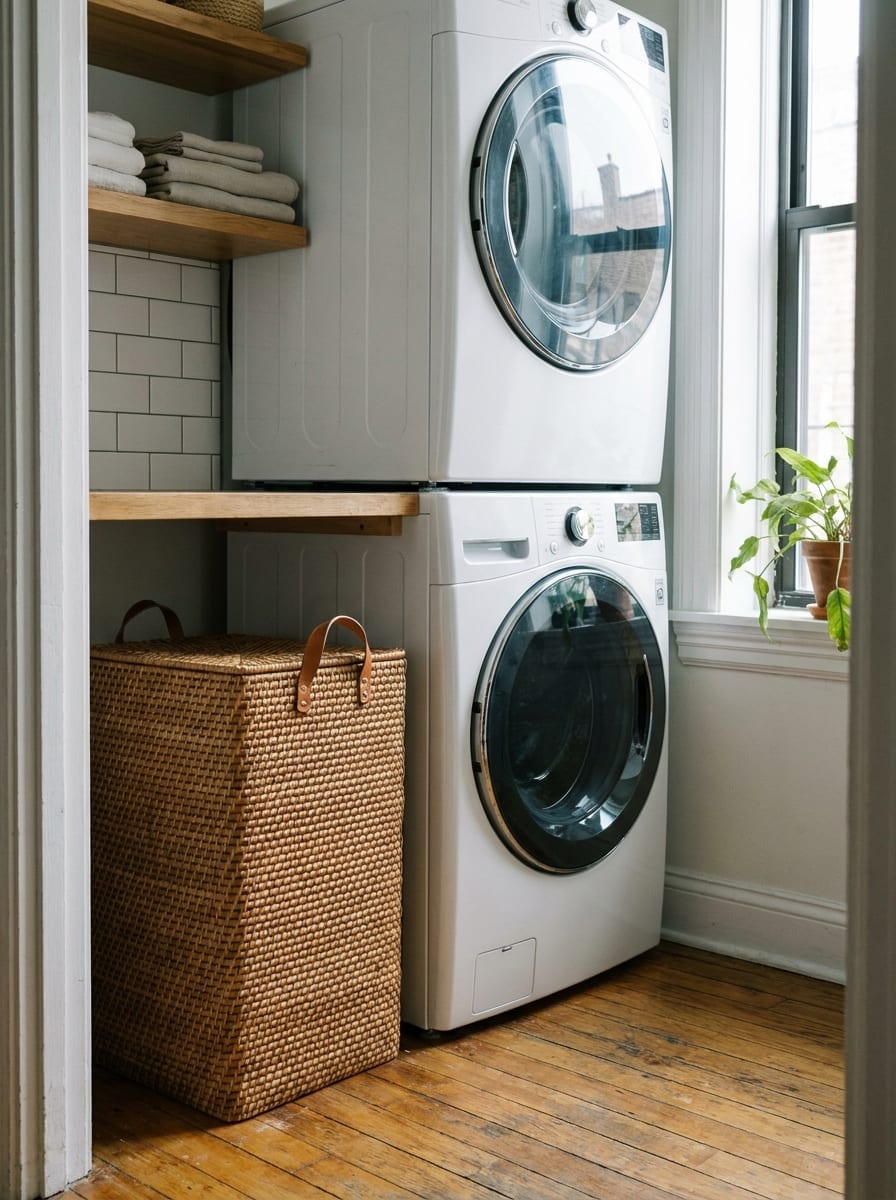
A hamper should not become furniture you constantly walk around.
In a small apartment, it needs a deliberate home.
Good locations
Depending on your layout:
beside washer inside nearby closet under an open shelf bedroom corner bathroom if ventilation and space allow
Do not automatically force it into the laundry closet
If the closet is too tight, the hamper may block:
washer door dryer door closet doors
It may work better just outside the laundry area.
Choose shape before capacity
A tall narrow hamper often works better in an apartment than a wide round one.
Look at the footprint first.
One hamper or sorter?
Choose based on your actual routine.
If you separate loads before wash day, a sorter can help.
If you wash everything from one basket and sort at the machine, three compartments may be unnecessary.
The best hamper is easy to carry
Remember that it still needs to move:
bedroom → laundry → bedroom
Comfortable handles matter.
9. The Stacked-Machine Storage Strategy
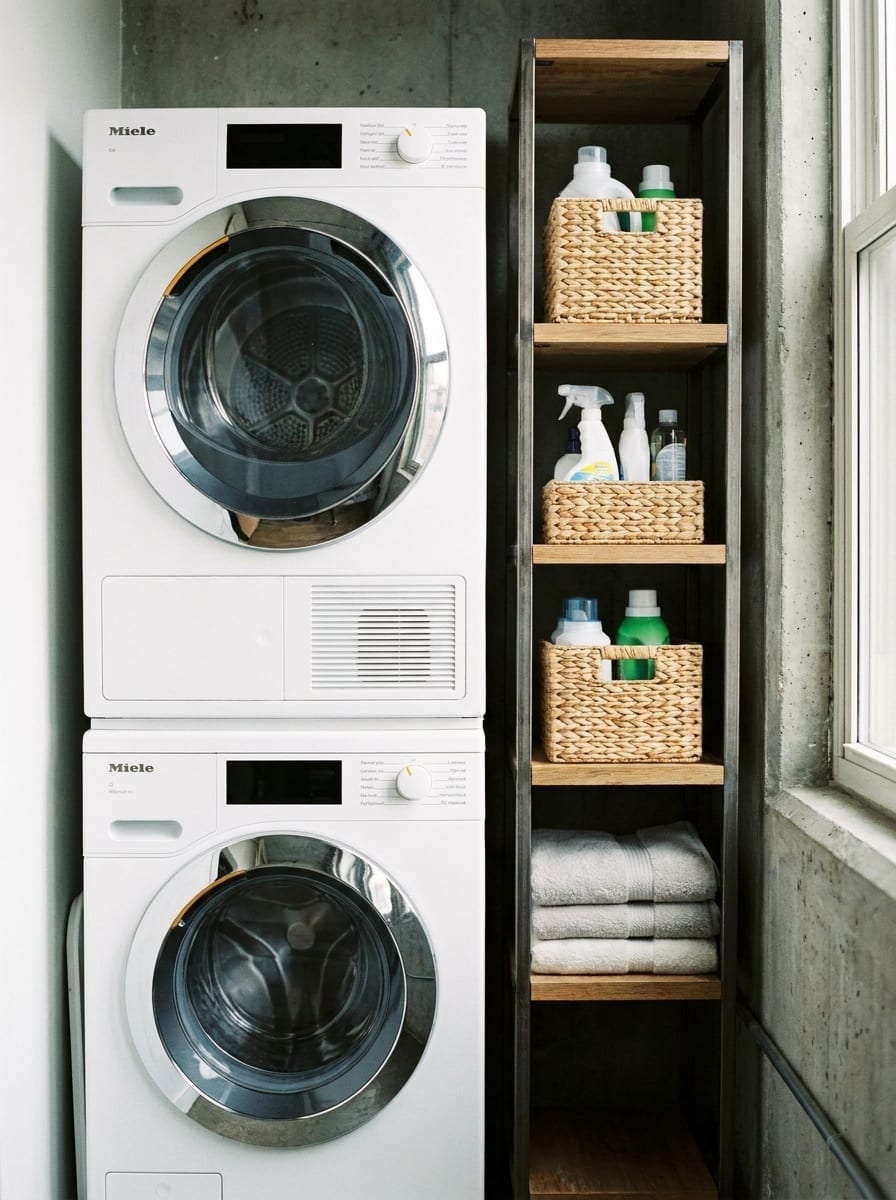
A stacked washer and dryer solve one floor-space problem but create another.
You lose the entire horizontal surface that side-by-side machines normally provide.
That means storage should move to the side, not automatically above.
Use the adjacent wall or gap
Potential solutions include:
narrow shelf unit slim cabinet rolling cart freestanding vertical organizer
Keep controls accessible
Some stacked machines place controls:
between units high on dryer at front edge
Do not let storage interfere with them.
Think about dryer access
The lint filter needs regular cleaning.
Do not place baskets or shelves where they make this inconvenient.
What about the space above?
If there is safe usable space above the stack, it may work for very lightweight occasional items.
But avoid creating storage that requires unsafe reaching or blocks ventilation.
Best approach
Keep daily laundry supplies approximately between:
waist and shoulder height
if possible.
That is the easiest working zone.
10. The Keep-the-Floor-Clear Rule
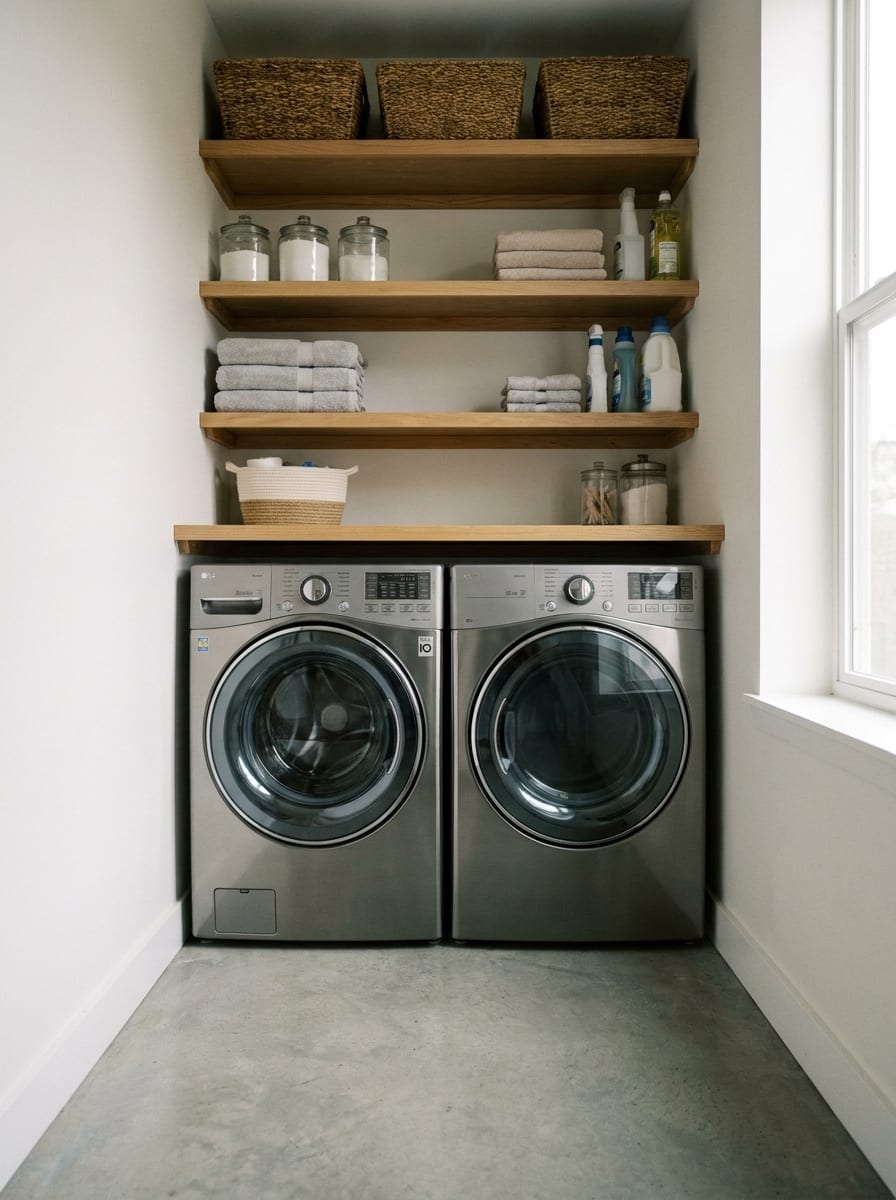
The final idea is not another organizer.
It is a boundary.
A tiny laundry area works better when the floor remains mostly empty.
Avoid permanent floor clutter
Do not leave:
detergent bottles laundry piles loose baskets cleaning supplies ironing equipment
on the floor around the machines.
Why this matters
The floor is needed for:
standing bending opening machines carrying baskets service access cleaning
A laundry closet can have excellent shelf storage and still feel unusable if everything eventually migrates downward.
Give every item a destination
Before keeping something in the laundry area, ask:
Where exactly does this live?
If the answer is:
“On the floor beside the washer”
it probably needs a better home.
Keep one temporary landing zone
It is fine to place a laundry basket on the floor while loading a machine.
The difference is that it leaves when the load does.
Start With the Type of Laundry Setup You Have
Before buying organizers, identify the actual machine configuration.
Side-by-side front loaders
You may have useful:
wall space above narrow side gaps machine-top surface if manufacturer guidance permits
Stacked machines
Prioritize:
side storage door storage nearby cabinet
Top-loading washer
This changes everything.
You must preserve enough open space above the washer for the lid.
A beautiful shelf installed too low can make the machine irritating or impossible to use.
Laundry closet behind doors
Measure:
closet depth machine projection door clearance
Some machines sit slightly beyond the closet frame.
Do Not Build Storage Around the Machines Before Checking Clearance
Washers and dryers need appropriate installation space.
Storage should not interfere with:
hoses water shutoff dryer vent plug airflow manufacturer-required clearance
If you are unsure, follow the appliance installation instructions or have the setup checked by a qualified professional.
Never pack storage tightly around an appliance simply because the gap looks unused.
How to Organize a Laundry Closet With a Top-Loading Washer
Top loaders require a different strategy because the lid needs vertical room.
Prioritize:
high shelf side cart door organizer narrow side storage
Avoid:
low floating shelf directly over washer hanging baskets in lid path storage suspended too close above machine
Open the washer completely before measuring for anything.
How to Organize a Laundry Closet With Front Loaders
Front-loading machines give you more flexibility above them.
Possible options include:
shelf countertop where appropriate baskets wall storage
But front access must stay clear.
Measure how far the machine doors project when fully open.
Do not position:
hamper cart shelving leg
in that arc.
Should You Put a Countertop Over the Washer and Dryer?
A countertop can create an excellent folding surface over side-by-side front loaders.
But this is not automatically a simple renter project.
Consider:
appliance vibration manufacturer’s clearance requirements access for maintenance wall attachment machine height whether machines are yours or landlord-owned
For renters, a removable or freestanding setup may be preferable if appropriate.
Do not place a permanent surface above a top-loading washer.
What Should Live in the Laundry Area?
Keep things closely related to the job.
Good candidates:
detergent stain remover laundry bags dryer accessories clothespins iron or steamer if used regularly cleaning cloths spare laundry supplies
Avoid turning the laundry closet into overflow storage for:
tools random household products luggage holiday decorations unused appliances
unless there is genuinely enough space.
How Much Detergent Backstock Should You Keep?
Small apartments do not necessarily benefit from buying laundry products in huge quantities.
Keep enough backstock to avoid running out without allowing bulk supplies to consume the entire shelf.
One simple rule:
One open product + one backup.
Then replenish after the backup becomes the active product.
This keeps inventory manageable.
How to Organize Laundry Products Safely
Laundry products should be stored according to their safety instructions.
Particularly with:
detergent pods bleach stain treatments concentrated products
Keep them:
properly closed in suitable containers away from children and pets separate from food stored according to manufacturer guidance
A pretty shelf is never more important than safe storage.
Should You Decant Laundry Detergent?
Only if it improves your actual storage.
Decanting makes sense if:
refill packaging is awkward you need a smaller daily-use container the product can be safely transferred
It does not make sense merely because matching jars look nicer.
Keep dosage and safety information available.
Where Should the Laundry Basket Go?
Ideally, the basket should not permanently block the machine.
Possible solutions:
Nearby bedroom
Dirty clothes stay where they are removed.
Bathroom
Works when space and ventilation permit.
Beside washer
Good if there is genuine clearance.
Vertical sorter
Useful when you separate loads in advance.
Your laundry routine should determine the location.
What About Folding Clothes?
A dedicated folding counter is nice, but not essential.
In a small apartment, folding may happen on:
bed dining table sofa temporary machine-top surface where suitable
Do not sacrifice valuable storage or circulation just to imitate a full laundry room.
The best system is the one you actually use consistently.
How to Handle Clothes That Need to Air-Dry
Create a specific plan.
Options include:
compact folding rack retractable clothesline where suitable shower-area drying dedicated hanging rail balcony drying where permitted
Do not wait until the first delicate load to decide where wet clothes will go.
What About an Ironing Board?
If ironing is rare, a full-size board may not deserve permanent apartment storage.
Consider:
compact tabletop ironing board folding board stored vertically heat-safe ironing mat where appropriate
If you iron frequently, make room for the tool you actually use.
Small-space organization should reflect real habits.
Make Laundry Supplies Easy to Return
A storage system fails when putting something away requires too much effort.
Everyday detergent should not require:
opening closet moving basket removing another bin pulling down a box finding detergent
Keep frequent items accessible.
Reserve harder-to-reach spots for backups.
A Simple Laundry Closet Setup
For a very small laundry closet, you may only need:
One shelf
Laundry products.
One basket
Specialty supplies.
One hamper
Dirty laundry.
One drying solution
For delicates.
That can be enough.
A More Complete Small Laundry Setup
If you have slightly more room:
Upper shelf
Daily products.
Slim cart
Extra supplies.
Vertical hamper
Sorting.
Door organizer
Lightweight accessories.
Folding drying rack
Stored when not in use.
Still relatively simple.
Common Small Laundry Room Organization Mistakes
Installing storage too close to appliances
Service access and ventilation come first.
Blocking a top-loading washer lid
Always test it fully open.
Keeping too much detergent
Backstock consumes space quickly.
Storing everything in tiny containers
More containers can create more work.
Leaving multiple baskets on the floor
Protect the working area around machines.
Forgetting dryer-lint access
This should remain easy every load.
Using every empty wall
Laundry closets still need breathing room.
Ignoring what happens after the dryer
Laundry organization includes:
folding hanging putting away
not just detergent storage.
The Best Order for Organizing a Tiny Laundry Area
Start here:
1. Protect appliance access
Nothing should interfere with using the machines.
2. Place daily laundry products
Make them easy to reach.
3. Decide where dirty laundry waits
Choose one hamper system.
4. Create an air-drying plan
If needed.
5. Add backstock storage
Only after everyday workflow works.
6. Deal with utility tools
Only if there is remaining space.
That order prevents storage from taking over the actual laundry process.
Which Organization Idea Fits Your Laundry Space?
Choose the One-Shelf System if:
You already have a shelf but it is chaotic.
Choose the Slim Cart if:
There is a safe narrow gap beside the machine.
Choose Vertical Baskets if:
Floor width is limited and you sort laundry in advance.
Choose Door-Back Storage if:
Your laundry area has a suitable hinged door.
Choose a Folding Drying Zone if:
Wet clothes regularly end up around the apartment.
Choose the Detergent Shelf if:
Bulky product packaging dominates your storage.
Choose the Cleaning Tool Station if:
Brooms and mops keep falling around the machines.
Choose a Narrow Hamper if:
Dirty clothes have no consistent home.
Choose Side Storage for Stacked Machines if:
There is no usable machine-top area.
Follow the Clear-Floor Rule if:
Your laundry space seems organized but still feels difficult to use.
Final Thoughts
A tiny apartment laundry area does not need to become a miniature version of a large suburban laundry room.
It needs to make one repetitive household task easier.
Start with the machines.
Then organize outward:
machine access → detergent → dirty laundry → drying → folding → backstock
Use height where it genuinely helps.
Use narrow gaps carefully.
Keep daily products accessible.
And protect the floor in front of the machines.
If the washer and dryer remain easy to use, the laundry space is already doing its most important job well.