9 Small Bathroom Counter Organization Ideas That Keep Everyday Essentials Under Control
Discover 9 small bathroom counter organization ideas that keep skincare, toothbrushes, hair tools and everyday essentials tidy without crowding a tiny vanity.
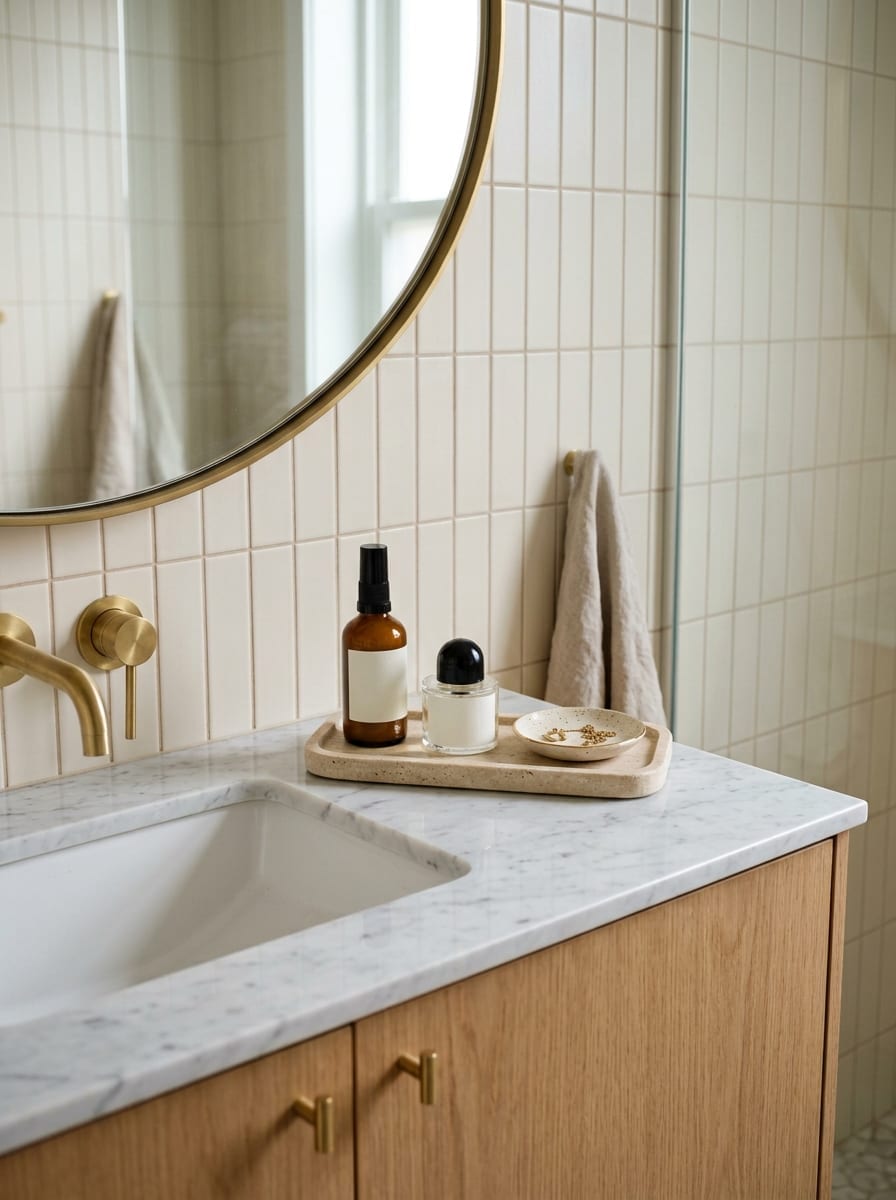
Small bathroom vanity organized with a stone tray holding daily essentials leaving counter space clear
In This Guide
A small bathroom counter does not need many things on it before it starts feeling crowded. A toothbrush. Soap. Skincare. Hair products. A brush. A few bottles. Suddenly the vanity looks full even though every item is technically useful. That is the difficult part. Bathroom counter clutter is often not made up of things you can simply throw away. It is made up of things you use every day. So the goal is not: remove everything from the bathroom.
It is: keep daily essentials easy to reach without letting every product live permanently in sight.
A useful small-bathroom counter usually needs only a few visible categories. Everything else should move into:
- drawers
- cabinets
- shallow wall storage
- one controlled container Here are nine ways to organize the counter without making your morning routine harder.
1. The Daily-Essentials Tray
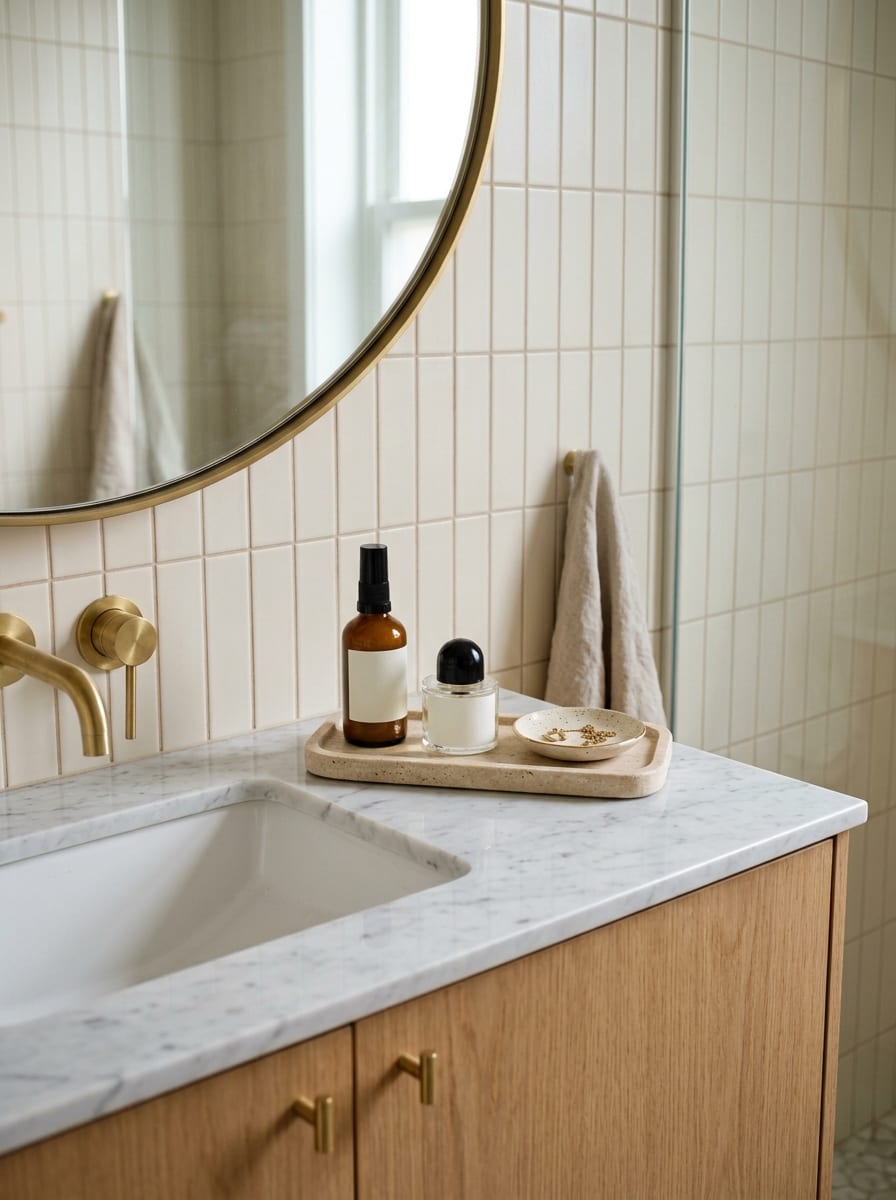
A tray is useful because it turns several small objects into one visual group. Instead of seeing:
- moisturizer
- perfume
- lip balm
- contact-lens case as four separate items, your eye sees one organized zone.
Keep the tray small
The tray should not cover half the vanity. It should create a boundary. A useful tray may hold:
- one moisturizer
- one fragrance
- one small daily product
- perhaps a jewelry dish
Only daily items belong here
Do not use the tray as permission to display:
- every skincare product
- backups
- samples
- rarely used cosmetics
Why grouping works
Small objects create visual noise when scattered. Grouping them makes the surface feel more intentional.
Leave space around the tray
The counter should still show a visible stretch of empty surface. That empty area matters.
2. The One-Container Toothbrush Zone
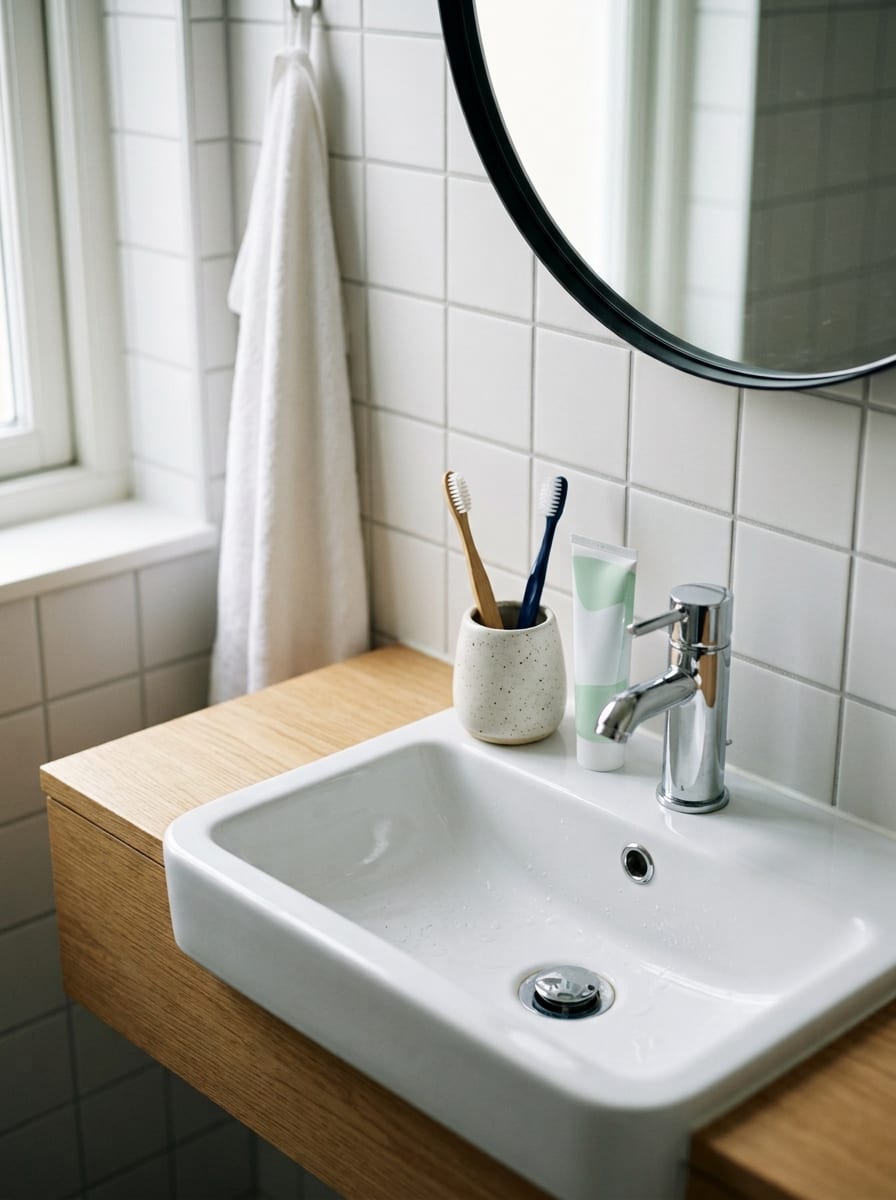
Toothbrushes, toothpaste, floss and dental accessories can quickly spread across the sink. Give the category one defined home.
Use one container
Choose a holder that fits the actual number of toothbrushes. Do not use:
- separate cup
- separate toothpaste stand
- separate floss basket unless the household genuinely needs them.
Keep toothpaste with the toothbrushes
If possible, store them together. That turns several loose objects into one functional station.
Keep backups elsewhere
The counter does not need:
- unopened toothpaste
- extra brush heads
- spare floss Those belong in:
- drawer
- cabinet
- deeper storage
Clean around it easily
Choose a setup that can be lifted quickly when wiping the counter. That matters in a bathroom.
3. The Vertical Counter Organizer
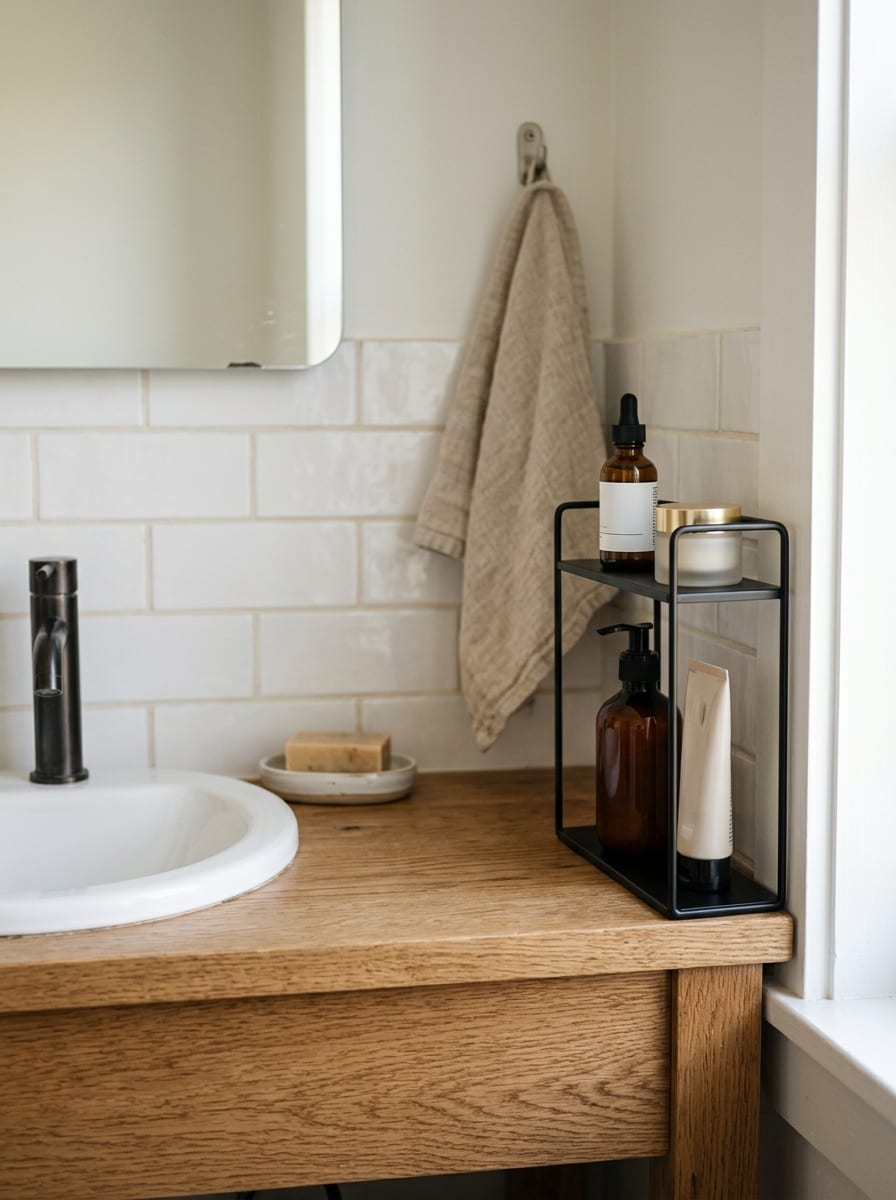
If a few daily products genuinely need to stay visible, a compact vertical organizer can use less counter width than several containers spread side by side.
Think upward, not outward
A small two-tier organizer can hold:
- skincare
- hair products
- grooming items within one narrow footprint.
Keep the height controlled
Too tall can:
- block mirror space
- make the counter feel crowded
- become difficult to clean around A modest two-tier design is often enough.
Put most-used items on the lower level
Keep:
- cleanser
- moisturizer within easy reach. Use the upper tier for:
- lighter
- less-used daily products.
Avoid filling every gap
The organizer should not become a miniature product shelf. Leave some breathing room.
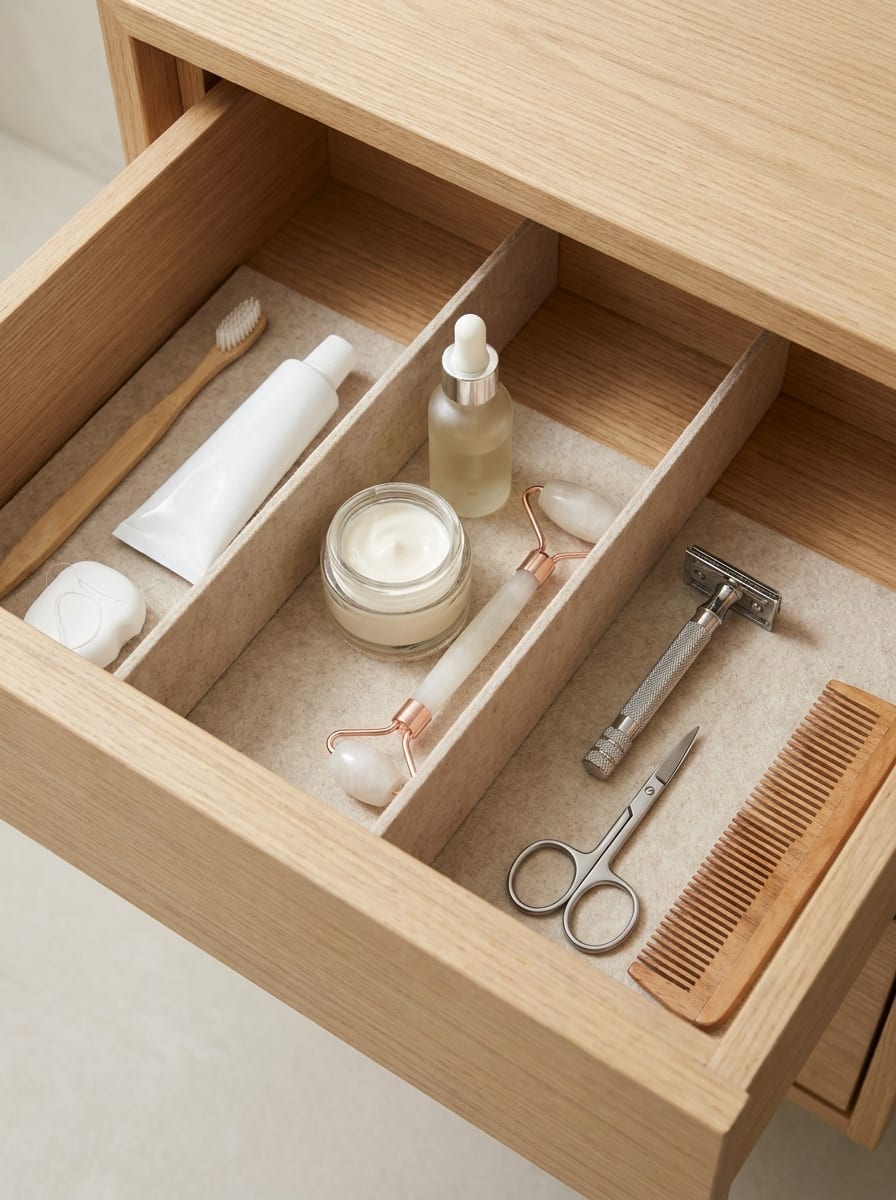
4. The Drawer-First Skincare Setup
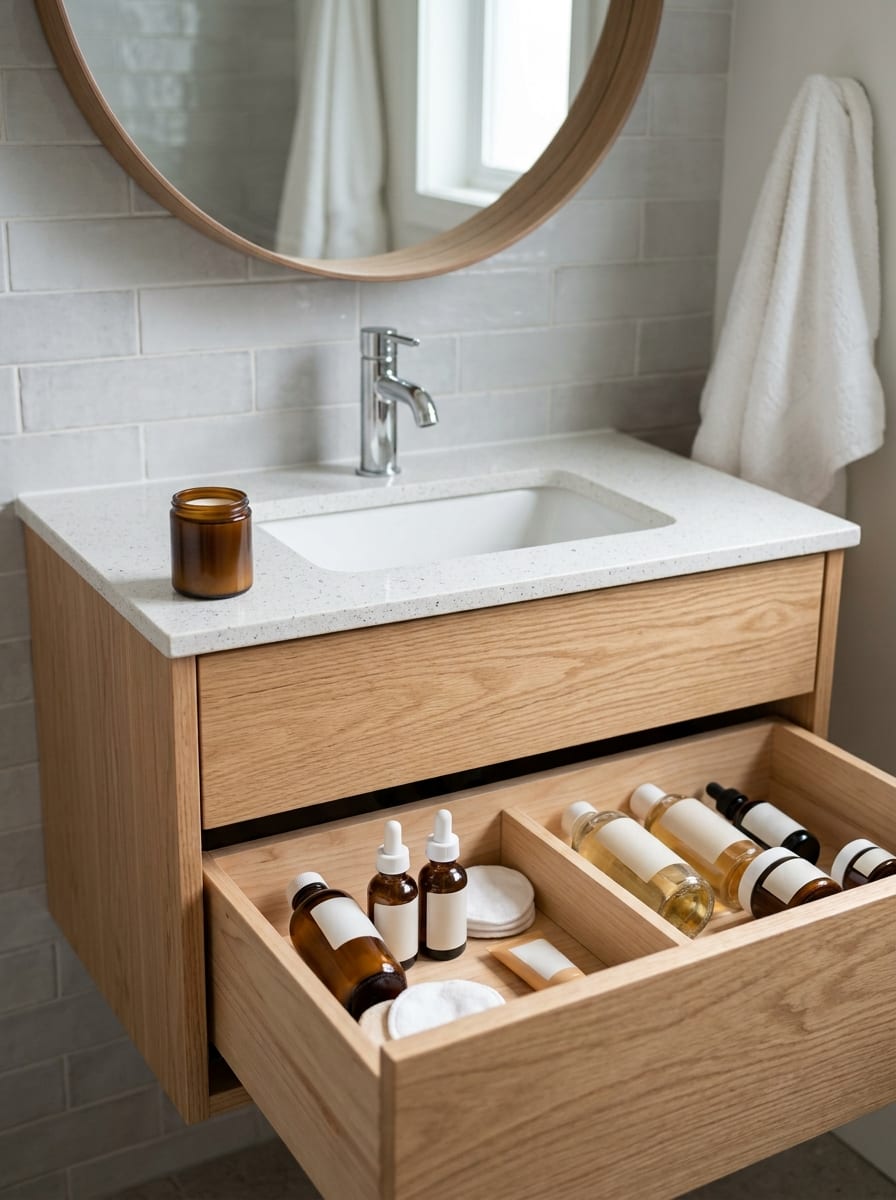
Skincare is one of the easiest categories to let take over a bathroom counter. A better approach is to treat the counter as a use surface, not permanent storage.
Keep only the current routine accessible
If you use three products every morning, those can stay:
- in one tray
- at front of drawer Everything else can sit deeper.
Organize the drawer by routine
Instead of categories like:
- creams
- serums
- masks try: Morning
- cleanser
- moisturizer
- sunscreen Evening
- treatment
- night cream That may match how you actually use the products.
Use shallow dividers if helpful
The goal is to stop bottles rolling around. You do not need a complicated organizer for every product.
Remove empty packaging
Bathrooms often collect:
- half-empty samples
- duplicate bottles
- finished containers A quick edit can free more room than buying another organizer.
5. The Hair-Tool Parking Spot
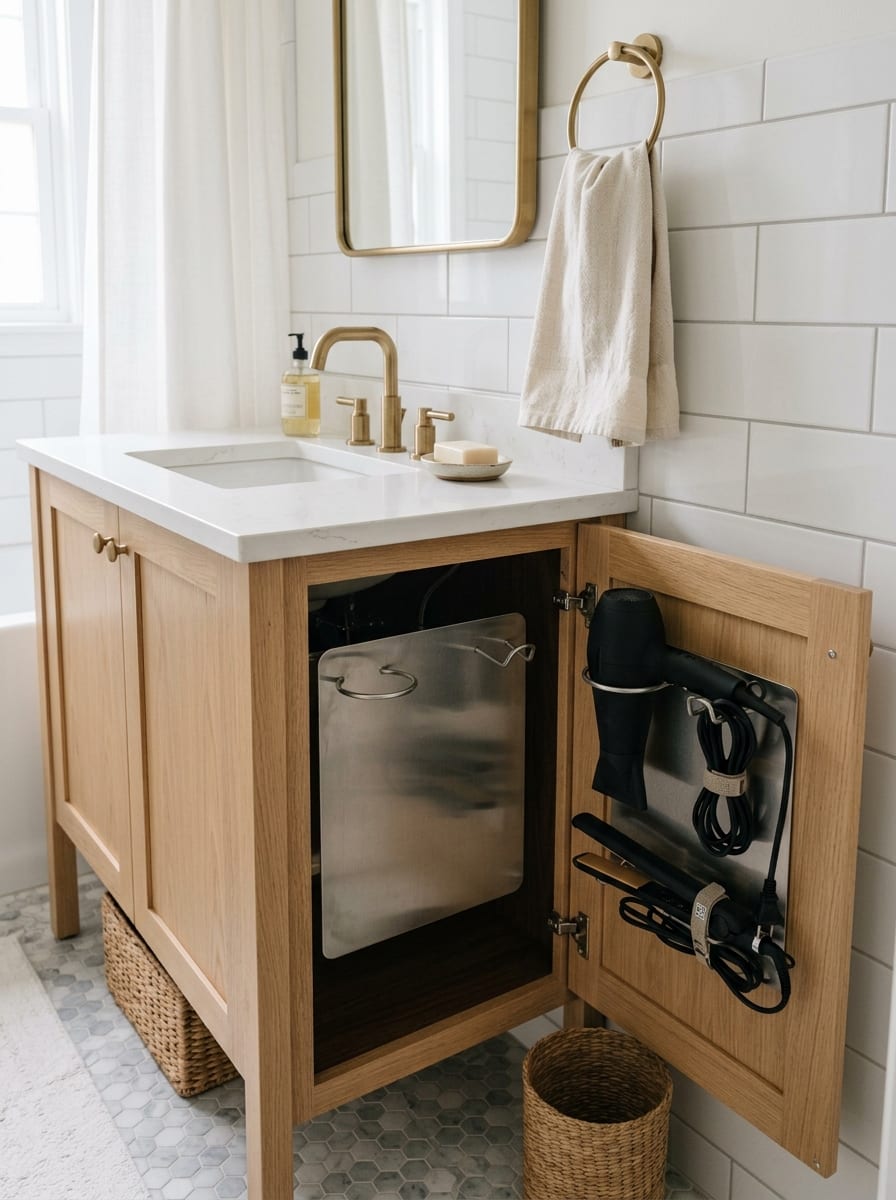
Hair tools create a different problem. They are:
- bulky
- awkwardly shaped
- attached to cords Leaving them on the counter can take up a large amount of space.
Give hot tools a real storage location
Potential options include:
- heat-safe drawer organizer
- cabinet-mounted holder designed for the purpose
- heat-safe container
Let tools cool appropriately
Never place a hot tool into storage that is not designed for heat. Follow product instructions.
Keep cords contained
Loose cords visually clutter the vanity and can interfere with:
- sink
- drawers
- other products
Separate daily tools from occasional tools
If you use one dryer regularly but a curling iron once a week, they do not need equal access.
Avoid permanent counter parking
A hair dryer sitting beside the sink every day can make even a relatively clean counter feel crowded.
6. The Sink-Side Soap Edit
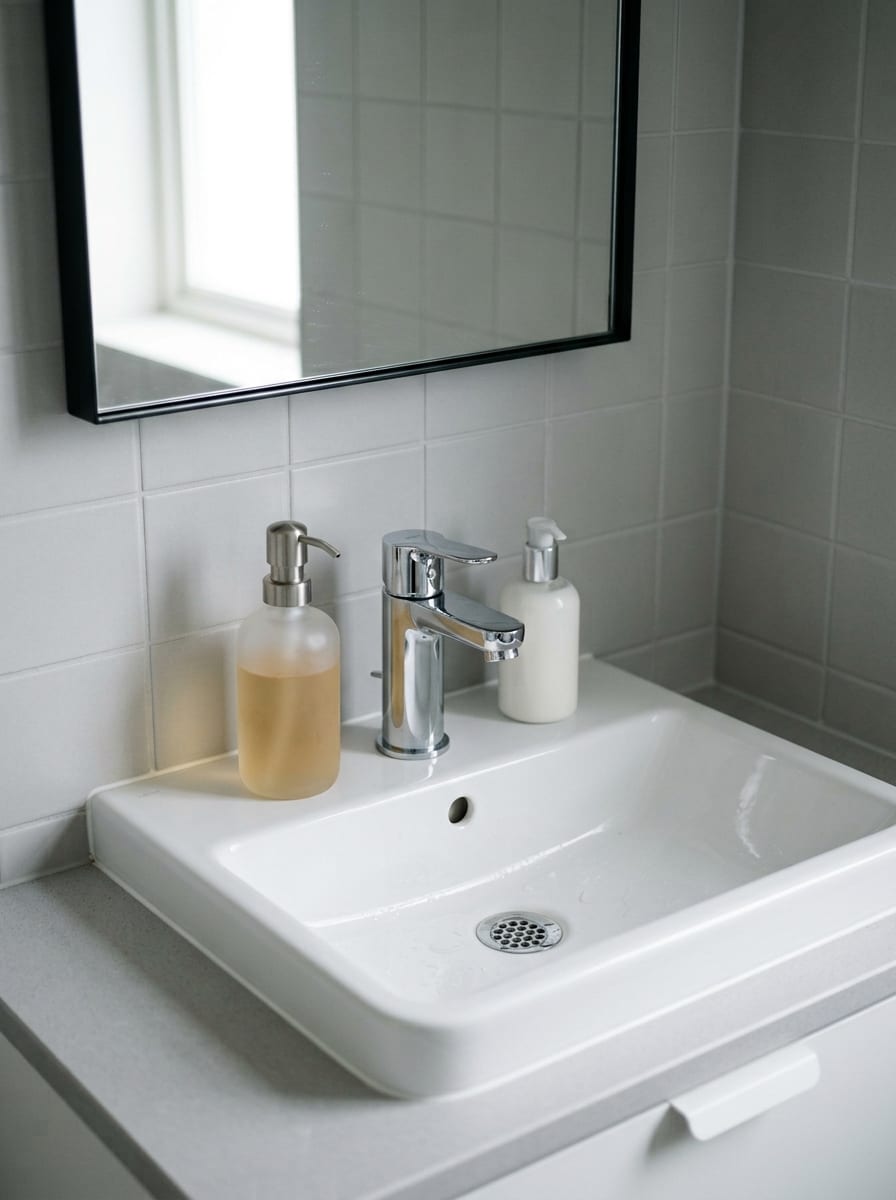
The sink area can become cluttered by products that seem too small to matter individually. Common examples include:
- hand soap
- hand lotion
- mouthwash
- sponge
- cleaning spray
- candle
- decorative jar Together they create a lot of visual activity.
Start with what is actually needed beside the sink
Usually:
- hand soap is enough. Maybe also:
- hand lotion if used frequently.
Move cleaning products elsewhere
Cleaning spray does not need to remain beside the faucet. Store it:
- under sink
- in cleaning cabinet
Avoid decorative duplicates
You do not need:
- soap dispenser
- decorative bottle
- tray
- vase
- candle all beside one small sink.
Keep the faucet area open
Clear space around the faucet makes:
- cleaning easier
- handwashing more comfortable
7. The Counter-to-Wall Shift
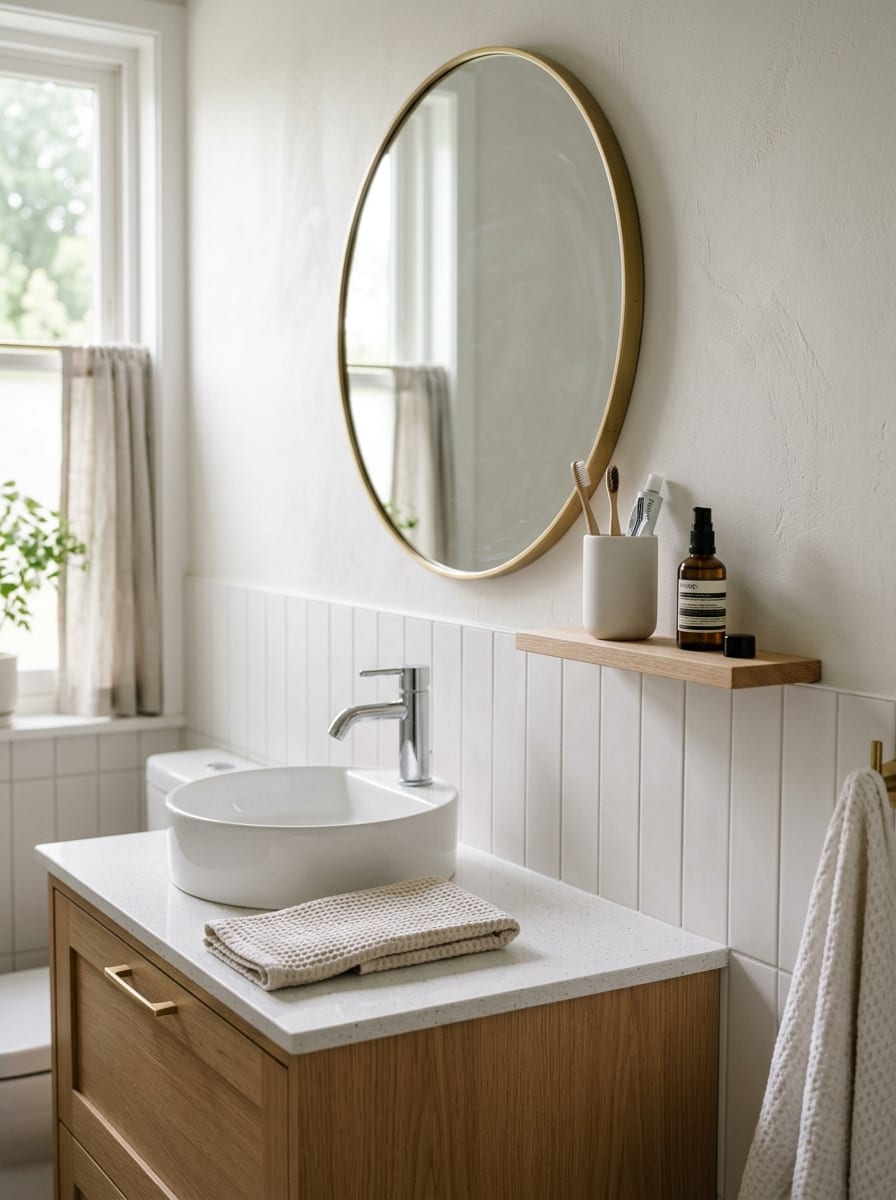
If the counter is genuinely too small, one category may need to move off it completely. A small amount of wall storage can help.
Good candidates
Move lightweight daily items such as:
- toothbrush cup
- hand towel
- small skincare container to an appropriate wall-mounted system.
Keep it shallow
Deep shelving above a tiny vanity can make the sink feel boxed in. Use:
- shallow shelf
- slim wall cup
- narrow ledge Do not cover the whole wall The goal is to remove one problem category from the counter. It is not to create a wall full of products.
Keep items easy to reach
Daily products should still be convenient. If you need a stool to reach them, the storage is too high.
Installation matters
Use products and mounting methods appropriate for:
- wall type
- moisture
- expected weight and follow lease requirements if renting.
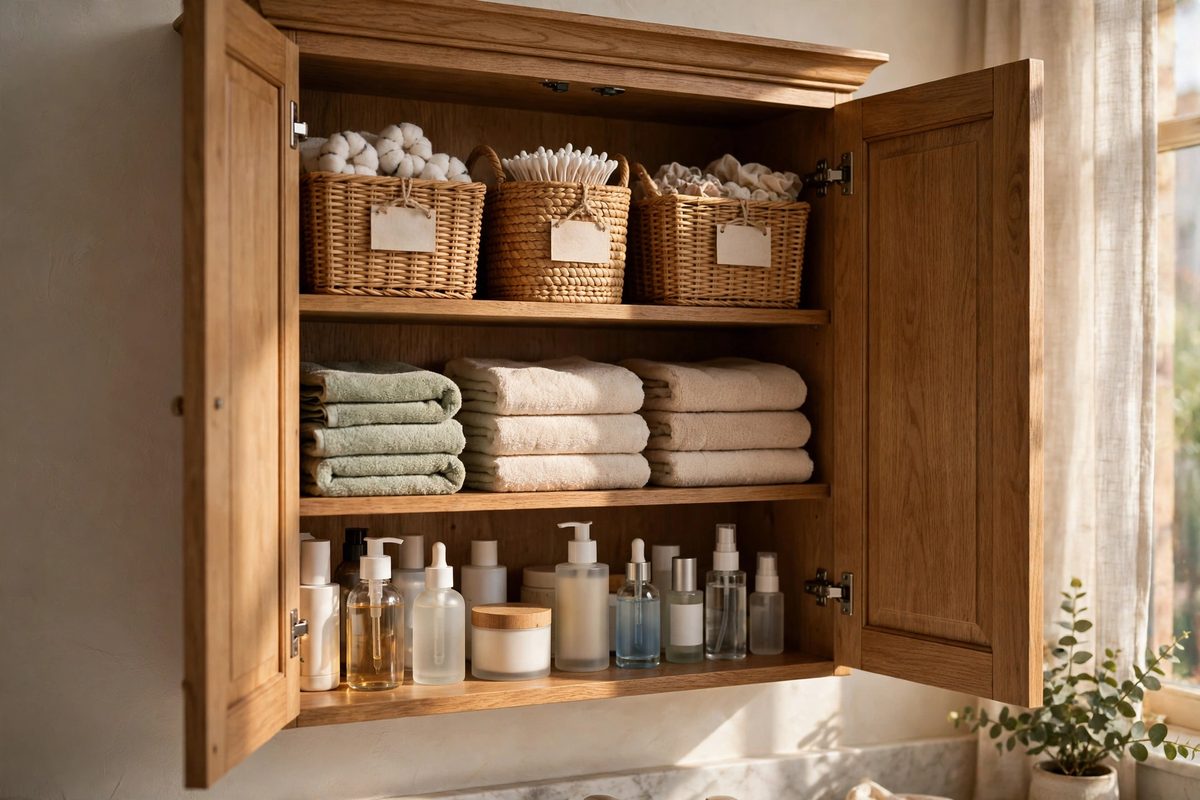
8. The Backup-Products Boundary
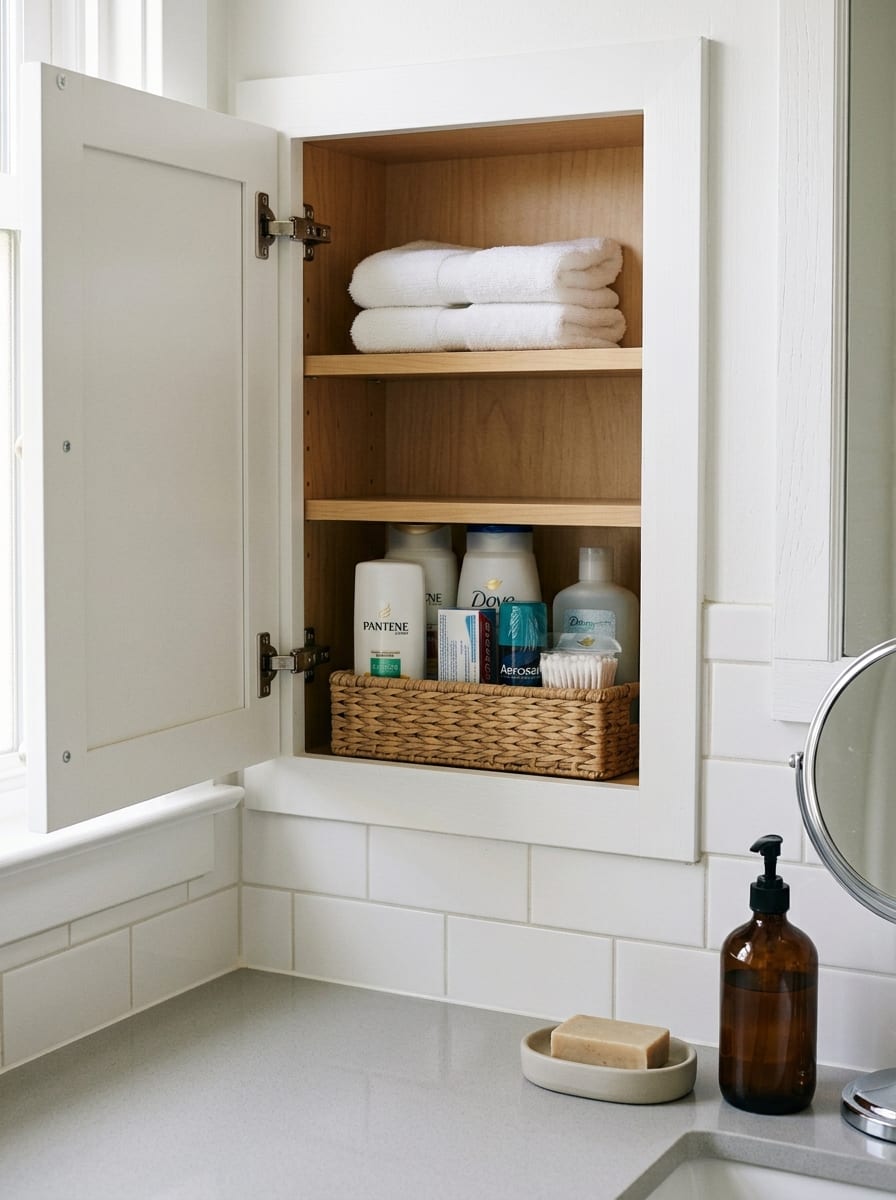
One of the biggest bathroom-storage mistakes is mixing: current products with backup products. The counter only needs what you are currently using.
Move unopened products away
Examples include:
- extra toothpaste
- replacement soap
- spare shampoo
- backup skincare These do not need prime counter space.
Give backups one defined zone
Try:
- one cabinet shelf
- one basket
- one drawer section
Use current products before opening new ones
Multiple opened products can create clutter quickly.
Keep samples contained
Hotel toiletries and samples are small, but dozens of them create a messy category. Use one container and set a limit.
Buy according to storage capacity
If there is no room for six backup bottles, buying six backup bottles creates an organization problem before they are even used.
9. The Clear-Counter Reset Rule
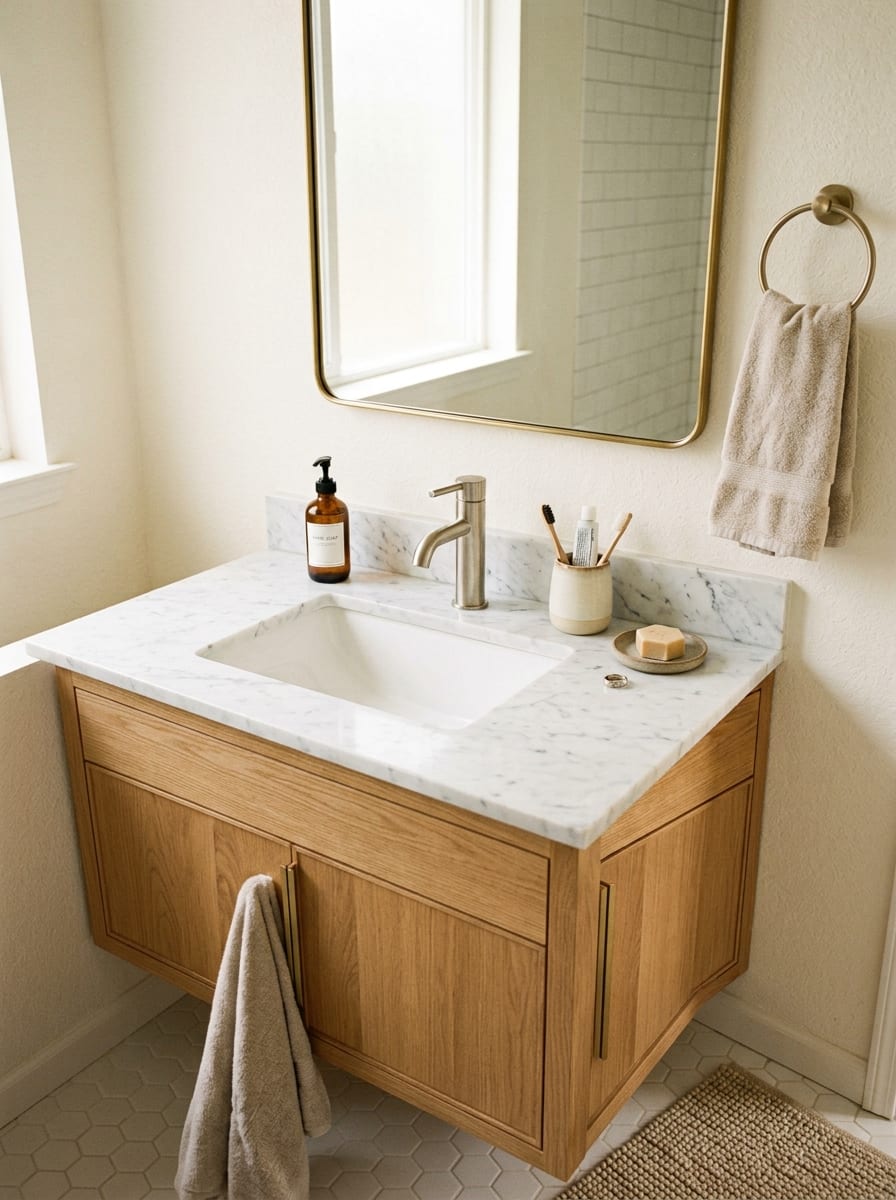
The final idea is a habit rather than a product. Every bathroom counter needs a baseline. Ask: What should this counter look like when the room is reset?
For many small bathrooms, that may be:
- soap
- toothbrush holder
- one small tray and nothing else.
Create a visible default
When the room gets busy, you know what has to return to:
- drawer
- cabinet
- organizer
Reset after the routine
After getting ready:
- put hair tools away
- return skincare
- throw away packaging
- move laundry
Make storage easy enough to use
If putting one bottle away requires:
- moving three containers
- opening two doors
- rearranging a drawer it will probably stay on the counter.
One-step storage wins
Daily systems should be simple. Open drawer. Put item inside. Close drawer. Done.
Start With the Counter Completely Empty
If possible, remove everything temporarily. That makes it much easier to see:
- how much space you actually have
- what you genuinely use
- what does not need to return Then add items back intentionally.
Divide Everything Into Four Groups
Use four simple groups.
1. Daily
Used every day. Examples:
- toothbrush
- soap
- moisturizer
2. Weekly
Used occasionally. Examples:
- hair treatment
- styling tool
- face mask
3. Backup
Unopened replacements.
4. Remove
Empty, expired or unnecessary items where appropriate. Only the first group should compete for prime counter space.
The Counter Is Not the Bathroom’s Main Storage Area
This distinction matters. The counter is where you:
- wash
- brush
- get ready It is an active work surface. It should not also carry every item the bathroom owns.
Decide What Deserves Permanent Counter Space
A useful test is: Do I use this almost every day?
If not, it probably does not need permanent counter space.
Keep Similar Items Together
Avoid storing:
- toothpaste on one side
- floss on another
- toothbrushes beside skincare Create simple zones. For example: Dental One holder. Skincare One tray or drawer. Soap Sink-side. That is easier to maintain.
Avoid Too Many Tiny Organizers
Small organizers can actually make a vanity look busier. Three tiny trays plus:
- jar
- cup
- basket may create more visual clutter than the products themselves. Use fewer, stronger containers.
Clear Containers Are Not Always the Answer
Clear acrylic can be useful inside drawers. On the counter, it still exposes every:
- label
- cap
- product color If visual calm is the goal, an opaque container may work better.
Use Trays for Boundaries, Not Storage Expansion
A tray should say: these few items live here.
It should not say: fill every inch of this tray with products.
Keep Tall Bottles Together
If several tall products must remain visible, group them toward:
- wall
- mirror edge rather than spreading them across the front of the counter. This keeps the working area more open.
Leave the Area Directly in Front of the Sink Clear
You should be able to:
- wash your face
- brush teeth
- set something down without moving products. That is prime functional space.
What About Makeup?
If makeup is used in the bathroom, keep daily makeup separate from the full collection. Daily:
- one small pouch
- one drawer section Full collection:
- deeper drawer
- cabinet A complete makeup collection does not need to live across the vanity.
What About Skincare?
The same principle applies. Keep the current routine accessible. Move:
- backups
- occasional masks
- rarely used treatments away from the counter.
What About Perfume?
A few bottles can look attractive. But perfume collections can quickly take over a small vanity. Consider keeping:
- one or two current bottles visible and the rest elsewhere.
What About Jewelry?
A tiny dish can work well for:
- rings
- earrings removed before washing. Avoid turning the bathroom into permanent jewelry storage if that creates clutter.
What About Towels?
Hand towels should have a dedicated:
- ring
- bar
- hook rather than sitting folded on the counter unless there is genuinely no alternative.
What About Toilet Paper?
Keep one current roll where needed. Backstock belongs:
- cabinet
- shelf
- basket not stacked across the vanity.
What About Cleaning Supplies?
Most should stay out of sight. Under-sink storage is often more appropriate for:
- cleaning spray
- spare sponges
- cloths Keep products safely stored according to their instructions and away from children or pets where relevant.
Organize the Drawer Around the Routine
A good drawer does not have to look like a perfect grid. It should help you find:
- morning products
- evening products
- dental items quickly.
Keep the Front of the Drawer for Daily Items
Put high-frequency items toward the front. Rarely used products can go:
- back
- deeper cabinet
Avoid Deep Piles
If you must lift one product to find another, the drawer may need:
- one shallow divider
- upright storage rather than more containers.
Use Vertical Storage Only When It Solves a Specific Problem
A shelf can help. But adding:
- shelf
- hooks
- hanging basket
- wall cup all around the mirror can make the bathroom feel smaller. Use one solution at a time.
Do Not Block the Mirror
Wall storage should not interfere with:
- mirror use
- lighting
- cabinet opening The vanity still needs to function.
Keep Electrical Items Away From Water
Hair tools, electric toothbrush chargers and other electrical items should be stored and used according to product guidance and safe bathroom electrical practices. Do not let organization interfere with safety.
A One-Person Bathroom Formula
Try: Counter
- soap
- toothbrush holder
- one small daily tray Drawer
- skincare
- grooming tools Cabinet
- backups
- cleaning products Simple.
A Two-Person Bathroom Formula
Give each person one defined daily-use zone. For example: Shared counter
- soap
- toothbrush holder Drawer left Person 1. Drawer right Person 2. Avoid splitting every item across the counter.
A Bathroom With No Drawers
Try: Counter One small tray. Wall One shallow shelf. Under sink Daily products in one accessible container. Do not compensate for missing drawers by putting everything on the vanity.
A Tiny Pedestal-Sink Bathroom
There may be almost no counter at all. Prioritize:
- wall-mounted toothbrush storage
- narrow shelf
- medicine cabinet where appropriate. Keep the sink itself unobstructed.
A Shared Family Bathroom
Shared bathrooms need stronger category boundaries. Try: Counter Only communal essentials. Each person One drawer section or container. Backups One separate cabinet zone. This helps prevent every person’s products from spreading across the vanity.
Common Small Bathroom Counter Organization Mistakes
Leaving every daily product visible Daily does not necessarily mean counter. Buying organizers before editing products You may be organizing things you do not need. Using too many tiny containers The vanity becomes visually fragmented. Keeping backup products beside current ones Backups belong deeper. Filling every corner of the counter Empty surface is useful. Letting hair tools become permanent decor Give them a safe storage location. Mixing dental, skincare and cleaning products Simple categories are easier. Using a huge tray The tray itself starts consuming the vanity. Moving everything to open shelves You have only moved the clutter upward.
The Five-Minute Counter Reset
When the vanity gets out of control: Minute 1 Remove empty packaging. Minute 2 Put hair tools away. Minute 3 Return skincare and makeup to drawers. Minute 4 Move backup products to deeper storage. Minute 5 Wipe the counter and return only the approved daily essentials. The difference can be surprisingly large.
Before Buying a Bathroom Organizer
Ask: What exact items will it hold? If the answer is simply: bathroom stuff
do not buy it yet. A useful organizer should solve a defined category. For example: six daily skincare bottles.
That is specific enough to choose the right size.
Measure Around the Sink
Make sure any counter organizer does not interfere with:
- faucet handle
- sink basin
- outlet
- mirror
- cabinet door Small vanities have little room for error.
Keep the Organizer Smaller Than the Available Space
Just because a 12-inch organizer fits does not mean you should buy the 12-inch organizer. Leaving some empty space is part of the design.
Which Counter Organization Idea Should You Start With?
Choose the Daily-Essentials Tray if:
Several small products are scattered around the vanity.
Choose One Dental Container if:
Toothbrushes and toothpaste spread across the sink.
Choose a Vertical Organizer if:
A few daily bottles genuinely need to stay visible.
Choose Drawer-First Skincare if:
Your skincare collection dominates the counter.
Create a Hair-Tool Parking Spot if:
Cords and styling tools take up most of the vanity.
Simplify the Sink-Side Zone if:
Soap, lotion and decorative objects crowd the faucet.
Shift One Category to the Wall if:
The counter is physically too small.
Create a Backup Boundary if:
Unopened products are mixed with daily products.
Use the Clear-Counter Reset Rule if:
The bathroom looks tidy for a day and then immediately becomes cluttered again.
Final Thoughts
A small bathroom counter does not need to be completely empty. It just needs to stop doing the job of the entire bathroom. Start with the essentials: soap → toothbrushes → one controlled daily-use zone Then move everything else into: drawers → cabinets → one shallow wall solution Keep backup products away from the prime area. Give hair tools a real home. Use fewer containers. And leave some countertop completely visible. The best bathroom organization system is not the one that holds the most products. It is the one that makes the room easy to reset after you get ready.