7 Space-Saving Furniture Choices That Actually Earn Their Place in a Small Apartment
What is space-efficient furniture? Discover 7 functional space-saving pieces that actually earn their floor space—from hydraulic storage beds to nesting tables.
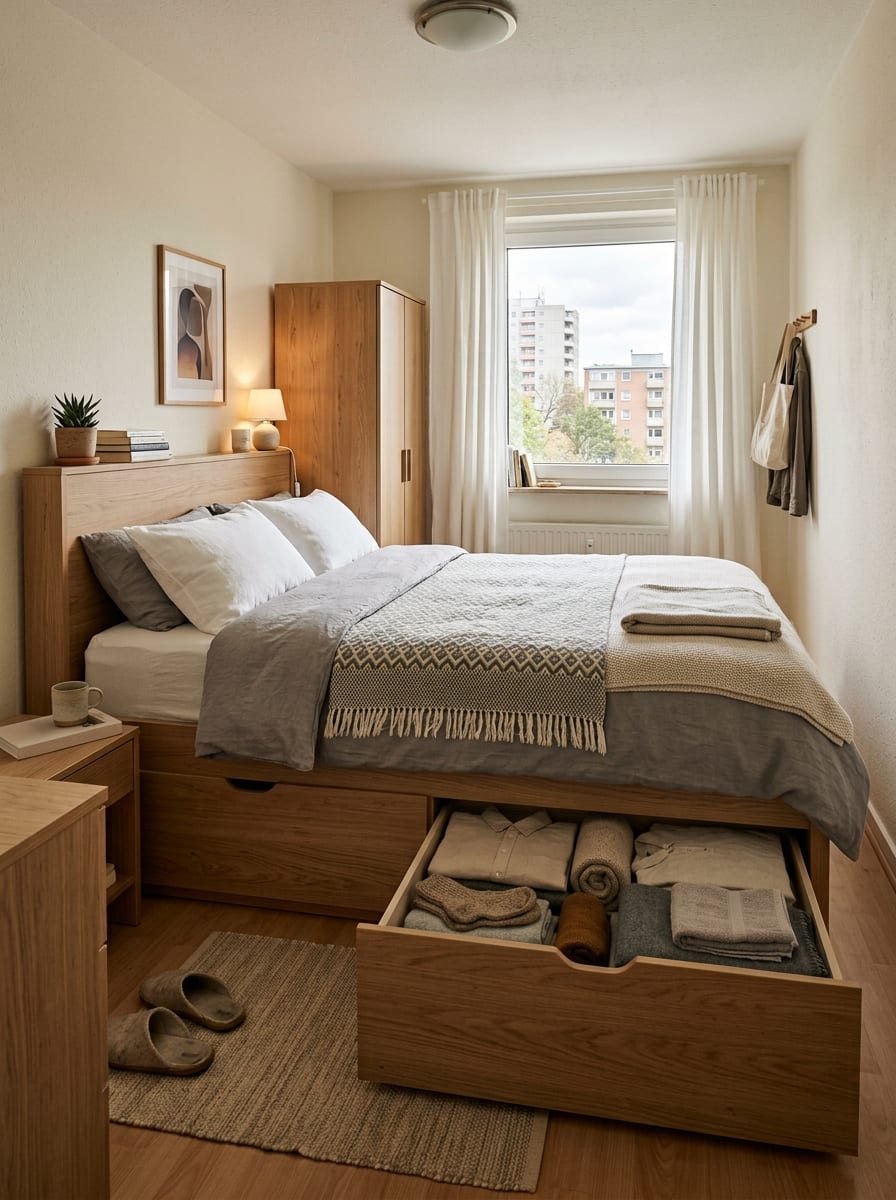
Functional space-saving furniture in a small apartment including storage bed and nesting tables
In This Guide
Small-space furniture gets marketed as if anything that folds, stacks or hides another function automatically saves space.
It does not.
A piece of furniture only earns its place in a small apartment if it does at least one of three things:
replaces another piece of furniture uses space that would otherwise be wasted changes size when you genuinely need it to
Otherwise, you may simply be buying a more complicated version of normal furniture.
A coffee table with four hidden compartments sounds clever until it is so bulky that you cannot comfortably walk around it.
A convertible desk sounds ideal until unfolding it blocks the bedroom door.
And a giant storage bed is not helping if the drawers cannot open because one side is against the wall.
So instead of collecting every piece labeled “space-saving,” focus on furniture that solves an actual layout problem.
These seven types tend to make the strongest case.
1. The Storage Bed That Replaces a Dresser
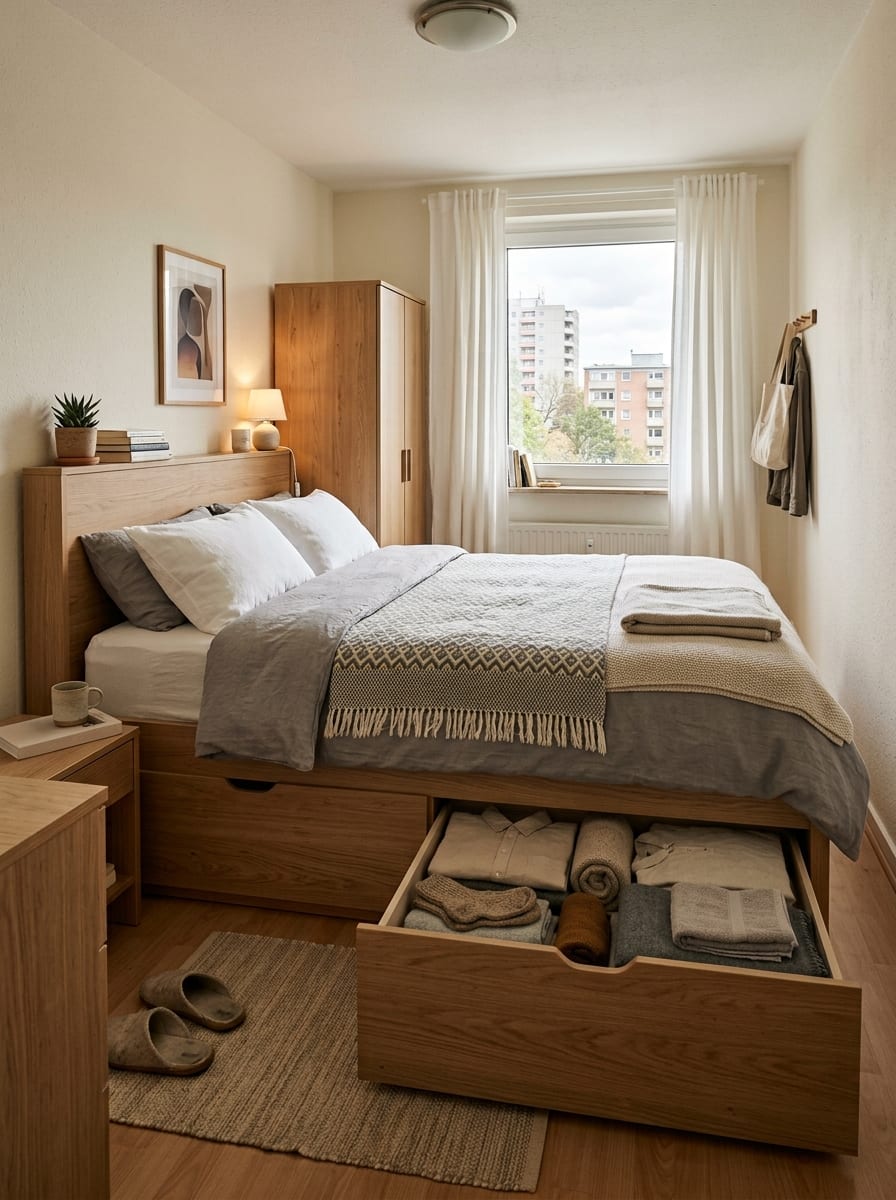
A bed already occupies one of the largest footprints in a small apartment.
That makes the space underneath it extremely valuable.
A storage bed works best when it allows the bed footprint to handle another job that would otherwise require separate furniture.
That might mean storing:
seasonal clothing extra bedding shoes towels bulky sweaters luggage spare linens
When it genuinely saves space
A storage bed is especially useful when it lets you remove or downsize:
a second dresser large storage bins sitting around the room a bulky blanket chest freestanding shelving
That is the real space-saving benefit.
You are not just adding storage.
You are eliminating another storage footprint.
Drawer storage vs lift-up storage
There are two main types.
Drawer bed
Best when there is enough open space beside the bed to pull the drawers out.
It provides quick access.
Lift-up storage bed
The mattress platform lifts to reveal a large storage compartment.
This can work better when one or both sides of the bed sit close to walls.
It is useful for less frequently accessed items.
Measure drawer clearance
This is where many small-bedroom plans go wrong.
A drawer might require another two feet or more of clear space to open comfortably.
If your bed sits:
close to a wall beside a wardrobe near a nightstand
that clearance may not exist.
Watch the visual weight
Storage beds tend to have solid bases.
In an already small bedroom, a very bulky dark frame can make the room feel heavier.
Look for:
simple fronts restrained hardware moderate frame height finishes that coordinate with the room
When I would skip it
Skip a storage bed if:
you move frequently and the frame is extremely heavy you already have excellent closet storage the mechanism is difficult to access the drawers cannot open fully you are buying it only because “storage is always useful”
2. The Extendable Dining Table
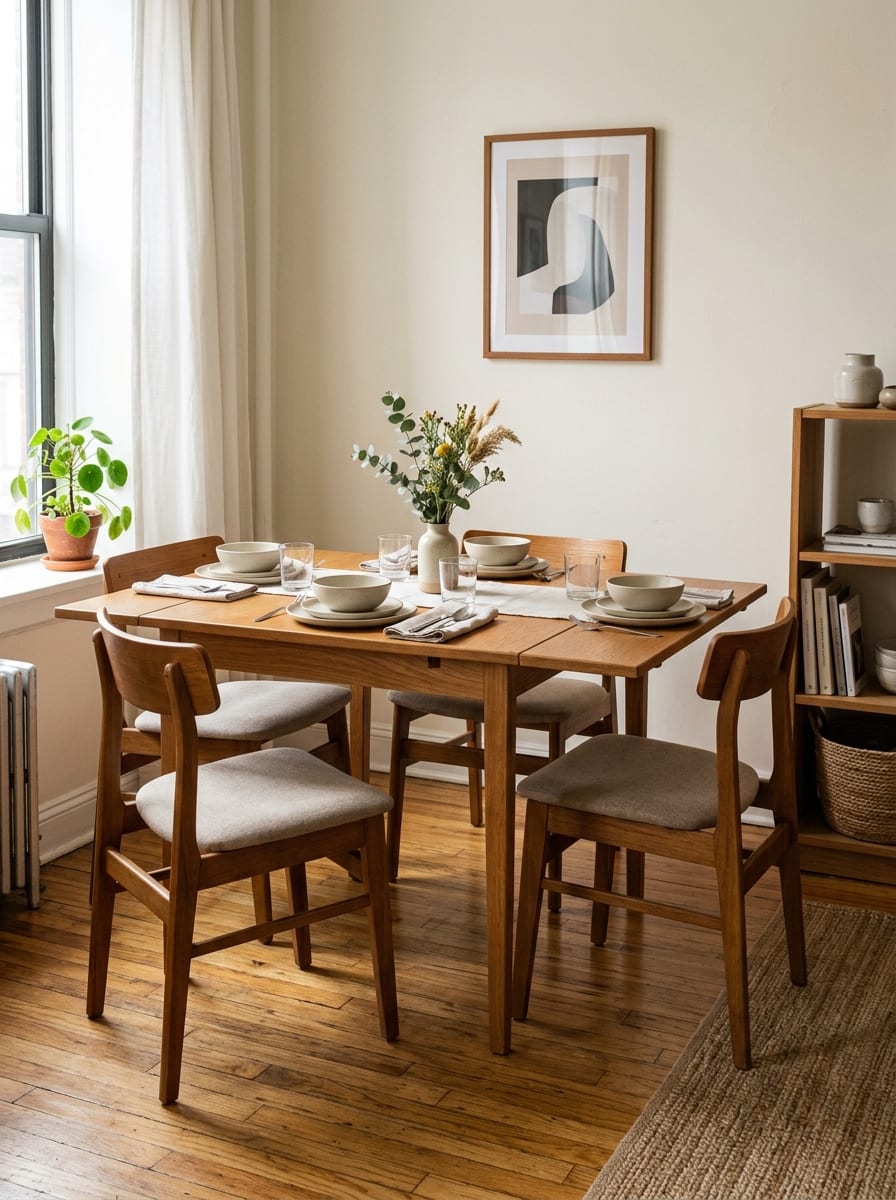
An extendable dining table can be one of the most useful pieces of furniture in a small apartment because it changes size according to how the room is actually being used.
Most of the time, you may only need seating for:
one two or four people
But occasionally you want room for more.
A fixed six-person dining table makes you surrender that floor space every day.
An extendable table does not.
The best use case
This works particularly well when:
you regularly eat at the table you occasionally host the dining space is compact the table also functions as a work surface
Measure both sizes
Do not only measure the table when closed.
Measure:
closed width extended width chair clearance walking clearance while extended
Then ask:
Where does the extra table surface actually go when I open it?
If extending the table completely blocks access to the kitchen, the feature may not be very useful.
Look at the extension mechanism
Different systems behave differently.
Drop-leaf
Very compact.
Good against a wall or in tiny dining areas.
Butterfly leaf
Leaf stores inside the table.
Convenient because you do not need somewhere else to store it.
Pull-out extension
Usually straightforward but needs enough room around the table.
Chair storage matters too
An extendable table does not solve everything if four extra dining chairs permanently occupy the apartment.
Consider:
stackable chairs folding chairs stored elsewhere bench seating using existing occasional chairs when hosting
When I would skip it
Do not pay extra for an extension system if you never host and always eat alone or as a couple.
In that case, a permanently smaller table may simply be better.
3. The Round Pedestal Dining Table
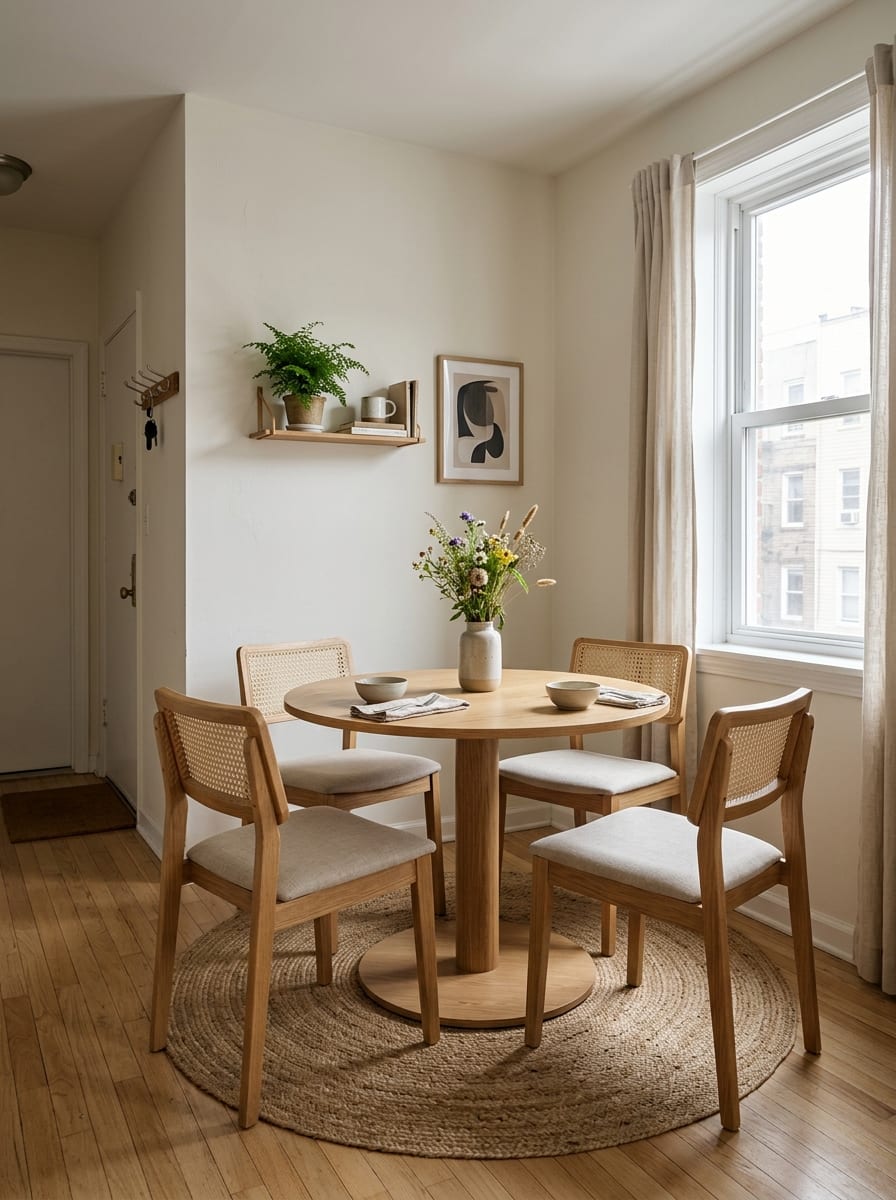
Not every useful small-space furniture choice needs moving parts.
A small round pedestal table can outperform a rectangular four-leg table in a tight dining area simply because the geometry is easier to live around.
Why round tables work
Round tables eliminate sharp corners.
That makes it easier to move around them in:
narrow dining nooks open-plan apartments small kitchen corners living-dining combinations
Why the pedestal matters
Four table legs can interfere with chair placement.
A central pedestal allows chairs to shift more freely around the perimeter.
That can be especially useful when you occasionally need to squeeze in an extra seat.
Best for two to four people
A small round table works particularly well for:
couples one-person apartments small families occasional guests
Once round tables become large enough for six or eight people, they can require a surprisingly large footprint.
Watch the diameter
A table that looks tiny in a product photo may still take up more room than expected once chairs are pulled out.
Tape the diameter on the floor before buying.
Then add chair depth outside the circle.
Why I prefer this over many “transforming” tables
It has:
no mechanism no moving pieces no setup no extra components to store
It simply fits compact circulation better.
When I would skip it
A round table may not be ideal if:
the dining zone is very long and narrow the table needs to sit flush against a wall you regularly need a large rectangular work surface
4. The Nesting Coffee Table Set
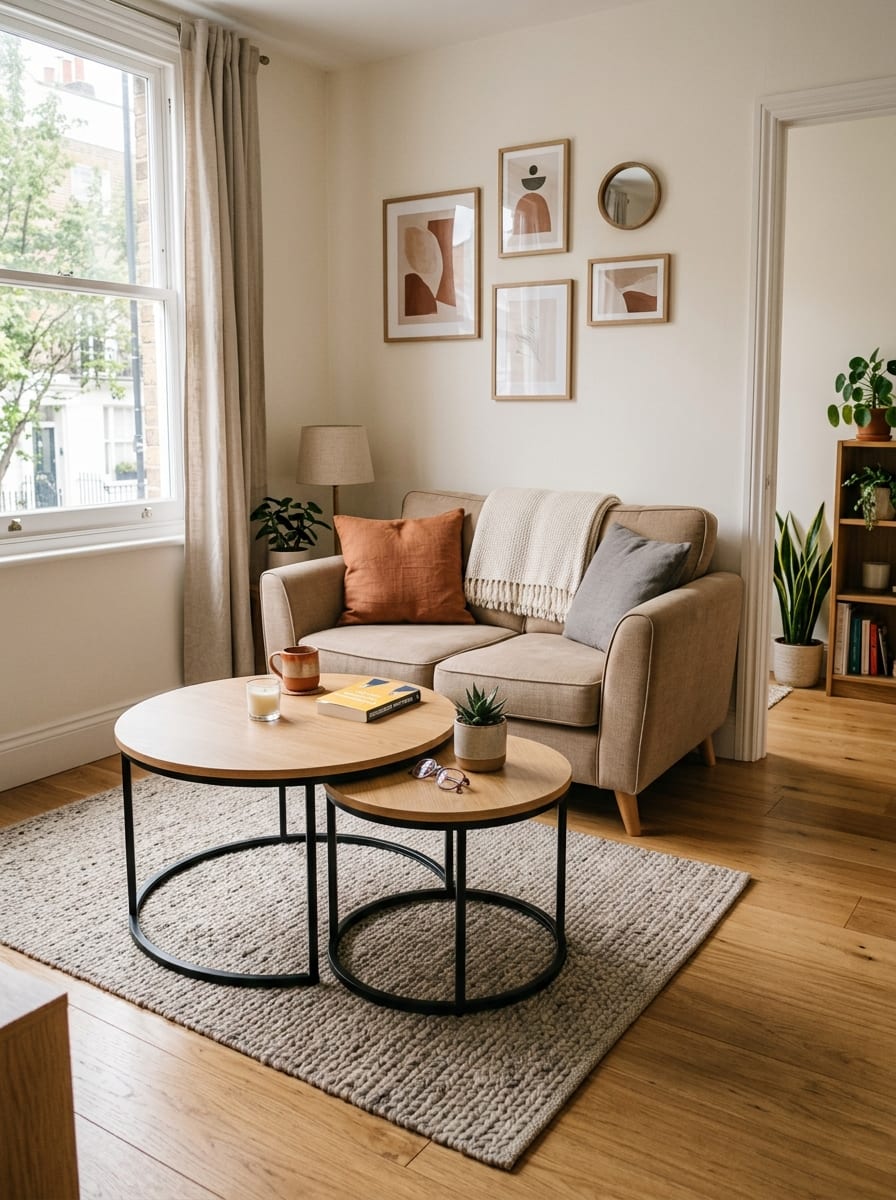
Nesting tables are useful because they let one furniture footprint expand only when needed.
Most of the time, the smaller tables sit partially or completely underneath the largest one.
When guests arrive, or when you need another surface, pull one out.
Why they can work better than one large table
A large coffee table permanently occupies:
circulation space leg room floor area
A nesting set gives you multiple surfaces without requiring that full footprint all day.
Best use case
They work especially well when:
the living room has several walking paths furniture is compact you entertain occasionally you sometimes need a laptop or drink table beside the sofa
Choose shapes that are easy to move around
Round or oval nesting tables can be especially useful in a tight room because there are fewer corners to bump into.
Keep the design simple
A nesting set with:
three different colors bulky bases decorative shelves complicated frames
can create visual clutter.
The best sets usually disappear into one another cleanly.
Do not buy too many
Two tables may be enough.
Three or four nested surfaces can sound useful but may simply mean more furniture to move around.
When I would skip them
If you regularly need one large stable surface for:
board games meals work
a normal coffee table may be more practical.
5. The Storage Ottoman That Does Double Duty
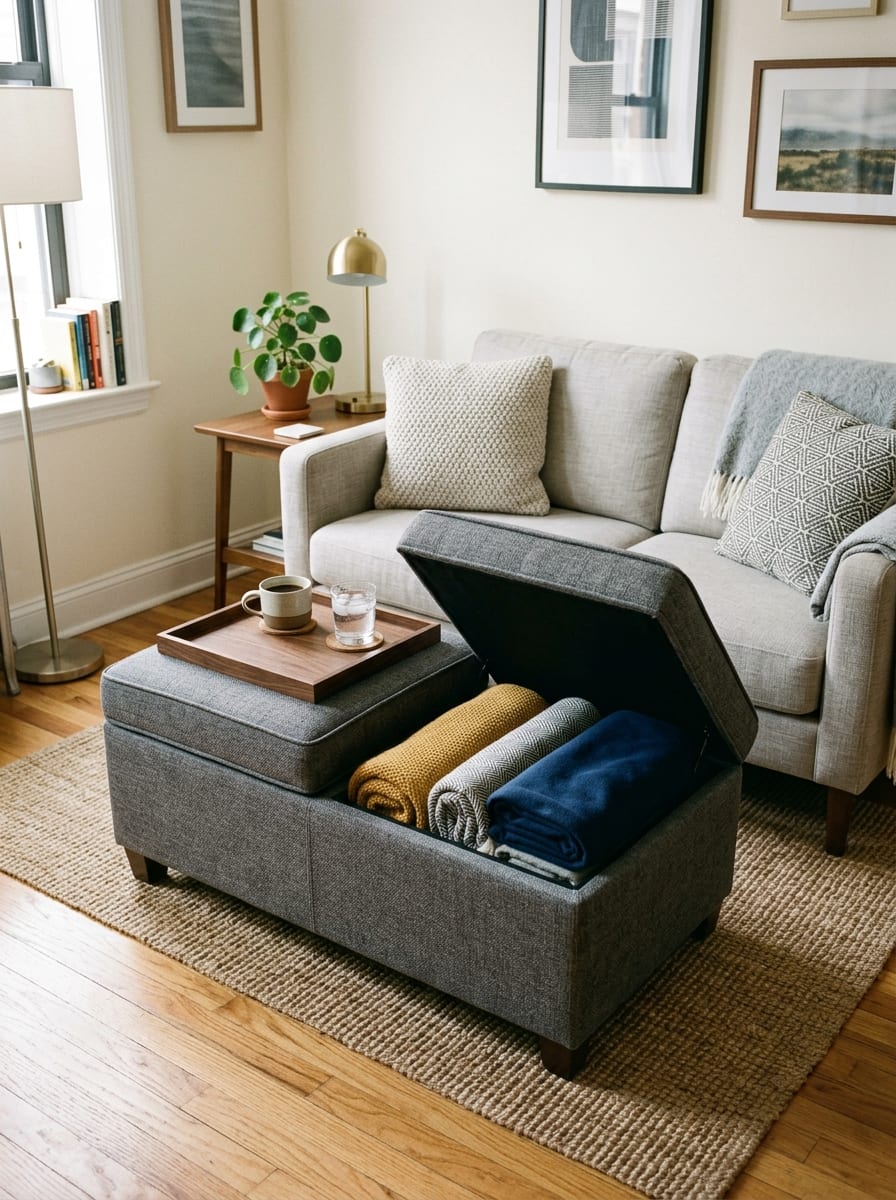
A storage ottoman can earn its place if it replaces multiple smaller pieces.
Depending on the design, it can function as:
footrest extra seat blanket storage occasional coffee table soft surface near sofa
That is a legitimate multi-function piece.
What should go inside
The best items are things you want nearby but do not need constantly visible.
For example:
throws game controllers board games spare pillows children’s toys charging accessories
Choose the lid based on how you use it
Hinged lid
Easy to open.
Good for frequent access.
Removable tray top
Can create a harder surface for drinks.
Fully removable lid
Simple, but you need somewhere to put the lid every time you open it.
Scale matters
A huge storage ottoman can become worse than a standard coffee table because it is:
bulky visually heavy difficult to move
Look for one proportionate to the sofa.
Why it works best in small living rooms
Soft furniture is more forgiving in tight circulation areas than hard furniture with sharp corners.
It can also slide closer to a sofa when extra floor space is needed.
When I would skip it
If you already have:
sufficient hidden storage a coffee table you love no need for extra seating
then the storage compartment alone is not enough reason to add another piece.
6. The Wall-Mounted Desk
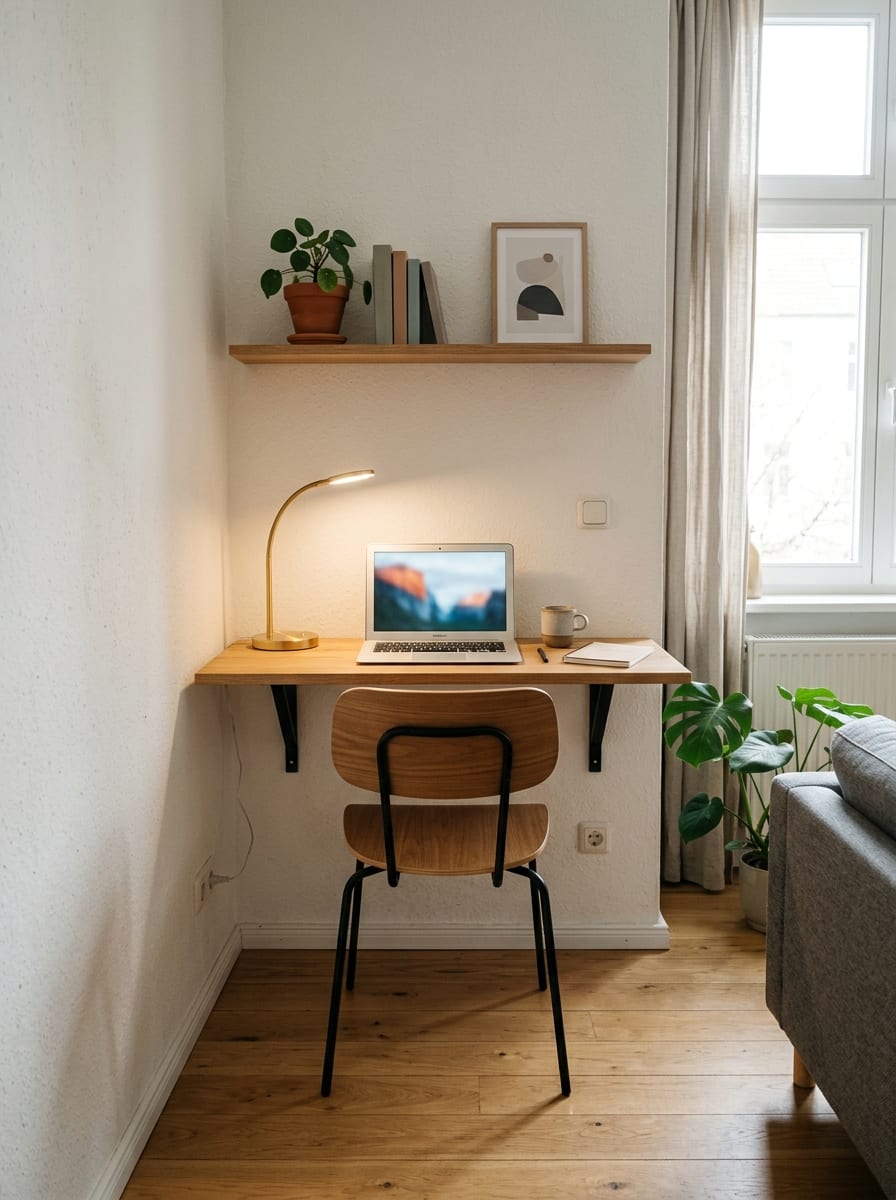
A wall-mounted desk is one of the few furniture choices that can genuinely create function without occupying a conventional furniture footprint.
It works best when you need:
laptop workstation bill-paying station study corner occasional home office
but do not have space for a full desk.
Why it saves floor space
The desk surface projects from the wall without:
bulky legs drawer pedestal large base
The open area underneath keeps the floor visually clearer.
Best locations
Look for:
bedroom corner unused living-room wall alcove wall beside a window
short wall between doorways
Choose enough depth
Do not buy the shallowest desk possible just because the apartment is small.
The surface still needs enough room for:
laptop forearms mouse notebook if needed
A desk that is uncomfortable will not get used.
Fold-down or fixed?
Fixed floating desk
Better for regular work.
More stable and always ready.
Fold-down desk
Better for occasional use.
Useful when circulation space needs to return after work.
Renter consideration
A wall-mounted desk usually needs secure attachment.
Check:
wall construction lease rules mounting requirements
before purchasing.
A badly mounted desk is not a renter-friendly shortcut.
When I would skip it
If you work full time with:
two monitors large keyboard paperwork office equipment
a floating desk may be too restrictive.
7. The Slim Closed Shoe Cabinet
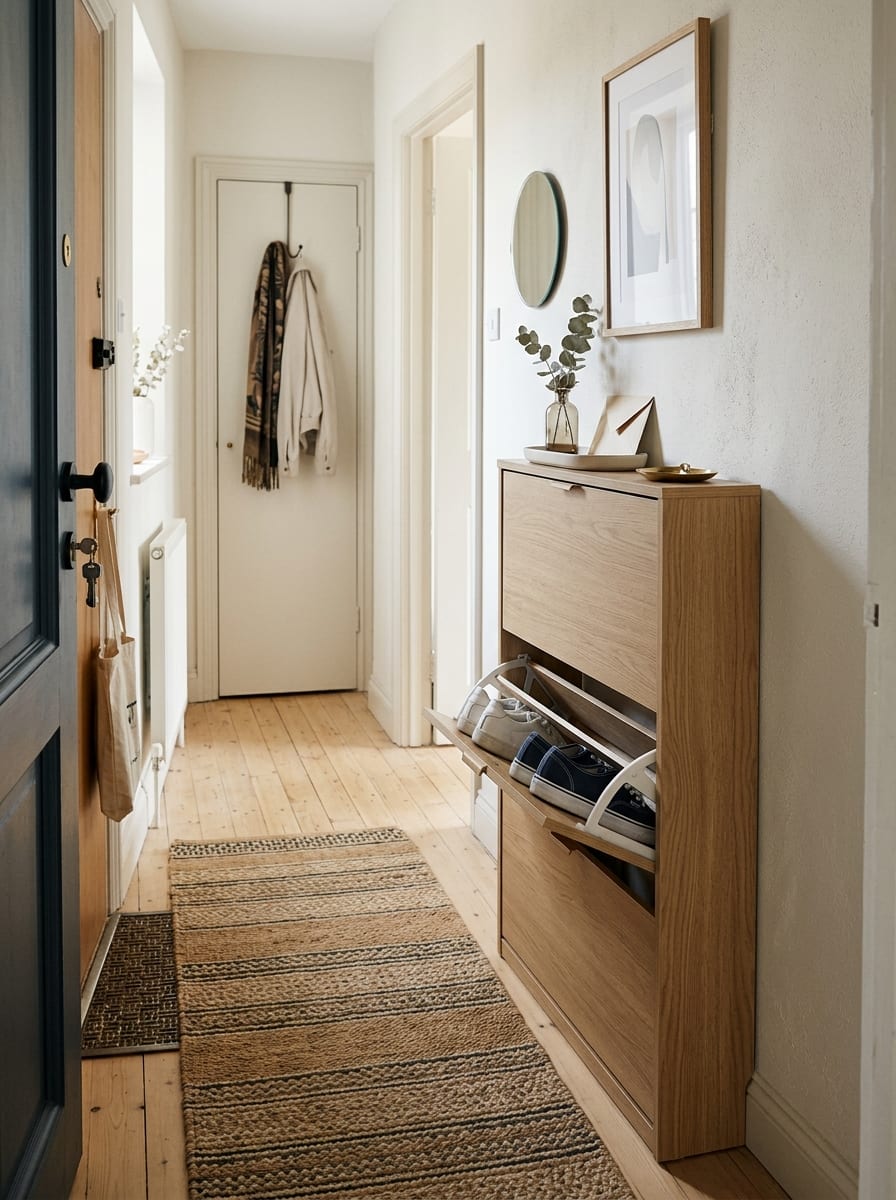
Shoe storage causes a disproportionate amount of clutter in small apartments.
Normal shoe racks can be surprisingly deep because shoes sit front-to-back.
Slim shoe cabinets solve that by storing footwear at an angle inside shallow compartments.
Why this can be genuinely space-efficient
A slim cabinet may project only a modest distance from the wall while storing several pairs vertically.
That makes it useful in:
narrow entryways apartment corridors no-foyer entrances small mudroom-style corners
Closed fronts matter
Shoes create visual clutter quickly.
A cabinet with closed fronts keeps the entryway calmer.
It may also provide a small top surface for:
keys mail tray small lamp one decorative object
Measure the door swing
Do not place the cabinet where its own compartments collide with:
apartment entrance door closet door nearby furniture
Check shoe sizes
Very slim cabinets do not fit every type of footwear well.
Bulky:
boots large trainers high-top shoes
may require another storage solution.
Use this cabinet primarily for everyday low-profile footwear.
When I would skip it
If the entryway is already extremely narrow and the cabinet would reduce comfortable passage, keep shoes elsewhere.
A walkway is more valuable than squeezing storage onto every wall.
What Makes Furniture Truly Space-Saving?
A good test is to ask:
What does this piece allow me to remove?
For example:
Storage bed
May eliminate another dresser.
Extendable table
May eliminate the need for a permanently large dining table.
Storage ottoman
May replace a coffee table, footrest and blanket basket.
Wall desk
May eliminate a conventional freestanding desk.
If the answer is:
“Nothing, but it has a hidden compartment”
then it may not actually save much space.
Multifunctional Furniture Is Not Automatically Better
There is a trade-off.
The more jobs one furniture piece tries to perform, the more compromises it may make.
For example:
A sofa bed may be:
less comfortable than your preferred sofa less comfortable than a real bed heavier to move difficult to open in a small room
That does not make sofa beds bad.
It means the second function needs to solve a real problem.
If overnight guests stay twice a year, sacrificing everyday sofa comfort may not be worthwhile.
Furniture That Folds Away: Useful or Annoying?
Foldable furniture works best when the folding action is:
fast simple something you will actually do
Ask yourself:
Will I really fold this away after every use?
A dining table that takes 30 seconds to collapse may get folded.
A complicated transforming unit requiring:
clearing everything moving furniture unlatching several mechanisms
probably stays open permanently.
At that point, it is no longer saving space.
What About Murphy Beds?
Murphy beds can be excellent in the right studio apartment.
They can convert one room from:
bedroom at night
to:
living/work space during the day
But they are a much bigger decision than the seven pieces above.
Consider:
installation wall structure cost lease restrictions ceiling height
daily operation
mattress compatibility
For renters, they are often less practical unless the apartment already includes one.
What About Sofa Beds?
A sofa bed makes sense when the room truly needs to serve as both:
living room guest bedroom
But do not buy one automatically because your apartment is small.
Ask:
How often will someone actually sleep there? Is the sofa comfortable every day? Is there enough room to unfold it fully? Where will the coffee table go when it opens?
A good small-space solution has to work in both modes.
What Furniture Should You Avoid in a Very Small Apartment?
Oversized sectionals
Unless the room shape clearly supports one.
Deep media consoles
You often do not need 20 inches of cabinet depth underneath a flat TV.
Giant coffee tables
Especially when several walking routes cross the living room.
Decorative benches with no function
Floor space should earn its keep.
Extremely bulky bed frames
The mattress already takes up enough room.
Fixed dining tables larger than everyday needs
If you rarely seat six people, do not dedicate six-person space every day.
Furniture made specifically for one tiny gap
Unless it will solve an important long-term problem.
Measure the Furniture in Use, Not Just When Closed
This is one of the most important rules for convertible furniture.
A piece may look compact when closed but require far more room when used.
Measure:
Storage bed
Drawer fully open.
Extendable dining table
Table fully extended plus chairs.
Wall desk
Chair pulled out.
Shoe cabinet
Compartment open.
Sofa bed
Bed completely unfolded.
Storage ottoman
Enough space to lift or remove lid.
Your apartment has to accommodate the working footprint, not only the marketing photograph.
Use Painter’s Tape Before Buying
Mark the furniture footprint directly on the floor.
Then leave it there.
Walk around it.
Open nearby doors.
Pull out a dining chair.
Carry laundry through the room.
Vacuum around it.
This can reveal issues that measurements alone do not.
A 30-inch-deep piece of furniture may technically fit while making the room irritating to use.
Choose Furniture Based on Your Actual Habits
Small apartments benefit from personalization more than larger homes.
If you:
Never host dinner
You probably do not need an elaborate expandable table.
Own very little clothing
A storage bed may be unnecessary.
Work from home every day
A proper desk may deserve more space than a tiny fold-down one.
Own ten pairs of shoes
A giant shoe-storage system makes no sense.
Frequently host overnight guests
A sofa bed may be extremely valuable.
Space-saving furniture works when it solves your repeated problems, not imaginary ones.
Visual Weight Matters Too
A piece can have a small physical footprint and still make a room feel crowded.
Furniture often feels visually lighter when it has:
visible floor beneath it slim legs lighter finishes simple fronts modest depth fewer decorative details
But do not choose fragile furniture purely because it looks light.
Function still comes first.
Should Everything in a Small Apartment Be Multifunctional?
No.
That can become exhausting.
You do not need:
storage inside every chair a table that converts into five shapes hidden compartments everywhere
Some pieces should simply perform one function extremely well.
For example:
A comfortable sofa that is only a sofa may be better than a complicated modular unit you dislike using.
The goal is not to turn your apartment into a puzzle box.
The goal is to reduce unnecessary furniture.
The Three Questions to Ask Before Buying Space-Saving Furniture
Before purchasing anything marketed for a small space, ask:
1. What existing problem does it solve?
Be specific.
2. What furniture or clutter does it eliminate?
If the answer is nothing, reconsider it.
3. Does it work in my actual room dimensions?
Measure it in both stored and active positions.
If it passes all three, it probably deserves consideration.
A Smart Small-Apartment Furniture Priority List
If you are furnishing a compact apartment from scratch, prioritize in roughly this order:
1. Bed
Choose storage underneath if you genuinely need it.
2. Sofa
Comfort and scale first.
3. Dining solution
Based on how often you actually dine and host.
4. Work surface
If you regularly work from home.
5. Closed storage
Only where a real storage problem exists.
6. Coffee/side tables
Fit these into the remaining circulation.
Do not start with accessory furniture and then discover there is no room for the essentials.
Final Thoughts
The best space-saving furniture is usually not the piece with the cleverest mechanism.
It is the piece that lets your apartment function with fewer total furniture footprints.
A storage bed is useful when it replaces another storage piece.
An extendable table works when you need a small table most days and a larger one occasionally.
A wall desk works when it turns an otherwise unused wall into a real workspace.
That is the standard to use:
Does this piece genuinely give the apartment something back?
If the answer is yes, it earns its place.
If it only adds another hidden compartment to furniture you did not need in the first place, it probably does not.