10 Small Bathroom Vanity Ideas That Add Storage Without Making the Room Feel Smaller
Discover 10 small bathroom vanity ideas that add useful drawers and storage without making a tiny bathroom feel crowded, including floating, shallow and compact designs.
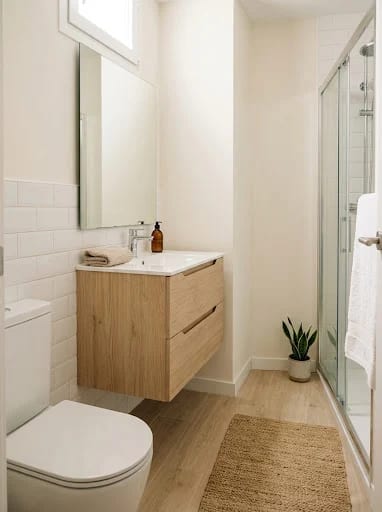
Floating pale oak bathroom vanity with two drawers and visible flooring underneath in a compact bathroom
In This Guide
A small bathroom vanity has to do two jobs that often work against each other. You want enough storage for:
- toiletries
- toilet paper
- cleaning supplies
- hair tools
- skincare
- towels But every extra inch of cabinetry also takes up space in one of the smallest rooms in the apartment. That is why simply choosing the vanity with the most drawers is not always the best answer. In a compact bathroom, a better vanity usually gives you: useful storage + enough countertop + comfortable circulation without visually dominating the room. The best option may be:
- shallower rather than wider
- wall-mounted rather than floor-heavy
- taller rather than deeper
- more drawer-based rather than one large cabinet Here are ten vanity ideas that can increase storage while keeping the bathroom feeling open.
1. The Floating Drawer Vanity
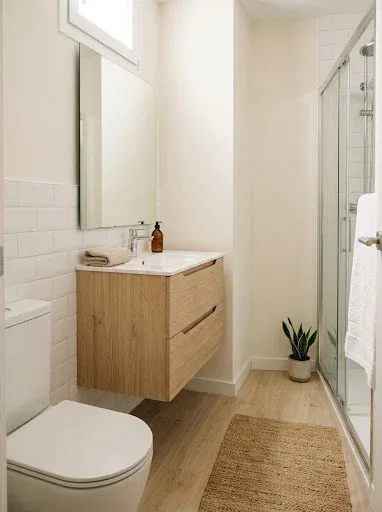
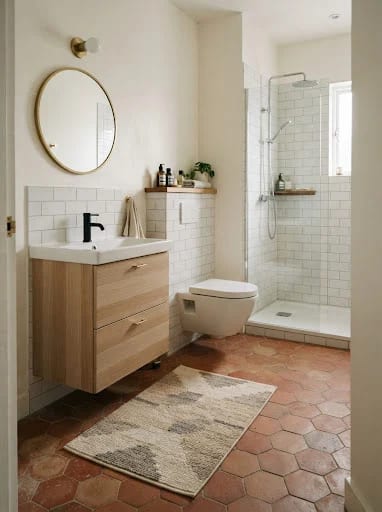
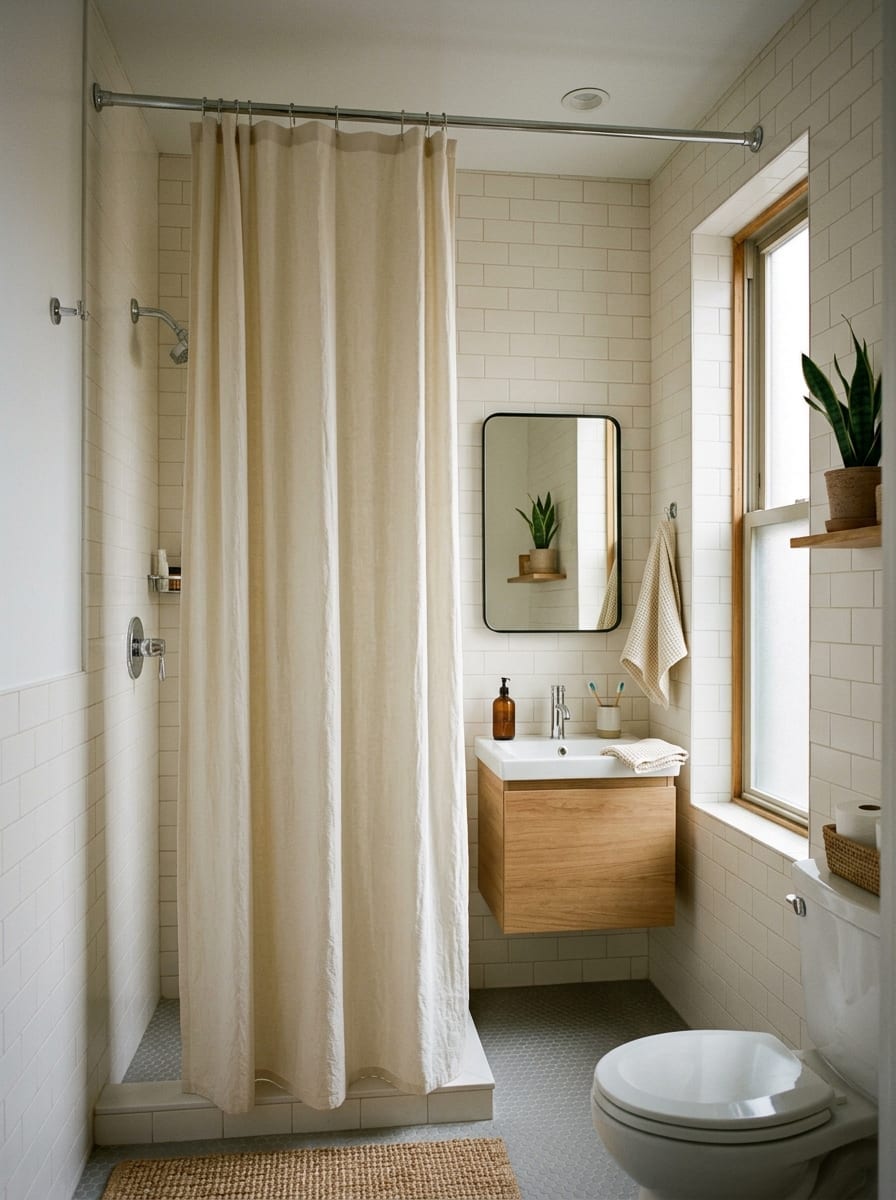
A floating vanity is one of the clearest ways to reduce visual weight in a small bathroom. Because the cabinet stops above the floor, you can still see flooring underneath. That visible floor creates a lighter impression even when the vanity contains real storage.
Why it works
A traditional vanity reads as: counter + cabinet + base + floor footprint A floating vanity removes the base from that equation. The room gains:
- clearer sightlines
- easier floor cleaning
- less visual heaviness
Use drawers instead of one deep cavity
A floating vanity becomes especially useful when it includes:
- one shallow upper drawer
- one or two deeper lower drawers That makes small products easier to reach than a large cabinet where everything disappears behind plumbing.
Keep it proportionate
Floating does not automatically mean compact. A very deep floating vanity can still project too far into the room. Measure depth carefully.
Let the gap underneath stay open
Avoid filling the visible space underneath with:
- baskets
- bins
- spare toilet paper or you lose much of the visual benefit.
2. The Slim-Depth Vanity
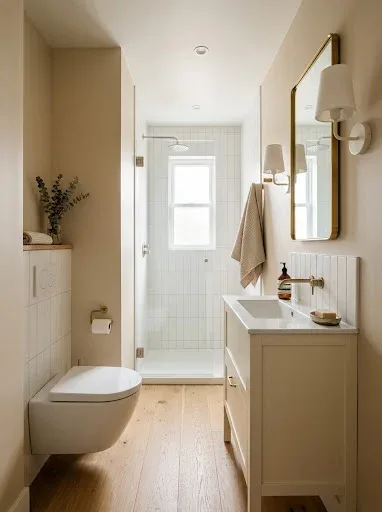
In a narrow bathroom, depth may matter more than width. A vanity that projects only slightly less into the room can noticeably improve circulation.
Why depth matters
Imagine a bathroom with the vanity facing:
- toilet
- tub
- opposite wall Every extra inch of cabinet depth reduces the space between those elements. That can make the room feel tight even if the vanity is not especially wide.
Look for shallower designs
A slim-depth vanity can still provide storage through:
- drawers
- narrow internal shelves
- vertical compartments
Use a compact sink
Some slim vanities pair well with:
- shallow integrated sink
- compact basin rather than an oversized sink that consumes the entire cabinet.
Check faucet placement
A shallow vanity still needs enough usable space for:
- faucet
- handwashing
- basic counter items Do not choose something so shallow that normal use becomes awkward.
3. The Tall-Drawer Vanity
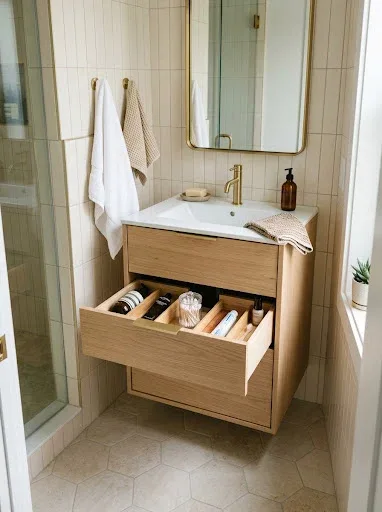
If the bathroom can handle a little more height but not more depth, use the cabinet vertically. A taller drawer stack can provide more organized storage within a relatively modest footprint.
Why drawers help
Drawers allow you to see what you own. They work well for:
- skincare
- grooming products
- hair accessories
- cleaning cloths
- spare toiletries
Use shallow drawers for small items
Top drawer:
- toothbrush supplies
- grooming tools
- daily products
Use deeper drawers lower down
Lower drawers:
- hair dryer
- larger bottles
- backup products
Avoid oversized drawer fronts
A vanity with huge heavy panels may visually dominate the room. Simple proportions keep it lighter.
4. The Wall-to-Wall Compact Vanity
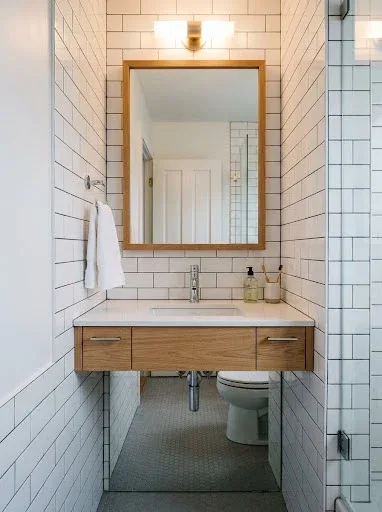
Sometimes a bathroom has a narrow recess between two walls. Instead of placing a small vanity in the middle and leaving unusable gaps on both sides, a fitted or nearly wall-to-wall vanity can make better use of the width.
Why this works
The cabinet uses the area already defined by the architecture. You avoid awkward slivers that collect:
- dust
- bottles
- cleaning tools
Keep the overall depth modest
Wall-to-wall does not mean large. A shallow fitted vanity can still feel compact.
Use the extra width wisely
Instead of enlarging the sink, use the available surface for:
- one small daily tray
- soap
- a little counter space
Keep the mirror proportional
A mirror aligned with the vanity can help visually widen the niche.
Best for
Bathrooms where the vanity sits:
- between two short walls
- inside an alcove
- at the end of a narrow room
5. The Open-Leg Vanity
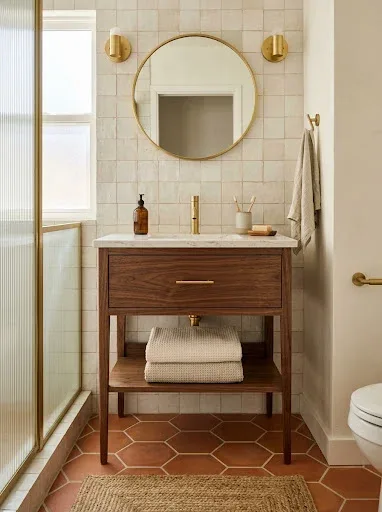
Not every small bathroom vanity needs to be a solid cabinet from counter to floor. An open-leg design can give the room a lighter furniture-like feel.
How it works
The vanity may include:
- one drawer
- one small shelf
- open legs instead of a full boxed cabinet.
Why it feels lighter
You see more:
- wall
- floor
- negative space around the structure.
Use the open shelf carefully
A shelf can hold:
- two folded towels
- one closed basket but avoid filling it with many small products.
Good for lower-storage households
This works best when you already have:
- medicine cabinet
- linen storage elsewhere and do not need the vanity to hold everything.
The tradeoff
You gain visual openness but lose some concealed storage. That is intentional.
6. The One-Drawer Minimal Vanity
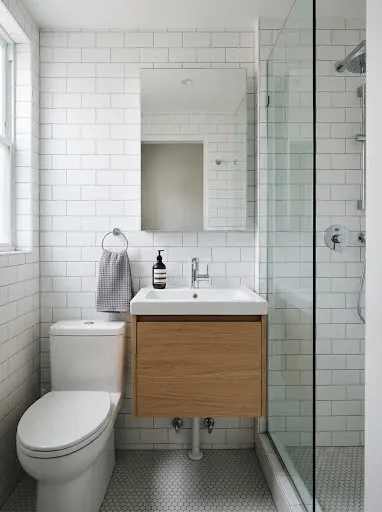
Sometimes one good drawer is more useful than several poorly arranged cabinets. A minimal vanity can work particularly well in very small bathrooms.
Keep the storage focused
Use the drawer for:
- daily skincare
- toothbrush supplies
- grooming tools Move:
- backups
- cleaning products
- spare towels to deeper storage elsewhere.
Why this can work better
If you try to force all bathroom storage into a tiny vanity, the cabinet often becomes:
- bulky
- deep
- visually heavy A smaller vanity protects the room.
Pair it with other efficient storage
For example:
- medicine cabinet
- shallow wall shelf rather than another floor cabinet.
7. The Corner Vanity
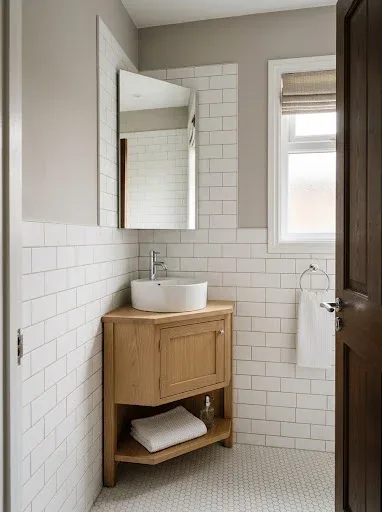
A corner vanity can make sense when the bathroom layout leaves an awkward corner but very little straight wall space.
When it works
Useful in:
- tiny powder rooms
- narrow bathrooms
- bathrooms with awkward door placement
Why it can help
The vanity occupies a space that may otherwise be difficult to use.
Do not assume every corner needs one
Corner vanities can also create:
- unusual sink angles
- awkward mirror placement So the layout has to support it.
Protect the door swing
Make sure:
- bathroom door
- vanity drawers
- cabinet doors can all open comfortably.
Keep the basin compact
An oversized sink can make a corner vanity feel much larger than necessary.
8. The Vanity + Medicine Cabinet Pairing
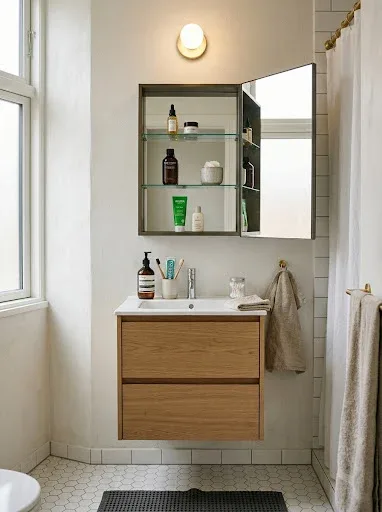
One of the easiest ways to prevent an oversized vanity is to move some storage upward. A mirrored medicine cabinet gives you storage at eye level while allowing the vanity below to remain smaller.
Good items for the medicine cabinet
Use it for:
- skincare
- dental care
- grooming products
- small medications where appropriate
Keep larger categories below
The vanity can hold:
- hair tools
- larger bottles
- cleaning supplies
Why the pairing works
Instead of asking one cabinet to do everything, storage is divided between: wall + vanity That can reduce the need for a wide or deep floor cabinet.
Keep the wall cabinet shallow
A medicine cabinet should not project far enough to make the sink area uncomfortable.
9. The Light-Finish Storage Vanity
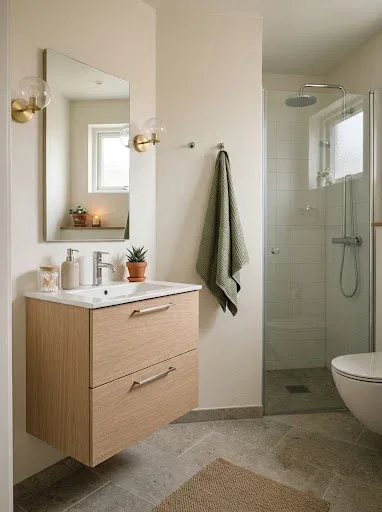
Color will not change the physical dimensions of the vanity, but it can change how visually heavy it feels. In a very small room, a lighter cabinet may blend more easily with the walls and floor.
Good options
Try:
- pale oak
- soft greige
- warm white
- muted light taupe
This does not mean dark vanities are wrong
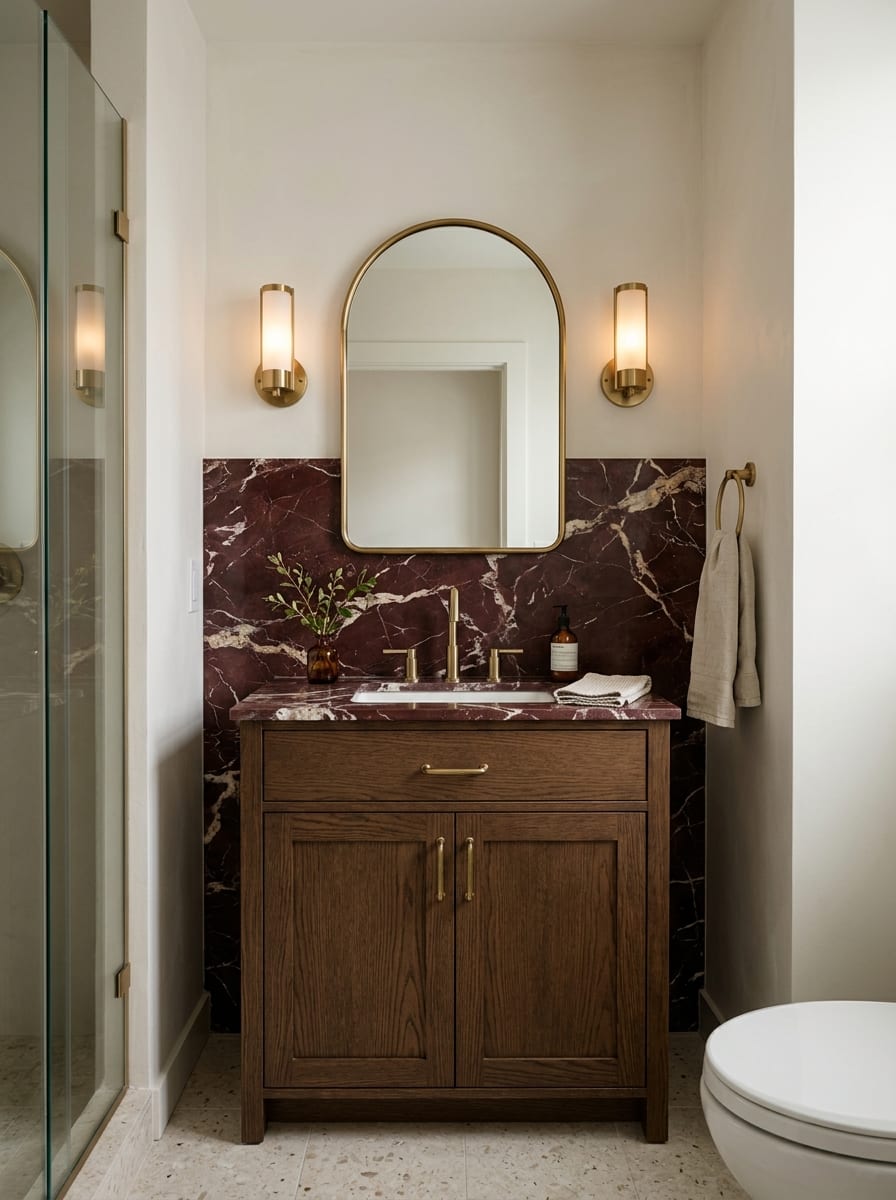
A dark vanity can look excellent in a small bathroom. But if your primary goal is visual openness, lighter finishes generally create less contrast against a light room.
Keep the hardware simple
Large dark handles can make a small cabinet feel busier. Try:
- integrated pull
- slim handle
- minimal knob
Avoid making everything white
The room still benefits from texture and contrast. Wood grain is useful because it adds warmth without adding clutter.
10. The Right-Size Vanity Formula
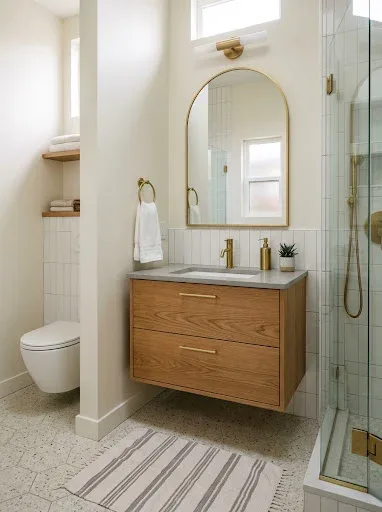
The best small bathroom vanity is not automatically the smallest one. It is the smallest one that still supports how the bathroom is actually used. Use this formula: storage need + sink function + circulation = vanity size
Step 1: Identify what must live inside
List only the items the vanity genuinely needs to hold.
Step 2: Protect the walkway
Measure the distance between the vanity and:
- toilet
- tub
- opposite wall
Step 3: Check door and drawer movement
Open:
- bathroom door
- vanity drawers
- nearby cabinet at the same time.
Step 4: Check the sink
Make sure the basin is comfortable enough for normal use.
Step 5: Choose storage type
Decide whether the cabinet needs:
- drawers
- shelves
- open storage based on what you actually own.
Width Is Only One Dimension
A vanity can be narrow but still feel bulky because it is:
- very deep
- tall
- visually heavy Consider all three: width x depth x height
Depth Can Matter More Than Width
This is especially true in narrow bathrooms. Reducing projection into the room can improve:
- circulation
- sightlines
- comfort more than reducing the width along the wall.
Measure the Vanity With Drawers Open
A vanity fits physically when closed. But it has to work when open. Check whether a drawer collides with:
- toilet
- door
- shower
- another person standing nearby
Keep Door Swing Clear
The bathroom door should not:
- hit the vanity
- block drawers
- force you to stand awkwardly If the door swings inward, test the full arc.
Watch Toilet Clearance
Do not choose a vanity that makes the toilet area uncomfortable. The room has to function as a whole.
Watch Shower and Tub Access
If the vanity sits near a tub or shower, make sure it does not interfere with:
- entering
- shower door
- curtain movement
Do Not Size the Vanity Around Backup Products
Backup toiletries can be stored:
- closet
- linen shelf
- higher cabinet Do not sacrifice bathroom floor space for items you open once every few weeks. Drawers vs Doors This is one of the most important decisions. Drawers Better for:
- small bottles
- grooming
- daily skincare because you can see everything from above. Cabinet doors Better for:
- taller bottles
- cleaning supplies
- larger items Mixed vanity Often the most practical:
- shallow drawer
- deeper drawer
- small cabinet section
Deep Cabinets Can Waste Space
A large cabinet may look spacious but become difficult to use if products disappear behind:
- plumbing
- front row items Sometimes two drawers provide more usable organization than one large cavity.
Work Around the Plumbing
Sink plumbing affects storage. Before assuming a vanity has full drawers, check:
- pipe placement
- drawer cutouts
- usable internal dimensions Two vanities with the same exterior size can provide very different usable storage.
Integrated Sink vs Vessel Sink
Integrated sink Can create a clean, compact surface. Vessel sink May allow storage below differently, but also adds height and can reduce usable counter area depending on the design. Neither is automatically better. Choose based on:
- vanity height
- counter space
- storage
- comfort
Keep the Countertop Useful
A vanity can be so small that the sink consumes almost the entire top. That may work in a powder room. For a daily bathroom, you may want enough surface for:
- soap
- toothbrush holder
- one small tray You do not need a huge counter, but a little functional space helps.
Floating vs Freestanding Vanity
Floating vanity Best when you want:
- visible floor
- lighter appearance
- easy floor cleaning Freestanding vanity Best when you want:
- simpler installation
- traditional storage
- furniture-like presence The right choice depends on the room and installation conditions.
When a Floating Vanity Is Not the Best Choice
A wall-mounted vanity requires:
- appropriate support
- suitable wall
- proper installation If those conditions are not available, a compact freestanding vanity may be more practical.
Do You Need a Double Vanity?
Usually not in a genuinely small bathroom. Two sinks consume:
- counter space
- plumbing space
- cabinet storage A single sink with more usable counter and drawers may work better.
Use a Large Mirror Without a Large Vanity
A bigger mirror can make a vanity zone feel broader without adding floor footprint. Try:
- mirror slightly wider than sink
- wide medicine cabinet But keep it proportional to the wall.
Use Lighting to Reduce Visual Heaviness
A dark corner makes cabinetry feel heavier. Good lighting around the vanity helps:
- grooming
- depth perception
- overall openness Try:
- mirror lighting
- wall sconces where appropriate
- good overhead lighting
Avoid Overdecorating the Vanity
A compact vanity does not need:
- vase
- candle
- framed art
- several jars
- tray
- plant all on the countertop. Give the storage some breathing room.
Keep Daily Products Contained
A beautiful vanity still looks crowded if ten bottles stay on top. Use:
- drawer
- medicine cabinet
- one small tray for daily products.
The Best Storage Is Storage You Can Reach
Do not chase maximum capacity. A vanity with more storage but awkward:
- shelves
- deep corners
- narrow doors may be less useful than a smaller vanity with good drawers.
Think About Cleaning
Small bathrooms collect:
- dust
- hair
- water Choose a vanity that is easy to clean around. Floating vanities make the floor easier. Very tight floor gaps can do the opposite.
Avoid Tiny Gaps Beside the Vanity
If possible, avoid leaving a narrow gap that is:
- too small to use
- too small to clean Either:
- leave meaningful open space or:
- fit the vanity neatly to the available width
Use Closed Storage for Visually Busy Items
Hair tools and toiletries usually create visual noise. Closed drawers are useful because they hide:
- labels
- cords
- packaging
Open Shelves Work Best for Simple Categories
If your vanity includes an open shelf, use it for:
- folded towels
- one basket not 15 small products.
A 24-Inch Vanity
Can work well when:
- bathroom is very tight
- one person uses it
- additional wall storage exists Prioritize:
- good drawer design
- compact basin
A 30-Inch Vanity
Often offers a useful balance between:
- counter space
- storage
- compact footprint but the room layout still matters more than the nominal size.
A 36-Inch Vanity
Can provide more comfortable storage and counter space if the bathroom has enough:
- wall width
- circulation Do not choose it simply because it fits between two walls. Check how it affects the rest of the room.
What If the Bathroom Is Extremely Narrow?
Focus on:
- shallow depth
- floating design
- compact sink
- wall storage before increasing cabinet width.
What If There Is Almost No Storage?
Do not automatically buy the biggest vanity. Combine: Vanity for daily and bulky items. Medicine cabinet for small daily products. High storage for backup items. That distributes storage vertically.
What If You Rent?
Major vanity replacement may require landlord approval and proper installation. If replacement is not practical, improve the existing vanity with:
- drawer organizers
- internal bins
- door-mounted storage where suitable
- medicine cabinet
- nearby wall storage without modifying fixtures in ways that violate the lease.
What If the Existing Vanity Is Too Bulky?
Before replacing it, check whether the problem is actually:
- depth
- dark finish
- counter clutter
- oversized mirror Sometimes the vanity is acceptable but the whole zone needs editing.
Should the Vanity Match the Bathroom Wall?
Not necessarily. But low contrast can make cabinetry feel quieter. Try:
- warm white against cream wall
- pale oak against white wall
- light taupe against greige
Can a Dark Vanity Work in a Small Bathroom?
Yes. A dark vanity can create a strong focal point. Keep the rest of the room lighter and avoid combining it with:
- heavy hardware
- dark walls
- crowded counter unless that mood is intentional.
Use One Strong Finish
Small bathrooms often look calmer when the vanity uses one dominant material. For example: oak cabinet + white sink rather than:
- two woods
- patterned stone
- ornate hardware
- decorative paneling all at once. Common Small Bathroom Vanity Mistakes Choosing based only on width Depth matters too. Buying the biggest vanity that technically fits Technical fit is not comfortable fit. Ignoring drawer clearance Test the vanity open. Using storage that is too deep Accessible storage matters more than raw volume. Filling the floor under a floating vanity That removes the openness. Choosing an oversized sink The sink can consume useful counter and cabinet space. Trying to store all bathroom supplies in the vanity Backups can live elsewhere. Using too much open storage Products quickly become visual clutter. Blocking the door Always test the swing. Ignoring plumbing Internal storage may be smaller than it appears. A Vanity Planning Checklist Before choosing a vanity, record:
Wall width
How much horizontal room is actually available?
Maximum comfortable depth
How far can it project without hurting circulation?
Door swing
Does anything collide?
Nearby fixtures
Where are the toilet, shower and tub?
Plumbing
Where do the pipes enter?
Storage requirement
What genuinely needs to live there?
Sink requirement
How much basin space is comfortable?
Counter requirement
Do you need almost none, a small landing area or a meaningful daily-use surface? The Painter’s Tape Test Before buying, mark the approximate vanity footprint on the floor with painter’s tape. Then move through the bathroom normally. Test:
- entering
- standing at sink
- using toilet
- opening shower
- opening door If the outline already feels intrusive, the vanity is probably too large. Which Vanity Idea Fits Your Bathroom? Choose the Floating Drawer Vanity if: You want maximum visual openness while keeping concealed storage. Choose the Slim-Depth Vanity if: The bathroom is narrow. Choose the Tall-Drawer Vanity if: You need more organization without increasing floor width. Choose the Wall-to-Wall Vanity if: The vanity sits in a narrow alcove. Choose the Open-Leg Vanity if: You need only moderate storage and want a lighter look. Choose the One-Drawer Vanity if: The bathroom is extremely small. Choose the Corner Vanity if: Straight wall space is limited. Use the Vanity + Medicine Cabinet Pairing if: You need storage but do not want a larger base cabinet. Choose a Light-Finish Vanity if: The current cabinet feels visually heavy. Use the Right-Size Formula if: You are replacing the vanity and do not know what dimensions to prioritize. Final Thoughts A small bathroom vanity should not be judged by how much it can hold. It should be judged by how well it balances: storage, sink function and circulation. The most useful small-space vanity may be:
- shallower
- floating
- drawer-based
- paired with wall storage rather than simply bigger. Start with the room. Protect the walking space. Measure with drawers and doors open. Decide what actually needs to live inside the vanity. Then choose the smallest cabinet that comfortably does those jobs. A well-sized vanity should make the bathroom more useful without becoming the reason the bathroom feels small.