11 Small Apartment Reading Nook Ideas That Turn Unused Corners Into Cozy Retreats
Discover 11 small apartment reading nook ideas that turn awkward corners, window edges, and closets into cozy, functional retreats without clutter.
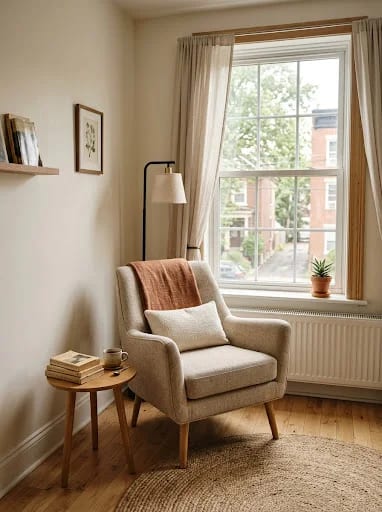
Compact apartment reading nook beside a window with a comfortable armchair, side table, and slim floor lamp
In This Guide
A reading nook sounds like something you need a spare room for, but a small apartment usually has more potential than it seems.
The trick is not creating another full furniture zone. It is finding a small area that already has some of what a reading spot needs, such as natural light, a quiet corner, an unused wall, or a little space beside existing furniture.
A comfortable chair can become a reading nook when it has the right light, somewhere to put a book, and enough clearance to use it without constantly moving other furniture.
The best small apartment reading nook ideas therefore focus on micro-zones rather than extra rooms. You can use a forgotten corner, the end of a bedroom, a closet, or even a narrow strip beside a window without making the apartment feel more crowded.
Here are 11 ways to create one.
1. The Window-Edge Reading Chair
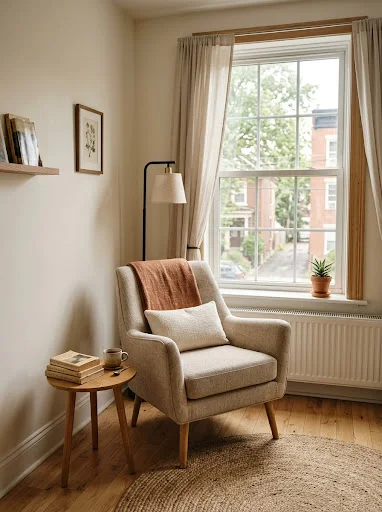
A window is one of the easiest places to build a reading nook because it already gives the space a natural focal point.
Instead of filling the area with furniture, place one comfortable compact chair near the window and keep the rest of the zone intentionally simple. A small round table or narrow drink table can hold a book, glasses, or a cup without requiring a full side table.
Pay attention to the direction of the sunlight. A chair that looks beautiful in a photograph may be uncomfortable if direct afternoon sun hits the reader’s face or creates glare on a screen.
A floor lamp can make the nook usable after dark without requiring a large table lamp.
Small-space rule
Let the window provide the visual interest. You usually do not need a large gallery wall or several decorative pieces around it.
Design name: The Window-Edge Reading Chair
2. The Dead-Corner Reading Nook
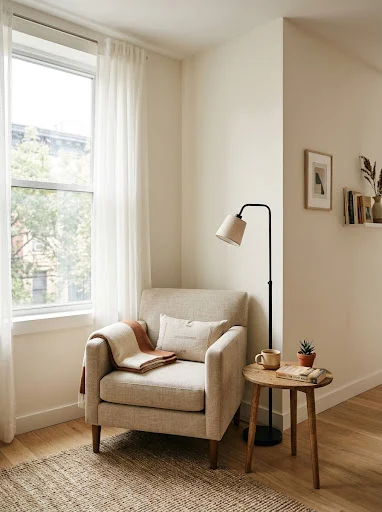
That awkward corner that never seems large enough for useful furniture can sometimes be perfect for a reading chair.
Look for corners that are outside the main traffic path. A chair placed diagonally into a corner can use space that would otherwise remain visually empty.
The important part is choosing the right footprint. A deep lounge chair may turn the corner into an obstacle, while a compact armchair can provide the same function with much less intrusion.
Add one light source and one small surface, then stop.
The nook should feel like a deliberate little destination, not a storage area disguised as a reading corner.
What to check first
- Can the chair be pulled out comfortably?
- Does it interfere with a door?
- Does it narrow the main walking route?
- Is there enough room to stand up without hitting nearby furniture?
- Can you light the chair without running a cord across the floor?
Design name: The Dead-Corner Reading Nook
3. The Closet Reading Nook
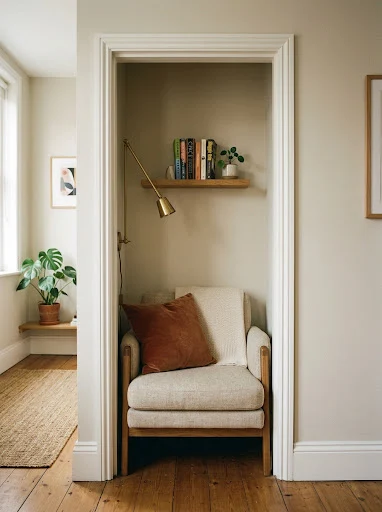
If your apartment has a shallow closet, unused storage alcove, or awkward built-in recess, it may offer enough depth for a cozy reading zone.
This works particularly well when the space can be cleared without sacrificing storage you actually need.
A small chair or compact bench can sit inside the opening, while a wall-mounted reading light keeps the floor free. A narrow shelf can provide a place for a few books without turning the nook into another storage project.
If the area is an active closet, however, do not force it into a reading nook. A space that has to store everyday clothing or household essentials may be more useful left as storage.
The goal is to reclaim underused space, not remove necessary storage.
Design name: The Closet Reading Nook
4. The Foot-of-Bed Reading Spot
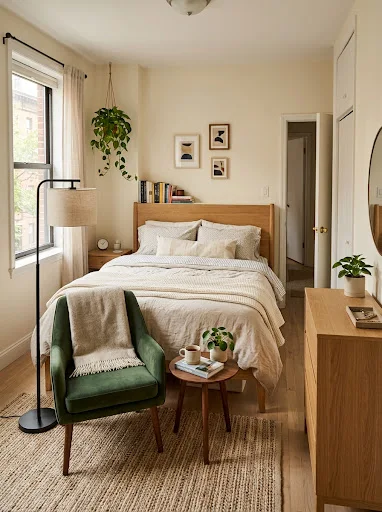
The end of a bed can become a natural reading zone when the bedroom layout leaves enough clearance.
Instead of placing a large bench across the entire bed, use one compact chair slightly off-center. This creates a separate destination without visually dividing the bedroom.
A small rug can help define the nook, but it is not essential. The chair itself can provide enough visual separation when paired with a dedicated reading light.
This setup works especially well when the bedroom does not have room for a separate lounge area.
Before committing, check the distance between the chair and the bed. You should be able to pull the chair out, sit down, and walk around the bed without creating a narrow obstacle course.
Design name: The Foot-of-Bed Reading Spot
5. The Living Room Corner Nook
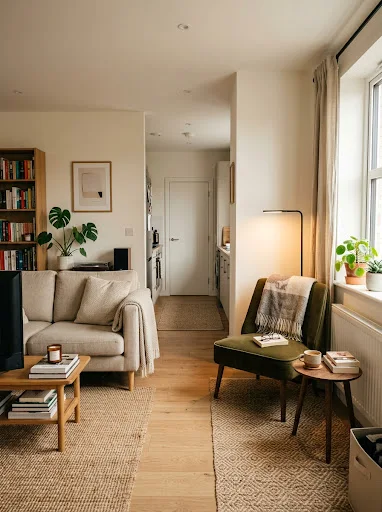
You do not always need to separate a reading nook from the living room.
A corner beside the main sofa can become a reading zone simply by giving it a different purpose. Place a compact chair slightly apart from the sofa, then use a dedicated lamp to visually establish the area.
This is particularly useful in a small apartment where one room has to serve several functions.
Keep the chair visually lighter than the main sofa if possible. A slim frame, exposed legs, or a smaller silhouette can prevent the room from feeling like it has two full seating arrangements.
The reading nook should complement the living room rather than compete with it.
Design name: The Living Room Corner Nook
6. The Slim Wall Shelf Nook
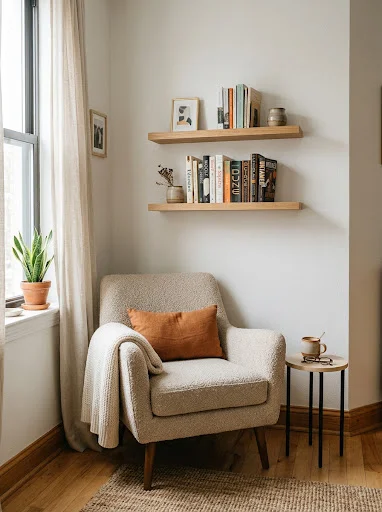
A reading nook does not need a traditional bookcase.
If floor space is limited, use the wall above the chair for a slim shelf. One or two narrow shelves can hold a small selection of books, a lamp, or a few personal objects without taking up the floor area needed for the chair.
Keep the shelf shallow and visually light.
This approach is especially useful when the reading chair sits in an otherwise empty wall section. The shelf gives the area a purpose without requiring a large storage piece.
For renters, the installation method matters. Use an appropriate removable or low-impact mounting option where permitted, and consider the weight of the shelf and books before installing it.
Design name: The Slim Wall Shelf Nook
7. The Narrow Gap Reading Zone
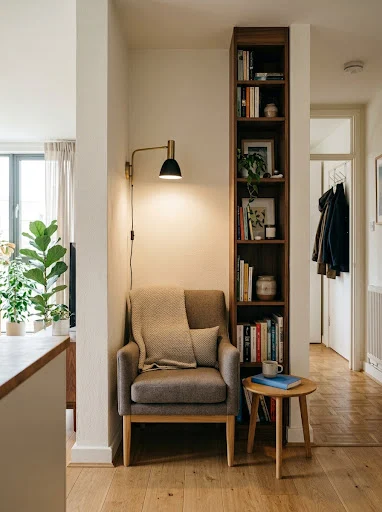
Sometimes the best reading nook is only a narrow strip between two existing pieces of furniture.
Look for spaces beside a wardrobe, between a sofa and a wall, or at the end of a room where a compact chair can fit without changing the overall layout.
The key is to measure before buying anything.
A chair may physically fit into a gap but still be impractical if its arms, recline, or seat depth interfere with nearby furniture.
Choose the smallest comfortable chair that works for the space, then keep the rest of the zone minimal.
A wall-mounted light can be particularly useful here because it eliminates the footprint of a floor lamp.
Design name: The Narrow Gap Reading Zone
8. The Window Bench Nook
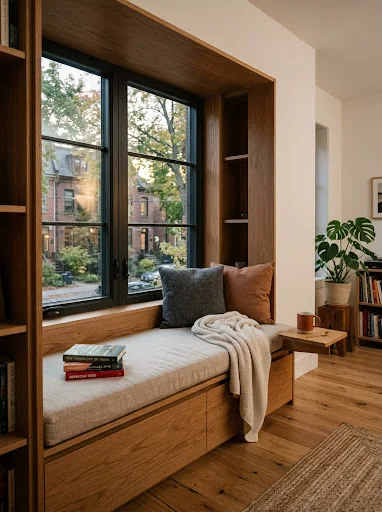
If your apartment already has a wide window sill, built-in bench, or suitable low ledge, you may be able to create a reading spot without adding a chair at all.
Add a comfortable seat cushion, one or two pillows, and a small nearby surface for books.
This is one of the most space-efficient approaches because the seating area is integrated into architecture that already exists.
Do not assume every window ledge is suitable for sitting, though. Check that it is structurally appropriate and safe before treating it as seating.
For a rental, a freestanding bench placed below the window can create a similar effect without altering the building.
Design name: The Window Bench Nook
9. The Floor-Lamp Reading Corner
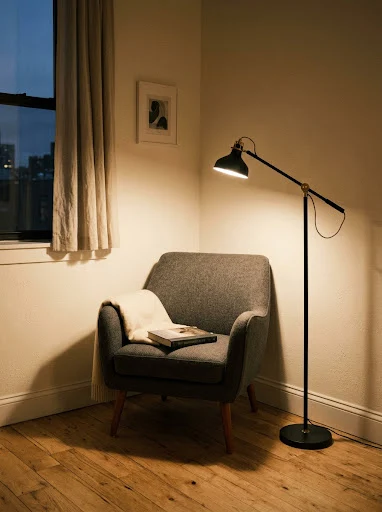
If you already have an empty corner but do not want to add a table, use the lighting to define the nook.
A comfortable chair plus a well-positioned floor lamp can be enough.
This is one of the simplest formulas for renters because it does not require much furniture or permanent installation. It also keeps the visual footprint small.
Choose a lamp that directs light toward the reading position rather than simply illuminating the whole room. The shade and arm should work with the chair’s location, and the base should sit somewhere that does not create a tripping hazard.
A small basket for one or two blankets can be added if there is genuinely enough room.
Design name: The Floor-Lamp Reading Corner
10. The Foldaway Reading Nook
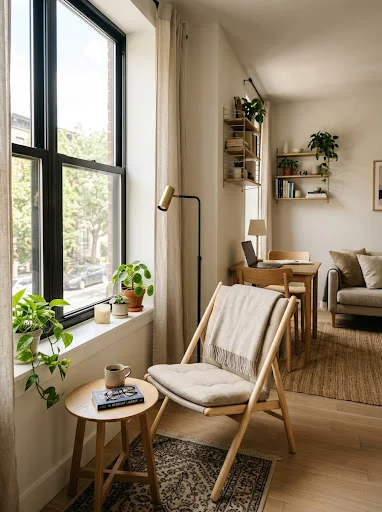
A permanent chair is not always the best solution for a very small apartment.
A comfortable folding chair or lightweight lounge seat can create a reading spot when you want one and disappear when the room needs to serve another purpose.
This works particularly well in studio apartments or rooms that double as living and working spaces.
Store the chair vertically or in another appropriate location when it is not being used. The goal is to create a temporary micro-zone rather than permanently dedicate valuable floor space.
Choose something that is genuinely comfortable enough to read in. A chair that looks compact but has poor back support will quickly become decorative instead of functional.
Design name: The Foldaway Reading Nook
11. The Curtain-Framed Reading Retreat
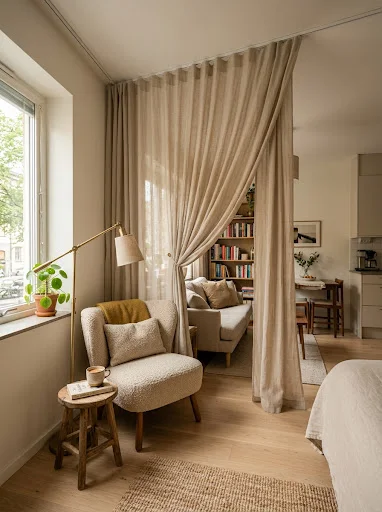
A curtain can visually separate a reading nook without requiring a solid room divider.
This can work especially well in a studio apartment where the reading area needs to feel distinct from the sleeping or living zone.
Use a lightweight curtain to frame the nook rather than completely close it off. When open, the room remains visually connected. When partially drawn, the reading chair feels more private.
Keep the fabric light enough that it does not make the compact room feel boxed in.
The curtain should define the zone, not become another major visual element competing with the furniture.
Design name: The Curtain-Framed Reading Retreat
How to Choose the Right Reading Nook for a Small Apartment
The best reading nook is usually the one that works with your existing layout instead of requiring you to redesign the room around it.
Start by looking for unused space that already has one useful feature:
- Natural light from a window
- An empty corner
- A shallow alcove
- An unused closet
- Space beside the bed
- An underused section of the living room
- A suitable window bench
- A narrow wall section
Then add only what the space actually lacks.
If the area already gets good light, you may only need a chair and small surface. If it is naturally dark, lighting becomes the priority. If books are the main reason you want the nook, add vertical storage rather than a bulky bookcase.
This prevents the common mistake of buying a complete “reading nook set” and then discovering that the furniture takes up more space than the activity itself.
The Small Reading Nook Formula
A practical small-apartment reading nook can usually be built around four elements:
1. A comfortable seat
Choose the smallest chair that genuinely supports the way you like to read.
2. Focused light
Use a floor lamp, wall light, or suitable table lamp so the reading position is comfortable after dark.
3. A tiny landing surface
A narrow table, wall shelf, or nearby ledge is usually enough for a book and a drink.
4. Clear access
Make sure you can sit down, stand up, and walk around the nook without moving other furniture.
Everything else is optional. A rug, pillow, blanket, artwork, plant, or decorative object can make the nook feel more personal, but none of them should compromise the basic function.
How Much Space Does a Reading Nook Need?
There is no single universal footprint because chairs, rooms, and layouts vary.
Instead of designing around a fixed number, measure the actual furniture you are considering:
- Overall chair width
- Chair depth
- Arm and back clearance
- Space needed to pull the chair into position
- Distance from nearby furniture
- Door and drawer swings
- Walking paths
- Lamp footprint
- Outlet location if a powered light is needed
The important question is not simply “Will the chair fit?”
It is: “Can I use the chair comfortably without making the rest of the room harder to use?”
That distinction matters much more in a small apartment.
Lighting a Small Reading Nook
Good lighting can make a tiny reading nook feel intentional instead of like a chair pushed into a corner.
Use the existing natural light when possible, but do not rely on it alone. For evening reading, consider:
- A focused floor lamp
- A wall-mounted reading light
- A compact table lamp
- An adjustable lamp positioned beside or behind the chair
Avoid placing the light directly where it creates glare on a screen or shines into your eyes.
Also pay attention to cords. A reading lamp is not useful if its cable has to cross the main walking path.
Common Small Reading Nook Mistakes
Buying the chair first
A beautiful chair is not a layout plan. Measure the available space before choosing furniture.
Making the nook too decorative
A reading nook does not need a giant stack of books, multiple pillows, plants, artwork, baskets, and accessories. Too many small objects can make a compact zone feel visually noisy.
Ignoring the light
A chair in the perfect corner is still a poor reading nook if you cannot see comfortably after sunset.
Blocking circulation
Do not place the nook where someone has to squeeze past the chair to reach a door, window, wardrobe, or another frequently used area.
Choosing furniture that is technically small but uncomfortable
Small does not mean unusable. The goal is to reduce the footprint without removing the comfort that makes the nook worth having.
Treating every empty corner as available space
Some empty areas are empty for a reason. They may provide clearance for doors, circulation, drawers, or access to utilities. A useful reading nook should improve the room rather than interfere with it.
A Simple Small-Apartment Reading Nook Formula
If you are starting from scratch, use this sequence:
Find one underused zone → choose the smallest comfortable seat → add focused lighting → provide one tiny place for a book → protect the walking path → stop decorating.
That last step matters.
A reading nook does not need to look like a separate room. In a small apartment, its success comes from making one small part of the existing room feel more purposeful.
Conclusion
The best small apartment reading nook is not necessarily the most elaborate one.
It might be a chair beside a window, a quiet corner at the end of the bedroom, an unused closet, or a small space beside the sofa. What matters is that the nook gives you a comfortable place to read without asking the rest of the apartment to give up too much space.
Start with the area you already have, identify what it is missing, and add only those pieces.