10 Thanksgiving Table Settings for Small Tables That Still Feel Special
10 Thanksgiving table settings for small tables, from layered chargers to sprig-tied napkins, with place settings that fit tight elbows and leave room for food.
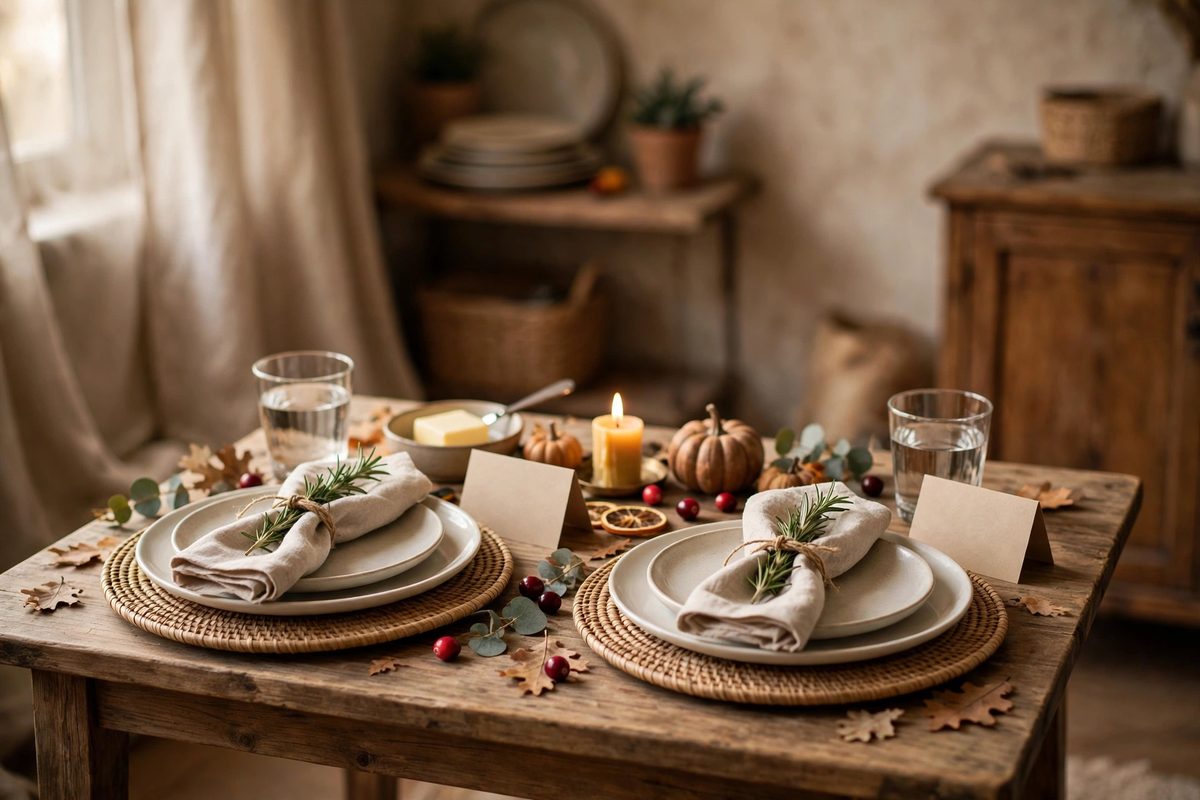
Small Thanksgiving table set with layered plates, cloth napkins tied with rosemary, and simple name cards
In This Guide
A Thanksgiving table setting on a small table is a geometry problem. Each guest gets about 18 to 20 inches of table edge, and into that space you have to fit a plate, a napkin, flatware, a glass, and a little bit of beauty. A full formal setting with five pieces of flatware and three glasses does not fit, and trying to force it is how guests end up eating with their elbows pinned to their sides.
The fix is editing, not shrinking. One plate, one napkin, one fork, one knife, one glass, and one small beautiful detail per person. That is a complete Thanksgiving setting on a small table, and it leaves room for the food, which is the point. These 10 Thanksgiving table settings for small tables work for four to six guests, and each one keeps the setting inside its 18 inches. For the full table, see the Thanksgiving tablescape ideas for small dining tables, and for what sits in the middle, the Thanksgiving centerpiece ideas for small tables.
1. The Charger and Plate Stack
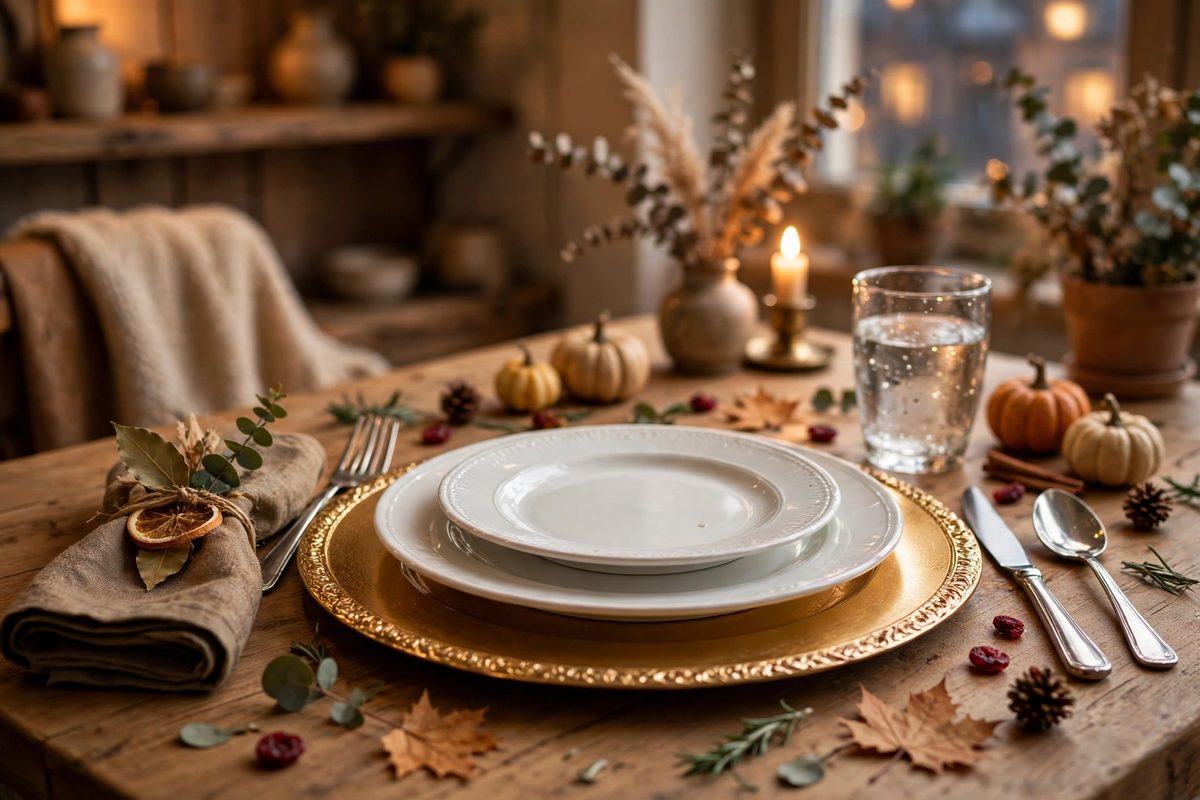
A charger under the dinner plate is the fastest way to make a small-table setting look formal. The charger is a large flat plate, 12 to 13 inches across, that sits under the dinner plate and frames it. It adds color and presence without adding a single extra item to the table, since the dinner plate would be there anyway.
Chargers cost 3 to 8 dollars each at discount stores, and you only need one per guest. Choose a charger in a warm metal, like gold or copper, or a deep solid color, like rust or forest green. The dinner plate goes on top, and a small salad plate or a folded napkin goes on top of that. The stack is about 2 inches tall, which is fine, since it comes apart as soon as dinner starts. The stack also protects the table from hot plates, which matters on a small table where the plate sits close to the edge.
How to make it work
Keep the charger flat. A charger with a deep rim eats vertical space and makes the stack wobbly. Put the charger down first, then the dinner plate, then the napkin, in that order, so the setting builds neatly. If the table is very small, skip the salad plate and put the napkin on the dinner plate instead, which saves 2 inches of height and one dish to wash.
2. Cloth Napkins With a Sprig Tie
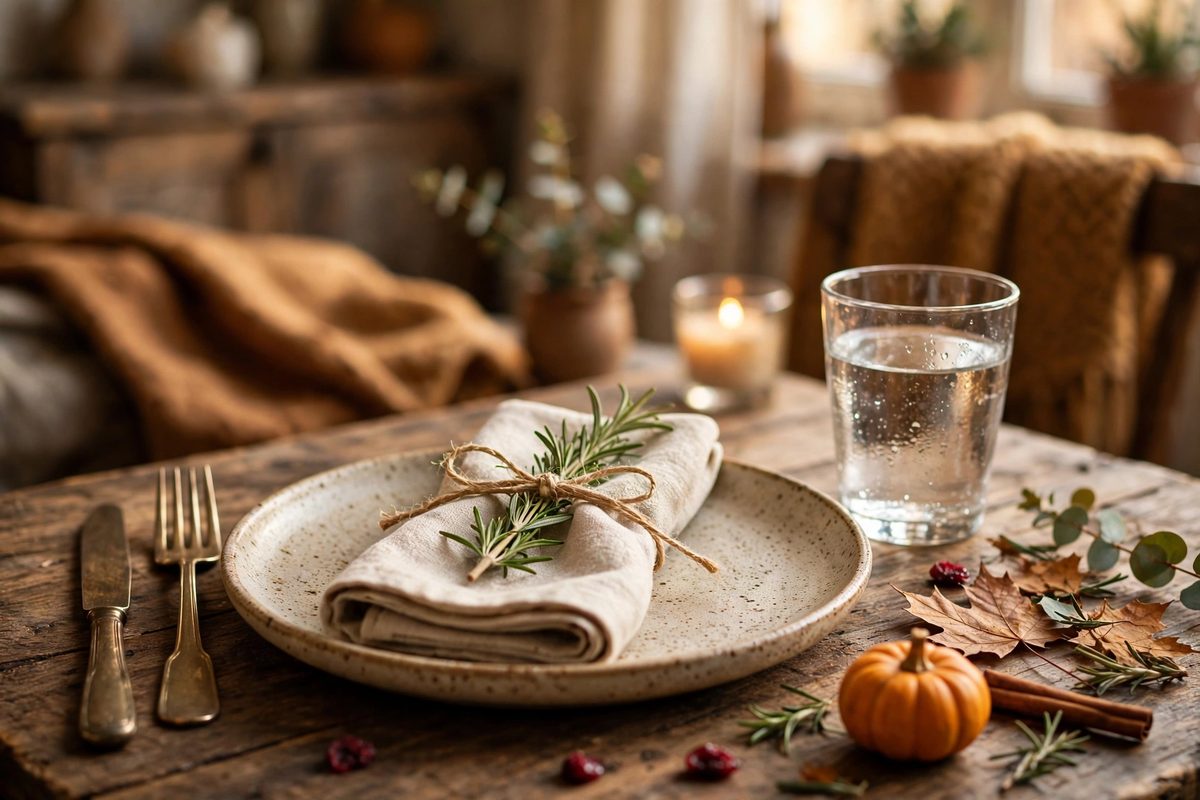
A cloth napkin tied with twine and a rosemary sprig is the cheapest beautiful thing on a Thanksgiving table. Fold the napkin into a rectangle, wrap a 12-inch piece of twine around the middle, and tuck a 4-inch rosemary sprig under the twine. The whole thing takes thirty seconds per napkin and costs almost nothing if you grow rosemary or buy one bunch for 2 dollars.
The sprig does three jobs. It holds the napkin folded, it adds scent, and it gives each guest something to notice when they sit down. Use rosemary for its scent and its stiff stems, or thyme for a softer look. The napkin itself should be cloth, not paper, since cloth folds cleanly and sits flat, while paper napkins puff up and slide. After dinner, the napkins go into the wash and the sprigs go into the cooking, so nothing is wasted. The sprig tie is the same detail that makes the Thanksgiving centerpiece feel finished, just at place-setting scale.
How to make it work
Fold the napkin into thirds, not a fancy shape, since a simple fold sits flatter and survives being carried to the table. Tie the twine in a simple bow, not a knot, so guests can undo it without a fight. Put the napkin on the dinner plate, not beside it, which saves 4 inches of table width per guest. If rosemary is not available, use a small dried leaf or a cinnamon stick instead.
3. Name Cards That Double as Favors
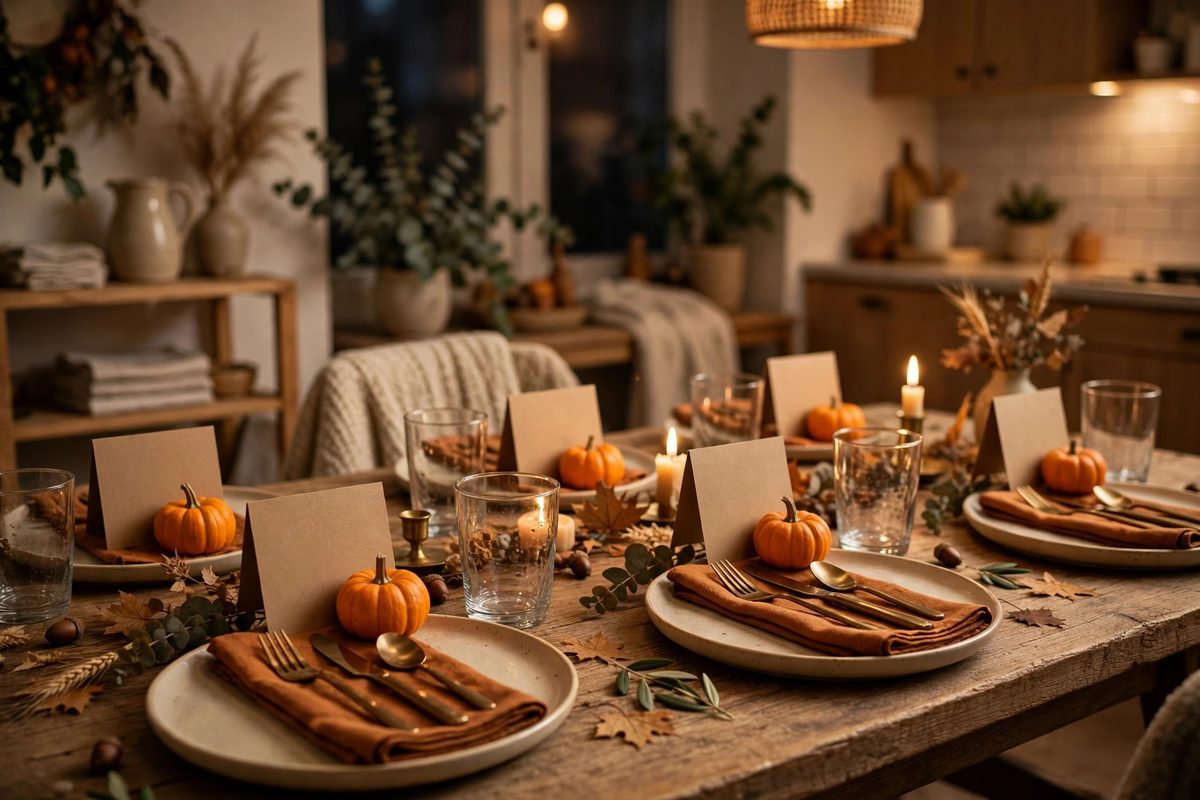
A name card that doubles as a favor is the best use of 3 inches of table space. Write each guest’s name on a small kraft card, 2 by 3 inches, and lean it against a mini pumpkin, a small apple, or a pinecone at the top of the plate. Guests find their seat, take the favor home, and the table gets a personal detail for the cost of the card.
The cards cost under 2 dollars for the whole table if you cut them from kraft paper yourself, and they solve the seating problem at the same time. On a small table, assigned seats matter more than on a large one, since the elbow room is tight and the wrong pairing makes dinner uncomfortable. Put the tallest guest at the ends if the table is rectangular, and keep couples apart if they tend to talk only to each other. The name cards also give the table a finished look in photos, which is why they appear in the Thanksgiving tablescape ideas too.
How to make it work
Write the names in dark ink on light card so they read from across the table. Lean the card against the pumpkin or the apple, not flat on the table, so it is visible when guests walk in. Keep the favor small enough to fit in a pocket or a bag, since a large favor becomes clutter the moment dinner starts.
4. The Narrow Runner as the Setting Anchor
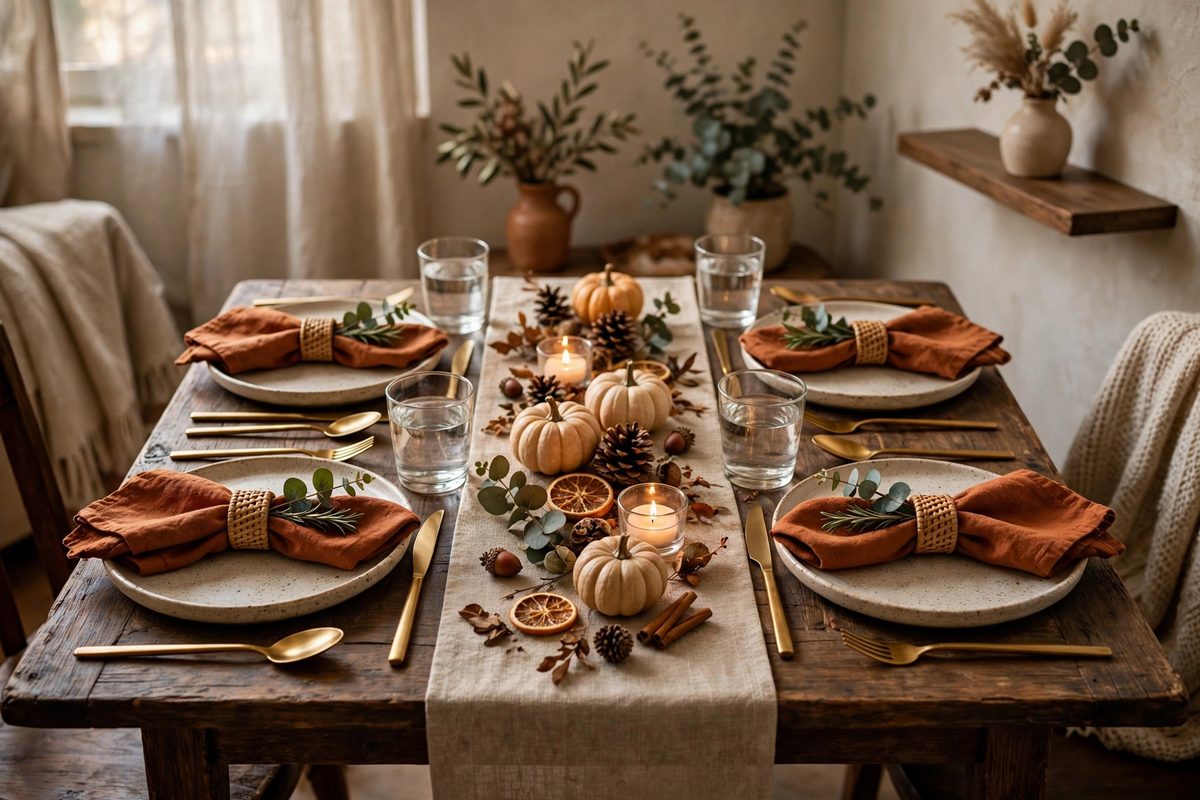
A narrow runner anchors the settings on a small table by giving them a visual center line. Choose a runner 12 inches wide for a table 30 to 36 inches wide, and let it run the full length of the table. Each setting sits with its inner edge touching the runner, which lines the plates up neatly and makes the table look organized even before the food arrives.
The runner is doing the job a tablecloth would do on a large table, but without covering the whole surface. It protects the center from hot dishes, defines the middle, and adds color. A cotton runner costs 12 to 20 dollars and washes after the meal. The runner and the Thanksgiving centerpiece share the table, so keep the runner flat and the centerpiece low, or the two compete for the same space.
How to make it work
Iron the runner the morning of Thanksgiving, since wrinkles show in the middle of the table. Center it so the overhang is equal on both ends, about 6 inches, and keep the settings aligned to its edge, not scattered. If the table is round, use a round placemat under the centerpiece instead of a runner, which gives the same anchor without the awkward corners.
5. Mixed Plates, Matched Napkins
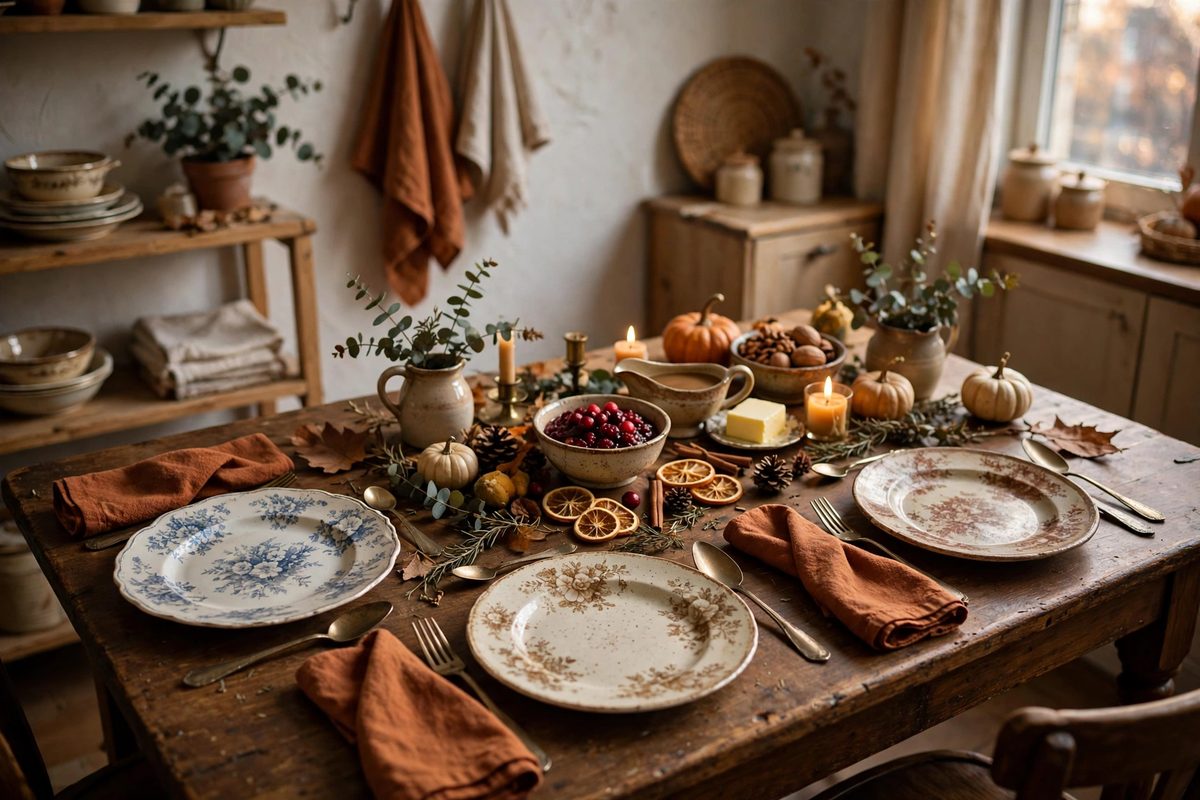
Most small apartments do not own six matching dinner plates, and that is fine. Mixed plates with matched napkins look better than matched plates with mixed napkins, because the napkin is the item guests see first. Use whatever plates you own, in whatever colors they come in, and buy or borrow six napkins in one color, rust, mustard, or deep green.
The trick is committing to the mix. Put the boldest plate at the head of the table and the plainest plates in the middle, so the variety looks deliberate. The matched napkins tie the settings together, and the Thanksgiving centerpiece sits in the middle as the one thing every setting shares. Mixed plates also mean you are not buying a new set for one dinner, which is the right call for a rental.
How to make it work
Wash the plates the night before so there is no last-minute rush, and stack them by size so the setting goes faster. Put the largest plate at each setting and the smallest on top, if you layer. If the plates are different depths, put the deepest ones at the ends where there is more elbow room, since a deep plate needs more clearance.
6. One Glass per Person
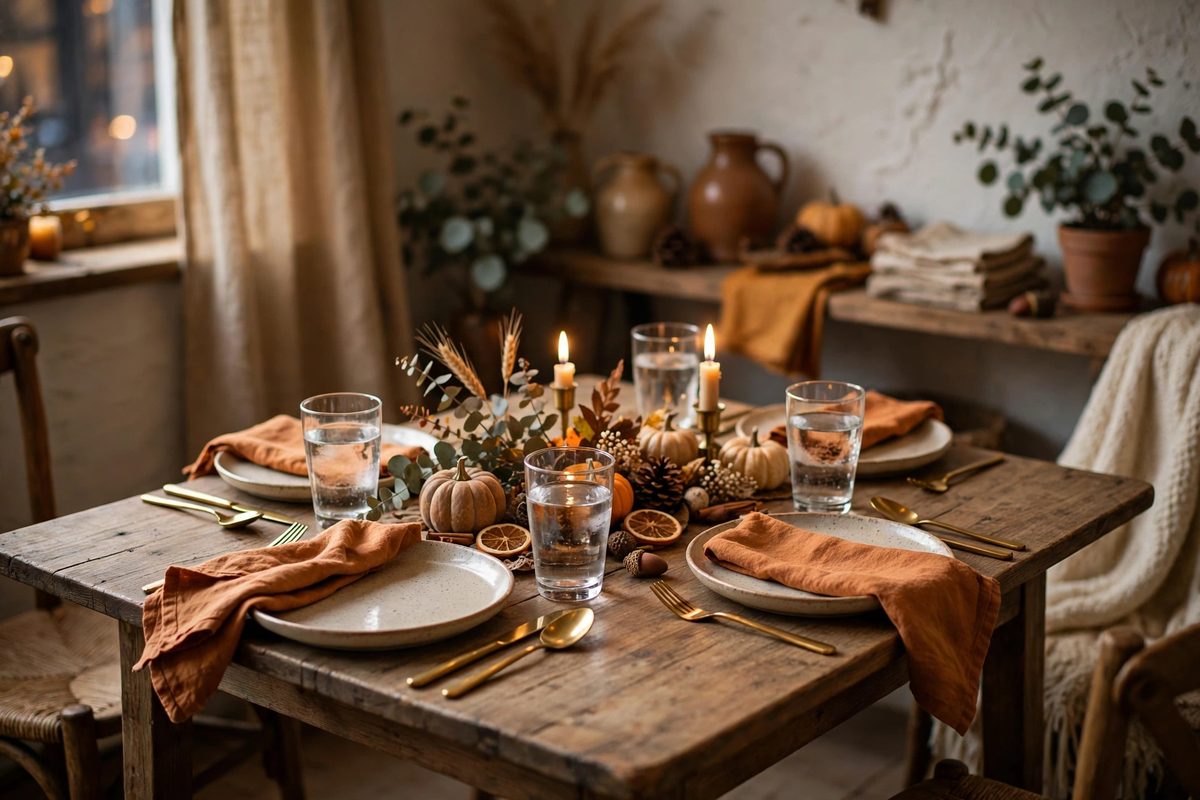
One glass per person is the rule for a small Thanksgiving table. A water glass that doubles as a wine glass, 12 to 14 ounces, stemless so it cannot tip easily. Two glasses per person takes 4 extra inches of table width you do not have, and on a small table the second glass is the first thing that gets knocked over.
A stemless glass is also easier to wash and harder to break, which matters when six people are sharing a small kitchen. If you serve wine, pour it into the same glass after the water is finished, or put a small pitcher on the table so guests refill their own. The single-glass rule is the same space logic as the small dining table ideas, where every inch has a job.
How to make it work
Put the glass at the top right of the plate, about 1 inch above the knife, which is the standard spot and the one guests reach for without thinking. Use the same glass for every guest so the table looks uniform. Fill the glasses halfway before guests sit down, so nobody is pouring over a crowded table during the first course.
7. Flatware Placement for Tight Elbows
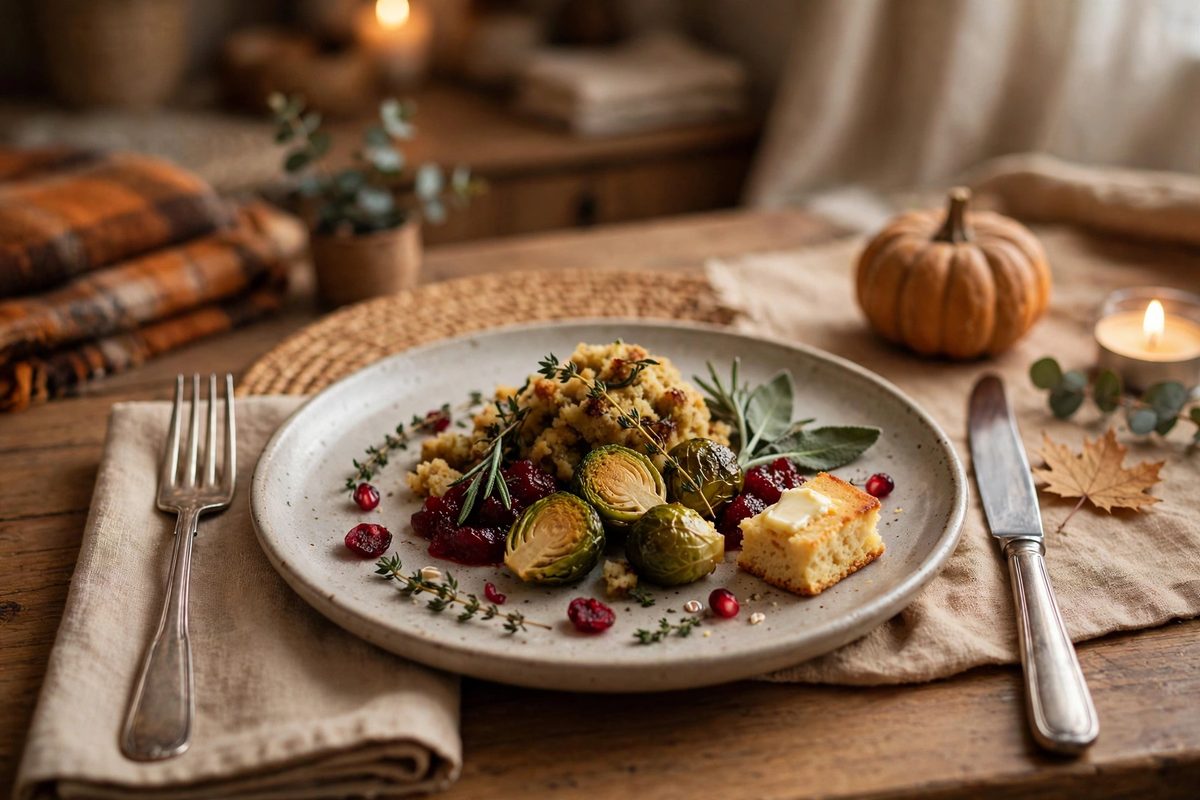
Flatware on a small table goes in one place only: fork on the left, knife on the right, each 1 inch from the plate. No salad fork, no dessert spoon, no extra pieces. The dessert fork can wait on the sideboard and come out with dessert, which is also when there is actually room for it.
The reason is elbow room. Each guest has about 18 inches of table edge, and a second fork takes 2 of those inches. On a large table nobody notices, but on a small table the guest next door feels it. Keep the flatware tight to the plate and parallel, so the setting looks neat and the elbows stay in their own space. If the table is rectangular, put the tallest guests at the ends, where the flatware has more room to spread.
How to make it work
Set the flatware after the plates, not before, so you can see the actual space each setting has. Keep the knife blade facing the plate, which is the standard and the safest orientation when arms are close together. If you own mismatched flatware, mix it deliberately, one pattern per guest, rather than trying to match and failing.
8. The Kids Corner Setting
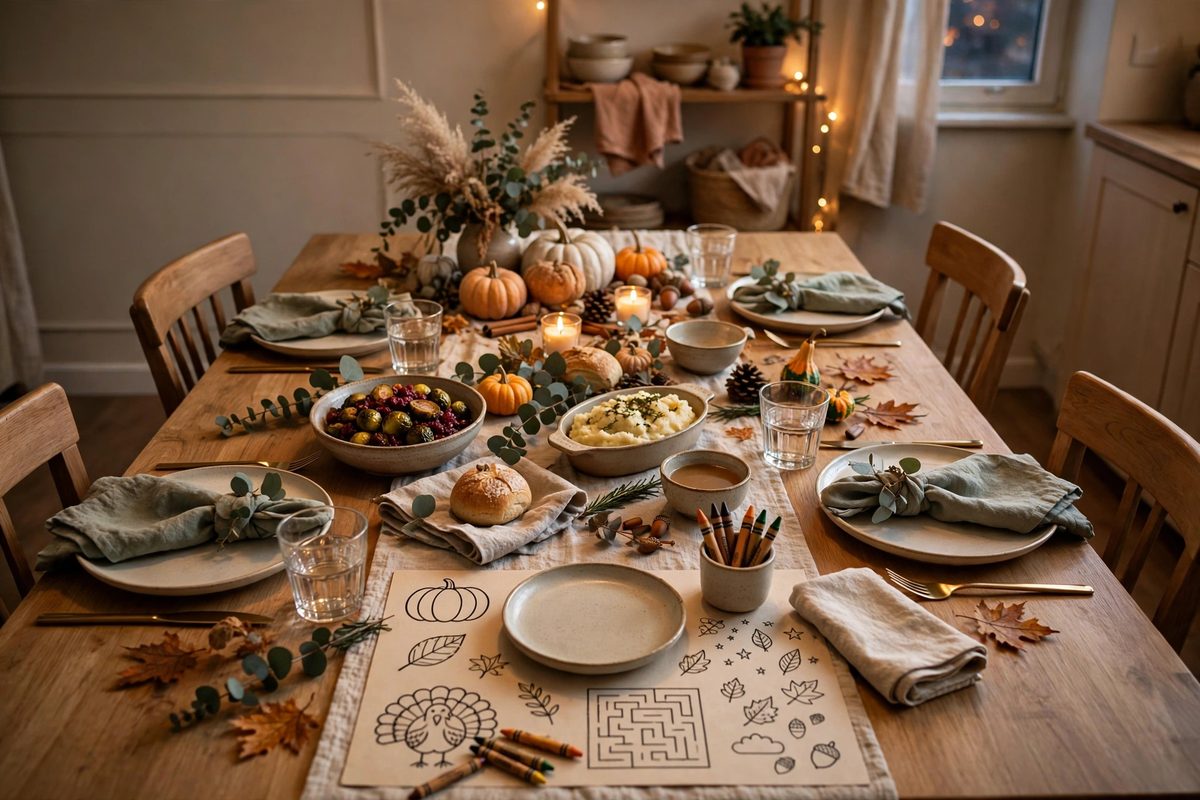
If kids are coming, give them a corner setting, not a full setting. A small plate, a small cup with a lid, a napkin, and a paper activity placemat with crayons. The activity placemat is the key, since it keeps the child occupied and protects the table from spills at the same time.
The kids corner goes at the end of the table, where the child has room to move and the adults are not crowded. A paper placemat costs under 1 dollar and goes straight into the recycling after dinner, which is the right outcome for a rental. Keep the kids setting simpler than the adult settings, with no glass and no sharp flatware, and put the child’s drink in a lidded cup. The corner setting is also the easiest one to clear, which matters when the meal is over and the after-dinner reset starts.
How to make it work
Put the kids setting at the end of the table nearest the kitchen, so the child can get up without climbing past adults. Use a plastic or melamine plate, not ceramic, since a dropped plate on a small table hits the floor fast. Tape the activity placemat to the table at the corners so it does not slide when the child colors.
9. The Serving Bowl Plan
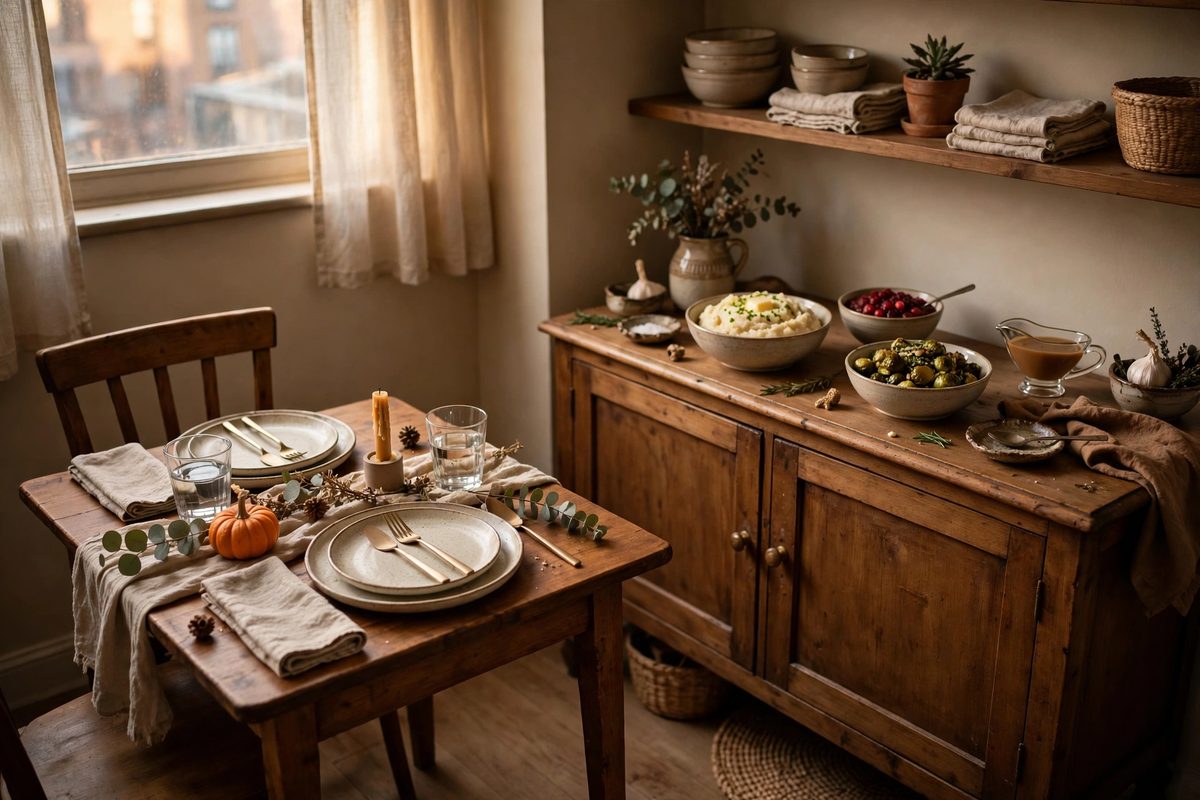
The serving bowl plan is the setting idea that saves the most space: decide before dinner which bowls stay on the table and which live on the sideboard. On a small table, only the turkey platter and one vegetable bowl stay on the table. Everything else goes on the sideboard, a console, or the kitchen counter, and guests serve themselves before sitting down.
This is not a lesser Thanksgiving, it is a small-table Thanksgiving. The food is the same, the table is just less crowded, and guests can actually reach their plates. Put the sideboard within two steps of the table so serving does not become a trip. The plan also protects the settings, since a crowded table is where glasses get knocked over. The same sideboard logic works for the Thanksgiving centerpiece, which moves to the sideboard when the turkey arrives.
How to make it work
Set the sideboard before the guests arrive, with serving spoons in each bowl and a stack of extra plates nearby. Put the turkey platter in the center of the table and the one vegetable bowl beside it, then stop. If a dish does not fit on the sideboard, it waits in the kitchen and comes out when the first bowl is empty.
10. The Quick Clear
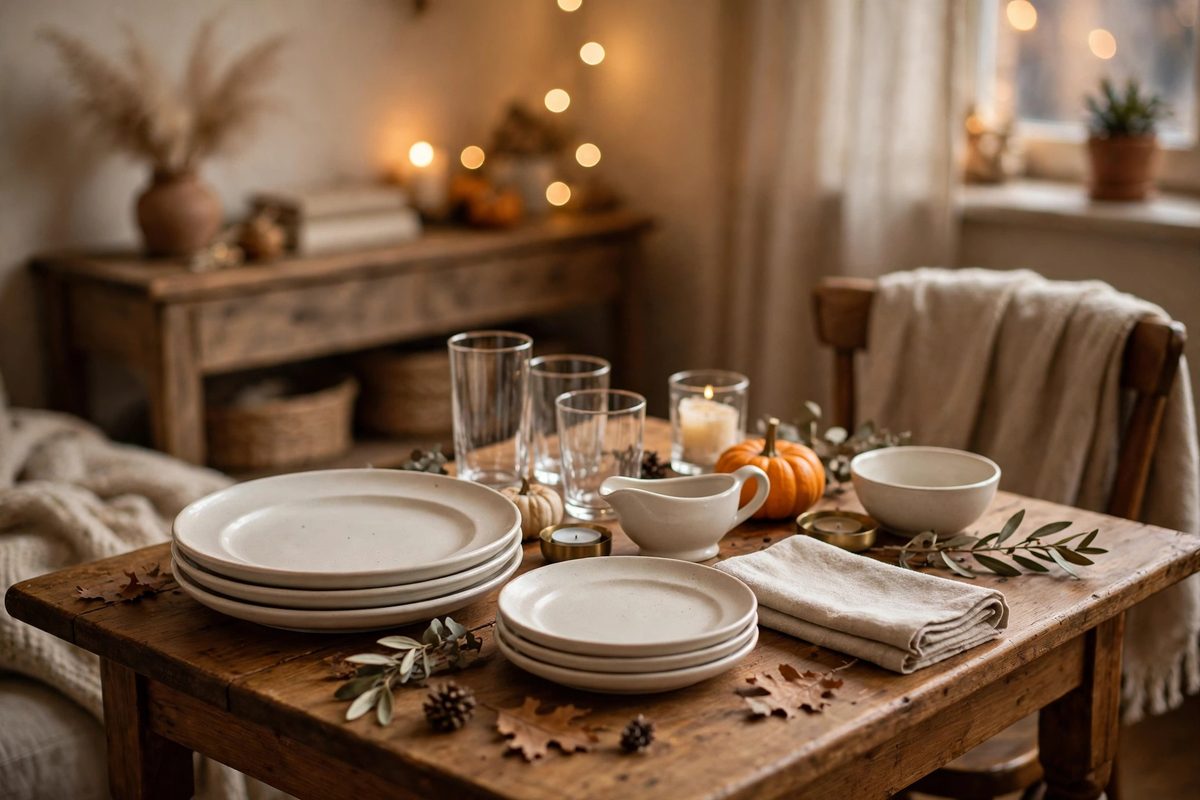
The last setting idea is the quick clear. Before dinner, decide how the settings come off the table. Plates stack by size, flatware goes into a single bowl, napkins go into the laundry pile, and the chargers stack in one place. If the clear takes more than five minutes, the setting was too complicated for the table.
A quick clear matters in a small apartment because the dining table is also the living room, the workspace, or the kitchen. The faster it clears, the faster the apartment goes back to normal. Keep a dish tub or a large bowl on the kitchen counter for the flatware, so it has somewhere to go the moment it leaves the table. The clear is the last step of the Thanksgiving decor reset, and it is the one guests remember when they think about whether hosting was worth it.
How to make it work
Clear in one pass, not three. One person carries plates, one carries glasses, one carries flatware, and the table is empty in two minutes. Stack the plates in the sink, not on the counter, since the counter is needed for dessert. Put the chargers away first, since they are the largest items and freeing them opens the most space.