10 Thanksgiving Tablescape Ideas for Small Dining Tables That Still Leave Room for Food
Host Thanksgiving without overcrowding your small table. 10 compact tablescape ideas—narrow runners, low candle arrangements, and space-saving buffet serving tips.
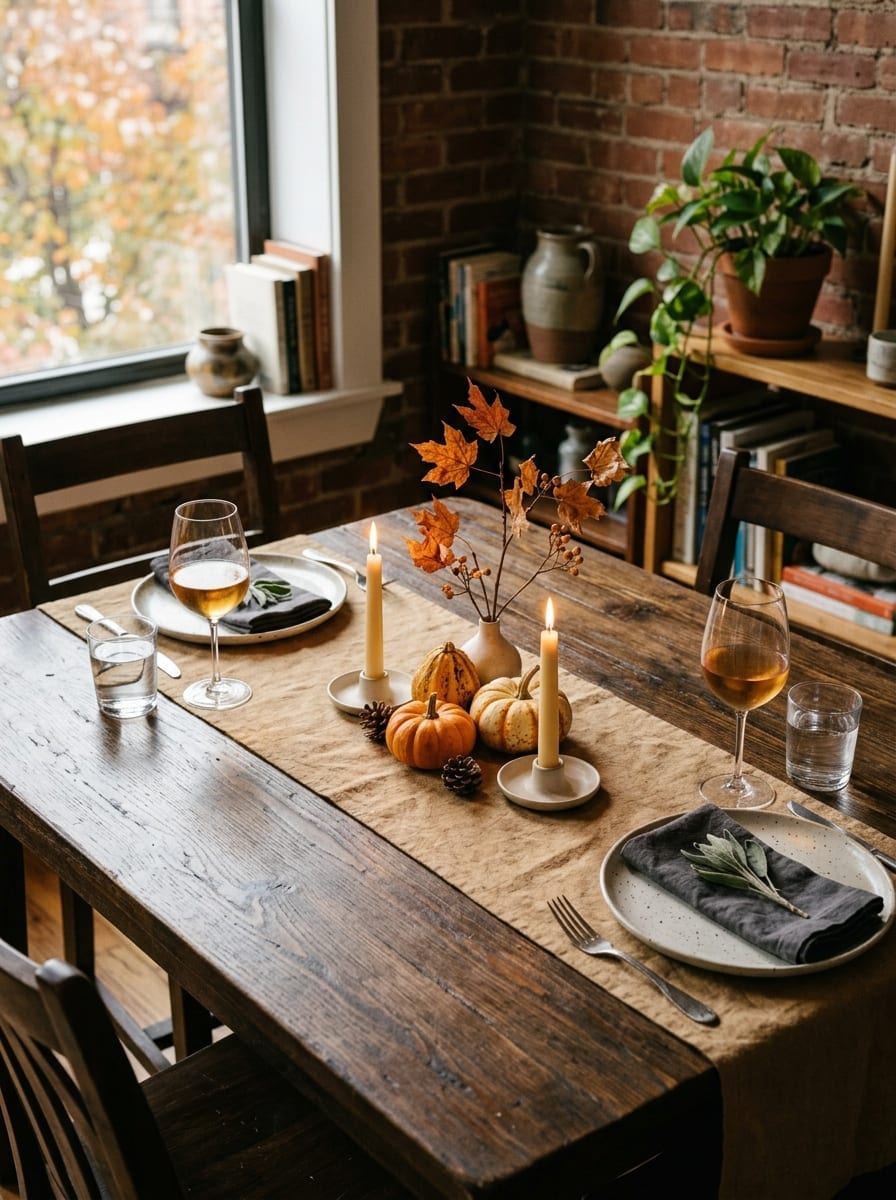
Small Thanksgiving dining table with a narrow warm-beige runner holding two low candles and a few small pumpkins, with open table surface around the place settings
In This Guide
A small dining table can look beautiful for Thanksgiving. The problem usually starts when the decorating is finished and you realize there is nowhere left to put:
- serving bowls
- water glasses
- bread
- condiments
- extra plates
- actual food
A large dining table can absorb:
- a centerpiece
- candles
- decorative pumpkins
- multiple serving dishes
without becoming impossible to use. A compact table cannot. That means small-table styling needs a different approach. The goal is not:
“How much Thanksgiving decor can I fit?”
It is: “How can I make the table feel festive while protecting the space people actually need?”
The easiest way to do that is to control three things: centerpiece width decor height where the food will be served Here are ten practical Thanksgiving tablescape ideas designed specifically for smaller dining tables.
1. The Narrow Runner Centerpiece
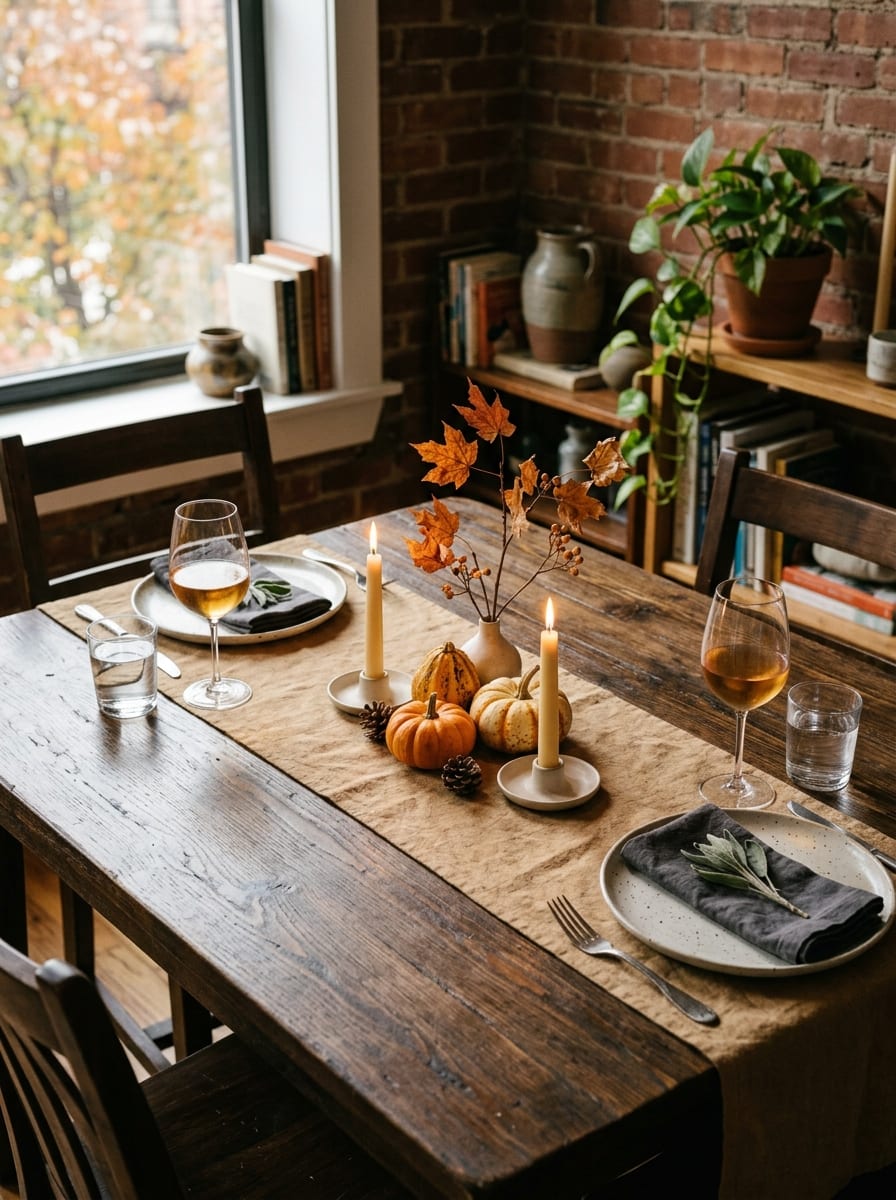
A table runner gives you a clear decorating lane without taking over the full tabletop. Instead of spreading decor across the entire surface, keep it inside one narrow strip.
Why it works
A runner creates a visual boundary. Everything decorative stays mostly within that line. That leaves more space for:
- plates
- glasses
- elbows
- serving pieces
Keep the runner narrow
If the table is small, an oversized runner can consume too much visual space. You want a slim center zone, not another full tablecloth layer.
Good centerpiece items
Try:
- one small branch
- two low candles
- three miniature pumpkins
- one simple bowl
You do not need all of them.
Keep the ends clean
Let some of the runner remain visible. A completely covered runner just becomes another cluttered surface.
2. The Low Pumpkin Cluster
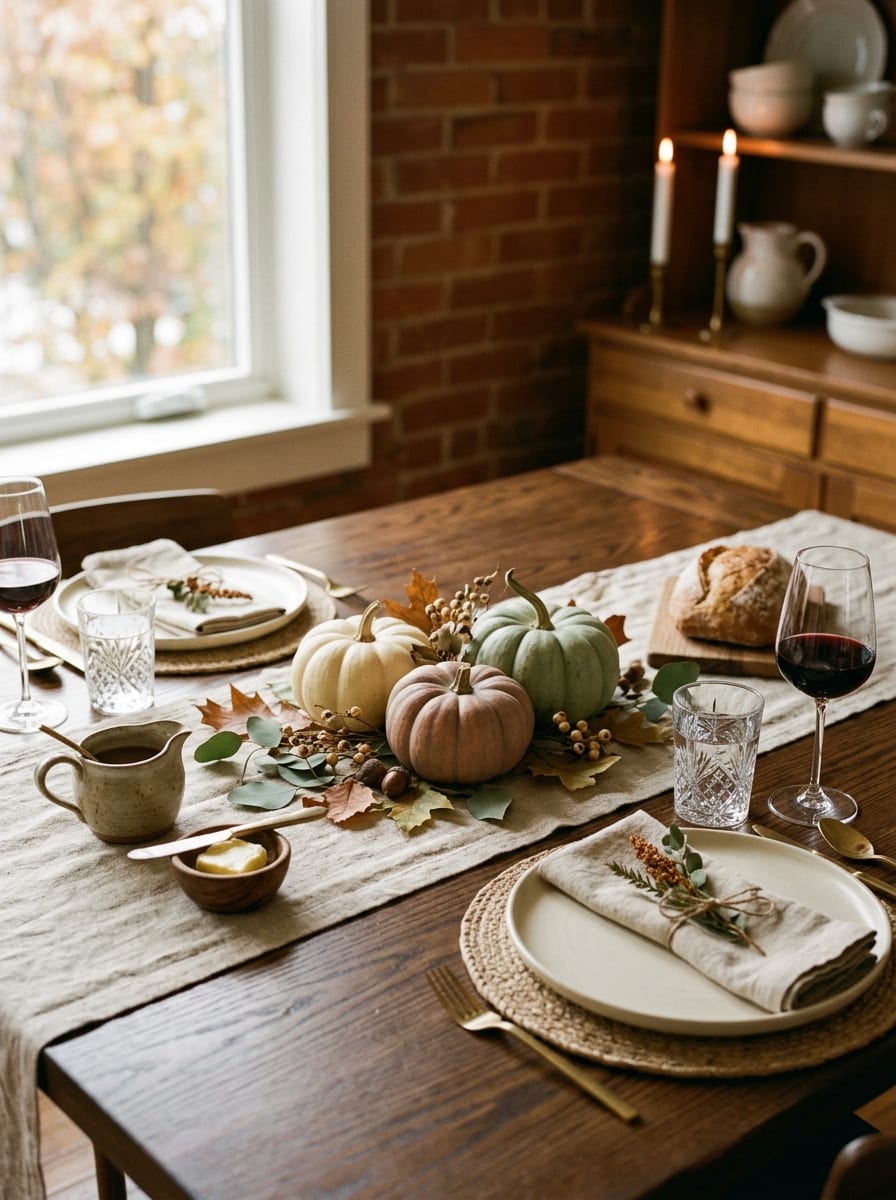
Pumpkins instantly read as autumn. But large pumpkins can dominate a small table. A low cluster of smaller pieces works better.
Use fewer pieces
Three carefully placed pumpkins usually look more intentional than:
- eight pumpkins
- gourds
- leaves
- pinecones
- candles
all mixed together.
Keep them low
You want guests to be able to see each other across the table. Low decor makes conversation easier.
Choose restrained colors
Try:
- cream
- muted orange
- soft green
- warm brown
instead of mixing every autumn color at once.
Let the cluster stay compact
Keep it centered or slightly off-center rather than stretching the full length of the table.
3. The Candle-Line Tablescape
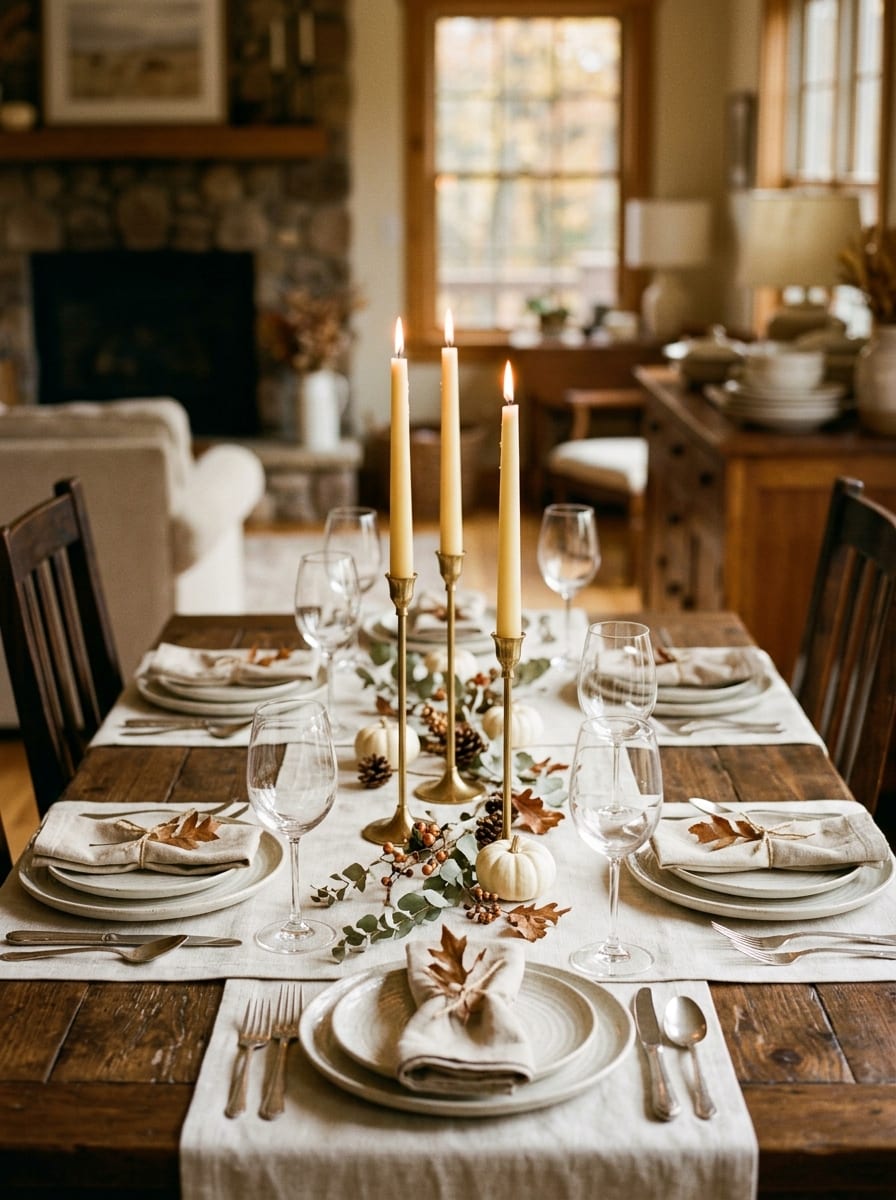
Candles create a festive atmosphere without requiring a bulky centerpiece.
Use a simple line
Place a few slim candles down the center. The line can create rhythm while occupying very little width.
Keep candle holders narrow
Avoid large decorative bases that take up valuable tabletop space.
Vary height slightly
You can use:
- two slightly taller candles
- one lower votive
for visual movement.
Keep safety first
Make sure:
- flames are stable
- candles are away from fabric
- nothing flammable hangs above them
- guests can reach food without leaning over open flame
Battery-operated candles can be a practical alternative where appropriate.
4. The Off-Center Thanksgiving Arrangement
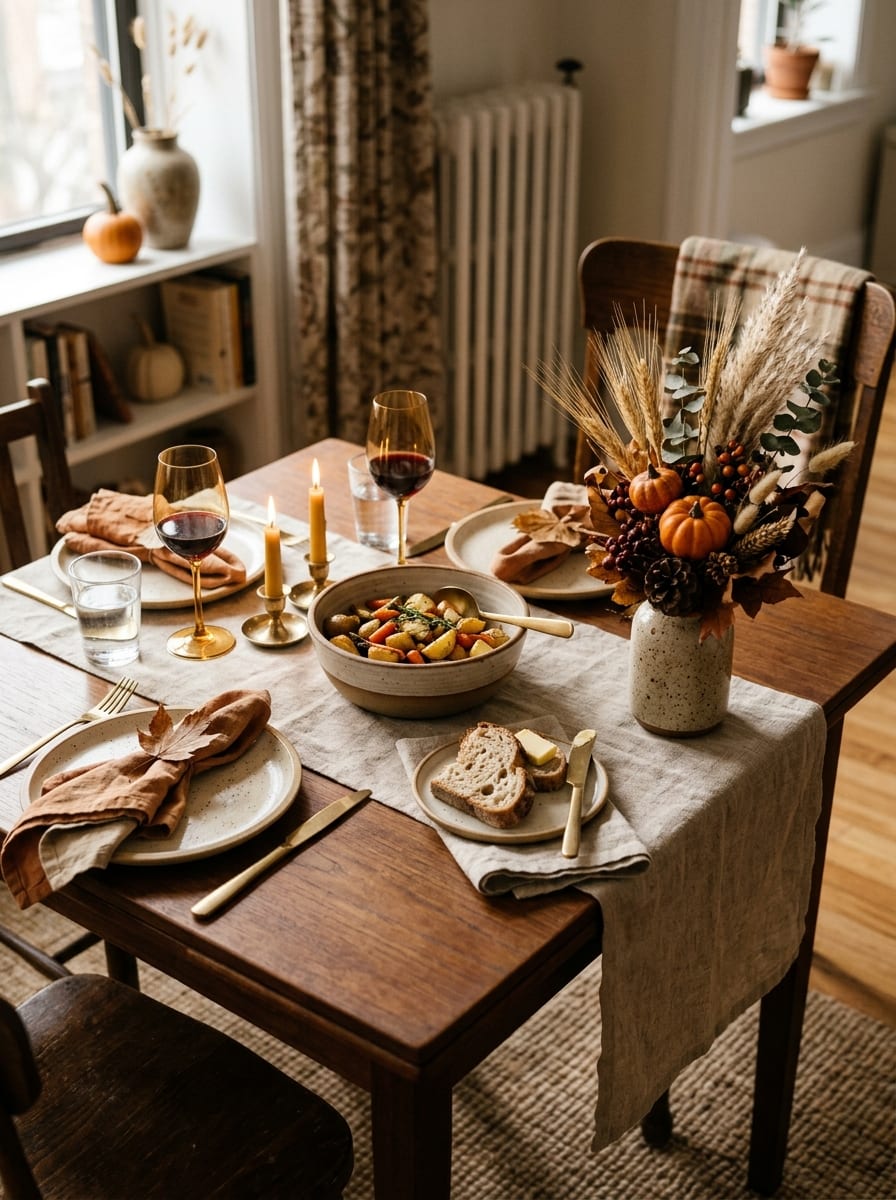
A centerpiece does not have to sit exactly in the middle. Moving it slightly to one side can free the center for shared dishes.
Why it works
The table still feels styled. But the most useful serving zone remains available.
Best for
This works especially well for:
- rectangular tables
- two- to four-person setups
- meals served family-style
Keep the arrangement compact
Try one:
- vase
- pumpkin cluster
- candle grouping
rather than several separate decorations.
Balance the other side lightly
You do not need to mirror the arrangement. One small candle or folded napkin detail may be enough.
5. The One-Vase Branch Table
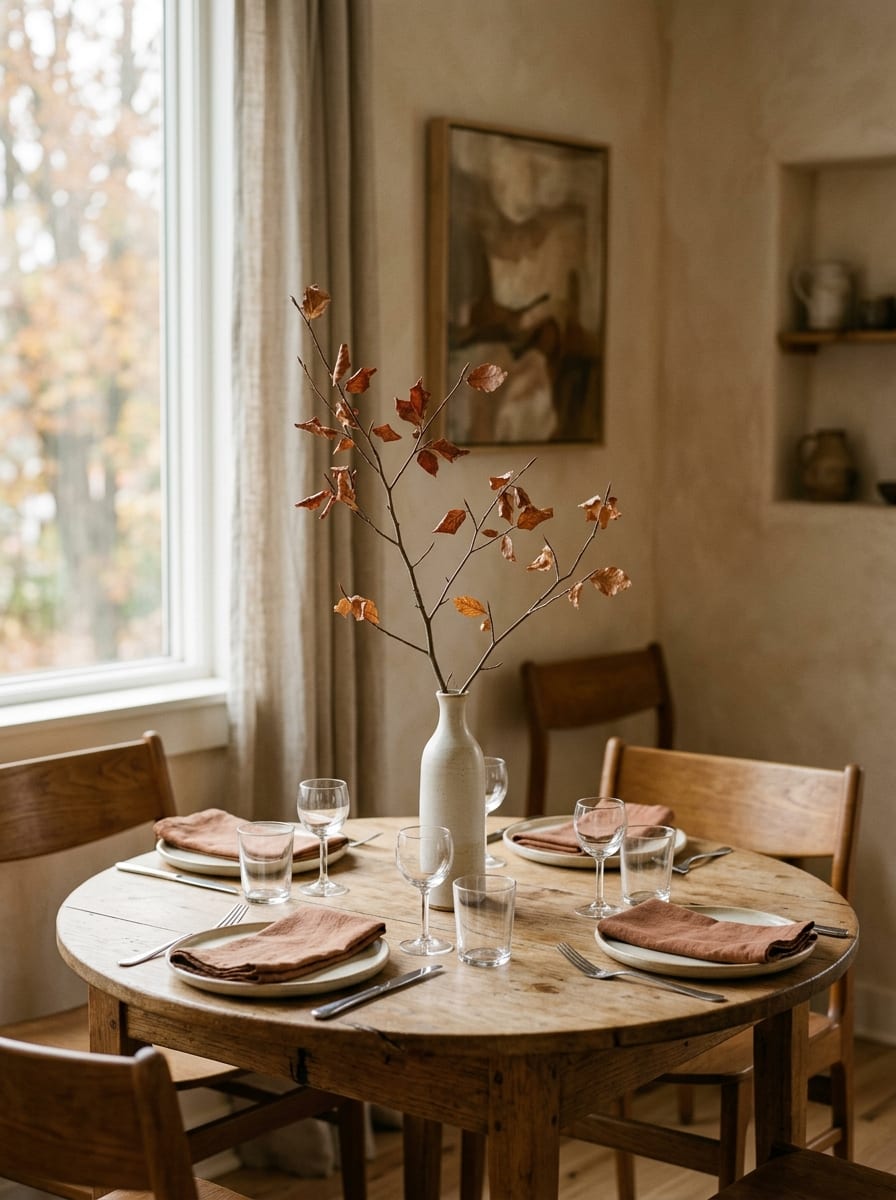
If you want height, use one narrow vase instead of a wide floral arrangement.
Why it works
A vertical arrangement adds drama while using little table width.
Good options
Try:
- one branch with autumn leaves
- a few dried stems
- simple eucalyptus
- one sculptural twig
Keep the base small
The vase should not take up the same footprint as a serving bowl.
Watch sightlines
Tall arrangements can become annoying if they sit directly between guests. Use:
- sparse stems
- narrow branches
- enough open space
so conversation still feels easy.
6. The Individual Place-Setting Accent
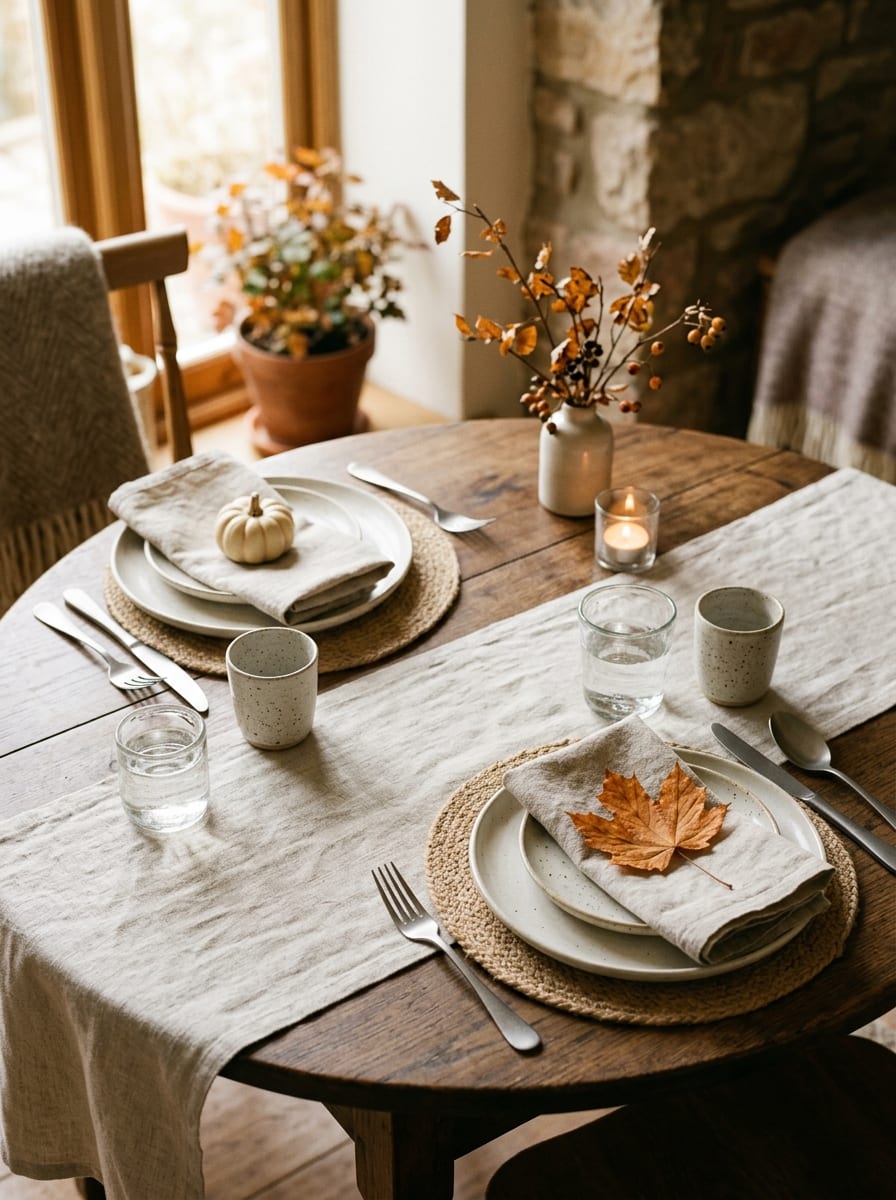
Instead of one large centerpiece, put a tiny festive detail at each place.
Try
- one small leaf
- one mini pumpkin
- one tied herb sprig
- one name card
Why it works
The decoration is distributed. The center stays open.
Keep the accent tiny
A place-setting detail should not interfere with:
- plate
- glass
- cutlery
Avoid over-layering
You do not need:
- charger
- plate
- folded napkin
- pumpkin
- name card
- ornament
all stacked together. One small accent is enough.
7. The Sideboard Serving Table
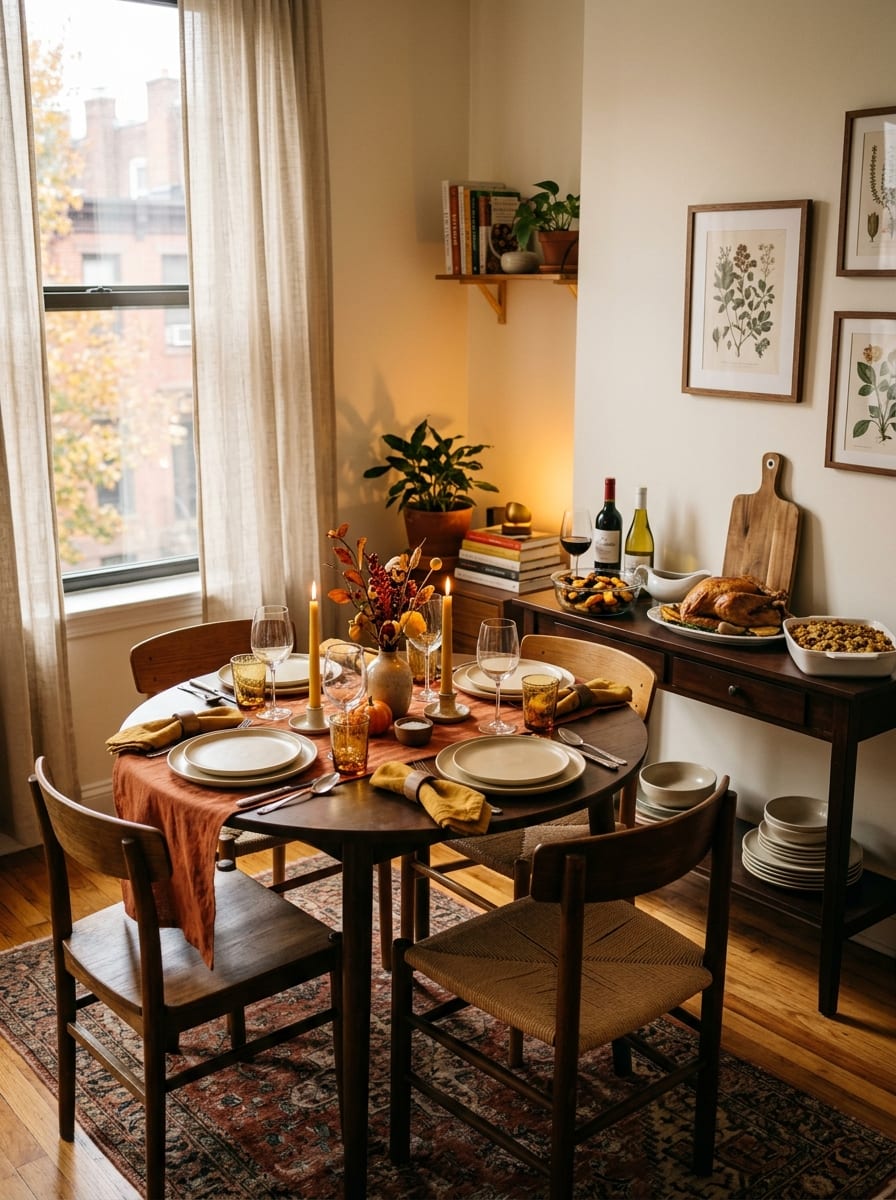
Sometimes the best way to make a small dining table work is to move serving food somewhere else. Use a:
- kitchen counter
- sideboard
- console
- nearby cart
for some dishes.
Why it works
The dining table can stay:
- comfortable
- styled
- easy to use
instead of functioning as both decor display and buffet.
Good candidates to serve elsewhere
Try moving:
- extra bread
- desserts
- drinks
- condiments
- second servings
off the main table.
Keep the first course practical
You can still place one or two shared dishes on the table if there is room. The goal is not to move everything. It is to reduce crowding.
8. The Tonal Neutral Thanksgiving Table
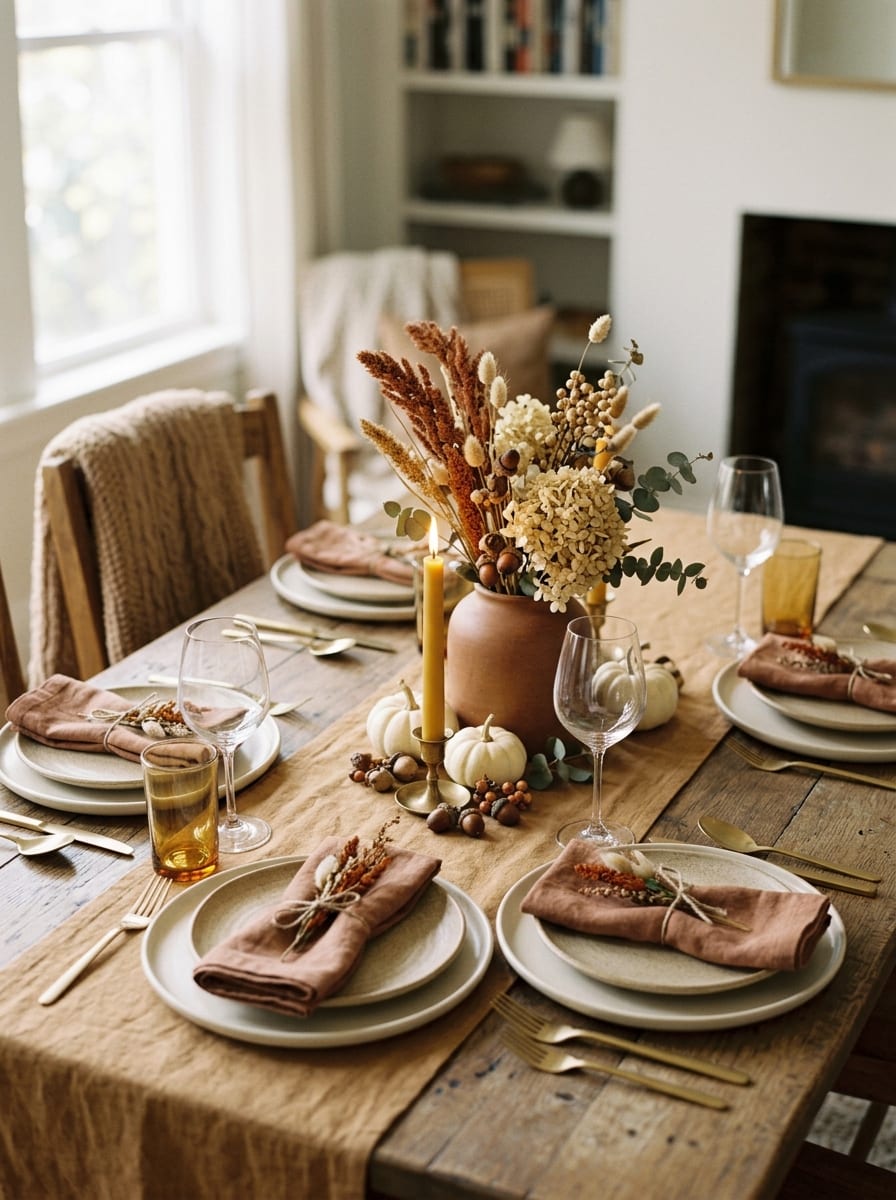
A small table can feel crowded even when the physical object count is moderate. Strong color contrast makes every item more noticeable. A tonal palette reduces visual noise.
Try
- cream
- camel
- warm beige
- soft brown
- muted rust
Why it works
The elements visually blend into one composition. That makes the table feel calmer.
Add texture instead of more color
Use:
- linen napkins
- ceramic plates
- woven runner
- matte pumpkins
to keep the table interesting.
One deeper accent is enough
A single:
- rust napkin
- dark candle
- walnut serving board
can give the table depth.
9. The Two-Person Thanksgiving Setup
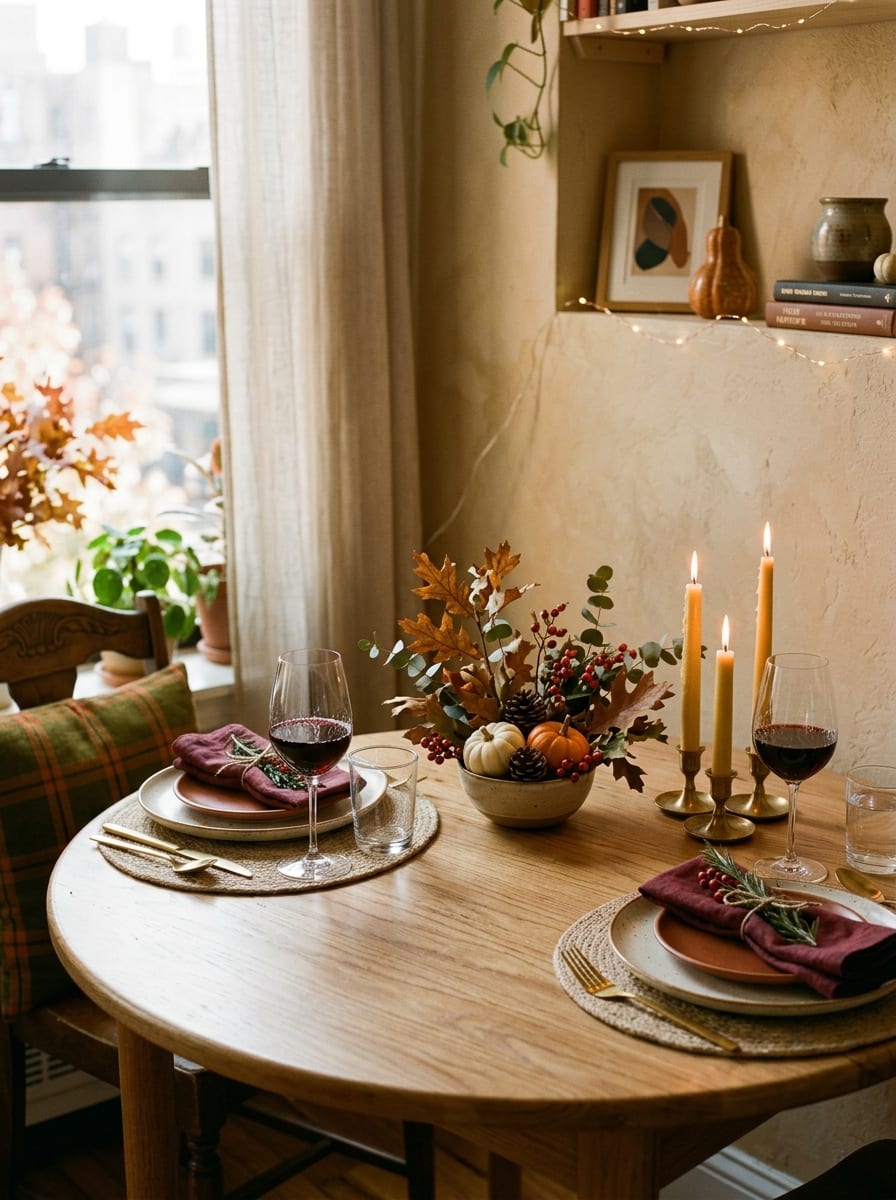
A Thanksgiving table for two does not need to imitate a table for eight. Use the smaller scale as an advantage.
Keep the center minimal
One centerpiece is enough.
Give each person more functional room
Instead of filling empty table sections with decor, let them remain open.
Use one shared serving dish at a time
You can rotate courses or serve from the kitchen.
Make the setting feel intentional
Add:
- one candle
- cloth napkins
- one small centerpiece
and stop.
10. The Center-Free Thanksgiving Formula
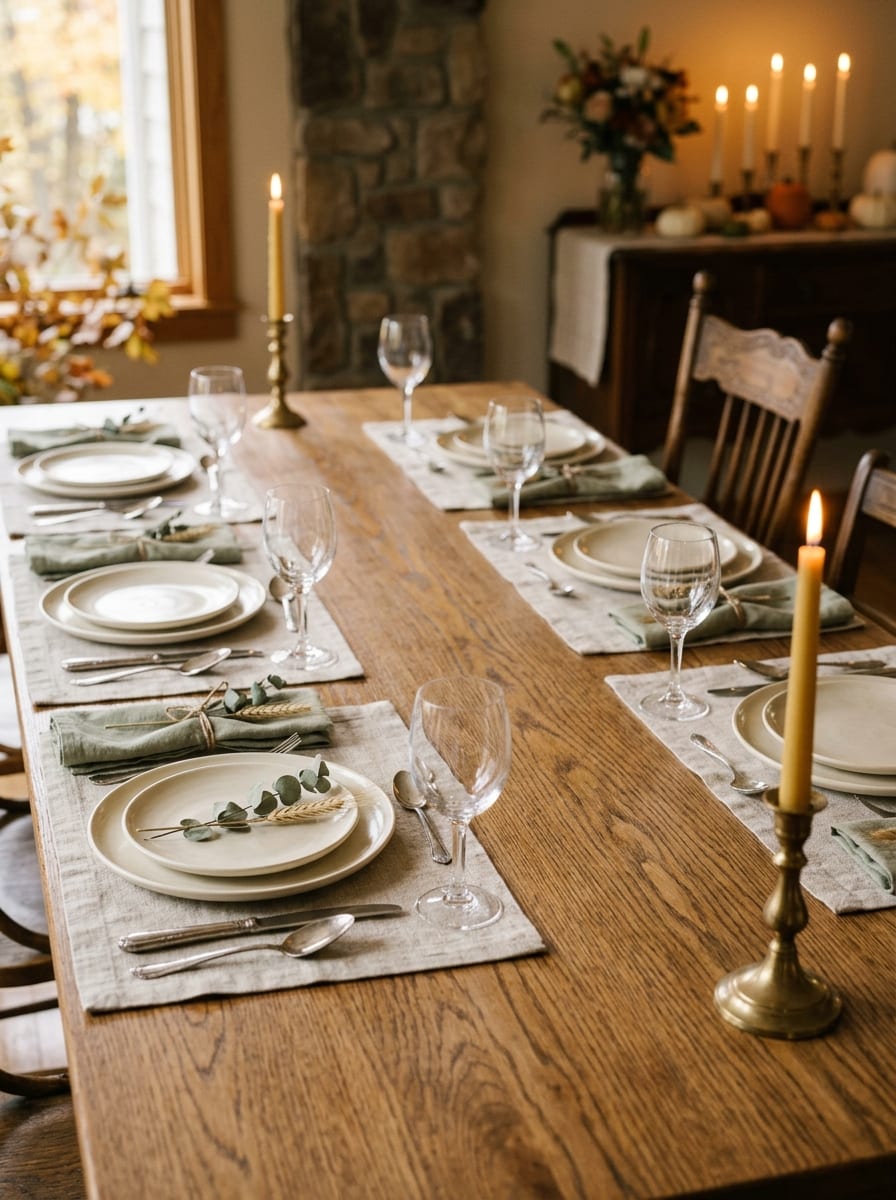
You do not actually need a centerpiece. A table can still feel festive through:
- plates
- napkins
- glasses
- small place-setting accents
- candles near the ends
while leaving the entire center available.
Why it works
The food becomes part of the visual composition. Once the serving dishes arrive, the table will not feel empty.
Use the edges
Try placing:
- one candle at each end
- napkin accents at each seat
instead of decorating the middle.
Best for
This is especially useful when:
- table is very narrow
- family-style serving is important
- guests need lots of elbow room
Start With the Table Dimensions
Before decorating, measure:
- width
- length
- distance between opposite place settings
A small table may have enough length but not enough width. That matters because most centerpieces compete for width.
Protect the Plate Zone First
Set the table before adding decor. Place:
- dinner plates
- glasses
- cutlery
first. Then see what space remains. This is much better than styling the centerpiece first and trying to squeeze plates around it later.
Protect Elbow Room
A place setting needs more than the width of the plate. People need room to:
- move arms
- cut food
- reach glasses
Do not use every inch.
Decide Where the Serving Dishes Will Go
This should happen before decorating. Ask: Will food be on the table or served elsewhere?
That one decision changes the entire tablescape.
Family-Style Meals Need More Open Center Space
If several shared dishes will remain on the table, keep decor extremely minimal.
Buffet-Style Meals Give You More Styling Freedom
If most food is served from:
- counter
- sideboard
- kitchen
you can use a slightly stronger centerpiece.
Keep the Centerpiece Narrow
The most valuable dimension on a small table is width. A centerpiece that spreads across half the table makes place settings uncomfortable.
Keep the Centerpiece Low
A low centerpiece helps:
- conversation
- sightlines
- passing food
Tall Can Work if It Is Narrow
A tall branch arrangement can work when the vase itself has a tiny footprint.
Avoid a Tall, Dense Floral Arrangement
A dense bouquet can block:
- faces
- conversation
- serving movement
especially on a small table.
Use One Centerpiece Idea
Do not combine:
- flower arrangement
- pumpkin cluster
- lantern
- garland
- candles
- leaf scatter
all at once. Choose one main visual idea.
Use Fewer Pumpkins
Autumn tables often get overloaded with pumpkins. Three small pumpkins can communicate Thanksgiving perfectly well.
Use Real or Faux Decor Thoughtfully
Either can work. The important thing is:
- scale
- cleanliness
- stability
not whether every item is natural.
Keep Loose Leaves Under Control
Scattered leaves can look pretty in photos. In real use they may:
- move
- fall
- get into plates
Use only a few if any.
Skip Large Garlands on Very Narrow Tables
A thick garland can consume nearly the entire center. A slim runner with a few branches often works better.
Runner vs Full Tablecloth
Runner
Keeps more tabletop visible and creates a clear decorative zone.
Tablecloth
Can make the table feel softer and more formal. Both work. The choice depends on:
- table shape
- visual style
- cleanup needs.
Layering Can Make a Small Table Feel Busy
You probably do not need:
- tablecloth
- runner
- placemat
- charger
all together. Pick the layers that actually contribute.
Placemats Need Space
On a very small table, placemats may overlap or crowd the center. It may be cleaner to skip them.
Chargers Are Optional
A charger adds another ring around the plate. On a small table, that can consume valuable width.
Use Smaller Decorative Plates Carefully
The dinner plate still needs to be practical. Do not choose tiny dishes purely to make the table look larger.
Cloth Napkins Add Festivity Without Taking Much Space
A cloth napkin can introduce:
- color
- texture
- formality
without consuming the center.
Fold Napkins Simply
Elaborate napkin shapes can make place settings feel bulky. A simple fold often looks cleaner.
Place Napkins on the Plate
This can reduce horizontal clutter around each setting.
Keep Name Cards Small
If you are using place cards, keep them compact. They should not become miniature decorations.
Glassware Can Crowd the Table Quickly
A tiny table may not have room for:
- water glass
- wine glass
- cocktail glass
at every seat. Choose what is actually needed.
Add Extra Glassware Later
You can bring out additional drinkware as needed rather than crowding the initial setting.
Keep Salt and Pepper Small
Oversized grinders can take surprising amounts of table space. Use:
- smaller shakers
- serve from a sideboard
- bring them out when needed.
Bread Can Move Off the Table
A large bread basket may consume the same space as an entire centerpiece. Keep it nearby if the table is full.
Butter and Condiments Can Move Too
Not every functional item must remain on the table all evening.
Serve Dessert Later
Do not keep dessert plates or dessert decor on the table during dinner. Resetting between courses is completely reasonable.
Use a Nearby Surface
A sideboard is ideal. But you can also use:
- console
- bar cart
- kitchen peninsula
- cleared counter.
Do Not Block the Dining Walkway
If you add a sideboard or cart, make sure it does not create another circulation problem.
A Narrow Bar Cart Can Work
Use one only if there is genuinely room. Do not add furniture just for one holiday dinner.
Use What You Already Own
A normal console or kitchen counter can work perfectly well.
Choose One Main Color Direction
Try one of these: cream + rust olive + beige camel + ivory brown + warm white A smaller palette makes the table feel more cohesive.
Orange Does Not Have to Dominate
Thanksgiving can still feel seasonal with:
- warm brown
- burgundy
- muted green
- cream
- brass
rather than bright orange everywhere.
Use Dark Colors in Small Doses
Deep:
- burgundy
- brown
- charcoal
can add richness. But using them on every element may make a small table feel visually heavy.
Metallic Accents
Small touches of:
- brass
- antique gold
- bronze
can feel festive. Keep them limited.
Candleholders Add Height Without Width
Slim candleholders are excellent for compact tables.
Avoid Oversized Lanterns
Lanterns often take up a lot of horizontal space. They are usually better on:
- console
- sideboard
- floor
than on a tiny dining table.
Keep Candle Flames Away From Decor
Do not allow:
- dried leaves
- branches
- fabric
- paper
to sit close to open flame.
Consider Flameless Candles
Good battery candles can create the same visual rhythm without open flame.
Use One Vase Instead of Three
Multiple small vases can still occupy significant surface space. One narrow vessel is usually simpler.
Branches Are High-Impact
A single branch can create height and seasonality without a large footprint.
Dried Flowers Can Work
Keep the arrangement narrow and sparse.
Avoid Very Wide Bouquets
A wide floral arrangement works against the goal of preserving table space.
Centerpiece Height Test
Sit down at the table. Can you comfortably see the person opposite you? If not, lower or simplify the arrangement.
Serving-Dish Test
Place the largest serving bowl on the table before the holiday. If there is nowhere for it to go, redesign the tablescape now.
Plate-and-Elbow Test
Sit in every chair if possible. Check whether:
- elbows collide
- glasses are too close
- chair movement is restricted.
Four People at a Small Table
Keep the center especially simple. One:
- runner
- candle line
- small centerpiece
is enough.
Six People at a Compact Table
If seating is already tight, move most food off-table. Do not use a large centerpiece.
Two People at a Small Table
Do not over-decorate just because there is some open surface. Open space looks intentional too.
Round Small Dining Table
Round tables usually have limited center space. Use one compact centerpiece. Avoid long runners that do not suit the table shape.
Rectangular Small Dining Table
A narrow runner works particularly well. You can also use an off-center arrangement.
Square Dining Table
Keep the centerpiece small and central or remove it entirely.
Drop-Leaf Table
If extending the table for Thanksgiving, test:
- stability
- chair placement
- leg clearance
before decorating.
Dining Nook Table
Watch nearby:
- wall
- bench
- corner clearance.
Do not create a centerpiece that makes sliding into the bench difficult.
Apartment Dining Table Near the Kitchen
This is ideal for keeping serving dishes on the kitchen counter. Use that proximity.
Living-Room Dining Area
Keep the table palette connected to the living room. Too much seasonal color can make an open-plan space feel fragmented.
Studio Apartment Thanksgiving Table
Because the whole space is visible at once, use a quieter tablescape. One festive zone is enough.
Keep Chairs Comfortable
Do not hang:
- blankets
- wreaths
- decorations
from chair backs if they interfere with sitting.
Chair Decor Is Usually Unnecessary
The table itself can provide enough seasonal feeling.
Use Napkins as the Main Color Accent
This is one of the easiest small-table tricks. For example: neutral table + rust napkins. That may be all the seasonal color you need.
Keep the Table Center Clear Until Guests Arrive
Style it lightly. Then add:
- food
- bread
- water
only when needed.
Photograph Before the Meal if You Want Photos
Do not maintain an impractical setup just because it photographs well. The table needs to work for eating.
Remove Decor During Dinner if Necessary
There is no rule saying the centerpiece must stay on the table for the entire meal. If the serving dishes need the space, move it.
Create a Centerpiece You Can Lift in One Motion
This is very useful. Put the decorative grouping on:
- one tray
- one low board
so you can remove it quickly if needed.
Keep the Tray Narrow
Otherwise the tray itself becomes the problem.
Avoid Tiny Scattered Objects
Small acorns, beads, decorative corn and miniature ornaments may:
- roll
- fall
- become messy.
A few larger objects are easier.
Use Food as Decoration
A beautiful:
- bread board
- pie
- serving bowl
already adds warmth and color. You do not need to decorate every empty spot.
The Table Will Look Fuller Once Dinner Starts
This is easy to forget. A table that feels slightly sparse before the meal often looks perfect once the food arrives.
Do Not Decorate for the Empty Table
Decorate for the in-use table. That is the biggest difference between a practical tablescape and a photo-only one.
Thanksgiving Table for Kids
Keep:
- flames
- breakable items
- tiny loose decor
away from children’s place settings.
Leave Water Within Reach
Do not make guests move the centerpiece every time they need a drink.
Keep Serving Utensils in Mind
Serving bowls need room for:
- spoon handles
- tongs
- ladles.
Do not measure only the dish footprint.
Hot Dishes Need Safe Surfaces
Use appropriate:
- trivets
- heat-safe pads
and keep them away from flammable decor.
Keep Textiles Away From Hot Cookware
A long runner can shift. Make sure hot dishes sit securely.
Use Washable Materials Where Possible
Thanksgiving meals can get messy. Practical materials make cleanup easier.
Do Not Use Delicate Decor Where Gravy Will Go
Keep precious pieces off the busiest serving zone.
Create a Post-Meal Reset Plan
Know where:
- serving dishes
- centerpiece
- extra plates
will go when dessert comes out.
Dessert Can Be Its Own Tablescape Moment
Remove dinner dishes. Then bring out:
- pie
- coffee
- one small candle.
You do not need everything on the table at once.
Common Small Thanksgiving Table Mistakes
Styling before setting the plates
The centerpiece becomes too large.
Using a centerpiece that is too wide
Place settings get squeezed.
Filling every empty spot
There is nowhere for food.
Using too many pumpkins
The table becomes a seasonal display instead of a dining surface.
Keeping every serving dish on the table
Small tables cannot support it comfortably.
Using too many table layers
Tablecloth + runner + placemats + chargers can feel heavy.
Adding too much glassware
Every place setting becomes crowded.
Using tall dense flowers
Guests cannot see each other.
Forgetting hot-dish space
Serving becomes awkward.
Decorating the table as if food will never arrive
This is the biggest mistake.
Quick Thanksgiving Tablescape Decision Guide
Choose the Narrow Runner Centerpiece if: You want a defined decorating lane without losing too much width.
Choose the Low Pumpkin Cluster if:
You want obvious autumn styling without blocking conversation.
Choose the Candle Line if:
You want atmosphere with very little surface coverage.
Choose the Off-Center Arrangement if:
You want to preserve the middle for food.
Choose the One-Vase Branch if:
You want height with a small footprint.
Choose Place-Setting Accents if:
You want the center almost completely open.
Use Sideboard Serving if:
Shared dishes are taking over the table.
Choose a Tonal Neutral Table if:
The setup looks visually busy even with few objects.
Use the Two-Person Setup if:
You are celebrating in a tiny apartment or as a couple.
Use the Center-Free Formula if:
The table is extremely narrow or family-style serving is the priority.
The Simplest Small Thanksgiving Table Formula
Start with: plates first then: one narrow centerpiece then: one candle layer then: decide what food actually fits If the table still feels crowded: remove the centerpiece before removing functional serving space.
FAQs
How do you decorate a small Thanksgiving table?
Start with the functional place settings first, then add one narrow or low centerpiece. Keep decor limited enough that the table can still hold food.
What is the best centerpiece for a small Thanksgiving table?
Good options include:
- low pumpkin cluster
- narrow candle line
- one slim vase
- compact arrangement
The best choice is usually low or narrow.
How do you fit food on a small Thanksgiving table?
Move some serving dishes to:
- sideboard
- kitchen counter
- console
- nearby cart
and keep only the most frequently shared dishes on the table.
Should I use a table runner on a small table?
A narrow runner can work very well because it defines a small center decorating zone while leaving the sides open.
Are chargers good for small dining tables?
They can work, but they add width to every place setting. If the table feels crowded, chargers are one of the easiest layers to remove.
What colors work for a Thanksgiving tablescape?
Try restrained combinations such as:
- cream + rust
- beige + olive
- warm brown + ivory
- camel + burgundy.
You do not need bright orange for the table to feel seasonal.
How tall should a Thanksgiving centerpiece be?
There is no single required height. The practical test is whether seated guests can comfortably see and speak to one another across the table.
Can I skip a centerpiece?
Absolutely. Napkins, candles and place-setting details can make the table feel festive while keeping the middle completely open.
Final Thoughts
A small Thanksgiving table does not need less style. It needs more disciplined styling. Set the plates first. Protect each person’s usable space. Decide where the serving dishes will go. Then decorate only the surface that remains. Keep centerpieces:
- narrow
- low
- easy to move.
Use:
- runners
- candles
- napkins
- a few seasonal accents
instead of filling every inch with decor. And remember that once the meal arrives, the food itself becomes part of the table. The best small Thanksgiving tablescape is not the one with the most decoration. It is the one that still feels beautiful after everyone sits down and dinner actually begins.