11 Small Apartment Coffee Bar Ideas That Create a Station Without a Full Counter
Discover 11 small apartment coffee bar ideas using counters, carts, sideboards, shelves and compact storage to create a practical coffee station without needing a full counter.
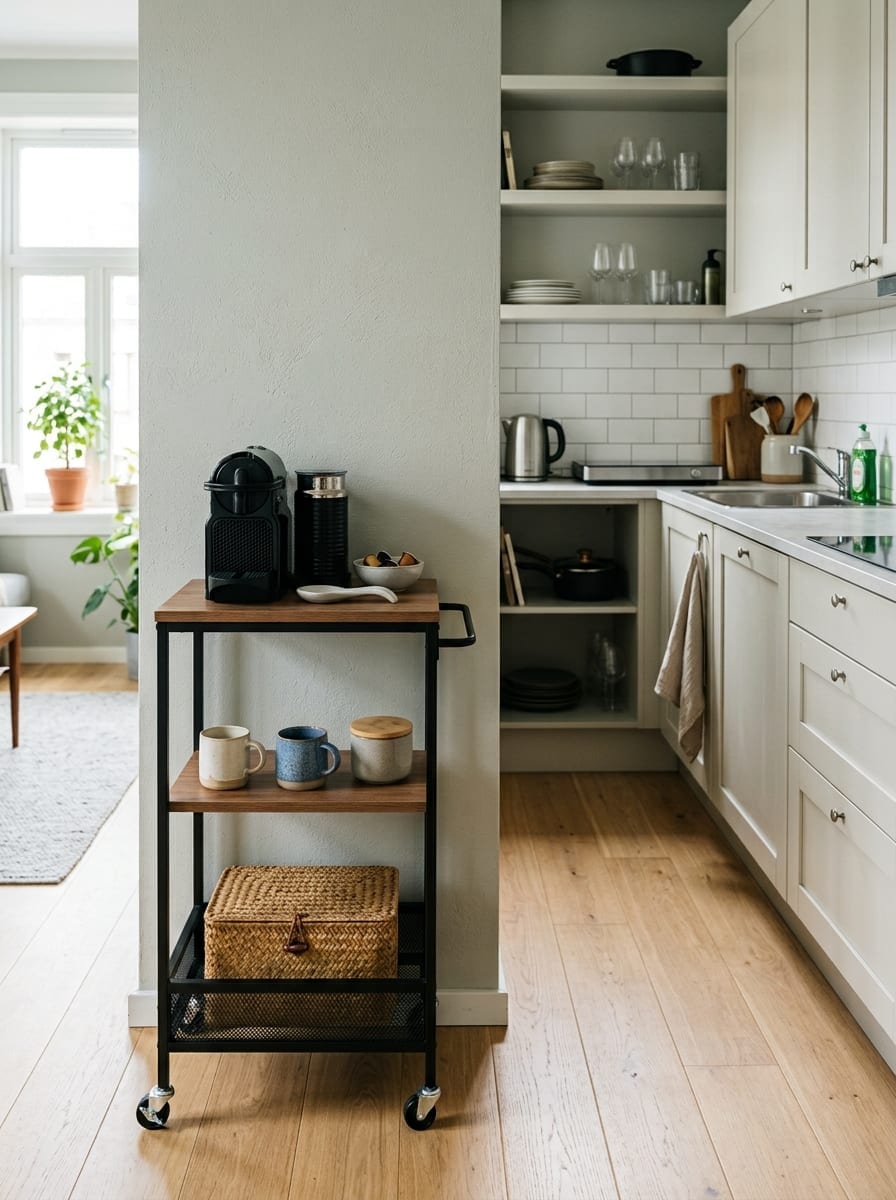
Slim rolling coffee cart beside a compact apartment kitchen with organized mugs and supplies and clear walkway
In This Guide
A coffee station sounds like something that needs a long kitchen counter, built-in cabinetry, open shelving and a dedicated pantry wall. It does not. In a small apartment, a good coffee bar may only need one machine plus one small surface plus one nearby storage layer.
1. The One-Corner Counter Coffee Zone
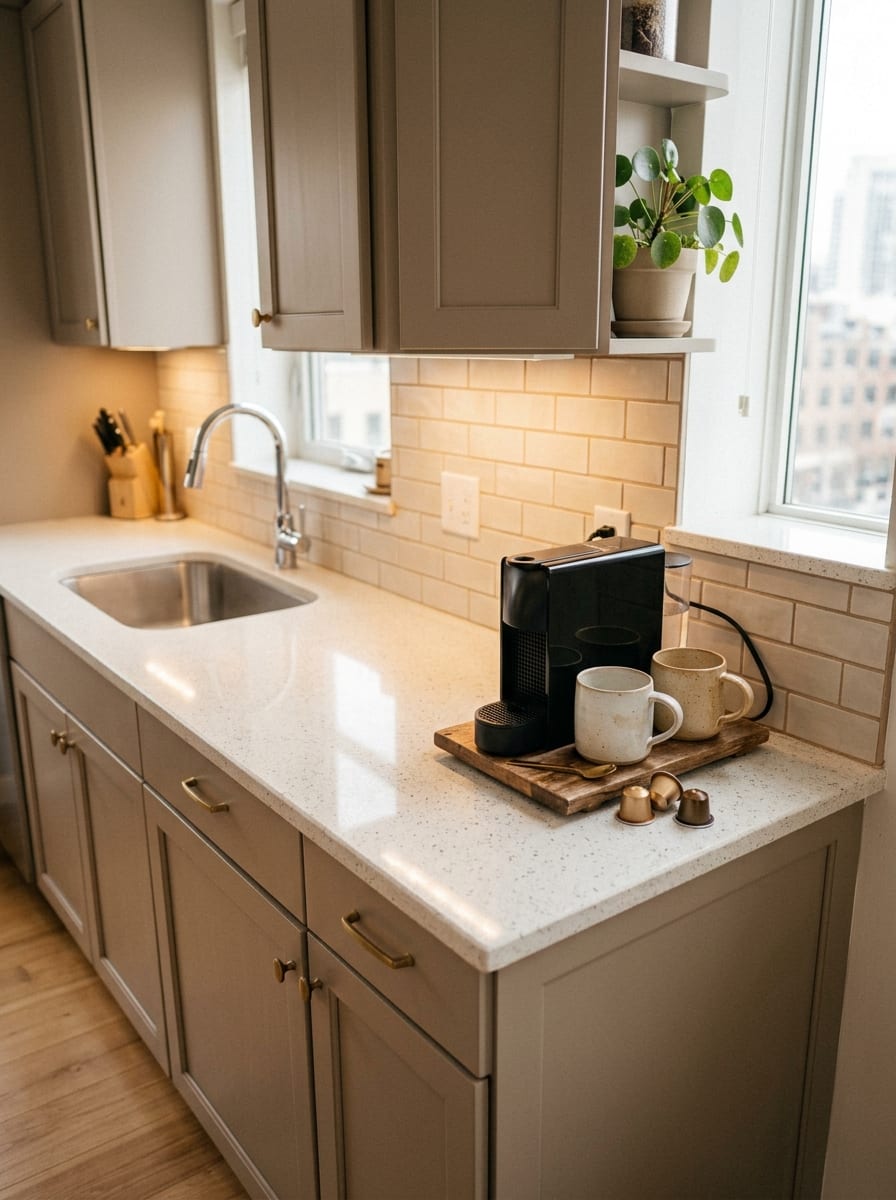
Start with the simplest possibility: use one existing corner of the kitchen counter. You may not need another piece of furniture at all.
Define the boundary
A coffee zone works better when it has a clear footprint: machine, small tray, one container. That is enough.
Keep the rest elsewhere
Store extra pods, backup beans, additional mugs and bulk supplies inside a nearby cabinet. Why this matters A coffee station should not slowly spread across the entire counter. Give it one edge and stop there.
Use a tray only if it helps
A tray can visually group the setup, but it should not force you to display things you would otherwise store away.
2. The Slim Coffee Cart
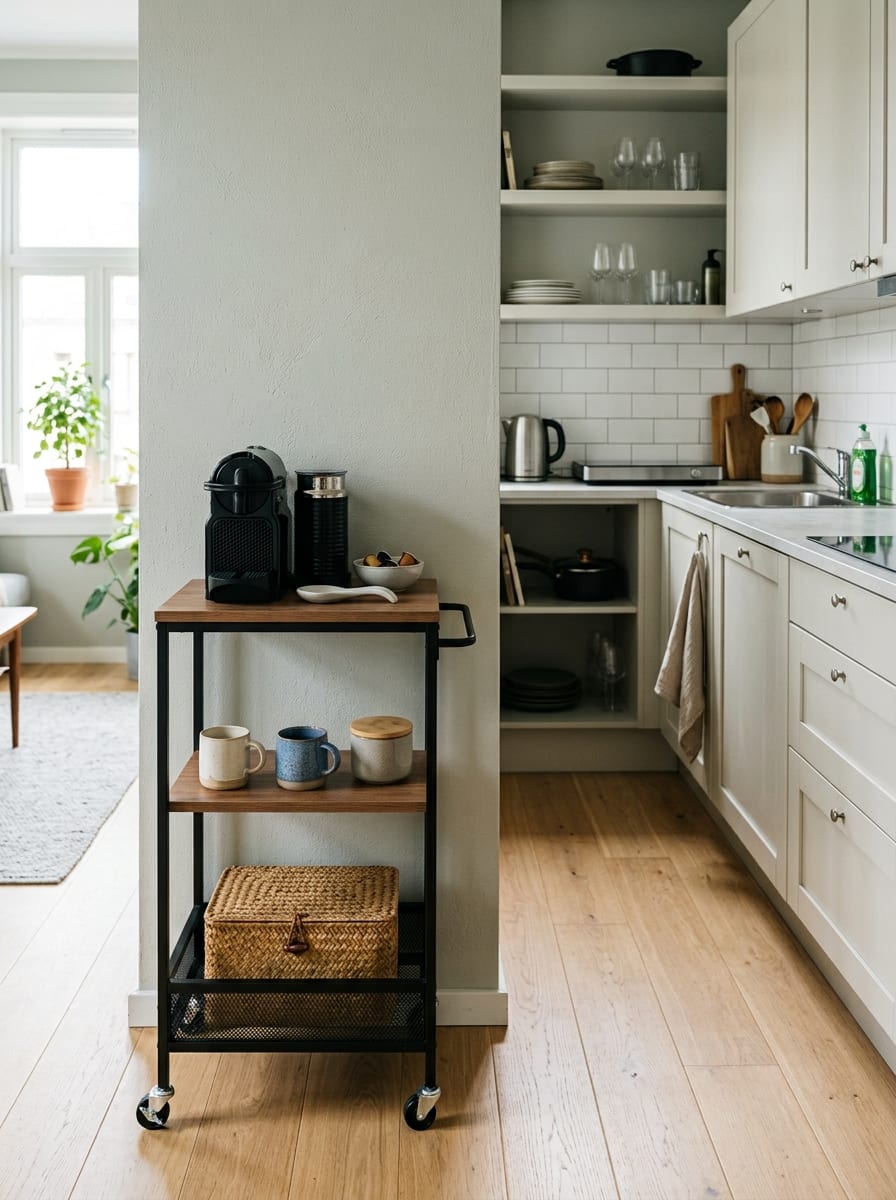
A narrow rolling cart can create a coffee bar without permanently occupying kitchen counter space.
Why it works
A cart provides surface, storage and flexibility in one piece.
Keep it genuinely narrow
Choose a footprint that fits beside cabinetry, at the end of a counter or against a dining wall without narrowing circulation.
Give each level a job
Top: coffee maker. Middle: mugs and daily supplies. Bottom: backup items.
Do not fill every shelf
Leave some visual breathing room. A completely packed cart begins to look like storage overflow rather than an intentional coffee station.
3. The Sideboard Coffee Station
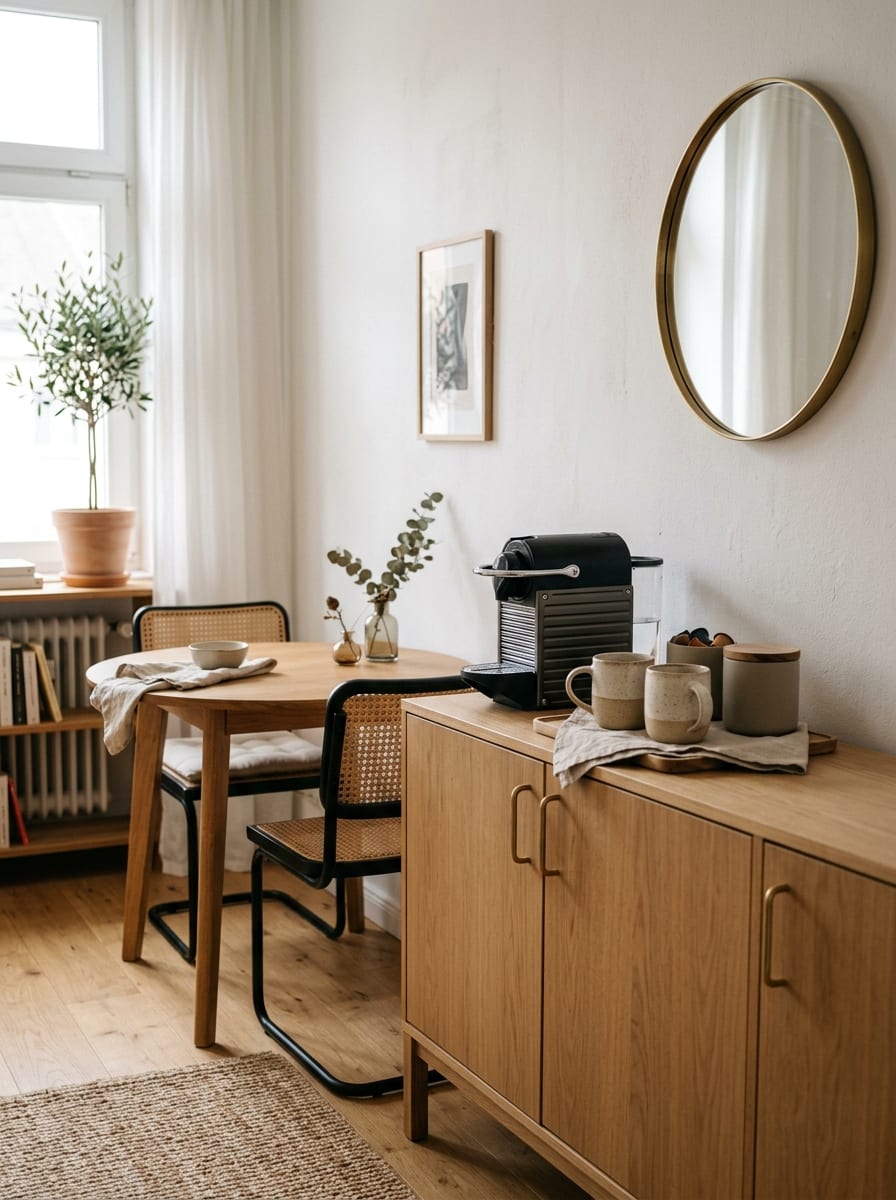
If you already have a sideboard in the dining area or living-dining space, it may be a better coffee station than the kitchen counter.
Why this works
You use furniture that already has a role. The top becomes the coffee surface. The cabinet below handles mugs, filters, beans and backup supplies.
Keep the styling restrained
A coffee sideboard does not need a framed sign, three plants, a mug tree, a syrup shelf or a decorative ladder. The machine itself is already a visual object.
Leave room for everyday life
If the sideboard also stores table linens and dishes, do not let the coffee setup take over the whole piece.
4. The Vertical Coffee Wall
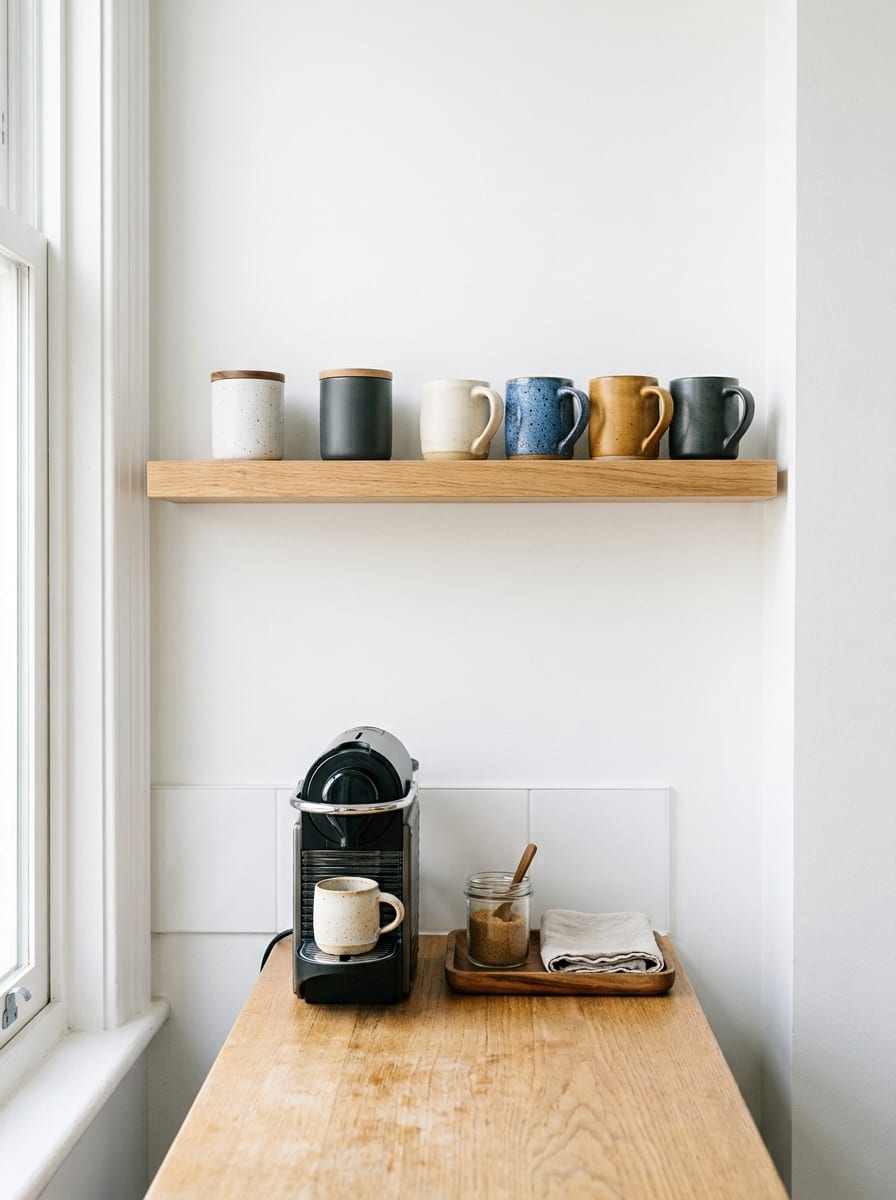
When horizontal space is scarce, use the wall above the station. The trick is to add only the storage you actually need.
Start with one rail or shelf
Possible uses include mugs, small containers and filters.
Keep frequently used items reachable
The wall should support the routine rather than becoming decorative storage.
Do not build a full open pantry
Too many shelves above a tiny coffee station can make the wall feel heavy. One or two levels may be enough.
Keep the machine visually grounded
The coffee maker remains the main anchor. The wall storage should support it rather than overwhelm it.
5. The Cabinet-Shelf Coffee Bar
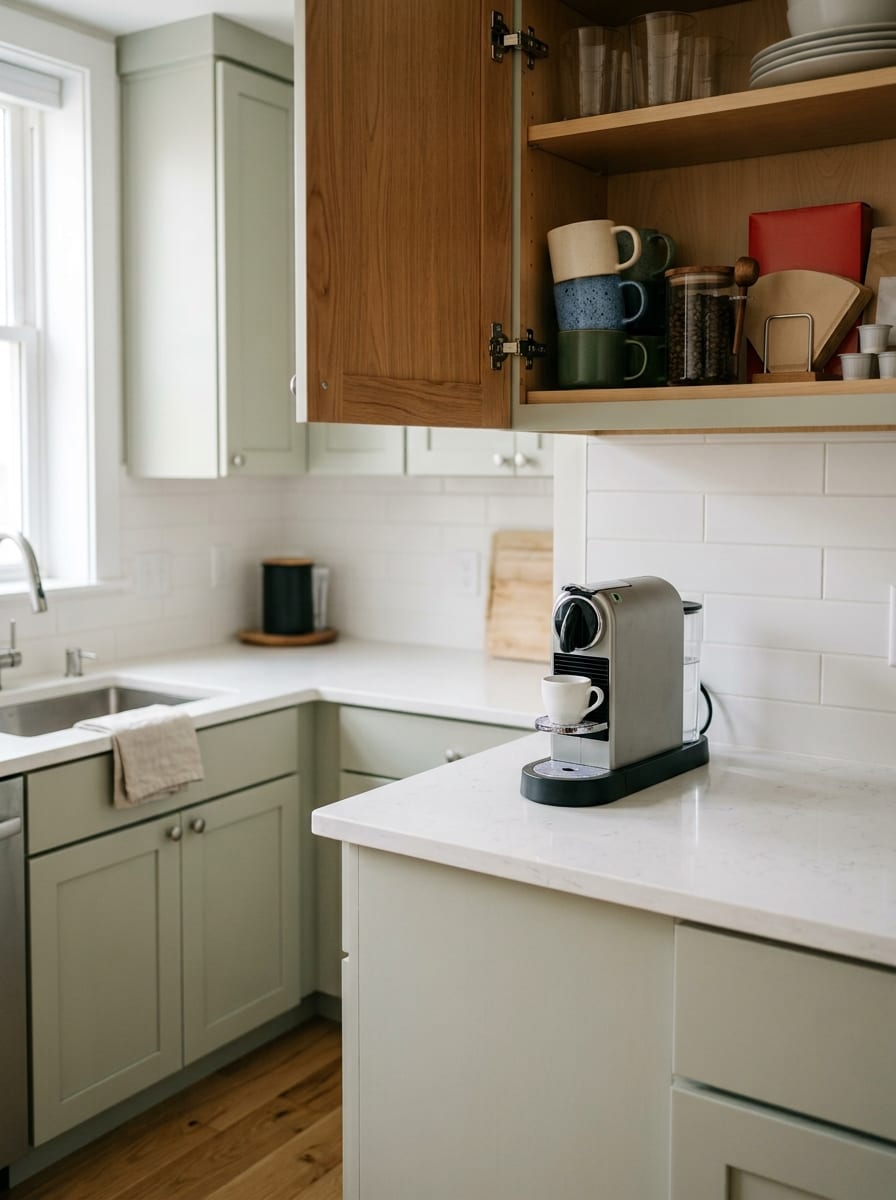
Sometimes the best coffee bar is mostly hidden. Use one kitchen cabinet or open cabinet shelf for mugs, coffee, filters and accessories while only the machine remains on the counter.
Why this works
The visible footprint stays tiny. But everything needed is still within one step.
Group by routine
Keep together: daily coffee, favorite mugs, filters and scoop instead of spreading them across multiple cabinets.
Use one shelf, not an entire cabinet
You probably do not need to dedicate a huge amount of storage to the station.
Keep backups elsewhere
Bulk coffee belongs in general pantry storage. Daily supplies belong in the coffee zone.
6. The Dining-Nook Coffee Corner
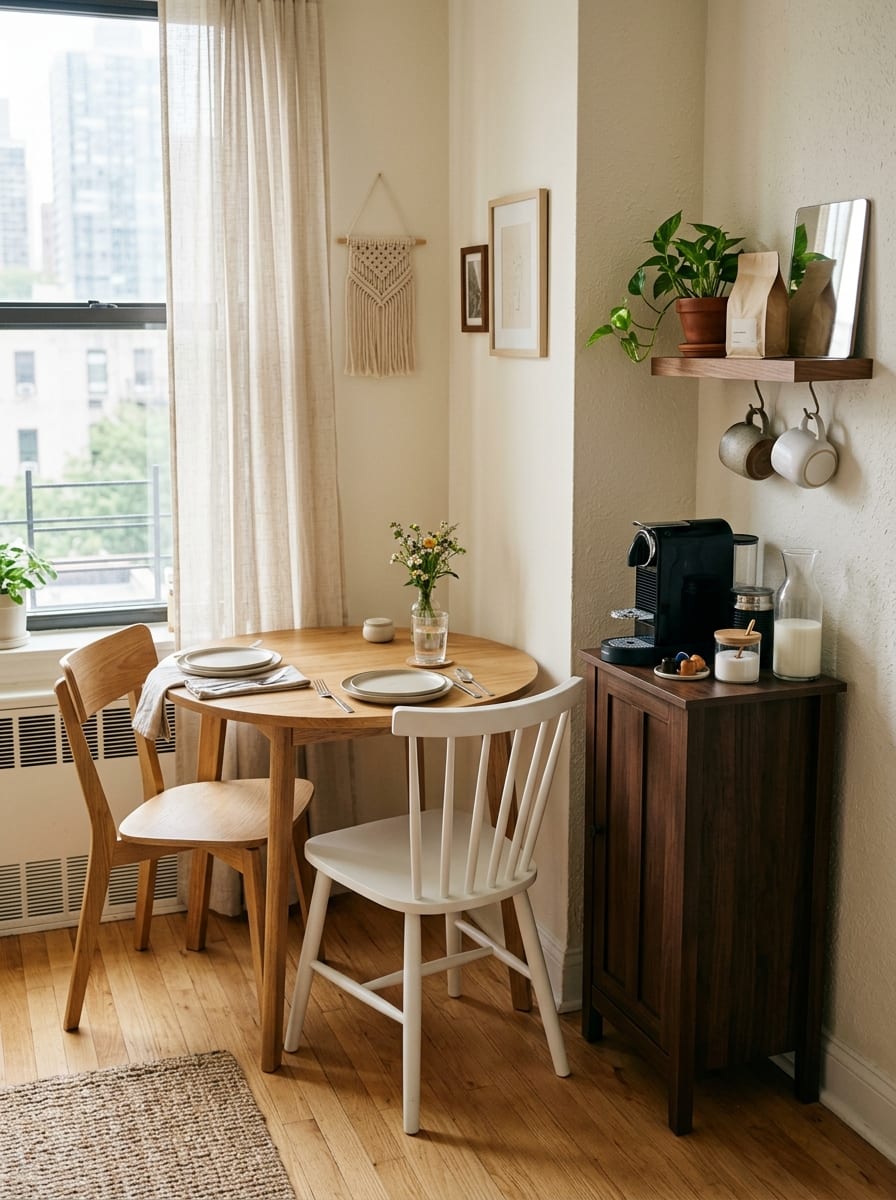
A tiny dining area can sometimes support a coffee station better than the kitchen, especially if it has an unused corner, small cabinet or narrow wall.
Why it works
Coffee is often used near breakfast, dining and the morning routine, so the station still feels logically placed.
Keep enough chair clearance
Do not position the coffee setup where someone has to move a dining chair every time they use it.
Make the station narrow
A small sideboard, trolley or wall shelf is usually better than a deep cabinet.
Use the same design language
If the dining area uses pale wood, black metal and cream, repeat those materials in the coffee setup.
7. The Floating-Shelf Coffee Station
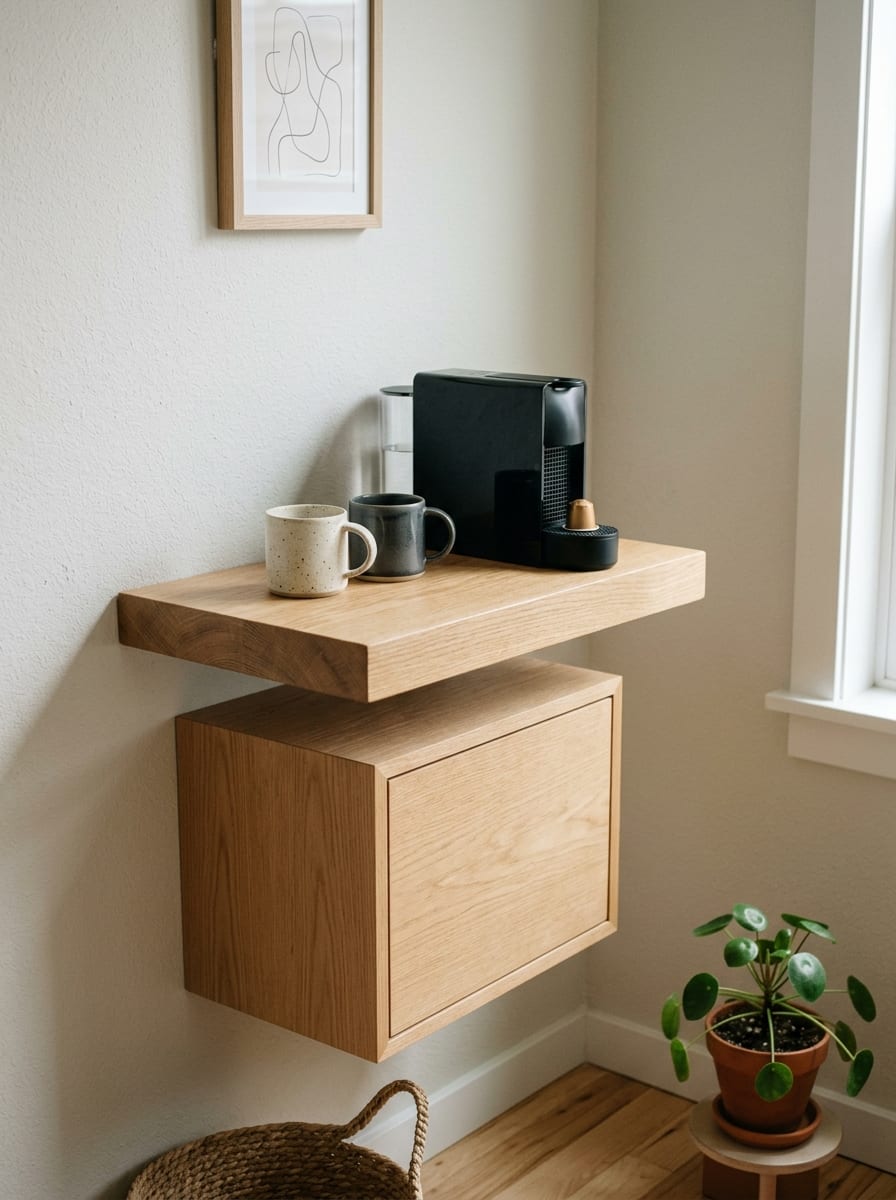
If you have almost no floor space, a floating shelf can create a very compact coffee surface. But this setup requires more planning than simply mounting a board on the wall.
Consider appliance requirements
A coffee machine needs stable support, appropriate electrical access, enough depth and safe clearance. The shelf must be suitable for the actual appliance and load.
Use the wall below carefully
The surface may work especially well above an existing cabinet or low storage unit rather than floating over completely empty floor.
Keep accessories minimal
If the main surface is small, store supplies nearby rather than turning the shelf into a pile of containers.
Best for lighter setups
This approach generally makes more sense with compact equipment than with a very large multi-appliance coffee system.
8. The Appliance-Garage Coffee Zone
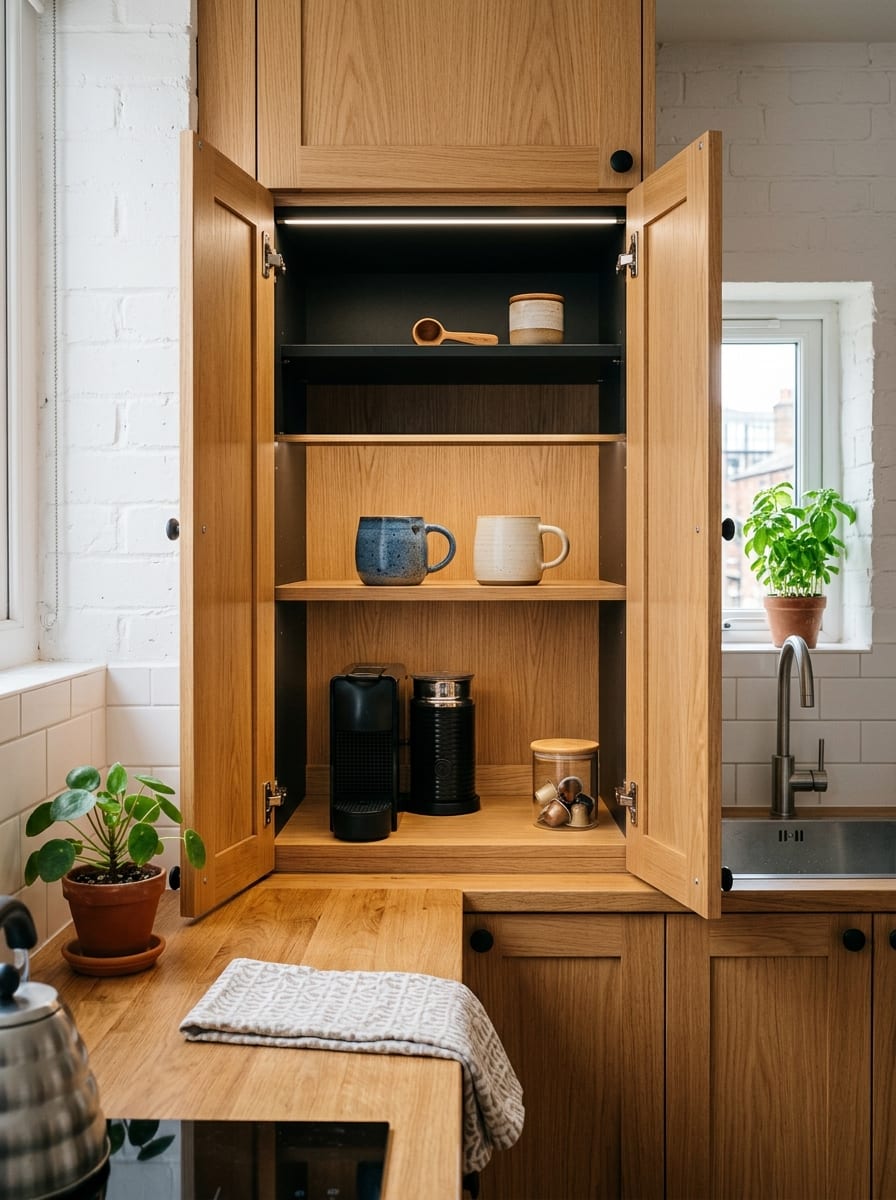
If you dislike seeing countertop appliances all day, a coffee station can live inside an appliance cabinet or purpose-designed storage area.
Why it works
When open, it functions as a station. When closed, it visually disappears.
Check ventilation and appliance guidance
Do not operate an appliance inside a closed cabinet unless the setup is specifically appropriate and the appliance instructions permit it.
Keep daily items nearby
Use the cabinet for mugs, coffee and filters so opening one zone gives you the whole routine.
Best for visually quiet kitchens
This works especially well when you want the counter to look almost completely clear outside coffee time.
9. The Console-Table Coffee Bar
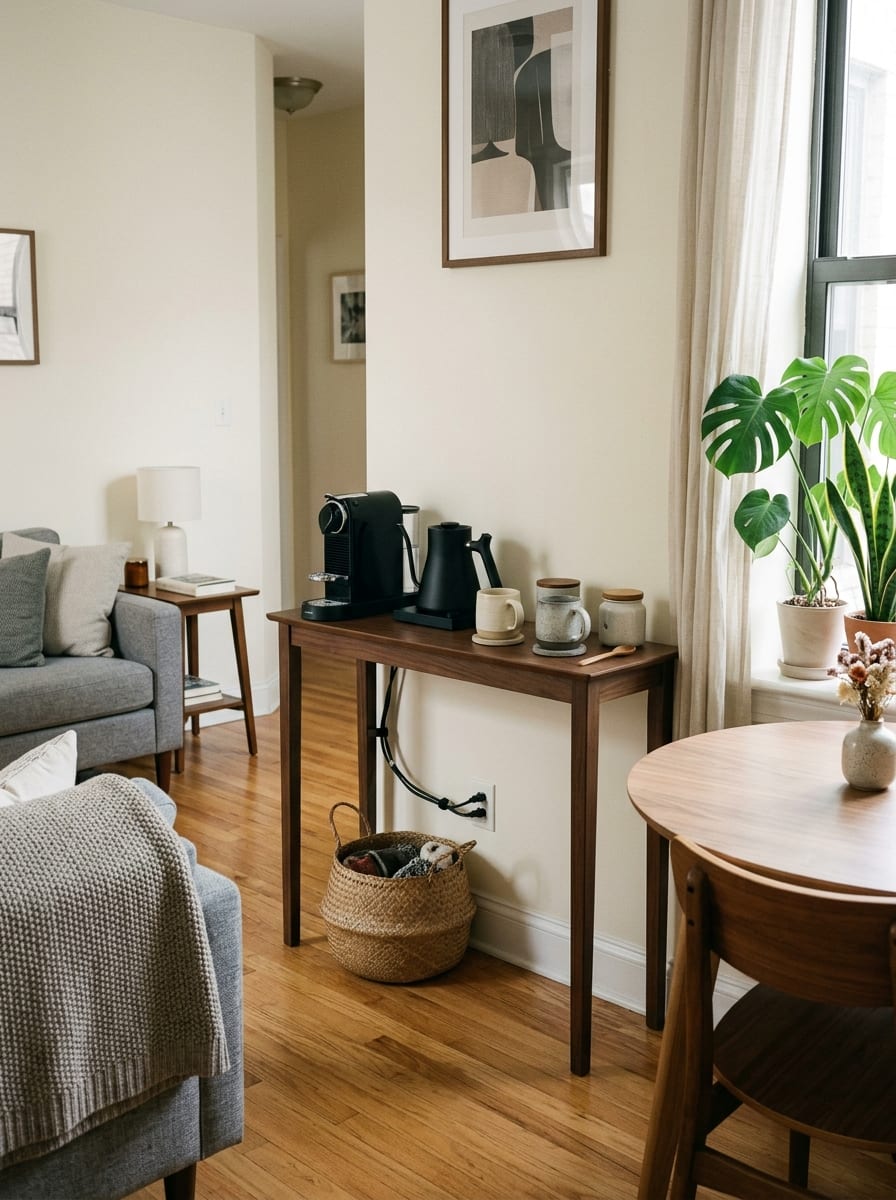
A very narrow console can work as a coffee bar in a living-dining room, kitchen-adjacent wall or small entry-adjacent dining zone, provided it does not block circulation.
Why a console works
It gives you useful length without much depth. That can be perfect for coffee machine, kettle and tray. Keep the depth practical Very narrow furniture may look space-saving but still needs enough surface for the appliance. Always check actual dimensions.
Add storage below selectively
A lower shelf can hold mugs and one basket, but avoid filling the entire lower section.
Watch the electrical setup
The station should have appropriate access to power without loose cords crossing the room.
10. The Hidden Coffee Basket System
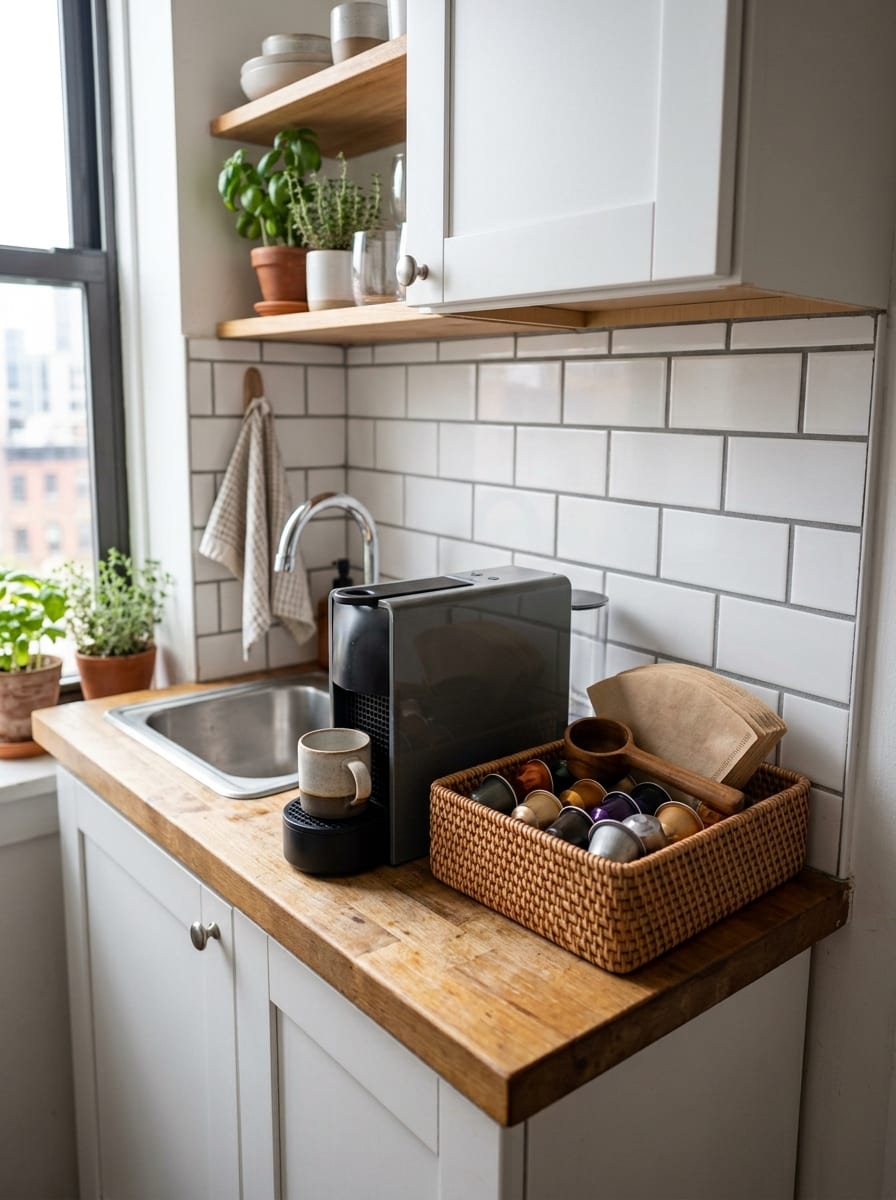
If you truly cannot dedicate a visible station to coffee, create a portable coffee system instead. Keep supplies together inside one basket or container. What stays out: only the machine if you use it daily. What goes in the basket: coffee, filters, scoop, pods and napkins.
Why it works
When you make coffee, everything comes out together. When you are finished, the basket returns to cabinet, pantry or shelf.
Great for tiny kitchens
This works particularly well if counter space is so limited that a permanent styled station would be unrealistic.
Keep mugs in normal storage
The basket is for small supplies that would otherwise spread across several drawers.
11. The Three-Layer Coffee Station Formula
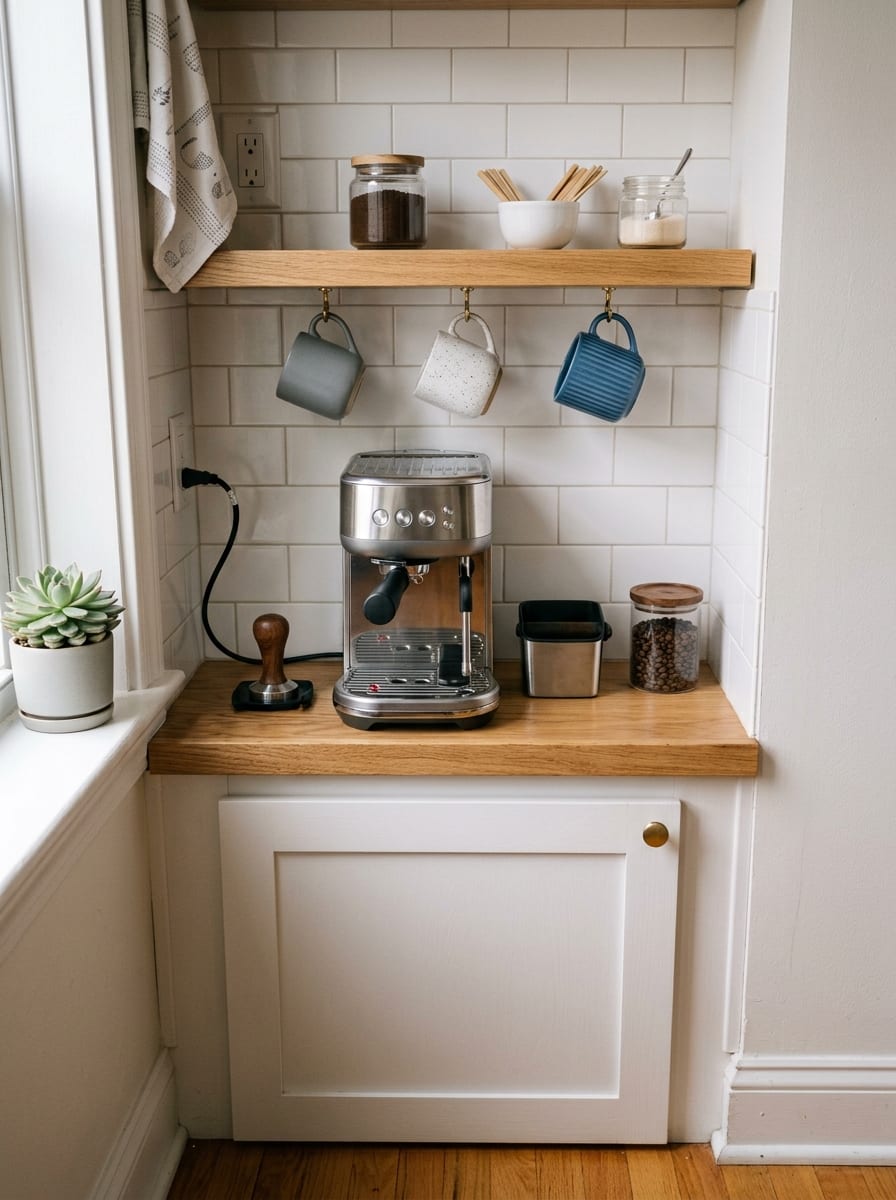
If you do not know how much space your coffee setup needs, divide it into three layers.
Layer 1: Work surface
This contains the coffee maker and enough clear area to prepare the drink.
Layer 2: Daily storage
This contains coffee, favorite mugs and filters and sits directly above, below or beside the machine.
Layer 3: Backup storage
This contains extra beans, extra pods and unopened supplies and can live somewhere else.
Why this works
Most coffee bars become cluttered because all three layers are stored in the same visible place.
Decide What Must Stay Visible
Daily: can stay close. Weekly: can be nearby but hidden. Backup: can live elsewhere. This prevents the station from becoming storage for every coffee-related object you own.
Measure the Coffee Maker First
Record width, depth and height. Then consider how much extra room it needs for lid opening, water reservoir, pod access and carafe removal.
Check How the Machine Opens
Some machines require access from top, side or back. That matters when placing them beneath shelves or cabinets.
Check the Plug Location
The perfect coffee corner is not useful if power requires an extension cord across the walkway.
Keep Cords Away From Water
Keep electrical components and cords appropriately positioned according to product instructions and applicable safety guidance.
Do Not Put the Station Directly in Front of the Main Prep Area
An outer counter edge is often better than the kitchen’s busiest section.
Protect the Refrigerator Route
Ask whether someone can open the refrigerator while another person is making coffee. In a small kitchen, these two actions can easily collide.
Protect Cabinet Doors
Open every nearby cabinet. Make sure the coffee station does not block drawers, cabinet doors, dishwasher or pantry.
Leave Room to Make the Drink
You also need somewhere to place the cup, add ingredients and stir. Do not create a station where the entire surface is appliance.
Give the Machine Some Breathing Room
A little clear space makes daily use easier.
You Probably Do Not Need Every Mug on Display
Keep one or two favorites visible if you like. Store the rest normally.
Mug Trees Are Not Automatically Space-Saving
If mugs can live inside a cabinet or on a wall shelf, that may be cleaner.
Use a Small Tray Carefully
Do not let the tray become an excuse to display unnecessary items.
Decanting Is Optional
If original packaging stores better and stays inside a cabinet, use it.
Limit Syrups
If you use flavored syrups every day, keep the ones you actually use. If they are occasional, store them.
One Coffee Machine Is Usually Enough
Avoid creating a station around multiple appliances unless you genuinely use them.
Where Should a Coffee Station Go?
Good locations include unused kitchen corner, outer end of counter, dining sideboard, kitchen-adjacent wall, dining nook and narrow console.
Coffee Station Beside the Refrigerator
This can be useful because milk and cream are nearby. Check whether the refrigerator door can open fully without hitting the cart, console or person using the station.
Coffee Station Near the Sink
Useful for filling reservoir and cleaning, but avoid crowding the primary washing area.
Coffee Station Near the Dining Table
This can work very well if the kitchen is tiny and the dining zone has spare wall.
Coffee Station in the Living Room
Think carefully about water, cleaning, crumbs and cords. A dining-adjacent location usually integrates more naturally.
Coffee Station in a Studio Apartment
Good options include one counter corner, tiny cart and sideboard shared with dining storage.
Use Vertical Space, But Do Not Overbuild
Start with one shelf. Add another only if the first one genuinely fills with useful daily items.
Keep the Station Width Controlled
Give the coffee bar a visual boundary: width of cart, width of tray or width of cabinet.
Keep the Floor Under It Clear When Possible
Visible floor can make the setup feel lighter.
Closed Storage Is Useful for Backup Supplies
Use visible storage for what you actually reach for.
If You Use Pods
Store only a reasonable working quantity near the machine.
If You Use Beans
Keep the container appropriate for how you store coffee rather than choosing one only because it looks attractive.
If You Use Ground Coffee
Prioritize freshness and convenience over decorative decanting.
If You Use a Kettle Too
Treat the kettle as part of the station footprint.
If You Use a Milk Frother
If it is used daily, include it. If not, store it and bring it out when needed.
A Coffee Station Without Open Shelves
Use counter, closed cabinet above and drawer below. This can look even calmer than a highly styled open setup.
A Coffee Station Without Extra Furniture
One kitchen corner plus cabinet shelf above. Done. This is often the smartest option in a truly small apartment.
A Coffee Station Without Counter Space
Try slim cart, sideboard, console or appropriate floating-shelf setup.
A Coffee Station Without Wall Drilling
Use freestanding solutions such as cart, sideboard or console rather than adding mounted shelves.
Small Apartment Coffee Bar for Renters
Prioritize changes that do not require permanent modification. Good approaches include rolling cart, existing sideboard, countertop zone and freestanding console.
Keep It Easy to Reset
The best coffee station should take only a minute or two to return to order.
Think About Cleaning Before Styling
Keep the surface easy to wipe. Avoid creating many small objects that need to be moved each time.
Avoid Fabric Directly Around Messy Zones
Decorative cloths and layered textiles may complicate everyday cleaning.
Keep Decorative Signs Optional
The coffee maker already explains the purpose.
Add Warmth Through Materials Instead
Try wood, ceramic and woven texture in small amounts.
Use One Plant at Most
But do not let the coffee bar become another plant shelf. Keep the work surface usable.
Coffee Bar Color Formula
A simple combination might be pale wood plus cream plus black, or warm white plus oak plus brass, or deep green plus wood plus cream.
Do Not Overdecorate for Pinterest
Design for everyday life. Common Small Apartment Coffee Bar Mistakes Adding a new piece of furniture when the counter already works. Choosing a cart that is too deep. Displaying every mug. Storing all backup coffee visibly. Blocking the refrigerator. Filling every shelf. Leaving no prep surface. Creating cable problems. Styling more than using. Letting the coffee zone spread. A Quick Coffee Bar Decision Guide Choose the Counter Corner if: you already have a small unused counter zone. Choose the Slim Cart if: you need a movable surface and storage. Choose the Sideboard if: your dining area already has one. Use a Vertical Wall Setup if: counter width is scarce but wall space exists. Use the Cabinet Shelf if: you want most supplies hidden. Choose the Dining-Nook Corner if: the kitchen itself is too crowded. Use a Floating Shelf Setup if: you need an extremely light footprint and have an appropriate installation. Choose an Appliance-Garage Setup if: you prefer the machine hidden when not in use. Use a Console Table if: you have a narrow empty wall. Choose the Basket System if: you cannot dedicate a permanent visible zone. Use the Three-Layer Formula if: your coffee station keeps becoming cluttered. The Simplest Small-Apartment Coffee Station Formula Start with: one machine + one clear prep space + one nearby daily-storage zone. Everything else is optional. Final Thoughts A small apartment does not need a full coffee bar. It needs a coffee routine that has a clear home. Start with what you actually use every morning. Keep daily supplies close. Move backups elsewhere. Use vertical storage carefully. Protect the kitchen workflow. And leave enough clear surface to actually make the drink.