11 Fall Tablescape Ideas for Small Dining Tables That Leave Room to Eat
Discover 11 fall tablescape ideas for small dining tables using low centerpieces, warm linens, candles and autumn colors while leaving plenty of room to actually eat.
In This Guide
11 Fall Tablescape Ideas for Small Dining Tables That Leave Room to Eat
Fall tablescapes look easy when the table in the photograph seats twelve people.
There is room for:
a huge vase multiple candlesticks pumpkins garland serving bowls place settings and somehow still plenty of empty surface
A small apartment dining table does not have that luxury.
If your table seats two or four, every decorative object competes with things you actually need during dinner.
That does not mean you should skip seasonal styling.
It just means the tablescape needs to work at a smaller scale.
The most successful fall tables on compact dining tables usually rely on:
one clear color story + low-profile decor + fewer objects + intentional negative space
Instead of filling the center, the goal is to create enough autumn atmosphere that the table feels seasonal while keeping it comfortable to use.
Here are 11 ways to do that.
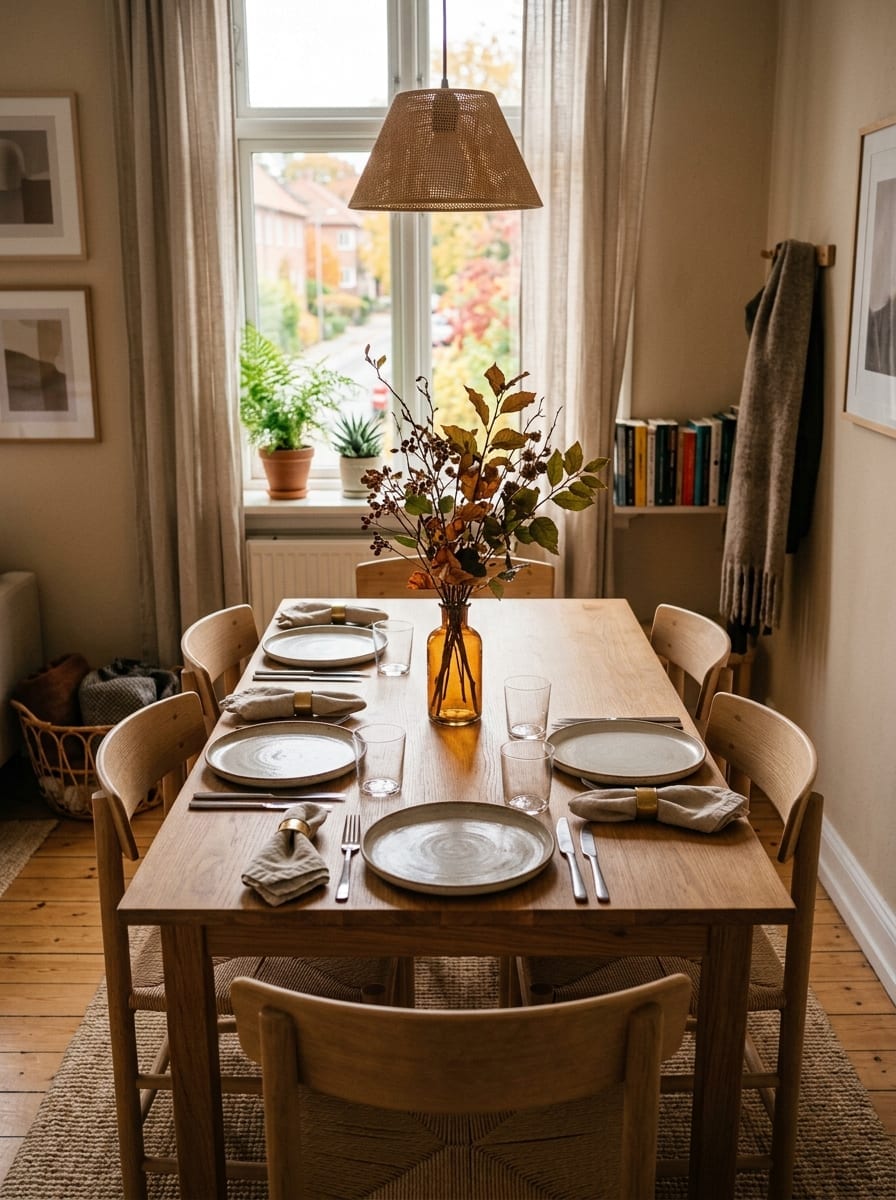
1. The Low Autumn Branch Arrangement
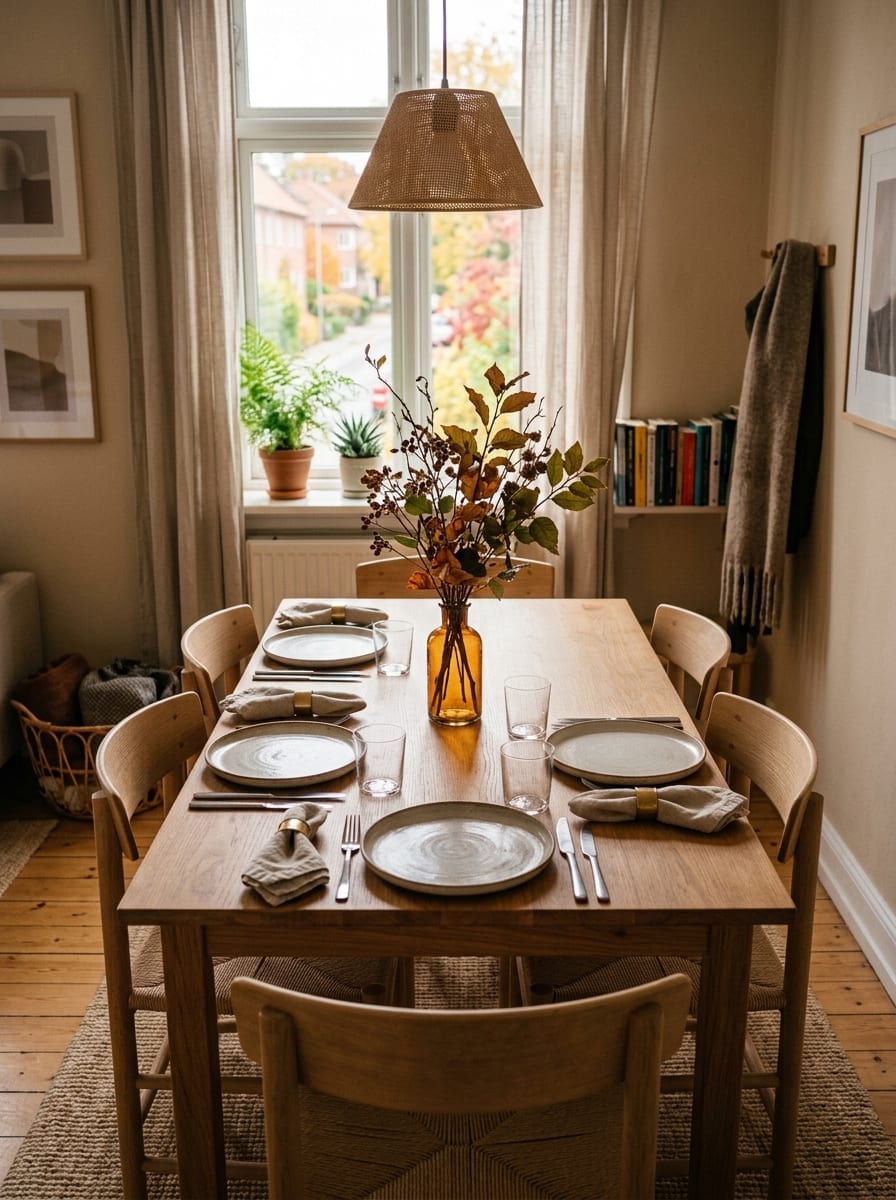
A single branch arrangement can give you the drama of a much larger centerpiece without taking over the table.
The trick is keeping the container relatively narrow.
Use a small vase with:
maple branches dried oak leaves muted berry stems eucalyptus in warmer tones simple autumn foliage
Let the arrangement gain its visual presence through height, not width.
Why this works on a small table
A wide floral arrangement consumes valuable surface area.
A narrow vase might only use a few inches of tabletop while still creating a strong seasonal focal point.
You also avoid scattering several little objects around the table.
Watch the eye line
The arrangement can be tall when nobody is sitting at the table, but if the branches are dense at face height, conversation becomes awkward.
Choose stems that open outward higher up while keeping the center relatively airy.
Alternatively, move the vase slightly to one side during meals.
Keep the container simple
Good choices include:
amber glass cream ceramic smoky brown glass matte stoneware
The branches should be the visual feature.
2. The Three-Piece Centerpiece
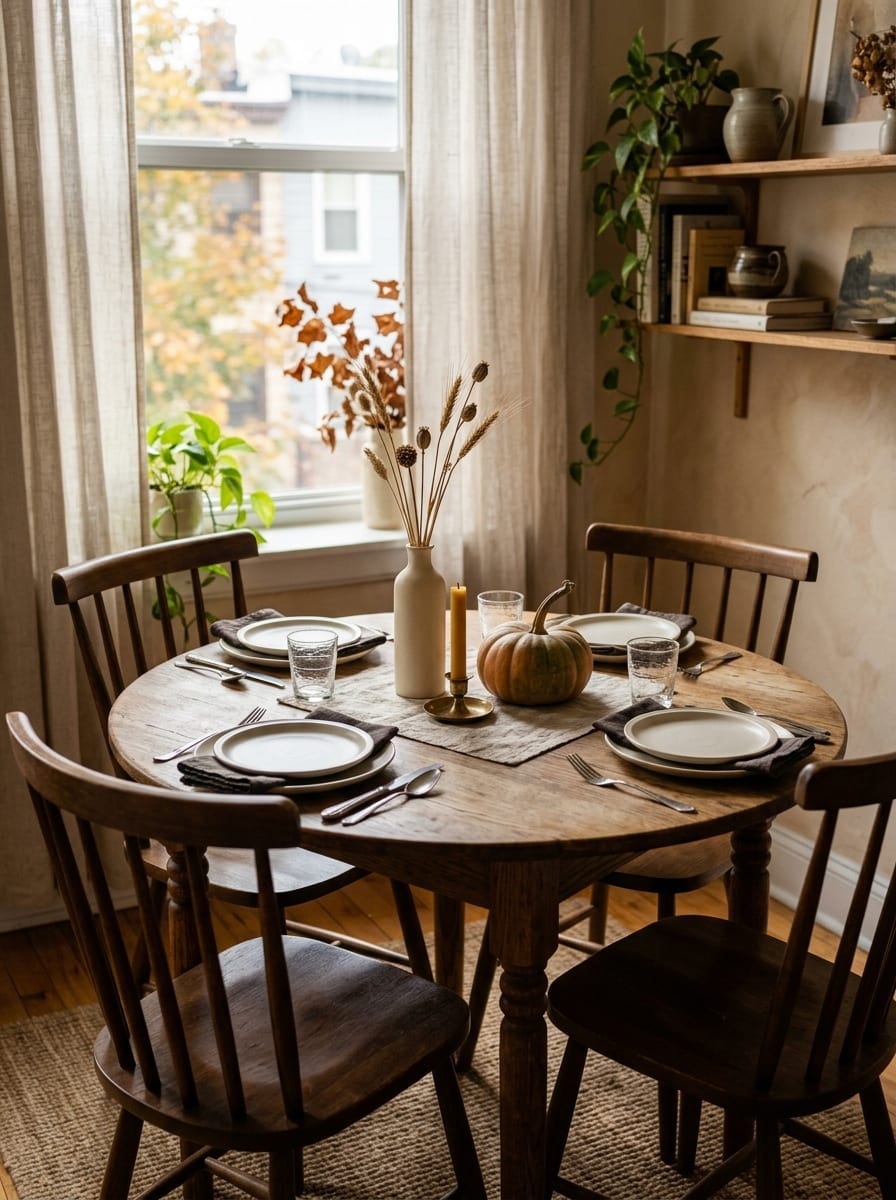
A small table rarely needs a complicated centerpiece.
Try limiting the entire center arrangement to three objects.
For example:
one small vase one candle one miniature pumpkin
That is enough to establish the season.
Why three works
A group of three feels intentional without becoming a collection.
More importantly, it gives the centerpiece an obvious boundary.
Instead of gradually adding:
another pumpkin two more candles pinecones leaves decorative bowl
you know when the centerpiece is finished.
Vary the heights slightly
Use:
tall + medium + low
For example:
10-inch vase 6-inch candle small pumpkin
This creates dimension without spreading everything across the table.
Keep the footprint tight
The three objects should visually function as one centerpiece rather than three separate decorations.
Place them close enough that a serving bowl could still fit beside them.
3. The Candle + Mini Pumpkin Line
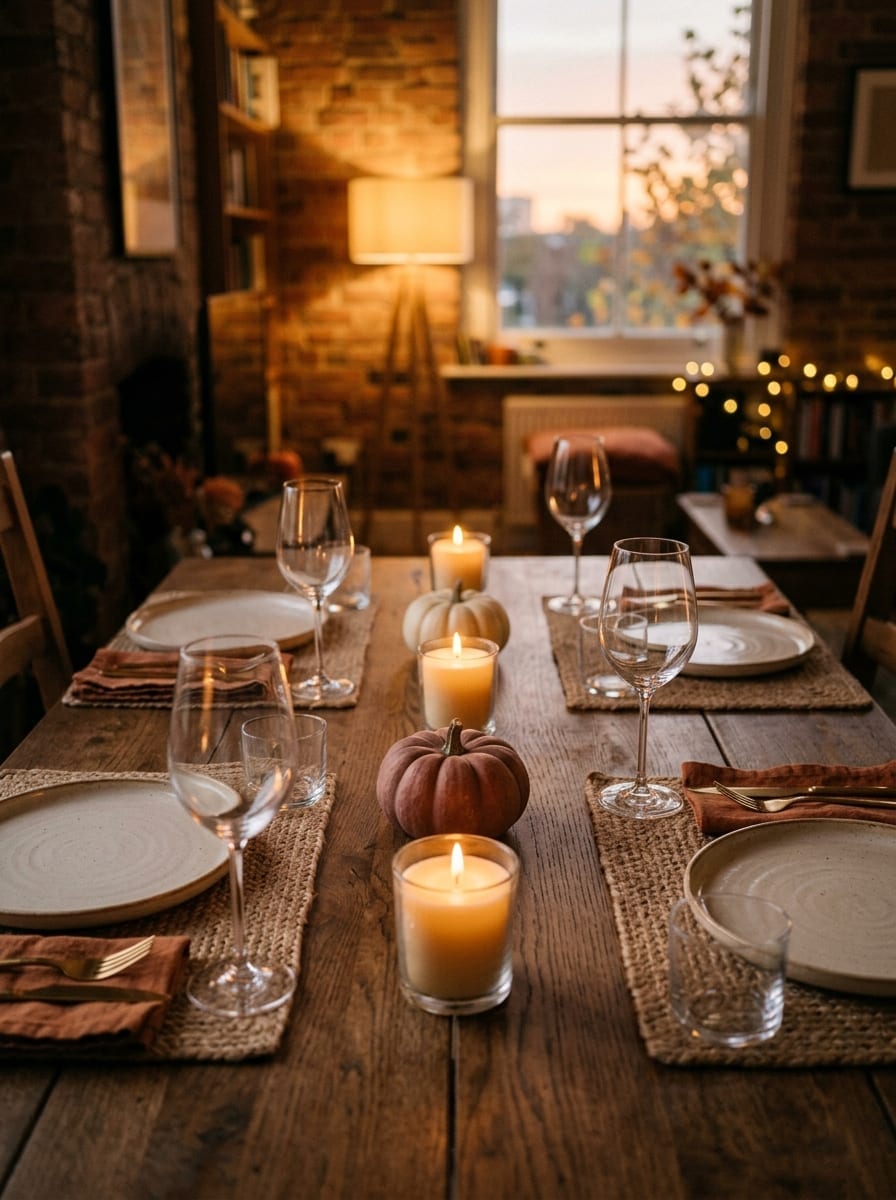
If your table is long but narrow, spreading decor lengthwise can work better than creating one bulky arrangement.
Use a simple line of:
two or three small candles two or three miniature pumpkins
down the center.
But keep everything small.
The important distinction
This should not become a full garland.
You want visible gaps between objects.
The table should still look like it has space.
A good rhythm might be:
candle → pumpkin → candle → pumpkin → candle
rather than covering the entire center.
Keep the height low
Low decor works especially well if the table is frequently used for dinner.
Nobody has to lean around a vase to talk.
Choose a restrained palette
Instead of bright orange pumpkins, try:
cream pale sage muted rust dusty brown
That helps the table feel grown-up rather than themed.
4. The Soft Neutral Harvest Table
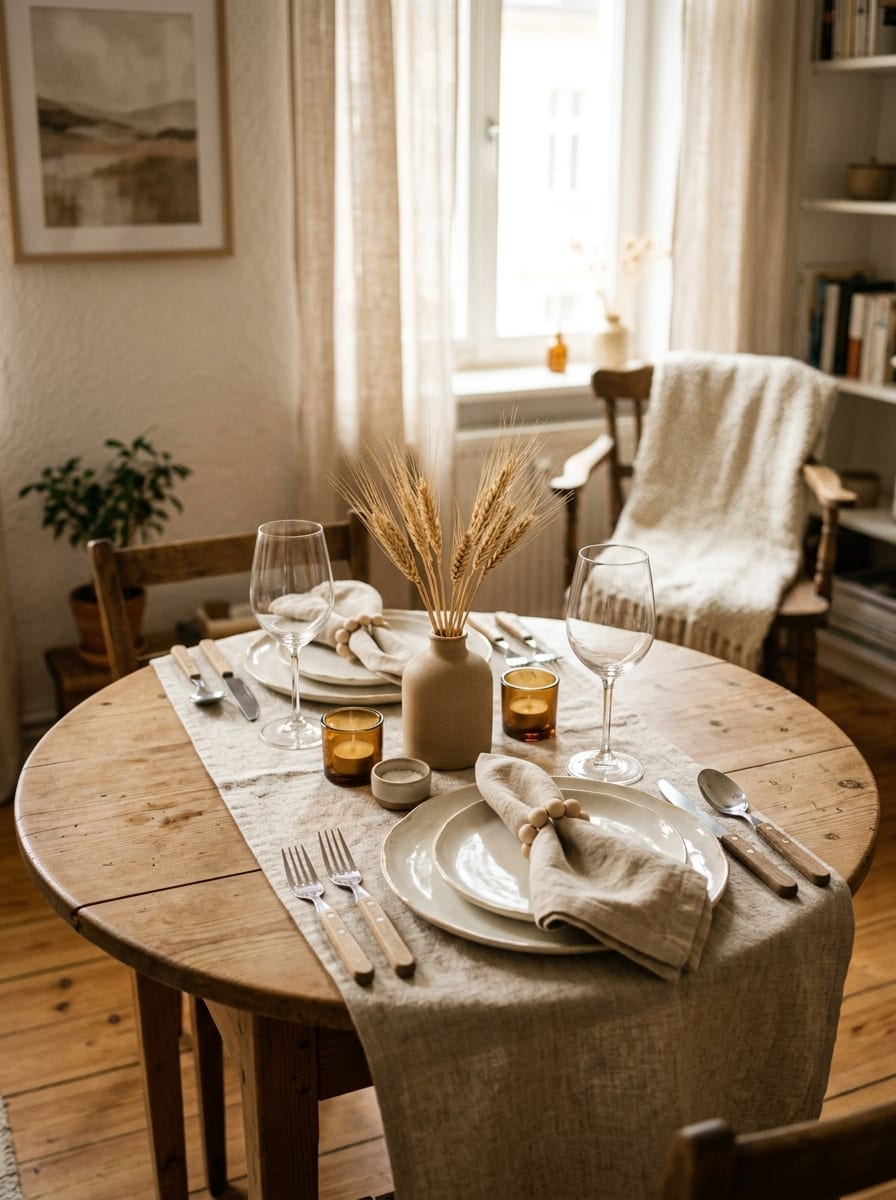
Fall does not require orange.
A neutral tablescape can still feel seasonal through material and texture.
Build the table around:
oatmeal linen ivory ceramic natural wood dried wheat warm beige soft brown
Start with the textiles
Try:
oatmeal table runner linen napkins natural woven placemats
Then keep the centerpiece very simple.
One small ceramic vase with dried grasses may be enough.
Why this works for small spaces
High contrast creates visual activity.
On an already compact table, too many contrasting colors can make everything feel busier.
A narrow neutral palette keeps the table calm while still adding seasonal warmth.
Add one deeper color if needed
If everything feels too pale, introduce a small amount of:
dark walnut chocolate brown muted olive
through candles or napkins.
5. The Amber Glass Autumn Table
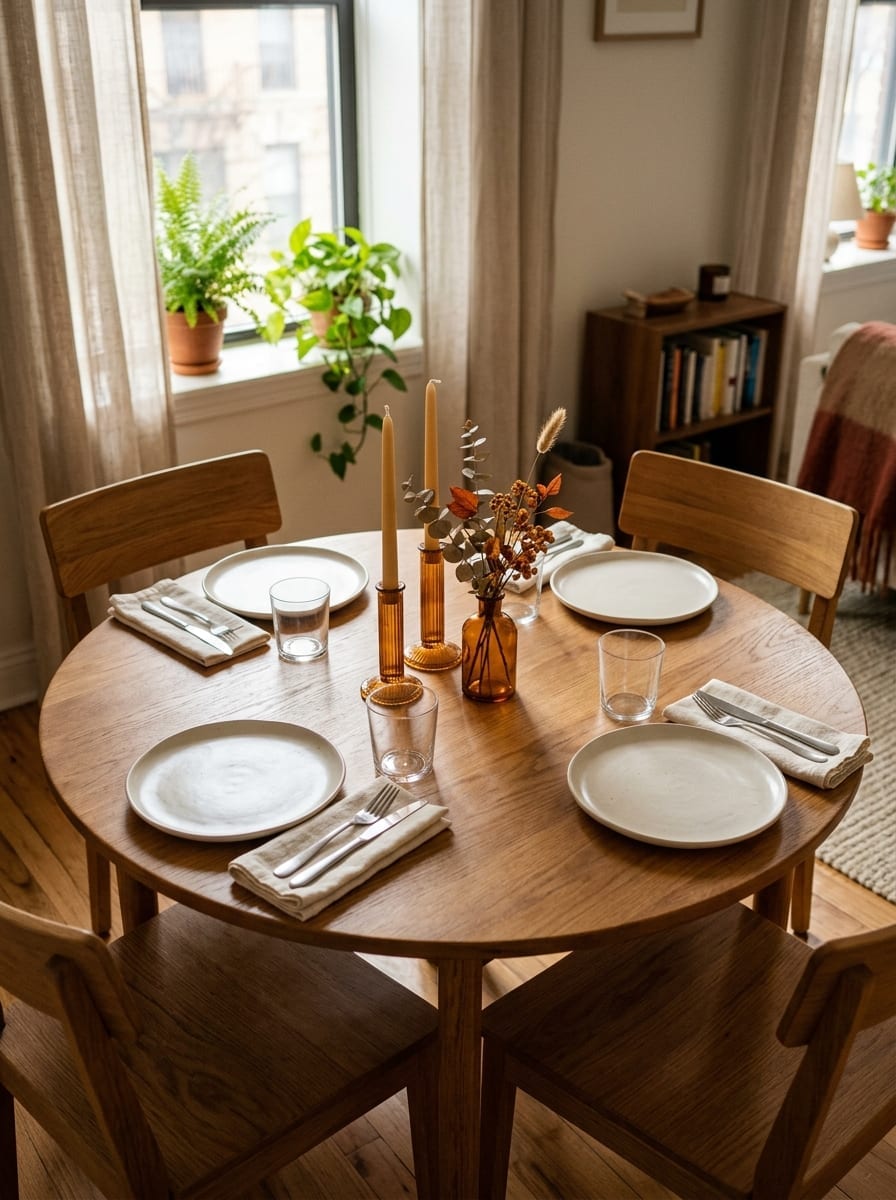
Amber glass is one of the easiest ways to make an ordinary table feel like fall without adding many objects.
It works beautifully in:
candleholders small vases drinking glasses bud vases
The color creates warmth when light passes through it.
Do not use amber everywhere
Choose one or two categories.
For example:
clear drinking glasses + amber candleholders
or:
amber vase + ordinary clear glasses
That keeps the effect intentional.
Pair it with simple materials
Amber glass looks especially good with:
cream linen walnut oatmeal ivory plates muted olive foliage
Why it works on small tables
Glass adds visual interest without feeling as visually heavy as solid decor.
And if the objects are narrow, the physical footprint stays small.
6. The One-Sided Centerpiece
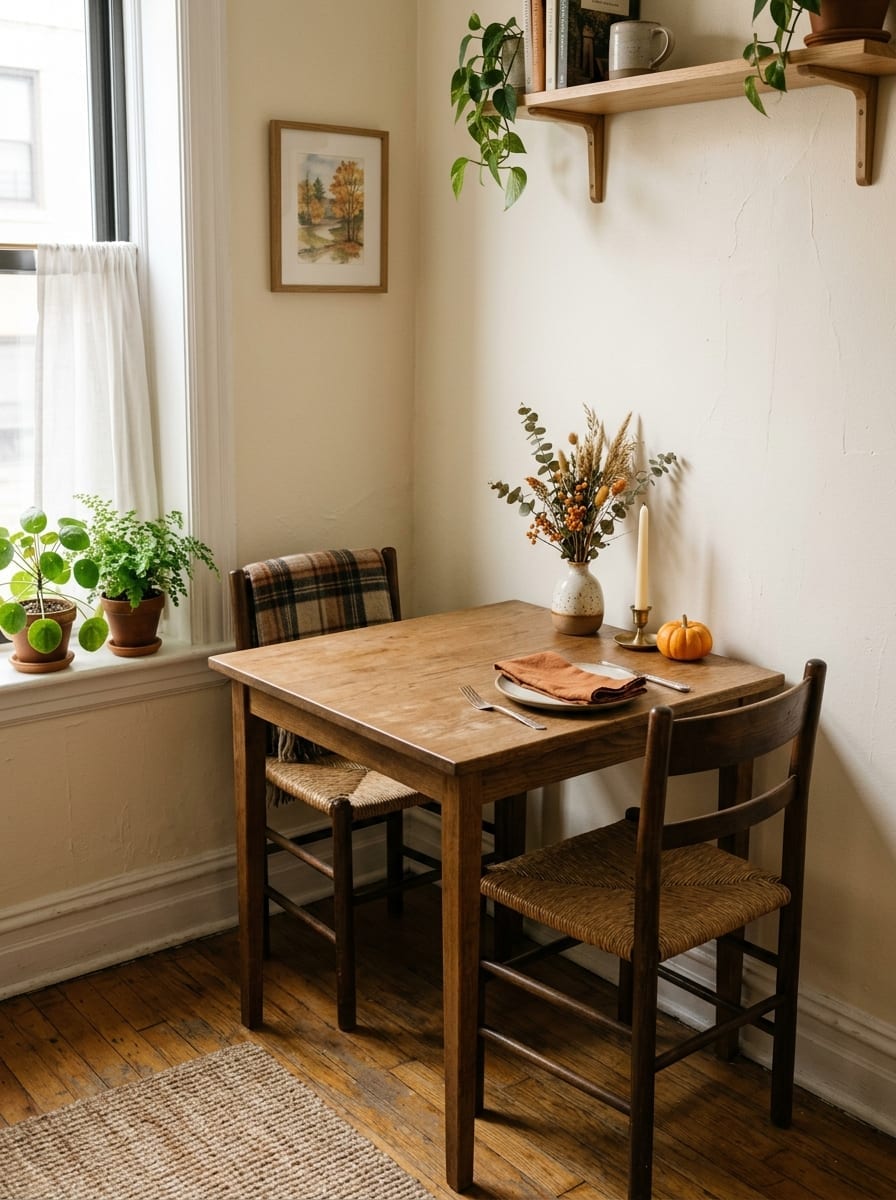
The centerpiece does not always need to sit exactly in the middle.
On very small tables, moving decor slightly toward one side can create a much more useful eating surface.
This works particularly well for:
two-person tables small breakfast tables tiny apartment dining nooks tables pushed near a wall
Create a small styling corner
Use something like:
one tiny vase one candle one small seasonal object
near the far end or wall side of the table.
Leave the main eating area open.
Why this can be better than symmetry
Perfectly centered decor often divides a small table into two narrow usable areas.
Moving the centerpiece off-center gives you one larger continuous zone.
That can be much more practical.
Make it look intentional
The decor should relate visually to something nearby, such as:
wall art pendant light window corner shelf
so it does not look accidentally misplaced.
7. The Rustic Linen + Wood Setting
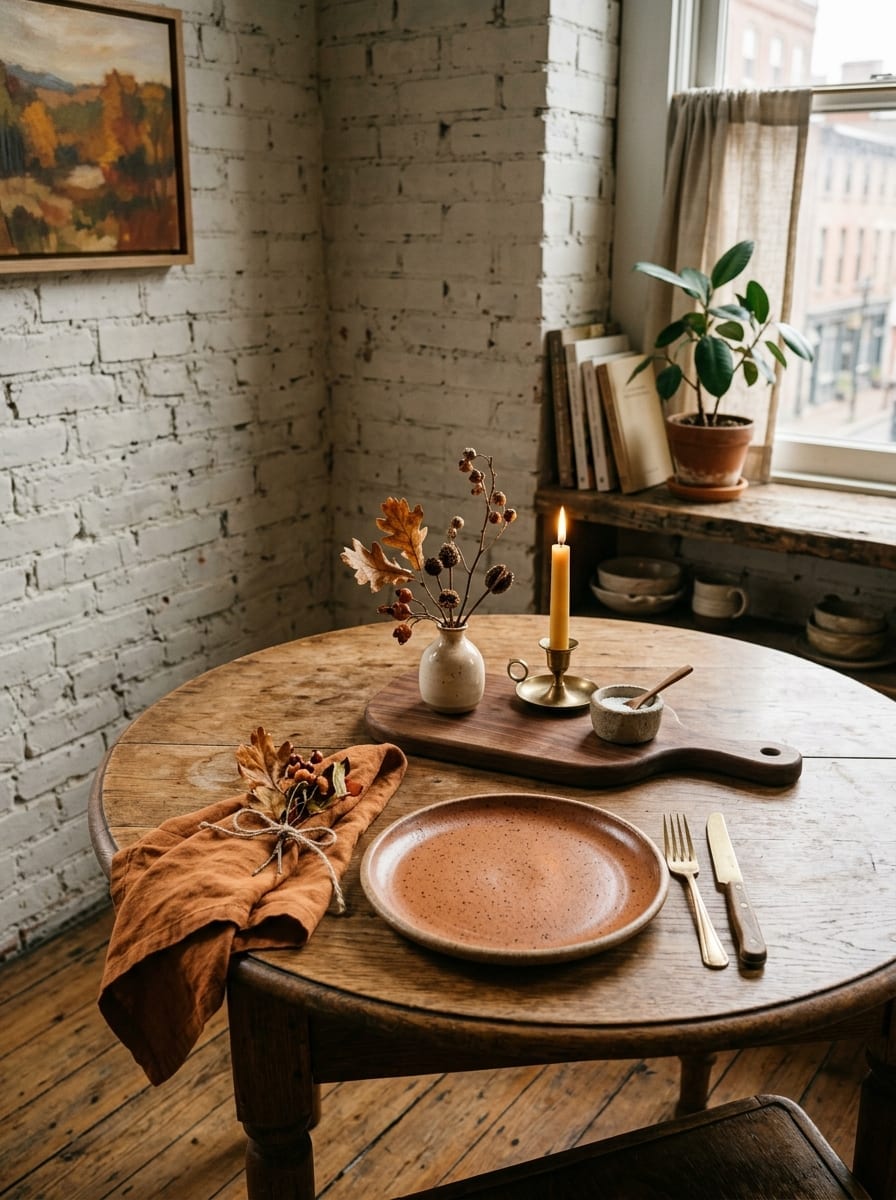
A table can feel autumnal without much centerpiece decor at all.
Sometimes the place settings themselves provide enough texture.
Use:
slightly crinkled linen napkins wooden serving board simple stoneware plates natural woven placemats
Then add only a tiny seasonal centerpiece.
Let the materials carry the mood
Instead of placing fall objects everywhere, rely on:
texture warm color natural material
A wooden board looks more autumnal beside warm linen than it does beside a bright summer palette.
Keep the wood tones related
You do not need everything to match perfectly.
But too many unrelated wood finishes can make a small table look cluttered.
Try to keep them generally:
pale medium warm or dark
rather than mixing every tone.
8. The Olive + Rust Modern Fall Table
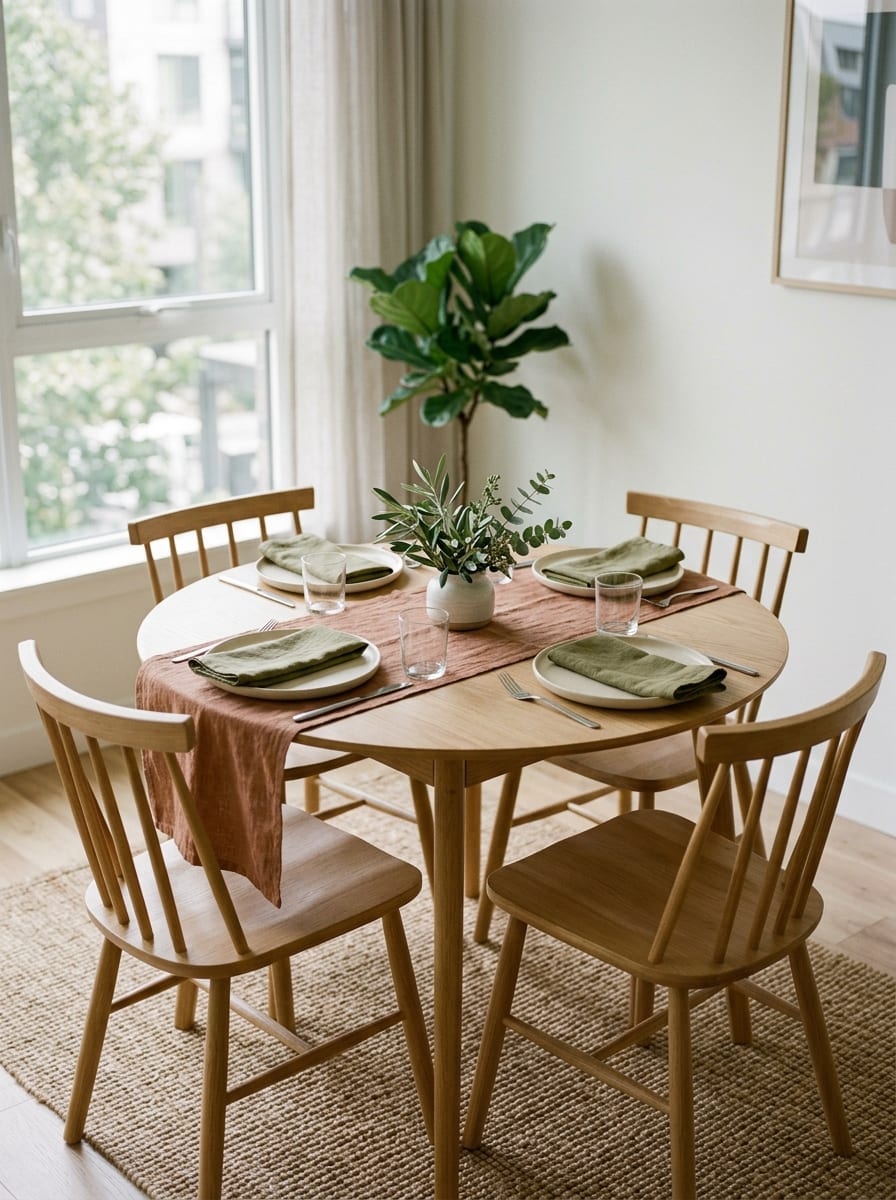
If you want more color without going traditional, pair muted olive with rust.
The combination feels unmistakably autumnal but still modern.
Use one color more heavily than the other.
For example:
olive napkins + one rust centerpiece accent
or:
rust runner + small olive foliage
Add plenty of neutral space
Balance the deeper colors with:
cream plates warm white table natural wood ivory candles
That keeps the small table from becoming visually dark.
Keep patterns minimal
When the color combination is already strong, you do not need:
plaid runner printed napkins patterned plates
at the same time.
Solid colors make the pairing feel more contemporary.
9. The Tiny Round Table Formula
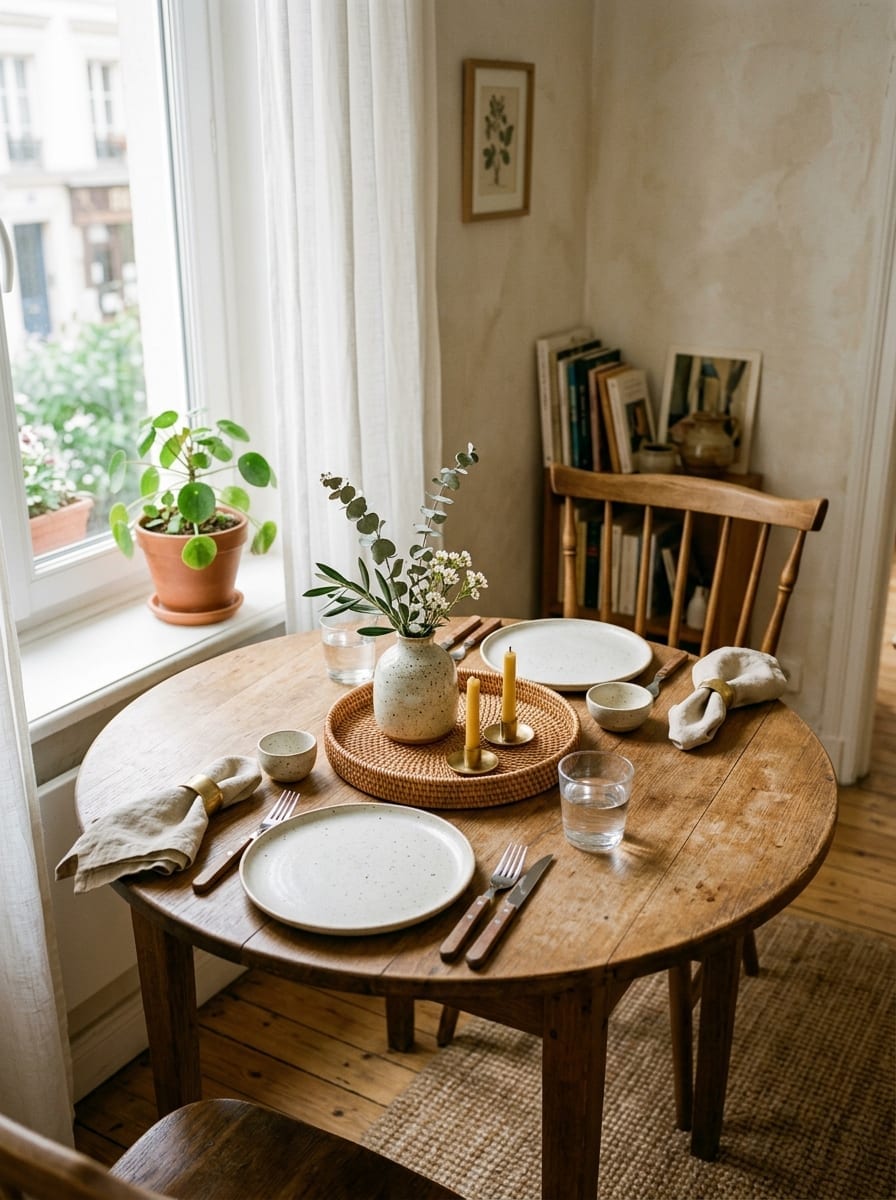
Round tables need a different strategy.
On a small round table, one oversized centerpiece can quickly consume the entire useful center.
The simplest formula is:
one small circular centerpiece + repeated place settings around it
Keep the centerpiece proportional
For a table seating two or four, use something like:
tiny bowl with seasonal fruit short vase small candle cluster miniature floral arrangement
Keep it compact enough that there is still room for:
plates glasses elbows
Use round shapes intentionally
A small round tray can contain the centerpiece.
That gives it a visual boundary and makes the entire arrangement easy to remove when serving dinner.
Avoid long runners
A runner can visually divide a tiny round table awkwardly.
Consider:
placemats bare tabletop compact center mat
instead.
10. The Dinner-First Tablescape
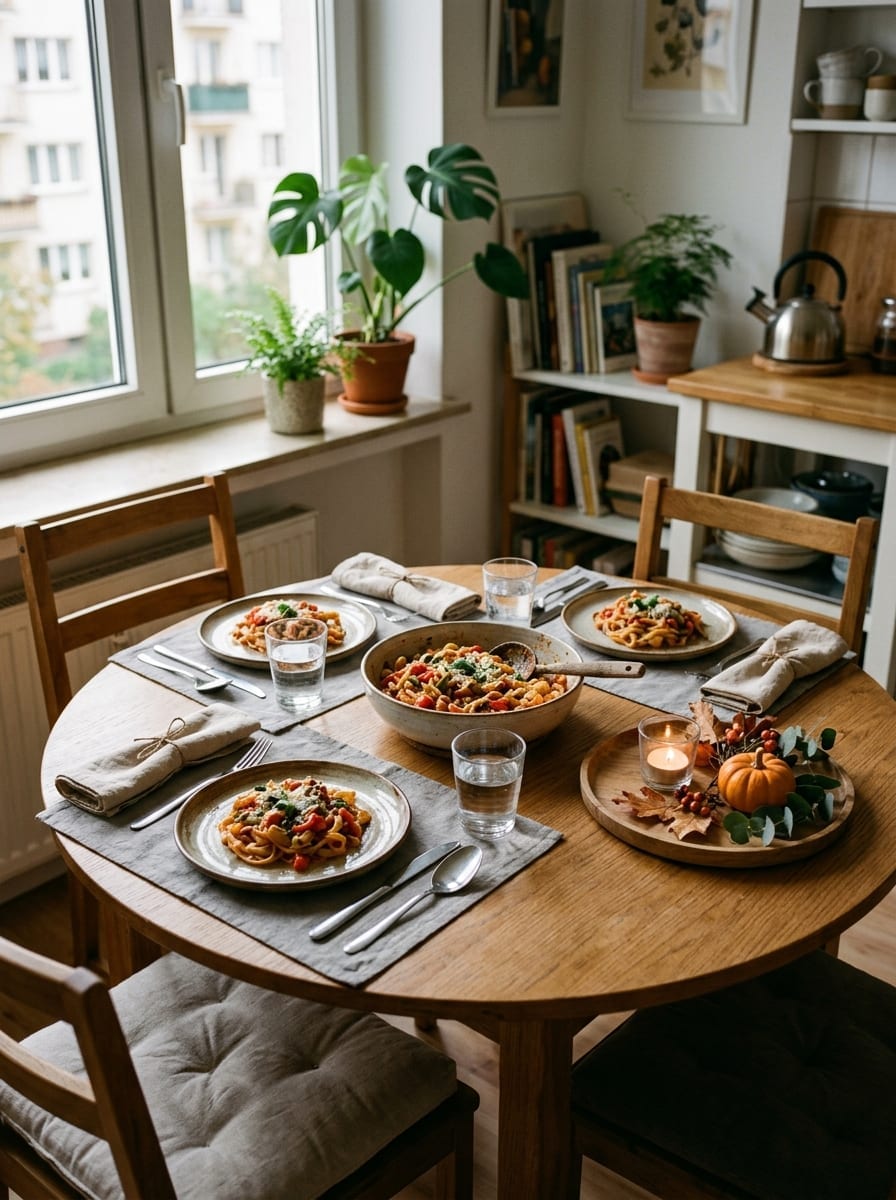
One of the best rules for decorating a small dining table is simple:
set the table for dinner first.
Put down:
plates cutlery glasses napkins
Then see how much room is actually left.
Only decorate the remaining area.
This prevents the common mistake of creating a beautiful centerpiece and then discovering there is nowhere to put dinner.
Include serving space
If you usually place food on the table, leave room for at least:
one serving bowl or one platter
Do not plan only around individual place settings.
Use decor that moves easily
A centerpiece on:
small tray board single container
can be lifted off the table in seconds.
That is extremely useful in a small apartment.
Why this is one of the strongest approaches
The table continues functioning as a table.
The seasonal decor adapts to the available space instead of forcing the meal to adapt around the decor.
11. The Five-Minute Fall Table Reset
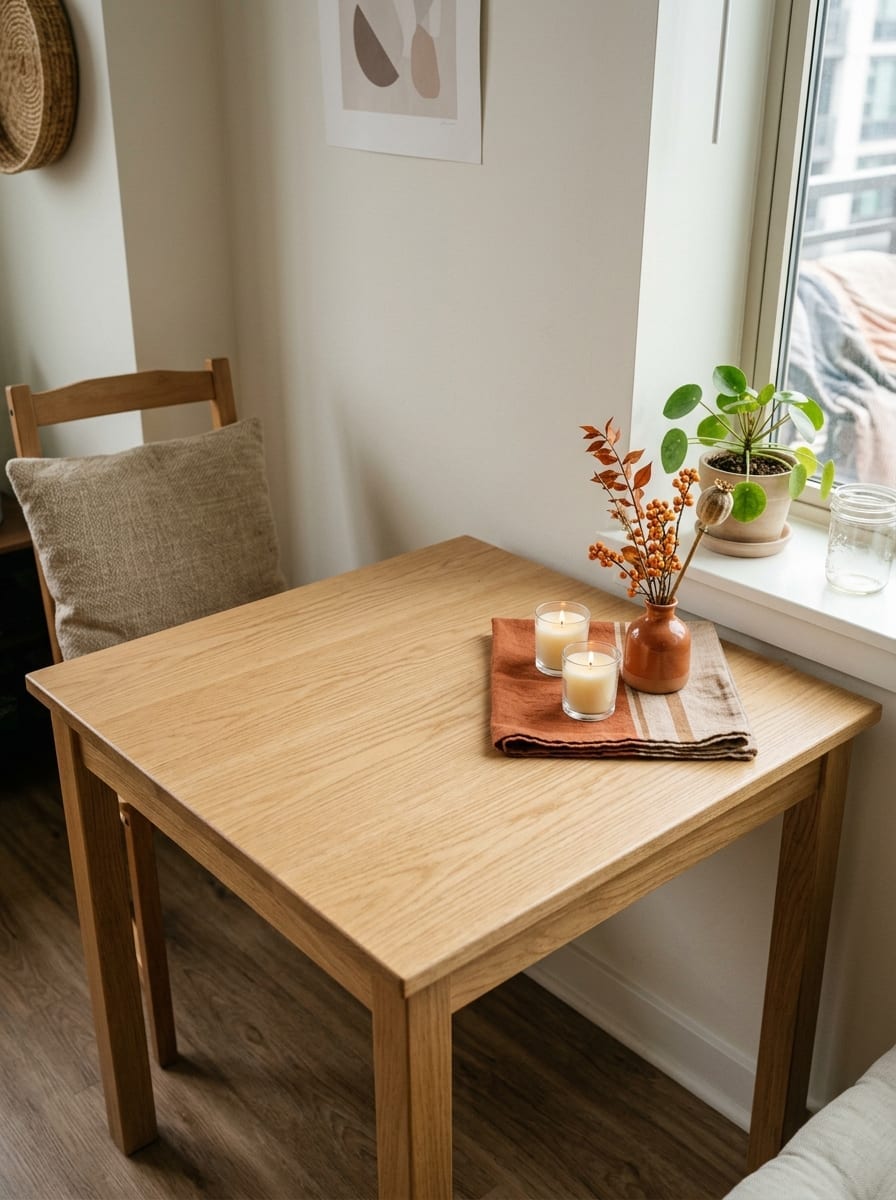
Seasonal styling does not need to remain on the table permanently.
If your dining table also functions as:
desk homework station food-prep area hobby table
keep the seasonal setup easy to assemble and remove.
Create one fall table kit.
That could include:
runner two candles tiny vase seasonal stems
Keep everything together when not in use.
When you want the table to feel seasonal, bring out the kit.
When you need the entire surface, put it away.
Why this makes sense in an apartment
Multi-purpose furniture needs flexibility.
Permanent decor becomes annoying when you have to move five separate items every time you open a laptop.
A simplified seasonal setup gives you the atmosphere without creating another daily chore.
How Much of a Small Dining Table Should Stay Empty?
There is no perfect percentage, but the table should still clearly look usable.
A good test is whether you can comfortably place:
every person’s dinner plate glass cutlery serving bowl or platter
without moving half the decor.
If not, the tablescape is too large.
For a very compact table, the centerpiece may only need to occupy around 10–20% of the usable surface.
Think of that as a practical starting point, not a rigid design rule.
How Tall Should a Fall Centerpiece Be?
There are two easy directions.
Low
Keep the centerpiece below the main eye line.
This is best for:
candles pumpkins bowls short florals
Tall but narrow
A slim vase can rise above the conversation zone while keeping the base small.
Avoid arrangements that are both:
wide + tall
because those usually interfere most with dining.
When in doubt, sit at the table and test whether you can comfortably see the person opposite you.
What Should Go in the Center of a Small Fall Table?
Some of the easiest options are:
single narrow vase small tray two candles one small bowl of pears or apples miniature pumpkin cluster amber bud vase short dried-flower arrangement
You do not need all of them.
Pick one centerpiece concept and commit to it.
Fall Tablescape Colors That Work in Small Spaces
Cream + Rust
Warm and classic without being too dark.
Oatmeal + Walnut
Ideal for a very neutral table.
Olive + Ivory
Subtle and natural.
Burgundy + Cream
Richer and more dramatic.
Camel + Amber
Very warm without relying on obvious fall motifs.
Taupe + Chocolate Brown
Excellent for understated interiors.
The easiest formula is:
one neutral + one autumn accent + one natural material
For example:
cream + rust + walnut
That is enough.
Do You Need a Table Runner?
No.
A runner can add color and texture, but it is optional.
Skip it when:
the table is extremely small the tabletop itself is attractive you use placemats the runner competes with dishes
On a tiny round table, I would usually choose placemats or leave the tabletop visible rather than forcing a runner into the arrangement.
Should You Use Placemats on a Small Table?
Placemats can help define each person’s space.
However, large placemats may overlap or cover nearly the entire surface.
Look for:
compact rectangular mats smaller round mats flexible woven styles
Set the plates down first and make sure the mats leave enough room between diners.
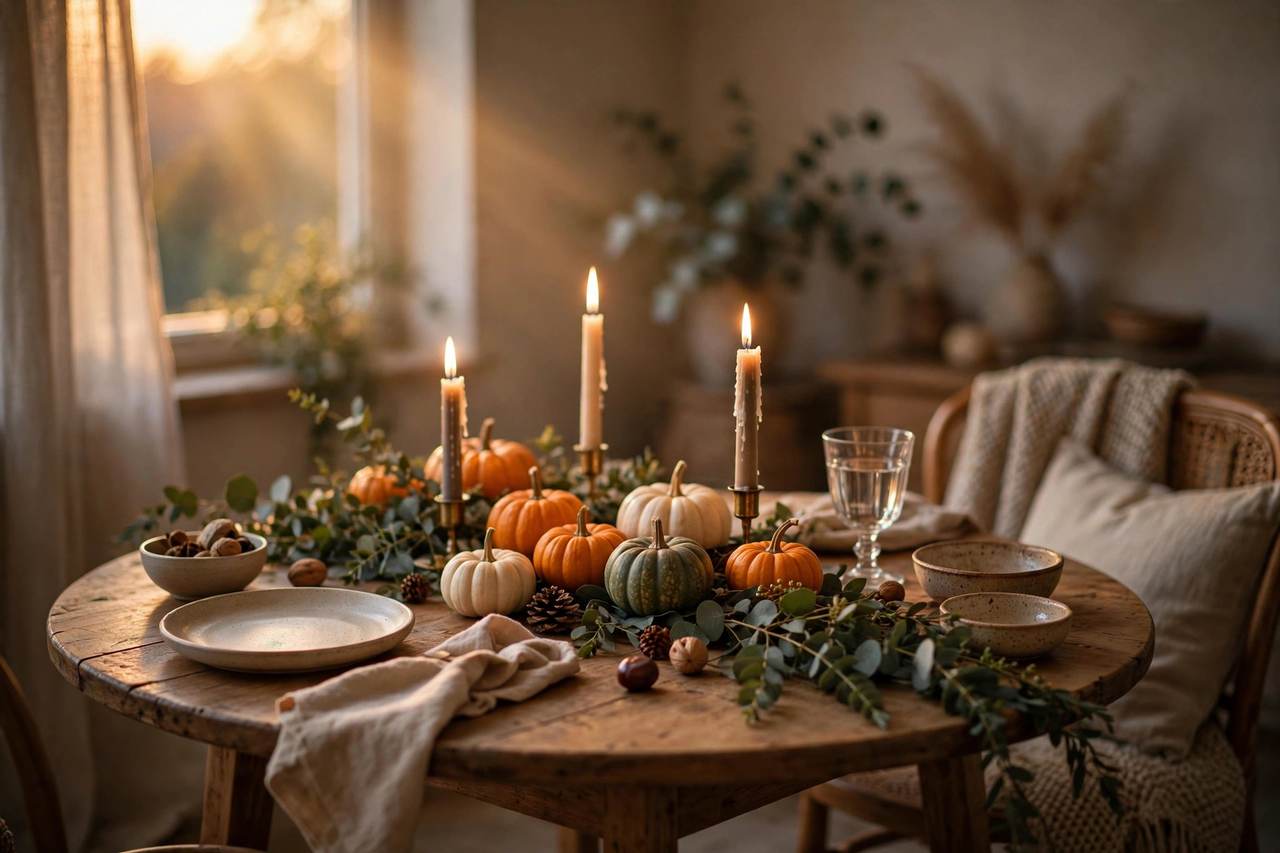
Pumpkins Without Making the Table Look Themed
Pumpkins work beautifully in fall decor, but use them as an accent.
Instead of seven bright orange pumpkins, try:
one cream pumpkin two miniature muted pumpkins small heirloom-style gourds
Keep the scale small.
Fall should be recognizable without the table looking like a seasonal display at a shop.
How to Style a Fall Table for Two
A table for two needs very little.
Try:
two place settings
plus:
one tiny vase
plus:
one candle
That may be the entire tablescape.
You can create more atmosphere through:
napkin color warm lighting textured linens
instead of adding more objects.
How to Style a Small Fall Table for Four
For four people, preserve the center.
A useful setup could be:
four place settings one narrow centerpiece two small candles one open serving area
If the table is especially compact, place food on:
nearby counter sideboard kitchen island
rather than filling the center with serving dishes.
But design around how you actually eat, not how the table photographs.
Common Small Fall Tablescape Mistakes
Oversized florals
Beautiful, but difficult to talk around.
Too many mini decorations
Small objects still create clutter when there are twenty of them.
Decorating before setting the table
This leaves no practical room for dinner.
Giant pumpkins
One object can consume the entire center.
Too many fall colors
Rust, orange, burgundy, brown, mustard and green all together can become visually heavy.
Very tall candles in conversation zones
Check sight lines.
Decorating every inch
Negative space is part of the composition.
A Simple Formula That Almost Always Works
When you are unsure, use:
One textile
Runner OR napkins.
One natural element
Branches, foliage, fruit or tiny pumpkins.
One source of glow
Candles or amber glass.
One clear color accent
Rust, olive, burgundy or camel.
Then stop.
That combination usually creates enough seasonal character for a small dining table.
The Best Test: Actually Sit Down
Before deciding the tablescape is finished:
Pull out every chair.
Sit where people will sit.
Imagine:
dinner plates water glasses serving dish reaching across the table conversation
If the decor gets in the way, edit it.
A successful small-table tablescape should look good while the table is being used, not only when nobody is sitting there.
Final Thoughts
A small dining table does not need a smaller version of a huge formal tablescape.
It needs a different approach.
Focus on:
low or narrow centerpieces
fewer objects
one seasonal color story
real room for dinner
Fall atmosphere can come from one rust napkin, warm candlelight, an amber vase or a few natural branches.
You do not need to cover the table to make it feel like autumn.
If people can comfortably eat, talk and pass food without rearranging the entire centerpiece, the tablescape is doing its job.